 Ask ChatGPT



Whether war between Iran and the U.S. is likely to return or escalate, focusing on IRGC claims about attacks in the Strait of Hormuz, U.S. “blockade”/escort efforts, and threats of faster Iranian retaliation.
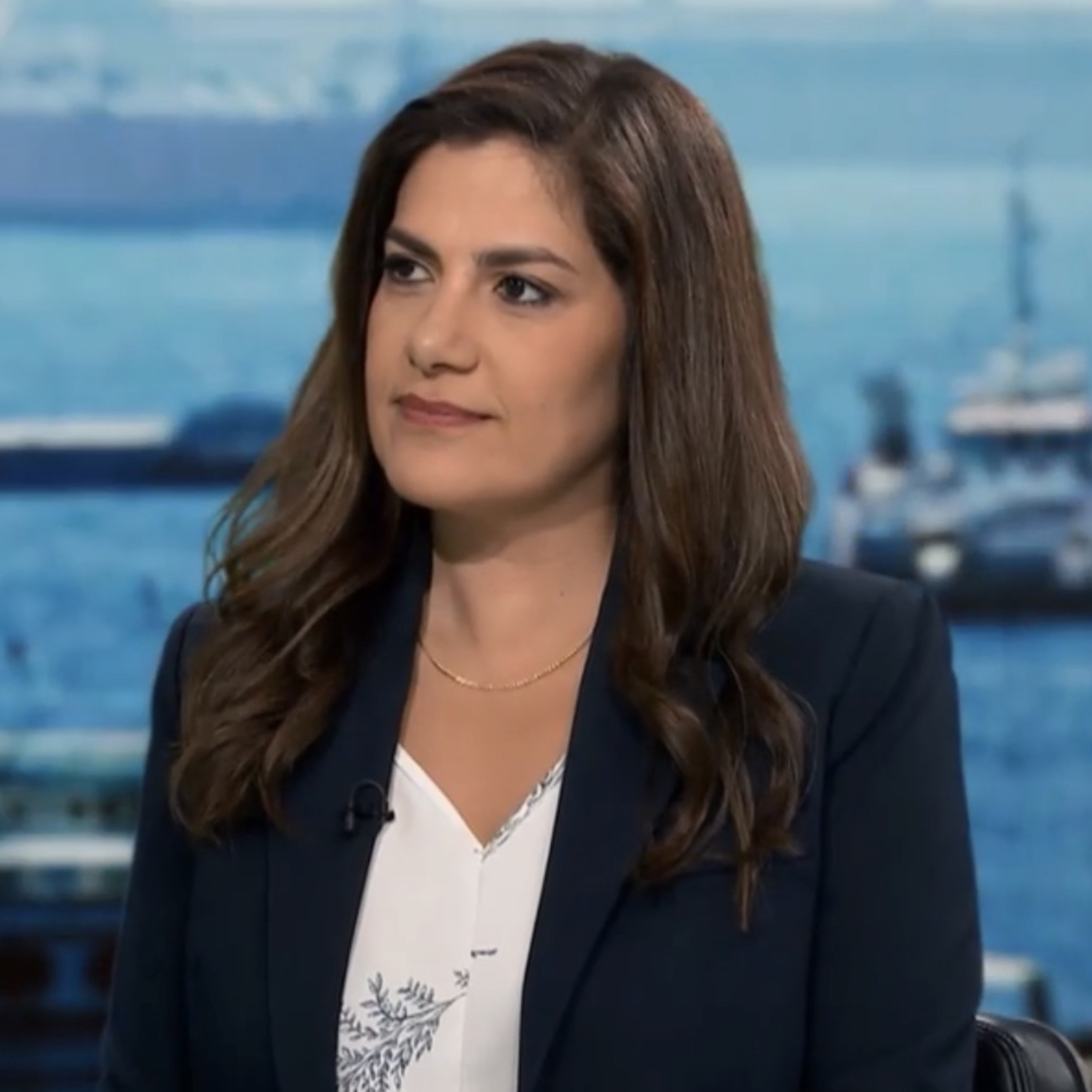
Negar Mortazavi, senior fellow at the Centre for International Policy; editor and host of the Iran podcast.
the war’s “center of gravity” has shifted from the Levant to the Strait of Hormuz; Iran is trying to solidify control of Hormuz as leverage; U.S. actions are viewed by Tehran as continued war; further escalation would politically harm Republicans and Trump ahead of midterms; Iran’s doctrine has become more aggressive/offensive; Iran promises retaliation within minutes, not days.
the prior “12-day war” and its slower response; threats to target U.S. bases in the region affecting Qatar and Bahrain.
Written by AI. May contain mistakes.
Discussion on IRGC's claims and the geopolitical implications in the Strait of Hormuz.
“you know, Israel, Lebanon, and to the Straits.”
Analyzing how the current war affects U.S. politics and the implications for the Republicans.
“What does that serve the Trump administration politically going into the U.S.”
Exploration of potential Iranian responses to U.S. military actions in the region.
“And on that note, we have seen, of course, in recent months, this horizontal retaliation from Iran as well.”

Get the gist, explore an idea or ask about something said.
 Claude
On The Iran Podcast, what are the key points of this episode?
Searching your listeningAutomatic transcript. May contain errors.
0:00Joining me in the studio is Negar Mortazavi. She is a senior fellow with the Centre for International Policy and editor and host of the Iran podcast. Very warm welcome to you. So let's try and decipher what is going on. There is a degree of ambiguity from both the Iranians and the Americans right now. But let's start with these explosive claims made by the IRGC about striking oil tankers and mining ships in the Strait of Hormuz. How much of this is real tactical escalation on the ground, do you think? And how much is Tehran signaling defiance ahead of any kind of possible joint U.S.-Israeli strike on Iran?
0:36Well, Niamh, it's a combination of all of the above, because as we see, the center of gravity of the war has somewhat moved slowly from the Levant, you know, Israel, Lebanon, and to the Straits. And also attacks inside Iran have slowed down in the past few months. And it's really Iran and the U.S. going against each other in the Strait of Hormuz. And now we have another strait added, a new front open in the war, which is connected. But in Hormuz, I think what Tehran is trying to do, regardless of the next level of escalation, which is also in parallel, is to solidify as much control as they can over the Strait of Hormuz.
1:14As your Tehran correspondent also said, the U.S. blockade in itself is a continuation of the war from Tehran's viewpoint. I mean, U.S. trying to push ships through Hormuz with escorts and, you know, all kinds of costs and promises, whatever. All of those are seen as still a continuation of the war. And Tehran's insistence is that this is their leverage card. This is their main, their golden card. And they're trying to solidify control over Hormuz as much as they can. All of this is also in the shadow of the upcoming escalation. I mean, trying to make sense of, because Kimberley was also saying, would this make sense for Republicans?
1:50Absolutely not before the election. But did this whole war make any sense? No, it didn't. So it's a little difficult to try to make sense. But there will be, you know, I can think of a number of scenarios that could be, but it just sounds like escalation is what's coming next. I did also ask, Kimberly, to what extent all of this ambiguity as to whether the United States will or will not attack Iran in the coming days. What does that serve the Trump administration politically going into the U.S. midterms? Does anybody on the Republican side of things really benefit from any of this right now? No, I mean, Republicans are absolutely getting harmed by this entire war.
2:30Any more escalation is just going to harm them. They're losing one, potentially both houses of the U.S. Congress, as Kimberly also explained, as a direct result of this war and the economic crisis. We know every poll has shown majority of Americans are against this war. It's unpopular. And the irony is President Trump ran two election campaigns as the president who's going to come and make peace, making fun of all these endless, quote unquote, stupid wars in the Middle East. And he got entangled in one himself. Anymore escalation, I think, is just going to turn into digging deeper into the swamp.
3:01It's a war that's unwinnable for him. Iran has put out an asymmetric and very defiant defence of themselves. And as your Tarrant correspondent also said, their doctrine has changed throughout this war. They're getting more aggressive, more offensive, potentially going to escalate even more if they get attacked again. So there's no winning the way President Trump wants in this war, surrender. And the moral escalation is just going to harm everyone in the world and also Americans. And on that note, we have seen, of course, in recent months, this horizontal retaliation from Iran as well. And we have heard, again, this renewed threat.
3:35The US bases in the region are fair game. They will be targeted. And all the ramifications that has on places like Qatar and Kauai and Bahrain and so on and so forth. I do wonder, given what we've heard around these warnings from the Americans and the Israelis, apparently making preparations to potentially strike Iran, what the immediate retaliation would look like. Would it be to strike those bases? Would it be to wait and see? Can the leadership in Iran, can it even survive another major kinetic flare-up? There's no wait and see. This time the Iranians are making it clear that last year in the 12-day war, it took them about a day to collect and respond.
4:20In this war, it took them hours. In the next escalation, they've said within minutes they have targets, they're going to respond, It's going to be more aggressive and more escalatory. But, you know, there's also a conflict of interest here, I think. For the Israeli prime minister Netanyahu, not all of Israel, but for Benjamin Netanyahu, more escalation could potentially help him with his situation in the election, either delay it or getting more popularity. For the U.S., it's the opposite. But Benjamin Netanyahu has been pretty crafty in pulling President Trump into things that are not in U.S.
4:52interest. Sorry, it's an interesting point. You say you could delay the Israeli elections potentially by the creation of a major crisis that leads to emergency powers. Potentially, that seems to be one of the scenarios discussed in Israel. These people, you know, assume that this may be something that would help Benjamin Netanyahu or that he's eyeing. So, anyways, the big picture is more escalation before U.S. elections could be beneficial for Israel. So, this could be, you know, some movements that Israel would pull the U.S. in or even go at it alone, like the 12-day war. But before elections, or at all, I think, but definitely before elections, there's no benefit for the United States.
5:23Nigar, great to hear your thoughts on all of this. Nigar Mata-Zavi, senior fellow with the Centre of International Policy and editor and host of the Iran podcast. Thank you.
Will the U.S. and Israel attack Iran again as elections draw closer in both countries? And how will Tehran respond to new attacks?
Negar Mortazavi on Aljazeera