
 Ask ChatGPT


Post-midterm panel on how the U.S. war on Iran is driving U.S. electoral outcomes and what happens next—whether Trump will escalate, maintain “no deal, no peace” pressure, or pursue diplomacy.
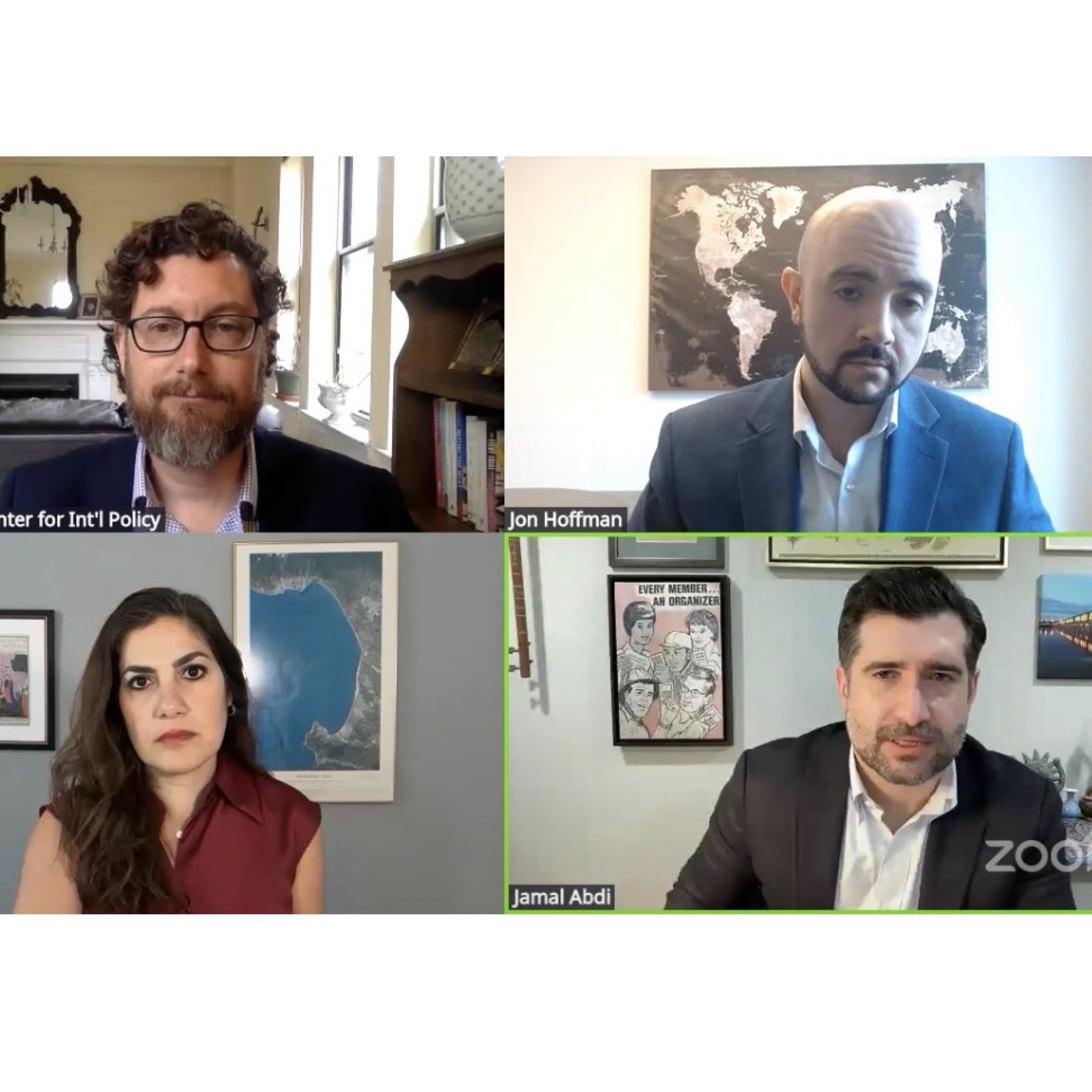
Negar Murtazavi, host of the Iran podcast and senior non-resident fellow at the Center for International Policy; John Hoffman, research fellow in defense and foreign policy at the Cato Institute; Dylan Williams, vice president for government affairs at the Center for International Policy, formerly foreign policy counsel in the Senate and J Street’s chief lobbyist.
The midterms were a “repudiation” of the Iran war; JD Vance and Trump acknowledged the war as the reason Republicans lost. Democrats won on explicit promises to end the war. Options discussed: reignite major combat operations vs. continue economic blockade vs. negotiate a deal. Diplomacy is portrayed as the only viable path, but it requires concessions and credible sequencing (e.g., frozen assets, ending war “on all fronts,” and Hormuz arrangements).
reference to the JCPOA withdrawal; the failed MOU (including blocked assets and “Lebanon” not ending); mediators like Qatar/Saudi/Turkey/Egypt; Iran’s post-election messaging claiming it helped defeat Republicans; Israel’s role and potential pressure for escalation.
Written by AI. May contain mistakes.
Analysis of how the midterms reflect opposition to the Iran War.
“So we have a very timely panel discussion following up on Tuesday's midterm elections.”
Expert opinions on possible future actions regarding Iran post-midterms.
“for many weeks, signaled that after the midterms, he would potentially reignite major combat operations and launch a major offensive on Iran that he said would end the war.”
The panel discusses the implications of the election results and voter sentiments.
“Vance is seen as the most skeptical figure towards the war in the administration.”
Discussion on Congress's authority to influence U.S. policy on the Iran War.
“And let me just start by saying how much I appreciate not just being on this great panel, but everything that NIAC does.”
Learn about the implications of the National Defense Authorization Act on the Iran war.
“There's this whole debate over the National Defense Authorization Act and whether there will be a provision in it expressly prohibiting the Pentagon from engaging in or using funds to further this war.”
Discussing the potential for a diplomatic resolution to the Iran conflict.
“Let's move to Negar, who has spent a lot of time in the region throughout the war.”
Examining how the Iran war influenced recent U.S. elections.
“Great to see you, Dylan, John, and a very timely conversation.”
Insights into how various countries in the region react to the ongoing war.
“It's not just something that will be talked about 20 years later.”
Understanding the role of mediators in facilitating talks between the U.S. and Iran.
“And if we just go in, this will be similar to a Venezuela model and a quick win.”
Identifying the key challenges facing diplomatic talks between Iran and the U.S.
“We know they were involved in the blocked assets, the frozen assets, which was part of the MOU.”
Discussion on Iran's response to U.S. actions and their negotiation stance.
“It's giving them confidence in the long term as part of the strategy that we want to establish enough deterrence that maybe not Donald Trump, but beyond Donald Trump, no one thinks about starting another war on Iran.”
Exploring the grievances behind the MOU and Iran's evolving positions.
“So the MOU, the Memorandum of Understanding, was something Iran insisted on for a while after it unraveled.”
Analyzing Trump's motivations and potential outcomes in negotiations with Iran.
“And so the Iranians had that confidence for a while, and then they started showing flexibility.”
Exploring Democratic strategies regarding war funding and internal party dynamics.
“I think Donald Trump cares about Donald Trump.”
Discussing Israel's influence and potential actions in the context of U.S.-Iran relations.
“So what do we expect might be happening from the Israelis?”
Discussion on how the recent elections affected Republican losses and the implications for U.S.-Iran relations.
“Again, looking at the big picture, I think I see three or maybe four parallel points here.”
Analysis of Netanyahu's political crisis and its potential impact on U.S.-Iran relations.
“And just to build on that, on the internal dynamics within Israel and what it or Netanyahu is likely to do.”
Exploration of changes in U.S. military aid to Israel and its implications.
“So there's a potential for blocking funding for the continuation of the war.”
Examination of the war's impact on IRGC power dynamics within Iran and its political ramifications.
“So it actually takes what was already a problem under existing funding and subsidization of arm sales, U.S.”
Explore how war affects the power dynamics within the IRGC and Iranian society.
“And that similarly, this war, he says, has allowed the IRGC to overcome internal political challenges, including their candidate losing to Pazeshkian in the last election.”
Discuss the failures of U.S. policies in remaking nations and the consequences of military intervention.
“There is no it was called help for the Iranian people for a couple of weeks until he tweeted that it's actually not very safe out there and people should stay home, if anyone remembers that.”
Analyze the political implications of current events and the upcoming Congress.
“hearing more and more from Democratic lawmakers especially the younger uh new generation of more progressive lawmakers.”

Get the gist, explore an idea or ask about something said.
 Claude
On The Iran Podcast, what are the key points of this episode?
Searching your listeningAutomatic transcript. May contain errors.
0:08Hi, everyone. We'll get started in just a couple of minutes. Thanks.
0:16here
0:43Thank you.
1:17All right, welcome everybody. Thank you for joining us today. So we have a very timely panel discussion following up on Tuesday's midterm elections. So the elections happened. Votes are still being counted in some cases, but I think many are correctly chalking up the results as a blue tsunami. Democrats have taken majorities in both the House and the Senate. They won Senate seats in states that haven't elected a Democrat to the Senate or in some cases to statewide office in decades. And according to senior officials in the White House, including the vice president, even President Trump himself, the war on Iran was a, if not the, driving factor.
2:14Now, the political consequences of this war have been stark really since it started. prior to the war launching or relaunching, depending on how you view it. In February, the president had roughly split approval ratings. He still enjoyed a trifecta with control of both chambers of Congress. But as the war has ground on, popular opposition to the war has massively swelled and apparently has delivered a historic turn in fortunes for the president's party. It's also notable that I think to a person, every single Democrat who won on Tuesday, at least on the Senate side, campaigned pretty clearly and directly on a promise to end this war on Iran.
3:09So as we speak today, questions loom about what comes next. Donald Trump, for many weeks, signaled that after the midterms, he would potentially reignite major combat operations and launch a major offensive on Iran that he said would end the war. There are others, though, in the administration who have argued that the president should instead muddle through a no deal, no peace option and continue economic pressure, continue the economic blockade, which is in itself an act of war. but to essentially allow for the current situation to remain in place, premised on the notion that Iran was going to run out of time, run out of money, and the U.S.
4:04was in a favorable position to essentially just continue the status quo. Others are saying this may be the opportunity for the president to pivot to a deal, and that there are negotiations that have been, you know, shuttle talks that have been going on. There is some glimmer of hope that maybe they will produce a deal. And so we're really in a position where we don't know where the president is going to take this, what is going to happen next. And so we've got our expert panel who is going to help us make our best guess at what to expect next. But today we'll be talking to Negar Murtazavi, who is the host of the Iran podcast and a senior non-resident fellow at the Center for International Policy.
4:48We have John Hoffman, who is a research fellow in defense and foreign policy at the Cato Institute. And we have Dylan Williams, who is the vice president for government affairs at the Center for International Policy and previously worked as foreign policy counsel in the Senate and was J Street's chief lobbyist. All right. So to start, let's go to John, who, you know, coming from Cato, I think has some perspective on things that maybe the rest of the panel doesn't have as far as what are the kind of discussions within the administration, within the party about why this happened and what comes next.
5:32So as I mentioned, John, J.D. Vance is seen as the most skeptical figure towards the war in the administration. And he yesterday gave his analysis or diagnosis of what went wrong for Republicans in the midterms. And he said very bluntly, the reason we lost is the war. And he said the president himself also said so last night. So, John, do you think this is an accurate assessment? and what does it say about the administration's thinking and where they might go from here? First, Jamal and Nayak, thank you for having me to speak on such a great panel. Yeah, no, absolutely. I think this election was very clearly a repudiation of the Iran war.
6:18Like you said, Vance acknowledged it. Trump has acknowledged it. Americans are very well aware that this war is a failure. You know, this has come with tremendous costs with virtually no payoff. They recognize that this is largely on behalf of a foreign country. And despite, you know, the president running on an America first platform, which is just, you know, the double whammy. And with Vance's comments, I think two things can be true at once, right? Like, one, he correctly identified that they lost terribly, why they lost terribly. And this is also an effort by him to save face for 2028. But it speaks to this broader divide within the administration and on the right more generally.
7:00You know, there's always been since the beginning of this administration what I've called a dual impulse that exists within the administration, but also the coalition that brought Trump to power more generally. And, you know, these impulses can be classified as on the one side you have MAGA or MAGA Inc., like the brand itself. And then you have America first. You know, one is largely this cult of personality around one individual. And the other is, you know, a real broader sentiment among the American people that believe, you know, U.S. policy should work on behalf of the American people, not Washington elites or special interests and so on.
7:41uh throughout the beginning of the administration we saw this push and pull between these two camps but the pendulum really swung in favor of the maggot inc you know kind of old school neocons and super hawkish republicans uh you know with things like venezuela operation midnight hammer and this led to trump really riding high and going into uh operation epic fury thinking it would be a cakewalk. Clearly, that didn't happen. Now we're seeing or waiting to see, I guess, whether the pendulum swings back in the other direction towards the more America first camp after this failure. And at the rhetorical level, I think we're seeing it.
8:21But again, whether this translates into policy is something very different. And what do you make of the sort of reaction to Vance's analysis? I saw Ari Fleischer taking issue with it and saying that it wasn't the war. It was the attempted peace. It was that the president didn't go far enough in the war. So I guess, what do you make of that? Is that a display of sort of where the politics are going to go in this division that you talk about? Oh, I mean, look, I'm sure they're going to be and there already are several individuals who are saying, oh, if we just did the war, you know, if we just did more war, we would have won.
9:08You know, and this is this is a farce. This is an effort to save face by, you know, individuals that, you know, parroted these policies, not just the current war, but parroted these policies for decades. and they have just failed so miserably. But I think what really matters is, you know, where the American people are on this. And this is the most unpopular war in contemporary American history for a reason. I think it really just comes down to, you know, whether we resume the war and where this goes from here is whether Trump is going to use this moment to try and salvage what's rest, what's left of his presidency and his legacy and take a step back and view that as the best route?
9:53Or is he going to double down and, you know, try to prove everybody wrong and, you know, essentially try to go in and quote unquote, finish the job, which nobody knows what that means. There's a question of whether the United States could in fact, quote unquote, finish the job. But that's, I think the, the moment that we're at is which track is he going to choose?
10:44All right. Well, thanks, Jamil. And let me just start by saying how much I appreciate not just being on this great panel, but everything that NIAC does. I mean, I over the years watched you, your staff, folks like Nagar as well, get some of the worst vitriol I've ever seen in our politics. And not only did you not back down, you responded by doubling down on advocacy and then expanding into taking this administration to court and engaging in some of the most effective direct action I've seen. So just as one American to another, thank you for everything you're doing. In terms of the election, I agree exactly with John on this.
11:25There's no doubt it was a decisive factor in both driving those opposed to Donald Trump's agenda to the polls, but also keeping a lot of people who had showed up in 2024 to vote Republican at home. because they felt that a fundamental promise of the administration had been broken. That was no new wars. And I think in addition to just having an impact as a question of war and peace, it has also opened a lot of eyes and helped people understand how closely tied issues of whether we go to war or not and how we spend money on war are tied to things like your own pocketbook, the cost of gas, the cost of owning a home.
12:13and as well as corruption and the inherent self-dealing of this administration when it comes to things closely tied to U.S. policy in Iran, like its relationship with Middle East countries that I know folks like Nagar could speak to much more eloquently. In terms of what Congress has a mandate for, I mean, I would argue they don't just have a mandate, they have a demand from voters to take action on this and take action on it urgently. You know, there are just a whole series of tools that will be available to Democratic opponents of this war, as well as Republicans who have now seen the writing on the wall, lawmakers who have seen the writing on the wall, and want to take concrete steps to curb this administration's ability to continue this war.
13:02You know, we're talking about having control of both chambers gives you incredible additional power over the power of the purse, of course, defunding this war through various mechanisms and vehicles and refusing to move appropriations forward. There's, of course, the power of oversight hearings and finally controlling the committees of jurisdiction and the subpoena power to bring in officials and actually get a clearer picture of just how badly this war has gone, because every indication is the damage to U.S. bases and who knows what else is far greater than has been admitted by this administration.
13:37And then there's a whole series of other tools like holding up confirmations that are available to a party in power in the Senate in particular, but in both chambers as well. However, if I could just take one more minute, you know, there's a lot that lawmakers can do even in the remainder of this Congress during the so-called lame duck. You know, we have real fights over things like the continuing resolution, whether we're going to see the government funded beyond earlier mid-December. There's this whole debate over the National Defense Authorization Act and whether there will be a provision in it expressly prohibiting the Pentagon from engaging in or using funds to further this war.
14:20And then there's even things like that may come up like the impeachment of Pete Hegseth, of which Iran will be a very big part of that story and is another vehicle by which opponents of this war lawmakers in Congress can really start to spotlight just how bad it's been. And it is clear that voters have given Congress the runway to do this and expect them to do it because it is so tied to their own voters own interests. Thanks, Dylan. Let's move to Negar, who has spent a lot of time in the region throughout the war. and I know Negar has heard from a variety of regional stakeholders regarding the impact of the war but also regarding the efforts to negotiate a deal to end it and so as we talk about what is possible with Congress the potential for defunding the war the possibility of putting this other pressure on the president to end the war you know I think probably most observers well I won't say most observers a lot of observers think you know the way to end this war uh ideally would be through some sort of political arrangement a diplomatic agreement to end the war rather than having to just force the president to pack up and and end it um and it's a little reminiscent of 2020 when biden pledged to restore the jcpoa uh then he got into office and we heard from people there, well, it's not so simple.
16:01We have to have consultations and talk to the Israelis, and we need to consider using the president's leverage to get a bit longer and stronger deal. And so sometimes these things that seem very simple, voters clearly asking end the war, can get bogged down in these complexities and politicians try to wriggle their way out of commitments they've made. All that being said, is there a diplomatic route out of this? And Nagar, to you, what is your sense of how far apart the U.S. and Iran are on a potential diplomatic resolution to this conflict? Are the interlocutors between the U.S. and Iran able to bridge the remaining gaps?
16:48How likely do you see this right now? Sure. Thanks, Jamal. Great to see you, Dylan, John, and a very timely conversation. Good to be here. And thanks to Nayak for hosting. Just to add a little bit, build on what you were saying in John and Dylan and the post of the vice president, which I think is I also pay attention to the war of narrative very much. And I think what's very, very important for J.D. Vance to put this on the record, to say that it was the war, that was the reason Republicans lost, and even quote the president himself, that this is something the president said, if you pay attention to his post, it's not just him saying.
17:28He quotes Donald Trump saying the president also said it, that it was the war. Because speaking of Joe Biden, if you all remember, in the previous election, Democrats refused to accept, even after they lost, that the genocide in Gaza, you know, these wars and the support for Israel was one of the main reasons they lost that election, that they had voters turn away from the Democrats and some even turned to Donald Trump, including in states where there's a high population of Muslims and Arabs and Palestinians. And so for someone from within the administration as high up as the vice president, quoting the president himself the day after the election, to come and put this on the record, I think it's very, very important, essentially straight from the horse's mouth.
18:12And just to mention what John was also saying, we're already hearing neocon voices, hawks, and also from Israel that, no, the reason wasn't the Iran war. The reason was that there wasn't enough war. And to translate that into the economic situation,$4 a gallon wasn't enough. $10 a gallon would bring them a win. I mean, if you want to put it in very simple terms. But I think this is very unprecedented, one, for a congressional election, for a midterm election, as Dylan was also mentioning and John, to be so directly tied to a foreign policy issue, to a war in the Middle East, and also for the economic cost of the war to be so simple and so easy to understand for the electorate.
18:55And so quickly, you know, this is not a war that's been waged for 10, 15, 20 years. It's less than a year. And the Americans are already feeling the cost of the war in their everyday lives. So I think there's some silver lining there and the importance of that. As far as what's happening on the ground in the region, well, we're hearing, you know, Iranian officials, senior officials' statements coming after the election, essentially repeating this very confidently that they had a role, their strategy of fighting back, not just the war, but the strategy that they deployed in their defense is what contributed to the loss of Donald Trump's party, essentially bringing down the Republicans and not necessarily having the Democrats win, because part of the Iranian messaging is that we don't see much difference between the Democrats and Republicans.
19:41And Jamal, to your point about Joe Biden, who said he would return to the JCPOA, and he didn't, and essentially just continued Donald Trump's campaign of maximum pressure, but to make sure that there's a lesson for future presidents, Republican and Democrat, that war on Iran comes with a very high political cost and you will pay for it domestically. It's not just something that will be talked about 20 years later. And now they're confident that they delivered that message and that lesson. I don't know if that lesson will be received by Donald Trump, if that would change the course of the war immediately.
20:15But I think it's something that if we see in the Vance post, essentially someone who's hopeful for the next presidential election, it looks like the message was received that, okay, the war with Iran has such a high cost that we can give us this kind of defeat. So maybe we don't do it again or think twice. As far as the path ahead, I just came back from Doha and I spent a lot of time since the beginning of the war in the Gulf back and forth. I mean, nobody in the region is happy about the war, supportive, people are afraid, people are scared, people are tired, there's a sense of fatigue. And this is, when we're talking about the Gulf, it's not even comparable to the situation inside Iran, of course, what Iranian civilians had to endure, especially at the beginning of the war, the first 40 days, intense bombing, and, you know, lots of civilian infrastructure, homes, schools, hospitals, universities, and thousands killed in these U.S.
21:13and Israeli attacks, not to mention assassinations and all of that. So it's just, I would say the irony is that except maybe for Israel, everyone in the region is against this war. They didn't want this war. They didn't ask for this war and they want it to end. And this brings me to the mediations and the mediators. Right now, Qatar is stepping up, Saudi, Turkey, egypt uh who we know were trying to lobby donald trump even before the war started telling him don't do it there will be a cost the iranians are threatening that they would do xyz and they did exactly as they said um and he didn't listen i mean the only person who was able to convince donald trump and get his way was benjamin netanyahu the war didn't start this year it started last year june 2025 and then again this year essentially seemingly convincing donald trump that Iran is a paper tiger on its last leg.
22:10And if we just go in, this will be similar to a Venezuela model and a quick win. And that didn't happen. And so the Iranians are confident that they can fight back even more escalation, another round of war, more kinetic action. And they're, you know, threatening and vowing to retaliate and respond even more forcefully than they did before, more offensive, more escalatory, and more quickly. But one message that we're hearing after the election still, reading between the lines, is that Iran doesn't want to be the initiator of the next round of escalation. So going back to the big picture, I would say the ball is back in Donald Trump's court.
22:52You know, he started the war. He can end it today. He can end it tomorrow. But it has to be through a negotiated solution, you know, a real meaningful diplomacy with concessions and concessions you know means you can't expect the other side to front load everything give up all their leverage open the strait give up the nuclear program this and that without making meaningful concessions and iran already has a few bad experiences with donald trump one pulling out of the jcpoa which was a deal they signed with the united states of america the iranians are abiding by it donald trump pulled out because he didn't like barack obama who signed that deal then again And they negotiated with this administration twice on the nuclear program.
23:35And in the course of those negotiations, the U.S. and Israel attacked Iran last year and this year. And then the MOU, that Memorandum of Understanding in Islamabad with Vice President Vance that the Iranians signed. And it didn't take Donald Trump much long, a long time to, you know, hate it. And it unraveled. We know that the Israelis, Republicans, even Democrats criticized him for a quote unquote bad deal. And so the experience is very bad from the Iranian side. They think he doesn't negotiate in good faith that signing a piece of paper in front of cameras in the Versailles doesn't necessarily mean anything to Donald Trump.
24:13And so there has to be a kind of sequencing that's not just built on trust and, you know, long term thinking. There have to be bigger guarantees. And that's why the role of the mediators is very important. Qatar is trying to step up. We know they were involved in the blocked assets, the frozen assets, which was part of the MOU. It didn't happen. It's one issue that the Iranians are really focusing on. It's also the U.S. blockade and, of course, ending the war and not just on Iran on all fronts. So, you know, it all comes down to what Donald Trump decides. It's hard to read his mind moving forward.
24:54I've heard analysis all the way from, you know, he's going to wind down to he's going to double down. And I don't want to pretend to be able to read his mind. But, you know, as far as options, what's in front of him, there is no good option except for a diplomatic solution, which means concessions from both sides and giving Iranians something that they can actually, you know, see and rely on without having to trust into the future. other than that you know more kinetic action more escalation which is something the Israelis seem to be pushing for Benjamin Netanyahu is not going to bring him any political victory I mean what are the goals of this war the nuclear program regime change destroying Iran's army navy air force none of that happened what the war did is create a whole new problem closing the Strait of Hormuz and a global economic crisis which also impacted U.S.
25:51consumers and now we see the result in the election. So what would make sense is to try to wind down and follow through on real diplomacy, but it's not guaranteed that that's what the decision would be in the White House. Do you have a sense of what are the stumbling blocks that remain for talks? And I think some would argue the midterms have actually resolved a major stumbling block, which was what you mentioned, that the Iranians believe that unless Trump felt a significant cost for the war, that any agreement that they made would potentially be reneged on because the president felt like he had a free hand to go back in and attack.
26:42And they wanted a sort of definitive, you know, you suffered a cost that is going to hold you accountable to any deal that you make. Others have said, no, this is going to make the Iranians demand more and become overconfident and kind of miss this moment and, you know, come to come to talks with overconfidence. so I wonder kind of what was your take on that and then is the nuclear issue still going to be sort of central to why the White House can't get talks over the finish line this you know we had heard that it was about the 60 percent enriched uranium and you know the Iranians not wanting to send it out of the country potentially not even wanting to talk about nuclear issues and Trump being adamant that it actually had to leave Iran.
27:37And this was one of the big stumbling blocks. Of course, you also mentioned the straight, control of the straight. We won't even talk about Israel quite yet. But what are your thoughts on that, on those stumbling blocks and whether this has helped or hurt the cause and sort of what remains? Well, you know, reading between the lines and also the statements of Iranian officials after and just before the election, I don't think this is giving them overconfidence as far as demanding more. It's giving them confidence in the long term as part of the strategy that we want to establish enough deterrence that maybe not Donald Trump, but beyond Donald Trump, no one thinks about starting another war on Iran.
28:14And I think they've accomplished that, again, going back to the J.D. Vance post. For Donald Trump, I think it's the ongoing sort of deterrence or hard power that Iran has established throughout the course of the war. I mean, you can argue that the first 40 days were the actual heat of the war, and that's over. I mean, he did try to escalate again, but the Iranians push back, and they're confident that they can push back again, and they're ready for every stage of escalation to hit back even harder. And they think that in itself, the ongoing course of the war has established deterrent. So I don't think this has hardened their position as far as negotiations.
28:52In fact, the opposite. I've seen more flexibility. So the MOU, the Memorandum of Understanding, was something Iran insisted on for a while after it unraveled. And what were the main Iranian grievances? War was supposed to end on all fronts, including Lebanon. The word Lebanon was mentioned in the first point of the MOU. That never happened. Israel violated that point since the first minute of the signing of the MOU, and the U.S. pretended like that just wasn't even in there. The frozen assets, Iran's frozen, billions of dollars of frozen assets were supposed to be unblocked with help from the Qataris.
29:27That also didn't happen. That's one of the major grievances of the Iranians. And also Hormuz, they agreed to open it, but with coordination, with a certain arrangement between Iran and Oman. And what Trump tried to do, the U.S. was to force open their own lane on the southern side. And that led to, you know, more escalation and the unraveling of the MOU. So the Iranians insisted for a while to return to the MOU, but then they figured out that there was just the MOU itself and J.D. Vance were attacked for signing it so much that it's just impossible. I mean, I heard this directly from Foreign Minister Arakhi in New York on the sidelines of the UN.
30:05He said the MOU is not even an Obama deal. It's not a Biden deal. It was a Trump deal and he hates it. So we're not even saying the name anymore. And so they insisted for a while and then they figured, okay, this is just not something Donald Trump is capable of returning to. And what they brought to New York, to the UN in September, was a lighter version. So I think Iran already made some concessions on what they brought to New York, especially on the timeline, because the MOU had this 30-day timeline and then a 60-day timeline in which they would begin talks about the nuclear issue in which they would coordinate for the opening of informals and all of that.
30:42And they They've really made that tight into one week. So ending the war in seven days, and then they made it six days and then five days. And now the offer on the table is two days, literally the day after tomorrow when the war ends. So I think they've understood that the attention span and the patience of Donald Trump is very short, and it has to be a deal that's better than the MOU. I mean, in all fairness, MOU was really good for Iran, and it wasn't very good for the U.S., but that's what Donald Trump signed in front of cameras in the Versailles. And so the Iranians had that confidence for a while, and then they started showing flexibility.
31:15And still, just this week, the Iranian President Pazeshkan was saying that now they have mandate and, you know, more authority to discuss issues related to the nuclear program that weren't allowed before. So this in itself also a sign of more flexibility, even on that nuclear issue. So as far as the dust, the 60 percent uranium, which Trump calls the dust. I mean, there are different scenarios diluting it inside Iran, sending it off to a third country or giving it to the U.S. I mean, initially the U.S. just wanted the dust and the Iranians, you know, see that as a main leverage that they're not going to just give up without getting anything in return.
31:57but you know one of the scenarios could be a third country or diluting it inside Iran maybe in stages but it's something the Iranians have discussed and agreed to do it's just a matter of sequencing when to do it and how to do it and then of course the frozen assets is something they're really insisting on and essentially they want to see the money they want to see their money and they don't trust the U.S. even the mediators to be able to deliver that in a very long-term you know trust-based uh kind of deal and then of course the main issue in all of this is ending the war i mean ending the war means as long as the u.s blockade continues as long as the u.s is trying to force open the stray you know escorting ships through the work is is is still ongoing from iran's viewpoint so they want u.s forces out of their vicinity they want the blockade removed and they want guarantees that the war is not going to come back and attacks are not going to come back Part of that is through hard power and deterrence, which they think they've established, and also this political defeat that they handed to the Republicans.
32:59But part of it is also as, you know, a big package of the deal.
33:07Got it. John, I'm interested in your thoughts on this. Um, especially given the experience of the MOU, um, at least the political reaction to it, uh, here domestically, there was, you know, there are a lot of Democrats who sort of, um, you know, I wouldn't say welcomed it with open arms, but, you know, said this was the right thing, but also then were very critical of the president and critical of the terms of the deal. on the Republican side, there was a lot of, at least from some quarters, there was a lot of consternation about the MOU and that it was viewed as this capitulation. So I guess I'm curious, what do you think the president is sort of capable of doing?
33:58Is he capable of accepting a negotiated solution? Does he need some sort of face saving way out of this? And especially as Republicans are now sort of, you know, putting the pieces back together and figuring out what's next. What does 2028 look like? Things like that. How does that factor into the potential for a negotiated solution and what the president is actually capable of doing in that realm? First off, I agree with Nagar. You know, if Trump truly wants to end this, he could end it right now at 1236. You know, it's always been a matter of political will on the part of Donald Trump. And, you know, what we've seen throughout the quote unquote negotiation process with with Iran is Trump seems up till now to have been pursuing an off ramp that didn't exist.
34:51You know, the White House was approaching negotiations in the war more generally as a case in which there was a very clear victor, the United States, imposing its will on a very clearly defeated adversary, Iran. And that's just not the case. You know, no amount of true social posts or spins, whatever, are going to change that reality. And the American people recognize that reality. And they voiced their opposition to that reality on Tuesday. So it really comes down to, you know, Donald Trump is somebody who is incredibly influenced by his own ego, by himself. You know, Donald Trump cares about Donald Trump more than anybody else.
35:33And what we'll have to see is whether Donald Trump views this as a moment to, you know, step back, recalculate and perhaps pursue a negotiated settlement. One in which Nagar was right, the United States is going to have to concede on certain matters as well. Iran is not going to sacrifice its leverage at the negotiating table when the United States was unable to achieve those objectives via force. Why would they? Why would they just negotiate away that leverage? Um, so there's either going to have to be a some recognition by Trump, first and foremost, that, you know, this has not gone as planned and he needs to adjust course.
36:18or is Trump going to continue listening to the individuals that convinced him to launch this war in the first place who are currently screaming publicly and privately okay now is your chance to double down prove everybody wrong you know take Vienna you know you know really you know go for it um you know so it it really just comes down to the personal calculus of Donald Trump because I think Donald Trump doesn't necessarily care about the Republican Party. I think Donald Trump cares about Donald Trump. So it's a matter of trying to convince the principal that it's in his best interest not to resume the war.
37:05Got it. Let's – well, we have a good question from the audience. I want to ask Dylan kind of about the politics on the Hill. And, you know, I think that there is some healthy skepticism about the commitment of Democratic leadership to potentially really drive a hard bargain on this, to go, you know, to not just wait until they seat their majorities in January, but to make sure that the continuing resolution in December bars or strips any funding for the continuation of the Iran war. And so I am curious what you think about sort of the politics within the Democratic caucus and kind of where things may be headed there, where there may be alignment, where there may be disagreements that activists and folks will have to kind of hash out.
38:00But the question from the audience, I think, that kind of encapsulates some of the sentiments here. As Ali says, it's nice to celebrate a significant milestone in the election this week, but many of us are cynical of the two wings of the war machine idea, since both parties have a lot of the same donors. And so he asked, how do we really push for change that is not decades and minuscule movements that are easily reversed? I think, so, you know, I am curious about the here and now, kind of what are the battles going to be in terms of shutting off the spigot for the war or putting pressure on the president.
38:37But then also, if you do have thoughts about kind of bigger picture, how does this become more of a transformative moment rather than a one-off, you know, anti-war election? And then we just revert back to factory settings once this is behind us. Sure, absolutely. And it's a great question. You know, first, because I know there's so many people who have worked for years on this as activists on this, you know, we need to first recognize how successful our movement has been thus far in pushing back on this, where you have basic unanimity among Democratic lawmakers, all the way to the rightward edge where you have Jared Moskowitz and Gottheimer voting for war powers resolutions.
39:20But we've seen the limits of war powers resolutions. They're necessary. They're good accountability tools. I mean, Last night you had Ted Cruz even trying to distance himself from the Iran war like it's Texas in a winter storm, right? They're trying to shed this. I think you're going to see more Republicans make that pivot to, oh, well, I was for the war, but it wasn't the right way to just, you know, like we need to end this war. it's going it is going to come down to funding because at the end of the day if you have a president who is perfectly willing to ignore the law all the way through to the constitution as this president has been on a myriad of different issues uh it's going to come down to the power of the purse and whether or not he has the money to prosecute this war should democrats continue that and use funding as leverage even in the lame duck?
40:17Absolutely. They should press for restrictions. They should not support any type of appropriations bill, whether it's a CR, minibus, anything else that doesn't include an express prohibition on this funding. But here's another thing. Even if you get something like that, it still could be ignored by this president. So at the end of the day, the full range of tools will need to be used by Congress, and that can't happen until the next Congress as much as we want it to happen in this Congress, right? You are not going to be able to drag officials from the administration before committees with subpoena power until Democrats are actually handed the gavel.
41:01But just because we do not, or I should say, Democrats do not have that power for another couple of weeks doesn't mean they should not try to pull every lever in the meantime during the lame duck. And that includes trying to leverage the continuing resolution.
41:19um another question from the audience is what how does israel factor into this um uh might netanyahu uh attempt to uh launch an attack uh successfully um and i give this to anybody who wants to answer it uh what are your thoughts on i mean we know that they're going through their own post-election working in the form of government. So what do we expect might be happening from the Israelis?
41:54I'll take, yeah, I'll take a go. But it's not just about Israel. I just want to tie some of the things that were said and bring in Iran into this. Again, looking at the big picture, I think I see three or maybe four parallel points here. One, that the defeat of the Republicans because of the war is just so clear. I mean, we knew they're going to lose. We didn't know it's going to be so clearly tied to the war by the voters and then by the vice president, quoting the president and all of that. So it's just very, very clear why they lost the political cost of this war, which I'm hoping would itself be a bump in the road for more war and more escalation.
42:36The other one is the blue tsunami. So the flip side of it is how big the Democrats won. I mean, we knew they're going to win, but I don't know if we expected the win to be so big. And this is not a whole lot of Chuck Schumer's on Hakeem Jeffries. This is a fresh, you know, new round of very progressive Democrats with energy. these are people who are anti-genocide anti-war and with not just a mandate as I heard someone explaining but with a demand from the voters to end the war so it's not just a defeat it's also the win and you have someone I mean I was surprised like Hakeem Jeffries already getting in front of cameras saying that they have to end the war and that Vance cannot run away from his record of the war and all of that I mean the Democrats were not this unified and this good against the war throughout the course.
43:24At some point, we saw Democrats criticizing Donald Trump for the MOU and the ceasefire because it was too good for Iran, implying that maybe he should go back and do more war and get a better deal. Not all, but some. But now it seems like this anti-war core of the party is just the unified message that's coming out. It gives me more hope that this would again be pushing. I mean, as Dylan was explaining, there's a certain limit to the power, but then And there's also how much that, you know, that whole environment can pressure Trump or be a bump in the road to doing more work. And then, of course, there's the flexibility from the Iranian side, which I mentioned.
44:02I think instead of doubling down, the Iranians have shown and are continuing to show more flexibility, understanding that they have to offer Donald Trump. I mean, throughout this, his presidency, they understood they have to offer him something that he can sell as a good deal. And they're just understanding that more and more. And I think if that flexibility continues, there's a little bit of bragging political messaging that, you know, they were the reason that the Republicans lost. But still, if they continue to show that flexibility for negotiations, I think the combination of these issues would maybe create sort of that formula to bring the war to an end.
44:40And then, of course, Israel. I mean, Benjamin Netanyahu is not doing so great. I'm curious to hear what the others think about Israel. But part of the loss in this election in parallel to a war which Donald Trump waged with conviction from Netanyahu is also the genocide in Gaza. So Benjamin Netanyahu essentially helped bring down the party with two parallel wars. And so that puts him in an even weaker position. So I'm hoping sort of the culmination of these four parallel tracks would help create enough bump in the road for the war and bring it to an end. Right. And just to build on that, on the internal dynamics within Israel and what it or Netanyahu is likely to do.
45:25I mean, there's nothing that Netanyahu would love more right now in the greatest moment of crisis for him, perhaps in his career, than for the United States to reignite a full scale war with Iran and create a dynamic where the substantial opposition, such as it is in Israel, is like, you know, compelled to maybe agree to like a unity government or something like that. But I don't think Netanyahu holds that sway with Trump anymore. I think, if anything, Trump blames Netanyahu, and for good reason, for helping get him into this terrible situation for Trump. Uh, and so I think if Netanyahu, uh, is going to have his war, he's going to, I mean, it may get to a point where he has to start it and he sees it as necessary to start it himself.
46:21That'd be a catastrophic situation, uh, of course. Um, but, uh, right now I don't see any, you know, I think the opposition in Israel, which is trying to sort out exactly what it's going to do. and i could talk forever about that but um you know they're certainly not pushing for re-engagement on iran they are using it as a talking point of netanyahu's irresponsibility uh so unless netanyahu just goes way way off by himself completely isolated uh except for the furthest right wing in israel um uh you know i don't think it's well at a minimum it's not likely he's going to be able to convince trump to do something that trump doesn't decide is in his interests.
47:05Oh, sorry, go on. Yeah, I would just add to that, you know, whether or not Netanyahu is able to convince Trump, I agree with Dylan, like, well, I guess we'll see. But the way that I would see it is, at the current moment, especially with, you know, over the past couple years, you know, Israel has been acutely aware of the changing winds within the United States. and they've been constantly trying to get ahead of this, you know, changing public opinion and so on. And I think the election results on Tuesday, you know, just reinforced that dramatically. You know, the fact that Israel was so openly talked about, I mean, even Vance's tweet, you know, I think it was number four on those list of four priorities was, you know, reworking the U.S.-Israel relationship.
47:55So for the Netanyahu's of the world, you know, this is existential to their agenda, you know, this this shift. So I would imagine that, you know, Netanyahu at the current moment is trying everything to get Trump to resume this. Like this is a make or break moment for him personally, for him politically, for him, you know, his broader agenda and ambitions, what have you. So I think, you know, I would imagine that he is on the phone constantly trying to get Trump to press go.
48:34We only have a little bit of time, but I want to I do want to stay on this for a little bit because. So we know that the government funding runs out December 11th. So there's a potential for blocking funding for the continuation of the war. But there's also on Israel policy, there are things that are sort of imminent, right? Like we have the announcement and I think I saw Dylan did a video on this, but there's this announcement that Trump is going to cut the military assistance money to Israel, which turns out is a big red herring. But interested to have you guys just speak briefly on that. And then also the NDAA has language in it that would essentially make Israel kind of a partner with the Pentagon in terms of procurement.
49:35And that has been controversial, but is something that I believe has passed in the House. So just, you know, quickly, we don't need to get into the dynamics of the election and the opposition and what's going on in Israel. But as far as policy here in the U.S. and on the Hill, what do we expect in the coming weeks on those two issues? Well, I'll just jump in. You know, I think you've identified the main Israel-related fights in the remainder of this Congress. You know, that National Defense Authorization Act provision, which I think the, you know, the conferees who are putting together the final NDAA that will be presented for an up or down vote, I think are initially inclined to include because they don't appreciate just how much resistance there is to it.
50:29And there's other barriers to the NDAA passing that are important as well. But this really is really going to be a sticking point and may end up sinking the whole thing. And that's actually an outcome that I think a lot of folks would would prefer. I certainly would. The way it intertwines with this issue with with, you know, Iran is that proponents of enhancing U.S.-Israel security cooperation and co-production to the point of integrating a lot of really core functions. is both a dodge to get out of this direct aid to Israel, which has become so toxic, certainly on the Democratic side, but it's becoming increasingly toxic to Republican voters as well.
51:18But that is going to be sold, or they're going to try to sell that integration by pointing to Iran and saying, you know, look how the U.S. and Israel are, you know, we're together in this fight. We are inherently bound up against, you know, and you can imagine all the air quotes I'm using, you know, like, you know, the implacable enemies like Iran. That's why we need to develop these new technologies together as Iran is advancing its drone technology and capabilities, et cetera, etc. So Iran is again going to be used as the boogeyman for a policy that is really about further binding the U.S. to Israel in a way that goes unhelpful to American interests, and will interestingly ultimately cost American taxpayers more than the decades of direct aid that we've been giving Israel and with less transparency over exactly what technology we are sharing or co-developing with them.
52:21So it actually takes what was already a problem under existing funding and subsidization of arm sales, U.S. arm sales to Israel, and expands it and puts it behind another layer of opaqueness. Nagar, did you have a comment on that? No, I want to pivot a little bit just again to bring it back to the big picture. I think there's also another interesting layer here, which is the Iranians where they're making two points. One is that they don't see much difference between the Republicans and the Democrats. So a lot of this inside baseball we're talking about is not something they're paying a lot of attention to or relying on essentially Democrats to end the war, change the course or force Trump, etc.
53:10So they're prepared for two more years of what's going. But then at the same time, the interesting flip side of it is that they understand that if they want to make a deal, they have to do it with Donald Trump. So there's still two more years of Donald Trump, potentially, if the war continues. Or if they have to make a deal, it still has to be with this administration. They're not going out negotiating with the Democrats or making a deal with the Democrats. So all of what we're talking about in D.C. and Congress, which is very important, but it's sort of one step removed from what's happening in the battlefield on the ground and how the Iranians actually see this.
53:49And also the region, by extension, you know, all of these mediators and everyone, and then also on the other side, Israel, they all understand that there's still two more years of Donald Trump. So if there's any convincing, there's any deterrence, hard power, self-aware, all of that has to be directed at him, the decision maker. And the Democrats are essentially a Washington aspect of this, but not directly connected to what's happening on the ground. All right. I don't, John, did you want to weigh on that?
54:26Yeah, I mean, yeah, please do. Oh, yeah, no, I completely agree with Nagor. I mean, your adversary gets a vote, too. And when this, you know, war comes to an end, which a lot of people in Washington just don't seem to understand. And but, you know, whether it's, you know, the Israelis pushing for the continuation of the war, the Hawks pushing for the continuation of the war in Washington, D.C., you know, the biggest thing that I would just emphasize is, you know, the unpredictability of Donald Trump and, you know, the inability of really to read his mind. You know, even people who are, you know, interact with him on a daily basis.
55:04You know, it just seems that Trump is so easily swayed by the last person that he spoke to. And, you know, I think at the current moment, trying to look into President Trump's psyche, who is very personal, you know, focused, he's very egotistical, you know, in trying to present arguments in such a way that appeal to that is, you know, one of probably the best routes in this lame duck period, because I think, as Dylan noted, look, when the new Congress is ushered in, things will be different. But for right now, we're faced with what we're faced with. So now is kind of crunch time. For the last question, I have an audience question.
55:50So he writes that the Iraq war on Iran allowed the IRGC to rise in power and to kind of consolidate its power. And that similarly, this war, he says, has allowed the IRGC to overcome internal political challenges, including their candidate losing to Pazeshkian in the last election. And why is that outcome sort of handing IRGC more power combined with the evidence that sanctions is enriching, you know, actors connected to the IRGC, impoverishing ordinary Iranians? Why is that not being mentioned as further evidence that more war is a bad idea? So I think the question I'd ask is, is that maybe starting with Nagar, is that what you are seeing?
56:43Do you agree with that analysis that that is what is happening? And if so, does a continuation of the war exacerbate that? Does a conclusion of the war, a diplomatic resolution continue that trajectory or does it sort of arrest that phenomenon of, you know, IRGC consolidation of power? Well, there are a couple of facts. One is that Washington policies towards Iran have failed over the past four decades. Sanctions, there's a ton of research showing that sanctions do impact the economy and the pressures on ordinary working class, middle class, but it hasn't led to any policy change. And it has created this whole ecosystem of corruption, of sanctions, profiteers, oligarchs, whatever you call them, that have tremendous power and themselves turn into a force against diplomacy and a resolution of some of these conflicts.
57:39So I agree with that. And then also the irony is that, yes, war does, you know, bring more has has delivered consolidation of power for the IRGC, for the more military wing of the system, has created a rally around the flag among the supporters. And it's also created a very securitized space. There's no opening for political dissent, for actual opposition inside the country because it's wartime and because of this external threat that is looming over any internal disagreement. So, yes, I mean, this is a question for Washington, for anyone who has pursued bad policies over decades. And it used to be masked with, you know, nation building, democracy, you know, seemingly good faith or intentions for some of these countries in the region.
58:29But I think with Donald Trump, it's just masked off. There is no it was called help for the Iranian people for a couple of weeks until he tweeted that it's actually not very safe out there and people should stay home, if anyone remembers that. And help coming to the Iranian people came in the form of attacking a school full of children on the first day of the war, killing 150 people, staff, children, teachers. And so if anyone, you know, wasn't clear eyed about how war could potentially be surgical and just against officials or military targets or nuclear or can bring democracy freedom. I think this war has shown that it's exactly the opposite of that.
59:08And the long term consequences of that has been seen in the region in past examples. And now with the example of Iran, of course. And if I can just plug very quickly here, I think this is related. Mark Lynch at George Washington University professor has a great book and article in this, which is called The End of America's Middle East. And he talks exactly about this, how decades of U.S. policies in the region have failed, fueled wars, instability, terrorism, and with a disregard for people. We're having a book talk tonight with him. So if anyone is in Washington, please join us. But I recommend that book and some of the research on this.
59:53I'll just quickly say I agree completely with Negar. And I appreciate that she mentioned the war crime that the United States committed in Minot on the first day of this war. And I think that's what I want to see on day one brought up in a Hegseth hearing and others beyond. But on the final question, and I say this as someone who had a purely clerical role in the occupation of Iraq, the United States has to realize we're just garbage at nation building. I mean, we replaced the Taliban with the Taliban after 20 years in Afghanistan. We've replaced the Supreme Leader with his apparently more radical son in Iran.
1:00:29uh we we need to get out of the business of thinking that we can remake the world in in something like our image and instead focus more on what our actual security is and uh promoting civil society and human security around the world so uh yes i and i it is a talking point that I am hearing more and more from Democratic lawmakers especially the younger uh new generation of more progressive lawmakers. John, any final thoughts? Just super quick. I mean, you know, no battle plan survives first contact. And this one really didn't survive first contact, but there was no other battle plan. And, you know, we've seen the administration just scrambling for months.
1:01:17So if, you know, it comes down to if Trump actually wants an out, the election in a way has provided him. that out, uh, you know, off ramp to seize and say, this is just incredibly unpopular. You know, the American people don't want this. He can say to the Hawks, we tried everything you wanted me to do and it didn't work. Uh, so, you know, it wasn't for a lack of quote unquote trying, I guess their ideas, um, uh, or he can double down and, you know, given the history of us middle East policy, which has been, you know, decades of doubling down on failure, it remains very possible. So I think, you know, the next coming days and weeks before the new Congress is ushered in, it will be very critical.
1:02:01Absolutely. All right. Well, thank you, John. Thank you, Dylan. Thank you, Negar. Everybody who's watching, make sure you're following these folks for their analysis on online and at their organizations. We're going to have a very busy couple of months before the new Congress has even sworn in. And somebody did ask about our lawsuit, the lawsuit challenging the constitutionality of this war. We should have some developments or updates in a couple of weeks. But as for now, we are awaiting the government's response, which is due, I believe, in December. So more to come on that. But of course, you know, we may have a Hegseth impeachment a week from now, this fight over the CR, and of course, what is happening with negotiations and on the ground in the region.
1:02:54So thank you, everybody, for tuning in. And just know that we're going to need to keep on tuning in and stay active over the next weeks and the months to come. So thank you for all for being with us. All right. Thanks, everybody. Take good care. Bye-bye. Thank you.
Can Congress pressure Trump to end the war? Will the election results create an opening for diplomacy, or will Washington and Tehran face another round of military escalation?
A panel discussion with Negar Mortazavi, Dylan Williams, and Jon Hoffman, hosted by Jamal Abdi at the National Iranian American Council (NIAC).