
In short
Podcast Summary: The James Altucher Show - Episode on Trump Assassination Attempt
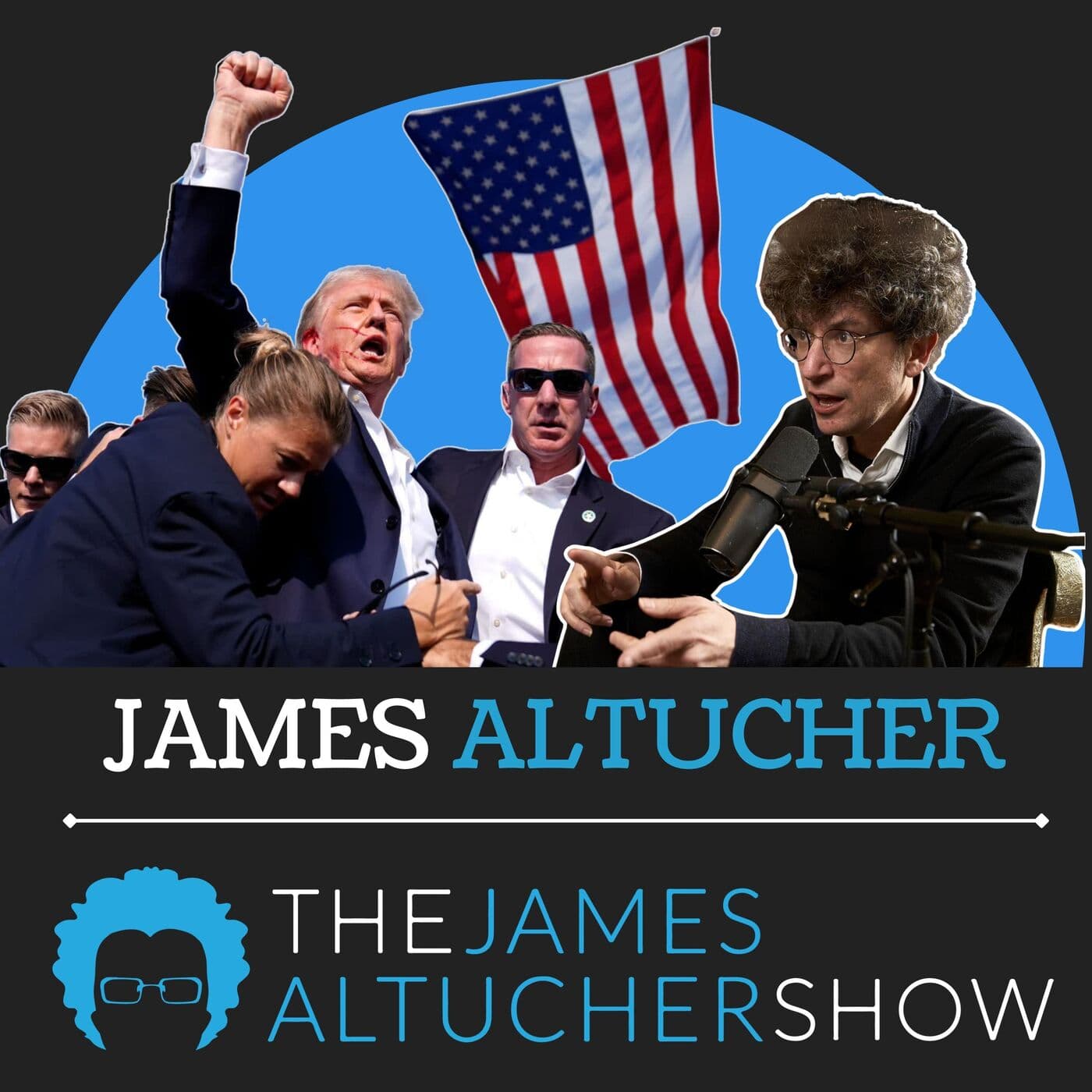
Episode Overview Title: Assassination Attempt on Trump: The Facts, Theories, Future of Democracy, and My Love Letter to America Host: James Altucher Release Date: [Date not provided in transcript] Description: In this episode, James Altucher delves into the assassination attempt on Donald Trump, exploring the historical context, various conspiracy theories, and the implications for democracy and the upcoming election.
Key Themes and Discussions
Misinformation and Media Bias
- COVID-19 Context: Altucher relates this episode to his previous work during COVID-19, where he aimed to correct misinformation spread by mainstream media.
- Media's Role: He criticizes media outlets for their biased reporting and failure to provide clear, rational perspectives during political crises, emphasizing the importance of factual information.
The Assassination Attempt
- Overview of Events: The assassination attempt on Trump becomes the focal point of the discussion, which is analyzed in the context of historical assassination attempts on prominent political figures.
- Historical Comparisons:
- George Wallace (1972): Shot during his campaign, resulting in lifelong paralysis.
- Theodore Roosevelt (1912): Survived an assassination attempt mid-campaign and continued to run.
- Current Event Context: The episode is particularly timely, occurring alongside JD Vance's nomination as the VP candidate for the Republican Party.
Conspiracy Theories
- Dissection of Theories: Altucher evaluates several conspiracy theories surrounding the assassination attempt, including:
- Claims of Secret Service negligence.
- The possibility of a "false flag" operation orchestrated by Trump's camp for sympathy.
- Media narratives that may have been influenced by political biases.
- Rational Analysis: He encourages rational thinking over conspiracy theories, emphasizing that many such theories require too many people to keep secrets to be plausible.
Secret Service Protocols
- Protection Levels: Discussion of how the level of protection for former presidents, especially Trump, is not as robust as for sitting presidents.
- Historical Context on Secret Service: Altucher highlights the variability in Secret Service coverage based on individual circumstances of candidates and former presidents.
Political Implications
- Impact on Elections: He explores how the assassination attempt could influence public perception of Trump and the upcoming presidential election.
- Market Reactions: The episode notes immediate impacts on financial markets, particularly Bitcoin, which responded positively to the news given perceptions of Trump's potential electoral success.
Reflections on Political Polarization
- Bipartisan Discontent: Altucher reflects on the growing divide in American politics, noting how individuals from both sides struggle to understand each other's voting decisions.
- Historical Context of Civility: He reminisces about a time when political discourse was more respectful (e.g., comparing past campaigns between Obama and Romney).
Additional Notes
- JD Vance's Role: Altucher discusses the implications of Vance's nomination and his prior relationship with Trump, pondering the potential impact on the election and the Republican ticket.
- Need for Ethical Media: The podcast concludes with a call for media to strive for neutrality and fact-based reporting, criticizing the sensationalist nature of political reporting.
Key Takeaways
- Rational Discourse is Essential: In a politically charged environment, clear rational discourse is essential to combat misinformation and conspiracy theories.
- Historical Context Matters: Understanding historical precedents of political violence can help frame current events more accurately.
- Political Divisions are Deepening: The episode highlights a concerning trend where political divisiveness undermines the fabric of democracy.
- Media Responsibility: There is a critical need for media outlets to report responsibly, devoid of bias, particularly during politically sensitive times.
Conclusion The episode provides a comprehensive analysis of the assassination attempt on Donald Trump, inviting listeners to reflect on the ramifications for democracy, media ethics, and political discourse in America. Altucher emphasizes the importance of rational thinking and historical awareness in navigating contemporary political challenges.
Written by AI. May contain mistakes. Listen to the episode to check what was said.
Transcript
Automatic transcript. May contain errors.0:00Look, as a manager of people, as an employer, as an entrepreneur, and as even an investor in startups, I can tell you the most important thing for your business is the quality of the quality of people. you hire. The best part is that great candidates are already on LinkedIn. Employees hired through LinkedIn are 30 % more likely to stick around for at least a year compared to those hired through the leading competitor. And I will tell you that the great thing about LinkedIn is that you're not just looking at random people. You're able to see the people who your friends and trusted peers and colleagues who they trust and who they've hired in the past and who they recommend.
0:42And hiring doesn't have to be complicated. Realistically, when you have a business to run, you don't want to spend hours on hiring. You want to hire the right person as quickly as possible. That's why LinkedIn Jobs AI Assistant suggests immediately 25 great big candidates daily so you can invite them to apply and keep things moving. Hire right the first time. Post your job for free at linkedin.com slash altature. then promote it to use LinkedIn Jobs' new AI assistant, making it easier and faster to find the top candidates. That's linkedin.com slash Altucher. Post your job for free. Terms and conditions apply.
1:20This isn't your average business podcast, and he's not your average host. This is the James Altucher Show.
1:36So during COVID, every single day I was doing a podcast because I felt there was so much misinformation in the mainstream media, in all the news sources. Everybody was saying conspiracy theories. Nobody was getting the math right on how infections like COVID spread. And I just wanted to kind of every day make the information more correct. like just explain what was really going on and trying to translate why so much of the mainstream news was wrong. Not just about COVID, but how the effects on the economy from the shutdowns, the effects on the economy from the printing of trillions of dollars.
2:15And many of the things that were spoken about then have come to pass. And on COVID, it was all just more of an attempt to understand what was actually not really known by the public, what was conspiracy theories, what was misinformation, and tried to really understand from a rational point of view what was going on. And rationality is not really part of the mainstream media anymore. And we're seeing this again with the Trump assassination attempt. On every side, by the way, this is not intended to be a political podcast, although I will talk about some of the politics involved. So I want to kind of just go through what happened go through some of the conspiracy theories and conspiracy theories about this kind of stuff in general some of the history behind this and you know perhaps we'll get into some of the more recent i mean this is basically this is a news failed week we have just two or three days after the assassination attempt is the nomination of jd vance to be the vice presidential candidate for the republican party it's a very historic event and i will comment on that as well.
3:25But let's start with this assassination attempt. First off, there's not a lot of precedent of an assassination attempt of a presidential candidate. Forget about the fact for a second that he's a former president, just a presidential candidate. So the last time there was an assassination attempt on a somewhat major presidential candidate was in 1972, was George Wallace. So George Wallace famously was a third party candidate in 1960. He basically was a racist governor from Alabama who was representing an extreme part of the Democratic Party that at that time was far right, particularly in terms of like racism and civil rights.
4:11It was a shame that that part of the Democratic Party even existed. But that was the kind of the Southern Democrats. There was Strom Thurmond, George Wallace, other people. But so in May of 1972, as he was running for the Democratic nomination for president, George Wallace was shot by a guy named Arthur Bremmer and he was left paralyzed from this. And obviously, you know, George Wallace was no longer a candidate after that. By the way, that guy, Arthur Bremmer, is now released from prison. He was sentenced to 53 years. He was released after 35 years. I think he's a janitor now. So I don't know if the people he worked with are familiar with his past, but there it is.
4:53And then before that, probably the closest analogy to the assassination attempt on Trump would be actually that of Theodore Roosevelt going all the way 112 years earlier back to 1912. And why is this analogous to the Trump assassination attempt? It's because Theodore Roosevelt was not only a candidate, but like Donald Trump, he was a former president of the United States. He was president of the United States from 1901 to 1909. And what's interesting is in 1901, he became president not by being elected, but because he was William McKinley's vice president and William McKinley shortly after taking office in March of 1901, William McKinley was assassinated.
5:36Theodore Roosevelt became president of the United States. He got reelected in 1904. And in 1908, he decided he could have run for president again. At the time, there were no term limits, although that doesn't quite apply to Theodore Roosevelt. And he could have run again in 1908, but he decided not to. And instead he wanted his buddy, William Howard Taft to become president. William Howard Taft did become president. Then Theodore Roosevelt was disappointed that Taft didn't just blindly follow Roosevelt's policies. And so Theodore Roosevelt decided to run for another term in 1912. And again, they didn't put term limits on presidents until after Franklin Roosevelt, Theodore Roosevelt's cousin, because Franklin Roosevelt was elected for four terms and then died in office.
6:24That's how Harry Truman became president. But after that, the people of the United States decided a constitutional amendment was necessary. No president is allowed to serve more than two full terms. So Theodore Roosevelt decided to run again in 1912, but he didn't want to run on the Republican Party, which was William Howard Taft. And that was the party that he was part of. So he ran on something called the Progressive Party or what he called the Bull Moose Party. And when he was campaigning in October of 1912, right before the election, a man named John Schrenk shot him in the chest. Roosevelt had some notes in his pocket in a metal glasses case, and that slowed down the bullet and it didn't quite reach his lungs.
7:09In fact, Roosevelt even said later that because he wasn't coughing up blood, He knew his lungs were not hit. The doctors even decided that because it did not really cause him that much harm, they left the bullet in his body for the rest of his life. A counterexample to that was James Garfield, who was president when shortly after he became president, he was shot. The bullet itself did not kill him. The doctors were so bad as they tried to get the bullet out that he became infected and he was sick for months until finally he died. So James Garfield, there was essentially a case of medical malpractice.
7:46In Theodore Roosevelt's case in 1912, they let the bullet stay there. He was injured. And by the way, he didn't win the election. Woodrow Wilson won the election. So I don't know if it really increases popularity that much, but he was also a third party candidate. So he was splitting up the Republican Party. So even if it gave a boost to his campaign, it was a third party situation where maybe if it was a two party situation, he would have won. but the Republican party was divided by Roosevelt and William Howard Taft and Woodrow Wilson, the Democrat, won the election. But that's the closest analogy.
8:20Perhaps another, you know, Gerald Ford was shot at twice while he was president, but it wasn't close to the election. It was in 1975. The election was in 1976 and Jimmy Carter narrowly won that election. And Ronald Reagan was shot two months after he became president in March of 1981. One, famously, Ronald Reagan, as he was being wheeled into the hospital for surgery to remove the bullet, Reagan, who was hurt but was conscious, said to the doctor right before they gave him an anesthetic, Reagan said to the doctor, I hope you're a Republican. And then they operated on him and it was good and he survived.
8:58So now Trump did not get that injured. He was lucky though. He was apparently turning his head. And so instead of the bullet hitting him in the head, it kind of hit his ear and there was blood, but he wasn't hurt. He even was seen saying to the Secret Service, there's blood on my face. Like he wasn't aware that he was even hit. So he is seen though, putting his hand by his ear, maybe he felt something on his ear and the Secret Service pushed him down. And then he's seen saying, wait, wait, wait, because he knew he was okay. And the secret service was alerted very quickly that a sniper had killed the assassin we'll get to that in a second and trump said you know is said the words fight fight fight and held up his hand in a fist pump we'll get to that issue because there's some narrative around you know what he was saying afterwards but basically the assassin this guy named thomas matthew crooks he's a 20 year old.
10:02He was bullied apparently in high school. Apparently he got on a fairly close building. He got on the roof. He had a rifle and people had noticed him. So there's a lot of conspiracy theories going on. One of the conspiracy theories says that the secret service ignored this because Democrats or Iran or whoever wanted him dead. Another conspiracy theory says this is like kind of a, what's called a false flag where it's planned by Trump because he wanted the sympathy that this would generate. That's another conspiracy theory. And another theory is that the Secret Service was just incompetent. And I'm inclined to believe a third theory.
10:48First off, people notice this guy, Thomas Crooks, as he was on the scene. I don't know why they noticed him, but several Secret Service agents kind of radioed that there was a suspicious looking guy. They tried to find him later. They couldn't. Some local police saw him on the roof and the local police were trying to climb to the roof to see what this guy was doing. As soon as the police sort of, he had his fingertips on the roof and he was climbing up, the local policeman, he saw this guy aiming the gun right at him. And so he dropped eight feet to the ground. And that's exactly when Thomas Crooks immediately aimed the rifle back to Trump and started firing.
11:31So police tried to get on the roof. And the question was, why wasn't this roof covered by the Secret Service? Why wasn't this guy stopped before? How did he get on the roof? Well, first off, let's deal with the most extreme one. There was a tweet by somebody who specifically said he worked for the Secret Service. He saw the guy on the roof. He wanted to take the guy out and his boss told him no. And then this secret service agent was fired right after the assassination attempt. So this was a tweet that got millions of views and it got reposted everywhere. It turns out nobody by the name that this guy went by even worked for the secret service.
12:09It was just a fake tweet that, or it started on Reddit and then became a tweet. So that conspiracy theory is out. But then there's this idea. A lot of people were saying, look, I used to work for the Secret Service and here's what they do for a president. They would have scoped out that roof weeks or months in advance and made sure there were agents covering it and so on. Well, the issue with that is that Donald Trump was not president of the United States. He has two things that do get Secret Service protection. He's a former president and he's a major candidate for president. But a couple issues there.
12:43First off, a former president barely gets Secret Service protection, barely. There's hundreds of agents guarding Biden. That is not the case with the former president. It's usually done on a case by case basis, maybe anywhere between two and a dozen agents, maybe more in some extreme cases, like when W stopped being president, there was a lot of political tension in the air and he was covered by up to 75 agents. But usually former presidents go on to live, I don't wanna say regular lives, but they are not bogged down by secret service agents all over them. So maybe, you know, I've seen former presidents in action.
13:23They don't really have a lot of secret service around them. And Donald Trump did not have enough secret service to warrant scoping out every location he was gonna be in months in advance. That's for a president, not a former president. And for a candidate, it's on a case-by-case basis. I mean, notably, RFK Jr. doesn't even have Secret Service protection right now, despite the fact that his father was assassinated while being a candidate for president, and his uncle was an assassinated president. And RFK Jr. is a major candidate. But yet, you know, Biden has not authorized, at this point, at least he probably will now, but he has not authorized Secret Service protection for him.
14:04Similarly, in the last major cycle, which had a lot of candidates, 2016, Ted Cruz, Marco Rubio, even though they were winning primaries, they did not get any Secret Service protection. And it took a while for Donald Trump to get Secret Service protection. So it's sort of on a case-by-case basis who gets Secret Service protection. And it's not as formal as the Secret Service protection for a president. So that conspiracy theory that the Secret Service somehow kind of deliberately was not being thorough with Trump, that conspiracy theory is out of the way.
14:59Thanks.
15:07Look, as a manager of people, as an employer, as an entrepreneur, and as even an investor in startups, I can tell you the most important thing for your business is the quality of the people you hire. The best part is that great candidates are already on LinkedIn. Employees hired through LinkedIn are 30 % more likely to stick around for at least a year compared to those hired through the leading competitor. And I will tell you that the great thing about LinkedIn is that you're not just looking at random people. You're able to see the people who your friends and trusted peers and colleagues, who they trust and who they've hired in the past and who they recommend.
15:50And hiring doesn't have to be complicated. Realistically, when you have a business to run, you don't want to spend hours on hiring. You want to hire the right person as quickly as possible. That's why LinkedIn Jobs AI Assistant suggests immediately 25 great fit candidates daily so you can invite them to apply and keep things moving. Hire right the first time. Post your job for free at linkedin.com slash altature, then promote it to use LinkedIn Jobs' new AI Assistant, making it easier and faster to find the top candidates. That's LinkedIn.com slash Altachirk. Post your job for free. Terms and conditions apply.
16:27Was this a false flag? Did Trump plan this? So some people are saying this guy, Thomas Matthew Crooks, was a registered Republican, and so that Trump himself planned this, or the Trump campaign planned this, so that people could be sympathetic to Trump, and that would make him win. Well, first off, Trump was within millimeters of getting killed. So it's kind of obvious that he didn't plan to just turn his head that moment so that he would not get killed. Like that would be ridiculous. The other thing with these kind of false flag types of theories, again, like 9-11 is a famous false flag theory that, oh, the government planned this as an excuse for them to invade Afghanistan and Iraq.
17:13The problem with this sort of thing is there's a way you can sort of determine if a conspiracy theory is ridiculous or not, and it's called conspiracy numbers. So what is the number of people that would have to keep a secret in order for a conspiracy to remain a secret? Like I said, no one figures it out. So 9-11 is like an obvious case where basically almost thousands of people who work for the government would have to know in advance that this is happening and would have to keep it a secret because it was so meticulously planned. Thousands of people would have to know and keep this a secret until after they die in order for people to never find out that this was a false flag operation.
17:56And that's ridiculous. There's some number where it becomes ridiculous for it to be a conspiracy. And the same thing is here. Like too many people would have to be in on it for this to work. And the same thing goes for a lot of the Kennedy conspiracy theories. I've been to the location where John F. Kennedy was shot. There are people there almost 24 hours a day talking conspiracy theories. Who knows? I spoke to Robert F. Kennedy Jr. himself about his theories about his father being shot and his uncle being shot. he is pretty sure it's the CIA and the FBI who killed his father and his uncle. I kind of doubt it, but it's 60 years ago.
18:38There are a lot of reasons to be suspicious of what happened. Like, why didn't they investigate Jack Ruby a little bit more when Jack Ruby killed Lee Harvey Oswald? But I'm not going to, you know, Robert F. Kennedy, the whole issue himself. So I don't want to get into his conspiracy ideas. but I do want to say there's a theory that's borderline what I believe. Kimberly Cheadle is who's the head of the secret service buddies with Jill Biden before Jill Biden. She had worked for the government at different points, but I believe at the time that she was appointed to be head of the secret service, she was head of PepsiCo's security and Jill Biden really wanted her to be the head of the secret service.
19:16So Jill Biden apparently was very helpful for her getting appointed to be head of the secret service. And so there's this theory maybe that they just didn't like Trump, so the security for Trump was not as sufficient as it should have been and that a lot of security that day was diverted by an event Joe Biden was attending. It's not that I believe this, again, as a deliberate thing. Nobody said, let's not put as much security around Trump because we hope he dies. I don't think that happened, but I do think they didn't really care as much with Trump because of such bias against him. And we see that the bias is occurring.
19:52Joe Biden clearly doesn't like RFK Jr. because RFK is going to pull votes from the Democratic Party. And RFK Jr. is definitely a significant candidate, plus had two significant members of his family killed while either president or running for president. So he did deserve Secret Service protection. He has not gotten it. So clearly there is some bias in how Biden, or at least his administration, does these things. I'm not criticizing that. Every single administration that's ever existed has had bias of some sort. That's what they do. So I do think maybe the security probably wasn't sufficient, not deliberately, like not let's hope he gets shot at.
20:36But I'll get to that in a second because whatever. But there's a lot of rhetoric about that. but I do think the secret service was a little bit lax on how they were protecting things because clearly people saw a suspicious person and we know the secret service was alerted and then tried to find this person, but they couldn't find him. At that point, they should have been a lot more aware of what was going on. Local police somehow was not communicating with the secret service about their own suspicions or maybe they were and it wasn't followed up on, So I do think people didn't care as much as they should have.
21:14And I don't know why. I don't think it was deliberate. I don't think it was like, man, who cares? Like, let's hopefully this guy dies. I don't think it was that. I just think they just weren't good at their jobs and didn't take this as seriously as they perhaps should have. And now there were consequences. I do assume there's going to be an investigation. The head of the Secret Service, Kimberly Cheadle, says she's not going to resign. I do think she ends up resigning. I do think it's her fault for not assigning more protection in a case where every single day on Twitter, you see people saying, look, on both sides, but you do see Democrats saying, I wish Trump were dead.
21:53You know, Madonna has said it. I'm not saying she's a major Democratic Party figure, but it's not an uncommon thing for even celebrities to say, oh, or even right now, you know, people are out there saying, oh, too bad this guy missed. It's really disgusting and horrible what I'm seeing on this side. Just like, by the way, things Republicans say about Democrats, about Biden has been disgusting. So I always tell people I miss 2012. It was Mitt Romney versus Obama. As far as I could tell, they actually liked each other. I don't remember anything really super negative one said about the other. And the debates were very respectful.
22:37And clearly both Obama and Romney were intelligent, high IQ people who argued about the issues. Obama won. Romney, for whatever reason, wasn't likable enough by the public and incumbents usually win. Well, that's usually the theory is that incumbents win and Obama won the 2012 election. Ever since then, the country has gotten more and more divided. I'll tell you in 2016, early 2016, when Trump was just firing up, I was on a plane from LA to New York and I was sitting next to a guy who's been on this podcast because of that plane ride where I was sitting next to this former DIA agent The Defense Intelligence Agency is similar to the CIA.
23:22There's a lot of three-letter secret agencies that you're probably not even aware of in the government. But anyway, it's a former DIA agent. And he was basically saying from what they were seeing, the country was getting more and more divided and that someone like a Bernie Sanders or a Donald Trump, someone on an extreme edge of their party, would become president one day. He didn't think it was gonna be in the 2016 election. It happened to be in the 2016 election where Trump got elected. And maybe Bernie Sanders would have been the candidate if things hadn't been kind of engineered a little bit.
23:53We know they were engineered in 2020 because Bernie Sanders was winning the primaries. And then suddenly, right before the Super Tuesday primary, all the Democratic candidates dropped out and endorsed Biden simultaneously. I'd never seen that happen before in any election. And Bernie Sanders started finally losing primaries and was no longer the predicted Democratic candidate. and Biden went on to win the presidency. So we do know these things get manipulated. And this guy I was riding on the plane with was pretty close in predicting the journeys of Bernie Sanders and Donald Trump. So since 2016, the country's gotten more and more divided.
24:31We've seen more and more, 50 million people can't believe why the other 50 million people voted the way they did on both sides. And I have friends on both sides who'd say to me, why would anyone vote for Biden? Why would anyone vote for Trump? Well, clearly 50 million people did for both sides. And, you know, everybody has their reasons. But I once asked somebody, a good friend of mine, who was complaining about Trump. This was when Trump was president. Tell me three policies he did that you do not like. And my friend, who was a producer for TV news, I won't mention which channel, but it's not the channel you expect probably.
25:08My friend could not figure out even one policy. He said, let me call my sister. And I said, no, no, no, you're a producer of TV news. You should be able to tell me three. If you could tell me three bad policies of Trump, I will vote for the first time in my life and I will vote against Trump. But he couldn't name even one. So I didn't vote at all, but I was surprised that he always was complaining about Trump. Same thing, people always complaining about Biden have a hard time telling me three policies that Biden has done bad. Or again, on the other side, People have a hard time telling me three policies that Biden's done good.
25:44Okay, Afghanistan, the way he left Afghanistan was probably bad. But I don't even really know too many. Oh, student loan debt forgiveness, I think was a bad policy for economic reasons. If you benefited from it by having your student loan debt forgiven, then that was great for you. I have no problem with you having your debt forgiven. But as an economic policy, it's never good for the government to reward basically behavior that is not going to improve the country. If everyone got into debt and couldn't pay the debt back because they majored in East Asian studies or whatever, and then they couldn't get a job that was good enough to pay back their debt, to incentivize that behavior economically is not going to make the country competitive in the long run.
26:32So essentially, and this is a political opinion, to be a good president, you should incentivize financially the behaviors you want to continue and you should tax the behaviors you don't want to continue. So if you think smoking is bad for everyone, you tax cigarettes very high. If you want to incentivize people to go to college, you forgive student loan debt. But I think we should incentivize for jobs that basically advance the country or help people make a living. So incentivize engineers where the US potentially could be falling behind to China and India or incentivize people to go to electrician school or other schools that people used to go to, but now there was such a big marketing effort.
Read the full transcript
27:22This is a whole other story, but there was such a big marketing effort in the 60s to get people to go to college that student loan debt started going through the roof. the interest on student loan debt goes higher every year, higher than inflation. The tuitions go higher every year, higher than inflation because of these government incentives. So because college presidents know they're always going to get paid the tuition by people who get federal student loans, they keep raising the tuitions. So giving these student loans have incentivize college presidents to raise tuition. So now college is unaffordable by the middle class or frankly, upper class.
28:04I mean, you have to be in the top one 10th to 1 % to afford college without some form of financial help. And it's just a ridiculous thing at this point. And you supposedly can't get a job without college. Again, we've had this discussion on the podcast before, but I'm just saying these are policies I think Biden probably didn't do a good job on. There's similar policies by Trump, but this is not intended to be a political podcast, so we'll just leave it at that. But I want to go on to the next topic on the assassination attempt. Trump raising his hand right afterwards and said, wait a second, wait a second.
28:40And he raised his hands and he said, fight, fight, fight. So again, there's all this narrative about this few seconds of time. First off, this sort of points to a false flag conspiracy because the Secret Service normally would immediately have Trump on the ground, whisk him away. He would not physically be able to get the Secret Service off of him and do what he did. If the Secret Service was behaving how, for instance, they behaved with the Kennedy assassination, where immediately they jumped on top of JFK and Jackie Kennedy, not in time enough to save JFK, And then the motorcade whisked away before anybody had time to do anything.
29:22The reality is though, JFK's brain was blown off. He couldn't have resisted the secret service. In this particular case, they also knew, they heard it in their radios, instantly the sniper was killed. So Trump basically in the confusion, pushed himself up and with blood on his face, he said, fight, fight, fight. And now other people then said, hey, maybe that's not the right phrasing. you should use. You shouldn't encourage more violence. I don't think that's what Trump was doing. I think Trump was basically saying, I have a message. There are people, just like any presidential candidate has a message that they believe in.
30:03And he was saying, people are going to try to stop this message and they're not going to succeed. So as a candidate for the presidency, any candidate in the world would have done or should have done what Trump did because that's the way you tell your supporters, hey, they can't stop us. You're building your tribe as a candidate. And so you want your tribe to be as fiercely loyal as possible to you. With that goal, Trump did the right thing. I don't think this was encouraging violence. Of course not. Not any more so the people on the left who say Trump should be dead or the people on the right who say, you know, Biden is brain dead or whatever.
30:44They're both, you know, typically the right has been known for extreme conspiracy theories in the past. But I think the left is going a little crazy now with all these conspiracy theories. They hate Trump, a former Democrat. They hate him so much that even seconds after he was shot in the ear and someone tried to kill him, they're criticizing his behavior almost instantly. And I think that's probably inappropriate. Now this might sound like I'm all gung-ho on Trump. I'm just more against, like here were the headlines right after the assassination attempt. On CNN, there was a headline. I don't have it right in front of me.
31:23There was a headline that said something like, Trump falls on stage and secret service takes him off stage. And there was another one, loud sounds were heard. I forgot which media this was. Loud sounds were heard. So Trump was, you know, ran off stage. So it was just kind of these ridiculous headlines to prevent Trump from being more popular as a result of an assassination attempt. Again, and I've seen this kind of stuff on both sides. I keep having to repeat this. I'm not being political, but let's just get real. Somebody tried to assassinate the president. That was clear within seconds. So again, people said afterwards, oh, well, they didn't really know what was going on.
32:04So they said the only things they knew, loud sounds were heard, Trump was whisked away. But everybody knew within seconds that it was an assassination attempt because the assassin was killed by the Secret Service. And it was clear that other people were killed. So bullets were fired and Trump's ear was hit. So it was clearly an assassination attempt. Everyone knew this within a second. So CNN's headline is abhorrent. Other headlines were abhorrent. They eventually took those headlines down, which suggests they knew that they were in the wrong doing it. And I don't blame necessarily CNN, but whatever, you know, college age interns they hired who were writing the headlines should really be ashamed of themselves.
32:48And CNN and other media outlets that created a culture where, hey, don't give any fuel to Trump's campaign. Just like Fox doesn't give any fuel to Biden's campaign. That's abhorrent as well. You know, people should, I don't know if the world was ever neutral, but people should strive to be more fact-based and neutral in their headlines. But I will tell you, that is not a path to success when you're more neutral. I tend to put up a neutral podcast and I find this podcast is not as successful as the more extreme left or the more extreme right podcast. Do I care? No. I do think life is short and you should be ethical and be as honest and moral as possible.
33:34And I think those biased ones, particularly when they slant the news to fit their bias, I don't care about if someone's biased. I care when someone slants the news to fit their bias. That is disgusting. And I saw a lot of that in the minutes after this assassination attempt.
34:07so that's i hope i cleared up any issues conspiracy theorists or anybody else has had on this assassination oh one more thing with the assassin thomas matthew crooks people are saying he's a registered republican that's true but it also could be the case a lot of people registered Republican so that they could vote in the Republican primaries in Pennsylvania so they could maybe vote against Trump. I don't know. But the other thing is he did contribute to progressive causes. So when you're trying to figure out what his political motivations were, we simply do not know. He was contributing to left progressive causes, but he was a registered Republican.
34:47So it's okay to say we just don't know what his motives were yet. My guess is though, he was on the left and he was crazy anybody who does this is just insane doesn't even need a motive you cannot figure out the motive of someone who's insane there's no legit motive to kill somebody and he's 20 years old so he was biased and he was crazy and he tried to kill somebody i do not was it fueled by the violent rhetoric that is sometimes used by the media and celebrities when talking about Trump, perhaps, but you could argue the same thing if there was an attempt on Biden. So I do think people should choose their words more wisely when talking about other candidates.
35:34Again, think back to 2012, Mitt Romney versus Obama. Nobody was saying, oh, I wish so-and-so was dead. And I mean, there were people, but I never heard that. And I also encourage people, go on YouTube and just for five minutes today, search for the JFK-Nixon presidential debates. These were the first televised presidential debates. It was in 1960. John F. Kennedy, who was a senator from Massachusetts versus Richard Nixon, who at that moment was the vice president of the United States. They had three televised debates. It was unclear who won any of the debates, but the debates were very, very polite.
36:13They were very polite to each other. They were very substantive on the issues and there were no interruptions. There were zero interruptions. And just watch those debates for five minutes. By the way, that was a contested election. They're not known for being the nicest people on the planet, but they were very polite to each other, very respectful. And it's worth noting the 1960 election, most people don't know this, the 1960 election was a contested election. The popular vote was John F. Kennedy got 34 ,220 ,000, and Richard Nixon was only 100 ,000 votes behind, 34 ,108 ,000. And just a few votes in a few states, a few thousand votes in a few states could have swung that election.
37:00And supposedly, you know, the rumor was, this is a conspiracy theory again, that in Illinois, Joseph Kennedy, John F. Kennedy's father, paid off a bunch of people to vote twice for John F. Kennedy. And there was a couple of states that were very extremely close. I mean, the popular vote was 49.72 % to 49.55%. And just a few states could have swung either way and Richard Nixon would have won instead of John F. Kennedy. So Richard Nixon quietly, not publicly, but quietly contested it in various courts around the country, but then ultimately said, ah, it's not worth it. The country needs to move forward.
37:41And so again, I wish we can go back to a point where people were polite about these things. And I'll give another example. The letter, very nice letter, George H.W. Bush, who was a one-term president. He lost to Bill Clinton in 1992. He wrote a very nice letter to Bill Clinton, which Bill Clinton, I would encourage people Google the letter and read it. So I feel we were used to be in a more congenial time for these elections. And there doesn't need to be this kind of just hateful rhetoric that is just destroying, not, here's the problem, it's just bad for the country. So if you look at the letters that, or the statements that Putin made after the assassination attempt, and that China made after the assassination attempt, in both letters, there's this kind of implication that they're lecturing us on how to not be divisive.
38:36Of course, they're not divisive because they're dictators. So everybody has to fall in line in their countries. They win 99 % of the vote in their countries. And that's ridiculous. And the other 1 % probably goes to jail. But now you see with weak presidents, bad things will happen. So I'll give you some examples. John F. Kennedy, He's kind of remembered as a great president, but the reality is he was perceived internationally as very weak. The Bay of Pigs, where Cuba just basically shrugged off our attempt to do a coup in Cuba, the Bay of Pigs incident made John F. Kennedy look very bad internationally, and Khrushchev thought he could just push Kennedy around, and that led to the Cuban Missile Crisis, which JFK was stronger there, and pushed Khrushchev back.
39:27Jimmy Carter, another example, very good man in many respects, but perceived as weak internationally. And of course, the Iranian hostage crisis happened. And it's not a coincidence that the hostages were released the day Reagan was inaugurated as president because Reagan was not perceived as weak and he was perceived as a little crazy and could potentially nuke Iran. So Iran released the hostages. and on the Republican side, W was perceived as weak or being kind of a puppet to the neoconservatives perhaps and 9-11 happened. I don't know. I just think when a country doesn't have a strong political system and I will say in this case in particular, it's the fault of both the Democrats and the Republicans.
40:15The Democrats, because Biden is clearly weak right now. Like Jon Stewart made the point that Biden in 2024 is not the same as Biden in 2020. And it doesn't matter if you feel he has big accomplishments in this first term, just let the convention be open. And if Democrats still like him, they'll nominate him. But if he's perceived as weak, it's bad for the country. And on the Republican side, if Trump's contesting the election, the way Nixon did in 1960 and the way Gore did in 2000, but not just kind of accepting the results fairly or unfairly, yes, continue the court cases, but don't make it a prime issue of your campaign because then the political system is seen as weak.
40:58Trump has a lot of issues that I agree with. He's strong on crypto. He's strong on immigration. I think the US is a country built on immigration, but there's a legal way to do it and illegal ways to do it. Again, the news is biased. You have to go direct to sources, but sex trafficking is up because if you get in illegally and family is separated at the border, the children go to whatever number is sort of tattooed on their body and we don't know what happens to these children afterwards. There's no follow-up. So I don't want to get into all of the issues. There's some issues that Biden has that I agree with too.
41:35I'm pro-choice. So it's a very critical issue that I stand with the Democrats on. So all I'm saying is when you have a weak political system, bad things happen to your country. And that's what's happening right now to the US. So I hope whoever wins, wins by a landslide. Now let's talk just a little bit. What are the effects this assassination attempt had on other things like the economy? Well, if you look at the minute by minute chart on Bitcoin, Bitcoin was flat, of course, that minute by minute going up to the moment of the assassination attempt. The minute shots were fired, Bitcoin and every asset class that was trading at that moment on a Saturday spiked down.
42:19But then as soon as it was realized that Trump was okay and that this is going to increase Trump's probability of winning the presidency, Bitcoin shot up. It was around 54 ,000. And now it's around, as I say, this is around 65 ,000 just three days later. So this is, it's gone up ever since. What does that mean? It means that the Bitcoin marketplace perceives Trump as pro-crypto, which is very true. It means that the probability Trump becomes president, people who like Bitcoin think is much greater. That's also true. Like Trump's odds now on polymarket, which is a prediction market for events like this, predict now that Trump has a 72 % chance of winning the presidency and Biden has only an 18 % chance of winning the presidency.
43:02That is ridiculous odds that have never been that skewed in this election. $260 million is now bet on this one bet, who is gonna win, Trump or Biden. So Polymarket, which is built on top of crypto, people say there's no use case for crypto. There's a billion dollars betting on throughout Polymarket, but 260 million just on this one bet. People are putting money on the fact that Trump has 72 % odds now of winning. That's also after the J.D. Vance vice presidential pick, the odds did not change. So people who perceive this as a bad pick or a good pick for Trump, it was neither. It hasn't changed Trump's odds at all.
43:40So did this affect the election? Yeah, Trump was in the 60s beforehand. Now he's in the 70s. These are not polls. These are just odds that people are placing on the election. On the economy, does this have an effect? No, but the stock markets went up because Trump is perceived as someone who might, I don't want to say manipulate, but at least try to force as much as possible more rate cuts and more money stimulus, fiscal stimulus. By the way, stocks do well in inflationary environments in general before the world perceives it as inflation. so Trump is perceived as more inflationary and so stock markets are doing well right now.
44:16They hit all-time highs. And will that continue after Trump's elected? Who knows? There's no way to predict. And I guess that's all I have to say on this at the moment. Oh, I'll just comment real briefly on J.D. Vance. So I'm friends with, and he's been on this podcast, Tim Ryan. Tim Ryan has an interesting career. He's been on this podcast twice. He wrote a book about being a congressman and really into meditation. So he's right off the bat that tells you he's an interesting guy. He wrote that book in 2014, came on the podcast 10 years ago. And then in 2020, he came on again when he was running for president.
44:52Before he was running for president, he was a congressman. He decided to leave the House because he ran against Nancy Pelosi to be speaker of the House. That will kill your career if you lose. He was making a big bet that he would win. He did not win against Pelosi to become speaker. So he decided to quit being a congressman. he obviously lost the presidential primaries in 2020. Then in 2022, Tim Ryan ran for Senate in Ohio against a young man named J.D. Vance. So I was a fan of Tim Ryan, but I also was a fan of J.D. Vance because I love the book Hillbilly Elegy. J.D. Vance was a venture capitalist turned writer, a man who really spoke to me in terms of career.
45:30I like J.D. Vance. I have a financial background, but also I'm a writer. Hillbilly Elegy is an excellent, well-written book. I highly encourage people to read it. so i was torn in that election since i personally knew tim i was probably deep down inside hoping he would win i didn't want his political career to be over and i don't agree with jd vance on particularly social issues like like abortion and stuff like that i probably agree with him more than not on economic issues i don't really know and i don't really agree with tim ryan on economic issues but these elections are never about the issues jd vance won in ohio a lot of people are saying jd vance is inexperienced he was just elected to the senate less than two years ago well obama had a similar level of experience you know obama was senator from 2005 till until he became president a few years later so what you know obama had two years more experience but they were both similar age, similar experience.
46:30Experience is too hyped up. Like all the time people say, oh, I don't want a typical politician to be president. But at the same time, they accuse politicians of not being more experienced politically. So I don't really pay attention to that kind of stuff. Is J.D. Vance qualified to be vice president or president? Probably. He's a smart guy. He wrote a book that was a bestseller for hundreds of weeks in a row. and he's a venture capitalist, went to Yale Law School, just as qualified as Obama was or Trump was. Gerald Ford actually was probably, well, he was probably qualified too. So the only person who never got elected to the presidency who became president is Gerald Ford because a constitutional amendment had just happened that if a vice president resigns, the president could appoint a new vice president.
47:19That law didn't exist before 1972 when Spiro Agnew resigned, Richard Nixon appointed Gerald Ford to be vice president. Then Richard Nixon resigned and Gerald Ford became president. And then Gerald Ford lost a few years later to Jimmy Carter. So he's the only president who was never elected to be president. You could argue he didn't have the experience to be president, even though he'd been a politician for 20 or so years at that point, he was a congressman. But there's all sorts of arguments you can make about every candidate. So will J.D. Vance help the ticket? No, I already mentioned he did not increase the odds for Trump at all, but he didn't lower them either.
47:57I think Trump felt he made a mistake with Mike Pence. He wanted to balance the ticket then. He decided this time he'd rather just have someone who he likes, who's on his side. Now you could argue, a lot of people are saying J.D. Vance said a lot of negative things about Trump, including calling Trump a Hitler in 2016. And he also stated he was a never-Trumper. But I will say people are allowed to change their minds. Trump himself was asked about this. And Trump said, yeah, he said some nasty things about me. Then he got to know me. And now he doesn't say those things. So I will also note Kamala Harris said some nasty things about Joe Biden in 2020 and then became his vice presidential candidate.
48:40And by the way, Joe Biden actually dropped out of the race in 2008 because of negative things he said about Obama that were construed, probably incorrectly, but construed as racist. Joe Biden had to drop out of the presidential race in 2008, and then Obama appointed him vice president. And in 1980, George H.W. Bush said some negative things about Reagan, including calling his policies voodoo economics. And guess what? Ronald Reagan picked him to be his vice president. 1960, John F. Kennedy and Lyndon B. Johnson hated each other. And John F. Kennedy picked Lyndon B. Johnson to be his vice president.
49:20So on and on this goes. And that's why you have to kind of really pay attention to what you're consuming as media, because none of it is true. But in any case, this was a bit long. If I do kind of these wrap up sort of podcasts again or news related podcasts again, I will try to make it shorter. But I hope this covered a lot of the current issues surrounding this assassination attempt. Please tweet and share this if you like it, because I want to be as popular as the Extreme Right and Extreme Left podcasts. Thanks for listening.
50:05Thank you.
From the publisher
A Note from James:"So during COVID, every single day, I was doing a podcast because I felt there was so much misinformation in the mainstream media. Everyone was saying conspiracy theories, and nobody was getting the math right on how infections like COVID-19 spread. I just wanted to make the information more correct every day, explain what was going on, and try to translate why so much of the mainstream news was wrong-not just about COVID but about the effects on the economy from the shutdowns and the printing of trillions of dollars. Many of the things spoken about then have come to pass.On COVID, it was more of an attempt to understand what was unknown by the public, what were conspiracy theories, and what was misinformation. I tried to understand from a rational point of view what was going on. Rationality is not part of the mainstream media anymore.We're seeing this again with the Trump assassination attempt-on every side, by the way. This is not intended to be a political podcast, although I will talk about some of the politics involved. So, I want to go through what happened, some of the conspiracy theories about this kind of stuff in general, some of the history behind this, and perhaps we'll get into some more recent events. This is a news-filled week: just a few days after the assassination attempt is the nomination of JD Vance as the vice presidential candidate for the Republican party. It's a very historic event, and I will comment on that as well. But let's start with this assassination attempt."Episode Description:James breaks down the recent assassination attempt on former President and presidential candidate Donald Trump. He provides historical context, drawing parallels to past attempts on major political figures, and discusses the ensuing conspiracy theories from all sides of the political spectrum. Listeners will gain a clear, rational perspective on the events and their implications for the upcoming election and beyond.What You'll Learn:The historical context of assassination attempts on U.S. political figures.An analysis of conspiracy theories surrounding the Trump assassination attempt.The implications of the assassination attempt on the current political landscape.How media bias and misinformation shape public perception during political crises.The potential impact of this event on the upcoming presidential election and economic markets.Chapters:01:30 - Misinformation During COVID02:12 - Mainstream Media Rationality02:34 - Trump Assassination Attempt: An Overview03:33 - Historical Assassination Attempts: George Wallace and Theodore Roosevelt06:19 - Secret Service Protection Protocols10:15 - Conspiracy Theories Debunked17:02 - Secret Service and Political Bias25:08 - The Fallout: Public and Media Reactions28:08 - Trump's Response: "Fight, Fight, Fight"40:18 - Economic Impact: Bitcoin and Stock Market Reactions42:33 - JD Vance: A New VP Candidate47:26 - Reflections on Political PolarizationAdditional Resources:Hillbilly Elegy by JD VanceSecret Service Protocols and History
------------What do YOU think of the show? Head to JamesAltucherShow.com/listeners and fill out a short survey that will help us better tailor the podcast to our audience!Are you interested in getting direct answers from James about your question on a podcast? Go to JamesAltucherShow.com/AskAltucher and send in your questions to be answered on the air!------------Visit Notepd.com to read our idea lists & sign up to create your own!My new book, Skip the Line, is out! Make sure you get a copy wherever books are sold!Join the You Should Run for President 2.0 Facebook Group, where we discuss why you should run for President.I write about all my podcasts! Check out the full post and learn what I learned at jamesaltuchershow.com------------Thank you so much for listening! If you like this...
See Privacy Policy at https://art19.com/privacy and California Privacy Notice at https://art19.com/privacy#do-not-sell-my-info.

