
In short
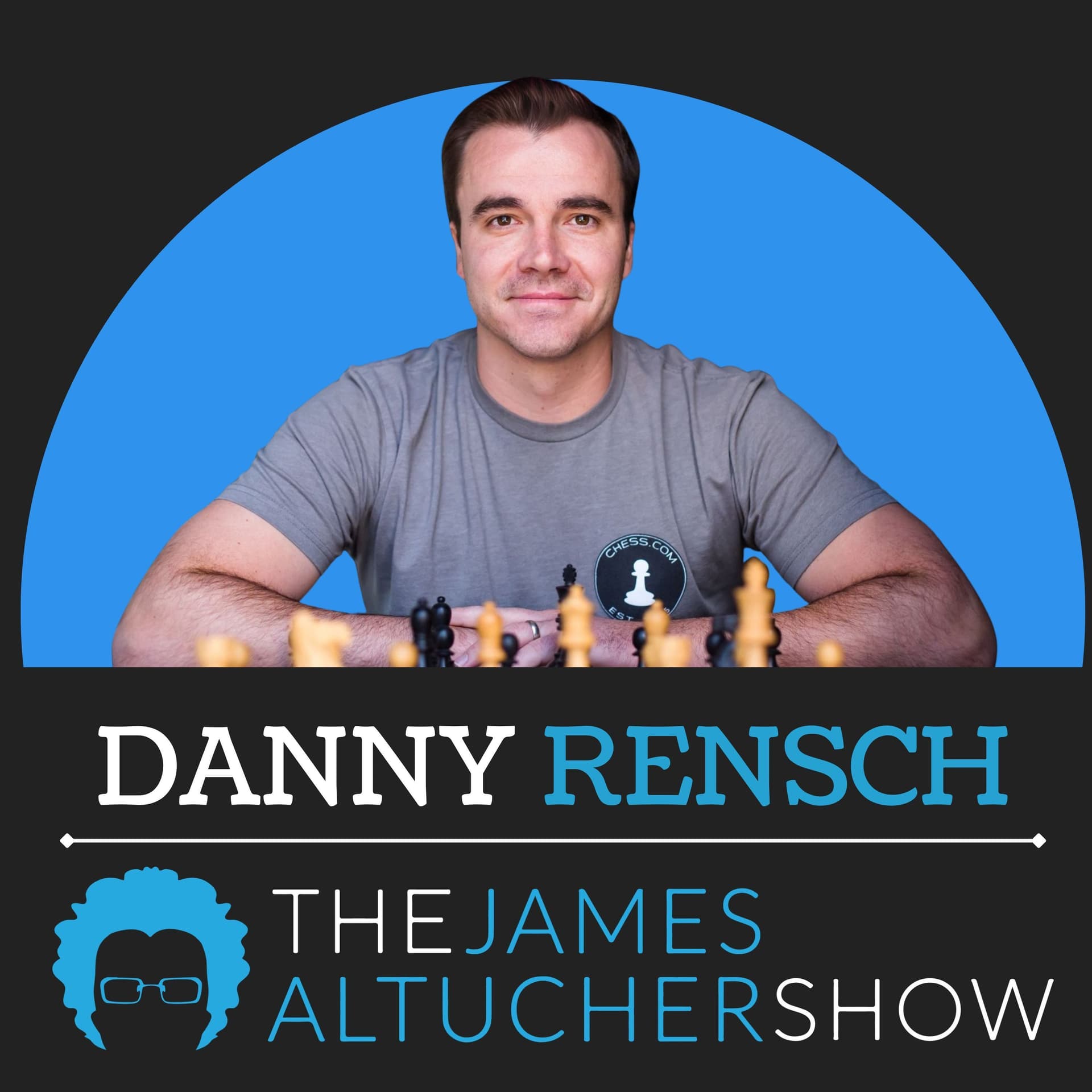
Podcast Notes: The James Altucher Show - Episode: How Chess Saved Danny Rensch’s Life: From Cult Roots to Chess.com’s Success
Episode Overview In this compelling episode of *The James Altucher Show*, host James Altucher interviews Danny Rensch, an International Master and Chief Chess Officer of Chess.com. Rensch shares his extraordinary personal journey, detailing how his early life in a spiritual cult shaped his identity and relationship with chess. The conversation delves deep into themes of trauma, resilience, and the transformative power of chess.
Key Topics Discussed Danny Rensch's Background
- Childhood in a Cult: Rensch was raised in a spiritual collective with a cult leader who had an obsession with chess.
- Chess as a Double-Edged Sword: While chess became a source of mastery and success for Rensch, it also led to personal loss and trauma, particularly the separation from his family.
- Isolation and Resilience: The trauma of being taken away from his family at a young age significantly impacted his worldview.
Chess.com Growth and Success
- Rapid Expansion Post-2020: The success of Chess.com surged from 100,000 subscribers to millions after the pandemic and the popularity of *The Queen's Gambit*.
- User Engagement: Chess.com has over 200 million registered users, with 10 million daily active participants.
- Impact of Cultural Trends: The rise in chess's popularity correlates with increased visibility in media, namely through Netflix series and global events.
Challenges in the Chess Community
- Cheating Concerns: Rensch discussed the growing issue of cheating in chess and the measures Chess.com is implementing to combat it.
- Hans Niemann Controversy: The scandal involving a prominent player raised ethical questions about cheating and its implications for the sport.
- Technological Threats: Discussions included the role of technology in chess, including potential cheating via advanced AI and devices.
Personal Insights
- Transformation Through Chess: Rensch emphasizes how his experiences with chess shaped his understanding of identity and purpose, turning pain into growth.
- Philosophical Reflections: The podcast explores deeper themes of self-love, the complexities of personal and familial relationships, and coping mechanisms developed through trauma.
Key Takeaways
- Chess's Dual Nature: The game serves both as a tormentor and a savior in Rensch's life, illustrating how passion can stem from adversity.
- Community and Connection: Chess.com fosters a global community, engaging players beyond just playing the game but also through content creation and competitive events.
- Resilience and Adaptation: Rensch's story is a testament to resilience, showcasing how embracing one's passion can lead to a fulfilling life despite dark beginnings.
Conclusion The episode concludes with Altucher encouraging listeners to explore Rensch's forthcoming memoir, *Dark Squares*, which promises to delve deeper into his life experiences and insights gained from chess.
Timestamps
- 00:00 - Introduction to Danny Rensch
- 00:43 - Rensch's Journey: From Prodigy to Business Success
- 03:19 - The Dark Side of Chess: Cult Life and Personal Struggles
- 12:38 - Chess.com: Growth and Success
- 14:34 - The Impact of COVID-19 and *The Queen's Gambit*
- 20:30 - Cheating Scandals and Controversies in Chess
- 26:26 - Future of Chess: Technology and Cheating
- 31:14 - Conclusion: Living the Dream
Sponsors
- [Land Rover Defender](https://www.landroverusa.com/defender/index.html)
- [Rugiet](http://rugiet.com/JAMES) - Use code JAMES for a discount
- [ExpressVPN](http://expressvpn.com/ALTUCHER)
---
These notes provide a comprehensive overview of the podcast episode, summarizing key points, themes, and discussions while offering insights into Danny Rensch’s life story and the dynamic world of chess.
Written by AI. May contain mistakes. Listen to the episode to check what was said.
Transcript
Automatic transcript. May contain errors.0:00Being an entrepreneur is a 24-7 job. And when you're hiring, you need a partner that works as hard as you do. That hiring partner is LinkedIn Jobs. When you clock out, LinkedIn clocks in. LinkedIn makes it easy to post your job for free, share with your network, get qualified candidates that you can manage all in one place. For one thing, you can post a job. LinkedIn's new feature can help you write job descriptions and then quickly get your job in front of the right people. You get qualified candidates. At the end of the day, the most important thing to your business is the quality of the candidates.
0:30And with LinkedIn, of course, you can feel confident that you're getting the best. Based on LinkedIn data, 72 % of small, medium businesses say using LinkedIn helps them find high-quality candidates. Find out why more than 2.5 million small businesses use LinkedIn for hiring today. Find your next great hire on LinkedIn. Post your job for free at linkedin.com slash altature. That's linkedin.com slash altature to post your job for free. Terms and conditions apply. What can 160 years of experience teach you about the future? A lot, especially when it comes to protecting what matters. At Pacific Life, we've helped people and businesses confidently embrace the future with life insurance, retirement income, and employee benefits with strategies built on strength and trust and a promise to be here for you today and tomorrow.
1:21Ask a financial professional how Pacific Life can help you today. Pacific Life Insurance Company, Omaha, Nebraska, and in New York. Pacific Life and Annuity, Phoenix, Arizona. I was raised in a spiritual collective that had a cult leader who was obsessed with chess. And when I was nine years old, I learned how to play and accidentally got very, very good at the game. While you wish there was someone around to kind of like, you know, smack you in the face and say like, what is going on here? One of the things that happens to abused people is very often abused children. They don't stop loving their abuser.
1:53They stop loving themselves. While chess itself was tormentor and that getting good at this game actually ended up having me lose my family in many ways and go through a number of different very real tragedies. I would say that the game of chess both was tormentor and mentor and in many ways destroyed some parts of my life and then saved my life in the end because of that.
2:20this isn't your average business podcast and he's not your average host this is the james altucher show there are a lot of strange very strange stories in the chess world i mean everyone remembers kind of the dramas around Bobby Fischer and even some of the dramas more recently with Magnus Carlsen. But I have never heard a story as unusual and as interesting as the story that brought Danny Wrench into chess. Danny in his career, he's one of the first people out and he helps run chess.com, which has like over 100 million users. It's the biggest chess company ever. So we talk about that a little bit, which is very interesting.
3:08But the story of how Danny went from being a kid who played chess to one of the strongest young chess players in the country and why the people around him were motivated for him to do that has to be one of the strangest stories I've ever heard. And we talk about it here. I am very excited about this presentation. Danny Wrench has had success in many areas of life, but in particular, as a young chess player, He achieved the international master title, very special. And then later he achieved success, great success, and is still achieving great success in business as the chief chess officer of chess.com.
3:50But I will say that often the path to excellence is a very dark and twisted path, as many of you know. And Danny has his stories that are very intense and riveting. Maybe we'll get to some of them today. So, Danny, welcome. Thank you, James. And for those of you who were here last year, you remember Danny interviewed Magnus Carlsen here on the stage. So it's my pleasure to now turn the tables on him. So, Danny, on the one hand, I'm very jealous of you. To achieve success young at something that you were so passionate about and so thrilled with, and then to take that same passion and turn it into a career success and business success and financial success.
4:35I mean, chess.com right now, how many users are there? Oh, we have over 200 million registered. We have 50 million monthly active users. That number rotates a little bit. We have about 10 million daily active users, which is a lot of people. 10 million people every day. Yeah, and just to set some background, back in like 1993, I was helping run a predecessor organization, the Internet Chess Club, ICC. Shout out to ICC. I would say we had a thousand people a day, tops. So you've certainly improved the situation for all chess lovers. But I want to roll it back. And you have, is it okay to mention the title of your upcoming?
5:18Yeah, we can talk openly about everything. So Danny has a great book coming out soon, Dark Squares. When is it actually being released? The book will be out in September, September 16th, 2025. And part of it, it describes, you know, obviously you were passionate about chess. You loved it. You had talent. You had skill. But the motivations for the people around you, for you to get great at chess, were perhaps different from the normal motivations people have. And maybe you want to describe a little bit how that started. Yeah, so it's a wild story that is, I guess, why it was time to write a book about it.
5:56But I was raised in a commune. It was a cult I came to accept and learn through lots of reflection and therapy through the years of my life. But I was raised in a spiritual collective that had a cult leader who was obsessed with chess. and when I was nine years old, I learned how to play and accidentally got very, very good at the game. And over that time, over the next couple of years, I would develop a very close relationship with the cult leader and he would ultimately take me away from my family in order to help me pursue this, this mission. What does that mean? Take you away from your family?
6:31Yeah, it's, it's complicated and it legitimately is complicated, which is, which is why there's a book about it. But But one of the things about living in a high stress, high demand, high control group, a cult, and a lot of people, when you hear that term, you associate things like Jonestown or Waco or something with sort of a mass agenda of some kind, whether it be whatever that agenda might be. But there are many groups like this where the agenda is a little bit less violent, but still just as damaging or very damaging, if you will, for the people living in it. And when you have people with a lot of power over other people, you can sort of orchestrate and manipulate what you want.
7:08And the specific dynamics of that are in the story about this collective. But I was taken away from my mom at the age of 12 and placed to live alone so that it would be more convenient for me to travel the world and play competitive chess, which I did as a top young American for many years. And many people never knew this. And I actually didn't speak to my mother for 10 years, even though we lived 500 feet away. very weird dynamic to understand. And ultimately, the ending is, I guess, both a happy one and a tragic one. But I'll let people figure that out when they check it out. But ultimately, I learned a lot in that process while becoming a very good chess player.
7:43And he was in control of where I spent my whole life, pretty much. And so you were living alone, you said, while they were, I guess you were having chess lessons or you were hanging out with. Yeah. No, I mean, I was I was orphaned by a lot of senses of the word at that age, though there were people who were to caretake me, so to speak. I had lots of chess training, and I had the means to travel the world and the support I needed there, but a lot of the other dynamics that some fundamental things you normally don't need to question, like your family or where you're going to be safe that night, some of those things were not always known.
8:17And would your mother ever try to reach out to speak to you? Like, she must have cared about your well-being even as you were removed from her house? There were some different things that went down, but overall, no, because she was also living under the control of the cult at the time, and so it was difficult to do that. And, you know, it's interesting about cults, like, given what happened and given that it probably felt really bad for you and for her, how come, and I don't really, never having lived with the cult, I don't know the answer, how come there wasn't more questioning that this might be a bad thing?
8:53Like, how come she didn't question more or refuse to let you go? You know, you look back at it, and I think it's hard for a lot of people to understand when you have smart, generally thoughtful, in some ways, very ambitious people living in groups like that. While you wish there was someone around to kind of like, you know, smack you in the face and say like, what the fuck is going on here, right? That doesn't always, that's not always the case when you have a lot of people believing in larger sort of, do you want to call them lies, but larger sort of goals of the collective. And so part of the dynamic of that was the belief that not only that everybody comes to the planet with a purpose, I'd like to think we all have purpose and we all want to find purpose in the things that we pursue.
9:30That's a goal of human nature. I think that we all share at least the meaning and the impact we'd like to have in our lives. but the idea that your purpose was ordained by God and therefore the collective leaders were the ones who got to sort of anoint that and decide that and that your purpose was more important than any biological relationship or that anything on the planet. And so when you have a lot of people bought into the same sort of big lie, you end up with a dynamic that allows for people to overlook and buy into things that are generally don't feel very good. And you sort of look the other way.
10:05And in many ways, I think a lot of anyone who's been a part of a dysfunctional family or had tragic things happen or forms of dysfunction, whether it's abuse in your family or whether it's, you know, abuse of all kind, whether physical or sexual or in any way manipulative. A lot of people wonder why it takes so long to call it out. But a lot of the times it's because the people in the environment are protective. And there's statistics that most people are sexually abused by someone in their own family, for example. And part of that is because when you have a dysfunctional element of your own family, one of the most dangerous things to do is to point at the dysfunction within your own family because then your very survival and sort of your self-worth and your acceptance by the people in your family goes away, right?
10:48Or it's at risk, right? And so one of the things that happens to abused people is very often abused children, they don't stop loving their abuser, they stop loving themselves. And you don't necessarily doubt where the information is coming from, you doubt your own skepticism of it. And a lot of people who live in collectives are actually just children of the cult leaders. And so a lot of these dynamics are actually like part of just psychological manipulation. And wow, this, this got deep. You hit on this stuff. I thought we were going to talk about foundingchess.com today, but he brought up the book.
11:17So I hope everyone's going to check it out at this point. But, um, but you know, yeah, that, that is the, I'm not a therapist, but through many years of therapy and discussion, I've come to understand this pretty well. And when you were traveling around to youth tournaments and you were sometimes staying with other families and other kids while you were competing, you know, all over the place. Did you get to see how they lived? And would that make you question what was going on? Or did you sort of think, hey, I'm part of this group that's special. I'm special. Like, what was the... It's funny because as I've reflected on it and, of course, share a lot about the perspective I gained, we've heard a lot about perspective today in this amazing summit.
11:52There are obviously different ways to look at different things. And I agree with something you said very quickly earlier that optimism serves a lot more purpose in our life than pessimism does. What I would say is my optimistic view of what I went through now has given me perspective that while chess itself was tormentor and that getting good at this game actually ended up having me lose my family in many ways and go through a number of different very real tragedies, ultimately the experience I had traveling the world at a young age and staying in other kids rooms and just sort of living in a normal world, at least for a little bit, even if for a very long time, I was keeping this sort of secret and this lie about what my life really was from the world.
12:36I think it ultimately helped give me, um, yeah, a unique perspective, I guess, to sort of challenge, be skeptical, be sort of indifferent to different things that other people felt were very like black and white or dogmatic about the different views of any sort of collective or spiritual belief or religion. So I think in hindsight was sort of able to walk among the collective, but not totally be of everything necessarily. And I think ultimately, as I grew into being an adult and was able to face down certain things without getting into every detail, I would say that probably the views I had of the world and the experiences I had through chess kind of saved me.
13:13Right. And so it both, I would say that the game of chess both was tour mentor and mentor and in many ways destroyed some parts of my life and then saved my life in the end because of that.
13:27Being an entrepreneur is a 24-7 job. And when you're hiring, you need a partner that works as hard as you do. That hiring partner is LinkedIn Jobs. When you clock out, LinkedIn clocks in. LinkedIn makes it easy to post your job for free, share with your network, get qualified candidates that you can manage all in one place. For one thing, you can post a job. LinkedIn's new feature can help you write job descriptions and then quickly get your job in front of the right people. You get qualified candidates. At the end of the day, the most important thing to your business is the quality of the candidates.
13:58And with LinkedIn, of course, you can feel confident that you're getting the best. Based on LinkedIn data, 72 % of small, medium businesses say using LinkedIn helps them find high-quality candidates. Find out why more than 2.5 million small businesses use LinkedIn for hiring today. Find your next great hire on LinkedIn. Post your job for free at linkedin.com slash altature. That's linkedin.com slash altature to post your job for free. Terms and conditions apply. Given that and given both the extreme positives and the extreme negatives that you in particular experience, it's so interesting that you were able to kind of transform that passion into also a career.
14:39Like how did you, you know, now you're basically a co-founder of chess.com, but how did you kind of stumble onto chess.com and begin your work in that arena? Yeah. So I think, you know, anyone's being fully honest about their success. I think it's important to humbly acknowledge the parts of ourselves that got lucky in that experience. Right. And or in some ways, you know, they say necessity breeds genius. Right. The hand you are given is the hand you then have to choose and then try to play as best you can. And so one of the things that happened in my experience of not really having any parents was I developed a bunch of health problems.
15:15And I actually lost all of my hearing at one point. I actually have a cochlear implant in my head that a lot of people don't know. There's a little scar here. One of the earliest versions of the cochlear is called a Baja, which is a bone anchor hearing aid. I'm not going to give you an anatomy lesson, too. But I was bedridden for almost two years. And my career as a child, chess professional, I was never as good as Hikaru. But at one point, I was the second highest rated young American behind Hikaru under 21. And right around that time, I basically just stopped playing chess for two years from about 17 to 19, 18 to 20.
15:46And that was right around the time, 2004, 2005, when the Internet came along. I remember where I was when someone was like, hey, you should check out this video. And I'm like, where is it? They're like, it's on YouTube. And I'm like, what's YouTube? So very quickly, I both had the perspective that I needed to find something else that I was going to do with my chess career. And also, I had the reasons to do it, given how I was limited. And it was sort of converging with the luck, as you would say, with the timing of the earliest days of the internet. And there's more to that story, obviously. And then, of course, what would happen with finding my co-founders and then getting involved at chess.com very early.
16:23But that's the very quick version of it is unluckiness met with the lucky the lucky timing of the Internet. And maybe I had some early inklings that this was the future and doubled down as hard as I could on that. And obviously, during during COVID and the pandemic, combined with at the same time, the release of the TV show, The Queen's Gambit, just took this had this boom in popularity, which directly fed into the success of chess.com. I mean, what was what was the multiples between like 2019 and 2021? like how fast did chess.com grow? Oh, it was insane. The fastest version to explain it to everyone is, we say it was overnight success 10 years later.
17:00It was actually longer than 10 years, but it took us 10 years to reach our first 100 ,000 paying subscribers and 1 million daily active users. And within a year, actually it was less than a year, we had reached a million paying subscribers and 5 million daily active users. The best part about chess though, is that even though everyone thinks of the pandemic and then the Netflix show, The Queen's Gambit, and a lot of other things that happened around that time that kind of catapulted the game into sort of just being more visual and around in the general zeitgeist of pop culture. Once people start playing chess, they tend to stick around a lot.
17:36That's one funny thing we've learned. And so as a lot of people - Because chess players are addicts. Whatever that is. And so, of course, we have had ups and downs, and you do see market resets, if you will, when we have these large inflection points from the different Black Swan events. But most of the users stick around. And that's one thing that's been very exciting and encouraging for us to continue on the mission of growing the game and just finding more ways for people to think of chess in some way. Because we find that once it becomes a part of your life, it really isn't comparable to other games people play that they drop.
18:07It's a little more comparable to things that we see as necessary for our life, like your Spotify subscription and your Strava and your Duolingo. Like people really like playing chess once you start. And why is that? Like, take someone like Marcel Duchamp, who was like this inspiring artist in the early part of the 20th century. He is already, he's like maybe one of the greatest artists ever, but could have even been so much greater, except for the fact that he took 40 years off to get good at chess. So why do people do that? I don't know. What is it about chess? You shouldn't have done that. I don't know.
18:41What is it about chess? You know, chess is, I think, fascinating to humanity as an unsolvable, yet somehow we always feel like the answer is right there, solvable problem. I mean, we saw the presentation earlier that was amazing on sort of the evolution of, you know, Alan Turing and those who invested early on with computers. Chess has always in some ways been sort of associated with something we revere and uphold as like the highest form of human intellectual achievement, right? For right or wrong, it's sort of what we have seen. I think in many ways that has been a cool goal to aspire to because something about the existential problem of chess, which is nobody can play a perfect game of chess, not even Magnus, I mean, not even Stockfish, or now the Lila Zero, which is the predecessor of Alpha Zero.
19:31Yet we know that every position has a perfect move. It's sort of a mind bleep, right? It's like every position has an undeniably objectively best approach, like being in a maze, there is a correct door, yet it is objectively impossible for you to go through a maze and choose the right door every time, right? And I think there's something about that that people find challenging and riveting, and you can equate that to maybe the human condition of sort of trying to aspire to our best selves, knowing that we're probably going to fuck up tomorrow with something that we do. Sorry, my language, but adults in the room.
20:04Kids are gone.
20:09chess.com has become the place where chess happens so let's say there's 600 million chess players around the world chess.com is the place where at some point or other anybody who's even mildly serious is going to go and play a game of chess not only that has become this ecosystem of content where people make streams while they're you know on twitch and youtube when they're playing chess on chess.com and there's amazing tournaments. Like I could play in a title Tuesday and potentially play Magnus or other, you know, grandmasters or whatever. And at the same time, chess has always been this breeding ground of drama as well, perhaps because of the intensity.
20:49I don't know. Maybe you could talk to that, but like, what are some of the biggest dramas you've had to deal with at chess.com? And they're not just, oh, it's just a game. Like, who cares about this. People care. Like there's movies being made about these dramas. I mean, where to begin? On the dramas across the board or off the board. I mean, I feel like I'm in a room, a lot of people have followed a small little scandal that happened a couple of years ago in terms of cheating involving the best player in the world. And of course, Hans Niemann. The fallout of that was absolutely crazy. There are documentaries that have been made that are coming out to Netflix and there is much more being done that will start to hit the world very soon.
21:30For those who don't know, there's also a book being written about it. Not my book, but a book and a movie that has already been bought by Emma Stone and A24. So over the next couple of years, you will see just more iterations and probably some dramatized and fictionalized versions of this drama coming out. That's a big one. There are controversies every day within our world. And as far as asking the question as to why, you know, I don't know. I think that probably every industry has controversies and scandals and from performance enhancing drugs hitting one of the major sports probably every week to some degree and other types of athletes getting themselves in trouble for nefarious activity.
22:11I think in some ways I would argue that maybe chess has just grown enough that some of these scandals are getting the spotlight that they quote unquote deserve because the global interest in the game is bigger. So people actually, you know, give a shit for lack of a better way to put it. Right. But maybe there is something to this idea that because chess is considered so cerebral and so non-action, non-violently oriented that whenever some sort of physical component comes out in an explosive way or in some sort of emotionally dramatic fashion, it really captivates people. It brings a lot of attention in.
22:48I don't know what it is, and I'm in the business of not trying to stop it. I think it's good when people are talking about chess for whatever reason they are. Were you nervous from a business perspective when the Hans-Niemann or slash cheating scandal was happening? Like, did you worry about the effect on chess.com? No, no, not ever. It was a very stressful experience. My book actually opens up. I believe that Henrik Carlsen is in the second sentence of my book. The book opens up with a conversation that Henrik Carlsen and I had moments before the scandal would break. And Henrik knows the conversation I'm talking about.
23:23There was nothing nefarious about the conversation. We were kind of caught up in a moment of not really knowing what to make of what was happening. There were a lot of very good reasons that I share very much in my book to be concerned and to be skeptical. But I believe that everybody, and I even think that you could say this about Hans, even though he was sort of the guy attacking Chess.com and suing me personally and everybody for$100 million and everyone on the other side. there was a part of it that I would say, my opinion is everyone was doing their best and that there was never really any sort of malicious intent other than we were kind of caught up in trying to solve a larger problem and have a conversation about what could happen if someone was cheating, what to do about it and how it felt.
Read the full transcript
24:09But from a business point of view, while it was stressful in the middle of it, we were never really worried. And we ultimately won that case. And for those who don't know, it was dismissed in a federal court with prejudice. That means you can't even sue again because we, so everything, there was, there was no conspiracy. There was nothing to it. And the truth is while we people, while people were interested in it, business was actually going up. Right. And it might've increased because of that, because they saw it in the news and like, Oh, I didn't even know Chester. And then they would try it.
24:38Yeah.
24:42But there is something interesting about the cheating question, which like, if no one said, oh, marathon running is dead because cars can run a marathon. No one ever said that. But I watched a video you did, maybe it was about almost a year ago, where Elon Musk has this company, I forgot the name of it now. Yeah, Neuralink. Yeah, Neuralink. The first person put a chip in his brain and was able to make computer commands based on what he was thinking. So the Neuralink knew what he was thinking and he was able to move things on the screen. So there is some connection now between computer technology and your actual thoughts.
25:21And you asked, and he said at the time, he couldn't ask for the best move. He could just say the coordinates of the moves. So he wasn't cheating. He was still making the moves he would make. But I question that because he could have also, the chip could have been also potentially talking to a program where he simply asks, make the best move. And that could have been a way to cheat if the chip was programmed that way and it wouldn't have been a reach so at some point i mean the technology is already here now to have the chip in your head and by looking at the screen have the chip make the best move is there an existential threat to chess as the most popular game the most intellectual game if this is on the horizon or what do you do to stop that and i ask this also as not just as a of chess, but for chess.com as a business.
26:11Yeah. So it's, it's, uh, it's a long story in terms of where to begin. And I appreciate that our, our conferences probably, um, you know, thank you to everyone here. We're probably going a little bit long here. Um, so I'll make this answer as, as brief as I, as I can, but I would say we've been facing down the existential threat of computers and chess and cheating for actually a very long time. And in 2010 in particular was when really you started to see more smartphones and kind of the access to the these powerful engines on your phone for free became available. And I do share a lot about the evolution of this story in my book.
26:51And there are actually some very fascinating conversations in terms of how we looked at the problem. What I would say is that where I disagree with the existential threat or even predictions of what might happen with this stuff as a really big problem and that we avoided going down a road that was worried about how people would cheat a long time ago. And the so therefore the chip or the phone or whatever they are getting that information from the idea that somebody is getting information, the murder weapon, if you will, if we're talking about the crime, was less where we were dialed into. Now, there are ways, you know, we saw some earlier, Lenoxo said, you know, you could scan the head and there certainly are RFT, radio frequency transmission types of detectors.
27:33And we've worked with different companies that can kind of navigate what signals might be coming in and out of a room. And I've actually learned way more about spyware than I ever intended to learn because of Hans Niemann and the scandal. Shout out to that. So I do know a lot about that. But what I would say is we leaned hard into the idea that the only way to solve this problem would be through data. And so basically what I would say is forget about the murder weapon. What matters is CSI. What matters is crime scene investigation and finding the thread to pull on, which is DNA-based, a little bit more like when you analyze what somebody is capable of, what Stockfish is capable of, what Gary Kasparov was capable of, what Magnus Carlsen is capable of, and you are finding patterns and correlating the probability that somebody could be this good given other information, it's a lot harder to hide cheating than you would think.
28:21And as much as everyone screams on the internet and there are former world champions and a lot of people trying to create scandals about this. The reality is that we are catching grandmasters and we are catching people all the time. And again, if you consider that we have 20 million games played every day, when you hear something like there's a lot of people cheating, it does suck, right? But also there's a lot of people being closed for cheating and we're removing them, right? So in many ways, I say we can't stop crime. I don't know how to do that. Unfortunately, more people need to be more morally ambitious, right?
28:50The truth is we can't stop people from doing bad, But I think we are a lot better and a lot less worried about how they will do bad than you would think. And if anyone wants to know more about that, I have a million lectures online where I have sometimes accidentally gotten our data scientists mad at me because I say things that are probably a little bit too close to revealing our secret sauce of some of the stuff that we've been doing, I think, ahead of the game for a very long time. But we are doing things that are ahead of the game. And we've been working with AI and building models and been doing data before that was a buzzword that everyone was using to raise venture capital.
29:22We've been doing this for a very long time, and we're actually a lot better at it than people would think, and that actually makes me less worried. And I'm not saying that as a flex. I'm saying that as a chess player and a chess fan because I want to be optimistic about the future, and I am, and I'm not as worried about it. Well, Danny, in my opinion, you're living the dream, even though maybe part of the background was nightmarish, and chess.com is a great business. I'm on there probably every single day, probably more than I should be, you know, 6, 7, 23. hours a day. And thank you so much for coming here.
29:56And the book is Riveting Dark Squares, and I encourage when it comes out everybody to read it. So thank you very much, and thanks for putting up with my questions. Thank you, James. Thank you.
From the publisher
Notes from James:
I had no idea this conversation would go where it did. I thought we’d talk chess. Instead, we talked about life, trauma, manipulation, redemption… and how one of the world’s most popular games can be both a tormentor and a savior.
Episode Description:
In this raw and powerful episode, I sat down with Danny Rensch—International Master, Chief Chess Officer of Chess.com, and author of the upcoming memoir Dark Squares—to uncover a story that’s anything but a typical chess tale. Raised in a spiritual cult obsessed with chess, Danny’s path to mastery involved trauma, isolation, and resilience. We go deep into the psychological aftermath of cult life, the beauty and torment of the game that saved him, and how he helped turn Chess.com into a global phenomenon with over 200 million users.
This isn’t just an episode about chess. It’s about survival, identity, and how to turn pain into purpose.
What You’ll Learn:
- How Danny’s obsession with chess began inside a controlling cult
- The complicated relationship between talent, trauma, and identity
- How being taken from his family at age 12 shaped his worldview
- How Chess.com exploded from 100k subscribers to millions after The Queen’s Gambit
- Why cheating in chess is a growing threat—and how they’re fighting it
- What the Hans Niemann scandal revealed about the future of the game
- How to build resilience and purpose from even the darkest beginnings
Timestamps:
00:00 Introduction: A Unique Upbringing and Chess Obsession
00:43 The James Altucher Show: Welcoming Danny Wrench
00:58 Danny Wrench's Journey: From Chess Prodigy to Business Success
03:19 The Dark Side of Chess: Cult Life and Personal Struggles
12:38 Chess.com: Growth and Success
14:34 The Impact of COVID-19 and The Queen's Gambit
20:30 Cheating Scandals and Controversies in Chess
26:26 Future of Chess: Technology and Cheating
31:14 Conclusion: Living the Dream
Our Sponsors:
- Pack up and go even further with the Defender 110. Learn more at LandRoverUSA.com/Defender
- Head to rugiet.com/JAMES and use code JAMES to get 15% off today!
- Secure your online data TODAY by visiting ExpressVPN.com/ALTUCHER
See Privacy Policy at https://art19.com/privacy and California Privacy Notice at https://art19.com/privacy#do-not-sell-my-info.

