
In short
The James Altucher Show: Episode Summary
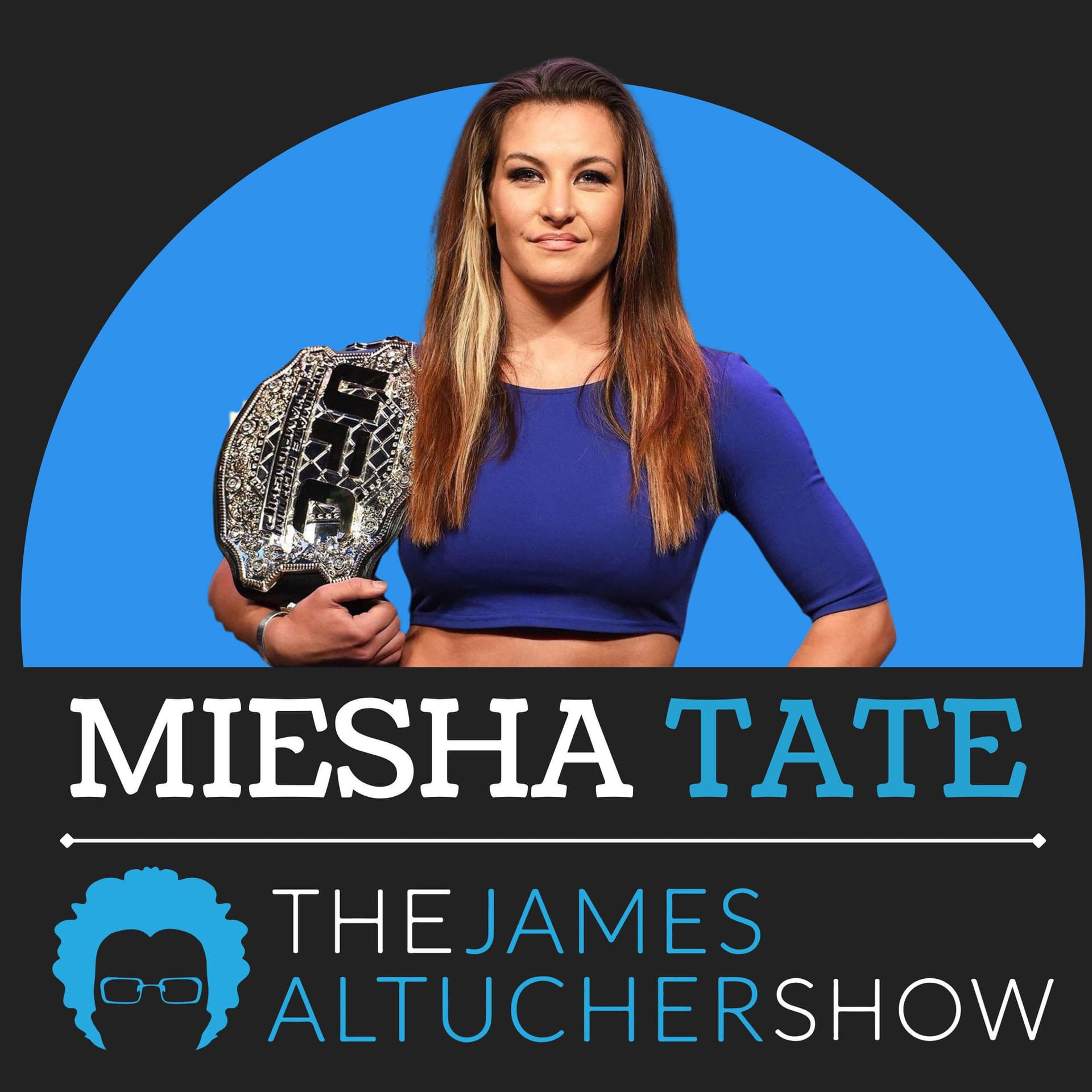
Episode Title: How UFC Champion Miesha Tate Overcame Rock Bottom with a Resilient Mindset Host: James Altucher Guest: Miesha Tate, Former UFC Bantamweight Champion
Episode Overview In this episode, James Altucher interviews Miesha Tate, a prominent figure in the world of UFC and MMA. Miesha shares her journey of overcoming personal struggles, including the pressures of public expectations, depression, and the realization that success doesn't equate to happiness. Their conversation delves into themes of resilience, personal growth, and the importance of facing challenging emotions head-on.
Key Themes & Discussions
- The Illusion of Success
- Public Expectations: Miesha discusses how achieving the title of champion did not bring about the happiness she expected. Instead, it complicated her personal struggles further.
- Mental Health: The episode highlights the reality that even those at the top can experience mental health challenges, including depression.
- The Journey of Self-Discovery
- Personal Growth: Miesha reflects on the necessity of self-reinvention, emphasizing the importance of rebuilding oneself after hitting rock bottom.
- Toxic Relationships: She shares insights into her previous relationship, noting how it impacted her mindset and performance.
- Resilience and Hardship
- Facing Adversity: Miesha emphasizes the significance of confronting and leaning into difficult emotions rather than avoiding them.
- Metaphorical Home: She uses the metaphor of a "home" to describe personal growth—encouraging listeners to embrace rebuilding after setbacks.
- Mindset and Performance
- Mindfulness: Miesha discusses her evolution in handling emotions, advocating for acknowledging and processing feelings rather than suppressing them.
- Preparation for Challenges: The conversation touches on how athletes prepare for fights and the strategies involved in facing opponents, both in sports and life.
Key Takeaways
- Success Does Not Equal Happiness: Achieving high status does not fix internal issues; personal happiness must come from within.
- Embrace Emotions: Allowing oneself to feel and process emotions leads to healthier coping mechanisms and personal growth.
- Rebuilding Identity: After a significant life change, such as ending a toxic relationship or retiring from sports, it's crucial to rediscover one's identity and values.
- The Power of Vulnerability: Sharing struggles openly can foster connection and understanding, both personally and publicly.
Timestamped Highlights
- [00:00] Introduction to Miesha's background and achievements in UFC.
- [45:00] Discussion on reaching the pinnacle of success and the complexities that come with it.
- [55:00] Miesha's experience of hitting rock bottom and how it catalyzed her transformation.
- [59:00] Insight into Miesha’s life today, focusing on family, mindset, and homesteading aspirations.
Additional Resources
- Miesha Tate on Instagram: [@mieshatate](https://www.instagram.com/mieshatate/)
- Miesha's Podcast: [Built for Growth](https://mieshatate.com/built-for-growth/)
- UFC Fighter Profile: [Miesha Tate](https://www.ufc.com/athlete/miesha-tate)
- Documentary: ["The Weight of Gold"](https://tv.apple.com/us/movie/the-weight-of-gold/umc.cmc.1w1mf7oz0hvtbkuupfsw6yt5u)
Conclusion This episode of The James Altucher Show offers an in-depth look at the life of Miesha Tate, a person who exemplifies resilience and strength in the face of adversity. Her story resonates with anyone who has faced personal struggles and emphasizes that true fulfillment comes from within, not from external accolades.
Written by AI. May contain mistakes. Listen to the episode to check what was said.
Transcript
Automatic transcript. May contain errors.0:00Being an entrepreneur is a 24-7 job. And when you're hiring, you need a partner that works as hard as you do. That hiring partner is LinkedIn Jobs. When you clock out, LinkedIn clocks in. LinkedIn makes it easy to post your job for free, share with your network, get qualified candidates that you can manage all in one place. For one thing, you can post a job. LinkedIn's new feature can help you write job descriptions and then quickly get your job in front of the right people. You get qualified candidates. At the end of the day, the most important thing to your business is the quality of the candidates.
0:30And with LinkedIn, of course, you can feel confident that you're getting the best. Based on LinkedIn data, 72 % of small and medium businesses say using LinkedIn helps them find high-quality candidates. Find out why more than 2.5 million small businesses use LinkedIn for hiring today. Find your next great hire on LinkedIn. Post your job for free at linkedin.com slash altature. That's linkedin.com slash altature to post your job for free. Terms and conditions apply. This message comes from Capital One. The Capital One Venture X Business Card has no preset spending limit, so the card's purchasing power can adapt to meet business needs.
1:09Plus, the card earns unlimited double miles on every purchase, so the more a business spends, the more miles earned. And when traveling, the Venture X Business Card grants access to over a thousand airport lounges. The Venture X Business Card. What's in your wallet? Terms and conditions apply. Find out more at CapitalOne.com slash VentureXBusiness. Today on the James Altucher Show. There is beauty in being broken. It's all about knowing that you can get through hard things. And no matter how much life throws at you, that you can build your home back again. I thought that the reason I was depressed and unhappy was that I didn't have enough money yet.
1:51I didn't have enough success yet. I didn't have the belt. I had reached the pinnacle of the sport. I really thought that if I just got there and I had that great payday and I had a beautiful belt and everyone knew I was the champion that I'd be that would fix it right that was everything I was working toward that that was the goal when you reach the goal it's like the pot of gold at the end of the rainbow you did it but the truth was it made all my problems way more complicated because it didn't fix anything because I didn't fix me I was the problem This isn't your average business podcast, and he's not your average host.
2:31This is the James Altucher Show.
2:43Misha Tate. At first, to be honest, I don't know anything about ultimate fighting, the different world champions of fighting, but Misha Tate was the world bantamweight champion. She's also fought with Ronda Rousey, probably the most famous ultimate fighting female champion ever. And I have to say, when I was looking at the video of one of those fights, I don't really know how I would survive even like one quarter of a second because there's so much at play here. But talking to Misha and her journey from beginnings to world champion, as well as the hardships along the way, was a very enlightening discussion.
3:21and people don't realize the hardships along the way, yes, it includes times when you lose, times when you're not as motivated, but you have to look at the underlying issues. Why are you not motivated? Why psychological factors or other factors, other things happening in your life could have great ramifications on your success, probably even bigger ramifications than whether your training was 100 % correct or not. Misha and I talk about this. It was very enlightening. It was a much different conversation than what I expected. I look forward to my next chat with her and I hope you all enjoy this.
4:04Misha, I'm so happy you're on the show. I actually do not know anything about UFC or MMA or anything like that, but I am always interested in excellence and mindset and how you train and how you compete and how you deal with the loss and the things that you talk about on your podcast, on your very excellent podcast. So I'm so glad you're on the show. Thank you. Yeah, no, it's my pleasure. I've been really looking forward to this, so I'm glad I could make it happen. Oh, good, good. You know, I was first learning about you, I was told when you were in high school, you played on the boys' or men's team, right, the wrestling team.
4:41Yeah, that's right. It was just a weird situation how it worked out. And honestly, it really stems from the fact that I just am not a ball sport person. I can't play basketball to save my life. You will never catch me on a basketball court. And that was the only women's sport offered during that season. And I wanted to play a sport. And so my best friend, Sharon, we were sitting in English class, supposed to be working on things. And we were talking about what we were going to do after school. And it was actually her idea. It wasn't mine. I don't think I ever would have thought to go out for a wrestling team myself.
5:15And to this day, I actually don't know why she was inspired to go out for wrestling either. I should ask her. I'm still in touch with her. Was she a strong girl? I mean, no, no. I mean, yes, but no. You wouldn't look at her and think, oh, she'd be a great wrestler. I mean, she was tiny. she's half Korean, half white, and not really somewhat of like physical stature or, you know, she just looked like a normal young girl. And she was just like, yeah, well, I guess they can't tell us we can't go out for the wrestling team because they don't have a women's wrestling team. And I was kind of like, how do you know this?
5:53And she's like, just come out with me tomorrow. And so I did showed up the next day. I didn't have wrestling shoes or nothing. I just went out there and we both did. We got our butts kicked. And that's how I got my start in this whole sport. I'm sure you've probably been asked all this a million times, so forgive me. But when the guys first saw you coming out and wrestling, were they like, no, no, I'm not going to wrestle a girl? Well, when we got to the point of competing, there were times when boys would forfeit. They wouldn't wrestle us. But mostly, from my understanding, that was on the school.
6:29So there There were sometimes like Catholic schools that we would see in tournaments and they would not allow for the males to compete against the females. So we, yeah, we had that issue where, you know, men, boys, I don't know, what do you call 15, 16, 17 year olds? Are they men or are they boys? Probably idiots, but in general, if they're anything like me, did guys have to adjust their strategies at all? Or did you have to adjust your strategy? like they kind of have to make sure, are they thinking about being inappropriate? Like what's going on through a teenage boy's head? So I have talked to a few men and or boys that post everything because it's not a conversation that's like you have on the mat right before you shake hands or something.
7:13There's no agreement. So it totally depends on the individual. And some boys were clearly raised to be a little bit more careful. They're like, I don't really know where to put my hands. And other guys were like, I'm just going to try to get her out of here as quick as possible. And they're very aggressive and they don't care at all. So I've had all different kinds of experiences, but I would say that for the most part, I would experience the guys that were just didn't know how to do that. Like they looked at it as such a different situation and it's an awkward age, right? Like being a teenager, like developing on all, you know, either side of it is difficult.
7:51And so I think it was hard for everybody, but I just got used to it really quick. I imagine it was great training for you, right? Because as these boys are turning into men, they're getting like bigger and as they get older, it's probably great training. So when you actually went for the girls title, did you like clean up? Was it easy for you? Actually, that was the beauty in wrestling almost all men all the time. It was when I faced a female, it was so different and nowhere near as challenging. I remember that my very first match ever in high school happened to be against a girl, which wasn't common.
8:34I didn't get to wrestle a lot of women because there were no women's wrestling teams. So it had to be other women who were stragglers on these other men's teams too. So I mean, these girls were tough just the same. And it's not like they were getting to wrestle only women and I was having to wrestle only men. No, everybody was out there hustling. And, you know, if you were a female, you just had to act like one of the guys. But my very first match, I remember freshman year, I was, you know, didn't know what to expect. And I wrestled this girl who's a senior and she kicked my butt. I lost that match.
9:06And that was the only match the rest of my career as a female wrestling another female but I ever lost. Because then for the years, you had so much experience. I'm wondering when you started professionally fighting in MMA and then later UFC, how did you keep the training up at a high level? Because you were the best in the world. Were you able to train with men? Like, I'm wondering how you kind of pushed yourself the way you pushed yourself when you were in high school? I think wrestling pointed out my work ethic and it highlighted how tough I am. And I still think to this day, if I had never wrestled, that I may not know how tough I am and how capable I am.
9:51And for me, that's just a huge part of my story. When I know that there are difficult things at hand, I'm like, oh, I know I can do difficult things. I'm very confident in that. And I think it gives me a different attitude in life. Like I love a good challenge. I know that I'm capable of doing hard shit and I just go for it. And that's also why I don't really, I don't really hesitate on most things that I do. I might be indecisive about what I'm going to eat for lunch, but like, but like when it comes to important things, like, are you going to fight? Are you not going to fight? Are you going to fight again?
10:25Are you not going to fight again? Are you going to go in this business opportunity or are you not? Like for me, it's most of the times it's like, let's just jump and see what happens. Then we'll just figure it out. And that's how I got started in fighting. Yeah. So like, I'm sure during your career though, there were moments of self-doubt and it's not like you can fight one day, lose, and then fight the next day to kind of recover what every ego might have been lost during that loss. Like I'm sure there are periods of self-doubt. Did you kind of go back to those moments when, hey, I used to fight kids, you know, wrestle kids, you know, 50 % higher than my weight and defeat them.
11:05I can do anything. Like, how did you restore confidence in moments of self-doubt? And what was like a big moment of self-doubt? Oh, yeah. This is such a good question. And it's so, there's so much to this. But for me, I started out my career, which I didn't know I was going to lean into fighting. Actually, I was not for that as I went into college. I didn't think that I wanted to fight at all. What did you think you wanted to do? I thought I wanted to be like a therapist, like a physical therapist or work with athletes in some way, maybe psychology, you know, getting into that a little bit. So I thought that's what I would want to do.
11:40But as the sport unfolded and I found myself in mixed martial arts, the last thing I wanted to do was fight. I said, no way. And it's so funny how little you know about yourself sometimes, right? You're just sure about something and then you have this epiphany moment and it all changes. And you know, we've all had those, especially when we've really dug our heels in the ground on something and we're just so sure about it. And then you're like, actually, maybe I was wrong. And you turn, you know, everything feels like it's flipped on the side of its head. I don't think a lot of people know what those epiphany moments are like.
12:13Like, were you going into college and you're like, oh, I don't really want to, I really miss just fighting and there's this path now open that never had been open before. I don't want to be a physical therapist. And I don't know, what was your moment like? What was that moment for you? I think the moment for me was, there's always this kind of crescendo to these moments for me. And it is a path of saying, what's the worst that can happen? And just taking a chance. I think a lot of people are too afraid to take a chance because they fear failure. And if you fear failure, you can be held captive.
12:54And then you just never really find out what you're made of. So sometimes the best thing you can do is try to fail as much as you can. And then you really learn what you're made of. You know, it's really true. I've seen this in a variety of things. I've made money and gone broke and made money and gone broke on many different occasions. By the third or fourth time, it's always horrible to make millions and then go broke. I kind of call it failure porn when people are like proud of their failures. But I did learn by the third time or fourth time, I know how to do this now. And I know that it requires mindset and it requires action.
13:30And I know how to get back those mindsets and take those actions. That's so good. And that's exactly what I'm saying. So I tell people about the metaphorical home. The first metaphorical home that you might build might be as a child, and it might be with chalk sticks or popsicle sticks or something to that effect. And it's obviously a small home and you can't really live in it. And then as you get older, you start learning how to build your home that you want. But the first home that you build isn't going to be as good as the next home that you build. Every time that you try to build the home, you take risk, right?
14:05And what if the home burns down, do you have the skills to build it again? And if so, then don't fear it burning down because you'll build it again. And every time you get an opportunity to build it again, you're going to get to build it more to your liking. You're going to get to put that extra bedroom that you wanted over there and you're going to get to rearrange the kitchen. And I don't know how many houses you've been in, but I've moved around quite a bit in my life and I've lived in many different homes and I've gotten all these collective ideas and I've stayed in other people's homes. And I'm Like someday, you know, when I actually in the real world build my own home, I have such a better idea of what I want.
14:39But I've moved through the life and, you know, going back to the metaphor of every time that you recreate your metaphorical home, you're going to build it back better. So don't try to hold on to that home. Like let it burn to the ground. It's okay. It's going to burn to the ground. And you're going to get an opportunity to build it more to your liking. So just as you mentioned, you've been rich, you've been broke, you've been rich, you've been broke. But each time what it taught you really is that you have the ability to build yourself again. You are self-made and it's you that matters. So everything else can go up in flames.
15:14But if you have the mindset and you have the wherewithal to say, okay, even if I go back to zero, I have the ability to do it all again, then it becomes less scary. You start to be like, okay, if I fail, I fail. And I love this metaphor with the home. And so let's take it back to when you first decided, you know what, I'm going to give this fighting thing a try. The worst case scenario is that you break your arm or leg or get seriously hurt. I mean, that to me is a scary worst case. I don't know if I could survive that worst case. Well, I'll tell you my first case. I had about three weeks of stand-up training, which is nothing.
15:53And that's not even three weeks. I'm not talking about training every day. That's like, you know, Monday, Wednesday, Friday, learning, striking. You don't get good at anything you want to do in three weeks. So I'm just, you just don't. And I had my first fight and this girl, I took her down. It was very easy takedown. And then in the second round, she put me in a Muay Thai clinch, which is basically a collar tie. So you think like their hands are kind of like wrapped behind your head and the forearms are coming over to like your collarbone. and they have your head kind of stuck in this pocket of their arms here.
16:25And I did not know what it was and I didn't know how to get out of it. And back then they had no rules for protecting amateurs. We didn't wear any protective gear, no headgear, no knee pads, no puffy gloves. I mean, it's like full on MMA or for people who watch the UFC, full on. First fight, I'm 19 years old. I had three weeks of standup training and wrestling in my background. I don't even know jujitsu very well. But I said, okay, I'm going to do this. What's the worst thing that can happen? Well, the worst thing that happened is I got my nose absolutely smashed, just obliterated. And I'm pouring blood out of my face like a stuck bag.
17:04It's going to get off my hair for a second. And I remember I'm just desperately driving and diving at her legs to try to take her down again because I don't want to eat another knee. And I think I slide kind of like, imagine if you're trying to bully through someone holding your head in this position. So I do it by kind of like sliding myself down her body. And I think eventually I'm like at her ankles. And so she spins around and she gets on my back and she's trying to choke me at first. And if you could visualize this, I'm on my knees and I'm on my forearms and I'm kind of coked like this. And I'm trying to turtle up so that she can't get under my neck with this choke.
17:43She's got her hooks in and she's like a backpack right now. And it was this very surreal moment for me where I'm watching blood pour in a steady stream out into this pool that is getting bigger quickly, right in front of my eyes. And I had to kind of like digest in this moment what had just happened. And, you know, what am I made up? What am I going to do about this? I'm not in a good situation and I'm hurt. What am I going to do? And it was the only time in my career I think that I've lost my temper. And I just got mad and I said, I'm going to kick her ass. That's what I'm going to do about this.
18:24And so I started bucking her and I kind of hula hooped her down into the guard position. So now she's underneath me and I just stood up to the ceiling and I just started raining down punches. And I mean, there was just blood everywhere. It was all over hers, all over me. And that was how the second round ended. And that is basically how my first fight ended. So wait, when, and this is a very interesting thing. So was there conscious thought? Like, did you actually think to yourself, oh, I'm hurt. What am I going to do here? Or it was just like, the blood's going down. She's trying to choke her.
18:59You're instinctively, you know, bringing your shoulders in so she can't get her arms around your neck. Did you just like the adrenaline just shot up? Or did you consciously think I'm going to kick her ass or did the adrenaline just shot up and you reacted? So I knew I was hurt. That wasn't really a conscious thought. It was kind of like this visual as I'm seeing this blood getting bigger. And then all of a sudden it was like, fuck this. Like, I am not, this is not how I'm going down. Like I, I've got to fight. That's the only thing I can do. Like no one's coming to save me. No one's coming to save me.
19:34Were you scared that you might like, could she break, if she chokes you? Like, could she break your neck? Like people have broken necks? Nah, she wouldn't have broke my neck, but I just wasn't ready to lose. I wasn't ready to give up. Granted, I did lose the fight because my corners threw in the towel after the second round and that sucked. Even though you were above her and you were raining the punches down? Why did they throw in the towel? Okay, so I'm 19 years old. I'm a broke college kid and they're probably like, she's got a really broken nose. And they probably knew that the dangers of of continuing to fight at that point and the injuries that I would potentially sustain.
20:07Even though I was winning again by the second round, we have to start on our feet again in the third round. So the dangers of me going back out there for zero pay as an amateur with no medical, like that's all on me, probably outweighed the benefit of even if I went and got a win. But I'll tell you what, my corners look like they just saw a ghost because women didn't fight back then. This is back in 2005, okay? So this isn't like, this is not a thing. Women didn't do this back then. And if they did, nobody knew about it. You know, so it's not, it was not easy for these men to see a woman go out there and sustain that kind of damage.
20:44And I also think part of their protective mechanism as males, as men, kind of kicked in. It's like, well, we can't go out there and fight for her, but we can save her from going out and hurting herself or getting hurt worse in the third round. So, I mean, looking back on it, it's all good because it lit a fire under me. and I wonder how my career may have been different if I had gone out and won that fight or I'll never know. I never got an opportunity to do that. Could it have been a little strategic on their part? Like in the sense that let's say I'm a coach at that point and this is your first fight.
21:16I'm thinking to myself, okay, I love her potential. She's gotten her taste now, literally the taste of blood, but she's got a taste of what a fight is like. Now we can go back and really train and she's going to be great. But I don't want to hurt her here where she's not even making any money? Well, I did have an opportunity to ask them what their thought process was at the time. And I remember the consensus kind of being, we just didn't really know what to do. And we didn't want you to get hurt worse. It's an amateur fight. There's no money on the line. It's, you know, what was the purpose of letting you go back out there and get more hurt?
21:52And they thought I would never fight again. Ah, they thought you were going to give up. Oh yeah. They were like, this poor girl had no idea what she was getting herself in. And here we are, kind of like, let her go out there with three weeks of training, which they weren't really responsible for me. I mean, I was an adult. I made this decision. I signed up. Mind you, I signed up for this fight before I started training at this gym with these people that I'm brand new working with. So it's not like we had this long relationship and they really knew a lot about me or my potential. There was no future in women's MMA.
22:27The UFC was barely getting any kind of positive, I wouldn't even say at that point it was positive, but just any recognition at all. I mean, it was still very much considered barbaric. Nobody wanted to sponsor it. Corporate companies wouldn't touch it. It was considered, yeah, just human cockfighting. Those were terms that were slung around. So even for the men at the highest level, they still were not being supported widely. and then for a little 19 year old girl to come in and fight on a Indian reservation for no money they were to kind of like oh that was a bad idea and should probably never do that again.
23:06So you end this fight and your nose is broken so it must have been in pain and you probably still had that adrenaline rush of essentially winning that round so that probably balanced the pain from the nose but the next day you wake up you're probably just in pain now what made you say okay hey, you know what? I'm going to do this again for no reason. What made you do that? Exactly. And that's what everyone thought. Why would you do that again for no reason? I was just drawn to it. I was drawn to it. That's just the best way I could say it. Like a moth to a flame. Something I knew that probably wasn't a good idea, but in my mind, I had to do it again anyways.
23:42And it really started with redemption. It was a bit of pride. I wanted to go out there and do it better. Like I wanted to prove to myself that I could get better. And I really thought the only reason that happened was because of a lack of experience. I knew that if I showed up every day and I worked hard, that I could get better at this and I could learn it and maybe I could win a fight, you know? And it was that that kind of drew me. I was like, I just want to fight at least one more time. I want to prepare the right way. And I want to see what it feels like to win a fight. And that was my driving factor at that point.
Read the full transcript
24:21Did your training change at that point? Like, did you start to say, okay, I wasn't taking it seriously enough. And then did someone help you decide, okay, this would be a serious training routine. It's not only the physical ability, but you need to learn the different martial arts and then you need to learn to hit because you're a wrestler. Like what, did that inspire you to change your training?
24:45take a quick break if you like this episode i'd really really appreciate it would mean so much to me please share it with your friends and subscribe to the podcast email me at altitra gmail.com and tell me why you subscribed thanks
25:07I need to let everyone know that my entire life has changed because of this podcast sponsor, Uplift Desk. Normally I wake up, get to my desk, and sometimes I'm at my desk sitting from 7 a.m. to 7 p.m. or even more. I hate it. I hate the fact that I no longer move. So I started using the uplift desk and it's completely changed my routine. I'm like happier. And it didn't just improve my posture. I'm moving more. I feel like I'm thinking more clearly. It's like I see more of the world because I'm standing up and I actually enjoy being at my desk. But even this little punching bag, when I get upset, I can like punch it.
25:49I realize how important your workspace is to just your general wellbeing and health. and it's just important to move more during the day. Uplift Desk definitely helps me be a little healthier or a lot healthier my time when I'm at my desk. I have more energy, more focus. It's only been a few weeks, but I honestly feel happier when I'm standing up at my desk and people can even tell when I'm on Zoom calls, for instance, that I seem to be more energetic. So look, your workday doesn't have to leave you feeling worn out. Go to upliftdesk.com slash James and use the code James to get four free accessories, free same day shipping, free returns, and an industry leading 15 year warranty that covers your entire desk plus an extra discount off your entire order.
26:44That's U-P-L-I-F-T-D-E-S-K.com slash James for this exclusive offer. It's only available through this link. So elevate your workspace with Uplift Desk. Go to UpliftDesk.com slash James for a special offer.
27:12being an entrepreneur is a 24 7 job and when you're hiring you need a partner that works as hard as you do that hiring partner is linkedin jobs when you clock out linkedin clocks in linkedin makes it easy to post your job for free share with your network get qualified candidates that you can manage all in one place for one thing there you can post a job like this new feature can help you write job descriptions and then quickly get your job in front of the right people. You get qualified candidates at the end of the day. The most important thing to your business is the quality of the candidates.
27:43And with LinkedIn, of course, you can feel confident that you're getting the best. Based on LinkedIn data, 72 % of small, medium businesses say using LinkedIn helps them find high quality candidates. Find out why more than 2.5 million small businesses Use LinkedIn for hiring today. Find your next great hire on LinkedIn. Post your job for free at linkedin.com slash Altature. That's linkedin.com slash Altature to post your job for free. Terms and conditions apply. Yes, absolutely. I was going to Central Washington University and I had joined the club sport at the college, which was like two days a week.
28:25And it was just run by a couple of fellow students who happened to fight as amateurs as well. And mind you, that's where I was like, no, I don't want to fight. I just want to learn jujitsu. So, you know, kind of backstepping a little bit. This is my precursor. So I started training there. And then I went to my first fight event and I watched what fighting actually was. And I thought it was going to be something violent and ugly. and I probably wasn't going to enjoy myself, but all my friends were going, so I would go. And I left with a totally different mindset about the passion, determination, drive, everything that I saw displayed out there, whole heart and soul.
29:08And it was the referee got on the microphone and made an announcement that he, in three weeks, was going to have his own fight card and there was going to be females. It was actually aiming to be an all-female fight card. There wasn't enough females to fill an entire fight card by the end of it. But he was looking so desperately for females to fill out an amateur fight event that he called to the audience. And it just spoke to me. It just caught me at the right moment in time when I just had this big perception shift on what fighting could even potentially be. Something that was totally of disinterest to me became something that I was adamant that I had to try it.
29:48And that's why I only trained for three weeks because I just signed up in that moment and I went for it. And I ended up with a broken nose and a loss. But I'll tell you what, that night a fighter was born. I mean, like, did you go back to your dorm room and your friends are like, girl, do not do that again. What did your parents say? I think I aged my mom 10 years that night. She found me in the back bleeding over a trash can. And she kind of just swooped me up and took me home. And it was right before winter break, actually. So we were in Wenatchee, Washington, and she had to drive all the way in the snow and ice back across the mountain pass.
30:31But she did it for me and she took me home. And I had to endure my grandparents visiting on my dad's side. And my grandpa is actually, I think it's fair to say he was chauvinistic for sure. And he was like, what the hell? And he's this big six foot seven bellowing man, you know, looking down on me and what the hell are you doing that for? What the hell are you letting her do that for? And they're like, let her. My dad's like so embarrassed, you know, because it just didn't make sense to anybody. It just like, why are we, you know, why is she paying? And why are you guys paying for her to go to college and get an education and look at her?
31:13And my face. I hate that statement. So my face looked like a lion and a raccoon had like melded together. I had no definition in my cheekbones because my face was so swollen that it was like my nose was basically flat with the rest of my face. That's how swollen my face was. And then my eyes were both completely black. So I didn't look very good. And so like, okay, did you weigh in the consideration that, okay, if I continue fighting, I might permanently not look good? And that does sound like a chauvinistic question, but it's really not. Like, I'm just, okay, everybody would think that. Right.
31:55I think that's a fair question. And it's one of those things you think about. Like, I mean, have you ever gotten on an airplane and thought, what if this crashes? Well, I have a special technique for that, which is that I actually hope that it crashes. I pray for the crash. And then you're like, oh, you're going to counter it by... Everything else is upside if it doesn't crash. So every time there's turbulence, I say, please just land on the Island of Lost because I love that TV show and I'm good. So... Yeah. Yeah. Okay. I love this. You know, I think it's a similar mindset. It's just like you acknowledge, people acknowledge every day that when they get in their car and drive somewhere that you could get in a car accident.
32:38Every time you get in a plane, you could get in a car crash. but like, does it limit you from doing what you want to do? And in my mind, it was just like such a small thing to think about. You acknowledge it, but you kind of just believe it's not going to happen. And you say it's a little question. It's really not. But I think obsession and passion for something makes all the other questions little. Like if someone were to say to you, put all your money into McDonald's stock, you would say, no way I could lose everything. It's not like you're passionate about owning McDonald's stock, but you're passionate about doing something where you could break bones and ruin your looks and all this stuff.
33:16But okay, you are passionate about it. So those questions become little. I think you're totally right. That's a great way to explain it. I'm going to put that one in the bank. Well, good. And then when you started doing the actually professional, like what was it like when you first had the opportunity? I mean, at this point, it's just a passion. It's not a career. At what point did it become, there was sort of career at the end of the tunnel there where, oh my gosh, I could potentially do this for a living instead of just as a passion. So my next six fights were all amateur means that I didn't get paid at all and I won them.
33:51And that all happened relatively fast. And you had to learn how to fight, right? Like you had been, you had been doing the wrestling and the grappling for the four years in high school. You had to learn actually how to punch someone in the face. just wrestling. So not even the grappling or the grappling part implies the submission. So there was still a lot that I had to learn on the ground too. I basically only knew how to try to control someone's body and push their shoulders on the floor. It doesn't really win you fights. I didn't even know how to like let go with another arm and punch. In my first fight, I don't think I hit her on the ground in the first round at all because I just, I didn't quite know how to do that.
34:27I didn't know how to balance somebody and keep them where I wanted them while removing one of my limbs. I mean, all your limbs in wrestling are just in action at all times, and you're trying to press someone to the ground. So I still had a lot to learn on the ground, but I won my next six fights, and then my coach got a call, Rich Guerin, at Yakima MMA, and he said, Misha, we got a call. They're looking for 135 pound females to do this tournament. Well, this was Bowdog and Hook and Shoot, which really was the first organization to support women fighting and give us an opportunity. And was there an audience for it?
35:05Like, did they do that because there was an audience for it? Yeah, there was. And it was an all-female tournament. So the tournament style was, they wanted to see who would be the best out of 125ers and 135ers. So they had a tournament all in one day for 125ers. If you won this, you would fight 125 of 125er, you'd win, you'd move up the bracket, you'd fight another 125er, you'd win. And then you would fight the winner of the 135 pound bracket, which is just wild to me. I was like, well, why do the 125ers have to make 125? Then can't we just know that they're 125ers? But anyways, it wasn't my idea.
35:42I was a 135er, so I didn't really care. I went out there and I fought Jan Finney who was like a hometown girl from Evansville, Indiana She was the hardest hitting woman in MMA, you know, she was really kind of you could just tell like set up To like win this whole thing. That's how it felt to me anyways I'm, not saying she'd have to work for it, but we went out there we fought three rounds and at the end of it We were already exchanging like compliments to each other and like, you know, just shooting the shit like it's nothing personal I was like, you kicked so hard, like my leg. And she's like, oh my God, your takedowns.
36:19And we were like, just, yeah. And we're like, what's taking so long? And the ref comes over and says, they can't decide who won. So we're going to go another round. So we had to like all of a sudden like get our mean mugs back on. And we came out for a fourth round and we fought again. Similar thing happens. Referee comes over. You still can't agree on who won. So you have an option to either fight another round, or they said that I, the referee, can choose who won since I had the best seat in the house. And one of you has to fight again, right? One of us had to go on in the tournament. So we're both exhausted at that point.
36:59And we say, just, yeah, let's agree. The ref's going to choose. And he raises my hand. And I said, oh, thank God. But then I was like, oh, shit. I have to fight again. and I've gone four rounds and I'm absolutely smoked. How do you do that? Like, does your opponent, they also did a bunch of fights before or like what, or are they fresh? So my opponent was quite fresh. My opponent was Caitlin Young, who is absolutely a savage striker. She's just, you know, she's brutal. And she went out and fought a girl who had no prior experience and knocked her out in like 16 seconds. Wow. So that was my next opponent.
37:43And yeah, needless to say. Did you know at that point techniques to avoid strikers? And like, did you have a strategy in mind? Yeah, I did. But I was still very rudimentary. I wasn't, you know, I was like this when I was striking. My hands had to be up and my shoulders were up. And I didn't really, I didn't know how to flow and move and have a dynamic striking style. My striking style was just try to avoid damage until you can get a hold of them. And that's basically it. So I was very stiff and flat-footed and I was still very, just trying to wrestle these girls and get them down and submit them or ground and pound.
38:18So, you know, I go out there and I try to take her down and she's already starting to pick me apart on the feet. I mean, she's really good. And I know this is not a place that I want to be. So I try to take her down and we were in a boxing ring, by the way. They didn't have like enclosed cages or anything like that. So when you try to take someone down, even now, sometimes people will instinctually just grab the cage on accident. Referee has to reprimand that. But in a ring, it's even worse because you don't even have walls to press up against. So she kind of ends up holding on over the rope as I'm trying to lift her.
38:51And it's like, I lift her, but she doesn't go down. And I don't think this was intentional, but it just what happened. And that was it. That's all that I had. I didn't have any more energy. So I just got picked apart. And eventually I got kicked in the head so hard. It was like a baseball bat. Just imagine, just like crack. And I'm down, like ragdolled. I'm knocked out. And so that was that fight. That was that fight. Yeah. I woke up at some point and I had no recollection of that fight or the fight for it. Did it come back later? Yeah. But it was weird because my corner man was telling me, remember you fought Jan Finney in the first round.
39:33And I was like, it was like a story I'd never heard. I was like, what? And again, like the next day, did you say to yourself, okay, sign me up again? I'm basically, yeah. And so at what point did you say, because, okay, were you disappointed? Were you sad that you lost? Like you must have been. Oh, yeah. I was devastated. I was really sad. I had a swollen, like my lip was swollen, my jaw was swollen. I didn't feel great. And I was really devastated because I thought that if I got past Jan Finney, that I should be able to win the whole tournament because she was the toughest draw to draw at the beginning.
40:09But I was wrong, and I learned a lesson. You just never can underestimate anybody at any point at any time because they're all hungry, and they're all coming for it. And that was kind of my takeaway from that fight. And to some extent, like now, fast-forwarding, you probably would prepare for people by looking at videos of prior fights they did. So you know how they fight, you know what approach you're going to use. Like to what extent has preparation included not just physical training, but also kind of opponent-specific preparation by studying videos? That's changed the game. You know, having video on fighters and being able to study them and know their tendencies and the things that they do.
40:50But I will say, you know, watching someone doesn't explain how they feel. So, you know, there's only so much that you can take away from video. And some people get really obsessed about this. I mean, they want to watch everything and they want to watch it over and over again. I like to go through, I like to watch the videos and I'll do it maybe two times in a camp and I'll pick what I want to see. And I'll leave the studying up to my coaches because I don't want to get too carried away and thinking that watching the video is going to tell me everything that I need to know about fighting this person.
41:22Because again, people will watch me fight and I've heard this before from girls that I train with now that are my training partners. I'm like, man, I watched you fight. I thought you'd be a tough fight, but the way that you feel is so different. And I have that experience as well. Sometimes people have these offbeats and rhythm changes and little things that you just don't see on a video until you're right in front of someone and they're socking you in the face or they're taking you down. And you can't tell if someone makes it extremely hard to breathe on the ground once they're on top of you.
41:55You know, that you just assume so, oh, well, they took her down. Like, what does it feel like to have Misha Tate on top of you squishing the life out of you? You don't experience that until you're in the cage with me. Although they could say, oh, you know, five times out of six, she does that technique. So make sure I don't let her take me down in that way. I'm going to use this technique and they practice it with their training partners and so on. So it pretends to be you and they prepare specifically for you. But then I wonder if that takes them out of their comfort zone because now they're training techniques that maybe they're not as comfortable with just to prepare for you.
42:29Yeah, it's such a hard thing to really know if you're getting it right. You have 15 minutes to prove if all that months and months of training and the way that you and your team strategized, if it was right. And that's it. You don't get anything else. They're preparing by watching your videos. So if you try to say to yourself, okay, what's one unique technique I can develop that they didn't prepare for that I'm going to throw out there to throw them off? Yes, absolutely. And I also try to think, what are my tendencies? Like if I were going to try to beat me, what are my holes and weaknesses? What do I tend to do?
43:04Do I drop my right hand consistently? Oh, they're probably going to look for a head kick. Let's maybe try to time that then. This is probably what they're going to try to do. And so it goes deeper. It's like playing a game of chess. You know, you've got multiple strategies kind of going. And sometimes all the things that you prepare for don't even happen. That's the craziest part. Like this last fight, the girl that I fought every single fight before me, she's blitzed people. Every single one. And it never happened in our fight. Never happened. So maybe she thought that if she tried that, you would be ready for it.
43:35And so she worked on some other techniques or whatever. She must have. And it also depends how much you press somebody too. Maybe her other opponents didn't put the kind of pressure that I did. So she was more on the move where maybe other times people were sitting more stationary and she could kind of come in and come out. which is what she likes to do. She likes to kind of blitz in and then be gone. And so it's just styles make fights. And so ultimately, the best advice is to focus on being your best self. Because if you show up as your best, the likeliness of you winning goes up. You could spend all this time preparing for this one thing that this person does all the time and then never come up in the fight.
44:14And how many resources do you want to put into that one thing that you're just so sure. And fighting just doesn't really work out like that. I mean, it's like life, you know? You can just prepare and prepare and then all of a sudden it's like, oh, we gotta change everything. It's totally different, you know, trajectory change. And I'm very interested in this, like the preparation part. So, you know, for instance, you mentioned chess and when two chess players prepare for each other, there's databases of all their games, of everybody's games. So you can see, oh, this guy or a woman plays this way and this way and this way.
44:46And you're right. you could prepare for hours for, oh, the last 20 tournament games, they played like this. And then they could do something completely different. And you do feel that you just studied and memorized and practiced this one opening, say, or strategy, and it didn't work out. And you do feel disappointed. And the advice is what you just said. Just try to be the best. Who cares if they prepare for you? If they prepared for you, they're not being themselves. You're going to be a better version of you against whatever they have to throw at you. Yeah, that's exactly it. You know, you could kind of get a sense of someone's style.
45:22Are they mostly striker? Are they mostly grappler? Are they really a specialist at something? And if they're really a specialist at something, then you should have an idea of what that looks like. But even there's like last minute opponent changes. That happens all the time too. So, I mean, how much can you really, and at what point is it a good idea to invest so many of your resources into one thing? And so I mostly stick with the idea that I got to work on me. I got to work on me.
46:06And again, a lot of that, I'm sure, is mindset. Like, you know, take your matches against Ronda Rousey. Obviously, these were big media drawing events. They were career critical events. After the first loss, which by the way, I mentioned earlier, I haven't really watched a lot of UFC. I watched that fight and I kind of was almost in pain watching that fight. Like, I don't know how you didn't break your arm in that situation. Well, I tore some things. Yeah, like what were you thinking when it didn't seem like you were trying to get out of the situation when she was doing the, I guess it's called the arm bar.
46:46She's trying to break your arm basically. What were you thinking right then? The end of your, I think it was the first fight. Yeah, well, it probably didn't seem like I was trying to get out because I just couldn't. She just has such a good arm bar. I mean, I desperately wanted to get out, but once that is locked in with her, it's just so difficult to move at all. She has a great way of controlling the body and so difficult. But I remember I just wasn't prepared to give up yet. I'm never really prepared to give up, if that makes sense. I just might not be as intelligent as some other people when it's probably a good idea to give up.
47:19I'm just a little more stubborn than most. And that's really what it boils down to. But then because of such a buildup to that match, and I'm sure you were just so disappointed, it's not like you could say, okay, well, I challenge you again tomorrow. Like you have to wait, you're hurt. I know, I know. That must be painful. Yes, that's so frustrating that I feel like is potentially different in other sports. You know, like baseball. It's like you get like seven games. You get these opportunities to redeem yourself or do it better or do it again. Yeah, so it's like a dopamine thing. You just lost all this dopamine because you didn't win.
47:56And this is why crack addicts just want to take crack again right away. Yes. You want to get that dopamine back. and so how did you change your mindset for the second fight or how did you you know deal with that well you know i'm not saying that it was right but i say i went into the first fight too hot with ronda i let her stoke the fire and fuel everything and i was very emotional and i was really mad at her and i was very upset and i was charging forward recklessly and i kind of like put myself in the armbar. And then in the second fight, we had the ultimate fighter that we coached on. So we had spent quite a bit of time around each other.
48:38I had to practice then what I did, compartmentalize a lot of the frustrations and feelings. I just kind of act like nothing bothered me. And so I started to kind of put them all away. Yeah, I started to put them all away, tuck it down deep and just don't deal with anything, like nothing. I just got really good at that. And it's a terrible skill set in the long run for humans, for our mindset, for growth, for health and well-being. It's not good. But in the short term, it's all that I could do to manage the emotions was to just try not to feel anything and just be a machine, be a robot. And so I think I went into that fight really cold.
49:22In retrospect, what do you think you would have done? Or let's say you were coaching someone who was you in that situation. What do you think you would tell someone who's trying to make that comeback and what mindset you need? Well, there was a lot of changes that needed to be done. One of which was removing myself from toxic situations. I was in a relationship that was highly toxic that was also promoting me being in this way of mindset, just having to tuck everything away and just never deal with it. And that's how I moved through that relationship as well. So, you know, there was a lot. There really was so many moving parts.
50:00And usually there is in complicated situations. And I think athletes, I don't know if you've ever watched a documentary called The Weight of Gold, but it's an amazing documentary that talks about how much pressure and stress and weight is put on people to move through, or athletes to move through the sport and like how little we actually get out of it sometimes. and that weight of gold. It's a very similar situation with me, going for that belt and that weight of perfection and everything like that. It was a really difficult time for me to navigate. And I would have given myself some advice, but I wasn't ready to receive the advice.
50:37But you gotta be ready. That's another person too. You can want something for someone and you could have this great advice, but if they're not at a period or a place where they're ready to grow, it's like planting a seed at the wrong time of the year. And it's not easy because maybe they're never going to be ready to grow. What if you had never left that relationship, for instance? Yeah, maybe, maybe, yeah, that's another thing. Like there are some people who have addictions and, you know, everyone tries to help them. And there are shows about it, right? Where they like intervene and they have this like big intervention and they come in and they bring all these resources.
51:13And it's like, you know, that person's only going to make those changes though if they're really ready to receive it. And you just got to hope that they're ready and willing. Because if they're not, you could provide them with all the tools that you want. You can lead a horse to water, but you can't make them drink. And there were a lot of people that were telling me, you know, this relationship isn't good for you. This situation isn't great for you. I just was like, I just had my earmuffs on my blinders. I wasn't ready to receive anything. I was like, what I'm doing is working. And I was in this mindset that, you know, the more adversity that I was in, the better I would do.
51:49I thought that in spite of, that was my mentality. The harder it is, the more I'll be able to perform. That was just what I thought was truth because in my career, most of the times it had been really hard. The person that I was with, I met back in the end of 2005. He was one of the two people that I was said was coaching this club sport at the college. And so I was 19 when I met him and I was very vulnerable and I was very moldable. And I just ended up being 29 at some point and being like, we can't do this anymore. I give up. And that was the first time that I bowed out. I actually retired. And I know we're jumping way ahead of my career, but it wasn't until I finally broke, until I hit rock bottom, until I was considering trying to take my own life.
52:47I was looking at everything. I said, I don't want to live like this anymore. And that was a big turning point for me. And how did you then decide to shift? Because it's hard. Like you said, from 19 to 29, that's your whole adult life. You don't know anything else. How did you decide to make a decision to shift? And this was happening in your relationship, happening in your career. This was everything. Yeah, it was a really dark moment for me. And I think what compelled me to shift was that I lost two fights in a row. I lost my world title. So I became the champion at one point. And then I lost it.
53:34And then I sickeningly thought that if I fought again, it would all fix it. You know, fighting again was always the cure. It was like that dopamine hit, you know, is like that next hit that would fix it. And in the fight after I lost my title, I don't even remember the fight week. I was so not present and I was so good at compartmentalizing that I was disassociating things and I just wasn't there. and I wasn't there in the fight either. And it was the first time in my career that not even getting punched in the face could bring me back to myself. Probably very few people can say that. Yeah, like it couldn't even shake me.
54:18It couldn't bring me. I was just like a zombie. And not even being in a full-on fist fight could bring like my spirit back to my body. So when you won the world championship, and you were the UFC bantamweight champion, right? And did you think that that was going to kind of solve your problems? Like if only I just win this, my life is going to be good after that. That's what I'm kind of holding on. I'm withstanding all this pain because I'm going to get to that moment that will cure me. And then at what point did you realize it didn't help you the way you thought it would? Yeah, I thought that the reason I was depressed and unhappy was that I didn't have enough money yet.
54:59I didn't have enough success yet. I didn't have the belt. I had to reach the pinnacle of the sport. I really thought that if I just got there and I had that great payday and I had a beautiful belt and everyone knew I was the champion, that I'd be, that would fix it, right? That was everything I was working toward. That was the goal. And when you reach the goal, it's like the pot of gold at the end of the rainbow, you did it. But the truth was, it made all my problems way more complicated because it didn't fix anything. Because I didn't fix me. I was the problem. Yet I imagine also the increased attention you were getting might've even hurt your relationship more.
55:38Oh yeah. It got more controlling and it got more, I just became the work mule and it just was sucking the life out of me. And I just couldn't see it though. I was convinced because it's what I was told that he brought so much value to the relationship and that to me, brought so much value to me as my coach that I could never do it without him and that nobody would love me as much like him. Like it just was, maybe these were things he really believed. I don't know. But I look back on it now and I just say, why did you say those things to me? It's like, it's just such a terrible thing to say to someone.
56:14I think you can never be anything on your own and nobody will love you. Like, it's just like, I don't know. I don't understand it. But here I am today. We can fast forward another 10 years from that point. and I've got an amazing fiance, I've got two kids, and I fight because I want to now, and I have a totally different mindset. But it's like planting the seed at the right season. This is why I'm not big on antidepressants. And it's not because I think people couldn't benefit from having a boost in their life and getting that positivity. It's not that. But it's the shortcut. I'm just not, I'm not an advocate for shortcuts because if you don't give yourself a chance to hit the rock bottom point where you have to decide to do the hard work to change everything, then I think you drop yourself maybe of an opportunity to grow through the pain and adversity.
57:15And sometimes you just need it. Maybe antidepressants keep people artificially happy so they stay in the bad situations. Yeah. Yeah. I mean, I think if I had been on antidepressants, I likely think that maybe I would have stayed in that relationship longer. And maybe at some point, once the antidepressants, you know, stop working, because eventually they do, they kind of use up all the resources you have and you end up in a worse situation than you were because you're chemically depleted by force, then maybe I would have taken my life. I don't know. I mean, it would have been a harder situation to get out of, but I don't know.
57:50I think you got to hit rock bottom sometimes. So it seems like there's this parallel between this difficult adversity in life and the situation you find yourself in when you're being choked in the ring, which is that you can't really think your way to a solution. You have to kind of take action. So you were at this point in your life, like with this relationship and with your career, where you kind of had to decide you were going to take action. And so again, how did you make that decision? So you're thinking to yourself, I can't take this anymore. And you're seeing relatively few choices. One of those choices being maybe take my life.
58:32And obviously that's a choice nobody wants to take. And then you had to find other choices as well. Yeah. I didn't know what the other choices were, to be honest. I mean, I knew I had to change a lot of things. And changing things meant I don't have the answer, but I'm going to go towards the pinhole of light in the room. I don't know what's on the other side of that, but I feel like there's always a pinhole. Like there's always somewhere that's going to guide you or pull you. Whether you want to say that that's God, whether you want to say that that's a spiritual connection, whether you want to just say that's the universe, like when you're open to receive that.
59:11But for me, what I did was cut everything away. And I got down to the bare minimum. I took away the sport. That was my identity. I didn't know who I was without that. Did you feel bad about that? Like, did you want to cut away the sport? Or did you feel like you had to make changes? I feel like I had to. I didn't want to ever fight feeling like that again. And it wasn't good. And I never wanted that experience ever again. I know what it feels like to fight when you're alive. I don't want to experience what it feels like to fight when you're dead. And that's what it felt like. So I was like, well, this is not fixing the problem anymore.
59:49And I already had seen behind the curtains of winning the belt. So I already knew, but even if I won and won the belt again, it wouldn't fix anything. So that was the really, the turning point was having the hard realization that none of that was going to fix anything. It wouldn't have even mattered if I had one that night. It would fix nothing. Fix nothing. Yeah. So, but then how do you decide, okay, well, how am I going to end this relationship? Even after you've stopped fighting, that gives you some mental real estate to work with, right? It frees up your brain a little bit to start considering other opportunities, but you still have to kind of end something that you had zero adult experience and skills to do.
1:00:34Yeah. I basically had to rethink everything in my life and find myself. So, I mean, what I did was I took two weeks and I took my little dog and I got my car and I just started driving and I had no real direction. I just was like, I think I just need to leave this situation and I need to see what comes to me. I kind of just need to like open up and be like ready to receive what the universe has for me. I have no idea what to do. I don't know. I don't have a plan. I don't have answers. I don't even barely have questions. I don't even know what to ask myself. So I look back on it now and it was my way of soul searching.
1:01:20And were you comfortable leaving the situation like that in the sense that, okay, for 10 days, two weeks, whatever, however long it takes, I'm going to be thinking about things? Like, did you know you would be thinking about things? or were you still kind of like in orbit around this relationship as opposed to being in orbit around yourself? You know, I did plan on trying to figure some things out, but I was scared. I was so scared. I didn't know where to go. I didn't know what to do. I didn't know who I was. I didn't know how to make choices on my own. I just knew that I had to do something different, right?
1:01:59Isn't there a good old saying that the definition of insanity is doing the same thing and expecting different results. Yeah. Right? I don't know who quoted that. I know it's someone very famous, but that was kind of my mindset is like, okay, I saw behind the curtain. I won the belt. It didn't fix anything. It made everything worse. Then it was kind of like this, oh shit moment. I'm like, now what? That didn't fix anything. It made it worse. I don't know what to do now and so I just started Driving and that's the only thing I could do. I took one small action This is what I can do I can get in my car and I can leave this toxic situation And then I could just i'll figure the rest out.
1:02:44I know that I can do hard things That's what I know I can do And I started rebuilding my metaphorical home. It had burned down all of it It was just gone and I didn't even know if I had materials like I didn't know I just knew I could do hard things. And because of that mindset, it got me through my darkest moment. So you came home and you ended it right then? So I had actually ended the relationship, I think it was in July. And that's when I had lost my title and I ended the relationship in July. I fought again in November and he promised that he could just coach and not bring in any of the relationship.
1:03:24And you know that, you know, I still needed him. And I was vulnerable enough to really think that and believe that. And he'd been coaching me my entire career. So I was nervous to do this without. And needless to say, none of that is how it worked out at all. The entire week, the entire fight, everything was about him. It was emotionally absolutely horrific. And there's even this picture that I have, and I look at it sometimes or it just somehow crosses my way. I'm sitting in a bar. This is after my fight, after my retirement fight in November. So we had been broken up again for months. He didn't want me to retire because that was where he had his hooks in still.
1:04:07So that's a big reason why I retired too is like it's the last cut. I can't keep this career going with him. I've got to cut it out. I'm sitting there and I just have this look on my face like the life is being sucked out of me. The corners of my mouth are pointed down, but I'm pretty expressionless, almost numb looking. But if you caught eyesight with me, it almost looked like I was pleading for something. And around my friends and everything like that, and he's looking at me and he's got his finger like this in my face. But I've just happened to glance over as someone was taking a picture. I'm kind of just like, you know, like, and I don't remember that.
1:04:50but there's the picture of it. And I just look at myself and I was like, I was so broken, but it was in that breaking process. There is beauty in being broken. It's all about knowing that you can get through hard things and no matter how much life throws at you, that you can build your home back again. And that's what it really boiled down to for me. And I think that that started with wrestling. What if someone doesn't know that they can get through hard things? I would give them advice to challenge themselves to get through hard things. Try to not use an avoided strategy. I think that's something that I've also really embraced is that I don't try to avoid things.
1:05:33I try to tackle them with more of a conquering kind of mindset. So if, for example, if I were afraid to do something, Let's say I get on a roller coaster. And I'm like, I don't want to do that. I'm really scared of doing that. Then I would have another conversation with myself and say, okay, you're scared to do that. That's okay. But you don't let your fears dictate your actions. So go get your ass on that roller coaster and show yourself that you can do things even when it's hard and even when you're scared and even when maybe you don't really want to do that because it's hard and because it's scary, then you make a choice to do it anyways.
1:06:19You can always control your actions. You don't always control how you feel about something, but you can always control what you do about something.
1:06:41and now you know obviously your career has taken a different turn this happens for many athletes of course after a certain age you can't be lebron james all your life like you have to move on and do something else. And you can't be Misha Tate, the fighter, your whole life. You have to transform. You could have transformed in a variety of ways. You could have been a coach. You've done the celebrity big brother. You've done all these media appearances. Now you're doing commentating. You're doing podcasting about mindset. How do you see the next 20 years? You're still extremely young, right? So how do you see the next 20 years of career?
1:07:17Oh, extremely young. You are kind. Compared to me. I'm an old man. I think life is unfolding and I'm loving the opportunity to learn more and more about myself. What I see in my future, I want a homestead. I want a farm. I want to grow my own food. I want to eliminate as many toxins as possible for my children and whoever wants to take part in that as well. I think it's unfortunate what's happened with our food and it's just frustrating. So I want to do that. Obviously, I have my podcast and I continue to talk to like-minded people and also not like-minded people who really can teach me things.
1:07:52It's all about growth. Built for growth, sitting down with someone and having an hour-long conversation is just not something we get to do a lot of in this day-to-day. But I gain so much when I do that. And I get an opportunity to learn from the best people. And that's what I want to continue to do. I want to continue to challenge myself. I want to backpack through Switzerland and Italy. And I want to do things that challenge who I am and can continue to develop that core character of, I can do hard things. I can get through hard things. And when I don't know the answer to something, I go outside and I just try to be ready to receive the answer and even let the questions come to me.
1:08:35You know, we don't spend enough time now. We're all so busy. We don't just sit down with ourselves and shut up and listen to ourselves. You know, we just don't. We always have a podcast going. your music on or something to distract us, the TV in the background, whatever it is. If you cannot spend five minutes in silence and let your thoughts and feelings come to the surface and be processed, I think you're doing yourself a disservice. And that's a skill that I've been working on now. I was the master disassociator. I never could have a moment of silence. I never wanted to be with myself. That was like torture because all the skeletons would want to come bursting out any moment that I did that.
1:09:16And I just didn't want to process anything. So I did it. And then it all blew up in my face. And it was a really hard moment. And I'm glad that I had to get through that hard moment. But I don't think that it has to come to a peak like that. If you could be a healthier person and learn this a little bit earlier to deal with these things and not look at emotions as good or bad. We tend to do that, right? Oh, such a good girl. Oh, what a bad boy. You know, like we hear this as kids, like we're defined good or bad based on our, like if we are smiling or we're crying. Crying is not a bad emotion. I tell my son all the time, you can be mad, but you can't be mean.
1:09:55You can be upset. That's okay. That's, you need to learn to process those things. I'm not going to tell you you're bad for crying. I'll tell you that it is not an acceptable behavior to hit me. That's not acceptable, right? That's a behavior. That's an action. Unless he's in training. Right, right. Yeah. Maybe someday we put the gloves on, but you get what I'm saying, right? It's like, we have to be accountable for that. We have to learn that emotions are not bad things. We need to feel them. We need to move through them. And now, one of my biggest mindset shifts, I used to, as I said, tuck it down deep, not address it, not deal with it.
1:10:32Being unhappy wasn't good. Being sad wasn't acceptable. Being upset or angry didn't help anything. You know, we chase happiness. I wanted to chase happiness. At that belt, there was going to be happiness. We always think that there's something outside of us that's going to provide the happiness. If we just have a bigger home, if we get a trophy wife, if we have a husband who makes all the money in the world that could just buy everything for us, and we have a nice car, and we have new shoes, and we could send our kids, like, then we'll be happy. No, it's all bullshit. It's all bullshit. So now what I do is when I'm sad, I try to be extra sad.
1:11:13I try to lean into it. If I feel like I need to cry, I'm going to actually try to all my eyes out. I'm going to try to be the most sappy, ridiculous, cripe. I'm going to cry my heart out. And you know what I find happens after that? It's like I can let go of that emotion. It got a chance to move through me. let's like try to hold back a tidal wave. Like good luck. You know, like let's see what happens at the end of this because I'm pretty sure it's not going to work. And that's, you know, what I did. And then eventually it was like a tsunami. I tried to hold all the water back like a big dam and then it just came crashing in.
1:11:49When I'm angry, I try to be real angry. I will literally go and either go to training or if I'm at home or something, it's like I will throw pillows. I will punch things. I'll get crazy. And I'm like, okay, now we can move on. We don't have to carry that around. I don't have to carry that around on my back anymore. And I used to do that. I was carrying a really heavy load for a really long time and it wasn't good. I think that is such a great technique when there's adversity or even when you're feeling really bad and you don't really know how to kind of climb out of it. The goal is not to climb.
1:12:23What you're saying is don't try to climb out of it, kind of lean into it deeper and see what happens. I think that's a very hard thing to realize because we're so desperate to feel good all the time. But like, for instance, again, in like competition, competition is almost like a safe way to practice this because if you don't get good at leaning into the fact that you just lost and there's no rematch tomorrow, you're not going to feel better tomorrow. If you don't get comfortable with those hard feelings, it's almost like a safe way to practice it, how real life works, because sometimes it's not going to be better tomorrow and you have to be able to deal with these emotions.
1:12:58Exactly. You likely won't feel better in the long run unless you learn to start processing these things. And I'm so sorry that as parents, culturally, we haven't really been taught how to move our children through these emotions. And this is something I'm really striving not only to regulate my own emotions, but be there for my children and let them process, let them feel their shit. Okay, that's human. It's normal. Quit telling kids that you're going to send them a timeout and go away. Go away when you cry. Nobody wants anything to do with you. You're not loved or welcome in this family. No, it's just such a weird message to send a human who's trying to deal with emotions.
1:13:38And it sets us up for potential hardships later on. I think men are a great example of this. Men struggle sometimes to let out emotions. And a lot of times, I believe, it's because they were told their whole lives, crying's for girls. Don't be a girl. That's not acceptable. Well, I think being sad is human. We're all going to feel it unless you choose not to. But then just be prepared that you might have a tsunami coming sooner than later. So that's my thoughts on it. Well, this definitely went directions I didn't think it would. But I'm so happy we discussed all this because I agree. And I've been, you know, everybody's been through ups and downs and hard times.
1:14:15And I see this particularly amongst world-class athletes, world-class performers. and it's so important if you want to get to that level to understand how to deal with these challenges, whether they're emotional or personal or career or financial or in the ring. I really like this idea of kind of leaning into the sadness or the anger or the adversity and those emotions and trying to work through them that way. I don't think I've tried it quite like that and I'm going to. And again, thank you for sharing these insights, Misha. It's really valuable. Oh, well, thank you, James. And I hope that you find some power in it.
1:14:54I know that I have, and I know it's made me a better person. And we just need to give ourselves space to feel things. Feeling is good. It's there to let us know when maybe we need to change things up. And again, there's no shortcuts to it. We just got to do hard shit and that's it. Well, and Misha, where can people find you? Well, you can find me. Instagram's where I'm the most active. So if you want to hang out a little bit or whatever, you know, me to check your messages and things like that, then usually Instagram's the place. So it's M-I-E-S-H-A-T-A-T-E, just my name. And I've got a website and a newsletter and all those good things.
1:15:32So it's just at MishaTate.com. Got the podcast. Oh, I didn't know you had a newsletter. I'm going to sign up for that. Yeah, thanks. Yeah, we're just sent one out about mindset. You know, I just, maybe I'll see if they can still send it. I don't know how that works after the fact, but I wrote something and I write those myself, by the way. I don't like other people to write it. Not that I have enough time to write newsletters, but I just do because it's important to me and I don't want it coming from someone else or from AI or anything like that. So I was talking about transition phase and, you know, for me, I'm kind of ending one chapter.
1:16:05I'm towards the end, right? I may have like one more fight and then I won't be fighting anymore and I'm going into another chapter and that can be really scary for people. Like sometimes they lose a job. Sometimes you have a kid, like someone dies in your family or just things are just changing. You're moving somewhere. You're graduating college. You're trying to decide where, I mean, there's all these big chapters in our lives where these big transitions happen. And I want to be like the first to congratulate you if that's where you're at. If you are in that kind of space where things are changing, just know that like that's the opportunity for growth.
1:16:38Those are the moments that you have to capitalize on who you're going to become. And it's, you know, it's ever ending. you know, ongoing process, but you have a lot of opportunity and power in those moments of transition and uncertainty. And they're here to serve a purpose. So I just want to, you know, that was what this newsletter was about. Wow. That's actually very useful advice for me this very moment. So I'm going to definitely read that. Well, Misha Tate, once again, thank you so much. I really appreciate you coming on. I hope you come on again. You're always welcome. And it was really powerful to hear your story.
1:17:14So thank you for coming on. Well, James, it was great getting to know you as well. I'd love to have you on my show at some point too. So we'll just have to set it up. Yeah, that's great. Thank you. All right. Thanks.
1:17:37This summer, Pluto TV is exploding with thousands of free movies. Summer of Cinema is here. Feel the explosive action all summer long with movies like Gladiator, Mission Impossible, Beverly Hills Cop, Good Burger, and Transformers Dark of the Moon. Bring the action with you and stream for free from all your favorite devices. Pluto TV. Stream now. Pay never.
From the publisher
A Note from James:
Miesha Tate—at first, I’ve got to admit, I didn’t know much about UFC or MMA. But Miesha was the World Bantamweight Champion, and she fought Ronda Rousey—probably the most famous female fighter in the sport. I watched one of their fights, and honestly, I don’t know how I’d survive even a quarter of a second.
But the conversation we had wasn’t what I expected. Miesha opened up about the mindset behind championship success, the weight of public expectations, and how depression can still hit even after you’ve reached the top. We talked about how personal growth sometimes means burning down everything and rebuilding. This wasn’t just about fighting—it was about resilience, reinvention, and figuring out what matters when the title belt doesn’t solve your problems.
It was raw, honest, and eye-opening. I look forward to talking with her again.
Episode Description:
What happens when you reach the top of your field—and it still doesn’t fix what’s broken inside?
Former UFC Bantamweight Champion Miesha Tate shares the brutal truth about chasing success, surviving toxic relationships, and rebuilding her life from rock bottom. In this candid conversation, Miesha and James explore the psychology of high performance, the danger of tying self-worth to achievement, and how to know when it's time to walk away—even from something you love.
She tells stories from her early wrestling days to her UFC career, opens up about depression, and explains why learning to fail—and rebuilding—might be the most important skill of all.
What You’ll Learn:
- Why reaching your ultimate goal might make you feel worse, not better
- The hidden costs of high achievement and fame
- How to identify toxic environments and take back control
- Why learning to “rebuild your metaphorical home” is essential to resilience
- How Miesha used mindset—not just physical training—to fight through adversity
Timestamped Chapters:
- [00:00] The Broken Nose That Started It All
- [03:00] High School Wrestling with the Boys
- [06:00] Early Lessons in Grit and Gender Barriers
- [08:00] From Wrestling to MMA: Embracing the Unknown
- [11:00] Chasing the Win, Fearing the Loss
- [13:00] Building the Metaphorical Home
- [17:00] Blood, Grit, and the First Amateur Fight
- [21:00] Getting Knocked Out and Coming Back
- [27:00] The Problem with Thinking Winning Will Save You
- [34:00] Fighting Ronda Rousey: Lessons in Obsession
- [39:00] Training for the Unexpected
- [45:00] When Success Doesn’t Fix Anything
- [50:00] Rock Bottom and a 10-Day Drive to Nowhere
- [55:00] Rebuilding from Scratch
- [59:00] Miesha’s Life Today: Mindset, Family, and Homesteading
Additional Resources:
- Miesha Tate on Instagram
- Miesha Tate’s Podcast: Built for Growth
- UFC Fighter Profile: Miesha Tate
- “The Weight of Gold” HBO Documentary
Our Sponsors:
- Elevate your workspace with UPLIFT Desk. Go to https://upliftdesk.com/james for a special offer exclusive to our audience.
See Privacy Policy at https://art19.com/privacy and California Privacy Notice at https://art19.com/privacy#do-not-sell-my-info.

