
In short
Podcast Summary: The James Altucher Show - Episode with Peter Diamandis
Episode Title
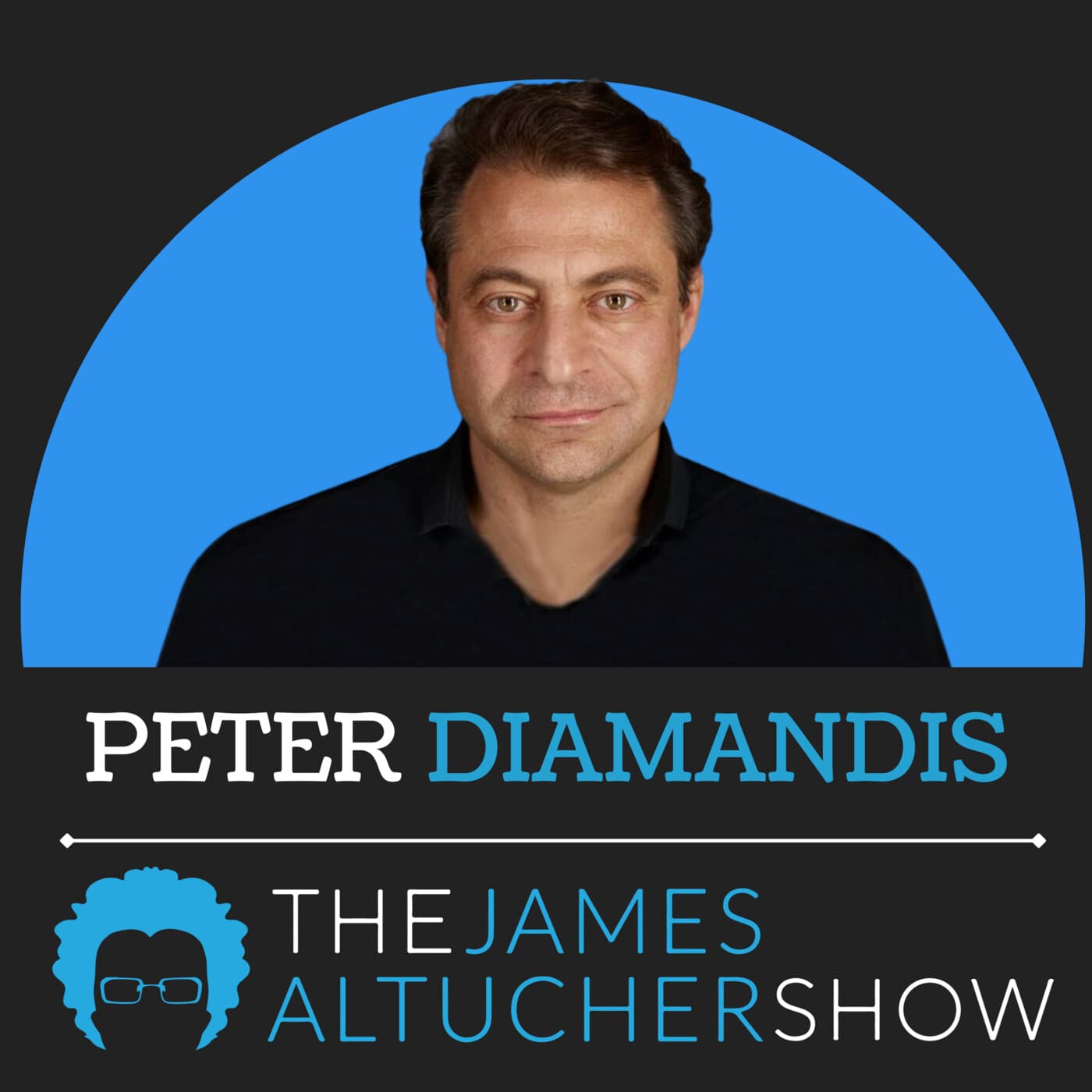
Peter Diamandis
How to Harness the Power of Mindset in The Longevity Guidebook
Episode Description In this episode, James Altucher interviews Peter Diamandis, who discusses the future of human longevity and the insights from his new book, *The Longevity Guidebook*. The conversation explores the role of mindset in health, breakthroughs in biotechnology, and a remarkable $101 million XPRIZE competition designed to reverse aging.
Key Themes and Discussions
- The Significance of Mindset
- Mindset is crucial for longevity and health.
- Optimism can extend health span by 15%.
- A positive outlook influences how individuals respond to challenges and opportunities.
- Diamandis suggests cultivating a "longevity mindset" that emphasizes purpose, abundance, and creativity.
- Longevity Strategies
- Categories of Longevity Strategies:
- Common Sense: Basics such as diet, exercise, sleep, and avoiding harmful substances.
- Unconventional Methods: Less obvious strategies that may offer significant benefits.
- Future Predictions: Anticipated advancements in longevity science and treatments.
- Future of Health and Technology Integration
- Discussion on longevity escape velocity, the point at which science will extend life faster than aging occurs.
- The role of Artificial Intelligence (AI) in accelerating medical advancements.
- Continuous health monitoring through advanced technology is on the horizon.
- Preventative Health Measures
- Importance of early disease detection using advanced diagnostic methods.
- Diamandis emphasizes the necessity of proactive health care over reactive measures, contrasting the traditional medical system's focus on treating diseases after they develop.
- Fountain Life
- Introduction of Fountain Life, a company that provides comprehensive health assessments using advanced technologies.
- The goal is to digitize health data, allowing for personalized and predictive health insights.
- The $101 Million XPRIZE for Longevity
- Launched to incentivize teams to develop treatments that can reverse aging in immune systems, muscles, and cognition.
- Over 600 teams are competing, showcasing a range of innovative approaches to age reversal.
Key Takeaways
- Mindset Matters: A purposeful, optimistic mindset is fundamental to achieving longevity.
- Proactive Prevention: Investing in health through early detection and continuous monitoring can yield significant benefits.
- Technological Advancements: AI and biotechnology will drive the next wave of revolutionary health care solutions.
- Collaborative Innovation: The XPRIZE initiative exemplifies how competitive research can catalyze groundbreaking discoveries in longevity.
Timestamped Chapters
- [00:01:30] Introduction to Anti-Aging and Longevity
- [00:06:32] How mindset influences longevity and health
- [00:09:37] Future of health and longevity escape velocity
- [00:19:00] Importance of early disease detection
- [00:50:12] Peter’s $101 million XPRIZE and its impact on longevity research
- [01:03:07] Peter’s personal longevity routine and final thoughts
Additional Resources
- Book: [The Longevity Guidebook](https://www.longevityguidebook.com)
- Fountain Life: [Fountain Life Website](https://www.fountainlife.com)
This episode is filled with insights on how to live longer and healthier through a combination of mindset shifts, preventive care, and embracing emerging technologies in health. If you're interested in longevity and health optimization, this episode is a must-listen.
Written by AI. May contain mistakes. Listen to the episode to check what was said.
Transcript
Automatic transcript. May contain errors.0:00Being an entrepreneur is a 24-7 job. And when you're hiring, you need a partner that works as hard as you do. That hiring partner is LinkedIn Jobs. When you clock out, LinkedIn clocks in. LinkedIn makes it easy to post your job for free, share with your network, get qualified candidates that you can manage all in one place. For one thing, you can post a job. LinkedIn's new feature can help you write job descriptions and then quickly get your job in front of the right people. You get qualified candidates. At the end of the day, the most important thing to your business is the quality of the candidates.
0:30And with LinkedIn, of course, you can feel confident that you're getting the best. Based on LinkedIn data, 72 % of small, medium businesses say using LinkedIn helps them find high-quality candidates. Find out why more than 2.5 million small businesses use LinkedIn for hiring today. Find your next great hire on LinkedIn. Post your job for free at linkedin.com slash altature. That's linkedin.com slash altature to post your job for free. Terms and conditions apply. We're spending more than ever. I hate my job. The price of everything has gone up. AI is threatening my job. It's crisis after crisis.
1:08Nothing is working out. I can't find a job. We're one disaster. Take control of change. I need a change. Disruption is the force of change. Stop the chaos. Stop the madness. Take control. Read James Patterson's Disrupt Everything and Win.
1:35i've done about a dozen podcasts in the past few years about anti-aging and longevity and how to live to be 10 000 years old or whatever some great episodes with brian johnson who's famous for spending two million a year to reverse his aging david seclair the author of lifespan the top scientists on researching reversing aging, many other people, including Tony Robbins and Peter Diamandis, who wrote the book Life Force. But I really love what Peter Diamandis just did. He wrote the longevity guidebook, which basically summarizes, I mean, if he didn't do that, I was tempted to do it, but he did it better than I would have done it because he knows everything there is about anti-aging.
2:21In fact, he is sponsoring the$101 million X Prize for anyone who could succeed in reversing aging. He describes that a little bit in this podcast. 600 teams have entered that competition. And so he sees all of their research, but he basically summarizes all the latest research, what's possible, what we could do now. So many of these recommendations I take to heart and I separate it out. You'll see, I do it in the podcast between what's common sense, what's not common sense, and what's the future. And every one of these categories is interesting and possible to follow. And really, we can all benefit from living the sort of lifestyle that leads to higher quality aging.
3:02And then it's also useful to know, what is the future going to bring us? Are we going to hit escape velocity, as Peter Diamandis calls it, and he'll describe that in the show. But I highly encourage people to look at the longevity guidebook. And here we are, We're going to go over it in detail right here.
3:22This isn't your average business podcast, and he's not your average host. This is the James Altucher Show.
3:39I love the horses in the background there. Well, I am away from my home. I'm in Park City, and for the second time in my life, I'm skiing. And I haven't decided. Skiing, not snowboarding, huh? Yeah, skiing, not snowboarding. But I've never really skied before, and I can't decide if this was a bad decision or a good decision yet. We just finished our third day of it, and it's brutal. Give me a bruise count and hopefully not a broken bone count. there's also the terror because like when you start going down a mountain at a speed that you're not that's uncontrollable to your normal habits it feels very scary and so that clenches up a lot of muscles too my first skiing experience ever was i went with my family i was 11 12 years old during one of the very first lessons where your snow plow left and snow plow right i snuck away and I hopped on the chairlift successfully and realized midway up the chairlift, I had no idea how to get off a chairlift.
4:46And so I'm watching everybody ahead of me and how do you get off a chairlift? And I'm looking and I'm like, okay. And I get off the chairlift and I basically just make it without falling. And then I get to the edge of the slope and this is in the Northeast. And I look down and I'm like, now or never. And so I go straight down the mountain because I had no idea you're supposed to turn. And I hit a mogul and I was airborne and I was in a cast for three months after that. Oh my gosh. That's called, that's called a subtle amount of, of chutzpah and stupidity. But, but maybe not though, Peter, and this is going to relate to your book because it's something fascinating that I see a lot of literally four-year-olds on the slope and they're doing it and they'll take lessons one day and like three days later they're on a black diamond slope they're on like one of the hardest slopes and so less to fall they have a lot less to fall but also they have the characteristics what you just described in your first experience as a young person skiing which is they're curious like okay what happens when I get on this lift even if I don't know how to get off the lift.
5:58They're willing to say, well, here goes. They're willing to get hurt because then they're going to recover and be just as good as new. And then they'll go back out there and learn from the experience. Can a discipline in longevity or can techniques in longevity, either that exists now or could exist in the future, restore the brain and the body to that youthful curiosity and willing to take physical risk in order to, like everyone always says, learn skiing when you're four, learn a new language when you're four, learn how to play the piano when you're four. If you're 50 or 60 or God forbid, Peter 63, you're going to be too old.
6:38Can we restore that youth? I think, you know, so listen, I love the question, James, because I I think a lot of this is all about mindset. One of the most important things for any entrepreneur, any parent, any leader is like, what mindset do you have? Because your mindset governs everything. You know, the most successful people in the world, it's not their friends or their wealth or their tech that made them successful. It was their mindset. If you took away everything from them, but they retained the way they viewed the world, the way they saw opportunities and challenges, their mindset, that they would regain it.
7:18And so one of the very first things I teach and I talk about is mindset, having a purpose-driven mindset, an abundance mindset, an exponential mindset, in this case, a longevity mindset, and a creativity mindset. And so these mindsets, I think, are fundamental. And I think we lose a lot of these things as we get older. And one of the things I talk about in longevity guidebook, extensive study, 69 ,000 women, 1 ,500 guys, and it measured whether you're an optimist or pessimist and then your health and longevity. And the number was staggering. It was like being an optimist gave you a 15 % longer health span.
8:05And so it's like that mind over matter, I think is huge. I agree. And, you know, it's all in terms of that mindset. It's always good to try new things because, by the way, there's that saying you're the average of the five people you surround yourself with. So if you're 60 years old or 50 years old or whatever, trying, as an example, skiing for the first time, guess who you were surrounded by? Four-year-olds for the first time. And so that kind of brings you, if you're the average of these four-year-olds, you're going to feel more youthful. But there's a little bit of that selection bias to the optimism because super optimists are dead.
8:44Oh, if I drive a car at 7 ,000 miles an hour, I'm going to die. True. I'll tell you along the lines of what you just said, I think one of my hidden secrets for longevity is that I had kids when I was 50. So my twin 13-year-old boys are 13 right now, and I'm 63. And I love being in their world. And that definitely, you know, the desire to meet their kids and their grandkids and see the amazing world that they're living into, I think, is so fundamental. You know, just take a second on this idea of a longevity mindset, James. I believe we're about to see an incredible health span revolution where we're going to significantly, in a discontinuous fashion, meaning increasing the slope of the curve, going to extend the human health span and lifespan.
9:44And I can talk about why I believe this. And there's an idea that Ray Kurzweil talks about called longevity escape velocity, in which today for every year that you're alive, science is extending your life for a quarter of a year. And there's an idea that for every year that you're alive in the future, science is extending your life for more than a year. And that's longevity escape velocity. And, you know, the prediction is that we're going to hit that point sometime in the next 10 years or thereabouts by the mid 2030s. If that's true, my mind goes to I want to be in the best health possible to intercept that when it becomes available.
10:28and the longevity mindset is believing from not just blind faith, but the data, the science, what's going on in AI, that that is going to happen. And so it's like every day I'm going to, I need to get into the gym and work out every day. I'm going to not choose a donut in the morning. Yeah. And, and, you know, look, you've, what I've really always enjoyed about your books, Peter and our discussions is, is the optimism. So starting with your book, abundance, then bold, then the faster is the future is faster than you think. And it's this idea that not only when you say abundance, it's not just about money.
11:08It's just that all these industries are, are innovating so quickly. And those innovatings, those innovations are starting to intersect and that's making even faster innovations. So biotech is innovating and AI is innovating. Now you combine the two, both industries will innovate even faster as a result. 100%, 100%. And it is the slope of that curve is getting steeper continuously, right? Dario, who is the CEO of Anthropic, when he was at Davos just recently, he was making the prediction that we're going to see in the next five years, we're going to see a century's worth of progress in biotech and medicine as a result of AI.
11:55And his prediction matches what I write about in the book from Ray Kurzweil and George Church and David Sinclair, which is we could see a doubling of the human lifespan in this timeframe of the next 10, 20 years. And I get a lot of flack from scientists and physicians about that. I mean, they're crazy. You're overly optimistic. Show me the data. And the realization is that the traditional medical world is living in an accurate view of the way medicine has been. We have the ability to look at certain organ systems. We have 40 trillion human cells in our body, each of them running a billion chemical reactions per second.
12:49And there's no way a human can understand that. We can barely understand how our 22 ,000 genes, our 3.2 billion nucleotides are operating as your operating system. But AI can. And there is a reason some people are cognitive and sharp at 105 and others are losing it at 65. It isn't random. It's something going on. And our ability to understand that and impact that is what's coming very shortly. Yeah. Yeah, and what I love about the longevity guidebook is that, I mean, I've had a lot of anti-age scientists and practitioners on the podcast, including many you mentioned in the book, David Sinclair, Sergey Young, yourself, and Tony Robbins from the book Life Force.
13:42We also had on Brian Johnson, Naveen Jain, you mentioned in the book from Viome. And so it's been a heavy topic of discussion. And I like the longevity guidebook because you're sort of basically saying, okay, here's all these smart guys saying all these things. Now what should you do? And I'll divide it into – Like what should you do right now? Yeah. And I want to divide it into three categories to understand. So there's the common sense stuff. There's the not common sense stuff. And then there's the future. And so common sense is like don't smoke, don't drink, sleep eight hours. Minimize sugar.
14:19You can argue about sleeping, but you got to sleep eight hours, exercise, eat a healthy diet, and so on. And the mindset stuff is maybe not as much common sense, but it's just as important. You nailed it. Yeah. But then the not common sense stuff is how important is that? Like if I simply stop smoking and drinking, I don't do either, but let's say I did. if I simply stop smoking and drinking, studies say I'm going to add like 15 years to the average person who smokes a lot and drinks a lot. If they stop, they'll add 15 years to their lifespan. So that's a big deal. Yes. And then how much does the non-common sense stuff, which you could describe what that means, really add?
15:00So I think one of the most important things is that there's no one magic bullet here. And it really is making a decision that you want to maximize your health span. You want to, on the average, do the things and have the fortitude and the clarity of doing things that are going to move you in the right direction in order for you to intercept the breakthroughs that are coming, just to begin there. Right. So what you're saying is we all want to hang on for dear life until that Ray Kurzweil escape velocity occurs. Yeah. I mean, as an example, a dear friend of mine, Todd Hawley, when I was in school, we co-founded a group called the Space Generation Foundation and International Space University together.
15:53And in the 80s, he ended up dying from HIV AIDS. And it happened about two years before the retrovial cocktails started becoming available, right? Had he been able to hold on just a little bit longer? And so you don't want to be one of the last, you know, individuals in a generation who misses, I don't want to call this immortality, that's not the game we're talking about, but misses the therapeutics. And there are a number of them. I mean, I speak about some of the book. I'll have a number of the top scientists in this field on my stage at Abundance 360 Summit. Ultimately, there's a lot coming.
16:42And I just want to, you know, my longevity mindset is do the best I can, maintain myself in the highest state of health I can, and be as knowledgeable as I can about this field and be there to intercept these technologies when they avail themselves to me. Take a quick break. If you like this episode, I'd really, really appreciate it. It means so much to me. Please share it with your friends and subscribe to the podcast. Email me at altitra at gmail.com and tell me why you subscribed. Thanks.
17:26Being an entrepreneur is a 24-7 job. And when you're hiring, you need a partner that works as hard as you do. That hiring partner is LinkedIn Jobs. When you clock out, LinkedIn clocks in. LinkedIn makes it easy to post your job for free, share with your network, get qualified candidates that you can manage all in one place. For one thing, you can post a job. LinkedIn's new feature can help you write job descriptions and then quickly get your job in front of the right people. You get qualified candidates. at the end of the day, the most important thing to your business is the quality of the candidates.
17:57And with LinkedIn, of course, you can feel confident that you're getting the best. Based on LinkedIn data, 72 % of small, medium businesses say using LinkedIn helps them find high quality candidates. Find out why more than 2.5 million small businesses use LinkedIn for hiring today. Find your next great hire on LinkedIn. Post your job for free at linkedin.com slash altature. That's linkedin.com slash altature to post your job for free. Terms and conditions apply. What can 160 years of experience teach you about the future? A lot, especially when it comes to protecting what matters. At Pacific Life, we've helped people and businesses confidently embrace the future with life insurance, retirement income, and employee benefits with strategies built on strength and trust and a promise to be here for you today and tomorrow.
18:47Ask a financial professional how Pacific Life can help you today. Pacific Life Insurance Company, Omaha, Nebraska, and in New York, Pacific Life and Annuity, Phoenix, Arizona. Right, so like in the guidebook, you list kind of your routines and stuff, and I'll start with the common sense things, like obviously sleeping well, having a good diet. You know, you mentioned how you and David Sinclair discuss how basically eating fewer meals is better than eating more meals. Now, that's a big generalization. Everybody needs a certain amount of calories to grow and live and so on. So I would recommend reading your book to get the specifics.
19:30But in general, you introduce these practices that are great for increasing quality of life. On the non-common sense stuff, let's - I'll give you, let's jump in there. So one of the non-common sense things that I think is very important is that if I am in a room of a thousand individuals for outnumbers, and I say, how many of you are absolutely sure that you have nothing going on awry inside your body? You know, very few people raise their hands. And one of the challenges is that our bodies are really great at hiding disease. And you think you're fine. You think that everything is working great.
20:12I feel fine. Until that moment in time where you have a pain in your side or something is going wrong and you go to the hospital, you go to your doctor and the doctor says, listen, I'm sorry to tell you this, but you have stage three or four of this, or you have severe cardiovascular coronary stenosis. And the reality is our bodies are masterful at hiding disease. We don't feel, in 70 % of all heart attacks, there's no precedent. You don't feel a shortness of breath. You don't feel a pain. You don't have anything. You have a heart attack in the middle of the night, and then a significant fraction of those don't wake up in the morning.
20:56You don't feel anything from a cancer until it reaches stage three or stage four, at which point the survival rate has significantly decreased. You don't feel a Parkinsonian tremor until 70 % of the substantia nigra are gone. The medical system does not screen for the vast majority of cancers that kill us. We screen for breast and prostate and colon, and those don't kill us anymore. But we don't routinely screen for glioblastoma or for pancreatic cancer. And those are the ones that get us. So one of the things that I talk about in the book, and there are various levels that you could avail yourself to from half,$500 a year to$80 ,000 a year.
21:53but it's doing advanced testing on your body to look to understand two questions. Is there anything going on inside my body right now that I need to know about? And if not, fantastic. What's likely to happen to me in the future and how do I optimize myself so it doesn't happen? One of the companies I started with Tony Robbins and Bill Kapp and backed by Mark Benioff and others is a company called Fountain Life. We have two programs, not cheap. One program's at$19 ,500. The other one is at$6 ,500. But you come in, we digitize you. We fully digitize you. Everything noble about you, full body MRI, brain vasculature, a coronary CT, a low-dust lung CT, your full genomics, 30X sequencing, metabolomics, your microbiome, your DEXA scan, everything is 200 gigabytes of data.
23:07And that data gets uploaded into your app, into our AI and your doctor and the AI look at this multimodal data set to say, you're great, we found something, or this is likely to happen in the future and we should optimize your metabolism, whatever it might be. And so that's preventative and personalized and predictive healthcare. So not obvious because you kind of feel, if I feel good, I must be feeling, I must be good, but that's not the case. And you're going to spend the money eventually. And a lot more at the end where it's very difficult. It's like, you know, I just got impacted by the wildfires.
24:02I'm still out of my home. It's like, when's the best time to find a wildfire. You know, it's at the first spark, not when it's a conflagration and you're trying to battle it back. Same thing for a lot of these diseases. You want to find it at the very beginning and you can and fight it and return yourself to normalcy then. You know, it's so interesting that when you say this, it almost seems obvious in retrospect, but at the same time, I'm guilty also of saying if it ain't broke, don't fix it. And I won't go in for, to check my Gleibo, whatever, um, to see if I have some rare form of cancer, but is it so, so, so when, one point, by the way, it's very interesting that the human body does this, that it disguises diseases so well.
24:51And there's a kind of, uh, it compensates, it compensates, but also the, the, the omegas of a tribe, the ones who are about to die from disease don't want to be seen, don't want the rest of the tribe to know they're sick. So the, so that we've evolved so that we, the bodies do hide this. So we're not killed off by the alphas prematurely. So it's part of an evolutionary thing, but cause I, you see this with a lot of other animals as well, but, um, but people, people maybe don't check for everything because they don't know if there is a way to, like, how do I check for every cancer and every, and Alzheimer's and Parkinson's and other weird things.
25:31And you can. You know, what happens, James, is people say, I don't want to know. And I'm going, bullshit, you're going to find out. Do you want to find out now when you can do something about it or later when it's too late to take action? Now, a lot of people, like we still have members of Fountain Life who come in and say, listen, my doctor told me not to do this. I'm doing it anyway. I said, why did your doctor tell you not to do it? well because you'll probably find something that's there but not going to cause any problems. And it used to be 20 years ago when imaging had far less fidelity and where it wasn't multimodal.
26:13In other words, multimodal is, it's not just the imaging, it's the blood tests, it's a a liquid biopsy, it's your genomics, all of these things coming in to give us supporting data for a finding. In the past, we'd find what we call incidental OMAs. We see this shadow here. We're not sure what it is. And it would cause people to go and do a biopsy and find out it was nothing. Those days are gone. You know, the level of imaging fidelity and AI diagnostics are so good that you want to look. Yeah, so in your experience with fountain life, and by the way, it sounds similar to like Viome, you know, kind of this predictive.
27:02So Viome is, and I love Viome and Naveen's a dear brother. Viome is basically taking a stool sample, a small blood sample, and an oral microbiome swab. And it's looking at what's called your transcriptome. It's looking at what genes are being expressed in your gut, in your oral microbiome, microbiome and understand what bacteria do you have in your full microbiome, right? Which is important because your bacteria can impact how drugs are processed in your gut. Like you can take a medication you think is going to help you, but if you don't have the right bacteria in your gut or you have the wrong, it might not do what it's supposed to.
27:54They're also, So depending what microbiome, what gut bacteria you have, certain foods are nutritious and other foods are not. And so they do an amazing job of doing that. Fountain is far more sophisticated in terms of all of the imaging. So to go back to your point, we'll look at the full-body MRI to look for any kind of aneurysms in the blood vessels, right? And we'll look for any signs of any tumors in your organ systems. But we'll also look at it from a genetic standpoint and what's called a liquid biopsy from a company called Grail. And all of the data is there. It takes about four or five hours to upload all of the data.
28:49And then depending, it takes days to a couple of weeks sometimes with the genomics to get it all back. but then the integration of that to really truly understand not just what you have, and hopefully you're fine, but how do we optimize you after that? Right. So there's two key things there. First, there's that last part, the optimization, which there might not be anything wrong with me, but maybe it's better that I eat fish than steak, as an example. But the other question is, um, so that, that sounds great. And like, first I'd like to hear what are, what are some stories of maybe people who have gone through this where they seem perfectly healthy and like, Oh my God, I didn't know.
29:32I'll give you, I'll give you a great example. Uh, my business partner in this Sam Nazarian, I don't know if you know, Sam, uh, he's, uh, extraordinarily successful hotelier, uh, SBE, uh, SBE hotels, multiple hotels, very top of the financial curve. And he and Tony Robbins are building out something called the Estates, building out 25 resorts and high-end real estate developments around the world. And their plan is they're putting a Felton Life Center into each of those in different parts around the world, which is fantastic. I said, well, listen, I was going to visit Richard Branson on Necker Island.
Read the full transcript
30:15And I said, come along, meet Richard, but we're going to go through Orlando. Why don't you go through the Fountain Life Center? And he did. He and his wife went through for an Apex. It's our membership level upload. And went to Necker. We come back on Monday. He gets a call from our physician, and he's been open about this. and the physician says, listen, Sam, we discovered two brain aneurysms and they need immediate attention. Now, Sam is someone who has afforded and had the best doctors out there, but he was in surgery a week later and these blood vessel aneurysms where a blood vessel is growing in size and could burst were basically resected and stabilized, and he's fine now.
31:17But that's an example. We have countless people where we find a stage one or stage two carcinoma or severe cardiomyopathy, cardiovascular disease. And here are the numbers. 2 % of people coming through who they claim they are completely healthy, 2 % have a cancer. They don't know about. 2.5 % have an aneurysm. They don't know about. 14.4 % have either cardiovascular, neurodegenerative, or metabolic disease. And so, you know, for me... And these diseases are sufficient enough that they need action taken upon them. Yes, yeah. These are all actionable. These are all need to take action on. The 14.4 % of people, we put them into an urgent track for addressing these things.
32:12And by the way, there is something you can do for almost everything. Even Alzheimer's and dementia, if you know early enough, you can slow it and reverse it. There's incredible work being done in that area.
32:40When I see companies like this, like Fountain Life, I always wonder why isn't, if I go to the Mayo Clinic and say, do all the tests on me, how come they don't just give me your test? And also do insurance companies pay for it? Why isn't insurance companies requiring everybody? I'm so pissed at insurance companies. I think insurance is one of the most perverse industries out there. You know, so, you know, life insurance pays your next to kin after you're dead, right? Health insurance pays you after you're sick. A fire insurance pays you after your house is burned down. Imagine if the insure, I just had a whole podcast on this on my Moonshots podcast.
33:21Imagine if the insurance industry flipped. And when I buy fire insurance, the insurance industry is going to prevent my house from burning down. It's going to put in the appropriate systems. Life insurance keeps me alive as long as feasible. Health insurance is focused on keeping me healthy because the economics for them are massively beneficial, as you just said. Well, one thing they can do to really fit nicely without changing their business model is they can say, look, we'll give you$5 billion worth of life insurance for X dollars, but it'll be even cheaper if you first go through the Fountain Life program and you have a receipt.
34:04I agree. I agree. Because then they don't have to do anything different. They just make their standards. You have to help them to help you, in other words. So if you're a life and health insurance executive out there listening to this podcast, reach out to us. You know, it's a crazy, crazy business. Eventually, we'll get there. How about we start a life insurance company or a health insurance company where we make this a requirement? Yeah, I think I love the life insurance is where I'd go first, for sure, because you're both on the same sides. Imagine when you're paying out, where you're paying into a life insurance policy.
34:43If you delay the payout, the capital in the policy is exponentially growing. Yeah. It works amazingly well. It's a great business model. It is. It's a head, a life insurance company is a hedge fund where you get to keep 100 % of the profits instead of 20 % of the profits. And the person living longer is super happy. Right. But it reminds me of like Geico in the 50s, which was set up to provide car insurance for ex-military because it turned out ex-military got into fewer accidents. So here's a case where, okay, we'll set up a life insurance company for people who have gone through fountain life because they're going to die longer away.
35:26Yep. Here's the idea number one from this. All right. Well, yes. Yes. I mean, that is definitively something I am excited about. But why doesn't the Mayo Clinic tell their patients, hey, go down to check this fountain life out? Well, listen, here's the challenge. Medicine is an old school business. And it is very slow to change. There was a study done. And Tony and I reported on it in our book, Life Force, which we jointly authored and had a chance to discuss on your show. But I think the average is like the 17-year delay between when something is discovered and rolled out and it's adopted finally by medicine.
36:22There's a great example. Human physicians are very biased. Here's a beautiful example. There was a study recently done, this is probably within the last two months, at doctors using AI chatbots for diagnostics. So the doctor by themselves had 85 % accuracy on these diagnostics. And these are rough numbers for approximation, or call it 80 % accuracy. The doctor plus an AI chatbot together had 85%. The AI chatbot by themselves without the doctor had 95%. And you say, like, why is that? What's going on? Well, humans inject a lot of bias because of their preconceived notions. While AIs are just show me the data.
37:19I'll make the decision just on the data, not, you know, a recency bias, you know, these all these cognitive biases, recency bias of like I just saw this patient who had this particular syndrome. So I'm more likely to think of it again. it's slow and and you need sometimes to begin institutions just like you know why isn't why didn't intel uh become nvidia or why didn't you know pick your favorite software company become open ai it's like a lot of times uh you have to start with a clean sheet of paper to reinvent yourself and so you think the medical industry will have to do that so what's going to happen is patients, instead of going to their family doctor, will start just going directly to Fountain Life and taking action.
38:08And we do, we do offer, I mean, so when, when you join Fountain Life, not only do we give you the full upload, right? You know, this 200 gigabyte data set that's uploaded into the app, into our, into our cloud. We also give you a medical team that surrounds you. So you get a concierge doctor for the year. You get a concierge nurse, a dietician, and a health coach. And so that team is with you through the year to help you achieve your medical objectives. So it is your direct doctor. I used to spend$20 ,000 on a concierge doctor here in LA who didn't offer all the other stuff. It's still expensive.
38:54The price of these things will come down. We offered a version of this called Core. So Apex is$19 ,500. Core is$6 ,500, which is all the same testing, but without the wraparound medical team for the year. And people can go to feltinlife.com to learn more about it. Where we're going, James, in the future, I think is super exciting. And we're going to eventually get to a point where we are constantly monitoring everything going on in our bodies, that we're monitoring everything through a series of sensors, right? I've got my Oura ring. I normally am wearing a continuous glucose monitor on my Apple Watch, but that's just the beginning.
39:41Eventually, a series of embedded sensors on your body, in your body, in your environment, are measuring everything all the time and being able to look at small perturbations. Maybe it's the sound of your cough. Maybe it's when you're using the toilet, the data is being extracted from, you know, when you go through the restroom. And when will that happen? Because I keep hearing this and it's not like I'm downing it because something's in the future because it's hard to do now. But when will our daily lives change? Because, yes, we will have more monitoring than just the Oura Ring or the Apple Watch or whatever.
40:23I think it's within the next three years at the outmost because we're seeing GPT-5. It's going to come online. We just saw Grok 3. We'll see a version of Claude 4 and whatever Alexa becomes. Um, and all of these systems will be, you'll turn on health monitoring mode. Um, and I cannot imagine it's more than three years out. Uh, uh, but this will become sort of a continuous layer of always on health monitoring, uh, that I think will support you in really, if you want to maximize your health, you'll have that ability. I think what gets interesting is it will also integrate with your kitchen and be able to tell you what foods you need to maximize your health.
41:28I mean, that sounds fun for me. And who's working on, like, where am I going to first see this device that will do kind of more inclusive monitoring than currently exists? So my venture fund, Bold Capital, has investments into a number of wearables and implantables that are doing advanced monitoring of your body. We will see, I'm sure, you know, Apple. Tim Cook said a few years back, in the future, looking backwards, Apple will be viewed as a health company, gathering health data. So there's probably hundreds of small companies, and there'll be aggregation plays. I'd be surprised if we didn't see companies like Samsung get into this business and others.
42:24So it's very interesting. So when I mentioned the non-common sense parts of longevity, you went to prevention. Events testing. Yeah. Yeah. But there's also this idea, and I think people kind of lean towards this a little bit more, for better or for worse, that, oh, I'm going to take a pill and it's going to make me better than a better human being than I was before. Like the limitless pill in that movie with Bradley Cooper. And you mentioned it. Love that movie. I know. I've seen it like five times. But you mentioned in the book, there's things like NMN, Modifinol, Rapamycin. I don't know if I'm pronouncing them right.
43:04But NMN is one that I've on and off taken for whatever, since six or seven years since I first interviewed David Sinclair. And, you know, does it make a difference? I can never really tell. Right. Yeah. So the question I always ask is, is it visceral? Do you feel different? Do you have more energy, more mental clarity, right? And listen, I have a very clear understanding of how NMN impacts your cells and your body, and it makes total logical sense. David Sinclair, in his book Lifespan, does a beautiful job of explaining why nicotinamide, tinamide, mononucleotide, NMN impacts your NAD plus levels that allows your sirtuin genes and proteins to keep your DNA properly repaired from damage and allows your epigenetic systems to maintain the right genes on or right genes off and balance that.
44:14And so he lays it all out there. And at the end of the day, you can go the next step. And there's a company called Gefinity. I just got the testing to measure my NAD levels intracellularly, to understand what are my NAD levels. Because NAD is the sort of currency molecule in the cell that is fueling chemical reactions required to make things happen. And as we grow older, our NAD levels fall by 50%. And so you want to supplement them. And so I'm always very clear. I take, as I report in the book, I say 75 supplements. I think I'm probably taking closer to 85 supplements. And I am testing myself regularly, right?
45:10And just taking it and hoping is not a strategy. It's like I need to test and understand, am I impacting the numbers? So I'm an extreme on that front. It's not for everybody, but I'm sharing the knowledge that I get. And I think this is going to become something that's available for everybody with AI entering the picture, which will measure things constantly and tell you, listen, you're low in vitamin D. I've increased that as in your evening meal tonight. That's where I hope we're going to get to soon. And like taking NMN as an example, because that's probably the supplement I've most frequently have taken since beginning this journey of talking to so many anti-aging specialists.
46:01Like, have you seen in your tests the results? Like, I don't viscerally see them, but I've read, you know talked to david many times talked to the new science guys a lot and i believe the story and the science but i don't viscerally notice anything have you seen from the test so i i have not uh viscerally noticed it i literally have the gifinity tests in a box uh next to my bedroom uh and so i will it's on my list of my next blood drawer to to actually test myself yeah you know and also So there's also some controversy in some of them. Like I just saw Brian Johnson said that he stopped taking rapamycin, for instance, which has always had controversy around it anyway.
46:43But that's been considered kind of a leading anti-aging drug. It has been, I think. And I write about rapamycin in the book as one of the drugs that the most scientists feel could make a dent in human aging. And I go on and off rapamycin on a cycle. I'm off it right now. And there are seven human trials going on in rapamycin right now to actually find out, is it impacting and slowing human aging? So I'll give you one other test that I write about in the book, James, comes from a company called Immunus. A guy named Hans Kirstead is the CEO of Immunus. He's run and successfully built four companies, biotech companies, each one getting more and more successful financially.
47:42This is his fifth full disclosure. I'm an investor and an advisor in it. And I am going to be trying their treatment within the next 30 days. I just was texting with him today. And so they have created a product called Immuna. Immuna is derived, is the exudate. It's all of the immune, it's all of the exosomes and growth factors that young stem cells put out. There are 440 of them that he characterized. And he turned this into a drug where the injectable has all 440 of these growth factors and signaling molecules and exosomes in it. and he just released the results of his phase one 2a and he did this in 18 adults who had severe osteoarthritis that means they had a lot of pain and couldn't walk and they were bedridden or chair or chair ridden and the results of this were amazing first of all all 18 had no negative consequences.
48:56These people who were not exercising, they weren't even walking, gained 6 % muscle mass during the course of the three-month study. They reduced their pain by 70%. They reduced their immune age by 30 years, and they reduced their whole body inflammation by half. And what's extraordinary is what these cells are, what this product Immuno is doing is it's signaling to your body that you're in a youthful state and you should express the immune factors and the inflammatory factors that you had when you were younger. And so this is now going into an expanded use study. um uh all of our apex members will gain access to the immunostudy at no additional cost so i'm excited for that yeah when you say you're going in to for the procedure or the trial or whatever is it blind like you know you're going to be taking i do know i do know that i'll be taking it the the expanded study doesn't require a double blind there will be parts of the study elsewhere which are double blind.
50:12But I will be measuring everything in detail before, during, and after when I'm going through this. And so you're saying it's part of that. Like, can I sign up for Apex and then take the Immunasys protocol or whatever? You could. You could. Okay. I cannot make that offer that if you sign up, you'll do this. But I'm saying we are making this accessible to all Apex members. And they don't have to complete the trials for them to be able to offer this? It's available. We're going through our Institutional Review Board IRB approvals in the next month, and then it will become, will be one of the trial sites for them for the expanded access use.
51:00and so one of the things that we're looking to do at Fountain is find the longevity related therapeutics that have the highest reward, lowest risk in which we can make those accessible to our members. Our members are very highly characterized. We know a lot about them and so it's a good partnership with people who are doing therapeutic development.
51:41And so these are the sorts of things where I feel this escape velocity is going to happen. And yet I give you another one, even bigger. Yeah. So I think you mentioned this slightly at the beginning of the show. So, you know, a year ago, we announced a$101 million HealthSpan XPRIZE. So what does this mean? So XPRIZE Foundation, I started 30 years ago, and we've launched 30 XPRIZEs in 30 years, about$600 million worth of incentive competitions. The first one was for spaceflight. And we said, okay, anybody who builds a private spaceship that can fly three adults up 100 kilometers, land, and do it again within two weeks wins$10 million.
52:30And launched that under the arch in St. Louis in 1996. It was won in 2004. That ship over my shoulder in this video is the winning vehicle. And it stars the races. You know, Elon Musk joined our board and Larry Page joined our board and James Cameron joined our board. And we set out to run these large scale global competitions, not for a design idea, not for something you did in the past. It was like we set a goal, an incentive prize. And if you if you pulled it off, no matter where you lived, how old you were, what you've ever done before, if you solve and demonstrate and build it, you win. And so that's an X prize.
53:11And a year ago, November of 2023 specifically, so a little bit over a year, we announced a$101 million XPRIZE healthspan. Sergey Young, who you've interviewed, was part of our founding team and funded the original design work here. It took me five years to raise the money. I raised$141 million. And this is for a therapeutic that can, in one year's time, giving the therapy to someone for no more than a year, do it for a day, but no more than a year, will reverse the ravages of aging in your immune system, your muscles, and your cognition by 20 years. So what we need to do is make your immune system that of what you were 20 years younger, your musculability, build muscle, your cognitive clarity.
54:06And we have over 600 teams in this competition in just a year. And are the teams companies or are they academics or combination? They're everything. They're academics. They're companies, small, large companies. And there are some absolutely brilliant solutions. And what's interesting is, are all these things in the same category? Will some solution that makes my lungs younger or my heart younger also work on my cognitive clarity? Why would that be the case that would all fit under one solution? So this was a conversation early on with George Church at Harvard Medical School who said, listen, a true age reversal therapy will not just hit one organ system.
54:55And so if you have something that impacts immune muscle and cognition, it's likely to also impact lots of other systems in the body. Aging is the underlying biochemistry of aging, which we still don't fully understand yet. And I believe AI will help us get there, is something that goes on. And you don't see your right hand aging more than your left hand or your heart aging faster significantly than your lungs. Right. So what are some of the more unusual attempts being tried in these 600 groups? Oh, my God. So there's a large group is doing what's called epigenetic reprogramming. So you have 3.2 billion letters from your mom and your dad when you're born.
55:44That's your operating software. You have it when you're 20, 40, 60, 80, 100. your gene doesn't change your genes don't change and so what does change is what genes are on what genes are off and that's called your epigenome epi from the greek word for above and so the goal is can we reverse your epigenome can we take you back to a more youthful state where the right genes were on and the right genes were off and so there's a lot there's actually three or four multi-billion dollar companies funded by multi-billionaires in that space. There's cellular medicine companies that are focused on using stem cells and natural killer cell supplementation.
56:34There are companies that are focused on gene therapies to upregulate certain genes in your body. There's, you know, again, hundreds of different approaches. And we're going to learn a lot. This is a massive open source experiment and super pumped about the results. Yeah. Like, you know, that company you mentioned earlier, was it Munisys? Munis, yes. Munis. Why haven't they already won in that, you know, these 18 people are on average 30 years younger in their immune, immune age? Um, so they are a team competing for sure. And at the end of the day, uh, they've got to prove their work at a sufficiently high level, uh, that the judges are going to.
57:29So what we do is we create a, uh, a level playing ground that all of the teams compare of the sounds against each other. So that's one of the most important things that we've got going on. Well, that's very exciting. And I've always been excited by the concepts behind your XPRIZE stuff. It's very exciting and it's moving the future forward. And like you're 63, I just turned 57. I always wonder, all of these new technologies, do you think they'll, when they come out into market? Do you think they'll benefit 20 year olds or do you think they will benefit people who are like 60, 70 and, and kind of stop the clock for a little bit?
58:15I, my, my goal is, and so for example, in this wildfire prize, um, the cohort, uh, is people, uh, 60 to 60 to 85, right? So it's focused on older individuals reverting them to a more youthful state? We'll see. I think people who are in their 20s, 30s, 40s right now have a super high probability of a significantly extended health span, living to 120, living past there. I don't want to give a guess. my goal is to make it to longevity escape velocity and then be able to decide, you know, how long I want to go. I mean, this is the most exciting time ever to be alive. You know, one of the things that really helps you with longevity, uh, a friend, Dan Sullivan says, is having a future that's bigger than your past.
59:18Right. That's an interesting way to look at it. yeah and so so i'm just curious like how do you spend your day like obviously this has been your focus for a long time and obviously the x-prize predated this so you've always been involved in these moonshot like activities it did you and i've never really asked you this before but did you make money having a company that was like a moonshot company and it sold or like how did How did you make money? How do you make a living? So, well, I mean, listen, a lot of my early moonshots were in the nonprofit world, which were great, fulfilling, super successful, didn't make me a bunch of money, right?
1:00:03So while I was at MIT, I started the world's largest college space organization, right? And then I started a university called the International Space University, which is still doing extremely well. and then I started a company called Zero G for taking weightless parabolic flights, took Stephen Hawking up and a company called Space Adventures that took eight individuals up to the space station. But at the end of the day, those companies, while profitable, were not grand slam home runs. My, you know, much of my wealth and ability to invest has really been the last 15 years. A lot of my time up until then was academic and just taking a lot of moonshots in the space world, which up until Elon, weren't that many success stories.
1:01:02It was extraordinarily expensive and in the industrial military complex, Elon brought, you know, he was successful in SpaceX because he came there with$100 million in his pocket to spend to get Falcon 1 up and going, went into debt to get Falcon 1 to fly successfully, and then won a billion dollars. It's expensive. I like to say the best way to start, become a millionaire in space, is start as a billionaire.
1:01:32But for me, the longevity space and AI, I have two large venture funds, Bold Capital, which is mostly in the longevity biotech space. It's about$600 million. And a company called Exponential Ventures, which is in the AI space out of MIT. It's a venture studio and venture fund, about$500 million. And I see a lot of deals. I invest in a lot of entrepreneurs. and that's really been the last 15 years of my time is supporting entrepreneurs to go big, bold, great wealth, make the world a better place. And is there any way to kind of piggyback on, like let's say take this bold capital with the longevity investments.
1:02:20It sounds like some of these are great companies and you only need like, as any venture capitalists know, you only need like one or two successes to have an enormous success. Like if you had 100 investments, and 99 of them failed and one of them was Uber, you would be a billionaire. So is there any way to piggyback what you're doing? I mean, honestly, I back companies where I love the science and I love the CEO and I want to help them be successful. That's fundamental to the game. I do think that the majority of the success stories we're going to see in the longevity space are going to come out of AI, where AI and biotech are butting up against each other.
1:03:08We're seeing a lot of deals there. But if I could, as we wrap, if I could, I just want to tell people, my mission for Longevity Guidebook is to get it out to the world as far and wide as possible. You can buy it on Amazon, of course, and I'm donating all the profits to the XPRIZE. You can buy it at cost. If you go to longevityguidebook.com, it's available at cost with a bunch of bonuses. My goal is get it out there and give people access to the knowledge so that they feel empowered more than ever before. well peter it was a great book like i said i feel like it's kind of the ultimate summary and guidebook based on so many anti-aging books over the past 10 years many of the authors i've spoken to on this podcast so i can attest personally thank you buddy it is a summary of of the best advice from all these really brilliant people and and you've known them personally and you've gotten to ask all your questions and so on.
1:04:15And it was great to read that kind of summary plus your additional research and insights. And so I really appreciate it. And once again, I appreciate you coming on the podcast. I always look forward to the next book. They're so optimistic. People who got it, check out Longevity Guidebook, but also go back to the beginning, read Abundance, read Bold, read all of these books. Thank you. Thank you, my friend. Yeah, in Longevity Guidebook, I open up the kimono. This is what I'm doing and why. this is what has worked for me this is what hasn't worked and i'll tell you one of the things is mindset and routines like getting i'll tell you right now i feel massively disrupted on my normal routines because i'm out of my house out of my normal routine post the uh the palisades fire and you know it's like i can't wait to get back into my normalcy right because that's that's what fuels me is my red light, my meditation in the morning, my exercise, my, what I eat or don't eat.
1:05:15And, and it's, it's, there's a great power that you have, uh, in supporting your own health and, and having a mindset, uh, that believes in this and makes it worth it. You know, I think this is the most exciting time ever to be alive. And I want to see as much of it as I can. Well, I hope you succeed. So thank you, James. Thanks, Peter. Be well, my friend.
1:06:01Thank you.
From the publisher
I've done about a dozen podcasts in the past few years about anti-aging and longevity—how to live to be 10,000 years old or whatever. Some great episodes with Brian Johnson (who spends $2 million a year trying to reverse his aging), David Sinclair (author of Lifespan and one of the top scientists researching aging), and even Tony Robbins and Peter Diamandis, who co-wrote Life Force. But Peter just did something incredible.
He wrote The Longevity Guidebook, which is basically the ultimate summary of everything we know about anti-aging. If he hadn’t done it, I was tempted to, but he knows everything there is to know on the subject. He’s even sponsoring a $101 million XPRIZE for reversing aging, with 600 teams competing, so he has direct insight into the best, cutting-edge research.
In this episode, we break down longevity strategies into three categories: common sense (stuff you already know), unconventional methods (less obvious but promising), and the future (what’s coming next). And honestly, some of it is wild—like whether we can reach "escape velocity," where science extends life faster than we age.
Peter’s book lays out exactly what’s possible, what we can do today, and what’s coming. So let’s get into it.
Episode Description:Peter Diamandis joins James to talk about the future of human longevity. With advancements in AI, biotech, and medicine, Peter believes we're on the verge of a health revolution that could drastically extend our lifespans. He shares insights from his latest book, The Longevity Guidebook, and discusses why mindset plays a critical role in aging well.
They also discuss cutting-edge developments like whole-body scans for early disease detection, upcoming longevity treatments, and how AI is accelerating medical breakthroughs. Peter even talks about his $101 million XPRIZE for reversing aging, with over 600 teams competing.
If you want to live longer and healthier, this is an episode you can't afford to miss.
What You’ll Learn:- Why mindset is a crucial factor in longevity and health
- The latest advancements in early disease detection and preventative medicine
- How AI and biotech are accelerating anti-aging breakthroughs
- What the $101 million XPRIZE is doing to push longevity science forward
- The importance of continuous health monitoring and personalized medicine
- [00:01:30] Introduction to Anti-Aging and Longevity
- [00:03:18] Interview Start – James and Peter talk about skiing and mindset
- [00:06:32] How mindset influences longevity and health
- [00:09:37] The future of health and the concept of longevity escape velocity
- [00:14:08] Breaking down common sense vs. non-common sense longevity strategies
- [00:19:00] The importance of early disease detection and whole-body scans
- [00:25:35] Why insurance companies don’t cover preventative health measures
- [00:31:00] The role of AI in diagnosing and preventing diseases
- [00:36:27] How Fountain Life is changing personalized healthcare
- [00:41:00] Supplements, treatments, and the future of longevity drugs
- [00:50:12] Peter’s $101 million XPRIZE and its impact on longevity research
- [00:56:26] The future of healthspan and whether we can stop aging
- [01:03:07] Peter’s personal longevity routine and final thoughts
See Privacy Policy at https://art19.com/privacy and California Privacy Notice at https://art19.com/privacy#do-not-sell-my-info.

