
In short
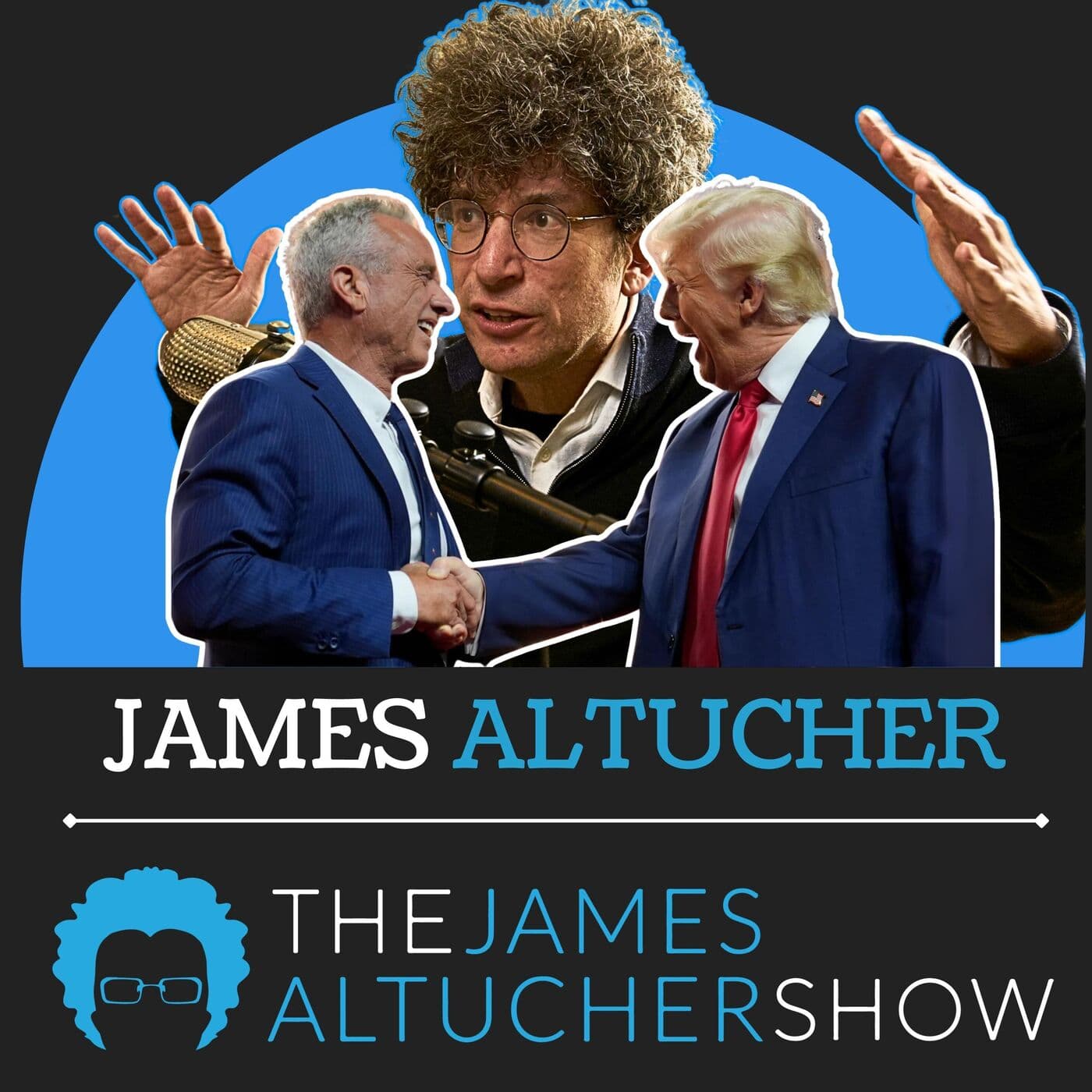
Podcast Summary: The James Altucher Show - RFK Jr. Suspends Campaign and Endorses Trump
Overview In this episode of *The James Altucher Show*, James Altucher analyzes the announcement of Robert F. Kennedy Jr. (RFK Jr.) suspending his presidential campaign to endorse Donald Trump. The discussion encompasses potential impacts on the upcoming election, historical context regarding third-party candidates, RFK Jr.'s past controversial views, and implications for health policy.
---
Key Topics Discussed
- Robert F. Kennedy Jr.'s Campaign Suspension
- RFK Jr. has suspended his presidential campaign and endorsed Donald Trump.
- Questions arise regarding how this will affect the election outcome, fundraising, and strategies for both Trump and Kamala Harris.
- Personal Reflections on Vaccines and RFK Jr.
- Altucher shares insights from his previous podcast with RFK Jr., where they discussed vaccines.
- He initially hesitated to release that episode due to the controversial nature of RFK Jr.'s claims.
- Impact of Third-Party Candidates
- Discussion on the historical influence of third-party candidates on elections:
- Ralph Nader (2000): His candidacy drew votes from Al Gore, potentially altering the election outcome.
- Theodore Roosevelt (1912): His split votes against William Howard Taft led to Woodrow Wilson's victory.
- RFK Jr. aims to avoid being a spoiler in the election.
- RFK Jr.'s Concerns and Health Issues
- RFK Jr. expresses alarming statistics regarding chronic diseases and obesity in the U.S. compared to other nations.
- He highlights the role of ultra-processed foods in American health issues.
- Altucher fact-checks some of RFK Jr.'s claims regarding health statistics.
- Corporate Capture of Federal Agencies
- The discussion explores the concept of corporate capture within federal agencies like the FDA.
- RFK Jr. claims 50% of the FDA's funding comes from pharmaceutical companies, raising concerns about conflicts of interest.
- RFK Jr.'s Potential Role in a Trump Administration
- Speculation on RFK Jr. possibly holding a significant position in Trump's potential administration, possibly focusing on health policy.
- Polling Dynamics and Election Predictions
- Analysis of current polling trends after RFK Jr.'s endorsement.
- The shifting dynamics between candidates Kamala Harris and Donald Trump in battleground states.
- Economic Policies Proposed by Kamala Harris
- A critical look at Harris's economic policies, particularly her stance on unrealized capital gains taxes.
- Altucher emphasizes potential implications for the stock market and overall economic health.
---
Important Takeaways
- RFK Jr. as a Controversial Figure: His endorsement of Trump marks a significant shift in the political landscape, drawing attention to health issues that resonate across party lines.
- Historical Context: Third-party candidates can significantly influence election outcomes, a reality that RFK Jr. is keen to navigate carefully.
- Health Policy Focus: RFK Jr.'s emphasis on children's health and chronic disease represents a critical issue that may gain traction in American politics.
- Corporate Influence on Policy: The conversation highlights potential conflicts of interest in government agencies due to corporate funding and influence.
- Polling Implications: The political landscape remains unpredictable, emphasizing the dynamic nature of electoral politics.
---
Conclusion James Altucher’s analysis provides a nuanced examination of RFK Jr.'s political maneuvering and its potential effects on the upcoming election. The episode encourages listeners to consider the broader implications of political endorsements, health issues, and the role of third-party candidates in shaping American politics.
Written by AI. May contain mistakes. Listen to the episode to check what was said.
Transcript
Automatic transcript. May contain errors.0:00Look, as a manager of people, as an employer, as an entrepreneur, and as an investor in startups, I can tell you the most important thing for your business is the quality of the quality of people. you hire. The best part is that great candidates are already on LinkedIn. Employees hired through LinkedIn are 30 % more likely to stick around for at least a year compared to those hired through the leading competitor. And I will tell you that the great thing about LinkedIn is that you're not just looking at random people. You're able to see the people who your friends and trusted peers and colleagues who they trust and who they've hired in the past and who they recommend.
0:42And hiring doesn't have to be complicated. Realistically, when you have a business to run, you don't want to spend hours on hiring. You want to hire the right person as quickly as possible. That's why LinkedIn Jobs AI Assistant suggests immediately 25 great big candidates daily so you can invite them to apply and keep things moving. Hire right the first time. Post your job for free at linkedin.com slash altature. then promote it to use LinkedIn Jobs' new AI assistant, making it easier and faster to find the top candidates. That's LinkedIn.com slash Altucher. Post your job for free. Terms and conditions apply.
1:21This isn't your average business podcast, and he's not your average host. This is the James Altucher Show.
1:33So an amazing thing happened yesterday, And I see a lot of different cross opinions, of course, on the World Wide Web about it. And I wanted to just set the facts straight and try to make some sense of what happened. So independent presidential candidate Robert F. Kennedy Jr. suspended his campaign and decided to endorse Donald Trump for president. So a couple of questions. A, how does this affect the election? Does this help Donald Trump? Does this help Kamala Harris since Robert F. Kennedy Jr. was a Democrat? Why did Robert F. Kennedy do this? What other ways this will affect the election? Like, will this affect fundraising and so on?
2:18Have my views on Robert F. Kennedy changed? So Robert F. Kennedy Jr. has been on my podcast in the past. And I'll just kind of set the record straight. I wasn't going to release that podcast because it was so much about vaccines. and I felt like I wasn't qualified to fact check what he was saying about vaccines. I feel, I don't wanna say I feel strongly about vaccines, but look, my mother had polio when she was a young girl. I wish the polio vaccine had been invented just a few years earlier. And for her sake, she would not, she probably would not have had polio. And so I remember one time having this thread started on my own Facebook page about vaccine versus anti-vaccine.
3:05And so many people were saying just ridiculous things about vaccines that it really confused me. And I didn't know how to respond to it. It was like thousands of comments. And I was really unsure, like RFK Jr. in my podcast was saying he wasn't anti-vax, but then he was saying all these things that I just didn't understand. And I couldn't fact check properly at the time. But when he did start running for president, We more recently released that podcast episode. And Jay, how did that podcast do? Just relative to other podcasts that we've done. It did pretty well. I would say like we have, you know, feedback from both sides.
3:41Because one side is like, hey, why are we talking about anti-vax? Because RFK Jr. and one side is like, hey, why shouldn't we release sooner? But I think we released it at the right time, if I were to be honest. Yeah, I mean, look, whether we agreed with him or not, because he was running for president. And I'll get to more about his polling in a second. It was worthwhile letting people form an opinion one way or the other. That's why we release it at the right time. Yeah, we release it at the right time. But that all said, I've done a bit more research since he's been on the podcast and also since yesterday.
4:13And I want to fact check. RFK gave a very good speech yesterday. And to some extent, his speech yesterday changed a lot of my opinion of him. And I'm willing to admit that. And I also wanted to fact check some of the things he was saying. He was saying some pretty amazing statistics that I didn't know about the rates of obesity and the rates of chronic diseases for children. And I just wanted to research this a little bit more. I also want to kind of just mention some other random issues about the election. Like people are saying, oh, Trump trashed RFK a few months ago. RFK trashed Trump. I want to address this as well.
4:48Let's start. What happened? Well, several things have happened in the past few months that ultimately led to RFK more or less bowing out of the race. There's some subtleties in there, but that's not so interesting. So he basically bowed out of the race, but he's going to stay on the ballot in states where he's not going to be a spoiler, where voting for RFK won't really make a difference in that state's outcome. Like, for instance, in California, it doesn't matter if you vote for RFK, Kamala Harris is going to win it no matter what. In Texas, it doesn't matter if you vote for RFK, Trump is going to win it no matter what.
5:27But there are some states where a vote for RFK might be preventing a Trump win or a Kamala win. And this has happened before. Let's just discuss the U.S., for better or for worse, is a two-party system. I do not agree with this. That is the reason, for instance, I went to the FEC.gov and signed up to run for president. Anybody could do it. Anybody could be a third party candidate. Of course, I don't have anybody voting for me, but I just wanted to make the point that anybody could do it. So I do not believe that this should be a two party system because on a typical menu, you have more than two choices.
6:07It seems like if you're a Democrat, you have to agree with every single issue the Democrats believe in or else people think you're a Republican and vice versa. For instance, I might be pro-choice, but also pro-cutting taxes. Cutting taxes is a Republican issue. Pro-choice is a Democrat issue. But it seems like the country has become so polarized that you either have to believe in all of one party or all of another party, or it doesn't make sense. I don't believe this is true. There's room for third parties. But for the past, I would say, 130 years or more, we've been largely a two-party system.
6:47And I'm going to talk about some exceptions in a second. So in Robert F. Kennedy's speech last night, he mentioned he did not want to be a spoiler. So what's a spoiler? A spoiler is a third-party candidate who draws enough votes from a similar candidate, either Democrat or Republican, that similar candidate loses. So what ends up happening is if you have three candidates, the two candidates who are similar lose and the candidate who they both disagree with ends up winning. So that's a spoiler. I would say this has happened. It's very hard to determine if it happens because you don't usually know it.
7:26Like in Robert F. Kennedy's case, is he taking more votes from Kamala Harris, who is a fellow Democrat? Don't forget, Robert F. Kennedy started off running in the Democratic primaries in this election, and then he switched to independent. So the argument can be made he's drawing votes from Kamala Harris. An argument can also be made that he's drawing votes from Donald Trump for reasons I'll get to in a few minutes. But he didn't want to be a spoiler. And has a spoiler election happened in history or in recent times? And again, it's hard to know who you're spoiling in many cases, but I'm going to get to two definite cases that were spoiled, that were a third party, in some cases a second party, spoiled things.
8:11So in 2000, Bush versus Gore, it was a notoriously close election. It was George W. Bush had 50 ,456 ,000 votes. Al Gore beat him in the popular vote with 50 ,999 ,000 votes. And the electoral vote was George Bush had 271 to Al Gore's 266, just five votes. Well, guess what? Florida was 25 electoral votes, and the Florida election was decided by just 537 votes. Altogether, Florida had about 6 million votes cast. So imagine 6 million votes cast, you lost by only 537. What happened? Why did Al Gore lose by 537? Well, Ralph Nader, who for his entire life had been a very liberal, progressive Democrat, but was mostly concerned about environmental issues and so on.
9:14He called himself the Green Party. And imagine, this is a guy who's worried about the environment. Al Gore also is famously worried about climate change and the environment. So they were very closely aligned. People who were going to vote for Ralph Nader were not saying, hmm, should I vote for George Bush or should I vote for the extreme progressive left guy, Ralph Nader? No, they were deciding between Al Gore and Ralph Nader. So Ralph Nader, he pulled 97 ,000 votes from Florida. Only 1 % of the votes, 1.6 % of the votes. But since Florida was 25 electoral votes and since Florida was decided by only 537 votes difference between Bush and Al Gore, definitely Ralph Nader's 97 ,000 votes pulled more than 537 votes away from Al Gore.
10:08So Ralph Nader, just by a few votes, single-handedly just completely flipped the result of the 2000 election, which who knows how history would have changed. Maybe there would not have been an Iraq war, an Afghanistan war. Maybe there wouldn't have been a financial crisis. I'm not saying W did good or bad. I'm just, these were all events that happened during his presidency. Maybe Al Gore would have done much worse. I don't know. But Ralph Nader, with only 1 % of the total vote across the United States, he definitely spoiled it for Al Gore, who was most closely aligned with his own policies. Like Al Gore and Ralph Nader both believe mostly in the same things.
10:52And so everyone was upset at Ralph Nader because, quote unquote, he spoiled the election for Al Gore. And Ralph Nader makes the point that, look, maybe he wouldn't have gotten 97 ,000 votes in Florida if people weren't confused about where Al Gore stood on some of these issues. Like Ralph Nader says, maybe this is a lesson for the Democratic Party. You have to campaign a little bit. I don't know. He made some excuses for spoiling. There's another example that's a clear example of spoiling, and this is a much more dramatic example, but 1912. So just to set the context, in 1908, Theodore Roosevelt had been a very successful president.
11:32He became president after being William McKinley's vice president in 1900. William McKinley died early in office. Theodore Roosevelt was a very progressive candidate. He He basically busted a lot of monopolies and so on. And then in 1904, he ran again. He was wildly reelected, a very popular guy. And then in 1908, he didn't want to run. So he said to his buddy, William Howard Taft, hey, William Howard Taft, why don't you run? And I'm going to take off and travel the world. So he did that. But he was a little upset that William Howard Taft wasn't progressive enough. So he decided to run again. But William Howard Taft wanted to run again.
12:11And so William Howard Taft ran under the Republican Party and Theodore Roosevelt created his own party called the Progressive Party, later called the Bull Moose Party. And Woodrow Wilson, who was the governor of New Jersey and the former president of Princeton University, he became the Democratic candidate and he won. And what happened was Woodrow Wilson got 6.2 million votes. Theodore Roosevelt got over 4 million votes. And William Howard Taft, who was the president of the United States at the time, came in third with 3.5 million votes. So Theodore Roosevelt combined with William Howard Taft, and again, they were very similar on the issues.
12:51They got a combined 7.5 million votes compared to Woodrow Wilson's 6.2 million votes. So if there was only one candidate, If it was only William Howard Taft or if it was only Theodore Roosevelt, then Woodrow Wilson would not have won and whoever the Republican candidate was would have won. So definitely Theodore Roosevelt by being a third party candidate. And by the way, he came in second in the race. So it's the last time a third party candidate came in second, but they spoiled the election for each other. Now, Woodrow Wilson, a Democrat, was a very popular guy, but I believe he was the first Democrat elected in about 30 years at that point.
13:29Remember, the Democrats weren't so popular then because of just the aftermath of the Civil War. Lincoln was Republican. The Confederate states were mostly considered Democrat at that time. And obviously, the problems between the parties were pretty significant back then. And in fact, Woodrow Wilson, who initially was considered a great president, a lot of issues about him have sort of been rewritten. He wasn't so great for civil rights. I mean, civil rights wasn't as much an issue then, but Reconstruction in the South. Woodrow Wilson rolled back a lot of the Reconstruction laws made shortly after the Civil War.
14:06Woodrow Wilson also, unknown at the time, but now known, he, in 1919, had a stroke, and nobody knew how severe the stroke had been. And for the last 18 months of his presidency, his wife, Edith Wilson, basically ran the country without anyone realizing it. Like no one realized how sick Woodrow Wilson was. He was completely incapacitated from his stroke. So without this spoiler, Woodrow Wilson would not have been president. Probably the outcome of World War I would have been very different. Possibly the League of Nations, which Woodrow Wilson was very much in favor of. Maybe that would have been passed, maybe not passed.
14:47Who knows? So there might have been an equivalent of a United Nations much earlier. So spoiler candidates have a big impact on an election, particularly 1912 and 2000. RFK Jr. did not want to be a spoiler. I'll mention just a couple other cases. 1968 or 1992, H. Ross Perot, he was probably a spoiler. So it was George H.W. Bush, the father, versus Bill Clinton and H. Ross Perot. Now, Bush and Perot were basically Republican businessmen from Texas. Now, Perot had no experience in public office. Bush had been the head of the CIA. He had, of course, been the vice president. Prior to that, he was the ambassador to the UN.
15:29I think he had been a congressman. So Bush had a lot of government experience, but they were essentially both Texan Republicans. So they were drawing votes from each other. Well, guess what? Bill Clinton got 44 million votes, clearly won the election. George H.W. Bush got 39 million votes, but Ross Perot got 19 million votes. So assuming if even 5 million of those votes had gone more for Bush, if Perot never ran, then Bush would have won re-election in 1992. Don't forget, Bush was an incumbent. It's very rare for an incumbent to lose and Clinton would not have been elected. So Clinton benefited very much from H.
16:08Ross Perot. H. Ross Perot did not like George Bush. So I would say that was a spoiler election too. Another close election was 1968. George Wallace split off. So it was Nixon, the Republican, versus Hubert Humphrey, the Democrat. George Wallace was a Southern Democrat governor from Alabama who split off from the Democratic Party when he did not win the nomination, much like RFK this year. And George Wallace was the last third-party candidate to actually win some states. He won all the Southern states, got a bunch of electoral votes, but he didn't really spoil the election. It's unclear if he drew votes from the Democrats or the Republicans because he was such a conservative Democrat.
16:46He probably drew a lot of votes from the Republicans. And it was at this point that the South sort of switched from being steadily Democrat ever since the Civil War to being 100 percent at that time Republican. It's probably because of George Wallace. But so Nixon probably would have won either way. But I would say the big spoilers were 2000 where Bush won, Bush two, 1992 where Clinton won, and 1912 where Woodrow Wilson won. So RFK Jr. was worried, and I'll tell you specifically, he was worried he was going to draw more votes from Trump. He hated Kamala Harris. That's not an opinion. That's according to his speech.
17:30in his speech yesterday. And also I'll mention Nicole Shanahan, his vice presidential running mate was on the Impact Theory podcast run by my friend Tom Bilyeu. And she basically expressed the problems that she and RFK Jr. were having with the Democratic Party. The Democratic Party was basically suing to make sure RFK, it's very hard to appear on the actual ballot. Like anybody, as I mentioned earlier, anybody could run for president. I'm running for president, but I can't get on the ballot unless I get an enormous number of signatures in every state. The Democrats were basically contesting and suing him in every state to try to keep him off the ballot.
18:11This was costing a lot of money. It was making it very difficult for him to fundraise. Now, yes, RFK Jr. is a very wealthy man. The Kennedys as a family, they are worth more than a trillion dollars. I wrote about this in my book, Choose Yourself. But it's not like RFK Jr. He has an ATM card where he can pull a trillion dollars out. He has a trust fund where he gets a certain amount of money per month and he cannot live beyond his means. By the way, the Kennedy family more or less hates him and came out with an ad where all the Kennedys appeared and said, we don't like Robert F. Kennedy Jr. and we don't believe in his policies.
18:46Again, further stressing that RFK Jr. was not a traditional Democrat. But Nicole Shanahan was mentioning how the Democratic Party was making a big effort to censor them, to keep them off the ballot and it was affecting their fundraising. She was very wealthy too. Nicole Shanahan is the ex-wife of Google co-founder Sergey Brin. She's worth over a billion dollars. But it's very important to note, even if she gave all her money to a campaign, it costs on average slightly more than a billion dollars now per candidate to even run for president, let alone win the presidency. I think last election,$3 billion was spent on the election.
19:30So even if you've got a billion dollars, okay, let's say you use$50 million,$100 million in the election, it's still not good enough to win the presidency. So she's RFK Jr.'s running mate. And so she was saying several things. One is the Democrats were trying to sue them to keep them off the ballot. The other was that the Democrats were censoring them on various social media platforms. And also, and RFK Jr. mentions this in his speech, as opposed to the major candidates, the media was not interviewing him. And he believes it's because the Democrats have a large influence over the big newspapers like the New York Times and the Washington Post, and also the big TV stations like ABC, CNN, MSNBC, NBC, and so on.
20:17So I don't know if that's true or not, that's a hard thing to fact check. They really took it personally and disliked the Democratic Party, even though some of their stances, like on the environment and so on, are closer to the Democrat side. And also, let's not forget RFK Jr. comes from a family which has almost defined the Democratic Party. John F. Kennedy was obviously Democrat, president in 1960. Robert F. Kennedy, the father of RFK Jr., was winning the Democratic nomination in 1968 when he was assassinated. So he was a strong inspiration in the Democratic Party. Ted Kennedy ran for president several times, but also was a Democratic senator from Massachusetts for something like 30 years until he died.
21:06And many of the Kennedy cousins, the people of RFK Jr.'s generation, had been congressmen or governors or senators. I mean, there was his brother, Joe Kennedy II, was a congressman. Joe Kennedy III was a congressman. Patrick Kennedy, the son of Ted Kennedy, was in the House of Representatives for Rhode Island. And then there's his brother-in-law, Sergeant Shriver, was a Republican vice presidential candidate under McGovern in 1972. Incidentally, it's interesting, Maria Shriver, who is that same generation, She was married to Arnold Schwarzenegger, who was the Republican governor of California.
21:47So they're not always Democrat, but the Kennedys have largely been synonymous with the Democratic Party. So it's a big deal that RFK Jr. hates the Kennedys so much, even though his family and his policies sort of align a little bit more with the Democrats. Or do they?
22:06Look, as a manager of people, as an employer, as an entrepreneur, and as even an investor, in startups, I can tell you the most important thing for your business is the quality of the people you hire. The best part is that great candidates are already on LinkedIn. Employees hired through LinkedIn are 30 % more likely to stick around for at least a year compared to those hired through the leading competitor. And I will tell you that the great thing about LinkedIn is that you're not just looking at random people. You're able to see the people who your friends and trusted peers and colleagues, who they trust and who they've hired in the past and who they recommend.
22:49And hiring doesn't have to be complicated. Realistically, when you have a business to run, you don't want to spend hours on hiring. You want to hire the right person as quickly as possible. That's why LinkedIn Jobs AI Assistant suggests immediately 25 great fit candidates daily so you can invite them to apply and keep things moving. Hire right the first time. Post your job for free at linkedin.com slash altature, then promote it to use LinkedIn Jobs' new AI assistant, making it easier and faster to find the top candidates. That's linkedin.com slash altature. Post your job for free. Terms and conditions apply.
23:25This message comes from Capital One. The Capital One Venture X business card has no preset spending limit so the card's purchasing power can adapt to meet business needs. Plus, the card earns unlimited double miles on every purchase, so the more a business spends, the more miles earned. And when traveling, the VentureX Business Card grants access to over 1 ,000 airport lounges. The VentureX Business Card. What's in your wallet? Terms and conditions apply. Find out more at CapitalOne.com slash VentureXBusiness. What can 160 years of experience teach you about the future? When it comes to protecting what matters, Pacific Life provides life insurance, retirement income, and employee benefits for people and businesses building a more confident tomorrow.
24:10Strategies rooted in strength and backed by experience. Ask a financial professional how Pacific Life can help you today. Pacific Life Insurance Company, Omaha, Nebraska, and in New York. Pacific Life and Annuity, Phoenix, Arizona. I'll tell you one anecdote. I was giving a talk about a year ago to a group of people who subscribe to one of my financial newsletters. So I have all sorts of different audiences. And I have, let's say, if you count all my social media followers on different platforms, about 2 million, hundreds of thousands of people subscribe to this podcast. But I also have a lot of people who subscribe to financial newsletters that I write.
24:53And I would say each group of people I communicate with is different demographics, but the financial ones are largely conservatives and I would say Republican. So I was giving a talk and I just spur of the moment, I asked, who's everybody voting for? And a big chunk of people said Trump, but then very few people said Democrat. And another big chunk of people though, almost as much as the Trump people said RFK Jr. And so this told me that people who I knew were largely conservative slash Republican, a good chunk of them were voting for or interested in RFK Jr.'s policies. So why does he come across as more conservative?
25:34Well, one is he hated the Democratic Party and he left the Democratic Party. People were Republican like that. The other is, I don't know if a lot of Republicans care about the environment. Maybe they do. The anti-vaccine stance that RFK Jr. has, and again, he claims not to be anti-vaccine, but his stance on vaccines, I think resonates with a lot of Republicans. The idea of not trusting the government resonates more with Republicans. And whatever reason it is, honestly, I don't even really know. RFK Jr. was definitely drawing more votes from Trump. And we saw that recently. So when he was at his peak a few months ago, or maybe was about a year ago, even, I mean, he announced in April of 2023.
26:20At his peak, he was polling around 22%, which is as high as H. Ross Perot was polling in 1992. So it's basically 30 years. Nobody has polled as high as RFK Jr. in the past, as a third party candidate, except for H. Ross Perot in 1992. Third party candidates tend to poll high early on, and then they decline because people realize they're not going to win. So they make more serious decisions about how they're going to vote. So more recently, RFK Jr. was polling around 10 percent. And then suddenly Biden dropped out and Harris replaced Biden. And what's interesting is Harris's polling numbers went up and RFK Jr.'s polling numbers went down.
Read the full transcript
27:01So I think anybody who was voting for RFK Jr. because they thought Biden was too old or had maybe issues with dementia or whatever, all those people said, well, problem solved, I'm going back to Kamala, and RFK Jr.'s numbers went down. So he went down from like 11 % to 6 % or 7%. And so you could see then that, okay, maybe some percentage of his voters did come from the Democrats, but he still had a good 6 % or 7 % in polling left. And so those he was drawing from possibly Trump. So now the new polls were reflecting this change from Biden to Harris and all of RFK Jr.'s voters who were just voting for him because of Biden, they left.
27:43And suddenly Harris got up to the polls to the point where the election was becoming very unpredictable. Like after the debate between Biden and Trump, it looked like Trump was going to win in a landslide. But then it became about even. And even on the poly markets, the prediction market, Kamala Harris was winning. People were betting more on Kamala than Trump that she would win the presidency. And Nate Silver said something interesting. Nate Silver runs 538.com. He's been a very good election analyst and polling expert for many years. And he said that this was going to be a very narrow election, and it was all going to boil down to Pennsylvania.
28:24So Pennsylvania has 25 electoral votes. And he said if Kamala Harris doesn't win Pennsylvania, she has less than a 3 % chance of winning the election. Well, when she became the nominee, Trump had been previously winning Pennsylvania, according to the polls, but now Kamala Harris was narrowly pulling ahead, but it was still very, it was still within 1%. So it could still go either way. So nobody really knew where Pennsylvania was going to go. But RFK Jr., even if he throws, let's say, let's say some people just are never Trumpers. So they were going to vote for RFK Jr. So that takes out a bunch of percentage points from his five, six, seven percent that he's pulling.
29:04Even if two percent or one percent of his voters net switch to Trump, Trump suddenly wins all these battleground states like Pennsylvania right now. These are polls from two days ago. Pennsylvania is 48 percent Harris, 47 % Trump. So 1 % difference. So again, if just 1.1 % of RFK's 5 % switches to Trump, Trump wins Pennsylvania. So now people are predicting Pennsylvania for Trump. I'll take another state, Michigan, 48 % Kamala Harris, 46 % Trump. Again, an RFK junior historically Berkeley is a friend of labor. Michigan is a big labor state. If just 2 % of the 6 % or 7 % that he controls switches to Trump, then boom, he wins Michigan.
30:03Let's see, another close one is Georgia. Georgia is one that is like dead even. And again, I would say RFK Jr. voters, Georgia voters are more likely to be anti-vax. I mean, Georgia was the first state to open up after COVID. Governor Brian Kemp just really did not believe in lockdowns during COVID. So presumably, people in Georgia are also a little bit more anti-vax. If just one or 2 % of RFK Jr.'s voters switch over to Trump, then it will solidly be a Trump state. So because of this, Trump could potentially win by an election. Now, Kamala Harris's team, they're obviously worried. They say, no, no, nobody was voting for RFK Jr.
30:51anyway because they knew third-party candidates can't win. So the polls were already reflecting as if RFK Jr. had dropped out. I don't think this is the case. I think there is an argument that there are people who want RFK Jr.'s policies executed, and they knew it wasn't going to be executed with Kamala Harris. Maybe they don't think it was going to be executed with Trump either, so they were sticking with RFK Jr. and again that's why I'm being very conservative. I'm not saying that all the 100 % of RFK junior voters are switching over to Trump. I'm saying just take a fraction of them and net you know if you subtract out the Kamala Harris voters net if just one or two percent fall into the Trump camp more than fall into the Kamala camp then Trump looks like he's going to win by a landslide.
31:44Here's the other interesting thing about RFK Jr.'s speech. He said a couple of things that were very interesting. One is he talked to Trump and Trump and him shared some strong opinions, particularly about chronic disease among our children, obesity in the U.S., other health issues, some war related and foreign policy issues. and he said, RFK Jr. said, I disagree with President Trump on many, many things, sometimes strongly disagree. He didn't say what those things were, but I can imagine there were things like pro-choice and other traditional democratic values. But he did say on these issues that were so important to him, chronic disease that our children have, and I'll describe what he means in a second, and issues like obesity and corporate capture of the FDA, which I'll describe in a second.
32:34He did say that these were important enough that all other issues dwarf him, that our country was going to be ruined. And he specifically said, if there's eight years of Kamala Harris, he said our country is over because of these issues. And no other issues count other than these issues. And so normally, okay, that's fine. And he could say in an endorsement, hey, I think Trump will do these things, so I'm dropping out. But he goes two steps further. One is he said he tried to talk to Kamala Harris about the same thing, and she refused to meet with him. And then when he talked to Trump, they both strongly implied that Robert F.
33:09Kennedy is going to have a strong role in a potential Trump administration on dealing with these issues. Perhaps Trump is going to make Kennedy the Secretary of Health and Human Services. Perhaps Trump is going to put Kennedy in charge of the FDA or the USDA or the NIH. I happen to think it's all of the above. I think all presidents like to make czars. and I think Kennedy, RFK Jr. is gonna end up being sort of the healthcare czar. He's gonna combine all of these, you know, food and drug three-letter agencies like the FDA and the NIH and the USDA and combine that with being Secretary of Health.
33:49And I think he's gonna be the health czar of the US is my guess. And he is gonna, as he said in the speech, he is gonna eliminate these problems from the US. So now what are these problems? Let's fact check them a little bit. So one of the things he said is that chronic disease has gone from 6 % in 1960 to 60 % of all Americans. So chronic disease means a condition that you basically have to deal with or take medicine for every single day. So if you have cancer, that's a chronic disease as an example. If you have asthma, that's a chronic disease. If you have even a mental health issue is usually considered a chronic disease.
34:27So there are lots of chronic diseases. The problem with that statistic is that they weren't really measuring chronic diseases the same way in 1960. I mean, nobody even talked about ADHD. I don't even know if that existed in 1960. So you can't really compare. It's like comparing apples and oranges. But I will say this, is that the trend is bad. I think this is the important thing about fact-checking. Sometimes these candidates don't always say the correct statistics, but it's the issue that's important. Is the trend dangerous? And so I will talk about a few of these trends. So in 1960, what we do know is that 2 % of children in 1960 had a health condition that was severe enough to interfere with their daily activities.
35:19I mentioned my mother earlier, she had polio. She was part of this 2%. Her daily activities were affected by polio because she had trouble walking. And right now, about 10 % of children have a condition that affects their daily life. So it's not 60%, but look, 2 % to 10 % is a bad trend. That's one out of our 10 children have some chronic issue that affects their daily life. Now, if you then throw in all other chronic issues, and I believe RFK Jr. was also including obesity and so on, maybe it does rise to 60%. So in the country, about 41 % of individuals are overweight and another 30 % are considered obese.
36:05So the trend is your friend here. The trend is really what I want to understand. So let's say right now, 70 % of adults in the US are either overweight or obese. And this number, there's different reports, but it's roughly 70%. It's like what I said before. What was the case in 1960? it was about 13 % were considered obese or overweight. And the number continued to rise. Like in 2001, the number was about 30%. In 2010, the number was 35 % of obesity. And so just obese alone, right now it's a little over 40%. So we've gone from 10 % or 13 % to a little over 40 % on obesity. Obesity is a chronic condition.
36:53It could lead to heart disease. It could lead to Alzheimer's. In fact, Alzheimer's is often now considered type three diabetes. Obesity could lead to diabetes. It could lead to many chronic and terminal diseases. This is the thing I'm wondering as I fact check this. If everything's so bad, why is everything so good? And by good, I mean life expectancy. So if you were born in 1950, the average life expectancy was 65 years old or 66 years old. Now it's about 80 years old. So why has life expectancy gone up so much if suddenly all of our children have all these chronic conditions? And again, chronic condition, oh, it's a condition that affects your daily activity, but it really extends more to that.
37:40It extends to obesity and so on, things that don't necessarily affect daily activity. and it could be as high as 50 % right now of children have chronic conditions. How could all of this chronic disease stuff be happening and obesity stuff be happening and yet our life expectancy has gone in the past 70 years from 66 to 79? Well, a couple of things that I wanna point out and RFK Jr. didn't talk about this, but this is kind of all important to understand. One thing I was thinking was, well, RFK Jr. is always against big pharma and I'll fact check some of his stuff in a second, but Big Pharma makes all these medicines that cure all these diseases.
38:20So maybe that's the reason for the high life expectancy. So is Big Pharma bad or is Big Pharma good? But let's look at things a little more closely. Cigarette smoking has declined since 1950 from basically half the US would smoke a pack of cigarettes a day in 1950. Now it's about 10%. So cigarette smoking as a heavy habit has almost been wiped out in the U.S. And the average cigarette smoker lives 10 to 15 years less than a non-cigarette smoker, at least 10 years less on average than a non-smoker. And this is just an average. Some cigarette smokers live to 110, and some non-smokers die at the age of 20.
39:07but on average, a cigarette smoker lives, I believe the actual number is 11 years less than a non-cigarette smoker. So that's almost the entire change in life expectancy of the United States since 1950. Was not due to the rise of pharmaceutical companies. It was not due to anything else other than the fact that people simply stopped smoking. Now, the other thing is where the US has gone down in life expectancy is that many other countries exceed the U.S. in life expectancy. So the U.S., the average life expectancy, if you're born right now, is 79.25 years. But, and the U.S. used to be by far number one in the world.
39:49But right now, the U.S. is about 20th. So I'll give you some examples. Monaco, 90 years is the average life expectancy. Singapore, 84.7 years. Japan, 84.7 years. France, I can't believe it because there are a bunch of smokers, but 81.8 % life expectancy in France. Germany, 80.6%. Taiwan, 80 years. Spain, 81.6%. Let's find some non-European countries. Yeah, that's why my grandparents lived until 90-something. They both passed away at like 97. Okay, well, let's see. Oh, Malaysia, 74.8%. So Jay, your grandparents are very lucky. Yes. But normally, Malaysians don't live as long as U.S. people. So it's good you move to the U.S.
40:38South Korea, 80-year life expectancy. By the way, North Korea, 70-year life expectancy. So that's capitalism versus communism right there. Israel, 81.4. Italy, 82.1. So the life expectancies of other countries now exceed the U.S. U.S. is about 20th again. And why is that? Well, it's because of the other thing RFK Jr. mentioned, which is that U.S. citizens are the biggest consumers of ultra processed foods. So, you know, there's a saying that if you go into a grocery store, just shop on the outer aisles, because that's where kind of the organic foods are and the vegetables and the fruits and the deli and so on.
41:16And the aisles in the middle, that's where the snacks are and all the processed foods. So processed foods means ultra processed sugar, ultra processed carbs, chemicals that are used to make the food more addictive. So RFK Jr. mentioned in his speech how as the cigarette industries were declining, which we've seen from 50 % of the country was smoking addictively to around 10%, the companies like Philip Morris and so on bought all the packaged foods companies. So like Philip Morris bought Kraft Foods as an example, which makes Jell-O and I don't know, some weird cheese products and whatever. I remember, by the way, in the 90s, I was pitching to do Philip Morris's website.
42:00And I get there, I get to the conference room, and there's like packs of cigarettes. In a bowl in the center of the conference room was Jell-O and Cheez-Its or Cheese Whip or whatever and packs of cigarettes so that we could all smoke if we wanted. But I didn't get that job because I don't smoke or eat cheese. So it turns out 54 % of the calories that the average U.S. citizen eats every day, 54 % comes from ultra high processed foods. And again, those are the things, it's all linked to chronic obesity, chronic disease, and all these other bad conditions. So that could be why, just relative to other countries, the U.S.
42:43has declined in longevity. and this is a serious issue because if your citizens aren't living longer and are not being productive longer and not paying taxes longer, your country will decline and particularly when this is happening among children and again, just like with all these other trends, the children's obesity is rising faster here than in any other country, children's consumption of ultra high processed foods. So RFK Jr. makes the point that the people who decide on what lunches are at schools are all decided by government agencies and there's no vegetables. It's all ultra high processed foods.
43:22So this is where the kids are getting their obesity. Again, I don't know if all his statistics are accurate, but the trend is definitely there. So that part is accurate. And I'll tell the reason why I was skeptical of RFK Jr. is that he's a conspiracy theorist. So, for instance, a lot of the anti-vaccine stuff he's wrong about. Like, for instance, he told me in our podcast that vaccines are the only drug that are not tested for safety. This is just simply not true. I mean, they're not tested for safety against a placebo like water, but they are tested against other alternative care methods. And they've proven to be just as safe as alternative care methods.
44:06There's more safety standards around vaccines than there are around other drugs. So he is not always accurate on his vaccine stuff. Also, there's a good study where American Samoa, which is a territory of the US, in part due to some misinformation spread by Robert F. Kennedy, when American Samoa went off the measles vaccine for a while, there was a measles outbreak and many people died. So I don't have the exact numbers in front of me. You could look it up, but he's anti-vax. He's very conspiracy theorist when it comes to the assassinations of both his father and John F. Kennedy, which I suppose I would be too if I was in this situation.
44:45But I got worried just hearing about all the conspiracies that he believed in. It made me a little nervous about what you can trust from him. And again, researching these vaccines, a lot of the stuff he was saying was just factually incorrect. But when it comes to this issue, very important issue that he brings up about the increase in chronic disease, the increase in obesity among our children, the overall rise in our life expectancy, but the decline versus the other countries, it does suggest that we're in a bad situation. If 70 % of our kids are either overweight or obese, and that's the highest in the world, and it's because in part, all the ultra high processed foods are a big part of our diet, more than in any other country.
45:34School lunches are being served mostly with ultra high processed foods. This is a big problem. If this is the only thing he focuses on and Trump puts him in charge of that, that seems like a good thing for me. And his consistency to whether he should run for president or whether he should pursue his policies that he cares about, that impressed me. It's the only third party candidate I've known that has ever resigned from a third party candidacy. in order to potentially take a role in his competitor's administration. Of course, there's other reasons he drops out. One is his decline in polling numbers after Kamala became the candidate means his fundraising efforts are basically dead.
46:16And also, the Democrats suing him in every state has taken a toll. For instance, New York State now, the court system just prevented Robert F. Kennedy from appearing on the New York State ballot. If you're not on the ballot, you can't win the presidency. That's just the reality. So he knew he was going to lose. He was losing the fundraising race as well. And so he had to make some decisions somewhere. He, by the way, he tried to talk to Kamala Harris. Maybe he would have ended up with the Democratic Party, but Trump spoke to him and was very responsive. And it looks like he's going to be working in Trump's administration.
46:48Kamala refused to meet him. I think that was a mistake on her part. I think she should have tried to win him back to the Democratic Party if she wanted to, to guarantee winning the election. If she got RFK Jr., she would have guaranteed winning the election. Just like I think Trump has probably guaranteed winning the election for himself. Another issue that RFK Jr. spoke about is Ukraine. And he made a couple comments in his speech, which I fact-checked. Look, he said Putin was ready to back out. If only we had agreed that Ukraine wouldn't be in NATO. I don't really think this is true. Who knows behind the scenes what was going on.
47:25But I don't know. I mean, I'm not necessarily for any war either. And I like, in general, his anti-war stance. And that seems more aligned with Trump, which again suggests that even though he won't be actively working on this in the Trump administration, it does suggest to me that more of his voters will go over to Trump than will go over to Kamala. So I think overall, we can say this was an interesting move that he made to continue being a force in American politics and perhaps give himself another chance at life in terms of making sure his policies happen. I do think this will affect the election quite a bit, as opposed to what the Democrat pollsters say.
48:09It looks clear to me that as if the election were held today, Trump would win probably by a good 50 or 60 electoral votes, maybe more. That doesn't mean Trump's going to win. And let's look at what the polymarket odds are. I mean, one thing about elections is that things could switch at a moment's notice, like they've been doing. We had the Biden debate problem. Then we had Kamala as the nominee, and everything switched. And now we have RFK Jr. dropping out. Everything switches again. And right now, on Polymarket, the betting between Donald Trump and Kamala Harris is dead even. So people don't know.
48:49If I was going to bet right now, and I probably will, I would bet on Trump winning. because the polymarket results were almost the same right before RFK Jr. dropped out. So I don't think polymarket is really considering the enormous effect RFK Jr. will have.
49:09Also, I want to address, depending on what TV show you're watching, people are saying, oh, Trump said some nasty thing about RFK a few months ago. RFK says some nasty thing about Trump a few months ago. This is just like when people were saying, J.D. Vance compared Trump to Hitler a few months ago or vice versa. Like, all this stuff is ridiculous. It's all just politics. Yeah, so I just want to bring up, even Kamala says something nasty about Joe Biden in 2020, too. Yeah, Kamala in the debates in 2020, he's called Biden a racist. By the way, Biden in 2008 said Obama was a very articulate black man in 2008.
49:51And literally Biden had to drop out because of that, because that's considered a racist euphemism. And then Obama miraculously saved Biden's political career by making him vice president. So what we've learned about in politics is the past is the past. So stop trying to find quotes. Look, in 1980, Bush said Reagan's policies were voodoo economics. Then Reagan picks Bush as his vice president. By the way, Bush was pro-choice. Reagan was pro-life. And Reagan specifically asked Bush if he could just slow down on being pro-choice if he's going to be vice president. And Bush said, of course, because he wanted to be vice president and then president.
50:34So things change all the time in politics. The past is the past. Oh, there's one other thing that Rav K. Jr. mentioned, which is called corporate capture at the FDA. So what's corporate capture? It's when, let's say I work at the Securities and Exchange Commission, and my job is to find criminals who are manipulating the stock market and throw them in jail. And let's say Goldman Sachs, I'm investigating Goldman Sachs, and Goldman Sachs says, hey, we're pretty good. Don't worry about us. And by the way, we think you're pretty good too. And then I quit the SEC and I joined Goldman Sachs and go from making$100 ,000 a year at the SEC to$5 million a year at Goldman Sachs.
51:18That's called corporate capture, where people in the government who have all the best of intentions are enticed by the great amounts of money in the companies that they should be investigating, and they ultimately leave the government and make a lot more money at the companies that they should have been investigating. So there's like a conflict of interest. So this happens a lot in the SEC, and it also happens in the FDA. So I'll give some examples. Jeffrey Siegel was an FDA regulator who oversaw a review of new drug applications for Genentech's drugs. Well, guess where he is now? He's Genentech's global head of rheumatology and rare diseases.
51:58Another FDA commissioner, Scott Gottlieb, joined the board of directors of Pfizer within four months of announcing his resignation as FDA commissioner in March of 2019. And one of Gottlieb's achievements at the FDA was to promote the development of follow-on versions of what are called biologic products. Pfizer is the leading maker of biologic products. So this happens. And RFK Jr. makes one other point, which I fact-checked, and this was a subtle fact-check. He said that 50 % of the FDA is funded by the U.S. government. I thought 100 % of it was funded, but 50 % is funded by the pharmaceutical companies.
52:41Why do the pharmaceutical companies fund the FDA? Well, it's a great thing for government because it means less money spent on the FDA. It's a way of saving on the budget. And the money is supposed to be very earmarked. Like you can't manipulate this money. Congress directs how the corporate funding of the FDA is spent. But this funding is called user fees. And basically for every drug that you submit for FDA review, you have to submit fees to help pay for this review. The more drugs you have that are approved, the more money you have to give the FDA, but the more money the FDA makes. So the FDA is very much encouraged to review lots of pharmaceutical drugs because they make more money that the FDA itself has a higher budget that way.
53:33There is a bit of a conflict of interest when the company that's supposed to be potentially rejecting your drugs if they're not good or safe is actually getting billions of dollars from you. RFK Jr. brought it up. It's not cut and dry because again, it's not like Pfizer says, here's this money, now you have to approve my drug, but it gets into a shady area. This plus the corporate capture, which I wasn't aware until today researching it, how extensive this was and how many examples I could find of situations where FDA commissioners became high up executives at pharmaceutical companies. So that is a troubling thing.
54:12And this is, you know, and these are the agencies like the USDA, the FDA, the NIH, these make the food pyramids, these decide what students are served in school lunches. If there's this kind of corporate capture and at the same time we're seeing obesity skyrocket over every other country, and at the same time we're seeing kids have higher levels of chronic disease than in any other country, and also the US, 54 % of the calories we consume every day on average come from ultra high processed foods. It does make you concerned that this could lead to a decline in the country. If we're the least healthy country, we're now 20th in life expectancy when we used to be first, there's an issue.
54:57And if all he does is not pursue any conspiracy theories, not mess his hands up with any foreign policy stuff where I don't know if he's accurate or not. He seems a little bit off there. But if he just focuses on something which is very simple, fixing the health of our kids, getting rid of the corporate capture in some of these government agencies. So making things like the food pyramid more healthy, fixing school lunches for kids, this seems to me a very positive thing. And I wish Kamala Harris had also spoken to him, just at the very least, so she could understand these issues. Like, right now, I'm going to go to Kamala Harris's campaign site.
55:41There's no policy page. It's still, we did this a couple weeks ago. It's the same thing. Donate weekly to elect Kamala Harris and support Democrats nationwide. Fine. I understand. Very important to have a donation page. Fundraising is critical to becoming president. but how do we know what her policies are? She's mentioned a couple of policies like price gouging at groceries. Now, I just wanna address that for a small second. The implication is, is that grocery companies are getting like a loaf of bread and let's say they buy it wholesale for$2 and then they're charging$3 for it. And she's saying there's price gouging.
56:17Grocery companies have one or 2 % margins, profit margins which is why many grocery businesses go out of business and Walmart takes over as the grocery provider for that part of the country. And grocery companies and even Walmart, they do not control their costs. Grocery companies have lots of employees. They've got to pay the healthcare costs. Well, healthcare costs have been going up. They can't control that. That's coming from insurance companies and healthcare companies. Trucking costs, trucking costs have been going up because oil prices have been going up. So gasoline prices have been going up.
56:50Grocery companies have trucks bring them their goods. If you put a price cap on groceries, not taking to account all of the inputs that go into those prices, like all of the prices, all the costs they pay, you go out of business. And the net result is fewer products are sold because more companies are out of business. So prices go up because prices depends on supply and demand. And there's fewer people with jobs. So you end up with inflation and a recession. So this is like a basic economic principle. I hope if Kamala Harris wins, she brings someone in who's a real professional to be her economics advisor and secretary of treasury and so on.
57:33These are not that complicated issues. If I could explain it in just two sentences, and I'm sure everybody understood what I just said about the input prices versus what you charge for something. price caps don't work. Price caps in China in the 1960s resulted in 60 million people being starved to death. One government official, whether they're the president or not, cannot predict what the correct price of an item should be. The market has done a very good job for hundreds of years at predicting what the prices of different things should be. Inflation is the result of too much money in the money supply.
58:10If everybody who used to have$1 suddenly has$2, then prices will double. That's just the way it works. Milton Friedman, who won the Nobel Prize in economics, developed this theory. I would highly encourage people to read Thomas Sowell's book, Basic Economics. Thomas Sowell was a student of Milton Friedman's, and he's one of the smartest economists to ever live, next to his former teacher, Milton Friedman. Anyway, this is not about RFK Jr., but I am just mentioning these things, that it is important to have strong policy beliefs. So we know now what RFK Jr.'s policy beliefs are. I have changed my mind a little on him in that, okay, he's a conspiracy theorist.
58:53He's a little wacky in some places, but I really like this idea of focusing on our children and the health of our children. This is a policy that I have not heard from anyone else, and it sounds like it's gonna be an important agenda for him, regardless of what administration he was in. And so, you know, fortunately for him and fortunately for Trump, Trump spoke to him. I wished Kamala Harris had spoken to him as well, but they hated him because he left the Democratic Party. And, you know, the only other thing I want to say is I noticed also The Atlantic today published a article by Kurt Anderson.
59:31So Kurt Anderson, great writer. Back in the year 1999, I read a novel by him called Turn of the Century, really great novel. and he's just continues to be a great writer all along. And he wrote an article for The Atlantic that came out today, the day after the RFK Jr. stuff, saying, and the article is titled, if I remember correctly, RFK Jr. was my drug dealer. And so he talks about an event that happened when they were both freshmen in college. So I guess they were both freshmen at Harvard and RFK Jr. sold Kurt Anderson some drugs. So why today did that article come out? Like RFK Jr. has been running for the past year and a half for president.
1:00:12Kurt Anderson couldn't have told us before. And by the way, this is an event that, you know, RFK Jr. is 70 years old. So he's talking about an event that happened 50 years ago. And by the way, we know RFK Jr. has been very public about how until the age of 29, he was a drug addict. This is mentioned in his, you know, autobiography. This is mentioned everyone knows. It's not a secret. So RFK Jr. sold Kurt Anderson a tiny bit of cocaine, which by the way, Kurt Anderson shouldn't have bought it. Robert F. Kennedy Jr. shouldn't have sold it. It's illegal, but they were 18 years old. This happens. Now, Kurt Anderson makes the point that it's relevant now because Trump has called for the death penalty for drug dealers.
1:00:58I doubt Trump is saying 18-year-olds should be executed for selling a tiny bit of marijuana or whatever. Trump is really more referring to people bringing in enormous amounts of drugs through the border. So what Kurt Anderson uses this point, and I just feel like why now? It's because now RFK Jr. is benefiting Trump. If RFK Jr. was benefiting Kamala Harris, would Kurt Anderson have felt the same moral obligation to write this article? I really just dislike on either side, the hypocrisy, but again, it's politics. This happens. And so I'm just encouraging people, not everything is black and white.
1:01:40I don't agree with RFK Jr.'s craziness and conspiracy theories on some of these issues, but I do agree with this focus on children. And if that's what he's going to be working on, the health of our children, that is important for the United States of America. Again, regardless of what presidency he works for. I hope that even regardless of Kamala wins, I hope she appoints RFK Jr. to deal with these issues of corporate capture and so on. Here's the other issue, the final issue. I do think Kamala Harris is going to have problems fundraising with RFK Jr. now on Trump's side because people will be more inclined to think that their money is being wasted.
1:02:19And so they will be less inclined to give her money. That said, if they're truly equal in polymarket, then maybe it's all good. So, you know, who knows? Can I ask a couple of questions, James? Sure. And by the way, if anybody listening to this asks me questions on Twitter, I will answer those questions and also do another podcast answering those questions. Yeah, you also wrote like a 7 million views now thread on Twitter. I wrote a thread on the conversation, just summarizing the conversation between Musk and Trump. And again, not because, oh, my God, I love this, but it's because I saw so many headlines the next day saying the interview was incoherent.
1:02:57But I listened to the whole thing. Nothing was incoherent. And I very clearly wrote a thread about what the issues were. And something like 10 million people have liked that thread. You know, I've been I've been a follower and a commentator on elections for, you know, I'm not known for it, but I've talked about and written about elections for the past 20 years. So, you know, this is an interesting topic to me. Heck, in 1980, I was 12 years old. I went to the Democratic National Convention and interviewed a bunch of people there. The interviews were published in the South Brunswick Central Post, and I got paid$75.
1:03:31$75 is probably like, what, 500 bucks now? Maybe, yeah. I was rich. My parents took it, though, to pay for all the phone bills because I was calling so many politicians and making the phone bills big. So I've been commentating on politics for 45 of my 56 years. That's great. Okay, so a couple questions. Crypto, everyone, you know, not everyone loves, I mean, I love crypto. A lot of people love crypto. So when RFK Jr. announced to endorse Trump, you know, I was just checking my portfolio. I saw that Bitcoin went up, go to as much as$63 ,000. Yeah, really great question. So RFK Jr. actually in his speech yesterday did not mention anything about crypto, But he did mention how because of what he viewed as the weakness in the current administration, the BRICS countries, meaning Brazil, Russia, India, China, but also countries that they're a lot allied with, are developing their own alternative global reserve currency.
1:04:31So right now, if a country wants to buy oil, they do it in U.S. dollars. The U.S. dollar is the strongest currency on the planet by far. But if all these countries combined together to try to form reserve currency, that could drastically affect the U.S. dollar. And that's – it's not necessarily a bad thing, but let's just for a second say it's a bad thing and could cause more inflation. If less people want the dollar, then the value of the dollar will weaken, and that causes inflation. Robert Kennedy brought this up. That doesn't mean he's pro-crypto. It actually means he's pro-U.S. dollar. So you would think that would be an anti-crypto thing.
1:05:05But the reason crypto went up is because Trump in the Republican convention said that he would put Bitcoin in our strategic supply, not our strategic reserves, which is slightly different. I won't go over the subtleties, but he basically implied he's 100 percent pro crypto. Gary Gensler, who's anti crypto, the head of the SEC, would get fired. Trump is very pro crypto. The Democrats in general are not pro crypto. And so RFK Jr. switching over to Trump makes it more likely Trump's going to win, which is good for Bitcoin. That's why the price of Bitcoin is going up. Second question. I think during the DNC, I could be wrong, I was, you know, obviously reading, you're reading article in the headlines.
1:05:49I think the mention about tax on unrealized capital gains. So Kamala Harris has suggested that for people, and by the way, this is important to fact check too. She didn't just say, I want to do a tax on unrealized gains. So here's what an unrealized gain is. If I own McDonald's stock and it goes from 50 to 100, I have made a profit. And I'll go to my brokerage account and, oh, my brokerage account has doubled in value. But it's unrealized. It's only realized when it turns into dollars. So when I sell my McDonald's shares, then I have actually double the amount of dollars that I had before I bought McDonald's shares.
1:06:30I have a gain. So let's say I invested$1 ,000 in McDonald's. It doubled. I sell my McDonald's stock, and now I have$2 ,000. So at that point, it's a taxable event. So when I went from$1 ,000 McDonald's stock to$2 ,000, now it's taxable. So I made$1 ,000 profit, and I get taxed on that. but unrealized gains are, if I don't sell the McDonald's stock, but my initial$1 ,000 is now worth$2 ,000 worth of McDonald's stock, Kamala Harris was saying, maybe I should be taxed on those gains even though I haven't realized them yet. I haven't sold the stock. Now, the problem with that, first off, I'm not gonna fact check it in a second.
1:07:13I'll just tell the problem with it. The problem with this is that, what if I pay taxes and then McDonald's stock goes down? Let's say it goes down to below where I bought it. Now I've lost money, but I don't get my money back from the IRS even though I've been taxed on it. So that's not fair. So what would have to happen is every time I'm taxed on unrealized gains, I would have to sell stock. And the stock market would essentially go to zero because everybody every year would be selling all of the stocks they made a profit on. So every time the stock market goes up, it would have to go back down all the way to where it started.
1:07:47there would be no incentive to buy stocks. And people talk about, oh, the stock market's just for the wealthy. No, the stock market is 100 % the way companies raise money to make new technologies, make new healthcare cures, make new cars, make new planes, make new rockets, make new bridges, and on and on. Like the stock market is the funding mechanism of the US economy. So yes, people make money in the stock market, but that's not the purpose for the stock market. The purpose is for companies to raise money from public investors. And it's heavily regulated, so public investors hopefully avoid getting defrauded and so on.
1:08:29So taxing unrealized gains would be the worst thing in the world for the US economy. I think in his own way, David Rubenstein, who was on the podcast, agrees with that. And he's the head of the Carlyle Group and one of the biggest funding companies in the world. But I do want to say Kamala Harris did not say that. She only said to do it for people worth over$100 million. Now, I will say that's just as bad because it's the people who are, like the Jeff Bezos of the world. If Jeff Bezos had to get taxed on his unrealized gains, he would have to sell almost all of his Amazon stock or like 50 % of his Amazon stock.
1:09:06That would cause Amazon stock to crash, which means Amazon would be in a worse position for funding new projects, new technologies. They'd have to fire employees. I mean, everything is connected. It's not just about let's screw the rich people. Like, look, I'd love to have billions of dollars like Jeff Bezos. I wish he could give me some. But the reality is it's all connected to funding innovation, hiring more people, paying higher salaries to the middle class. So what she's suggesting would actually destroy the middle class. It seems like it would hurt the billionaires. There's only a couple hundred billionaires, but there's tens of millions of people in the middle class.
1:09:45She would destroy the middle class whose 401ks and pension funds depend on the stock market. Fortunately, I think she will back down on that proposal. I think she's sort of floating out proposals now to see what hits, but that one is not going to hit. Anybody who is versed in economics will understand. And it's also not going to get passed by Congress because it's a ridiculous policy. This has nothing to do with RFK Jr. Cool. Oh, that answered my question. Anyway, this is my summary of what RFK Jr. did yesterday. I fact-checked his various statistics. I talked about third-party candidates in history who have been spoilers and how RFK Jr.
1:10:24is trying to avoid that. I talked about the polls in various states where it was close enough. I think RFK Jr., I'm convinced RFK Jr. is going to be the swing vote in those states if the polls remain the same. I will say anything can happen. There's something that's always called the October surprise, which something happens in October that usually affects the election. And we'll see what happens. So thanks, everyone, for listening. If you have any questions at all about the election, subscribe to this podcast. Tag me on Twitter at Jay Altucher. Ask me a question, and I'll do more podcasts on this.
1:10:56We're going to do politics podcasts every week. So until the election. So thanks, everyone. And thank you, Jay. And talk to you soon. Talk to you soon.
1:11:08With the state of today's economy, it's more important than ever to invest in products that last for years to come. As the seasons shift and get cooler, make sure your closet is stocked with durable layers that stand the test of time from American Giant. American Giant's clothes work harder and are wearable season after season. Their greatest hoodie ever made is made from the highest quality materials that are cut and sewn right here in the United States. So you're investing right back in your local community. choosing american giant means taking a stand for american manufacturing and hard-working americans something other mega corporations don't care about from fleece to knit all in a range of colors for versatile daily wear american giant delivers everyday pieces designed for everyday life feel the difference of quality made to last clothes from american giant get 20 off your first order with code staple 20 at american-giant.com that's 20 off your first order at American-Giant.com with code STAPLE20.
From the publisher
In this episode, I analyze the surprising decision of Robert F. Kennedy Jr. to suspend his presidential campaign and endorse Donald Trump, examining the potential ripple effects on the upcoming election. I address several key questions, such as how this decision could influence voter behavior, affect fundraising dynamics, and reshape election strategies for both Trump and Kamala Harris. I delved into my personal experience with RFK Jr., including his appearance on my podcast where he discussed his contentious views on vaccines, which I initially chose not to release due to their controversial nature and my inability to fact-check them at the time.Additionally, I provide a historical perspective by examining past elections where third-party candidates acted as spoilers, such as Ralph Nader in the 2000 election and Theodore Roosevelt in the 1912 election. These examples highlight the significant impact a third-party candidate can have on election outcomes. The script further explores RFK Jr.'s speech and newly expressed concerns about chronic diseases, obesity, and ultra-processed foods in the U.S., comparing his claims with available data and trends.I also address the concept of corporate capture of federal agencies like the FDA, providing examples of former FDA officials who moved to high-level positions in pharmaceutical companies. This discussion includes RFK Jr.'s claim that 50 percent of the FDA's funding comes from pharmaceutical companies through user fees, raising concerns about potential conflicts of interest.Moreover, I discuss RFK Jr.'s potential future role in a Trump administration, focusing on health policy issues, and his influence on current polling dynamics. I fact-check several of his statements and analyze their implications for American health and longevity, contrasting U.S. life expectancy with that of other countries. Finally, I explore economic policies proposed by Kamala Harris and their potential impact on the U.S. economy, emphasizing RFK Jr.'s emphasis on children's health and the possible consequences of his alignment with Trump for the upcoming election. This detailed analysis aims to provide viewers with a nuanced understanding of RFK Jr.'s endorsement and its broader political and social implications.00:00 Introduction and Setting the Scene00:14 Robert F. Kennedy Jr.'s Campaign Suspension00:47 Personal Reflections on Vaccines04:03 Impact of Third-Party Candidates in Elections06:38 Historical Spoiler Elections13:23 RFK Jr.'s Concerns and Endorsement of Trump22:49 Polling Dynamics and Election Predictions27:52 RFK Jr.'s Potential Role in a Trump Administration30:04 Fact-Checking RFK Jr.'s Claims on Health Issues34:14 Big Pharma: Friend or Foe?34:34 The Decline of Smoking and Its Impact on Life Expectancy35:34 Comparing Life Expectancy Across Countries37:01 The Role of Ultra-Processed Foods in American Health39:37 RFK Jr.'s Controversial Views on Vaccines41:43 The Impact of RFK Jr.'s Political Moves46:39 Corporate Capture and Its Consequences51:59 Economic Policies and Their Implications54:46 RFK Jr.'s Focus on Children's Health58:30 Final Thoughts and Listener Questions
------------What do YOU think of the show? Head to JamesAltucherShow.com/listeners and fill out a short survey that will help us better tailor the podcast to our audience!Are you interested in getting direct answers from James about your question on a podcast? Go to JamesAltucherShow.com/AskAltucher and send in your questions to be answered on the air!------------Visit Notepd.com to read our idea lists & sign up to create your own!My new book, Skip the Line, is out! Make sure you get a copy wherever books are sold!Join the You Should Run for President 2.0 Facebook Group, where we discuss why you should run for President.I write about all my podcasts! Check out the full post and learn...
See Privacy Policy at https://art19.com/privacy and California Privacy Notice at https://art19.com/privacy#do-not-sell-my-info.

