
In short
The James Altucher Show - Episode Summary
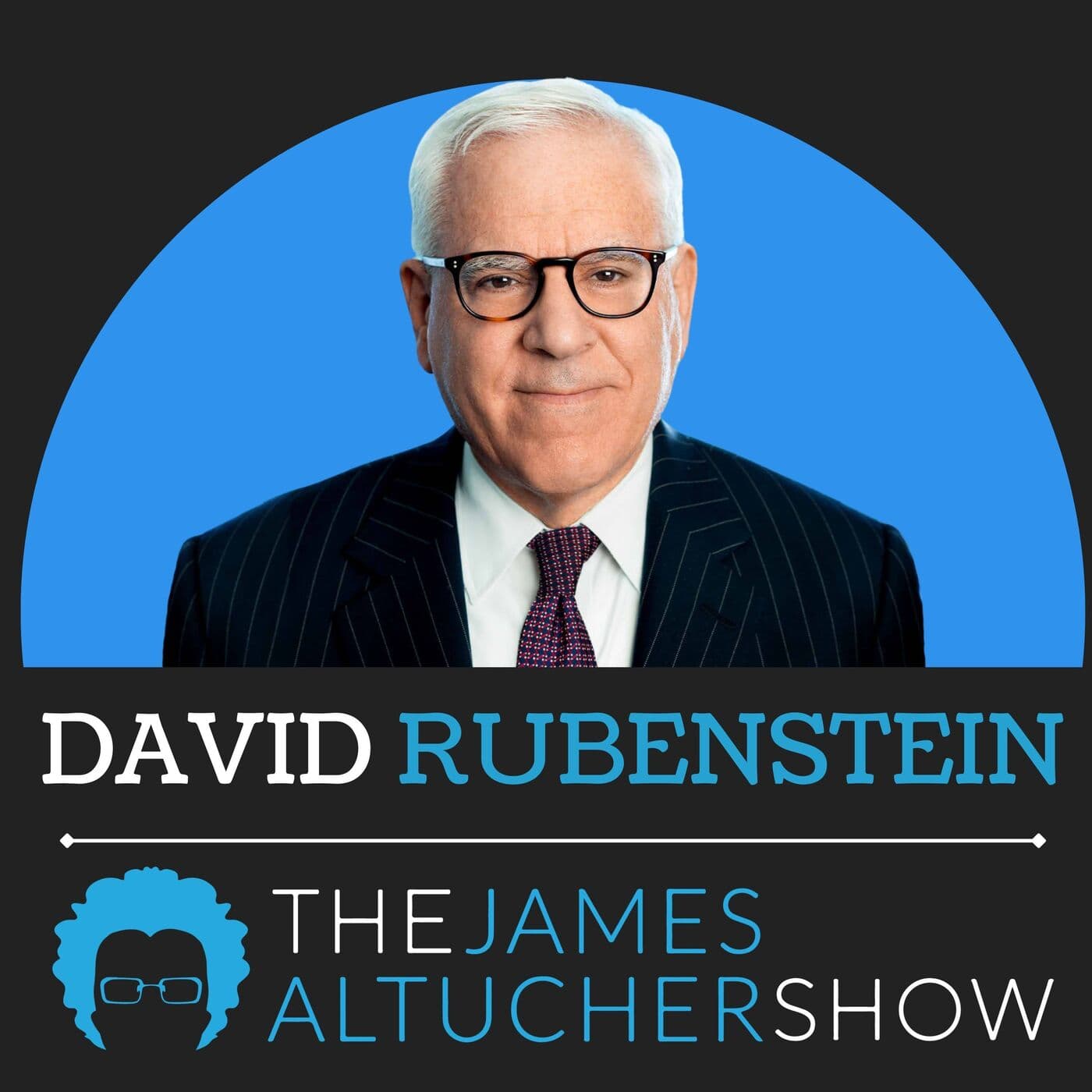
Episode Title The Untold Stories of America's Presidents: A Conversation with David Rubenstein
Episode Description In this episode, James Altucher interviews David Rubenstein, head of the Carlyle Group and author of *The Highest Calling: Conversations on the American Presidency*. The discussion delves into the complexities of American presidents from historical perspectives, examining their legacies, challenges, and the evolving perceptions of their tenures.
Key Themes and Insights
- The Weight of the Presidency:
- Being President is seen as the highest calling, with immense responsibility over the economy, military, and domestic welfare.
- Changing Opinions of U.S. Presidents:
- Historical perspectives on presidents often evolve, with figures like Jimmy Carter gaining newfound respect over time, particularly for achievements in foreign policy and legislation.
- Jimmy Carter's Legacy:
- Rubenstein discusses Carter’s presidency, noting legislative successes often overshadowed by economic difficulties during his term (e.g., energy crises).
- Carter's post-presidency efforts, including humanitarian work and diplomacy, have contributed positively to his legacy.
- Foreign Policy Challenges:
- The episode highlights the difficulties presidents face in foreign affairs, with examples from Carter and Eisenhower.
- The perception of a president's strength or weakness can significantly impact their effectiveness in international relations.
- Historical Anecdotes:
- Little-known stories and lesser-known presidents are explored, such as Coolidge and Hoover, revealing surprising facts about their governance and historical context.
- Political Polarization:
- Rubenstein addresses the current state of political polarization and how it impacts presidential campaigns and governance.
- The conversation touches on the evolution of the *President's Club*, reflecting on the camaraderie between former presidents and how it has diminished in recent years.
- Election Dynamics:
- The influence of third-party candidates on elections is discussed, analyzing historical cases where their presence altered outcomes.
Key Takeaways
- Evolving Perceptions: The public and historians often reassess presidents' legacies over time; figures like Truman and Carter have seen significant shifts in how they are viewed.
- Presidential Skills: Effective presidents often have experience in government or military service, which helps them navigate the complexities of leadership.
- Fundraising and Campaigns: The high cost of presidential campaigns today is attributed to media advertising, donor influence, and the need for extensive outreach.
- Legacy of Military Experience: Presidents with military backgrounds, such as Eisenhower and Carter, typically exhibit reluctance to engage in military conflicts, preferring diplomatic solutions.
Episode Chapters
- 01:30 - The Weight of the Presidency
- 02:09 - Introduction of David Rubenstein
- 03:01 - Overview of *The Highest Calling*
- 03:19 - Changing Opinions of Presidents
- 05:12 - Jimmy Carter's Achievements
- 08:37 - Foreign Policy Challenges
- 10:21 - Carter's Strategy in 1976
- 12:38 - Middle East Foreign Policy and Crisis
- 14:03 - Surprising Anecdotes from History
- 21:54 - Coolidge's Forgotten Legacy
- 23:02 - Hoover and the Great Depression
- 25:21 - Eisenhower's Presidency
- 29:01 - Military Presidents and Diplomacy
- 32:17 - The President's Club
- 33:50 - Fundraising and Polarization
- 36:46 - Costs of Campaigning
- 38:13 - Lincoln's Rise
- 39:49 - The Electoral College Debate
- 42:18 - Impact of Third-Party Candidates
- 44:06 - Overrated and Underrated Presidents
- 49:09 - Nixon's Downfall
- 50:12 - Nixon's Post-Presidency
- 54:45 - The Role of Debates
- 57:40 - Influence of Speechwriters
- 01:00:04 - Entering Politics
- 01:01:21 - Economic Knowledge for Presidents
- 01:03:16 - Unrealized Gains
Conclusion David Rubenstein's insights into the presidency reveal the multifaceted nature of political leadership and how historical contexts shape our understanding of past leaders. The episode encourages listeners to reflect on the responsibilities of the presidency and the importance of informed voting in shaping the future of American governance.
Written by AI. May contain mistakes. Listen to the episode to check what was said.
Transcript
Automatic transcript. May contain errors.0:00Look, as a manager of people, as an employer, as an entrepreneur, and as an investor in startups, I can tell you the most important thing for your business is the quality of the quality of people. you hire. The best part is that great candidates are already on LinkedIn. Employees hired through LinkedIn are 30 % more likely to stick around for at least a year compared to those hired through the leading competitor. And I will tell you that the great thing about LinkedIn is that you're not just looking at random people. You're able to see the people who your friends and trusted peers and colleagues who they trust and who they've hired in the past and who they recommend.
0:42And hiring doesn't have to be complicated. Realistically, when you have a business to run, you don't want to spend hours on hiring. You want to hire the right person as quickly as possible. That's why LinkedIn Jobs AI Assistant suggests immediately 25 great big candidates daily so you can invite them to apply and keep things moving. Hire right the first time. Post your job for free at linkedin.com slash altature. then promote it to use LinkedIn Jobs' new AI assistant, making it easier and faster to find the top candidates. That's linkedin.com slash Altachirk. Post your job for free. Terms and conditions apply.
1:26Sometimes if you just read the news, it doesn't always seem like it, But being president of the United States is the highest calling. You have so much responsibility. Your responsibility over the whole economy, whether people thrive or starve or there's a depression or there's a boom. You're also responsible for every war out there. You're responsible for the lives of not only all Americans, but really the entire world because the U.S. has the most powerful military in the world. and we have to be careful how we use it and so many other things. So I was so happy to talk to David Rubenstein. He's been on the podcast before.
2:08He's the head of the Carlisle Group, which is a$500 billion private equity firm. And first off, he started his career working for a president. He worked for Jimmy Carter when he was fresh out of law school. And then at the Carlisle Group, he even had presidents working for him. So, and we talk about that a little in this podcast, but he just wrote a book, just came out, called The Highest Calling, Conversations on the American Presidency, where he talked to various historians who wrote books about presidents ranging from George Washington and Abraham Lincoln and Ulysses S. Grant, all the way up to Bush, Clinton, Nixon, Kennedy, and many of the presidents in between.
2:52I've always been fascinated with biographies of presidents, but I've learned so much by reading this book, The Highest Calling, and talking to David Rubenstein on this podcast. So I hope you learn as much as I did. So many fun facts and opinions. And it's also interesting to see how the opinions of various presidents have changed over time. And we talk about that as well, how history often changes its mind about who was good and who wasn't. So without further ado, here is David Rubenstein talking about the highest calling conversations on the American presidency.
3:33This isn't your average business podcast and he's not your average host. This is the James Altucher show.
3:50David, I feel like this book, The Highest Calling, is not just kind of a history of presidents, but a history of the history of presidents. I really like how you interview a bunch of authors of biographies of presidents, and you ask each writer, why does the world need another book about John F. Kennedy? or Abraham Lincoln or whatever. And what did you learn about the history of history? Well, I learned that each president is really different and that their biographers really have delved into them. And very few biographers do not love the president they covered. You can find, you know, some presidents you might say are not great, but people who have written about these presidents, they tend to fall in love with them.
4:36As Doris Kearns Goodwin once told me, you know, she spent 10 years with Abraham Lincoln. And when you spend 10 years with somebody, you kind of fall in love with them because otherwise you wouldn't be able to go to work every day and write about somebody. And I think all the people that I wrote about, that I interviewed who wrote about presidents kind of really admire these presidents. And then of course I had some interviews of presidents in this book that I also have a relationship with. So combination of things, it's designed to educate people about the presidency and presidents and try to motivate people to go out and vote.
5:07You said you have some personal relationships with some of these presidents. Right. Specifically, you work for Jimmy Carter. And he's kind of a controversial selection in this book because, you know, his presidency is not widely regarded as a successful presidency. As you know, though, his post-presidency, all his activities in the 40 years since he was president, he's done remarkable things. But having worked for the president and then done these interviews and written about the president, you know, Carter and specifically, has your opinion of him changed over time? Well, of course I worked for him when I was very young.
5:43I was 27 to 31. He was 52 to 56. He had been a governor of Georgia just for four years, relatively inexperienced compared to people who often become president. Often, not always. Some people are inexperienced and become president, but most people become president like Biden has had a wealth of experience in government. um carter was a person who very smart he just thought he could get more done than he probably could and he didn't well develop the political support for all the programs he had but what's happened in the 40 years since he left the presidency is that people say well nowadays you can only get uh if you get the appropriations bills and a debt limit bill through you're doing great if you get one bill through like a like a semiconductor bill or a infrastructure bill People say, wow, what an incredible piece of legislation and great president.
6:36But in those days, Carter got so many things done that the fact that he got many things, he couldn't get everything done, made it look like he was a failure. When, in fact, if you look at congressional quarterly statistics, he got as much legislation passed as virtually any other president of the legislation he proposed. It's a long list of things he did. So people are beginning to review him as presidency differently. and and i think i analogize it to harry truman harry truman left the presidency with a very low approval rating he was basically pushed out of town now people think he's great that was in part because the book that was done by him by david mccullough and other books people have looked at him again uh differently and i think people are beginning to look at carter differently than they did when he left office that's my view of it at least you know i'm wondering if you know with with carter he had the benefit of a democrat house and the democrat senate i mean for a long time in the 60s 70s 80s uh early 90s the house was almost uniformly uh and the senate was democrat and so democratic presidents were expected to get a lot of legislation like lbj got done you know civil rights acts and and spending programs in vietnam and and whether that was successful or on, I don't know.
7:52But, you know, Republican presidents tend to focus on foreign policy because the president constitutionally has the power to negotiate treaties. You have Nixon opening up with China. You know, but I wonder if you look at Carter on the foreign policy side, do you think one thing I wonder about the presidency is the subtleties. Like if they're, if they appear weak or strong, the world reacts to them differently. So JFK, when he failed in the, with the Bay of Pigs, the Cuban Missile Crisis occurred. Khrushchev wanted to see how far he could push it. I wonder if Carter, because he maybe was perceived weak on a foreign policy basis, maybe that's the Iran hostage crisis.
8:33Well, it's a long, complicated answer to that. Carter pulled off the Camp David Peace Accords, which 40 plus years later is still in effect. Yeah. So that's a pretty impressive accomplishment. It was he, not Nixon, who actually opened up relations with China in a sense of normalizing relations. Nixon deserved credit for opening the pathway to China, but relations were really normalized under Carter. In the Middle East, in Iran, that was a terrible failure. We misread what was going on with Ayatollah Khomeini. Carter stayed too close, I think, to the Shah for a while. And before we caught up, we had the hostage situation, and that really ruined his ability to get reelected, I think.
9:15So your point is that if you're perceived as weak in the United States, you're not going to be a strong leader overseas. Now, there's maybe something to that. There's no doubt if you're very popular at home, you have more ability to do things overseas. But Carter, because of the hostage situation, never really could recover and be seen as a strong president. I mean, you talk about, of course, many presidents in the book, and I want to get to them in a second. but I am fascinated by Jimmy Carter, just as you probably are. He came out of nowhere and won the 1976 election. I mean, nobody knew his name in 1974.
9:53And then two years later, he's president. And he was a one-term governor from Georgia. He wasn't part of the Democratic establishment. I mean, there were big names running in 76, names like Ted Kennedy and many others. What do you think was it about Carter that made him stand out? Carter had a unique strategy in 76. He basically said, I'm from the South, which was different. I am not from Washington, which was different. I'm not a lawyer, which was different. I'm not part of the establishment of the Democratic Party. And it appealed to a small subset of people, but that small subset of people was enough to get him the nomination, in part because the liberal side of the Democratic Party had so many candidates who were much better known than Carter, they divided the vote up.
10:38So it wasn't until the very end that he was really facing one candidate, more or less Mo Udall, and then later at the very end, Jerry Brown. Carter's strategy was very unique. On the other hand, it's one that everybody has followed since, which is go to Iowa, win Iowa, then use that momentum to go to New Hampshire and so forth. Carter actually, he didn't win the Iowa caucus. People forget about it. To win the Iowa caucuses today takes maybe 150 ,000 votes. Carter didn't win the IRA caucuses, and he didn't get 150 ,000 or 100 ,000 votes. What he got was 12 ,000 votes, and he came in second to Undecided.
11:17So Undecided came in first. Carter got 12 ,000. But he was able to sell it as a victory, and that propelled him into New Hampshire and so forth. So it's an amazing ability to pull it off. And think about this. Imagine a president doing what he did. He used to go and stay in people's homes, not because he wanted to meet these people so much, but he couldn't afford hotels. So we'd stay in people's homes, make the bed in the morning, leave them a nice note. And he was very, very efficient, but he spent virtually no money. And he had tiny, tiny staff. When I joined this campaign in 1976, the general election campaign, it turned out he had no staff full-time on his policy for the entire primaries.
11:54He had one part-time college dropout and one part-time lawyer. Stuart Isentat later became my boss. He didn't have a full-time staff. It was amazing how he pulled this off with a very few number of people. You couldn't do that with that few people today. Yeah, and he was running against an incumbent, President Joe Ford. Yes, the general election, yes. And it was a close race, 50 % to 48%. And as you point out in the book, if the race had maybe extended just a few more weeks, maybe he would have lost because Ford was gaining in the polls at the time. And it's interesting when an incumbent loses.
12:28It rarely happens. I mean, it happened obviously in 2020, but it's a rare occurrence. Correct. I can't think of it another time. Oh, Bush in 92. Well, Bush lost, Carter lost, Trump lost. But prior to that, they tended to get reelected if they tried, but some did not. Hoover lost. Hoover did. You're correct. Now, how did you pick the different presidents that you would cover here? Well, I have a lot more presidents I couldn't put in the book because the pages were not, there weren't enough pages. So I put additional ones in the audio version of the book because I just couldn't get enough in there.
13:09But I generally, over the course of several years, I interviewed people about their books or I interviewed the presidents themselves. And so it was an assessment of which ones would be the most interesting. I'll tell you, for example, one president I did not put in the book, but it's in the audio version. is Teddy Roosevelt. And I interviewed a woman named Candace Millard about an incredible story I didn't know anything about. Maybe you've heard about it. But after he left the presidency, Teddy Roosevelt, among other things, he did go initially to Africa for a year and then came back, wasn't happy with what he saw going on in the Republican Party, ran against William Howard Taft for the nomination of the Republican Party, lost it, started the Bull Moose Party, lost the election to Woodrow Wilson.
13:54He then decided to do something else. He decided to go down the Amazon and try to discover the roots of the Amazon. Well, he almost died during that trip and he had morphine with him and he was prepared to commit suicide when at the last minute his son talked him out of it. But it's an incredible story of endurance and physical strength. But I didn't put it in the book because it really didn't deal with his presidency. So I didn't put it in the written version. It's in the audio version. So you have to pick and choose. And what was another president that you weren't able to include? Well, one I did include was Abraham Lincoln, but there's so many books on Lincoln.
14:34They're great. I just picked one that I didn't think people knew that much about, which was Ted Widmer's book on Lincoln's travels to get to Washington, which was very circuitous. It had so many stops, and he couldn't go into the Confederate States or so. I didn't put a—let's see, who else did I not include in there? I didn't have a chapter in there on, let's see, another good president. I didn't have one on McKinley. I didn't have one on Grover Cleveland. I didn't have one on Rutherford B. Hayes. I didn't have one on James Buchanan. So I'm looking for people that people probably knew a little bit about and might read the chapters on those books.
15:14I didn't have one on John Adams, so I did have one on Adams and Jefferson, but not one on Adams alone. The chapter on Adams and Jefferson was fascinating because I didn't really know until I read this how much they palled around with each other during those years between the Declaration of Independence and George Washington's presidency, which was a good 13 years or so. Right. And they both were in Europe at the same time, hanging out with Benjamin Franklin. Right. It's almost like a sitcom or a drama could be made about the three of them hanging out in Europe while the U.S. is being built. Well, interestingly, Benjamin Franklin was quite a ladies' man, let's say.
16:01Jefferson was interested in art, architecture, wine, buying things and visiting things. And Adams was the taciturn kind of guy who's drafting documents, negotiating, working hard. He was really upset with the lifestyle of Benjamin Franklin, but he was really friendly with Jefferson at that time. But what happened ultimately was that in the end, I think they fell apart for two reasons. One, Jefferson ran for president against Adams, in effect, after Adams was seeking reelection after his first term, and he beat him. So that was humiliating to Adams to lose the presidency to Jefferson, who had been his friend.
16:42And then for a long time after that, there was fighting over who deserved the credit for the Revolutionary War and the Declaration of Independence and the breakaway from England. And Adams had the view that July the 2nd, the day they voted to be independent, that was the most important date in American history up to that time. And he was the one responsible for the resolution. But Jefferson gets the credit because he wrote the Declaration of Independence. And we celebrate as a religious kind of document the Declaration, even though Adams had asked Jefferson to write it. Adams helped edit it, but he got no credit for it.
17:16And that sparring between the two of them was, in addition to the fact that Jefferson ran against Adams, was a problem with their relationship. So what are the factors that make the country decide, you know, it's not July 2nd, it's July 4th? Was there some kind of charisma that was communicated? What am I missing there? Okay, I don't think it was in the book, but essentially what happened was, July the 2nd, Adams wrote to his wife, This will be the day that we celebrate for the rest of American history. For 1 ,000 years, we'll have fireworks, so forth and so on. He didn't anticipate that the document that on July the 4th was actually approved would get all that much attention.
17:55It was seen as a propaganda document. It's not a legal document in a traditional sense the way the Constitution is. So it was basically a PR document to say, here's why we're getting rid of the English, why we're breaking away. And the preamble, which was more or less ignored, became the most famous language in the English language, more or less. the famous words in the English language. We hold these truths to be self-evident. But why did they, at the time, celebrate the 4th and not the 2nd? What happened was the 1777, the Second Continental Congress is still meeting. And they were so busy that when July the 2nd came, they didn't pay much attention to it.
18:27At the end of July the 2nd, they said, wait a second, we forgot to celebrate. Let's get ready and have a celebration. Well, they got the celebration ready at July the 4th. So they celebrated on July the 4th. So ultimately, it kind of became a celebration of the declaration as opposed to the July the 2nd vote. And Jefferson was not upset with that, but Adams was upset about it because he thought the fourth was not as significant as the vote on the second. But it was mostly they forgot about it on the second.
18:55Take a quick break. If you like this episode, I'd really, really appreciate it. It would mean so much to me. Please share it with your friends and subscribe to the podcast. Email me at alcatra at gmail.com and tell me why you subscribed. Thanks.
19:16Look, as a manager of people, as an employer, as an entrepreneur, and as even an investor in startups, I can tell you the most important thing for your business is the quality of the people you hire. The best part is that great candidates are already on LinkedIn. Employees hired through LinkedIn are 30 % more likely to stick around for at least a year compared to those hired through the leading competitor. And I will tell you that the great thing about LinkedIn is that you're not just looking at random people. You're able to see the people who your friends and trusted peers and colleagues, who they trust and who they've hired in the past and who they recommend.
19:59And hiring doesn't have to be complicated. Realistically, when you have a business to run, you don't want to spend hours on hiring. You want to hire the right person as quickly as possible. That's why LinkedIn Jobs AI Assistant suggests immediately 25 great fit candidates daily so you can invite them to apply and keep things moving. Hire right the first time. Post your job for free at linkedin.com slash altature, then promote it to use LinkedIn Jobs new AI Assistant, making it easier and faster to find the top candidates. That's linkedin.com slash altature. post your job for free. Terms and conditions apply.
20:35This message comes from Capital One. The Capital One VentureX Business Card has no preset spending limit, so the card's purchasing power can adapt to meet business needs. Plus, the card earns unlimited double miles on every purchase, so the more a business spends, the more miles earned. And when traveling, the VentureX Business Card grants access to over a thousand airport lounges. The VentureX Business Card. What's in your wallet? Terms and conditions apply. Find out more at CapitalOne.com slash VentureXBusiness. You know, we admire all these men so much. And, you know, the founding fathers, and they crafted this document that has, you know, created the United States of America.
21:17And yet, you know, and you talk about this in the book, many of them, all of them obviously have their flaws. Like nobody is, nobody's flawless. But extreme flaws involve slavery. And how do you, how do you kind of reconcile, like Jefferson in particular, it's a very confusing situation, particularly in today's day and age where the bonafides of many historical figures are called into question. Where do you stand on Jefferson? Well, Jefferson was a person who, like Washington, had many great features, but like the two of them were slave owners. And as we know, and there's a chapter in the book on it, Jefferson impregnated one of his slaves and at least six children were born to this slave woman, Sally Hemings.
22:04I guess my view on it is if we have a statue or memorial for somebody because they're a slave owner, which is what has often happened in some of the Confederate generals and so forth, or because they were fighting for the Confederacy to preserve slavery, that's one thing. If you were honoring Jefferson, for example, for the Declaration of Independence or things like that, I don't think you should ignore the fact that he's a slave owner, but I don't think you should walk away from honoring him for the good things he did. So when I gave money to Monticello to repair Monticello, his home, I insisted that the slave quarters be built out and that people know that he was a slave owner for all of his virtues.
22:43He was also a slave owner. Jefferson's view was that slavery was immoral, but politically he recognized it wasn't going to be ended anytime soon. And so he basically shut up about it and didn't do much about it when he got his political career underway. Yeah, and I guess, look, at the time or shortly after, England was in the process of doing away with slavery. But, you know, I guess Jefferson felt the country was not ready yet or the South was not ready yet. But Jefferson early in his political career said that slavery should end or slaves should be sent west of the Adirondacks or something like that.
23:17But that there was no, in the House of Burgesses, there was no support for that. And he recognized he was going to get ahead politically. he couldn't be railing against slavery. And of course he had over 700 slaves in the course of his lifetime. So it was really important for him financially to have slaves. You know, and one president I'm really glad I saw in the book was Coolidge. And Coolidge is the book Coolidge by Amity Slaves is a great book. And I think people, you know, he's often forgotten on the list of great presidents. Maybe you could describe a little bit what made him so great. Coolidge had been governor of Massachusetts, and when there was a police strike in Boston, he said there's never any right to strike against the people at any time.
24:04And therefore, he more or less fired the police and brought in other people to serve in that function. Not unlike what Ronald Reagan did with air traffic controllers many, many years later. because of that he got attention and he was put on the ticket of warren harding to be a vice president under harding harding died of a heart attack let's say in california and coolidge became president but as president he didn't like to publicize himself he didn't like to make long speeches he didn't like attention and so he was very laconic and didn't promote himself but he did do very many things to reduce taxation, many things to help balance the budget, and many things that made the government small in some ways or not expanded in the ways that some people wanted.
24:51And later in life, Ronald Reagan honored him by putting his picture, a portrait in the cabinet room as a symbol of what Reagan wanted to do, which is to cut spending and not have an overgrown government. Coolidge was a person who could have run for re-election, but he chose not to. He finished Harding's term and was elected one more term but he chose not to run next time and ultimately Hoover ran and won. You know, a lot of times whoever becomes, like presidents often take credit for the economic work done by the prior presidents because if you do a bunch of economically good policies while you're president then the economy starts to lags policy, let's say, by one to three years.
25:40Correct. Could it be that the Great Depression, you know, that started in Hoover's administration was a result of some of the policies that Coolidge did? Well, Coolidge, Hoover was, it's possible, but Hoover didn't want to do very much about it. When the recession or the Great Depression occurred, Hoover basically didn't think the federal government should do much about it. And therefore, he probably could have done much more to prevent the depression that occurred. Was some of it coming about because of Coolidge's policies? You could argue that, but I would say Hoover deserves most of the blame, I think, much more than Coolidge for what happened.
26:18Yeah, even though, I mean, Hoover had a great reputation beforehand. He was kind of a doer during Coolidge's administration. He had a great reputation. He was well-known around the world, and he was a person who was idolized by people in Europe and other places for what he had done to prevent famine and other kinds of things. He was an engineer, a very impressive person. And like Jimmy Carter, who we talked about earlier, when he left the presidency, again, involuntarily, he stayed involved in government. He chaired some government commissions to make government more efficient, and he was still a figure in the Republican Party for many, many years.
Read the full transcript
26:56i actually didn't know that um i kind of thought he was uh sort of put to the side vines because of the great depression no he hoped no he recovered his reputation a bit and he i chaired some government commissions to make government more efficient and he was pretty active in public life he lived in the waldorf astoria in new york and basically still stayed pretty active actually you know one one president who seems unsullied before during and after his presidency is Dwight Eisenhower, who you have in the book, and Susan Eisenhower, you interviewed, his granddaughter. And it's almost like in the 50s, and this is oversimplifying, and I'm incorrect in saying this, but looking back at it in retrospect, it's almost like nothing happened.
27:41And that is sort of the success of his presidency. Yes. When I was growing up in the 1950s as a boy in Baltimore, people used to think Eisenhower was boring. He looked very old to me, though it turns out he was young compared to people we often have today. But when you think about it, he kept the peace. The government was really good in promoting prosperity. The economy was very good during the time of Eisenhower. He didn't brag about himself very much, but he got the interstate highway system built without appropriated dollars. He got the NASA off the ground. We actually had a great increase in our defense systems, but he didn't brag about it.
28:21When Kennedy said we have a missile gap with the Soviets, that was not true. Kennedy later was briefed on it, and he still said that it was true, but it wasn't. Eisenhower did a pretty good job. No wars during his time as president, and the country economy did pretty well. I sort of feel like the presidents who had served in the military were very hesitant about using any kind of military force ever. Like they sort of saw a little more of the realities of war. So not only Eisenhower, but then you even have like Jimmy Carter is very much more in favor of diplomacy rather than any kind of military excursions.
28:57Well, George Patton famously said, war is hell. And when you've been in a war, you know how terrible it can be and how deadly it can be to people. So you're right. People like Eisenhower really didn't want to go to war. He had many opportunities to go and do things in Laos and other parts of the world, but he chose not to do so. And then Carter himself chose not to use military force to get the hostages out. He did have a rescue mission, but he wasn't really invading Iran. If he had invaded Iran with a military force and every hostage had been killed, I think Carter would have been reelected. But he chose not to do that because I think Carter was to some extent a pacifist.
29:38And I think it wasn't that well known at the time, but I think even though he's in the military, I think he, toward the latter part of his life, became more of a pacifist and wasn't willing to use military force. And even like Bush had been in the military and didn't, you know, a lot of people were encouraging him to invade Iraq after he pushed Iraq out of Kuwait. Right. I'm talking about Bush 1, Gulf 1. And he didn't do it, you know, in part because of his military experience. So it was a very interesting pattern in the book. Yes, that's interesting. George Herbert Walker Bush, as I pointed out in the book, was an advisor to my firm for many years, and I traveled the world with him.
30:16And every time we did an event, he would get a question, and the question was, why did you not go into Iraq and get rid of Saddam Hussein? And he kept saying, look, that wasn't in the UN mandate. We didn't have authority to do that, and that wasn't what I was supposed to do, and that's what we were told to do. So he was very resistant to it. Later, when his son went into Iraq and it didn't work out as well, he pointed out to me that nobody ever asked him that question again. Why did he not go into Iraq earlier? Because they recognized how difficult it would have been. Yeah, I mean, did he approve of his son doing that?
30:53That's a question that, you know, he never really addressed directly that I know. I would say that something like that, my guess is, and I never asked him about it directly and he never wrote about it directly. My guess is that he wanted to support his son is in that sense he supported it. But when the war wasn't going that well, I think he probably privately told his son that maybe he tried some different approaches. But to some extent, you can say when Jim Baker was asked to head a commission to study about Iraq, he was reflecting George Herbert Walker Bush's views and that commission recommended more or less that we get out.
31:31And, you know, you mentioned you never asked him about it. Were you nervous around ex-presidents? Like the question must have been on your mind. Why didn't you ask? I asked him many different things, but I didn't want to put him in a position of saying, well, my son is wrong or I can't support my son. I thought that would have put him in a position of getting in a fight with his son who's president of the United States. And I didn't think that that was a smart thing to do to keep the relationship going forward. though I had many private conversations with him, but he, something like that, he wasn't gonna tell me what his real views were.
32:06He might've told Jim Baker, but he didn't tell me. You know, it's interesting. Like, have you ever read this book? I was out a few years ago called The President's Club. Yes, I did. So just to summarize to the listeners, it's a book basically about how former presidents tend to work together and often be friends. And the most notable example is Bush, the father, George H.W. Bush and Bill Clinton would travel the world together basically for charity and other purposes. And a lot of these presidents were friends with each other afterwards. So there's really a two-part question. One is, it feels like, or it certainly is like, this doesn't exist anymore.
32:44The President's Club is over. Well, you're not going to have a President's Club if all the presidents have to show up because none of them will deal with President Trump. I think it's fair to say, and I don't think it's a big secret. So they're not going to show up to do something with President Trump. But even if President Trump were not around, some of them get along okay. They're not perfect friends. Gerald Ford and Jimmy Carter got along well together. Bill Clinton and George Herbert Walker Bush got along pretty well together. I think the Obamas have a reasonably good relationship with George W.
33:17Bush, but they're not working on big projects together. There is one project that I've been involved with where President Clinton and President Bush 43 are involved with the presidential scholarship program that I've supported. But generally, they have so many things to do on their own, they tend not to collaborate that much. Though, as I suggest at the end of the book, I think it'd be a good idea sometimes if the presidents can get together, all of them, and agree on something, that would probably have a big effect on the country and probably encourage a existing president to be able to get more ability to do things that he wanted to do in that area.
33:53if he could get all the former living presidents to agree. Yeah, it almost reminds me of in 2008 during that election when basically Obama, who hadn't yet been elected, and Bush kind of together talked to Congress about the TARP bill, the second TARP bill. Yes, that was a situation where, for those who don't remember, the first TARP bill got defeated by Congress to the surprise of the Democratic leadership. and it was defeated because Republicans didn't show up with as many votes as they had told the Democrats they would have. And so the Democrats were left holding the bag, supporting it. Republicans didn't.
34:31The second vote, it got done. But former presidents did, as you point out, did support that. And, you know, it's interesting because now I feel like things, obviously the media and the narrative around the two parties and the two candidates are very polarized right now. I can't think of a recent time where they've been this polarized against each other. I mean, Carter-Reagan had very different views, but I still don't think the country was that polarized. And Ford-Carter, I almost feel like we're the same. Well, you have to go back to the Civil War. The Civil War, you know, there were 60 times where members of Congress hit and got into fights on the floor of the Congress with other members of Congress.
35:1560 times. I didn't know it was 60. I knew it was at least one. and they're a famous one, but 60, according to a scholar that wrote a book about it from Yale. I would say that the country is bitterly divided now between the MAGA people and the non-MAGA people, the blues and the reds. And I don't think it's gonna change anytime soon. And one of the reasons is that to raise money in politics, you have to be on the far left or the far right. People rarely give money to somebody who says, I'm in the center, I'm gonna do something that unites everybody. That doesn't raise money. You get money from the far left and far right, and that tends to divide.
35:51It makes the politicians take the positions that are on the far left and far right. And it's not a good situation. The fundraising is really out of control in our governmental system now. Yeah, as you mentioned, Carter had, I don't want to say he had a shoestring budget to run, but he was staying in people's homes because that's what his campaign could afford. And is that much money necessary now? Like, obviously, you could tweet and get seen by 100 million people from social media. You could travel around. It's not that expensive to really, you know, travel to every state and give speeches. It's only a one-year period, say, or maybe a little more.
36:32So why does it cost a billion dollars for each person to run for president? Well, it's a good question. One of the reasons is that media is very expensive. So if you want to buy television ads, which have been very effective, now streaming ads, you have to get media people to prepare those ads for you. They tend to charge a percentage. In other words, if you work in a campaign, generally you make hardly any money. But people who do media ads and prepare the media ads often get a percentage of the amount of money spent. So you could argue they might have an incentive to spend more money because they're getting a certain percentage typically.
37:07Not as much as they used to, but they still get a percentage. But that's not the only problem. The problem is people have observed that whoever spends the most money usually wins, not always, but whoever spends the most money usually wins. And so like in this presidential election we're now talking about, there are seven key states. So you're not likely to see a lot of TV ads if you're in, let's say, Mississippi or you're in Vermont. Nobody's going to give you a TV ad because they know how those states are going to vote. But if you're in one of the so-called swing states, you're going to see a lot of TV ads.
37:36And there's just a lot of money out there. One of the reasons there is a lot of money is because there are no spending limits anymore or contribution limits. It used to be at$1 ,000 limitation in a primary campaign and$1 ,000 in a general election per person. Now there's essentially no limits. So people can give whatever they want. They can give it directly to a candidate where there's some limitations, but you can give money to a super PAC with no limitations. And so that's why people are giving, you know, one donor I read recently gave, I think it was$50 million to a super PAC. and there are more than a few of them probably giving large sums like that.
38:11And again, though, I wonder what they spend on because it used to be media buying. Like you'd have to advertise on one of three TV stations in order to get seen. But now even like, okay, like if I were suggesting what someone should do, crowdsource your media ads. Like just say to people, hey, I'll give$10 ,000 to anyone who makes the most viewed ad on YouTube for me. And then you get thousands of people make ads. YouTube, many of them will go viral. And for free, there's no media buy. And again, like, if someone's running for president, people are going to follow their tweets. The media is going to cover them.
38:52Anyway, the news media will cover them. So I still don't really understand what it is people actually spend money on. First of all, you spend a lot of money on television ads, which are not cheap. People still think that television ads are very, very effective. You spend a lot of money on organizing, getting field teams ready, and also to get out the vote. The get out the vote effort costs money. There's no doubt that that kind of project costs a fair amount of money. So I think they tend to spend everything they have. Now, famously, John Kerry finished his campaign. He lost the presidency because he didn't win Ohio.
39:30Had he won Ohio, he would have been elected president. And it turned out, I think he had like$14 million left in his budget that he had in cash that he could have spent on ads in Ohio. So the lesson people took away is spend every penny you raise. Don't save it for a rainy day. That's interesting. I didn't know that.
40:02I'm always fascinated by like, and we talked about this with Carter, like what it takes particularly for unknown or inexperienced candidate, you know, candidates to, to stand out. And one somewhat inexperienced candidate who you write about in the book is Lincoln. I mean, Lincoln didn't really have a lot of government experience. He lost most elections he had participated in before he won the presidency. What do you, what do you think it is that made him stand out? It was quite a crowded race in 1860. It was. Well, to get the nomination, he was not that well-known. But remember, the nominating convention that he won the Republican nomination at was in Chicago.
40:38So he did have some support in Illinois. His Lincoln-Douglas debates had gotten him a fair amount of attention in 1858 before the election. And while he didn't get elected to the Senate, that was not because he didn't do a good job in the debates. And I think he made the Cooper Union speech in New York that got him some attention. but he also he had a lot of people who supported him in Illinois and they tended the crowd into the convention and it wasn't many ballots before he actually got the nomination but you know he did things that were unconventional at the time he clearly was not a person sitting back hoping that something would happen he was doing some things to help get the nomination and he was really actively involved in helping to get himself nominated and and then you know for the I guess I I guess that was a very much an issue election, right?
41:24So if you were against slavery, you voted for Lincoln regardless of what you knew about him. Right. Well, there were four candidates in the 1860 election. Interestingly, Lincoln was not even on the ballot in most many of the Southern states. And so he had no chance of winning those states. And while he won the election, it was with a plurality of the popular vote, not a majority. And a lot of people now saying that should be the basis by which we elect presidents. Like there should be no more electoral college. Where do you stand on that issue? Well, there are many things I'd like to change about the world, but you know, one time you say, is it worth tilting at windmills when you're not gonna be able to be successful?
42:04So the electoral college was a product of a committee at the constitutional convention. They weren't sure how to elect the presidents. They didn't have direct election because they didn't trust the voters that much. They didn't think the voters were well-informed. So ultimately, out of a committee meeting, a delegate, James Wilson, came up with the idea of having this electoral college. The idea was you can let people vote, but that's going to just provide some sentiment to the electors. The electors are chosen by the state legislatures, and these are informed people that know how to vote and know something about politics.
42:37And so the idea was to kind of take the vote away from the average person, honestly, and to let the specialized, better informed and presumably wealthier people make the decision. That has the downside that we have a very undemocratic system, because in five cases, the person who won the majority of the popular vote in our country did not become president. It happened five times, and it could happen again. For example, Donald Trump complained about the 2020 election, but he lost by 7 million votes. It's a very interesting phenomenon, popular votes. The only protest physical that we really had after an election, because the electoral college system and the popular vote were different, was the Trump election.
43:23But he actually lost by 7 million popular votes. You would think that somebody who, you know, lost by 7 million votes wouldn't think that he should be challenging the election system. Somebody who had 7 million more popular votes, you would think would be somebody who would be challenging the system. But it was kind of backwards. You know, although another case is 1876 with Rutherford B. Hayes versus James Blaine, I think Hayes lost the popular vote and the Electoral College and still managed to get elected president. Well, a special deal was cut in a kind of a congressional backroom operation where Rutherford B.
44:03Hayes agreed to more or less take the troops out of the South that were there enforcing reconstruction. And in return for that, he got enough Southern votes in this special electoral commission that they had to give him the election. You know, how many times do you think third-party candidates have disrupted the winner of the election? So, you know, you mentioned 1992 with Ross Perot, probably, or yeah, 1992. Yes, but Ross Perot got 19 % of the vote, but no electoral votes. Right. So he might have changed some states, but the obvious question is what happened in 2000? In 2000, George W. Bush won Florida by, you know, 530 plus votes.
44:50But, you know, had Ralph Nader not been in that election, he got enormous number of votes in Florida. Had he not been in that election, presumably a lot of those Nader votes would have gone to Al Gore. Or another example in Florida was they were in one very Jewish district. Most of the votes went to Pat Buchanan, who was widely seen as somewhat anti-Semitic. That's because the butterfly ballot was making a confusion to people who they were voting for. But presumably, you know, 90 % of the Jewish voters in this precinct were not dying to vote for Pat Buchanan. Had those votes been for Gore, then he would have won the election.
45:26So third-party candidates do make a difference. You know, do you think in 1980, John Anderson had any impact on any states? John Anderson didn't get enough votes to win any electoral college, but I think the election was such a landslide, it didn't really make a difference, honestly. But John Anderson took away a lot of the good government momentum that Carter was trying to get because Anderson was seen as a good government guy. He was a clean politician and he wasn't seen as the kind of a Reagan type Republican, though he was a Republican. I don't think he affected the election all that much because it was such an overwhelming Reagan victory.
46:04I don't think Anderson had not been, it wouldn't have made any difference in my view. Now, I know I'm bombarding you with a lot of questions, even about presidents not mentioned in the book. But 1972 election, Nixon-McGovern, 49 states to one state. And Nixon, this was already when Nixon was being investigated for Watergate. He wasn't necessarily the most charismatic guy either. Why do you think it was such a landslide? And the deeper question is, do you think it was because the uncertainty caused by removing Thomas Eagleton as the VP candidate? Right. It made them seem wishy-washy. Well, Watergate had occurred, but the unveiling of it as a bit of a scandal, a cover-up by the White House, had not really occurred.
46:45And that occurred after the election. Secondly, in those days, if you were supporting the Vietnam War, you were seen as a patriotic American. And if you were against the war, you were seen as unpatriotic. And McGovern was as against the war as any candidate could be. And so Nixon played on people's patriotism. And the view then was that the war had to be supported by Americans. And therefore, you know, that's why I think Nixon won overwhelmingly. Also, the economy was in pretty good shape. And McGovern had a problem you alluded to, which is he picked a vice president who was a senator from Missouri named Tom Eagleton.
47:21Turned out that he had had electric shock treatments for depression. That scared people, thinking, wait a second, if McGovern is president and he dies, we've got to use electric shock treatments. Who knows what the impact of that on his brain is. So that scared people a bit. And then when he was substituted for by Sergeant Shriver, it never really, and the campaign never really got back into momentum or groove. But it probably wouldn't have made a difference anyway, because it was such an overwhelming election. You know, of all the presidents you covered, which one would you say is the most overrated by history?
47:58And although in my opinion, which is probably wrong, But it seems like John F. Kennedy got a lot of post-presidency attention because he was a good-looking, charismatic guy who has a rich, successful family, and he was assassinated. So that heightened the emotions around him afterwards. Well, you could say that. And there's no doubt that his accomplishments in the Congress were less than you might want. And the major legislation that he proposed didn't actually occur until Lyndon Johnson got some of it through Congress, like the civil rights legislation. So Kennedy only served about a thousand days, so it's hard to say he had that much of a record.
48:43But on the other hand, he did inspire people to go into government. He did get the nuclear test ban treaty, which was very important to get done. I think his Cuban Missile Crisis handling was a textbook case of how to handle a crisis like that. But there's no doubt he was young. He was 43 years old, 43 years old when he was elected. Now, you know, how many people do you think today we would elect at that young age? Though we do have a vice presidential candidate who's now 39. Yeah, it's interesting how it got older and older. But now it seems like the new generation is starting to get in. And, you know, and I guess Nixon kind of kicked off, I mean, not Nixon, Kennedy sort of kicked off all the civil rights legislation that occurred later under LBJ.
49:25So there's that. That's true, but he didn't get his big tax cut through and other things he wanted. He wasn't that successful with Congress because he hadn't been that involved in the Congress when he was a member of Congress. He was, the leader in Congress was Lyndon Johnson. He knew how to get things done. Kennedy wasn't quite able to do that. And remember, Kennedy, because he was from Massachusetts, was more sensitive to losing Southern votes for a presidential reelection. In those days, the South was solidly Democratic. And even though that meant that Kennedy probably couldn't do all the things on civil rights that he wanted to do and keep the Democratic Party in the South in a Democratic column.
50:07And then the flip side is, who do you think out of the presidents you cover is the most underrated by history? Well, Jimmy Carter is underrated, I would say. But I guess it's hard to say any longer that Harry Truman is underrated because people now say pretty impressive things about him. And, you know, I think he did some extraordinary things but was underrated for a long time. I think Eisenhower is very underrated. When I was growing up, you would look at surveys of presidents, and Eisenhower was never really highly regarded. He was seen as one of the least successful presidents because he didn't have a lot of charisma.
50:45He didn't have a lot of major legislation, people thought, and it was not an exciting time. But now I think people recognize that he was an extremely underrated president. You know, I think from reading the book, I came out of it with a much higher opinion of Jimmy Carter. and you do mention in the book that if Nixon hadn't recorded those tapes in the Oval Office, he might've been considered one of the most successful presidents ever. Absolutely. In fact, had he, even in recording them, had he burned the tapes the day that they were made public, the fact that they were made public in a congressional hearing, one of his aides, Alexander Butterfield, made it public, had he burned the tapes then and said, for national security reasons, I have to destroy the tapes, he would still have probably been remained a president because it was those tapes that did him in and and uh i think he kept the tapes and didn't burn them because he thought ultimately congress would never uh get the hold of the tapes the supreme court would never rule against him unanimously and he also wanted to preserve those i think for writing his uh his memoirs and he and you can argue he had a successful post-presidency particularly in terms of his writing and and the advice he would occasionally give later presidents it came back from from nowhere in other words he left in disgrace accepted a pardon but later in life when he moved back uh to the east coast he started advising presidents and he a lot of presidents didn't want to admit that he was advising them but he did visit the white house on a few occasions to advise some presidents and i i think uh he had more impact than than people at the time wanted to admit you know i was um i was talking on on this podcast to gary kasparov the former world chess champion And he mentioned he was very strident to point out that he thought James Knox Polk was the most underrated president.
52:36Well, Polk did get a lot of territory for the United States. But, you know, some people criticize him because he basically stole a lot of territory from Mexico and caused us to go to war over Mexico and what was Texas and so forth. You could argue that he was great in getting more land for the United States by stealing it from Mexico. But I don't know that he would be seen as the most virtuous of presidents. Yeah, and then another president that always intrigues me is Grover Cleveland. Because if Trump wins this election, he'll be like Grover Cleveland in that he'll be the only other president who had two non-consecutive terms.
53:15That's correct. And it was also a rematch, Grover Cleveland versus Benjamin Harris. And just like this is Trump versus Biden. And as you point out in the book, there's very few rematches in presidential history. And Cleveland was interesting as a sort of hard money, you know, backer of gold, whereas Harrison was more in favor of silver coinage. Do you think he's sort of forgotten or underrated by history? Grover Cleveland had been governor of New York, probably not remembered for that many things, though he is remembered for the fact that he had a cancer operation, which was not disclosed to people pretty much at the time.
53:52He's also remembered for the fact that he fathered an illegitimate child, and that was pointed out in the campaign, and that was a big scandal at the time. But, you know, he had some accomplishments for sure. I think I remember an anecdote one time about Grover Cleveland that when Ronald Reagan was going up to Capitol Hill, when he had just been elected president, he was seeing people for the first time in Washington, and he saw Tip O 'Neill, and he said that Tip O 'Neill, Tip O 'Neill showed him his office. He said, this is the desk that I'm using. It's Grover Cleveland's desk. And Ronald Reagan said, well, I played him in a movie.
54:29And Tip O 'Neill said, no, you played Grover Cleveland Alexander in the movie, the baseball pitcher, not the president. And Reagan was a little confused. But anyway, Grover Cleveland was the only person we ever had a rematch with really because the rematch we thought we were gonna have with Biden and Trump, we're not having. That's right. You're right. Yeah. Well, I guess, you know, as you pointed out, Stevenson and Eisenhower was a rematch. Yes. And that was interesting in that it was a rematch. Stevenson had lost overwhelmingly to Eisenhower in 52, came back, and the party nominated him again, and he lost overwhelmingly again.
55:06But amazingly, in 1960, he was still thought by many people to be a very possible presidential candidate. Many people on the left side of the party hated John Kennedy because of his father and really wanted Adlai Stevenson again. And it was – and he gave a – there was a speech for him at the 1960 convention made by Eugene McCarthy that almost got the nomination for Stevenson again, though it was kind of locked up for Kennedy. But yeah, it's amazing. You can have somebody lose two elections in a row overwhelmingly and still think the guy could even be considered to be a nominee again. But it happened.
55:41Is there any other situation like that? Well, William Jennings Bryan. He ran for president, I think it was three times, but never really didn't get that close to winning. I think that's another case where he, you know, and of course, Norman Thomas ran, I think six times, but he was a third party kind of candidate. As a general rule, you know, if you lose twice, I think you're done. Yeah. Well, you know, Biden had lost in 1988 and 2008. And his career was brought back to life being vice president, of course. Well, that was a surprise to a lot of people that he got the nomination for president in 2016 because he came in, I think, fourth in Iowa and fifth in New Hampshire.
56:27And people thought he had no money. It was going nowhere. And then all of a sudden, James Clyburn endorsed him in the primary in South Carolina. And that was enough to help him win the primary. there. And then all the other candidates kind of dropped out very quickly. I mean, do you think there was some behind the scenes, like backroom stuff, like everybody was told, hey, drop out so Bernie Sanders doesn't get it and we got our centrist? I don't know. It was that I think they just felt that Biden was going to get momentum after South Carolina. And, you know, he was more experienced than he had been vice president of the United States.
56:59But it's hard to say. Bernie Sanders, you know, shocked everybody by being the principal candidate against Hillary Clinton when she ran for the nomination. But Bernie Sanders was getting some momentum too in 2020, but you're right. South Carolina stopped it. Yes. You know, and, and, and I wonder if, you know, we've seen both parties get like, I kind of look back to 2012 fondly where I feel Obama and Romney were not that, that different on the issues. I mean, of course there were some differences and a lot of subtleties that were different, but they were, they could shake hands at a debate? Well, speaking of the debate, Romney clobbered Obama in the first debate, and Obama would admit that too.
57:39It's an interesting phenomenon. In most debates that we now have, the incumbent president does poorly if there's a first debate. And the reason is incumbent presidents are used to saying whatever they want with no time limits. And they also think they're dealing with these issues all the time and they don't have to prepare. I know when in Jimmy Carter's case, I was involved in helping to prepare him for the debate with Ronald Reagan, but Carter didn't really want to prepare. He didn't want to read the materials. He didn't think Reagan was all that smart. And we had one debate prep session where somebody played Reagan in the debate prep and he clobbered Carter in the debate and Carter kind of felt humiliated in front of his staff and he left and we never had another debate prep session.
58:20Yeah. And then, and then a lot of these debates, particularly around Reagan had this ability to do these one-liners like against Carter, he has the there you go again one-liner, which caused Carter the debate, and against Mondale is the where's the beef statement. No, Mondale was the one who used where's the beef against Gary Hart. Ah, okay, yeah. But the lines that Reagan used, he used two famous lines. The one against Carter was there you go again. Well, what Carter was saying was something that was factually accurate, but Reagan made it sound like it was wrong. He said, there you go again. Reagan also used the line that I'm not going to take advantage of my experience against such an inexperienced person like Mondale, which was the line that's on a sank Mondale's candidacy, Mondale later thought.
59:08But these lines were not off the top of their head or Reagan's head. They were heavily scripted, prepared in advance. And Reagan, being an actor, knew how to get the line in when it made sense. You know, it's often said that nobody spent as much time thinking of off the top of the head statements as Winston Churchill. Winston Churchill used to prepare these wonderful one-liners, but they were prepared well in advance, and he just waited for the right opportunity to use them. you know which which brings it to the guy who you mentioned in the book inspired you to be in politics ted sorensen who was famous as uh kennedy's speech writer and you know it's maybe slash probably the the the author or co-author of the inauguration speech where it's one of the most famous lines in all inauguration speeches except for maybe roosevelt's you know ask not what what your country can do for you ask what you could do for your country you know clearly do you believe that was Sorensen who was the the author of that look Ted Sorensen well if you ask him what his famous answer was was ask not so but he he uh he was the speechwriter for for for John Kennedy a brilliant speechwriter great way with words he had the responsibility for drafting the the document he was told to ask other people for input.
1:00:32He got some input from Adlai Stevenson, Arthur Schlesinger, John Kenneth Galbraith, and a few others. But in the end, it was the product of Sorensen's work. He did give drafts to John Kennedy. And in those days, it was considered inappropriate to have a speechwriter write your inaugural address. So Kennedy really wanted people to think he wrote it. And in fact, what he did is a trick that now been exposed a bit. He took about one or two pages of the inaugural text that he was going to give and wrote it out in his handwriting. And then on a plane up to Washington, right before, two days before the inauguration, he showed these handwritten parts of the speech to Hugh Seide, a Time Magazine correspondent.
1:01:17And Hugh Seide said to himself, he was asked, what do you think of this? And Seide said, well, these are good lines. Seide later said to himself, wait a second, the president is giving me his draft two days before he gives it. why isn't the speech ready already? Well, it was designed to show Hugh Seidey that the president had written the speech. And so Hugh Seidey later wrote a column saying, I know the president wrote the speech. I saw that in his own handwriting, but he saw just a few paragraphs and it was designed to kind of make Seidey think that Kennedy had written it. It was obviously written by Sorensen, but Kennedy did review it.
1:01:50It's unlike some situations where you get a speechwriter writing everything and the candidate barely looks at it. But Kennedy was involved a bit, But Sorensen clearly was the principal author. And then how does Sorensen come to be the inspiration for you to enter politics? Because, you know, obviously now, you know, for the past billion years, you've been running the Carlisle Group. But initially you were you were a young man working in the Carter administration. Well, the answer is this. I did not think growing up in Baltimore, the son of a postal worker, that I would ever have the money or and I didn't have the looks or the charm or the personality to be a candidate.
1:02:26but I did admire John Kennedy as a candidate. And I thought, wow, what could I ever do? Well, maybe I could be an advisor. And then I said, I read more about it. I realized that he had advisors like Ted Sorensen who were young. Sorensen was only 31 years old when Kennedy was elected president. And I thought maybe I could be an advisor. And so that's why I went to work at the law firm that Ted Sorensen was at when I began my practice of law right after law school. And then did he sort of encourage you along into politics? He, when I wanted to leave Paul Weiss and to go into government, he did give me some recommendations.
1:02:59I don't know whether it's because he wanted to get rid of me at the law firm because I wasn't that good a lawyer or he just wanted to help me. But I did keep in touch with him and I still am in touch with his widow. I saw her not long ago. And, you know, she's, you know, she was very involved in public affairs as well in New York. One last topic is, you know, a lot of these presidents were, they come into office. They're not necessarily, they don't know about all the issues. Maybe they have domestic experience. Maybe they have foreign policy experience. Some of them have no experience, but are very smart.
1:03:31Jimmy Carter might be an example, someone who's extremely smart, but didn't really have legislative or foreign policy experience. What is sort of minimally you would consider knowledge that one should have on just economics? Foreign policy is like another issue, but just economically, what do you feel are the basic things someone should know? Well, I think it'd be good if somebody served as a governor or a member of the Congress. You'll have to deal with economic issues. I think it'd be good if people have some business experience, but not have to have some business experience. But if they basically understand the basics of how the economy works, how the budget system works, things about how the fiscal and monetary policies are set in our country, it'd be helpful.
1:04:17But generally, when you get to be president of the United States or to be a serious candidate, you have some of that experience. Donald Trump was very rare. He's the only person ever elected president of the United States who had no government experience at all. None.
1:04:31Zachary Taylor, did he have government experience? No, when I governed, they were generals. In other words, you had some people who served in the military, and I count that as government experience. Okay. Yeah, I'm trying to think. You're right. I can't think of anybody. There were a few others. I mean, Ulysses S. Grant was a general. There were people who had military experience, Dwight Eisenhower. but most of everybody else had been in government in one form or another. Take this recent proposal that was mentioned and I wonder if sometimes candidates make proposals that they know they have no intention of passing but they say it just to attract voters like taxing unrealized gains on...
1:05:09Right, well... That seems like to not understand how the economy works. It's unlikely that would actually pass for a lot of reasons but sometimes people say things they think they'll get them votes and maybe it gets votes. Lots of times people say things that just aren't realistic, honestly. President Obama said, for example, when he was running for president the first time, nobody under the income of$250 ,000 will be taxed. Well, when he got to be president, he realized that 98 % of Americans are the ones who make 250 or less, only 2 % above 250. So if you're gonna tax people, you're gonna have to get it from the middle class and that tends to be in the 100 ,000 range or something like that now.
1:05:48Wow. Anyway, I appreciate your reading the book. I have to do another thing where I'm going to be interviewing somebody for something else. I really enjoyed reading it. Please write more books about presidents. Okay. Well, thanks a lot. I appreciate it. I'm glad you read the book. Appreciate it. Thanks, David.
1:06:19Since 2011, American Giant has been making everyday clothing with extraordinary effort. Not in far-off factories, but right here in the USA. We obsess over fabrics, fit, and details, because if you're going to wear it every day, it should feel great and last for years. From the cut of a hoodie to the finishing of a seam, nothing is overlooked. Our supply chain is tight-knit and local, which means less crisscrossing the country and more care in every step. The result is durable clothing, t-shirts, hoodies, sweatpants, and denim that become part of your life season after season. This isn't fast fashion.
1:06:59It's clothing made with purpose by people who care as much about how it's made as how it fits. Get 20 % off your first order with code STAPLE20 at American-Giant.com. That's 20 % off your first order at American-Giant.com with code STAPLE20.
From the publisher
Here are the podcast show notes with all the chapters included:A Note from James:"Sometimes, if you just read the news, it doesn't always seem like it, but being President of the United States is the highest calling. You have responsibility over the entire economy, the lives of millions, and the direction of the country in war and peace. I'm excited to talk to David Rubenstein today-he's the head of the Carlyle Group, a $500 billion private equity firm. He also worked for Jimmy Carter, has had presidents work for him, and just published a book called The Highest Calling: Conversations on the American Presidency, where he talks to historians about U.S. Presidents, from George Washington to Nixon and beyond. It's filled with fascinating insights. Let's get started."Episode Description:In this episode, James interviews David Rubenstein about his latest book, The Highest Calling, which dives into the complexities of American presidents through interviews with historians and Rubenstein's own reflections. Rubenstein shares what he's learned from years of interacting with former presidents, how public opinions on U.S. presidents change over time, and what makes the presidency such a unique role. They also touch on the challenges and achievements of figures like Jimmy Carter, Abraham Lincoln, and Dwight Eisenhower, offering listeners new ways to think about the men who have led the country.What You'll Learn:The evolving reputations of U.S. Presidents and how history changes its mind on who was successful.Insights into Jimmy Carter's presidency and why he is gaining new respect over time.The unique challenges that presidents face in foreign policy, with examples from Carter and Eisenhower.How third-party candidates can impact U.S. presidential elections, and what history tells us about that.Surprising facts about lesser-known presidents and the personal relationships that shaped their leadership.Chapters:01:30 - The Weight of the Presidency: Why it's the highest calling in America.02:09 - Introduction of David Rubenstein and his work with U.S. Presidents.03:01 - Rubenstein's New Book: The Highest Calling and why it stands out.03:19 - Changing Opinions: How history re-evaluates past presidents.05:12 - Jimmy Carter's Presidency: Achievements and controversies.08:37 - Foreign Policy and Perception: How leaders are judged at home and abroad.10:21 - Carter's Unique Strategy in 1976: His rise to the presidency.12:38 - Foreign Policy in the Middle East and the Iran Hostage Crisis.14:03 - Stories Left Out: Surprising anecdotes from U.S. history, like Teddy Roosevelt's Amazon expedition.21:54 - Coolidge's Forgotten Legacy: Why he is an underrated president.23:02 - Hoover's Response to the Great Depression: Was it Coolidge's fault?25:21 - Eisenhower's Quiet Success: How peace and prosperity defined his presidency.29:01 - Military Presidents and Their Reluctance to Use Force: Why they preferred diplomacy.32:17 - The President's Club: Why it no longer exists and the political divide today.33:50 - The Role of Fundraising in Political Polarization.36:46 - The Costs of Running a Presidential Campaign: Why it's so expensive.38:13 - Lincoln's Path to the Presidency: How he stood out in a crowded race.39:49 - The Electoral College Debate: Should it still exist?42:18 - Third-Party Candidates and Their Impact on Elections.44:06 - Overrated and Underrated Presidents: How Kennedy and Eisenhower are viewed today.49:09 - Nixon's Fall from Grace: How his tapes ruined his presidency.50:12 - Nixon's Post-Presidency and Redemption.54:45 - Presidential Debates: How one-liners and debate prep can make or break a candidate.57:40 - The Influence of Speechwriters: Ted Sorensen's role in Kennedy's speeches.01:00:04 - Entering Politics: David Rubenstein's inspiration from Ted Sorensen.01:01:21 - What Presidents Should Know About the Economy.01:03:16 - Unrealized Gains and...
See Privacy Policy at https://art19.com/privacy and California Privacy Notice at https://art19.com/privacy#do-not-sell-my-info.

