
In short
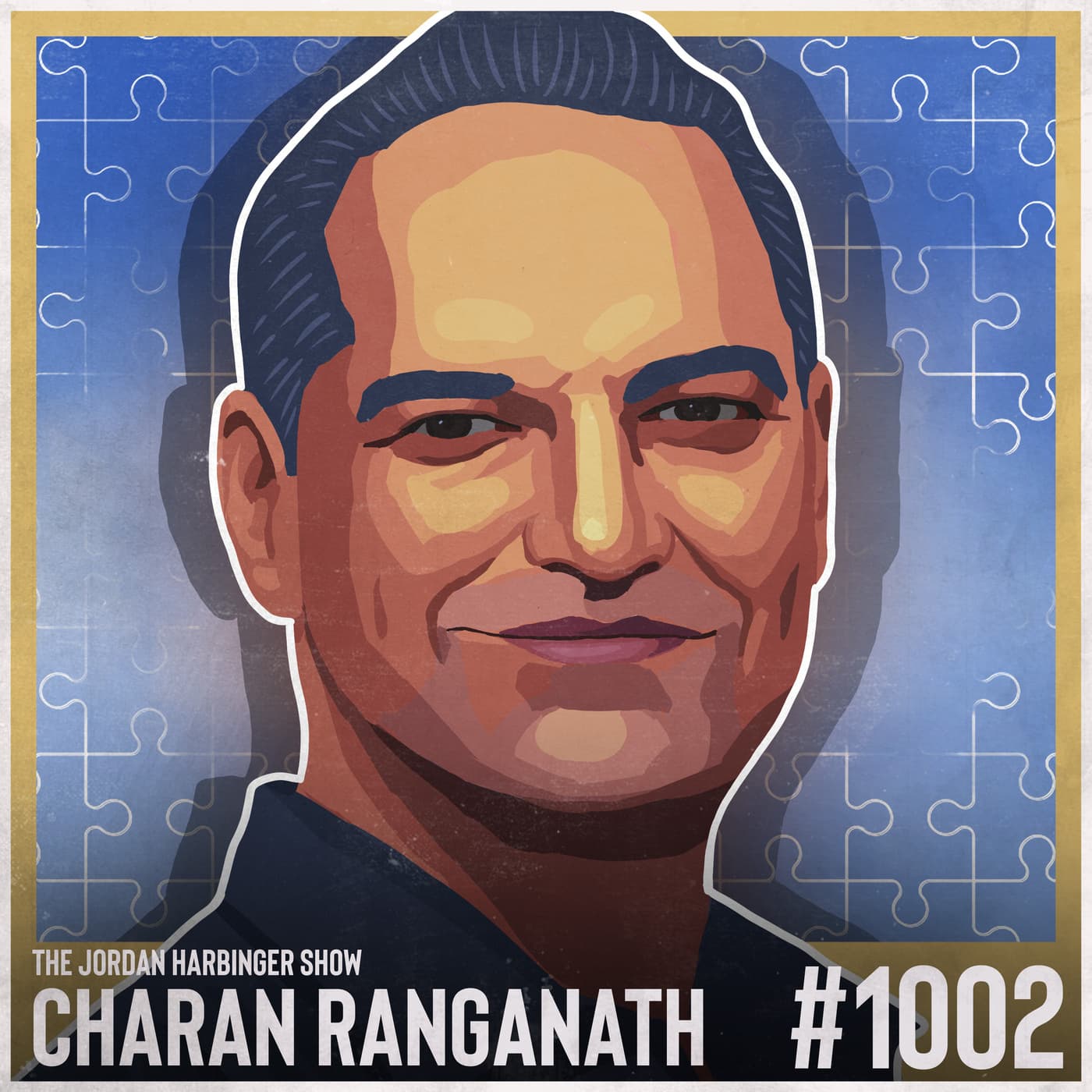
Podcast Summary: The Jordan Harbinger Show - Episode 1002
Episode Title
Charan Ranganath | The Mysteries of Memory and Why We Remember
Episode Description
In this episode, author Charan Ranganath discusses the complexities and intricacies of human memory. He challenges conventional perceptions of memory, offering insights into how memories are formed, recalled, and often distorted.
---
Key Discussion Points
- Nature of Memories
- Memories as Constructs: Memories are not exact recordings of past events; they are reconstructed from bits of information based on current context and beliefs.
- Distortion in Memory: The details we remember can often be altered during retellings or influenced by emotional states.
- Influence of Emotion and Attention
- Emotionally Charged Memories: Events that invoke strong emotions (due to neurotransmitters like norepinephrine) are more memorable.
- Attention's Role: Attention plays a crucial role in determining what gets encoded into long-term memory.
- Group Dynamics and Memory Reliability
- Eyewitness Testimony: In group settings, memories can become unreliable due to interference from multiple accounts and dominant personalities.
- Collaborative Interference: When recollections are shared among a group, the collective memory may diminish in detail rather than enhance.
- Temporal Perception and Experience
- Time Perception: Distinctive episodic memories can alter our perception of time, making mundane periods (like pandemic lockdowns) feel long due to a lack of memorable events.
- Improving Everyday Memory
- Mindfulness and Cues: To enhance memory, one should minimize distractions, and create visual cues linked to the information to be remembered.
- Diverse Experiences: Engaging in a variety of experiences can improve overall cognitive function and memory.
- Memory and Cognitive Sciences
- Memory Updating: The ability to amend memories based on new information is crucial to survival; it allows adaptation to changing environments.
- Cryptomnesia: This phenomenon occurs when individuals inadvertently plagiarize ideas they have previously encountered but do not consciously recall.
- Dopamine's Role in Memory and Learning
- Addiction and Memory: Dopamine drives the desire for rewards, which can lead to memory biases favoring winning experiences (common in gambling).
- Practical Advice for Memory Retention
- Study Techniques: Cramming may yield short-term results but leads to long-term memory loss; spaced learning and good sleep are essential.
- Creating Effective Memory Cues: Utilizing familiar objects or contexts can trigger memories effectively, assisting in better recall.
---
Conclusion
Charan Ranganath's insights challenge traditional notions of memory and provide valuable tools for understanding and enhancing our recall abilities. The episode emphasizes the importance of context, emotion, and attentiveness in shaping our memories, along with practical strategies to improve everyday recall.
---
Suggested Actions
- Dive deeper into memory research by exploring Charan Ranganath's book, *Why We Remember*.
- Practice mindfulness to enhance focus and attention for better memory retention.
- Engage in diverse experiences to enrich memory and cognitive connections.
For more detailed notes and resources, visit [jordanharbinger.com/1002](https://jordanharbinger.com/1002).
Written by AI. May contain mistakes. Listen to the episode to check what was said.
Transcript
Automatic transcript. May contain errors.0:28This episode is sponsored in part by LinkedIn. compared that to the cost of a bad hire. Training time, salary, lost opportunities, stress on your existing team, and then the emotional fun of letting them go and starting all over again. When you add that up, spending a bit of energy up front to find the right person is a no-brainer. That's exactly where LinkedIn Jobs shines, helping you get it right the first time so you're growing your business instead of constantly cleaning up hiring mistakes. Hire right the first time. Post your job for free at linkedin.com slash harbinger. Then promote it to use LinkedIn Jobs' new AI assistant, making it easier and faster to find top candidates.
1:00That's linkedin.com slash harbinger to post your job for free. Terms and conditions apply. Coming up next on the Jordan Harbinger Show. So when you're emotionally aroused, the things that are attention grabbing stick out. And those are the things that you remember the most. And the reason that you remember them the most is because those chemicals like noradrenaline, cortisol is another one. They promote plasticity. That's why traumatic events are just so hard to shake for people because your brain is basically dishing out these chemicals that say this is important. Don't lose this information.
1:41Welcome to the show. I'm Jordan Harbinger. On The Jordan Harbinger Show, we decode the stories, secrets, and skills of the world's most fascinating people and turn their wisdom into practical advice that you can use to impact your own life and those around you. Our mission is to help you become a better informed, more critical thinker through long form conversations with a variety of amazing folks from spies to CEOs, athletes, authors, thinkers, and performers, even the occasional gold smuggler, hacker, pirate, special operator, or tech luminary. And if you're new to the show, or you want to tell your friends about the show, I suggest our episode starter packs.
2:12These are collections of our favorite episodes on persuasion and negotiation, psychology and geopolitics, disinformation and cyber warfare, AI, crime and cults, and more. It'll help new listeners get a taste of everything we do here on the show, just visit Jordan Harbinger.com slash start or search for us in your Spotify app to get started. By the way, Google pods is closing Google podcast is no more. That means for a lot of you, it's going to forward to YouTube, you won't be able to get skeptical Sunday or feedback Friday, I suggest pocket casts cast box is a great way to replace that app. Otherwise, you won't be able to get every episode of the show depending on where you are and depending on what ends up replacing Google podcasts in your area.
2:48A lot of you are already emailing me because it's closed in the United States. Those of you overseas, you're next. Anyway, today we're diving into the science of memory. Why do we have it? Why did we evolve this in the first place? Why is it that memories that stand out are easier to recall? We also discuss how memory works, how we can make it better, and why memory is unreliable most of the time. We also touch on dopamine, deja vu, and more. All right, here we go with Dr. Charan Ranganath.
3:18Look, I'm fascinated with memory, and I wanted to have you on the show as soon as I heard about this book, because I realized I don't actually understand a lot about memory. I think you said it best. You wrote, my ability to remember 80s song lyrics far exceeds my ability to remember why I walked into the kitchen. And I'm like, yes, thank you. I can still sing Mo Money Mo Problems and get like 99 % of the words right. But I have no idea where my car keys are right now. Yeah, I'm the same way. It's funny because I would kick myself saying, oh, my memory is so terrible. And yet I did fine in school.
3:55I never had a problem with studying for exams or anything like that. And then I really started to ask myself, as a memory researcher, how much am I expected to remember of anything? And that's when it really struck me that, of course, most of what we experience will be forgotten. We won't remember. So then the question is not why we forget, but why we remember anything. And that's what a lot of the book is really about. I try to give people suggestions about how to remember what matters, but I keep saying over and over, it's not about remembering more and more and more. It's about remembering what you need when you need it.
4:33But why do we remember anything? I mean, maybe we back up a little bit and say, why did we evolve this in the first place? Because I know animals remember certain things for a certain period of time. Mammals anyway. I don't know if like bugs remember things. Maybe they do. But why do humans or mammals have memory at all? Well, learning can happen in even single celled organisms. It's really phenomenal. I didn't know that. If you look at like honeybees, They have an incredible memory for certain things. But this ability to remember events is more of a mammalian thing and maybe even more of just a human thing.
5:11Some people would say it's just only humans. Certainly, the way humans remember is different. And we can talk more about how and why humans remember so differently. But I think this capability of remembering events, or even just all forms of memory, is about taking what's happened in the past and using it to make sense of the present and navigate the future. And why I say that is because suppose you had something that happened to you in the past. It's over with. You survived it. It's not necessarily going to affect your ability to reproduce, or even if it did, it's over. But the question is, could this happen again?
5:50Does that experience give you some knowledge or some memory that you can use to say, hey, what's going on here right now or what's likely to happen in the future? And so that really captures why memory is so selective, because it's not supposed to be this library of the past. It's supposed to be a little resource that you can tap into when you're uncertain or when you're struggling mentally in some way, shape, or form. So it sounds like what you're saying is our ancestors had memories that helped them stay alive, which makes sense, I suppose. Is that why we only remember certain things? Because it seems like cavemen weren't like, oh, man, I really hope that I can remember how to do this thing in biology class tomorrow.
6:38We're not necessarily evolved to study how to make a blueprint or calculus or something like that. I mean, we can remember that stuff, obviously. Some people do. and remember historical dates and whatever, but that's not obviously what we had evolved memory for in the first place. Yeah, it's not what we naturally learn. Right. There are certain things that we naturally will remember. Like if you are walking around and a bear attacks you, you will naturally remember that, right? Yeah. If you open up your door, walk a couple blocks down, and all of a sudden you find a place that gives free pizza, it's the greatest pizza you've ever had.
7:15You won't have problems remembering that you got this free pizza. So there are certain things like that that are biologically relevant to us that we will find easy to remember because our brains respond to it in a particular way. Meaning that if you look at the kinds of information that we tend to remember, things that are emotionally significant to us in some way, they're actually associated with the release of chemicals called neuromodulators. You and your listeners, I'm sure, have heard of many of them, like serotonin, dopamine, noradrenaline. And these are chemicals that are released often during very highly emotionally charged states that promote plasticity.
7:52They allow the changes in the connections between neurons that happen during learning to be stable over time so that we have an event that we can remember later on. So you mentioned earlier why maybe it's more important to ask why we remember instead of why we forget. I'm trying to see where I'm going with this. I'm stumbling a little bit because if I try to remember exactly how my day went, I guess like literal recall, I can't ever do that. And I assume that's because our brain has decided at some level that that's not a very useful skill. It's funny you say that because there's a famous memory researcher named Frederick Bartlett who really started this idea that memory is not literal.
8:33And what he even said was literal recall is extraordinarily unimportant. And what he meant by that is exactly what you're saying. There's no reason to remember everything, right? I mean, think of all the temporary passwords you've had to keep in mind just for a few minutes, and then you enter it, and then you're done, right? I mean, would you want that? Think of all the random people you've been in line with at airport security. Do you want to remember all those faces? No. So I think you're absolutely right that you hit on this. It's unimportant. You mentioned neurons, and I know in the book there's something called cell assemblies.
9:09You mentioned a guy who memorized, I think, thousands of three-letter trigrams, which are what, three-letter non-words? Yeah. So it could be something like Dax. Well, except I just talked to Dax Shepard. That's a bad one. But he actually did use Dax before we knew who he was. But maybe something along the lines of Zub, right? So there are these three-letter words that mean nothing. And so there was a guy named Ebbinghaus. And the reason he came up with this was he said, hey, look, I want to be able to scientifically study memory. I want to be able to put a number on how much I can remember and how quickly I forget.
9:48And so it's just like anything in physics where you can quantify something and quantify changes over time. He wanted to do psychophysics of memory and quantify how much his memory would be retained over time. And so he didn't have a bunch of people to study, so he just studied himself and would force himself, memorize, memorize, memorize. And then he would test himself on these things that he remembered. And what he found was that within about 24 hours, he had forgotten the overwhelming majority, about 80 % of what he had memorized. So what that tells us is you can try really hard, be extra motivated, and still the majority of your experiences will be lost or reduced to a fraction of what you had.
10:36And so I think that's the poignant message of memory research is that we all have this expectation that we should remember everything. And as you said, it should be literal, that we should be able to replay it as it happened in real time. And I even see this assumption all over neuroscience. science, but it's just not true. And we know this and every memory researcher knows this. That's an ongoing challenge. In fact, one of the things I'm going to ask about later on, well, I'll save the spoilers, I suppose. I'm faced with this problem quite often because I'm studying Chinese and every day I do flashcards right on my computer or on my phone.
11:11And I study like, I don't know, 50, 100, 150 Chinese flashcards. And these are just random symbols that have not a ton of rhyme or reason. I mean, there is a few patterns here and there, but in commonalities, but really it's, I'm looking at a random strokes on a page in various combinations and it'll be like, this means sadness. This means music. This means a certain type of coat that was popular, you know, whatever. And it's just, that's it. And I can see my retention because it gives you a score. It's like, oh, you remember we quizzed you on things you learned yesterday or last week or over the last few months, and you remembered 93 % of those.
11:54And that seems pretty good. But I guess, why did this guy forget 80 % or only remember a small percentage? What's the difference there? My memory is definitely not better than most people's, I would say. No, no. I mean, I think that what you brought up makes a lot of sense, because my guess is that you're getting that number because you already tested yourself once before. And so what I was describing is if you just studied it once. Oh, I see. But what we know is that in fact, you're actually near optimal in the way that you're learning this information by using flashcards. Because what happens is if you're trying to memorize something like Chinese characters, what you want to do is you want to test yourself on them.
12:37In fact, even before you know what the character is, you should try to guess what it is. Then you get the answer. Then what's going to happen is your brain will form a memory that cuts out the wrong information and heightens the correct information. Really? And then if you test yourself again later, then you're going to further strengthen that memory. And if you space out the times you test it so that you don't do it like, rather than trying to do it all within an hour, you spend maybe five minutes a day for 12 days, you're going to have a good memory, a very good memory for the things that you tried to memorize.
13:17And so that's optimal. The problem is there's like 9 ,000 characters that I'm learning. So literally, maybe it's more. So the whole five minutes a day, that would be different. If I was learning like 200 of these things, yeah, I could maintain it in five minutes a day. This is not that, unfortunately. Well, I can give you more tips on this, but maybe we could talk offline about that. I'm open to it because I think a lot of people are learning languages and they have problems with this. One thing I will say that's surprising is you said before you study something, before you learn something, you should try to guess what the character is.
13:48That's sort of counterintuitive, right? So if I see something and I know that I don't know what it is because it says new card, I've been afraid to go, oh, let me think what this is because if it's wrong, then what, you know, and you guess a wrong thing and then it sticks with you and you're like, damn it. I try not to do that because it's really frustrating. You're saying, yeah, just go for it and eventually your brain will correct yourself. That's interesting because I've, again, been afraid to just randomly guess what something is. If I don't know, I just go, I have no idea. And then I look at the answer.
14:17Yeah. This is actually a widespread assumption, is that when you're trying to memorize things, you shouldn't give yourself the opportunity to make the mistakes. And in fact, what you find over and over again in memory research is you do better when you give yourself a chance to make mistakes. And even if you make a mistake before you learn it, as long as you get the right answer soon afterwards, you can actually do pretty well. And the reason is that, let's be very concrete and take the example that you're talking about. You see this Chinese character in front of you. So then you guess it is a airplane.
14:55That's the name of the word, right? So then you say airplane, and then it turns out to be chair. Well, now what's happened is, is that you've created this little memory from the set of neurons that's basically screaming out, what was the set? It was airplane. Airplane. Yeah, great. You forgot already? But at the same time, there's other possibilities. These neurons aren't fully committed to this one possibility. So what happens is you get the feedback, and now that feedback can be compared with the guess that you generated, and you can actually suppress the connections between the neurons that are voting for airplane and enhance the connections that are voting for a chair.
15:38And why this is important is because memories compete with each other under normal circumstances. The reason why your characters are so hard to remember is that for you, when you look at these characters, they all look kind of the same because you don't yet have that expertise to tell the difference between these characters. So you're just taking an arbitrary visual pattern and trying to associate it with something you know, which is very, very hard. So what happens when you do this testing, or even pre-testing, meaning that you test yourself before you actually have learned the answer, is now you can suppress some of the wrong answers, and your brain can enhance the access to the right answers in comparison.
16:20So when you see this character the next time around, it's more likely to produce the correct answer and less likely to produce the wrong answer. And in a way, it seems It's totally counterintuitive, right? It does. But if I'm driving, I'm going to learn my way around a new neighborhood much easier than if I'm sitting as a passenger in a car, right? Sure. And even if I don't know my way around the neighborhood, if I'm guessing and just kind of exploring and driving around, maybe I'll go right. Maybe this is going to take me to the grocery store. I will learn a whole lot about the environment, much more than if I'm sitting in the passenger seat and just seeing somebody who knows how to get there.
17:04So giving us the chance to make mistakes actually gives the brain a huge learning opportunity. Yeah. That's what we call error-driven learning. Error-driven learning. Yeah, I vaguely remember hearing about this before. I'd love to know more about this because I used to do worksheets for every episode of this show. And when I say I, I mean, someone on my team used to make a worksheet for every episode of the show. So they'd have this episode and it would be like, what's the concept of this? Should you look at the answer before? But it was just a ton of work. And we looked into having chat GPT, create a quiz for each episode of the podcast or something like that.
17:40But it's just, it's not, AI is just not that good at that stuff yet, unfortunately. It's really just not there. But I'm always looking for ways to create opportunities for people to engage with the show. Because if you listen to this podcast, you're like, oh, there's so much interesting stuff in there. But then the next day, it's like, name one thing you learned from that podcast. And if people can name one thing, I'm always like, oh, good. And I know people feel like, I've listened to 600 episodes of your show, and I feel like I learned a lot, but I can't tell you one single thing that I learned.
18:07And I'm like, that's not good. They do remember it. They just can't remember it on demand. They'll remember a story or something somebody told or a certain guest and they have their favorite episodes and yada yada, but they can't say like, oh yeah, I learned about this error-driven learning. And I think this is really useful for people learning a skill. And I am all ears on how to get people to remember more things from this podcast, for example. Yeah. And so you brought up a whole lot of interesting points there. Maybe I'll take one of the many points that I think goes towards memorability, which is you brought up this idea of if somebody could remember a couple of points, right?
18:47And part of the challenge that we have when we're trying to remember something that goes over time, like an hour, and that's a lot of information, is that you want to come back to a couple of key talking points, because essentially, if I'm trying to follow and make sense of what's going on right now, I can hold about three basic chunks of information in mind while we're discussing this. And then that allows me to be able to kind of follow everything. And so if everything were to come back to a key point that you could remind your listeners about, then that now gives the ability to take all this information and reduce it into one giant chunk of knowledge that they're keeping in mind.
19:32And so I think a lot of the problems that we have with communication that's memorable is being able to reduce something down to a set of points that people can take away. Because I have the same thing in science. I can be a total expert. I can see a talk on something. And if I remember three points from that talk, it's a huge success. And 90 % of the time, people don't do that. Yeah. So it's unfortunately part of the temptation for scientists to dumb things down. And I won't mention any names here, although it's very hard not to do. You see these science podcasters, for example, and they'll say, if you do this, this happens.
20:09And it's like, well, you're saying that so that people will remember something, but it's so nuanced, not always true. Tons of exceptions. Depends on a lot of different factors, but they just get rid of all that because it's so much catchy. You have a TikTok soundbite or whatever you want to call it. That's going to go viral. If you say this one thing, like if you want to be smarter, do these three things. Here's two foods that are going to make you smarter. And it's like, well, there's two foods that have a certain nutrient that might help you sleep better, which might help you remember things better, which is not really intelligence, but okay.
20:44And it's like, or take a magnesium pill before you go to bed. That's not as sexy as like, here's three super foods that you can, you know, that that's a TikTok right there. That's going to earn you some money because you can sell your proprietary blend of whatever powder that you've got, you know, for sale on your website. It's tough with science, right? Because if you want to educate people, you can either put them to sleep or you can tell them a bunch of stuff that's not true, or ideally something in between, but where is that balance, right? Yeah, it's really hard. I mean, one of the things that I've loved about doing science communication, which is really the first time I've had to do it for this book, to really talk to people who don't know about this field, is to communicate uncertainty and to say, here's what I know, and here's what I don't know, and here's what I think.
21:29And those are three different things. And often the more you know, the more you discover about what you don't know. And so I totally hear what you're saying, because I think especially when people read science and they don't do the science, they don't have that uncertainty because they don't know how much they don't know because they're not seeing their error. They're not engaged in error-driven learning. So it's like if I make predictions about things and then I find out, oh my God, my experiments actually did not work out as planned, I get this sudden realization that I don't know as much as I thought I do.
22:08And nature is constantly beating the crap out of us in science, right? And that's kind of what you want. You want to be able to push it to the point where you're going to be surprised. And I think this is an interesting point, which is that, in fact, when we're surprised, we learn more than when things fit with our understanding of the world. We find it easier to remember things that fit with our understanding of the world in a certain way because we have these memory biases. but we learn more from the surprising things. And this is why sometimes when people communicate about science, they'll try to do some counterintuitive thing, like these are the five mistakes when you're trying to memorize it.
22:53I've done a couple of excerpts from my book where editors for whatever newspaper or whatever will just put that as the headline. These are the five mistakes that you're making from a memory researcher. And I'm like, I don't know about that. But you do need to communicate. I do find that you have to find that balance of what am I willing to say and what is there are counterintuitives. I mean, everything that I talk about in the book, I highlight the points which were surprising to me, like this issue about error-driven learning. That to me was a counterintuitive thing that changed my way of thinking about everything.
23:28But I agree with you. It's like there's a temptation to just go with the easy solution of like, you want to be better. Do this. And I ask, well, what is better? That's the first step. And as a scientist, we're all about figuring out what's the right question. And I think people want an easy answer without asking themselves, am I asking the right question in the first place? why is it that memories that stand out are easier to recall and this is such a fundamental thing that that everybody experiences that it's it's really tempting for me to use circular logic here like i remember things that stand out because they stand out so they're easier to remember but you know obviously that that's bad logic is it because we're not multitasking if something stands out is it is it a function of how much we focused on an event because i'm thinking of like a car accident, right?
24:18You remember all these weird details of everything, even though everything happened so fast. And I've done other shows like with Dr. David Eagleman. Why is it that that stuff happens in slow motion? And you're like, I remember the smell of the windshield wiper fluid when the tank exploded at the head and the head on collision. I smelled the engine fumes, you know, and you have all this stuff. You're not on your phone texting or like taking a video at that point. So it seems like it could be a function of focus, but there's obviously something else going on here, too. Yeah, yeah. There's a couple of things that I'll highlight.
24:51One is just imagine something that stands out, but it's not super emotionally arousing. Something like you're at like a business event or something like that, and you see someone wearing like a feather boa, right? So it stands out to you. So what happens is that in memory, you have a lot of competition. you have a limited set of neurons in your brain that are trying to store a massive amount of information. And so what that means is that memories will have some degree of overlap. And the more similar two things are, the more they will compete with each other, meaning that it's like if you're trying to remember five people who are well-groomed, who have black suits and red ties or whatever, they're all going to be very similar and compete with each other.
25:41But the person with the feather boa will stand out because there's less competition. There aren't as many memories that are similar to that one that you're trying to encode, right? And so that's why you get less interference is what we call it in memory research. The interference is what happens when you have these competing memories that are similar to each other. And so you can't find the one you want. And that's why, for instance, things like names are so hard to remember. Because it's not that people have no memory for the name. It's like Jordan. I know that name because I had a grad student named Jordan who was fantastic.
Read the full transcript
26:18And the problem is now connecting that name with your face, because that name was also connected with his face. And it's connected with a country in the Middle East. And so there are all these competing associations. And so likewise, there are people like your face is distinctive, but there are other people who might look a little bit like you, and they're associated with different names. So the kinds of things that we really have problems with are these... Yeah. No, they're pretty handsome, I'm sure. Thank you. But those are the things that we suffer from, are the things like, it's not that I don't remember where I put my keys, it's I don't remember where I put my keys an hour ago, because there are so many competing memories.
26:59So that's something. And then there's another point which I can get into, which is the emotion part, like the car accident that you brought up. Please, because I feel like if something triggers, what would you even call this, like fight or flight kind of stuff that were survival circuitry, I guess, in my brain, it just feels like a different system takes over. And it's like, remember every detail of this. Oh, except for the important part, like what the guy's face looked like. But remember those shoes, man. Remember those shoes that that guy had and the gloves were leather and black. And it's like, did you get a look at his face?
27:32No. Oh, he had a mask on. No, I just was staring at his jeans the whole time while he robbed me at gunpoint. And the police are just like, you're useless. You deserve everything that's happened to you. Well, what you remember is you remember the important stuff, which is there was a person who was pointing a gun at you. Right. Many times people will remember the face, but sometimes they don't. And it depends on how well you know them and a bunch of other factors. But let's get to the key point, which is what happens when somebody is pointing this gun at you. As you mentioned, you have this fight or flight response.
28:02And in part, you're getting a big release of noradrenaline in the brain. Peripherally, you're getting adrenaline. And so your eyes are dilating, your heart's racing. And those chemicals change how you pay attention. They change what you pay attention to. And your attention tends to be going towards whatever is going to be grabby. If those shoes are bright red, maybe your attention goes to that. But your attention is also going to the gun and you're focusing on the gun. So when you're emotionally aroused, the things that are attention grabbing stick out. And those are the things that you remember the most.
28:35And the reason that you remember them the most is because those chemicals like noradrenaline, cortisol is another one, they promote plasticity. They actually are stabilizing changes in the connections between neurons that really form the basis of memory. And so that's why during these scary events that get us going, and especially you can extrapolate this further into traumatic events, That's why traumatic events are just so hard to shake for people, because your brain is basically dishing out these chemicals that say, this is important. Don't lose this information. You got attacked by a bear.
29:15It's not just important enough to know that you got attacked by a bear. You got to know what led up to getting to the bear. You have to remember where that bear is so that you don't avoid it in the future. And that memory is going to be sticky because, on average, your brain is going to want to remember that over something that's less threatening, even if you produce a few false alarms along the way. The false alarms thing is interesting. I'm wondering if there's a PTSD connection here. Because my 2020 hindsight, I mean, we had no idea what PTSD was when I was in high school or middle school. but my friend my friend's dad was driving us to lacrosse practice probably seventh or eighth grade and there's a we were stopped at a red light the windows were down because it was summertime was hot and it was a helicopter overhead or something it's like a you know traffic copter and he goes hey what guys do you hear that and we're like what he's like points up to the sky and I'm like yo what is your dad doing man and my friend was like just relax he's like dad dad hey the light dad, the light's green.
30:18And he was like, uh, and he just started driving. And I was like, what the hell was that dude? When we got to lacrosse practice and he's like, yo, look, my dad was in Vietnam and like helicopters freak him out. And I was like, what? This is so weird. And I felt bad for the guy because he, like, he immediately got transported back into the jungles of Vietnam when he heard that helicopter. And he was very, and I was thinking like, but this is like the 90s. Vietnam ended 20 plus years ago. How are you still, but you know, PTSD. So, but he remembered that and he immediately became a 23 year old, you know, guy looking for landmines or something like that.
30:56It was very odd to me as a kid. I'd never experienced anything like that. And I talked to my friend a few months ago and I said, Hey, remember that time your dad did that thing in the car? And he's like, no, but that definitely sounds like something that would have happened with my dad. So it's not the first time nor the last I would imagine. Yeah, yeah. It's something that I used to, I did a training as a clinical psychologist, and so I used to work at the Chicago Westside VA. And the overwhelming majority of the patients that we worked with were men who had served in the Vietnam War at that time.
31:27And the overwhelming majority of those men had PTSD. Now, it turns out that a bunch of people can experience the same trauma, but not all of them will develop PTSD. It's not a given that someone will have PTSD if they had a trauma. But for some reason, some people are more susceptible to it. What some theories are about PTSD is that essentially a memory is tied to a place in time, right? And so if I have a traumatic memory of something like my buddy being shot, and I feel guilty about this and so forth, and I was terrified, and I see my buddy being shot, and it just evokes all this strong emotional response.
32:09Well, the place and the time are going to be a big part of that memory. And any reminder of that place and time will transport us back and allow us to recall that event, right? just in the same way that you listen to a song for a particular period of your life, and it can transport you back in time. But the difference between a traumatic event is they tend to be more sticky, and they tend to be more generalized. In other words, it doesn't just have to be a gunshot or being in the jungles of Vietnam that causes the recall of that memory. It becomes overgeneralized so that contexts that are even vaguely familiar, and reminders that are more distantly related to the traumatic event, now all of a sudden can become effective reminders of the trauma.
32:58And we used to see this in the VA where patients would really just hide out during the 4th of July because the fireworks would really trigger them and remind them of gunfire. Totally different context. But the brain is saying, hey, look, this could be relevant. Let's pull up this traumatic memory. And the problem with PTSD that's especially difficult is once I have a panic response in a new context, now my memory has changed so that the panic response is associated with two contexts that are somewhat similar to each other. And the more that you recall this memory in different contexts, the more generalized it becomes.
33:39And it's really insidious because it's very hard to escape from it at some point. I might forget a lot of things, but I'll never forget about the fine products and services that support this show. We'll be right back. If you're wondering how I managed to book all these amazing folks for the show, it is because of my network, the circle of people I know, like, and trust. I'm teaching you how to build your own network for free over at sixminutenetworking.com. Yes, I realize you are probably not booking guests for a podcast. Who cares about that? Don't worry about that. I'm talking about improving your relationship building skills, inspiring other people to develop a relationship with you.
34:09and this course does it in a non-cringy, down-to-earth way. It is not awkward. It's not going to make you look bad, feel bad. It's just practical exercises that are going to make you a better connector, a better colleague, a better friend, and a better peer. And six minutes a day is all it takes. Many of the guests on the show, subscribe and contribute to this course. Come on and join us. You'll be in smart company where you belong. You can find the course at sixminutenetworking.com. I don't need your credit card. There are no upsells. Don't worry about it. Just good old free-ish. Can't beat that.
34:36Now back to Char and Ranganath. I would imagine that's the case. So for me, what I didn't understand as an adult looking back at that is why did the helicopter freak out your dad? Because helicopters were probably Americans, right? I don't know much about Vietnam. I just feel like they probably didn't have as many helicopters as we did. And very possibly we had air superiority over Vietnam. That's why they use tunnels and stuff like that. So I was like, why would the helicopter freak him out? But now that you say that, it all makes sense, right? It wasn't the helicopter that he was scared of. It was being in Vietnam.
35:07And when you hear a helicopter that you heard a bunch of in Vietnam, he just got transported back there. It doesn't matter that he heard something that was American. He was just like, oh, crap. I thought I was driving a car, but now I'm actually in the jungles on a patrol in the middle of the night or whatever. And then when the helicopter went away and my friend snapped him out of it and was like, dad, the light's green, essentially. He was like, oh, huh. OK, guess that wasn't a thing. It was really odd. It was like he wasn't there. I remember looking in the rearview mirror and his eyes were just like, you know, he was just not home for a good 30 seconds.
35:41Just not home. And so I feel for guys who are dealing with that and they're triggered by fireworks or the backfire of a car or I don't even know, all kinds of seemingly otherwise innocuous stuff. My problem isn't having a quote unquote bad memory or whatever, but it's memory of things that I don't actually need to remember. So I remember three years ago, I was at a dinner, a woman had something stuck in her teeth. She recently came over to our house here because she's a friend of, she's a relative, a distant relative of my wife. I remember that she worked in semiconductors and they use machine learning and she was doing something with that.
36:18And she had a degree from Cornell. No idea what her name was. No idea. She told me multiple times. my wife told me before, my mother-in-law told me before. I remember all these details that nobody would expect me to remember. Can't remember her name. Still don't even know. And as I get older, this problem seems to get worse. My memory is not bad, but like the targeting system for it is crap. You know, I can remember 3000 Chinese words. I can't remember the name of somebody I met 30 seconds ago. It's ridiculous. And it's infuriating as well. I have the same problem. So first of all, let's just get this out of the way.
36:53Even though I'm a so-called expert, I'm terrible at remembering these kinds of things, and I will remember the random things. So this happens more as we get older, and it happens for a couple of—I mean, there's a lot of reasons, but I'll just give you a couple. One is that our ability to focus our attention on what's relevant changes as we get older. We become less capable of focusing on what's important to us based on our internal goals, and our attention tends to go towards things that are more grabby or catchy, or just things that are easy. So like somebody's occupation, somebody's, the things that somebody does that are unusual or funny or whatever, are going to be things that are meaningful to us and easy to process, or they'll be things that just grab our attention.
37:43And the name, on the other hand, is something that's kind of boring. It's really work to remember something. And if you know it's hard to remember something, your brain doesn't want to do it that much more. And so you tend to remember the inane stuff at the expense of the important stuff, because you have to have a very strong neural representation of what is going to be important in the future based on some abstract idea that you have in your head. You just have to keep telling yourself, this person, I'm going to have to link up that face with that name later. And we often don't approach those situations with that intention going in.
38:21We often do it after the fact and say, oh, I should have remembered that name. But I bet you, you've had times where you really know you had to recognize somebody's face and associate the name, where it came a little bit easier to you because you had to. Yeah, my first boss, Dan, never going to forget that guy. Haven't seen him in 30 years. Never going to forget that guy. Nice guy, Dan, over at the Birmingham Theater, Birmingham, Michigan. But yeah, I will never forget that. I remember all the partners' names, pretty much all of them, from the law firm where I worked, and I only worked there for a short time.
38:56Stuff like that, yeah, that makes sense, right? And I didn't work intensively with those guys. It was just like, oh, Alan's here. You better be in your office and put your glasses on. Make sure your suit's hanging on the back of the door. That kind of stuff happened quite a bit. Does multitasking make things worse? I feel like we already know the answer to this question, but it seems like whenever I'm trying to do anything in multitasking, my memory sucks. Not just the task sucks. That goes without saying that I can't write well if I multitask. I'm writing text and I'm going back to the document.
39:25But memorizing things, multitasking demolishes my progress there too. Is that hashtag science as well? Well, multitasking demolishes your memory and the habit of multitasking demolishes your memory. So let me explain this. So as soon as I got my phone, I immediately got into the habit of saying, okay, I'm bored. Let me check my phone. And any pause in the conversation, any time in which I didn't have something that was grabbing my attention, my thoughts would move to my phone. So what happens is when we shift from one goal to another, like even if it's just for a moment, like just thinking about checking my phone, what happens is that essentially our brain is forming a little memory of what we just processed, and then you're moving on to a new thing.
40:16But the problem is, is that when I switch, it takes me a little while to get going. And you can see this, a little spike in activity in an area called the prefrontal cortex, which is the area of the brain that's so essential for focusing on our goals. So if my goal is shifting, now there's this little reconfiguration of my prefrontal cortex, which slows me down. And it takes time. And psychologists have documented two or three different ways in which it costs you. So I'm behind schedule mentally because I've just shifted. And now I realize, oh, wait, I really have to pay attention to what Jordan's saying.
40:51So now I shift back. But the problem is now I'm behind schedule again. So I'm not actually even encoding some of what's going on because I'm catching up. I'm playing catch up. But now I've caught up and I formed a little memory now of what we're talking about later. But because I've switched so many times, I've got a whole bunch of little fragmented memories where I was behind. They're all a little bit blurry. And when you have a lot of overlapping memories that are blurry and they're not integrated, you have competition. You have interference, and you're going to forget. There's nothing distinctive that locks you into that place and time.
41:29Now, on the other hand, if I'm not distracted and I'm focusing on you, yeah, I'll have some periods where I zone out or whatever. But for the most part, I'll have a very coherent memory of all of the details, the sound of your voice, the look in your face when I'm talking to you, that's much more likely to be distinctive and less likely to suffer from that competition. All right. I know I'm jumping around, but tough kishka, as my grandma used to say, why am I still freshly remembering things that happened a long time ago that I have seemingly forgotten? And I know, again, I know on its face, this is probably kind of a dumb question because I'm basically asking you why I remember things that happened to me in the past.
42:14But it is very odd because someone will say something like, Like, we took the kids to a petting zoo and they had a camel there. And I'll remember my trip to Egypt because of that. Okay, fine. Obviously, the camel is the connection here. But I find it happens with even more totally random things that seemingly are not connected at all. For example, I went to my friend's apartment and I was like, oh, you have beige wallpaper. And suddenly it reminds me of a guy I knew in Israel. It's like, wait, what? The guy wasn't beige. So what's going on here? We never talked about wallpaper to my memory. it was just like oh maybe when i met that guy we were in a room that had walls that were a similar color as this and now it's like the context has changed and now i'm remembering my life in israel it's so weird it is and that's because we often have a lot of memories that are available to us but we can't pull them up without the right cue and so it's as if you had like a closet full of stuff in it, but without the flashlight pointing at the thing that you're looking for, you can't find it, right?
43:18So places could be a big queue. So the beige curtains are a queue for this place, but it can remind you of other places. And likewise, you can have other kinds of queues. Smells are a very powerful queue for people. Music or sounds can be a very powerful queue. So all of these things that define a particular moment in our lives are the things that if we're reminded of those little cues can pull back that whole memory that was associated with it. And that's why we often can be surprised by the random things that we remember from the past, because they're triggered by a very clear cue that links back to that memory.
44:02And we can contrast it with the opposite phenomena. What about stories that we tell over and over and over again? Well, every time I tell a memory that I've told over and over and over again. Now it becomes changed. Every time I tell that story, the memory is altered and it becomes less associated with that past place and time. And it becomes more and more associated with multiple contexts. And so as a result, our computer models actually reveal how this happens. At some point, the story becomes like something you could have read in a book. It doesn't transport you back in time every time you tell it because it's now transporting you to all of the different times that you've told the story.
44:43And so it becomes generic. Yeah. Oh, my gosh. OK, definitely want to go down this rabbit hole. So you wrote in the book, memories are neither false nor true, but constructed in the moment and subject to all of the current moods and biases going on in your brain. And I am paraphrasing that. So if that's wrong, please correct me. But you just reminded me, I tell this story. People always ask like, oh, I heard you were kidnapped twice. And I always tell this story. Oh, yeah, I was in Mexico. I was 20, I got into a fake taxi and yada, yada, yada, physical conflict with the driver. He was old, I was young, he was fat, I was strong, he lost, I won, you know, etc.
45:20It's an episode called Kidnap Me Once for people who want to hear the whole story. But I told this story on a big podcast and I can't remember the name of it, so it doesn't matter. And one of the comments there was, this guy's just a good bullshitter. I've heard this story from him before, but when he told it five years ago on this other podcast, he said he was wearing shorts. And when he told it now, he said he was wearing long pants, so he must be lying. And I'm thinking, well, I know I wasn't lying. Was I wearing shorts or long pants? And I'm like, I'm pretty sure it's long pants. But then was it long?
45:52Like, I'll never know the answer to that story, but it drives me nuts. And not only does it drive me nuts, but it's pretty damning for eyewitness testimony in court, for example, because if I'm asking somebody who did this or what did the car look like, and they're just remembering when they told the police what the car looked like, but that was a retelling of them telling their wife what the car looked like, and that was a retelling of them telling the victim what the car that hit them looked like. This is not a memory of the event anymore. You're just remembering all these other, like you said, all these other times you told it, and all these weird details might change because they're just not relevant enough to be remembered precisely or just the nature of our brains are changing things.
46:31It seems like it's a big problem. It's a big problem. So what happens is when we form a memory, as we've been talking about, it's incomplete. We get many bits and pieces, but not the whole thing. And the reason we don't get the whole thing is because our brains are very economical. And the process of remembering unfolds by basically activating a few bits and pieces. and then people use imagination to integrate that into a story that's meaningful about what happened. So when you've gone on these talk shows and you tell these stories, the pants versus shorts thing probably was not relevant to you.
47:08No. For all we know, it might have been hot weather outside when you recalled being in shorts. It was hot. And so it was a hot day. It was a summer day, right? And so when you imagined what it was like and you reconstructed it, in that story that you put together, you're more likely to wear shorts because it seemed reasonable given your current context. And likewise, if it was colder, you might have imagined yourself wearing pants. Now, the problem is once you tell these stories over and over and over again, maybe the shorts become embedded into the memory now every time you tell it because you're getting a confusion between what originally happened and the story that you imagined about what happened.
47:51And so as we tell these stories over and over and over again, they can incorporate more and more of that imagination, sometimes at the expense of the real details that you might have lost without the right reminder or without the right cue. I also found it fascinating how recollections can be influenced by word choice. And I think the example you gave in the book was, how fast were the cars going when they smashed into each other versus how fast were the cars going when they dinged into each other? And it's like, well, by using smash or dinged, you're going to skew the results. People are going to say, oh, when they dinged into each other, I don't know, 10 miles an hour, maybe.
48:24But if you say smashed into each other, it's like, oh, the guy was going like 40, 50 miles an hour in that parking lot, just smashed into that other car. And then, of course, they remember it that way because you've started to program their retelling of this. And I guess this leads me to wonder, if our memories are so flexible, how can my brain tell reality from fiction? How do we keep ourselves grounded at all? Because if I'm essentially remembering a memory of a memory of a memory of a memory, inception style, how come I can even tell that anything I remember is something that really happened at all?
49:01It's very difficult. And the reason it's very difficult is remembering and imagining actually evoke many of the same patterns of brain activity. And they're just things that happen in your head. They're not out in the real world. But there are some fundamental differences between things that we've experienced versus things that we've imagined. So sometimes the emotional arousal is more associated with something that really happened. But also the sights and the sounds and the smells tend to be things that really happen to us. Sometimes the sensory information is even diagnostic. So if I remember the sound of a newscaster's voice when I'm recalling a news story, that is a good cue that I probably didn't see it on Facebook, and instead I actually heard it from someone.
49:51Maybe I heard it on a podcast, or maybe I heard it on a YouTube video or something. But that will give you a little bit more of an idea of the source. And so actually my former advisor, Marsha Johnson, who's at Yale, did a lot of this pioneering research to show that if people take the time to actually figure out, hey, what am I remembering here? Then you can tell the difference between reality and imagination very well. But if you do not take the time and you try to do it very quickly and you're rushed or you're stressed out, and especially as we're getting older, we're more likely to do this, then you're more likely to confabulate and have trouble telling the difference between things that happen versus things that you just thought about, or between information that was from the last time you remembered it versus information from the first time it really happened.
50:43It just seems like there's such a thin line between memory, distorted memory, which it seems like all memory is distorted memory, so maybe that's not even two different things, and outright delusion. I mean, there's just like a little tiny piece of dental floss going from one part of my brain to the other that's like, this is not real and you were not abducted by aliens and you're not a reptile person. That's all in your head. That was a dream you had last night. But like if that dental floss gets broken because of a fall or, you know, trauma to the head or just who knows, stress disrupts that neural pathway, then I have a mental illness.
51:18And now I'm starting to understand why people maybe can't tell reality from fiction because we're kind of all in this distorted reality. And the only thing that grounds us is some other part of the brain that if anything happens to that, suddenly, yeah, I think I'm an alien or something like that. I mean, it's really, it seems like you could really get unmoored really quickly. You can. I think on average, people are pretty good at remembering the important facts about what happened. People are pretty good at remembering the gist of what happened. But it's also easy to manipulate people's memories.
51:50And we're seeing this more and more with increasingly sophisticated approaches to misinformation. And in fact, there's actually in the book, I talk about something that was like years ago. It was, I think it was George Bush and John McCain in a presidential primary. And basically Bush's campaign, they came up with a way of pulling people. And so they'd call people up and they would say, I'm getting the details of the story wrong, but people could read the book and get the exact story, but it's something to the effect of, what do you think about the fact that John McCain had this illegitimate black child, right?
52:27And so, of course, you're pushing all these racist buttons and all that, but even if you go aside from them, it was actually inaccurate information. But people then believed that they had actually heard it from a reliable source. So they had a memory of something that's somewhat accurate. it. They had heard this information, but they just heard this information in a poll. And once those polls got through to a lot of people, McCain was toast because you couldn't undo that. The message had already gotten out, and it was very, very hard to change people's opinions about that. Well, we see this now with hucksters on news programs that say their favorite phrase is, I'm just asking questions, because they'll say something like, what if he is a pedophile?
53:14I'm not saying he is, I'm just asking questions. And then when people remember it, they're like, oh, I remember hearing on the news that that guy was a pedophile. And it's like, no, you remember what's his nuts over here, just asking questions and wildly speculating about absolutely nothing based on zero evidence because they don't like that political candidate on that network and or whatever. Yeah, yeah. Or you even see some one of your Facebook friends that just goes on a random rant, right? And then somebody else in your social circle picks up on that and then reposts it. And then at some point it takes on a life of its own.
53:45And so sometimes it doesn't even have to be some half-baked guy on a radio show. It can be like your friends. Yeah. Yeah. Dot, dot, dot Jewish space lasers. It has to literally be that ridiculous for people to go, oh no, that's just some craziness. You can really push the, what's that called? Like the Overton window. You can just push that and push that and push that and push that using this kind of disinformation techniques. You know what? This phenomenon reminds me of the Mandela effect, where groups of people—I'm going to get this wrong. Why don't you explain it? You know what I'm talking about, right?
54:17Yeah, there's this effect where people remember things that weren't true, but there are these widely known facts. And to be honest, I can't remember the exact misconception about Mandela that everyone has. It was that he died in prison when he definitely did not die in prison and ended up being the leader of South Africa after he was released. Okay, yeah, yeah, yeah, exactly. And so how that misinformation spreads is one person can remember something inaccurately, and then they convey it to someone else. And one of the interesting things that, and I even learned about the stuff as I was writing about it in chapter 10, which is collective memory.
54:53And the basic concept is language is just a vehicle for sharing memories for the most part. I mean, there's other purposes, but a lot of it is about sharing memories. And once I share a memory of something with you, and I'm actually putting together a story to communicate some idea to you, that's changing my memory. But now you have a memory of something. And it's not even necessarily a memory of something you've experienced, but something I've told you, right? And so now we have a shared memory as a result. Now you tell someone else or you hear something on the radio, and eventually what can happen is that you can get the spreading of information from person to person, or in the case of wide media, just to many, many people from a common source.
55:36And as a result, now misinformation can spread dramatically quickly. It can go viral, basically. In fact, they even call it social contagion, which is basically comparing false memories to a virus that just spreads through a community. You would think a group trying to remember an event would do a better job because each person remembers certain parts in more detail. But that's not the case, right? You mentioned in the book something called collaborative interference. Tell me about that, because, again, it seems like if there's three of us, it's like, OK, I kind of remember the beginning and the middle and only at this part and then the end.
56:11And someone else is like, oh, yeah. And then after that, and then you sort of piece it all together like you're building a Lego set together. But that is not what happens with memory at all. That's right. That's right. You'd think three of us are getting together and we're saying, hey, let's all remember that. You remember that car accident we saw? You tell a bit of a story from your perspective. I tell a bit of the story from my perspective. Person three does. You'd think collectively we would have more details than we would if you just took three of us individually reporting it to the police for the first time and we never talked about it.
56:43But in fact, what you find is, is that actually the whole is less than the sum of its parts. Once we collaborate, we actually reduce the amount of information. And the reason is, it goes back to this idea of interference, that you have some information you remember, I've got some information that I remember, but they're conflicting sometimes. And they're conflicting not in the sense that they disagree, but they're just these little bits that you have that are different than the bits that I have. And so that competition leads those bits to be forgotten. And the common elements of what we agree upon tends to stick out.
57:17and it's exacerbated by the fact that not everyone is talking the same amount, right? So you have some loudmouth guy, usually it's a loudmouth, or usually it's a guy, you know, just dominates the conversation. And so what people end up remembering is what the loudmouth guy said was going on rather than what everyone else was thinking. So you can get better memory from a group than you do from individuals. But to do that, everyone really has to take into account, Oh, you remember it differently from me. That's valuable information. I need to think about that. I need to process that more effectively.
57:54But we usually don't. Yeah, it also seems like social pressure and status could play a role. If I'm next to my boss and a subordinate, we're all going out to lunch and we see a car accident and my boss says, well, that car ran right into that one, I might be subconsciously less likely to go, actually, that guy signs my checks. That guy was totally wrong. That's not what happened at all. You know, I might not want to do that. And it might not just be like, oh, I better lie to appease my boss. I might not even compute that I'm doing that. I worry about that kind of thing. And it's so bizarre that this is one of those times where it seems like the whole is less than the sum of its parts.
58:30Yeah, I think there's so many other factors that we can think about, too, which is we tend to discuss events and affiliate with people who agree with us. And we have biases to recall things that are consistent with our beliefs. So there's all sorts of interesting studies where you have fans of opposing soccer teams and they watch the same championship game and they walk away with very different memories of the game that are, of course, skewed to their own beliefs about, you know, my team's better than the other team. So one person's remembering all of these calls that went against their team by the referees, and sometimes inaccurately, but sometimes accurately.
59:08The other team is remembering all these great plays that their team did, some of which might well be inaccurate. Likewise, you can see this with political debates. I mean, people will walk away from the same political debate with completely different assessments of who won because they remember completely different bits of the event in the first place. And so the social element really makes it worse because, or can make it worse, if we hang out with a bunch of people who agree with us, we all reinforce each other's biases. And what you get is just the essence of what we all believe to be true anyway.
59:43It really takes a lot of mental cognitive effort to overcome our biases and try to find the new information because it's often easier to just go with our current perspective when we search for information in memory. And that says a lot about how misinformation spreads as well, I would imagine. Yeah. Misinformation is a lot easier to take in if it comes in a flavor we already like. Yeah, so interesting. What about dopamine and gambling and memory? We know gamblers lose more than they win, but how come they don't seem to remember that, right? How do memory and dopamine interact, I guess, is what I'm asking.
1:00:22And it might just be addictions, not just gambling, because it seems like, don't you remember ruining your life about this? Don't you remember that you lose 100 times and you win once? How come you are not allowing yourself to compute that? And obviously there's the chemical thing going on here. Yeah, yeah. So one of the interesting things about dopamine that people don't realize is that it's not a pleasure chemical. In fact, actually somewhat the opposite. It's a chemical that motivates you to want, it energizes you to get rewards. And so when you see a dopamine response to a reward, it's about learning that, hey, here's this place where I got a reward, or here's this thing that I did, this action that I did to get an award.
1:01:06So it's about learning all these cues and things you can do and the context that help you get more rewards. That's good. That's biologically what you want. You want to get food. You want to be able to spread, reproduce, blah, blah, blah. And so that's what you want. Now, the thing is, is that that learning that takes place means that when we get certain cues that remind us either consciously or unconsciously of that reward, we get energized and it motivates us to do things. It actually can activate this desire, this drive to get the goal. And that's actually unpleasant. And so it can be unpleasant, or it can just be tremendously exciting, but not necessarily pleasurable, right?
1:01:50And I think you could probably relate to this times where it's like you're hungry, and you smell the pizza, and you know it's on the way, and you're just like, oh, I got to have it. And it's in a way energizing, but it's also excruciating. So that's dopamine. And so you're saying, well, I'm on a diet, but once I smell that, dopamine's driving the bus there, right? And that's going to be the factor that's going to completely hijack your mental context. So some people learn more from those rewards than other people, and in particular, things like gambling or especially drugs of abuse hijack the reward system.
1:02:32And they give you this massive reward response so that there's so much learning that takes place. And we found in our work that there's big individual differences in how much people will learn from rewards versus learning from the absence of rewards or learning from losses. And that seems to be part of the issue and what drives addictive behavior. Another big part of it is just the excitement of the potential to get a reward can be enough. And so just being in the environment that's associated with a reward can be energizing. And so I suspect for a lot of gamblers, it's not even just about gambling, but even just being in the casino is something that they get a big rush out of.
1:03:16And even recreational gamblers will talk about this. It's like, oh, I know I'm going to lose 200 bucks, but it's just exciting to go do it. I tried to do that. You know, like you're at a bachelor party for your buddies and they all want to go gamble. And I'm like, all right, I'm going to put like 200 bucks up and go play blackjack. And I just remember thinking, I feel absolutely nothing. And then my money's gone. But the guys that I'm with, man, it's a totally different story. They're excited when they win, when they lose. It's muted or they're bummed. I can't really tell. And I either don't have that wiring or mine is at a two and theirs is at a nine.
1:03:52Right. And the addicts are tuned up to 11 or something like that. It's very odd. Yeah, yeah. And in fact, you'll see a memory bias that after it's over with and you're in the cold light of day, some people will basically remember the wins more than the losses. Those things will stick out in their heads. And so they'll come into the next gambling situation with an expectation that they'll win because those wins were associated with such a big reward response that it overshadows anything about the losses where maybe they didn't feel it as much. Right. And that's a big part of it. Another big part of it, I think, which people don't appreciate is we're very bad at predicting how our mental mindset will be in a particular context.
1:04:37What I mean by this is I'm deciding, okay, I'm never going to drink again. But then I'm hanging out with a bunch of buddies and I'm in the bar and I see this like ice cold beer and I'm thirsty and I'm kind of tense. And my mindset changes, the context changes. And you can even see this that with rewards in particular, context can be incredible cues to drive reward-seeking behavior. In fact, this is how you study it in animals. And so in the cold light of day, I might be like, yeah, I'm going to set aside$100. But then I go into the casino and it activates this reward circuitry. It pulls up this whole context in my brain.
1:05:17And I'm going to simplify this, but my prefrontal cortex is no longer in the mode of try to restrain yourself. And now it's in the mode of, I need to make some money. I need to get a reward. And so that is something that we have to keep in mind is it's not just a matter of free will. It's about avoiding the contexts that get us in trouble in the first place. And we often lack that wisdom because we think it's all about just calm, rational decisions as opposed to the mental context that hijack our behavior. It's not deja vu. It's just time for another word from our sponsors. We'll be right back.
1:05:53If you like this episode of the show, I invite you to do what other smart and considerate listeners do, which is take a moment and support the amazing folks who support the show. All the deals, discount codes, and ways to support this podcast are searchable and clickable over at jordanharbinger.com slash deals. Thank you for supporting those who support the show. Now for the rest of my conversation with Char and Ranganath. Tell me about Deja Vu, not just a strip club in Ypsilanti, Michigan, folks. This phenomenon might not be something that we understand or that you've studied, but it's a feeling that I remember something when it's actually impossible that I would have remembered that, right?
1:06:28So it's very bizarre to me. You know you couldn't possibly have remembered something because you're like in Spain and you've never been there with a person that you've never met. It's like, well, I don't remember this, but I just have this crazy feeling of familiarity that I've been here before that this has happened. And this is clearly a quirk of our memory system, right? It is, it is. Actually, your Beige Curtain example reminded me of that, right? So sometimes what can happen is that Beige Curtain reminds you of a previous event of the person you met in Israel. Sometimes you see that Beige Curtain, and it gives you a sense of remembering, even though you know you have never been here before.
1:07:08And so the reason that seems to be is, you know, we've studied this and a number of other people have studied this, is every time our brain processes something that is familiar, you get a little tweak in the neural circuitry that makes it easier to process and makes it seem more familiar, right? So think about somebody who's famous. Like I was in a Uber and somebody was telling me about Iggy Azalea. Now, I don't know anything about Iggy Azalea, but I know Iggy Azalea is famous and I have no idea why I know this. But I probably heard that name enough that it activates some kind of familiarity circuitry in my brain because it's just been tweaked to the point that I can access that information very quickly.
1:07:54I can access the name and process it very quickly. And so what you see with deja vu sometimes is you're in a place, for instance, that matches up closely enough with a place that you've been to, and therefore it can partially activate that memory and give you a little bit of a sense of familiarity, but it's not overlapping enough that you can pull up the episodic memory that's related to it, right? In fact, actually, I have a friend, Anne Cleary at Colorado State, who's actually she manipulates this. She comes up with these virtual reality environments. People will explore a virtual world and they'll go through a museum.
1:08:34And then later on, they'll go through a video arcade. but the subjects don't realize that she's designed these virtual worlds so that they're basically the exact same buildings, except that instead of an art sculpture, you'll see a video game console. But otherwise, they're exactly the same, but they have different carpeting, different paint. And I've done this experiment. I've seen these stimuli. And I can tell you that it's like visually they seem totally different for me. I feel like I'm in a different place. but sometimes you can get this intense deja vu because part of your brain is matching it to the previous place that you've been to.
1:09:12I see. And so it's this little partial recall that basically triggers this familiarity circuitry. That makes a ton of sense, right? So it's like, I've never been in Spain. I'm hanging out with new friends, but then I have this feeling of, I've been here and done this before because I remember relaxing on another vacation and it wasn't Spain, but it was also sunny and we were also drinking old fashions and we were also near boats and we were also, there was another guy there with a beard and it's like, that's close enough for my brain to go, you've been here before. You must be psychic or whatever the, whatever the stupid conclusion you get when you experience deja vu.
1:09:49The brain is just endlessly fascinating. I know you're, we're running short on time, but one thing I would love to discuss is cryptomnesia, this unconscious plagiarism where you just copy something and you have no idea you're doing it. And this happens to me a lot. I'll read a ton of books. I'll do a ton of research. And then like three years later, I'm talking to somebody about something and they're like, oh, it sounds like you've read my work. And suddenly I realized I met Brunch telling frickin' Daniel Kahneman, rest in peace, about system one and system two thinking. But I'm putting it in different terms that I think I've come up with on my own.
1:10:22And he's like, what are you talking about? knucklehead, you're a child telling me about my work. I'm so glad that you asked me about Cryptomnesia because it came up in the news recently with the Harvard president, I think her name was Claudine Gay, and there were all these accusations of plagiarism that she had where she used phrases that were from other people's writings. Yeah. And this is not unique to her. There's all sorts of cases like this. George Harrison did this with a song, My Sweet Lord, I think it was. and basically it was the same tune in many ways as the chiffon's He's So Fine. And so what seems to be happening is it's very much like familiarity in Déjà Vu, that there are certain things that we've been exposed to, especially if you go back, if you listen to the song a hundred times or you've read a particular passage or a particular article and you cite it many, many times, at some point that string of words or that string of notes in music will seem very fluent to you.
1:11:22And so if I'm trying to think, what's the best words that I can put for the sentence? It will just come to you because your brain has processed it so fluently because every time you read it, that little memory of that word or that phrase becomes stronger and stronger and stronger. And so people will do this without awareness. You can do experiments and make people do this, basically. And there's all sorts of really cool experiments. There's one experiment where researchers had people memorize these word pairs like ocean, moon. And then you ask them later, hey, what's your favorite laundry detergent?
1:11:58And people will say tide. And the reason was because they just memorized the word ocean. And so tide just naturally popped out because that concept was just easier to access. It was more fluent. And so that's the same reason why we often unintentionally plagiarize things, is because to our brain, it just feels like the right thing to produce at the time. I always used to think artists and creatives were ridiculous for trying to emulate like their favorite creator. They'll say, oh, I'm going to Paris and I'm going to sit in the coffee shop in the same seat that like such and such writer sat at when they compose this thing.
1:12:32And I'm like, OK, whatever. I mean, you're a fan. I get it. Now, though, I'm kind of like, well, that person was inspired by the same streets in the same coffee shop and the same chair and the same sort of peripheral vision thing that you have and the same view out the window. So maybe there is something to it. Maybe you do need to order the same thing that person wrote when they got the idea for their breakout novel. I don't know. It sounds dumb even saying that out loud. But now that we talk about cryptomnesia, it's kind of like, well, is it dumb or is it just like you're adding another small piece to a very complicated puzzle and maybe it's not a waste of time.
1:13:07I don't know. It could be. I mean, one thing that I would argue, and I really feel like this is one of the passionate prescriptive messages in the book, is you want to diversify your own set of experiences. And so rather than trying to fall in the footsteps of somebody who is creative, if you want to be creative, you should cultivate random connections on your own. Go to a coffee shop in a neighborhood that you never go to, hang out with somebody who comes from a completely different country and culture from you, listen to a song from a genre that you've never heard before. And the thing about episodic memory that's so beautiful is these experiences that you've had, lived experiences in the world, are unique to you.
1:13:53You have a set of experiences in your life that are completely different from mine. And even though we're all exposed to the same mass culture, you lived in a college dorm with people who are just randomly put next to you. And those experiences gave you memories that only you can draw upon. And when you imagine something, you create something, you're calling upon those memories. And so that's why I look at something like ChatGPT or Dali and all this generative AI, and all I see is a bunch of junk aside from the fact that it's just like a cultural blender, but it's homogenous. It's not, unless I bring something to the table and I curate it, it's not going to be very original.
1:14:38It's just going to be the same stuff that you'd expect. But on the other hand, I can bring something new because ChatGPT doesn't have episodic memory. I do. And these random experiences that I've had in the world can be put together in something that only I could have made. Episodic memory is this ability that we have to remember something that happened once. And episodic memories are stored in the brain because it's a coincidence of people, places, and things that were all part of an event that occurred at one place and one time. And that is what we call the context, the place and the time and the situation.
1:15:19And so when we recall an episodic memory, what's beautiful about it is because they're so anchored to places in time, if I remember one thing from a particular time period, it is a cue to activate other memories from that same time period or from that same place. And we can even see this in patterns of brain activity that it's like when people recall something from a past time, there's a little glimmer of brain activity that tells us about that past time period that we can read out in the brain. And that's in an area of the brain we call the hippocampus. And that's why context is so powerful in memory.
1:15:56But it also allows us to learn, memorize things very quickly. It gives us this thing of just something happened once, and I have access to a memory from it. And that's why our lived experiences and having a diversity of lived experiences is so important, because it gives us access to all of this unique information that we can put together in new ways to create things that could only have come from us. Another thing that I've always wondered about is, so during the pandemic, for example, it was weird because it was kind of boring as hell, right? The days went by really, really slowly, but then somehow the weeks actually went by quickly because almost nothing was happening that was maybe worth remembering.
1:16:38Now, thankfully, and I got to say this for future generations sake, I had a kid or two during the pandemic. So there were some huge milestones that I really appreciated, of course. And that also kind of flew by. I think sleep deprivation probably played a part in it for me, too. But I'm wondering because I can't be the only one who had the experience of the pandemic, both simultaneously lasting a decade and also flying by with absolutely nothing happening. Yeah, it's important because people's sense of time passing in many ways has to do with episodic memory, right? And so our episodic memories are tied to a place and a time.
1:17:15So if you think about when you have a typical day, you might be going to different places, you're doing different things, your activities change. And so each of those events is fairly distinctive from one another, right? And as we change our places, even if you just go to the kitchen, let's say, from your office or whatever, just that movement from one room to another changes your mental context. It changes your sense of where you are. And so that shift when we go from one mental context to another is called an event boundary. Ah, okay. And those are important because what happens is that the brain sort of segregates our experiences into little compartments based on these event boundaries that goes, okay, well, I've changed rooms, so now here's a new event.
1:18:01so if you're doing the same things in the same places which is basically staring at a screen over and over and over again all day and just you know both hanging out with friends online and then switching to hanging out with your work people online or whatever remember zoom drink out zoom drinks and it's like oh god just shoot me please oh my god yeah zoom happy hour zoom happy Yeah, that was what I was looking for. Yeah, yeah. I also remember people offering to play music on Zoom, which I just couldn't do that. It just seemed too depressing. Way too, yeah. But that whole idea of having all of these experiences in the same place, in the same context that are so similar to each other, what happens is that people don't really have these distinctive episodic memories.
1:18:49And so on the one hand, it seems like you're going through one prolonged event during the day because you're doing the same thing over and over again. And so the days seem to go on very long because you're missing the big event boundaries that you get from moving around from place to place or physically interacting in different ways with different people. But on the other hand, a week goes by and you just seem to have almost amnesia for what happened because you were doing things that were so similar that it's like your memories are lost in a sea of interference. And so I actually polled my students and asked them this question, and 98 % of them or something basically said that the days were going by too slowly, and yet the weeks were disappearing like that.
1:19:34They were just kind of like drifting, slipping away before their eyes. You know, as we wrap here, I have to say it seems maladaptive to remember things that never took place. I'm thinking of like satanic panic, child abuse that never happened, and I'm doing an upcoming episode on repressed memory or recovered memory, but why did we evolve the ability to update memories? You know, what function does that serve? It has to be useful somehow. Absolutely. It has a lot of use because the world changes, right? And so you want to be able to update. So let's say, for instance, you were in a relationship with somebody, you're dating somebody, and all these little things happen along the way.
1:20:16But then all of a sudden you find evidence that they're cheating on you, right? Well, that is a very important piece of information. And probably when you remember the things that happened before that experience, you would want to change your memories of those things that happened before in light of this new information. I see. Or if you want to be even more basic than that, let's just imagine you're a hunter-gatherer, right? You're like sort of early human and you're going somewhere and this is your prime like foraging spot and you get fruits at this tree all the time. But then you come back and there's no fruit at the tree, right?
1:20:51You want to be able to update your memory that in fact, there's no longer fruit at that location anymore, right? So that's another case where you really want to take new information, use it to update your memories because memories are just about the future. They're not about the past. So it gets us into trouble though, because we rely on memory sometimes from the past in real practical situations. But that ability to update our memories is normally pretty benign, and it serves us well. Like you go to a restaurant, and it's like all of a sudden you change this management, and you get food poisoning or something, and you're like, okay, this is no longer my favorite restaurant because of that one experience.
1:21:33But on the other hand, it can go awry in people who maybe update too much, and especially in situations where we're really encouraged to imagine things that could have happened and we're motivated to, and we're given misinformation by people who we trust. And in those kinds of situations, we can develop memories. And in some sense, they're false memories. But what often happens is people recall a little bit of this event, a little bit of that event, and they take all these grains of things that they've actually experienced, and then they put it together into the sandwich of something that never really happened.
1:22:10All right. So again, before I let you go, you got to settle this. Students worldwide want to know, pull an all nighter and study or get a good night's sleep with less studying. What's better for memory and performance? In general, definitely getting more sleep than pulling the all nighter. Now, I will say there's a slight exception to this. And I know it's like we live in a world where people want simple answers. Yes. The one thing is, if I stay up all night and study and I cram for this test, in theory, I might benefit from that because all the stuff is studied fairly close in time to when I take the test.
1:22:48The problem is most of that information will not be retained. It won't be retained because I didn't benefit from what happens during sleep, where memories can be connected with one another and become more accessible after sleep. I'm also losing out because I'm tired, and so I have trouble remembering things when I'm tired. I'm under stress as a result of that. But then the biggest thing is when you cram for an all-nighter, you're unlikely to retain that information later on, whereas if you space out your learning events, you're much more likely to retain that information for some of the reasons that we've already talked about.
1:23:22So what happens often is the kids do cram, and they'll sometimes do okay because of that, because they're younger and they're a little bit more resilient to sleep deprivation. But then a week goes by and they've forgotten everything that they've studied already. So it's definitely not good in the long run. How do I use context or any other sort of tricks or tips to remember where I put my keys, for example? Okay, I would say that the best thing that you can do is what I call planting cues. And what I mean by that is a cue is something that just serves as a natural reminder. Because the hard part is when we have to scan our memory and search for something without any kind of a hint, you're just kind of fumbling around in the dark.
1:24:06But if there's a cue that you can use that naturally pulls up that memory, then it's different, right? So remember in the olden days, people used to tie a string around their finger when they wanted to remember to do something. And that string would be like a reminder and it would go, oh yeah, that is the cue they needed to pull up the information about what they were supposed to do because that was why they tied the string. So likewise, if there's something that you can do, take a moment to imagine yourself looking for your keys and imagine yourself seeing something that's in the room that will serve.
1:24:40and then you go, oh, that reminds me, and you look at the keys. Now what happens is when you see that object, let's say it's like you have, I don't know, like a painting of a dog on your wall or something like that, right? And imagine yourself looking at this painting and you go, oh, that reminds me, I left my keys on this space, whatever it is. Once you see the dog, that will bring up this memory of the thing that you imagined. And it will bring up that little replay in your mind of, oh, I saw the dog, and then that reminded me to walk over to my counter and grab the keys. Now, the problem is that we often just don't have the mental resources to do that because we're distracted, we're checking our phone, we're daydreaming in our heads.
1:25:23But that's the problem that we have, is that you really need to remove a lot of those things that keep you out of the moment in the first place so that you can use these kinds of strategies. Yeah, because, man, I'm not going to lie, I've found my keys in the microwave before. That's not something... That's not a normal place, and I don't know how much the string around the finger, context clues, or other cues would have helped with that. That was purely like a dad brain. Yeah, yeah, exactly, exactly. And your sleep deprivation will do that to you because it's like it just turns off your prefrontal cortex.
1:25:55I still have... I lost my keys in December. I still can't find them, so I'm with the church. I just used my phone to get in the car now. Sorry, and this is so interesting, man. Really, thank you for doing the show. I super appreciate it. Memory is fascinating. There's a whole lot more in the book about prediction error and ways to learn and other sort of memory tricks. And I'm going to go through some of it in the show close, but I just really enjoyed this conversation. So once again, thank you so much. Thanks a lot. I enjoyed it too. And I'm happy to come back. Now I've got some thoughts on this episode, but before we get into that, here's what you should check out next on the Jordan Harbinger show.
1:26:32If you're not honest with yourself, then how do you ever move your life in the positive direction? Because you're starting from a point to fantasy. Nobody can succeed if they're not honest with themselves. Revenue cures all. You know, when I talk to people in business seminars and they say, you know, John, my labor cost is high. My marketing cost is high. My promotion cost is high. My tech cost is high. But if I could raise your revenue by 30%, you wouldn't have tech cost. You wouldn't have labor cost. So it's the ultimate pacifier of every problem that exists in our lives. If we focus on top line, which means I wake up in the morning and the first thing I do is how do I monetize myself right now?
1:27:13How do I drive revenue? That is the first thing I have to do today. Then I can deal with all of the other things that I have to do. There's nothing more important to an entrepreneur than revenue. And if they don't wake up every morning and think about revenue first thing, probably shouldn't be an entrepreneur. And I'm going to say something that's going to upset some people. Sometimes when I go to these businesses and I see a bartender, people say, he's been a bartender for 10 years. He should be the manager. No. If he's been a bartender for 10 years and he hasn't bubbled up, then he's the last guy who should be the manager.
1:27:47Some people are comfortable where they are and you promote them right out of the company. That guy who's been a bartender for 10 years, leave him alone. The person who's not comfortable, who's bubbling up on their own, that's the one who should be promoted. even if they've only been with you for a couple months. I don't believe that you can make a leader. I don't believe you can train a leader. I don't believe you can make a leader. The Pied Piper, you would have followed him off a cliff. Leadership is boring. It's not given. For more no-nonsense business advice with Bar Rescue star John Taffer, check out episode 142 of The Jordan Harbinger Show.
1:28:23Fascinating stuff. Really appreciated his time here. We actually had to do a pickup session because I had so many notes and I would refuse to toss them out. I would refuse to not be able to finish the conversation. One thing we did not get to was the mere exposure effect. We actually like things a little bit more when we are familiar with them even a little bit. This is part of the rationale behind advertising. People who listen to the show are just marginally more likely to buy, let's say, Progressive Insurance or some other product that I discuss, regardless if there is a personal endorsement from me on it.
1:28:53I also know certain diseases can compound memory issues. Diabetes, I didn't know that, by the way. Alzheimer's, obviously. Age-related white matter damage. And long COVID. I didn't realize what long COVID did to people's brains. I actually had a brain scan, not for memory, but for other reasons. I'm doing sort of like a brain gym kind of thing. I'll keep you all posted on that. But surprise, I have some brain damage. That actually surprises no one other than me. And it was likely due to long COVID. And it's very interesting to see this in my brain. I mean, interesting is not exactly the word I was thinking when I saw brain damage on a scan, but whatever.
1:29:29Alcohol also temporarily has this effect. No, my brain damage is not from drinking. I actually stopped drinking when I woke up after my friend's wedding and did not remember the wedding reception. Not good. Too old for this. But yeah, the brain scan showing the damage from COVID, not good. I'm working on fixing that. Something I touched on during the show was making a murderer, Brendan Dassey, his confession. And he was interrogated so much, he gave a false confession. And it comes from the same area. And it's sort of a false memory, right? Police officers told him essentially what to say, what they wanted to hear.
1:30:03It really falls in line with memory updating and distortion that we talked about right here in this episode. By the way, that episode with Brendan Nassi's lawyer, episode 456, is a wild ride. And I highly recommend it. Again, episode 456 with his lawyer. She's awesome. And he is lucky to have her as an attorney. She is just hell bent on getting his conviction overturned. All things Dr. Ranganath will be in the show notes at jordanharbinger.com. Advertisers, deals, discount codes, ways to support the show, all at jordanharbinger.com slash deals. Please consider supporting those who support the show.
1:30:35Also, our newsletter, We Bit Wiser, if you have not signed up yet, jordanharbinger.com slash news is where you can find it. The idea is to give you something specific, something practical, something that'll have an immediate impact on your decisions, your psychology, your relationships in under two minutes. Make it We Bit Wiser, something you can actually stick to every week. If you haven't signed up yet, I invite you to come check it out. It is a great companion to the show. Jordan Harbinger dot com slash news is where you can find it. Don't forget about six minute networking over at six minute networking dot com.
1:31:02I am at Jordan Harbinger on Twitter and Instagram, even tick tock, which whatever or connect with me on LinkedIn. That's where all the normal people seem to be hanging out these days. This show is created in association with podcast one. My team is Jen Harbinger, Jace Sanderson, Robert Fogarty, Ian Baird and Gabriel Mizrahi. Remember, we rise by lifting others. The fee for the show is you share it with friends when you find something useful or interesting. The greatest compliment you can give us is to share the show with those you care about. So if you know somebody who is interested in memory, science, the brain, definitely share this episode with them.
1:31:34In the meantime, I hope you apply what you hear on the show so you can live what you learn, and we'll see you next time. Hey, it's Adam Carolla. Not sure if you heard, but I do a podcast Monday through Thursday, wherever you listen to podcasts. I team up with the very best comedians in the world, plus critical thinkers and all-around nut jobs, and offer my personal insight on current events, the state of the nation, and the stories you may have missed. As the world gets crazier every day, you can stay fairly sane. I'll keep you there. I'll handle the crazy. Nuance is often lost on today's world, but you can find it right here.
1:32:17Available wherever you listen to Finder Podcast. I'm Adam Carolla, and I approve of this message.
1:32:27Oh, the car from Carvana's here. Well, will you look at that? It's exactly what I ordered. Like, precisely. It would be crazy if there were any catches. But there aren't, right? Right. Because that's how car buying should be. With Carvana, you get the car you want. Choose delivery or pickup and a week to love it or return it. Buy your car today with Carvana. Deliver your pickup fees may apply. Limitations and exclusions may apply. See our seven-day return policy at Carvana.com. This episode is sponsored in part by the Something You Should Know podcast. Finding a great new podcast can feel like searching for a needle in a haystack.
1:33:03Let me save you some hassle. Check out Something You Should Know with my friend Mike Carruthers. Every episode is packed with fascinating insights that you can actually use. Mike interviews top experts on topics that shape your life, like how to optimize your brain chemistry, the best and worst ways to apologize, probably could have used that recently, why couples hate to talk about money. No matter the topic, Mike asks the questions you'd want to ask, getting straight to the good stuff. And the conversations are always engaging, always insightful, guaranteed to leave you a little smarter than before.
1:33:28They've got thousands of five-star reviews, but do you even need that? I'm recommending it. You don't need other people's opinion, right? At this point, I would hope. Anyway, give it a listen. Just search for Something You Should Know wherever you get your podcasts. Look for the bright yellow light bulb and start listening to Something You Should Know.
From the publisher
Forget what you thought you knew about memory! Why We Remember author Charan Ranganath joins us to share surprising insights into how we recall the past.
What We Discuss with Charan Ranganath:- Memories are not literal recordings of the past, but are constructed in the moment based on bits and pieces of information. We often forget most details, and what we do remember can be distorted by our current context, beliefs, and the act of retelling memories.
- Emotion and attention play a key role in memory formation. Emotionally charged events tend to be remembered more vividly because chemicals like norepinephrine promote neural plasticity. Distinctive, attention-grabbing elements of an experience are more likely to be encoded into long-term memory.
- Memories can be unreliable in group settings due to interference between different people's recollections and the influence of dominant personalities. Eyewitness testimony is often flawed because of how malleable and suggestible human memory is.
- The sense that time is passing slowly or quickly is tied to the distinctiveness of our episodic memories. Repetitive, non-distinctive experiences (like pandemic lockdowns) can make days feel long but weeks pass in a blur due to a lack of memorable event boundaries.
- To improve your everyday memory, try to be mindful and limit distractions in the moment. You can deliberately create memory cues by vividly imagining a visual reminder that will help you recall information later. Diversifying your experiences and learning new things also helps keep your mind sharp and allows you to make creative connections. With some practice, you can harness your episodic memory to enrich your life.
- And much more...
Full show notes and resources can be found here: jordanharbinger.com/1002
This Episode Is Brought To You By Our Fine Sponsors: jordanharbinger.com/dealsSign up for Six-Minute Networking — our free networking and relationship development mini course — at jordanharbinger.com/course!
Like this show? Please leave us a review here — even one sentence helps! Consider including your Twitter handle so we can thank you personally!
See Privacy Policy at https://art19.com/privacy and California Privacy Notice at https://art19.com/privacy#do-not-sell-my-info.