
In short
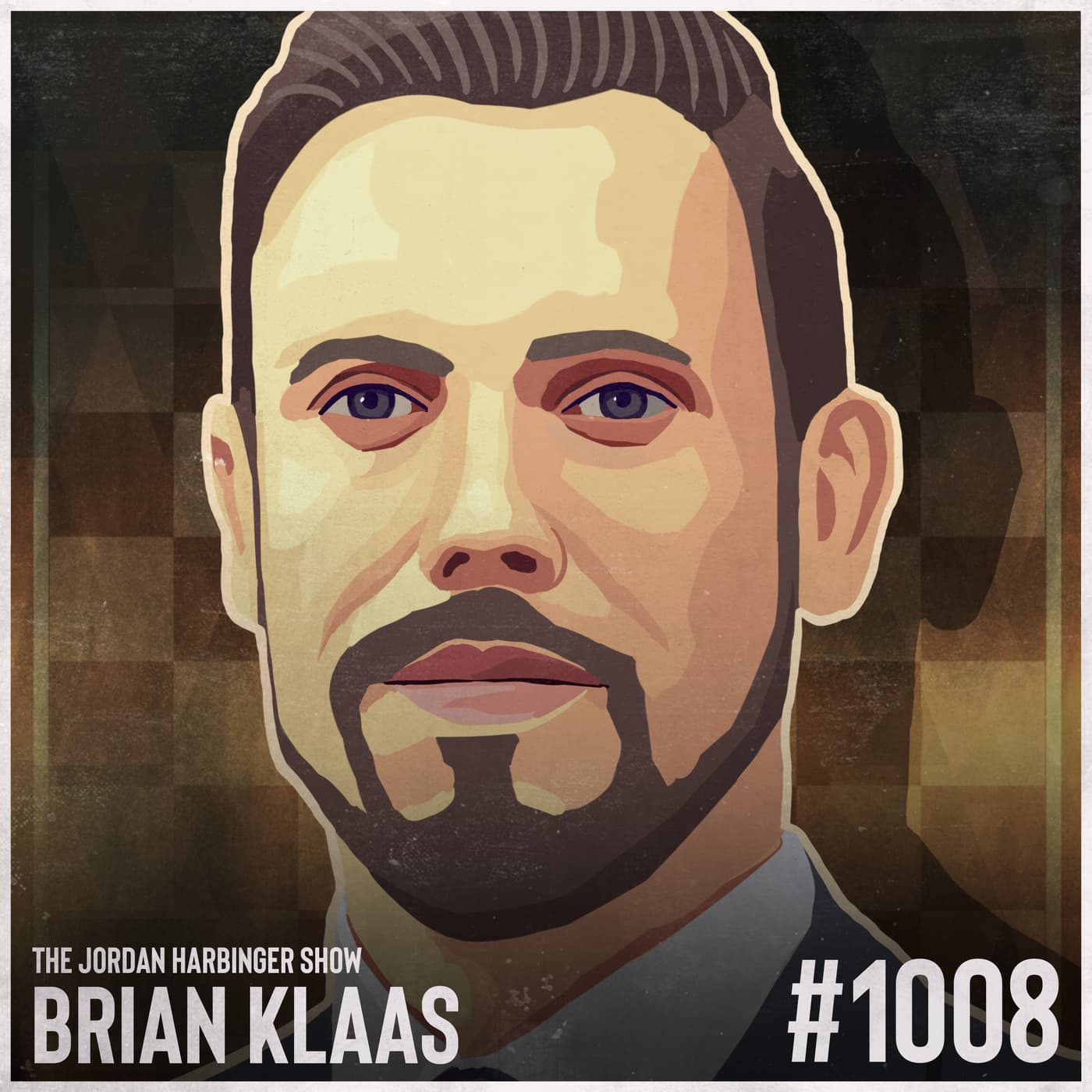
Podcast Summary: The Jordan Harbinger Show - Episode 1008 with Brian Klaas
Episode Overview In this episode of *The Jordan Harbinger Show*, Jordan engages with Brian Klaas, author of *Fluke: The Chance of Chaos and Why Everything Matters*, to explore the unpredictability of life and the impact of seemingly random events. The conversation centers around the concept of embracing uncertainty and recognizing how tiny actions can lead to significant outcomes.
Key Themes and Discussions
Embracing Uncertainty
- Tiny Actions, Big Consequences: Klaas introduces the notion that small actions can have profound downstream effects. He cites historical examples, such as a couple's vacation in Kyoto that ultimately influenced the decision not to drop an atomic bomb there during WWII.
Chaos Theory and Human Life
- Human History Shaped by Randomness: The discussion revolves around how events like the asteroid impact that led to the extinction of dinosaurs illustrate chaos theory and the randomness that influences human history.
- Cognitive Biases: Humans have inherent biases that lead them to search for patterns and explanations in random events, resulting in beliefs in superstitions and conspiracy theories.
Success, Wealth, and Luck
- Meritocracy Debunked: Klaas challenges the notion of pure meritocracy, suggesting that luck plays a larger role in wealth and success than society admits. He posits that many successful individuals are often not dramatically more intelligent than others, but rather fortunate.
The Power of Influence
- Control vs. Influence: Klaas emphasizes that while we cannot control everything in life, we can influence our surroundings and the future through our actions. This perspective can empower individuals and provide meaning in their everyday choices.
Evolutionary Flukes
- Nature's Randomness: Several examples from evolution illustrate how chance events have shaped life as we know it, such as the unlikely occurrence that led to the development of complex life forms through the incorporation of mitochondria.
Key Takeaways
- Life’s Randomness: Accepting that randomness and chance heavily influence our lives can lead to a more meaningful existence.
- Small Actions Matter: Every decision, no matter how small, contributes to a larger narrative and can impact the future significantly.
- Cognitive Patterns: Recognizing our brain's tendency to create narratives can help in understanding how we process information and make sense of chaos.
- Empowerment through Acceptance: Accepting uncertainty allows for greater creativity and adaptability in life.
Final Perspectives
Klaas concludes with an uplifting message
the randomness of life does not negate our ability to make an impact. Instead, it highlights the importance of our actions and the interconnectedness of human experiences. By acknowledging the chaos, individuals can find empowerment and meaning in their choices.
Additional Resources
- Full show notes and resources can be found at [jordanharbinger.com/1008](https://jordanharbinger.com/1008).
- Consider signing up for the *Six-Minute Networking* course for relationship development strategies at [jordanharbinger.com/course](https://jordanharbinger.com/course).
Closing Thoughts This episode provides a thought-provoking exploration of how randomness shapes our lives and encourages listeners to embrace uncertainty as a pathway to empowerment and influence.
Written by AI. May contain mistakes. Listen to the episode to check what was said.
Transcript
Automatic transcript. May contain errors.0:28This episode is sponsored in part by 1-800-CONTACTS. customer service and perks like free returns, free exchanges, even free torn lens replacement. Jen loves their Express exam, which lets you renew your prescription online in under 10 minutes. It's a vision exam, not a full eye exam, but it gives you a doctor-issued prescription if you're seeing clearly with your current lenses, no waiting rooms, no dilation drops, remember those things? And with their best price guarantee, if you find your contacts cheaper somewhere else, they'll beat it. Getting contacts doesn't have to be a hassle. Let 1-800-CONTACTS get you the lenses you need right now.
0:56Order online at 1-800-CONTACTS.com or download the free 1-800-CONTACTS app today. This episode is sponsored in part by Dell. It's time for Cyber Monday, Dell Technologies' biggest sale of the year. Enjoy the lowest prices of the year on select PCs like the Dell 16 Plus featuring Intel Core Ultra processors, and with built-in advanced features, it's the PC that helps you do more faster. Plus, earn Dell rewards and enjoy many other benefits like free shipping, price match guarantee, and expert support. They also have huge deals on accessories that pair perfectly with your Dell PC and make perfect gifts for everyone on your list.
1:28Shop now at dell.com slash deals.
1:34There's this idea that something should make sense, right? So if a terrible thing happens to you, there are so many psychology studies that the idea that it was random is so beyond the pale in how we can make sense of the world. Whereas when something good happens to us, like we win the lottery, all the lottery winners are like, yeah, I just got lucky. But like, if I happened to get hit by a bus, surely there was a larger plan. You know, cause and effect doesn't discriminate between positive and negative news. It's the same either way. It's just that we process it differently.
2:08Welcome to the show. I'm Jordan Harbinger. On the Jordan Harbinger Show, we decode the stories, secrets, and skills of the world's most fascinating people and turn their wisdom into practical advice that you can use to impact your own life and those around you. Our mission is to help you become a better informed, more critical thinker through long form conversations with a variety of amazing folks from spies to CEOs, athletes, authors, thinkers, performers, even the occasional mafia enforcer, drug trafficker, investigative journalist, astronaut, hacker, real life pirate or special operator. And if you're new to the show or you want to tell your friends about the show, I suggest our episode starter packs.
2:43These are collections of our favorite episodes on persuasion and negotiation, psychology, geopolitics, disinformation and cyber warfare, AI, crime and cults, and more. That'll help new listeners get a taste of everything we do here on the show. Just visit jordanharbinger.com slash start or search for us in your Spotify app to get started. Today, my friend Brian Kloss back on the show talking about flukes, why tiny actions that we take or don't take can have massive downstream effects and consequences. We explore some historical flukes, such as how a decade-old vacation spared Kyoto from nuclear annihilation.
3:17And we'll discover some scientific slash evolutionary flukes that caused the dinosaurs to go extinct and new species to evolve. Oh, and how a tragic mass murder actually ended up resulting in, well, our guest today, in a way. All right, here we go with Brian Kloss. First of all, thanks for coming back on the show. I appreciate you doing this. Your new book is quite interesting. It's a little unnerving, right? Because I want things to happen for good reasons, and sometimes that's just not the case at all. Yeah, I mean, it is unsettling. It is one of these things where my worldview was upended writing the book, and I think a lot of readers have said the same to me.
3:55But, you know, that's sort of the point of why we read, why we think about these things, is if it just told you what you already believed, then it wouldn't be worth your time. That's true, yeah. So the book starts with the most consequential vacation in history. And I think that's a good place to begin because it really does show you that we're all kind of a hair's breadth away from, I don't know, getting hit by the train that just went behind your house during the recording that we have to edit out and post. Yeah. So the beginning of the book starts with this story of a vacation that a couple took to Kyoto, Japan in 1926.
4:26And it's sort of the standard story of a vacation. They go there and they love the city and they sort of have a soft spot in their heads for it. And then 19 years later, the husband, his name is Henry Stimson, ends up as America's Secretary of War. And he's tasked with determining where to drop the first atomic bomb. And the target committee, which is comprised mostly of generals, pretty much universally agrees that Kyoto is the right place. It's got strategic value. It's got an airplane manufacturing hub. It's got propagandistic value, all sorts of things. And so Stimson doesn't want this to happen purely because he went there on vacation.
5:00So he twice meets with Harry Truman, and eventually Truman relents and takes Kyoto off the list, and so the bomb gets dropped on Hiroshima instead. The second plane was supposed to go to a place called Kokura, but there was cloud cover when the bomber arrived, and so it went to its secondary target on the day, which was Nagasaki. So hundreds of thousands of people living or dying in these two cities, quite literally because of a 19-year-old vacation and a cloud. That is, yeah, super unsettling, to say the least. Now, it's not like we all have an equal chance of getting hit by a nuclear bomb. I mean, this is World War II, but it's a fluke.
5:35And that's the point, right? That's hence the title of the book. But what can we learn by this other than just, you know, I don't know, hug your kids or something cliche like that? Yeah, so there's a whole bunch of lessons that flow out of this. But basically, what I'm arguing is that chaos theory applies to humans. And so when you normally think about chaos theory, which many people encounter through the butterfly effect, right? This idea that a butterfly flapping its wings can produce a hurricane, you know, thousands of miles away. Mostly we think about this in sort of physical systems. It's often in chemistry and physics and so on.
6:06It applies to us. We are physical matter. Our lives have the same sort of dynamics in lots of ways where tiny things can make profound differences. And the sort of scientific definition of chaos theory is sensitivity to initial conditions, which basically is just a fancy way of saying that if you make a small change over time in a complex system, it can blow up into something really, really big, as it did in Kyoto or Nagasaki and so on. And I think the sort of idea here is that when you are encountering this in your own life, nothing that we do is unimportant, right? It might not be totally visible to you what your actions are producing, but the ripple effects of our decisions and our choices and our behaviors reverberate in lots of foreseeable and unforeseeable ways through history and through time in the future.
6:53You ever see Quantum Leap when you were younger and Scott Bakula or whatever the guy's name is, is traveling through time and he's got this AI construct named Sam who's always like, don't do that because if you do that, then like in the future, all these other things, or maybe just Back to the Future is better where it's like, what was the weird one? It was like, don't hook up with your mom because then she won't pay attention to your dad and then you won't be born. And it's like, the second you make out with your mom, you're going to vanish or something like that. And it's just like, which is gross and hilarious at the same time.
7:22That's why they, the time traveler movies, they're always like, don't change anything or don't change anything, but the one thing you're here to change, right? That's the whole idea. Yeah, exactly. So what's really bizarre about this is like, we all sort of accept that this is how the world works when we think about it in time travel in the past. So like, if I say to you, if you go back in time a million years and you squish the wrong bug, maybe humans don't, exist in the same form, right? Or 10 million years, whatever it is. Or if you go back in time, 50 years, and you talk to your parents, then all of a sudden, you know, you write yourself out of history.
7:54And in those moments, we're accepting that every small change has these incredibly profound effects that are often impossible to anticipate. The point that I always make is that cause and effect isn't different right now. In other words, if you squish a bug right now, or if you talk to someone right now, you are also changing the trajectory of the future. and we just don't think about it because it's so bewildering. It's just like so overwhelming to imagine that we're changing the future. But I think this sort of smart thinking that we're always told through modeling or through clever people who write books is that there's signal and there's noise and all you have to do is figure out the signal and just ignore the noise.
8:30I think that's completely wrong. I think the noise of life often diverts trajectories a lot and it also produces lots of consequential effects. And I think that we're being too clever by imagining that we can just sort of ignore certain parts of reality and focus on the stuff that has big, obvious consequences for our species and for our lives. Yeah. I think I love how you maybe included yourself like clever people who write books available in the show notes for this episode. And if you buy the books from the show, please do use those show notes links because it helps support the show. I'm also imagining what I would have to do to go back 50 years and talk to my parents to screw up them having like, I'm just imagining like, I'm your son.
9:08And they're like, oh my God, what do you do? And I'm like, I'm a podcaster and they're like, you're 44 and you have a podcast. You know what, Don, forget the kids thing. Let's just, let's just take a lot of vacations. If he's going to be a podcaster, I think we've, we don't need to play this one out in real life. We've seen the previews and it's, it's not pretty. First off, you don't have to explain what a podcast is. I would. But you know, I think, I think the other thing that's actually really bewildering to think about, and this is the fragility of existence, is that quite literally anything that you change would delete yourself.
9:38And what I mean by that is, and this is the stuff where, you know, you don't go into graphic detail in writing a book, but like the moment that a child is conceived, and I'm sorry, we're talking about this in the context of your own family. I was just like, oh man, the visual is brutal for me. Let's just think about this in an abstract way. Okay. So any child that's conceived, if the parents stopped to have a sip of coffee that day, they have a different kid, right? If they turn left rather than right when moving from one hallway to a different room, whatever, They have a different kid. But that's true for literally every day before that as well, right?
10:10Because it has to be the exact moment. If it's a microsecond difference, if there's any change, you have a different kid. So, you know, when you have a child, it is the culmination of every moment in your life fitting together into that exact existence. And I think about this really viscerally, not because of my parents, but because actually of something in my family history that I talk about early on in the book, which is when I was 20 years old, my dad sat me down and showed me this newspaper clipping and it says, terrible act of insane woman. Now we probably wouldn't describe it the same way today, but basically this woman, Clara Maudlin Jansen probably had postpartum depression in 1905 after having four kids in about five years.
10:51And the oldest kid at the time was five years old and she snapped and decided to take all of her children's lives and then took her own life. Right. And so my great grandfather was married to her. And so he came home to the farmhouse in this place, Keillor, Wisconsin, and the whole family's dead, right? Now, this was a revelation to me because I obviously, first off, I mean, it's incredibly weird thing to find out about your family history that you have this mass murderer you've never heard of. But also, you know, you realize that if those kids didn't die, I don't exist. My dad doesn't exist. My grandfather doesn't exist because my great-grandfather remarried to who became my great-grandmother.
11:28And then when you start to play that forward, you know, every person I've met in my life, every conversation I've had, every podcast interview I've done is predicated on the mass murder of four children. And, you know, that's literally true. It's a very bizarre thing to think about, but it's literally true. And so I think when you think that way, you realize that the one thing that humans are not is interchangeable, right? And I think that's like, when you asked about the takeaways, I mean, I think a lot of people are depressed or anxious, or they feel replaceable in the 21st century because of AI or robots or whatever it is, or just they feel like a cog in a corporate machine.
12:01I think the lesson of this is that everything that we're doing is reshaping the future. And if it was somebody else, you know, 120 years in the future, you might be changing the world in ways you can't anticipate. And that's very much what I feel as this sort of cosmic accident produced by a mass murder. Yeah, that is an interesting way to look at things. And I, as a result of reading the book, I was on an airplane and I was like, oh, that is what's going on in my family history. And it is it is interesting, right? Because there's like gangsters, organized crime thugs, which is funny because like tough Jews.
12:33I didn't know that was really a thing back in the day, but I guess it was. And then like I have some Central Asia DNA of like a tiny, well, it's probably not tiny anymore, but I think it's a tiny percentage of my DNA. And there's there's these people called Yakut and they're like, you know, Turkic Genghis Khan type of tribe. And I have a little bit of that. And my mom was like, you have other relatives that think they must have that because my great aunt on this side, she had eyes like yours. And another cousin, her sister was her eyes were like Asian. And we never understood why. And it's because like, you know, somebody rode through a village and burned the whole thing down and stole all the women.
13:11And then like, we're the offspring of those awkward marriages, or if you can call it that, right? And they either pillaged or they were pillaged. I'm not sure which one is worse or which one is better. But it gets you thinking about that. You're just kind of like, we are all the offspring of like some pretty horrific stuff. Yours happens to have a newspaper article about it, but you need to go back like one or two more generations in pretty much anyone's family. And there's something way worse than that that happened that it was not written about because it was everyone and there was no and no one could read or whatever.
13:44Yeah, I mean, I think this is where, you know, when you start to actually interrogate these ideas in a more systematic way, you realize that this is just this giant house of cards that everyone's life is built upon, right? And if you take it back further, I mean, six million years ago or so, there was a chimpanzee-like creature that was our basically last human ancestor, last common ancestor, rather, with chimpanzees. And if those primates didn't mate, you know, none of us exist. You go back further than that, you have the asteroid that wiped out the dinosaurs. I mean, the way it hit the sort of gypsum-rich rock off the Yucatan Peninsula was a perfect killing machine because it produced this incredibly toxic gas and turned the planet to be 500 degrees, right?
14:25And if it had been one second either direction, dinosaurs probably wouldn't have all died out, mammals wouldn't have risen, humans probably wouldn't have existed, right? So all of our history, you go back further, there's a worm-like creature. I mean, it's just like all this stuff had to be the way it was for us to emerge as we are. And I think, you know, when we think about this, there's sort of a debate in evolutionary biology between what's called contingency and convergence, which it's a fancy way of saying the contingency theory is the stuff happens or the shit happens theory. I had to edit it for the editor for the text, but it was originally the shit happens theory.
14:57And then the convergence is the everything happens for a reason theory. It's that, you know, there's sort of order and patterns and eventually stuff just sort of occurs because it works or because it was destined to do so. And so like the argument on the convergence side of things that I love is that if you take an octopus's eye and you take a human's eye, which you should not do at home, but if you were to do these things and put them side by side, you basically have the same eye. And it's because evolution solved the same problem twice in almost exactly the same way with 600 million years of differences in evolutionary trajectories between the two pathways, because it worked, right?
15:33And this is where I think like basically our lives are somewhere between chaos and order. And sometimes things are going to happen, because they just work or they're sort of trends or whatever. And other times this tiny little shift changes everything forever. And that's, you know, basically what chaos theory argues. I didn't really realize it, by the way, chaos theory, who doesn't think of Jurassic Park when you mentioned that, right? It's like life finds a way. That's a Jeff Goldblum's magic moment right there. The I didn't realize the asteroid that hit the planet. I just figured the impact kicked up dust, something, something nuclear holocaust and all the plants died.
16:08And therefore all the dinosaurs that ate plants died, and then all the dinosaurs that ate those dinosaurs died. I didn't realize there was essentially, it hit like a mountain of something that burned everything. That's crazy. Yeah, so it is really crazy. So basically, there's this gypsum-rich rock on the seabed off the coast of the Yucatan Peninsula where it hit. And this created this poisonous gas, which was extremely deadly. And then the surface of the earth was about 500 degrees Fahrenheit, so what you broil a chicken at for a period of time, probably minutes to hours, but enough to kill a lot of stuff.
16:41Wow. And this is the really crazy bit. So everything that's alive today, right? Like any animal you see, any plant you see, it was able to survive for the animals because it could either swim or dig. That's it. Everything that could swim or dig, not all of it, but a lot of it that survived either was swimming or digging. That's basically the evolutionary history of all the stuff around us. A load of body plans and types of animals died out. And so you think the really crazy bit is now physics is looking at where the asteroid came from. And, you know, Lisa Randall, who's a Harvard astrophysicist, she has this theory, which pretty well backed by the data, that there was this brief oscillation in this place called the Oort Cloud, which is, you know, in the distant reaches of space.
17:21And it basically vibrated and flung the space rock at the Earth. And that's the origin story of mammals rising. Wow. Because mammals existed, but they became more dominant after the dinosaurs died out. So, you know, you think about, like, all the history of Rome and Egypt and all these things. I mean, all of that's gone. if there's one second difference in a space rock hitting the planet. And that's pretty weird. Right. A space rock that seems like it wasn't initially scheduled to hit the planet, but went through, I don't know, layman's terms, some kind of windstorm in space that blew it off course a tiny bit.
17:53And it's got to be a tiny bit because the distances are so, well, literally astronomical that you're talking about like you blow something and it moves like a micrometer in space. And it's like, nope, now it's going to go another light year left, and it's going to hit a planet that's full of life instead of just passing by unnoticed. Wow. Yeah, like the way I think about this, you know, there's no like scientific mystery to this idea of chaos theory. Like it's verifiable science. But the analogy I often use is like, if we start a game of pool, right, we got like our cue sticks out and the pool balls on the table at a bar or whatever.
18:30And there just happens to be a speck of dust or a grain of sand on the felt, right? And I hit the cue ball and it sort of breaks and so on. If it goes over the speck of dust, it will slightly adjust the trajectory and the entire game will be different. Everything will be different. If we rerun the game and there's no speck of dust, no grain of sand, then things will be slightly different again. We won't always know. We won't always see the two versions of reality because we might not even be aware the speck of dust is there. And there's no magic, right? It's just that the little tiny change will affect the positions of the ball after the first shot, and then that will affect the second shot and the third shot.
19:04And that's basically how the universe works. There's 13.8 billion years of that. And so the asteroid is part of it. And these little oscillations, these little changes, you know, they add up to some really profound consequences that most of us just pretend don't exist. Because as I say, it's really, really hard to grapple with that everything we do matters. But I think it's quite literally true. Yeah, it's, again, going back to the top of the show, unnerving to think that the world is essentially a tenuous random string of uncontrollable events because I certainly like to pretend that there's a veneer of certainty over the top of everything that's going on.
19:37And like if I just read a little bit more, if I learn a little bit more, I can control my fate. And I don't believe that outright, of course, but like it's a comforting thought that I kind of allow to park in my conscious or subconscious mind and I don't try to correct it all the time because going to the contingent model or whatever that you were mentioning before where the shit happens model, it's like, I look at Reddit, right? And I really don't like those bits of news where it's like drunk driver, nobody likes this bits of news, that drunk driver kills family of four in an intersection. And then you see the video and it's like this woman's in a minivan, just parked, not doing anything wrong.
20:18And then her light turns green and she's very cautiously starts going and then some idiot going 120 miles an hour just kills everyone and you're like wow there was nothing she could have done to avoid that that's it that just nothing that she could have done to avoid that and that's the most unnerving part like of course it's tragic that a mother and children die like don't get me wrong but the part where it affects me is, oh, I really want to find something this person did wrong that I wouldn't do, right? Oh, well, was she texting? Like, even the comments are like, was she texting? Did she go before the light turned?
20:55And everyone's like, no, man, she got hit by a drunk driver. Are you, how do we know she wasn't texting? People will say that, and you know what they're doing, right? They don't even realize they're doing this, I think. They are fighting, grasping at straws, because otherwise, otherwise this could happen to them on their way to lunch today. And that thought is terrifying. Yeah, the story that comes to mind when you say that, and it's beautifully put, this sort of impulse for control. One of the most powerful stories I wrote about, and also I had the privilege of meeting this guy a couple months ago, was this man named Joseph Lott.
21:27And he is going to a work conference. And he gets on the flight, and the flight's delayed. And he's planning, he's doing that thing that some of us do. He's sort of wear your outfit that you're going to wear the next day so it doesn't get packed away in the suit carrier or whatever. But the flight's super delayed. He arrives, the shirt's all wrinkled, and he's supposed to meet his colleague for dinner. He basically, it's too late. So they reschedule for breakfast right before the conference starts. So he puts on his other shirt in the morning, this green shirt. He goes to the conference breakfast.
21:55He has breakfast with his colleague Elaine. And Elaine has noted that this guy Joe likes Monet ties. He likes ties that have Monet impressionist artwork paintings on them. She gives it to him as a gift. And he says, I'm going to put this on. And she says, you absolutely cannot wear this with that green shirt. And he says, don't worry. I'll go back to my hotel room. I'll iron my shirt that's white. I'll put the Monet tie on to show you how much I care and appreciate this. And then I'll meet you up at the conference and we'll do our joint presentation. Now, this was on September 11th of 2001. And the conference was in the World Trade Center.
22:29So Elaine goes up and the plane hits and she dies. and Joe is ironing his shirt as the plane hits, right? Because she has given him this incredibly lovely gift, this Monet tie. And almost all of his colleagues who were involved, I mean, all the ones who were at the conference died, right? It was on the 101st floor or whatever. It's one of these moments where like, first off I wrote about this and was thinking about all these things and how unbelievably arbitrary it was, you know? And Joe had realized he liked Monet ties when he was waiting for a train and he wandered into a museum in Europe, right?
Read the full transcript
22:59So like all these little things had to fit together. The plane had to be delayed, et cetera, et cetera. But when I talked to Joe, I met him in DC. And the really profound thing he said to me, which dovetails perfectly with your story about the woman getting hit in the car, was he said the most infuriating thing that people said to him relentlessly afterwards was everything happens for a reason. Yeah, I hate that too. Because then it puts the onus on him. It's like so much pressure that you were supposed to live and Elaine was supposed to die, right? The guilt that that gives you as a person, the idea that there's some grand plan with which your colleague who just gave you a tie at the wrong place in time died because of terrorists attacking a building, whereas you suddenly have survived.
23:41The other bit that I didn't write about that he told me, which is really extraordinary, was one of his colleagues was supposed to go to a different conference. They were deciding which one is going to go to which conference. And basically, he dictated which one would go to which conference. His colleague was flying to a conference in California. He was on the plane that hit. Oh, geez. So it's like, it's just this incredible, like all these things had to happen exactly the right way or exactly the wrong way, depending on which person we're talking about. And I went to the 9-11 memorial and found Elaine's, her name listed in there and so on.
24:14And you just think to yourself, there's just literally a trillion things about her life that had to come together in exactly that way for her to die in that moment. And that's how all of our lives are all of the time. It's just that we don't always die in terrorist attacks, right? Right, so we don't notice. Exactly, because we can't see the alternative reality. So when these like sort of really impressive or catastrophic things happen to us, or we meet a spouse or whatever, we think about it. The rest of the time, we don't think about how turning left rather than right has fundamentally changed our future, but it has.
24:48It absolutely has. And I think that's the kind of stuff where when you extrapolate it out to society, that's when it starts to get quite bewildering because there's 8 billion of us intersecting and adjusting each other's lives constantly. Yeah, this reminds me of, I think it's in your book, actually, you said before physics, predicting something like billiard ball movement, you just was like impossible. Oh, yeah, no idea. You're gonna hit, it's gonna go in different directions. That's all I can tell you. There's no way for us to find out which direction it'll go in other than our brain might say, like, if you hit it a little bit left, it'll go a little bit right.
25:18And you're just like, okay, it's not an exact science, but it is because it's called physics. But we didn't know that stuff existed. and the weather predictions, even today with our tech, right? Weather prediction is very difficult. I had Michio Kaku on a long time ago and one of his arguments that I don't buy for a second, well, I should clarify this. I asked if he thought we were in a simulation, which I have no opinion on. I don't really know. But he was definitively no because it's too hard to emulate weather with computers. And I'm like, okay, but if it's civilizations like millions of years older than us, simulating weather on a planet is trivial.
25:55potentially. But it reminds me of just our current tech. We just don't have the ability to even predict the weather. And when you think about that, that's just such a fundamental thing that we deal with every day, regardless of how complicated it is. I would imagine the path of human life is potentially far more complicated than predicting a rainstorm. Yeah. I mean, 8 billion interacting human brains is the most complicated thing in the universe that we know of. Right. So I love the weather example, though, because this is something that comes sort of full circle with what we were talking about before, is that there's this guy who's tasked with forecasting the weather in the Pacific theater during World War II, right?
26:30And may or may not have been involved in predicting the clouds over Kokura and Nagasaki and so on, named Edward Norton Lorenz. And after the war ended, he was unsatisfied with how weak his models were and how absolutely useless they were basically at predicting weather systems. So he sets up this computer and tries to plug in these values into sort of a weather simulation. And it's really rudimentary. I mean, it's got like wind speed, temperature, a few other things. And one day he decides to go back and rerun the simulation, but he figures like, oh, I'll just like plug in all of the data from halfway through.
27:05And then of course it will be the same because I've just, you know, typed in exactly the right number. And he does this and the weather systems are like radically different two weeks in the future and beyond. And he can't figure out what's going on. He's checked the numbers that typed in exactly right. And it turns out that what happened was his computer printout stopped after three decimal places. So like if the wind speed was 3.567 miles per hour, it was actually much longer than that as a number. But the printout just did the first four numbers, 3.567. And so this is the story of how chaos theory was discovered.
27:38Because it was basically this realization that if he was even off by like a trillionth of a degree in the weather system, that the outcomes weeks or months in the future would diverge from a blue sky day to a storm. And so, you know, this is the kind of stuff where when you actually think about it, it's why we still are incapable of forecasting the weather after seven to 10 days with any accuracy, because the supercomputers are better, but they have to be perfect and they're not. And so we're never going to be able to forecast this probably. I mean, I suspect that when you have complex systems like this that are sensitive to tiny fluctuations as society is, as all of our lives are, there's no computer that will ever be able to do this.
28:19I mean, I do, by the way, side with you on the question of the simulation, which is there are so many questions we just don't know the answer to. And I think there's a lot of hubris in imagining that we can definitively say anything about some of these deepest questions about the existence of humanity or the universe.
28:37You're listening to The Jordan Harbinger Show with our guest, Brian Kloss. We'll be right back. If you're wondering how I managed to book all these incredible creators, thinkers, authors every single week, it's because of my network. This is the circle of people that I know, like, and trust, and more importantly, know, like, and trust me. And I am teaching you how to build your network for free over at sixminutenetworking.com. I realize you are probably not booking a podcast, but relationships are massively important, and a lot of relationship-building stuff is just kind of gross. It's kind of surface.
29:05This is not that. It is super easy, but it's also not cringey. It's very down to earth and non-awkward and non-cheesy. It's a lot of nones, I get it, but it's practical and it's going to make you a better connector, a better colleague, a better friend and a better peer in just a few minutes a day. And many of the guests on our show already subscribe and contribute to the course. So come on and join us. You'll be in smart company where you, of course, belong. You can find the course for free at sixminutenetworking.com. And I'm not going to try and upsell you. I don't need your credit card, none of that crap.
29:34Now, back to Brian Kloss. I won't get stuck on it too much because it's not what this particular episode is about but it's like if you ask someone in 2005 what they want their cell phone to be like they'll be like oh maybe the screen could be brighter and like maybe brick breaker could be in color instead of black and white on my blackberry right and if you go five years before that it's like I just want it to be able to fit in my pocket instead of having to carry this bag around that connects the phone to the car and you know only has a two minute battery. But then you go to like 2007, not even a full decade after people heard of cell phones and maybe saw one in real life.
30:14And you've got a touchscreen that's full color that gets your email. So to say like, oh, in a million years, right, or 10 ,000 years, we won't have computers that can simulate weather on another planet. It's just an absolutely ridiculous assertion from anyone. And you may be right. I mean, we may get supercomputer AI weather prediction that goes up to instead of seven days, it goes up to like 12. And it says, but at day 13, now it kind of depends if this factory is operating. Does this electricity plant stay on? Are people surfing in this area at that time? Does this cruise ship go through the Panama Canal at that point?
30:54Because if it does, like there's just so many things that it'll have, it'll start to spread out into like the top 100 or 1000 weather predictions for day 13. And there'll be no point in broadcasting it because it's either a hurricane that kills everyone in the area, or a perfectly calm blue sky day, depending on all those factors. What are you going to do look at the news to see if a shipping container ship went through the Panama Canal at a certain time, it doesn't make any sense. We just won't bother doing it. Yeah, I mean, mathematically, the problem is that basically, when you get to a certain level, you have to basically get trillions of times better at sort of measuring something in order to get twice as effective at forecasting.
31:32So there's a diminishing return, right? You actually, even if you get way, way better, you're still going to only marginally increase your prediction power on these extremely chaotic, complex systems. I mean, I think at the point that you made, though, that's really, really an excellent point about the cell phone sort of anticipation is, you know, this also speaks to the fact that we don't understand what we don't know. And we don't understand how even when we study cause and affect dynamics in a given very familiar environment, such as the pandemic we just went through, right? We try to think about how do pandemics operate?
32:04How do viruses that cause pandemics operate? And the point I always make to people is like, let's say we take exactly the same virus, we mutate it exactly the same way, and it affects exactly the same person in Wuhan, but it's in 1990 instead of in 2020. Now there's no work from home, right? There's no Zoom. Like basically there's no way to do anything because the internet is not something that people have at their houses. So all of a sudden the economy is totally different. The effects of the pandemic, the social distancing ability. There's so many things we can't do. You can't order food online, right?
32:36So all of a sudden, all of the dynamics that we think are sort of, oh, this is how pandemics operate. They're contingent on the timing. Even if you hold everything else constant, which of course you don't. You don't know what the mutation will be. You don't know who's going to get infected, whatever it is, et cetera. So like this is the problem with when you try to study and forecast things is that we try to sort of like strip out the context as though it's noise, but the noise is really, really important. And if you ask someone, how much time would you spend in your cell phone or how much time would you spend on your phone in 1990 to forecast to 2020, you would be so wrong because the only thing you think a phone does is call people, right?
33:13You'd have no anticipation that it could be used to connect to something called the internet, which most people didn't know about in 1990. All the cause and effect dynamics are changing constantly. And this is why like social science as a forecasting tool is very bad. And it's not because we're idiots. It's because we're trying to model complex systems that are extremely chaotic. The idea that stuff just happens. It's something that took me. It's still taking me a while from this conversation in the book to just sort of let it sink in. Part of it is just I'm very reluctant to admit that to myself.
33:42And when I think about it, I can accept it with some small things, but I really hate the idea of it when it comes to big things. And I think going back to like the getting hit by a drunk driver kind of stuff or, or the example of the sliding doors movie that show fans have written to me about. Cause I, there's a story where I got like kidnapped in a fake taxi and I did this, this whole thing to get out of that situation. It's a, it's a whole episode of the show. If people want to look for the kidnap episodes, just search for kidnap in your podcast app. But everyone's like, this is a sliding doors event.
34:13Like if you had just looked out the window for longer or looked at your phone, which didn't exist, which is I always say, like, if I'd had Instagram while I was in that fake taxi, I would just distracted myself with it. But I didn't. So I was just staring out the window, noticing how he wasn't taking me to my destination. And it panic welled up until I fought back. Every small thing matters. And there's no of course, there's no rewind button in the movie. So we have no way of knowing which moments are actually salient. I think that's kind of important. Like if you're getting kidnapped, like every moment is salient.
34:41But if you're walking through a mall in China and the escalator eats you, we've all seen those horrific videos. Like, you don't know that you getting on that escalator is the end of your life, potentially. Like, no one, no reasonable person who functions without debilitating anxiety would ever think about that. And getting around this is tough, man. Because, again, I think you could read this whole book, listen to this whole podcast, and you'll be like, small things happen for absolutely no reason. And it's like, yeah, but so do big things. I'm not, I don't want to sell myself on that idea just yet.
35:14Yeah. So, I mean, I, the thing is, I think you can cope with this in a relatively straightforward way because it doesn't really change a lot of things about how I make decisions probabilistically. I mean, I'll explain what I mean in the sense that I have this term that I coined called the snooze button effect, which riffs off the sliding doors film, but is basically something that's more familiar to all of us. So, cause not all of us catch a train every day. Right. But a lot of us hit the snooze button pretty regularly, or we think about hitting the snooze button. And the idea is that when you sort of wake up and slap the snooze button, and then you imagine your life rewinding by 30 seconds, in this version, you don't slap the snooze button, you get out of bed.
35:50It's not just the case that your day is going to be different. It's the case that your life is going to be slightly different. And it's not always going to be the case that it's always profound stuff. I mean, you might still end up at the same university, you might still end up meeting the same spouse, but you'll meet them in a different way, probably. And I think this is the kind of stuff where it all fits together, right? There's sort of this unbroken, infinitely long thread that produces each moment of our lives. Now, that doesn't mean that I just walk into traffic because maybe some fluke will save me, right?
36:18I still think probabilistically. I know that there are patterns and there's some order to society and these things are how we sort of structure our lives. But what I do think is really important is on a philosophy level about how you think about your life, if you understand the limits of our understanding, like if we know what we don't know, and also we accept that the world is more arbitrary and random than we believe it to be, we will have less hubris. We'll have less top-down certainty that we can control things, that we know what we want, that if we do this, then that will happen, right? So it gives you more of an appetite for experimentation, and it gives you more of an appetite for sort of accepting the limits of what we can know with certainty.
36:55And I think both of those are actually really healthy outlooks to internalize, because the sort of experimentation of life is where you often find better stuff. And that is something that is born out of a belief that you don't know all the answers. If you knew all the answers, you might as well optimize for everything. And I think a lot of our culture tells us to optimize constantly, even in environments where we don't really know what the answer is, or we don't know what's best for us in our lives. There's a lot of philosophical stuff. We could go down a rabbit hole with that. I do love some of these nature flukes, though, like nature evolution, nature stumbling upon, if you can put it that way, solutions to common problems like the octopus eye and the human eye.
37:36And the book, you give a couple of mentions, like there's different crab-like life forms that evolve totally separately. But more interestingly, we learned something from poop. What did we learn from poop, Ryan? Well, I think you're, are you referring to the urine? It was E. coli. Oh, yes. Okay. Okay. I thought, see, I thought you were talking about this. One of my favorite things is the bintarag, which is this animal that pees out the same smell as movie theater popcorn, exactly the same compound. I forgot about that one. So it's very bizarre in evolution. But now, okay, so E. coli, this is a very interesting study.
38:09So I flew out to Michigan State to meet these researchers who have done what I think is the most interesting study I've ever come across that is very difficult to make sexy because it's about bacteria. But it tells us something really interesting. So basically what they did is they took E. coli, right? This sort of standard bacteria, and they cloned it 12 times. So you've got 12 identical strands, genetically identical strands of E. coli. And what they've been doing is they've basically been evolving it unbroken for over 30 years. And they put it in this little flask. They're in 12 flasks and there's no predators.
38:43There's nothing in there. All they give it is some glucose, which is its food and some citrate, which is a stabilizing unit, right? And they just let it evolve and they see what happens. And it's trying to test this idea of like, does the world exist towards convergence of order or does sometimes just stuff happen? Now, for like the first 15 or 20 years of the experiment, the answer was that order exists. Like all of the different 12 populations were getting better at eating the glucose as evolution would predict. It was getting more fit in the Darwinian sense, but it was basically the same, right?
39:16They were sort of doing the same things, getting better in roughly similar ways and et cetera. One day in 2003, a postdoctoral researcher comes into the lab and one of the flasks is cloudy. And they sort of think to themselves like, oh, we screwed up, right? Like we've contaminated it by accident. So they throw it away and they restart it because E. coli can be frozen. So they freeze it every few days or whatever it is, or every few months. I forget exactly how frequent it is. But they basically just restart it from the last generation. The point is that a few weeks later, it turns cloudy again in exactly the same flask.
39:47So finally, they DNA sequence it. And what they look at is they try to figure out what's going on. Now, what's incredible is that this one out of the 12 populations has evolved the ability to eat the citrate, which was not supposed to be food, right? And even crazier, when they looked at the sort of genetic mutations that happened, there were four totally random, totally neutral mutations that happened first. They didn't help or hurt the bacteria. They were just totally arbitrary accidents. And then the fifth allowed it to eat the citrate, right? So if those four random mutations had not happened in exactly the same way, in exactly the same order, then the fifth would not have been possible.
40:27So it's like this incredible house of cards for the citrate mutation to happen. But forever now, that lineage is different. All the 11 others are still exactly the same. They're still just chomping on glucose, unaware that they've got this other food source available to them. And the one is totally different. And this is how I think the world works. The reason I fixate on it is because I think this is basically a parable for history, for our lives, etc. Where you can imagine replaying the tape of life, replaying, you know, World War II with or without D-Day and seeing is there that little moment that changes everything forever.
41:01And in the bacteria's case, it's scientifically proven, I think, that yes, every so often this little mutation happens and the species will never be the same. It will never go back to just eating glucose. And so the question is, you know, sort of what creates those contingent moments that really, really matter versus the stuff that sort of gets ironed out because the patterns and order of life exist. And I think it's a really good framework for thinking about our own lives where it's like, yeah, like you can go along with your commute being roughly the same, but every so often something really crazy happens, might be tiny, might be big, and your life will never be the same.
41:37And I think that's sort of what the science is trying to get at of how we navigate the sort of chaos and order that both represent the way that the world works in terms of change. Some of the other nature-related flukes are really incredible. You mentioned a single-cell life form essentially bumping into another one, and we ended up with mitochondria, which is like the foundational, the powerhouse of the cell, if sixth-grade biology still stands. And that's like the basis for any sort of advanced life form, right? Because then you have cells which build into everything else. This is exactly right.
42:08So my colleague at University College London, Nick Lane, has verified this. And I think he's put together a very, very convincing case that basically this is the greatest fluke of all time. It has happened exactly once where basically, to cut a long story short, two microbes bumped into each other, one ended up inside the other one, it became the mitochondria. And that is what allowed complex life to exist. So literally everything that you see, right? Every plant, every animal, everything is derived from that one fluke that happened once 2 billion years ago. And as far as we know, never again.
42:40So it's never happened that these two have bumped into each other and evolved a mitochondria separately. It's literally a one-off. You know, what's interesting about this is like when people who are religious think about these things, they see sort of a grand plan. I'm not personally religious and I see sort of just chaos theory. But you come to the same conclusion in a way, which is that there's this sort of incredible majesty and unknowable nature of really bizarre stuff that everything that we see around us is predicated on, that if it had been slightly different, it wouldn't have been our world.
43:11And I think, you know, for religious believers, they see a hand in God in that. And for me, I see chaos theory and the sort of incredible power of science in sort of shaping the world. Speaking of mutations, I just before our show, I was talking to a friend of mine and he is having a baby. His wife is naturally having the baby. And I said, oh, are you going to have more? You know, I always thought it'd be fun to have twins and you get them out of the way or triplets. You get it all out of the way. And he goes, well, actually, a friend of mine who's staying with me right now is both a twin and a triplet.
43:42And, you know, that doesn't make any sense. So I asked him to clarify. It turns out that his mother had two uteri. Is that the right word for this? This isn't something I usually say. It had two uteruses, two uteri, and she got pregnant and she had twins in one. But a month later, before, of course, giving birth to the twins, a month after the first twins were conceived, she got pregnant in the other uterus. And so there was another baby in there. So and then when she gave birth all at the same time. So one of them was like a month early, but I guess it didn't really matter. and so he's both a twin and a triplet, which I've never heard of that.
44:18And that's completely irrelevant, by the way, to what we're talking about right now. But I just thought it was such an incredible, also fluke and it's operational, right? It's not like, oh, I have an earlobe on the back of my neck. What a weird fluke. It's like, no, I have the ability to be pregnant with different children in different uteri at the same time. Like that's pretty damn cool. That's a cool mutation. This is also like one of those logic puzzles that you get where someone's saying, you know, like you've got like, it's like, you know, like two people are killed and the, you know, you know, and then how does it work?
44:47And it's like, oh, it's his sister or whatever sort of thing. It's his sister and his cousin at the same time. Yeah. Exactly. Yeah. Exactly. No, but it is. No, but I think that's the kind of stuff where, you know, what I like about talking about these ideas with people is that everyone sort of has this sense of some arbitrary or accidental or random thing in their own life. And what I find odd is that pretty much everyone has accepted the logic of what I'm arguing when it comes to themselves. They sort of like, I've never heard someone say like, no, my life is like this extremely ordered computer simulation where everything fits together like a jigsaw puzzle.
45:22And, you know, there's never been something arbitrary or a moment like a sliding doors moment. They all, everyone I've talked to is sort of like, yeah, there's like little stuff has changed my life. The really weird thing is like when we talk about society, we just totally throw that out the window, right? It's all trends. It's all models. It's all signal versus noise. And so like you take all the individuals who have, you know, the twins and the triplets and these sort of weird things happen to us. And then you say, but here's how society functions and all that just gets thrown out the window.
45:49And I think that's a bizarre aspect of 21st century life that we just sort of pretend a lot of this stuff is meaningless. Yeah, you talk about wealth distribution in the book and it's or power distribution or whatever it's called. And you brought up a really interesting point, which is you never see somebody five times taller than you. but you'll routinely meet people who are 10 times or more wealthier than you and unfortunately but you also won't find that same person is also five or ten times smarter than an average person in fact most i've read a study on this years ago but it was something like most rich people are not actually that much smarter than average many of them are above average but it's not like oh my god i don't even understand what this person is talking about because he's so smart no wonder he's a billionaire, it's kind of like, yeah, they're intelligent.
46:35More importantly, they're educated. They seem experts in a certain area. But it's not like it really isn't like, I just can't relate to this guy. He's speaking a different language. That's only true as far as like tech billionaire types. And even then, they're just sort of quirky. They're not actually alien. Yeah, exactly. So this is this is where there's a study that I think is really persuasive on the role of luck and how we sort of infer backwards or some people infer backwards that someone who's rich must be smart. And that's often not necessarily the case, right? So the way they sort of model this, and I think it's extremely persuasive when you think about the logic is, as you say, you know, you've got sort of a bell curve of things like height or talent, which is to say that most people are around average.
47:18There's some people that are a bit above a bit below. And there's some people that are on the what are called the fat, the long tails, basically of this sort of the, the really exceptional people. But they're probably, at most a couple times more intelligent than most other average people. But the richest person in the world, whether it's Jeff Bezos or whoever it is at the moment, that person is quite literally potentially a billion times richer than the poorest person. And that is definitely not the case, because there's people who are living on less than 300 bucks a year, rather. Whereas Jeff Bezos' net worth might be 300 billion at its peak, or Elon Musk might be 300 billion at its peak.
47:54So you have huge differences in these traits. Now, what this means in this model, which I think is really persuasive, is that if you have a bell curve of individuals, really tiny numbers of people at the extremes, lots of people in the middle, if you conceptualize luck as sort of a lightning bolt from above, where is the lightning going to hit? It's going to hit the middle, right? Because that's where all the people are. So the odds of it hitting someone at the extremes is really low. The odds of it hitting someone in the middle is really high. And so when they did this simulation over and over and over, they found that the richest person in their world was very often marginally above average in talent.
48:33They basically were extremely lucky. They got hit by the bolt of lightning and they had some talent, right? I mean, if you get lucky, but you're really untalented, it's not likely you're going to end up rich. But the more times they did this, the more the pattern held. And almost never was it the case that someone on the extremes of talent ended up as the richest person. So this isn't to denigrate people who are rich. I mean, there's a lot of people who work really hard and are very talented who end up getting the payout that they believe they deserve. It's more to say that there are some arbitrary factors of luck in producing wealth.
49:05And of course, there's also the structural aspects of inheritance, where you're born, who your parents are, all this type of stuff. And it's not so straightforward as smart equals rich. Yeah, look, this is definitely true for me. I know a lot of people so much smarter than me. They're on this show all the time. the number of guests that are smarter than me in a very obvious way is huge, right? But the number of guests that are wealthier than me, I don't know. It might actually be pretty tiny because it's a lot of like academics and scientists and stuff. And those people are generally not super paid all the time.
49:37And don't, by the way, folks, don't worry. I still lose tons of sleep anguishing over the people that are both smarter than me and richer than me and ruminating until I'm convinced that my entire life is a failure. Don't worry. We still have that in common, folks. But it is quite interesting that this distribution doesn't end up that way because when we look growing up in America, there's this fallacy of meritocracy that is quite striking when you get to be an adult and you're like, wait a minute. And everybody who's had a job, right? Everybody gets like a minimum wage job as a teenager or in their 20s.
50:08This is what hits you first. You're like, wait, my manager is actually an idiot or the owner of this business is an actual moron. How is this person rich? Oh, their father owns a hockey team. Like that's your qualification. You are useless. It's not just an illusion. You're actually this dense. You have an out of touch. And it's quite interesting. Like I remember hitting that at age 17 and being like, oh, being smart, being good in school. This is not necessarily like all it takes to have a successful lifestyle. A lot of these really successful people are getting by just fine, being complete airheads.
50:44It's a little scary and demoralizing at first, but I guess, I don't know, you learn to work around it. Yeah. I mean, I think this is something where when you think about these aspects of the American dream, which is sort of, you know, it's the myth you're talking about of sort of the meritocracy. The philosophy behind it is a world of perfect top-down control where everybody gets what they deserve and you just need to work hard and you'll make it, right? it's obviously not true. I mean, if that was true, then we wouldn't have had things like slavery, right? You just work a little harder and then you'll be super rich.
51:14Obviously, there's structural social factors that have had impacts on whether someone succeeds or not. But I think there's an interesting overlap here with also like self-help culture. Because I think self-help culture basically tells you like, oh, if things go wrong in your life, it's basically up to you to fix them. Right. And I think like there's some aspects of that that's true. It's useful to believe that we can control our lives. But it's also sort of harmful sometimes when people are trying their best, working really hard, they're still struggling. And the self-help book is saying, well, it's just because you didn't put your mind to it, or you didn't pull yourself up for your bootstraps.
51:48And I think when you think, as I do, that the world has more arbitrary perturbations that are sometimes quite random, all of a sudden, this becomes a little bit more of a message that I believe personally, which is to take less credit for my success, and to take less blame for my failure. And I actually think that is a very, very useful message for all of us, because I don't think I deserve every success I have. And I don't think that I deserve every blame for the failures in my life either. I agree with that. In fact, it's an interesting sort of sub point you made here. Self-help books, but more importantly, multi-level marketing organizations and things like that, they will use this to blame the person who's not making money because they're involved in a freaking scam.
52:28And they'll say, you haven't worked hard enough, or they'll do that. What's that like law of attraction, like you're just not manifesting hard enough or whatever. And it's like, no, you don't control this. The illusion that you have over the ability to control things in your life, that is useful up to a degree. But if you really believe in it to the point where you are now worried, you're obsessing over this actually, you're now no longer focusing on the right thing at all because it's really, I mean, they have to do this, right? The multi-level marketing scam has to do this to you because otherwise they have to admit that their business model doesn't work.
53:00And that's like prime directive is never admit that this whole thing is a farce. Always blame the end user. And so they have to do this kind of thing. Self-help's not that far away. I used to be firmly planted in the self-help community. And I'm so jaded over the last like decade because of the stuff in there. It really went from, you know, be a better person to like be a better person. But also here's some mysticism. Here's a little bit about blaming your parents or something like that. but here's some junk science. Here's some self-loathing that you should throw in there. And it's all just become sort of this weird money-making thing, and it's really, really gross.
53:38And so I sort of stay away from it now because it went from this illusion is a little bit useful to like your whole life should be based around this illusion. But it does lead me to the question, if everything is seemingly so random, why do our brains seem so keen to give us the impression that this isn't the case? I know it's comforting, fine, but it seems like we're all just lying to ourselves. Are we wired this way? Like, is this something where we've evolved to believe this, or is it just cultural and learned? This is an innate trait of humanity that is cognitively evolved, basically. We're pattern detection machines who make sense of the world through stories that have clear-cut causes and effects.
54:18And the reason that is the case is because if you think about the sort of long history of Homo sapiens, we're something between 200 ,000 and 300 ,000 years old. sort of modern homo sapiens. And this means that there's been about 9 ,500 generations of humans and about 9 ,100 generations of humans were hunter-gatherers, right? So like almost all of us were hunter-gatherers in the history of our species. And in that world, there was both pretty straightforward versions of cause and effect, right? You sort of like, if you thought the berries would be there next year, they probably will also be there the following year and so on.
54:52I mean, sort of the world doesn't change generation to generation that much. But also, it's really, really easy to survive as long as you are looking for patterns. And what I mean by this is like, let's imagine we're in the sort of hunter-gatherer stone age period, and we've got rustling in the grass. Our brain can do one of two things. It can sort of say, oh, that's probably random. There's probably no reason why I need to worry about that. Or it can say, what if that is a saber-toothed tiger? If it turns out to be random, and we believed it to be a saber-toothed tiger, and we ran away, we will have wasted some energy, but we'll survive.
55:26If it turns out to be a saber-toothed tiger and we think it's probably random, we will get eaten by the saber-toothed tiger and we'll die. So we basically exist in a world in which false positives, where you sort of falsely attribute patterns, are something where it's potentially annoying, whereas false negatives, where there is a pattern and you don't detect it, are deadly. And that's asymmetrical, right? So our brain has basically been fine-tuned by evolution to detect patterns. And there are a million ways this is the case. I mean, if you've ever seen images in a cloud, if you've ever seen, you know, toast that looks like a face, that is all part of the same cognitive architecture.
56:04We've all seen the Jesus toast or the Virgin Mary peanut butter toast or whatever. And it's like, no, I dropped it on the floor and it came back as Bob Marley. It's like, okay, fine. Yeah, exactly. So this is the stuff though, where our brains are basically trained to lie to us. And it's a very good survival tool. but it's really poorly matched with the way the world operates now because the sort of idea of very straightforward causes and effects no longer exists at all. I mean, trying to understand the modern economy in a globalized world is not a simple X causes Y mentality, right? It's not how the world works anymore.
56:38And yet we still have the same brain. I mean, our brain hasn't shifted that much from the Homo sapiens brain of the hunter-gatherer. So we've got this sort of pattern detection machine that tells stories to make sense of the world through causal narratives that are often incorrect, but they're very comforting. And it's really disorienting when we're encountering something that doesn't make sense. So like, you know, there's all this stuff. And I wrote a few of the details that are quite bizarre in one of the chapters where like, you know, in World War I and World War II, like you go to the trenches in World War I, this moment where like these soldiers are just dropping dead randomly.
57:10They can't predict anything about what's going on. And so when you go to the trenches after the battles have ended, They're full of like rabbit's feet and amulets and sprigs of various, you know, plants that they think will protect them. One group sewed bats wings into their underwear. And it's like, might as well do that because we have no other way of making sense of this. So we're going to become superstitious. And like in World War II during the Blitz in London, where they were dropping bombs on London, all these people came up with these extremely elaborate superstitions. And when they actually modeled the bomb droppings later on, they found it was completely random.
57:45It's basically a scatterplot, you know, with like London in the center and then sort of emanating outwards in a circle. And so, you know, this is where superstition is basically the byproduct of the causally unexplainable, the sort of random. And I think one of the reasons why we don't have superstition as prominently in sort of rich countries as, you know, was in the past is because we have the illusion that we've basically controlled the world. We basically have tamed it. And it's not true. We haven't. I mean, the 21st century is basically a series of pieces of evidence that we don't actually understand the world and we can't control it.
58:19But we have this sort of illusion in our day to day life because Starbucks is always the same. Right. So like we have this idea, oh, we've we've tamed the world because I can go anywhere in the world and get a Starbucks coffee. And it's broadly similar. It's terrible everywhere. Yes. And so this is something that's a really important trait that humans have to recognize in themselves, that we always see patterns. also why conspiracy theories are so seductive. I mean, there's a whole range of aspects here that I think are important to highlight. This is the Jordan Harbinger Show with our guest, Brian Kloss.
58:52We'll be right back. Hey, if you like this episode of the show, and I really hope that you do, I invite you to do what other smart and considerate listeners do, which is take a moment and support our amazing sponsors. All of the deals, the discount codes, and ways to support the show are searchable and clickable over at jordanharbinger.com slash deals. And if you can't remember the name of a sponsor, you can't find the code, you're not sure if it's working, you're doing something wrong, email me jordan at jordanharbinger.com. I am more than happy to surface any code for you. It is that important that you support those who support the show.
59:22Now for the rest of my conversation with Brian Kloss. I've noticed that now when, and this is, look, this is anecdotal. I would love to find somebody who studies this stuff. I've noticed that the people in my life or are adjacent to my life, I should say, because I don't have a lot of conspiracy theorist friends, but a lot of the people who are adjacent to my life who believe in just wild stuff and some of it more malicious than others, ranging from like astrology is real to the Jews, something, something, whatever, fill in the blank, right? Those people's lives are generally not working out the way that they had wanted them to or expected.
1:00:01And expected is really the key. So some of them are malicious and jaded because they feel shorted. Other people are just like, wait, I went to school and then I finished and then I got married and then my marriage didn't work out. And now I have this crappy job, but I already have a degree. I don't understand. I was supposed to be fine. That's what to me it looks like is causing these people to believe in a lot of weird fringe theories. And part of it is, look, our brains take shortcuts, they strip down and strip out information so we process what's necessary to survive. And reality, though, and I think you say this well in your book, reality is not that functional.
1:00:36Our virtual representation of reality is far more useful, even if it comes with a bunch of errors and illusions. And so if our reality is kind of shitty at the time, it's better to have another representation of reality that is loaded with errors and illusions because it makes us feel better. There's so much to unpack here. And I love talking about conspiracy theories because there's such a bizarre aspect of human cognition that plays a role in our politics. But when you think about this, there's a few things that you said that are really important. One is this feeling of sort of, my life didn't go the way I thought.
1:01:09Well, it is the case that there's a correlation, most studies have found there's a correlation between a feeling of a lack of control and susceptibility to conspiracy theory beliefs, right? So if you feel like you can't control your life, somebody else must be controlling it, right? That's the aspect. The second thing that I think is really, dovetails well with what you said is that there's this idea that something should make sense, right? So if a terrible thing happens to you, there are so many psychology studies that the idea that it was random is so beyond the pale in how we can make sense of the world.
1:01:42Whereas when something good happens to us, like we win the lottery, all the lottery winners are like, yeah, I just got lucky. Like that was what happened. But like, if I happened to get hit by a bus, surely there was a larger plan. But of course, you know, cause and effect doesn't discriminate between positive and negative news. It's the same either way. It's just that we process it differently. I think the most persuasive argument around conspiracy theories that fits in with what I'm saying, and I quote him in the book, is the work of Jonathan Gottschall. I think it's the simplest, smartest explanation for conspiratorial thinking have ever come across.
1:02:11And he basically says, you have a brain that is fine-tuned to connect the dots. And what conspiracy theorists do is like, you know, you've got like a children's connect the dots drawing where there's all these little random dots and all of a sudden a dinosaur emerges. And once you see it, you can't stop seeing it, right? And what he's saying in this, he says, there's a narrative bias where when people connect the dots in a story, it just lodges in our brain. Because QAnon, if it was written by Hollywood, if it didn't actually exist in the real world, if it's just purely fictional, it would be a thriller.
1:02:43It would be a hell of a good story. And then the journalists or the debunkers or whatever, the people who are saying QAnon is fake, they're saying there is no story. It's like trying to go back to the world of the connect the dots drawing where you can't see the dinosaur. It's impossible, right? Right. So the point is that, you know, and I think this is something that really is persuasive to me about why there's been an explosion more recently is because another analogy I use is, you know, know, I like to read murder mysteries to unwind, right? Sort of this mindless puzzle. And what you have in the murder mystery genre is a series of totally random clues that in the last 20 pages all make sense.
1:03:19You know, like Poirot or like Sherlock Holmes or whoever it is, comes together and says, this is why all the random stuff actually fits together perfectly. And when you think about it that way, you sort of like, okay, well, the real world isn't like that. Sometimes there's these random details, these random things that aren't clues. They're just things, right? But now what we have in social media is we have tens of thousands of self-proclaimed Sherlock Holmeses and Agatha Christie's Poirot's who are basically trying to produce a plausible puzzle out of the pieces that they see. And it doesn't have to be very good to fool a lot of people.
1:03:54It has to be something that looks better than randomness. And so, you know, that's what's happening. Like you go on TikTok or you go on Twitter or whatever it is, or Instagram, and people are talking about conspiracy theories. And it's like, there's just enough of an image of a dinosaur in the connect the dots drawing to be like, huh, something might be going on here. Of course, it almost always falls apart. Not all. I mean, every so often a conspiracy theory turns out to be true, but almost always falls apart if you actually take it to its conclusion. But the connect the dots drawing is enough for most people and they sort of end up falling into the conspiracy.
1:04:26Yeah, I do. I love that. I mean, I could do multiple entire shows on conspiracy theories, and I have indeed done many shows on conspiracy theories and conspiracy thinking. It is fascinating how all of this is a function of like society, our virtual representation of reality, and also how our brains prune and conserve resources. All of it essentially designed to keep us alive and maybe slightly maladapted to modern society. You give a really good drill in the book, the memory example. Everybody that you talk to, especially young folks, they're like, my memory is sharp. And certainly their memory is better than mine.
1:05:00But if you try to draw something that you've seen thousands of times, like a$1 bill,$5 bill, whatever, it's virtually impossible. It ends up being a rectangle with a number in each corner and some guy's face. Maybe you'll get the guy right, but it's not going to look good. And I've asked actually really good artists to do this because I can't draw for squat. And I thought, okay, well, maybe I just can't draw George Washington. So I showed them a$1 bill and then I put it away. And then I said, do you think you could draw that without looking at it? And they're like, oh gosh, you know, cause they weren't paying attention at the time and they would draw it and it'd be terrible.
1:05:36And then I did, I thought, okay, maybe this is too hard. Show them a$1 bill. Hey, do you think you could draw this even though you're not looking at it right at the time? Just memorize it right now and draw it. They still can't do it. Still can't do it. It's not possible. Yeah. I mean, so our brains would be overwhelmed if we actually process reality in this sort of snapshot way, right? And just stored everything in its perfect format. There's just an infinite explosion of data around us constantly. Like imagine that you're walking through a forest, your brain cannot capture every leaf. It would be insane if your brain tried to do that, it would become overloaded.
1:06:09So instead, it sort of makes a mental representation. And that's how our brains evolved, right? They sort of create these shortcuts. And the cognitive shortcuts, they allow us to survive. That's basically the engine. It's how can we design something? This is what evolution has done. I'm not saying that there's some, you know, top-down control, but what evolution is basically doing is it is producing something that will make the organism survive long enough to reproduce. And so brains that are good at navigating complex reality and retaining the stuff that helps you survive, but deleting the stuff that isn't important are very, very good at this.
1:06:41Now, of course, this creates cognitive biases. This is why there's all these sort of realms of psychology about how this sort of arbitrarily created meat computer in our heads, if you will, allows us to process the world in sort of strange ways sometimes. This also, by the way, it gives me the sort of probably my favorite story in the book that I've never talked about in an interview is from these beetles, these jewel beetles in Australia. And it illustrates this point perfectly when we take it out of our own realm and apply it to something else. So the jewel beetle is like us. It doesn't perceive reality perfectly.
1:07:15It has shortcuts, just like we do, cognitive shortcuts. And so when it's looking for a mate, when the male jewel beetle is looking for a female jewel beetle, it's not looking for something that it knows to be a female jewel beetle. It's looking for something that's the right size and has the right dimple pattern on its shell. Now, this makes perfect sense, and it works really, really well. The problem was, by complete fluke, if you will, a beer company in Australia designed a bottle that was exactly the same size and had exactly the same dimple pattern as the female jewel beetle. And so these scientists...
1:07:49Wait, are these really small beers or really big beetles? It's a great question. So the males are way smaller than the female. Okay. And the female is the size of a beer bottle. Okay. Okay. And so you have this thing where these scientists go look for, and they may not be exactly the same size, but they have exactly the same dimple pattern. It's like, it's like uncanny how similar the dimple pattern on the bottle is from the shell. Now, these scientists are out like looking for the jewel beetle and they go on the side of the road and there's all these male jewel beetles and they're all trying to have sex with this beer bottle.
1:08:18They're all trying to mate with it, right? And they're like really, they actually, you know, it's hilarious. Like the language they use is extremely scientific to describe trying to, you know, basically have sex with a beer bottle. Right. But it's this thing where actually this was going to kill off the species because they were all trying to mate with this inanimate object instead of the female. So they had to convince the Australian beer company to discontinue that kind of bottle design. But the point I'm making is that like every object, every species rather in the universe has these shortcuts.
1:08:47Its brain has evolved to sort of navigate reality in the most useful way. And this is where, you know, sea turtles, for example, they decide where to go based on moonlight. And that's how they decide where to lay their eggs. They orient themselves relative to moonlight. So all these coastal cities have had to put in ordinances around light because the sea turtles were getting confused by all these condominium lights and they were dying. Oh, man. They were laying their eggs in non-viable places. The hatchlings were dying and so on. And it's just another shortcut. So every creature in the world, including us, navigates through this arbitrarily evolved brain that isn't perfect.
1:09:20It's not actually reality. I mean, there's a million wavelengths of light that we can't see. They're still there, but our brain has not evolved to detect them. So our little slice of reality is not actually the same as reality. What's even more fascinating is we don't know we're taking these shortcuts when we're doing it. And you have a really interesting example in the book about a brain that had the halves severed. Can you speak to that a little bit? That's very bizarre, but totally tracks with everybody we know, right? Everything we know about humanity. Yeah. So there's this thing called split brain experiments.
1:09:50And there's a part of the brain called the corpus callosum, which effectively is the channel between the left hemisphere and the right hemisphere. And every so often, these have to be severed because somebody has such severe epilepsy that the only possible solution is to basically cut this connection between the left and right side of the brain. Now, what they've discovered in these experiments is that you can basically therefore give inputs to one side of the brain but not the other because they can't communicate. If you basically cover one eye so that they can only sort of see one thing in one side of the brain and not the other, you can verify that only one side of the brain has been exposed to the stimuli.
1:10:26Now, the crazy thing about this is that the left side of the brain acts as what they call the interpreter. So if the left side of the brain is never given access to what the right side of the brain has perceived, it will invent a reason. It will invent something that's plausible. So if you show it a series of pictures, for example, or objects, it will come up with some connection, even if the right side of the brain has been exposed to the actual reason why they've been shown. So there's a very scientifically verified aspect to all this that shows that when we don't have a reason for something, our brain invents it.
1:11:00And that is the way we make sense of the world because it's just not evolutionarily useful to be bewildered by things. It's so much more adaptive for our survival to infer cause and effect. And I think, you know, when you think about how our brain has evolved to navigate the world, what it's basically trying to do with everything it sort of encounters is what is that? What are its intentions towards me? Am I in danger? What does that thing want? That's, you know, sort of when you encounter a frog or when you encounter a saber-toothed tiger, the brain that accurately answers those questions survives.
1:11:35So it figures out the frog, unless it's poisonous, is not dangerous. And, you know, it figures out the saber-toothed tiger is. And over time, the things that accurately detect these patterns have kids. And then that's the future of humanity, right? This is the kind of stuff where the more you think about this, the more bizarre it is to understand that we have this sort of arbitrarily determined brain, and that's how we make sense of everything around us in the entire universe. I know this is not the point at all, but tell me how if I show half of my brain something, the other side even knows that I've seen it if they sever the connection between the two halves.
1:12:09So it doesn't. So that's the point. So you basically are able to isolate it out. So you can show inputs to one side. So, okay, for example, let's say that I show you a snow shovel, okay, to one side of your brain. And then I follow that up with showing you a chicken coop. Okay, so now you've made a connection that the shovel is for the chicken coop. Then I show the other side of the brain just the shovel. It will make some story up about snowfall. It will make some story that's more plausible and more direct. So it's basically this idea, you can show inputs into the different halves of the brain where there's actually more information that makes sense, but is somewhat surprising.
1:12:46And the left side will infer what it thinks is most likely. So it comes up with a causal story to make sense of these ideas. And I think this is the stuff where it's the left side that's deemed the interpreter. If people want to look these up, look up split brain patients, split brain experiments, and the interpreter left hemisphere and so on. There is some pretty wild stuff that they've been able to show and they've done it in different species and so on. It creates questions, which I can't answer, obviously, about consciousness as well. I mean, you know, there's questions about, you know, are there different lobes of consciousness in the brain that's that happen to be independent, but feel unified because of the corpus callosum?
1:13:22You know, this gets really, we won't go down the rabbit hole, but it gets really weird when you think about octopuses, because they've got nine different brains, basically, because eight of their brains are in their arms, and one is in their, their head or their mantle, as it's called. you know, there's a lot of really weird stuff because the octopus, when you sever its arm, still does the things it's supposed to do because it has the neurons in the, in the arm and so on. Oh my gosh. So there's, you know, pretty weird stuff. And I think the main thing that I have sort of internalized in researching this book about the arbitrariness and randomness of the world is there's so much stuff we don't understand.
1:13:55And I think that's where, you know, the craving for control and certainty is the defining characteristic of sort of 21st century life, I think we sort of have to accept the truth, which is there's a lot of stuff we just don't really understand. All right. So I know I'm not alone in feeling a little bit uneasy and knowing how tenuous everything is, how seemingly arbitrary. In closing, leave us with something positive, because you seem quite positive about all this, even though half of what we're talking about is death and destruction and potential extinction. So, you know, it's funny. There's a lot of people when I talk to them, they think you're going to be a nihilist.
1:14:27And I couldn't be more the opposite. The third part of the subtitle, and I'm not trying to plug this, it's just that it's important for this answer. It says, why everything we do matters, right? And there was a worry I had that people would think I meant this in some sort of like BS way, like, oh, it's flowery language. Right. I mean it completely scientifically, literally. I mean that every action, every moment of our lives is both the culmination of every single thing that came before us in exactly the pattern it had, right, from the Big Bang onward, and also that we are therefore part of that story where every decision we ever make, every person we talk to, every moment of kindness or cruelty, all of that is shaping how the world will be for someone a hundred or a thousand, or even if humans exist, you know, a million years in the future.
1:15:13And so the one thing that I feel intensely, and I believe to my core, is this saying that I come back to a few times, which is we control nothing, but we influence everything. And I like that message so much more than the illusion of control. Because first off, it's scientifically true. And secondly, I think it's something where I don't think we're ever going to control the world. It's a pipe dream. It's never going to happen. We are going to constantly influence it. When I consider what people who I talk to who have anxiety or feel despair about the world, their feeling is mostly about powerlessness and interchangeability.
1:15:48In a world where you have influence and everything you do influences the rest of the universe in some small way. Powerlessness and interchangeability don't exist. They simply are scientific fallacies. And so having written this, I feel more energized, excited about being alive, incredibly aware of how precarious and wonderful it is that I happen to be alive, you know, that I'm the byproduct of sort of 13 billion years of flukes. And I feel so much more excited about each day as a result of that because the noise matters. And I think when we get into routines with checklists and all this stuff, it's like, okay, all the sort of small moments in life don't matter.
1:16:28There's no throwaway. There's no meaningless moment. And it has really radically reshaped how uplifted I actually feel about the universe. So I am the opposite of a nihilist. I think this is a much better philosophy than the one that tells you you're in charge, you control everything, because that's a lie. And you're constantly going to be disappointed when it turns out you discover that it is indeed a lie. Brian Klaus, thank you so much, man. Really appreciate you coming back on the show. It's been so much fun. Thanks, Jordan. You're about to hear a preview of the Jordan Harbinger Show about the strategies in human mating.
1:17:02So I'm an evolutionary psychologist, and I'm very well known in my scientific communities. I talk to people about mating all the time, and I learn something practically every day from people. So our predictions of what is going to make us happy are known to be off base. sometimes people pay a lot of attention to the mate attraction process and not enough attention to the mate retention process. Men and women have overlapping mating psychologies, but in some domains, dramatically different mating psychologies. It's become fashionable to try to argue that men and women are really identical in their mating psychologies, in their sexual psychologies, but they're not.
1:17:44I think that's one of these kind of ideologically driven agendas. And we know scientifically that the areas in which they differ. You know, I think one of the myths is that somehow we're supposed to meet the one and only when we're at a very young age and live perfectly happily ever after for the next 50 years with no bumps in the road. And I think that's just naive. There's a new body of research that talks about the dark triad and the dark triad is also more likely to cheat. Dark triad is high narcissism, high Machiavellianism, and high psychopathy. People who are both men and women who are high on these dimensions are much more likely to cheat.
1:18:27You want to avoid those in a long-term mate for sure. Avoid emotional instability and avoid narcissism in potential mates. To learn more about what people want in a mate, successful tactics of mate attraction and more with Dr. David Buss, check out episode 758 of The Jordan Harbinger Show. There are so many other flukes in the book that I thought were fascinating. We ran out of time here. But the reason, essentially, and it's hard to say one particular reason, but the reason that humans can see colors is because there was a body of water. And on one side, it's like a river or something. On one side of the river, there were primates.
1:19:03And on the other side of the river, there were also primates. And on one side of the river, there was figs. And on the other side of the river, there weren't figs. And so the primates that could see the figs on that one side of the river, they ended up being the ones that survived. The other primates didn't make it. And we evolved from those primates. So basically because of figs, we can see red and purple and brown, all that kind of stuff, which is kind of incredible. How they figure this out is amazing and makes me, it's just mind blowing. I mean, I know it's a theory and all that, but holy cow, somebody really did the deep dive.
1:19:33Part of the reason that we don't necessarily believe in flukes or we don't want to believe in flukes is something called magnitude bias, because we think, hey, a big effect, it needs a big cause, but that's not really the case. We have color vision because of figs, not because of some massive grand plan by nature, depending on your belief system, of course, and not because a massive asteroid hit the earth. I mean, that's why the dinosaurs died, but it's not why we can see color. Imagine having color vision because of figs. Shortcuts that our brain takes like magnitude bias, cognitive bias, other types of shortcuts, these fail us in an increasingly complex world like the one we live in now, which is full of information, information which comes from many people who have risen to power and fame, claiming certainty and confidence, even if they are often wrong.
1:20:18There's a lot less intellectual humility around there. Incentives don't align with being humble. And I know some people are going to be like, well, you seem pretty confident about having color vision because of figs. Look, I'm just going by what's in the book, folks. This is not a philosophical or spiritual discussion. Hubris is dangerous no matter how you slice it, if we act as if we can gain certainty, we are just going to charge headlong into unknown risk. So that's important to remember from this episode. It's really all about reevaluating as new information becomes available and realizing that everything we do matters, just like Brian said.
1:20:49The book does get into a lot of deep concepts like free will and determinism. I did not get into that, as you noticed on the show. That stuff is a little bit over my head and definitely outside my interest as far as discussing on the show. So just one of the many benefits of having people much smarter than myself on this show to have discussions with me that are hopefully also accessible for you. But hey, if you were really a genius, would you really be listening to this podcast? I don't think so. All things Brian Kloss will be in the show notes at jordanharbinger.com. Transcripts are in the show notes as well.
1:21:18Advertisers, deals, discount codes, and ways to support the show, all at jordanharbinger.com slash deals. Please do consider supporting those who support the show. Also, we're about to revamp our newsletter wee bit wiser. So instead of doing summaries of past episodes, we're going to reorient the newsletter around one super brief practical takeaway from the show from days gone by. The idea is to give you something specific, something practical, something that'll have an immediate impact on your decisions, your psychology, your relationships in under two minutes of reading, making Weebitwiser even weir.
1:21:48So if you weren't really feeling the newsletter before, come and join us again over at jordanharbinger.com slash news or stick with us. I think you're really going to like the new direction. And again, if you haven't signed up yet, I invite you to come check it out. It's a great companion to the show. Jordan Harbinger dot com slash news is where you can find it. Six Minute Networking as well over at six minute networking dot com. I'm at Jordan Harbinger on Twitter and Instagram, and I'm doing a lot more on LinkedIn. I find that many of you on LinkedIn are not crazy, which is a stark contrast from Twitter and Instagram.
1:22:16So I'm doing a little bit more posting and engaging there. This show is created in association with podcast one. My team is Jen Harbinger, Jace Sanderson, Robert Fogarty, Gabriel Mizrahi. Remember, we rise by lifting others. The fee for this show is you share it with friends when you find something useful or interesting. The greatest compliment you can give us is to share the show with those you care about. Now, if you know somebody who's interested in historical flukes and evolution and the butterfly effect and all that jazz, and you found this conversation, you think so-and-so would really like this, go ahead and share it with them.
1:22:44I would love that. In the meantime, I hope you apply what you hear on the show so you can live what you learn. And we'll see you next time.
1:22:54This episode is sponsored in part by Conspirituality Podcast. You know how I'm always talking about critical thinking and spotting manipulation? Well, there's a podcast that's all about dismantling New Age cults, wellness grifters, and conspiracy-mad yogis, basically the wild overlap of spirituality and misinformation. It's called the Conspirituality Podcast. The hosts, a journalist, cult researcher, and a philosophical skeptic, dive deep into how this stuff spreads from Project 2025 and the Heritage Foundation's dystopian vision of the future to how former leftists get pulled into far-right conspiracies.
1:23:26An interesting episode to check out is called Speaking Truth to Goop, where Jen Gunter breaks down the pseudoscience behind the wellness industry in a way that is super entertaining and eye-opening. It's sharp, funny, and makes you a lot harder to fool, which if you listen to the show, you know I'm all about that. From exploring cults to analyzing our cultural and political landscape, the Conspirituality Podcast will help you stay informed against misinformation and resist fear tactics. Find Conspirituality on Apple Podcasts, Spotify, and wherever you get your podcasts. This episode is sponsored in part by the Something You Should Know podcast.
1:23:57Finding a great new podcast can feel like searching for a needle in a haystack. Let me save you some hassle. Check out Something You Should Know with my friend Mike Carruthers. Every episode is packed with fascinating insights that you can actually use. Mike interviews top experts on topics that shape your life, like how to optimize your brain chemistry, the best and worst ways to apologize, probably could have used that recently, why couples hate to talk about money. No matter the topic, Mike asks the questions you'd want to ask, getting straight to the good stuff, and the conversations are always engaging, always insightful, guaranteed to leave you a little smarter than before.
1:24:25They've got thousands of five-star reviews, but do you even need that? I'm recommending it. You don't need other people's opinion, right, at this point, I would hope. Anyway, give it a listen. Just search for Something You Should Know wherever you get your podcasts. Look for the bright yellow light bulb and start listening to Something You Should Know.
From the publisher
Unexpected moments can change the world. Brian Klaas, author of Fluke, reveals how embracing life's randomness can empower us to make a difference.
What We Discuss with Brian Klaas:- Tiny actions or events can have massive downstream effects and consequences, as illustrated by historical examples like how a decades-old vacation spared Kyoto from nuclear bombing in WWII.
- Our lives and human history are shaped by chaos theory and random flukes, such as the asteroid impact that killed the dinosaurs or chance evolutionary events that led to complex life.
- Humans have cognitive biases that make us seek patterns and explanations, even when events are random. This can lead to superstitions, conspiracy theories, and a false sense of control.
- Wealth and success are often more influenced by luck and arbitrary factors than we like to admit, challenging the idea of pure meritocracy.
- While we can't control everything, we can influence the world around us through our actions. By embracing this mindset, we can feel more empowered and find meaning in our daily choices, recognizing that even small moments can have a significant impact on the future.
- And much more...
Full show notes and resources can be found here: jordanharbinger.com/1008
This Episode Is Brought To You By Our Fine Sponsors: jordanharbinger.com/dealsSign up for Six-Minute Networking — our free networking and relationship development mini course — at jordanharbinger.com/course!
Like this show? Please leave us a review here — even one sentence helps! Consider including your Twitter handle so we can thank you personally!
See Privacy Policy at https://art19.com/privacy and California Privacy Notice at https://art19.com/privacy#do-not-sell-my-info.