
In short
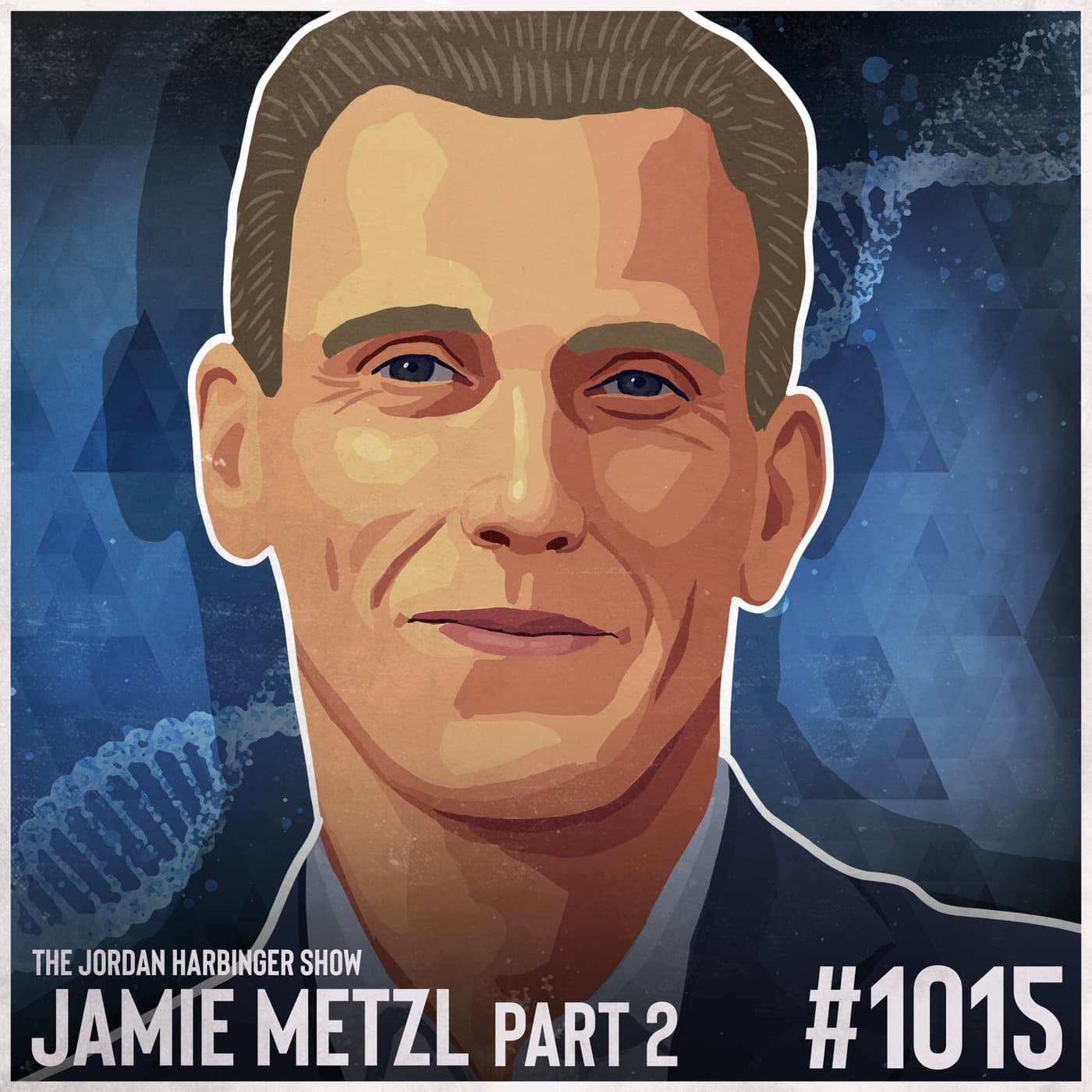
Podcast Summary: The Jordan Harbinger Show - Episode 1015: Jamie Metzl | AI Solutions for Hunger, Health, & Habitat Part Two
Episode Overview In this episode of The Jordan Harbinger Show, host Jordan Harbinger continues his insightful conversation with Jamie Metzl, author of *Superconvergence*. The discussion delves into the rapid advancements in AI and biotechnology, exploring their potential to address global challenges such as hunger, health, and environmental sustainability.
Key Topics Discussed
- Rapid Advancements in AI and Genetics
- AI and genetic technologies are transforming medicine, agriculture, and responses to climate change.
- Innovations such as cell-cultivated meat could reduce the environmental impact associated with traditional animal agriculture and animal cruelty.
- Ethical Considerations and Risks
- Concerns arise regarding unforeseen consequences of genetic engineering and AI, including potential misuse and ethical implications.
- The COVID-19 pandemic underscored the necessity of thoroughly investigating disease origins to follow the science, even when uncomfortable truths emerge.
- Everyone's Role in Technology Discussions
- The conversation emphasizes the importance of public engagement in discussions about emerging technologies and their implications for society.
- By educating themselves, individuals can contribute to shaping a future that harmonizes innovation with ethical considerations and societal needs.
Innovations in Agriculture and Health
- Regenerative Medicine
- Advances in regenerative medicine enable the growth of human tissues and organs using stem cells, providing solutions for transplant patients.
- Metzl shares a captivating example of a woman who received a lab-grown ear after an accident.
- Sustainable Animal Products
- The potential to cultivate animal products without traditional agriculture practices could mitigate the ecological footprint of livestock farming.
- The industry is moving towards producing meat and dairy alternatives that are biologically the same as their traditional counterparts, but with lower environmental costs.
Future Implications
- Environmental Restoration
- Reducing reliance on industrial animal agriculture could free up vast areas of land, allowing for rewilding efforts that combat climate change and restore biodiversity.
- Technological Integration
- Metzl discusses the intersection of AI, genetics, and biotechnology, suggesting that these technologies could lead to revolutionary changes in various sectors.
- The conversation explores the potential for AI to analyze massive datasets and predict health outcomes, potentially revolutionizing the healthcare industry.
Closing Thoughts
- The episode wraps up with a reflection on the power and responsibility associated with these technological advancements. Metzl calls for a proactive and informed public to engage in shaping the future of biotechnology and AI, ensuring that innovations are utilized ethically and equitably.
Key Takeaways
- Understanding Technological Risks: As technologies evolve, it is critical to understand both their potential benefits and associated risks.
- Public Participation: Everyone has a role in influencing how emerging technologies are integrated into society.
- Sustainability Focus: Innovations in biotechnology present opportunities to address global crises, such as food scarcity and environmental degradation, while promoting ethical standards.
Additional Resources For more insights into Jamie Metzl's work and ongoing developments in AI and biotechnology, listeners can visit [jordanharbinger.com/1015](https://jordanharbinger.com/1015) for full show notes and resources.
Sponsorships This episode is brought to you by various sponsors. For more information on deals and sponsors that support the show, visit [jordanharbinger.com/deals](https://www.jordanharbinger.com/deals).
---
This summary captures the essence of the podcast episode and presents the key discussions in an organized manner, emphasizing important themes and takeaways.
Written by AI. May contain mistakes. Listen to the episode to check what was said.
Transcript
Automatic transcript. May contain errors.0:28This episode is sponsored in part by Dell. Coming up next on The Jordan Harbinger Show. If you aren't investing on autonomous killer robots, you're committing treason against your country because your people are going to be taken over. Your lives are going to be lost. Your kids are going to be kidnapped. But if you do, you're also pushing forward something that's going to be very hard for humans to stop. Because once there are all these autonomous killer robots everywhere, can we guarantee that we're going to control them forever? That's Skynet. We can't.
1:03Welcome to the show. I'm Jordan Harbinger. On The Jordan Harbinger Show, we decode the stories, secrets, and skills of the world's most fascinating people and turn their wisdom into practical advice that you can use to impact your own life and those around you. Our mission is to help you become a better informed, more critical thinker through long-form conversations with a variety of amazing folks from spies to CEOs, athletes, authors, thinkers, and performers, even the occasional legendary actor, four-star general, rocket scientist, or arms dealer. And if you're new to the show or you want to tell your friends about the show, and I always appreciate it when you do, I suggest our episode starter packs.
1:35These are collections of our favorite episodes on persuasion, negotiation, psychology, and geopolitics, disinformation and cyber warfare, crime and cults, and more. That'll help new listeners get a taste of everything we do here on the show. Just visit jordanharbinger.com slash start or search for us in your Spotify app to get started. Today, part two with Jamie Metzl on AI and the medical revolution slash progress revolution that that all entails. If you haven't heard part one yet, definitely go back and check that out before playing this part. Otherwise, it's not going to make any sense. All right, here we go.
2:04Part two with Jamie Metzl. Tell me about how they grew a new ear for that woman in Mexico. This is pretty amazing, right? Because right now, you know, people get bad kidneys or their kidneys go bad. That might not be that big of a deal. Yeah. So I'm going to tell you about that. And then I'm to talk, I'm going to pivot to the future of animal agriculture because it's the same thing. So as we understand these complex biological systems, we were talking about stem cells a moment ago, we realized that stuff grows, like humans grow and parts of humans grow, and that's just biology at work. And so as we understand more of how biology works, our ability to grow things and to manage how things grow is increasing.
2:46So there's a whole new field of regenerative medicine. And so there are people who are saying, well, how do we take a tissue? And it could be any tissue. It could be skin, it could be blood, it could be cartilage, it could be whatever, and say, well, how do we grow it? And then how do we steer and manage the growth? So in regenerative medicine, there are people who are creating new, for example, tracheas or parts of humans that maybe yours doesn't work, or maybe it needed to be removed because of cancer. And then you can 3D print a scaffold and then you can populate that scaffold with cells. And it could be your own cells, which are taken from your body and manipulated so that you can basically grow an organ.
3:26And we're still in the early days of that. And so there is the thing of somebody who grew from cartilage, they grew an ear and somebody had lost their ear through an accident. And so they basically gave them the new ear and they stretched the skin over the ear. Now this young woman has a new ear and it's just an ear. It functions like an ear. It's an ear. But then you have these physicians who were working in regenerative medicine. And then they said, hey, wait a second, we're just growing tissue. We're just growing animal tissues. Because as your listeners know, humans are just animals. We're magical, wonderful animals, but animals.
4:04We could grow anything. And they said, well, why don't we, rather than killing 72 billion land animals per year, which is what we do. That's crazy. 72 billion, 200 million metric tons of fish. What if we could grow those animals from stem cells? Right. And if we could do it at scale and at a competitive cost, we could change everything because right now half of the arable land on earth is used for agriculture. Three quarters of that and about a quarter of all human greenhouse gas emissions come from industrial animal agriculture. When people think about agriculture, they think about old McDonald's farm.
4:45That's not where the animal products that you use come from. They come from these massive industrial animal farms where the animals are pumped full of antibiotics to keep them from dying, from being crammed together, and to facilitate their growth. a huge environmental climate implications, huge implications for deforestation, and not to mention the cruelty. You extract a few cells, which can be done just with a simple biopsy. The animal can have a wonderful day even while that is happening and keep on living. Then you grow those cells in a laboratory and transfer them to an industrial bioreactor and feed them with the appropriate nutrients.
5:26And then you can grow these animal products. 11 years ago, the world's first cell culture, now they like to be called cultivated, but hamburger was developed by Mark Post in the Netherlands. And the total cost of that was about$325 ,000 for that one burger. It's a pricey burger. Now it's$10 to do that exact same thing. So everything is on this cost curve. And there's a huge, and there's a whole industry that's going into this cell cultivated animal product. And just In everything, whether it's milk or meat, even human breast milk, there are companies that are saying, all right, we're going to do this and we're going to grow.
6:02It's not an impossible burger where we're mimicking a burger. It's actually biologically the same. And so that's this whole field. And if we do that, let's just say we take half of our, so we go from those 72 billion land animals to 36 billion. We just cut it in half. And because half of the, certainly the beef that we eat is just ground beef. When you go to McDonald's or Burger King, who knows what's in those things? Who knows what that thing is, yeah. So if it was the exact same animal products, but it was just better and safer and it didn't have all the bacterial infections that we come, it didn't have all of the cruelty, we could replace the animal fats maybe with healthy omega plants.
6:47People's lives would be unchanged. It's like deprivation doesn't work. People say, you should do this because it's the right thing. People won't do it. But we make it easy for people. And let's just say we were to cut back our industrial animal usage by half. We would be forced. We'd have so much free land. We could say, all right, I can't build more shopping malls and soccer fields because not everybody gets their own soccer field. We'd be forced to just rewild huge. Just grow some trees and put some wolves in there. Huge, meaning like the size of Canada huge. Really? Parts of the world, just because we couldn't use them.
7:25And that would go a long way toward solving huge problems like environmental degradation and climate change. Actually, in the book, I talk about one of my very, very dear friends is this wonderful Spanish, now living in the United States, National Geographic Explorer named Enrique Sala. I went back and forth with my editor, because I kept adding something that was in the original manuscript. It kept getting edited out. And I talked to him about a svelte Spaniard with an Enigo Montoya ponytail. And so your listeners may know from The Princess Bride, you know, that little swordsman. I'm Enigo Montoya.
8:04You killed my father. They kept taking it. I said, no, no, it's got to be there. So Enrique, he's one of the leaders. what started out as an effort to try to turn 30 % of the oceans into protected nature preserves, where people can't do industrial activities, particularly fish. And they did these calculations that if you protected those 30%, the actual availability of fish in the other 70 % would go up. Like you would get more fish by not fishing in these protected areas. Because they're breeding grounds and stuff. Yeah, because we're just decimating them in this relentless way. Now that's grown to 30 % of the entire face.
8:44So if you have 30 % of the entire face of the earth is designated as not for commercial activities. You could have tourism, you could do all these other things. It would help go a long way towards solving climate, environment, all of these other things. And so just thinking a little bit differently about two things, and I write about them in the book. One is food supply. And particularly animal products, how do we source them differently? And the other are industrial raw materials. So in the world that we benefit from, it's all about cutting down stuff and digging up stuff. Like that's how we get most of the things that we need.
9:20And it's taken us a long way. But there are new models. How do we grow the kind of materials that we... Just one example, which I love. This is good news because we don't all have to become vegetarians. Sorry, Gabriel, my producer's vegan. He's like, we don't need to do that. No, but bless Gabriel. It's a great thing. He's doing his part. I'm not. If you could... I'm not doing anything. I'm not. I write about it in the book. I'm from Kansas City. Yeah, you gotta eat... If you don't eat Kansas City barbecue, that's like being at the Vatican and saying, yeah, the Pope is bullshit. It's like, you know...
9:53Gonna get emails about that. Thanks a lot. Yeah, exactly. Thanks a lot, Jamie. Greta Thunberg and the Pope. By the way, speaking of the Pope, I just tweeted this morning. Incredible. So the G7 meeting is happening right now in Italy. and the pope has gone to i think it's in puglia because he wants to talk about ai safety the pope has the pope wants to talk about which is amazing and i that's why i think it's so great i don't think the pope is like coding this guy this is guy who probably doesn't even know how to use aol but he gets that it's about values that it's you don't need to know coding yeah to know that something really big is happening and you don't need to know coding to say i want my voice to be incorporated in how people are thinking about how the future should be.
10:36So coming back to what I was saying about spider silk, spider silk is like the coolest substance in the world, at least according to me. It's stronger than Kevlar. Yeah, by weight, right? Yeah, stretchier than our stretchiest elastics. And you could say, oh my God, that's so great. Why don't we just do for spider silk what we do for silkworm silk? You just get a bunch of spiders, put them in a big box and just let them do their thing. They'll eat each other. Exactly, because they're cannibals. So the exactly right. And so then, well, how do we do it? And so that's where these tools of, again, they call it synthetic biology.
11:09It's not synthetic biology. It's nature co-design. We're tweaking biological systems. So we, and I didn't do it, but we've developed E. coli bacteria that generate spider silk proteins, just like we have these bacteria that generate insulin that everybody takes. Isn't that also E. coli? It just like excreeds. Yeah, yeah. We call it, it's like a workhorse. E. coli and baker's yeast and things like that. And then now we have goats that in their milk are producing spider silk. I feel like I've read about this a few years ago. Maybe. Yeah. Yeah, for sure. So this goat milk has spider silk proteins and it can later be spun into.
11:44Exactly. Yeah. And now there's genetically engineered silkworms. Rather than producing silkworm silk, these silkworms produce spider silk. I see. And so that's the thing is it's like we live in a world of manipulated natural system. You could say, hey, let's let silkworms be silkworms. But that's not what we're doing for thousands of years. We've effed with silkworms. That's why we have these. You rip a hole in your silk shirt. That's not going to happen. Now you're wearing a spider shirt and somebody tries to stab you in the knife bends. Exactly. That's not how it works, by the way. But now there's so many different materials that we can think of.
12:19Well, how do we generate them in other ways? And for all of these things, there's issue of cost and scale. It's not just doing it. It's doing it better, faster, cheaper than these other ways. And so I don't want to undersell how difficult that is, but there's a path. And the reason we know there's a path is because we have these natural systems all around us. So Carl Benz, I write about this in the book in the 19th century, he was in his little workshop in Germany and he was kind of imagining the car. If he had a Porsche parked in his workshop and he could just go look around the Porsche and take pieces apart and analyze it and sequence its genome, machine genome.
12:59It would have been much easier for him to do that. So we already have these biological systems. We have systems around us that have already solved problems that we're trying to solve. We're trying to solve the problem of data storage because we talk about the cloud as if our data is floating up. So, but it's all in these massive data centers that are taking huge amounts of energy. And every two years, we're creating more data than all of human history up to that point. We're doing it over and over and over. So we're going to have to build a world of data centers. Then we're going to have to build nuclear reactors to power those data centers.
13:32It's like the old lady who swallowed the fly. Or you can say, hey, nature has already evolved the greatest data storage mechanism in all of history, which is DNA. DNA under the right conditions can store data for 5 million years versus 40 to 60 for magnetic tape. it's a million times denser than silicon we could store all of the data in the world in one shipping container yeah i read so and what's funny is i read about this probably five years ago yeah and back then it was i think it was all data on earth can fit in a shoebox but now there's more yeah you made the shoebox can go in the shipping container yeah that's right it's a shipping container full of shoeboxes but but that's the thing and so again that doesn't mean that DNA data storage is now better than silicon data storage.
14:23It's not yet maybe there. There's all kinds of innovation about using graphene and other substances in computer ships and transistors, and that's all exciting. But we have these evolved natural systems that have their own type of genius. And as I was saying before, we have these new capabilities of understanding that genius, interrogating that genius and saying like, well, how can we manipulate it to our purposes? And how can we do so in a way that's sustainable? I know there are some people who are going to maybe listen to this podcast and say, well, I don't want to screw with nature. I love nature.
14:56And it's like, I love nature. I love, you know, going hiking in the canyons in LA. And it's like, it's such a preposterous argument because the reason you love going hiking in those canyons is that there are no predators there who are going to eat you. your ancestors are going to say, oh my God, I'm so excited. I'm just going to be totally, totally unexposed with my Lulu's, you know, going and walking in those canyons so I can get eaten by a saber tooth tiger or a pterodactyl or whatever. It's because we've entirely manipulated these environments because we can just eat food that we buy at the store, have it delivered to our house, We don't spend our entire life desperately chasing calories.
15:36So we live in a manufactured world, a manufactured bias. So the question is not technology, yes or no, or even radical technology, yes or no. We're already there. The question is which radical technologies do we apply and how to build the kind of future that we want? That's true. I notice all those people hiking are wearing shoes. Yeah, exactly. The argument breaks down at some point. When I hear about DNA being used for storage and being able to take bits of our DNA from our skin, and I'm not that guy, it all makes me go like, okay, we were designed by aliens. Come on, man. This is all just super high-tech stuff, and we're learning how to emulate it, but it's a few years out, a few more years out.
16:15It's like, and if you're new to the show, I am not that guy. I am not. I usually bring that stuff up never. Right. Because I leave that to the stoners who do six-hour podcasts with the guy, the aliens guy from the History Channel. It just absolutely blows my mind. I mean, it's really something. It's incredible. What I would say is, I mean, I think the design of biological systems is incredible. But I'm, you make a guess, I'm not an intelligent design person. I have actual mathematical proof, which I'll tell you in a second. But I think it's pretty incredible that these systems evolved. I mean, that is just amazing to me.
16:53You don't need, can people say, oh my God, the human body is so complex. and if one thing goes wrong, you're dead. It must be intelligent design. It's like, can you imagine somebody at a whiteboard and saying, all right, we're going to design a humans? If humans were intelligent design, I know how I break it. It's like, yeah, so there's a body and then there's a head and you just twist off the head and you can just twist it on someplace else and it snaps in and snaps out and then you can keep going. Can you imagine somebody at that intelligent design whiteboard? It's like, I've got a plan. And they go, oh yeah, what's your plan?
17:24Well, as you get older, you lose hair on the top of your head, but random hairs start growing sideways out of your ears. Because, oh yeah, that's intelligent design. So that's my one mathematical proof against it. And the second thing is someone said, I've got a design. Your brain is really important. So we're going to put it like right in the middle of your head so it can be protected. We're going to have all this armor of your cranium that's just protecting because that's where it needs to be. And then we have your testicles, which are really important for reproduction. And we're just going to dangle them in a sack, kind of totally exposed.
18:02You just walk around with those things in the middle. It's like, oh, yeah, that's a great plan. If it was me, it was intelligent. It's like, no, we're going to make like an armor with spikes. And that's going to protect your testicles. Yeah. So we've evolved. Yeah. Tell me about, well, on that note, tell me about living cement. This is fascinating. Yeah, so like I was saying before, we have these products that are part of modern life, and cement, concrete, fertilizer, all of these things, we live the lives that we live because of these super materials. Václav Smil writes very convincingly about this.
18:38And so with cement, I mean, cement is everywhere. That's why our cities can grow so rapidly. China in like three years, about a decade ago, used more cement than the entire United States, used in the entire 20th century. So these things are just great. And cement is really useful. It takes a huge amount of energy to make cement. So cement is a massive contributor to climate change. And yet when we look at the natural world, you see stuff happening so quickly at scale. And so, for example, in the Gulf of Mexico, there was a 50-mile blob of sargassum, which is a form of seaweed. And basically, there was runout through the Mississippi River of fertilizers coming through the end.
19:19And it just spurred the show. So 50 miles of sargassum that grew relatively quickly. So we have these materials that grow really, really fast. And so there is research being done, and I talk about this in Boulder, Colorado, and in Amsterdam, and other places of saying, all right, can we use natural systems to come to cement? So the US Air Force is now working with these biological materials. And basically what you do is you're in a desert. Let's say you're at war, and you need to create a runway. You spray these biological materials on the sand, and they form a bond, a natural bond connecting the sand and turning that sand into a hardened runway.
20:03And so if you have these kinds of source materials, this company Prometheus in Boulder is working on this, you can say, all right, we're going to start with sand and we're going to add these things. And then one, essentially, biobrick is going to become two. And then until you turn off, two will become four. And four will become eight, kind of like the cells that we talked about in a body. So it's not that we're going to not use cement. We live in a world where we need cement. It's not that we're not going to use fertilizer. We're going to have to have some kind of stimulant to help our plants grow.
20:36The question is, can we think of new and better and more sustainable ways of doing those things? And that's where these tools, and again, it's not just biotechnology. It's the intersection of genetics, AI, biotechnology, and other technologies that give us these superpowers that feel like magic, but just like you were saying, the stuff we're doing now is magic to our ancestors. If we had gone to our ancestors who were doing homespun or loincloths and said like, this shirt, the cloth was spun in a factory. I think this one's from India. And it was just on a machine. It was again, how many WTFs would it take?
21:14Just like, how is that even possible? What kind of machine? How is the machine run? Everything. So we live in a WTF world and we're moving toward an extra WTF world. Before genetically modified pigs kill us all, spoil yourself with the fine products and services that support this show. We'll be right back. If you're wondering how I book all these amazing folks for the show, it is about my network. I know you're not booking a podcast, but for your work or personal life, nothing beats a stronger network. It is the best insurance policy that money could never buy. I'm teaching you how to build that for free for yourself over at six minute networking.com relationship building skills, all down-to-earth, non-cringy, super easy stuff that just takes a few minutes a day, and many of the guests on the show subscribe and contribute to that course.
21:56So come on and join us. You'll be in smart company where you belong. Again, it is free, no credit card nonsense necessary, over at 6minutenetworking.com. Now, back to Jamie Metzl. We are running out of the type of sand we need to make concrete, so this bio-cement can't create. I did an episode on sand with this guy, Vince Beiser, and he talks about sand mafia. We'll link it in the show. Oh, no, people are stealing. The mafia is the steel. It's incredible. It is incredible. I mean, I saw, I got a whiff of that when I was at the Dead Sea in Israel like 25 years ago. They put these giant stones in there.
22:27And I was like, oh, too bad there's all these rocks, you know. And we had to do that because people were dredging the mud out and selling it for like cosmetic use. Yeah, yeah, yeah. And then there's these beaches in India where there's just no sand. And there's people stealing it. And if you go there and you try and put like the people who need to use the water, they're getting killed by the pirates who are stealing. It's like sand piracy. It's crazy. Yeah, yeah. Absolutely nuts. I know that there's enviro pigs and salmon that mature faster. I mean, this is all amazing. Yeah, it's the same kind of thing.
22:54So people say, I just want pigs to be pigs, or I want chickens to be chickens. It's like, we are late to that. We've been effing with these animals. These are domesticated animals, and we've supersized them. We've hacked them. We've done everything. So enviro pigs that are genetically engineered to make them impervious to many viral infections, and in some cases to grow faster and to process different nutrients differently. It can just save a lot of life, actually, even of pig life, because when they have these pathogenic outbreaks among pigs, sometimes we have to kill millions, tens of millions of pigs get slaughtered.
23:32The same thing is true with these essentially super salmon. So the basic story is that, forgive me if I get this wrong, Pacific salmon grow faster, Atlantic salmon tastes better. And so we've gone because it used to be that most of us ate beef and pork, and then there was the fish as the new white meat. And so now everybody wants to eat fish. And so we started eating so much salmon that we couldn't take it naturally. And so now we have all of these salmon farms and we have to eat something. And so fish seems like a good idea, at least to me for now. But then the question is, well, how can we make these systems more productive?
24:08Because even the salmon farms, where most of the salmon we eat come from, have become quite horrible places where they're full of antibiotics, they're full of salmon swimming in waste. And so it's the question, if we could, and which we can, make the delicious Atlantic salmon grow 50 % faster by giving them a few genes from the Pacific salmon and a few small other genetic modifications. So you'd have bigger salmon and more salmon. You'd have to kill less salmon. Is that a good idea? There's not a complete answer to it, but it seems like something that we have to consider. And there's a company, Aqua Bounty, Aqua Advantage, that's already doing this.
24:48Now there are these companies that are growing salmon essentially in these massive inland aquariums. So if you have these genetically altered salmon that grow bigger faster and you have them in filtered systems, so they're not exposed to all these bad things, so they're not getting these infections, it seems to me it's a pretty good way to get the salmon. Is it better for everyone to become a vegetarian? Probably in some cosmic way, yes, but it's just, it's not happening. For now, it's not going to happen. So if you say, well, our strategy is we're going to be all in on a utopian, a wonderful utopian vision, and that's all we're going to do, I think that's really dangerous.
Read the full transcript
25:28The thing is, we need these animal products for the foreseeable future. How do we get them in the most sustainable way? And the tools of the intersecting AI genetics and biotechnology revolution have to be part of that story. Are we worried at all about unforeseen consequences? Like someone goes, oh, I'm going to take one of these salmon and then keep it as a pet. The guy's mom says, you're not keeping that crap in here and throws it in the water. And now this thing is breeding in wherever. I've done the Lake Placid Iron Man like 10 times. And so, you know, the movie Lake Placid. It's exactly about someone throws an alligator and the alligator becomes like this monster eating people in Lake Placid.
26:03There is a 100 % chance of unforeseen consequences. Life is full of unforeseen consequences. And so it should not be, oh, this technology could be cool. Let's just race for it and everything is okay. And it should not be, this is so scary that we We should somehow, if we could, pull the plug just because it's so scary. What it must be is these are capabilities, incredibly powerful techniques that have great potential upsides and real potential downsides. What do we need to do now to increase the odds of good outcomes? That's why I say all the time, it's not just some kind of fluke that evolution has preserved the emotion of anxiety in humans and other animals.
26:48That's part of our survival. It's like we worry about stuff, maybe sometimes too much, but we worry about stuff because that's our biological way of saying, hey, this is a scary thing. You better start planning so that this scary thing isn't realized. So there will be unforeseen consequences. There will probably be terrible unforeseen consequences. Right now, if you're the defense minister of Ukraine and things have turned, Ukraine's really struggling in its war with Russia. If you aren't investing in autonomous killer robots and drones and other things because Russia is jamming these drones and the control systems are unreliable.
27:26If you aren't investing in autonomous killer robots, you're committing treason against your country because your people are going to be taken over. Your lives are going to be lost. Your kids are going to be kidnapped. But if you do, you're also pushing forward something that's going to be very hard for humans to stop. Because once there are all these autonomous killer robots everywhere, can we guarantee that we're going to control them forever? That's Skynet. We can't. And so that's why this isn't an abstract. There are very real pressures. We need to be honest about them. And we need to try to navigate.
27:58And in the book, I have a whole kind of preliminary framework for how we can think about how do we navigate, at least in the direction of where we'd like to go. You mentioned this thing in the book, and it's chat GPT, listening to, I'm going to get this wrong, listening to people speak, and it can sort of predict Alzheimer's? Basically, human beings, there's all of this, what we call data from our perspective, but there's all kind of messaging. Human biology is a system of systems. And so the more that we look, the technical word is biomarkers. But there's all kinds of places where you can look and you can see clues of something else.
28:36So they have this retinal imaging, which you can do, which is with really cheap technology. But using AI, you can just look into your retina and you can say, hey, you have this problem with your blood pressure, with your whatever. And so certainly AI, I mean, there are already programs where an AI system can just listen in to your speaking on the phone and just say, hey, here's a shift in these kind of nanoseconds between your words. And it's showing some kind of decline. And what we're going to find out is that there's so much information. I talked earlier about our shift from precision to predictive and preventive healthcare.
29:16there's so much information that's coming out of our bodies that these sensors can understand us in ways that we can't understand ourselves. Like you and I are talking right now. There's the stuff that we know consciously that's happening, but there's a lot more information that's flowing back. But just imagine I had an AI that was monitoring my biorhythms and you had an AI that was monitoring your biorhythms. And let's just say that I wanted to know more of what was happening with you. And I answered a question. and then you could say I'm causing anxiety. There's this kind of reaction. It's like things that we just don't perceive because we can't focus on everything.
29:55Like right now we're in this room. There are these cameras here. You have your producer over there. There's a lot of things that are happening. There's a little hum of the air conditioning. I'm not thinking about those things. I'm in this conversation with you. But these sensors can think about a lot of different things and then say, all right, what's of all those things what are important things that we should know. I was doing a Fox interview last week and somebody was actually was for a different story, but during the break, they were asking me about how the CIA is using AI for its satellite imagery, but they thought it's like up there.
30:30I said, no, no, basically we have spy satellites that are taking gazillions of pictures of the world over and over and over. The job of looking at those pictures to figure out, well, what's important. It's so much bigger than it. So once in a while, I say, all right, there's a North Korean missile launcher and it's moved from here to there. And we know we're going to focus on that thing, but there's so much data. We just can't focus on it, but to have a machine and say, hey, here's what we're looking for. Look at all of these billions, maybe trillions of photos and say, all right, what are the patterns and how do we see them?
31:05And so that can apply in analyzing satellite imagery. It can apply in looking at biomarkers and learning things about ourselves, your question about Alzheimer's, but really it's just across the board for all sorts of things. Is this something that people can use, the Alzheimer's thing? So right now, you know, my parents are in their 80s. Yeah, same. So now they're doing great, but getting older. So every time I'm on faculty for a thing called NextMed Health that Daniel Kraft runs. And so every year we're talking about these things. And there are these different programs that you can use that people put on their parents' phones.
31:37Yeah. They're just kind of listening to their parents and looking for patterns. And I think that those things right now, it's like I was saying before, it's like, oh, we're going to go and do AI. But I think the way it should work is there's just a suite of technologies that are integrated into things that we're already doing. They're just part of our iPhone. And when they see something that's concerning, then they alert you or maybe alert your physician. So those technologies exist for sure. They haven't been mainstreamed. I see. So it's like how the watch will go, hey, you have AFib events. Yeah.
32:10Here's a file. Yeah. Send it to your doctor. And I think so right now, you know, people go to their doctor when they have a medical moment. Right. Like I had this symptom. I'm going to the doctor. And again, I write about this in the book. It should be just seamless that we have right. Even now you have, I'm just wearing a$20 Timex, but you actually have a fancier watch. I was going to say, man, you are very, that's a dumb watch. You know, it really is. Because I, you know, I have a rule on why I live. I don't mean stupid. but I just mean it doesn't have anything fancy in it. I live in New York City, and you see not far from here, all these people in the finance room, you walk into a meeting, and it's like the watch is like the handbag.
32:49And it's like, people are saying, oh. And so I have a rule. You can never spend more than$30 on a watch, because otherwise you're kind of buying into the thing. You're in the game. You're in the game. But I do have one watch, which is, this is an aside, and I'll come back to the thing about medical sensing. But I have a really beautiful IWC watch. Yeah, sure. And the reason why I have it is so my father was born in a little village in Austria. And so in 1938, he and my grandparents escaped from Austria to Switzerland, where they were displaced persons for 10 years. Sure. And they were unable to work by law, although they were grateful to get asylum in Switzerland for the 10 years before they came into America.
33:32And so just when the war ended, my grandfather was looking for ways to feed the family. And so he, I guess you could call it a business, but he would just go on the train where there were the American soldiers were, and he would try to sell people watches or buy watches. He had this little thing. And the Americans mostly didn't speak German, but my grandfather, German was his native language, but he spoke also a little bit of Yiddish. And so there were the Jewish American soldiers, some of them spoke Yiddish from their parents in growing up here. And so my grandfather would walk up and down these trains with the American soldiers saying, sprechs du mamaloshin, do you speak the mother tongue?
34:13And he'd find these soldiers who spoke Yiddish. And then he had this little business of selling people watches, buying watches. And then once in a while, when he found a nice watch to keep, he would keep it. And so this watch that my grandfather got in 1945, I was moving my parents. First, we moved them from the home in Kansas City where I grew up to their apartment in Denver and then apartment in Denver to the assisted living where they are now in Denver. And then we came across this watch and it was like all scratched up and it was a million years old. Sure. I thought, oh my God, this is such a beautiful watch.
34:44And my dad said, no, you have to take it. So I took it to the, I live on the Upper East Side here in New York and there's a little watch store. and I took it and they had this old guy who told me that his great-grandfather, he was like fourth generation watch repairman. His great-grandfather had done it in the Ottoman Empire in what's now Turkey. Wow. And they took the entire watch apart, oiled everything, cleaned it, gave a new crystal. I got a new band. And anyway, so it's still under$30. I mean, that is right up there with your father kept this watch in his ass for five years or whatever it was, right?
35:20Oh, that old chestnut. Yeah, yeah, yeah. It was in a nicer place, I think, your watch. That's incredible. That's really something. Sorry, let me come back to medical sensing. Well, do you have an Austrian passport? You can basically file a letter and get one overnight. You know, I could. You know, I have mixed feelings about Austria. We kind of left under negative circumstances. I wonder why. Yeah. So I don't, you know, I have to say, with all the problems they're having in Europe, there is an appeal of having a European passport. But, and again, I'll come back to medical sensing. There is nothing like being the son of a refugee to make you love this effing country of America with all of its problems.
35:58And so I'm kind of here. I really want to fight to make this the best place. And it really just pisses me off, frankly, when I see people who are here who aren't valuing what we have. That doesn't mean part of valuing what we have is fighting to make it better. Not just planning your exit strategy. Yeah. Yeah, but I also mean, you see all these people, again, I support free expression, people burning American flags, pulling down monuments, marching with Hamas flags, calling for death to America. We have such deep flaws. There was a horrible genocide against the Native Americans, slavery. But this is a country that's trying to get better.
36:40And it just pisses me off when I see it. And no matter who is doing it, during the BLM stuff, I was upset that all these monuments were being pulled down, even monuments of people who I thought were horrible people. But we have a democracy so that different people can work together. If we want to take down monuments, by all means, let's have a process. And that's true then, these, whatever you want to call them, people marching behind Hamas flags. I call them traitors, but yeah, there's other words. You know, I don't know who your listeners are, but I've been very, very clear on my Twitter. You know, being in an encampment harassing students on a college campus behind a Hamas flag saying there's no solution, intifada revolution, is just the exact equivalent of being in a KKK robe and burning a cross on a college campus.
37:29I think both of them are not acceptable in my view. So I love this country. I want to do everything I can to make this country and our world as great as it can be. and now circling back to medical sensing, but your watch is a medical sensor. And there's so much, I don't know whether your heartbeat is being monitored. I'm sure it is. But it should be, and it could be even now, that it's being monitored. And you don't even know, you never pay attention. But someday, if something goes wrong, you get a little alert. And so we could have that, like you were talking with the glucose monitors, but we could have kind of everything monitors.
38:03You could have your glasses. Now there's the thing of meta with Ray-Ban, where it's much better than these Google Glass early versions. So maybe we'll have just things that just look like glasses or look like contacts. And we don't even think about having them, but they'll be kind of watching us. And I know that scares people. But if there's something that's wrong, like if I'm developing diabetes, type 2 diabetes, I want to know right away. I don't want to wait until something goes. There's a lot of things. And so I think that kind of smart, appropriate sensing, and whether it's animals, whether it's our food supply right now, there's a fear, a danger of H5N1, bird flu, and we don't have enough sensors in our animal farms to give us the early warning that we need to be building all of those systems and we need to balance our need for that and our very justifiable desire for privacy and our very human need to recognize that the story of humans isn't just these simple data flows and it's something more complex.
39:04You told me before that math is the language of physics, but biology doesn't have an equivalent language yet, and maybe AI could potentially become this. So explain just briefly math being the language of physics for people who are jogging and not wrapping their mind around this. Basically, when we try to figure out how are we going to get to the moon? How are we going to get to the moon? How are we going to make a loop around the moon and we're going to come back? We have to do these mathematical calculations to just understand what's happening. It's not like, oh, we have a feeling that the moon is this far from the Earth at this particular time, because if we do that, these spaceships are going to crash.
39:43And so it's true with all of this. We've developed these systems and we use math to understand those systems. The issue with, so biology is also based on a language, but we don't yet speak that language actually last night at this MIT event and I asked this question a lot I asked people if having a complete understanding of human biology that's 100 and having no understanding is zero where are we now in our understanding of the full complexity of human biology four no exactly that's exactly right I say three three four oh really I was exactly right no I think I mean I think that is the low ball I think that's I think that's exactly right.
40:24Because there's so much that's happening. It's not just one thing. It's not like humans are like genetics and other stuff. It's like we have all of these systems. Some of them we understand pretty well. Some we don't understand at all. Like if someone said, well, can you fully explain how one cell functions? We can't even do that. We know some of the basic architectures, but we don't even know what we don't know. I mean, there was a long time when humans didn't know that viruses even existed. So how could we have done analysis of viruses if we didn't even know they were there? But as I was saying before, human biology has, and all of biology, is roughly as complex as it was a million years ago.
41:05But the sophistication of our tools is increasing at an exponential rate. So we're going to move up that understanding from four to five to six. And even if it takes a hundred years or longer, at every level, we're going to understand more. And when we understand more, we're going to be able to do more. And we're going to want to do more because that's the history of our species. And so because these systems are so complex, we need a language. And understanding the language of biology, which already exists, for us to understand it, we need these capabilities and AI with all these other technologies will be that.
41:49So then we'll be able to do the biological equivalent of going to the moon or going to Mars. Yeah. I mean, we're doing it now every day. And the thing is with going to Mars, there will be a day, I hope, when we go to Mars. As a matter of fact, yesterday I was one of the co-hosts of this event was my friend Jeff Hoffman, who is an MIT engineering professor, but former astronaut. He's done five space missions. And so he was one of the leaders of, first, there was a project of building a helicopter that could fly on Mars. Then they proved that you could actually generate oxygen on Mars using materials that are already there.
42:26There will be a day, I hope, when humans make it to Mars and we'll say, oh yeah, that happened on this day. But that will have been possible because of all of these incremental steps that we made along the way. And we are making those steps very, very rapidly in understanding biology. So where we are in our understanding of biology, coming back to the exponential point we discussed earlier, is way more than it was 10 years ago. And that was way more than it was 10 years before that. But if you look at all of the scientific progress of the last 100 years, and you compare that to the 100 years before that, and 100 years before that, we see this rapid acceleration.
43:08And the big takeoff point was the scientific revolution in Europe. Because I write about this in the book, the beginning of the scientific revolution, the enlightenment, we learned how to learn. Like, that's the thing. It's learning how to learn for humans, for our machines. And as we as humans and as our machines learn more about how to learn, more learning becomes possible and more learning about how to learn becomes more possible. Again, it's this same acceleration point we talked at the start of the show. I don't need my genome sequence to know that capitalism is in our DNA. How about a word from our sponsors?
43:47We'll be right back. If you like this episode of the show, I invite you to do what other smart and considerate listeners do, which is take a moment and support the sponsors that support the show. All the deals, discount codes, and ways to support the show are searchable and clickable over at jordanharbinger.com slash You can also email me, jordan at jordanharbinger.com. I am happy to surface codes for you. It is that important that you support those who support the show. Now for the rest of my conversation with Jamie Metzl. I've written the book so that people can take this book to the beach and enjoy reading it.
44:21Yeah, it's not heavy. And then think, oh my God, I really enjoyed it. That was a fun read. That's right. And I accidentally learned something. It's unfortunate that people who are writing about technical stuff and scientific stuff don't make it accessible to people because this is about all of our future. And I've written the book because every single person has a role that they not only can, but they must play in deciding how these technologies are used or not used in your life and in the world. And if we see this just as an elite thing and you need to have all this technological knowledge and lingo and whatever, To join the conversation, that's really a mistake.
45:00For my last book, I was speaking at the Lawrence Livermore National Laboratory, which is very close to where you live. And I was a guest of the director. And the director invited me to speak to the top 300 scientists at Lawrence Livermore about the future of biology. And I said to them at the outset of my talk, I said, I'm really honored to be here. You're among the top scientists in the world. And I'm honored to come to speak to you about the future of biology. Right. But if you hear something that doesn't sound quite right, please raise your hand because I'm entirely self-taught in the sciences.
45:34And the last biology course I took was in 11th grade in high school in Kansas City. Oh, man. And I wouldn't say that if I didn't have a lot of confidence in my thing. Sure. But the reason I say it now is because I've had to teach myself all of this. And so I haven't had the shorthands that I would have had. I mean, I have a PhD, but it's not in this. The shorthands to get to the next level. I feel like I have to kind of understand this concept, say, all right, this concept leads to this concept. And so I've tried to translate that into just explaining this stuff. So it's not like you don't have to know this background.
46:11My job in writing the book is explaining something to you. It's like, oh, yeah, that makes sense. And frankly, that's what my last book, Hacking Darwin, before that, I'd written my two science fiction novels, Genesis Code and Eternal Sonata. and when I was on my book tours for those books and I just explained to people the underlying science that you needed to understand for the story and I just explained it in my way, kind of natural language and then I could just see in people's lives like, oh, that's what genetics is. Like I'd heard this word DNA, that sounded scary and these other things sounded like foreign concepts.
46:47Oh, that's what it is. It's relevant. It's about me. It's part of my story. And so that's my whole goal for doing all of this work that I do is to bring everybody. It's our story. We're writing that story. And that's why everybody needs to be part of it and to be not just welcome. The only way we're going to succeed is if everybody says, I'm writing this story. I have a role and I want to play that role. That's a great place to end. However, I don't want to end right there. Even if now we're going to have a clunky ending, I don't care. you were one of my turning points on the whole lab league theory with covid because i first it was like only kind of kooky yeah folks yeah and they'll write in and they're like we were right you were wrong and they're really angry about this but people it's important to come to conclusions for the right reasons not because you had like a really good gut hunch that the story didn't add up yeah because you have a lot of those people i've noticed have a lot of hunches about other things that are total nonsense actually and so it's called resultsing right when you get the right result in one thing and then you go, surely I must be right about all of the other things where I have absolutely no evidence, but it makes sense to me.
47:56When you started saying it, I was like, well, he's not nuts. I have some people who can come and give you a counter example. They will give you a counter example. Yeah. And I talked with Alison Young, who's a journalist who talks a lot about the lab leaks. But tell me about this because you weren't like early in on this. It was kind of like, let's figure out the origin. And you were actually looking for the truth not to prove an agenda. And then you started leaning in a different way. I haven't been part of any conspiracies. That's just what somebody in a conspiracy would say. Exactly. I think the earth is round.
48:23I love science. I think that Lee Harvey Oswald was, as far as I can tell, acting on his own. I'm not a conspiracy person. But in January of 2020, I remember this very well, I was in our dining room at home, and I was just telling my partner, I said, you know, I'm looking at the event. available evidence about COVID-19 origins. And I'm looking at the news reports about COVID origins, and I'm seeing two different stories. And the news reports are saying it comes from a market, it comes from the wild, case closed. But in the evidence, I'm seeing a totally different story, because it was in late January of 2020, there was a paper in The Lancet by Chinese scientists saying that more than a third of the early cases of COVID were of people who had no exposure to market, the Huanan seafood market.
49:15I thought, well, if that's the case, that means the market is a super spreader location. It's not the origin. And I just started digging. About a year before, I'd been in Wuhan. I'd been invited to give a keynote talk for a conference. But once they realized what I was going to say after I'd arrived, they canceled my talk. Surprise, surprise. Yeah, I have a whole blog post on this. It's for a different day. So I knew that Wuhan wasn't a place like Cambodia, where I actually used to live, where you have these crazy wild markets with all these wild animals. The people in Wuhan actually looked down on the people in southern China who eat the wild animal food.
49:49I mean, a few of them do. They eat that stuff. And I knew that this was the center of biotech, a center of biotech research in China. I knew they had the Wuhan Institute of Virology. Very quickly learned in about two seconds, they had the world's largest collection of captive coronaviruses. They were doing very aggressive research on these coronaviruses, trying to train them to better infect human cells at the point of the ACE2 receptor, which is exactly the point where the SARS-CoV-2 virus connects to our cells. This is gain-of-function research. Yes, gain-of-function and serial passage and other things.
50:23And then soon after, we learned that actually the Wuhan Institute of Virology had worked with the EcoHealth Alliance and the University of North Carolina had proposed a funding application, which was denied to DARPA, the Defense Department, to genetically engineer a SARS coronavirus to make it able to give it a furin cleavage site, able to infect human cells at the point of the ACE2 receptor. As I told Vanity Fair, if I submitted a proposal to paint Central Park purple and was denied, and the next morning we woke up and Central Park had been painted purple, it would be very logical for someone to say, hey, maybe this guy has something to do with it.
51:04And instead of that, starting in February of 2020, you had all these people who were saying, we know, which they couldn't have, we know it comes from nature, and anyone raising the possibility of a lab origin is a conspiracy theorist worthy of condimentation. And it just pissed me off. This is what people who are respectable disease researchers told me. Yeah. So that was why I was like, look, I have it on good authority that this is, for people who understand how these things work, that this isn't true. So that made it even more ridiculous. And I'm not one of these people who's like, oh, experts are bullshit.
51:39Of course not. My entire show is based on the idea that that's not the case. It's like people say, oh, experts are bullshit. Yeah, I'm going to go get a brain surgery. I'm just going to have Joe. Have the guy at Starbucks. Yeah, exactly. Like, we need experts. But in this one case, I just, because the right answer, and now with the Fauci testimony, and I've been deeply involved on this topic, not just on podcast, the lead witness in the first congressional hearings. I was the lead author of these open letters that really opened up the question of pandemic origins starting in 2021. Leslie Stahl did a big piece.
52:13The right answer in 2020 was, we don't know where this came from. It could very well come from a research-related incident. It may come from some kind of natural event or a spillover in the market. We just don't know. That's why we need a full investigation. And we categorically condemn the Chinese government for destroying samples, hiding records, imprisoning Chinese journalists, gagging Chinese scientists, and blocking any meaningful international investigation. That was the right answer. But I think these guys, in their mind, I don't think it was malicious. I think they thought science is under attack.
52:51Remember, it was the Trump administration. Science was under attack. and that if we get people jazzed up about a possible lab origin, the Trump administration is going to go crazy. There are all these kinds of things that were natural impulses. But that's not what the scientific method is about. The scientific method is we're going to follow the evidence even if it takes us to an uncomfortable place. So I'm a liberal Democrat. I served in the Clinton administration. But my feeling was I'm not going to say something is wrong because, I mean, Donald Trump initially supported Xi Jinping, but later when he shifted, I'm not going to say something is wrong because Donald Trump, for whatever mixed motivation, is saying it's right.
53:32I'm going to look at the evidence and say, hey, what is right? So it's been a crazy journey over the last four and a half years, but we went from four and a half years ago where literally I did not know a single person who thought this to now where I think people are at very least recognizing that a research-related origin is a possibility. I think most people intuitively believe it's the most likely, and I personally believe that the overwhelming weight of the available circumstantial evidence, and it's circumstantial because China won't allow an investigation, so it's like... Right, so we're never going to really, like, no, no.
54:06Well, maybe we will, maybe we won't, but it's not like you're going to have a trial of a mafia don and say, well, all the witnesses got knocked off. He must be innocent. I mean, it's like if you're blocking everything, it's like that also should add to the perceptions of guilt. But 27 million people are dead as a result of COVID-19. It's excess death. If we don't get to the bottom of saying, hey, what went wrong? How do we fix our problems? We're going to be facing something much worse. And we're going to say, you know, we didn't have the courage to ask the tough questions, even though they were politically difficult.
54:38Yeah, man. This is one of those big areas where I changed my mind, but it also was a big lesson in even experts can be wrong. And sometimes there's motivated reasoning and everybody has their cognitive bias. It's very, but it's unfortunate, right? Because a lot of those same people are now going, and the vaccine is toxic and it's designed to kill you. And it's like, what are you going to say when you were wrong about lab labor? And that's why for me, it's the same point I was making earlier about an ethical and even a procedural North Star. And to say, this is what I stand for, these values. And one of those values is if you're a scientist, it's following the scientific method.
55:12Like I said, people wanted to protect science when science was under attack. And that's laudable. But if your North Star is follow the evidence, then you have to kind of stick to that. And sometimes you're going to have to say things and do things that are really uncomfortable. And that just is. Jamie Metzel, thank you very much, man. It's really my great, great pleasure. And I want to say, Jordan, I really value what you do. because in science, there's the concept of translation. So the way the cell works is your genome is inside the nucleus. It has the genetic information. It then translates that information into the RNA, which leaves the nucleus because you want your genome connected.
55:55And then it goes outside of the cell. And then it communicates to the ribosome to say, hey, let's make this protein. So there's like a process of like big ideas becoming life. and I think that the work that you're doing and these kinds of conversations that are made accessible to people, it's not just entertainment, although I hope it's entertaining, it's allowing people and empowering people to be part of these really important conversations and that's why I do the work that I do and that's why I know you do the work you do and you're doing a great job and it's my honor to be here. Thank you very much, man.
56:31Ribosomes out there, thank you for listening. Thank you for watching. All right. Bye. What could happen if humans mess with genes and if labs leak superbugs? In this clip, Rob Reed chats about DNA printers that could either save us or, well, not by churning out vaccines or viruses right from our living rooms. The terrifying thing is COVID is pretty damn benign compared to what could have easily happened this time around, or what could very easily happen next time around, particularly if the next bug is maliciously designed. Society produces a certain small but terrifying percentage of people every year who, for whatever reason, go to such a dark place that they become suicidal mass murderers, and their death toll is limited only by the weapons that they have.
57:21Technology is the force multiplier, the 1918 flu virus, which killed at a much, much, much greater scale than COVID, and the smallpox genome. Both of those are online, and anybody could find them within a short number of minutes. The time would soon come where somebody could take that and reanimate that. And something which scares the bejesus out of me, which is an influenza virus, not a coronavirus, is H5N1 flu that kills 50 to 60 % of the people that it infects. Two independent research groups, one in Holland and one in Wisconsin, took it upon themselves and they basically made it capable of aerosolized transmission through the breath.
58:05No lab is secure enough to keep this stuff running out. And this is a pathogen that could quite literally topple civilization if it's contagious enough. If the lights shut off on a countrywide basis, after a shockingly small number of days, civilization starts to teeter and eventually topple. For more things that'll keep you up at night and whether we can handle the power we're playing with, check out episode 510 of The Jordan Harbinger Show. Okay, quite a show close here because there's so much we didn't cover from the book that I think is really interesting. solving problems is actually not just about genius IQ.
58:45So I was really worried about the sort of designer altered babies from China, but it's actually about connection. Connection is what solves problems. So AI beats humans that are disconnected. That has nothing to do with China. I'm just talking about the idea that AI can massively solve these problems. So larger, better connected societies innovate more. There's actually an equation for this. The internet has helped with this. Overpopulation has helped with this, But it's the example that Jamie gave during the show. If Mendel and Darwin had known each other, they would have solved their problems, their questions that they failed to solve for their whole life so much faster and so much more easily.
59:21In addition to medical innovations and the agricultural stuff we talked about today, software will actually be written and updated much, much faster, probably like 99 % done by AI. So instead of big annual updates or biannual, iterations might come out every single week based on feedback gained from users and things like that and usage, AI could write and rewrite all of the software from scratch if it needs to. And I don't know much about software development, but I have advised companies in the space as a board member, et cetera. And it seems like the bottleneck is often very much the number of engineers working on something.
59:56So imagine if you don't need engineers, but you can just plug in another couple of GPUs into your AI and you can solve problems and innovate and work around solutions and build add-ons to things like that. I used to think it was computing power or figuring out what users want. And sure, there's some of that. But apparently, that usually trails engineering capacity, aka the ability to actually build the thing. And the roadmap is always stretching out ahead of you. Even if you have a zillion engineers, there's always a zillion things that they still have to do. Even if they have unlimited time, they'll never finish.
1:00:27But AI, on the other hand, could actually catch up and then find new things to do and solve and build. And to give you a sense of how the price has reduced for technology like this, if coffee had followed the same trajectory as genome sequencing, you'd be able to get 9 million coffees for$1. That's how much cheaper genome sequencing has gotten. I found that to be striking and just absolutely incredible. And it just shows you what the power of AI is going to be able to do for us. Think about it. We didn't have AI develop genome sequencing for us. That was done by humans. What happens when AI can do that with a lot of things in a very, very short period of time.
1:01:06Now, some folks, of course, like me, we do worry how our DNA might be collected and databased and housed. What does this do for us? What are authoritarian regimes going to do with this? Are we going to see eugenics programs that say, hey, you know, this person shouldn't have kids because they have this genetic issue. We kind of do that already. But what if it becomes this person who's got a bun in the oven right now shouldn't have a kid because they're not going to be as smart as other kids. They're going to be a little bit shorter. We could have a eugenics movement that crosses a few moral and ethical lines, and it could be a very slippery slope.
1:01:39Jamie was talking about agriculture, and we are at a crucial point where there's just not enough farmland to grow food for the world, and that problem is only getting worse, especially with rising sea levels and all that. AI and innovations in agriculture could actually fix this problem. I know that we won't be able to get cacao for chocolate because of climate change. That was one of the examples in the book. We could fix that kind of thing. And I thought that was a funny example because it's like, thank God we can alter genomes. Otherwise, we might have to forego cheap chocolate. Maybe we can engineer it so it doesn't require literal child slavery to be a profitable crop.
1:02:12We've done a few episodes on chocolate if you search the feed, and child slavery is a real problem. We actually did a Skeptical Sunday on chocolate. We interviewed Miki Misrati about chocolate and the slavery used in chocolate. Very harrowing stuff. We'll link to those episodes in the show notes, which reminds me, you can always go to any episode and actually click the app icons and the episode will now open in that app. Before it just took you to the show, now it actually opens that episode. So we've actually fixed that for you. We can actually make crops fungus resistant. We can make them pest resistant.
1:02:41We can also make them mold resistant. We can make them fungus resistant. No more moldy berries. AI is going to have to figure that sort of thing out, but it's definitely possible. I know some folks are scared of GMOs. Are they safe to eat? And people will say, is that real science or is that Monsanto funded science? We are going to do a skeptical Sunday on GMOs. I might have to lean on Jamie for some subject matter expertise here. We do, of course, have less arable land due to overuse and climate change. We have less water because of pollution and water use. We can solve these issues in part with GMO.
1:03:13And this is the part where I start getting emails from people accusing me of being a shill for big ag and the CIA. But I get those every day. So what's the difference. You can send those emails, by the way, to offmymeds at jordanharbinger.com. Animal agriculture, by the way, more emissions than all cars, boats, and trucks combined. Gross. That is a lot of cow farts, man. Airplanes, not included in that. It probably skews things, but holy crap, literally, animal agriculture has more emissions than cars, boats, and trucks combined. There's a lot of cars, boats, and trucks, which means there's a lot of cow farts and a lot of cow poop.
1:03:47Just gassing off. Antibiotic resistance in animals, of course, breeds superbugs for humans. We're hearing more on that lately. We're gonna do a couple more shows on that. We've got a lot more of that to look forward to before we crack this as well. Maybe even a couple more pandemics here and there. Who knows? Sky's the limit. All things Jamie Metzl will be in the show notes at jordanharbinger.com. Advertisers, deals, discount codes, and ways to support the show, all at jordanharbinger.com slash deals. Please consider supporting those who support the show. Also, our newsletter, We Bit Wiser, something practical, something that'll have an immediate impact on your decisions, your psychology, your relationships in under two minutes every Wednesday, sign up at jordanharbinger.com slash news if you haven't done so yet.
1:04:26Six Minute Networking over at sixminutenetworking.com. I'm at Jordan Harbinger on Twitter and Instagram, where you can join me where all the sane people are on LinkedIn. This show is created in association with Podcast One. My team is Jen Harbinger, Jace Sanderson, Robert Fogerty, Ian Baird, and Gabriel Mizrahi. Remember, we rise by lifting others. The fee for the show is you share it with friends when you find something useful or interesting. The greatest compliment you can give us is to share the show with those you care about. If you know somebody who's interested in AI, agriculture, the pace of human progress, definitely share this episode with them.
1:04:57In the meantime, I hope you apply what you hear on the show so you can live what you learn. And we'll see you next time.
1:05:08This episode is sponsored in part by Conspirituality Podcast. You know how I'm always talking about critical thinking and spotting manipulation? Well, there's a podcast that's all about dismantling New Age cults, wellness grifters, and conspiracy-mad yogis, basically the wild overlap of spirituality and misinformation. It's called the Conspiratuality Podcast. The hosts, a journalist, cult researcher, and a philosophical skeptic, dive deep into how this stuff spreads, from Project 2025 and the Heritage Foundation's dystopian vision of the future to how former leftists get pulled into far-right conspiracies.
1:05:39An interesting episode to check out is called Speaking Truth to Goop, where Jen Gunter breaks down the pseudoscience behind the wellness industry in a way that is super entertaining and eye-opening. It's sharp, funny, and makes you a lot harder to fool, which if you listen to this show, you know I'm all about that. From exploring cults to analyzing our cultural and political landscape, the Conspiratuality Podcast will help you stay informed against misinformation and resist fear tactics. Find Conspiratuality on Apple Podcasts, Spotify, and wherever you get your podcasts. This episode is sponsored in part by the Something You Should Know podcast.
1:06:10Finding a great new podcast can feel like searching for a needle in a haystack. Let me save you some hassle. Check out Something You Should Know with my friend Mike Carruthers. Every episode is packed with fascinating insights that you can actually use. Mike interviews top experts on topics that shape your life, like how to optimize your brain chemistry, the best and worst ways to apologize, probably could have used that recently, why couples hate to talk about money. No matter the topic, Mike asks the questions you'd want to ask, getting straight to the good stuff, and the conversations are always engaging, always insightful, guaranteed to leave you a little smarter than before.
1:06:38They've got thousands of five-star reviews. But do you even need that? I'm recommending it. You don't need other people's opinion, right, at this point, I would hope. Anyway, give it a listen. Just search for Something You Should Know wherever you get your podcasts. Look for the bright yellow light bulb and start listening to Something You Should Know.
From the publisher
AI and biotech are rapidly changing our world. Superconvergence author Jamie Metzl explores the risks and rewards of this unprecedented era! [Part 2/2 — find part 1 here!]
What We Discuss with Jamie Metzl:- AI and genetics are advancing rapidly, leading to potential breakthroughs in medicine, agriculture, and solving global challenges like climate change and food scarcity.
- The development of cell-cultivated meat and other animal products could significantly reduce environmental impact and animal cruelty associated with industrial agriculture.
- There are concerns about unforeseen consequences of genetic engineering and AI, including potential misuse of technology and ethical dilemmas.
- The COVID-19 pandemic highlighted the importance of investigating disease origins thoroughly and following scientific evidence, even when it leads to uncomfortable conclusions.
- Everyone can and should participate in discussions about emerging technologies and their implications. By educating ourselves on these topics, we can contribute to shaping a better future that balances innovation with ethical considerations and societal needs.
- And much more — continued from part 1/2 earlier this week!
Full show notes and resources can be found here: jordanharbinger.com/1015
This Episode Is Brought To You By Our Fine Sponsors: jordanharbinger.com/dealsSign up for Six-Minute Networking — our free networking and relationship development mini course — at jordanharbinger.com/course!
Like this show? Please leave us a review here — even one sentence helps! Consider including your Twitter handle so we can thank you personally!
See Privacy Policy at https://art19.com/privacy and California Privacy Notice at https://art19.com/privacy#do-not-sell-my-info.