
In short
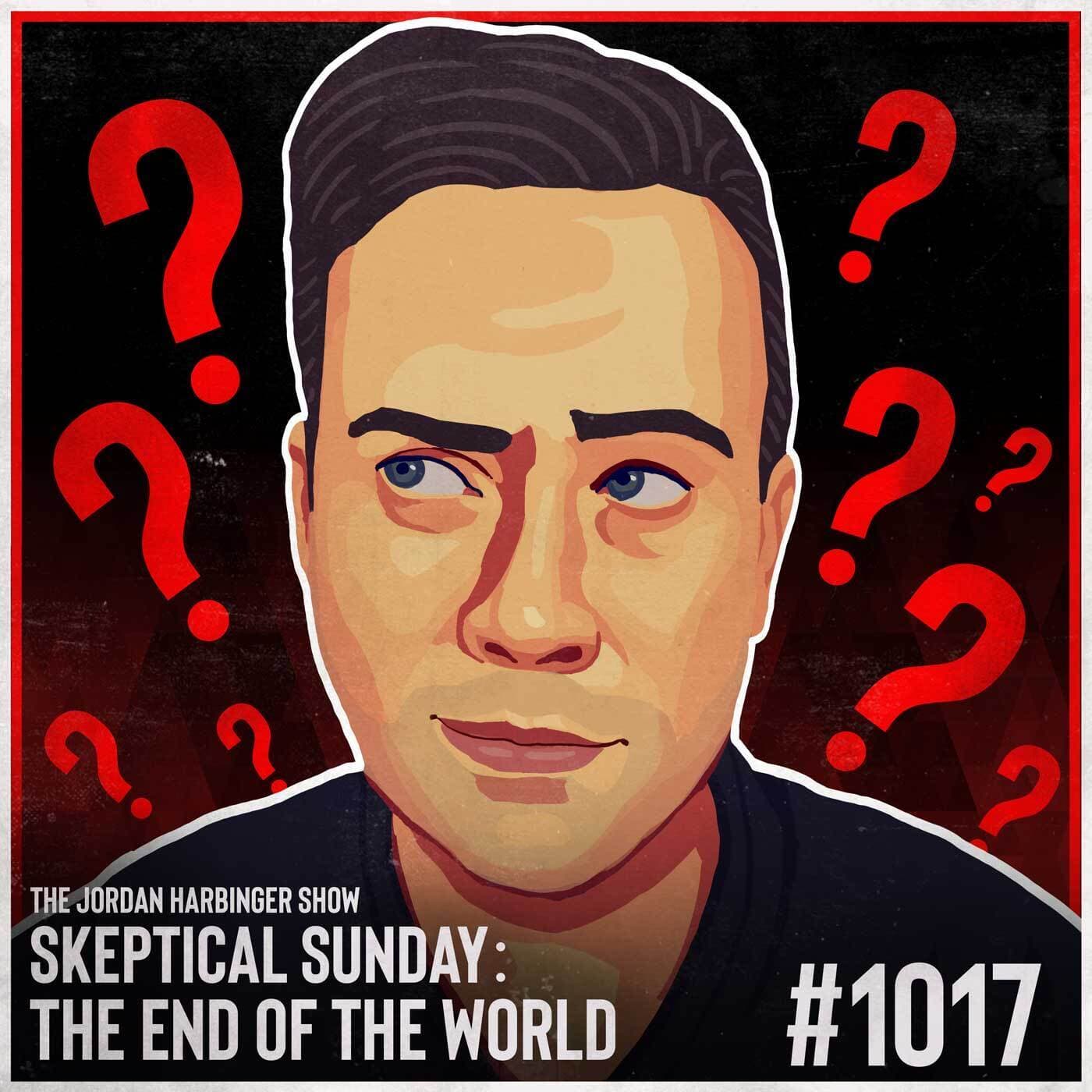
Podcast Episode Notes: The Jordan Harbinger Show - Episode 1017: The End of the World | Skeptical Sunday
Episode Overview
- Host: Jordan Harbinger
- Co-Host: Andrew Gold
- Theme: Predictions of the end of the world, skepticism of doomsday prophecies, and examining societal fears.
Key Discussions
Historical Context of Doomsday Predictions
- Throughout history, various prophets and groups have predicted the end of the world, often without any accuracy.
- Examples: Misinterpretations of religious texts and ancient calendars (e.g., the 2012 Mayan prediction).
Role of Religion and Cults
- Religions and cults frequently utilize the concept of an impending apocalypse to control followers.
- This tactic instills fear, promoting compliance with doctrines:
- Eschatology: Theological study of end times as a means of control.
Contemporary Threats to Humanity
- Current discussions about extinction events focus on:
- Climate change
- Nuclear war
- Pandemics
- Artificial Intelligence
- The debate continues around the likelihood of these events leading to total human extinction.
The Fermi Paradox and Great Filter
- Fermi Paradox: Despite vast potential for extraterrestrial life, we have yet to encounter it.
- Proposed explanations include:
- Advanced civilizations face existential barriers (Great Filter).
- We may be on a trajectory towards potential self-destruction.
Maintaining Perspective on Global Threats
- While valid concerns exist regarding global threats, it's essential not to succumb to paranoia.
- Historical resilience shown by humanity suggests we can overcome challenges.
Cultural References
- Discussion of recent cultural phenomena, such as the Barbenheimer trend, linking film release timing to societal anxieties.
- Exploration of how apocalyptic themes in movies reflect contemporary fears.
Insights on Human Behavior
- The fascination with doomsday scenarios may stem from:
- Fear of death.
- Desire for meaning and understanding of life's fragility.
- Polls indicate a correlation between lower education/income levels and belief in imminent apocalypse.
Case Studies of Cults
- Heaven's Gate: A notable cult that believed in an impending apocalypse, leading to mass suicide.
- Analysis of how cult leaders utilize the end of the world narrative to maintain control over members.
Predictions Gone Wrong
- Historical figures (e.g., Harold Camping, William Miller) have made several failed predictions.
- The episode discusses the psychological aspects of such predictors and the societal implications of their beliefs.
Conclusion
- The discussion wraps up by emphasizing the importance of critical thinking and skepticism regarding apocalyptic predictions.
- Encouragement to enjoy life and maintain a positive outlook despite uncertainties.
Connect with the Hosts
- Jordan Harbinger:
- [Twitter](https://twitter.com/JordanHarbinger)
- [Instagram](https://www.instagram.com/jordanharbinger)
- Andrew Gold:
- [Twitter](https://twitter.com/andrewgold_ok)
- [Instagram](https://www.instagram.com/andrewgold_ok)
- [On the Edge Podcast](https://www.andrewgoldpodcast.com/)
Additional Resources
- Full show notes and resources available at [jordanharbinger.com/1017](https://jordanharbinger.com/1017).
Takeaway The episode serves as a reminder to critically assess doomsday predictions, draw lessons from historical inaccuracies, and maintain an informed yet balanced perspective on current global challenges.
Written by AI. May contain mistakes. Listen to the episode to check what was said.
Transcript
Automatic transcript. May contain errors.0:28This episode is sponsored in part by Dell.
0:34Welcome to Skeptical Sunday. I'm your host, Jordan Harbinger. Today, I'm here with Skeptical Sunday co-host, Andrew Gold. On the Jordan Harbinger Show, we decode the stories, secrets, and skills of the world's most fascinating people and turn their wisdom into practical advice that you can use to impact your own life and those around you. Our mission is to help you become a better informed, more critical thinker. During the week, we have long-form conversations with a variety of amazing folks from spies to CEOs, athletes, authors, thinkers, and performers. On Sundays, we do Skeptical Sunday, where a rotating guest co-host and I break down a topic you may have never thought about and debunk common misconceptions.
1:10Topics such as circumcision, sovereign citizens, recycling, chemtrails, hypnosis, homeopathy, and more. And if you're new to the show or you want to tell your friends about the show, we've got some starter packs that'll help you do it. These are collections of our favorite episodes on persuasion, negotiation, psychology, disinformation, civilization, cyber warfare, crime cults, and more to help new listeners get a taste of everything we do here on the show. Just visit jordanharbinger.com slash start or search for us in your Spotify app to get started. Today, we're taking a journey into one of the most fascinating, perplexing, and sometimes unsettling realms out there, the end of the world.
1:46I don't know whether it was the pandemic, climate change, or the Ukraine-Russia war, but there's something apocalyptic in the air. Many people think the world is going to end, but we'll be casting a skeptical eye over the people who have said exactly that and been wrong throughout history. We'll also be looking at Oppenheimer and Barbie or Barbenheimer, if you will, delving into the beliefs. Have you used that in the UK, Andrew? I've never heard that. No, yeah, you're welcome. That's been all the rage here, Barbenheimer. We're going to delve deep into the beliefs of culture and religions, talking about aliens, the Fermi paradox, and then looking at how the world might actually end.
2:19And to help us navigate through this labyrinth of theories, beliefs, and predictions, we're joined by a very special guest, Andrew Gold, host of the daring and insightful podcast On the Edge with Andrew Gold. Make sure to check it out. I've been a guest on it. I mean, one of the best guests on it anyway. He's known for pushing the envelope and fearlessly examining the extremities of human beliefs and society. Andrew, great to have you back on the show. Thank you, Jordan. It's a pleasure to be here. And it sounds like we have quite a conversation ahead of us. If we get time to do it before the end of the world.
2:48That's right. the doomsday clock is ticking. And what is the doomsday clock, by the way? I keep hearing about that. Yeah, well, we'll get into that. If there's time... No, sorry, right. The doomsday clock is a symbol that represents the likelihood of a man-made global catastrophe. Managed by the members of the Bulletin of the Atomic Scientists' Science and Security Board, the clock has been ticking metaphorically since 1947. The closer the clock is to midnight, the closer we are to global disaster. The decision to move the hands of the clock is made by the board, taking into account the current events that could lead to a global catastrophe such as nuclear risk and climate change.
3:26So you can probably guess my next question. What time is it? It's 90 seconds to midnight, which is the closest it's ever been to disaster. That's comforting. It's a mix. Yeah. It's a mix of climate change, AI and the war in Ukraine, as you say, that have caused that shift. Do they ever move it back? I feel like this is one of those things where they're like, it's six minutes to midnight. And then 10 years later, they're like, it's two minutes to midnight. And we're at 90 seconds now. It's like, OK, but AI is not going anywhere. Climate change is probably not going anywhere. I mean, are we just really getting closer to disaster?
3:58Is it just a bunch of old people that are like, ah, when I was younger, the clock was 20 minutes to midnight. And it's way worse now because we're old. That's what it sounds like to me. I think that sometimes, look, we have to listen to experts and scientists and people who have got a clock that predicts the end of the world or whatever to an extent. But I also think, as we've spoken about before a little bit, and when we're trying to be sceptical, that sometimes people are really, really good in their chosen area and in their chosen field. And to predict the end of the world, you really need to be able to sort of draw so many different fields together to have any understanding of it.
4:29They do move it back. And for a couple of years, it was sort of all right until the pandemic hit and then the AI in Ukraine. But I really feel like me and you could just, or anyone listening could just sit there and go, okay, well, this year seems a bit bad. So let's move that clock closer to midnight and let's move it back and so on. Sure. I mean, also it's the board of atomic scientists or something like that you said, right? So I get that they have their finger on the pulse of nuclear holocaust, but do they know all about climate change? Do they know anything about AI? Probably not nearly as much as they know about being an atomic scientist.
5:01So I don't know. Just stick to nuclear war, guys. We'll have different clocks for the rest. That's my opinion. But anyway, I guess the release of Oppenheimer came out at the right time, right? It's amazing how you can look back at different time periods and see how the movies reflected the concerns of the day. That's right. We are fascinated by the concept of the end of the world or things coming to get us and kill us. So you've got like invasions of the body snatches in the 1950s reflecting the concerns that communists were infiltrating us. And the day after tomorrow in 2004 reflected our growing concerns about climate change.
5:34So Oppenheimer today may be about something that happened in a different era with the whole Second World War and all of that stuff. But its release coincides with our anxieties today about the end of the world. What about Barbie? What does that say about us? I suppose if you want to be super pseudo-intellectual about it, it reflects our generations pining to cling on to the days of youth and innocence as they slip from the hands that once combed the hair of their favourite doll. Did you have a doll, Jordan? Yeah, I did. It wasn't a Barbie. Not that I should have any shame about that. But no, I had a couple of those.
6:08I had something called a Beanie Boy, which was like a little guy wearing a hat that had a spinner on it that I took off really early in the game. And it had the thing where you pulled the cord and it would say something like, Hi, I'm Beanie Boy or whatever, right? One of those. And I cracked it open when I was older. And there's a tiny little record in there. That's how they made the sound. Oh, that's quite cool. Yeah, really cool, right? Yeah. So no electronics needed. just you'd pull the cord it would pull a spring and it would play this little record that said hi i'm beanie boy or whatever and uh i have still another doll that's a little tiny baby that my daughter plays with now oh that's always sweet isn't it being able to pass those things and my grandma sewed clothes for it and my daughter still has those little baby clothes on that little baby oh yeah that's beautiful yeah it's beautiful it is i'm glad i asked yeah this is very relevant to the apocalypse that we're talking about right now.
6:59It is relevant. Your listeners must want to know a bit more about the real Jordan Harbinger and to know about the dolls. I know that you and I talk about dolls a lot off camera. It's one of my favorite topics off camera, for sure. Anyway, back to movies. The other big hitter this summer was Mission Impossible. And if you're going to obsess about the end of the world, it makes sense that you also obsess about the idea of saving the world. And that's what Tom Cruise believes he's doing in real life. It's why so many of his movies feature him saving the world, back in 2005 he was at his most vocal about his religion or cult, Scientology, and that coincided with his role in War of the Worlds where he saved us all from an alien invasion.
7:38Well it so happens that Scientologists also believe that an evil alien called Lord Zinu is responsible for all the sadness and bad stuff in the world and Scientologists have to save us from our own reactive minds. Tom Cruise is one of the highest ranking Scientologists in the world. And so he's able to use Hollywood movies as propaganda for the cult, which then ruins families and commits all manner of abuses and atrocities. There are many reasons that we look past those abuses and that Scientology still has a hold on its members, including the allure of Hollywood and Tom's famous smile. But one of them is our fascination with the end of the world and our pursuit of some kind of religion to save us from it.
8:17That's how Scientology survives. It's so interesting. Yeah, you hear all kinds of creepy cult stuff about them that we didn't even cover on the shows. I'm sure you hear about one where they locked everyone in a trailer and they were like making him lick the floor clean. Do you hear about that one? Yeah. Yeah. Mike Rinder was one of the top Scientologists and he wrote a book recently. It was only out a few months ago where he talks about exactly that kind of thing. They get like put in a little room and the leader, David Miscavige, would just walk in and just punch them in the face every now and then until they started to admit to crimes that they hadn't committed, like mad insane crimes.
8:49And then he would sort of stop punching them quite as much. So weird. That's a whole different level of psychopathy. So either way, humans have been imagining the end of the world for a long time. We've seen it in old stories, religions, and now in science. Why do you think we're so fascinated by this idea? Maybe it's because we love mysteries or we're searching for a bigger meaning. It could also be that we're obsessed with the end of the world because we're afraid of death and we're trying to understand what that might look like on a larger scale, or trying to prepare for unexpected scenarios in which our worlds are turned upside down.
9:22Whatever the reason, polls across 20 countries a decade ago showed that 14 % of people believed the world would end in their lifetime. 22 % of people in the US believed that, and 23 % in the UK. Most Brits, however, thought it would be nuclear war or AI, while Americans thought it would be the rapture, So religious stuff. It also found a correlation between belief in the end of the world and lower incomes and lower levels of education. That's interesting. The lower levels of education and lower levels of income believed that the world would end. There's definitely something else there. There's a missing piece there.
10:00And of course - Religion maybe as well. Religion maybe, yeah. Obviously, you mentioned Scientology, but many religions fixate on the end of the world. in the book of Revelation, the Christian world ends with the rise of the Antichrist, the second coming of Jesus. I mean, I know that much. Is that sort of thing common to other religions? Like, is there an Islamic rapture? Yeah, yeah, there is. And I suppose like, you know, any good story has a good ending, doesn't it? And fire and brimstone is a pretty cool ending. So I think that's why we wanted to do this episode, really, just thinking about the cults and religions and people have predicted the end of the world for such a long time.
10:33And there are some very real things affecting us, like climate change and war. But we also think we shouldn't get too down about it. We've been here before many times, and people have been so wrong at predicting the end of the world so many times. So with religion, there are a few things that I think are going on, and one of them is to ensure we are compliant and that we follow the orders of the religious leaders so that our worlds don't end. There's a whole word for religious beliefs in the end of times, eschatology, which sounds like something rude for some reason. Yeah, it sounds like some kind of illegal porn that's popular in Eastern Europe or something.
11:04Yeah, eschatological porn. I bet someone somewhere does get off on thinking about the end of the world. Anyway, if someone is telling you that the world will end and you'll either spend eternity in hell or live it up in heaven, and all you've got to do for the latter scenario is obey the rules the leaders have dictated to you, well, there's your religion. As you were suggesting, Islam has a similar ending to Christianity, a series of events leading to a day of judgment. It also has a return of Jesus. I didn't know that. Along with wars. Yeah, it's cool, isn't it? And he features in that one as well.
11:37Crossover episode. So there'll be wars and moral decay as well at the end for Islam. So that kind of thing can lead people from various religions to point to wars and bad weather and things that don't seem to correspond with religion necessarily, but then say, hey, that's a religious thing. The end is nigh. It's very nigh, which is a funny word that's only used after the end, isn't it? Yeah. You don't say anything else is nigh. No, that's true. Unless it's Bill Nigh, the science guy, who doesn't believe in any of this religious stuff at all. Judaism has some sort of king guy who comes down to rule over everyone.
12:14Hinduism believes in a cycle of four steps that go round and round. And we're at the end of our cycle now of the four steps in the most violent and awful stage of it, Vishnu will soon come down and basically hit the reset button and we go again. Which does sound like one of the scientific theories for the end of the world that scientists have, the oscillating universe theory, which is a big crunch where we all basically go back into the big bang and then come out again and live this moment over and over again. So in that sense, I suppose that the Hindu belief is similar to what some scientists believe will actually happen.
12:48So whether the religions force this fixation with the end of the world on us, or whether humans are just fascinated by thinking about the end of the world, you can see how we've been told about its end for millennia, and it hasn't yet happened. The major religions do seem to all think we're in this really degenerate and decrepit stage now that the world will end, and that we all better start behaving if we want eternal salvation. But we keep on waiting, and the end isn't here yet. One thing I'm wondering about is the difference between a cult and a religion? Because they both seem to be obsessed with the end of the world.
13:20They both use that to control their members' behavior and beliefs. Let's talk about a darker side of end of the world beliefs. For example, the cult Heaven's Gate. Can you tell us about their beliefs? What led to their tragic end? This is like a web designer cult. Yeah, you can still see that website and all that stuff up online. And it just looks very comic sans and neon writing and stuff, which sort of belies how serious it all was. Heaven's Gate is a great example of a cult that told its members that the end of the world was close, nigh. The cult was started in the 1970s by a man named Marshall Applewhite.
13:54They believed that Earth was going to be recycled, and the only way to survive was to leave their bodies at a specific time. This belief, sadly, led to the death of 39 of their members, including Applewhite, as they sought to join an alien spacecraft they believed was trailing the Halley-Bopp comet. Hale-Bopp. Hale-Bopp. Is it Hale-Bopp? Yeah, it's Hale-Bopp. Because there was a comet called Halley, wasn't there? A Halley comet. Yeah, I'm pretty sure it's Hale-Bopp. Although now, maybe I just read it wrong my whole life. No, okay, I'm thinking of a different... There's a different comet. We know a bit about comets, you and I, called Halley's or Halley's Comet.
14:28There's Hale's Comet. Okay. Yeah, no, this is Hale-Bopp, not Hale's Comet. Totally different. Totally different mass suicide. Yeah. Yeah, okay. They believed it was trailing the Hale-Bopp comet. This event marked one of the most infamous cases of cult-related mass suicides in history. Yeah, I think what's so interesting about that is that you often think that super religious or culty people maybe don't actually believe in what they're talking about and that there's this cognitive dissonance or they try to make themselves believe or it's a big old grift. But then when you kill yourself in the name of the cult, that to me suggests they probably really did believe that they were exiting their bodies to survive some sort of weird alien comet stuff.
15:08Yeah, that's right. And it shows just how appealing or strong this feeling that the world is ending is. They really, really believed it and thought they had to kill themselves to get away from the end of the world. As you know, I cover a lot of cults on my podcast, On the Edge with Andrew Gold, and I remember speaking to an ex-Jehovah's Witness who lives in an area where there are occasional earthquakes, and he still wakes in the middle of the night to a slight rumble, and his brain prepares him for the apocalypse. His dad used to make them train for this in the middle of the night. He'd run in shouting, like, it's the apocalypse now!
15:39And they'd have to quickly get changed and run down and be there really quickly before, I don't know, the apocalypse got them or something. I don't know. That's really traumatizing. No wonder he still has problems with this. Oh, man. If you've had a growing up like that, that must be really difficult. But as much as I criticize the abuses of Tom Cruise and the Scientology leader, David Miscavige, all the time, the ex-Scientologists I speak to believe that Tom and David Miscavige are true believers in the alien origin story. It really seems that way. So as much as these ex-Scientologists hate Tom Cruise, they think he's doing what he does because he thinks he's morally compelled to.
16:15He literally believes he's saving the world. And that's a very nice feeling. I can kind of see that, right? That Tom Cruise really believes in it. But when the guy, Miscavige, is so abusive, I don't know, maybe he's a psychopath and he believes in it. I don't know. It's just hard to imagine because it is so dumb. Yeah, well, that's the thing. Most people don't even know about the dumb Lord Zeno stuff. You don't even get to know that until you've passed a certain stage and given hundreds of thousands of dollars. Like most non-Scientologists who know the story of Lord Zeno because of South Park know more than most Scientologists know about the Lord Zeno story.
16:48You know what you'll want to hang on to while you're dying in a fiery apocalypse? One of the fine products and services that support this show. We'll be right back. Thank you for listening and supporting the show. Your support of our sponsors does keep us going. all the deals, discount codes, and ways to support this show at jordanharbinger.com slash deals, or use the AI chatbot on the website to find a promo code, or email me and I'll friggin' send it to you, you lazy SOB. Now, back to Skeptical Sunday. Right, so us watching YouTube videos or whatever about Scientology know more about real Scientology than actual Scientologists, because they're not allowed to watch that stuff.
17:23And they're shielded from this, because their brain might not be able to contemplate it. Basically, they need to be sufficiently brainwashed and already committed tons of money before they get the actual ridiculous stuff. Because otherwise, if you showed up and got the ridiculous stuff on day one, you'd be like, this is so dumb. I am never coming back to this stupid place again. But when you've been in it for three years and you've dropped 100K, it's like, oh my gosh, they must be telling the truth about the aliens. That's the swindle. Nice. As we were saying before about my ex-Jehovah's Witness friend who still thinks he's dying, one ex-scientologist, Mark Headley, he was telling me that he, after leaving Scientology, finally thought, okay, I'm going to look up what happened with Lord Zinu.
18:04But the thing is, you're told as a Scientologist that if you learn about that before you're at the right level and have given enough money, you will develop pneumonia and die. It's very specific. So even though he had left Scientology, he was scared to look this up. And when he did, he remembers waking up the next morning and being like, oh my god i'm still here it wasn't true it wasn't the end of the world for reading about the science it must all be bullshit and that got him out of it that was like the last strain of belief although i can imagine then he goes in as a taco and he's got a jalapeno in his throat he's like oh my god oh my gosh i knew i should have done it i'm gonna run back to the church of scientology and pay 50 000 more dollars to get this jalapeno removed from my psyche yeah i love you tom cruise help me.
18:49So I often discuss that difference between a cult and a religion with guests, and we all have different theories about exactly what it is. And one of the main differences is that a cult often has a kind of paywall. If you pay enough, you can ascend to a higher status and be privy to more knowledge about the cult. But there are aspects of religion that do this too. For centuries, the Bible was only written in foreign languages. So you had to be really well educated and wealthy to be able to actually read it in ancient Greek or Latin or whatever it was. It was in several different languages, but not English.
19:17But nowadays, you can just go get a Bible and you have access to it all. Whereas in Scientology, you don't even get to hear about that alien story, as I was saying, until you've paid hundreds of thousands of dollars. So that, for me, that's a cult. Yeah, but didn't the Catholic Church sell indulgences so your dead relatives could move up from one circle of hell or a different part of heaven or whatever? So I don't know. There's that. I'm going to leave that out there. They don't do that anymore, from what I understand. But that's also like, well, do they dip their foot in the cult waters? You're right, though.
19:44the Bible was written, I think, in Latin only or Greek only, or maybe both. But then was it Martin Luther who was like, hey, maybe we should just translate this thing into German and everybody can read it. And then people were like, how dare you? Yeah, I read about a guy recently who, I guess it was the 1600s. I can't think of his name right now. He had this whole crusade, like he was going to be the guy that translated it to English. And he did that and he had to flee. It was the Old Testament. And then he wanted to do the New Testament as well. He had to flee to Germany and lived there for a while.
20:14And he was smuggling the English texts of the Bible into the UK or into England. I don't even know if it was the UK back then, but he was doing all that, but they caught him. And I think they sort of burnt him at the stake, I think. It was either that or he was hanged. That's reasonable. I have to double check that. Yeah, that's totally reasonable response to that. Yeah, because it upsets the power structure, right? It's like all the authority was coming directly from the church and the people that were associated with it. And then when you could read it yourself, you're like, I don't really need this guy who is being kind of a jerk about everything and taking my money and diddling kids or whatever.
20:46I don't need to listen to this person. I can just read it myself at home. Yeah, so interesting difference between cult and religion. I suppose you could also say that you can normally leave a religion if you want. I mean, they don't love it when you do that, but there are all sorts of coercive tactics and cults that prevent you from leaving. Often they have collateral on you. They've recorded all your secrets. So if you go, they could release that to the world and screw up your life. I know that's a thing with many, many cults, Scientology included. NXIVM had a bunch of that. And there have been times when the end of the world theories have spread into the mainstream.
21:18They breach popular culture. The last big one I can think of was in 2012 when everybody was like, the Mayan calendar or something, something is going to end. I don't really, what was going on with that? Yeah, so a lot of that was based on the Mesoamerican long count calendar developed by the ancient Mayans. A bit like the Hinduism I mentioned before, their calendar had cycles and 2012 was just seen as the end of a cycle. So it was sort of misinterpreted in the mainstream news as a prediction for the end of the world and it wasn't quite that. It was more just we were coming to the end of a cycle.
21:51So the 2012 panic was mainly due to confusion and hype and it led to all sorts of theories as to how the world was going to end. This became popular in various forms of media and was tied into a number of different pseudoscientific and fringe theories. Some people claimed that 2012 would be marked by catastrophic reversal of the Earth's magnetic field, while others suggested that Earth would collide with a mythical planet X or a black hole. Some people tied the 2012 date into new age theories about a coming spiritual transformation or shift in consciousness. All these ideas were widely debunked by scientists.
22:27For instance, while the Earth's magnetic field does reverse polarity every few hundred thousand years, there's no reason to think it would cause a catastrophe. And it's also not due to reverse any time soon. As for planet X and black holes, astronomers have found no evidence to suggest that Earth is in danger from such things. And as for the new age theories, these aren't considered scientific at all, as they're not based on any kind of empirical evidence or testable hypotheses. So while the 2012 phenomenon was indeed linked with a variety of different beliefs, none of them were supported by scientific evidence or widely accepted by the scientific community.
Read the full transcript
23:00It's so surprising how fear can spread when we don't fully understand something. The Y2K bug scare that had a lot of people worried about a computer-triggered apocalypse, I guess. I remember people freaking out about how all our systems would crash. We wouldn't have power. We wouldn't have water. Nuclear defense would go down. Or the missiles would just suddenly be like, I don't know what to do. Maybe I'll launch straight up in the air and then straight down and just detonate on a major city. I don't know. The clock's wrong. Which now, looking back, makes absolutely no sense. And And people will riot in the streets and everyone will die from dysentery.
23:31Can you shed some light on that one? We were but babes back then, I believe. I mean, I was 20. That makes me feel old. I was 11, but I remember it well. And yeah, it's funny. I don't know your demographics, but there are bound to be many listeners who weren't even born or were very young when Y2K was a thing. So this will sound really weird and stupid to them. Y2K or the year 2000 problem was due to a computer programming shortcut. To save data, many computers used two digits. So the year 1998 was written out as 98. The problem was that when the year 2000 arrived, these computers would read 00, as in 1900.
24:06So there was a lot of fear about this causing big problems. The most vivid image from this time, as I recall, because I was 11 and these things haunted my nightmares, was planes dropping from the sky. I just imagined that was going to happen everywhere. I still have that nightmare, like planes just going through our roof. So even my 11-year-old brain, though, was going, well, hang on, that's not how science works. Like, surely that's ridiculous. But you just think, well, all the adult scientists, all the sensible adults seem to be saying this is going to be a huge problem and the world is going to end.
24:35Perhaps Y2K is one of the best examples then of how the fear of the end of the world can take hold of us and push aside all attempts at common sense, science, and reasoning. It is really ridiculous. Some of that stuff is ridiculous. Sure, the water treatment stuff, maybe not going like, okay, I don't really understand how that works. Maybe that's a thing. But the planes dropping out of the sky is the equivalent of thinking, oh, if there's a power failure in my house and the microwave clock blinks zero zero, it's just going to spontaneously explode and destroy the whole kitchen. Yeah. A plane being like, I don't know what time it is.
25:06Straight into a mountain makes it makes no sense. But there must have been some scientific grounding to this. Right. Because it wasn't just morons that thought, oh, the Y2K bug might do something bad. Yeah, I think there were problems and issues around structures and banks, and governments spent billions addressing those problems. But the risk of planes falling out the sky was actually always extremely low. And that was really media hysteria. So were there actually any issues at all when the clock struck midnight in the year 2000 began? Did it do anything? Yep, yep. And I wrote some down. So when the year 2000 came, things were pretty much fine aside from a few glitches.
25:41In Japan, a nuclear power plant alarm was reportedly triggered at midnight, although it didn't result in any operational issues or safety threats. In Australia, bus ticket validation machines in two states stopped working, refusing to recognise the 2000 date. In Delaware, USA, 150 slot machines at a racetrack stopped working due to a Y2K bug. In Sheffield, the United Kingdom, incorrect Down syndrome risk calculations were given to 154 pregnant women due to a Y2K bug in a computer programme, leading to two abortions and four undetected Down syndrome cases. Okay, so that last one is pretty sad and serious, to be fair.
26:21I mean, imagine you maybe had an abortion and you were like, oh, shoot, I didn't have to do that, or the opposite. So maybe it's not fair to say that Y2K caused no problems at all, but its effects were hugely exaggerated, which probably says something about our obsession with the end of the world today. I just, I gotta presume we've always made these kind of predictions and then been proven wrong by the very fact that we are still alive. We're still here. Yeah, I suppose that's the downside of predicting the end of the world. You never get to gloat that you were right. You'll only ever look like an idiot or just be dead.
26:52Contrary to popular belief, Nostradamus didn't actually predict the end of the world. His writing was all in code and bits of Latin and French and symbols, and so it's really hard to decipher what he actually meant. And it seems he may have referenced various doomsday scenarios, but didn't necessarily put a date on them. His predictions are deliberately vague, and they're often exaggerated or modified by interpreters to fit certain narratives. Yeah, I've heard that a lot of his predictions that supposedly came true, they read more like horoscopes. So if you prod and you twist and you kind of give a little bit of flexibility over here and you maybe shift the date by a few more years, something that resembles something he maybe kind of said happened roughly about the time he maybe kind of said it might, but it was a little bit different, but not really.
27:38It's all sort of 2020 hindsight, fit the square peg through the round hole. nonsense. Yeah, that's absolutely right. And humans are pattern seekers by nature, so we can make pretty much anything fit the narratives we want to believe. American Christian radio broadcaster Harold Camping predicted the end of the world several times, including the date of May the 21st, 2011. But the cognitive biases of these predictors, the people who do the predicting, are just crazy when he woke up not dead the next day. And by the way, just imagine that the night before, how nervous you'd be or excited or I don't even know what, like, how do you go to sleep?
28:11Like, you know, do you set an alarm? Do our alarms a thing the next day? Right. Okay. No, I'll just wake up when I'm dead. That's fine. I'll wake up gasping for air. Yeah. Horrible. Anyway, he woke up and he was like, ah, right, there is air. I can breathe and everything. So I'm just going to change that to October the 21st, 2011. So he just moved it five months back. I don't need to tell you that he was wrong. The world did not end, although it did for him just two years later when he died in 2013. Yeah, it's just got to be a little awkward. You got to think those people are true believers as well.
28:43Otherwise, it is way too high stakes and embarrassing to predict something like this, and then just be wrong, a few months later, wrong again, a few months later, wrong again. Then you're like, why don't I kick it down like five years? And then you just die. And everyone's like, that guy did not get that right at all. Wow. Cringe. Super cringe. Super cringe, embarrassing, and disappointing. That's the key word. Because going back a little further, there was the prophecy of William Miller. His followers known as Millerites, not Millerites, he called it the Second Advent, and it was part of the Second Great Awakening, and it was due for October the 22nd, 1844.
29:20Christ was coming and everything, and then he didn't come to be there. People called the Great Awakening then the Great Disappointment. Set yourself up for that one though. Set yourself up with that branding. It did then start the Seventh-day Adventist Church, who believe that Jesus did on that day start atoning for sins and clearing things up to come back at a later date. So Jesus has come back. It has set in motion some things about the end of the world, and Jesus will be back after these messages. Yeah. I love that the Millerites were disappointed that the world didn't end. But I guess if you believe that the Lord is coming down and you're going to heaven and then you finally get to gloat to everyone else that your religion was the correct one the whole time while cherubs are feeding you grapes in paradise, I can see why that's kind of disappointing.
30:08And the next day you're just like, crap, I have to cut the lawn today. All right. So with that in mind, will the world soon end? Presumably it has to. Does everything that has a beginning have an end? I'm getting philosophical now for probably no reason. Let's get philosophical. I don't think there's any real reason to believe the world will end in our lifetime. So, I mean, so, so, so many people have been wrong before when they predicted it would do. And I wonder if there's a hint of narcissism in believing it will happen when you're alive. A bit of like, oh, Sod's Law, you know, typical. Just when I was enjoying being alive, the world had to end.
30:42I mean, I must admit, I get tempted by that kind of thinking sometimes, you know, stuff like the pandemic. It's like, yep, had to happen when I was alive. Couldn't have just been not the pandemic. Anyway, even historical figures that we all know, Christopher Columbus, Martin Luther, made false predictions about the end of the world. Jim Jones of the Jonestown Massacre, obviously, is another one who thought a nuclear holocaust would annihilate us in 1967. Charles Manson had it at 1969. He thought that would be the end of the world. As I referenced before, the Kingdom Hall of Jehovah's Witnesses has repeatedly predicted it wrongly and wrongly and wrongly, and they keep going.
31:18As for the time ahead, Well, 1960s scientist Heinz von Furster predicted 2026 death by overpopulation. I don't know what that exactly looks like, just we're very squashed, I suppose. The UN warned in 2018, and that's a proper thing, the UN, of course, the United Nations, that we have until 2030 to prevent climate catastrophe. It appears that me, you and everyone listening to this will in a very short time on a cosmic level have perished millions of years ago, because that's not that long on a cosmic level. That's the blink of an eye for the universe and an exceptional amount of time for us. You can imagine distant space creatures landing on this dusty rock in millions of years and wondering if intelligent beings ever inhabited it.
32:04And then being like, what is this? Oh, it's a copy of MTV and everything that was on it. Wow, these people were absolute morons. They just played this show called Ridiculousness 23 hours a day. It was like they left a camera on inside a trailer home. Well, maybe that's what Mars is to us. Maybe millions of years ago, Mars had people like us building societies, climbing to new heights, arguing about trans-Martian rights, maybe. And now it's just a bunch of dust. It is a funny thing. I love that thought of like, you know, it seems so epic and galactic that there are these people out there or animals or whatever they might be or may have lived millions of years ago.
32:40But it's so funny to think of just the mundane daily things they might have argued about that seemed so important in the moment. And now it's just like your plan is just dust. And so will ours be at some point. But you know, such are the lengths of time that it's entirely possible that Mars did have a civilization at some point. And the Mars rover has found substantial evidence that Mars once had liquid water on its surface and may have had conditions for life. But we found no evidence of any such society having existed or civilization. We've got to specify, I suppose, what we mean by the end of the world.
33:11A lot of the apocalypse imagery from the Bible and other religions and things came at a time when we didn't realise we were one sphere among trillions. So is the universe the world that's ending? Is the earth the world? In which case the end of the world will probably end in a billion years, when the sun heats up to such an extent that the oceans will evaporate, resulting in a greenhouse effect that will make it almost impossible for life. In five billion years, the sun will grow into a red giant and potentially engulf the Earth. But scientists have discussed nudging the Earth out of the sun's growth spurt, or when it gets big, if we just move the Earth a bit further out, which would take 1 billion years to do if they would sort of do it year by year, nudge us very, very slightly, but it could potentially lead us to safety.
33:55I can't see anything going wrong with nudging the Earth out of its orbit just a little bit each year. What could go wrong with that? We should definitely start doing this. Yeah. Oh my gosh. And to think we're over here concerned about Hunter Biden's laptop or whatever. It's like, yeah, can we nudge the earth out of the orbit? Yeah, let's do that. Anyway, have you seen those dick pics? Unbelievable. Feeling like it's the end of the world? Cheer yourself up with one of the fine products and services that support this show. We'll be right back. Once again, thank you for listening to and supporting the show.
34:26JordanHarbinger.com slash deals has all of the promo codes. Use the AI chatbot or you can email me and I'll look up the code for you. Thank you for supporting those who support the show. Now for the rest of Skeptical Sunday. Okay, so if we're still around in 5 billion years, we got to survive 4 billion years in a boiling greenhouse with no water and no whatever else or like too much CO2 or whatever it is. Oh, gosh. That's going to be a problem. Yeah, I think so. By the end of the world, we don't really mean the universe or the earth. We really mean the end for humanity. I think that's what a lot of people really mean.
35:03I don't want to lose all optimism for the humans of 5 billion years in the future. I mean, look at how far technology has advanced in the last 20 years. The fact that we're able to have this conversation right now from California to London, while hundreds of thousands of people around the world listen at different times. I mean, that would have been seen as magic just 50 years ago or 100 years ago, and would have been beyond human imagination just a few hundred years ago. So we can't imagine the technology then of 200 years in the future. It's utterly beyond our comprehension. So what about 1 ,000 years or 10 ,000 or a million years?
35:35So the humans of 1 billion years time, that's 1 ,000 million years, we can't even begin to speculate. Perhaps to them, the problem of the sun engulfing them or evaporating the oceans is as easy to solve as it is for us to cure infections today with antibiotics. Right. So the idea is to keep staying ahead of the game, see how long we can outrun our own mortality. Some people think climate change will kill us within a few generations. So there's a race to find alternatives that prevent that problem before it ends the world. Others believe sentient AI is going to be the death of us. So we've got to figure out how to align them with us before it's too late.
36:16Then there's, of course, the peril of nuclear war. Shout out to Oppenheimer. So we're constantly inventing cool, crazy stuff and then trying to solve the bigger and bigger problems that this new tech gives us. Yeah, and that's why we're so obsessed with the end of the world, because every time we invent something, we need to keep at the back of our minds the very real possibility that it's going to kill us and end the world. Oppenheimer killed hundreds of thousands of people in Japan. It was devastating. But those two bombs packed the equivalent of 15 and 21 kilotons of TNT. Today's bombs pack what would be 300 kilotons of TNT, significantly more.
36:52Nuclear expert Francois Diaz-Morin believes a full-scale nuclear war between Russia and the US would kill 360 million people directly. So that doesn't even count, you know, all the people over the months from just being near it. Right. Yeah. So you can see why people worry and why they're so fascinated and terrified of the concept of the end of the world. But as you've said, people have been predicting the end of the world since they could write on stone tablets. Yeah, absolutely. I've long been fascinated by the Fermi paradox. I love that little paradox, named after physicist Enrico Fermi, who famously asked, where is everybody?
37:29Referring to aliens and stuff. The paradox is about the difference between the high chance of life in space and the fact that we have no proof of any civilizations anywhere. One possible explanation to the Fermi paradox is the Great Filter, which suggests that all advanced civilizations face a barrier at some point that stops them from going any further. The scary part is that we don't know if we've passed this filter or it's still to come. Ah, okay. So he's saying the universe is huge. There are trillions and trillions of habitable planets in theory, or maybe there's an infinite amount. Not sure how the math works.
38:06And the time scales are enormous too. So some civilizations out there theoretically have been going for millions or even billions of years. And you'd think by then they would have invented super fast travel. they'd be able to go through wormholes or whatever bend space time travel at the speed of light or in some ways we haven't even imagined probably that right if they're going that distance and they're doing that with energy sources we can't even begin to imagine like harnessing whole stars or something like that yeah you'd expect somebody or something somewhere would have colonized the milky way by now and yet there's no alien civilization that we know of yeah that's right One theory I like is the zoo theory.
38:46It suggests that aliens have discovered us and don't want to interfere. They just watch us. Perhaps we're just entertainment on their reality TV shows, as South Park has suggested. It might also be that no matter how long a civilization exists, no matter how smart they are, how good their technology is, the distances of space are simply too vast to cover everything, to get across great spaces like that. There are parts of the Milky Way where things are a little denser, because we're in a suburb of the Milky Way. So there are parts where the stars are closer together. And it's fascinating to imagine aliens who have discovered one another and now vacation on one another's planets, or maybe even face off in great wars.
39:27But the sad end of the world possibility is the great filter, the concept that every great civilization builds incredible technology that eventually leads to its own demise. It might be impossible once you build AI to go on, although I'd still say that the AI would then colonize the universe. You'd expect that even if the AI kills all the people, it would then want more and more resources and they'd be sending robots out or whatever it might be. We don't know what side of the great filter that we're on. But if no one is out there, I think it would be extremely unlikely that we're the only ones who ever got past it.
40:02So we really could be about to face the end of the world in some sort of filter way. Something might stop us from going further, or at least we'll die out as a race before creating interstellar travel beyond our neighborhood of the Milky Way. How do you think the world might actually end? Is it going to be a big natural event? You think it'll be a man-made disaster? or you think it'll be something we can't even imagine? That's the big question, Jordan. The truth is, of course, we don't know. There are many big risks that we face, like the ones you mentioned, and others like climate change and super smart AI.
40:33An asteroid impact is pretty unlikely, but could decimate us if it did happen. Over millions of years, if you sort of count all those years together, that asteroid collision becomes a little more likely. Although we might have great ways by then of deflecting asteroids by then, because we're already working on that. If a big asteroid comes, you know, how do you deflect it? then there's the extremely unlikely possibility of a gamma ray burst that happens close enough to wipe out our ozone and kill us all. The scary thing about that is that since the gamma rays travel at the speed of light, by the time we see it, it's already hit us.
41:08We wouldn't be able to detect it beforehand, and it would be so quick, and it was so scary. So that's a really scary thought. It could happen just now while we're listening to this or recording this or whatever. There is, of course, the depletion of resources possibility as well, which we see in movies like Interstellar. That's the reason they have to leave Earth, because there's just no essential materials. So that could happen as well. Right. It always feels like that couldn't happen. Like, well, we can't just run out of stuff. We tend to imagine this march towards technological progress and we sort of trust the people in charge.
41:40Or at least we feel like somebody somewhere knows what they're doing and is monitoring all this stuff. but then look at how COVID took us by surprise and the economies around the world were just desecrated. I think it would be fascinating to gaze into the future and see if progress is followed by regression. And if it's cyclical, like in Futurama, they show these worlds killing each other and then just building themselves up over and over again. Yeah, I love that. That's the iconic scene of the first Futurama episode and Fry's Frozen. You see like the thousand years happen and it's like they just go back to, you know, cavemen basically and then build up again and so on.
42:14And maybe that's what's written in the stars for us. I don't know. But it's funny, you know, we're so intelligent, we've come so far, but sometimes you're reminded of just how fragile we are. Like with the pandemic, that's another thing that could wipe us out. Not just pandemics, but biological warfare. Imagine if COVID had been, by a quirk of bad luck, 100 times more deadly. Well, that's most of us gone. Imagine a country or a person, basically a troll of humanity, manufacturing the deadliest virus to humans. because people can just do that so cheap now in their own basements and garages. So look, that said, a pandemic is supposedly unlikely to cause the end of the world because humans are so resilient and there will always be numbers that survive.
42:54That's what scientists seem to be saying. It won't wipe us out entirely. AI is a big one at the moment. Everyone's talking about it because of ChatGPT and all the other chatting devices. And there's a huge race now to find ways to align AI with humanity. but we don't even know what that means. Sam Altman, CEO of OpenAI, the company that's created ChatGPT, was saying that typically with technology we get it wrong like 20 times before we get it right. Well with the question of alignment of AI we don't have that option to get it wrong. Once we get it wrong once the cat is out the bag. The AI keeps getting smarter and from then on outfoxes every attempt by us to shut it down.
43:33So if alignment isn't done just right that's it and We're in a bind because the West has to keep developing AI because the only thing scarier than a world where we built AI that might kill us is the Russians or the Chinese or someone else getting there first. Many people think that where we are now with AI is basically the start of the end. We're in a sort of arms race with other countries to build AI before anyone can stop to consider the safety and alignment concerns. But again, a lot of other people believe that the AI doom mongers are exaggerating just like the old world predictors because they want attention for their product.
44:09There's no total consensus that AI would necessarily do us any harm. It's just that it could do. Yeah, it's starting to sound a little bleak, but then I guess this is a podcast episode about the end of the world. Yeah, each of these issues from climate change and resource depletion to nuclear war and AI is a big threat. But we have reason to be positive. We have a history of being resilient and innovative. Our best defence against these threats is understanding them and being ready. And also, I'd hope that people listening take on board all of these concerns, but don't obsess about them. History is full of times we've mistakenly thought the world would end from the Y2K concern to the Cuban Missile Crisis.
44:47Just as people worried in the 50s and 60s about death via nuclear war, and those before them thought Spanish flu would be the end of days, and those before them saw the Black Death as the ultimate end, we now rightly worry about climate change and AI. But we can do this. We're pretty cool. Plus, in the scheme of things, it's best to be thankful for every day we have on this planet and to enjoy our time with our loved ones and our favorite podcasters. Nicely done. But let's say we've spent all those nice times with our loved ones and favorite podcasters, and we've cured mortality and we're living billions of years.
45:21Imagine yourself living in the restaurant at the end of the universe in Hitchhiker's Guide to the galaxy. It's that little glass dome of a restaurant and you can see the universe end around you. What do you see? Eventually, Earth will succumb to time, oceans evaporating, forests wilting, and cities crumbling to dust. The sun will expand into a red giant, consuming its planets before turning into a cold white dwarf. Meanwhile, galaxies will drift further apart in an ever-expanding universe. Stars will dim, nebulas fade, and the cosmic structures disperse into intergalactic emptiness. All light will dwindle until only the faintest remnants remain, marking the universe's final breath and the silencing of the Big Bang.
46:06The once vibrant cosmos will become a frigid, infinite wasteland. Our unique journey in the cosmic ballet will be long gone. Now that was poetic and pretty depressing, man. Pretty freaking depressing. Tell it to the universe. Look, I still think we're going to live forever, and maybe I need that kind of cognitive dissonance. You know, I can't get up in the morning if I think I'm going to die one day. So the point is we're all just guessing, predicting and falling back on this tribal paranoia. I think when you see how many generations were wrong before us, it should give us hope of at least lasting some significant amount of time.
46:40It may feel like the end is nigh, but it always feels that way and it never happens. Well, at least it hasn't happened so far. And hey, despite the unknowns and dangers we face, We also have the power to shape our future. And to our listeners, always remember, the world is a complex and sometimes daunting place, but it's also filled with mystery and wonder. Stay curious, stay informed, and most importantly, stay subscribed to this podcast and stay skeptical. That's what I meant to say. And as we wrap up this special edition of Skeptical Sunday, I'm your host, Jordan Harbinger, reminding you to question everything, especially people who tell you that something is the end of the world, literally or otherwise.
47:18Until next time. Thank you for listening. Topic suggestions for future episodes of Skeptical Sunday to Jordan at jordanharbinger.com or use the form on the website. Show notes on the website, transcripts in the show notes, advertisers, deals, and ways to support this show, all at jordanharbinger.com slash deals. I'm at jordanharbinger on Twitter and Instagram, or you can connect with me on LinkedIn. And you can find Andrew Gold on his podcast, On the Edge with Andrew Gold, anywhere you get your podcasts. This show is created in association with Podcast One. My team is Jen Harbinger, Jace Sanderson, Robert Fogerty, Ian Baird, Millie Ocampo, and Gabriel Mizrahi.
47:55Our advice and opinions are our own, and I'm a lawyer, but I'm not your lawyer. Do your own research before implementing anything you hear on the show, like joining a doomsday cult and trying to escape on a comet. Remember, we rise by lifting others. Share the show with those you love, and if you found the episode useful, please share it with somebody else who could use a good dose of the skepticism that we doled out today. In the meantime, I hope you apply what you hear on the show so you can live what you learn, and we'll see you next time. Here's a sample of my interview with Scambuster Coffeezilla.
48:25Whether you or a loved one is being tempted by sketchy investment opportunities, MLM traps, fake guru-led operations, understanding how to identify them and the mechanisms by which they work is the best chance you can have of putting a stop to their shenanigans. Here's a quick look inside. You see an ad and it's of some guru you've seen before, you haven't seen before. Let's say, Jordan, you're the guru for today. And you tell me, oh, come to my free webinar. It's always free. And it's always going to teach me how to get rich. There's no investment that I initially think I have to make. So I go to your webpage, I give you my email, and I sign up for this live webinar.
49:01It's never live. They've pre-reported it. It's a three-hour sales pitch for their$2 ,000 course. And they basically tell you, look at all these people who have had success. They will show you the Forbes article that they bought, but they'll not tell you that they purchased it They'll say hey look how successful I am. They put themselves in your shoes. They know that their average buyer is Broke, you know disaffected. He's everything. He's been trying hasn't worked and they say I was just like you I was where you are and I bounced around and I made all these mistakes Until I found the one secret and I will tell you that secret to get you from a to z It took me five years to get to a million dollars.
49:38I'll teach you jordan how to do it a proven blueprint in one year. I'll take you from loser, where I used to be. I used to be a loser like you. And I'll take you to winner, where I am now. And I'll take you there. Blueprint, guaranteed, no problem. Look at all the testimonials. Sign up, baby, right, right, right, right now. And then they go, hey, my course, normally, I'd sell it for$40 ,000. Normally, it's$100 ,000 worth of value. But just this second, for the next 50 minutes, I will give this to you for$2 ,000. And they're coaching you through the little credit card application. You're on the phone with a credit card company and their coach needs to do this?
50:13You're like sitting there and they're like, hey, this is what you're gonna say. Go ahead, call them right now and let's swipe that card, baby. Let's swipe that card before you leave the seminar. They're left with a$40 ,000 collection debt, you know, for a high interest rate. They can't pay it back. They're not making the money they were promised. And then there's a money back guarantee. There's not a money back guarantee. To hear more about how to expose predatory shysters for what they are by delving into their shady manipulation tactics, check out episode 368 of the Jordan Harbinger Show with CoffeeZilla.
51:08getting straight to the good stuff and the conversations are always engaging always insightful guaranteed to leave you a little smarter than before they've got thousands of five-star reviews but do you even need that I'm recommending it and you don't need other people's opinion right at this point I would hope anyway give it a listen just search for something you should know wherever you get your podcasts look for the bright yellow light bulb and start listening to something you should know
From the publisher
If you're constantly obsessed over predictions that the end of the world is nigh, Andrew Gold has some (mostly) good news for us on this Skeptical Sunday!
Welcome to Skeptical Sunday, a special edition of The Jordan Harbinger Show where Jordan and a guest break down a topic that you may have never thought about, open things up, and debunk common misconceptions. This time around, we’re joined by On the Edge host Andrew Gold!
On This Week's Skeptical Sunday, We Discuss:- Throughout history, would-be prophets and doomsaying groups have predicted the end of the world, but all have been wrong so far. This includes religious prophecies, cult beliefs, and misinterpretations of ancient calendars like the 2012 Mayan prediction.
- The concept of the end of the world is often used by religions and cults to control their members, instilling fear and promoting compliance with their rules and beliefs.
- There are several potential threats to humanity's survival, including climate change, nuclear war, pandemics, resource depletion, and the development of artificial intelligence. However, the likelihood of these causing a complete end to humanity is debated.
- The Fermi Paradox and the concept of the Great Filter suggest that advanced civilizations may face barriers to long-term survival, which could explain why we haven't encountered alien life despite the vastness of the universe.
- While concerns about global threats are valid, it's important to maintain perspective and not become overly anxious. Humanity has shown resilience and innovation in the face of past challenges. By staying informed, curious, and skeptical, we can work towards addressing potential threats and shaping a positive future for ourselves and future generations.
- Connect with Jordan on Twitter, Instagram, and YouTube. If you have something you'd like us to tackle here on Skeptical Sunday, drop Jordan a line at jordan@jordanharbinger.com and let him know!
- Connect with Andrew Gold on Twitter and Instagram, and check out On the Edge with Andrew Gold here or wherever you enjoy listening to fine podcasts!
Full show notes and resources can be found here: jordanharbinger.com/1017
This Episode Is Brought To You By Our Fine Sponsors: jordanharbinger.com/dealsSign up for Six-Minute...
See Privacy Policy at https://art19.com/privacy and California Privacy Notice at https://art19.com/privacy#do-not-sell-my-info.