
In short
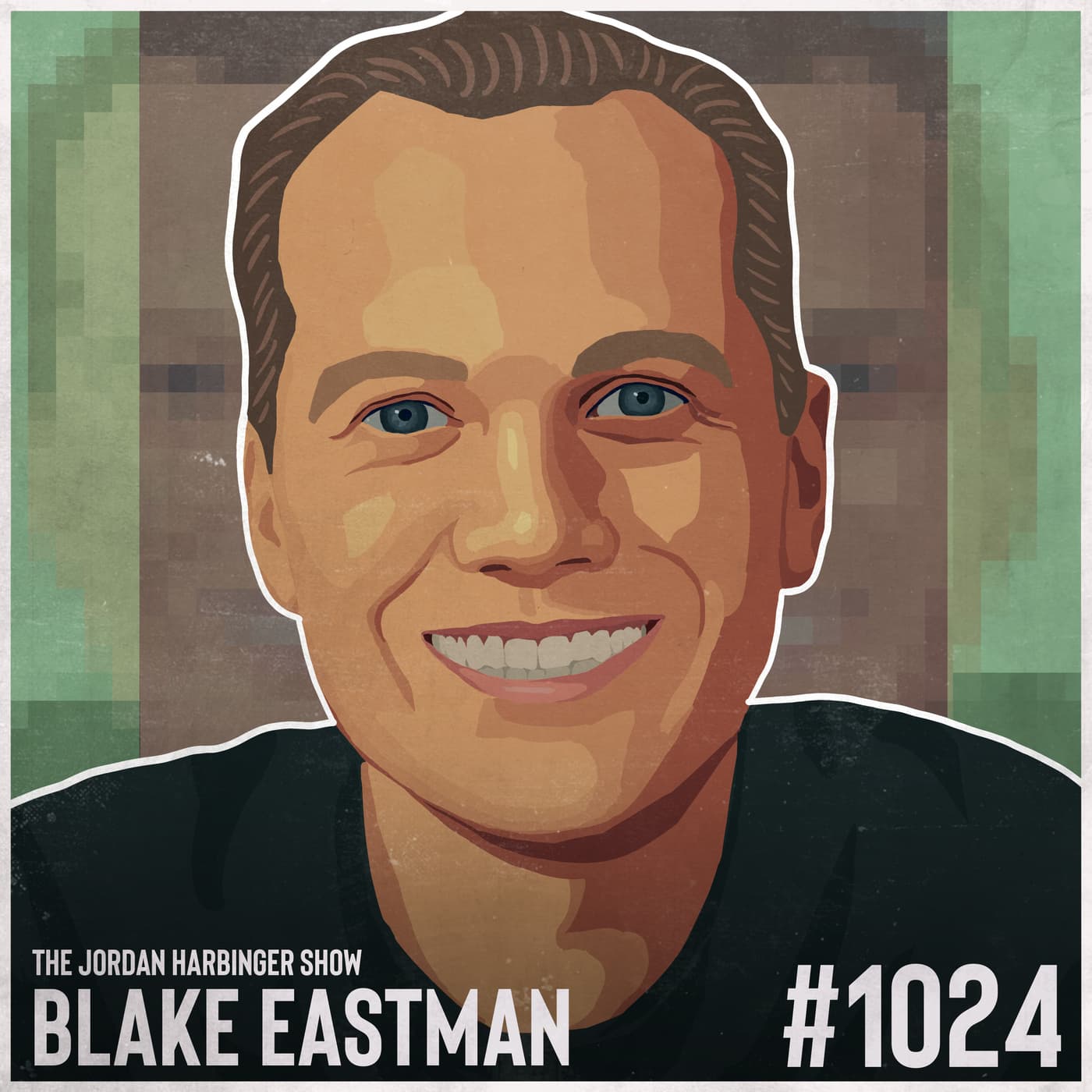
Podcast Summary: The Jordan Harbinger Show - Episode 1024: Blake Eastman | Can Machines Read People Better Than Humans?
Episode Overview In this episode, host Jordan Harbinger interviews Blake Eastman, a body language expert who discusses the complexities of nonverbal communication and the role of artificial intelligence (AI) in understanding human behavior. Eastman debunks common myths about body language and explores how AI is being developed to detect and interpret human emotions.
Key Themes and Discussions
- Debunking Body Language Myths
- Traditional body language interpretations (e.g., crossed arms indicate resistance) are often oversimplified.
- Context, individual differences, and cultural factors heavily influence nonverbal communication.
- Trained professionals, including law enforcement, struggle to accurately detect lies based solely on body language cues.
- Cultural Influence on Nonverbal Behavior
- Different cultures have distinct norms for expressing emotions and behaviors.
- What is considered appropriate in one culture may be perceived differently in another.
- Examples include varying reactions to smiles or gestures in different cultural contexts.
- The Rise of AI in Understanding Human Behavior
- AI and machine learning technologies are being developed to analyze human behavior through nonverbal cues, including facial expressions and vocal patterns.
- Applications for this technology include healthcare, communication, and potentially even criminal justice.
- Ethical Considerations of AI in Human Interaction
- The development of AI that can interpret human emotions brings exciting possibilities but also raises ethical concerns.
- As AI becomes more integrated into daily life, questions arise about privacy, accuracy, and the potential for misuse.
- Self-Reflection and Awareness
- Eastman emphasizes the importance of self-awareness in social interactions.
- Understanding one's biases and perceptions can significantly improve communication and relationships.
- The significance of asking why we feel distrust towards others and how that shapes our interactions.
- Recommendations for Improvement
- Recording and reviewing one's own interactions on video can provide valuable insights into communication patterns.
- Engaging in exercises to enhance emotional intelligence and awareness of social dynamics can lead to better interpersonal relationships.
Notable Quotes
- "Human behavior is infinitely complex; there are so many different mechanisms that can change or move your behavior."
- "The truth is, the way to actually detect lies is more of an interrogation process."
- "Video is a pure medium. It shows you what reality is."
Additional Resources
- Full show notes and resources can be found at [jordanharbinger.com/1024](https://jordanharbinger.com/1024).
- For networking skills, check out [Six-Minute Networking](https://jordanharbinger.com/course).
Conclusion Blake Eastman's insights on body language and the intersection of AI and human interaction provide a valuable framework for understanding communication complexities. This episode encourages listeners to cultivate self-awareness and consider the broader implications of technology as it relates to human behavior.
Written by AI. May contain mistakes. Listen to the episode to check what was said.
Transcript
Automatic transcript. May contain errors.0:28This episode is sponsored in part by LinkedIn. compared that to the cost of a bad hire. Training time, salary, lost opportunities, stress on your existing team, and then the emotional fun of letting them go and starting all over again. When you add that up, spending a bit of energy up front to find the right person is a no-brainer. That's exactly where LinkedIn Jobs shines, helping you get it right the first time so you're growing your business instead of constantly cleaning up hiring mistakes. Hire right the first time. Post your job for free at linkedin.com slash harbinger. Then promote it to use LinkedIn Jobs' new AI assistant, making it easier and faster to find top candidates.
1:00That's linkedin.com slash harbinger to post your job for free. Terms and conditions apply. Coming up next on the Jordan Harbinger Show. You will find that there's patterns in people, like these perceptual defaults for what they look at. Like, I don't trust them. And you'll see themes for where they look in their life for all the signs of not trust. It's 100 % a you problem. Like, you're viewing the world for indications and signs of not to be trusted. And you need to do your own work to see why you just distrust everybody and why you're looking for that.
1:31Welcome to the show. I'm Jordan Harbinger. On the Jordan Harbinger Show, we decode the stories, secrets, and skills of the world's most fascinating people and turn their wisdom into practical advice that you can use to impact your own life and those around you. Our mission is to help you become a better informed, more critical thinker through long form conversations with a variety of amazing folks from spies to CEOs, athletes, authors, thinkers, performers, even the occasional hacker, real-life pirate, special operator, or tech luminary. And if you're new to this show or you want to tell your friends about the show, I suggest our episode starter packs.
2:03These are collections of our favorite episodes on persuasion and negotiation, psychology, geopolitics, disinformation, cyber warfare, crime and cults, and more. I hope new listeners get a taste of everything we do here on the show. Just visit jordanharbinger.com slash start or search for us in your Spotify app to get started. Today on the show, a very old friend of mine, body language expert Blake Eastman. Blake is not the kind of body language expert you see hawking simplistic nonsense on YouTube. He does, well, serious research about the interaction between humans and artificial intelligence, the importance of social context in reading human behavior, personality tests, etc.
2:39On this episode today, we will explore why no, you can't tell if someone is lying, and neither can those people selling you courses about how to tell if somebody is lying. We'll also discover how our emotions will soon be read by artificial intelligence even better than humans do just using our voice alone or just our face alone. It's amazing what these machines can do nowadays. And we'll get a roadmap for developing our skills in terms of reading other people and ourselves to gain a deeper understanding of our own human behavior. Now, here we go with Blake Eastman. It's good to have you on the show because, for one thing, I've known you for like 10 years.
3:16It's got to be like over 10 years. And I remember I was super into body language back in the day, as were you. And I started off, as you might have also started off, learning the nonsense bullshit version of body language. Like, oh, well, if they look that way when they're talking, they're lying. But if they look the other way, they might just be accessing their memory. And if they look down and up, it's like all these different eye accessing cues, which turned out to just be not a thing at all. They were made up by like hypnosis guys who made up a bunch of other stuff. Or like Jordan's feet are pointing towards that door.
3:52So it must mean he wants to get out of the conversation and leave. And it's like, well, this chair kind of only allows me to point my feet towards the door. And my favorite, which is your arms are crossed. You must be resisting something. And I remember a chiropractor who made us call her doctor or something at a self-help seminar that I was like dragged to was like, you're resisting the teaching. And I'm like, it's like 65 degrees in here. And I'm in a t-shirt. I'm cold. And she's like, but you're also resistant. And I'm like, this is not real. And you and I kind of figured this stuff out over time.
4:25And I discarded most of it. But you were like, no, I'm going to get the real science, which I think is kind of cool. You're like, if there's real science, I'm going to find it. And here you are. Yeah, it's just such an interesting landscape. the truth is whenever you're studying people the notion of there being like real science is very complex a lot of studies are done on small sample sizes in a controlled environment and there's almost like this problem in psychology where a lot of the studies are done and you if you actually were to read most of these you'd be like all right like this is interesting but i'm not going to take things from this and implement them in my life and unfortunately that's our culture somebody wants to say something, they try to find a study to support it.
5:07The study is along that theme. But if you actually read the study, you'd be like, oh, this is what's going on here. And it's a problem. We are constantly listening to experts who will reference studies and it stops there. So the critical aspect of someone's thought process is like, oh, well, there's a study to support that. So therefore it must be valid. Instead of like, well, let me read this or let me understand the nuance of that study or how it was constructed or the opposing studies or the flaws of the studies. Like, and just that's our culture right now. You're right. It's the culture and it's being exacerbated by grifters in a lot of ways.
5:39There's a, there's a huge podcast, obviously I will not name it, but they recently did an episode on cannabis and neuroscientists all over Reddit are like, this is not true. It's not slightly wrong. It's untrue. And the problem is these podcasters have massive platforms, but a neuroscientist who works in a lab with cannabis and has written a bunch of papers about cannabis in the brain has almost no platform. They have a platform among academics that read papers about cannabis in the brain, which is like a maybe low double digit, maybe a high double digit number to be generous or triple digit number that's low of people who would look at those, even the abstract of those studies and be like, oh, but a podcaster, I mean, like me or even somebody like, God forbid, if Joe Rogan gets a hold of something and says a wrong thing, like we, I feel a large sense of responsibility for this.
6:32When I get stuff wrong, it sucks. Unfortunately, I'm in a position of getting some small or large thing wrong, like every single week, maybe more. And so I get these emails and I'm like, oh man, we got to put that in the notes. The problem is though, you can make a lot of money, especially in the health space, just straight up lying to people about pretty much anything, whether it's cannabis in the brain, drinking, cold plunges, body language. There's, as you probably know, millions of dollars to be made telling people that you can train them to detect lies, for example. And it's just not really true.
7:03Was it Joe Navarro that I had on the show? I'm trying to remember his Joe Navarro. And he's like, yeah, I've been a detective with the FBI for this long and agent with the FBI, like training all these detectives, working with the FBI, all this stuff. And he's like, I'd say a coin flip if you really train someone, if they can tell if it's a lie and slightly better if they're interrogating somebody and they can catch them in a lie through training and getting them to answer things. But he's like, knowing if the cashier at a drugstore is lying to you about a thing that you ask them because you're looking at their body, he's like, maximum coin flip.
7:34Usually people who train themselves to detect lies are wrong more than somebody who's just randomly guessing because they're looking for evidence that is not there. Yeah, totally, 100 % agree with that. I think our culture needs to be okay with, you're supposed to be wrong. That's like the whole point of discovery. And if you're the person that's right all the time, it's like dangerous. Like you don't want that. You want ability to look at your thought. Yeah. And like, I mean, honestly, if I were to watch some of the videos of me speaking like 15 years ago about the same topic, there would be moments where I would be maximum cringe.
8:08Yeah. Like just looking at myself like, why are you saying that? You know, like, what are you doing, kid? I'm pretty sure that I'm leaning forward right now because I have to speak into this microphone and I'm on this chair. So someone who's watching the wide angle of the show is going to go, oh, well, the body language of these two body language experts actually says that they're not confident because they're late. And it's like, it says we're in chairs and we were instructed to leave less than six inches between the microphone and us. But do tell, do tell a guy who took a body language course on YouTube last week.
8:35There's so much of that. We need to understand is there's always this projection of the way people think someone else needs to be. So some people would think that if I'm even talking about concepts of body language, that I should look a certain way. Right. Yeah. That I feel like I need to sit up and be like, Jordan, it's so good for you to have. Thank you so much. It's such a pleasure. And that's their concept of what good communication is. And it's really what you're optimizing for. Like we know each other. Like I'm optimizing to have a good time, just have a conversation. I'm not trying to be like, oh, this way, that way.
9:06But if I was optimizing for maybe longevity or health or something like that, I might be sitting differently. Like I might have my, you know, have better posture or just something I'm always working out. But it's not because the perception of people who are watching. So there's a distinction between those things. Tell me the why reading the body language, the lie detection stuff is nonsense. Can we get into a little bit of the weeds on that? Because I am curious how we once thought, oh, feet pointed towards the door, not making eye contact, touching the nose. I mean, that's stuff people do, I guess, when they're nervous.
9:35Is the reason because people can be nervous for reasons other than they are lying? Is that... At the heart, human behavior is just so infinitely complex. There are so many different mechanisms that can change or move your behavior. But really at the core is the fact that there's this thing I call like the social layer, which is basically when you're in a social space, you're not seeing a pure representation of somebody's thoughts and feelings and emotion, anything like that. You're seeing that through this mask of social norms, social coordination, social projection. So sometimes someone could show up and they want to act more confident and they come across a little bit weird, a little bit abrasive, and then you're perceiving that.
10:13So the truth is, when we look at like body language or nonverbal behavior as a discipline, it's not about meaning, it's about perception. And that's the biggest distinction. So if I cross my arms and look a certain way, it doesn't mean I don't like the person, but we can map society's bell curve distribution and understand that most people would find a problem with that. So it's this sort of unwritten rule or unwritten norms that we have to understand in order to interact in social interactions. And here's the thing, this is where I have a hard time with it. So like when anybody's out there preaching more awareness, more attention to your behavior, being the kind of person that listens better is a phenomenal stuff, right?
10:48Like I like that. The problem is when you take some basically bullshit and you imprint somebody's perception with it, then it changes the way they see the world. So when you hear like a CIA expert said that if somebody scratches their nose, they're lying. Now, when that person's on a date and they see the person scratch their nose because their nose is itching, they're like, oh, my God, there's a liar. That could be a liar. Yeah. Which most of the work around this is not really about like learning the themes or clusters of behavior. It's nothing to do with that. It's confronting your own perception, your own biases.
11:21It's way deeper than most people really realize. my first clue that a lot of the body language stuff was nonsense was when i started learning that polygraphs weren't admitted in criminal cases and i was like why not this is a lie detector test and it's like they hook you up to something that reads your your heart i forget the name of this machine that you're is it ekg or is that different no it the biggest thing that they focus on really in a lot of them i think maybe not anymore but gsr galvanic skin response yeah Yeah, the sweating. Sweating. That's like a high level. And then heart rate, I have a good story for that.
11:55Yeah, I'd love to hear it because I thought, oh, wow, this really complex scientific machine is only, I can't remember, like 86 % effect. And there's all, that's not good enough. And there's a lot of reasons that they can go wrong. And so they're used as a tool and not as like conclusive proof. So I thought, huh, okay, if the best science we have today, and science is decent right now, can't detect a lie better than this, then this human who's dealing with way more channels of input, but also way more lenses and biases and missing certain things, and is not sitting there asking this person a set of questions, but is just like, I feel like you're lying and I can't put my finger on why.
12:34That's going to be way less accurate. But by how much? Because between a coin flip, which is 50-50 and 86%, okay, there's a little margin there, but like, not quite big enough for me to say you're a human lie detector. Yeah. I mean, even as a while, there's a couple of studies on fMRI's ability to protect deception. So they're really looking at like real time activity in the brain and they can't even do it. Really? So it's not super. We're complex and deception is not this binary thing. Like you're very rarely. The only way you can do like control things is like two truths, one lie. Like you can probably watch a hundred thousand videos of two truths, one lie and start to get better at that.
13:13Not because of behavior, but because there's certain trends and patterns where people might lie the most the first time. time or they might over like little like patterns, but applying that to day-to-day life and like the spectrum of skill sets. I really feel like dating is probably the easiest place to understand or read behavior or predict behavior is a better term. And deception is probably the hardest. And the truth is most of the people that are good at this. So I used to do in my class in New York City, I had a little fun thing where the people would sit there, watch 15 clips of the same person lying or telling the truth and had to guess which one it was.
13:47And most of the time it was like 50 % and almost always the people that were very confident were the worst because they thought they knew. Then I had this one guy come in and he got like an 85 and I was like, what the hell? Like it was just so out of the norm. And I was like, wait, what's up with that? What do you do? And he kind of like smirked at me. And I was like, what do you do for a living? And at the time, I think he was the head of the theft department at Bloomingdale's in New York city. And his whole job was basically loss prevention, right? His whole job was sitting there and knowing if someone actually, he had ground truth.
14:21Like he knew if they either stole something or didn't and was watching their behavior. And like, he just developed this sort of pattern. And that was the same example of what he does all day. But if we were to test him over the cross of thousands of hours, maybe he would be like 60 % or 65. But I refer to that as like the art where it's like some people, if you've got people in the same exact social construct doing the same thing over and over again, sometimes they develop this intuition for what's going on, but you can't apply the lessons from that to anything else. There was a guy I talked to years ago and I wanted to interview him, but he declined, which is unusual.
14:55He worked for a casino group and he could tell who was cheating by looking at the camera, not by looking at their hands cheating. He would just see people do things and he would go, watch the guy with the brown shirt, this guy's up to something. And he couldn't explain necessarily why. He said there's reasons if he thinks about it. But initially he just goes, wait, wait, wait. How's that guy keep doing that? He keeps going from one table, then he goes to the other table, then he goes to this table. That was the only example he would give me, which I think is weird because don't people think that their luck is over here and now it's over there?
15:24And he just said, nah, there's little things that normal people who are gambling, they don't usually do. And then he would start to watch them and he would start to watch the pit boss if he thought he would collude or the dealer or other people at the table. And it was like, why is that guy always, he switches tables, but then that guy switches the table later and they end up playing together and he ends up winning more when that guy's there. And he's like, I think those guys are cheating. I asked him, wow, you must be really good at seeing if somebody is cheating. And he's like, yeah, but I couldn't, he made a joke like, yeah, but I didn't even know my own wife was cheating.
15:57And I was like, what are you talking about? And he's like, yeah, my wife like left me for some other guy. And I thought that was interesting because I thought, wouldn't you know this? And he's like, no, of course not. I can see people on a CCTV camera doing suspicious things that he's like, but I lived with somebody who was doing something that was really suspicious. And he's like, and the worst part, my wife wasn't even a good liar. So like he missed that whole thing. Like if he was looking at video cameras of people doing something, he would probably catch it. If he's living with somebody and they're doing something, well, obviously he doesn't always have his feelers up for that.
16:26I just thought that was really interesting. Like you said, checking for or spotting deception in one context, like if you're a police interrogator or a terrorism interrogator, you might be able to find terrorists really well. You're not going to know if your teenage daughter's bullshitting you. It's totally different context and she might be better at it. The stakes are lower, all kinds of stuff. The context really matters. And the truth is, like, if you want to have lenses or glasses for spotting deception, it's a tough way to go through life, like constantly. Because the truth is, the way to actually detect lies is more of an interrogation process.
16:59There's no way to just watch someone and be like, oh, they look that way. You have to catch them. You have to put traps. You got to do all these, like, interrogation type things. But, like, to your point, I did the largest study ever conducted on poker players. So like I have a very focused, concentrated niche working with like the top poker players in the world. And some of them will sit them down. You'll have them like, why did you make that read? Or why did you make that call? And they can't explain the actual components of it. So they have this rapid cognition and the ability to understand, but they can't reverse engineer it.
17:28And not in poker, but in like life and communication patterns and social skills. Some of those people are some of the most dangerous trainers and coaches because they don't even know what they are doing. So they'll just explain things like, oh, like sit this way or do this without any mechanistic reason on why. There was one genius, I think his name is David Lieberman. You know this guy? He is a psychologist. He wrote a ton of books on deception. And I could be getting his name wrong. I'll have to check it. I'll have to check the episode number. But one technique that stuck with me for years was when somebody says, let's say they were late, you say, oh, because of the water main break on such and such road.
18:04Now they then have to decide, or you say they were late because of traffic. It must be because of the water main break on such and such. If they're a liar, right? You suspect they're lying. They're going to have to spend some time deciding whether or not they're going to agree with your complete fabrication that there was a water main break on that road and then say yes or no. And the hesitation is the thing that he's looking for. Because if you're not lying, you just go, I didn't know about that, but that explains the traffic, but you would do it really fast. But if you go in, uh, no, well, I don't, maybe there was, that's the lie because you had to think do i agree with this person right now even though i'm lying that seems weird how would i know about that that little pause is like how you but that's how you catch like a teenager in a lie yeah like i'm still anti all that you're still anti all that stuff it goes back to these like theories that lying is more cognitively demanding than telling the truth but like here's the thing like ultimately we got to change like the perception of what lying even is really matters so for example the best way to catch someone in a lie is to make some shit up and have them agree.
19:05So like speaking to an academic once, I don't know, this person just seemed overly agreeing with me. And I was like, have you read like the Solomon 2014 meta-analysis that got into all that stuff? And he's like, oh yeah, great study. I just made that up. Right. It's not a real study. So from a societal's view, that person lied. But there's deeper mechanisms for understanding why that person lied. And I think those are so much more important. People assume that like lie are bad. And the truth is he might've just felt really intimidated in that moment or really shy or really embarrassed or wanting to agree with me because of a ton of reasons and not even had some sort of Machiavellian real reason on why they lie.
19:42And I think the amount of liars out there that are just like overtly lying and navigate, they're so much smaller compared to the other reasons on why people do things. Like people are complex. Sometimes you lie to somebody or you say something a little bit off because you don't want to embarrass them or you don't want to do this. So it's just so multifaceted. Yeah, that's true. Someone lying to you to get them to like you, to get you to like them rather. Yeah, it's not the same as the person who's lying to you because they want to con you out of your life savings. Exactly. Like the intent really matters.
20:11Sometimes we don't ask enough questions. We don't talk to people enough. We just want to make that snap judgment and be done. I think you'll be better navigating through life if instead of being hyper-focused, let's say you had a world-class ability to spot liars, being more curious with why they lied is a better gateway towards understanding them, manipulating them, having them in your life. people are complex and we got to stop like doing these binaries and these labels that just like encapsulate someone. I started to get really tired of it recently when I was looking at some comments on a video.
20:42I don't read YouTube comments because it's like 99 % brain dead, but there's a lot of comments on appearances that I'm doing on other people's shows because it's not my audience. My audience will be like a lot of positive stuff. And then a lot of like weird Bible quotes from the usual suspects on YouTube that just comment. Is that really what it is? Yeah, I don't know what it is. I don't want to offend people here. I'm not saying religious people are mentally ill. What I'm saying is there's a lot of mentally ill people on YouTube, and what they will do is they will just post a random Bible quote on a video.
21:11And at first I was like, oh, I wonder what that quote is about. It must be related to my discussion about this. And it's just totally like end times nonsense. And I realized they're just spamming every video of this because they're trying to warn nonbelievers that the second coming of Christ is coming. And I'm like, what does that have to do with me interviewing Andrew Schultz or something? You know, like nothing. And so talking about the ocean, it's like this person's quoting. And I'm like, oh, that's weird. What connection could that have? None. But a lot of the comments that I see on other people's YouTube, there'll be a camera right here like there is here.
21:44And someone will say, his eyes were really shifty. I don't like that guy. His eyes were shifty. Well, there's lights here. There's a key light here. There's a camera there. There's an audience over there. But then the camera that's facing me is there and the host is here. Where am I supposed to look again? The host. But sometimes I'm making a point for the camera. Other times the audience is reacting to me. So I'm smiling at them and then I go turn back to those like a normal person would do in a situation like that who isn't like ridiculously media trained or in a giant studio where the lights blind you for the audience.
22:15So there's no point in looking at them because you can't see them and you can only see the host. Right. So you're only looking at that. So these people are like, oh, his eyes are shifty. I don't believe what he's saying. Well, okay. But you're, you're not there. You're at home with a bag of Cheetos and crumbs all over your shirt, looking at this video on YouTube. That is kind of how we teach people to read behavior, to source the contextual reasons on why an event can be occurring and then assign almost like probabilities. Like software will do this too. Like that's what's so interesting, right?
22:43Like all of a sudden, like I could be constantly looking over there or constantly looking for something because the cue on the time is there. And people go so quickly to creating some narrative that's usually, and listen, everybody listening to this, if you find yourself along a certain narrative, like you will find that there's patterns in people, like these perceptual defaults for what they look at. Like I don't trust them. And you'll see themes for where they look in their life for all the signs of not trust. It's a hundred percent of you problem. Like you're viewing the world for indications and signs of not to be trusted.
Read the full transcript
23:12And you need to do your own work to see why you just distrust everybody and why you're looking for that. Because the truth is like, we are, I hate saying this, but so true, like humans are such sheep compared to the frame of the way something is framed. Like you can just frame anything and people see that thing. So I could have you watch a video and say like, highlight all the good qualities about this person or highlight all the bad qualities about this person. Or there could be like some sort of like spazzy person in the corner looking around in a bunch of different directions. No one pays attention to them.
23:40And then I could walk up to someone and say, listen, you know who that is? That's the founder of like one of the most deep tech, deep AI tech companies in the world. Guys worth like$6 billion. And all of a sudden you frame their behavior as like, Ooh, interesting. That's like the erratic genius. So we're such a victim of context that we need to do a better job of absorbing more context before we make these real decisions about people. If you are a well-known person, rich, famous, or maybe you have a role like a host or comedian, people will say, I love that no-nonsense. I love this no-nonsense guy.
24:13Yeah, no-nonsense guy. If I act the same way I would in maybe a conversation with somebody on this show, if I do that same thing in a social context or like at a family party, it's kind of a little bit inappropriate sometimes. Like, oh, you're just not going to sugar, you're just going to say what's on your mind. It's not really how we do things over here at Thanksgiving at grandma's house. Like, you got to play nice a little bit. And it's like, this is my authentically who I am. But like also me being really polite in front of a bunch of old people who cook dinner for me is also authentically.
24:43Yeah. I mean, and also just like the best communicators have range. Like they have the ability, whatever the dynamic is, they can give it. Sometimes there's times where you have to be dedicated and listening. Sometimes there are times where you have to be more extroverted and outgoing and all these types of things. And the truth is a lot of these dynamics are governed by these social norms that people don't even see. What about the uptick in the popularity of true crime has seemed to make people really look at the suspect who's already been convicted of the murder or like is the only suspect in a murder.
25:12And there's tons of evidence, but not enough to convict. And there's a lot of sort of armchair. This is why we know they did it kind of folks. And I found this when I had Amanda Knox on the show. And I got a lot of messages about why, oh, she's a sociopath and she really sucked you in hook, line and sinker. but I read the case I looked quite a bit at it I prepped a lot of it you know I didn't just take her word for it I looked at all the fact that there's a reason she's not in prison in Italy right now and the reason is because they found a whole bunch of reasons why they should have let her out and they did on appeal and you and I talked about this pre-show people were saying things like well that's just not how people act when they have their roommate murdered how do you know what you would act like if your roommate was murdered I'm curious let me know I've never had that happen to me, I have no clue how I would react if my roommate that I only knew for a few weeks, of course, and didn't spend much time with in another country was murdered.
26:08I have no idea what I'd be devastated and fly home immediately. Or would I just be kind of confused? I don't know. My dad passed like three months ago for he had two years of ALS, like really tough, really hard to see. That's yeah, terrible. But what was interesting for me is to see like how people showed up when I would say he had ALS and how people would. So I'll give you an example. So one client, I said, hey, I can't make it. My dad was just diagnosed with ALS. And they were like, no worries. Just give me a refund if you can't make it. So I was like - That's cold, man. That's like one of the most coldest.
26:39Like, how could you? But I quickly went back and I was like, maybe they don't know what ALS is. I'm pretty sure that's - And that's what it was. Yeah. So a week later when they found out like, oh shit, like this is hard. They send flowers. Like they were incredible. But the truth is I could have changed my whole relationship with those people. I could have been in a narrative like, who are they? Why not do this? Why not do that? But the truth is, some people don't know. And as I started going through life, most people didn't know. Like, oh, okay. Like, hope he's okay. I'm like, no, he's going to be dead in two years.
27:08It's like the worst thing. Yeah, yeah, yeah. But also just to see how people handled, like at the wake and at the funeral, like how they dealt. Some people have a hard time healing with death. Sometimes you talk to someone and the reason why they're a little bit more reserved is they're holding it in. because it's reminding of them of when they lost their mother two years ago. But we just make all these judgments about people should be a certain way. Tom worked with him for a decade and he didn't even cry. Like maybe Tom suppresses emotion. Exactly. Or maybe Tom was crying at home or maybe they had her.
27:38So you just got to give people a little bit of, and the truth is the people that are like that, that have a tendency of making others wrong, that say things should go a certain way or not go away. There's a lot of suffering in their own lives, man. They suffer a lot because it sucks. going through life, thinking everybody should be a certain way and they're not being that way. Right, being disappointed every single time. Yeah, exactly. It's funny. Well, I shouldn't say that. I should say it's interesting you mentioned ALS because that disease terrifies me. It's the worst one. It's the worst one.
28:08So for people who don't know, and I hate that I'm asking you to explain it a little, but I'm sure you're up on it. Can you explain it a little? Because it's got to be just one of the worst things. So ALS is a motor neuron disease where essentially your motor neurons start just dying off. What's tough about ALS is like most people will live between two to five years, but as you go down that progression, every ALS patient's progression looks completely different, but you just start losing muscle function. So for my dad, he was diagnosed three months after he was diagnosed, he lost the ability to move his tongue.
28:41So he couldn't speak anymore. Then he lost the ability to move both arms, then both legs. And within a year, he was fully essentially paralyzed and could only communicate with eye gazing technology oh my god i mean like i get like a moat like but it was like the best and worst thing that happened to me as a person like it was horrible to see yeah the thing it did for me as the gift my dad gave me is my anchor for everything is i don't have als yeah so like yesterday like the flight was delayed for like four hours and i was like late i was in the plane and for a second i caught myself going like i just want to land.
29:16And I'm like, you're in a plane, you have access to all these shows, you have your health, you don't have ALS. And I always come back to that. And I think at the end of the day, like it's nothing matters except your health. Right. And yeah, it's just something that's so important. And just being grateful for even the emotion of frustration like that you can have that. Yeah. It was really, really hard to see. If anybody has anybody that goes through that, please reach out to me. I've had already four or five calls with families that just were done. because I just, you know, my A plus personality, you find all the doctors and you do all the things and all the stuff.
29:51Good idea. I mean, I would do the same thing. Yeah, you go down that rabbit hole. But you want to hear something interesting? Going back, if I were to start all that over, like I spent a ton of money on alternative treatments and let's fight this. I don't think that's what my dad truly wanted. He was doing that for the family. Yeah. If I were to go back, as soon as he was diagnosed, I was like, we're stopping everything. We're doing a crazy four week vacation while you can. Yeah, yeah. Forget the right foods. just live your life, you know, eat fried shit. Let's go out without bang, right? Let's not try to do all this.
30:21And I had to accept that my dad, the way he was showing up with the disease was not how, but how do I know how I would show up? How do you ever know? Right. But, and it's a challenge. Like, why aren't you caring more? Why are you trying to like, you know? So it's tough. It's funny. You mentioned that I was reading an email for a feedback Friday segment and somebody was furious at their relative who had a terminal illness because they're sitting around playing Candy Crush on their phone all day, which is like the epitome of wasting time, according to everybody. But that's what that person wants to do.
30:52They're kind of like, they've kind of given up. They're not spending no time with their family. They just, they don't want to travel. They don't want to do anything. They have their reasons for it. And they've been like, look, I don't want to travel. I don't want to spend the money. I don't want to do it. I'm going soon. I'm relaxing. This person is having a really hard time accepting that, which I understand because I'm like, dude, Candy Crush, let's go on a cruise. I'll pay for it. Don't spend it. But the person's like no i have six months left i don't care if i spend it with my phone and land on the couch i mean it's all about like so for me like i remember like the toughest conversation was like literally like one of the ending talks for me and my dad like over text message it was like the cry five times but like i said to him i was like what do you want your legacy to be do you want me to like create a foundation do you want because i'm all about like entrepreneurial creation and make stuff and then he just said i'll live through you and i fucking love god you're gonna make me cry i lost I started just like tearing up and I was just like, oh my God.
31:45And like going back to the discussion on kids, that was like one of the things that like talk about a legacy, right? Body language tip. If somebody does this with their ear, they're trying to hold back tears. Yeah. And also like it's just, but I'll tell you one thing. For anybody that's going through anything, family dying or any sort of issues, the greatest thing about it was that I was fully complete with my dad. There was nothing left unsaid. There was no resentments. There was no, we had all the conversations. We had all, when he passed and oddly, I was with our friend, John Levy, when he passed.
32:19Oh my gosh. Who was one of the best people to be with because we were with like 20 people and we were doing all this stuff. And he's a very caring guy. He's not going to be like, here, you're harshing my vibe. I mean, John, John was like, we're inviting your family over to this. He's just wonderful like that. He jumps to help and connect. And he was like one of the perfect people to have around. But I was at peace. It wasn't, oh my God, I wish I would have said this. I wish I would have said that. My mom and my sister are at peace. So if there's any conversations that you need to have with people, I have a big thing, like me and my wife, like we try never to ever leave like angry because it might be the last time you see that person.
32:54You know? So like if you have a little fight or whatever, just clean it up. That's interesting in the timing there. And for the reason we mentioned John Levy, well, when you were with him, but he's an adventure scientist or studies the science of adventure, which is kind of a thing that I was like, okay, you made that up, which, yeah, fair enough. He's gotten a lot of media because his thing is he has people over to his house. It's a very creative way to network. He has people over to his house and you're not allowed to say who you are or what you do, but you make dinner and everybody switches stations.
33:23There's like a guacamole station and you make this like mediocre burrito dinner type thing. But I remember the first one I went to, I've been to a bunch now, the first one I went to, oh, and I meet show guests at these things all the time right because the people that are incredible i was washing dishes and i was like why is this guy in a bow tie william explaining how the soap connects bonds to things and it was bill nye the science guy because at the end you tell everybody i was like i knew they're like how did you not know i'm like i'm just sort of like i'm a mr wizard guy right this is like 80s he's canadian i think canadian tv kind of like right aged out of it but yeah i was making guacamole with this really nice gal and I was like okay what did you say your name was she's like Regina Spector and I was like oh hi nice to meet you know it's like really it's funny because you're making brownies with some guy and he's like cursing up a storm he's like I never made brownies in my life tonight he's like the founder of Public Enemy oh wow it's funny just making brownies like that dude it's just a so yeah being around that guy who's got like such an incredible community and a big heart like that is quite funny let's switch gears a little bit yeah we definitely got off topic and yet somehow brought it home.
34:30Good job, Blake. Judging by your posture right now, I can tell that you are ready to support the fine products and services that support this show. We'll be right back. If you're wondering how I managed to book all these great authors, thinkers, creators, scientists every single week, it is because of my network. And I'm teaching you how to build the same thing for yourself for free over at sixminutenetworking.com. I know I'm not booking for a podcast. Why do I care about that? This course is not about booking for a podcast. It is about improving your relationship building skills and developing connections with other people in non-cringy, non-what's-in-it-for-me, very down-to-earth way.
35:05No awkward strategies, no cheesy tactics, nothing that's going to make you look or feel bad. Just practical exercises that'll make you a better connector, a better colleague, a better friend, a better peer. It's great even if you're retired. It's great if you're new in your career. Yes, it works for autistic people. These are all questions I've gotten in the last 48 or so hours. Look, it takes like five or six minutes a day, really. It's a light, light lift. and many of the guests on our show subscribe and contribute to the course. So come on and join us. You'll be in smart company where you belong.
35:32You can find the course at sixminutenetworking.com. Now, back to Blake Eastman. I like the idea, I find the idea that most reading behavior is about reducing our own faults and biases is quite interesting. But it's also kind of really hard to do that, goes without saying. That's like a lifetime of - Lifetime of work. Of work, yeah. And the problem is the person who says they've done this and can tell if you're lying, it's like the last person you should ever listen to about this. I think reduces the wrong word. I think it's all just be aware of it. It's not about reduction because your brain, I mean, you've had a couple of good predicting processing people on this podcast.
36:11Your brain is processing its reality based on past models. And it's very hard sometimes. Oh, it takes, it's hard to change. Behavioral change is not easy. but just the awareness of noticing like, oh, I made that person wrong right there. That is half the battle. The danger is when you don't notice. The danger is when you actually think that's what's actually occurring. And the truth is the more you hear other people's stories, the more you understand how often you're wrong, the better the mechanism works. So for example, if somebody sat in front of a video and they saw all these people doing things and they made all these predictions and then they got the real reasons on why the person was acting the way that they were acting, it adjusts the feedback loop to show where they're wrong.
36:52And then, then hopefully they're starting to be like, oh, I'm making incorrect inferences about people like everywhere I'm going. That's not most people like 90. I don't know what the percentage is, but most people are just going to go through life, never changing their lenses or glasses for the world. And they're going to suffer because of those glasses. And it's just useful to be able to catch like what things bother you, what aspect when you meet someone for the first time and you just don't like them, you don't know the person. How do you not like them? Yeah. It's probably based on 80 % of time, it's something you don't like about yourself.
37:19The other 20 % of the time, it's some unresolved conflict with someone that you met. Like I met someone that had a voice that just like a very like LA Valley. And I was just like, I am not going to be able to do this. She was wonderful. She just talked weird. Like, you know, like just give people some slack and life is easier. That's funny that you mentioned that. It's also funny that I believe before the show, you were saying, whenever somebody says X percent of people do this, it's impossible to ascertain. He just did it twice. I said like 80%, like 20, like, like generals. And yeah, but anytime you hear any percentage of people, don't listen.
37:55So like 93 % of communication is not nonverbal. Actually this, I have a better one. Whenever it's precise, don't listen. I see. So whenever it's like 93 % or 92, it's like, that's some study that articulated the behavior certain ways. It's like, can't be repeated. Right. That's true. Yeah. You just pick a different sample and it's like oh turns out it was 61 yeah 61 here and next year it's going to be 55 i know you're doing some interesting stuff with ai and body language detection prediction is that the what yeah so um i have a company called behavioral robotics that's the end goal is to teach machines to read human behavior or predict human behavior okay right now we're deep in a phase of using ai specifically computer vision to deconstruct all facial movement so for example right there the way that you moved your your fate your forehead i did that on purpose actually so yeah but i didn't think you would notice it skill set yeah so we have like a mechanism for mapping the speed morphology duration and timing of that movement so like right now we we have a system called cheshire that measures and quantifies smiles we have the ability to yeah that's a cat from alice in wonderland there we go i i have pet names for all my systems like i have like sherlock system and like that's great part about being a founder yeah you can do fun Yeah.
39:11Yeah. But you know, when the government does that and they name these things and they're like, who came up with that? The Death Star. Sometimes they're great, but usually they're not. Yeah. That's pretty awesome. So is this similar to, is it called FACS, facial something, coding? Facial Action Coding System is a system that measures underlying muscle movement. Yeah. FACS is, actually, we kind of have our own version of FACS. Okay. It's based on FACS, but upgraded. It's FACS, but it's way more complex. So if you think of the lines of data, the facts is just one line of like 15 data sources. So part of the reason is I'm trying to really massively build off that work.
39:50And there's, I can have like a very complicated, I'm trying not to go into the nuances of facial action coding system. It's more about picking up patterns in people's movement and comparing it to the person. So if you've ever been online and seen like someone like smile and they're like happy, like that's nonsense. like someone just moving their face in a facial configuration that doesn't mean that they're happy okay so a lot of these like emotion ai or sentiment analysis tools they're making inferences that are based on facts and there's this is a whole rabbit hole of questionable whether research or not can you actually identify emotion the face is like a hot topic in neuroscience and emotion and all that so we don't really care about that like this is what we care about like if we follow jordan over the course of 60 hours and we look at your smiles, we find that there's this distribution or buckets of the way that you smile.
40:40So there might be like Jordan's like genuinely really interested and excited about something. There might be like, okay, move on. I don't really care about smiling, right? Like all these variations. And we find that in most people, they're quite durable. So like machines can predict those models and understand the person and be able to sort of sift through that data set. That's really neat. And also scary. Cause I find, and my wife calls me out on this all the time, I often smile because I'm thinking of something wildly inappropriate that should never be shared. And she'll be like, what's so funny?
41:10And I'm like, oh, that thing that that guy on Netflix said. And she's like, what? We're watching like something that's not funny, you know? And then she's like, what? Tell me. I'm like, oh, I really don't want to. So like, I got to tell her to like record a video of it. So it's probably like this really cool timing where it's like, you're kind of regulating it a little bit. Like could try and hold it back and then the grin comes up and then you start thinking about it and you're like, should I say this right now or not? Yeah. The good thing is now I have kids and I go, oh, I was just thinking to that time that Jaden said something really funny and she's like, oh, okay.
41:42And, but it's never that. Yeah. It's completely different. And then also just using this as a, almost like a social diagnostic tool. So predicting if someone is like, what are the patterns of behavior that make someone unlikable? Like, why do we not like people? And we're taking more, a way more data-driven approach by like, so one of the most interesting questions I love is like, we do a conversation study and in all programs and everything we do, this question is so revealing. It's on a scale from one to five, how likely are you to invite this person to a dinner with your closest friends? Oh, interesting.
42:17It is so much better than any, how much did you like? Because it's grounded in action. That's interesting. And then I see certain people, they never get invited. And it's like, all right, why? What are the underlying patterns of their communication, the pricidic quality of their voice, like the types of things that they're saying? And why do some people always get invited? And what we're solving for is just understanding that society has these perceptual type of things here. And that's what we're trying to unlock and understand. Can people identify reasons always why they don't like someone? Because I feel like often I can't do that.
42:47No, that's my, I think that's my gift. I see. My gift is looking at someone and be like, you know what I like, but I know exactly why. Like it's your smile timing. It's the conversational tone. It's the negative frames. It's a, this is that like I can piece part. Cause that's what I've been. So I do for a lot of companies and people are just looking at it like, all right, why am I coming across like a dick? Like, it was obvious. Like you can sort of see it, but people don't see it. My wife is good at that. I'll say, I don't know why that was not super crazy about her. And she'll go, well, the reason is because this, and then this other thing, and then this other thing.
43:16And then there'll be like one thing I didn't notice or share. maybe don't share her opinion on and then she'll say and there's more but whatever yeah no no tell me more that's great and then i'll say the thing i noticed was this and she's like well not only that and she'll just add on and i'm like yeah that person really did all those things but for me it almost goes unnoticed it's like oh they did one annoying thing and jen's like no that she did like 10 annoying things if you were to watch a video of the interaction it's easier that makes so if you were to sit back and just watch like oh okay okay okay i see that and i and we use video i'm obsessive video.
43:48There's also, you're right, there is some tone where someone's trying to get you to, this is one thing I've identified that drives me nuts. If someone's trying to get me to like them, and it can be the tone that they're using, a little humble brags that are just unnecessary, I don't like that. And I feel like it's, I used to call it trying too hard, but that's not really fair because of course everybody wants to be liked. It's the reason that they're trying to be liked that drives me nuts. If they're just like a young insecure kid, I really don't, that I don't mind I get it you're 19 you're hanging out with grown-ups you wanted us to take you in as one of us that's actually totally fine but when it's another adult I'm like what do you want from me you're not being honest with what you want from me and that freaks me out just tell me flat out what it is yeah like if you're like buttering me up to have you on the podcast or something like that just I respect you more if it's a clunky ask than if you're like I'm gonna just subtly name drop all these people and that part that stuff drives me just get into it Yeah.
44:46Also, so this was so interesting. Like the path to someone is predicting their bell curve of experiences. This is one of the big things I teach, right? So like, I'll see a fan wants to connect with you or whatever, right? Before they even walk up to you, I would be thinking as a fan, what is his average fan-like experience look like? And let me try to do something different. You did this on me like 12 years ago. Well, I'm a huge fan. Let me explain what you did to me. Not a fan. It was so smart. Oh, good. Because I thought this was going the other direction. No, no, no. I never forgot it. I think the first podcast we did like 12 years ago or 13 years ago.
45:20It was a long time ago. For whatever reason, at that time in my life, now I've been in box zero for like close to a thousand days. But at the time in my life, I was very bad on email. And I knew about you. I liked you. And I didn't answer the email. And you replied back. Do you remember this? No. Well, maybe. You replied back. You were like, hey, Blake. I think it was something along as like, you framed it as like, I was really looking forward to talking to you. Like you framed it in such this crafty way where it was just such this cool compliment without being a compliment. And it's like, I was hoping that we could do this podcast almost like it wasn't going to happen.
45:56And immediately I was like, oh no, I would love to do this podcast. It's so interesting. But the way that you reached out was so like genuine and human and not like, okay, fuck this guy. Like immediately after reading that email, I liked you without even meeting you in person. I was like that's such a crafty way of like being just real and to the point and straight is this a gmail do you think you still have I 100 % have email I'll find it find it it's gonna be an old email from me uh of course in my old company yeah but that should make it easy to find just find the first email thread from you from me don't you love email for that reason like just the archival aspect mine is mostly I have to say on for the record mine is mostly gone because I left my previous company and I would have had no way to make a copy of all that email and put it in my new inbox.
46:41I don't, it's completely impossible. Uh, and not in accordance with the agreement that I had with my old company. So I would never do that. Anyway, how will AI amplify human interaction? I know you're coding all this stuff or you have coded all this stuff. You mentioned it's a robotics company. Yeah. So what are we trying to do with the robots? So hopefully the robots understand us at a more nuanced level than maybe even people do. So people have a predict, you know, you said that whole analogy you gave me where somebody's looking over to the left or right and there's a thousand reasons on why people don't have the cognitive capacity to do that.
47:18Machines do. They have the ability to predict and based on their own past models, which are way bigger data sets than me or you have in our head, come up with reason. So I think I'm hopefully going to be the person that like solves this and be one of the people that pioneer it. But I am AI is a tool. We don't talk about technology. We've been building technology for our entire life. Like that's, we invent the spear and we could finally hunt from a long distance. There's going to be pros and there's going to be cons for absolute sure. There's going to be misuses of it. There's going to be so many things, but I think at the end of the day, it's going to serve human society or the human race in a very powerful way.
47:54That's my view. If you can create machines and robots that read all that stuff, you'll be able to create AI that has all the same nuanced nonverbal and verbal communication as a real human, a specific real human. Way more nuanced because also there'll always be bias in reading, but machines won't have that like emotional level of bias. Machines won't be sleepy and a little frustrated. Like they'll just be able to look at the raw, but they'll have to be trained and there'll be biases in them. So we built a system, I'm not getting into the details of this at all, but like you're also mapping human perception.
48:29For example, if I were to speak in New York City on a stage in my same style and people were to perceive me, they'd be like, oh, that guy's confident, that guy's like energetic, all these things. If I do that in China, like he moves his face too much, he's too carried. It is so relative to culture and to certain dynamics that it depends. Like there's certain podcasts, like here, I know I've heard a curse, so I know I could curse. Yeah. So like cursing, I feel comfortable. All these things, I feel comfortable. Other podcasts create a dynamic where it's just like, okay, don't curse. You might not want to do that in fresh air with Terry Gross or whatever.
48:59It's going to cut it out. So the dynamic that you're in, the construct that you're in, it weighs so heavily on how behavior and movement is perceived. Why are we teaching robots to breed humans? There's got to be a reason. Is it like medical care robots that can keep old people company? I don't know. I mean, there's so many use cases. Like the use cases are absurd. Like let's use medicine, for example. medicine, we can probably by aggregating data of people with early onset Parkinson's or dementia, there are clues in terms of losing facels, paralysis and all that stuff that a machine might be like, okay.
49:32And for some disease that we don't even know, like if your machine is watching you all the time and having this database, it's picking up on things that you never would. So it could have probably, if I had a machine on my dad, it would have predicted things like, we don't have these models yet. But if I were to build it, there were asymmetries in him that I didn't notice as a son because it's like my dad just getting a little older yeah now looking back at it i'm like uh-oh like i would have seen certain things there's also the ability for diagnostics coaching education just imagine if siri you walked in the door and siri was able to blend like the language models of like gpt and then like what we're building together and it's like hey jordan like you're right man you seem a little off today yeah and you're like yeah i don't know.
50:15And you could have like an honest conversation with something like that that just like catches you. I mean, the new cases are insane and robots are going to be in the home for sure at some point or another in our lifetime for sure. Yeah. You want these things to have a greater level of awareness. It's going to be really interesting when in 10 years, I mean, God forbid, I get a diagnosis of early onset something from like YouTube. Hey, you've been uploading a lot of videos and one side of your face isn't moving as much as it should. You should go get checked out because you might have a stroke in the next 90 days.
50:46Yeah, there might be something there. I mean, the fact is, as long as you have the ability to process, like obviously more data, the better, right? Like that's kind of like the central key point behind the entire advertising space. This is also how you get Terminators. So you gotta be careful. As long as, when the Terminators come in, as long as you're using our API, I'm happy. As long as I'm profiting from the destruction of the human race. It takes me out and it's like, are you using behavioral robotics? We are. Okay, I made it, you know? Yeah, blast me in half with your machine gun. Yeah, actually the T-1000 was kind of, he didn't have this API installed.
51:21Remember, he was just kind of. Yeah, it's stoic. Stoic. That's why that guy was never, maybe he was, but I don't remember him in many other movies. Arnold, however. That's a good point. Yeah. He was in X-Files, John Doggett. Okay, yeah. I mean, look, he did a fine job. I'm not saying anything about that. I would love to hear more about the least liked person kind of thing. I mean, I sort of went off on what drives me nuts and you went off on the fan thing, but I am very curious about what makes somebody dislikable in groups because I feel like that's a question we get all the time. Yeah. Oh, I'm getting feedback from my superiors that I'm not well liked, but I don't really understand why.
51:56So one of the big ones is a low level of social coordination, specifically in the face. Okay. So a lot of our nonverbal behaviors in our face, people like to think that they're emotions, but they're just byproducts of coordination. So for example, like one of the coolest things about humans is that we can, there's an information exchanged by our movement. So that right there, you went, yeah, like that shows me that you're listening. If like you're watching a video of me, you're not shaking your head at me. That's a good point. Right? Like you're just listening. So people that have low levels of social coordination, specifically in America struggle.
52:26So for example, like you take somebody from like Russia and you put them on a team in America and the Russian is just looking in the screen like this. It's like, what? Everything is interesting. Yeah. And then you see someone else like, well, are you interested? Are you not interested? But then there's like this distribution. So too much social coordination, people don't like. When you're like, oh, okay, yeah, yeah, okay. So there's this sort of balance. But specifically on team dynamics, people with low levels of social coordination, the problem is you're not communicating to other people that you're even listening or you understand.
52:55So people are lost when they're communicating with you. I got a buddy who escaped Russia after the draft from Putin. And he was telling me about when he went to McDonald's the first time in Russia back in like, I think it was the 80s or the late 80s or the early 90s, whenever they opened up the first Moscow McDonald's. And one of the things him and his friends were excited about was they heard that the girl who serves you at the cash register smiles at you. And I was like, and? And he's like, this is the Soviet Union. People did not smile at people they did not know, especially in a business context it was absolutely not a thing so they were like we're gonna see if this girl really smiles when we order our food and she did because they were trained to by the united states i mean it's all that i was in japan two weeks ago right i got really sick i order uber i had asked for ketchup accidentally because it was like the default description thing on my wait oh you ordered uber eats i was like you're getting in a car there's ketchup in the car i I ordered Uber Eats.
53:56The delivery guy comes. He takes everything out. He looks at the printout and it says ketchup. And he's like, oh, says sorry four times and bows to me like three times. I'm like, dude, totally fine. Thank you so much. You imagine if that happened in New York? Yeah. I would be like, what is wrong with you? Yeah, yeah. Wherever you are, it influences that. So that's why social coordination patterns differ depending where you are on the planet. Social projection differs. Like in Japan, the culture is more of like this politeness where in New York, sometimes like one of the things I love about the place I was born and raised is when there's that like weird New York City asshole, but polite at the same time.
54:36Like that honesty of just like, yeah, you know, do this. Cause when I was raised in. New York is like that. You can go into a coffee shop and somebody says something and another person who's not in that conversation chimes in. It looks a little rude to an outsider, but then they're talking, but they're actually yelling because they're one that's across the room. there's traffic and other people are talking and they're just talking over those people and it's fine and it's fine it's 100 % cool and just like the pacing of things like I'm still to this day when I go to coffee shops outside in New York City I'm just like what the f**k like do your job like like let's go let's hurry up chop chop that's why everybody hates New Yorkers yeah exactly all right and now our artificial intelligence is going to feed your human intelligence something from our sponsors we'll be right back if you like this episode of the show I invite you to do what other smart and considerate listeners do, which is take a moment and support our amazing sponsors.
55:25All of the deals, discount codes, and ways to support the show are searchable and clickable over at jordanharbinger.com slash deals. If you can't remember the name of a sponsor, you can't find the code, you don't know if the code exists, email me jordan at jordanharbinger.com. I am more than happy to surface that code for you, fix broken codes where I can. It is that important that you support those who support the show. Now for the rest of my conversation with Blake Eastman. Have you heard about this matching concept that Gladwell wrote about with matching? I forget exactly what he calls it. Matching and mismatch.
55:58And it had to do with Friends, where his theory, this is his sort of theory, and I may be getting it slightly wrong, but he said a lot of us grew up watching Friends, true, on Friends, the sitcom, they're all matched, right? When Ross is surprised, he's like, and his jaw drops, and his eyes get really wide, and he takes a deep breath in, and he pauses, and he freezes, and they zoom in on his face. so now everybody thinks this is what normal people look like when they're surprised and so he also brought up amanda knox because she was mismatched and we don't trust people yeah who are mismatched so she wasn't crying and screaming and tearing her hair out when her roommate got murdered she was like hugging her boyfriend and kissing him a little bit and just staring and they were like she did it based on her eyes or whatever because she was mismatched that's Gladwell's theory on this.
56:46No, I mean, that's my same philosophy. I don't know about the whole friends type thing, but like our version of matched would be behavior is in alignment with what society's bell curve distribution thinks there should be in alignment with, right? Like that kind of thing. And that's important, understanding where you're outside. That's the coolest thing. So like the bell curve, I just think about everything on the bell curve, but like you always want to be on the right side of the bell curve, like thinking of IQ, higher IQ to the right, lower IQ to the left. If you do something too radical that's on the right side and it messes up, you immediately become the left side.
57:16So, right? Like you try to ask a question that's like, let me try to get in with this person, ask, like, make an offensive joke. And then they're like, my wife's that. And you're like, oh, other side. Right. So you have to understand what average is before you start moving over to the right or left. Yeah. It's like artists, right? They're trying to be on that cutting edge. Exactly. That's a perfect example. When you look at really shitty art or you hear something that's like terrible music, you just go, your experiment did not work go to the back of the line go to the left side of the bell curve the matching in the the social context thing i think a lot of autistic people have problems with this right because they have to like expend conscious cognitive bandwidth to be like oh that person just told me good news i should smile and look at them oh but that was late am i gonna be weird now screw it i don't know what the timing's supposed to be like just smile stop smiling now keep listening this is how it was explained to me by somebody who was on the spectrum and i was Like that sounds exhausting.
58:10Whereas if you just tell me something like, oh, I just got promoted at work. I just automatically smile and say like, oh, that's really exciting for you. Meanwhile, an autistic person is sometimes anyway, has to be like, smile, ask follow-up question, listen to answer. Do I engage on the follow-up answer? Probably not. Continue on with conversation. But not all of that is, it's not automated. So it comes across, even that can come across as clunky. And it's like, oh, how exhausting is this? Yeah. It's also not linear. That's what's so hard. like when we communicate it's like a massive decision tree so there's a way a style so when you think about linear steps in a social interaction you come across linear so you come across like okay oh that's great hi like an npc in a video game exactly yeah which is coded linear well now they're a little bit better but like yeah and yeah i've had clients that were on the spectrum in various cases and i remember i had one person i showed a video where this these two people are talking and one person clearly offends the other person.
59:05And you show it to like everybody and they're like, oh, that's offensive. And I showed the video to him and he goes, I don't understand why would you be, he's just giving feedback. And he didn't see all of that nuance. And once I explained it all and I have the most compassion for that, because I don't even know what it's like to walk through society constantly not knowing what's going on. Yeah. Right? Like that's hard. And that was one of the reasons behavioral robotics can hopefully help that. You mentioned earlier using video is a powerful tool for self-development. I would love to hear more about this because I sort of mentioned like YouTube diagnosing me.
59:39I said 10 years, let's make it like 40. I've mentioned YouTube diagnosing me. How do we use video of ourselves to get better at this? Is that possible? Yeah, definitely. So the first thing I love about video is video is a pure medium. So in the world of like reading yourself or looking at others, there's all these biases. Video is video. It's just like raw data in front of you. and it shows you what reality is. And there's so much value in that. So like one of the most helpful things is I did it for a while. I did this like video journal. So I found that when I was writing, like I tried journaling and like, I don't know, I found I was like full of shit when I was journaling.
1:00:14I'm so optimistic that I was like, everything's gonna be okay. Like IRS is coming after me and I'm like millions of dollars in debt. And I'm like, I'll be fine. Then there's this video of me recording it in the office. And like, when I watch it, like I almost wanted to cry. Like I was, must've been like 26 years old. I had like giant bags under my eyes. Like my face was all puffed. I looked like unhealthy and I'm like, yeah, just another month and everything's going to change. And I'm like, it's not going to change kid. It's a year. And sometimes a couple of years, a couple of times when you watch video, you get to see aspects of your state that you can't see when written.
1:00:49Also, if you have a lot of zoom meetings or a lot of interactions, like sometimes stepping outside of the video, you can see things in others because it's too cognitively demanding to like talk and watch people for most people. But then if you watch a video, like, oh, that person didn't like that or that person that you can see way more. And it's just a snapshot of objective reality. Also, like if you want a relationship coaching, right? I had this people come in. I did a study in my office called the Brown Couch Study. We had like this big brown couch and it was couples came in for like assumed like couple coaching, like relationship coaching.
1:01:20But they would just come in, they'd sit on a couch. I would record them for 45 minutes and I would leave the room. and then they would expect me to analyze it. And I go, no, here's what you're going to do. You watch the video and tell me your problems. So they would sit there and they would notice like, yeah, I cut my wife off a lot. Oh, interesting. Or like he speaks 90 % of the time and I barely speak. And all these themes that you won't see when you're in it. So video just provides this incredible lens for improving yourself. So basically they don't even need you to do this. That was the whole joke.
1:01:52I was like, you see your problems, right? That'll be$500. Yeah. I mean, I wasn't, I wasn't a relationship coach or anything like that. So I was just like doing, and it was, it was fascinating to see the little themes and then like how certain couples were like, there's a Joe Buttons line that like, they're so, he's a rapper for those who don't know. Joe Button? Yeah. But like, they're so amazing on the outside. They have to be horrible. It's just a beautiful way of discussing it. And these certain couples that were just like postulating and being like, sweetheart. It was just like, oh, what's going on here, right?
1:02:23Like, use video in your life. If you were recording Zoom meetings or you're on any video, reviewing your footage is very valuable. Have you ever heard of like 911 call behavioral analysis where they record the call and they run it through some sort of sentiment, whatever? And I think it's widely known to be BS. I'm actually maybe going to do a Skeptical Sunday episode about this, but it's one of those things where they run your voice through and they say like, oh, this person is way too calm for what's going on in this content. It's something along those lines. Vocal analysis is sort of interesting.
1:02:54There's prosthetic qualities to our voice, like pitch, tone. What is that? Prosthetic is, I like to think of it as like the melody of a voice. Okay. Jordan, how are you? Versus Jordan, how are you? Right? Like those kinds of aspects. Timber, there's all these things. They're very similar to how we process facial expressions and nonverbal behavior. Are there certain themes relative to a dynamic that are useful? Yes. Should you be making real time implications. Like I would never in a million years want a 911 system that was rerouting based on vocal quality. And the reason why is people handle trauma differently and people handle an example that I was saying before, like, you know, Navy SEALs in an active shooter environment, they're not going to be like, Oh my God, send someone.
1:03:39They're probably going to be calm, collected in the best person that you want on the scene. Right. Like I'm going to kill them Like, yeah, like I'm doing this. Don't send anyone. I got this kind of thing. But some people, for me, if I were to call 911, I've listened to so many 911 calls. If something happened to my wife, I would try to be as calm as collected to get the information that I need as quick as possible. But that's not a byproduct of me not flipping the fuck out because my wife is not doing well, right? So the problem is we have, there's a lot of modulation and control over our behavior and that morphs it.
1:04:10Do I think it could be helpful for certain things? Yeah. Yeah. I mean, there's probably some use cases that I'm maybe not thinking of right now that can be valid. I think what's, you know, it's, I think it's better for, I think it's better for training. So being able to understand when someone's maybe hysterical, how you train a 911 officer to modulate their tone. I see. Listen, slow down. I'm going to help you. It'd be better for that discourse than it would be for identification. They're always hiring people for those jobs. And I'm, I'm like, oh my gosh, can you volunteer some hours a week? Because it would be fascinating.
1:04:44It would be. On the other hand, it might be really traumatizing because you're hearing people's worst day of their lives all the time. And then it's probably like 99%. I can't find my cat. Can you send someone to help me find my cat? And you're like, oh, God. And then the next call is like somebody being murdered on the phone. Or like missed calls from Apple's thing, you know, like all these types of weird edge cases. I bet you would be so different. like if you were in like a town in middle america versus a big city sure or what district you're in it's it's kind of you know how like gambling one of the reasons is it's addictive is you don't know if you're going to win or lose so you have variable variable reward or something award schedules yeah this is the inverse of that right it's variable terror kind of variable trauma so it's like cat call butt dial butt dial butt dial again somebody who's too lazy to call the police non-emergency number, somebody who has a minor fire that's in their kitchen that's already out and they're not sure what to do, traumatizing double murder in the background while you're talking to a child.
1:05:47Yeah. And you're just like, wow, okay, I was not primed for this. Or now I'm always primed for that. Waiting that it's going to come. Right. Even though five days a week out of your six day work week are just like, where's my cat? How do I find my car? It got towed. I'm assuming cops fdny like all first responders probably deal with a similar thing right like showing up and it's nothing versus oh my god this is serious you mentioned that voice would be the first breakthrough one of the first breakthroughs in ai what tell me what you mean by that i think that in terms of processing and bucketing voice is just easier than the face and it's just fewer moving parts literally we're moving fewer moving parts like you can kind of see things almost like a histogram like you can just like visually see certain aspects to it i know from my own thing so we to do just from the translation period so we use a the api assembly.ai which is it's absurd how good translation is right now you mean literal translation no translation from right now as i'm talking to actual text so like transcription yeah transcription sorry yeah transcription and translation actually but like transcription was what i was referring it is insane i used to pay people like a lot of money an hour to do all of our videos and now like when we were checking we're talking about 99 % and I would like to, no one says a hundred, but like a hundred percent accuracy, even with what you just did.
1:07:06Right. So that would be the hard, that was the technical things. And it's picking it up right now. Like it's just so cool. The one thing that did not work was when I interviewed Dennis Rodman, that machine was like, I don't know. I have no idea what's going on here. It was all wrong. And so we had a human do it. And you know what happened? She was like, I have no idea what he's saying. really just get why it's just like he is a mumbler okay and he was also like doing you know what nad is it's like this yeah yeah he was doing an nad drip during your podcast which was so annoying by the way and the nurse kept getting in the shot but what if you turn that up too high you just start melting yeah yeah yeah i was like can we turn down the drugs because i'm trying to have a conversation here but my transcriptionist who was from the philippines was like y 'all gotta help me.
1:07:55I have no idea what he was. So we would listen and we would go, did he say? And then one of us would get it and we'd go, oh, now I can't unhear it. But it was really, really hard. So somewhere along the lines, they're going to use, they're going to be like going for the ones that we marked as like the least accurate. And they're going to be like, aha, we should run this through the machine. It's only going to improve, right? I mean, the truth is like, you can probably do this right now, but in a year or two, it'll be way more seamless. You could use deep fake with facial movement on top of vocal characteristics from his face like around here and the words that weren't clear make him clearer again that's true like hollywood's been doing this stuff for a year but like it's true it takes a long time to do it right to get a scene all that stuff is coming to reality i mean i with my dad i tried to clone his voice right when this stuff started i saw it from when i tried to where when he passed and i was like what the hell like it went from zero to 100 so quick.
1:08:49All of it's growing. It's going to be really interesting when you can clone an actual personality by just taking, by that point, 10 ,000 hours of Jordan Harbinger having conversations with somebody. You'd be able to get a reasonable approximation of what I would do or say in pretty much any situation that's a conversational one. Yeah. I mean, one of the interesting things, I would be interested, you take all your podcasts, all the questions you ask, everything, and you put it just even into GPT-4. And you say, what are the themes of this person's communication. I did that for some of my speech.
1:09:17It was absurdly accurate. We have a machine called Dexa, which is AI and it indexes everything that I've ever said. Oh, I thought you meant like a Dexa scan. Oh, sorry. No, it's an AI quote unquote machine that lives in the cloud. But it indexes everything on the Jordan Harbinger show. People can play with it. Jordanharbinger.com slash AI. Oh, cool. You can say like, what would Jordan say is the best way to get a raise at work? So you don't have to find a clip in the show. Oh, it just indexes it. Yeah, you don't have to find a clip in the show where I tell one person how to get a raise at work.
1:09:45I will just explain to you in text form how to get a raise at work using this machine. I mean, it's really cool. Those in one of my programs, we give people access to a, basically a GPT for their own behavior. So you can ask itself, like, how many times did I say the word what? So you said the word what? How many times did I use a vocal filler? What was my conversational balance? The crazy thing is when you have to like go search inventories or those search UIs, it's like infinite where you could ask something, right? Like it's so cool. there's a lot of i get queries back sometimes what people have typed in some of it's a little disturbing and scary because people are trying to get me to do something i'm like what is this person trying to get me to do you see the query yeah i can see like people trying to like has jordan harbinger ever said anything racist and it'll like stretch to get like luckily the team is kind of on it so they're like um can you just make it say no instead of like well he said a few questionable things and feedback they were jokes folks you know it's like can we not do that that's But there's other stuff that people will ask that is really complicated.
1:10:46And I'm like, I don't know anything about that. It turns out Dexa and AI thinks that I do based on things that I've said over eight years or however long it's been. I own all my old intellectual property as well. I should literally just have them index all of that too. Because there's 11 years of stuff from other shows that I've done, especially if you include my live radio show, which is like two hours long. That's like spur of the moment kind of stuff. That's pretty cool. Yeah. And also just see like patterns in your own thing. Like how often do you, what's the average question length? You know, like all these just cool things.
1:11:17I should ask that. Like, I wonder if it can tell, I haven't tried this, but I wonder if I could say what percentage of each podcast hour does Jordan Harbinger do the talking? And it's like, well, 35%. Maybe that's too much. Maybe it's normal. How does that compare with the average of other podcasters? Maybe I talk more. Maybe I talk less. I don't know. I'm curious. Jordanharbinger.com slash AI is where people can play with that though. Cool. And it indexes everything. I want to go troll you now. Do it. Do it. Yeah. I mean, it's virtual me. So I won't really know until I look at the queries later, but go for it.
1:11:46Blake, thanks so much for finally coming on the show slash coming on the show again. I guess we did it 12 years ago. And I totally remember it, but this one was much better. Thanks for having me, man. You're about to hear a preview of the Jordan Harbinger Show for our interview with Robert Green, one of the most acclaimed authors of our time. Robert's insight into human nature is second to none, and there's a reason that his books are banned in prisons, yet widely read by both scholars and leaders alike. If we just sit in our inner tube with our hands behind our head and crack open a six-pack of beer, the river of dark nature takes us towards that waterfall of the shadow.
1:12:26Yeah. So when we're children, if we weren't educated, if we didn't have teachers or parents telling us to study, we'd be these monsters. We're all flawed. I believe we humans naturally feel envy. It's the chimpanzee in us. It's been shown that primates are very attuned to other animals in their clan, and they're constantly comparing themselves. Your dislike of that fellow artist or that other podcaster, 99 % sure that it comes from a place of envy. You are not a rational being. Rationality is something you earn. It's a struggle. It takes effort. It takes awareness. You have to go through steps.
1:13:08You have to see your biases. When you think you're being rational, you're not being rational at all. You go around, everything is personal. Oh, why did he say that? Why is my mom telling me this? And I'm telling you it's not personal. That's the liberating fact. People are wrapped up in their own emotions, their own traumas. So you need to be aware that people have their own inner reality. People are not nearly as happy and successful as you think they are. acknowledging that you have a dark side, that you have a shadow, that you're not such a great person as you think, can actually be a very liberating feeling.
1:13:45And there are ways to take that shadow and that darkness and kind of turn it into something else. If you want to learn more about how to read others and even yourself, be sure to check out episode 117 of The Jordan Harbinger Show. Loved catching up with Blake. Really insightful. It's kind of nice to add a layer of real science over this whole body language thing. By the way, Blake's wife is an amazing sleep expert. If anybody needs some sleep coaching, I am happy to refer you over to her. And who doesn't want more Zs? All things Blake Eastman will be in the show notes at jordanharbinger.com. Advertisers, deals, discount codes, ways to support the show, all at jordanharbinger.com slash deals.
1:14:25Please consider supporting those who support the show. Also, our newsletter, We Bit Wiser, a little gem from us to you every single week in under two minutes, something that will have an immediate impact on your decisions, your psychology, your relationships. JordanHarbinger.com slash news is where you can find it. Don't forget about 6 Minute Networking over at 6MinuteNetworking.com. I'm at Jordan Harbinger on Twitter and Instagram. You can also connect with me on LinkedIn, where all the sane people are and dwindling, but whatever. This show is created in association with Podcast One, including Jen Harbinger, Jace Sanderson, Robert Fogarty, Ian Baird, and Gabriel Mizrahi.
1:14:58Remember, we rise by lifting others. The fee for this show is you share it with friends when you find something useful or interesting. The greatest compliment you can give us is to share the show with those you care about. So if you know somebody who is interested in body language, artificial intelligence, human behavior, definitely share this episode with them. In the meantime, I hope you apply what you hear on the show so you can live what you learn, and we'll see you next time. This episode is sponsored in part by the Something You Should Know podcast. Finding a great new podcast can feel like searching for a needle in a haystack.
1:15:28Let me save you some hassle. Check out Something You Should Know with my friend Mike Carruthers. Every episode is packed with fascinating insights that you can actually use. Mike interviews top experts on topics that shape your life, like how to optimize your brain chemistry, the best and worst ways to apologize, probably could have used that recently, why couples hate to talk about money. No matter the topic, Mike asks the questions you'd want to ask, getting straight to the good stuff, and the conversations are always engaging, always insightful, guaranteed to leave you a little smarter than before.
1:15:54They've got thousands of five-star reviews, but do you even need that? I'm recommending it. You don't need other people's opinion, right? At this point, I would hope. Anyway, give it a listen. Just search for Something You Should Know wherever you get your podcasts. Look for the bright yellow light bulb and start listening to Something You Should Know.
From the publisher
Body language expert Blake Eastman debunks nonverbal myths and reveals how AI is revolutionizing our understanding of human behavior and communication!
What We Discuss with Blake Eastman:- Traditional body language "rules" (like crossed arms meaning resistance or eye movements indicating lying) are often oversimplified and unreliable. Context, individual differences, and cultural factors play a significant role in interpreting nonverbal behavior.
- Detecting lies through body language alone is not reliable. Even trained professionals struggle to accurately identify deception based solely on nonverbal cues.
- Social context and cultural norms greatly influence how we interpret and display nonverbal behavior. What's considered appropriate or meaningful in one culture may be perceived differently in another.
- AI and machine learning are being developed to analyze human behavior, including facial expressions, voice patterns, and other nonverbal cues. This technology has potential applications in various fields, including healthcare and communication.
- The development of AI that can read human behavior raises both exciting possibilities and ethical concerns that need to be carefully considered.
- And much more...
Full show notes and resources can be found here: jordanharbinger.com/1024
This Episode Is Brought To You By Our Fine Sponsors: jordanharbinger.com/dealsSign up for Six-Minute Networking — our free networking and relationship development mini course — at jordanharbinger.com/course!
Like this show? Please leave us a review here — even one sentence helps! Consider including your Twitter handle so we can thank you personally!
See Privacy Policy at https://art19.com/privacy and California Privacy Notice at https://art19.com/privacy#do-not-sell-my-info.