
In short
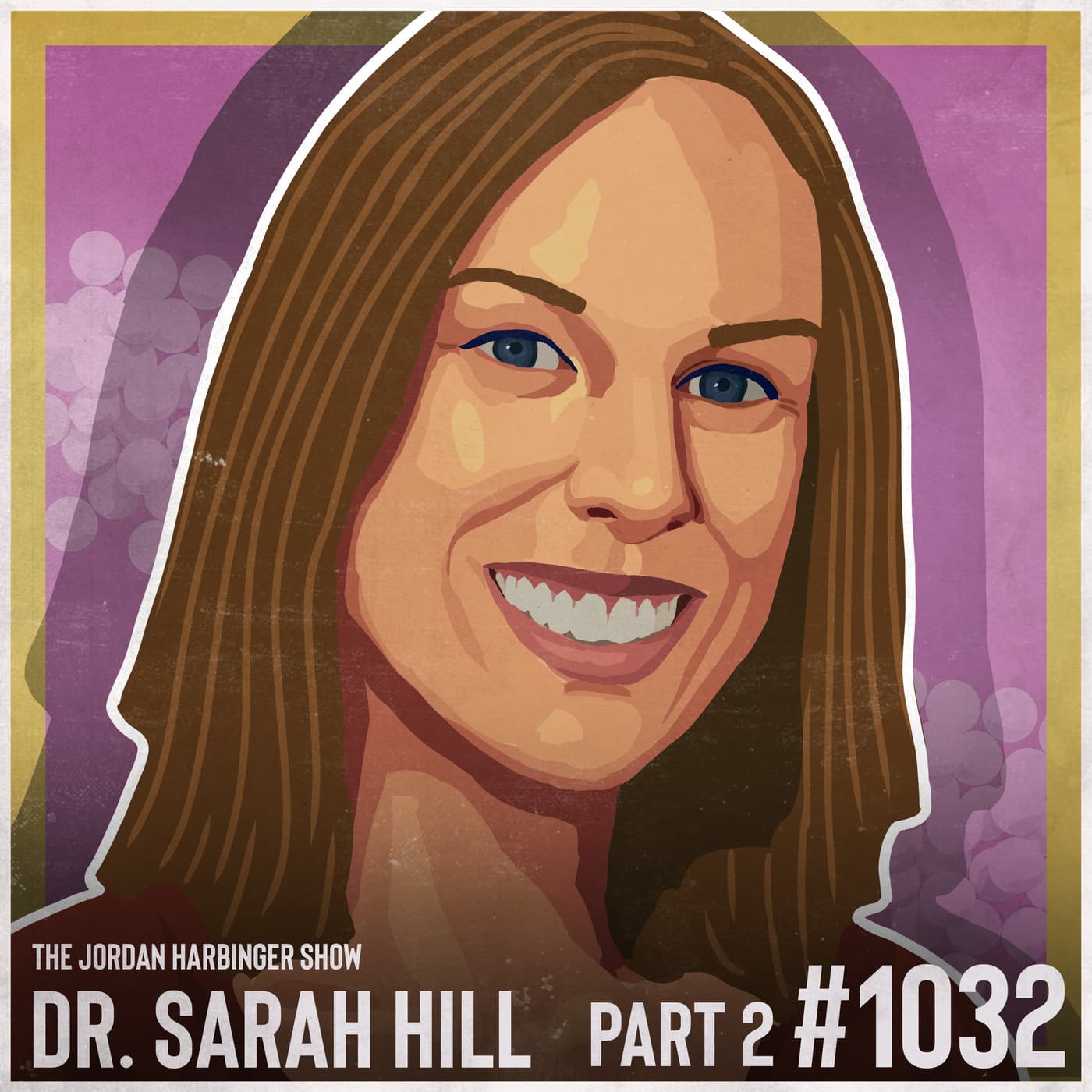
Podcast Summary: The Jordan Harbinger Show - Episode 1032: Sarah Hill | How Birth Control Rewires Women's Brains Part Two
Overview In this episode of *The Jordan Harbinger Show*, host Jordan Harbinger continues his conversation with Dr. Sarah Hill, a psychologist and author, about the impacts of birth control on women's brains and health. This episode, the second part of a two-part series, delves deeper into the effects of hormonal birth control beyond pregnancy prevention, discussing its implications on mental health, societal norms, and the complexities surrounding its use.
Key Topics Discussed
- Effects of Birth Control on Brain Development
- Birth control pills may interfere with brain development in teenagers. The conversation highlights concerns regarding prescribing birth control for non-contraceptive reasons, such as acne treatment.
- Dr. Hill emphasizes the importance of understanding that during adolescence, a girl’s brain is still developing and can be negatively affected by hormonal interventions.
- Link Between Birth Control and Mental Health
- There is a significant risk of depression associated with birth control use, particularly in younger women, with an increased risk of up to 300% for teenagers.
- The episode discusses the challenges of recognizing and addressing these mental health risks, emphasizing the importance of informed discussions about the side effects of birth control.
- Politicization of Birth Control Information
- Dr. Hill points out the extreme views on both sides of the birth control debate, complicating access to balanced, scientific information.
- The discourse surrounding birth control has been heavily influenced by political narratives, making it difficult for women to navigate their reproductive health choices effectively.
- Research Methodologies and Individual Experiences
- Current research often averages results, which can mask individual experiences and variations in reactions to birth control.
- The idea that women may experience widely different effects from the same medication highlights the need for personalized medical discussions.
- Empowerment and Reproductive Health
- Women are encouraged to take charge of their reproductive health and to be mindful of their choices regarding hormonal birth control, especially in relation to their mental well-being.
- The conversation stresses the importance of women being informed about the potential impacts of birth control on both physical and mental health.
- The Over-The-Counter Birth Control Debate
- Discussion on the introduction of over-the-counter birth control options raises concerns about young girls accessing hormonal birth control without adequate oversight or guidance.
- Dr. Hill expresses mixed feelings about the initiative, recognizing the potential benefits of increased access while worrying about the implications for mental health.
Important Takeaways
- Informed Choices: Women must have access to comprehensive information about the benefits and risks of hormonal birth control to make informed decisions.
- Support Systems: It is crucial to have support systems in place that monitor and help women, especially young girls, when they are on hormonal birth control.
- Mental Health Awareness: Awareness of the psychological effects of hormonal birth control is essential. Women should be vigilant about changes in their mental health upon starting or stopping the pill.
- Nuanced Conversations: There is a need for nuanced discussions about birth control that recognize both its benefits and potential drawbacks without falling into political extremes.
Conclusion The episode emphasizes the complexity of hormonal birth control's effects on women's health, urging listeners to become educated about their reproductive choices. Dr. Hill’s insights encourage ongoing conversation and research into how these medications can impact mental health and development, particularly among younger women.
Listeners are urged to share this information widely, acknowledging its importance for all individuals involved in women's health discussions.
Additional Resources
- Full show notes and resources can be found at [jordanharbinger.com/1032](https://jordanharbinger.com/1032).
- Previous episode (Part 1) is available for deeper understanding of the topics discussed.
Written by AI. May contain mistakes. Listen to the episode to check what was said.
Transcript
Automatic transcript. May contain errors.0:28This episode is sponsored in part by LinkedIn. compared that to the cost of a bad hire. Training time, salary, lost opportunities, stress on your existing team, and then the emotional fun of letting them go and starting all over again. When you add that up, spending a bit of energy up front to find the right person is a no-brainer. That's exactly where LinkedIn Jobs shines, helping you get it right the first time so you're growing your business instead of constantly cleaning up hiring mistakes. Hire right the first time. Post your job for free at linkedin.com slash harbinger. Then promote it to use LinkedIn Jobs' new AI assistant, making it easier and faster to find top candidates.
1:00That's linkedin.com slash harbinger to post your job for free. Terms and conditions apply. What can 160 years of experience teach you about the future? When it comes to protecting what matters, Pacific Life provides life insurance, retirement income, and employee benefits for people and businesses building a more confident tomorrow. Strategies rooted in strength and backed by experience. Ask a financial professional how Pacific Life can help you today. Pacific Life Insurance Company, Omaha, Nebraska, and in New York. Pacific Life and Annuity, Phoenix, Arizona. Coming up next on the Jordan Harbinger Show.
1:38So here we are going through this period of intense brain development that we're going through during the teenage years. And we decide that it's a good idea to give teenage girls whose brains are still developing coordinated by sex hormones, something that shuts down their brain ovarian excess. So it prevents their ovaries from producing hormones and then replaces them with a daily dose of the same synthetic hormone every day. And we don't think this is going to affect brain development.
2:09Welcome to the show. I'm Jordan Harbinger. On the Jordan Harbinger Show, we decode the stories, secrets, and skills of the world's most fascinating people and turn their wisdom into practical advice that you can use to impact your own life and those around you. Our mission is to help you become a better informed, more critical thinker through long-form conversations with a variety of amazing folks, from spies to CEOs, athletes, authors, thinkers, performers, even the occasional drug trafficker, former jihadi, gold smuggler, or Russian spy. And if you're new to the show or you want to tell your friends about the show, our episode starter packs are a great place to do that.
2:42These are collections of our favorite episodes on persuasion and negotiation, psychology and geopolitics, disinformation and cyber warfare, crime and cults and more. And that'll help new listeners get a taste of everything we do here on the show. Just visit Jordan Harbinger dot com slash start or search for us in your Spotify app to get started. Today, part two with Dr. Sarah Hill. If you haven't heard part one, it's absolutely fascinating. You won't regret it. And this conversation will make a whole lot more sense if you've already listened to that episode. All right, here we go. Part two with Dr.
3:09Sarah Hill.
3:15I would love to talk more about the benefits of birth control. Obviously, you don't get pregnant. Well, not always. Most of the time, you don't get pregnant when you're on it. But I know it's prescribed for various reasons. And so I'd like to talk about that, because I think the problem is a lot of people are like, well, I don't have to worry about this because I'm not sexually active. And then they go in for like, I don't know, acne, and they end up on birth control. And it's like, oh, now all these other things are potentially going to happen. to me and I need to pay attention. Right. So, you know, birth control, when it's used as a contraceptive, I mean, just in terms of, you know, being able to regulate fertility, is a huge benefit.
3:52And in some ways, I don't think that we can overstate how important it has been for women to be able to be given a tool that they can use to be able to safely and effectively regulate their fertility. Because until we were able to do that, I mean, it was really difficult to make long-term plans if you were a woman. I mean, if you think about like educational goals, it's like who's going to start a 10-year degree program as a female who's like, let's say that you're married or in a relationship and you aren't able to regulate fertility. I mean, there's a very good chance you're going to end up getting benched because of pregnancy.
4:24And so there's just really no reason to even start trying. And what we saw is that when you look at historical trends in education, what you see is when birth control pills began to be legally available to single women, all of a sudden applications to post-secondary degree programs like law school, business school, and medical school went off the charts. It increased by something like 700%. And this is because birth control allowed women to make plans. And when women are able to plan, they do more, they achieve more, they are able to become economically, financially, politically, I guess that's the same thing, politically independent from men.
5:03And so, you know, when we think about birth control as being this amazing tool to allow us to regulate fertility, I mean, I think that it is an important, you know, it's been a really important piece of technology for women. And I think for that reason, there's been, you know, sort of a tendency to feel pretty protective of the birth control pill, which we can get into in just a minute. But as you noted, in addition to those benefits, which are pretty huge, now birth control is being prescribed for all kinds of reasons, many of which are far less important than that. And so just to give you some examples of that, you mentioned acne.
5:36Certainly when I was a teenager, I mean, and that was a long time ago, that was being recommended. You don't have to do that to yourself on this show. We can live in denial here. No, okay. Yeah, we can. Yeah. I love it. I love it. So maybe it is just a river in Egypt. Maybe it is. So... exactly so no i mean i was even recommended that and you know back when i was a teenager as a means for preventing acne certainly now i mean it's recommended almost as a first line of defense if you're having problems with your skin or if you're having menstrual cycle irregularities you're having bad cramps or that sort of thing women are being given and i use the word women very loosely because a lot of times these are girls you know very young girls being put on hormonal birth control that which has all these effects that we were talking about earlier today that are really wide ranging and potentially not what they are really bargaining for when they're just looking for a way to clear up their skin.
6:32Yeah. I want to jump back on one thing because I know someone's going to email me about this. You said that when the birth control pill was essentially approved and started to get prescribed, that enrollment in university studies went up among women. Some people might say, well, that was just a general shift in society. That's correlation, not causation. But do we know that? Well, of course it's correlation, not causation. But the fact of the matter is, that's all part of the societal trend. I mean, all that societal trends are is the result of individual people making decisions at the same time.
7:04Right. Okay. Right. And those individual people making decisions at the same time are a bunch of women, you know, who are now not being burdened by the burden of their fertility and able to actually plan and say, oh my gosh, like I can actually decide what I want to do 10 years from now or five years from now and not have to worry about getting totally sidelined because of pregnancy. And so it really opened up these doors for women. And I think that planning and having agency over kind of what happens in your life is like one of the most powerful tools that you can have, because without it, what can we do?
7:37And so I think that, you know, there's been a lot of difficulty around conversations about birth control, just because there's a lot of women who feel very much like you can't talk about the potential drawbacks of something that's been that important to us because it has been. It's incredibly important to us being able to regulate our fertility. And there are other ways to do it, of course, that are non-hormonal. But what was really nice about hormonal birth control is that it works really well and it's pretty easy to use and it's pretty accessible, particularly now that we have organizations like Planned Parenthood that help to provide these services to women who are in low income groups.
8:15And so it's something that most women can have access to, most women can use effectively, and most women are able to manage to avoid pregnancy without too much difficulty. But of course, there's all of these side effects. And so it's the discomfort of holding those two truths at the same time that makes people get a little bit uneasy, I think. And that's, yeah. That makes sense. I'm already uneasy because I'm a male talking about birth control. So the bar has to hit like a pretty high level for me to red line on the anxiety around this conversation. I'm curious, though, you mentioned, you said before that we're prescribing this for skin and I can't remember what else.
8:50Timing of periods. Cramps. Cramps. Yeah. But essentially, can I say little girls because they're 13? I guess that counts. That's a little girl-ish type person. That's a little girl. That seems like a bad idea. And again, I'm no doctor, but like knowing all the side effects that we discussed earlier, it's like, oh, this isn't, I took antibiotics for acne as a teenager and I didn't even have that bed of acne. It was just something the doctor was like, hey, if you get a zit every now and then, take, I can't remember what it was called, erythromycin or amoxys, something. And now the insides of my teeth are brown because that's what it does to your teeth if you take it over a long period of time.
9:25And oh yeah, taking antibiotics for five years is a really bad idea because it messes with your gut and all kinds of stuff. So I stopped taking it and when I had my wisdom teeth removed, the surgeon was like, oh, you took antibiotics on it, such and such, whatever it was called. And I was like, oh yeah. And he's like, I said, how do you know? And he goes, well, look at the inside of your tooth. And it was like a brown. I said, oh my God, my tooth is rotten. He's like, no, no, no, no, it's fine. It's just brown on the inside because I think it's called dentin, not the enamel, so stuff underneath.
9:52He's like, it just turns brown with that. I'm like, that can't be good. And he's like, it's fine, but my teeth, I can't, like if people go and whiten their teeth, that's never gonna work for me because the inside is brown. It doesn't matter how white the outside is. And I just thought to myself, I'm lucky, I'm really lucky that I have merely a minor cosmetic issue with this. I'm sure I screwed up my gut biome. Who knows what else got messed up. But we just over, my point is, we prescribe things thinking, this is fine. Look, her acne went away, and now she doesn't have these minor cramps. Oh, oops, we've been giving a 13-year-old girl hormonal birth control that's been messing with her brain, and now she's 35, and she wants to have kids, and she doesn't, literally has no idea who she is off of these things.
10:40Right. Yeah. I mean, there's so much that you said there that I have something to say about. And the first, just we all have a blind spot with medication in this way. It's like when you take it for something, that's the only thing you're really focused on. Right. And then this is only doing the one thing I wanted to do. Right. Right. And the fact is, I mean, our body, we are not built by an engineer. Like an engineer did not say, okay, now this part lives on this island. And if you take a drug that affects this, it only affects that. And oh, and if you, you know, and this part of your body is operated by this little cog and sprocket over here, and it doesn't affect anything else.
11:11Instead, you know, our whole body is just a big mess of electrical spaghetti that's been thrown together, you know, reverse engineered by natural selection, and everything is intertwined into a degree that you would never even imagine, because everything affects everything else. And the body is just incredibly messy that way. And so you can't treat one thing, especially with like a pill, which is generally systemic, and have like the one effect. And so we never think until recently, you know, I think we've gotten a little bit smarter about asking questions about things like antibiotics and that sort of thing.
11:41Like, gee, you know, does it make sense to wipe out that person's microbiome in the service of maybe they have a sinus infection when they probably don't, it's probably a virus. And that's not a good idea, but certainly for a very long time. I mean, this was just like, they were giving medication like you were talking about off. Oh, like for cosmetic reasons in a teenager. yeah and it wasn't like i didn't have my face covered i didn't need like what is it called accutane where like it just dries you up because otherwise you look yeah yeah kind of rough i had like the occasional zit from being a dirt ass at age 13 and oh yeah every kid has zits okay put a little sticker on it and go on with your life no no take antibiotics for a decade or whatever it was right it's a ridiculous well no i know and instead of saying like hey perhaps you should cut back on sugar or like, Hey, have you considered washing your face?
12:33You dirty little prick. That's what I think about with my son. I have a, I have a 14 year old son and it's like, have you tried washing your face? Well, cause that'll do it. Like, I think that'll help you out. I think that'll help you a little bit. Soap goes a long way. But, um, I mean, with the birth control pill, you know, here we are giving girls, as you said, hormones and a few things that we need a little bit of background to kind of illustrate how much of a big deal this is. Our brain isn't done developing until we're in our 20s. It's usually our early 20s. Brain development is still going on.
13:07And during the pubertal transition, so when we go through puberty, and for women, it's like getting your periods. And for boys, it's all the other sort of comparable activities. All of that is... Comparable activities is a great euphemism for what goes on during that phase of life. Yeah. I'm trying to be polite. Yeah. I appreciate that. But all of that remodeling that goes on, I mean, because your brain is seriously undergoing a major remodeling project because it's remodeling it from like this kid brain, which is just like happy and sunshine and rainbows. And like, oh, it totally is transforming that into the really complex adult brain.
13:44And the adult brain is incredibly complex. It takes a long time to develop. And that remodeling project is coordinated by our sex hormones. So here we are going through this period of intense brain development that we're going through during the teenage years. And we decide that it's a good idea to give teenage girls whose brains are still developing, coordinated by sex hormones, something that shuts down their brain ovarian access. So it prevents their ovaries from producing hormones and then replaces them with a daily dose of the same synthetic hormone every day. And we don't think this is going to affect brain development.
14:19Yeah. And like, what's really messed up about this is that I have only seen in my career, fewer than 10 studies that have even bothered to ask the question. Nobody's even asked. It was just like, oh, yeah, let's give this again. It's kind of like, you know, I feel this way with psychotropic medication as well. Like, you know, you see this with things like they're giving, you know, Ritalin and Prozac and stuff to teenagers. And I'm thinking to myself, like no way like yeah there's not enough studies showing what this actually does then to long-term development and looking at this question with birth control pills with girls the few studies that have actually bothered to ask the question seem to indicate that if you go on the pill during development when your brain is still developing that it may put you on the road for having a greater risk a major depressive disorder throughout the rest of your lifetime even after you go off I was going to ask if that had anything to do with depression or even maybe like postpartum depression or anything that triggers depression, because the same way like going on anabolic steroids messes with your natural endogenous testosterone, it sort of seems like the same thing.
15:27And by the way, anabolic steroids, highly illegal, right? But are basically the male version of kind of what we're giving to 13 year old girls to get rid of their acne. Not quite the same, but it's serious. But yeah, I mean, it's the same thing. You're giving them a systemic drug that has widespread effects from head to toe. Right. And it's illegal for men to take steroids. I mean, to, you know, have them available because it, because they have these like wide ranging systemic effects. Right. But for birth control pills. Yeah. It's like, oh, you've got a cramps. Yeah. Take the pill. Nobody on earth would go, oh, are you a little, like my son is quite small for his age.
16:04And I was like, oh, I know when I was a kid, there was a kid who was really small and they gave him some sort of growth hormone or something. And they're like, oh, yeah, we don't do that anymore. We do not do that anymore. And I was like, oh, really? And they're like, yeah, that's not good. It's better to be small than the side effects of taking this. And it's like, I was like, oh, my gosh, because, you know, Ryan turned out OK, but he's also like seven feet tall now because they overdid it or something. And I was like, holy crap, he's really tall. It's ridiculous how tall this kid got. And he probably had a growth spurt and they gave him all this stuff.
16:35But you would never go, you know what, Jaden, you are a little small for your age. You should take anabolic steroids. Meanwhile, a 13 year old girl walks in and is like, I have zits and my back hurts sometimes or my stomach hurts sometimes. And they're like, take this for the rest of your life until you want to have kids. Right. So of course it's suppressing stuff. And then you go off it and you're like, wow, I feel horrible. My brain doesn't know how to adjust to this new reality. Well, right. And when you think about, you know, if and I wish I had a figure I would love to show a figure but graph you know for naturally yeah a graph like for naturally cycling woman you go through these periods of escalating estrogen that goes on in the first half of the cycle and then it decreases then it increases a little bit and then progesterone is really low in the first half of the cycle and then it rises in the second half and then falls and it's like when you're going through puberty and when you're developing as a woman you have these irregular cycles and all these things as your body is learning to communicate with itself.
17:29So the brain is learning to stimulate the ovaries, is learning to pick up on the hormonal messages from the ovaries. And so you get a little bit of messiness where girls cycles are irregular and this and that and the other thing. But that's all part of like normal development. And that's something that's super important. It's like developing what I guess I could only refer to as like hormonal tone. You know, it's like your brain and your ovaries become really responsive to one another and one another's signals. And that is how you get a healthy functioning body is that you develop this tone that's very responsive and it knows exactly how to adapt when, oh my gosh, there's a lot of estrogen going on right now.
18:03Like, you know, let's go do the high estrogen things and oh no, it's decreasing. Well, don't worry. We're not going to make it be too jarring. We know just what to do. And when you have a girl whose brain development is going on with synthetic hormones in the birth control pill, which is the same message every day, you're not developing that tone. You know, and the ovaries are never even learning to produce the hormone at all because there's no you're not ovulating and so your brain is used to only getting this right the same hormonal message every day your ovaries aren't used to doing anything and then you go off of it and if all that was going on during the period of brain development you know and again when you're a teenager it's like you're not done being built yeah and like and so all of that could potentially lead to long-term changes and we just we just don't know because nobody's bothered to ask the question.
18:52It was just like, oh yeah, look, here's the thing that prevents pregnancy. Let's go ahead and give it to teenagers without anybody bothering to take two steps back and say, well, wait, what is it that we're actually giving teenagers? And like, is that a good idea? But when you look at the research on things like depression and anxiety and that sort of thing, what you tend to see is overwhelmingly it's the teenagers who are suffering from this. So for example, when you look at the risk of developing depression on different types of hormonal birth control, especially with a combination birth control pill, what you find is that you do get a little bit of an increased risk of developing depression among adult women, but it's not that significant.
19:29But for when you look at that same risk in teenagers, and I'm defining a teenager as somebody who's 19 and younger, what you get is like a 280 or 300 % increased risk of developing depression. That's scary. Well, it is. That's really scary. And so here's these girls, you know, because we talked about the benefit of, you know, like the big benefit of birth control, which is fertility regulation. And it's something that for some women, it's going to be worth all the costs that we talked about at the episode we recorded earlier. But for something like acne, like I think that if you told, you know, these girls or told their moms like, hey, there's a chance you could develop major depressive disorder.
20:04And we also don't know what this does to brain development. I think that most of them would say, you know what, I might wash my face a little bit more carefully. We'll get to the expensive face care shampoo instead of the pill. Right. Yeah, instead of the pill. But these conversations aren't being had. And I don't think that it's because I like to think most people's doctors are pretty well-meaning and they mean to take care of their patient. I just don't think that they're thinking about it. Whether you're on or off the pill, hopefully your taste in podcasts doesn't change, nor your propensity to support the fine products and services that support this show.
20:34We'll be right back. By the way, we have a subreddit. A lot of people who use Reddit, who listen to the show are over there. Jordan Harbinger is the subreddit name. Come on and join us. A lot of show threads, a lot of people talking about Feedback Friday, the different interviews. It's a fun place to talk with Gabriel and I. Again, it's on Reddit over at the Jordan Harbinger subreddit if you are a Reddit user. And if you're not, why not start now? It's the best social media platform out there. It's only mildly ridiculously toxic. Most of the time, some of the time. Now back to Dr. Sarah Hill. Why my dermatologist gave me antibiotics for five?
21:08Like, it was literally like five or six years. She was just thinking, this is probably fine. But she was 100 years old in the early 90s. And she wasn't used to thinking that there could be knock-on effects from this. And she wasn't reading journals. She didn't use the internet. And I think I said face care shampoo. Everybody knows what I mean, right? That's not a real thing. It sounds like with the pill, the female body turns into a symphony without a conductor, right? Where they're just like, okay, the drums might play. the people might play, they're trying to match with one another. They're doing maybe the best they can.
21:44And it might even sound okay if you're just in one section. And then later the audience comes in and the conductor comes back because you want to have a baby. And it's, and the guy's just like, what the hell have you been doing for the last 10 years? This is horrible. They're out of practice. They're out of sync. And it's like, they've never played together before. And that's horrifying. Yeah, it is. And I mean, honestly, that's actually a really good analogy because Because in a lot of ways, normally it's like the brain is telling the ovaries what to do. And then when the ovary is producing hormone, then that kind of tells the brain how to conduct.
22:16It's like, oh, okay, too much tuba. And they start to decrease that. A theme in your house, too much tuba. It is. It is definitely a theme in my house. And so you get that really nice feedback loop between somebody who's in charge of what's happening and then the activities that are going on in the ovaries. What happens with the pills, like you said, I mean, it's just like music is being played. And it's not being controlled by anybody. It's just like being released in the brain is just having to figure out how to deal with it. And it's not learning how to adjust to hormonal variation. It's not all of that is potentially problematic, but we don't know because nobody's bothering to ask the research question.
22:51Do we know what this is maybe too in the weeds, but do we know why it might cause depression? I know I've read something about brain shifting memories around that gets inhibited and it can make us feel like our lives lack meaning. Do you know what I'm talking about at all? Yeah. Yeah. Yeah. So one idea is, well, so there's a few things. So one is the blunted stress response that we talked about last time. And stress is something that occurs in our body when bad things are happening, but it's also something that happens when good things are happening. And so having regular bursts of stress and regular bursts of stress hormone, you know, is one of the ways that I think that our brain learns to appreciate that it lives a meaningful life, right?
23:31Like if If you have nonstop flatline stress, that means that your life is pretty boring and there's probably not a lot that's meaningful going on because when meaningful things happen, it increases our stress response. Excitement, those sorts of things increase stress in addition to the bad things. And so lacking like regular ups and downs from our stress response is potentially one mechanism by which you sort of develop this kind of flatline where everything is just kind of blah and then that doesn't really make anybody feel good. What is that called? like anhedonia is our amazing yeah anhedonia yeah no that's like a real that was like a nice 10 cent word you just threw out there yeah 10 cents only from psychology literature like that's a good one yeah yeah i know so the lack of pleasure i mean just like where everything just feels kind of and that's one of the the sort of key defining features of depression is finding joy in basically nothing yeah yeah i know sounds great doesn't it yeah yeah and then there's just lacking the release of exposure really at all to endogenous progesterone, which is women's other sex hormone.
24:35And it is even though estrogen is the one that gets all the attention, progesterone is actually super good for the brain. It's really good for a lot of things. But just keeping the brain happy and calm and smooth, running smoothly is something that progesterone is really good at. And it's good at this because when it gets metabolized, it releases this compound called allopregnanolone. And allopregnanolone activates like the chill out program in our brain. Yeah, I remember we talked about this. Yeah. Yeah, yeah. So you like you hit those chill out switches. And it was really good at its inhibitory.
Read the full transcript
25:07So it like causes our brain to just kind of like this. And it's very relaxing. Like the progestins and hormonal birth control, because they're made out of testosterone, usually, they don't get metabolized on the same pathway, but you don't release allopregnanolone. women who are using birth control, they have significantly lower levels of allopregnanolone. And so their brain is probably not able to chill itself out as much. And obviously, when you get that, you can get major anxiety and anxiety that's unrequited. Like if you're feeling anxious all the time and can't solve it, that leads to depression.
25:39I mean, anxiety and depression are about, you know, two sides of the same coin. What about oxytocin signaling? Is that Left alone, I think I've read this in your book, but it could be from another article. There were some women that had trouble recognizing expressions in babies. And that was a little confusing because if you've had a baby, right, you're not on birth control. So does that effect stick around after you've stopped taking the pill? Is that what I'm understanding? No. Well, so we don't know yet about that. But what we do know is that women who are on it, they seem to have dysregulated oxytocin signaling.
26:12And so they've studied this a couple of different ways. is they've done it where they've done internasal oxytocin and then just seeing whether or not the brain's pleasure pathways light up in response to seeing faces of people that they love, which is generally what happens when oxytocin is on the scene. If you like see a picture of like your wife or your children, your pleasure centers in your brain will light up and it'll be like, yay, it's people I love. What they found is that for women who are on birth control that you don't get that. So you give them some oxytocin and their brain is just like, they just see it as just another person.
26:43Yeah. And which is really kind of scary and scary and sad. Well, yeah, it is scary and sad. And it also like, I know for me, and we talked about this a little bit last time, but my six, I think it was a six week visit after I have both of my kids, they were like, all right, what are you doing for birth control? You know, what are you doing for birth control? And I'm like, well, I'm, you know, I'm breastfeeding. And they're like, well, that's not going to cut it. Cause some women, obviously when they breastfeed, which is true, but I, I was not. And I know I was not because I'm in tune with my cycle.
27:13But I mean, they tried to put me on progestin-only birth control pills while I was breastfeeding because apparently it doesn't get in the milk, which I don't know that I believe. But better than pregnancy, I will say like I would not have wanted to have another baby right after the baby, but I probably would have done something different. But I wasn't ovulating, so I didn't have to worry about it. But yeah, anyway, so when you think about that, when there's a lot of women who are being put on this at their six-week appointment, when those attachment things are still happening with mothers and children.
27:41And, you know, a lot of women, like if they're not breastfeeding, like, and they know it, like at the hospital where they're like, I'm not breastfeeding, their doctor will put them on birth control right away. Which again, when you think about the importance of oxytocin to bonding with your infant and all that sort of thing, and there hasn't been any research that's done on this particular issue. So like, I have not seen a single study that's looked at hormonal birth control use and bonding to offspring. But the research that I've seen in adult women, like looking at other attachment figures of partners and so on, suggests that there could be some disruption there.
28:16And again, we don't know the answer to it because nobody's really asking their research questions. Jeez. It's like, we're just, you know, I feel like for the last however many years, with 60 years, we've been doing this experiment on women that they didn't even know that they had consented to. Right. They're not recording the results necessarily. Yeah. Yeah. We're not even necessarily recording the results. So it's like, we don't, you know, when you look at how much society has changed in the last 60 years, the differences that we get in rates of problems with mental health and all of these other things, it's like, we have absolutely no idea because our society has changed so quickly in the last 60 years.
28:53But like, it would be surprising to me if there weren't some of the differences that we see in things like risk for mental health and increase in postpartum depression and that sort of thing that aren't impacted in some way by our use of hormones. Yeah. Like everyone wants to blame participation trophies or something. And it's like, well, maybe it's the fact that we've been taking, I don't even know what the percentage is, a huge number, millions and million, tens of millions of women taking this hormone from an early age. I don't know. I mean, that seems more likely than TikTok being the root of all, not that I'm a fan of TikTok either.
29:28It seems more likely that that's causing the problem than participation trophies or cell phones. Right, right. Well, I mean, I think it's, you know, and obviously it's a combination of all these different things. Yeah. But I mean, when you look at the risk of mental health problems in young women, I just can't help but think that hormonal birth control isn't a really important player in this conversation because you add that to, you know, so we already know that young girls when they're on it are at a much higher risk of developing depression than adult women, probably just by virtue of the fact that their brain is still developing and that their developing brain just can't handle that shutdown of their ovaries because I'm sure that it causes a wider spread sort of set of changes than we get in adult women.
30:13But you take that and then you add to it social media and all these other things. I mean, it's just like a perfect storm of environmental mental influences that are not great for mental health for young girls. It seems like if women go off the pill, they should tell people around them to look for signs of depression, right? Because when you're experiencing it, you just believe, you believe that there's a reason for it. Your mind's going to rationalize it. Oh, exams are really awful. My boyfriend's being kind of a jerk. And like, I just haven't hung out that much with my friends. And I don't know what I'm going to do with my major.
30:47And it's like, well, that's all maybe true. But the truth is, you're also going through hormonal hell and you don't know about it because you stopped taking the pill or whatever. We just think our life's crappy. Yeah, starting or stopping. I think that it's so important that people know about the possibility of effects that can happen from having hormonal changes in that way. So that way we have people looking out for us. Because the fact of the matter is, as you were saying, it's like our brain tells itself stories about what's going on all the time. I mean, the left half of our brain, which is like the communication center, is really just a spin doctor.
31:19just making up stories about why we do things, you know, it's like, Oh, well, you know, I must be thirsty because I'm drinking water. You know, it's like, it just tells the stories. And like you said, it's like, if we have depression from that's creeping in for some reason, including, you know, hormonal birth control, like we just think like, gosh, like nobody likes me, like, my friends all seem to hate me now, like, oh, or like, gosh, my job just sucks. Like it used to be so much better than what it is now. Yeah. And we come up with all these stories about why everything is happening. It must be my new manager, but maybe it's not.
31:52Maybe that's not the only reason. Right, exactly. And I think especially, you know, when we were talking about these young girls, because they are the ones who are overwhelmingly affected by the mental health side effects, there should always be somebody who's looking out for them. I'm concerned about, you know, because now we have this O-Pill, right, this over-the-counter birth control that's going to be available to women. I'm concerned about that for that reason. So on the one hand, like, I love that we're trying to increase access to products to help women regulate their fertility, particularly in this day and age when, you know, women's reproductive health is under fire.
32:23Like on the one hand, I'm happy that, okay, we're increasing access. I feel good about that. I don't feel good about women being able to go on birth control and especially this one. And the reason I don't like this one is it's a progestin only drug, which is safer than a combination product. So, you know, when you're talking about birth control, you have progestin only drugs, which only have a progestin, that synthetic progesterone. And then you have what are known as the combination products, which most birth controls are, like most pills are, where you have progestin and then you also have some estrogen.
32:54And the estrogen piece of it is a little bit more dangerous in terms of physical health. So just estrogen, for example, is thrombotic. So it's what's known for increasing heart attack risk and stroke risk when you have the pill. And so they've made this over-the-counter product progestin only because it doesn't have all of those risks because progestins don't have that risk. You don't have an increased risk of heart attack or stroke. And so that's why they made this product the one that's available over the counter because it's like safer for physical health. But for mental health, it is absolute trash.
33:27And the reason, I mean, the reason that most birth control pills are combination products is because the estrogen piece of it kind of takes the edge off how terrible you feel with this progestin. Interesting. Yeah. And so progestin only products are some of the biggest offenders when it comes to the things that women hate the most about birth control, weight gain and mood changes. Yeah. So that's the one that's going to be available over the counter. And I just, I don't like the idea of women or girls getting access to these products. Nobody knows that they're on them. Right. I was going to say their parents don't know.
34:02That's why they chose it. Yeah, I know. Nobody knows to look out for them. And they're going on something that can increase their risk of depression by 300%. Yeah, that's terrifying. fine. It's just like, it's not good. I really worry about that. So I've got kind of mixed feelings about the over-the-counter birth control. I like the spirit behind it. I would like to see it implemented in a way that makes sure that women are being taken care of. Because I do like that, you know, women are able to access it and they're, you know, without, and they don't have to worry about their parents, if they're going to be having sex, because I think that that's important.
34:34But then on the other hand, it's like, how can we still look out for these girls and make sure that they're okay. I could not agree more. I mean, I'm doing this episode, this double episode, because I want women and those of us that love them to stop thinking that something is wrong with them when maybe there's something wrong with their medication. It seems like the access to it over the counter, access is always better. However, yeah, we don't, we don't, I don't, it's a nightmare scenario that young girls who are already under fire from TikTok and Instagram screwing with their mental health are now maybe going to take something that is going to make that worse.
35:09They're just being dealt a really bad hand this decade or so. It's awful. What do you think of the latest politicizing of birth control? I know we touched on that a little bit last time, but if you search for birth control on social media, there is just a cascade of misleading videos. And it's like, if you take this, you're going to get fat, possible. But other people are like, oh, it'll make you infertile, which is not great. And you see these testimonials online from health influencers, if you can call them that. And they're these are not doctors. These are just like random people that are stating birth control can make you infertile.
35:48And they're not saying that it happens to one in every million people who take it and they have a preexisting condition. They're making it seem like it's a dice roll. If you take birth control pills that you're going to end up infertile. And they're also looping IUDs in with like the pill and the NuvaRing and all that stuff, just like it's one monolithic thing. Right. Yeah. I mean, there's a lot of, there's a lot of bad information, I think on both sides. Like on the one hand, like the sort of prevailing paradigm for so long has just been birth control pills. Once, you know, it's like everybody take the pill and everybody's going to, and just take it and just shut up and don't worry about the side effects because who cares and they're just fine and then on the other hand you know the other extreme end you have exactly what you're talking about you have a lot of health influencers who don't know and never read a research paper and don't you know have a degree of any type and you don't need to have a degree to be able to understand science but I have no background in science and you also have to try to understand science yeah well right and you also have to like say like factual things one would hope yes and um saying things like like you're saying like with the fertility issue like you know that birth control makes you infertile which it absolutely does not and in fact um there's research that shows that that that there is a it's slower to get pregnant like when you have discontinued birth control compared to not but by like two weeks on average i see you know people who are using it that's good to know and not, I mean, it's just really not the long-term effects on fertility or except that when women are on it, it allows them to postpone childbearing.
37:24And so what you get is you get some women who are infertile because they waited until they were 35 to start having children. I see. So they are like, oh, my birth control made me infertile. It's like, no, actually female fertility peaks at 25 and it's really horrible. It's a cruel biological fact, but it's a fact nonetheless. And so it's kind of where we're at. I think that it is very difficult to have conversations about birth control without, it always seems like it's one thing or the other, like birth control is evil and it's going to make you grow a tail, you know, which isn't true. And then it's like birth control is a sacrosanct and how dare you say that it can, you know, do this or that or the other thing.
38:03It's like, people don't like to hold onto contradictory information. you know it's like it causes dissonance where it does you know black and white thinking is a lot easier for sure yeah i mean it totally where it's like okay well so the birth control pill is really important for women and we need to make sure that women are able to have access to it at the same time it is imperfect and it can potentially be linked with you know different types of side effects that you should look out for and they're not one size fits all and everybody's going to respond a little bit differently and so it's just important that you know that these things are possible so you know what to look out for them.
38:36And so then it's like everybody wants to say like, well, so are you for it or against it? And I'm like, neither. Right. For it in certain circumstances. Yeah. No, that's not what we want to hear. It's like, I am for you having all the information that you need to be able to make the decision that's right for you. Because what is the right decision for you might not be the same decision that's right for me. And the decision that's right for you right now might not be the same decision that's right for you in five years. it might not be the same decision that's right for you tomorrow. I mean, it's like all of us, our circumstances change.
39:05And it's like, we're all smart enough to be able to take all the information in about what range of effects, you know, the benefits and also the potential drawbacks, and then make decisions about what's right for us based on at this point in my life, like, so for example, if you are a woman, like, so I'm going to think back to like 20 year old Sarah, you know, 20 year old Sarah, when she is not in a relationship and is doing things like dating and choosing partners and figuring out her career goals and that sort of thing. 20-year-old Sarah does not need to be on hormonal birth control when she's not in a relationship because she's not getting pregnant anyway.
39:40And she may as well be having her brain in the absence of these other hormones, you know, trying to figure out who she is and what makes her happy and what job makes her happy and what kinds of partners she's attracted to and so on and so forth. 20-year-old plus six months Sarah who's in a relationship and also getting a college degree and needs to not get pregnant in order to finish those things. For her, it might make the right decision to be on hormonal birth control because it's going to work. And so at that point, I make a different set of trade-offs. And each one of us, you know, it's like you have to kind of weigh what the costs and benefits are, and it's always going to be a little bit dynamic.
40:14And I think that we are smart enough to have the conversation that here is this drug that's been incredibly pivotal in terms of moving women forward politically, economically, and so on, but is also imperfect, and it's something that women have absolutely, I mean, we should absolutely exercise caution with, especially with young girls. And when the benefits aren't potentially great enough to outweigh the risks, then we need to have real conversations about whether or not it even makes sense. Because this off-label use of birth control for things like skin and cramps and that sort of thing for teenagers, like, I don't even know whether that's good medical practice.
40:50I feel like that should be a conversation that's being had among those in the healthcare industry is like, is this good practice at all for this group of women? Because I don't know that those benefits, is there an acne clearance benefit that's so great as to outweigh the risk of long-term brain problems? I don't think so. What about IUDs, intrauterine devices? Do those have a hormonal component or is it just a metal object in your uterus? I don't even know. Yeah, so there's two different types. There is the metal device, which is the copper IUD, and that one does not have any hormones. And so those women cycle just like regular, you know, naturally cycling women.
41:34And the fertility regulation effect comes from the effect that you get a little bit of an inflammatory event that's going on in the uterus from the little object, and that prevents implantation. And so that's how you get pregnancy prevention with that. The hormonal IUD is a little bit of a tricky device and it has hormones and the hormones are getting released. And whenever you have hormones getting released in the body, it is a systemic effect. So a lot of times you'll hear doctors say that the hormonal IUD acts locally. That doesn't make sense. It's in your blood. Yeah, I know. There's no such thing.
42:10So there's no such thing as a local. Go back to medical school. Well, I know. I mean, honestly, like, I think that if you ask the doctor to repeat that, I'm like, can you repeat that back slowly? Like, listen to what you're saying. I think that they'd be horrified that that ever even came out of their mouth because it's impossible. And so what you get, because it has low doses of hormones, these hormones will still, because they're getting in the blood, they still reach the brain. And they're often at a high enough level that they shut down ovulation just the same way all other hormonal birth control does.
42:39So for example, when you take the pill, those progestins tell your brain, don't ovulate. And that's why you don't ovulate. and the same thing with the hormonal iud is when that progestin reaches your brain it's like hey don't ovulate guys but it is a really low dose of hormone and so what happens is over time women oftentimes will begin ovulating again and then the device is working in the same way as the copper iud because it's also because it's in the you know in the uterus it's like causing an inflammatory event because the uterus is like what the fuck is this right yeah there's a paper clip in here yeah it's Like do not implant an embryo.
43:15Like this is terrible timing, guys. Don't know what this is. So what's interesting is that women on the hormonal IUD, some of them are ovulating. Some of them are not ovulating. Some of them ovulated the entire time they were on it. Some of them never ovulate. And so it's a really heterogeneous group of women. So here's the question I have, and you probably don't have the answer to this, but I'm going to ask you anyway. Ask me, yes, the expert over here on women giving birth. Are you ready for this? So the hormonal IUD, they put this hormone in there, right? And it shuts down ovulation. Like I said, 80 % of the women who use it for the first year, they're not ovulating because it's shutting down their brain access.
43:52But by five years, about 80 % of women are ovulating. So and it still works. Okay. So it seems to be working primarily through the same mechanism, which is that, oh, no, there's a paperclip in here that the other IUD works. So then it's like, why put hormones in there at all? I wonder if there's a pill that I can take that would have y 'all tip me more, or maybe there's a pill that will get you to support the fine products and services that support this show. We'll be right back. If you like this episode of the show, I invite you to do what other smart and considerate listeners do, which is take a moment and support our amazing sponsors.
44:25All the deals, discount codes, and ways to support the show are searchable and clickable over at jordanharbinger.com. If you can't remember the name of the sponsor, you can't find the code, you're not sure. If there is a code, email me, jordan at jordanharbinger.com. I am happy to service that code for you. It is that important that you support those who support the show. Now for the rest of my conversation with Dr. Sarah Hill. My question is, why do you need the other one that has the side effects if the other one works? I don't understand. Although my mom's friend had a child and he was born holding that IUD like he was won an Emmy Award.
44:56So there is that. So maybe it's because it's less effective because I was like... I mean, I don't know. But I do know that if you're holding like you just won an Oscar, it probably didn't work at that point. It makes me have like – and I don't have a lot of these moments because I'm a pretty practical thinker. But I'm like they're just looking to sell their drugs. They just like want to put the drug in and it's not necessary. And they just put it in there because – It's probably 50 times more expensive because it has the drug. Yeah, because it has the drug and the drug is what was patented, not the device.
45:30I don't know if IUDs, I mean, is it all medical things that go into the generic or is it just drugs? It might just be drugs that the patent sort of expires after 15 years. That's an interesting question. You know, it's an interesting question. I don't know the answer to that, but we'll see. You know, if patents do expire on those types of devices in the same way that it does on regular medication, then my guess is they're going to stop prescribing the hormonal IUD as much as they do now because the reason that it's been so hot is because it's still under patent. And so drug companies are making a shitload of money off of it.
46:00And so it really gets pushed by the drug companies. After I learned the magnitude of women who are not ovulating on it for, you know, after a couple of years, I'm like, then why have it? Like, why are the hormones in there at all? Yeah, that doesn't make any sense. And it's not necessary. I don't think it's necessary. We've seen a lot of media on the left and the right, like you said, one side will say one thing is an extreme and the other side will say the other thing is an extreme. There's almost like this weird agenda on each side. Like one side doesn't want birth control to be fallible because they don't want people to stop taking it because it limits the new liberties that women have.
46:37But then you'll see right-leaning media that's like, it's going to make you infertile. Some right-leaning media has said that women have been silenced and shamed by legacy media, the pharmaceutical industry, and in many cases by their own doctors who sort of gaslight them about their experiences with hormonal birth control. And that actually sounds pretty reasonable if you have doctors telling people that the IUD is only local and you don't have to worry about it or or like it can't possibly do these things when we know now that it can. I mean, it seems like there's an element of truth to some of what each side is saying, which makes this thing all the more frustrating and irritating to deal with.
47:13Right. Well, yeah, I mean, yeah, because I don't think that it I don't think it should be politicized. I think that this is just like way too important. It is. Yeah, I think that it's something you know what I mean? That it's like everybody, we should all agree that this is an important issue. And I think we should all agree that, and I shouldn't even say agree, we should all recognize that women have been mishandled by medicine for a very long time. And that the birth control pill in a lot of ways is no exception to this. And not that the birth control pill is evil and make you grow a tail and you shouldn't be on it and doctors have been poisoning women.
47:44But rather that, you know, I think for a really long time, doctors weren't listening to women when they were talking about like the seriousness of their side effects. And I also think that there is a tendency to trivialize the types of side effects that we have from the pill. Because, you know, when you look at some of the most, like the most frequently occurring side effects, it's things like depression, like a complete absence of sex drive. And doctors are like, oh, yeah, you know, well, a little bit of, and it's like, that's a person's life. You know, it's like, as far as the medical profession is concerned, it seems, unless it causes cancer or gives you a heart attack, you're fine it's fine right if it doesn't kill you then it's just a minor thing like oh you'll be fine just buy some sexy underwear yeah just rub some dirt in it yeah yeah watch cinemax yeah and so i i think that it's too important to be politicized and i and i think that we can and again it's like part of this the nuance of the conversation is the conversation is is an incredibly important tool for women like having birth control is incredibly important for women and we all need to be champions of making sure that women have access to this.
48:48We also need to be sure that women are being championed for access to information about what they're being put on and having doctors that are going to be willing to listen to them and their range of experiences. The fact of the matter is because hormones affect, I mean, there are receptors for sex hormones on almost every cell in the female body just simply because pregnancy requires almost every system that we have to have a workaround. Yeah, row in the same direction or shut off. Right, exactly. And so it's like all of our cells are very sensitive to sex hormones because they have to kind of do something special depending on what our sex hormones are doing.
49:24And so when you take a drug that changes this, you know, it causes these big sweeping changes in the body, it's going to be very idiosyncratic. I mean, there's going to be a lot going on and everybody's body responds to things a little bit differently. And all of us has different pre-existing levels of hormones and all of us have different ability to adapt to hormonal changes. And all of us have different ways of metabolizing hormones. And so there's all these different ways that women differ from one another. We're all given these drugs and there's like a hundred different variations of hormonal birth control.
49:55So there's all these different drugs. And then, you know, they do a study where they compare a group of women who's on the pill or whatever to a group of naturally cycling women. And they don't find average differences between the group and they say, Oh, look, no side effects. But it turns out that when you look at the nuances of the data, oftentimes what you get is you get these huge differences among individual women in the birth control group. But when you average them all together, it just looks like nothing happened. Oh, that's interesting. Just to give you an example of this, there was a study that was published not that long ago, looking at weight changes, which is something that many women report.
50:28They're like, I'm gaining weight on the pill. And the doctor's like, no, you're not, because there's no differences in weight gain among women who are on the pill and hospital. You're just eating too much and you don't notice it. eating too much. Yeah, exactly. You're just getting lazy or whatever terrible thing that they're saying to women. But when you look at the actual research studies, what you find, if you divide up the weight changes among heavier women and lighter women, what you find is that the heavier women in the sample who were on the pill, they lost weight and the lighter women gained weight.
50:58And so when you put all these women together and you just average their weight changes at zero. Right. Okay. But what you get are real differences that matter to women. And for some women, it's going to make them very happy. And for other women, it's gonna make them very unhappy. And instead, you just have the doctor say, Oh, well, no differences. Because you know, we looked at these two groups. It's like, the world is so much more complex than you can do like really simple statistics, like they're oftentimes used in a lot of biomedical research, it's just like not going to capture the nuanced way that our bodies respond to medication.
51:30Yeah, they've got to show the absolute, what is it called? It's been a while since we've been in math class, absolute value, whether it's plus or minus, it doesn't matter. And so weight change of up to 15 pounds or 25 pounds or whatever it is, is more accurate than weight gain of X. Oh, weight gain of X, zero. Perfect. Well, that's, yeah, like you said, if somebody loses 10 pounds and the other person in the group gains 10 pounds, the weight change is zero. It's zero. Oh, man. And that's scary because I'm not an average. I'm the person taking this particular medication. Maybe not the pill in this case, but that's really scary.
52:03I would want the complete info. This is so fascinating. I mean, like I said, I needed another hour to get through everything. I thought I and I've got notes where I'm just like, OK, I'm going to cover it in the show clothes because there's so much here. I think it's really interesting. I think from a guy's perspective, I'm very fortunate that I can look at this and just be interested in the science. But if I'm a woman listening to this, I've got stuff I've got to do if I'm on that pill or thinking about taking that pill. There's action that needs to be taken in one direction or another, even if that action is just doing research and reading your book and maybe rewinding to the beginning of this if I'm jogging and not really paying attention because there's so much in here.
52:41And it's just, it's kind of scary because if the birth control pill is this complex, probably every other medication that we take is really this complex. It's just not been around for 60 years, studied a bunch and affect maybe our personality as much, but it doesn't make sense that the pill is more complex than other medication that we're taking, like, I don't know, Ozempic or whatever. Right. Yeah. It's going to be really interesting to see how all of that unfolds as well. I think in some ways, hormones are kind of uniquely systemic for women, just again, just because of how many cells have to sort of march in a different direction in response to pregnancy.
53:19But I think like with things like GLP, for example, like with those MPIC, I mean, that's something that helps to regulate metabolism and glucose and all of that affects the whole engine of the body. And so that one may end up being like really sort of widespread as well. I've always wondered this with all of these psychotropic medications that they're putting folks on, especially kids like my kids. I mean, I'm telling you, so my kids are both high school age and half of their peers are on drugs of some sort for psychotropic medication. And so both my kids are like Ritalin or something. Yeah, like that or something for depression or something for anxiety or something for I mean, it's kind of what happens when you have, I don't know, I've got my own hypothesis we can talk about.
53:59I was gonna say, private school, it feels like the parents are just like, you know what, I don't really want a parent. And I look not that only private schools do that. Right? Yeah, yeah, yeah. I'm just noticing a trend. Right. But I mean, honestly though but so they're always like well i feel like i need to and i'm like you aren't going at anything like i'm not letting a thing touch your brain other than like vitamin d so your vitamin d supplement and that's it yeah you know can have flintstones vitamins that's it teenagers nobody studies them and they're such a vulnerable group right because their brains are developing still and they're a pain in the ass and so everybody wants to give them drugs to try to get them to you know do something different because they're such a pain in the ass right We just have to roll with it.
54:40You know, we have to learn to put up with that. They're just toddlers that can drive. That's true. Exactly. It's frustrating. Man, I will say there's a whole section in your book about birth as well, or different sections talk about this. Do you ever just wish y 'all laid eggs? It might be a lot easier. I feel like it would have been a lot easier that way. Probably would be a lot easier that way. It probably would be a lot easier that way. I'd love to say some like, you know, sweet things about pregnancy being this amazing experience. And it kind of was, but I don't know that the benefit of all that amazingness is would like outweigh the amazingness of just being able to lay an egg and have somebody else sit on it for a little while.
55:18You probably couldn't feel that kicking or anything, but yeah, that's, you're right. The trade-off is there. It's like, I might give that up to be able to just like take a break from it for a little bit. That's right. That's true. Thank you so much for coming on the show. Really appreciate this. Again, so fascinating all around. Great. Thanks so much for having me. You're about to hear a preview of the Jordan Harbinger show with North Korean defector Yeonmi Park. In North Korea, birds and mice can hear you whisper. It's the only place that modernity hasn't touched. 90-70 % North Korean roads are not paved.
55:53In the hospital, they use one needle to inject everybody. It's very common to have a surgery without painkiller. The worst torture is being starved. And before you die from starvation, you hallucinate. You lose your mind. So some mothers eat their children because they thought their children were dogs. Because they go crazy when you don't eat. And then they wake up and they're like, what happened to my child? If somebody's challenging the party ideology, they don't just go after killing you or your son or your grandma. They really go after a generation, like get rid of the entire clan. That's how they prevent the revolution.
56:30And that's how they became like Almighty God. Every front newspaper in North Korea is a Kim's photo. So sometimes you do not see the front page and you rip it. That's how you get executed. How do they prepare you to escape? Pray and fasting. You need a miracle to do it because you are going to go across the Gobi Desert into Mongolia from China in the minus 40 degrees. That's why they make you pray. They just give you a compass. Why don't you walk, follow the north and the west, and then cross eight wire fences, and hopefully that's going to be Mongolia. Very unique thing with North Koreans. Whenever you ask them, in their dream is always North Korea.
57:09You never escape in your subconscious. You're there forever. Every night, every night I'm there. Like, nobody escapes in your dream. To hear more about the bizarre mind games that generations of North Koreans have had to endure under the current regime, check out episode 578 and 579 of The Jordan Harbinger Show. What a marathon. In the end, the pill is more good than bad, but it's never as simple as take it and forget it when it comes to our bodies. I find it fascinating that the pill might make it hard to pick a partner. Guys might look good on paper, but you lack chemistry. And the pill, it blunts this instinct and keeps women from flagging mates.
57:46There's depression because the brain doesn't feel as excited about people or opportunities as it did before. 50 % increased risk of depression, especially in younger women. So these are serious side effects that could potentially happen and do happen to a few people that you need to pay attention to. You need to take breaks from the pill so you get to know yourself off of it, especially when you're making big decisions or changes, marriage, career, etc. And if you're not having sex and you don't have any other medical reason to be on it, talk to your doctor about getting off of the pill. I know a lot of social media influencers are recommending natural alternatives like timing sex to menstrual cycles, which is a less effective birth control method that doctors, of course, warn could result in unwanted pregnancies in a country where abortion is now banned or restricted in nearly half the states.
58:32And I know that a lot of you disagree with whatever decision, but it doesn't matter what you think about abortion. Right, left, center. I think we can all get behind not increasing unwanted pregnancies. That is a good thing, right? Come on, folks. Let's at least agree on that. distrust among women of color in terms of the medical community has just has them trusting influencers a lot more which is really unfortunate younger gen z folks are more likely to trust random nobodies online because of poor media literacy and health education and many young women are turning to these quote-unquote natural methods which can have an up to 23 percent failure rate this is not good so while we might have to pay attention to what goes on in our bodies with the pill we also have to pay attention to the fact that you might have a kid and not be able to do anything about it, which is horrible, depending on where you are in your life.
59:17The algorithms behind TikTok, YouTube, and Instagram, they are designed to surface content similar to what viewers have already watched, which experts say leads viewers to believe that more people suffer complications than they actually do in reality. Now, all that said, all forms of medication, including hormonal birth control, can have side effects. Some are rare but serious. Birth control pills that contain estrogen, they can lead to blood clots and strokes. IUDs can perforate the uterine wall. So talk to your doctor, pay attention to this stuff. Don't stay on it for a zillion years. I care about y 'all and we should care about each other.
59:47Folks, share this with every woman in your life, any doctor that treats women, anyone in a relationship, anyone who wants to be in one. Basically share this with everybody. I think this stuff is fascinating, but it is super, super important as well. All things Dr. Sarah Hill will be in the show notes at jordanharbinger.com. Advertisers, deals, discount codes, and ways to support this show all at jordanharbinger.com slash deals. Please consider supporting those who support the show. Also, our newsletter, We Bit Wiser, a practical bit every Wednesday. The idea is it gives you something specific, something that'll have an immediate impact on your decisions, your psychology, your relationships in under two minutes a week.
1:00:21If you haven't signed up yet, I invite you to come check it out. It is a great companion to the show. JordanHarbinger.com slash news is where you can find it. Don't forget about 6-Minute Networking over at 6MinuteNetworking.com. I'm at JordanHarbinger on both Twitter and Instagram. You can also connect with me on LinkedIn in the show. Hey, it's created in association with podcast one. My team is Jen Harbinger, Jace Sanderson, Robert Fogerty, Ian Baird, and Gabriel Mizrahi. Remember, we rise by lifting others. The fee for the show is you share it with friends when you find something useful or interesting.
1:00:50The greatest compliment you can give us is to share the show with those you care about. So if you know somebody who has a body or is related to somebody who has one, and they might put this stuff in it, or they're interested in interesting things. I know that's vague, but this episode is warrants that. I'm telling you, this stuff is super freaking interesting. And if you don't agree, you wouldn't have made it this far. Share it with them. Share this far and wide. In the meantime, I hope you apply what you hear on the show so you can live what you learn. And we'll see you next time. This episode is sponsored in part by the Something You Should Know podcast.
1:01:18Finding a great new podcast can feel like searching for a needle in a haystack. Let me save you some hassle. Check out Something You Should Know with my friend Mike Carruthers. Every episode is packed with fascinating insights that you can actually use. Mike interviews top experts on topics that shape your life, like how to optimize your brain chemistry, the best and worst ways to apologize, probably could have used that recently, why couples hate to talk about money. No matter the topic, Mike asks the questions you'd want to ask, getting straight to the good stuff, and the conversations are always engaging, always insightful, guaranteed to leave you a little smarter than before.
1:01:47They've got thousands of five-star reviews, but do you even need that? I'm recommending it. You don't need other people's opinion, right, at this point, I would hope. Anyway, give it a listen. Just search for something you should know wherever you get your podcasts. Look for the bright yellow light bulb and start listening to something you should know.
From the publisher
Beyond pregnancy prevention, birth control pills affect the way women think and behave. Dr. Sarah Hill explains their invisible impacts here! [Part 2/2 — find part 1 here!]
What We Discuss:- Birth control pills can potentially affect brain development in teenagers, raising concerns about prescribing them for non-contraceptive reasons like acne treatment.
- There's a possible link between birth control use and increased risk of depression, especially in younger women (up to 300% increased risk for teenagers).
- The politicization of birth control information has led to extreme views on both sides, making it difficult for women to access balanced, scientifically accurate information.
- Current research methods may mask individual experiences with birth control, as averaging results can hide significant variations among women.
- How women can empower themselves to take control of their reproductive health while being mindful of potential impacts on their overall well-being.
- And much more — be sure to catch part one of this two-part conversation here!
Full show notes and resources can be found here: jordanharbinger.com/1032
This Episode Is Brought To You By Our Fine Sponsors: jordanharbinger.com/dealsSign up for Six-Minute Networking — our free networking and relationship development mini course — at jordanharbinger.com/course!
Like this show? Please leave us a review here — even one sentence helps! Consider including your Twitter handle so we can thank you personally!
Subscribe to our once-a-week Wee Bit Wiser newsletter today and start filling your Wednesdays with wisdom!
Do you even Reddit, bro? Join us at r/JordanHarbinger!
See Privacy Policy at https://art19.com/privacy and California Privacy Notice at https://art19.com/privacy#do-not-sell-my-info.