
In short
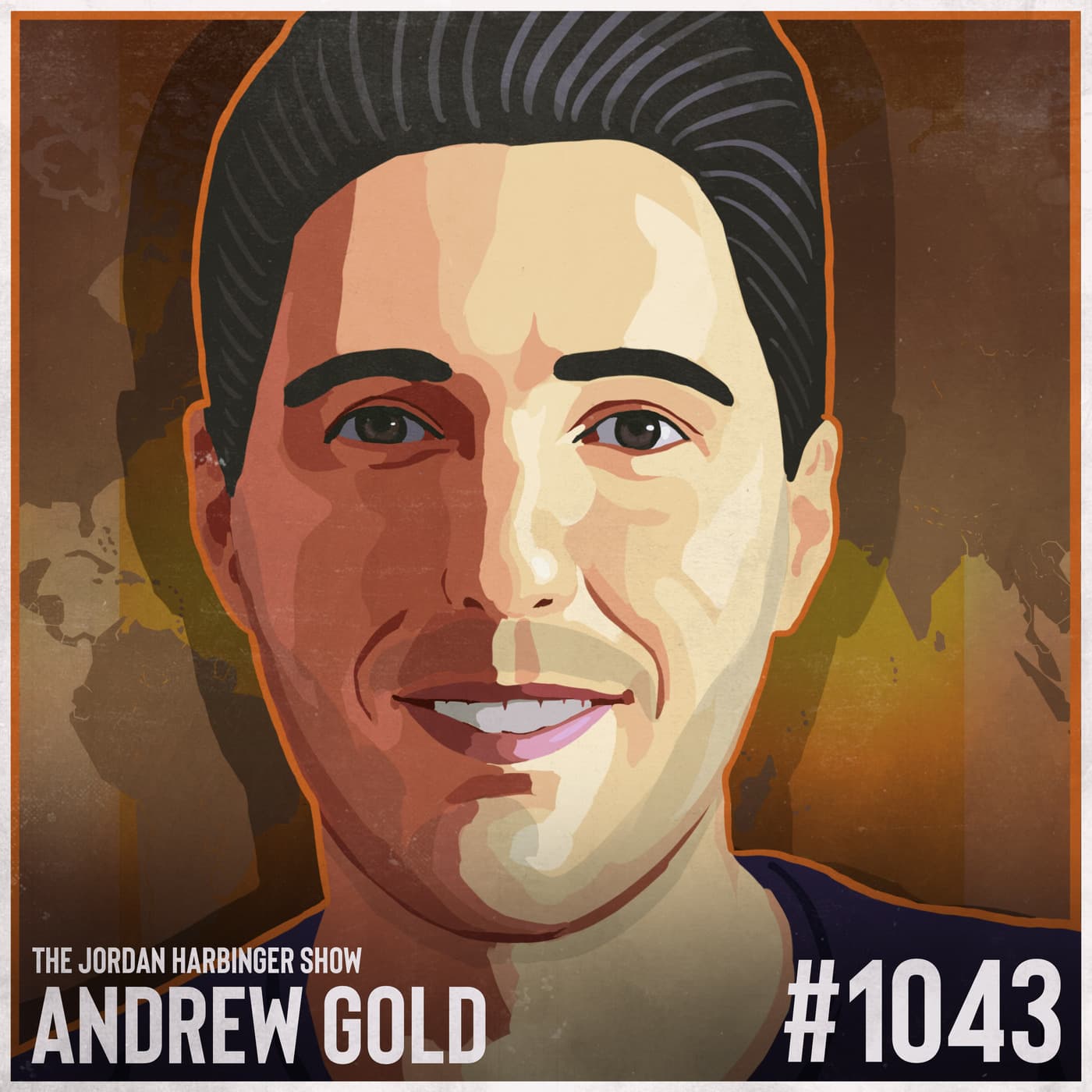
Podcast Summary: The Jordan Harbinger Show - Episode 1043: Andrew Gold | Unveiling the Psychology of Secrets
Episode Description In this episode, Jordan Harbinger speaks with Andrew Gold, author of *The Psychology of Secrets*. They explore the complex world of secrets, discussing their psychological impacts and the societal norms surrounding them. The episode addresses how secrets can be both burdensome and essential for social cohesion, especially in the modern context where technology challenges the ability to keep them.
Key Discussions
- The Nature of Secrets
- Physical and Emotional Pain: Keeping secrets can be physically and emotionally painful due to our evolutionary background, which promotes social cohesion.
- Secrets vs. Privacy: Distinction between what defines a secret versus private information, influenced by societal norms that shift over time.
- Impact of Technology
- Diminished Ability to Keep Secrets: Modern technology, such as smartphones and smartwatches, complicates the act of maintaining secrets, making it more challenging to hide information.
- Social Media Dynamics
- Virtue Signaling and Victim Signaling: Discussion about how people may project certain beliefs on social media for status or attention, regardless of their actual beliefs.
- The Role of Intimacy: Sharing appropriate secrets can enhance intimacy and strengthen relationships, whereas gossip often increases bonds at the risk of burden.
- Psychological Effects
- Mind Wandering: The mental toll of keeping a secret lies in how often one thinks about it, contributing to stress and anxiety.
- Parasocial Interactions: The affinity created between audiences and public figures can lead to an environment where individuals feel compelled to share secrets with those they trust, albeit someone they may not know personally.
- Cultural Perspectives
- Language and Lies: Insights into how different languages influence the way secrets are kept, with English allowing more flexibility in ambiguity.
- Historical Context: References to past societies where gossip served as a social glue, emphasizing its longstanding role in human interaction.
- The Intricacies of Lies
- Truth Serum: A discussion about the historical effectiveness of truth serum and how it often leads to false confessions rather than the truth.
- Body Language Misconceptions: The idea that body language is often misinterpreted in the context of lie detection, highlighting the complexity of human interactions.
- Conclusion
- Positive Implications: Understanding secrets can lead to better emotional health and societal interactions. Acknowledging our human tendency to keep secrets can help us foster deeper connections.
- Call to Action: Encourages listeners to reflect on their own secrets and the effects of technology and societal pressure on their personal lives.
Key Takeaways
- Secrets Can Be Both Burdensome and Bonding: While they can create anxiety, sharing secrets thoughtfully can deepen relationships.
- Technology Challenges Traditional Norms: The evolution of technology has made it harder to maintain privacy and secrets.
- Understanding Human Behavior: Insights from psychology help unpack the motivations behind secret keeping and sharing in various contexts.
Further Resources
- Andrew Gold’s Book: *The Psychology of Secrets* - Addresses the complexities of secrets in both personal and societal contexts.
- Jordan Harbinger Show: For listeners interested in deeper explorations of human psychology, relationships, and social dynamics.
---
This summary encapsulates the main themes and discussions from Episode 1043 of *The Jordan Harbinger Show*, providing insights into the psychology of secrets and their relevance in today's society.
Written by AI. May contain mistakes. Listen to the episode to check what was said.
Transcript
Automatic transcript. May contain errors.0:28This episode is sponsored in part by Dell. This episode is sponsored in part by 1-800-CONTACTS. You know that last pair of contacts panic? My wife, Jen, knows it way too well. She's had these mornings where she's out of contacts and stuck wearing these old glasses she's got to keep wiping clean with her sleeve. But now, she makes sure to load up ahead of time because her next set is always on the way from 1-800-CONTACTS. They're the only major retailer that lets you renew your prescription online, so Jen gets her same doctor-prescribed contacts fast with free shipping without leaving the house.
0:571-800-CONTACTS has been doing this for over 30 years. They've got millions of lenses in stock, award-winning customer service, and perks like free returns, free exchanges, even free torn lens replacement. Jen loves their Express exam, which lets you renew your prescription online in under 10 minutes. It's a vision exam, not a full eye exam, but it gives you a doctor-issued prescription if you're seeing clearly with your current lenses. No waiting rooms, no dilation drops, remember those things? And with their best price guarantee, if you find your contacts cheaper somewhere else, they'll beat it.
1:23Getting contacts doesn't have to be a hassle. Let 1-800-CONTACTS get you the lenses you need right now. Order online at 1-800-CONTACTS.com or download the free 1-800-CONTACTS app today. Coming up next on The Jordan Harbinger Show. I had a French girlfriend for three years when I was about 19 or 18. We only spoke in French, you know, sometimes we just speak in the French. And we'd often said, je t 'aime, in French, to one another, blah, blah, blah. And then she whispered in my ear, I love you. And I felt sick. It was too soon. Yeah, if I was doing some sort of lie detector test in your own language, it's definitely different.
2:02Welcome to the show. I'm Jordan Harbinger. On the Jordan Harbinger Show, we decode the stories, secrets, and skills of the world's most fascinating people and turn their wisdom into practical advice that you can use to impact your own life and those around you. Our mission is to help you become a better informed, more critical thinker through long form conversations with a variety of amazing folks from spies to CEOs, athletes, authors, thinkers, performers, even the occasional drug trafficker, four star general hacker or special operator. And if you're new to the show or you want to tell your friends about the show, I suggest our episode starter packs.
2:31These are collections of our favorite episodes on persuasion and negotiation, psychology, geopolitics, disinformation, China, North Korea, crime and cults and more that will help new listeners get a taste of everything we do here on the show. Just visit jordanharbinger.com slash start or search for us in your Spotify app to get started. Today, we're talking with my friend Andrew Gold about the psychology of secrets. You've heard him on the show before, mostly on Skeptical Sunday. Now he's got his own book on secrets, which I have read and thoroughly enjoyed. Today, we'll explore why people tell secrets, what keeping secrets does to our body and brain, why even religions, or I should say especially religions, keep secrets, different types of secrets, how secrets are related to privacy, virtue signaling, shame, guilt, and more.
3:12This is an interesting topic for me by virtue of our Feedback Fridays. We get a lot of listener letters. We deal a lot in secrets on this podcast, many of them quite dark. This episode, by the way, It was recorded live at the podcast show in London. So we had a crowd of people around us the whole time. Bit of a unique format for an interview like this. Like we're having this intimate conversation about secrets and there's hundreds slash even thousands of people walking by, some stopping, some taking photos and videos of us while we're doing this. We're just like, I guess, ignoring them to focus on this sort of intimate conversation.
3:40It was really unique and interesting and fun. So here we go with Andrew Gold. So you wrote a book on the psychology of secrets, and I thought this was such an interesting topic. I was a little jealous when you told me what your book was about because you picked a damn good topic. And I think, first of all, also, we don't think about the psychology of secrets. We don't think about the impact that keeping a secret has on us. We don't think about the impact that keeping a bad secret for a long time. You think it's stressful, of course, but that's kind of where the research for me began and ended.
4:12Where do we begin with something like this? Why do people tell secrets in the first place? Maybe it's a good place to start. That's a great place to start. It's where we began. I'm obsessed with evolutionary psychology some of it is speculation because we weren't there at the time or whatever it might be but if you look back to tribes it makes sense that it would hurt us to keep secrets if you have a tribe of people who are all intent on keeping their own secrets each individual has hidden some food over there they've hidden the water there's some refuge over there they can go to and they're not telling anybody else about it that tribe is not going to succeed there's no social cohesion there's no good dynamics there and so it makes sense that any tribe where it actually hurt to keep hold of something secret it actually physically and emotionally makes us feel pain that tribe would have done well because it would encourage us it incentivizes us to tell one another our secrets so i think that's where it goes back to that's the best explanation we've got of why it hurts it does appear to be something that's called the fever model which is a little bit like how a cold or a virus or any kind of fever takes hold of your body, your body then makes it uninhabitable for the virus.
5:19Unfortunately, it's not very nice for you either. Your head gets hot, you start sweating everywhere, it's no good. Well, there's the same theory around secrets. The more secrets you keep and the more important those secrets are, the more related they are to your identity, big secrets that could get you into trouble. It hurts. And it's your brain's way of telling you, hey, don't keep too many of these secrets because you might get found out. Try to let other people in the tribe in on some of this stuff. That's interesting. And it says a lot about why people who carry like a dark secret for a long time end up with chronic stress and anxiety because they're having a literal physical reaction to keeping a dark secret like abuse or something like that in the family.
5:57That is well, it can be deeply sad, but it also makes sense why people feel good to unload secrets. I know you and I take a lot of emails from show fans and our respective podcasts. We do Feedback Friday. People write in with stuff where I'm like, holy smoke, you trusted a stranger. And it's a deep honor, of course, to be trusted with this. But also we're safe. If they tell that to somebody they know, it could destroy their whole life, some of these secrets that we talk about on the show. But if they email me, they know I'm going to keep them anonymous because we have that level of trust. You talk about this in your book, though.
6:29You say then the burden is then put on on the person who is told the secret. But I don't feel that way when I read, say, a letter. So why is it different in real life or what's going on here? When you read a letter, I think you're a good person to tell secrets too, because you don't know, not because you're trustworthy. I mean, ultimately what we found is that you shouldn't tell your secrets really to anybody if you hope for them to remain secret, because everybody tells. And I think anyone listening to this will be nodding along like, oh God. I tell hundreds of thousands of people your secrets.
6:59I just don't put your name on it. Yeah. Because it's of no interest to you. You don't know these people. They know you, they're your subscribers and they're mostly wonderful people and they trust you and you don't know their friends and their, you know, so it's very different. They want to tell someone and they know if they tell their friends, that's not going to go down well. That's not going to end well. They have to tell someone it's hurting to keep this secret in. And so they're telling you, they're telling me, and this is parasocial interaction. That's such a good word. Tell us about parasocial interaction.
7:28That's this word probably didn't even exist when we were growing up in the nineties and 80s because it seems to be a uniquely internet-ish phenomenon. Oh, absolutely. Well, it started a bit before the internet, but 1950s, 1960s with talk show hosts, particularly in the States, but the UK, you know, the rest of the world had talk show hosts as well, I suppose. But in the States, they think of The King of Comedy, which I think was in the 80s, a movie by Scorsese about exactly that, an obsessive fan where parasocial interaction got too much. What parasocial interaction is, is this relationship between the viewer and the talk show host, essentially.
8:01The good talk show hosts are people who are able to make that relationship feel very real, even though it's actually very one way. Nowadays with the internet, and especially in recent years, we've got something that doesn't really have a word, but I've been calling it reciprocal parasocial interaction, which we're able to speak back. The talk show host wasn't able to talk back before. Now you are, I am, and we actually talk back. And it makes this bond between us and the viewer and the listener even closer. Yeah. The problem is it's to an extent very real and to an extent it's superficial because I've had fans or subscribers email me and say, hey, what's your address, by the way?
8:39I just want to send you some chocolates. And I've had to say, oh, I'm really sorry. I can't give out my address. Now, if we were really friends, there's not a friend I have to whom I wouldn't give my address. So that's where it falls down. And these things are all very tricky and awkward. I should probably stop giving out my address and eating things that come to me in the mail. Definitely. Definitely. You know what? I felt so bad because somebody emailed that. And then on a podcast, I said, oh, it's so sad that you can't do this, but you don't want to give out your address in case someone sends anthrax in the mail or something like that.
9:08And that person then emailed next week, oh, sorry, I didn't realize you thought I would be sending you anthrax. And I was saying, no, no, I didn't mean you specifically. I was just joking. I didn't want to, you know, and the parasocial interaction was broken. You destroyed it. Yeah. Destroyed the trust. I answered pretty much every DM or email that comes in. And if somebody emails me something and I don't reply, it's probably because I didn't get it. It might take me like two months, but I will answer that. I never really could put my finger on why. I just kind of thought, if somebody takes the time to write me, I should write them back.
9:35Maybe they'll stay a show fan for a longer period of time if I reinvest a little bit back in them. And it scales okay. It takes a lot of time, but it's like, you know, it's worth it. You've just explained that perfectly, I think, right? They'll invest hundreds of hours with us on our podcast or YouTube channels over the course of a period of years, or even sometimes in one year, if they really get into the show and they drive a lot, for example, and we invest like five minutes back with an email, it really does sort of cure the cement. It really does solidify things. Yeah, they trust you. It solidifies the trust.
10:10It makes you just a 15 % more real or whatever you want to call it. And I really think it does a lot. But you're right. People will do things like bake me cookies or something and i'm like oh this looks great and my wife is like i don't know the box it came in was kind of torn should we trust this and it's like a weird you would never if you sent me cookies i wouldn't and the box was torn i wouldn't be like he may be poisoned these but if it's a stranger even if they emailed me to tell me they were sending me that i have to wonder is there a body part in this cookie yeah and which part is it yeah there are strange people that's just a fact one percent of society one percent of men i think or maybe it's men and women are psychopaths so That's a bigger percentage than I kind of wanted to know.
10:50Yeah. It's larger than a country's army, if you think about that. I mean, it is, I think, 300 ,000 people in the military in the States. Yeah. And it's about the same number, a little higher, of psychopaths. And so all it takes is one of them to send you something poisonous one time, and you're dead. Great. Maybe I should stop feeding these things to my kids. Write that down. Secrets even show up in the Bible, right? And I know we're going to get emails about this, so make sure you know what you're going to say next. gods. Yes, yes. Well, I wrote about this as the first ever secret. Now that depends if you're a believer or not.
11:22It so happens I'm an atheist. I think more and more religious people are okay with people declaring they're atheists, providing they don't judge or talk down to them and their beliefs. That's always the problem with atheists, though. Many of them never shut up about being an atheist. Yeah, I was going to say it's just like being vegan. I'm not one of those. I don't want to do it. I get icky about animals in my mouth, but I can sit next to 20 people eating stakes, fill your boots, enjoy your life. See, you do keep it on the low. Yeah, well, you know, it's a bit of everything, isn't it? They always say the most boring people would be those where you know one of their political views, and then you know all of them just from that one.
11:59Ah, I like that. Tell me about why religions keep secrets, though. There's a function here. Yeah, unfortunately, I mean, religion is not so much anymore. But if you go back to Christianity and the way Christianity was 500, 600 years ago, the fact is it kept secrets not just from people outside of Christianity, but from Christians themselves. And this is a common facet of cults. It's a cultish way of being, and it's a way of keeping people in your group. That is what was going to get the emails. Yes. Did you just compare Christianity to cults? No, you did. Here's a 10-pager. Oh, God. Well, it's not.
12:30Okay, Christianity is not a cult, but it did act in ways that were once quite cultish. And for example, you couldn't translate the Bible to English, right? It was Greek or Latin, I don't even know, Aramaic. Aramaic. So that was like a gatekeeping thing, right? Like you need someone to read this for you. I can only be a priest who we control. Right. So what can you do? You can't go home and read the Bible. You've got to go into church. So it keeps church attendance up every week. What do you do when you're there? You give money, you donate to the church. You then hear the stories from the guy at the top.
13:00That guy can make it sound however he wants. There's a lot of talk about the way that the Bible has been very Westernized. I mean, these were people walking around the Middle East by all accounts, but the photos, not photos, the photos I have, the AI photos I have, the drawings and the stained glass windows art and all these kinds of things, they portray very white looking, modern looking people. I mean, we've all seen white Jesus. Yes. Right. Yeah. White Jesus. There you go. So anyway, it's a way of controlling the narrative, a way of making sure people keep coming back and a way of hopefully getting a bit more money if you're the cult.
13:32Right. Out of people. Scientology does this, right? You don't get to learn about the alien thing until you're up there at the Tom Cruise level. That's right. That's right. Well, Tom Cruise is way past that. He's a bastard. Okay. It's mad. I could talk about Scientology all day. I know. You know, I love it. So they've got these things called operating thetan levels, or different operating thetans. One, two, three, four, five, six, seven, I believe is the top one. There's been some talk of eight. There's been talk of 15 even, but they don't seem to exist. Tom Cruise is as far as you can go on that.
14:03I think Kirstie Alley was before she passed away. Presumably she's reincarnated into another Scientology member now. Who knows? but the amazing thing here people don't realize this about scientology they think god how can all these scientologists all these members how can they believe this madness that they believe well most of them don't even know about it it's so weird yeah they don't know until operating cleaton level three by that point you've spent hundreds of thousands of dollars you've excommunicated all of your friends you've done unspeakable things to other people in the cult you've recruited people.
14:34So when you finally learn the big secrets at operating phase in level three, which is that evil warlords galactic Xenu, he had an overpopulation problem, put billions of people into a volcano on Earth, and then got their spirits out, blah, blah, blah, blah, blah. It's so bizarre. So you would think now, someone goes to the Scientology Center, goes, I want to learn more about this, Googles it, immediately finds that and never goes back. And yet... For that reason, they specifically target people who speak English as a second language. I have an old friend, Alex Barnes-Ross, who was a Scientologist.
15:09He worked a lot with Bella Cruz, who was Tom Cruise's daughter, and Nicole Kidman's daughter, who lived in London. She was at the Scientology headquarters of London. And they used to go out to parts of London where they knew there were a lot of people who didn't speak very good English, and they would hand out English. English very well, but yes, continue. Because they didn't speak good English. Yeah, you can. It's just not good English. They didn't speak English very well? No. I think you can speak good English. Well, I'm not going to argue with a Brit over English. I'm going to die on this hill.
15:35I'm going to lose this one. Both are right. Well, you're right. But anyway, so these people often, I mean, they had these pamphlets translated to Arabic, for example. They wanted a lot of the Arabic population around London because they might not have heard the bad stuff about Scientology. Yeah. I mean, they are just like one Arabic website away from not being able to do that. It seems like a losing information battle, but they just don't care. They're almost screening for people who can't use the Internet. As long as they keep getting donations, they get a lot from Tom Cruise, a lot from John Travolta, or at least they did from John Travolta.
16:04He doesn't seem to be as engaged anymore. A lot of celebrity donors. It's the celebrity factor. So they stay in Scientology. Scientology pretends that it has millions of members now. It actually is thought to have about 20 ,000 to 30 ,000 now. So they're like podcasters. They lie about their numbers. Yeah. And podcasters in size because - Present company excluded. They have significantly smaller numbers than you or I have. Uh-huh. That's kind of funny to think about, huh? More people are listening to us bitch about Scientology than are actually in Scientology. Many multiples of that. And in fact, millions more if my podcaster numbers are to be believed.
16:38Which they should. They have more money. That's true. They do have more money. Tell me about how this works in politics. When I traveled to North Korea, I was really surprised and shouldn't have been about how little people knew about Kim Jong-un and the leaders of North Korea. Where does he live? We don't know. Well, what is his house? You don't know anything about the main headquarters of your government? No. Oh, I know it's a regular apartment just like a worker. And I'm thinking, come on, man. You think Kim Jong-un lives in an apartment the same one you have? Yeah. That's delusional. But they don't know.
17:09How many kids does he have? I don't know. Who is his mother? I don't know. And then these things are slowly drip-fed to the population in, like, the newspaper and on television. And then when they show his daughter for the first time, it's like a big deal. Who is that? Is that his daughter? Oh, my God. He has a daughter. She's 10. That would be so weird if you didn't know that Barack Obama had kids and you found out in the fifth year of his term. That would be bizarre. It's amazing you did that in North Korea. That's pretty cool. Yeah, and I would ask them these questions, and they would say, like, I don't know.
17:41And they're not lying. They really don't know. I would say I saw that he has a daughter, and they would go, really? Oh, that's interesting. How old is she? I don't know. but they know everything this guy has said his whole life, the fake quotes that are in the books and newspapers. So they're dying to know. It's like, they're like Taylor Swift fans. You know something that they don't and they don't think it's weird that you know and they don't. There's some aspects to this in the royal family, of course, as well. If you keep mystique going, that obviously just keeps people in a state of confusion and in a state of curiosity and wanting to know more.
18:10If the less you know, the less you're able to criticize a government. Obviously the Stasi is a good example as well as North Korea. Tell us about what a lot of people don't even know what the Stasi is. The Stasi were an authoritarian left-wing government, but one of those where it's so left that it's right, and it's so right that it's left, that took over in East Germany. And apart from this weird bit in Berlin where that was cut in half, it's a weird one. People don't realize Berlin is, it's like you cut the country in half, but then there's like an island that is Berlin that has half of it as still as West Berlin during that time.
18:41Bizarre thing that happened. And you just see how a country torn in half, one of them went communist that was the stasi and it meant that you had this secret police going on you had people reporting on one another it's amazing how fast humans will begin to betray one another yeah report on one another they produced more paperwork than it's thought any paper outside i mean there was some stat in the book i can't remember exactly but just an extraordinary amount of paper that was just paper about everybody and their lives they used to do things like get people who were working with the stasi to attend premieres for pornography showings just so they could take pictures of them for collateral.
19:16I see. That's an interesting gig. Can you imagine you're the secret police porn guy? Yeah, having to organize the premiere or do the filming. I'm not sure which one is more awkward. I'm not sure. Perform in the pornography. Yeah, no, that one's definitely, that would be the most awkward. I lived in former East Germany for a while. Me too. That's right. I forgot about that. What years were you there? I moved back two or three years ago and I was there for three years. I see. So I was there in the 90s. And I remember asking a lot of questions about Stasi and things like that. And I think it was like one third of the population was somehow involved in informing on somebody.
19:50So you used to be able to go and see your files at the building and they would open up your Stasi file. And they had a counseling service right upstairs because you would go in there and be like, I'm curious about this. And you'd find out that like your mom was ratting on you or your wife or even your kids. and you would immediately, you know, lose your mind a little bit because you felt so betrayed. So they would, you couldn't just roll in there and look at your stuff and bounce. So you had to make an appointment and they wanted to kind of like make sure that you were okay afterwards, which I think is admirable and also kind of an insane setup, if you think about it.
20:24Well, many people don't want to go and find out because it would change their lives. A lot of people say, I've heard people saying, I understand if people did rat on me, I understand what happened and it's human nature, but I don't want to know specifically because that's going to change our relationships, I'd rather not know. But look, even now, you know, we talk about this communism stuff, like it's very bad, which I think it is. And I think you think it is. But a lot of people still in Germany, they've got this thing called Ostalgi, which is a portmanteau of Ost meaning East and Nostalgi meaning nostalgia.
20:54They have nostalgia for it. It's also known, this happens in many Soviet places or many formerly communist places. A lot of people have, you know, they think back to it and it was a time where everyone was employed because everyone had to have a job. Yeah, that was sort of, I was going to mention, they're not nostalgic for the secret police. They're nostalgic for being employed and being able to go to the dentist and having their whole family at neighborhood school go on a vacation together and feel like they weren't being bombarded by bullshit on TikTok, which I understand. But they might have thought, okay, that's enough.
21:26And I like this collective authoritarian thing that I don't mind the loss of individual liberty. And that's something I found with Hasidic Jews, for example, I spoke to a lot of Hasidic Jews over the years, people who have left Hasidic Judaism, and the ones who have left, they said, look, a lot of people back in the Hasidic Jewish community, they love it. The women there, a lot of them love it. They love it because there are things in those kinds of collective communities that we as individual freedom lovers or whatever, we do miss out on. Storytelling, they all gather around the fire and they hear a story from a rabbi or whatever it might be.
21:56And it's beautiful in that sense, that sense of tradition. However, However, I wouldn't swap what we have with individual liberty and choice for anything. I absolutely love it. But people have different personalities and different choices and they want different things. Are there different types of secrets? I don't just mean good and bad. That kind of goes without saying, right? Is surprise party not the same as keeping a secret about somebody being abused as a child? But are there different, are there other varieties of secrets that we can kind of differentiate based on your research? Yeah, we get, they don't necessarily make us, we don't feel them differently, but there There are secrets like relational secrets, and then there are aspirational secrets to do with work, for example.
Read the full transcript
22:33And some people have to keep both kinds. So Oscar Wilde is a good example. He had to keep a secret of being gay in a time when he wasn't supposed to be gay from his friends, but also for work reasons. His stuff wouldn't be published if he admitted he was gay. Same for Alan Turing. That kind of secret is really, really difficult, and particularly so because it involves your identity. So what type of secret is that? He had both aspirational, as in work, and relational, as in personal. Oh, I see. So it's almost like it's just work versus personal secrets? Yeah. Interesting. That's one type. And then there are loads of different types of...
23:06There's something called the study of dramaturgy, which I'm not going to be able to remember all the different secrets. I should have it to mind, but people have to read the book to know exactly. But the theory is about... It's not a tease for the book. You literally just can't remember. There's no way I'm going to remember about dramaturgical theory. I don't even know what that means. I looked it up. I found out what it was. I wrote it down and everything left my head immediately after. Not that it's not interesting and very useful for anyone who buys the book. Very compelling argument. Yes. But the idea is that we are all playing roles.
23:33Like Shakespeare's idea of we are but players on a stage or whatever he says. If you put but in the middle of a sentence, it sounds right, doesn't it? We are but this. But this idea that everybody plays, you know, we're all playing different kinds of roles and we keep different kinds of secrets and play different roles in that dynamic. And that is really fascinating. It's just hard to remember the exact names and things. I was joking earlier about podcasters lying about their numbers. But, you know, of course not, really. I mean, everybody, all these social media folks, you ever get a pitch where it's like the John Renson show has been downloaded ten hundred million billion times.
24:06And then you talk to that person and you're like, so what's up with that? And they're like, well, I added up all my TikTok, all my YouTube, all of my Twitter impressions or something. And then I multiplied by the number of years that I did it. And then I wasn't counting like the first seven years. I just extrapolated my current year all the way back to the beginning, even though definitely that wasn't how. And you're just like, so you just massively exaggerated all this. but they don't feel like that's a lie or a secret of some kind. It's just like, they just try to justify it as marketing. And it would stress me out to do something like that.
24:42And maybe that's more to do with lying than it is to do with secrets. But the secret is, what are your real numbers and why are you ashamed of them? It is a secret. There's an interesting dynamic between what is a secret and what is a lie? What is a secret and what is just a private matter? So there's this weird triad going on. and lies tend to be things you tell you tell a lie to keep the secret so lies very much involve secrecy i think in that case it's a difficult one because we don't feel so bad because we know that everyone's doing it unfortunately we're in an age now where everyone lies on their cv the resume everyone lies on their uh podcasting so it all just means nothing and now it's just you're right i get all these emails and extra bajillion bazillion times.
25:25It means nothing to me. I'll go and have a look at their Apple podcast in the country they're in. See how many reviews it's had. They got 24 reviews. Exactly. That's what gives you the idea. And then YouTube as well. You can see, never look at the subscribers. Everyone looks at the subscribers. This guy's got a million subscribers. Nothing. Because how many views do their latest videos get? And that's all that matters. The reason we're bringing up all this media stuff is we are at the podcast show in London where there are thousands of people walking around. We're doing a pretty good job staying focused on the fact that there are thousands of people walking around.
25:58We're not looking at them. At least I feel like I'm not, but maybe I am. I'm lost in your eyes. I appreciate that. Do you get recognized a lot? Things like this? Yeah. Yeah. How do you feel about it? I'm mixed, right? It's like, oh, that's so cool. But then I also feel like, oh, it's not that impressive. It's just me. And then you've got to live up to something as well. Yeah, there is that. So I'm jet lagged. I was hangry yesterday and somebody was like, oh, hey, you look familiar. And I was like, I better not be a dick right now or short with this person because this might be the only time I ever see them in my entire life.
26:32And if I do that and someone's like, oh, I was really disappointed. He wasn't that friendly. That sucks. That makes me feel like crap. So I try to be a little bit more chipper than I would naturally be if I was like, I know that I don't know this person. But what's weird is it sounds like I'm being fake, but I'm actually quite happy to engage with that person. I'm just exhausted at the moment. It's a weird thing. It's a weird thing. I've only started recently getting things like that. And I was at like a service station on the highway, motorway kind of thing. That is one of those places. It's almost sacred because you go to this place, it's 11 at night or something.
27:06You're tired, you've been driving. It's just you and truckers. And you just don't expect anyone to talk to you ever. So you relax because no one can recognize you in this place. So I'm sitting there eating a burger, vegan burger, and not that it matters. And stuff is dripping down my face. And I suddenly get this eerie feeling of a table near me. You know when the sound stops, suddenly there's no chatter. And I'm like, burger in my mouth. I look up and I can see seven people on a table all looking at me. And I should have just said, oh, hi, guy. But I thought, there's still a 1 % chance they're just looking at and they don't know who I am.
27:39And it would be really weird if you were like, hi, yes, it's me. And they're like, bro, there's a car crash behind you. We're not looking at you. Yeah, this weird guy at 11 at night with burger sauce down his face, just like, hi guys, yes, I know. You may remember me from such films as, or whatever. So I didn't say anything, but then it was too late. And then the rest of the time I'm eating and I just know they're all looking at me and I can hear them saying, what's his name again? I think I, I don't know what his name is. It's like, you don't even know what my name, it's like the excitement of someone's recognized me mixed with, oh, they don't even know who I am.
28:08That's the guy from that thing. That's it. Yeah, that's it. That's all you know is the guy from that thing. Yeah. Yeah, I still want to get into the idea of secrets versus privacy because it's not weird to want to keep certain things private. I mean, I certainly am not going to – I don't even want to give an example because it's – No, go on. Maybe not. Well, yeah, like I got this super close haircut, right, because the gray grows in on the sides. I'm like I'm going to be on the stage in front of a lot of people. But normally I wouldn't say that on this podcast, and I certainly wouldn't go in front of people and be like, they go nice haircut why'd you get a cut so short do you normally do that oh there's gray hair growing in on the sides actually i probably would say that but that's tell them the thing about your genitals you tell me which thing uh yeah exactly there's a lot of things like that that i think most normal human beings would not disclose in front of a large group of people i get a little bit of a kick out of it and i think it's relatable on this show so it's fine No one's going to be like, Jordan has gray hair, unfollow.
29:06But a lot of people are very private about things that I think are kind of funny. Like what? From push-up bras to dyeing their mustache. And I don't really understand that. Yeah, well, this really interested me. I was fascinated by this whole delineation between what is secret and what is private. And dyeing a mustache or whatever, that's a really good example. Because I give the example in the book of my dad. I walked in on him. and that sounds like it's going to be a really, really exciting, salacious story. I walked in on him, dyeing his hair. But it's one of my earliest memories. And it only stands out because I remember my dad went, no, no, close the door, because he didn't want me to know he was dyeing his hair.
29:45It was not manly in the 90s or whatever. Good thing you never told anybody about that. I know, I've told everyone. It's in the book and it's on this podcast. When the lawyers were going, the lawyers from Pan Macmillan were going through the book, they'd give you all these notes, have you checked this person is okay with this and that. And they said, you have to talk to your dad to tell him that's going to be in the book. Oh, how was that conversation? It was fine because it's just, I didn't tell him the lawyers had asked me and that there was any opportunity it could be taken out. I was just like, dad, you know, that thing about using the book about your dying, the dying hair, I've told you that.
30:11And he was like, yeah. And I was like, okay, that's all right. And that was it. That was enough. He went back to the lawyers, like he tacitly acknowledged that this is going to be fine. My dad's not going to sue me. He's very proud of the book. But you know, he, back in the day, I mean, nowadays, no one cares. That's the thing. 20 years ago, we were in a society where some men felt that they would have to hide a thing like that. Now they'd show it off. metrosexual getting all the hair dye. So what is private and what is secret, it turns out, depends a lot on the time and place. If you kept a slave now, that would be a pretty huge secret.
30:42If you kept a slave 200 years ago, that might be a private matter for you. It's none of other people's business how many slaves you've got. But now that would be a huge secret. The reason being it transgresses societal norms. It goes against what society expects. And the problem with that is if we start making this very Instagrammy, resume, LinkedIn kind of life that we have, where we do exaggerate how many podcast listens we've had, we exaggerate how beautiful our faces are and how many boyfriends and trips we have and all these things. When you don't have that, you're going to feel shame. You're going to feel like you have to live up to it.
31:16And so these things that would have just been private, I've got a girlfriend, I don't have a girlfriend, I've not had sex recently, have to become secrets. Speaking of locking in on your dad in the bathroom, How about a word from our sponsors? We'll be right back. You ever seen a grown man naked? If you're wondering how I managed to book all these great authors, thinkers, and creators every single week, it is because of my network. And I'm teaching you how to build your network for free over at 6minutenetworking.com. This course is about improving your relationship building skills and inspiring others to want to develop a relationship with you.
31:46And the course does all of that in a super easy, non-cringy, very down-to-earth way. There's no awkward strategies or cheesy tactics. It's just practical exercises that are going to make you a better connector, a better colleague, a better friend, and a better peer. And six minutes a day is really all it takes. And many of the guests on our show, by the way, subscribe and contribute to this course. So come on and join us. You'll be in smart company where you belong. You can find the course at sixminutenetworking.com. Now, back to Andrew Gold. One of the best things is when you see someone and you're like, oh, I have so much FOMO because this person's career and life are so on track.
32:22And then either that person or someone close to them is like, yeah, well, there's this thing that's not going well for me. And I'll be like happy. And I go, I am such a POS for finding the slightest amount of joy in the fact that you're having a hard time with this thing. And it's not because if I had the chance to undo that for that person, I would never make that person's life harder. But knowing that they are also struggling with something makes me feel better. And it's such a vice. Yeah. It's not a good thing. But you're honest about it, right? You're honest. And people aren't honest about it.
32:56That's one of the things we're not honest about, that we're human beings. There's been a move, I've definitely noticed in the last 10, 20 years, towards pretending we're perfect and that we never harbor ill thoughts. We never do anything wrong. And it's just not human. We're very much involved in a status game. I believe that firmly. I'm a big fan of Will Storr's book, The Status Game. Yeah, yeah, yeah. He was on the show about that book. I don't know what the episode number is. Oh, right, yeah. I had him on recently as well on Heretics. And I'm a big believer we are all trying to do well. do you remember that song sunscreen like everybody's got to wear one if i have one advice yeah that was like the you're graduating from high school and it's 2002 or something it's like always wear sunscreen and then chris rock did the parody version there's no sex in the champagne room have you ever heard that no i think it's chris rock that's great yeah that's great anyway that was completely unrelated to what you were about to say i was just going to say one over that it is interesting i hope you got chris rock right because it would look bad if it's not him.
33:50The sunscreen song. In it, I listened to it again recently. Some of the advice is spectacular. And one of the bits of advice said much more poetically was, remember, you're running this race only against yourself. This is only for you. You're the only one doing this. And don't try to compare with other people. But, you know, it's impossible. Nobody listened to that. That's episode 552, Will Storr, Understanding Social Position and the Status Game. 552. Thanks, Producer Jason, whose arm that was in the shot. I'll put your phone slightly off camera. huh? He's thumbs upping. He's thumbs up. Okay.
34:20Thank you for that. Anyway, that is good advice. The point being, you know, we should only focus on ourselves, but it's impossible. And if we all start lying on Instagram, if we all start pretending we're having more sex than we are, for example, that's no good. And that's another example is I came to realize that it's a secret. Okay. If you're a couple and you're having lots of sex, that's a private matter. Yeah. It doesn't transgress societal norms at all. No one cares. Like you're having loads of sex. Well done to you. It's not secret. What is secret is if you're never having sex. If a couple doesn't have sex, that has to be a secret.
34:49And so that was this interesting dynamic between what's secret and what is prizing. Yeah. I had lots of sex growing up. I just wish somebody else was there for some of those occasions. Love that. Yeah. You're right. Because we're comparing ourselves against expectations, not against reality. And those expectations, I actually, one of my friends is selling his company for like$200 million. And I decided at that point, I was like, oh, oh, I have so much FOMO. I was like, I'm going to just tell him. I am so envious that you are going to have that crazy amount of money. And he's like, yeah, it's not really going to change my life that much, but I'm going to do a lot of cool stuff.
35:26You should join me for it. He's going to buy a freaking yacht, obviously. I'm like, I would love to see you. He's like, of course, anytime. Like, yes, please. He appreciated you, honestly. Yeah, he did. He's like, you're one of the few people I can tell this to. And I thought that was really interesting because I told him, I view you in a slightly negative light for being extremely successful and I feel bad about that and he's like yeah that's fine I only want to be around people who can be honest about all of our vices it's very difficult to do because there's an amount of shame when you disclose something like that I'm your friend I'm supposed to be unconditionally happy for you what I'm not supposed to do is go if I'd made better choices at some point I would also be selling my company for 200 million dollars but instead that's never going to happen and I'm always going to have to compare myself with your success.
36:08And it's like, oh, I kind of feel better having said that. I don't really feel compelled to do that now. That's an awkward thing, isn't it? Yeah. This sort of competitive, the envy, the professional envy. Yeah. We all have it. And we're all podcasters as well. And you want to lift everybody up and we all speak a good game. But then when you see someone else doing really well and suddenly overtaking you, that hurts. And that's just 300 ,000 years of evolution. Yeah. Yeah, it's true. You give a really good example in the book of the, and this is where the episode gets explicit, masturbation stats between men and women.
36:36That's right. I said masturbation at the podcast show in front of 1 ,500 people. Guys will talk about that and make jokes about it and tell stories about it on comedy podcasts or at a bar. You will pretty much never, unless it's like a female stand-up comedian, hear anybody broach that subject or break through that wall. Someone like Bridget Phetasy. Yeah, or Ali Wong will maybe mention something about that. I don't even know if she would. It's kind of like extra. It's extra. Yeah. And it's sad. And again, that's another example in society where the fact that a woman does it almost has to be a secret.
37:12There was a great book by Nimco Ali, who is somebody who had female genital mutilation when she was young. Oh, that's horrible. Horrible. And she wrote a book about it. I can't remember the name of the book right now, but it's the only book I think she's written. So Nimco Ali. And she wrote about this, like, why don't we talk about our vaginas? Even saying the word vagina seems weird to men and to women. and we feel like women must never do that. They must never masturbate, but they do. They really do. I did a survey of - I was just wondering if anybody was going to - She got it. She picked that up.
37:40Oh my God. Make an eye contact now. Jordan's about to be expelled from the UK, along with Harvey Weinstein. No, it's not. Okay. Hopefully not that bad. No, but the survey I did showed that women are at it quite a lot. Again, I've got - Added. They're at it. They're at it. They're at it and they're addicts. The stats, again, they're in the book, but it's, you know, most women do it. And at least once a week. Really? Including women who have boyfriends and husbands, which is pretty shocking to me. That is shocking. And I know a lot of women will be listening to two men talking about this and going, bloody idiots, you know.
38:11Yeah, you're supposed to keep it on the low. We came with receipts. Yeah, or just like, how did they not know this? Or, I don't know, but I didn't know. Whereas men - I did not know. Men will just like, you know, sorry I was late, had a bit of a moment. I would have said one third, do it, one quarter. Yeah, I would have said that. And I would have been way off. I would have said that. Yeah, I would have said that. Jeez. In India, I found this one stat that Nokia old mobile phones, sell you for cell phones, went through the roof because women were buying them to use them as vibrators. Really? I get it.
38:40If you can't find anything else. Yeah. Maybe they're playing Snake. See what I did there? Yes. Lovely. Shout out to my Nokia 990 or whatever that thing was. You could drop it off the roof of a five-story building and you just have to pop the case back on. Yeah. What percentage of people lie regularly? Do you have any idea? I think it's 5%. That's it? Well, this is it. Most of us are not liars. Again, we like to think that everyone is. We seem to remember that everyone's lying all the time. That's because when someone does lie in a big way, that makes the news. It's a big story. Most of us are primed not to lie.
39:12Again, if we go back to evolutionary psychology or just evolution tribes, it made sense. Again, it hurts you to keep secrets. It also hurt you to lie because that's your brain's way of saying, hang on, man, you're getting a bit close to the bone here. You're flying too close to the sun. If you keep lying, you're going to get caught out. Our body amazingly has these mechanisms that curb that kind of behavior because your body doesn't want you getting in trouble. I mean, obviously I'm ascribing a will to evolution that it doesn't have, but just for the sake of argument, your body doesn't want you lying much.
39:42So most of us don't do it. We go red and we blush. We have all sorts of giveaways. Again, these are built-in mechanisms that are telling you, mate, don't do that again. You're going to get caught. And if you get caught lying right now, maybe it's not so bad, but evolutionarily, you're out the tribe. No one trusts you again. You will die. You're not going to pass on your genes. You're going to be out in the savannah. Back to the secrets as opposed to lying, or at least right on the line. Do you know, I'm going to get this wrong. We're going to get emails about this. I apologize. Have you heard about the idea that in Asian culture, let's say I'm an old Asian man.
40:17I might go to the doctor with my son, who's you. And the doctor says, I just want to talk to your son in private. And then he goes, your dad has cancer. Yes. And you don't tell me. And the whole family knows except for me. And I'm just like, oh yeah, I just had a stomach thing. And the whole family's like, he's dying. And no one tells you. You know about this? Yeah. It's in the book. Oh, that's where I got it. Unless it might have not made the last cut. I think it did though. So maybe it may not. That was that movie. There was a great movie. There was a movie about it. And I can't remember the name, but the grandma was dying.
40:47Yes. And they had like a party and everyone came from all over the world and she's still alive. That's the thing. It's like, she's still around. The heartwarming flick. It's a beautiful film. That's a really beautiful film. That happened in the West until recently. It's incredible. Really? I didn't know that. Oh yeah. Any people of an older persuasion who's listening to this right now might remember that. Maybe not in the States. Forgive me if I'm wrong. I know families in the UK where that happened, where the person was not told they had an illness. There were arguments on both sides of this.
41:14There's the nocebo placebo kind of thing. If you tell someone they're dying, they just give up and they die. A lot of people believe that. My stepmom, her mom died of cancer a couple of years ago. It was very quick. And she believes they shouldn't have told her. And I was, you know, you can't, she was so emotional about it. You can't really say, well, they have to. That's another example, by the way, of sort of individual liberty versus collection. You know, does some individual have a right or is it more important that the community gets what they want? There's a Sam Harris small book called Lying.
41:41I love that. He's done the show on this subject. And it's essentially what You can only lie if it's like a self-defense kind of thing. Yeah, he's a real like anti-lying guy. But he gives these examples of families he's known where they didn't tell the mother. The mother was ill, that no one told her. And it's so sad because nobody got to have that conversation before she got too ill and died. And they weren't able to really have that moment. So that's the other side of it. It's really unfair on the person and on their individual liberty. Sam Harris, he says that he would lie under any circumstances.
42:13Would not lie under anything. So you got this. I hate saying this. In the book, it was slightly incorrect, according to what he told me on the podcast. OK, what did he say? He said you can lie in situations in which you would use violence, essentially. So like if you are in your basement with your kids or your kids and family at the basement and some dude breaks into your house, you can lie and say that there is nobody in there and that you are home alone and your family's away on a vacation. you don't have to go I said I wouldn't tell a lie they're in the basement, go get them I do say that I think in the book as well just because he does give that example and says you shouldn't lie it's the Nazi at the door yeah the Nazi at the door he says you shouldn't lie and he had this professor he grew up that he loved the professor and the professor always gave these great reasons why you shouldn't lie with the Nazi at the door but Sam lying in that book doesn't actually give any of those examples of course.
43:08And then he goes on to say at the end, of course, in reality, only a psychopath could endorse that behavior. Only a psychopath could tell the truth all the time. Ironically, psychopaths often don't tell the truth, but that's to get their way. So he doesn't actually live by that. I think it's some sort of mental training or something. Episode 698, Sam Harris. There's also another Sam Harris, which might actually be earlier, which I think is the one about lying. Thank you. Having a producer write on hand like this, It's pretty wonderful. Something that he said for that. It's pretty wonderful. He was giving me a thumbs up before when I made a joke, which I like.
43:40Oh, that's good. I am being funny. Yeah. Yeah. I liked it. But he's doing it now. But yeah, I think it's a mental exercise, really. It's a philosophical exercise for Sam Harris. He's not saying you actually should do this. He's saying he thinks you should tell the truth whenever you can. But of course, only a psychopath would do it in that circumstance. But who says you should do it in that circumstance is the German philosopher Immanuel Kant. Immanuel Kant, he gave the same example. well, of course, it wasn't a Nazi because this was pre-Nazi times, but of an assailant comes to your door and you're harboring somebody upstairs.
44:10The assailant wants to kill them. And he says, you shouldn't lie. You should say, yes, he's upstairs. Now, again, it feels like these philosophers sometimes just get lost in their own madness. Yeah, that's ridiculous. And so his explanation is, and this is mad, so wait for this. His explanation is, if you lie and say that the guy he's chasing is not upstairs in your house, it might be that that guy in your house escapes through the window at the same time that the assailant then walks down the street and encounters him and then kills him and it would have been your fault because you lied and said he wasn't there and you got them then all killed that is olympic champion mental gymnastics yeah he's an absolute cunt yeah yeah it's a yes i was gonna make a pun on that but i resisted apparently though you could not anyway uh society really does treasure people who can spin a good yarn though.
45:03Like the lying, it's almost like if you lie well enough, we treasure that shit, right? Catch me if you can. You know, Frank Abagnale is episode number one of the Jordan Harbinger show. Totally full of crap. Not totally full of crap in that he got away with being a pilot and a lawyer. Totally full of crap in that none of that stuff in the movie actually ever happened. He went to prison for check fraud during that whole time. He made that whole thing up. But how did he pass the bar? He didn't. No, he didn't. I guess he didn't. Correct. That was a lie too. What a beautiful film. Yes. That movie is awesome, especially because the con was the entire story, not the story of the con man.
45:38He got us that way. There's a beautiful moment at the end where Leonardo DiCaprio's got long hair and he escapes off the plane and he goes to his old home, which must be running distance from the airport somehow. I don't know. But he's just run to... He jogs across the runway and goes out. Just runs home from the runway and goes up to the window of his home and he sees a child. So it must be a stepsister or half-sister or something like that. and he's sort of looking through the window and they're playing chestnut. Chestnut's roosting on an open fire. It's just one of my favorite moments ever in a film.
46:09And of all the things that never happened in that film, that one never happened the most. They tricked us, right? And that's the art of storytelling, as you know. And I once interviewed a psychopath called M.E. Thomas and she's interesting. And a lot of people say about her as well, like, she's not really a psychopath, she's faking it. And I'm like, well, yeah, but... If you're faking being a psychopath, it's kind of a psychopath thing to do. You've got something, you've got something. but yeah i said how do you enjoy movies if you if you don't have empathy how are you enjoying movies and she really made me think because she said you think that you're enjoying a movie because you're empathizing with the character think of a horror film when something scary happens you're not scared because you're empathizing you're scared because it jumped out and scared you okay you're just scared and she said that the way she enjoys movies is she enjoys that the director is manipulating us and telling our stories and that's what we're enjoying as well we like being manipulated in that kind of way.
47:00And we like those movies. She likes that movie. And what's the movie from the 1960s? Vertigo? I think it's Vertigo. Like an Alfred Hitchcock movie? Yeah. Because there's a big, like, you think someone's dead and they're not. And she said, ruined it. Well, no, but you don't know who might be dead. True. Yeah. The person who you think is dead. But anyway, we enjoy movies because they mess with us. What about white lies? Your pants look great. Why am I, you know, I really like your hair. What's wrong with that? I think pro-social lies, white lies i think these are generally okay and there's there's a lot of discussion about whether they should be told or not santa claus is the bigger one yeah should you tell you oh we're going through that so you know what elf on the shelf is no so elf on the shelf is a little elf doll you put them on like the microwave and the counter and the kids find them every morning the 30 days or whatever before christmas or the days up before then and sometimes he brings like a little bowl of m &ms and the kids get to eat them and jaden my four-year-old was like why are his eyes open and not moving yeah and then i'm like he can see everything and he goes no i'm in the other room and i'm like he can see through the walls oh i can see a picture now beautiful scary yeah and it's like oh well that doesn't make sense so he's real and i'm like yeah and then he's like well and how can he see through walls i can't see through the walls i'm like no he's magical so he's magical but his eyes don't move and i'm like he knows and so i eventually like he kept asking more and more questions so he flies away at night and then flies back isn't that really far when we flew to Taiwan it took a long time he's just back and forth and I'm like all right here's the thing he's not real but don't tell your little sister and he's like okay that was the end of that he told his little sister though whether you know it or not yeah no no I yeah he might have she probably didn't understand you can't tell people well there's that how old is she two okay well then so if it's ruined she can't tell me it's right I just thought that was I was like I can't keep lying to him because it's getting ridiculous and I think that's fine I mean kids grow out of it.
48:55It's another one of those things where we want them to believe it for the first few years. But if they're like 11 or 12, you start to go, oh, they still really believe in the Santa Claus thing. We're going to take you to a professional. Yeah, we've got a problem here. If they're 15, 16, and they're just loving Santa Claus, there's a problem. So it's a lie that you're telling that you know is going to be exposed eventually. And I think it's fine. You don't seem to have the same ill effects from holding what is a pro-social secret or telling a pro-social lie, ones that are intended to make people feel better as you do.
49:22Now, what is thought with kids is there is some evidence to suggest that children who are lied to a lot less kids grow up to lie themselves. Interesting. That's not good. That's not good. However, it's also completely impossible to raise children without lying to them occasionally. It's just unrealistic. We can't stay here because the shop's closing, even if it's not closing. You cannot do it. So someone I quoted in the book was suggesting is try not to tell the kinds of lies that are like, hey, if you do this, you'll get a reward and then you don't give the reward. I see. So as long as you're just lying about these little harmless things, personally, I think that's absolutely fine.
49:55Yeah. Before I had kids, I was like, I'm never going to lie to my kids. And then after I had kids, I was like, the Easter bunny just called, and they're going to cancel Christmas if you don't put your damn shoes on right now. It's the only way. It's the only way. And I try not to do that, but some days I'm just not a great dad, I think. Technology making it harder to keep secrets. I found it fascinating. There's that story of the guy that murdered his wife. Abbas. and said it was like Albanian gangsters or something. And then they looked at his, I can't remember, his Apple Watch or his Oura Ring or something like that.
50:27It was like, actually, you were moving around during this time and now your story doesn't check out. And it turns out that you were running around while you said you were taped up on the carpet. This was a big story at the time in the UK because the wife he killed, Caroline Crouch, I believe was her name, was English. And she was living in Greece with him. And he was doing all the crocodile tear stuff, outside the house when the press came, talking to them for half an hour each time, breaking down in tears. He said these Albanians came. They took all the money that he had hid in his Monopoly set, all of this stuff, and he was tied up.
50:59And he even managed to call his neighbor with a gag in his mouth or whatever and say, come and help me, call the police. They've come and got me. The dog was dead. It emerged that the wife and the dog had been killed by him. That's horrible. The dog got him an extra 10 years. Really? Yeah. Wow. And people are thinking, so it should have done, you know? Yeah. Bloody hell. But an extra 10 years on top of what? Life in prison? Yeah. So, yeah. So the guy's gone for good. But yeah, remarkable. He remembered a lot of the stuff. He turned off his CCTV. And there were a few other bits and pieces that he remembered, like, make sure to turn that stuff off, get rid of that stuff.
51:32But the her wristwatch said that her heart stopped beating at a different time to what. Oh, wow. Yeah. His phone showed him walking around up and down to the basement when he said he'd been tied up. So that's what gave him away. And then they were able to look at the text messages and see they'd been arguing that night. And it all started to fall into place. We can't get away. Like, it's almost the death of secrets. In that respect, it's good. I want murderers to be caught. Right, sure. But it's scary as well. Well, a lot of authoritarian regimes are using compromise, right? Compromising sort of shame to control people.
52:04And you mentioned earlier about status. Conspiracy theorists are big on this, right? Like their status in these conspiracy communities and among the general population is that they know something that other people don't, which even if that thing is complete nonsense and malarkey. So I find this all quite fascinating, especially with the tech trackers. There's a very funny example in the book about, was it a butt plug that recorded audio? Yeah. Oh my God. There's another word I said in front of 1 ,500 people. Butt plug. Plug for the podcast. Sorry, that's not what I said. Butt we're plugging the podcast.
52:36So even in the, this was Jenny Cleman's work. She wrote a book, Sex, Robots, and Vegan Meat, just about the future. Sure. She's seen as a cross between Margaret Atwood and Louie Theroux or Louie Theroux in America, just a journalist kind of thing. And she wrote this whole book about it, about sex robots. And it's a scary thing. Privacy has not been around for very long. The concept of privacy. A few hundred years ago, houses didn't have corridors in them. They didn't have halls. It was just room, potentially a second room, but usually just like room, most people. So parents would have sex in front of their children.
53:07Oh man. There was no privacy. And all of a sudden in the last hundred years or so, we're all living in these places. We've gotten so used to it of like, okay, well, I'll see you in, you know, hopefully this is the case of course. I'm in the corridor now and I will be outside of your room where you live and might even have a lock and you have this privacy thing. We had it for like a hundred years and probably in 50 years, it's going to be gone again because we already have Alexa everywhere. We've got the Google thing, the Siri thing. And look, if you wanted to commit a murder now, there's about 50 other things you have to think about turning off.
53:37And sex things have been recording us. They've been all sorts of lawsuits where it's been found that they've done - Rogue butt plugs recording sound. That is so weird. Like privacy is going to be gone. Like, so you're going to know what temperature my schlong was when I was in an elevator while I was using it. Maybe I shouldn't go into more detail on that. Well, you already told me before we started. A lot of this stuff though, it's like, who cares? But also I want the option to do something without everybody knowing. We've talked about this before, I think. I think so. All the cookies and stuff, you know, it's recording my usernames and all of these things.
54:08What's the problem? I think the problem is that slippery slope, isn't it? I mean, these are a dream for authoritarian regimes or any aspiring authoritarians. The other thing is, as it gets better, the technology, we really could be in trouble. I mean, brain reading, like do a whole bit on brain reading. Yeah. Episode 810, Nita Farahadi talked about literal brain reading on this show and the technology that's involved. And people were like, I don't want to hear about sci-fi. And I was like, no, no, there's prototypes of this stuff working. It's just like low res. Yeah. And it's been coming like 10, 15, 20 years now.
54:39Yeah. Like that they can actually look into your mind and put a picture of what you're thinking of on a screen. Yeah. In the next 10 or 15, if you're wearing whatever gear, and it might just be like inconvenient and wired and not wireless and sort of bulky, but they'll be able to look and see, what were you just looking at? Nothing. Yeah. You were looking at that girl's booty or whatever. And there it is on the screen behind you as a demo. And it's like, that's all fine until it's recording everything and then it's in the cloud. I don't need all that in the cloud. There's one more technological breakthrough they have to make because at the moment they can only see your neurons to the nearest thousand and you need to be able to see each individual neuron to have it so it won't be fuzzy anymore.
55:15You'll really know what people are thinking. Only a matter of time and not that much of a time. There's a lot of people who will divulge things, maybe similar to what we talked about on the show, but it's like it's manufactured, right? It's fake. Like, yes, I got a haircut because I felt I had too much gray grass, but that's like real thing. But there's all these social media darlings that will overshare. It's like the oversharing Olympics, but it's also just fake manufactured imperfection. There was an influencer named Rachel Hollis, and I'm not afraid to add her on this. She was married to a guy named Dave Hollis.
55:45And they were like, you go. Oh, no, you go. Okay, fine. You go. No, I'll go. That was nonsense. They were arguing, fighting. She was cheating on her and doing drugs and stuff. And then they finally got this very public divorce. And she was this darling of like multi-level marketing and influencer stuff. And people were like, wait a minute, you sold me a$7 ,000 how to have a happy relationship seminar two years ago. For five years, this guy's been doing blow and hookers and being abusive towards you. And you sold me and her ish is gone, done. And he passed away from drugs. But they were masters of this.
56:21And now I see now that I'm a parent, I get all this like family stuff in my Instagram feed. And it's like family influencer. Here's Tucker eating something. And it's like, you're kind of using your kids for clout. And it's like, oh my God, they made such a mess. Here's us doing crafts. And I'm like, this is all fake. It's very weird to see something like that. It's very odd. It's manufactured authenticity as opposed to, and you can tell it's fake. There's something in your gut that shows you it's fake. I have authenticity on the show, but it's usually something that's slightly embarrassing. The other day I said, boats are what, like 600 years old to somebody who studies the ocean?
56:59And then I started laughing at myself because that's really stupid. And I told Jace not to edit it out because I thought it was ridiculous. And people commented on that. But I was thinking about editing it out because I didn't want people to think, oh, he made that joke and it's like a fake thing. And I thought about that only afterwards because of your book. Man, it's so hard to get that right, isn't it? It's so hard to get it right. It's like, do I leave that in? I want to leave it in, but then I don't want people to go, oh, you scripted that or something. That's stupid. That makes me feel even more dumb.
57:29I don't think most people think you scripted it though. I think they might realize that you knew leaving it in would increase social cohesion. For sure. That's why I left it in. And I even said something like, don't edit that out. People need to know I'm an idiot. I thought that was like fun. Yeah, I don't see any problem with that. The interesting thing is, I think sharers who are parents, I find them fascinating. All these YouTubers. And I started looking at the journey that one takes. If we humanize these people, they are human beings. How do they get into that place? So I started looking through the whole thing and why they have to sort of reveal secrets and then eventually make them up for clout.
58:04Yeah. And so they start. That's interesting. A lot of these people, again, having kids in for many people, if they don't have a very successful whatever else kind of life, they're not the big soccer players or they're not good in their business or whatever. Having children is very much a status game. And we've seen that. There's something called Mumsnet in the UK, which gets really toxic, where mums go crazy. easy at each other. It's mad. It's a status game. So you put out a few pictures of your kids on Instagram. Well, you find you get a lot of likes. You never had that before. You never had that feeling.
58:33You're being love bombs by Instagram, by people on Instagram. So you put out a few more videos. Suddenly you've got like 5 ,000, 10 ,000 followers. And you're like, I've never had, this is finally my calling. I've got to think it. Now money is coming in from sponsors, from YouTube, from whatever else. You've got this big YouTube channel now. Now you're paying three or four or five, sometimes 10 people who work for you to do this. So there's a big thing going on. While the kids get to like 11, 12, 13 years old, people start to lose interest or a million other things might happen so that they lose interest.
59:05Your kids aren't that cute anymore. Who knows? That's not going to happen to me, but I can, I can understand how that would be upsetting. Absolutely. But that's a panic. And I think it's something that maybe as an audio podcaster, you might not, I mean, you could empathize having not gone through it, but as a YouTuber, I'm more on YouTube than I am. I'm on audio as well, but it's YouTube. You do see things suddenly go up and they suddenly go down. And you go from earning$40 ,000,$50 ,000 a month. The next month, you're earning$1 ,000. That's how quickly it can go down. So it's not just an ego hit.
59:36It's actually like an existential threat to your lifestyle. Oh yeah. You're right. The ego hit is huge and the financial hit is huge. And that drop in status, as Will Storr says, it's one of the main causes of suicidation or wanting or having suicidal thoughts. If you've suddenly dropped in status in your tribe, it's the worst thing that can happen. Your body makes it so because it doesn't want you to drop in status so much. So here you are with this existential, financial, and ego-related drop, like mad, that you can't pay the people working for you, blah, blah, blah. And I've seen this happen with one of the families.
1:00:09They go, okay, we're going to really go for this. And they start putting out videos of their kid, 13 years old. I had my first period. That is sacred for a child. That's really gross that they would share that. But I saw this particular family. I can't remember their name, but it's in the book. They also then put up child, whatever her name is, wears a pregnancy bump. Now, 13 years old. Wait, what? It's a fetish that a lot of older men have, and they would have known that. Yuck. Because I was going to say, that's so weird. Why would they think that would be clicks? It got millions. So suddenly, this channel that's going down, down, down, is going up, up, up.
1:00:46So what happens basically is these people start off by giving us intimate moments of their lives that are private. They give us a bit of the stuff that is pretending they didn't want to give away, as you were talking about before. Because that's like, oh, he's really telling us the dirty stuff. And then they get to a point when they're out of secrets. So they have to either really just take advantage of their daughter or whatever it is, or give everything of themselves, or start making up secrets or things that didn't even happen to them as the only way to survive. It's a horrible, horrible pathway for them.
1:01:16Yikes, man. It's an interesting one because we, you know, your show and my show, we deal a lot in dark secrets, Feedback Friday, some of the things people write into you. For me, it's an honor to deal with those, but I think we're in a position of privilege in that we take on the burden in a parasocial way that doesn't actually affect us. And certainly, man, there are healthy ways and unhealthy ways to deal with this kind of stuff. And it's really shocking that people would do that to their own kids. God, I'm just clawing at me that somebody would do that to little kids. Status will do, we will, and most of us, I mean, will do anything.
1:01:49And I mean, Scientology, they don't treat their kids like their kids. The things you hear in any cult or an extreme religion, what they do to their kids or any kind of extreme ideology is terrible. And that's just what happens to human beings. And I think the first step, again, for us is to be humble enough to go, could that happen to me? I don't think it could, but let me always stay centered. Speaking of secrets and lies, you can't go wrong with one of the fine products and services that support this show. I'm definitely getting canceled. We'll be right back. If you like this episode of the show, I invite you to do what other smart and considerate listeners do, which is take a moment and support our amazing sponsors.
1:02:24All of the deals, discount codes, and ways to support the show are searchable and clickable over at jordanharbinger.com slash deals. And look, if you can't remember the name of a sponsor, you can't find a code. This part is 100 % true. You can email me jordan at jordanharbinger.com. I am happy to surface that code for you because it is that important that you support those who support the show. By the way, a lot of people might not know this. Using our promo code, it doesn't just get you a discount. It really does help out the show, too. I don't just say that for no reason. We don't earn a commission from sales, but when companies see that people are responding to the ads in the show, they're more likely to continue their partnership with us.
1:02:58So if you decide to sign up, please use our code. It's usually Jordan, but check the deals page because it's often like Jordan Harbinger or Harbinger. We try to keep it Jordan, but it's not always the case. It's a double win. You get a great deal, and you help keep the show thriving. Thank you so much for supporting those who support the show. Now, back to Andrew Gold.
1:03:43want to know what that secret is. Firstly, you're curious, you're excited as well that this person considers you a trustworthy person. So that's what that is. That's what's creating that kind of thing. The difficulty comes when you're telling a secret about a friend. That's always what it is as well. It's almost always that. It's like, hey, our friends, blah, blah, blah. That's why we bitch about our friends. We gossip all the time. The main reason is to increase the bond between you and that person, but that's also going to increase the burden afterwards. So there's this really complex dynamic going on where what you could do is try to talk about that friend in a way, if you're bitching about a friend that you're saying, hey, I want to help them and lift them up.
1:04:19So you're saying to your friend about like person C, let's help them rather than I'm bitching about them. Then there won't be so much burden, but the intimacy decreases as well. So the intimacy levels go up, the more bitchy and snarky you're being basically. That is too bad. Yeah. That is really too bad. I was going to say, what's the best way to do this? And the best way to do this is to either pick intimacy and just be a little jerk about it or to sugarcoat it and sort of hamper your intimacy effect, but not actually be such a terrible person. You can't have the best of everything. You know, bitching will only get you so far gossiping.
1:04:53But we love it. As far as holding secrets, you note in the book that how often our mind wanders to the secret is that sort of one of the gauges of how unhealthy it is. And I can say the most stressed out I've ever been is when I keep thinking about something and I can't stop thinking about it because I'm worried that other people are going to find out or for whatever reason. Maybe I'm just, maybe that's not even that clear. Maybe I'm just so worried about what might happen that I can't stop thinking about. Luckily, those days of being a teenager are behind me, which is essentially when a lot of that was going on.
1:05:24I remember them so well. There's been really interesting studies just in the past 20 years. There's a secrets expert called Michael Sleepian who has done a lot of this kind of work. So that's the guy I should have had on this book. That's who you should have had on. He knows, but he's not as exciting as me. That's true. Yeah, but I wonder if he's coming across my book because he's quoted a lot in it and he might be like, hey, this guy, he wrote a book about secrets as well, but don't get his book. It's probably not as fun. I don't know. Yeah, it's not the one linked in the show notes. I'll tell you that.
1:05:53Yeah, it's too bloody right. We thought, it was thought, people thought, that the reason that it was so stressful to keep these kinds of secrets is that you would be trying to think all the time, how can I get away with it? I've cheated on my wife. and if she asks this, what will I save? If she wonders where I am on this day, I have to tell my friend to tell that I was there with him. That apparently is not by any measure, it's not even close to being the most stressful part of keeping secrets. The most stressful part is actually simply mind-wandering to that secret, just thinking about it, feeling that shame, the discrepancy between the person you're showing to the world and the naughty bad thing that you actually did.
1:06:29Oh, interesting. That's why I would be lying if I said that I, one of the incentives for me to not do that kind of stuff is just knowing, not cheat on my wife, I mean, just lying about things in general, is knowing that I would never stop thinking about it and it would drive me insane. Yeah, you have to let it out. I have to let it out. It's easier for me to be like, yeah, I got a closed haircut because I have gray hair on the sides than to be like, oh, no, it's just I'm trying new style. Like, I just can't do that. Yeah, yeah. That's stupid. You know, what I was going to say about giving the, with the gray hair and stuff, I find myself doing the same thing.
1:07:00Why am I telling people all of these sequels. That was part of why I wanted to write the book as well. What is it about this person in particular? And again, it goes back to that parasocial interaction. It goes back to particularly people I admire more than anyone else, but also everyone else. I told Richard Dawkins when I interviewed him, oh, thank you so much for coming on. I read your book in the bath. I had bubble bath and everything. And he was like, oh, yes, thank you. Thank you. Very good. And I thought, why did I tell him that? It's part of wanting to impress him. And why didn't he react in a less weird way?
1:07:29He's one of the most difficult people I've ever interviewed. I've done twice. And for those who don't know, he's an evolutionary biologist. And he's very to the point. And you come out with like, okay, I've got my 20 questions here. And every question I asked, he replied with like, well, I couldn't really say that's not my specialty. And I'll be like, oh, okay. That was supposed to be 20 minutes long. Strike. Yeah. Ran out of questions. So we finished off like 40 minutes instead of an hour and a half. And I was like, well, that's all good, Richard. Thank you. Like sweating. But that's how it is.
1:07:56That's why I always over prepare. I'm only halfway through these notes. We might not finish them. That's fine. Tell me about virtue signaling. You write a little bit about this in the book. This is also sort of tangentially related to secrets, I guess. Let's not worry about how it's related to the book. It's an interesting topic. I find virtue signaling really, really interesting. To go through Will Storr's status game again, it seems that people try to be successful in a tribe. You invent the wheel, you invent fire. People say, hey, have some food. You're an impressive, successful person, you should be in charge, whatever.
1:08:27Well, not everyone can be successful. That leaves you two very different paths. You can be dominant. So a bully who doesn't have much success, you just push people around and that's how you get your share of the food. Or you could be virtuous. Now you don't actually have to be virtuous. You just have to act as though you are. You just have to make other people think that you are. And I think that is a huge problem going on in society today. And I think if there was one thing we could be taught a little bit better in school, it would be that, this virtue signaling thing. Just because I think that something would make the world better doesn't mean that I'm right.
1:09:02Every bad person in the world thought they were good. Go back to the Nazis. I'm convinced Hitler thought what he was doing was righteous and good. I'm sure. The Stasi on the other side of the political spectrum. Of course, they thought what they were doing was good. And I think I wish I had been taught, I wish we'd all been taught at school, rather than just like, hey, here are the Nazis. This is what they did. I wish we'd been told, hey, guys, whenever you're really sure that something's right, that doesn't mean it is. Just be careful, pull back a bit, and you don't exactly know. But anyway, virtue signaling, I think, is a big thing right now, especially with status, with Instagram, X, Twitter, people trying to improve their status.
1:09:37And I find it concerning. And what do you think? Yeah, I haven't thought much about it because I don't feel like I do a ton of that. I mean, maybe I'm just unaware. But when I catch myself doing it, I usually stop. it's not interesting to me. And I feel like it's primarily a social media charade. And so I don't do a whole lot of that either. But you're successful as well. You don't need to get status in that way. I suppose that, you know what, that's probably largely the case. I don't think if I act really indignant about this thing on my podcast, more people will like me. I'm like, that's going to piss off a bunch of people and it's going to make impress a bunch of people.
1:10:10It's a wash. Why bother? Yeah. Yeah. I'm not trying to capture an audience of people that agree with my fake views on something, that would be, it's not even good business. The reason virtue signaling is relevant to secrecy is just because people keep secret. And again, I found this in my survey. They keep secret their real political beliefs from Instagram or whatever, and they put out things they don't necessarily think, which is extraordinary. That is very odd, but it makes complete sense. There have been some great comedy. There's a guy like on YouTube, Ryan Long, a Canadian guy. And he does a lot of this stuff where he pretends to be a social media influencer.
1:10:44He's filming himself and he's looking at like Palestine, Israel, and he's going like, which one should I pick? This one's going to get me lots of likes. That one's going to get me fewer likes, but likes for the right kind of people. Where do I go? What did the UN say? Like after October 7th, the UN, he's like typing the UN trans lesbians are lesbians. He's like, Hmm, that doesn't really help me with Israel and Palestine. And that boils down to it. People are keeping secret what they really, really think. And they're putting out all this bananas on social media. Yeah, I'm actually going to do a whole show about social media and real versus, I think, stated preferences.
1:11:16There's a term for it that I'm not quite getting. But essentially, what this guy has shown is that people are not even just virtue signaling, but actually, like you said, lying about their political beliefs. It's like, all my friends are at this protest, and I'm going to go out there and scream and hold a sign. But when they survey, the person's like, yeah, no, I definitely don't believe that at all. And it's like, how do you not feel the cognitive dissonance between standing in the rain, holding a sign that says one thing? And then when they survey you, you're like, well, actually, no, but you know, I wanted to hang out with my friends.
1:11:46Which river, which sea is what keeps getting asked to a lot of people, you know, from the river to the sea, which river is this? Which sea is it? They never know. Yeah. But they just know that Palestine will be free. I mean, it's a nice thought, you know, because maybe it should be free. Sure. Fine. But find out which river and which, if that's your number one chance, just look it up for one second if you're actually interested in it. Yeah. I don't think there's anything wrong with being political in whichever way. But look up a few bits and pieces. This whole virtue signaling idea. I mean, look, I guess I shouldn't say I never do it.
1:12:15When the computer asks me if I'm in a coffee shop and the computer's like tip, I'm like, actually, no tip. I'm going to tip in cash. Did everybody hear that? Are you watching? I'm going to put money into the jar now. I dropped them so loud. I want to wrap the bill and change and then be like, clink. Oh, from three feet up. There's nothing worse than when you give the tip just at the point that the bartender's turned around. And I'm like, dang, I got to reach back in there and take it out and put it back in. But now they're going to think I'm stealing from you. This isn't going to work. It's awful.
1:12:42There's two types of virtue signaling. I think there's, of course, the type where people are outwardly, knowingly lying because they want to just get friends on social media and they want to get likes and they're pretending they're interested in something when they're not. And there's a type where they convince themselves and they become very wrapped up in their own belief system and feel quite sure about themselves. And I find both equally frustrating. What about victim signaling? This is the first time I'd ever even come across this term in your book. Victim signaling. Very similar. It's just instead of look how virtuous I am, it's look how much of a victim I am.
1:13:16And that should get me points in some societies. I mean, we all have this in us. You must remember, I imagine everyone's the same as me, when you were a kid and you had a broken leg or whatever, and you got to wear the cast. And it was like, oh, I'm so badly hurt, everyone, but please sign my thing. You get attention, of course you do, in any kind of tribe. Again, if you're injured or whatever, people will give you attention, look after you. At its extreme, you get Munchausen by proxy syndrome or Munchausen syndrome. Oh, yeah. I've done a show about that, too. I feel like I should stop saying that.
1:13:43You've done too many shows. That's true. But your Jordan Harbinger signaling. That's right. Yes. It's a combo of victim and virtue signaling, but then you're in denial about both. It seems like people who are children do that. Your leg's broken. Okay. People sign your cast. There's a point at which you should maybe outgrow this. I agree. Right? I say that cautiously because if you are dying of a terminal illness, cut in line, YOLO, and your life is coming to a premature end, whatever. Don't wait in that airport line. Go on the disability thing. Screw everybody else at that point. But imagine if you're competing for status.
1:14:20Yeah. Everyone around you is someone who's just sold their company for$200 million. They've all done really well. They're really dominant. They're successful. They're doing all these amazing things. And you've tried and tried and tried for years, and you're not able to get any kind of success. Nobody's noticing you. Right. It makes sense that you're incentivized to start. You don't just say it. You believe it. You believe you are a victim. There's loads of studies now about how belief forms. and we think belief forms in the pursuit of knowledge. We'd love to think that, in the pursuit of accuracy, let's say.
1:14:48So I want to be right about this, so I'm going to have a belief about it that is right. That's what we think happens. That couldn't be further from the truth. What happens is we form beliefs based on what we are incentivized to believe because we'll get applause from the people around us. That is true of every society, every group, left, right, whatever. That is what we do, unfortunately. Is there overlap between the people who victim signal and other undesirable traits. Yeah, they're more likely to have dark triad traits. People who victim signal. What are those again? These are Machiavellianism, psychopathy and narcissism.
1:15:20The people who victim signal and virtue signal are more likely to have those. So those would be, I suppose. Oh, both of those? Oh, yeah. Oh, interesting. Both of those. There was a really interesting study on that. They are more likely to have it. It makes sense to most people. You know, okay, victim signaling. Every terrible dictatorship or whatever starts from victim signaling. That's true. I mean, Hitler thought they were victims. Germany was down on the floor at that time. In some respects, that's the West's fault for the way they treated Germany. I know Germany is part of the West, but after the First World War, they just brutalized Germany, perhaps fairly, perhaps not.
1:15:50But the problem was that Germany went from being these like uber-menschen, these extra superhuman people who were at the forefront of everything, very much like how they are now, very confident, arrogant in their brilliance and their success, to being at the bottom of the pile in terms of status. So that kind of victimhood led to atrocities. That's why we have to be so careful whenever we indulge ourselves too much in, oh God, I feel like such a victim. Yes, we have to look after those people, but also there has to be a bit of, come on, pull yourself together. Come on. Yeah, interesting. On another note, why are we so, is curious the right word, to uncover the secrets of others?
1:16:27I personally don't care about tabloid stuff at all. I didn't watch the Johnny Depp Amber Heard trial. Like that stuff doesn't interest me. But man, am I in the minority there? Yeah. I've noticed as well on my YouTube, if I ever talk about Meghan Markle, I wasn't previously interested in that stuff at all. But the views are just huge. And every now and then somebody who's upset will comment, oh, you're obsessed with these guys. Like, why are you so obsessed with Meghan and Harry? I'm like, I'm not like, but you guys are. Everyone else is apparently. Right. They really want to know. Again, it's an evolutionary trait.
1:16:59If you're curious, curiosity is a huge indicator of intelligence. firstly. It's really good to be curious. If you were curious in the wild, again, you were the guy discovering berries. You were the guys who were able to find a better kind of shelter. You were inventing things. So curiosity is one of the best traits that humans have. And it's a really good thing to have. But like a dog, think of a dachshund or dachshund that can't hunt and dig or whatever. They get stressed out. They want to be doing the things that they are evolutionarily made to do. We also get that way. I can't always be Christopher Columbus discovering new lands.
1:17:32So what do you do when you're sitting at home? There's that curiosity thing nagging at you. Well, we start looking at what other humans are doing. We're comparing ourselves to them. And we become obsessed with tabloid famous people. And that's gone on for years and years. They used to be, they were called papers or paragraphs. 200 years ago, I guess in the 1800s it was, they had these paragraphs about Lady Mayneth and Lord such and such. And it was all about who was dating whom. Are these real people or is it just like fiction? These were real people. And just like today with Instagram and retractions in the press and things like that, that used to happen as well.
1:18:06So basically the equivalent of an influencer 200 or 300 years ago would approach one of these paragraph papers, which are like newspapers, and give them a bit of money or give them a heads up. Like, hey, come to this place and report. I'm with this woman now because they don't want anyone else to approach the woman. Or please keep me out of the paper. I'll give you a bit of money to do that. Kinds of things that happen today with influencers. is so bizarre. There's something super interesting in the book about grooming and monkeys becoming gossip in humans. Can you speak to that? I thought that was so fascinating.
1:18:35Oh, yes. That comes from Robin Dunbar's studies as well. We used to be small enough in tribes, I think it was 60 to 70 of us, that the main social glue, the cohesion that kept us together was grooming, not in the sort of Jimmy Savile way, if anyone knows who he is. Yeah, we're talking about picking lice. Yeah, picking lice and things out of each other's hairs. Obviously, monkeys still do it. They love it. It got to a point where our groups were so large that we got to like 140 in the wild, that it was no longer beneficial from just for time. There wasn't time. And also it's something that only two people can do at any time.
1:19:10So over time, we stopped grooming one another and gossip became the social glue. So it serves a real purpose. Again, going back to when you asked me before about if you're bitching about a friend, if you are sharing a secret about someone else, that can really increase the bond between you and someone else. That has its roots in our social evolution. It really made us come together as a group. We started to gossip about one another. We started to have more hierarchies. People were at the top, people at the bottom. Everyone at the bottom wants to know what's going on with people at the top. Hey, that's Johnny Depp.
1:19:41That's Amber Heard. That's what we're doing today. Yeah. So why do we not all universally care about it? I just don't care. Well, you are already at the top. I don't think Johnny Depp cares about this stuff. I mean, at the same time, you're right. You probably didn't care when you were 17 either. No, I didn't care. That's a good point. But we play different status games. So this is the point Will Storr makes. We play very, very different games and we start to belittle the games of others. I've started to look at this in my own behavior. For a long time, I thought that fashion was stupid. And I was incentivized to think that fashion was stupid because I wasn't fashionable.
1:20:16That's like how I think social media is stupid because my social media is non-existent almost. You've got other status games. What you think is important probably is audio podcast figures. I remember saying to Chris Williamson, the podcaster at Modern Wisdom, right at the beginning, we were both starting out. He started a couple of years before me, but it was right near the beginning, probably about the time I met you a few years ago now. I remember saying after we finished doing an episode, he was like, hey, do you do YouTube as well? And I said, I'm just interested in audio. Something to me about audio felt like it had more integrity, more just the voice.
1:20:45No tricks, anything, just your voice and interviewing. And he said, just do this course. He gave me a course to do on YouTube. I did the course. YouTube went from 3 ,000 subscribers to 300 ,000 within a year. It just went bam. All of a sudden, I now value YouTube. My beliefs change based on the status game that I happen to be good at. That's interesting. I like that. There's a lot of wisdom in there. You investigated truth serum for the book. I've never looked into this stuff. I'm so curious what it is and how it works or if it works at all. It's just barbiturates and it doesn't do anything. So I can't remember the names of the people.
1:21:18There was a guy going around in the early 1900s administering barbiturates to people. And they were excited about it for a time. And some people were sentenced to death for various things based on what they had said under the spell of barbiturates. It does loosen you up. Did you try it as part of your research? I was already very constantly familiar with you. this. Oh man. Well, we'll leave that vague. Yeah. No, no, no drugs. But yeah, they came to realize this was just barbituracy. Sometimes it was getting people to reveal their truths or what actually happened. But often it was that what it does is it puts you into a place where you're very malleable and you really want to make the person with you happy.
1:22:00So it just means that you're going to tell a prosecutor what they want to hear. It doesn't mean you're going to tell the truth. Yikes. Yeah, that's definitely not ideal when you're trying to get the truth out of somebody. One thing I've noticed that happens all the time in the YouTube comments is people try to read body language. Like someone will watch this and go, Jordan's eyes are going up and to the right. So he must have lied about that thing that they, meanwhile, the video's mirrored or something. So it's the wrong direction. And that eye accessing cues are also complete nonsense. But people who are really good at this, like Joe Navarro, who's been on my show a few times.
1:22:33I've talked about this in other shows, but he even says like a coin flip, unless he's been talking to you for 45 minutes. in a controlled environment where he can ask you questions and you have to answer because he's like, you know, a cop is interrogating somebody. Yeah. And he'll catch somebody who has like a real obvious tell, like they carry flowers in the Eastern European way. I love that. Remember that one? Holding them upside down. Holding them upside down. Yeah. So he caught like a spy that way. But 99.99 % of the time, there's no obvious tell like that. And so people love to latch on to these like really simple tells.
1:23:05and people are going to look at this video of us right now and be like oh well jordan is less comfortable because he's slouching over on the table that must mean that andrew is intimidating him or something it's going to be some there's always like they read 17 steps into stuff that is just not there yeah i mean it's that dunning kruger kind of thing that right as you said this joe navarro who's uh an expert in this is much more humble about how much he knows he knows how much he doesn't know and how difficult it is to actually read someone's body language it's almost impossible. It serves very little use because it's so difficult.
1:23:37And as you, you're more of an expert on this than I am really. So I'll bow to your greater knowledge on it. And I actually listened to some of your episodes to research some of this. I assume I'm in the thank you in the book. And I just missed it when I was doing the reading. You might've been. Yeah. I'll have to check. You should be in there. I don't know if you are. I agree that I should be in there. Yeah. Well, as long as we can agree about that. Okay. Okay. Well, that's fine. If not, you'll be in the next one you might be in them but don't look after so um but you should be the best way is to actually trick people into revealing stuff and that kind of thing there was this there was a woman who was interrogating guantanamo bay who used a game boy to get information out of people so yeah i think i heard about this from your but probably probably so she used this old game boy and she hooked it up to people and when they were lying it sort of flashed and they would reveal the truth then.
1:24:28Now, the reality was the Game Boy was nothing. It wasn't hooked up to anything. She made it flash herself. And she said that it's amazing how she would trick people into thinking, hey, look, she would suspect that they had lied and go like, Game Boy is flashing up. Come on, tell me the truth now. And they felt that they had to. And there's a lot of psychological games as well into trying to reframe what telling the truth is to these people in Guantanamo Bay or wherever they are. Like, hey, you're a good guy. You tell the truth, don't you? That's something you aspire to, to being a truthful person, so that they want to reveal things to you.
1:24:57And of course, the other way, as with the flowers being upside down, you catch them doing things they shouldn't be doing, or they're unexpected to do. You say to them, oh, so you're at this place at two o 'clock. There was a lot of traffic then, wasn't there, outside? And then they're in a difficult position, because is the interrogator being honest with me? Was there traffic? I don't want to nod and say yes if there's not. And that's when you can see that they're umming for too long. They're hesitating, yeah. David Lieberman talks about that. That's one of his things. He's like, that's how you catch teenagers' line.
1:25:25That's right. And you can check out our episode with him where he details exactly how to catch a teenager, especially in a line. I found it interesting you said English is a good language for keeping secrets. Tell me about that. You never think about it being easier to keep a secret in another language. Yes, and I love this. It's my favorite part of the book because I'm a linguist, as you know. I go on about it all the time. I speak five languages. You speak a few, don't you? Five. Five as well. It's 10 between us. It's 10 between us. There's plenty of overlap, unfortunately. There's some. German, English, Spanish.
1:25:55Your Spanish is much better than mine. I don't use mine anymore. Okay, French. Oh, no. Serbo-Croatian and Mandarin Chinese. Oh, come on. Between us, we should be going out doing spy things. That's true. Perhaps we are, and that's a double bluff. This is a great cover. Being lame-o podcasters, this is a great cover. Yeah, no one would suspect us. So language, obviously, really, really interesting. I told a story in the book about a friend of mine who said to his girlfriend, we were living in Argentina, I'm going out with Andrew and his friends. And he said it in English to her. She's Argentinian.
1:26:27She took the his friend thing to think the friend must be a man because his friend. The his was referring to me, of course. But she got a little bit confused with the English there because in Spanish, you wouldn't be able to do the same thing. You'd have to say, salgo con un amigo o salgo con una amiga. Ah, so you know if the friend is a male or a female based on the noun. You can't hide it. The same in French, it would be un ami or un ami would change it. Then you would just lie and make it plural. And then you wouldn't know. But then you're lying. But then your plausible deniability is really good.
1:27:00I thought more than one person was going to come and it turned out to just be a girl. Yeah, but you're already in a lie. Whereas in English, you don't have to lie. You just go, I'm going out with a friend. They ended up breaking up. And I think it was the straw that broke the camel's back. They were having a lot of arguments. I would hope that it's not just that. She was a really difficult person. I mean, she used to, he'd say he was going out to a restaurant with us, like in Buenos Aires, wherever. And she would start calling and calling and messaging and saying, I can see you on the Find My Friends app.
1:27:25And you're not at that restaurant. You're at the one next to it. Yeah. And he was like, well, that's just the signals being a problem. And she's like, well, this sounds suspicious. I better come down and check it out. Oh my God. Psycho. Yeah. It wasn't good. But that's one example. This sounds like it's a little bit silly, like it's not really done. But people really do this. People who are bilingual. I spoke to Professor Lira Boroditsky, who's a fantastic linguist, and she said she has bilingual students who talk to her all the time about actually doing this. They will switch to a different language to their parents to say, I'm going out with a friend, so they don't have to specify what gender they are.
1:27:58That's hilarious. People do it. They're actively doing this. Yeah. I think I heard that also like a lot of Cuban double agents back in the day, they would pass the lie detector test in English because it didn't have the same psychological impact of speaking their native language. like a lie in your native languages. And I could be getting this wrong. But if you lie in your native language, it's like, oh God, I'm lying. But if you lie in a foreign language, it's just somehow easier because you're manually constructing it. You're thinking harder about how the words work. I don't really know. That's definitely anecdotally true from my perspective.
1:28:28I had a French girlfriend for three years when I was about 19 or 18. We only spoke in French. And she didn't speak - Salad flex. Yeah, we only spoke in French. Sometimes we just speak in the French. And she, one time, I don't know, she was a bit drunk. we'd been going out for a few months and we'd often said je t 'aime in french to one another blah blah blah and then she whispered in my ear i love you and i felt sick it was too soon this is a red flag yeah it means more in english i was like oh my god yeah and imagine i mean that difference until i felt that viscerally or physically i felt it tangibly yeah if i was doing a some sort of light detector test in your own language it's definitely different i mean so you turned to her and said it in German.
1:29:09Exactly. And she's maybe, maybe, maybe switch back to horrible. Is there a positive thing we can leave off on? I feel this is like such an awkward place to set it down. I think a good thing is that it's good that we have secrets and we have this dynamic with secrets. It's good that we're able to know what should be private to me, what I don't really want to tell people, but that my body wants me to tell other people what will be good for them. I'm a big believer in determinism I believe that everything that's going to happen to us or whatever we're going to do, we're going to do and we can't really control it our brains are already set up that way really like no free will kind of situation oh that's a different podcast that's a whole different podcast but what I would say is some people say oh but then why do we do good things for other people and I think it's because our bodies have evolved in such a way that they incentivize us to do it it feels good to do a good thing for a person it feels good for us to tell us it to someone and let them in on our world.
1:30:05And I think that's a really positive way of looking at humanity. I agree with you and support our sponsors so I don't have to sell my children's dignity for money. Andrew Gold, thank you very much, man. Ever wondered how to read minds and uncover the hidden truths in everyday interactions? Join us for an eye-opening episode with Dr. David Lieberman, a leading expert in lie detection, as he debunks common myths about body language and equips you with skills to discern underlying truths in personal and professional settings. I think one of the biggest misconceptions with reading people in general and lie detection specifically is the reliance on body language, which simply does not work.
1:30:45Now, there is an area where it is effective in terms of looking for congruency and certainly in unguarded situations. But the fact that someone's arms are folded, the fact that they're looking away, the fact they're scratching the nose doesn't mean anything in and of itself. And if you're talking to someone who's even a mildly sophisticated liar, you're going to get false readings time and again. So language is a powerful weapon. And if we don't realize the impact it can have, you know, on how we feel about things, we're being unduly influenced to a great extent. But somebody who comes into our space after we've already drawn that boundary line and doesn't respect it, that's one of the hard giveaways of emotional unwellness and a potential for danger.
1:31:28You know, somebody who doesn't respect boundaries of social norms, that's an immediate red flag. I encourage everyone, risk somebody feeling uncomfortable if your gut tells you something is not right. The worst case is you will have offended somebody, you know, unintentionally. And if they are reasonably healthy, they will understand what's happened. And if they're not, then certainly you made the right choice anyway. But, you know, we're not speaking in absolutes here. So language has a lot to do with how we frame not just our world, but how we see things. These are tools. They're not, you know, undeniable, 100 % absolute givens.
1:32:01What clandestine method shared by Dr. Lieberman is even employed by the FBI? Discover this secret and more in episode 773 of The Jordan Harbinger Show. All things Andrew Gold will be in the show notes, as always, at jordanharbinger.com. Advertisers, deals, discount codes, ways to support the show, all at jordanharbinger.com slash deals. Please consider supporting those who support the show. Also, our newsletter, We Bit Wiser, is waiting for you. The idea is to give you something specific and practical that'll have an immediate impact on your decisions, your psychology, your relationships, in under two minutes every Wednesday.
1:32:34I invite you to come check it out. It's a great companion to the show. A lot of feedback from you. You can always hit reply and reach me there. It's a lot of fun. JordanHarbinger.com slash news is where you can find it. Don't forget about 6-Minute Networking over at 6MinuteNetworking.com. I'm at JordanHarbinger on Twitter and Instagram. LinkedIn is a good way to connect as well. This show is created in association with Podcast One. My team is Jen Harbinger, Jace Sanderson, Robert Fogarty, Ian Baird, and Gabriel Mizrahi. Remember, we rise by lifting others. The fee for the show is you share it with friends when you find something useful or interesting.
1:33:04The greatest compliment you can give us is to share the show with those you care about. So if you know somebody who'd be interested in a conversation like this about secrets, or maybe they're carrying something, maybe they need a little perspective on it, definitely share this episode with them. In the meantime, I hope you apply what you hear on the show so you can live what you learn. And we'll see you next time. This episode is sponsored in part by Vital Proteins. You probably heard of Vital Proteins. They're the number one brand of collagen peptides in the U.S., and for good reason. A lot of people, myself included, take it pretty much daily to support things like healthy hair, skin, nails, bones, joints, all the good stuff.
1:33:34That starts to matter more the longer you've been walking around on this planet. But now Vital Proteins is shaking things up, literally, you can tell a dad wrote this copy, with a brand new collagen and protein shake. And this isn't your average protein shake that tastes like chalk and sadness. This one's light, chocolatey, super smooth, and it's got something pretty unique going for it. high quality protein, 30 grams of it plus collagen. That's pretty good ROI. Usually you're choosing one or the other, but Vital Proteins gives you both a ready to drink shake you can toss in your bag or fridge, zero added sugar, no artificial sweeteners, and no carrageenan.
1:34:05And I don't know what that is or if that's even how you say it, but you're supposed to avoid that. If you're already taking collagen or you're just curious about how it might support your hair, skin, nails, joints, and you don't want any carrageenan, this is a super easy, tasty way to try it. Get 20 % off by going to vitalproteins.com and entering promo code Jordan at checkout. Time. It's always vanishing. The commute, the errands, the work functions, the meetings, selling your car. Unless you sell your car with Carvana. Get a real offer in minutes. Get it picked up from your door. Get paid on the spot.
1:34:40So fast you'll wonder what the catch is. There isn't one. We just respect you and your time. Oh, you're still here? Move along now. Enjoy your day. Sell your car today. Carvana. Pick up fees may apply.
From the publisher
Are secrets a burden or social glue? Psychology of Secrets author Andrew Gold delves into the evolutionary roots and modern impacts of hiding information.
What We Discuss with Andrew Gold:- Keeping secrets can be physically and emotionally painful for humans. This evolved as a mechanism to encourage social cohesion and information sharing within tribal communities.
- There's a difference between secrets and privacy. What is considered a secret versus private information often depends on societal norms and can change over time.
- Technology is making it increasingly difficult to keep secrets, with devices like smartwatches and phones potentially revealing information we'd rather keep hidden.
- Virtue signaling and victim signaling are common behaviors, especially on social media, where people may pretend to hold certain beliefs or experiences for status or attention.
- Sharing appropriate secrets can increase intimacy and strengthen relationships. By thoughtfully opening up to others, we can build deeper connections and foster trust, leading to more meaningful interactions and a stronger support network.
- And much more...
Full show notes and resources can be found here: jordanharbinger.com/1043
If you love listening to this show as much as we love making it, would you please peruse and reply to our Membership Survey here?
And if you're still game to support us, please leave a review here — even one sentence helps! Consider including your Twitter handle so we can thank you personally!
This Episode Is Brought To You By Our Fine Sponsors: jordanharbinger.com/dealsSign up for Six-Minute Networking — our free networking and relationship development mini course — at jordanharbinger.com/course!
Subscribe to our once-a-week Wee Bit Wiser newsletter today and start filling your Wednesdays with wisdom!
Do you even Reddit, bro? Join us at r/JordanHarbinger!
See Privacy Policy at https://art19.com/privacy and California Privacy Notice at https://art19.com/privacy#do-not-sell-my-info.