
In short
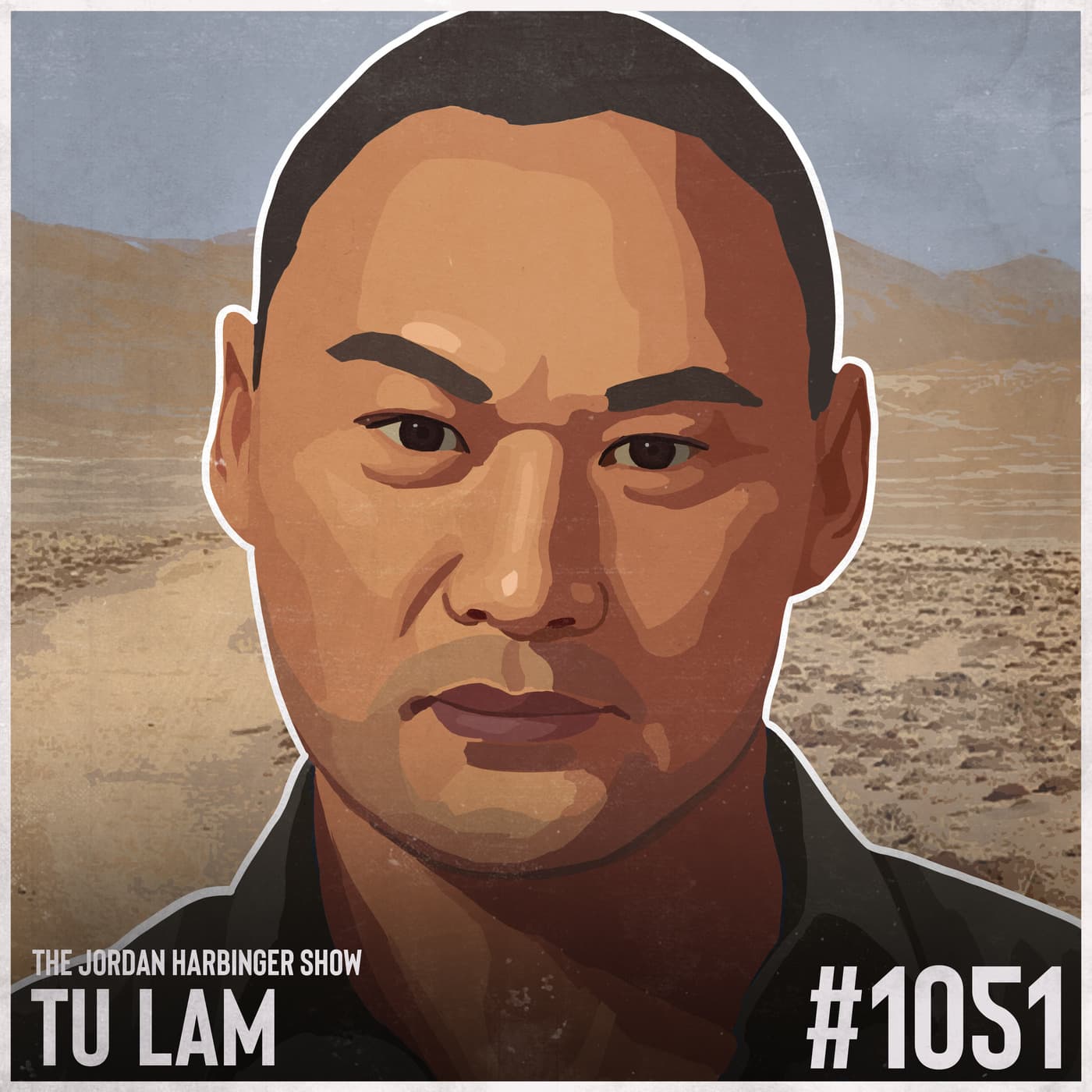
The Jordan Harbinger Show Episode 1051: Tu Lam | From Refugee to Real American Hero
Episode Overview In episode 1051, Jordan Harbinger interviews Tu Lam, a Green Beret whose remarkable life journey spans from escaping Vietnam as a child to becoming an elite soldier and a character in the *Call of Duty* video game franchise. Lam discusses the adversities he faced, his military career, struggles with PTSD, and the transformative power of psychedelic therapy.
---
Key Discussion Points
Tu Lam's Early Life
- Escape from Vietnam:
- Lam was born in Saigon during the Vietnam War amidst artillery fire.
- His family lived under the oppressive North Vietnamese regime before escaping on a fishing boat.
- They faced extreme challenges at sea, including pirates and starvation, ultimately drifting for nearly 30 days before being rescued by a Russian supply ship.
- Settling in America:
- After spending time in refugee camps in Malaysia, Lam's family was sponsored by his uncle, a U.S. Special Forces officer, to move to the United States.
- Experiencing racism and significant hardships as a Vietnamese refugee shaped Lam's determination to prove himself.
Military Career
- Joining the Military:
- Inspired by his immigrant background and influenced by a military family, Lam joined the army at 18, eventually becoming a Green Beret.
- He participated in various operations, including counterterrorism and hostage rescues.
- Combat Experiences:
- Lam's service included missions in the Southern Philippines against the Abu Sayyaf group, known for kidnapping and terrorism.
- He describes the emotional impact of rescuing hostages and the moral complexities of combat.
Post-Military Struggles
- PTSD and Recovery:
- After retiring, Lam struggled with PTSD and addiction to painkillers prescribed after an injury.
- He found healing through psychedelic therapy, which allowed him to confront and heal past traumas.
Transformation and Advocacy
- Using His Platform:
- Lam now speaks at schools and events to inspire young people, drawing from his experiences to impart lessons on resilience and moral integrity.
- He emphasizes the importance of addressing mental health, especially within the veteran community.
Hollywood and *Call of Duty*
- Transition to Entertainment:
- Lam transitioned to Hollywood, where he worked as a host for the History Channel's *Forged in Fire*.
- He became involved with *Call of Duty*, where his likeness and personal weapons were incorporated into the game. This brought him full circle from his childhood admiration for military action figures.
---
Key Takeaways
- Resilience and Overcoming Adversity: Tu Lam's story exemplifies the human spirit's ability to overcome extreme adversity through courage, help, and perseverance.
- Mental Health Awareness: Lam's journey highlights the critical need for mental health resources for veterans, particularly in dealing with trauma and the stigma often associated with seeking help.
- Cultural Influence: The impact of cultural identity and the immigrant experience can profoundly shape one’s path, as seen through Lam's determination to succeed against the backdrop of racism and hardship.
- Healing Through Community: Lam emphasizes the importance of community support and mentorship in the healing process, particularly for at-risk youth and veterans.
---
Conclusion Tu Lam's narrative is a powerful reminder of resilience, the complexities of the immigrant experience, and the ongoing struggle for personal healing and growth. His work now aims to inspire and educate others, making a significant impact in both the military and civilian sectors.
For more information about Tu Lam and his journey, listeners are encouraged to check out the full episode and the supporting resources provided by the podcast.
Written by AI. May contain mistakes. Listen to the episode to check what was said.
Transcript
Automatic transcript. May contain errors.0:28This episode is sponsored in part by Dell. This episode is sponsored in part by 1-800-CONTACTS. You know that last pair of contacts panic? My wife, Jen, knows it way too well. She's had these mornings where she's out of contacts and stuck wearing these old glasses she's got to keep wiping clean with her sleeve. But now, she makes sure to load up ahead of time because her next set is always on the way from 1-800-CONTACTS. They're the only major retailer that lets you renew your prescription online, so Jen gets her same doctor-prescribed contacts fast with free shipping without leaving the house.
0:571-800-CONTACTS has been doing this for over 30 years. They've got millions of lenses in stock, award-winning customer service, and perks like free returns, free exchanges, even free torn lens replacement. Jen loves their Express exam, which lets you renew your prescription online in under 10 minutes. It's a vision exam, not a full eye exam, but it gives you a doctor-issued prescription if you're seeing clearly with your current lenses. No waiting rooms, no dilation drops, remember those things? And with their best price guarantee, if you find your contacts cheaper somewhere else, they'll beat it.
1:23Getting contacts doesn't have to be a hassle. Let 1-800-CONTACTS get you the lenses you need right now. Order online at 1-800-CONTACTS.com or download the free 1-800-CONTACTS app today. Coming up next on The Jordan Harbinger Show. So if you're on that boat and people are dying and other children are dying, your children are full of ulcers because their body hasn't even moved. They're starving. They're dying. How much longer are you going to let them suffer?
1:53Welcome to the show. I'm Jordan Harbinger. On the Jordan Harbinger Show, we decode the stories, secrets, and skills of the world's most fascinating people and turn their wisdom into practical advice that you can use to impact your own life and those around you. Although sometimes we just tell amazing stories. Our mission is to help you become a better informed, more critical thinker through long-form conversations with a variety of amazing folks from spies to CEOs, athletes, authors, thinkers, and performers, even the occasional mafia enforcer, arms dealer, astronaut, or hacker. And if you're new to the show or you want to tell your friends about the show, I suggest our episode starter packs.
2:24These are collections of our favorite episodes on persuasion and negotiation, psychology and geopolitics, disinformation, China, North Korea, crime and cults, and more. That'll help new listeners get a taste of everything we do here on the show. Just visit jordanharbinger.com slash start, or search for us in your Spotify app to get started. Today on the show, Tu Lam, who escaped from Vietnam to the United States and joined our nation's most elite military units. He now trains those units as well as civilians when he's not playing a starring role in the Call of Duty franchise, of course. His story is harrowing.
2:54It's incredible. He really went through hell, the ringer, and ended up serving this country, of course, through hell once again. I know even if you're not into the military stuff, like some of you love the military stuff, some of you are like, okay, you will be into the human side of his story, and he does an incredible job in telling it. Also, as a bonus for many of you, I talk much less in this episode for once. He was really engaged. He was really doing his thing. I just sat back and enjoyed the experience. I was actually slightly under the weather at the time, and I felt like my contributions were maybe dragging a little.
3:26So let me know what you think of the conversation balance here. I think he did a great job. He had to carry me a little bit on this one, and I think it went quite well. I really enjoyed it, and I think he will as well. Here we go with Tulan. Man, you got quite a story, and I love profiling, if I can say, immigrants who have achieved high levels of success because I really think it highlights great things about America. things that we should all be proud of about America. So thanks for joining us today. Thank you. Thank you for having me on. Tell me a little bit how you grew up, because I think it was quite different from your life now and from people who were born in the United States.
4:01It seems like you had a different kind of beginning. You know, I had a rough beginning. And, you know, like you said, you know, it's the true American story. And I wanted to cultivate that why my grandfather, my grandfather walked out of Deteria, communist China, when he was 12 years old in 1940. And when he walked out, if he would have got caught, he would have been sent back to the labor camps where he eventually died. He swam to a piece of driftwood and he asked God wherever that takes him, that's where he'll settle. And he drifted into Vietnam. And a family took him in and raised him and found that My grandfather was a hardworking young boy, raised him to be a man.
4:45And back then in Vietnam, you had to listen to the parents. It was arranged marriages. So the parents offered my grandfather their only daughter. Wow. Yeah. And then, you know, he ended up having nine kids. And my father was the oldest out of the nine kids. I was born in, at a very delicate state in the Vietnam War. American troops have left Vietnam during that time. I was born December 17, 1974. At that stage of the Vietnam War, the North Vietnamese, the communist regime, had surrounded the city of Saigon, and they were shooting artillery into the city of Saigon for the last final charge. I was born, in that morning, to artillery fire, to war.
5:31We, you know, eventually lost our freedoms to the North Vietnamese communist regime, and we lived in the communist regime until eventually we escaped Vietnam by a fishing boat. My grandfather, who walked out of communist China, funded that escape. Yeah, I definitely want to get that whole story. I'm curious though, and I don't know if I'm going backwards too far here, but we'll try it. Why did your grandfather suddenly decide to leave China? How old was he? Because it seems strange that a kid would be sort of switched on enough to be like, well, this country's going nowhere, but still be young enough to need to be raised by people when he got to Vietnam.
6:07Does that make sense? Yeah, absolutely. Any research on China, communist China, you know, during the early 90s, it was slavery. It was a lot of oppression. People were starving and dying. So I'm pretty sure my grandfather felt the depression from starvation and, you know, the hard labors and everything else. What happened to his parents? I don't know. And Jordan, I want to say this, you know, with my grandfather's side of family, after I wrote my book, I was reunited with that side of family. So I was just reunited recently because, you know, when, when my parents divorced, I wasn't allowed to speak to that side of family.
6:44Oh, is that just like a tradition thing? I think that's a American divorce, a Westernized divorce thing. Oh, so it's drama. Old fashioned drama. I was like, oh, this is an unwritten rule. No, it's just drama. Okay. Got it. Sorry about that. Well, okay. So you, you wrote that you were born on a cement floor with bombs dropping. And he would paint a really detailed picture. Kids screaming, his parents were murdered around them. I mean, this is like soldiers in the city kind of situation, right? It was the last push, right, since the American soldiers left Vietnam, right? So the South Vietnamese and the North Vietnamese were in their last final fight.
7:26The North Vietnamese were now invading the city of Saigon. So a few months after my birth, that's when the city of Saigon fell, which we lost our freedoms. When I say that we were born in the basement, if they're shooting artillery fire into the city of Saigon, you're going to look for the lowest areas with the most secure areas. And that was the basement for my family. Yeah, the soldiers are just overrunning the town at this point. Are they barging into houses? Paint this picture for us, for people who don't really understand this. Okay. So a lot of my storyline was from my parents and also history.
8:03So if you look at history and you read news clippings, then this confirms the story. After the fall of South Vietnam, the North Vietnamese came in and they put any Vietnamese that served alongside Americans were immediately put into the re-education camps. any people who held position of political power or opposed the new communist regime were immediately executed. You know, a lot of these executions were done in public during that initial invasion, you know, into South Vietnam. After that initial invasion, then it's the oppression years. So the oppression years is you're going to pay your taxes, and it's really high taxes, right?
8:42And then second, they're going to oppress you with curfews and what you can do in businesses in the government. So with my parents, my mother, she worked in a soup, making Vietnamese soup. And what she told me was the North Vietnamese would come in and they'll demand money. First, the taxes. But then the North Vietnamese soldiers would then, off of their position of power, would barge into their homes, ask for money, loot. There has been rape. There has been murder. All this information, like I said, could be found in news clippings and personal accounts from other Vietnamese refugees. When I went there when I was like 20, I remember going on tours and stuff.
9:25And the tour guides would tell us how much they hated the United States. But they also said, by the way, I also hate the North Vietnamese just as much, if not more. And I would say, oh, that's, you know, why? And one of the tour guides who took us to those tunnels, he was saying, well, the United States screwed up our country, but the North Vietnamese killed my whole family. I'm the only one left. I grew up on the streets. Now I give tours. And the Americans are pretty nice when they come on the tours. So I don't know who he couldn't decide who he hated more, I guess. It was kind of a coin toss.
9:56Yeah. He told me some pretty horrible stories. The North Vietnamese version is we liberated South Vietnam from whatever. And the South Vietnamese story is they ruined our lives and killed everybody they could and kidnapped my sister and my mom and never saw them again. I mean, it's just, it's awful. Yeah, absolutely. It depends who you ask. Right. My parents and my side of the family, they're all appreciative of Americans. You know, so is who you ask. So are you part Chinese then, I guess? Your grandfather was Chinese, I guess, right? So is that a common situation in Vietnam? Or is it just, you know, your unique blend you got going?
10:31No. In Vietnam, it's a high Chinese influence. Think about where the terrain is and the borders in history. Tell me about escaping Vietnam. I know a lot of people tried to escape. A lot of people were successful, of course, like yourself. How does that work? Escaping Vietnam was very difficult. Some walked out to neighboring countries. And when I say walked out, you know, these jungles are riddled with landmines where Americans have dropped landmines through rice paddies and jungle floors. So some of these jungle areas are riddled with landmines. Also, the North Vietnamese would patrol these areas for fleeing, you know, Vietnamese.
11:05Any Vietnamese that were caught were immediately brought out to the re-education camps. These are labor camps where they would eventually die. Some escaped during the evacuation when Americans left. They got on government planes. I want you to think about modern day, like we saw in the news the Afghanistan withdrawal. Yeah. I want you to kind of think about that because the news compared the Afghanistan withdrawal to the Vietnam withdrawal, how Americans withdrew from Vietnam. So very desperate situation. As for me, we escaped on a boat. Now, in history, there's over 400 ,000 refugees died at sea.
11:41First from the piety from surrounding countries. You know, these criminals would forcefully stop the boats. They would board the boats, kill the man, rape the women, enslave the children. You know, it was very lucrative. It was very easy. Refugees were fleeing with everything they had on them. The pirates, these criminals knew. And it was easy to stop. Like thousands of refugees were leaving at that time. So we had to pass the piety. We had to pass even escaping Vietnam, trying to find a boat. Who would smuggle us out of country? And then the typhoon, you know, strength of the tropical storm has claimed the lives of thousands.
12:18And people get lost at sea. You know, for us, we made our way into Malaysia, which was a two-day trip. I was three years old at this time. I want to paint this picture like this wooden boat that we're on is a fishing boat. It's supposed to hold 60 people. It was holding 120 people. Wow. Wow, wow, wow. That was a big boat. They took the food. They took water off of it to stuff more people into these boats. So when we made our way into Malaysia and we were rejected, they were not accepting more refugees, and they stopped us by gunpoint. I think they had enough of refugees fleeing into the country.
12:54They boarded our boats, they roped us, they pulled us back out into the South China Sea, cut the line, they shot the motor, and they left us there to die. My mother, she said we drifted for nearly 30 days. When the supplies were taken off the boats, lack of food and water, it put us in a very desperate survival situation right off the bat. We are already two days into the journey made into Malaysia. Now we've roped back out into the South China Sea with no engine. So my mother said, people are dying. First dehydration, sickness, people turn on each other. They were fighting. The dead was thrown overboard.
13:32We drifted for nearly 30 days. And my mother said, you know, she almost lost hope. Now it was common practice amongst fleeing refugees to carry poison amongst them. Really? Yeah, because they didn't want their children to die a miserable death. They didn't want their children to be sold into slavery if the boats were taken. I see. So this was the last attempt to give their children peace. So my mother held onto this poison. Can you imagine seeing your children dying at sea? People are getting thrown overboard. How long do you hold on? She held on for nearly 30 days. How did they get water? From the rain?
14:11Yeah. So the occasional tropical rain, they will put buckets out on the top deck, and then they'll capture water any means possible. God. You know, my mother said that people did, you know, drink their own urine. Sure. Yeah, it was survival. So she said that we caught up in a huge tropical storm, and it was a miracle that our boat didn't capsize. We're a small little fishing boat in the South China Sea. Yeah. These tropical storms are huge. It's massive, massive waves. The U.S. Navy wasn't out there trying to find people who were escaping at all. I mean, it's a massive sea, so I don't even know what you could do.
14:44But what was the hope? Like, we just land somewhere? What was the idea at that point? If they drag you out in the middle of the sea, cut your line and shoot your motor, what is the idea? Yeah. It's to hold on as long as you can before death takes you. Oh, my God. This is horrible. When I said I'm painting the picture that there, my mother was holding on to hope when there was no hope. So we got caught up in a huge tropical storm. She said it was a miracle we didn't capside. And then somehow it ripped us out further into the South China Sea. That rain, she said, it kind of blessed us. We had a few more days together before, you know, is another survival situation, water.
15:25But then on the last three days after the storm, when the rainwater was gone, people dying again and suffering from dehydration, she said that she saw a light came across the crevice of the boat because we were under deck of the boat. I'll tell you, Jordan, I do have dreams of this. Even as an adult, sometimes when I was growing up as a child, I had a dream of there was a light shooting through a crevice of a boat. And my mother told me that that light was a search light. It was a beacon from a Russian supply boat. Now, this Russian supply boat was leaving Vietnam, right? And I want to say this, man, because it was the Russian ideology is how I lost my freedom.
16:10That's why we're escaping, right? But it was the same communist ideology or the same people, man, they saved us. You know, and they saved us. Humanity won that round, I guess. You know, I don't know if it's, you know, the lands of, because we do have rules and warfare, you know, we have to protect the civilians. There are rules and war. But I also have seen the other side. You know, I've seen certain countries turn a blind eye to those laws. But the Russians, they picked us up. They brought us one by one onto their boat. They gave us medical attention. My mother said it took roughly three days, right, for them to give us medical aid.
16:49And then they put us back on the boats. The engines couldn't be fixed. They roped us and then they pulled us into Indonesia, where my parents and I, we lived in refugee camps for a year and a half before we were sponsored to get into America. Wow. Wow. That must have been, I mean, refugee camps are no picnic, but it must have been paradise compared to being on that boat. Well, I mean, if you say paradise, you know, for me, I was a little boy. Use the term loosely. Yeah. Yeah. But there was a few hundreds of thousands of refugees in a plot of land. Hundreds of thousands? Yeah, of refugees. Oh my God.
17:24And you know, all this information, just YouTube it. You can YouTube it. You can do research on it. They'll show you videos of when National Geographic guys came over during post-Vietnam War years, and you'll see those living conditions. And it was a grass hut in the middle of a jungle. It's a plot of land, and it's up to you how to live. So when I say this, desperate survival situation. People were getting raped. They were getting murdered. Things were getting, you know, stolen. It's survival. I take my paradise comment back, obviously. That's horrible. So this is not like a well-run operation in Indonesia with the refugees.
18:01It sounds like Mad Max in the jungle. You know, I think there was order, you know, because we made it out and, you know, not everybody got murdered. I think there was some kind of order. But within the order, there is also criminal activities, right? So people were drug out to the jungles. If you were caught out in the jungles at night, you disappear. Really? Is it criminals getting you at night in the jungle? If the criminals that were in Vietnam and they escaped and made it to the refugee camps, they're still criminals, right? So you're in a group of families, you know, at that time could be millionaires in Vietnam, right?
18:38Very successful people is lumped up with people with criminals because they lost everything. You lost everything. You have no freedoms. You have no country. So you're roped in with the criminals and everybody else. So when I said that people are disappearing, yeah, if they see a young lady, you know, trying to gather water in the jungles and they're criminals, they're going to do what criminals do. Oh, man. It's so dark. How did you finance the escape? It must have been everybody trying to leave. Surely the people who were smuggling people out took a fee somehow. So getting back to my grandfather who drifted on a piece of log, when my grandfather married my grandmother and had his nine children, he became very successful.
19:21He was a hardworking man. He was a very smart man. So he worked in textile and he owned his own textile company and he owned a chain of condos. So very wealthy man. When the communists came over, he became oppressed. They came and took everything he had. So he was poor like everybody else. But the one thing my grandfather had was this amazing aquarium, this beautiful aquarium that he would put in his living room. My mother would talk about it. All my cousins would talk about this beautiful aquarium with these exotic fish. And so many times the North Vietnamese soldiers would loot through his house, right, trying to find gold, trying to find money, trying to find all this.
20:04But they always stop looking at this aquarium. And why I keep on saying the significance of this aquarium is because around the frame of that whole aquarium were lined with gold bars. He hid his gold in this and when he ripped it apart, that's what he used to finance our escape. It was three gold bars for a child and five gold bars. Five gold bars for an adult. Oh my God. And that's what you gave this money. Wow, he thought that far ahead. I don't think he thought that far ahead. I think that he's just always a guy who thought contingency plans. Like right now, right? If America, if we lose all of our banking system, you know, some people are invested in gold.
20:49Some people are invested in silver. So he invested in other means of wealth besides just money. Keeping money in your aquarium is somehow the most, it's a very Asian thing to do. has money stashed somewhere in your house in a weird place. It's just, I'm married to a woman whose family is from Taiwan and China. And I feel like there's always a story about, oh, they're moving. So they have to dig the backyard up because there's a box with his gold that they buried under the kid's playhouse. And you're just like, are you kidding me? It's 2024. You're doing digging in your backyard for gold. You know, my mother always told me that too.
21:28She He said, once you experience war and survival at that level, it changes you as a human being. Yeah, I believe this. Did your grandfather just stay in Vietnam and pass away in Vietnam? He was the last one to escape. So after all his children and all of us, all of us successfully escaped. So all his nine children eventually escaped, right? So he sent the first three. Hopefully they made it. And then he sent the next ones. And then we were the last of all. My father, my biological father was the oldest and he was the last one out. When I say the last of the children. And then once my grandfather knew all his children made it, then he made the journey with his wife.
22:07Wow. How did he get out? Because surely he didn't also go out on a boat and almost die. I mean, he was an old man. Yeah. So when all his children made it to America, they were able to get him a plane. Oh, wow. So he flew to California. That's an amazing story. It's a whole family of survivors. He must have been so worried about everybody. I can't even imagine. I have two kids. He had nine. I worry about them playing in the front yard because it's near the road. I worry about them playing in the backyard because I'm a parent. I worry about stuff. He had real, real worries. And he still provided for everybody.
22:41That's incredible. What an amazing guy. And that's why I wanted to bring that question to you, man. So, you know, you're a parent. You love your child. You just said. Yeah. So if you're on that boat and you're at day 28 and people are dying and other children are dying, your children are full of ulcers because their body hasn't even moved, right? And they're stuck in the basement and they're starving and they're dying. How much longer are you going to let them suffer? Yeah, I don't know. So I give it to my mother, man. Like she had the escape for us, poison, but she chose to hold on. And because she did, we survived.
23:14Okay. So, wow, this is so intense, man. And OK, so you get to the United States from this refugee camp. Is it because how does that work, actually? Because I assume it's like, oh, these are Vietnamese people that escaped. It's kind of our fault that we didn't pull through in the end. Let's let a certain number of these people come to the United States. I went to law school with some Vietnamese folks, and she would tell my friend Nan, she would say, oh, we're boat people, which I had not heard, which sounds kind of racist now that I think about it. But since she said it, I think it's OK. That's actually official name.
23:44It is. OK, OK. Okay, because it sounds a little non-kosher in 2024. But yeah, she said she would say we're boat people. She had a rough go of it too. I mean, there was stuff she wouldn't talk about from that experience. So the refugee camps. Yeah. How we got out of refugee camps. You know, we were there for a year and a half. And, you know, other countries accepted us. Country of Canada. My mother told New Zealand accepted us. Australia was another one accepted us. But my mother held on to America. And America, when we say this, America was hard to get in. It was a lot of rules. America was backlogged with refugee applicants and everything else.
24:20The only reason why we made it to America is because of my uncle. See, during the Vietnam War, my aunt, my mother's older sister, met a Special Forces Green Beret officer. He was American. And he was Special Forces. He was fighting North Vietnamese, and his G-Base Special Forces camp got overran by the North Vietnamese. He was stabbed by a bayonet in his back of his ribs. All his whole team was wiped out, and he was left for dead. Somehow, he survived that attack. And then they evacuated him to the city of Saigon in the hospital where he recovered from his wounds, where he met my aunt. He made it back to America, married her, and then he's the one who sponsored the sponsorship.
Read the full transcript
25:08So that's how we made it to America. There's so many dice rolls and luck involved and circumstance involved in the fact that you are sitting in front of me right now. I'm sure you think about that often. So when we first made it to America, we ended up in California. That's where, you know, my side of the lamb side, right? My cousins are now, my uncle settled. My mother and father went to Fayetteville, North Carolina. They moved on and went to the East Coast, so North Carolina. The reason why is because my mother wanted to be reunited with her sister. And since my uncle, the Special Forces American, that's the headquarters of the Special Forces Green Berets, Fort Bragg, North Carolina.
25:55So that's how we ended up in Fayetteville right outside of Fort Bragg, North Carolina with the headquarters of Special Forces. What was your life like living in the United States at that time? When we first came to America, I didn't know any different, but I was segregated right away. Segregated as a child, like six years old, I was spit on by older adults. When I say that, you think about it, it's post-Vietnam War. A lot of these veterans that fought in the Vietnam War, now they're coming back to their home station, which is Fayetteville, Fort Bragg, around that area. A lot of military prisons.
26:31A lot of them were suffering. And America didn't acknowledge mental health at that time. So they didn't have any programs, sort of. So we were scrutinized. We were called by many racist names. My parents, they had to start over. They couldn't speak the language. So they had to start all over again. And my father and mother, they couldn't hold a job. They couldn't speak the language. And it was racist times in America. We didn't fit in. And we were very poor in the beginning. and eventually my parents divorced and my mother got remarried to American Special Forces Green Beret and that's how I got indoctrinated into a military life upbringing and that's how I eventually yeah you know went into service it's crazy to me that the servicemen would be didn't servicemen work alongside Vietnamese troops I mean why would they I guess I'm asking a stupid question racism is sort of inherently stupid it just seems like they would have worked alongside those people, and so they would know better, but I guess racists aren't exactly, we can't really hold them to a high standard of intelligence most of the time.
27:35I mean, countless case reports of Vietnam of American troops raping Vietnamese women, beating up Vietnamese men, countless accounts of it. So when I say that, yeah, you serve, okay, so if an American goes and serve in Afghanistan and he's working around Afghanis, is he sympathetic to that race of people? It It depends on your upbringing. It depends on your values, right? Yeah. Were you getting along at school? I mean, if the adults were racist, I'm guessing the kids weren't much better. So in the 80s, war movies were really popular, especially Vietnam war movies. So a lot of like racist gestures, racist comments in these movies, right?
28:14They're using racist names towards the Vietnamese. Yeah. The kids would watch these movies and they thought it was okay to call me all these sorts of racist names that I saw on the movies. Unfortunately, their parents supported them because they were racist too. Up in my upbringing, I would say I faced racism daily. It was a daily thing for me. And plus, before my mother got remarried, we were poor. We were refugees. So my clothes, it smelled. I smelled. I ate indigenous food. So I smelled compared to a Westerner. and I was beat up. I was segregated and I was reminding every day of what they thought I was.
28:57Man, I will say I was reading this book, listening to it, and some of your stories are really horrible. You know, you end up tearing up at Chipotle. And by the way, if you buy the book, please use our show notes links. If you want to cry at Chipotle, use the links in the show notes to help support the show. But it's horrible thinking about a kid growing up like that, especially after everything that you went through. Your mom must have been working so hard to make a life for you guys in the United States. I cannot imagine going to Vietnam or China and being like, all right, I don't speak Vietnamese or Chinese, whatever.
29:29I got to figure out how to get a job. Where do I work? Oh, by the way, I got kids. I guess I got to send them to school. She doesn't have time to worry about your personal life, if that makes sense, right? I don't even know if I would tell her at that point. What's she going to do? Worry about one more thing, you know, what's the point? Yeah. That's the thing is, you know, all of my abuse, everything that I had to endure, I held, I held it in. What am I going to do? Ask my mother, who's already dealing with everything. She lost everything. Yeah. I had a lot of empathy for my mother. How did you get the idea to join the military?
30:03It seems like the, almost like that would be the opposite thing. You know, if everyone's treating you like crap, why serve the country? Where'd you get that idea? So I want to put this. So my brother and I were raised in the same upbringing, right? Strict military upbringing. We got up at four o 'clock and we made our bed. We had physical training in the morning. We had inspections. I mean, it was a military upbringing, truly. My brother eventually became a doctor. The reason why I chose the military is because my mother had me go out to these and visit these refugees, right? So we would load up the car.
30:37She'll cook for them and we will drive hours, man, to deliver these things to these refugees. We used to have been those refugees, so I get it, right? But when I became a teenager, I just didn't care to spend my whole day with a bunch of refugees. During the process of going every weekend, you know, and help the refugees out, I realized that that's where I came from. I came from oppression. You know, I came from the oppressed. I was born out of the insurgency. The special forces, their motto is de oppresse et libre, to free de oppressed. Translated in Latin, it means from oppressed man to free man.
31:15I knew this at a young age because my stepfather was special forces. My uncle was special forces. The neighbors around me were special forces. So I knew the special forces' mission was to go back to these third world countries and to fight for the oppressed. And these warriors had some skill. So back when I was a teenager, all I wanted to be was a ninja, right? So back then, the ninja kick, the samurai kick was huge, right? In the 80s, it was huge. My father's last departing gift to me at seven years old, where my mother eventually gave to me because I couldn't speak to my father, were four VHS tapes and they were written in Vietnamese.
31:59And I randomly picked out a VHS tape and I threw it in the VCR. It was the art of Budo, to be samurai, the code, the ethics of Bushido. I first saw that when I was nine years old, the Bushido code, and it changed my life forever. The warrior, maybe you could, Jordan, maybe I could say, maybe I was holding on to the last memory of my father. Sure. But I was surrounded by warriors, special forces. So I knew at a young age, going to these refugees and helping them and realizing the oppressed and where I came from, I realized, man, if I became this warrior, I could go back to those countries. I could fight.
32:39I could fight for those people. Serving the refugees, I realized that at a young age. So at 13, I knew I was going to be a Green Beret. 16 years old, I started my training, more cardiovascular training. I'd utilize sports to build agility and training. I was into martial arts. By that time, I was reading Lao Tzu and Taoism. I was very roped into philosophy and San Tzu, the art of war. So a lot of that, a lot of study in that when I was in high school. In fact, my high school thesis was on the art of war by San Tzu. And then 18, I joined the army. I started off with the 82nd Airborne as a paratrooper.
33:22Then I went to the long range of Ibeos Reconnaissance Teams. Tried out for the Special Forces, and at 21 years old, I was in Okinawa, Japan as a Special Forces Green Beret. You'll probably never become a trained killer, but you can get the t-shirt. Now for a break from our sponsors. We'll be right back. If you're wondering how I managed to book all these great authors, thinkers, creators every single week, it is because of my network. It's the circle of people I know, like, and trust. I know it sounds a little smarmy. A lot of you are like, oh, networking's gross. This is something you build for your mental health, your sanity, for the health of your business.
33:52Even if you're retired, it's great for your social life. This course is about improving your relationship building skills, building systems around it. And it's non-cringy. It's very down to earth. There's no awkward strategies or cheesy tactics that are going to make you embarrassed or embarrass the people you're talking to. And it takes a few minutes a day. That's the whole point. And many of the guests on the show subscribe and contribute to this course. So come on and join us. You'll be in smart company where you belong. You can find the course at sixminutenetworking.com because five minute networking was taken.
34:17Now back to Tulam. some of the stuff you had to do to become a green beret or you talked about ranger training actually marches where you're punching yourself in the face to keep going burning 5 000 calories per day and barely eating for months which by the way that is so bad for your body but i guess that's not the point right they figure they'll rebuild that later they're trying to test your mind that's right is that the idea yeah so ranger school is about leadership they want to see your leadership capabilities on conducting these type of raids, ambushes, these tactics. In that type of diverse environment, they want to see your leadership skill while being deprived of sleep and food.
34:59This is probably a stupid question, but that's because you are going to be under so much stress that usually all that stuff breaks down. Is that the idea? Yeah. In war, in combat, you're going to have to deal with a lot of physical stress, mental stress, and you're going to have to perform, especially in special operation, you have to perform at that national level, even though you're dealing with these stresses. You wrote in the book that lots of combat tactics come from Native Americans. I actually did not know that. Let's talk about that a little bit. I think that's interesting. Native Americans don't get enough screen time, so to speak.
35:34So I'm curious where those tactics come from. How did those even make their way into the military? Yeah. So during the French and Indian War, when George Washington came over when he was still a lieutenant with the British, he started seeing the tactics of the Native Americans. Native Americans would do more of hit-and-run tactics, while at that time, the British would get on open fields and do volley of fire on each other, right? So Native Americans were more hunter-gatherers, hit-and-runs. If you think about, okay, so then the Revolutionary War happened. It was because our abilities to wage unconventional warfare by using native tactics.
36:11So, you know, by beating a superior military force like the British was the most powerful military force of his time in the world. As Americans, we were just 13 colonies, rebels. We were not even a military force. How did we win against them? And we win against them because we use native tactics. Native tactics that we use during special operations is when to attack. So if I have indigenous force that doesn't have night vision, when would I attack that enemy? You know, the natives, they attack during the moments of darkness and light. When your eyes have developed, you know, that ability to see into the darkness, but there's just enough a loom on the breaking of the day that you know which buildings are what and where's the enemies at.
36:58So when the enemy is opening their eyes, I don't know, at four o 'clock in the morning when the sun's coming up, that's the best time to attack because you have surprise, speed, and violence. We learned that from the natives. We learned how to work in deep terrain. We learned hit-run operations. We learned ambushes. We learned how to patrol off of the native tactics. So if you want to see some of the tactics, look at that movie, Lass of Mohicans. Yeah, yeah, yeah. Right? So those were the very first rangers' tactics that was indoctrinated into the military. It's really incredible that they learned all of that.
37:33I mean, Native Americans, it's a whole kind of amazing culture. Their combat tactics are second to none. It's really incredible. I didn't know that we adopted those into the military. I just remember reading about it as a kid and hearing about it as a kid. Your training in the military sounds quite unconventional, aside from you punching yourself in the face to stay awake or whatever it was. You wrote about having, I'm going to bungle this, but it was like an entire village somewhere where everybody spoke a foreign language. I assume, is this happening overseas in a friendly allied country? or are they actually packing some sort of U.S.
38:05village with foreign language? How does it work? Okay, so without going into too much classification with this, because this is Special Forces training, there is a town on the East Coast that the military pays to speak a foreign language to act like a different country. So when the Special Forces students go into their final phase of unconventional warfare phase, they have to parachute into this country and liberate this country from the oppressed. And there are crooked cops in there. There's rebels in this country, and they all speak different languages. So it kind of mimics our operational environment.
38:43And they just notify the whole town, like, hey, this week, we're all foreigners, and there's a hostile presence parachuting in, so have it. And what do they do? Fence the place in and say, like, this is the boundary. I mean, this is crazy. It's so interesting. I wouldn't say defense it in, but you know the boundary lines. There's borders and towns. We know where to go. There's certain SEER school training, so escape evasion type of training, you know, where they treat you like a prisoner of war and where you have to evade. And you're running across some of these towns. If these locals catch you, they're known to call in, you know, who they need to call into special forces structures to locate you, right?
39:19So all these locals are part of the game. Are there kids in this town just going to school, living their life, and they see you crawling through the bushes and they're like, ah, call in the special forces. It's one of the Americans or whatever. Is that kind of how it works? Yeah, there's kids in that town. It's a full blown town. Wow, that's incredible. And the point is to what, get to a specific objective or you're just evading these people? So if I was to ask you to go into a country and you have a crooked government and you have a band of rebels that are fighting for their freedom and their family, and you were to do this border crossing, link it with this indigenous force and overthrow this country, how would you do it?
39:56Well, me as a podcaster, I would not be successful in this mission. I do not have the background on this. But I don't know. I'm guessing you walk through a swamp so you don't get caught and then you look for the right pickup truck full of dudes. I have no clue, man. Yeah, I mean, it's bigger than that, right? So it's you. You're taking down the political government. You're taking down the military force, the crooked law enforcement. Oh, my God. Right. You're taking that all down, doing military hit-and-run tactics, propaganda, you know. You're engaging in all. Intelligence gathering, direct action to, you know, indigenous training to force multiplying is all.
40:35It's part of the whole, you know, training. Wow. How long are you in this town then doing this thing? This is not a two-day thing. It sounds like a long, like an extended mission where they're observing you the whole time, I assume, or reporting on how you're doing. Yeah, roughly around a month. Wow. Wow. What an interesting setup that is. That's really fascinating. I don't know how to transition to this next topic, so I'm just going to ask, how did you start doing underground fights for money in Okinawa? Because first of all, It sounds like you're probably not allowed to do that in the military, but I'm no expert, as you know.
41:10So when I was stationed in Okinawa, Japan, I felt it was my destiny to be there, right? I am a samurai. No, so seriously, when I went to Japan, I wanted to learn Bushido. I dove into Budo, Bushido. It led me into Japanese jiu-jitsu. It led me in these formal fights. It's when I went to, there was a Marine base called Camp Foster in the field house. It was a tough man match. It was just big old gloves and you're going at it. But during that time, the UFC was starting to get popular in 98. So you're starting to see that popularity flux over to Okinawa. But there was still a lot of striking going on, right?
41:56No ground fighting. Where I'm going with this is they had these Valley to Do gloves. So it was no more boxing gloves, it was the open hand gloves. So when I entered into the field house, you had to get a letter of approval from your commander. I'm on a Special Forces A team, and I have a captain as my friend, right, that can approve that letter. So he approved the first one, the first fight I fought at the Marine field house. It wasn't really a fight. Maybe I landed a good blow on him, but a lot of the Marines, they were trained in the system called line fighting at that time. I was trained in ground fighting.
42:34So ground and pound, which you see in UFC. I was starting to get into that. And a lot of that knowledge hasn't fluxed over Japan. So my Jiu-Jitsu game was a lot better than them, and I won a lot of matches. How I started getting into the underground matches is because every week I would ask my captain to sign another letter of approval. Well, at that time, with the popularity of UFC, a lot of team guys, when I say team guys, Navy SEALs, Green Berets, they were getting banged up in these cage matches, right? Because they're trying to fight like UFC. So I knew that my gig was up. At that point in the game, I met a fight promoter named Dama Sato.
43:17And Sato owned a dojo in Naha, which is the capital of Okinawa. He was sent up fights. There was a fight night across from Camp Foster, and I would fight at the Okinawan fight nights. And that's where I made my money. And because I fought the Okinawan fight nights, I wouldn't have to get approval from the commander. Now, I'll caveat that with, that's a career ender. Yeah. If I get caught, totally career ender. It's done. My whole career is over. So not a lot of people knew about that, and that's why I said it was an underground match. The only time that the command caught wind was my last fight where they sent in a mainland guy from Japan to shut me down because I was winning these Okinawan matches and they didn't want to afford her to win anymore.
44:04So they flew him in. It was a Budokan fight night. He shut me down. I would caveat that with we were doing a counter-terrorist mission, and I just rotated back to the island after kicking in doors and shooting stuff in the jungles, and I was sick. But I still fought three days after I rotated back. And I tell you, man, his skills were so good. Even in my best days, he was just a better fighter than me, right? That's what he dedicated his life to. Yeah, that was my underground matches. I did it on the side because I was just full of fire. I was full of hate. I just didn't know why. I was always full of hate.
44:42Now I know why, right? But back then, I was just, I felt like I had something to prove, man, you know, in my 20s. Well, I suppose a lot of us did, but we didn't necessarily run off and fight in underground fights. So why is it a career ender? Because it's against the military's rules to fight for money, or what exactly is the problem? I mean, it seems obvious that it should be a grave offense, but I'm just not 100 % sure why. Because a two-star general, a special operations command, put out a memo saying that no team guys would be engaging in any activity. Oh, I see. So it was expressly forbidden, not just generally sort of known that you shouldn't be fighting people for money.
45:23I guess it is a bad look, right? There's a special forces guy that goes around getting beat up or beating up other people. It's like when you win, an American special forces guy beating people up for money, and when you lose, you're an American Special Forces guy getting beat up. It's bad for the brand either way. Absolutely. Absolutely. But you know what, man? I didn't fight. I didn't fight for the money. I fought because I was a hateful person and I was a damaged child. And I fought on the side. So when I say that is the team life alone, you're free falling, you're doing explosive breaching, you're doing close quarters training, you're shooting.
45:58I mean, your life is intense. And I was still bowing into the dojos at night to fight. Man, I felt like I had something to prove, but now I know, you know, I just felt like I was chasing that fire. Eventually that fire came in war. So I had three years on the teams. When I say the teams, Special Forces A-teams. I was deploying around the world as part of a counter-terrorist team, a company. When I say that is you're a crisis response force for the continent of Southeast Asia. Anything that happens in Southeast Asia, Haseu related, you are pushed out. So I was at that stage and then 9-11 happened.
46:39I was stationed in Okinawa, Japan. My wife and I were dating at that time. She was actually scheduled to fly to see me in Japan that day. She was trying to fly out on 9-11. Back then, it was no cell phones, right? So lost communication with her for 24 hours. It was the worst time in life. I love my wife and she's everything to me. But back then when we were dating, 9-11 happened and that kind of changed the rest of my life. So I was three years on the A-teams. I was about seven years in the army and I fought the rest of my career after that. For the rest of my career, I fought wars. So, you know, after 9-11, the Twin Towers went down.
47:17President Bush declared war on terrorism. The special forces divided into groups. Each group serves their individual areas. So like fifth group, they could go into the Middle East. Seventh group is South and Central America. First group is Southeast Asia. You get it, right? Each group. I was stationed in Okinawa, Japan. So I was first group. I was in a crisis in this continent, Southeast Asia. When President Bush declared war on terrorism, it was a global war. So my team, we pushed out into the Southern Philippines, into the country of Basilan. Basilan Island, it was ran by half Catholics and half Muslims in that area.
47:58Where is this again? What country is this in? Southern Philippines. I see. Okay. Is this like where Abu Sayyaf is operating? Absolutely. You nailed it. Okay. So that was our target, right? So Abu Sayyaf was who we're bringing the fight to. For the viewers, anybody who don't know who Abu Sayyaf is, they're Al-Qaeda affiliated. They're part of a Muslim extremist group that want an independent Muslim state on the southern islands of the Philippines. And they're willing to do that by kidnappings, bombings, beheadings, raping. So very violent group of people. We went down in the southern Philippines.
48:34We linked up with their LRC, so their tier one counterterrorist unit that we stood up and trained. I personally stood up and trained with two years prior to 9-11. We were a part of that initial push into the Philippines to stand up their counterterrorist capabilities because we knew the war was coming. Just because of terrorist activities, you know, the intel that we're starting to see develop into Southeast Asia. North Korea was a big push too, you know, with their No-Dong missiles that can launch into and hit us in the United States with an unstable dictator at that time. So those are the two primary.
49:12My team, we pushed into the southern Philippines to combat Abu Sayyaf. I was there for on and off for roughly three years, in and out of the jungles of the Philippines, working with their host nation. If you guys don't know, the Burnhams, they were a missionary group. They were out in Ohio, and they were a missionary group working in the southern Philippines, and they were captured. They were kidnapped by Abu Sa 'ef, brought into the jungles. For over a year, they were in the jungles, and America was trying to negotiate their release. We were working with the counter-terrorists and Filipino host nation, and President Royel had the time to go into the southern Philippines to help find, fix, and locate, and rescue the Burnhams.
49:58Unfortunately, the Burnhams were a Filipino foot patrol, just a normal, not special operations, a normal Filipino army was patrolling through the area, made contact, and Mr. Burnham got shot, and he died, and Miss Burnham, she's back in the States. But I did three years there. We lost a whole team there from a suicide bomber, a motorcycle bomb. We lost some teams from helicopter crash in Southern Philippines. So we lost some teammates in the Philippines. I did three years there, and then I was offered a job by a tier one unit in the Army, which is the unit. I was asked to go there and become their unit combatants instructor.
50:40Now, I want to say this because at that time, I was fighting in Japan on those underground matches, but when I would deploy in Malaysia or I'll go to Thailand to train with their commandos, I would fight Muay Thai matches. I would fight in the jungles and sulat matches in Indonesia. I was just that guy. I was a student to the martial arts. So I was learning sticks and impact weapons, edge weapons and knives from the Filipinos when I was deployed there for eight months in the jungles. And when I would go to Indonesia to train with their commandos, I was learning knife fighting, sulat. So all these type of martial arts, it was like I was incorporating all into my own technique.
51:25And at that time, I was fighting in Thailand and there was a unit, when I say unit, their top tier counter-terrorist shooting army. He gave me basically a letter of acceptance. I applied for it. I tried out for the tryouts. I made it and I ended up being the unit's hand-to-hand combat instructor. In between me teaching, I would rotate overseas, do combat rotations. I would rotate around the United States and train with fighters like Hoist Gracie. I train with Inston Inouye in Hawaii. We're just going around the United States and training, bringing that knowledge back to the unit, deploying overseas, and doing combat rotations.
52:06After a that, I rotated out and I started doing special reconnaissance within the unit. Very high top secret at SCI level, but I could say, you know, we were traveling around the world in and outside of war zones, finding, fixing, and killing some of the world most wanted men. I know you can't talk about much of that, but I'm curious about the hostage rescue mission in Iraq with the foreign fighters. Can you talk about that? When I was in Iraq, so Syrian rebels, right? So after After Saddam was captured and handed over to the Iraqi government, his two brother were killed. That handed over to government to this new government system that we're trying to work with, right, over in Iraq.
52:49But then there were Syrian rebels that started moving across the border and was led by Sir Cowrie, AMZ. He became the number two most wanted man. Bin Laden at that time was the number one most wanted man. He was operating in Iraq, so he became our primary target. So we hunted down Sarkawi, right? So with this hostage rescue that we did was the Syrian rebels captured local Iraqis, and they wanted to use them at ransom. And if their means are not met by midnight, they were going to behead them on video, like they always do, right? At that time, our war capabilities were on point. Our intelligence were on point.
53:33We had host nation agents, Iraqi agents that we trained. We were working at that national level. That came out. The terrorist organization made their threat. We triangulated where they were at based on their technology. We were able to get bird's eye view, and we knew where they were at. And we came in under the cover of doctors. We walked in, eight clicks, said they don't want to hear our helicopters. We were working with the rangers. They contained and isolate. And we came in, killed the bad guys, and rescued hostages. How many hostages were there? If I can recall right, I have the picture, but I would say there was eight hostages.
54:13Okay. Man, they must have been glad to see you. Did they understand what's going on? Like, what is that like? Did they understand what's going on? Oh, yeah. They understand. Anytime, you know, Hoss's rescue mission, when they see their oppressors dropping in front of them and Americans coming to rescue them with our American flags on our chest, they know what it means. You can see it in their face. Oh, man. It's so, it's, is inspiring the word? I don't, I'm not sure. You've got this level of intensity and I can put myself in this situation of a hostage just being like, it must be so cathartic to see somebody who has beaten you up, starved you, told you that they're going to kill you.
54:51God knows what else they've done to you or the people around you. And you just see their head explode like a watermelon and somebody comes and grabs you up and says, everything's fine now. It must just be the biggest relief in the world. Yeah. You know, before they can even process, because our raids and our training, you know, we're fast, we're good at what we do. And we've been doing it for a very long time. And a raid can last 15 seconds. Yeah. You know, we could take a room within seconds and eliminate the threat. So before they can even process, it's already done. And we're bagging them and we're moving them.
55:22We're striking them out of that area. So it's very fast. It's very intense. But in the end, Jordan, like you said, man, it's that emotion. You see it. It's that appreciation. Like for me, you know, me being who I came from, I was oppressed, right? I came from oppression. So me being who I came from, I could see the people and I could truly feel their pain, their oppression, because I've been there. And multiply that around the world, it's just not war zones. In Nahas' rescue mission, yeah, it was foreign fighters came in. They captured, you know, local Iraqis and they're trying to use them as ransom.
55:57after I did my war year. So at a certain point, the high value individuals were not in war zones, the guys who were making the play. And we needed to kill those guys. So we need to find, fix and kill them no matter where they're at in the world. Orders came down that a special capability was going to come out and we were going to flux out of war zones and find, fix and locate them wherever we're at in the world, either kill or capture them. That level of the game kind of changed everything and I was part of that level. So it wasn't just the war zones for me, it was outside of war zones. I want to tell you the difference between the two and why it's so complex is that outside of the war zones, you don't have bird's eye view.
56:40You don't have satellite imagery. You don't have helicopters. You don't have bombs that you can drop. You don't have fast-moving jets. You don't have any of that. Sometimes you only have a pistol and that's it, maybe. And you're in some country like Yemen or Libya where every foreign fighter wants to kill you. And I'm a 205-pound Asian at the time, tattooed out, trying to find some of the world most wanted men. How do you live in those environments? And I have. I lived with the people. I live in those environments. Eight months at a shot sometimes. I was living in and out of CIA safe houses. I would work out of embassies and we would find them.
57:20You must look like an alien to somebody from Yemen. I do. I do. Yeah. They've probably seen a couple of white people. They watch movies. But then you come in and they're like, I don't know what to do with this. Tattoo's an Asian guy, but he's also like a lethal weapon. Like what video game did this guy walk out of and into our village? What is happening? Call of Duty. Yeah. Literally. Literally. Yeah. We'll get to that. No, no. But I want to talk about that because, you know, your posture is everything, right? Your posture is everything. Yeah. And I can come across, I can come across intimidating.
57:52Sure. Or I can be kind, right? And I can come across. So when we had to go through training, you know, some of our training was in D.C. And I had to lower my posture. I can't come across like that commando, you know, if I'm trying to work intelligence and work with locals, right? So your posture has to change. Your background story has to change. Who you are has to change. And all that, you know, was a part of the plan for us coming in. You mentioned in the book that when you do raids like the hostage rescue mission, someone's job is to fingerprint the dead guys and scan their eyes. And that's fascinating.
58:27First of all, that's like straight out of an action movie. Somebody's job is to scan these guys' eyes if they still have them. Find out who these people are. Is there like a big database with all the terrorists or something or a foreign fighter? I'm like, what is the data used for? Plain and simple. How do we know if we killed you or not? If there's a big database and, you know, there's multiple war fronts going on, so conflicts in Yemen, Libya, you got Afghanistan, you have Iraq, you got places in Syria, you know, all these places, and these terrors are floating around everywhere. If you're hunting for this guy in Afghanistan and we killed him in Syria and there was no database, you're hunting down the same guy that we were ready to kill years ago.
59:07Got it. Word of mouth wasn't good enough and picture is not good enough because sometimes they're they don't have a face. So we had to do biometrics on them. And then these biometric machines came out. HRT, Hostess Rescue FBI, was a part of that initial process of logging that data and maintaining that database. Because at a certain point, how do we know who we're killing? Because we're working with different organics units too. There's SEAL Team 6, there's the unit, there's Green Berets, there's Rangers, there's all these other units. How do you keep track of who you killed. Yeah. Yeah. We had a guest from the unit.
59:44It's funny that you call it that too. Was that like an army? I forget already. It's like an army unit that does intelligence and special operations, which it sounds like is every unit, but it doesn't have a public name, I guess. And he didn't mention this database. We had a slightly different topic of conversation, but he was also, now that I think about it, an immigrant from Egypt. And he had moved to the United States when he was like 20 and was like, I'm enjoying the military. Yeah. His name was Adam Gamal. Does that ring a bell? I mean, sure, it's his author, pen name, episode 978 for people that are interested.
1:00:15Yeah, he moved here from Egypt and was just like, you know, I want to do something for this place. It's an incredible story, much like yours. In the book, you mentioned you had this internal monster voice that puts doubt and self-worth issues into your mind. Tell me about that. So, you know, now that I work on myself and, you know, I'm in this spiritual journey and healing. You know, I just realized that, okay, so our subconscious, right, our program is from zero to seven, right? Anybody in neuroscience, anybody in education and mental health will understand zero to seven is your program. So that's buried to your subconscious because your analytical and your conscious mind wasn't even developing to you around eight or nine.
1:00:57Well, from zero to seven, it was war. I was born in a basement. My uncles were ripped apart from me sent to re-education camps. I saw people thrown overboard from dying. I saw a lot of survival going on back here, a lot of survival. When I was growing up, a lot of self-doubt. That's why I fought in Okinawa. I had so much self-doubt of who I was. I never fit in. I was rejected in my childhood. I was spit on, pushed to the ground. I was told I was a dog because I smell like an indigenous person. So what I'm saying is I never fit in. So I always had a lot of self-doubt, even though I was a Green Beret, even though I fought, even though I was the top tier of the army, it was me.
1:01:45I oppressed myself. I had a lot of self-doubt. And I had to come to terms with that towards the end after I got out of the military, because after I got out of the military, you're suffering from post-traumatic stress, right? You see a lot of trauma. And for us, back during my time, which is 2016 when I got out, mental health wasn't really recognized in the military. Yeah. There was no program for it. It was starting to surface with a lot of drug addictions that we saw, suicides from my peers, special operations because they fought. They did a lot of heavy lifting during the war. So we started seeing a lot of the traumas started surfacing and it comes out and it plays out in drugs, alcohol, womanizing, abusing yourself.
1:02:34So I saw the two sides and I heard the voices inside my own head. So I knew the battle was real. And I want to say this, man, you know, for the viewers is it's not just voices because the voices is attached to thoughts, right? And each thought is tied to emotion. If you even think of a thought, it's tied to some kind of emotion or belief, right? If you tell me something that was painful to happen in your life, some emotion is there. So imagine subconsciously you have these negative thoughts just playing out in your mind 24-7. You have no control over it because that's your program. You can't control your subconscious.
1:03:13In 95 % of your day, 95 % of your life is ran off your subconscious. So how do you control something that you can't even reach? And I saw a lot of the veterans, they were losing this war. They were really losing it. And at that point in my life, I was at 23 years in the army, 15 years of war in 27 countries. And I was a drug addict. I was numbing all my emotions with painkillers. I caught an IED, that roadside bomb in 2005 during the Iraq war. And it really tore my neck up and they gave me a Percocet. And I tell you, man, I was immediately hooked, Jordan. Because, dude, up until then, it was like I just felt war.
1:03:58I felt regret. I felt hate. And anything, man, anything that could take me out of that, I used. You know, and I used it. I used it and I abused it. And by the time the end of my career, man, I was a drug addict and I was lost. I had no place, you know what I mean? Like no purpose. Like, where do you go? Like, if you had a career for 23 years and you had to reinvent yourself, there's a moment of death and rebirth somehow, right? Yeah. So yeah, when I got out, I had to die to that guy, you know, that warrior. I wouldn't say that warrior died. I had to die to that hate that I used as a weapon because I did.
1:04:35I used hate as a weapon. It sounds like this monster just built and built and built. What was going on? You said you'd already been dating your wife. Were you married by then? We're married for 23 years, you know, and she dealt with my whole military career. You know, my life is really secretive. Special operations is really secretive. She didn't know half of my career. You know, I don't talk about my warriors to her, but now she's seen this guy that she used to see as the symbol of strength. Now he's not that. I wasn't that anymore. It took a little bit for her to readjust, to give me that healing space that I needed.
1:05:13And she did. I want to also tell you, Jordan, at that same time, I was building a company. I realized all my trauma, zero to seven, I started realizing that. And then I started listening to podcasts I started to get smart about mental health. I started understanding how trauma, how we hold trauma and energy. And I started studying that for years. I would wake up at four o 'clock in the morning. I would run and listen to some podcasts between two doctors talking about neuroscience. And I did that for years. I was arming myself with intelligence. And then at one point, I was ready to bring the fight.
1:05:49And that came in the form of meditation, spirituality, just being a better human. You'll probably never be an American hero like Tulaim, but you'll be a hero to me if you support the amazing sponsors that support this show. We'll be right back. If you like this episode of the show, I invite you to do what other smart and considerate listeners do, which is take a moment and support the sponsors that make this all possible. All the deals discount codes and ways to support this show are searchable and clickable over at jordanharbinger.com slash deals. And if you can't remember the name of a sponsor, you can't find the code, you're not sure if there ever was a code, please feel free to email me jordan at jordanharbinger.com.
1:06:22I'm happy to surface that code for you, me or someone on the team. It is that important that you support those who support the show. Now for the rest of my conversation with Tu Lam. It must have been really hard on your wife, although I do feel like Ruthie is low-key, super tough, and probably tells you what's what behind the scenes. And I can tell from our communications that she's very switched on. My wife, Jen, said the same thing. Like, wow, she responds right away. She's super on top of it. She's, you know, really. And so that must have been tough for her. But also you had when you were recovering, it must have felt pretty good because you definitely had a an ally in her through this.
1:07:02Yeah, I definitely had an ally and she definitely gave me my space I needed. But it was also a journey for her, you know, because at a certain point, my traumas were so severe that simple meditation was not going to get me there. You know, I realized that. And at this point, I was cold plunging meditation. I would do breathing control exercises. But man, that takes years to develop. years, right? So then one of my friends, he was ex-Navy SEAL, he went down to Mexico and he did psychedelics. Just telling you that's a culture thing within special operations. A lot of us go to Mexico to heal in psychedelics because our trauma is just so severe.
1:07:42You know, he went down to Mexico and he did Iboga. Iboga is a root from the tree of knowledge from Africa. They brought in healers from Africa and then brought them to Mexico. Doctors are here. You're hooked up to EKG. I mean, it's legit stuff, right? You have to even be vetted through this program. And the program is ran by this ex-SIL Team 6 guy. So he's there to set up this program to heal guys at my level of trauma. So my friend came back, changed from that treatment. so that started my interest in psychedelics so i would say about two years ago i started my psychedelic journey easter own man you know like some people are believing in some people don't and i believe do you have a right to believe in what you believe in but each person has their own healing journey and i tell you what psychedelics did for me it allowed me to access a certain portion of my brain, my subconscious.
1:08:44It allowed me to go to my three-year-old. I met my three-year-old self. It allowed me to go to my seven-year-old self and heal that portion. I want to say, so I went down to Mexico and I took that Iboga route. In 15 hours, I was under. Man, it was the worst experience of my life. It was just a lot of anxieties, the darkness, the shadows. Man, man, it was hard. It was very hard for me. And then the next day they had me smoke this 5-8 mil DMT, which is toad venom, right? It's one of the most poisonous venom in the world. They find these toads in Arizona, these aditious toads, and they'll piss the toad off and they'll shoot this poison to a piece of glass and they'll dry the glass in the sun.
1:09:27They'll flake it into a crack pipe and you smoke it. Oh my God. It's called eagle death. And Jordan, you will know what it means to die. You would know. There's no doubt in my mind. DMTs only produce at this amount on the moment of birth and the moment of death. Your body inside is convinced there's no doubt about it. You are dying in your mind. When darkness engulfed me and my ego died, I shot through this light. Man, I just never felt love like that ever before. And I knew it was God. I never felt this sort of love for man, even my wife who loves me for everything she has, this forgiving, pure energy.
1:10:10And I knew it was God. And I'll tell you, it changed me, man. It really did. It changed me. And it made me want to be a better human being. You know, it makes me value my words and what I say to our youth and what I say to the communities and my actions as a human being, right? So it really changed me. And after Mexico, I've been working on myself and building the company. And I do sit with Huachumo, which is cactus. It grounds me and it teaches me, right? So I sit with that once a year. What does that mean? Is it sit with that? Like, is that you're ingesting a cactus or am I missing the point?
1:10:49Yeah. So when I sit is you have a Charmin, right? You sit with a group, you open up that space for us. We open up that space through Sage, right? So we open up the space, we cleanse the space, we invite God, Jesus, love, and healing. Consume the cactus, which is in a form of a tea, a brew, which they brewed as a cactus underneath a full moon. I drink the cactus, and that cactus, man, is really bitter, and it stirs up your stomach, and it brings up a lot of emotions that we trap within our lower abdominal region. And then with a Hindu long-gated breathing control technique, I'm able to find what we call the still point and release energy.
1:11:34So when I sit, I sit with cactus, I sit with the medicine for 12 hours. I know back in the day, monks, their job was to heal warriors when they came back from combat. I guess maybe, I don't know if they had psychedelic plants in all of these kinds of rituals that they did, but it sounds kind of similar. It's like an ancient spiritual PTSD treatment that monks were in charge of. Does this ring any bells for you at all? You heard about this at all? I would tell you this. No matter where I travel, the monks were drawn to warriors. They didn't ask to help us. They didn't even offer to help us. But if we asked, they're right there.
1:12:11Always monks and priests are drawn to warriors. Everywhere I go from Europe all the way to Asia, Middle East, it's always the monks are drawn to warriors. Even during my healing journey, the monks came out to help me. I became a face in the veteran space, so I help a lot of veterans these days. I go to these galas to educate other veterans, educate sponsors and you see them there always monks are are right there i feel that they understand maybe we need maybe it's us that need more help or maybe you know but a monk has told me it's the warrior that suffers the most for others jordan killing takes your soul man you know in war you know you kill for what you kill for the safety of our country right you're killing for the liberation of what we feel as good people, it hurts your soul, right?
1:13:09So the warrior buries that burden because of our dharma in this lifetime. The monks, I feel like they're drawn to heal us because they understand the dharma that we have to live in. Do you think one of the reasons you joined the military was to prove to yourself, one, that you could, you mentioned liberating oppressed people, but also is there any sort of idea that you would prove to yourself or maybe even to others that you were just as American as some of the racist people that you came across or the people that didn't think you were going to make anything out of yourself? I mean, you almost did it to prove to the monster that it was wrong in a way.
1:13:47Am I off here? No, you're not off. I had to prove myself to everybody because I never fit in. You know, even on the A-teams, I don't fit in. Even now, I don't fit. Why don't you fit in on the A-teams? That part doesn't make sense to me. Yeah. Well, I mean, on the A-teams, you have different backgrounds of different people. On certain groups, I could tell you I was one of the very few Asians. Asians are not very populated within special operations. We make up 0.001 % of special operations. So I guess a minority. Sure. They never treated me wrong to team guys. I mean, they were my brothers. you know and they'll die for me it's all here it was me all along because I never accepted myself and that's why I always seek the approval from others tell me about transitioning to Hollywood I know when you left the teams you just sort of threw your uniform off and let it sit in the corner for six months and then went to bed that wasn't exactly a smooth transition now you find yourself in Hollywood I mean it seems like you certainly surely you did not see that coming by the way, I think it's funny that of all the things that you've been through, that the tight clothes they made you wear in Hollywood got special mention in your book, like punching yourself in the face during a march, and can you believe they made me wear spandex?
1:15:07It's unbelievable. Yes. It's not right. Well, so, okay, so Hollywood didn't happen right away. It was three years, right? Three years of me traveling around America. There was a certain stage, a certain point where I took the teachings Zabushiro and the way to warrior, and I wanted to be an instructor. So I started traveling around America. I started teaching from New York all the way to LA. I taught, and we were busy. I taught law-abiding citizens. I taught military, and I taught law enforcement. Now we're just booked with law enforcement training. They booked us up for years, literally. Our training is very popular.
1:15:42During that time, my wife was filming me teaching classes. Through my reconnaissance, Special Forces background, I knew how to do post-editing and video editing and photography and all that. We had to learn all that. I post-edit and I throw it on YouTube. And after three years of that, the History Channel talent team emailed us. I'm known for knife fighting. I'm known for my knife fighting, my sticks and impact weapons because my time in the Philippines training with those guys. They called us. They asked me if I would be interested. Ruthie thought it would be a great change of pace for me. So life is about trying new things.
1:16:19I tried out for it and I found myself in Hollywood next to Bill Goldberg, co-hosting Forged at Fire Night for Death. It was crazy. We did it for three seasons. Man, you know, people ask me, they're like, too, how was it like being in Hollywood? It gave me anxieties because everybody's up in your face, putting makeup. Literally, You put makeup in your face. They tell you how to dress, right? Because they know what sells. You're always doing these offshoot locations where they're taking photos. It's just a lot of attention that I never received in special operations, right? Because everything's secret.
1:16:59So total, like if you pulled a fish out of water, you threw him on land, that's me flopping around. That's what I felt. I was hyperventilating. But man, it allowed me to understand that side of myself. And it had to calm the monster, right? So the monster was about survival. It was about war. It was about this. But then I was thrown at Hollywood and I had 15 cameras on me and I had to be this, right? So man, it really made me reevaluate the monster. But man, it was a great experience, right? And I did three years. Bill Goldberg and I are still friends to this day. it opened up that doorway to me.
1:17:40So now I'm known in the knife world. We have our own line of knives and it's amazing experience. How did you end up in Call of Duty? This is, for someone like me, far more impressive than a TV show or any movie is Call of Duty. In fact, I think, isn't the video game industry bigger than the movie industry these days? It might even be bigger than the music and movie industry entirely. I'm not sure. Combined. Combined. Really? Wow. Yeah. Yeah. I'll say a number. It's more than that. It's just one of the franchise I work with. They just sold at Microsoft when I was filming for Call of Duty season two and they sold it for 39 billion.
1:18:25Right. Wow. Just So this is like being in a Marvel movie, but more. It's bigger than being in a Marvel movie. Because they capture my movements. Like the company, Infinity Ward, they changed their name now, but they emailed us and then they wanted to capture my martial art movements, my knife and impact weapons, specifically. They love my gunfighting skills, but they wanted more of my martial arts. They emailed us. They were interested. We were negotiating at that point. and then I was teaching out in San Francisco. I was teaching close quarters battle out in San Francisco with the San Francisco Police Department.
1:19:03And then they follow us on social media and they asked us to fly from there to Hollywood. So we did. We flew from San Francisco to Hollywood. I had guns all over. I had my kit on me. I had swords. I had all my stuff, right? And they flew us out and they introduced themselves. They took me around. Jordan, this place is more top secret than the unit. Like seriously. Their security level was impressive. Very impressive. And I worked at the top secret level. You know, some of these agencies in D.C., I have seen some of their security protocol. And man, this is up there. I mean, I guess they're super concerned about any of this stuff leaking and whatever.
1:19:41Uh-huh. Wow. So then I met the vice president. And him and I hit it off, man. We hit it off about, you know, samurai and philosophy, you know, life. And then he stopped me in the hallway and he asked me, how does he get me onto the game? And my wife said, what do you mean? You want Ronan? And then he goes, yeah, I want Ronan. How do I get him onto the game? And then that's when I would say 15 lawyers got involved and got our trademark, my looks, my tattoos. Like they stripped me down to my underwear and scanned me into the game. They scanned in all my movements, my speed. They scanned in my knife fighting.
1:20:21All my movements were captured. The emotion captured. Wow. They scanned in my face. They had these dots on my face. So every expression, you know, like this, they'll capture every movement. Wow. It's very impressive. How do they do that with your face? Is it lasers or are they actually sticking things to your face? So they had a makeup artist put these dots all over my face. Oh, yeah. And then the computer would scan it. They'll put these dots as movement points on the computer. As I move my face, you can see that portion of the screen moving. Wow. You know what I mean? Yeah, that's cool. With expression.
1:20:54So very latest in technology. I have never, a lot of things I can't talk about just because of letter of non-disclosure and the level of technology I saw. They are the cutting edge. That's amazing. I know even, and I think this is public because it's in the game, right? but your own weapons and your own gear that you design and all that stuff is in the game along with you and your expressions and everything. I mean, that's in your swords and stuff like that. How do they do that? They just take photos and videos of you using it and are the dot, they paint dots on the guns and stuff like that. I'm so curious how that works or is that something you can't share?
1:21:27No, no, no, I can share that. My guns and weapons and swords and knives were with me. I gave it to them. They scanned it all in to the game. So basically I have this scanner, they scanned it. So they literally have my watch, they have my bracelet. Oh, wow. They scanned everything into the game. When I was doing motion capture, so the two washiitashi swords, they were handmade by Kiku, which was from Japan, right? So those are my personal swords that were handmade in Japan for Ron and me. And they scanned those into the game. So when I was in motion capture, they had these PCC pipes. Like PVC, the white plastic kind of?
1:22:04Yeah. Yeah, okay. And they would tape and they had sensors on them, right? And those became my swords. You know, so I would do the Kali stick movements. And then they had these blades that they'd put the sensors on. They'll balance it so the blade moves like a normal blade. So I would tape it so the balance of the blade would move like a normal blade. Huh. I would do all my movements with a blade sword. I would draw the guns. I would show my foot movements in a house, how it would, you know, sweep a room. And they capture it all. And we worked with them on and off for about two years on development of Modern Warfare 2.
1:22:40And then season two is when I came on to the cover of Call of Duty. And they built me as a main character around the whole war zone. So they built the whole world around my character. Yeah. In season two. I mean, that's like being Superman in a movie, right? It's just for people who don't play video games, it really is like, oh, we picked two lamb to be Thor. So that's who that is now. Right? Like, that's pretty damn cool. But it's you. I mean, they gave him a name, Daniel Shinoda or something like that. They turned him into a Japanese guy. I don't know how you feel about that. Oh, we agree. We agree with that.
1:23:16They actually wanted my name on there. I didn't want that. You didn't want your name on there? Why? You know, I don't know what they're going to do with that character. And I didn't want... But Ronin, everybody knows me as Ronin. And that's me. That's true. For them to call him Ronin... It's close enough. Yeah, that's close enough. It's all my swords and everything. So it was great. You know, we couldn't dedicate time to do the voice, you know, just because I travel and I run a company. We're entrepreneurs. So we have a company. I was acting at that time. And then also I was traveling through United States and I was writing a book.
1:23:47So a lot going on at that time. Yeah. Voice acting, people think it's just talking into a microphone, but it's not. It's actually acting. It's really hard. It's hard on your voice. It takes a ton of time. There's a lot of retakes. It's not as glamorous as doing all your moves and drawing your guns and getting hooked up to motion capture, probably. You got the peak experience. Maybe you bowed out at the right time with the voiceover. I like the voiceover, but it's because I can't act for shit. And I have no, got no karate moves. I got no moves. So. No, I want to talk about motion captures. They put you in this really tight suit and they put these balls on you, you know, and you got to stand in front of the computer and you got to move your arms like this and it's calibrating your avatar on the computer.
1:24:27Yeah. So when you step out to the dome, you see this floor and it's taped, it's grid squares or it's taped in grid squares. And you look up and these huge TV monitors are all over, right, with these thousands of cameras all over you. Yeah. And basically when you look up in a TV, you see your avatar and the grid squares now turn into a city or a room or a hallway or whatever, right? So then you could see the layout, the hallway, which rooms off these grid squares by looking at the screen. and it had this time bar behind me. So my avatar, I had to perform these movements right through a room, clear a room and come back in the hallway.
1:25:02But the time bar speeds up. By the end of it, man, you're sprinting through this. And at that time, I was 45, right? And post-military. So man, it was like I had to really work on restructuring my mobility, my agility again, because a lot of the movements required that. So it was a great experience. Yeah, man. Have you played the game or is that sort of a bridge too far? You know, I just have so much going on in my life. You haven't played it. I know. Yeah. I can't justify sitting down. I can't even justify sitting down and watching TV. It's just got too much going on. I know the feeling, although there's a part of me that's like, if I was in Call of Duty, I would make sure that I beat that shit.
1:25:44For sure. At least. At least once. Yeah. Man. Maybe that'll be on my bucket list. There you go. Yeah. There you go. If you ever get like, God forbid, you find yourself with a bunch of downtime, maybe you take a vacation, maybe pick up a copy and give it a shot. It's going to be, it'll be kind of ironic if that's the one thing that you never sort of conquer is your own Call of Duty from 2020 or whatever it came out. Well, what I want to say about Call of Duty, man, that's global. You know, that's international, that's global, that's around the world. So when I travel, it's great because they scan my character to you.
1:26:18to you. You know, it's really weird when people play my character for a long time to go to one of my classes to meet me. They're just kind of taken back, you know, because it's so, so close, you know. Do people recognize you from that? Or is that not really because 2020 graphics, it would be kind of weird to be like, are you the Asian guy from that one video game? So a lot of people recognize me. Really? But a lot of people, what I know is they're afraid to come up to me because they don't want to be that guy that says, are you this? And, you know, They don't want to say all Asians look alike, right?
1:26:50They don't want to be that guy. Yep, that's true. Because I was going to say, people come up to me all the time, but nobody says all white people look alike, so they're not going to run into that when you're like, no, why would you think I'm that? Oh, I get it. All Asian people look alike, and now they're in trouble with you, this tattooed out 205-pound Asian dude. And it's like, you know what? Maybe I'll just take a photo on my phone and send it to my friends and say that I think that might be the guy. Yeah. It's amazing, man. You've come full circle, right? because you grew up loving Storm Shadow from G.I.
1:27:18Joe. Yes. I think you mentioned that earlier. I loved G.I. Joe growing up as well. Yeah. And I actually liked Cobra Commander. I know he's a bad guy, but whatever. I don't care. And I liked Shockwave. But you know what? My favorite was actually your nemesis, Snake Eyes. That was my favorite. Yeah. Anything Ninja. Anything Ninja back then? Anything Ninja. Or Green Beret, I was all about, you know. So it's crazy, right? Because the Ninjas were formed out of Fruit of Pyrot Japan. or war-standing period Japan. And shoguns like Takagawa would employ their covert agents, which were shinobis, ninjas.
1:27:52And these ninjas will conduct reconnaissance and they'll do direct action and hostage rescue. They have done those type of missions, assassinations. It's just crazy. The special forces, their mission kind of mirrored that. Is there a specific mission that you went on that stays with you in a positive way? Like maybe that hostage rescue, for example. There's another mission you mentioned in the book where you were working in Chad. I don't know if that's something that stuck with you or if it's just something you could talk about because it's declassified. I'm curious. You know, any type of mission that I can get out to the locals and indigenous people where I can provide aid, where I can help.
1:28:30And, you know, that's where I was kind of bringing to the point because now that I work on myself, I just realized this is God's journey, man. I came from oppression because I needed to feel what that meant. right? Because that gave me the strength and the fortitude I needed, right? The courage I needed to fight for the people that I didn't even know, you know? So in Chad, when I see those children getting kidnapped and sold into slavery, the pirates that boarded our boats, they sold their kids into slavery. It's full circle and it's around the world. And I was just glad that in this lifetime, God gave me the strength so I could fight back, you know?
1:29:08So before the war, I was 21 years old, and we pushed into the country of Laos. During Laos, so bordering Vietnam, Cambodia, during that area of Vietnam War, Americans have dropped hundreds and thousands of landmines in these countries. You know, fast forward to 1998, these kids were getting their legs and limbs blown up, playing in these jungles and rice paddies. So the special forces, we went in these remote villages to link up with indigenous people to find these landmines, to locate them, to mark the fields, to show them how to properly find, mark, and dispose of these landmines. And at the same time, there was no school for the children in the village.
1:29:52So our engineer built a school for the children, and we explosively rerouted a nearby river so they could have running water. Those type of missions where I could help people supersedes any direct action killing, any mission that harms others. That was one of my favorite missions, helping. What's next for you? You could join the Peace Corps if you really enjoy that kind of thing. I think what's next for me, I'm more in the warrior's path. So what's next for me is in November, we're going to Thailand. we're linking up with the special forces in Thailand. We do meet and greets with their federal agents because of the book release.
1:30:29So we're traveling, training counter-nicotics teams in Baton Rouge. We're running with the SWAT guys in Atlanta. So yeah, that's more of my path these days. And also in between, I'm a public speaker these days. I public speak at high schools to try to install discipline, some kind of moral code to our youth because I can reach out to them because I'm a Call of Duty character, right? So they want to listen to me. But if I can have their attention for maybe that 15 minutes because I'm a Call of Duty character, then maybe I can tell them about their insecurities and how to solve their insecurities or face the struggles and live by a set of moral values in life.
1:31:11I hope you get to speak for more than 15 minutes. I hope they give you more than 15 minutes. I think your whole story is just fascinating. And thank you, by the way, for doing this on the 4th of July, man. It's the most American thing ever. I've been honored to talk with you today and had to have you back in a second, man. You have so many stories we didn't get to, many of which are in the book, which we'll link up in the show notes. And I just want to say thanks again to you. And thanks to Ruthie for getting this all squared away. Cause I know she's got her work cut out for you, planning all this stuff and making sure that you still have time for yourself.
1:31:41Will do. I appreciate you joining. Thank you. You're about to hear a preview of the Jordan Harbinger show with North Korean defector Yeonmi Park. In North Korea, birds and mice can hear your whisper. It's the only place that modernity hasn't touched. 90-70 % of North Korean roads are not paved. In the hospital, they use one needle to inject everybody. It's very common to have a surgery without a painkiller. The worst torture is being starved. And before you die from starvation, you hallucinate. You lose your mind. So some mothers eat their children because they thought their children were dogs.
1:32:18because they go crazy when you don't eat. And then they wake up and they're like, what happened to my child? If somebody's challenging the party ideology, they don't just go after killing you or your son or your grandma. They really go after age generation, like get rid of entire clan. That's how they prevent the revolution. And that's how they became like almighty gods. Every front newspaper in North Korea is a Kim's photo. So sometimes you do not see the front page and then you rip it. That's how you get executed. How do they prepare you to escape? Pray and fasting. You need a miracle to do it, because you are going to go across the Gobi Desert into Mongolia from China in the minus four degrees.
1:32:59That's why they make you pray. They just give you a compass. Why don't you walk, follow the north and the west, and then cross the eight-wire fences, and hopefully that's going to be Mongolia. Very unique thing with North Koreans, whenever you ask them, in their dream, it's always North Korea. You never escape in your subconscious. You're there forever. Every night, every night I'm there. Like nobody escapes in your dream. To hear more about the bizarre mind games that generations of North Koreans have had to endure under the current regime, check out episode 578 and 579 of The Jordan Harbinger Show.
1:33:35Man, there was so much in his books too. The way he escaped Vietnam, how they were dragging people in the streets and murdering them, including members of his own family. and then when he was working as a Green Beret, Green Berets, it's such an interesting sort of difference. Navy SEALs are kind of like running, kick doors down, blow stuff up, whatever, and then get out of there. Green Berets are embedded in local populations so they learn languages and culture. My Green Beret friends are very worldly and educated. It's fascinating. It's so appealing to me other than the fact that I am a complete wimp and would never have made it through the training, I'm sure.
1:34:11It's just incredible what you get to do. also working in chat against rebels who kidnapped kids and sold them. I mean, this stuff is some of the stuff to confronted is straight up evil. It's your worst nightmare as a parent. You'd rather your child be dead than enslaved and being abused by somebody. And he gets to rescue these kids and kill the people that are taking him and selling him. It's just some stuff. Yes, violence bad. But like, you know, some of this has to be just damn satisfying. Although two is just built different, man. He cut off a cast because he had an injury. Obviously, he cut it off so he would be ready for training.
1:34:42Not the doctor cut it off because it was ready to go. He was just like, well, I'm going to cut this thing off so I can go train. I mean, he's tough to what sounds like a borderline insane level. And man, there were some anecdotes in the book and other things that I've heard him say. For example, if you are in combat and you kill a bunch of, let's say ISIS guys, someone's job is to go scan all the dead people's irises and then fingerprint them so that you know who you've got and who is still maybe out there and create a database. Imagine your job is to scan dead people's fingerprints and irises.
1:35:16I mean, that is just some hardcore stuff that I would imagine requires maybe a couple rounds of therapy after you're out of the service. So thank you to two for his service. And thanks, of course, for coming on the show. All things to land will be in the show notes at Jordan Harbinger dot com. Advertisers, deals, discount codes and ways to support the show are all at Jordan Harbinger dot com slash deals. Please consider supporting those who support this show. Also, our newsletter, We Bit Wiser, a lot of you engage on this. I love it. The idea here is to give you something specific, practical, actionable that'll have an immediate impact on your decisions, your psychology and relationships in under two minutes a week.
1:35:50We send it out every Wednesday. We always get tons of replies and responses. This is a heck of a lot of fun. If you haven't signed up yet, I invite you to come check it out. It is a great companion to the show. JordanHarbinger.com slash news is where you can find it. Don't forget about Six Minute networking as well over at sixminutenetworking.com. I'm at Jordan Harbinger on Twitter and Instagram. You can also connect with me on LinkedIn. And this show is created in association with Podcast One. My team is Jen Harbinger, Jace Sanderson, Robert Fogerty, Ian Baird, and Gabriel Mizrahi. Remember, we rise by lifting others.
1:36:19The fee for this show is that you share it with friends when you find something useful or interesting. The greatest compliment you can give us is to share the show with those you care about. So if you know somebody who's interested in kind of like these crazy military stories, training stories, definitely share this episode with them. In the meantime, I hope you apply what you hear on the show so you can live what you learn. And we'll see you next time.
1:37:03wrote this copy, with a brand new collagen and protein shake. And this isn't your average protein shake that tastes like chalk and sadness. This one's light, chocolatey, super smooth, and it's got something pretty unique going for it. High quality protein, 30 grams of it, plus collagen, that's pretty good ROI. Usually you're choosing one or the other, but Vital Proteins gives you both a ready-to-drink shake you can toss in your bag or fridge, zero added sugar, no artificial sweeteners, and no carrageenan. And I don't know what that is, or if that's even how you say it, but you're supposed to avoid that.
1:37:33If you're already taking collagen or you're just curious about how it might support your hair, skin, nails, joints, and you don't want any carrageenan, this is a super easy, tasty way to try it. Get 20 % off by going to vitalproteins.com and entering promo code Jordan at checkout. This episode is sponsored in part by the Something You Should Know podcast. Finding a great new podcast can feel like searching for a needle in a haystack. Let me save you some hassle. Check out Something You Should Know with my friend Mike Carruthers. Every episode is packed with fascinating insights that you can actually use.
1:38:01Mike interviews top experts on topics that shape your life, like how to optimize your brain chemistry, the best and worst ways to apologize, probably could have used that recently, why couples hate to talk about money. No matter the topic, Mike asks the questions you'd want to ask, getting straight to the good stuff, and the conversations are always engaging, always insightful, guaranteed to leave you a little smarter than before. They've got thousands of five-star reviews, but do you even need that? I'm recommending it. You don't need other people's opinion, right, at this point, I would hope.
1:38:27Anyway, give it a listen. Just search for something you should know wherever you get your podcasts. look for the bright yellow light bulb and start listening to something you should know
From the publisher
From refugee to elite soldier to Call of Duty character: Green Beret Tu Lam shares his incredible journey of overcoming adversity and finding purpose.
What We Discuss with Tu Lam:- Tu Lam escaped Vietnam as a child on a dangerous boat journey, enduring extreme hardship before eventually making it to the United States as a refugee.
- He faced significant racism and challenges growing up in America, but was determined to prove himself and joined the military, eventually becoming a Green Beret.
- Tu Lam served in elite special forces units for over 20 years, participating in dangerous missions around the world including hostage rescues and counterterrorism operations.
- After leaving the military, he struggled with PTSD and drug addiction, but was able to heal through various methods including psychedelic therapy.
- Tu Lam's journey shows how we can overcome extreme adversity and trauma through perseverance, seeking help when needed, and finding positive ways to channel our experiences. His story inspires us to face our own challenges with courage and to use our struggles as motivation to help others.
- And much more...
Full show notes and resources can be found here: jordanharbinger.com/1051
If you love listening to this show as much as we love making it, would you please peruse and reply to our Membership Survey here?
And if you're still game to support us, please leave a review here — even one sentence helps! Consider including your Twitter handle so we can thank you personally!
This Episode Is Brought To You By Our Fine Sponsors: jordanharbinger.com/dealsSign up for Six-Minute Networking — our free networking and relationship development mini course — at jordanharbinger.com/course!
Subscribe to our once-a-week Wee Bit Wiser newsletter today and start filling your Wednesdays with wisdom!
Do you even Reddit, bro? Join us at r/JordanHarbinger!
See Privacy Policy at https://art19.com/privacy and California Privacy Notice at https://art19.com/privacy#do-not-sell-my-info.