
In short
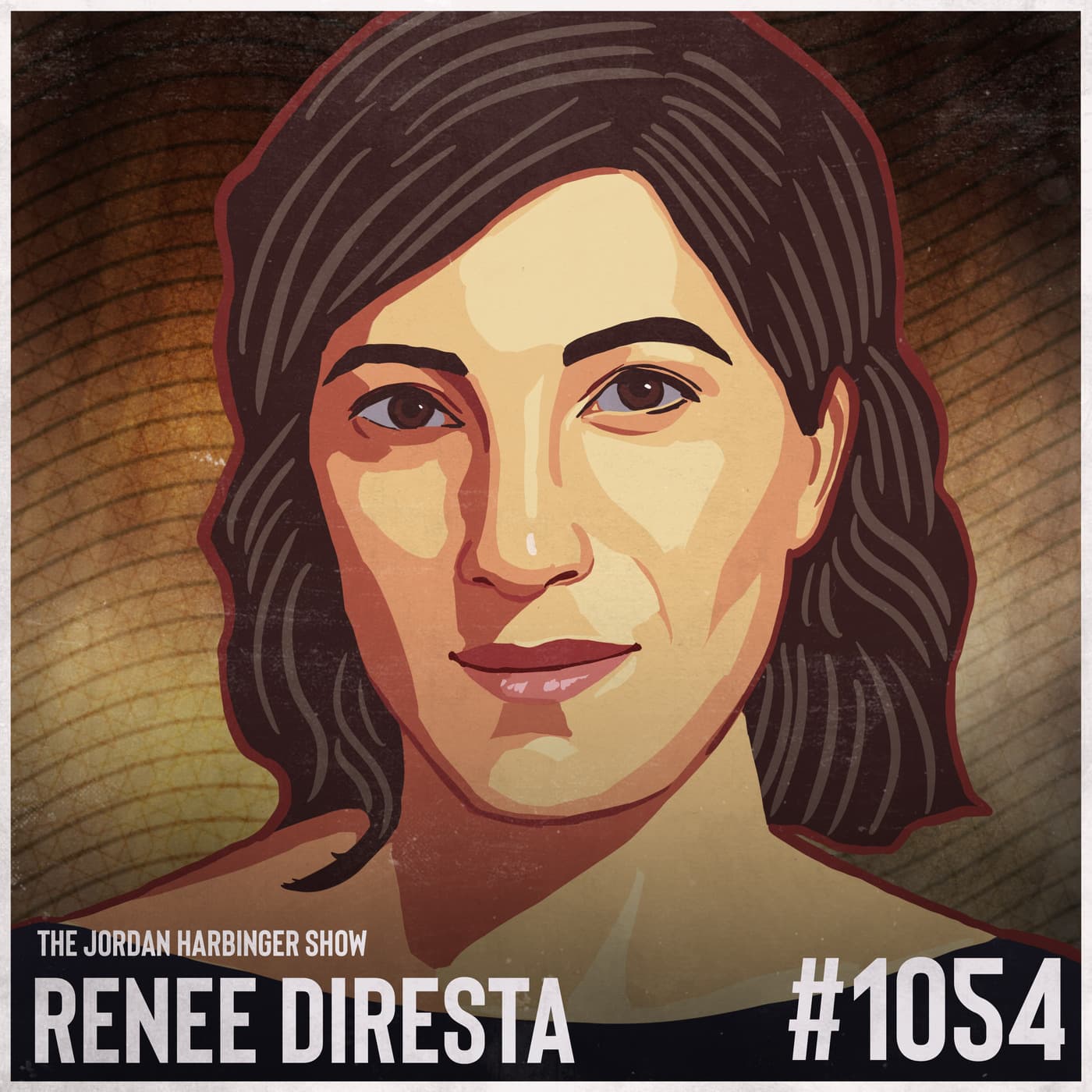
Podcast Summary: The Jordan Harbinger Show - Episode 1054: Renee DiResta | The Puppet Masters of Public Opinion
Episode Overview In this episode, host Jordan Harbinger interviewed Renee DiResta, an expert on disinformation and influence operations in the digital sphere. DiResta discusses the pervasive issue of disinformation, its effects on public opinion, and the techniques used to manipulate narratives in the age of social media.
Key Topics Discussed
- Audience Capture
- Definition: The phenomenon where content creators and influencers become increasingly extreme in their views to satisfy their audience's expectations.
- Effects: This leads to polarization in public discourse and makes it difficult to find balanced perspectives.
- Flooding the Zone
- Concept: A tactic used in disinformation campaigns where multiple conflicting narratives are introduced simultaneously to confuse audiences, making it challenging to discern the truth.
- Example: During crises like the MH17 incident, multiple explanations were circulated to obscure the actual events.
- Liar's Dividend
- Definition: The ability to deny the truth of real events by claiming they are fabricated or manipulated, often enabled by advanced technologies such as deepfakes.
- Example: A situation where a gruesome image could be dismissed as fake due to misinterpretation by an AI, leading to a misinformation narrative.
- Challenges of Shared Reality
- Media Literacy: DiResta emphasizes the need for improved media literacy skills to help the public critically evaluate information and combat misinformation through:
- Verifying information from multiple sources.
- Recognizing common propaganda techniques.
- Disinformation Tactics
- Common Techniques:
- Transfer of Authority: Using reputable figures to lend credibility to false claims.
- Card Stacking: Presenting only one side of an argument to create a misleading narrative.
- Bandwagoning: Suggesting that a belief is popular to persuade others to join the viewpoint.
- The Role of Influencers
- Impact: Influencers have replaced traditional media sources in many cases and can spread misinformation either intentionally or unintentionally.
- Responsibility: The need for influencers to uphold ethical standards and avoid contributing to the disinformation problem.
- Propaganda and Political Influence
- Example: Politicians often adopt influencer-like strategies to amplify their popularity and align themselves with extreme viewpoints, creating a divide in public opinion.
Takeaways
- Critical Thinking: Individuals should cultivate a habit of questioning and verifying sensational claims before reacting or sharing them.
- Community Engagement: Bringing awareness to the importance of media literacy in schools and communities can empower individuals to navigate the complex information landscape.
- Ethics in Communication: Both influencers and traditional media have a responsibility to communicate honestly and transparently to foster a healthier discourse.
Conclusion This episode offers valuable insights into the mechanics of disinformation and the necessity for heightened media literacy in a rapidly evolving digital landscape. By understanding these dynamics, individuals can better navigate the challenges posed by misinformation and contribute to a more informed society.
For more information, visit [jordanharbinger.com/1054](https://jordanharbinger.com/1054).
Written by AI. May contain mistakes. Listen to the episode to check what was said.
Transcript
Automatic transcript. May contain errors.0:28This episode is sponsored in part by Dell. This episode is sponsored in part by 1-800-CONTACTS. You know that last pair of contacts panic? My wife, Jen, knows it way too well. She's had these mornings where she's out of contacts and stuck wearing these old glasses she's got to keep wiping clean with her sleeve. But now, she makes sure to load up ahead of time because her next set is always on the way from 1-800-CONTACTS. They're the only major retailer that lets you renew your prescription online, so Jen gets her same doctor-prescribed contacts fast with free shipping without leaving the house.
0:571-800-CONTACTS has been doing this for over 30 years. They've got millions of lenses in stock, award-winning customer service, and perks like free returns, free exchanges, even free torn lens replacement. Jen loves their Express exam, which lets you renew your prescription online in under 10 minutes. It's a vision exam, not a full eye exam, but it gives you a doctor-issued prescription if you're seeing clearly with your current lenses. No waiting rooms, no dilation drops, remember those things? And with their best price guarantee, if you find your contacts cheaper somewhere else, they'll beat it.
1:23Getting contacts doesn't have to be a hassle. Let 1-800-CONTACTS get you the lenses you need right now. Order online at 1-800-CONTACTS.com or download the free 1-800-CONTACTS app today. Coming up next on The Jordan Harbinger Show. What starts to happen in the age of social media is you no longer have to persuade people. When MH17 gets shot down, Russia doesn't have to convince people that somebody else did it. They just have to create 30 different explanations, push them all out at the same time, and make it too hard to know what's actually true.
2:02Welcome to the show. I'm Jordan Harbinger. On the Jordan Harbinger Show, we decode the stories, secrets, and skills of the world's most fascinating people and turn their wisdom into practical advice that you can use to impact your own life and those around you. Our mission is to help you become a better informed, more critical thinker through long form conversations with a variety of amazing folks from spies to CEOs, athletes, authors, thinkers, performers, even the occasional extreme athlete, music mogul, special operator, or hostage negotiator. And if you're new to the show or you want to tell your friends about the show, I suggest our episode starter packs.
2:32These are a great place to begin. These are some of our favorite episodes on persuasion and negotiation, psychology and geopolitics, disinformation, China, North Korea, crime and cults, and more. It'll help new listeners get a taste of everything we do here on the show. Just visit jordanharbinger.com slash start or search for us in your Spotify app to get started. Today on the show, my friend, Rene DiResta, an expert on disinformation and influence operations, especially in the digital realm. Today we're discussing the phenomenon of audience capture. Why is it that online influencers, YouTubers, podcasters, social media influencers, these types of people, why do they always seem to get more extreme in their beliefs and the information that they spread?
3:10This is actually a very specific process of audience capture. They figure out if they're more extreme, they get a more engaged set of audience, and they in turn make those people more extreme in their beliefs. Why is online discourse so deliberately polarizing? We'll explain how this works and why it is so hard to find normal centrist viewpoints that don't dramatize every single event, news item, idea, or ideology. That's what we're going to explore here today on the show. Also, why disinformation and information itself is no longer top-down. It used to be like it came from the newspapers, it came from the authorities, now it's bottom-up, aided, and actually only made possible by algorithms and what the algorithms say we should all see, which is extremely dangerous for reasons that you'll hear more about here in our conversation today.
3:54We live in a world where the internet and everything in it essentially wants you to have extreme beliefs, tribal affiliations, so that you deliver clicks and attention to people who peddle those beliefs. Much of it, as we're seeing in recent events, is all bought and paid for by America's enemies as well, which makes it even more pernicious. This episode will make you more aware of what is happening, how it works, how to counteract it, and we'll also try to increase your media literacy along the way. All right, here we go with Renee DiResta.
4:23I know you've been on the show before, but for those of us who haven't heard your previous appearance on this podcast, just tell us what got you interested in disinformation or misinformation and disinformation in the first place. Yeah. So in 2013, I had my first baby and I was a frequent user of Facebook, as I think most of us were at the time. And I started getting a lot of recommendations for groups. I had joined a bunch of groups because none of my friends had kids. I wanted to learn how you put the baby to sleep, what you feed him, all these complicated things. We learned that from Instagram now.
4:54In 2013, it was Facebook groups. With Facebook, once you follow one group, it starts recommending you more. And for me, as I started joining like make your own baby food groups or cloth diapering groups and these sorts of things, I started getting recommended a lot of anti-vaccine groups. And I found the entire thing kind of bizarre because if anything, I was like sort of like stridently pro-vaccine. I actually found the entire anti-vaccine movement egregious and odious, and I found it very, very frustrating. So it was weird to me to get this stuff pushed to me. But I started getting very interested as the measles outbreak started about eight, nine months later.
5:26I was very curious about that connection. As you have social platforms that are pushing you to join groups, how does that change? How many people actually go and join? How many people find it persuasive? What is the offline impact of that online nudge? And I just got very interested in studying those dynamics, right? How do algorithms inadvertently connect people? What is the role of people versus algorithms in that system? How do people form beliefs and decide to become anti-vaxxers or vaccine hesitant or what have you? And then what happens when they in turn go on to become evangelists? And as I was looking at that, at the same time, there was all this work that was starting to be done on ISIS.
6:07You might remember there was this, the whole terrorist organization was using social media platforms quite visibly, you know, they weren't really being taken down all that aggressively at the time. And so as I was looking at this question of how do people use these tools to call attention to what used to be very, very niche opinions in my own sort of like personal experience in the anti-vaccine movement was looking at how that worked was that I felt very, very much mirrored by what was happening with this other organization that was using social media for propaganda, for recruitment. For me, then I was kind of hooked.
6:39I was like, oh, it's a system thing. Okay, let's learn more. Yeah. Episode 420 was your first appearance on this show, which sounds like a long time ago, given that we're at well past episode 1000 at this point. So your entrance into that anti-vax disinformation culture, this is one of those, I don't even know what you'd call it, a subculture where difference of opinion is essentially not allowed. And it's the same on both sides. That's what these people always say, right? It's like your information is different than mine. Even when you're talking about flat Earth, for example. Not that I do a whole lot of that, but it's the same thing.
7:08It's like, oh, I wanted to read about this scientific thing. And then it's like, dot, dot, dot. Oh, I don't know about this moon. Could the moon landing be fake? No. Well, here's why. And then someone else is like, hey, not only is moon landing fake, buddy, this is going to blow your mind. The Earth is flat. And you're like, what? But then it starts as if you don't agree with it, it's not like, well, here, let me send you some information. It's like, well, you are a bad person and you are in on the conspiracy. So it's not like you just didn't know. It's like you refuse to believe. It turns into this weird sort of faith-based kind of thing.
7:42Yeah. It's like a cult. It becomes their entire identity. Right. And you see that evangelism component to it. The flat earth folks, they really, really, really want to tell you about the ball earth conspiracy. Yeah. And like how NASA is a, you know, it was like a movie studio and all of these other kind of components that go into it. And this is true with a lot of people who are really deep believers in some of these conspiratorial stories. And that's because they feel like they've been awakened and then they have an obligation to awaken you, right? To awaken others, to kind of spread the gospel almost.
8:13And that dynamic, that evangelism, that mechanism by which it becomes their identity, we used to see it happen at small scale with some of these more niche conspiracy theories like the ones you're describing, these quaint old ones that have been around for quite some time. But what you start to see on social media is things like QAnon, right? Yeah. Then begin to emerge. And QAnon has all these other folks that kind of become component constituent communities within it. And the whole draw of QAnon is not even necessarily the story. It's this process by which you make friends, right? This is your community.
8:45You're all digging in, looking for the truth together. You're all decoding these things. And the flat earthers feel like they can contribute because this Q drop relates to this thing that they've always said. And you start to see this kind of co-creation of reality that happens. And people get very, very into it. It really becomes their community. It becomes a source of entertainment and friendship and camaraderie for them. They have so many memes. Memes for people who are not familiar are, I'm going to define this poorly, but it's like you take a picture that's a screenshot from a really popular movie like Princess Bride, and then you change the text over it so it looks like one does not simply assume the world is round or whatever, right?
9:22And they share these constantly. you reminded me of one because there's a meme phrase that's something like the real insurrection was the friends we made along the way or the real conspiracy is the friends we made along the way. And I can't I don't know what the original is even from, but they say that kind of thing all the time because it really is about the friends you make along the way. Like Pizzagate really is about the friends you made along the way, believing that there was a basement at the pizza place where Hillary Clinton was drinking kids blood or whatever the hell that thing was about.
9:53it just gets unhinged really, really fast. Now everybody knows what it's like to be a podcaster. There's a little more empathy for the stuff that ends up in our inbox. Like you think your Twitter feed's bad. That's what my inbox looks like. You have a really good example in the book. And by the way, if people buy the books, please use our links in the show notes. It helps support the show. You have a really good example in the book of this guitar guy who's just playing the guitar. And I thought this was a brilliant illustration of what you call audience capture, which is another new term that's going to sound really old by the time your book is a year or two old, right?
10:23It's going to sound really cliche. I know. We should totally talk about this because I'm actually really curious to hear how influencers think about it. I was trying to tell the story of how people go down rabbit holes and I didn't want to use a specific person, right? You don't want to like impute motive or mindset to somebody. So I decided I was going to create this character, admittedly sort of kind of an archetype, a stereotypical figure, but a man who starts off just kind of like posting content, you know, posting himself playing guitar, same way people do on TikTok all the time, right? Or on Instagram all the time.
10:51And then gradually he amasses a fandom. They're originally there to hear him talk about guitar. But then one day he makes a comment about Eric Clapton. And this actually happened during COVID. Eric Clapton became something of a hero because I think he was vaccinated, said he was injured by it, then became sort of an outspoken advocate against it. And then also tied that into a lot of the narratives around livelihoods and people who were not earning a living at the time, right? Which is a very real thing that people very acutely felt. You know, so I described this character kind of mentioning Eric Clapton and saying, you know, what do you guys think of this?
11:25And then all of a sudden, the narrative and the tone of the community shift to talking about vaccines and politics and lockdowns. And then you can see this happen. I saw this happen with a lot of wellness influencers, actually, during the pandemic, where there's this trajectory where they're originally very much staying in their space, right? the sort of niches they've carved out for themselves. But as they realize that by talking about certain topics or using certain rhetoric, being very provocative, they get more attention, and it creates an incentive for them to do more of it. And what you start to see happen in these cases, they're rewarded by their audience, they're rewarded by the algorithm, they're getting more attention, they're earning more money, and this becomes a cycle.
12:08And so this is the phenomenon of audience capture, where you see people, as they begin to move more and more into that space where they're engaging with their audience on a particular topic, they don't want to then alienate their audience by disagreeing with them or by challenging them on other topics. And so that I think is one of the interesting dynamics of influencers today, right? It's a business for them. It's their livelihood. It's not just a source of chattering on the internet. And so how do you balance that authenticity and staying true to your actual ideas with what you're actually rewarded for producing?
12:39So yeah, this is super interesting to me because because I've watched this happen with other shows all the time. And I'm, I would be a fool if I thought it didn't happen to my own show. So I'm constantly asking myself, am I doing this? How am I? Because it can be subconscious at times. So for me, it's, I've been really diligent, I think, about being conscious about not doing this, right? So I'll have someone on, they'll be controversial. I'll challenge them in a way, or if it's not going to be that kind of conversation, I sort of let it rip and then have an opposite perspective on another episode.
13:11And I've noticed that it can be extremely lucrative to have one hyper-partisan opinion and then just keep hitting it over and over and over. So I had a guy on here who is, his father founded Hamas and now he's very anti-Hamas. And he worked with the Israelis to take down a bunch of people. Of course, his family has disowned him and he's like kind of on the run from Islamic jihadists because they want to kill him. And he was really fired up. He hadn't spoken about the October 7th thing in public yet, really. And I've known him for a really long time because I had him on years and years ago. I had to track him down in Asia to get him on here.
13:53It was just like a whole thing. So he did my show first and he basically just yelled the whole time about October 7th. And I put that on YouTube and it got millions of views. And my YouTube team was like, bro, have this guy on again. We need to pull, we're going to make clips of this. This is so awesome. And I immediately screwed everything up. And I put that into air quotes because I had another guy on the following week who was Israeli, but was very anti-Israel. And it was a really unique perspective from him too, as an extremist on the other side. That worked really well in my podcast. My audience was like, wow, these two guys back to back, my mind has expanded.
14:31They've been pushing at the edges of my opinions on each side of this issue. Thank you for doing that. We had this weird post in the pro-Palestine subreddit on Reddit, which is like, thank you for doing this really interesting dichotomy. You didn't put your opinion in here. Really incredible. On YouTube, however, it was like my most disliked video was right after the Samas video. It had so many negative comments. My team turned off the comments for a while and then deleted a bunch of the comments because they were just horrific and mean. and my channel hit this weird lull where the algorithm wasn't showing my stuff and my YouTube team was like, what happened?
15:06And they looked into it and they went, you had a crazy, passionate Zionist audience when you had that Hamas guy on because it went viral and half of Israel probably watched it. And then you had this other guy on and they hated him. They hated him and they hated him and they watched him for like a minute and they were like, this guy's terrible. Dislike, never show me this again. It doesn't work. So if you are a podcaster and you just have your audio podcast, you can talk about whatever you want for the most part with some caveats. But if you are a YouTuber or you're on TikTok or whatever, you have to play to your audience or the algorithm will mercilessly punish you.
15:42And if it's 99 % of your income because you sell t-shirts outside of that or something, you are never gonna wanna jeopardize that. You're never gonna wanna jeopardize that. So of course, if you find that your audience likes something on YouTube, You try to play to that audience no matter what. And I see this with other influencers all the time. They'll start a show about science. They'll notice that they do a show where something gets like mildly political once. Right. It gets more views. Then they're like, huh, what worked about that? They test a few things. They had Sam Harris on. He's not too controversial, but he's still political.
16:16Well, that did really well. Let me have this other more insane person on, more extreme person on. That did really well. And then they're knocking on Alex Jones' door trying to get this guy on the podcast or the YouTube channel because it's like, well, this is just what works. Look at this audience that I built. This one has 1.75 million views and my interviews about science have 30 ,000 views. What's paying your bills? And more importantly, a lot of these guys are already rich. Not only what's paying your bills, what is making you feel good about yourself? You're famous now. People love you. You're speaking truth to power by having all these people on.
16:52Yeah, man. that feels really good it's addictive I deliberately sorry I'm talking on your episode this is so selfish I'm really glad you are actually I went a friend of mine's a youtuber and he invited me to this conference last I think it was August and I was the only one there who wasn't well I know there were a couple people who weren't content creators but I was really very much like an academic yeah you know he was like it'd be great to have you kind of lead a session on audience capture you know I think you'd be curious to hear how these folks actually talk about it And it was fascinating to me because they're basically all just saying exactly what you said, right?
17:26This is my livelihood. This is what the algorithm will reward. I know what it's going to boost. I understand the shocked face with the big white letters that I have to put in the thumbnail, you know, and then the entire thing is a production. And that's why in the book, I try to talk about influencers, algorithms and crowds, right? So I try to lay out the three component parts and the crowd is basically the audience. And so I'm describing how the influencer creates content for the crowd, right? You're making it for the people who are listening, but you're also doing it for the algorithm. And then the algorithm in turn is looking at the signal, like you're describing the likes and dislikes you get from the crowd, from the audience, and it's deciding whether to push it out to more people.
18:02And then the influencer makes or loses money and audience and mindshare and clout by virtue of how that system comes together in that moment. And so I absolutely get it. I mean, you hear influencers talk about it quite a lot, but more behind the scenes in a way. And so one of the goals I had with the book was trying to get that idea out there, which is influencers are awesome, right? There's a lot of fantastic influencers making incredible content out there. It's a really rich and interesting media environment. And also, this is how the incentive structure works. And here's why some of those people tend to go down rabbit holes at some point and how you should think about what is happening when that happens.
18:38I call this it's the one thing I've invented in my career. I think holy, holy myself. I call it the Jerry Springer effect. Remember Geraldo Rivera had the Nazis on? Oh, yeah. If you're younger than 40, people are like, who is that? This is a talk show host, daytime TV. He was kind of like a serious ish journalist at one point, or at least the talk show was like, I'm going to have real conversations with people was like Donahue was like Oprah, whatever. And then he was like, I'm going to do something wild one day. And he had, I think it was like Black Panthers and Ku Klux Klan members or some crazy, some just insane mix that you should never have on.
19:13And his original intent was to see, supposedly, if they could come to some sort of understanding or like get both sides out in one show. Anyway, of course they start fighting. Geraldo gets hit with a chair, breaks his nose. He has to go to the hospital. They get the whole thing on film. He was originally like, I've made a huge mistake. But then people saw the ratings and everybody wanted to see that clip and it made the news. And then he was on there with this like bandage on his nose for the next few episodes. And people were like, what the actual F is this? So then all these other talk show hosts during daytime TV, they were like, oh, we're screwed because now Geraldo is trying to find the next Black Panthers, Ku Klux Klan mixed episode.
19:51And I'm sitting over here like, should we teach physical education and art in our schools or should we stick to academics? And it's like, that was fine until it wasn't. And we realized that people actually wanted wrestling. but in talk show format. So YouTubers, they have this exact same problem and I have a lot of friends that are big YouTubers and many of them are quite miserable because they have to do this to make money. So they go from, I just wanna have conversations about the latest technology and how it's gonna affect us. AI, brain machine interfaces, blockchain, whatever. And then it's like two years later, you look at their feed and you go, why are you talking with this person about 5G towers possibly causing COVID.
20:32And you think, has this guy lost his mind? And then, you know, you go, you have a beer with them and they go, nah, this is just like what the team's analytics say is going to do well. I don't believe any of this idiotic bullshit. I just sort of suffer through the interview. They give me a sheet what to ask the guy. We wind them up and let it go. And I'm thinking, so you've just willingly capitulated to this disinformation landscape because it gets more clicks. And they're like, yeah, kind of. It's really depressing, but it's the Jerry Springer effect because they all think when this blows over and I get big enough, I'm going to go back to what I originally wanted to do.
21:06But guess what? That's never going to happen because the second you try to go, you know what? I'm not going to be Judge Jerry. I'm going to go back to being the serious journalist I was. Everyone's like, you? You're a clown. All I want to see from you is buffoonery. So if you're going to go and try to be a serious brain machine interface guy again. One, I can't take you seriously because you're up here doing stupid crap for the last three years. And two, I'm not going to watch this. This is not why I'm here. So the algorithm says your career is now over. You have changed tack. We are not going to push this to your existing audience.
21:39And we don't know who wants to watch this. And then your business goes down the toilet. So what are you naturally going to do? You're going to stick with what works because you have to feed your kids or your dogs in the case of my friend. So there's no way that you're going to do this. The algorithm giveth and the algorithm taketh away. And that's why I think podcasting in audio format is so much slower to grow because there's no discovery algorithm. There's no discoverability at all. But it is superior because I can have you on here and then I can have somebody on who does deep ocean exploration and they get the same amount of downloads.
22:10And some people say, oh, that Rene DeRest episode was so interesting. And other people say, wow, that ocean episode was so interesting. And I keep my audience. I don't alienate them because I had different things on. They appreciate that. That is not the case in YouTube and TikTok and other channels, mostly. This is an interesting thing that Substack has talked about a little bit. Have you followed that discourse? I know the founder. He's a well-meaning guy. I agree. I think that they're well-meaning. I think there's also a little bit of an element of naivety. So let me kind of poke on this. Sure.
22:38For a long time, they framed it as like, this is a recommendation-free zone, right? We are going to allow people to create newsletters. You recruit your own audiences. we give an advance to some people who are talented as like a draw to the platform then there's cross promotion right newsletter a recommends newsletter b you know you do wind up with a little bit maybe of an echo chamber at times when newsletter a b c d e of g are all like ideologically homogenous and that's the you know and they cross recommend each other and everybody who's paying their five dollars really only has maybe 10 newsletters that they're actually going to pay for and so you know you do start to see ways in which the unfortunate dynamics like the human nature component of people liking to see the things that reinforce their beliefs plays out again.
Read the full transcript
23:21But what they were not doing was this algorithmic curation, right? It was not when they started, they were not doing that. And so it was seen as this question of like, could you grow new media? Could you grow an audience and just have people follow you? But then it also required a whole lot of people to commit to producing content constantly. And so then you did start to see people starting to form these groups anyway. And then Substack had to keep up its own revenue. And so you do start to see those recommendations and notes and the sort of social layer on top of it being built. And that's because ultimately, that model, that engagement driven model is the incentive of the platform too.
24:00So you have the platform incentives, the influencer incentives, the audience incentives, and all that stuff intersects in some pretty weird ways at this point. And that's why I think you are seeing a lot of that audience capture, reinforcement. My entire identity is what I read and who I listen to dynamic that starts to happen on the internet. It's true. I want to caveat this because someone's going to go, Joe Rogan has a big audience and he has a lot of variety on his show. You can do this sometimes, especially if you're like so massive, you have your own gravity kind of as a creator, but otherwise you cannot.
24:29So if you're new ish or you've been in the middle of the pack, or even if you're sort of big, but the algorithm doesn't favor your stuff for whatever reason, you can't do it. So like, yes, Joe Rogan can have an ocean guy on and he can have you on and it'll do well. He's probably not going to get punished by that because people are watching so much of his stuff and have for so long. However, another newish creator, they just don't have the same benefit. And I don't exactly know why my YouTube team has tons of really big channels under their control. They have their own big channels and they're just like, eh, you get to a certain size, you can do whatever you want, but we don't know what that size is.
25:03And also it's different for everybody. Like we have some channels that have 5 million subs. They can do whatever they want. We have some channels that have a million subs. They can do whatever they want. Some channels, they have 2 million subs. They screw it up. It's over and they have to spend weeks rebuilding. So the algorithm favors them again. And it's just kind of like, nobody's telling us why this happens because even people who work at YouTube don't know. It's like the robots know and that's it. You know, another thing that I find that happens with the Jerry Springer effect, as I call it, and you talk about this in the book, is it gets easier to make money when you don't respect your audience.
25:36So if you build an audience of people that you also think are morons, you can fleece them. I'll shill a mattress that I love on this podcast, just like any other podcaster, but I will not shill a fake white-labeled vitamin that I say is a magical cure for COVID or something along those lines, or is like Chinese sawdust that I get 100%, you know, almost 100 % margins on. I won't do that because I care about the people that listen to this show. I got to sleep at night. My kids are going to remember me in some kind of way. And if there's an ad on there for like Uncle Jordan's Chinese sawdust pills, they're going to be like, what the hell, man?
26:13So I don't do that. There's a definite line. And I really think it's easier to fleece an audience that you just don't care about because you also think these people are all stupid. Who gives a shit? Yeah, I think this is one of the areas where for me. As an observer, you know, I study how narratives move around the internet, but I don't have very much visibility into the sort of inner headspace of a lot of the people who put stuff out. And there's a word we use that, uh, bullshit, right? That's a word. I'm from New York. We've used that word for decades. Yeah. Just keep it strictly in layman's terms, if you will.
26:47Yeah. There is actually now an academic book called On Bullshit and it frames it as information without regard for the truth. Right. And I actually kind of love that first of all, because it gave us that word, it legitimized it and now you can put it in papers. But it's a way of expressing that notion of like, there are people who just don't actually care. And I used to sit there and think like, well, surely they know they're wrong. And if you just tell them that they're wrong, they're going to want to know that they're wrong. And then they're going to make that correction, do that fact check.
27:17We're going to correct the record and move forward. And then you realize that they actually just don't care. And this is exactly it. I think that their incentives are not necessarily producing truth. Their incentives are driving people to take an action, particularly the political influencers. The game is not to tell the truth. The game is not to give the most accurate information. The game is to make your people do the thing that you need them to do for your candidate. And so that understanding of incentives and how it kind of drives the game, it was really the thing I wanted to get across in the book most of all, because I feel like it's obvious, but not something that you actually talk about much.
27:49We spend a lot of time talking about, like, quote, the algorithm, this idea that social media magically does things to us. But there is this component where people are really active participants in that process. And the incentives of the individual people actually are much more important when you're thinking about why does disinformation spread? Why does a rumor go viral? It's because it resonates with human beings. And that is what is actually happening. If you put enough whiskey in a YouTuber, they'll tell you some version of this. They'll say like, I don't really care to do all the anti-woke videos that I do or whatever their sort of niche is.
28:23I'm thinking of one person and sort of in particular. So he told me, hey, you know, I really like having some of these conversations, but the majority of them, I'm kind of like, eh, whatever. It's more of the same. And he can push back a little, but you can't push back too hard because then it looks like you don't respect the opinion of this exalted guru that you have on your channel. And if your status is kind of lower than their status, because they're like a really big deal in whatever sort of niche that you're in, like, you don't want to look like you disagree with them. And certainly you don't want them to think, God, that guy was kind of a prick.
28:54I don't want to do that show again. Or wow, that guy really took me to task and made me look a little bit bad. I definitely don't want to do that show again. You have to be kind of like, thank you for joining me. I agree with every single thing you say, even if you're just like, except for, you know, half of what you just said was totally verifiable nonsense, but okay, they have to do it. Because one of my friends went from making like$3 ,000 a month to making$30 ,000 a month. Is he going to stop doing this because it's a little bit against his personal ideology and it's a little bit more work?
29:25I mean, no, he's not. He's not going to. And I'm sympathetic to that in a way, right? He's not platforming conspiracy theorists, but he also doesn't agree with the politics of what he's talking about. But it's also just like, well, I got to make a living, man. $3 ,000 a month to$30 ,000 is a massive difference. Look,$30 ,000 to$60 ,000, probably you're just going to die with more money at that point. He told me, he's like, man, I don't mean anything by this, but you're in a privileged position. You can afford to have morals and integrity. And it's true. It's expensive, but I can afford to do it because if I lose half my audience, I still have half my audience.
30:01So I'm doing all right. He's not going to do all right. He's not going to be able to send his kids to private school in London or whatever, right? It's not going to work. Anyway, I'm talking way too much on my show. People love or hate that. And I promise I am done ranting on this. Tell me how consensus reality has been shattered recently. I love this term consensus reality. We used to just call it reality, but here we are. I know. So the idea of consensus reality is that people decide what is true amongst themselves. There are certain things, you know, you see money talked about as one example, like, why do we all agree that pieces of paper carry value?
30:38Why do we all agree that if we exchange something where, you know, we can trust that that money is going to have value in the next story down the street, we've all kind of agreed to certain types of ideas that come about, not because they are inherently true, but because we kind of as a group decide that they are true. What I was looking at over the years was the notion that I think disinformation or misinformation is often misconstrued as a thing, like a problem of facts. Again, if you just give people the right facts, they will realize that they are wrong and we will all kind of go on our merry way.
31:09And what is actually happening is that you have people who don't trust that the same thing is a fact, right? So we're really very foundational at that point. So they have no first person experience of an event in the world. If you were to ask somebody what happened in Israel on October 7th, for example, right? You are not there personally yourself. Maybe you don't have a person that you actually know who was there. So you're really reliant on what does the news media say? What are the people who are saying that they're there live streaming with videos say? How does the reporting tell the story?
31:41And this is just one particular example that's semi-recent and that was a little bit contested as far as what people wanted to believe at which point. What you find is people's opinion of what happened in that moment, what reality actually was around that set of events is really shaped by who they trust, what they see, whether they think that they can trust what they see, right? Because now AI generated content is a part of this as well. And what their friends and family and community think is true. So all of those things go into the idea of this is what I believe happened on that day. This is what I believe happened around that event, this person, this cure, that vaccine, you know, whatever it is, the sources of trust have fragmented.
32:22The types of entities that count as media or reporting or real, even if you will, have really fragmented. People have very different beliefs of whether they can trust a New York Times reporter on the scene, an Al Jazeera reporter on the scene, again, just to stick with the same example. And so what you have is this set of highly divergent inputs. The commentary that's written around those inputs is very, very different. People who are primarily consuming the commentary or seeing things framed for their particular identity, their particular set of beliefs, right? They trust a certain set of podcasters, influencers, newsletters, media.
32:59So the net effect of this is that you have a completely divergent set of inputs around an event that actually happened in the real world. But getting to that ground truth, getting to that consensus about what has actually happened becomes increasingly impossible. Bridging those gaps feels increasingly untenable. And you see it happen more and more at this point, because again, there is such a proliferation of content, proliferation of people that you can listen to, proliferation of communities that people spend all of their time in. We mentioned QAnon a little bit earlier, right? That idea that you're digging into the clues and coming up with what happened all together as a group.
33:38And that is the group of people that you trust and that you are essentially creating this idea of reality along with. So the notion of the objective fact is not quite as cut and dry at this point as we might have previously thought it was. During COVID, there was a friend of mine and he was desperately just sending me one thing from Russia Today or RT, I guess it was called, one thing after another. And I was like, hey man, are you okay? And he's like, I really just want you to know this because every other news source is basically just spouting nonsense and RT is the only real credible news source.
34:14And I was just like, my God, that is an inversion of reality. Like this is Kremlin propaganda. It's funded by the Kremlin. They tried to hire me to do something. They told me I had to write these specific kind of stories. Like it's just not journalism at all, let alone the only real credible news source. When one news source that is government funded is telling you something and every other news source in the world is not, Why would you choose that one as your most reliable news source, right? But he was genuinely concerned because I read like The Economist instead. I'm wondering what broke for people like this?
34:50Because is it just that they're surrounded in online communities where everybody looks at that news source? Because both sides think the other side has gone crazy, right? I think he's gone crazy and he's looking at me like, Jordan, I just wish I could get through to you. And I'm thinking, but you're in a cult. That's like a Scientologist telling me they just wish they could get through to me because the alien Z-Noob blows all up with a nuclear bomb. I've had friends be like, well, Renee, you know, you're an institutionalist. Of course you would still think that the Associated Press is telling you the truth.
35:19I think Elon tweeted the other day something about, like, the Associated Press is a psyop or something along those lines. It was one of these, you know, these sorts of things where, in some ways, that is, I think, the most, if there is a single source of ground truth, like, the AP might be it. Yeah. A bunch of different journalists from different outlets posting things on a newswire. It's like, it doesn't get more sort of... Like this is as raw as it gets. Like nobody is really, you have nothing has been layered on top of it in quite the same way yet. I always thought that we kind of thought the AP was the most legit, but now that's a matter of some debate too.
35:49And I think it is really that there are a couple components here. One, it becomes very much a component of people's identity, like what they listen to and who they trust. And, you know, people take great pride in being either attuned to the imperialist narratives of mainstream media, right? It's something that you see. I see my friends who are more on the far left share these sorts of things where I'm like, good Lord, that is not a source, but here we are, you know? And, you know, and it's because in their alignment and their worldview, the sort of Chomskyite view of media, like the sort of mainstream media as manufacturing consent, but these sort of niche global leftist outlets are telling the truth.
36:27And that's where you do see people who are like, no, RT is a really great source. They'll point to Iranian media at times. So you see that start to happen. you have the same thing happening over on the far right. This is how Fox built an empire, right? Mainstream media is biased. You should listen to us. And then there is that sense of loyalty. And then an identity starts to develop around it, particularly as you are spending all of your time in the crowd with your friends, you find quote unquote, your people. I felt for me personally, during COVID, you know, I was in quite a few group chats. I had a baby in August of 2020.
37:00So I was doing the new baby thing. I was up at all hours, like nursing and stuff, hanging out in these group chats. I felt like at the start of COVID or even before COVID, group chats that were ideologically diverse, there was still a lot of grace, right? Like there was arguing like, hey, here's your source. Here's my source. Like let's fight about this. But I felt like by the end of COVID, some of those communities had really just absolutely collapsed, just a complete splendoring. It became such a marker of who you were as a person, whether or not you trusted what the government told you about a vaccine or a disease or lockdowns or you name it.
37:37It was the sort of thing that really did drive people apart in a much more fundamental way. And that idea of you're a sheep who still listens to institutions and media versus you're a crank who's reading these nutjob substackers over here, you know, that was the sort of divergent frames of where people went in the camps that we retreated into. But it very much is a thing that happened. And the question is now, how do you bridge it and get back? That is not a technological problem. That is very much a problem of people. Well, folks, since I won't shill conspiracy theories and Kremlin nonsense, I have to shill the fine products and services that support this show.
38:15We'll be right back. If you're wondering how I managed to book all these great authors, thinkers, and creators every week, it is because of my network, the circle of people that I know, like, and trust. I'm teaching you how to build your network for free over at sixminutenetworking.com. The course is really easy. It takes a few minutes a day. Really, it's not awkward. It's not cheesy. I know a lot of people are like, oh man, I know. I keep saying every time I hear this, I need to do it. Just go to sixminutenetworking.com. It's free. It's not annoying. I'm not going to ask you for your phone number.
38:40I don't want your credit card. None of that. And many of the guests on the show subscribe and contribute to this course. Come on and join us. You'll be in smart company where you belong. Again, sixminutenetworking.com. Now back to Renee DiResta. Now we have this bespoke reality, as you've termed it, which I love this term. You can always find confirmation of info you want to be true. You can always, I mean, you can find yourself in a YouTube rabbit hole. You start off like, how do colds spread? Is it just about washing your hands? I got these two kids. I'm getting sick all the time. What if I just wash their hands?
39:10Am I going to get sick less? Or do I need to also, I don't know, whatever. And then I get distracted. YouTube's on to my office computer. I get distracted. I go bathe them. I come back. Maybe I even fall asleep. and in the morning, it's still playing. Except now there's a guy yelling at the screen about how 5G towers cause the COVID epidemic and colloidal silver, if you take that, which he just happens to have his own brand. If you take that, it will stop it. And I'm thinking, this is what autoplay, like what was between that? The joke before COVID, the joke was you would end up with Nazi stuff or like Holocaust denial videos.
39:48Now it's like, you know, it can go either way. It depends what you're looking for, I guess. But it illustrates your point, which is years ago, invisible rulers were disseminating propaganda, right? That not like the president, but a media mogul, maybe a newspaper or somebody who's publishing some sort of fringe newsletter. Now it's podcasters and influencers, which reminds me, this podcast is sponsored by Philip Morris. Isn't it time your kids started smoking? But it's really, you can find anybody out there who will tell you that you are right or that your hunch about something was not only right, but also, and then it's like six degrees more kooky in that direction.
40:25For me, the personal feeling, I have really gone back and forth on like, how do you actually engage with friends? How do I repair in my own life some of those relationships? And what I've come down on is that it has to be very much one-on-one. I think you can do it at an individual level, right? You can reach out. I've started occasionally reaching out to say, hey, just FYI, we should grab a drink. the world has reopened. I actually moved. I moved across the country during COVID. So I'm having this sort of funny experience of reconnecting with people where I feel like I just kind of ghosted. I just disappeared.
41:00I don't live in that city anymore. I have a whole other life now. And then feeling like it's actually just a really weird experience how that feels like it ended and something new began. And I'm very happy with the new, but I do acutely feel like I myself let the world get away from me in certain ways. And like now is probably the time to repair some of those friendships, repair some of those relationships. And so, you know, I've tried to prioritize it lately, but it's hard to do that at scale. That's the issue, right? I feel like we can all do it individually, but what do you do when you're trying to bridge reality back writ large?
41:36And that I think becomes the area where as long as people are incentivized to continue propagating the bullshit, you know, in the ways that we've described, you're bumping up against a system of incentives that is really, really intractable. What I liked about Invisible Rulers, the reason I picked that for the title of the book was, as you note, it's a reference to the 1920s, this idea that it's a quote from Edward Bernays, the sort of father of modern PR, actually. And what he's saying is they're invisible rulers who control the destinies of millions, meaning they are steering people, they're moving them in particular directions.
42:10And he talks about it in a very matter of fact way. This was not seen as some sort of ethically dubious thing to do. It was, it's funny you mentioned Philip Morris, Edward Bernays actually winds up trying to create demand for women to smoke, right? This is something that he's actually sort of firsthand involved in at the time, again, in the 1920s, 1930s. And he does it by appealing to the individual, but also recognizing that you have to appeal to them in their identity as a member of a group. And if you convince them that not only should you smoke, but as an extremely classy, very affluent woman of a certain social standing, all of your peers are smoking, so you too should smoke.
42:50And so you kind of create demand and you really reinforce it through those social ties. What I loved about it, what I loved about the book and the idea and the concept was the way in which it was so applicable back four media ecosystem iterations ago because it recognizes that it is just a core component of human nature. It is the way that we think. It's the way that we understand ourselves and our place in the world. It's wild to look back at that old stuff. In some of those old ads, they didn't need smooth language back then. They could be like, if you smoke, you'll stay thin and pretty. That's literally what they say.
43:25Yes, exactly. Attractive women smoke Virginia Slims or whatever. Yeah. And it's like, oh gosh, that's really just right out there. It was very blunt. later on it became like, oh, Joe Camel, look how he's cool. He wears a leather jacket. He plays pool. That's what cool people do. Rides motorcycles. Look at that cigarette hanging out of his mouth. And it's like, okay, all right. You have to read between the lines. Back then you really didn't. So those old ads are just hilarious. But it's also like, it is interesting that that eventually stopped working because people went, stay thin and pretty from smoking.
43:54That's terrible. You can't say that. So instead they just show thin and pretty people smoking and that was okay. And then we got sort of sick of that. And then the evolution of this stuff is really interesting. And here we are in the current iteration where we have influencers that I guess have a parasocial. Tell us about the parasocial relationship. By the way, I love this term as well. It's such a fun thing for me to have, but it could be dangerous. It's an interesting one. So that term, it's not mine. It comes out of like fandom culture, right? The idea that if you are influential, usually a celebrity was sort of the canonical example of this until the last 20 years or so, your fans believe they have a relationship with you in some way, right?
44:34They see the influencer or celebrity all the time. You know, she's posting her whole life. These are my kids. This is what I ate today. Here's my vacation. Here I am doing laundry. Here I am as a relatable person in my car talking to you, you know, all that kind of stuff. And then people kind of follow along. They're really following along with this person's life. So the, you know, it becomes entertainment, but they also feel like they know a lot about this person. They know their kids' names. They know what they like to do. They know all of these different details about them. So the idea of parasociality is they start to believe, you know, start to feel like that relationship is real.
45:07And more importantly, sometimes that it's like kind of bi-directional. And so they start to have this at times expectations of what an influencer should do, meaning should in the sense of like would do to meet the idea of them that they have in their head. And so if the influencer were to do or say something that does not fit the idea of them, this person with parasocial relationship feels, they feel almost betrayed. They've been like let down by this person that they consider to be almost a friend. And that is where you do start to see influencers trying to balance that, right? Because it is very, very lucrative for them at times.
45:44It keeps the fandom there. It keeps people engaged. But then at the same time, when things start to go south, where they feel like that's where you get it, that sense of like, I have disappointed my fandom by not having this opinion about this issue. And you'll occasionally see it manifest where it's now considered a perfectly reasonable thing to do for a fan to demand that an influencer make a statement about a world event that they care about. Right. And so there's so you see that that idea that the influencer is supposed to be almost like just like you, but maybe a little bit better, just like you, but maybe a little bit more famous.
46:23And that manifests in some really weird ways when it comes to the audience starting to demand something, you know, demand things of the person. This happens to me all the time. I'll keep this short, but I answer all my DMs and email. it takes me a while, but whatever. Like, it's not immediate response. But whenever there's big world events, like October 7th, people will go, we need your voice. And I'm like, oh gosh, here it goes. When it was Masha Amini in Iran, that was easy. Nobody's pro-killing teenage girls because they didn't have their headscarf on, right? That one was really easy. It's really easy to say, hey, Ayatollahs who are totally out of touch and disconnected with their entire population and kill people all the time because of political crimes and execution.
47:05Like, that's an easy one. But October 7th was tough, right? Because I would say, oh my gosh, this terrorist attack is horrific. Look at what Hamas did. And you think like, well, no one's going to support Hamas. And then you get these otherwise reasonable people that are like, no, you're just pro-genocide. And it's like, where would you get that idea? Where would you get the idea that I want all Palestinians dead when I said something, nothing of the sort, right? And it's because they're surrounded with people who are like, well, anybody who doesn't agree with us is just on the absolute wrong side of history and cannot be reasoned with in any way.
47:36It's very tough. It's hard to thread that needle. And so I really endeavor on this show to not get political and to cover things from as neutral an angle as possible. But that's also a problem. You're not supposed to be neutral, Jordan. You're supposed to agree with me, said the 100 ,000 people on each side of this particular event. Yeah, I think, you know, this is not something that I personally experienced. This is the nice thing about being in academia is like, well, you know, there's very important nuance that we should consider in these things. But mostly people just don't ask for, people don't ask for my opinion on this.
48:08And that is something that I feel is, it's the price, I think, of having that relationship with a very, very large audience, right? People think, like there's an expectation that comes along with it, and then the influencer has to live up to that. Yeah, it's tough. I really enjoyed this section of the book on archetypes of influencers, right? There's entertainers, okay. The guy who does the comedy videos and skits, whatever, those guys are fun. There's plenty of them. Explainers, I think that might be where I'm at. I'm not totally sure. The Bestie, that would be such a fun one that I would be terrible at, right?
48:37Where you're doing your makeup in your car and you're just like, oh my God, my kid today did this thing and I want to tell my audience about it. My wife loves those. She's like, I follow this mom and she's so funny, right? And I'm here for it. It's great. Idols, I'm not sure. I guess that's like Taylor Swift or something like that on social media. Yeah, the ones who are, you know, they've kind of crossed into that upper echelon of almost celebrity, what we would have called a celebrity back in the day, but their first internet made. It's the people who are selling you an aspirational lifestyle, right?
49:06They're not even pretending that you can achieve this thing. It's much more like, look at my insane shoes that my sugar daddy just gifted me, you know? I mean, the content - She's a hardworking lady, Renee. No, there's an entire subset of TikTok that is just people talking about how to sugar date. Sugar date? One thing that is absolutely fascinating about TikTok is you start somewhere and for your point, you just, my God, do you wind up in some weird places? It sounds like you're throwing, you're fishing out there. You're throwing some fish out there, Renee. If anybody wants an academic sugar baby, Renee DiResta might be on the market.
49:41Oh man, I was doing this project. Oh, you know what it was? It was, there was a whole slew of TikTok posts about birth control, right? And how it was terrible for you. This is a really interesting thing because the New York Times wound up looking deeply into it a couple months later and finding that there didn't seem to be a discernible drop in fulfillment of birth control prescriptions. But there was this massive sort of set of narratives around birth control. I am not an expert when it comes to birth control. I was just sort of following along to get a sense of what are the stories people are telling when you watch one?
50:12How many more do you get? sort of my, what I pay attention to. But what's interesting is, you know, you start with birth control, you get into PCOS, then they get into weight loss, then you're in ozempic land, then you're in liposuction land, then you get to plastic surgery, tick tock. And I was like, man, I have gone on a journey. Yeah, you're in the rabbit hole. You're in the orbit. And that's how it happens. It's just the series of connections. And each time, even if you hate watch it, or a gog watch it, where you're like, what is this? Yeah, You get more of it. And it is definitely a whole trajectory.
50:45So going into the different types of influencers, though, that notion of the idol was that there is this component of the people who are aspirational versus the people who are just like you. And it's a different style of communicating, but it's like, you know, different kind of classes of content creators. And I wanted to try to tease apart what are the different styles by which these relationships form. It was really interesting to see these different types. There's also gurus, there's political influencers, activists, political influencers, I guess, are just hyper partisan. It's interesting because while I might be an explainer in email and DMs, like I'm kind of doing the bestie thing.
51:22Right. But on Feedback Friday, there might be a guru element because I'm giving advice to people that have asked for it. Yeah. And so it's like, oh, OK, I don't fit neatly into one category. So it's just kind of fun for me to see how this this happens. But maybe that's also really good because it allows me to do different things. I think if you're doing it in a manipulative way, then it's kind of scary to look at these because you see like a political influencer, but then they're a guru because they have a health cure that's a bunch of crap that you can only get from them. And it's like some of these blend together in particularly devious ways.
51:52You've got a concept called complex contagion. Tell me what this is. That's Damon Santola. That's his concept. He's a social scientist at UPenn, if I'm not mistaken. It's a really interesting idea. So people think about information passing almost like a virus from person to person. And there's a belief that if you hear something, you're going to be attuned to it, right? You might believe it all of a sudden. And that's not quite how the world works. And so what Damon writes about is this idea of complex contagion, where there are certain types of either significant shifts in ways communities think about a thing.
52:25And how does that happen? Well, somebody has to be essentially the gatekeeper that normalizes that idea for a lot of people. So the question is, does the influencer come up with the idea or do they pull it out of the community, right? Is it something that is, you know, the influencer is very, very closely tied oftentimes to the community that they are part of. And they just have more followers. They just are better networked. But the influencer sees the things that the people in the community are saying. Maybe he reads the subreddit. Maybe he sees the tweets. And the way that an idea goes from being in the ether to reaching more people is actually the influencer acts in many ways as the gatekeeper, deciding to take the idea that is percolating around the edges from the fringe and move it into the mainstream.
53:11So rather than this idea of people are absorbing their ideas because somebody sort of from on high has decreed them and pushed them out into the world, what you're actually seeing is the influencer looking around, taking stock of where are the acceptable opinions in my community? And then gradually deciding when something kind of hits a particular threshold, that it's actually okay to bring that out and push that out to the community. Because when the influencer says a thing, he's kind of staking his reputation on the idea that the thing is true. So how do you hit a point where you decide that enough people all think like you, that it's okay for you to express that idea, or that arguing for a particular type of behavior is something that now there's enough people that you see repeating it that then you decide that you too can put your reputation on it and push it out into the world.
54:01So the idea of complex contagion and how behavior spreads, he has a whole book called How Behavior Spreads that actually kind of walks through this process in a bunch of different ways. I see influencers on Twitter. It's weird because I never use the word influencers, but I guess I'll use it a hundred times in the next hour. But they say, you comment on this in the book, and I never noticed that this was a thing really, but they say big if true. They'll make some outlandish claim and they'll say big if true, which it's kind of genius when you think about it, right? Because it can be complete nonsense.
54:30And if enough people are like, yeah, oh my God, they're like, well, I guess my audience thinks it's true. And now I broke this to them. But if they're like, dude, this is a bunch of BS. Why would you spread that? Well, look, I said big if true. I didn't say it was true. It's like the insurance policy. It's the fig leaf. If you get to say the thing without really saying the thing. So you're doing that, you're taking that idea, you're putting it out to your audience, but you're doing it almost like a trial balloon, which is exactly like you're saying. If they love it, then great. You were just the person who, you know, had the balls to say what nobody was saying.
54:58And if they hate it, well, then, you know, you move back into, oh, if true. And okay, well, now I know this is not the thing and I'm going to move on. And one thing that became really wild was watching it happen during election 2020, where that became the way that we would see these random stories during the election. There are all these allegations of fraud, and most of them turned out to be completely not true. But somebody would say, I see ballots in a dumpster in Sonoma County was one of them. And this man takes a photograph, random guy takes a photograph of these ballots, and then begins to tag in the influencers because he's been told that there is going to be massive voter fraud.
55:39This is what he hears from all the influencers around him, a lot of the media and the kind of right-wing media at the time was saying this. Donald Trump was saying this. And so he sees this thing in his community. He takes a photograph, he tags on the influencers, and that's when the big if true starts, right? Now, it turns out that those were ballots from two years prior that were being disposed of in accordance with, I think it was California state law. And so the actual facts of the matter are these are some envelopes from prior things. This is not current ballots. There's no evidence of fraud.
56:11There's nothing untoward here. But the influencers, after they've done the big if true thing with this moment that they've pulled from this random guy on the internet, they don't ever actually go back and do the actually guys, we totally got that wrong. This is the real story. And so the big if true, they never go back to tell you what happens if it was false. And that becomes a dynamic by which you see that repetitive process happening over and over and over again, multiple times a day in some cases where big if true, big if true, big if true, just lets the rumor mill push bullshit out constantly.
56:44And then there's never an accounting for what happens when it's false. They don't even have to tell their audiences about that because everybody's already moved on to the next thing. Honestly, I feel like even if they did, aren't people just going to reject information that doesn't fit their identity and their core beliefs? Like you could say, turns out my friend was working at this election thing and he showed me why these ballots were predisposed of and it was totally proper, people are going to go, hmm, are you in on it now? Or maybe your friend is lying to you and you're just being naive. You need to do better, right?
57:15They're not going to go, oh, I guess we're all wrong about that. Whoops, right? That's not going to happen. No, it isn't. That is getting back to the kind of bespoke realities problem we were talking about earlier. Depending on who you trust, you're going to make a determination because you yourself are not ever going to be in a position to examine those ballots yourself, Right. So you have to decide based on what the people around you say. And if you yourself are a committed member of the community, even if in the back of your mind, you're thinking, yeah, I don't know. I mean, the ballot explanation sure does seem plausible.
57:45You know, yeah, I mean, old ballots go in the garbage at some point. You're not necessarily going to want to be the person to stick your head up and say, no, no, no, guys, we're all wrong. Have you seen what happens to people who say, actually, this is totally makes sense. I found the law that says you should just throw old ballots. I mean, have you seen what happens to those people? You do not want to check your Twitter feed for the next 12 hours if you're the person who sits, puts that one in the thread. Twitter, you had a great point in your book about why Twitter is combative and Truth Social is not as active as Twitter.
58:14The combat is the point, right? The idea is you are out there shredding everyone, where Truth Social, I guess, is all sort of right-leaning so they don't fight. So it's less fun, I guess. I don't know. Fun, is that the right word? Less entertaining? Well, I think it actually is fun, right? This is the, you know, I've gotten involved in like local political issues where I have really strong points of view and I'm like, God damn it, I'm going to fight for this thing and I'm going to be out there and I'm going to be tweeting and I'm going to, well, I used to be tweeting. I'm going to be truthing or whatever and not truthing, threads, threading.
58:46Threads, threading. And, you know, you decide like, okay, I'm going to get in the arena and mix it up. One thing that we saw, I'll use the ballot example again, actually, because it was interesting. I remember on election day of 2020, we were looking at the story of Sharpie Gate. Do you remember that one? Sharpie Gate? That was like the, it was this theory that in Arizona, Sharpie markers had been given to Trump voters specifically, because then the machines wouldn't read the ballot. So the argument was that because the Sharpie machine bled through, you know, when you filled in your Scantron with Sharpie.
59:20And if you're a certain age, you probably remember this too, right? You would never fill in a Scantron on a school test with a Sharpie. Like Scantron machines don't read Sharpies. So there's this rumor that these Sharpie markers are being given out only to Trump supporters to invalidate their ballots. This goes wildly viral on Twitter. What was really interesting was that I was looking at Parler at the time. Parler was almost a different sort of right-wing social network. And what you see is on Parler, where everybody is largely ideologically homogenous, people are saying like, look, these Sharpie markers, they're doing their thing.
59:53This is how they stole the election. But people on Parler are pushing back. They're saying, no, no, no, I voted Maricopa County. I had this receipt. My ballot was red. I used a Sharpie marker, but my ballot got red. And so you actually see this conversation where when people feel like they don't have to perform and they don't have to fight, then they actually do engage very, very honestly about it. And so in a lot of ways, what we were seeing on Parler, which is very homogenous, was that back and forth. No, no, guys, we're coming to consensus here. It turns out I and my three family members used a Sharpie and everything was actually fine.
1:00:26And then what you start to see though, is the more it becomes a thing on Twitter where it is like the rage meter is like up at a hundred instantaneously. When people start sharing the content from Twitter back to parlor, you start to see people no longer wanting to stick their necks out, right? They no longer want to have that conversation. And so that's how you wind up with then this sort of viral conspiracy theory that there was a vast plot to give Sharpie markers to Trump supporters in Maricopa County, Arizona. There's a lot of disinformation tactics like that. You mentioned one which is called flooding the zone.
1:00:57Tell me about this. This is, unfortunately, this is something I see constantly. We all see it constantly. From the Syrian war to Saudi Arabia, just trying to distract us from murdering Jamal Khashoggi to, what is it, MH17, that flight that got maybe shot down? Yeah. Biolabs in Ukraine. I mean, everything is, the zones are all flooded. One thing that's really, so if you look at propaganda in decades past, going back to like Bernays in the 1920s or whatever, they're trying to persuade people. There's a belief that A, people are persuadable. The mechanisms of how you do it are up for debate, but there is a belief that people are persuadable.
1:01:33And two, you have to kind of reinforce things over time. Like you have to beat the same drum. You're going to tell people the same message, maybe in 30 different ways, but roughly saying the same thing. And that's the process of persuasion. But what starts to happen in the age of social media is you no longer have to persuade people. When MH17 gets shot down, Russia doesn't have to convince people that somebody else did it. They just have to create 30 different explanations, push them all out at the same time, and make it too hard to know what's actually true. So when you go to Twitter and you type in the hashtag of the point of concern of the day, hashtag MH17, or the ones related to Khashoggi, or again, pick your crisis.
1:02:15This happens all the time now. What you're going to see is 30 different kind of contested explanations for it. And they're not going to bother trying to persuade you. They're just going to make it so that it is too hard to figure out what actually happened. We see China doing this quite a lot. They're not necessarily good at it all the time, but you'll see all of a sudden 100 ,000 fake accounts will appear and the 100 ,000 fake accounts will have a lot to say about whatever the, I remember it was the Hong Kong protests. I think it was the Hong Kong protests. There was a woman who was shot in the eye with a beanbag and it became an international meme, right?
1:02:54This protester who had been shot. And this is what you see happen, right? You start to see as the attention of the world turns to this moment, as this sort of person emerges as a figure, all of a sudden the protests have a face. The government has a no shit moment where it realizes it's got to do something about that. And so all of these accounts begin to cast doubt on the story of what happened. Well, maybe it was this, maybe her own people did it, maybe she was really bad, you know? And so you find yourself in a situation where if you're just searching for information in that moment, you're going to be confronted with so many different types of things that you have to decide what's true.
1:03:28I saw tons of this on October 7th. Like, hey, they said Hamas did it. And yes, there's a bunch of film that these people actually film themselves killing all these people. But here's a random video of a helicopter shooting. Maybe Israel killed all their own people. And somebody like some truth researcher, anti-conspiracy guy on Twitter is like, actually, that's an old video. It's a French thing. And here's the context. But no one cared because then you heard, oh, well, I saw a video where Israel shot their own people with a helicopter. So maybe Hamas didn't do it. And it was interesting because you have Hamas people being like, we filmed it.
1:03:58We want you to know that we did this. And they're like, no, Israel did. It's like, guys, maybe we've overshot the goal here a little bit. Like they don't even believe us anymore. They want to make an excuse. And I understand the impulse to not want to believe that that happened because it's horrific. Right. But I guess the explanation that you're coming up with, which is that Israel killed its own people for sympathy purposes is also horrific, but whatever. That's not where I want to go with this. This strategy, though, is really unfortunate, right? Because it spreads to other authoritarian states, which use the same propaganda techniques against their own people.
1:04:29You see it in South America. But now we're seeing it all over the United States. It's not really a good indicator of a healthy public discourse. No, it relies on people having infinite attention spans and time to spend on figuring out what has happened. Twitter in particular has gotten really weird on it lately because the other thing you see is that going back to the incentives, now people get compensated for their tweets. It's all things. This was not true even two years ago. I remember when exactly that policy rolled out. But what you start to see now all of a sudden is these random accounts that recognize that they can all of a sudden, they're going to clout chase on any random catastrophe that happens.
1:05:10And all they're going to do is they're going to go to Telegram. They're going to type in a phrase. Telegram is where the unfiltered video is going to be. They're then going to go and they're going to take that video from Telegram. They're going to stick it up on Twitter. They have absolutely no idea what they're looking at half the time. These are not people who are experts in the conflict, know anything about the region, can differentiate between Syria and Israel. And what you start to see, though, is they grab the video, they put it up, they say something about it, and then it goes viral. And that's because people are kind of scrolling in that moment, they're looking for information in that moment.
1:05:42And so if you are a paid blue check, your content is privileged. If you have a certain follower count, your content is privileged, right? If you know how to engage with other influencers to get those sort of mutual retweets going, your content is going to be seen. And now you also are going to be able to monetize it. So it creates an incentive for people to go and grab this stuff and just put it up on that platform. And that idea of, is it true or not? You kind of hope that eventually somebody, some community note person will get to it. But by that point, it will have been seen 2 million times.
1:06:16Again, can you correct the record? Can you get that community note out to all the people who saw the misleading content? That isn't always what happens. Right. It's cat and mouse. And it's so low cost to produce this. The benefit to the bad actors really high. And it's monetized now. So if people are like, I don't even care if this is true. I'm trying to earn$1 ,000 a month off Twitter because I live in a country where that goes pretty far. Or I like the attention. What is it, a shit stirrer? I like the attention from doing this. And so I'm going to do it. Tell me about the liar's dividend. This is kind of what we've been dancing around with the October 7th stuff.
1:06:47Yeah. So that's a term that a law professor named Danielle Citron came up with a couple of years back. So back in 2018, it became pretty clear that what is now called generative AI was going to be able, that there were going to be certain technologies that were going to be able to produce indistinguishable video, audio, text, and images, right? Where you would not be able to tell that it was not either produced by a person in the context of text or that it was showing you unreality, right? A completely generated reality as opposed to a real thing that had happened in the world. And what is interesting about that is that there's two things that happen as a result of it.
1:07:23One, it creates even more doubt as the content begins to get better. Again, those of us who study social media start talking about this in 2018, 2020, kind of watching the technology evolve and writing about what's coming. As it becomes mainstreamed last year in 2023, what you start to see happen is anybody can go and create this stuff now. It's very democratized. It's very easy to get your hands on. Back in 2020, those of us who had access to it were more academics who had research accounts, but now anybody can do it. And then you have that fragmentation of trust as well. So if an account that you like and trust tweets an image and it is generated, you might still believe it, even if somebody else is telling you, no, no, that's generated.
1:08:07But the other thing that starts to happen, the liar's dividend, is that the existence of the technology to create unreality also creates an opportunity to deny things that are real. Meaning what you see, we'll use, I feel like October 7th and Israel's become the recurring example. But the example of it in this particular case, what you started to see was creations of fake images from the conflict zone, right? Images of children, you know, sometimes gore, images that were in fact fake being pushed out as real. But then there was a particularly kind of terrible moment where images of the corpse of a baby were shown by the Israeli government.
1:08:47And some of the image was blurred. And somebody ran it through an AI image detector. I think Ben Shapiro tweeted it, right? He kind of boosted this image, the sort of horrors of the conflict. Somebody ran it through an AI image generator. And because of some of the pixelated blurs, the AI image generator returned that the image was fake. So now all of a sudden you had a false positive fake, meaning the image was very real. It was in fact, actually the body of a child, but it was able to be dismissed because they had this sort of corroborating screenshot where they're like, no, no, no, look, this AI checker tool tells me that it's fake.
1:09:25Then all of a sudden you see a narrative begin to emerge about how the Israeli government has fabricated images of dead children to generate support. And so then people actually begin attacking Ben Shapiro for sharing a generated image. It becomes a whole social media moment. And again, a bit later, it'll kind of get sorted out, but you will still see people referencing this as, and they made images of fake babies. And that becomes, You know, you can deny the real because the capacity to create the fake exists. Now, allow me to leverage our parasocial relationship to promote some of the fine products and services that support this show.
1:10:01We'll be right back. I want to let you guys in on a little inside baseball. Most people might not know this. I don't talk about this a lot, but when you use our promo code, it really actually does help support the show. So I don't get a percentage of the sale. Like if you buy a mattress, I don't get like 15 % of that or anything, but it does let the company know that people are hearing the ad. They're more likely to renew their ad campaign with us in that case. So if you're signing up for something, please use our codes. They're all at jordanharbinger.com slash deals. It's a win-win. You get a discount and you help keep the show going strong.
1:10:29Thank you for supporting those who support the show. Now, now for the rest of my conversation with Renee DiResta. We have done episodes on deep fakes and things like that. I think it was episode 486 with Nina Schick about how generative AI can make disinformation so much worse, right? Now you have fake profile photos, AI generated content instead of copy paste, cost of content creation approaches zero, deep fake photos, deep fake videos, there's deep fake audio now. I mean, it's just, we're eventually going to hit this inflection point where you just literally cannot tell what is real and what's not, which is really kind of scary.
1:11:04And we're almost there, right? Like there's tons of stuff where I go, is that real? That looks real. And then the comments, a bunch of younger sort of like more switched on people are like, Like if this is AI, look at the profile picture. It's the same style as all the other fake AI profile pictures. The coloration's a little bit off. And like their hand has six fingers. And I'm like, oh my God. Yeah, it does. I would never have noticed that. And then I go, oh, I'm old now, shit. And so your media literacy has to be at like black belt level to notice this stuff without just massive amounts of investigation.
1:11:36That's not good. It speaks again to this idea that the user, like the average person has to be able to tell the difference. This is something I've had a hard time with because we do a lot of work on like spam and scams. You know, SIO studies, all kinds of different types of things. Disinformation is part of it, but spammers and scammers actually start to, they're early adopters, right? They want to make a buck. And so the idea, you can generate a whole bunch of images of like sweaters that cannot exist in the real world, but hey, here's my website with my sweaters. Let me sell them to you, right?
1:12:04So we spend a lot of time looking at that. And you really, you know, you do see people engaging with this content, thinking that it is real. They are being scammed. The question is, what do you do about it? Because putting the, you know, the finger things, for example, with each new iteration of a model, new capacity emerges, right? Or they get better with something like the generated fingers, the gnarly fingers. You used to see that quite a lot a year ago. You don't see that so much now, right? So I remember I used to do work explaining the whole thing with like NPR and like how to tell an AI generated face on LinkedIn.
1:12:38And that's because at the time there was a grid and you could be like, look, the eyes are going to be kind of looking this direction. The teeth are going to be wrong. The ears will blend into the hairline. You know, you give people the tools, but then the next iteration of the technology, all of those signals are gone. And then you've kind of told them these are the things to look for. So then when they don't see them, you've actually kind of inadvertently created this idea where they're like, oh, I know I checked the teeth. I checked the earrings. I checked the collar. And you're like, yeah, none of that works anymore, actually.
1:13:07Now you have to look at the pupils, right? Yikes. That's scary. That is, I think, somebody who works in the field when we're like, I get asked a lot, every magazine editor, I mostly write, that's the kind of content I create. And they're like, well, you have to give guidance for people at the end, right? You have to tell them what they can do about this. And I feel increasingly like it's an unrealistic expectation for me because I'm like, well, honestly, it's really, really hard. And I can tell you to do these things, but it's not going to work at some point. That question of like, how do we engage in the world where the adversary is improving, if you will, or the model is improving, the technology is improving, telling people like, yeah, yeah, just check the fingers within six months.
1:13:50That's just not, it doesn't work anymore. I think even open AI had said recently, China and Russia have been using our tools to create disinformation. They thankfully came out and said that so that people go, oh, okay, that's not just a conspiracy theory. They admitted that that's happening. It just sort of proves the idea that it takes an order of magnitude more effort to debunk nonsense than to distribute it or invent it in the first place. And now as the cost of creating it approaches zero and the cost of debunking it, well, it's more complex and difficult to debunk, that gap is widening, which is really kind of scary.
1:14:23Yeah, absolutely. Tell me about the majority illusion. I thought this was such an interesting concept as well. This goes back to heuristics, right? Ways in which you get misled by your perception of the world. So majority illusion is the idea that if you wanted to try to figure out what the majority is thinking, you might say like, oh, I'm going to go and I'm going to type a word into Twitter and just see like where people are on both sides of the conversation. or there's an example in the Washington Post where they're like, do you think people think baseball caps are fashionable? I think was what the example was.
1:14:56And if you know a couple of very, very well-connected people who think that baseball caps are fashionable, you're going to be hearing from all these people who have that opinion, even though the actual majority, the people who only know a handful of people are not represented in your experience of that conversation. So let's say there are like 100 people in the town, you're talking to 15 of them, you're talking to people who are kind of like super connected, they are telling you their opinion, you're hearing from those 15 people, your conception of the prevalence of that belief is shaped by what you hear and what you see.
1:15:33You'll see this play out where you feel like everybody you know has an opinion, but then polling tells you something completely different, right? And then you might be like, well, the poll must be wrong, right? It's not, oh, well, I only know a certain small subset of people. And so you start to see this debate take shape about where is the real majority opinion on this issue, because you can have an illusory experience of it based on the people who are in close proximity to you or the loudest voices in the case of social networks. That's so interesting. I get emails like this explains some emails that I get where people are like, I live in a small town and I listen to your show and they just talk about something that everyone believes in the town that they now know from the episode is just not true at all.
1:16:14And they'll be like, I researched this because I didn't believe you. And it's very interesting to hear. And some of the examples that I hear are, my parents don't believe in political polls because every single person they know votes for the exact same candidate. Every single person. They have no diverging opinions on politics at all in this area where this person lives. and they all go to like, I think there's like two churches in some of these towns or one. So of course it's very homogenous and it's all older folks and there's some younger folks, but like there's only a handful and a lot of them become clergy.
1:16:50And then there's this like one weirdo kid who listens to my podcast and is like, get me the heck out of here. They feel like they live in the twilight zone, but you can understand. I feel sympathetic towards people who live in that kind of bubble because it's very natural to live in a tribal kind of thing where everybody believes the same stuff and everybody who doesn't isn't a freaking alien or lying, right? I mean, that's a comfortable way to live, I think. Yeah, I think it is. I think this is why then people have OS moments where they're like, oh, this is landslide victory for this person that I don't know a single person who voted for.
1:17:23And then you get, again, where it kind of intersects with the conspiracy theory. Well, it must have been rigged because nobody I know thinks that, right? And that's where you start to see that intersection between majority illusion and these sort of misperceptions of where opinions may be. And what you also see though, I think I use majority illusion. I've referenced it a couple of times, but I know I talked about it in cases where you do see automated accounts or fake accounts, all trying to push out a very particular point of view, because they want to create the impression that it is normal to have belief X.
1:17:58They have these accounts that will be very identitarian, right? We are all the sort of blue team, we're all the sort of red team. And then what they'll say is like, in my role as a person with this identity, I think that. So it creates the impression that if you're a Democrat, this is the belief that all Democrats hold, which means that if you yourself don't hold that opinion, you know, you feel a little bit weird, right? We're like, oh, okay, maybe everybody's sort of moved over there and I'm still over here. Uh-oh, maybe I should not speak up on that issue. And that's how you start to see attempts to nudge public opinion by manipulating that perception of what is the majority are one of the ways that sort of political campaigns and influence campaigns get carried out today.
1:18:37Yeah, you see politicians becoming influencers. That's a trend I think is quite dangerous. I hate it. Yeah, that doesn't surprise me. I understand it. Like this is what you have to do to get elected. For the chat we were having earlier about this is how you earn your livelihood. It's very similar. This is how you get elected. You get your fandom, particularly politicians where the primary is going to be the thing that determines, right? They don't have to tack to the center. They actually have to, they're going to quote unquote, win their race in the primary because the way that the district is aligned politically, they might run against a Democrat, but there's no way that Democrat is ever going to win.
1:19:13So the thing that matters is that primary. And so then they really have to appeal to that strong identitarian base by creating a fandom for themselves, by making them the avatar of the absolute most strident opinions of that point of view, no nuance whatsoever, that's how you do it. That's how you get elected. And then if you want to continue to get attention, once you're one of the several hundred people who are in Congress, the way that you continue to get attention is to do these sorts of shenanigans and get attention for yourself. But the problem is then the hearings become theatrics. There's no incentive to govern.
1:19:49And that's where in a funny world, I feel like my central conflict on this is in some parts, I advocate for communicators to behave more like influencers, right? You should be thinking about resonance. You should be thinking about storytelling. You should be thinking about how to engage with people beyond just dropping some facts. But then you get to the realm of politics and I'm like, man, I want to like nice, boring people who are going to focus themselves on governing a country, not on performing for. Yeah. The science equivalent is Neil deGrasse Tyson and Bill Nye, the science guy like those guys.
1:20:25Great science communicators. They, oh, man, it's so engaging and fun. We don't need them doing the hard research, right? They can do the presentation when it comes to politicians, though, the people who are in Congress or whatever, it would be really great if we didn't have to see dick pics of Joe Biden's kids or whatever. I could do without that. Right. And I think everyone could. And it's not necessary. It doesn't matter whose kid it is. It's just not professional. It makes a mockery of the whole government. It's just the problem is with science, going back to the science example, quacks have far more reach in followers than actual scientists do, right?
1:20:57The person who says, I have a home remedy for X disease, that person has hundreds of thousands of followers, whereas the researcher who's been heads down in the lab and is like, actually, you can't cure this with Play-Doh and flower and whatever flowers you grew in your garden. Like, that's not real. That person is just screaming into the void because they haven't built a following online. It's no longer a battle of good information or correct information, but of online persuasion and marketing skills. And that is dangerous. That was something we saw a lot in the early days of COVID. I don't know if you remember this, but Twitter in early 2020, you know, there's no vaccine at this point.
1:21:34It's still just the very, very, very early days. what they start trying to do is they start trying to blue check doctors, frontline doctors. And that's because what they were struggling with was like, when people are sitting on their phones, doom scrolling, there's like more trucks in New York city. How do you make sure that people are actually hearing from actual doctors as opposed to people who create a social media account like Dr. John 226 or whatever. And so you start to see them trying to give blue checks and amplify in searches people that they've just essentially credentialed on the platform as having some sort of base of knowledge.
1:22:09And then this becomes hugely controversial because then you get the people who are like, well, the platform is putting its thumb on the scale and it's not neutral anymore. And it's showing these doctors, but I like these other doctors. Facebook starts doing this too. They start trying to surface Children's Hospital of Philadelphia. I think the World Health Organization, the CDC, Singaporean Health Authority, depending on where you are in the world. And that question of what do you amplify, who do you amplify and when, when it is a matter of life and death actually becomes like a hotly contested debate as the people who feel that institutional credentials are groupthink, whereas these fresh thinkers over here need to be heard more and the platforms find themselves in that situation.
1:22:58situation of trying to balance that. I know we're running out of time. Let's talk about how to combat propaganda, right? We have to give people the ability to recognize it in the first place. Maybe we don't rush to judgment quite as fast when we see something that is an audacious claim. What else can we have people be on the lookout for here? So the way I always think about it is, does the thing that I've seen really piss me off, right? Am I very angry about it? Do I feel really amped up about it? Do I feel like this is something I absolutely must retweet or respond to? And I think that the best response to that feeling is actually to stop.
1:23:33I think it is very counterintuitive. You really feel like, okay, I need to share this thing because my enemy who I hate has just been owned, you know? And I too should get in on that moment. Or, you know, when you hear things that sound absolutely insanely unethical or this sort of like it almost beggars belief how a person could be that evil kind of stories, those are the ones where I'm actually like, okay, let me go find this in a bunch more places. Let me actually go figure out before I hit that button. Let me go actually take a look. There was a program that tried to do this in the 1930s. And I talk about it in the book.
1:24:05It was called the Institute for Propaganda Analysis. And it was just these professors, these civil societies, some journalists and professors. And what they started doing was making pamphlets where they would take, this is in the 1930s, as the rise of fascism is happening in Italy and in Germany and other places. there are some sort of fascist sympathizers on the radio in the United States. Father Coughlin is the largest. And these people start trying to not debunk the claims, but explain how the rhetoric works. So what they're teaching in these pamphlets is they're not saying Father Coughlin got points A, B, C, D, and E wrong.
1:24:39What they're saying instead is when he uses language like they, this is why you feel something in that moment. And so what they're trying to do is actually expose the rhetoric and the tropes for what they are so that people can recognize the rhetoric and the tropes. And then that sends up a kind of internal red flag where then they're like, oh, well, if you use that rhetoric, let me look at that claim a little bit more carefully. And this is how they're handling it in the 1930s. And again, they're doing this with printed pamphlets handed out at the local bowling league card playing halls and things like this.
1:25:12It's like a community driven effort to educate people, not on what is the fact of this random speech over here, but rather here's why that speech works. Here's how demagoguery works. This is why you feel that swell of rage or pride or anger when you hear wording in these terms. And I kind of think that there's actually value to trying that again today. I think that when you have that feeling of, man, that person I really hate has just been owned. That actually should be the moment to do that extra check because it is what plays on your feelings and your biases and your beliefs. And that's where you have to be a little bit more careful.
1:25:52In the book, you have quite a few tricks of the trade, right? Transfer of authority, card stacking, bandwagoning. Can we touch on a couple of these? I feel like these are useful. Yeah. I wish I had them up in front of me. I feel like I'm not going to... I'm not going to do it justice. No, it's more things like glittering generality is one that they use where they're talking about just this idea that all people believe this, all Italians think that, all Jews think this, you know, these sorts of ways in which people are scapegoated as a community, that sort of rhetoric of us versus them becomes very interesting.
1:26:28Bandwagoning, you get into this notion of everybody's doing it. Everybody believes this. Why don't you? Of course, if everybody believes it, you don't want to be left out. You don't want to be the only Democrat or Republican or what have you that doesn't believe what all of your kind of ideological cohort believes. And so you start to see them articulating these different tools. And what I actually loved about it was that when they make these pamphlets, they annotate them with these little images. And so they assign, I think the glittering generality, if I'm not mistaken, had a diamond. Literally, it looks like an emoji diamond.
1:27:02And this is in the 1930s. I do a lot of academic talks and stuff, a lot of lectures, corporate lectures too. And I started using emojis almost as bullet points when I was misinformation. Let's use this picture, disinformation. Here's a little devil. It's more deliberate, right? There's an intent to be deceptive. Conspiracy theory is like, can I use emojis almost as an anchor to break up the words, to make it more receptive? And then I'm doing this research for the book and I'm opening these pamphlets from the 1930s. And I was like, man, I thought it was original. Here's the emojis. Here they are right here in the 1930s.
1:27:36Why don't we have this curriculum in the United States today? Why aren't we talking about things in these terms? So I kind of love that as just this little find from a set of archives that made me very happy and made me think we should try this again. Yeah. I wish there was something like this where you could train middle school kids with it, maybe, because those are the ones that are going to get wrapped into it. Like that's a skill set they would start using there and then just take throughout the rest of their lives. Like media literacy should be like a required class in middle school. It is for, I don't know how old you're, I know you have kids also.
1:28:06Two and four. They're not even in school. Okay. So you're not there yet. So my oldest is 10 and he does get media literacy. And I remember in kindergarten, he came home with this lesson on not everything on YouTube is real. Oh, yeah. My son asks me about that. Like, this is not real. And I'm like, no, this person cannot fly because they drank a can of Red Bull. Right, right, right. This was like a Canadian company that had produced the lesson or something. And it was Prime Minister Trudeau has a house hippo, I think, if I remember was the story. And it was like a news story about how he kept a hippo in his house.
1:28:39My kid is obsessed with YouTube. It is the thing for middle schoolers. And so it was very much they did, in fact, do that. I feel like the kids get it. I would like to get it like into AARP's hands. yeah that's so funny my son does say that's not real and i'm like you're right it's not real but i can show that to my dad and he's like they got flying cars now and i'm like dad come on man no my kid uses ai image generators himself now which is also sort of a funny thing right so he understands that you make this thing on mid-journey and i remember having a conversation with him because he was doing some art and he was like yeah so i generated five or six pictures of Blackbeard for my report on pirates.
1:29:20And then I picked the one that didn't have any deformities and then da-da-da-da-da. And I was like, whoa. That's amazing. I don't even know how to do that. That's so fun. How awesome is that that they're learning that? All right. I know we are out of time. You've been super generous with your time. I'm going to end with this. Why do we think COVID broke so many people's brains online? What happened? It seemed like everything was okay. In the beginning, we were kind of all in it together. And then it was like towards the end and afterwards, it has just been, it's like, what happened to you? You're a crazy person now.
1:29:50So first of all, there were real institutional screw ups. This is where I feel like some of them deserve grace. There was the idea of you cannot know this in this moment. And you really have, do you remember the conversation around masking in San Francisco? I was in San Francisco at the time. Huge thing. And actually you had very influential people in tech tweeting about how everybody should be wearing masks long before the CDC was telling people that they should be wearing masks. And I thought this was interesting. I was like, well, you know, like they're getting this from the guidance over here.
1:30:22And it was like, the guidance is shit. You know, they need to get on top of it. They're leading from behind and then they change their guidance. And then it reinforces the idea that they have been slow to act, that they have not taken the series of events into account. Of course, then you have the blowback that then happens a year later where then people decide that masks never did anything anyway. And so then they're outraged that they did change their minds. So you have two things that are happening. One, you have institutions that are reticent to communicate. They are not very good at being transparent.
1:30:51They're not saying this is our best guess of what is true in this moment at this time. You do have things where the decisions are politicized. I remember the decisions about whether people should protest. There was about a thousand epidemiologists or public health officials who signed a letter saying, well, social justice is something we should, there's a public health crisis too, and you should feel free to go out and protest. Meanwhile, people are also being told, don't go to your grandmother's funeral. So this creates, there's a sense that some group of people all of a sudden have become representative of public health as a whole.
1:31:26They have expressed their opinion. It is then processed as the all of public health believes this thing, it's seen as very partisan. And then you start to see the erosion of trust in this notion of these people don't speak to me, they don't speak for me. Another thing that starts to happen in COVID is people are experiencing both sometimes the death of family members, right? So the disease is very, very real, or nobody in their family or nobody that they know has caught COVID. They can actually, again, they feel like nobody has this. This isn't a thing that's in my community. And so what they're experiencing is the loss of community, the loss of livelihood, their jobs are shut down, they can't work.
1:32:06And so they're having a particular experience. And then with all of that, with all the sort of good faith problems that begin to happen, you then have, of course, the bad faith actors who then pick up these things, spin them up, and then push them out to more of the communities where they're like, not only did the CDC get this wrong, they got it wrong on purpose. And then there's some conspiracy theory that goes along with that. They're bought by China or so-and-so wanted to conceal such and such or what have you. So that I think becomes then where people fall on those lines, what they trust, who they trust, how they live their life, and then how opinionated they are and how vocal they are about those opinions, about what other people should be doing, starts to create those rifts and divisions.
1:32:51And that I think is what you start to see happen. People really have a very personal lived experience of this crisis. And it does feel very isolating. It does not necessarily feel like you're all in it together. It feels like maybe your small family is, maybe the people in your group chat are, maybe the people in your church are, but then there's all those other people out there who are doing things to interfere with the way that you want to handle this in some way. So it begins to feel very adversarial also. Yeah, interesting. Well, thank you so much for coming on the show and your work on fighting disinformation, misinformation.
1:33:25I mean, you are really, it's got to feel like there's those cartoons where you plug the water comes out of the barrel and they put their finger in it, but then the whole dam starts doing it. You're putting your toes in. That's got to be what you feel like doing something like this. Yeah, it's a weird job. I'll say that. Thank you very much for sharing with us. Much appreciated. Thanks for having me. It was great to chat with you. You're about to hear a preview of the Jordan Harbinger show with the one and only Dr. Drew Pinsky of Loveline fame. Always love that guy. It's like a movie script. This person was saying a bunch of crap, didn't make any sense.
1:33:57And then you said something along the lines of, is there someone else in there I can talk to? And then they were like, sure. Yeah, I could tell it was multiple. Yeah, that's a pretty easy thing for me to tell. You listen with your whole body. You don't listen with your ears. and that really started happening with dealing with drug addicts out in the clinic because they pull you into a vortex. If I hear the sound, you know, the little cartoon with these guys, I know I'm with a drug addict. When I hear that yuggety, yuggety sound in my head, I go, somebody's doing drugs. I just know. I'm just going to be sitting here listening to somebody going, huh, huh, huh.
1:34:29And all of a sudden I go, yuggety, yuggety. I go, oh, okay, I got it. I can stop listening now and just start asking what they're taking, how much they're on. and that kind of stuff. I'm thinking right now of this guy that called us and wanted to know. Women always forget when they find out what I was in jail for. And all of a sudden, Adam goes, wait a minute. Find out that you were in jail or find out what you were in jail for? He goes, what I was in jail for? And we go, oh, well, what were you in jail for? I broke into a mausoleum and I twisted off the head of an old lady and boiled it to a skull because I needed it for my little brother's snake's aquarium.
1:35:03and i thought wow and you don't understand that might be a little disturbing to me well why okay so he was psychopath psychopath yeah self-esteem obviously doesn't care if you're successful right self-esteem is something established i think by age five i mean you can enhance it and you can move it a little bit but most of it is set early and mine was bad yeah that's okay that's all right i you know it just if it gives you trouble if it makes you feel bad, if it gives you symptoms, it impairs your functioning, that's therapy time. Okay. Did you ever try therapy for that? 11 years. Not for that per se.
1:35:38I was having overwhelming anxiety. That was my main reason. At least that's my wife's reason for sending me. For more with Dr. Drew, including what experiencing imposter syndrome usually reveals about you and how we can spot the behaviors of addiction in others as well as in ourselves, check out episode 72 right here on The Jordan Harbinger Show. Great conversation. I always feel like I could talk to her for just hours longer. Influencers now shill not only products, you're welcome, but ideologies, which is dangerous, because I'll be honest, most of these people, they don't think that hard about what they're selling you.
1:36:12They just want the clicks. Hashtags, viral content, online crowds and mobs, they can force something to trend. Trying to moderate this, of course, turned into accusations that platforms are biased against certain ideologies or agendas. We're seeing that with literally every platform that tries to do something about this. It really does seem like the rumor mill and the propaganda machine have essentially collided. And the problem is people, when we talk about something that the mobs don't like, we get canceled, we lose income. So then people go to independent media like Substack, nothing wrong with that.
1:36:44But then they have to cater to what their audience wants or they won't get paid by the audience or get donations. So people's survival starts to depend on catering to the audience, not just serving the audience, catering to what the audience already wants to hear. So now they're playing, instead of a role of journalist or investigator, they're just placating and pandering to that audience and the audience that's engaged the most. And that usually ends up being people in one extreme or another. This is audience capture. Small timers like me, you know, we started as anti-elite. Ah, the big media, they're never going to air the things we want to talk about.
1:37:17I guess now we kind of are the elite. There's responsibility that comes with this. News shows versus podcast and YouTube, the most popular show on CNN is basically about as popular as this podcast. So if you add the amount of podcasters and YouTubers together in our impact, we are way bigger than newscasters with basically none of the oversight. Now, sometimes that's good. We can talk about things we want to talk about. We can go off topic. We can manage our show in the way we want. But unfortunately, it also means we can just make up a lot of crap or platform complete nincompoops without checking anything that they say because they're popular or they get clicks.
1:37:55That's really it. That's a real problem. And again, as discussed, a lot of this is bought and paid for by America's enemies, especially Russia. The Internet Research Agency was founded by Yevgeny Prigozhin. He's dead now. Remember the Wagner guy who got shot down out of the sky? Well, their job was essentially to create a bunch of fake Americans and fake international accounts that would engage on stuff and get stuff trending online. They got exposed. Obviously, different organizations doing the exact same thing exist. They were highly effective. RT and foreign propaganda outlets. Well, very timely, isn't it?
1:38:26I recorded this episode a while ago, but now we see that Russia Today or RT is essentially Kremlin backed nonsense bought and paid for. What they do is essentially create anti-American or anti, I should say, democratic propaganda by hiring, well, useful idiots. They tried to hire me and I said no. So I don't know if I'm an idiot for turning down the money, but I refuse to be useful to the Kremlin. My goal is actually quite the opposite. It might start with animals or disaster videos, right? They play some real news, then they change to propaganda once they've recruited an audience. We see this not only on RT, but we see this on Facebook pages, social media accounts.
1:39:02Now we see fake influencers writing to support agendas, but they can also run coordinated amplification operations. There was an example a couple of years ago where Influence Farms ran a pro-Muslim protest in an anti-Muslim protest across the street with one another. I can't help but think that was a stunt or a test. they're doing this at a large scale right here in the U.S., Canada, Australia, everywhere else, everywhere in the free world, essentially. And the irony is that platforms designed to connect the world have essentially made it impossible to agree on a shared reality. And yes, there's foreign influence on those U.S.
1:39:35social media platforms, but the real misinformation is done absolutely willingly by local American influencers, sometimes paid. I know that's the big scandal right now, but honestly, it's quite rarely the case. I think a lot of these people are just happy with the clicks. They're happy that their ego is being placated. Even I got offered to spread fake COVID nonsense by an agency working for China. They wanted me to post a video saying it was from the American white-tailed deer. I ended up exposing this on the China show. they did an episode about this because they were getting the same crap as well during COVID and after COVID.
1:40:07We are really facing the paradox of tolerance. Free societies tolerate authoritarian propaganda because of our values, even though this messaging is actually against our values. And the solution is media literacy. Knowing this happens, being able to decipher nonsense. Unfortunately, Crazy Uncle Frank at Thanksgiving is rarely that person. And for me, it's just a shame to see influencers and podcasters helping spread disinformation at, frankly, an alarming rate. They say, oh, I'm just asking questions. Now that's the sort of hack nonsense journalist excuse, too. I'm just asking questions. We're just having a conversation.
1:40:40They know what they're doing. This is deliberate, and they are paid to do it either directly by Russia, as we're seeing in the news lately, or simply by sponsors because they're getting clicks by making you angry and spreading absolute BS. It's a shame. I wish it weren't the case. But again, the solution is media literacy and knowing how to identify this stuff in the first place. All things Renee Derresta will be in the show notes at jordanharbinger.com. Advertisers, deals, discount codes, and ways to support this show all at jordanharbinger.com slash deals. Please consider supporting those who support this show.
1:41:11Also, our newsletter, We Bit Wiser. The idea behind this is to give you something specific, something practical, something that'll have an immediate impact on your decisions, your psychology of relationships in under two minutes. And if you haven't signed up yet, I invite you to come check it out. It really is a good companion here to the show. jordanharbinger.com slash news is where you can find it. Don't forget about Six Minute Networking as well. That's free over at sixminutenetworking.com. I'm at Jordan Harbinger on Twitter and Instagram, or you can just connect with me on LinkedIn. And this show is created in association with Podcast One.
1:41:40My team is Jen Harbinger, Jace Sanderson, Robert Fogerty, Ian Baird, and Gabriel Mizrahi. Remember, we've rise by lifting others. The fee for this show is you share it with friends when you find something useful or interesting. The greatest compliment you can give us is to share the show with those you care about. So if you know somebody who could use a little media illiteracy or is interested in this phenomenon of audience capture and why everything seems so extreme online, definitely share this episode with him. In the meantime, I hope you apply what you hear on the show so you can live what you learn, and we'll see you next time.
1:42:26giving me the freedom to focus on my life as a parent and a musician. Now this is progress. You can get a free sensor at freestyllibre.us. Offer available for people who qualify. Visit myfreestyle.us to see all terms and conditions. Certain exclusions apply. Data on file, Abbott diabetes care, or prescription only. Safety info found at freestyllibre.us. This episode is sponsored in part by Everything Everywhere Daily. You've heard the phrase, learn something new every day. Sounds nice, but do you actively do it? That's where Everything Everywhere Daily comes in. This podcast makes it effortless.
1:42:54Just 10 minutes a day. you'll walk away with a fascinating fact, a slice of history, a science gem. It's no wonder the show has climbed up to the top as the number one history podcast. It covers history, science, technology, geography, and stories of remarkable people, always in a way that keeps you hooked. Not sure where to jump in? Start with these favorites. The eruption of Krakatoa, nature's fury in one of the deadliest volcanic events ever recorded, or the spice trade, how a handful of spices changed the course of global history. If you want to make learning effortless and fun, check out Everything everywhere daily.
1:43:23It's quick, fascinating, and a perfect way to stay curious. Listen now wherever you get your podcasts. This episode is sponsored in part by the Something You Should Know podcast. Finding a great new podcast can feel like searching for a needle in a haystack. Let me save you some hassle. Check out Something You Should Know with my friend Mike Carruthers. Every episode is packed with fascinating insights that you can actually use. Mike interviews top experts on topics that shape your life, like how to optimize your brain chemistry, the best and worst ways to apologize, probably could have used that recently, why couples hate to talk about money.
1:43:51No matter the topic, Mike asks the questions you'd want to ask, getting straight to the good stuff. And the conversations are always engaging, always insightful, guaranteed to leave you a little smarter than before. They've got thousands of five star reviews. But do you even need that? I'm recommending it. You don't need other people's opinion, right? At this point, I would hope. Anyway, give it a listen. Just search for something you should know wherever you get your podcasts. Look for the bright yellow light bulb and start listening to something you should know.
From the publisher
Invisible Rulers author Renee DiResta explains how disinformation has reshaped online discourse with real-world consequences — and who benefits from it!
What We Discuss with Renee DiResta:- The phenomenon of "audience capture" — influencers and content creators becoming more extreme in their views to cater to their audience's expectations and maintain engagement.
- The concept of "flooding the zone" with multiple explanations or theories to create confusion and make it difficult to determine the truth, often used in disinformation campaigns.
- The "Liar's dividend" — the ability to deny real events or information by claiming they are fake or manipulated, enabled by the existence of advanced manipulation technologies.
- The challenges of maintaining a shared reality in the age of social media, where people can easily find confirmation for their existing beliefs and form echo chambers.
- To combat misinformation and propaganda, we can develop media literacy skills by being aware of our emotional responses to content, taking time to verify information from multiple sources, and learning to recognize common propaganda techniques. By cultivating these skills, we can become more discerning consumers of information and contribute to a healthier online discourse.
- And much more...
Full show notes and resources can be found here: jordanharbinger.com/1054
If you love listening to this show as much as we love making it, would you please peruse and reply to our Membership Survey here?
And if you're still game to support us, please leave a review here — even one sentence helps! Consider including your Twitter handle so we can thank you personally!
This Episode Is Brought To You By Our Fine Sponsors: jordanharbinger.com/dealsSign up for Six-Minute Networking — our free networking and relationship development mini course — at jordanharbinger.com/course!
Subscribe to our once-a-week Wee Bit Wiser newsletter today and start filling your Wednesdays with wisdom!
Do you even Reddit, bro? Join us at r/JordanHarbinger!
See Privacy Policy at https://art19.com/privacy and California Privacy Notice at https://art19.com/privacy#do-not-sell-my-info.