
In short
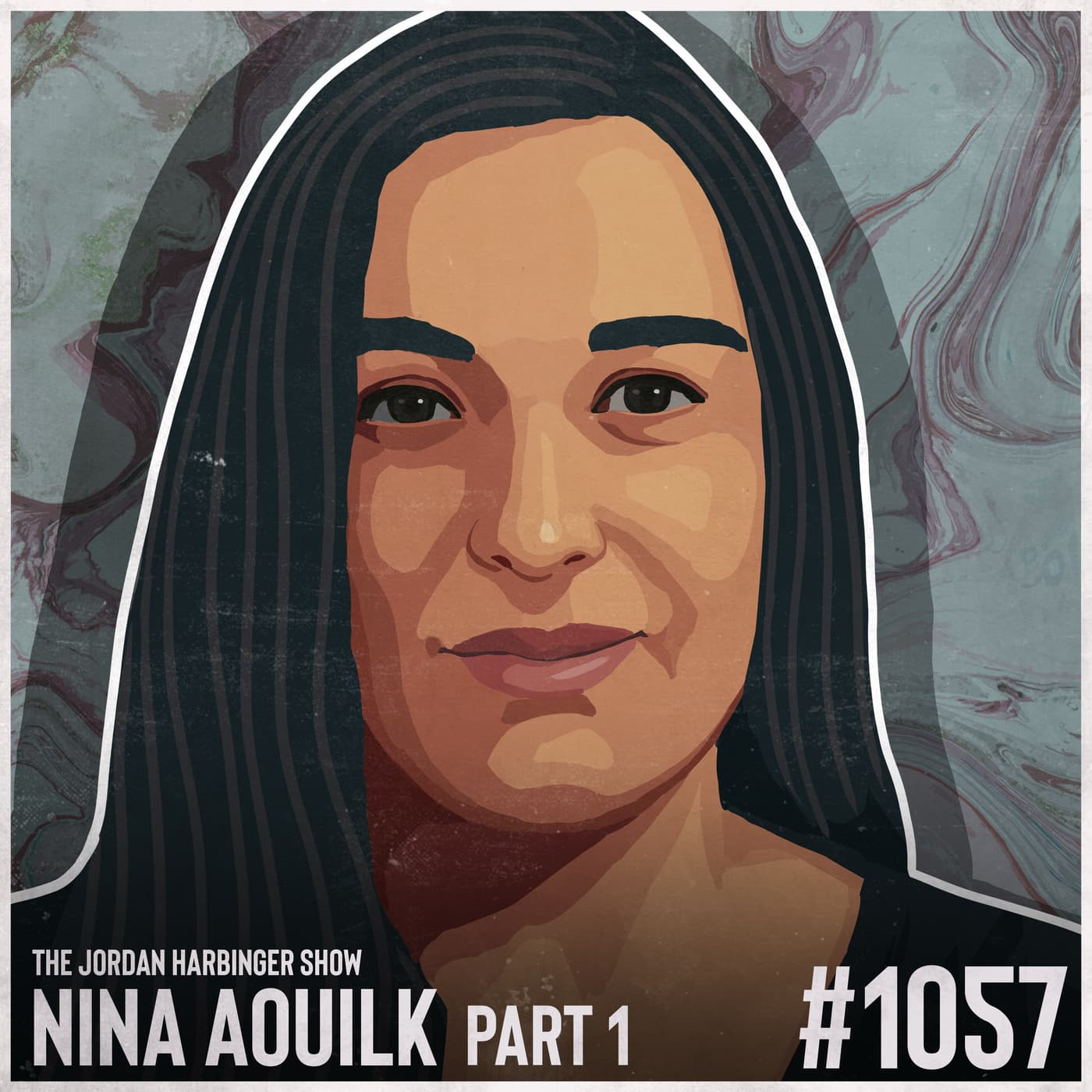
The Jordan Harbinger Show: Episode 1057 - Nina Aouilk | Ending Forced Marriage and Honor Killings Part One
Podcast Overview The Jordan Harbinger Show features in-depth conversations with high-achieving individuals from various backgrounds. This episode focuses on Nina Aouilk, co-founder of End Honour Killings, who shares her harrowing experiences with forced marriage, domestic slavery, and honor killings in the West.
Key Themes and Discussions
Nina Aouilk's Background
- Abusive Childhood: Nina recounts her upbringing in an abusive household in the UK, where she was treated like a servant and subjected to severe physical and emotional abuse.
- Traumatic Events: At age 14, Nina was gang-raped by her father and his friends, leading to a forced abortion at age 15 after being traded to one of her rapists in a sham marriage.
Cultural Context and Practices
- Brutal Cultural Practices: Nina describes witnessing horrific practices such as bride burnings and infanticide of baby girls, emphasizing the lack of intervention from authorities.
- Shame and Stigmatization: Girls in her community were viewed as carriers of "bad spirits," leading to severe emotional and physical abuse.
Resilience and Empowerment
- Overcoming Trauma: Despite her traumatic experiences, Nina emphasizes resilience and the importance of seeking opportunities and maintaining hope.
- Advocacy Work: As a co-founder of End Honour Killings, she empowers women and girls globally to break cycles of abuse and live fulfilling lives.
The System's Failures
- Lack of Support: Nina reflects on the silence surrounding abuse within her community and the challenges faced when seeking help from authorities.
- Cultural Silence: The podcast highlights how cultural beliefs can perpetuate cycles of abuse, with girls often feeling blamed and isolated.
Personal Transformation
- Finding Purpose: Nina’s experiences, while harrowing, fueled her determination to help others and advocate against forced marriages and honor killings.
Key Takeaways
- The episode sheds light on the stark realities of forced marriages and honor killings that occur even in Western societies.
- Nina's story serves as a powerful reminder of the importance of resilience, advocacy, and the need for cultural change in addressing gender-based violence.
- The podcast emphasizes the significance of speaking out against abuse and the importance of community support in breaking the silence surrounding these issues.
Additional Resources
- For more information on Nina Aouilk and her organization, visit [End Honour Killings](https://endhonourkillings.org/).
- Further details and full show notes can be found at [Jordan Harbinger Show Episode 1057](https://jordanharbinger.com/1057).
Conclusion This episode is a poignant exploration of painful realities faced by many women and girls in oppressive situations. Nina Aouilk’s journey from victim to advocate provides invaluable insights into the necessity for change and the importance of community support in combating practices like forced marriage and honor killings.
> Note: This episode contains graphic depictions of violence and abuse and may not be suitable for all listeners.
Written by AI. May contain mistakes. Listen to the episode to check what was said.
Transcript
Automatic transcript. May contain errors.0:00This episode is sponsored in part by LinkedIn. Most platforms are built to distract you. LinkedIn is built to help you get things done. And when you're a small business owner. the one thing you don't have is time to waste. That's why LinkedIn Jobs is a secret weapon. Post your job and LinkedIn doesn't just blast it out to randoms. It uses all that professional data people actually keep up to date on LinkedIn to match you with qualified candidates. You can post it for free or you can promote it to get three times more job applicants to expedite everything. And here's the cool part. Because LinkedIn is where people actually want to be found professionally, the quality is just higher.
0:30You're connecting with people who are serious about their next move. That's why 2.5 million small businesses use LinkedIn to hire. Add the hashtag hiring frame to your profile pic, let your network know that you're looking, and suddenly you've doubled the reach without spending more than 30 seconds. So when the clock's ticking and you need someone great, LinkedIn isn't just social media, it's your best recruiting partner. Post your job for free at linkedin.com slash harbinger. That's linkedin.com slash harbinger to post your job for free. Terms and conditions apply. Coming up next on the Jordan Harbinger Show.
1:00She would push my head into the bin and tell me that it's not your father's house that you think you can eat here. And she would make me eat out of the dustbin. Part of me is hungry, part of me is scared. But you get to the point where you just kind of give up on everything. I got to the point I'd given up.
1:20Welcome to the show. I'm Jordan Harbinger. On the Jordan Harbinger Show, we decode the stories, secrets and skills of the world's most fascinating people and turn their wisdom into practical advice that you can use to impact your own life and those around you. Our mission is to help you become a better informed, more critical thinker through long-form conversations with a variety of amazing folks, from spies to CEOs, athletes, authors, thinkers, and performers. Even the occasional organized crime figure, money laundering expert, Russian spy, special operator, or music mogul. And if you're new to the show or you want to tell your friends about the show, I suggest our episode starter packs.
1:52These are collections of our favorite episodes on persuasion and negotiation, psychology and geopolitics, disinformation and cyber warfare, AI, crime and cults, and more. That'll help new listeners get a taste of everything we do here on the show. Just visit jordanharbinger.com slash start or search for us in your Spotify app to get started. Today, this episode includes graphic depictions of violence and abuse. So maybe no kids in the car for this one. Go listen to a previous episode about something more kid-friendly, like nuclear warfare and how we're all going to die horrible, painful deaths, or, I don't know, hostage negotiation.
2:22But seriously, this episode is a doozy. Today, we're talking with Nina Ulk. Her story is just incredible, so harrowing and also quite inspiring. Growing up in a conservative Indian family in the United Kingdom, she was subjected to unbelievable abuse and an attempted honor killing and has come out the other side extremely strong and resilient. Well, that's enough from me. Here we go with Nina Oolk.
2:49Tell me about growing up in the UK. So my childhood was quite normal for me, how I saw it. My parents had a really lovely big house, as I describe it. It was a corner plot, really nice house. My father was a very astute businessman. He started bars in a place called Loughborough in Leicestershire, but he also started buying property. And what he would do is go into properties where elderly people are living and he would bite off them before they died and say, look, I'll pay you and you can stay there as long as you need to. But he was very bright. He was very intelligent compared to a lot of other people from my culture who thought they just had to get a job and that was their end to the means or means to the end.
3:28But my life was comfortable, I would say, in comparison to some people. But my childhood wasn't. It's such a contrast. So although the house was grand and the staircase was grand, my life was very much of poverty, although I didn't see it at that time. I mean, yeah, I had a roof over my head. I was warm, I guess, but I didn't have, and I've described this before, that my bedroom was different shades of grey, whereas my mother's was different shades of peach and pinks. And I would love to go in there and change her bedsheets on a Saturday like I had to do with the chores because the carpet was so soft.
4:01And this carpet, this rug here just reminded me of it because my little toes would sort of go into the carpet and feel really soft. And changing her bed, although it was a nightmare getting the bottom sheet on and off. I still can't do it. It makes you feel any better. But it was still soft. Everything was soft and clean and it smelled good. Whereas my bed had no bed sheets. It was dirty and a bit grimy because I wasn't allowed a pillow. I wasn't allowed these things, but I just saw it as that's my place. You didn't have a pillow or sheets on your bed? No, nothing. So it was a bare bed. It was just a mattress and it was on top of a divan.
4:33So it's not on the floor. It was slightly higher up. But that's just how I saw my life was supposed to be. And I never questioned it because when you're a child, you accept things so easily, you know, whatever's given to you take. So childhood for me was good, I guess, up to a certain age. And growing up in the United Kingdom, I stuck out like a sore thumb because of where we lived. my father decided you want to live in a very pro-white British area. At the time, skinheads and mods were the thing back then. Skinheads and what? Mods. Mods? Mods. They were called mods, yeah. So it was people that were...
5:05Skinheads would, you know, obviously have the punk type of hairstyle, but they were quite racist. And the mods were kind of new romantics, I guess. I think it was... Is it M-A-U-D-E? M-O-D. Oh, like mod. Mod, yeah, like M-O-D-S. Does that stand... I don't really know what it was for, but I just knew that was the terminology. But they were the ones that would leave you alone but they were more, like I said, the new romantics. But the skinheads wouldn't. They would deliberately make your life hell. And the school that we went to was quite a trek as in quite a walk away. But the thing that I remember about school the most is that there would be the word scrap shouted out and everyone then starts to chant it.
5:44Scrap, scrap, scrap. Is that like fight? That's like fight, yeah. But then I would be at the bottom of a pile of people or my brother would be because we'd be beaten up. But that was normality. And I think now I look back, I think it wasn't normal at all. That's a prosecutable offense. Everybody gets expelled. But when you're there and you don't know any different, it's normal. So although I was getting a different kind of abuse at home to school, they were both connected. So for me, it was normality. I was either beaten at home in a different way where I was winded or slapped or kicked or punched, or I was punched and beaten at school, you know, by multiple people.
6:19So So I really didn't think it was a them problem. I thought it was a me problem. Yeah, because you saw other kids not getting beat up at school. Yeah, because we were the only ones of color, if I can use that phrase. Okay, yeah, I think you can. I think that's the phrase you're supposed to use. I don't know. Good thing you said it and not me. If one of us is going to get, no, I think that's the nomenclature we use. So are you Sikh? And is that a religion or a culture or is it both? So Sikhism is a religion. I always say that everything that's happened to me has got nothing to do with the religion.
6:47Sikhism is actually, I'm not saying it because I am a Sikh, but I'm saying it because I, as a child, read the Quran, the Gita, which is the Hindu religious text, the Quran, which is the Muslim Hindu text, the Bible, obviously the Christianity. I read nearly every kind of religious text I could get as a child because I was looking for answers. But every religious text taught me to be a good person, not to be a bad person. Don't lie. Don't cheat. Don't steal. Don't hurt anyone. And Sikhism is very much about we're one. So you and I are one, we're equals, that we should be of service to others, which is how I live my life now, not because it's a religion, because it's just the only way to live, in my opinion.
7:27So I won't allow people to say it's because of religion, because it's definitely not. Religion might have an influence, but my personal religion doesn't. It's a cultural thing, because culture is continued by generation after generation after generation. And that's where the problems lay, because nothing changes. So something has to change for this to stop. But people don't speak out because girls are silenced, as I was. You know, I was nonverbal growing up. I didn't make eye contact like we have made today. I should be ashamed of myself and my culture to make eye contact with a man because I could be seen as flirtatious.
8:02Or you might take it in that manner that she's flirting. I notice a lot of old cultures do this. It's so ridiculous to me when you learn about like certain sects of ultra strict Judaism, for example, and it's just almost based on the like the idea that men have this uncontrollable penis that like anything can set it off at any second. And if that happens, well, it's not their fault. It's that woman for showing off her neck or something. And you're just like, guys, personal responsibility, get it to get like, it never made any sense to me. Like no matter how much gymnastics you do, it just doesn't make any sense to me.
8:34It's all externalized. It seems to be the consensus, doesn't it? Wherever you are across the world, you'll be persecuted if you do make that sort of eye contact even now, you know, what's going on around the world. But for me, you know, it was a very much non-verbal thing. My culture is very much the girls keep their heads down. We are created to give birth or to work in the kitchen. It's you that will get called upon first, go help your mom in the kitchen or you go and cook. It won't be a case of to say to the brothers or the sons, get up and help your mother or go and help your mother bring in the shopping.
9:03That woman has to do it herself. She knows that's her burden to bear. Yeah, okay. But the abuse you suffered extended far beyond being made to do all the cooking and the cleaning and things like that. Is it true they thought you carried bad spirits or is this just they thought girls in general carried bad spirits? I'm not the only one that has come forward because since I've been speaking out and I went viral in February, I've had over 15 ,000 messages starting with help me or I need help. Oh no. And that's from around the world. So this isn't even an England thing or an American thing or an Australian thing.
9:38It's a global thing whereby girls are told they are bad. They are carrying bad spirits, that there's some sort of magic within them that's evil. And they believe that because if you tell your child, you know, they're so influenced. At the minute, they are little sponges. If you tell your little child, you know, this cup is only daddy's, they know that cup is only daddy's to pick up. They won't pick it up because they know it's daddy's. Yeah, I wish my son respected anything. But yeah, in theory, you can do that. You mentioned 15 ,000. And we're going to mention your nonprofit multiple times during this.
10:09But in case anybody's just in urgent need of help, where are you receiving these messages? And what do you do with these messages? A lot of people find me all across social media. Luckily, I'm Googleable. I'm sure that's because of my surname, which has every vowel except E. I was like, how do you pronounce this? And then when I wrote it, you came up immediately. And I thought, oh, that's handy. Yeah, it's a good surname. I'm thankful for it. I'm grateful. But my nonprofit is called endhonorkillings.org. And people can find me just by looking for me, either that or London's Life Coach, who I'm known as.
10:40My arms are open to anyone, not even from my culture. I say to anyone that's out there, if you're struggling, you're not alone. And I know the importance of that because I felt alone most of my life. So for anyone that's hiding behind a closed door, stopping themselves from crying, I've been there. If you have sat in your car and before you go in the house, you're trying to shrug off the tears or the fact you feel you can't go on, I've been there. And I don't want you to be there. I want to help you into this place that I'm at, which is complete freedom and just peace of mind. You mentioned you were nonverbal.
11:12Surely you talked at school. I didn't really speak very much because my parents had almost threatened me in a way, not even taught me, you know, that I shouldn't speak. I should stay quiet. So I was a very, even now people say you're so softly spoken, but it's not deliberate. You know, it's just one of those things that stays with you, I think, through life. It seems quite normal to me. I'm not a very loud person. Yeah, no, I did speak at school, but I wasn't the most talkative. I was the one that would sit right at the front with a hand up, you know, pick me, pick me, because I wanted to please the teachers.
11:41I wanted somebody to like me. That's cute. Yeah, it's cute, even though it's for sort of sad reasons, because I can picture this very eager young child who probably loved school. because I would imagine school would be an escape a little bit. Well, literally an escape from your home. It was despite the beatings at school. But school was where somewhere I found a different version of Nina. We all have different versions of ourselves when we go to the doctors, when we go to, I don't know, a new meeting, when we network, and we find a different version of us. And I had a different version of me and I knew that I was very able to read and write.
12:14I was very able and I would lose myself literally in a book. It's that phrase, you know, terminology. and I would believe that I was Rapunzel. I've said it before, but I'll say it again. I really believed I was Rapunzel at one point and I was kept in this tower and that somebody would come and save me, but I didn't realize then that it was just me that had to save myself. Right, right. That is interesting. It does sound like Rapunzel because were they keeping you in your room at home or were you allowed to hang out in the house? Because you mentioned your room was gray, but it almost sounds like a prison cell.
12:41I believe it was a prison to a certain degree. Now looking back on it, I mean, I've spoken to various nonprofits and I work alongside other nonprofits because I believe we have to do things collectively. We can't make a change in the world alone. Together we're stronger. Especially not something like this. I mean, to get the authorities to investigate abuses that are quote-unquote cultural practices is tough, even though we're talking about murder, essentially, with honor killings. Yeah. I feel like when I talk to friends of mine that are FBI agents about this, they're like, yeah, of course we investigate that, but a lot of times the community won't cooperate.
13:15and even when they do, it's like, do we want to get in the middle of all this? And I'm like, what are you talking about? It's a murder. What are you talking about? Of course you want to get in the middle of all this. She was murdered. It's an interesting thing that you say that because I'm currently working with 20 quite high profile solicitors, as we call them lawyers, back home. You know, I was pitching to them and they said, look, you'll be lucky if one of us gets to say yes because we're so busy and it's pro bono. We don't know if we can do this for you. But by the end of it, and I wasn't doing a hard sell, I was just being me.
13:43They all wanted to work with me. And the purpose of us working together is to change the laws, the wording within the laws that exist, to take away the word honour killing, because as my TED Talk says, there's no honour in killing. and replace it with the word just murder and attempted murder. They can have a sort of paraphrase that it was influenced by culture, but not so that it would carry so much strength in a courtroom whereby that person's sentence is lessened, which later on we'll talk about that happened with my father. If you're in a street gang and you murder a rival gang member, you get honor among your gang.
14:19Why isn't that treated as an honor killing, but something else that's cultural, which is very similar in nature, that obviously should not lessen the sentence. I 100 % agree with you. I mean, you would never give a gang member a lighter sentence because he said, well, the thing is, my chosen family wanted me to do this. Oh, well, in that case, here's a lighter sentence. I mean, you would never, ever do that in any other scenario. So I agree. So you see, people won't speak out. I'm a target. So I'm called a liar. I'm called a Jezebel. I'm called all sorts of things. You know, LinkedIn had to put a filter on my account because I was being sent messages from the Middle East.
14:52And it was a picture message of my head being decapitated because beheading is the most honorable form of keeping that honor. So if they were to chop my head off, they are retaining the honor in the community because I'm not speaking out just about my culture. I'm speaking about any culture that carries such a horrible act against a young child who's vulnerable, who doesn't deserve that. You know, I'll stand by that. That makes me very much a target. I often think when you're doing something that people don't want to hear about, they try to bring you down or try to bring your character down because then it makes people doubt you.
15:26But I believe, and I would say this to anyone out there that thinks nobody will believe them to stand in their truth, because you have to be true to yourself. You have to be honest, because a lot of us will compartmentalize our truths and hide them and bury them. And then later on, they come back over and over again because that trauma lives within us. It's very ironic that somebody would say, you're a liar. There's no honor killings. Here's a picture I photoshopped of me beheading you. We would never do that. Except you just photoshopped yourself doing that to me to what prove that you would never do that.
15:57I mean, it's a ridiculous kind of argument to make. It's insane, actually. I believe the truth always comes out in the end. Well, we're doing that right now, or at least we're trying. Would the way you were brought up not hinder your development as a child a little bit? I mean, if you're not encouraged to be social, I assume you didn't have friends over to the house. Were you allowed to do after-school activities? I mean, it seems like this is really restrictive and would cause some other damage to you in terms of your learning and development. Yeah, I mean, they say the first seven years of your life influence who you become as an adult.
16:28and I'm still very much, I think patience is probably the word I've created out of that inability to express myself. I can express myself perfectly, as you can tell, but I will watch a lot of the time and not speak out straight away. I will often sort of, I'm more of a sort of watcher, but it does influence you. It doesn't matter who you are. It took a toll on me, I'm guessing. At some points, you know, I did feel, which we'll get to, desperately depressive states of mind, because there's only so much anybody can take. By nonverbal, my life sort of from the age of six was sitting in my room, literally pressing my ear against the door, as I've described it.
17:07The door was extremely rough. It was one of those wooden doors that hadn't been sanded down. I was so keen on being part of the family. I desperately wanted to hear what they were doing, how they were moving. I could tell who was moving, who was opening the door, who was coughing. And I used to pretend I was down there with them, you know, sitting on the sofa, watching TV. so I was a really lonely child I guess but I was only allowed to come out of the room when they called me so I waited upon the word witch which is what they called me in the Indian word it's called bhutani which means witch like a ghost like a kind of evil entity and I would go very quietly down the stairs but I was running because I was so keen to get to the kitchen because my expression of love was to cook that food and to give it to them whether it was received with love is another thing, but it was always made with love.
17:52I never, you know, sort of bashed at the mashed potato, whatever I was making, the rice. I would always do everything so lovingly that my mother's going to eat this. I want it to taste nice. My father will have it. Oh, my brothers will have that. This is their favorite. And this is what I'm going to make. I used to get excited for them, never really thinking about myself. So the selflessness still is within me. I know that. It's a weird tension hearing something like that, right? Because it's heartwarming, but then you realize that they have you enslaved. So it's actually really horrible. So working with the nonprofits I do now, the word modern day slavery has come into my life.
18:24I understand. And if I can explain to another person, if you're kept against your will, if you cannot come out of your room and you're not part of a family, you are not allowed to eat with them. You're not allowed to sit with them. You are, in effect, modern day slave. If you're wondering how I managed to book all these amazing folks for the show, it is about my network, the circle of people I know, like, and trust. I'm teaching you how to build the same thing for yourself for free over at sixminutenetworking.com. I realize you're probably not booking for a podcast, But this is all about making you a better colleague, a better friend, a better peer in just a few minutes a day in a way that's not going to be awkward, cringey, or make you feel or look bad.
18:59And by the way, many of the guests on the show subscribe and contribute to the course. So come on and join us. You'll be in smart company where you belong. You can find it, again, all for free at sixminutenetworking.com. Now, back to Nina Oake. It doesn't matter that you're their daughter because they don't seem to care, if I can put it that way. What about your mom? Does she not? First of all, she must have enabled this because otherwise I don't see how it could go on. But didn't she have any sympathy or love for you? As a parent, I just can't get there. I can't even get close to where I would allow this to happen.
19:33Even if somebody was like, I would let my partner kill me before I let them treat my child that way. You're not supposed to get it. Yeah, I can't get it. I've tried to get it and I can't get it. I can get to a lot of weird places with people I interview on the show where I'm like, let let me put myself in the situation of a kid growing up on the streets and joins the mafia and becomes a killer. I can get to her in the shoes of somebody like Sammy the Bull quicker than I can get into the shoes of somebody like your mother. Yeah, I don't think you're supposed to understand because you're not that person.
20:00And this is the problem with society. Often we try to put ourselves in a position and say, well, why did she press charges? Why didn't the mother help? Why did the father do what he did? Why did the brothers not step in? But we're not those people. We need to just stay true to ourselves. And people only do what they know and I get a lot of stick for saying this but if you don't know how to drink or you don't prefer your coffee white you're only going to want black if someone offers you a coffee with milk or a milk substitute you'll be very frowning upon it as they'd say well why would you even do that it's not the done thing that's not how I and with my parents I've described it before they came from India in the 1960s with their bags packed very tightly with their cultural beliefs they decided they would bring that forward.
20:43They imposed that upon me and my brothers. So my mother did what she knew in the sense of she thought I was bad. So girls will not rejoice. Girls are not celebrated. You know, when boys are born, we hand out sweets in my culture, the Punjabi culture. Sweets are handed out, parties. There's a lot of banger, a lot of dancing. When girls are born, there's nothing. I mean, that in itself should be a question for people to ask, why are you not celebrating your daughters, but they're seen as almost disposable people. They're seen as temporary children that are going to one day be someone else's. I see.
21:18We're not keeping them. What did your parents, you mentioned your dad was an entrepreneur. Did your mom work at all? In the beginning, my mom used to do a lot of home sewing in the sense of somebody would drop off a load of clothes and she would stitch them together. So she had a machine at home, but it didn't last long because because I think she did that up to the age of my age of 10, that I can remember. And then she stopped because she didn't need to, because my father was making more than enough money. I don't know how to transition to this, so I'm just going to ask if you can tell me about the assault.
Read the full transcript
21:47Yeah, so as I always say, my life was very normal. I was a happy-go-lucky child, as happy as I could be. But when I got to 14, I'm changing as a young girl. I'm developing. By this time, we've got this gorgeous dog. We had a little doggy in our life, and I describe her as my only friend. She also gave me a lot of warmth in bed on a cold night. And because she was there, sometimes I didn't want to get up. You know, I didn't want to wake up. But my job was to cook and clean for the rest of the family. And I remember my mum coming in the room many a night from the age of probably seven upwards. My dad would come back with multiple friends, eight friends normally.
22:22And, you know, my culture, we don't say names. So if one of them was called Jordan, I would call him Uncle, never Jordan. It's not because he's related, blood related or any way related. We just, out of respect, don't say their names. On this particular night, I was super tired. My hormones were kicking in. I didn't want to get up. And I believe that we have this system that's a little messaging system, little people almost running inside just going, no, no, no, no, no, don't do it. You know, that fight or flight thing. And this particular night, as soon as I woke up, I had it. Almost like a tingling sixth sense that it's not going to be good.
22:56Whatever's going to happen today, something bad will happen. But I knew also there was no way out. I had to go down those grand stairs that we had. I had to cook the food. I had to take it in. And in my childhood, a lot of people have memories of a toy or a car, you know, or I don't know, a duvet or a blankie. In my childhood, I have a very prominent memory of a white, huge oval tray. Like a food tray? Like a food tray. So it was a serving tray and it had like silver handles on the end. And that was my symbolism of childhood, I guess, because I spent so much time holding this tray. And, you know, I remember using the tray to pick up the food, drop off the food.
23:37And, you know, my father was in the front room, which where the guests are, because we always have a guest room and a family room. I remember walking in, looking at the patterns on the carpet, because I was very daydreamy, and I probably still am. I'm walking in to pick up the dishes because he's called me. I remember that night they were awfully drunk because they were continuously making noise, and, you know, it was very loud. Are these all also Indian guys, or is it like white guys in a random collection of your dad's friends? Or were your dad's friends all from the same culture? No, they were all from my father's culture.
24:09and it was like a little meet that they would have because they lived in different areas so they would all get together every Friday or Saturday and go down to the pub and completely get hammered I guess as we call it and come back to my father's because he was the one with the bars so he had the alcohol and I would provide the food because my mum would wake me up and when I did go in on this occasion I remember my father touching me for the very first time he'd never held my hand or brushed my hair or in your life in my life I was 14. I don't even know what to make of that. I can't. How is that possible?
24:43I mean, I guess that speaks for itself. I think that was normality, as I keep saying for me back then. I know now, looking back, it's not right. None of it. At the time, it's just the way it is. You know, it's that my life. I'm picking my daughter up so often she pushes me away because she's sick of me. It's what we tell ourselves, I think, as well. And I was telling myself that was normality. But on this particular night, I was scared. I'll be honest. I was actually scared. and I walked in my head down and I have the tray in my hand and as I said he's the first time he touched me by grabbing my wrist and when he grabbed my wrist with such force the tray fell and yeah it's starting for me too I'm not gonna lie and my father's an ex-professional wrestler so he was very strong you know he's well known for his wrestling at that time he was on tv and all sorts, but he used that force to, and I was only a small child because I was not fed well, I wasn't eating, but he threw me onto a low table like the one we have in front of us.
25:42And he was the first person to rape me. You know, he kept his hand over my mouth. Your father? Kept me pressed down by holding me down. You know, he held my hand for the first time. I couldn't open my eyes and I didn't want to. So I kept them wide shut, But I was passed from person to person. I was thrown around the room, literally. I was spat upon. I was bitten. I was punched. I was kicked. I was almost punished, I feel, for being a girl. But every man had... Can we have tissues, please? I've got mine. Oh, you've got? I've got mine. I was literally thrown around with such a force that I lost consciousness a few times.
26:30I don't know what a normal rape is, and I'll probably get in trouble for saying this, but it didn't feel normal at all for the way I was being gang raped. And, you know, there was a level of aggression they were using with me whereby it was almost like they were frustrated and they were taking it out on me. You know, I remember somebody nearly breaking my arm and I was sure my arm was broken until the next day. But there was not one part of my body that wasn't covered in blood or a cut or a bruise or lots of bite marks. It's truly psychotic. And it's shocking that a group, I mean, I don't even know where to begin.
27:08Your father was involved in this. One of my questions was, where was your dad? But he was there. I mean, he took part in this. And these men all knew you. And they all knew you were a child. And they'd all met you many times before. It's just, I can't wrap my mind around this. I remember on the night wanting to scream. But I think all the screams were internalized. It was almost like I'd lost any hope that I ever had. How did your mother, she must have known this was happening. Yeah, I mean, a lot of people do ask that question. And my brothers and my mother were all upstairs asleep. But I don't think you could have slept through that level of noise.
27:41No. Because they were exceptionally loud. And, you know, there were plates being broken because of the force I was being thrown around. And bottles being thrown around that didn't necessarily break, but the noise was still happening. and it's early hours of the morning so the world's asleep apart from this one room where the sacks are taking place and I just didn't know how to stop it I didn't know what to do I kind of just allowed it I guess because I didn't know what else I could do well what could you have done a 14 year old girl against a bunch of grown men I mean it's you didn't stand a chance how did your mother respond after the attack I mean she I ended up waking up I didn't know when I passed out I have no idea.
28:24I remember that a lot of people left and some people stayed on because they wanted to carry on with this rape, this attack. And the ones that had stayed back were quite violent. I remember that. They were exceptionally violent. My mother woke me up in the morning because she opened and closed the door so many times, such a force. I just woke up by the noise. So I remember my head was facing, I think the right, and I remember seeing the wall. I remember seeing the food on the wall. I remember seeing broken plates. I remember thinking to myself, I'm in so much trouble. How am I going to get out of this now?
28:58I'm going to be punished. I felt I had done something wrong. You feel like you're the cause of everything because you're the bad spirit. You're the person who's brought it upon us. You had some influence, but you don't understand that you are the innocent party, that you're actually a victim. I didn't see that. My mother got me to get up. I got up. I wasn't dressed from my waist down. And she told me to go and wash, which I did. And when I came down, she handed me a bucket and told me to clean the room up. And I cleaned it. And I remember looking back thinking it looks like nothing's ever happened here, but it still is happening within me.
29:34And I slept for days after, but no one really checked on me. No one was really bothered. Wow. I would assume after that, anytime people came over to the house, you were terrified? My legs would shake. I had to carry on the same thing every Friday or Saturday. I would see the same people, not physically, but I knew their presence. I would hear them. My instinct was constantly flinching. I was flinching because I was scared. Scared because I didn't want it to happen again. I almost felt their eyes upon me, even though I wasn't looking up. You ended up pregnant from this assault, correct? Yeah, I got to 15 and I realized I was pregnant.
30:12And, you know, back then at my In my schooling, there wasn't a lot about pregnancies and not a lot. I don't even think we were told about periods. And I went home and told my mother that I was pretty sure my periods had stopped. She was the one who told me I was pregnant and I'd brought it upon myself and that I was disgusting, that I should be ashamed of myself. So I was ashamed because she told me I should be. And that led to an abortion. and it's another real clear memory in my mind because not because of the procedure you know I remember the procedure and the sort of stainless steel looking type of trolley things they put us on made us lie down the gowns I remember it all but what I remember the most is when I'm sitting on a grass verge dressed in a hospital gown with all the other women but I'm not a woman I'm a child I'm a small girl and I'm looking around and thinking how nice the grass felt and how the countryside was really nice because we'd travel to go to this place and maybe that's the reason I love the country I don't know because I found some sort of peace but it was a lady that brought over a cup of tea which you know very British thing but I'd never been given anything in my life not a present not a birthday card nothing and it was the love that she extended just by handing me this cup of tea and it had a biscuit on the side and I remember thinking how evil are you for her to do that but more than that she actually stroked my hair like I really wanted my mother to do my father and she made me think about kindness and I still carry that with me now and I wanted to be like her I wanted to be kind but I also started to question how evil I was inside because she hadn't caught anything she hadn't you know withered and died in front of me because she touched me, she'd made contact.
32:10So that for me was life changing. That's so interesting. That small act of kindness changed your entire perception of yourself. It did. If you have an abortion in a culture like this, does that cause problems later on or is it a big secret? How does that work? It's a huge taboo, you know, getting pregnant, having sex is a huge taboo. If I'm being honest, I was probably one of the most naivest 15, 14 year old girls there was. I didn't really know. I didn't have terminologies. Now you have terminologies for different things, but I didn't have it then. I just knew that it was wrong and I felt wrong.
32:45I didn't like who I was. But my parents on the way home were saying that, you know, now she can't have an arranged marriage. And looking back on it, I couldn't have an arranged marriage because of them. It was never because of the abortion. But I actually thought it was because of the abortion. And my Mother's very upset and almost to a point frustrated with my father and me to say that how can she carry on going to the temple? She loves to go to the temple. People will laugh at her now. It's all about other people. It's not just in my culture. It's in many cultures where it matters about what everyone else thinks and your choices are often influenced by that because you don't think about yourself and you're feeling guilty for thinking about yourself.
33:26So I took it upon myself that I was this problem and that they didn't know what to do with me and I would take my own life because I didn't really want me because they didn't want me. But no one in my life had ever really shown me they wanted me. I was always a hindrance. So I did, after a couple of days, I did take an attempt on my life by an overdose, but it didn't work, obviously, because I'm sat here. But I'd got to a point where I realised, you know, I wasn't happy at all. Life wasn't normal. And I went through a very depressive phase in my life. Understandably. It just baffles me, probably shouldn't, but it baffles me that your father would allow this to happen and then be upset at the consequences that were clearly foreseeable and obvious.
34:14It's not like he didn't. I mean, he must have known this is going to happen as a result of this. And then again, I can't make sense of it at all. You know, like you tell yourself something and you believe it. I feel that's their thing. You know, my father told himself it wasn't him. It was my fault. So he believed it. And I feel that's why the narrative continued in that way. That what will we do? How will we make this? She's brought it upon herself. You know, I believe that's why he said it so many times that he believed it. Even now he says I'm a liar because he believes it. In his eyes, he's done nothing wrong.
34:47But we can't take that away from him. That's what he believes. But we know it's wrong. He's obviously got psychopathy or something. I mean, there's no, nobody rapes their own daughter and then thinks, oh, this is normal. I don't care what culture. It doesn't make any sense. You've read all the holy books. I'm pretty sure that's a taboo in every single one of those books. I could be wrong. Your parents say they're going to, what, send you abroad? So the agreement they made was they would send me to India. So many girls get taken out of school in the UK, in America, in Australia, all over the world, they are taken away at a certain age and sent to India and people get told they've gone to stay with relatives.
35:25No one really questions it, the teachers don't question why. But the purpose of that is either to keep them in, say, Pakistan, for instance, it's a case I've dealt with recently, where the girl will get sent there at the age of 15, impregnated, she'll stay there, she'll be forced to live with her spouse, up to an age where she can come back after 21 they'll bring her back because no one's going to ask questions of what's happened in that meantime she'll come back with children she'll come back with her husband and their job's done you know she's settled now as they call it but with me they were thinking about sending me to India to kill me because I had brought shame you know my whole being was bringing shame but that didn't happen because somebody stepped in to say they would take me and I was 15 and it was one of the men that stayed behind to continuously rape me he said he would have me if my father paid him.
36:14So they came over, I was called down. We have a ceremony where a veil is placed upon your head. And it's an engagement. I didn't know what was going on. I look at the photos now and I'm very upset because I see myself looking down, scared, not knowing what's happening. And I feel for that picture almost, that girl, to know what's coming next for her. But it was all part of my journey, I understand also. But I was traded to one of the men that raped me, my father's friend, and I was traded to him for sexual reasons. My father paid him a lot of money in cash and gold, also appliances for their kitchens, because we didn't really have them back then.
36:59We're talking about the early 80s, late 80s rather. And I went there under the condition that I would marry his son in a sham wedding because his son was similar age to me, but he had a girlfriend already from a white British background, which is taboo. So for the sake of face in the community, it would look like he'd married me and everyone would win from this apart from me, I guess. My mother-in-law wanted me as a domestic servant and my mother was happy with that because it's what I did already. I'd been perfectly trained. So that's what happened. And I got traded at 15 and I was married at 16, turning 17.
37:39And I have to say it was the most horrific four years of my life. If you like this episode of the show, I invite you to do what other smart and considerate listeners do, which is take a moment and support our amazing sponsors. They make the show possible. All the deals, discount codes, and ways to support the show are all searchable and clickable over at jordanharbinger.com slash deals. And if you can't remember the name of a sponsor, you can't find a code, please do email me jordan at jordanharbinger.com. I am more than happy to surface that code for you. It is that important that you support those who support the show.
38:07Now, back to Nina Oak. This is so unbelievable. So this is happening, folks who are listening to this, this is not happening in India. If you are working out and you miss this, this is happening in the United Kingdom. A little girl got traded for a microwave and a toaster. I mean, I don't mean to be flipping about it, but this sounds totally ridiculous. And you were supposed to be married to the son, but really you were essentially a slave for the father. and he was already married. This is an off-the-books wedding, right? I assume it's like just a private transaction. Yeah, it was never legalized.
38:39I didn't have a, I don't know what you call it, but a registry wedding, we call them back home. So it was never registered, but it was all done in the temple and there was a party afterwards. I was sent home because I wasn't part of the party, which was a rare thing as well. Not many people did that. They would allow the bride to sit there. Whether she wanted to be there or not, she would sit there, but I wasn't. and that showed the level of the way my father and mother saw me you know I remember walking into my in-law's house they stripped me in front of everyone which was humiliating so I was a young girl who felt embarrassed but it was to almost shame me in front of her guests say I have control over this person and the room I was given was the downstairs room which was just like a little cupboard hole like a cubby hole thing and there was a tiny little bed the whole house was tiny compared to my parents which I realised how well off my parents were at this point.
39:30There was no grand staircase that I could sit at the bottom of and look at my dog from the top. You know there was none of that. My dog obviously wasn't with me and I felt really alone. I felt very much lost is the only way I can describe it. I was given this little room without the door because my father-in-law had access to me without too much noise so he would come down sometimes four, five o 'clock in the morning. He was probably the most strangest character I've met today. He was very aggressive and controlling, but he would do things like strip me, sit me on the floor and tie me up with a coat hanger and the metal would dig into my skin.
40:07But it was just so that he would leave the house. They would all leave the house and he wanted to see if I'd stayed in the same place. And I was so scared. I wouldn't even cry because they might be able to tell from my eyes I've been crying. But there was no way of me asking for help because in my culture we're taught not to ask for help. We're taught to stay quiet and obedient and there's a shame of saying somebody's done something sexual to me, there's a stigma. It's just something we almost internalise and never allow anyone to know has happened. And that's not just in my culture. I'm learning that a lot of victims do this because they feel they're not good enough.
40:41There's a lot of us out there that think that and I'm here to prove them that they are good enough. One thing that just is sticking to my craw here, you get married in this sham wedding or this off the books wedding in the temple and no one thinks this is a little weird that a 14, 15 year old girl is getting married. I was actually 16. 16. But it's still weird. Even in the 80s, it's weird. People won't speak out. You know, it's that uncomfortable conversation they don't want to have. They'll whisper. There'll be lots of whispers and gossip. Like, isn't she too young for this? Well, maybe Maybe she's pregnant with the boys.
41:13Well, a lot of the gossip was that I had a love marriage at that time because I knew the boy through the family. So a lot of people said it was a love marriage. I remember standing at one time and people behind me saying this. And I thought to myself, is it a love marriage? Because, you know, I was so influenced. I was like, is it a love marriage? And I just sort of catch myself saying, no, it's not silly. You know, you're not wanting to get married. I'm always romanticizing every situation, every thing. And I don't know. I always used to think it can't be that bad until I got there and realized how bad it was.
41:41But my mother-in-law was exceptionally mean to me. She was very cruel. She would stab me with scissors. But my mum would occasionally do that as well. Growing up, she didn't do it as much. I mean, my mum would do it when I would go near her when she was sewing and she would try and push me out of the way so she would use the scissors. But this lady, she was deliberately getting the scissors to poke me. I'd sit there, she would just poke me really hard with them and it hurt. Of course. It was the whole thing of me being in the kitchen as the servant, cooking up the meal, and she would deliberately open the drawers into me, you know, with a force.
42:12But it was more than that, you know, she had a real anger within her that she would project upon me. And it was the whole, I talked about it before, but it's the whole denying me of food. I didn't really have food as a child, but I thought when I got here, I'd be able to plate myself up a meal. and I mistakenly, it's one of the regrets I have in life, I'll be honest, doing this because it lives with me and it's so painful that I'm not sure even how to get rid of it and I'm good at getting rid of everything. But she would wait for me to plate my food and then take the food and the plate and throw it into the dustbin and then she would push my head into the bin and tell me that it's not your father's house that you think you can eat here and she would make me eat out of the dustbin.
43:00You know what? I used to start eating because part of me is hungry, part of me is scared. But you get to the point where you just kind of give up on everything. I got to the point I'd given up wanting to eat or even wanting to be there. This whole situation is so bizarre, right? Because I have no sympathy for somebody who abuses anyone like that. But on the other hand, surely something must have happened. This may be something similar it happened to this woman. I mean, do you ever think about that? Because not to excuse any of her behavior, but normal people don't do that. I feel that she was angry because her husband was raping me.
43:36Well, yeah. I feel that she was angry because I was young. I was younger than her, maybe prettier than her. But a lot of women in my culture hold this kind of anger within them. And anger is normally born out of frustration, as you know. So, I mean, I can't put myself in their shoes because I'm not them. But maybe the way they have been treated, they're frustrated with it and they don't know who else to project it upon apart from the girl that comes into the family or their own daughters because that's what happened to them. So it's that repetitive cycle. It doesn't mean it's okay. It doesn't mean it's condoned behavior.
44:09It just means that if they don't know any different, they're going to carry on this cycle of abuse. Tell me about this bride burnings phenomenon. This is something that I'd never heard of until you remember. Yeah, it's very common. And it's sad to say that it was very common in sort of the early 90s, which is where I'm at now because I was there for four years, whereby brides would be imported. I'm going to use that word deliberately so people don't have a problem understanding what I'm talking about, but they would bring a bride in from Pakistan or India or wherever it would be. And the girl would end up having a daughter.
44:41They used to actually, it's going to be really hard for listeners to hear this, but if a baby girl was born at that time, they used to bag the baby up and suffocate it. Oh my God. And then they would bury the babies. And I know this because my mother was one of the places they would come to have the babies when I was little. Was she a midwife or doula or whatever? No, there would be a collection of them, there'd be lots of them. And I think they would go from houses to houses. So sometimes it would be our house. She would be there and I would be there. Obviously I'd be doing the maid service, you know, the domestic service.
45:12So I'd be told, go and bring this, go and bring that. And I knew what was going on. And that also made me feel very grateful that I was alive. because I knew they were killing the girls, but they would bury them in the gardens. What? So in the backyard for people who are, because we say backyard, I don't know why I say garden, even if there's a garden there, they would bury a plastic bagged baby in the yard. If it's a girl, yeah. Because there were no abortions happening that people really could afford then either. Sure. And there was no way of scanning if it's a boy or a girl. So these girls were having baby girls going back to the Burning Bride.
45:47And because they were having baby girls, they would then think it's a baby making machine formed as a woman that's providing only girls. We need to get rid of her. Not understanding it's the male that makes the decisions on these things. And they would pour petrol over the brides. Sorry. This is so disgusting. I would be walking home from work sometimes and I could smell the smell of human flesh. Oh, my God. And I would often see police cars and policemen, but they never seemed to do anything. And then one day I happened to walk behind two police officers who said, oh, we're just going to call it in as a suicide.
46:25And I thought, well, they would never help me. You know, that thought was completely out of my mind anyway, because in my culture, we're taught, don't go to the police, they don't help us, because you're not white British, they won't help you. So we're almost programmed that certain different cultures and communities won't help us for particular reasons. We have that here too. So we believe that. I would be in the house sometimes hearing the shrieks of women because the houses were so small they were next to each other, the terraces we call them. So you can see into everybody else's back gardens and things.
46:54And I was terrified of fire with reason that it would be my turn because the threat was there. Because I hadn't had a baby. People were talking about why isn't she had a baby. not understanding I'm being raped by my father-in-law not my then husband as was seen and I just felt this ticking time almost that's going to be my time soon it's going to be my time soon so I was living in a form of anxiety 24-7 I really was in a really bad state. Do you think the police knew it wasn't a suicide or were they just not getting any cooperation and they're just like yeah the way these girls commit suicide is they light themselves on fire with gasoline.
47:31The police completely knew. They knew. It seems like they would have to know or investigate a little bit. You know, if it's once, I understand they might not accept it's a murder, that it's a suicide if it's twice. But this was repetitive to the point where it was just continuous. It's a common thing. To say it's a common thing is scary. It's horrifying. And it's also very bizarre to think that in some neighborhoods across England, there are just baby skeletons in the backyard. That's also incredibly creepy and horrifying. I think some were found actually at some point. I remember not correctly where, but there were some baby fetus remains found.
48:08Oh my gosh. And I want to remind everyone, this is the United Kingdom. This is not rural India. This is not ISIS-controlled Syria, where you expect almost to hear this. That's two hours away from London, it happened. It's just crazy. And that's two hours on those windy roads that y 'all have over there. Unbelievable. It's unbelievable. Eventually you get a job, which actually seems like quite a blessing. I was told to get a job as soon as I went into the marriage because they were very greedy for money. I realized afterwards, you know, they didn't have as much wealth as my family, but they expected it was almost like they felt that they should have it.
48:43And I was really lucky because I went into work for a large corporation and I was the first person, again, of color from an ethnic minority that worked for this company because my father placed me in this area of being white british so i spoke really well as i still do and that was different for them because normally the communities would stick together so the accents would stay thick i see so you but on the phone you would not know who i was or where i originated from i just sounded like another white british person so that helped me so you know it was always a positive out of a negative i guess and i became a manager because i was so keen to earn more money you know standing at a coffee machine without any fear because what did I have to lose they said don't go to the executive floor I went to the executive floor you know work I could at least be a little bit of a rebel and I stood there not even knowing which buttons to press a guy came along and said did you want coffee I said I need a job I said can you give me a job he said I'm in marketing I can give you a job but he just liked the fact I stood there and I asked for it and I would say to my children I've taught them since they were little if you don't ask you don't get it's true and i did i i ended up getting a great job i was on a really good wage even by today's standards it's a good wage but that wasn't enough for them they wanted more the family's taking your money the family had all of the money it went straight into their account i never saw a penny of it so i got a second job and the second job was selling kitchens and i love that too because i was on the phone just talking to people it was hi hi we've got somebody in your area and it was never a hard sell i've never done that it was if they needed it they'll say yes that was my philosophy.
50:11You know, if they want it, if I make enough calls, there'll be somebody that needs it. And that was what was happening. They were coming to me almost, you know, it was like, maybe I was calling from the universe, however you want to see it. But I was getting all the sales and I was making a lot of money for them. You mentioned you were the only person of color, but did you ever meet other Indian people and tell them anything about what was going on in your life and have them be like, that is not normal? Yeah. My second job, I met a girl that looked like me. I always say looked like me. But you know, like children, when they see characters on a cartoon, they're like, oh, it's me, because they recognise that in themselves.
50:45And there was another Indian girl, she was dating a Nigerian man. I didn't like him. I always got a bad vibe off him from day one. And I think you have to really trust your instincts. If something feels wrong, it's like if you're sitting on a bus or on a train, and you don't feel right sitting next to somebody, just move. Follow your instincts, don't stay there. And I regret that sometimes, but I know it was part of my path too. But she was really lovely. She said to me, you know what, your ankles bleed through your socks. What's going on? And I didn't want to say to her what was happening but I did tell her and she said, you know what, that's wrong.
51:15Go back to your parents. It's been four years. They'll change. My parents don't mind me dating somebody out of our culture. Things have really developed. You need to go back. And I believed what she said to me because I wanted that to be the truth. I didn't think about the fact my father had raped me, that my mother never spoke to me, that my brothers always beat me. I didn't think about that. I was shutting my room day in, day out. I just thought, suddenly romanticizing Nina thought, I'm going to go there. My father's going to give me a big hug, pull me in and love me and look after me forever.
51:46Wow. And I guess I was going to say, look, you have a job. Theoretically, you could just say, stop mailing my paychecks to the horrible family. And you could even live on your own, maybe. I could have. A lot of people want to know why I never thought that. But when you're programmed almost to believe that you can't do it on your own, that you're a nothing, which is what I was told from birth, that you're nothing, you're a nobody, you're just fat and ugly. I didn't think I could do it on my own. How could I? I didn't even have the awareness that I'd got this amazing job by myself. I thought they had got it for me somehow.
52:18They had forced me out to work. They had made this happen. When somebody gave me any sort of well done, you know, or sort of celebration to me, I would take it as, you know, pass it on to somebody else. No, it's not me actually. It's my mum and dad taught me this, or my mother-in-law told me to come and get a job. You know, I'll never accept it and say to myself, thank you so much, it's me, I've done this on my own. And we still have people do that out there, they're still doing it where they don't know how to take a compliment because it's programmed in them from the beginning that it's not on them.
52:45So I didn't do that. I didn't believe I could make it on my own. I didn't believe I had anyone. I felt also I would bring more shame from the culture that people would laugh at my parents if I didn't go back home. At least if I went back home, there'd be a chance. I see, okay. Okay. Had you seen your family while you were in this weird marriage? Was there contact during that time at all? You don't see your family once you're married. They cut you off. So for four years, I'd had no contact. I hadn't seen them and I longed to see them. I longed to see my dog. I wanted to hear the way my brother coughed.
53:16You know, I wanted to be back in that room. So these girls who are imported from Pakistan also just never talk to their family back home again? Well, I mean, my culture is from India, so I had more to do with the Indian culture. But yeah, the girls have been brought in from Pakistan, India, wherever it may be, Greece, even sometimes it happens. Greece. Yeah. They would never see their families. They wouldn't hear from them. Nowadays, you do see your families, but there's still a difference. Once you're married, you're married. And that's the consensus. You've gone. You're no longer our daughter.
53:44You belong to this family now. You're about to hear a preview of the Jordan Harbinger show with Yasmin Muhammad, who grew up under the tyranny of radical Islam. This religion forces people to just get stuck in time. It is the root of so many of the evils that are happening in these countries. This is why we can't progress. We always hear about how the caliphate is coming, how Islam will rule the world, how Muslims will get rid of the infidels, we're going to kill off all the Jews, and Muslims are going to control this whole world. And the whole world will go back to Allah the way it should be, Everybody on the planet will be praying to Allah.
54:27These people are indoctrinated into a belief system that turns them into monsters. It erases their humanity. It tells them your basic humanity and what you believe to be right and wrong, you must ignore and you must follow what you are told to do. This is happening in your backyard. And if you don't care about what's happening in Afghanistan or what's happening in Pakistan, what's happening in Saudi Arabia, then care about what's happening on your own soil, at least. Terrorism is the art of fear. And the only way to defeat terrorism is to not be afraid. In the face of these people that are telling you, you are not allowed to have free expression, you are not allowed to have free speech, you are not allowed to have an opinion, you say, okay, watch this.
55:18Watch my opinion. Watch my free expression. express itself. For more about Yasmin's harrowing story and her escape, check out episode 748 of The Jordan Harbinger Show. All right, that's the end of part one, part two coming out here in just a few days. All things Nina will be in the show notes at jordanharbinger.com. Advertisers, deals, discount codes, and ways to support the show, all at jordanharbinger.com slash deals. Please consider supporting those who support the show. Also, our newsletter, We Bit Wiser, the idea is to give you something specific, something practical, something that'll have an immediate impact on your decisions, your psychology, your relationships in under a two-minute read.
55:54And if you haven't signed up yet, I invite you to come check it out. It is a great companion to the show. JordanHarbinger.com slash news is where you can find it. Don't forget about 6 Minute Networking as well over at 6MinuteNetworking.com. I'm at JordanHarbinger on Twitter and Instagram. You can also connect with me on LinkedIn. This show is created in association with Podcast One. My team is Jen Harbinger, Jace Sanderson, Robert Fogerty, Ian Baird, and Gabriel Mizrahi. Remember, the fee for this show is you share it with friends when you find something useful or interesting. The greatest compliment you can give us is to share the show with those you care about.
56:24So if you know somebody who's interested in topics like this, even heavy discussions like this, definitely share this episode with them. In the meantime, I hope you apply what you hear on the show so you can live what you learn. And we'll see you next time.
56:41This episode is sponsored in part by Everything Everywhere Daily. You've heard the phrase, learn something new every day. Sounds nice, but do you actively do it? That's where Everything Everywhere Daily comes in. This podcast makes it effortless. Just 10 minutes a day, you'll walk away with a fascinating fact, a slice of history, a science gem. It's no wonder the show has climbed up to the top as the number one history podcast. It covers history, science, technology, geography, and stories of remarkable people, always in a way that keeps you hooked. Not sure where to jump in? Start with these favorites.
57:07The eruption of Krakatoa, nature's fury in one of the deadliest volcanic events ever recorded, or the spice trade, how a handful of spices changed the course of global history. If you want to make learning effortless and fun, check out Everything Everywhere Daily. It's quick, fascinating, and a perfect way to stay curious. Listen now wherever you get your podcasts.
From the publisher
End Honour Killings co-founder Nina Aouilk reveals the shocking reality of forced marriage, domestic slavery, and honor killings in the West. [Pt. 1/2]
What We Discuss with Nina Aouilk:- Nina Aouilk grew up in an abusive household in the UK, where she was treated as a servant and subjected to severe physical and emotional abuse by her family.
- At age 14, Nina was gang-raped by her father and his friends, resulting in a pregnancy that was forcibly aborted. Her mother blamed Nina for the assault.
- At age 15, Nina was traded by her father to one of her rapists in a sham marriage arrangement, where she continued to face extreme abuse and exploitation.
- Nina witnessed horrific cultural practices like bride burnings and infanticide of baby girls in her community, with little intervention from authorities.
- Despite the trauma, Nina found ways to persevere, such as excelling at work and finding moments of kindness. Her story shows that it's possible to overcome even the most difficult circumstances through resilience, seeking opportunities, and holding onto hope for a better future. As co-founder of End Honour Killings, she now empowers and educates women and girls worldwide to break their cycles of abuse and live the lives they deserve.
- And much more — be sure to tune in to part two of this conversation later this week!
Full show notes and resources can be found here: jordanharbinger.com/1057
If you love listening to this show as much as we love making it, would you please peruse and reply to our Membership Survey here?
And if you're still game to support us, please leave a review here — even one sentence helps! Consider including your Twitter handle so we can thank you personally!
This Episode Is Brought To You By Our Fine Sponsors: jordanharbinger.com/dealsSign up for Six-Minute Networking — our free networking and relationship development mini course — at jordanharbinger.com/course!
Subscribe to our once-a-week Wee Bit Wiser newsletter today and start filling your Wednesdays with wisdom!
Do you even Reddit, bro? Join us at r/JordanHarbinger!
See Privacy Policy at https://art19.com/privacy and California Privacy Notice at https://art19.com/privacy#do-not-sell-my-info.