
In short
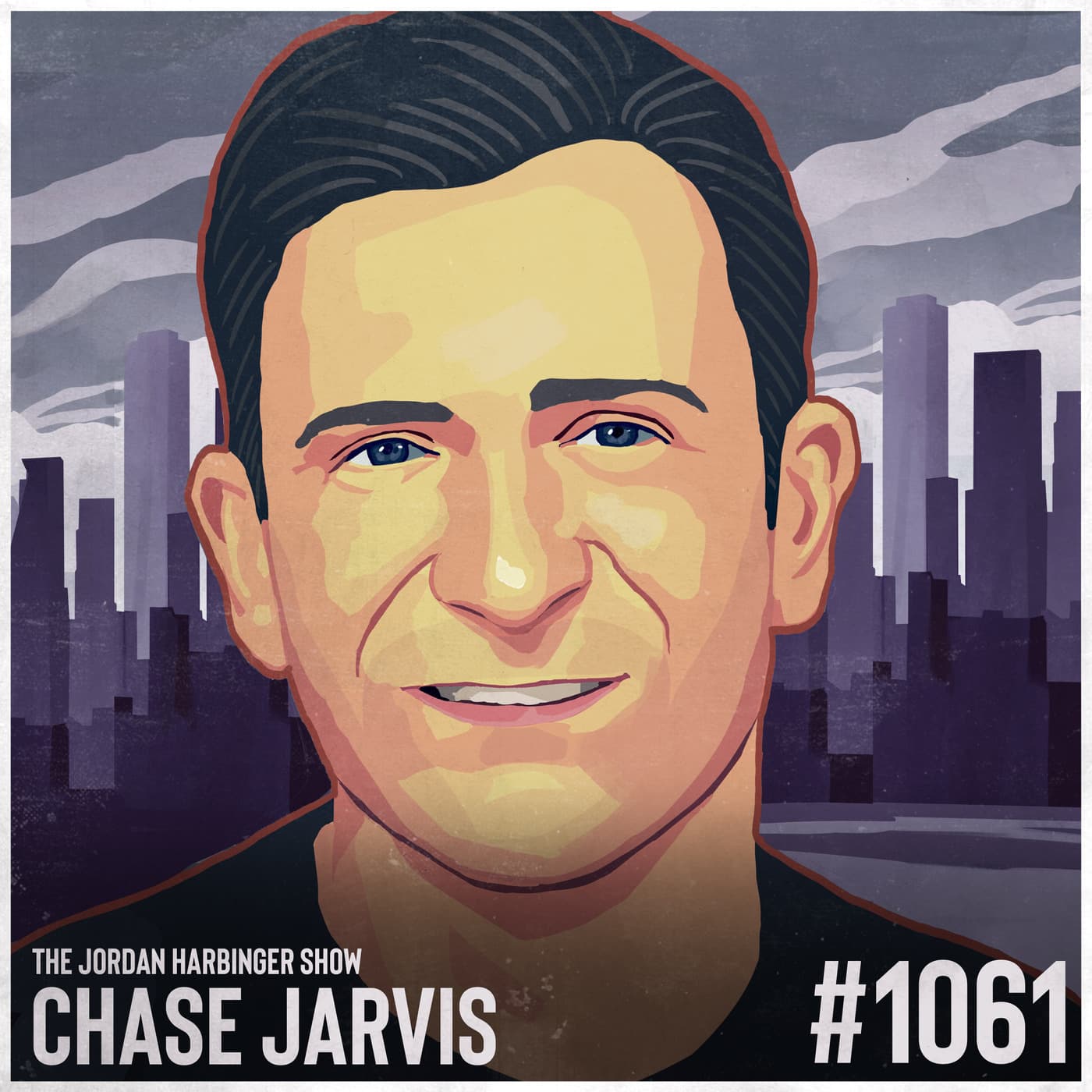
The Jordan Harbinger Show - Episode 1061: Chase Jarvis | Embracing Risk for a More Fulfilling Life
Episode Overview In this episode, Jordan Harbinger interviews Chase Jarvis, an award-winning photographer and entrepreneur, about the importance of embracing risk to achieve a fulfilling life. Jarvis discusses his insights from his book, *Never Play It Safe*, emphasizing that creativity extends beyond traditional artistic pursuits and into daily decision-making and personal growth.
Key Themes and Discussions
- Redefining Creativity
- Creativity is Universal: Jarvis asserts that creativity is not limited to the arts; it's an inherent human trait applicable to all life aspects.
- Breaking Conditioning: Societal norms often discourage individual creativity, leading people to abandon their creative potential.
- The Role of Risk
- Safety vs. Fulfillment: Jarvis argues that the pursuit of safety often stifles true fulfillment. He posits that life's rewards lie beyond uncertainty and discomfort.
- Challenging Conventional Paths: Many are conditioned to follow safer career paths (like law or medicine) rather than pursuing passions, which might seem riskier but can lead to greater satisfaction.
- Time Management and Perspective
- Changing Relationship with Time: Time management is less important than how we perceive and utilize time. Viewing life as long rather than short encourages more thoughtful decisions.
- Time Dilation: Experiences like flow states can stretch our perception of time, allowing for deeper engagement and productivity.
- Intuition as a Guide
- Trusting Intuition: Jarvis highlights intuition as a blend of rational thought and instinctual memory—an invaluable tool for decision-making.
- Examples of Intuition in Action: He shares stories, like that of Captain Sully, demonstrating how intuition can lead to life-saving decisions.
- Overcoming Past Conditioning
- Reclaiming Creativity: It's possible to revive creativity regardless of age or past experiences. Jarvis suggests that even small efforts can lead to significant life changes.
- The Power of Decision: Change can happen instantaneously with a conscious decision to act differently.
- The Importance of Constraints
- Embracing Limitations: Constraints can foster creativity rather than hinder it. Specific boundaries can lead to more innovative solutions.
- Examples from Successful Figures: Jarvis cites various successful entrepreneurs who thrived under constraints, showcasing that limitations can spark creativity.
- Cultural Conditioning and Societal Expectations
- Challenging the Narrative: Societal norms often dictate what's considered "normal" or "successful," which can lead to feelings of isolation or confusion.
- Finding Your Compass: Instead of following a map laid out by society, individuals should identify their values and true north to guide their choices.
Key Takeaways
- Embrace Risk: Taking risks is essential for personal fulfillment; safety is often an illusion.
- Reclaim Creativity: Everyone has the potential to be creative; it requires a conscious effort to tap into that reservoir.
- Trust Your Intuition: Intuition is a valuable guide in decision-making and should not be ignored.
- Time is Fluid: A change in perspective on time can lead to more fulfilling life choices.
- Utilize Constraints: Limitations can enhance creativity and lead to innovative solutions.
Conclusion Chase Jarvis emphasizes that living a fulfilling life requires embracing risk and creativity, challenging societal norms, and trusting one's intuition. His insights provide a roadmap for individuals looking to reconnect with their passions and take control of their lives.
Additional Resources
- [Listen to the full episode](https://jordanharbinger.com/1061)
- [Chase Jarvis's Book: *Never Play It Safe*](https://www.amazon.com/Never-Play-Safe-Practical-Creativity/dp/0062879995/?tag=jordanharbing-20)
- [Join the discussion at r/JordanHarbinger](https://www.reddit.com/r/JordanHarbinger)
---
*This episode serves as a reminder that we have the power to redefine our paths and embrace the fullness of our creative potential.*
Written by AI. May contain mistakes. Listen to the episode to check what was said.
Transcript
Automatic transcript. May contain errors.0:28This episode is sponsored in part by LinkedIn. These are folks who want to be seen, want opportunities, and are open to making a move. That's why small businesses who use LinkedIn, say, 72 % of the time, they're getting better quality candidates. Plus, you can let your network in on the search. Slap the hashtag hiring frame on your profile pic, and suddenly your whole professional circle knows that you're looking. Double the qualified candidates, zero extra effort. Post your job for free at linkedin.com slash harbinger. That's linkedin.com slash harbinger to post your job for free. Terms and conditions apply.
0:59We're spending more than ever. I hate my job. The price of everything has gone up. AI is threatening my job. It's crisis after crisis. Nothing is working out. I can't find a job. We're one disaster. Take control of change. I need a change. Disruption is the force of change. Stop the chaos. Stop the madness. Take control. Read James Patterson's Disrupt Everything and Win. Coming up next on The Jordan Harbinger Show. Are you going to become fulfilled by chasing all of the dreams and the scripts that everybody else has written for you? It's about knowing who you are, about knowing what your values are, and how to actually walk towards that as often as possible, knowing that you can't always do it.
1:44If the people who are listening to this right now, if you feel lost or isolated or lonely or confused, this is probably what's happening.
1:55Welcome to the show. I'm Jordan Harbinger. On the Jordan Harbinger Show, we decode the stories, secrets, and skills of the world's most fascinating people and turn their wisdom into practical advice that you can use to impact your own life and those around you. Our mission is to help you become a better informed, more critical thinker through long form conversations with a variety of amazing folks from spies to CEOs, athletes, authors, thinkers, and performers, even the occasional rocket scientist, investigative journalist, real life pirate, or special operator. And if you're new to the show or you want to tell your friends about the show, I suggest our episode starter packs.
2:25These are collections of our favorite episodes on persuasion and negotiation, psychology, geopolitics, disinformation, China, North Korea, crime and cults, and more. That'll help new listeners get a taste of everything we do here on the show. Just visit jordanharbinger.com slash start or search for us in your Spotify app to get started. Today on the show, my friend Chase Jarvis joins us once again. He's an award-winning photographer, successful startup founder of multiple companies, most notably CreativeLive, which many of you will have heard of. However, he's also been in some pretty big slumps.
2:54He's lost his creativity. He's found it again, sacrificed it on the altar of Silicon Valley capitalism, and then reclaimed it. So not a bad ride. We begin this conversation with the premise that our brains are essentially designed to keep us safe. And that includes, well, essentially discouraging you from taking any sort of risk. But risk and uncertainty are on the other side of reward. And this is why a lot of people get into something, whether it's a career or relationship or something like that, where if they just had maybe a little bit more courage, they might be in a totally different timeline.
3:22Today we'll dive into creativity, how to build or rebuild it, as many of us need to do. We'll discuss how we do ourselves dirty in terms of choosing everything from our education to our career and beyond. This episode might be a little bit more self-helpy than usual, but not in a saccharine way that's too cheesy. Sweet cheese. Sounds pretty good. I always enjoy my conversations with Chase, both on the mic and off, and I think this one's going to hit for many of you. Here we go with Chase Jarvis. you're a world famous photographer working with apple on new camera tech you founded creative live a learning platform with millions of users learning how to create what business does a naturally creative guy like you have telling pencil pushers like me how to learn to be creative is this like tiger woods telling people just hit the golf ball closer to the hole like thanks for the advice bro the reality is that i believe in you sounds like more than you believe in you so that's my first my first mission here is to get you to believe in you and second the bar is low Well, good.
4:16Solo you can trip over. But the second part is that this is stuff that's naturally residing within you. It's not an out there journey. It's an in there journey. And it doesn't take but a hot second to recognize that these tools that are inside of us, natively there, have been trained out of us. There's no evil overlord, but that's just what happens in a mass culture society, late stage capitalism. these really valuable tools, our intuition, our ability to direct our attention, our creativity, these are things that get trained out of us. And my goal is to help you remember that they're native in there, wake them up.
4:49And the people that you look up to, you respect, admire, that's all they're doing. They're tapping into this native reservoir they've got within them. And that's how they do good, powerful, meaningful shit. And you can too. I like the, you start the book with a quote that says, the pursuit of safety keeps us from feeling the most alive, which is a cool, is that something you just thought of or is that a quote from somebody else? I actually didn't write that part down. No, yeah, it is my words, but it's true. I was inspired by Helen Keller quote, security is mostly a superstition. It does not exist in nature, nor do the children of men as a whole experience it.
5:24Avoiding danger is no safer in the long run than outright exposure. Life is either a daring adventure or nothing. And the downstream punchline there is that safety is an illusion. It doesn't exist in nature. And the question that I ask is, so why do we seek it? And the reality is we seek it because of conditioning. And we generally get talked out of living our dreams by people who've given up on theirs. That's a bad compass. So we start off on the wrong foot. But what's confusing is the people who love us and care deeply for us, they are the ones telling us to take what they perceive to be a safer path, a job that pays better or X or Y or Z.
6:04But the reality is if you're busy chasing something that you truly don't believe in, that is definitively, scientifically, demonstrably not any safer. So why not do the things you were put on this planet to do or get in touch with who you really are? And it's those people, the ones that you look up to, respect, admire, and appreciate. and say, wow, they've really done it. That's what they're doing, and it's available to you. So why in the hell are you not doing it? Yeah, it's interesting you mentioned that those closest to us often keep us playing it safe. By the way, the book, Never Play It Safe, use the links in the show notes.
6:36It helps support the show. Those are the people that often will be the most risk averse. When I was younger, I was like, everyone's out to just try to stop me from being awesome. Look at even my mom. And it's like, no, they just don't wanna see you fall on your face because they love you, right? Totally. But unfortunately, what that means is instead of being like, you should totally learn how to DJ. That would be great. Music would be great. Some people create careers in it. Worst of all, you get a great hobby. You should totally do that. They're like, yeah, why don't you take a math class this summer?
7:05Because then you'll have an AP credit for college and it'll look better on your application. And then you're just like, oh, you don't believe that I can do this. Right. That's the message we're getting. And that is not only is that the message we're getting, but it compounds into so many other areas of our lives. And we immediately start to narrow the possibilities based on hearsay and straight up bad advice. I mean, would you take advice from your mom on how to be a better DJ? Right. No. Her advice is so generic and she's thoughtful. She's caring. She's amazing. And so it's same with our career counselors and our peers and our partners and our friends.
7:41like they're just also reacting to their lifelong conditioning. And my point is that this is just that it's conditioning, this idea that pursuing a career as a lawyer or an accountant to somehow less risky than becoming a professional musician. That's just outright. That's just false, demonstrably false. The outcomes for people who pursue the things that they love that light them up are very clearly, you know, anecdotally, you and I can probably speak to that just from hosting the shows that we have for so long. We know this not to be true, and yet we still get sucked into it. So this is a book about accessing all of the best stuff in life, which is on the other side of your comfort zone, on the other side of fear, on the other side of risk.
8:25This is not about seat belts and sunscreen. This is not about emotional or physical safety. Those things are all important, but pretty much everything else is on the other side of a little bit of risk and on the other side of your comfort zone. I think being stubborn has actually helped me a lot in life. I'm sure it's shot me in the foot numerous times. You're stubborn? Yeah, can you believe it? Like my career counselor in college, she told me you shouldn't really even waste the application fee applying to Michigan Law School because there's no chance that you'll get in. And I graduated from Michigan Law School.
8:57And this is a person at University of Michigan undergrad who theoretically is in a place to know who's going to get in and who's not, had no clue, just was totally wrong. But that's what I mean. It's all theoretical. That's a perfect example. Let's go back to second grade. My second grade teacher, Ms. Kelly, told me that I shouldn't focus on entrepreneur stuff, that I shouldn't lean into my creativity. I should be an athlete. And back in second grade, the irony was that I was producing a comic strip, selling it every week for the price of lunch money. I was making cash from my second grade classmates.
9:30I had a standup comedy routine, a magic show. I'd just done a film outside of school that was profitable. I literally screened it in my friend's parents' basement. That's awesome. And Ms. Kelly was like, you know, Chase is really not that creative and this business stuff has no place in second grade, but he's pretty good at sports. And what did little second grade Chase do? I was like, okay, I just did what the adults in my life told me. So I abandoned all of that stuff. and I chronicle this in the book that I did double down on sports when I get it. And was Miss Kelly right? I don't know, but I got a college soccer scholarship.
10:02I was the typical senior on the last day of high school. Whatever that means, I know it's not good. That was your award, right? Yeah, remember you wrote that in the book. Totally, and I was the captain of the football team. I dated a cheerleader. All of these things because the adults in my life told me that that was the thing to do. And where did that end me up? Ended me up feeling horrible, lost, disconnected, hundreds of thousands of dollars in student loan debt. And what does it say? If you like are a degree off and you walk for whatever, 10 years, you're a thousand miles from home. And that was a very, very expensive lesson to learn, but it helped me figure this stuff out.
10:37You were going to go to medical school, right? Wasn't that the plan? Yeah. So that's first professional soccer. And then it was very strange. I was very clear that while I had this opportunity didn't sound that interesting to me. Most of the people that I was spending time with in that environment. I also was on the Olympic development team. It was a non-Olympic year. I was like, man, you know, these people don't really light me up. I love soccer, but I can imagine like 10 years in this, in this environment, like where this is all we do is pretty limiting. So redirected to medical school. And then shortly before medical school was to kick off, I bailed on that to become my poor parents of photographer.
11:16Yeah. Oh, gee, where did we go wrong? Yeah. And yet, that was the first time in my life since second grade that I actually felt like I made a decision on my own that was in the direction of my heart and my soul. And, you know, this isn't a monologue about you should become a photographer. This is a monologue about tuning into who you are inside, what you really want and how to get it. part of the problem is that the world shows us a picture of what is normal or stable or sustainable, whatever. And then we kind of do the rest of it to ourselves. Not that we know any better. Right. But you go to school, you're supposed to go to college because everyone goes and that now it's table stakes.
11:55Then you have to do a career. But don't pick a creative career. Pick one that's in STEM because those are the stable jobs. And then you should also meet someone very quickly and probably get married. And you should start having kids around your early or mid-30s at the latest. And it's like, if you're not doing that, you feel like you failed. You're not fulfilling the expectations of others. And then what I started to do, so I should only speak for myself, but what I started to do is I started to essentially lie to myself about what I wanted out of life. And then that made it easier to do all the other stuff, which is why, you know, the subject jibes well with my burgeoning midlife crisis or whatever's going on.
12:31You just chronicled the story that so many of us share with one another behind closed doors. Our close friends were like, man, are you thinking this is, and at some point, a lot of us wake up and just start asking the questions like, what am I doing? And it's interesting because we do look at others who have been able to sort of buck that trend and manage to escape. And I want to be very, very clear. I am not positioning myself in this book as someone who has it all figured out. In fact, quite the opposite. Just take that hundreds of thousands of dollars in student debt story or my realization that, you know what, it's not about professional soccer and it's not about becoming a doctor.
13:09It's about, to me, being an entrepreneur and starting my own business in photography, which to be fair, as soon as I leaned into that, I very quickly became one of the top commercial photographers in the world, shooting for Nike and Apple and making millions or tens of millions of dollars doing that. by every measure it was a success. And yet you'd think that would mean I would never revert. But the truth is, is that I made that same mistake dozens, if not hundreds of other times. So this is the realization that I came to when writing this book was like, this isn't about avoiding mistakes or it's not about never betraying yourself.
13:45That's actually part of, that's it working. That's how the system works. And if we are to learn anything from that, it's not about beating ourselves up. It's about getting 1 % better, 1 % smarter, finding our way back to ourselves over and over again. And that is, if I look across the spectrum of my friends and people that I admire and respect, that is the story of people who actually have figured it out. And they're willing to be misunderstood for long periods of time. They're willing to, you know, this is the phrase of playing it safe. They're willing to not play it safe in support of their dreams.
14:19And yet they are the only people that I know that reach them. Yeah, there's a part of me that thinks we've just evolved to do what other people in our tribe want us to do, right? I think you kind of touch on this in the book where you get exiled from your hunter-gatherer tribe if you don't do the thing that helps everyone else. And so they just kind of make up rules like, hey, you need to follow the playbook. And if you don't, it's some sort of personal offense. And I don't even know if this is conscious at any level from our parents or those around us or from ourselves at all. I think it's just like hardwired somewhere.
14:50It's not hardware. It's like subconscious conditioning. And there is a genetic aspect to it. And there's also a philosopher, a French philosopher named René Girard has this concept about mimesis. And what we do as social animals is that we, mimesis is we basically imitate others that we see in our tribe and like, oh, well, they're safe. They are accepted. I'm just going to do that. And yet the irony is that that is the thing that keeps us playing small ball. keeps us stuck in a life half lived, the belief is that that is all that is possible. But we know that's not true because if that was true, we would not evolve and grow, right?
15:28And yet, look at what we have done. And then you look at how we got to where we are. And it is specifically the people who have been willing to extract themselves from this, even for a moment, even for a period of time in order to go on and do something that really was true to who they are. And the irony is that our culture secretly reveres these people. We're like, no, do this. And yet we're so quick to celebrate a rock star standing on stage screaming their heart out because we connect with that. They're showing us example of what's possible with our lives. And yet, as soon as we leave that rock concert or we leave the dinner party with that person who was really inspiring and we just so easily drift back into the well-worn ruts of others, it's very clear.
16:15We can have this conversation about it. There's nothing stopping us from actually deciding that, no, you know what, that's actually not true. And there's all of this proof. It's basically hiding in plain sight. And my book, Never Play It Safe, is the goal of it is to awaken you to this and give you a very small handful, a set of very, very basic tools that can plug you back into what I call all the best stuff in life. You said earlier you shot for, I'm gonna screw it up, it's like Nike, REI, Apple, whatever, these big brand names, Pepsi, McDonald's, Red Bull. I think you told me this years ago in another show, it was something like, his photography sells from anywhere between$50 to$50 ,000.
16:52What is a$50 ,000 photo and what is a$50 photo? Because you want to sell the$50 ,000 photos. You know the difference? The only difference is the person who's sitting across the table from you. The same photograph. It's the expectation of the person who's buying it. And to me, this is one of the reasons why art is wild. What a good grift this is. Totally. Good racket. The fine art that I produce is hanging in the houses, homes of several billionaires, several world-renowned art collectors. And I don't really tout that, but that photograph or another one in that series has probably been licensed to some mid-tier company in Eastern Europe for$100 somewhere.
17:35It's an iStock photo under the premium tab. Totally. And I do think that there's, to me, that's an interesting question that you ask. I believe deeply that the response is also interesting because these are value judgments. And what we're talking about, like a life well lived, a rich life, these are also value judgments. And the center of gravity there is basically like, it's up to you. You decide. You decide who you're going to sit across from and what picture you're going to take and simultaneously what you want to do with this one precious life. All of these are incumbent on each of us to make a decision around.
18:09And whether it's art or this alchemy that is life that we're trying to create for ourselves, and it is created, right? To be clear, this is like the ultimate creative act. It's to create your life. But to me, these are signs that, man, all of this shit is just made up. So why not make up a really powerful story about who you are, what you want to be, do, become, and then go do that? Because you literally can write any story. Well, you've got this story in the book about the African guy who wanted to be a photographer. This was humbling because I've never, I realized I've never tried that hard or chased anything that hard, maybe in my entire life.
18:45Paul Ninson is his name, and I do open the book with this. This is, first of all, just a short divergent aspect that's related to the story, but I get a phone call at, I don't know, it's like 5.05 in the morning or something, and it's a friend of mine, and I'm looking at the phone, and I'm like, why the hell is Brandon calling me at like 5 in the morning? And to be fair, Brandon is not really that attuned to time zones and stuff like this. He's this free spirit and people will know him. He's the creator of the amazing project called Humans of New York, which is probably the most followed individual artist on social media.
19:20Maybe not now with some of the Kanye's of the world or whatever, when controversy started being the thing that you're following, but just the most engaged audience, tens of millions of people from all over the world pay attention to Brandon. He calls me. He's like, I'm standing in the middle of this town square in Accra, Ghana. And this kid recognizes me, comes up and said, I've seen you on Chase Jarvis's show. I've seen you on Creative Live. You and Chase have changed my life with photography. And he tells this story about he has a baby out of wedlock. And in his culture, that was absolutely forbidden.
19:54So he's ostracized from his community. And yet he needs to provide for this baby that's coming into the world. He tries his hands at all sorts of entrepreneurial ventures and meets a photographer who's making like 100x what he's making with all of his side hustles, printing t-shirts and blah, blah, blah. So he sells everything he owns, including his phone, the only way he can communicate with his loved ones, and buys a camera, like a proper camera, and starts taking pictures. And you'd think that the story kicks into, oh, how easy it was. No, it was hard. And yet, he stuck with it. and at this particular point, Brandon's calling me, telling me about this kid.
20:31He had sat down with the kid, looked at his portfolio. He's like, kid's an insane photographer. It's really, really interesting. Well, fast forward a couple months later, I meet with Brandon in New York. We're having dinner. He's like, you know, I got to tell you a little bit more about this Paul kid. He actually applied to the ICP, which is the International Center for Photography in New York. He got accepted, but obviously couldn't afford it. He's living in Africa. And short story long, we hatch this plan to get his lapsed application reinstated we find some stipends for him brandon pays him a little bit to help as a production assistant on the show that he's working on paul comes to america starts this icp photography program and amidst all sorts of challenges and racism and he freaking figures it out and becomes this insane photographer he's sending money from the assignments that he's getting from massive like pharma companies to shoot these beautiful heartfelt earnest images for the campaign he's sending this money back to his daughter in ghana and he becomes quite famous in the process and basically that's how the book opens with that story and it's like if paul can do it in the face of like all of this stuff right and more ashamed by in his community and go to a different country arguably one of the toughest cities in the world to make it and figure it out.
21:48What about you and I? And I will fast forward. There's the punchline in the story that you think that that's where Paul's story ends, but it's not. Brandon, Humans of New York does a crowdsourced fundraising for Paul. That crowdsourcing does two and a half million dollars and it provides for Paul to return to Ghana to live with his daughter and start the largest photo library and education center for photography in the entire continent of Africa. Wow, that's incredible. That's really incredible. And so his story is well chronicled and now celebrities and politicians, like it's the place to go in Ghana because it's this amazing story.
22:31And to me, when it's easy to say, well, gosh, who am I that kid Paul Ninson is one in a million, one in a billion. And that's just demonstrably not true also. What he did is there was a very specific set of tools that we all have natively within us. Paul just put those to work in a pretty simple fashion. And that's in part where his results come from. Is there luck involved? Is there, of course, all kinds of things, but control, you know, let's go to stoicism for a second, control what you can control. And this is, for Paul, this wasn't necessarily an outside mission. It wasn't about going and getting accolades out in the world.
23:11It was the conversation. I've had dozens, if not hundreds of hours of conversation with Paul to learn this about him. And it really was, it was an inside journey. And that journey is available to every single person who's listening to us. And I chronicle some of those details in the book. I'm going to start this ad pivot with Chase's favorite joke. Really? He was eight years old when he told this in front of the whole class. what has 52 teeth and holds back a monster my zipper bro we'll be right back if you're wondering how i managed to book all these great authors thinkers and creators every single week it is because of my network the circle of people that i know like and trust and i'm teaching you how to build your network for free over at six minute networking.com this course is about improving your relationship building skills it is not cheesy it is not cringy it's very practical it takes a few minutes a day i hate courses where you gotta watch a 20 minute video i'm not doing any of that to you guys.
24:02And many of the guests on the show subscribe and contribute to that course. Come on and join us. You'll be in smart company where you belong. Oh, and by the way, we have it in a bunch of other languages now, like Russian, French, Chinese. We have it in a ton of different languages and more are being added all the time. So go ahead and check it out if you were like, oh, I kind of want to do it, but it's in English or I wanted to share it with somebody, but they don't have it in Hungarian. Well, we probably do now. So make sure you go check it out. Again, you can find it for free at sixminutenetworking.com.
24:29Now back to Chase Jarvis. A lot of people will say it, generally, before they hear a story like that anyway, they'll say, I can't do things because I'm busy. I have too many things going on. When I was on your show approximately 10 ,000 years ago, we talked a lot about my time management strategies. Blissfully, I don't even want to look at how young I was back then. Every year, I'm like, oh man, there's a wrinkle, a new one. In your new book, you talk more about time and how to think about time as opposed to being more effective with time management, which I also think sort of mirrors the thinking process as we age.
Read the full transcript
25:04It's like, I don't need to do more in a day. I want to do less in a day. For sure. But tell me what the difference is in thinking about time and understanding what's important, because I think our timelines are pretty flawed. Time management is dead. It was never really real. And certainly our ability to focus our attention on what matters and avoid distractions, you can look at that through a lens of time. But I want to help people understand that the people who I feel like have life figured out, they operate on a completely different way with time. What if, for example, I told you that life was long and before your listeners throw a tantrum, life is short, you got to seize the day, all the phrases that we know.
25:42What if I told you that the difference between you falsely understanding that life is short, that makes you scurry around like a lunatic doing stupid shit because you don't do anything to its full potential. You run from one thing to the next. You allow yourself to be distracted. What if life is short and seize the day and all these phrases, they clearly make us behave in largely erratic ways. And what if, by contrast, you took the point of view that life is long? What would you do differently? A friend of mine just shared that they were at a sort of a Jeffersonian dinner and this, they asked many questions.
26:19And this was the question that was presented to the group. And it was by far the most fascinating set of responses because if you told people that what if you're going to live to be not infinity, but 200, what would you do differently now? You're guaranteed to live to 200 and you're going to be able-bodied and with it, what would you do differently? And everyone said they would do something different. And the funny thing is, is that most people, when they were able to zoom out, could do orders of magnitude more than they wanted to do by the time they were 75 or 80, which is the amount of time that we actually have on this planet.
26:54So the foundation to this thinking is that time dilation is real. We've all experienced, whether you experience it in a car crash and time slows way down or in a flow state and in an hour you get 10 times more done than you really ever thought was possible or than you would typically. That tells you that time is not some conveyor belt moving along in the background, that time is fluid. And for the people who know this, they are the people that we respect and admire and appreciate. They've got this figured out. That's why they can be so thorough. That's why they have multiple career arcs. I feel like I tapped into this reasonably early in my life.
27:30And I'm on my fourth or fifth, I would just call it reinvention. You know, again, from being a photographer to an entrepreneur building a multi-hundred million dollar company and having that acquired and now producing television shows. And to me, this is, I lucked into this. And yet when I started studying not just my own crazy weird life, but the lives of the people that I respected, many of our friends and historical figures, this kept coming up. There's a different relationship that the people who understand have with time. And it's also available to us. What if you changed and you thought about time differently, what would be true for you?
28:07And the facts are that you'd be smarter, you'd be more thoughtful, you'd be more connected, you'd be more thorough, the stress that you would alleviate from. And I'm not saying I'm sort of of this like short-term urgency, long-term patience camp, your life would transform today. And it's immediately available to you. And that's one of the things that I love about each of the tools. The book is organized into seven different chapters. Each one of them is a tool that is very counterintuitive. Like we think of time as a certain way, but if you just change the way that you think about time, a whole new universe is available to you.
28:41Again, to me, time is one of those tools. And the people that I know that have their shit figured out know this. Yeah, it's quite fascinating. That's an interesting thought exercise because I'm not sure what I would do differently if I was going to live to 200. I'm like, oh gosh, I might have to work longer. But I don't think that's the part of it. That's what I mean, but you're like, okay, I've got to work longer, so I'm certainly not going to do shit that I hate. Right, right. Oh, that's a good point. Right, yeah. I'm already doing something I love, thank God. Yeah. But you're right. And I'm taking care of my body now, finally.
29:09But if I'd known I was going to live to 200 20 years ago, probably wouldn't have gotten so freaking fat. Well, there's upside there, right? Maybe the bar is that low, but conversely, the bar can be crazy high and the amount of patience and thoughtfulness that you could input into your life and simultaneously the amount of joy in play. You wouldn't feel so compelled to work all the time and have to have everything figured out by 25. I mean, I remember having a conversation with you 10 years ago, and I remember specifically that you felt like you signaled to me that you needed to have everything figured out.
29:43I need to have X wins and Y dollars in the bank. And I'm not saying that that's not valuable, that motivation isn't important. I think that that's true. But boy, if you could increase the amount of play and joy in your life and you could then gravitate to the things that brought you both fulfillment and connection and a lot of value personally and professionally, like figuring that out instead of having to jump into law school track at 20 and a half years old. Yeah, I did miss out on a lot of stuff going to law school and then more starting a business. You know, a lot of my friends were doing traveling and living abroad, which I also did before that.
30:19And I was like, oh, I miss all that stuff. I got to do that stuff later. Well, there's no later. Because once you start a business, it's your business, man. You're stuck. Good luck living, you know, three months or even three years somewhere where the Internet sucks when you're running a freaking startup. Not going to happen. And I think it's interesting. You wrote as well in the book about learning how to rest. And I'm surprised, surprised one of those people who decides to never rest until my body forces me to rest physically. I've always been like that. I'd get sick the afternoon after my last final exam every single year.
30:49And I was like, I'm so proud of myself for never getting sick during anything important. And now I realized my body was just like, we can hold on for a few hours. But after this exam, you're going to start throwing up in the bathroom nonstop for three days. You know, like you're done. Totally. And it's ironic that that's actually celebrated. Yeah, of course. And you celebrated that at some point in the past. For sure. This is another sort of joy of realizing that you have a different relationship with time. You know, what if the things that presented themselves as mission critical and urgent, every time I've actually been able to have the space to look at them slightly more carefully, you realize that not required.
31:27Oh, probably not the right thing to send me scurrying after them. And I wouldn't call it, just so we're clear also, I'm on the other side of this after 25 plus years of sleeping somewhere around four and a half hours a night. If you want to talk about something that takes a toll, I was one of those people for decades and I thought it was genetic and I had a talk script that I said to myself, not intentionally, but that was one of those subconscious ones like, well, you just have different genetics. lucky you it allows you to do x y and z and then the shit catches up to you and i'm not saying don't work hard when you're younger and have maximum energy that's absolutely that's a brilliant and great thing to do but training the ability to find joy in the spaces between training the ability to sleep like it turns out an interesting story about a friend of mine tim ferris maybe your listeners might be familiar with tim we had a conversation about meditation years ago sitting on my boat floating out in the lake.
32:27And he's like, man, you seem pretty dialed. Like shit's going great for you. And you're like, you got your shit together. What's the secret? And I was like, no secret, man. I got interested in visualization and meditation and mindfulness back as an Olympic development athlete. You know, we had people, psychologists that were training us to think about this stuff. And it was, I found it was really valuable. So I got curious and been exploring meditation. And, you know, I found this one that really worked for me. And And he said, all right, tell me more. I'm always like super skeptical of meditation.
32:58And where this nets out is I encouraged him to try. And for me, it was Transcendental Meditation TM. And I was like, dude, I'll pay for you to go. It's like$1 ,500. Go get taught this by someone who's a certified teacher. And on the other side of that experience, he said, bro, it's like arguably maybe one of the most valuable things in my entire life. and the story that I had told myself was that my aggro nature, my high octane, pissed off, gonna battle at all costs, the reason I did not want to meditate was because I thought that that was my advantage. Yeah, you lose your edge. Yeah, that was my edge.
33:39That was my advantage and as soon as I had gone through this program and developed a meditation practice, which to be clear, this is a practice, but when I developed my meditation practice, I was able to see that the thing that I thought was my biggest strength was actually my biggest anchor. And now the clarity that I have, and just so we're clear, this is not necessarily a causal relationship, but this was the beginning of the Tim Ferriss podcast. This was when he launched his show. This is when he did his third and fourth books, which were instant number one New York Times bestsellers. That's on the other side of the shit.
34:13So your original question was around rest. And to me, this is just an awareness of, you know, being kind and gentle to yourself and giving your body what it needs and including great self-talk. And it ultimately distills to awareness and mental health. It turns out that's pretty valuable stuff. I want to talk about the intuition thing in the book. I know you're big on this. I wanted to explore this topic with you. Intuition's interesting, right? I'm often turned off by the woo-woo nonsense that people associate to it, such with it. You know, when people are like, oh, I know more than a doctor because I have intuition, mother's intuition or whatever, or they're psychic because their intuition told them something.
34:49It just like, whatever. It seems like a delusion and cognitive bias combined. But that's not really what you're talking about. The science is actually emerging is pretty clear that they can measure sort of the, I'll just call it the efficacy of speed and the correctness of rational thought. Let's just use that. And it turns out that rational thought is pretty slow, often wrong. We actually think that our memory is infallible, which actually is a major negative. We're not even aware that we could misremember things. And by contrast, intuitive thinking, which is very much, there's a reason that we call it a gut.
35:27The science indicates that our cells store information that is different than the information that's in rational thought, but that gut feelings actually do take rational, the stuff that's going on in your mind, in consideration as well. But there's a reason that this feels differently. There's the head intellectual stuff, and then there's the body like, I'm not sure if I should trust this situation or whatever. And there's all kinds of really good examples of this. One that I share in the book is about Captain Sully who landed the airplane in the Hudson River. When he took off, basically bird strikes, both engines, took both engines out, a couple hundred people on board.
36:07And I think it was JFK or maybe it was LaGuardia, you know, And he said, hey, bird strike. And they go, okay, come around, come back to the airport or any one of these other two. There's three airports in New York area there. And he says, nope, putting it down in the water. And they're like, no one had ever done that before. Protocols come back to base, basically. And he's like, put it in the water. And on review, now, Sullenberger had something like 30 years as a pilot. He had flown gliders. There's all sorts of weird trainings that he had that made him slightly different than a lot of other pilots.
36:42The reason that this is expressly interesting is because basically airline pilots, they run their entire, every flight, their entire professional lives are run by checklists. You know, you only do this when you're crashing, you're literally reading a book. You have your own protocols and then you're, that you are trained into, but you're literally checking the manual. And when Sullenberger made the decision to attempt to land the plane in the Hudson, it violated all of that 30 years of training to do that. And yet, when they reviewed the results when he crashed and everyone lived, they determined that that actually was the safest option given all of the options.
37:23So to me, there's a thousand million examples scientifically documented that indicate this. And I'm not saying ignore your rational mind. That's not at all what I'm saying. And I'm saying the people who are living rich, fulfilled, connected lives, this is a piece of the puzzle. And this is something like anything else, like your creativity or your muscles, right? You use them, you train it, and it gets better and stronger and more reliable. So in the book, I just give a handful of examples. Look, there's a reason that Travis Rice, one of the best snowboarders in the history of the world in big mountain riding is still alive.
38:00And so many of his peers are wrong. It's because he has turned away from all sorts of big film shoots in the moment, just because of his intuition. And then other people don't stay alive because they have ignored their intuition. So to me, this is just an interesting lesson. And the thing that maps back to each and every one of us is we've all experienced this. Every single person who's listening right now knows that there's some time when they ignored their intuition and it bit them and leaned into it and it paid off. And ironically, one other sort of side note is I just was on one of our mutual friends, Ryan Holiday's podcast, The Daily Stoic, and he had an intuition about one of his books.
38:41And when they accepted his pitch, basically, he was like, oh gosh, I think I might have done it wrong. And they said, no, no, no, we want to do one of these sort of daily readers. It was The Daily Stoic, basically 365 passages. and we think it could be a big deal. And he says, so wait a minute, wasn't I going against my intuition right there? And it turned out to be one of the best-selling books of all time, right? Millions of copies have been sold. And I said, actually, what did you say to yourself in that moment where they're saying, no, we actually think it's good? You actually trusted your intuition that the people that you'd put around you, your agent, your publisher, were really good decision makers.
39:19And so you took all of this information that was available to you to consideration and you decided to go forward with the project. And that is what made it one of your best outcomes ever as an author. So whether you work to explain this stuff away or you decide to lean into it, it seems to me that life is way more interesting and that there is enough data, scientific and anecdotal, to suggest that what have you got to lose? The answer there is not very much. What do you have to gain? Potentially a life that feels richer and more interesting to you. It's funny to hear you talk about this stuff now, because I think when we met, you were like spending a crap load of money going all over the place.
40:02Like I got to go to Shanghai tomorrow. I'm like, oh, that'll be fun. How long are you there? 12 hours. Oh, that's not going to be fun at all. The flight's like 19 hours. What are you doing? It was just like, I've seen you miserable. For real. There was one time where you had an investor meeting right after our lunch, and you were not your best self that day, I think. I'd met you before, so it was all good. I was just like, wow, he's at the end of his rope. And my wife, Jen, was like, yeah, this is not a good day for Chase. We'll have to catch him next time. And you were just like, you know, nonstop texting someone to get numbers on a spreadsheet probably or whatever.
40:36And I was just like, oh, God, I'm so glad I don't own a tech company. A venture-backed tech business. That's right. Just no thank you. So it's such a 180 from a decade or how, no, more than 10 or 15 years ago, whatever it is. This is what I mean. This book is the product of looking backwards and connecting the dots and trying to understand, wait a minute, if I connect the dots about all of the best things, things that worked when they weren't supposed to, the things that, what are the patterns there? And then I took that sample and I ran that against a thousand podcast guests and so many just really intimate conversations like the ones that we've had when we're not recording.
41:18And I mentioned a handful of other legendary friends that we share. This is the kind of stuff that I'm like, wait, I'm running sample tests against this stuff, my experience, and shit, it turns out that there is a pattern. You know, I mentioned Tim earlier, one of his books, Tools for Titans, it just basically featured a bunch of people that he'd interviewed in his podcast. I was in that book, and I think it was at the launch party or something. I'm like, what's the through line, the most popular through line between all the guests of the, you know, and this is everything. This is world-class athletes, photographer, chess masters.
41:50What are the most common threads between all these high performers? And the number one thing was the ability to direct your attention. Essentially, it's some sort of a meditation, mindfulness, awareness, prayer. And it doesn't matter what you call it, but an understanding, a belief that the ability to control the muscle between your ears that you are in charge and that this is not running the, it's not running the clown show was the defining characteristic for so many of these people. And that was the most popular thing. That's an example of me going through the data and saying, holy shit, what are the characteristics of these outcomes?
42:27And putting all of those characteristics, essentially it's sort of like a meta research project that at the core is about how to live a rich, fulfilled life. And the thread amongst the macro threads is all the best shit is on the other side of your comfort zone. Here's a roadmap for how to get there, to get comfortable, to get better at accessing it. One of the unique levers in your book was constraints. I wanna talk about this because you expect like, okay, focus, attention, all right, flexibility, whatever. Sure. But constraints, it's kind of like the opposite, right? You're like creative, the blue ocean, everything is open to you.
43:02And it's like, yeah, maybe put some boundaries on some stuff. Yeah. I do believe that in many ways, every one of the tools, there's seven tools in the book, levers as I call them. And I chose the word levers on purpose because that's like, what's the minimum input for maximum, right? That's essentially the definition of a lever. And they all have this sort of counterintuitivity to them, just specifically with time as an example. Oh, life is short, go fast and everything, run hard. And that's how you get the best out of life. And like, actually, what if I told you life is long? What would you do different?
43:32Well, constraints is another one. And you hit the nail on the head, which is we are taught that, especially when I started identifying, I'm super creative and I want to do this. This is who I am. I want to lean into this. Anything that wasn't like blue ocean, like no schedule, to me, it was there to keep me down. And the man's trying to suppress all my brilliant creative genius. And the irony was that just had me flailing and lost. And some super basic constraints like creating on demand, sitting down at the same time every day. And a number of exercises, one of which I chronicle in the book, a guy named Stefan Sagmeister, one of the best designers in the history of the world, graphic designer, really, really smart, interesting guy.
44:18He walked me through this exercise from a cat named Edward DeBona, which - Is that the parachute guy? What color is your parachute? Is that a different DeBona? Hold on. I'm going to Google it. I don't know. You can look it up. Yeah, you got your computer there. I'm talking about the Edward de Bona who pioneered lateral thinking, which essentially is - Maltese physician? Yes. Six thinking hats. Yes. I was close. Yeah. Not parachutes, hats. There you go. So he's a genius and developed the idea of lateral thinking. Essentially, the punchline is that constraints are the thing that provide us the vehicle of creativity.
44:52If I say you can do anything you want, most people think that that's what an artist wants. But by extension, if I told you you need to do something, it needs to be out of paper, it needs to be read, and you have to do it in five minutes. Those are all just simple foundations that will infuse radical creativity into the moment versus like, uh, what do I want to do? Now you're getting an envelope with those instructions. Yeah, exactly. I'm folding you an envelope. Yeah. And if you extend that metaphor to life, you start to think, wow. And I mentioned Ryan and early I can go back to the obstacle is the way.
45:26There's a stoic principle about that. And what if the thing that is holding you back is actually the thing that unlocks you? Like we're a startup, we don't have a lot of capital. One example is Airbnb. They didn't have a lot of capital. They weren't making traction. The founders themselves went to New York City and photographed the insides of the spaces they were trying to rent themselves because they were creative people, designers and, you know, Joe and Brian, and they could only do that because that's, they had no money and they did have cameras and they said, well, it presumably couldn't hurt.
46:04Let's try this. This was the thing that transformed Airbnb from not working to working high quality photos of the insides of the locations. And so it is this constraint of like, we have no money. What do we have? We have a little intuition. We have a belief that if people saw the insides of some of these really cool places that they would be inspired. And we have 10 days and we have the city that we're living in right now. What can we do? They did that thing. And it turns out that when you deconstruct so many of the most successful people or the most fulfilled humans, the outcomes that achieved the highest ROI, it was because of the constraints, not in spite of them.
46:49So I argue, what if you were to invite some additional constraints? We've all got constraints, right? Even some really big ones, race, gender, how you were born, socioeconomic status. Those are all certain kinds of constraints. But what if you, everyone has to play within what they're dealt. And what if you could actually increase the number? What if you could put some other ones in place? By choice, I'm only going to use social media 15 minutes a day. Just that one alone for 90 % of the people who are listening right now would probably transform your life significantly. And the irony is not lost on me that you found this show through social media, but that is an example of a constraint that if you chose that, you chose what you put in your body, you chose how you spent your time, you chose how much time you spent with people who were toxic.
47:38This is actually the vehicle to make all the changes that you want in your life. And it's right there, available to you. It costs zero dollars. It's just a change in thinking. And you don't need to make$50 ,000 a photo to afford something from the fine products and services that support this show. We'll be right back. If you like this episode of the show, I invite you to do what other smart and considerate listeners do, which is take a moment and support those who make this show possible. All the deals, discount codes, and ways to support the show are searchable and clickable over at jordanharbinger.com slash deals.
48:07You can also email us, jordan at jordanharbinger.com. I am happy to surface codes for you If you can't find it, you're not sure if it exists. It is that important that you support those who support the show. Now for the rest of my conversation with Chase Jarvis. It sort of goes against, I think, what a lot of people are expecting out of a show about creativity. Like, hey, you should limit yourself way more than you are. It is helpful to think of things through this lens. I mean, this is a problem for me. I don't know what my career goals are beyond the next few things that I'm planning. I think part of the problem, just with creative careers in general, constraints aside, is that there aren't defined paths for creatives that we can simply follow.
48:44Like if you're a lawyer, you work, and then you become this kind of associate, and then you do that, and then you get seconded to a firm, and then you do that, and you either go in-house, or you go on the partner track. That's the career path. But when you're a creative, it's like, what's the next thing that I gotta do to get to the next level? I don't know, what is the next level? Oh, I don't know, that's a good question. So not only do I not know what the next level even is, of course I don't have a plan to get there, because I don't even have a destination in mind. But I don't know, are those paths disappearing for everyone?
49:11Or is it just a uniquely sort of crappy situation for a creative career? No, I think culturally, and I'll use some constraints here, not only do I think it's not crappy, I think it's the most desirable outcome. And it is a constraint to say, oh, I do this, I go to this school, and then I become this kind of associate, and then I'm on the path to being on the partner track or I go in-house or whatever. And yet it invokes this idea of, I mean, this is a multi-thousand-year-old idea, know thyself. I'm gonna quote some Aristotle here, right? It turns out that's a pretty powerful thing. And what about setting a compass?
49:50We've been sold a map, even within that universe of lawyerness, which we're talking about. We're sold a map. Turns out the map and lawyer is a little bit more refined, but let's take the path of an entrepreneur very undefined very ambiguous and what a map looks like you say if you go to this school and you get this job or you first you work at a startup then you are an executive at a startup then you start a startup and then boy that's how you actually get this or you join y combinator or you there's sort of like intimations of lots of paths but when we buy a map it starts here dot dot dot dot you know go over the hill through the whatever dot dot dot red x here when you buy a map, what invariably happens is you're six weeks into this thing and you're off track.
50:38And the goal is to just scurry back and get on track. But it turns out there's a mountain range in front of you. It turns out there's a swamp and turns out there's all sorts of AKA freaking life. And as soon as you have that, you're essentially sort of lost. And there's not a part that says, hey, go around this stuff and hook back up with the trail later. And this is the difference between what I invoke is the idea of a compass. What is your true north? What are your values? Who do you want to spend time with? What are you interested in? What do you like working on? If you are able to align with those things as your true north, I like to work in these areas.
51:15I like to work with these type of people. And that's my compass. When you bump into something like a mountain rage, you realize that, okay, I might be off track. I might have to walk this way, but my compass tells me where my true north is. My values, to extend the metaphor, tell me where my true north is. All I have to do is keep following my values. For the people that are able to adapt to that type of thinking, those are the people that change the world. Those are the people, and maybe changing the world isn't on your list of shit to do, but is fulfillment on your list of shit to do? Yes. Are you gonna become fulfilled by chasing all of the dreams and the scripts that everybody else has written for you?
51:53Hell no. It's about knowing who you are, about knowing what your values are, and how to actually walk towards that as often as possible, knowing that you can't always do it. To me, that's a way more powerful model than the map that we're sold, which leaves us feeling off track, stuck, essentially broken because we're off path, we're off track. I don't know what to do now. And if the people who are listening to this right now, if you feel lost or isolated or lonely or confused, this is probably what's happening. and again, this is one of the reasons I wrote the book, is there's just a handful of these tools.
52:29What if you journaled every day on the same prompt, what is it that I really want? What if you did get pretty clear, and you started listening to that piece of you that actually knows, and you weren't turning it off because your career counselor, your boss, mom, wife, spouse, partner, whatever was telling you? Pretty simple, and yet profound. That's the sorts of tools that I've tried to gather in this book. I think a lot of people don't think of themselves as creatives, right? They got that drilled out of them in kindergarten or fifth grade or whenever it happens. And it took me years to even think of myself as a creative person.
53:04And my friends were like, you're literally the definition of a creator. You create a show. And I was like, yeah, but it's not like artsy, you know, I just like talk. My friends are like shaking me. Like, are you kidding me? If you're not a creator, then no one I know is a creator, except for my aunt who's a painter. Right. Right. It's like, come on. Narrow definition of creativity has really done so many people a disservice. And your listeners know about your passion for photography? No, I don't really talk about that much. Yeah. Well, we'll keep it. We'll keep it off. I'm more of a video guy these days.
53:34Never mind. New topic. New topic. I mean, I don't take like nice portraits or anything. I mean, I just take pictures of my kids and I do videos and interviews, but that's creative, right? It just took me 20 years to realize that. Absolutely. And to me, this is why this matters. And I'm guessing why you brought it up is it's a mind shit. It's a mindset shift. Mind shit is a good term. You should trademark it. Mind shit. It's a mind shit, bro. The belief that you can drive, that you're in the driver's seat, the belief that you can change your circumstances. This reminds us that building, whether a living or a life that you want, is actually the ultimate creative mission.
54:14The lives of the people you respect and admire, they didn't just happen. They were designed. They were built. Great architecture does not happen from finding two fucking boards on the side of the road and hammering them together. There's a plan. And the same is true for your life. And if you think of yourself as a not creative person, you're automatically at a disadvantage for crafting the most important piece of art in the world, which is your life. By extension, if you have a creative practice, This is not about taking yourself seriously. This is not about moving to France and wearing a beret and smoking a cigarette.
54:50And that's not what I'm talking about here. I'm talking about just acknowledging as a part of your identity that you have the ability to put new and useful things together to form other cool and useful things. That to me is really empowering. This is not about some label. This is about a foundational, fundamental, you know, this is the thing that separates us from so many other species on the planet, right? If you lean into that for a second and own that title, you don't need to put it on the door of your office. You don't need to wear a beret, as I mentioned. But if you actually embody this, if you own some of the principles that we're talking about here in this book and in other things I've written about and that we've had our previous conversations, you are definitely more likely to end up where you want to be than if you ignore those things.
55:36Yeah, there's kind of this societal divide between creative people and the rest of us, We're allowed to buy their music or whatever, but we're not really supposed to become one of them. You screwed up your life if you do that. To me, that's terrifying. That's like the definition of a belief gone bad. Because right now there's someone who's like, wait a minute, what Chase is saying actually kind of makes sense, but I don't really want to lean into it because I like science. I'm a scientist. I don't want my kids to do it. But yeah, it's pretty, he said some smart stuff. I know. Exactly. Exactly.
56:05I'm glad it worked for him. Yeah. And yet no one can argue that it is a wildly. I mean, just pause for a second, look around. Every single thing that you see, the software that we're using, the fact that we are not in the same room in video chatting, that's creativity on display. Corporations tout innovation, but what is innovation if not creativity applied? And how could you possibly have a creative or an innovative organization without the individuals in it being creative and innovative. You're a law student. You studied logic. If A, then B, if B, then C, you can't get there any other way. You can't have a creative organization without it being made up of creative individuals.
56:49Yeah, that's true. I suppose. And then try not to hire them because we want people with good grades and STEM subjects. Why aren't we being creative about this? You only hired people who have murdered their creativity as early as possible to focus on school, but okay. Exactly. Well, let's put it in a spreadsheet. Yeah. Somebody makes a spreadsheet. And that's not to say that I, again, go back to constraints. Like my creative career actually took off when I started putting some constraints of how I spent my time, who I spent my time with. Like it was very intentional. Turned out that's the combination of the two that really light us up.
57:21Well, so now that we're saddled with guilt about not pursuing our creativity, is the process reversible, right? Because it seems like the damage to our creativity happened in school. And a lot of us are decades out of school. This is another interesting thing about time, that all of this stuff, who you were yesterday or last week or the conversations that you have about yourself at night when no one else is in your head but you, all that doesn't matter. It doesn't matter how you got to where you are. If you described yourself yesterday as someone who did X, Y, and Z, you can literally do the opposite tomorrow.
57:55And to me, that is incredibly powerful. And you might be saying, wait a minute, that's who I am. if I asked you to pretend to be something different, someone different tomorrow? And the different, to be clear, I'm saying that you've been someone who's not you. And what if you decided to be you unapologetically tomorrow? That is available to you. How much time has to pass in order for you to take that step? Zero seconds. It's a decision, and a decision always happens in an instant. Now, this is a glorified version of this because it's not to say that conditioning doesn't have deep breaths. and that we might need to retrain these muscles that have atrophied, whether this is our creativity, our ability to pay attention, our ability to trust our intuition or build good habits.
58:39And these are all things that I talk about a lot in the book. If you change the script on those things and you apply even a base modicum of effort, this is why I talk about these things as levers. They create leverage in your life. You can't unsee it once you've seen it. Once you acknowledge that you're a creative person and that you find yourself in a difficult situation, and you're like, you know what? I know how this ends. I actually figured this shit out. That's inertia. That's momentum. And that can happen with basically any area of your life if you're willing to let it. I think there's an interesting quote.
59:12I'm gonna quote Seth Godin that when I said - I thought you were gonna say yourself as you opened up your book. I was like, oh, this guy. I'm gonna quote myself. It's really brilliant. No, I'm not gonna quote myself. I'm gonna quote Seth Godin. That's good. That works. And that's just that line that I just use if you let it. Seth writes about this book, trust yourself. No one else can do that for you. Chase Jarvis is a maker of magic and a weaver of possibility. And this book can unlock the future for you if you let it. Now, ignore that part about me reading a nice quote about me. Yeah, I was like, and you included the testimonial for the book.
59:45Oh, that's, thanks for that. To me, it's if you let it. Like, that's the punchline. And to me, this is why I think this book is interesting. And I will tell you, I had a different book, wrote a different book for 18 months, eight weeks before my deadline. I threw it all in the trash and went into my cave and wrote this book. And that is the equivalent of author suicide. My agent, who's amazing. Yeah. He must have been thrilled that you threw 18 months of work away and decided to go back to the drawing board. That's 60 ,000 words. I am never working with you again, but okay. Show me what you got.
1:00:24trust is his intuition that I actually knew what I was talking about. And he helped me reframe the conversation for the publisher. And they're like, okay, dude. For me, it wasn't an option. It was like, let me do this, mom, dad. It was like, I'm doing this and I'm willing to live with the consequences, but this is the thing that has to happen. And it's not an accident that I came out with the book. And the irony is the title of the book, Never Play It Safe, came in that moment. It was the realization that all of the best shit in my life was on the other side of the comfort zone. And this was making me very uncomfortable.
1:00:59I was definitely terrified. I mean, I have a major advance, seven-figure advance. Yeah, I was going to say, you're not as terrified as the person who had the check. It cut you the check from the publisher. That person was the most scared out of any. Yeah, we think we should do this. Yeah, like, I'm going to need that check back. I say this as an example of actually walking the talk and that there have been times in my life where I didn't do this and it was only disappointment. And we've all done that, whether it was a person in our life, a relationship, a job, a career, like we have experience with this.
1:01:33And I'm suggesting that we actually rely on those, that we look at a pattern and we lean into that pattern. To me, this is the pattern. The pattern is that playing it safe is entirely an illusion. It's a mirage and shit's going to happen. And if shit's going to happen and the same amount of shit happens marching the direction that your dream of as happens when you're marching in a direction of something you do not care at all about, why not march in the direction of your dreams? It turns out that more cool stuff happens when you do that. The world starts happening for you rather than to you. And if that's interesting, that's why I wrote the book.
1:02:13Chase Jarvis, thank you very much, man. That's a great place to land the plane, right on the water there. In the Hudson, the icy Hudson. Yes, on the icy Hudson River. That was more of an airport glider landing. I feel like we - Fair enough, fair enough. We brought that in quite well. Let's not take credit where credit's due. We saved a couple hundred people's lives. That's right. But my good man, you're incredibly gifted in this line of work. and it's wildly creative. I love what you've done with the show. It's been so fun to watch the arc of your career. Again, having connected years ago when you were doing different stuff and having had a lot of conversations off camera, I'm absolutely over the moon to see what you've built and to be able to be a part of it and be a guest on the show.
1:02:52Thank you so much. And again, I'm grateful that you're giving me a platform to share this work. You got it, man. Links in the show notes. Chase Jarvis, thank you so much, man. Until next time, bud. you're about to hear a preview of the jordan harbinger show with a skilled art forger who made millions selling his fakes i was a storehouse of knowledge of how to create an illusion present it to a experienced expert and bring him to the inevitable conclusion that the painting is genuine it. We flooded the market with my paintings and eventually the FBI led to my door. They uncovered a mountain of evidence against me.
1:03:40But they never actually got you. Why did it go away? Why did you never get indicted? How are we having this conversation? I guess that's the greatest story of all. To hear details of how Ken Perenni evaded the scrutiny of everyone from the mafia to the FBI and lived to tell the tale, check out episode 282 of The Jordan Harbinger Show. That is one smart dude, also much more chill than he was just a few short years ago. You love to see it. I need to take a page out of that book. Remember, y 'all, every action you take today is a vote for your future self and the type of person that you want to become.
1:04:19The cost of good habits is right now, right? Working out, editing your podcast to get rid of filler words, paying for coaching for something. The cost of bad habits is in the future. Lung cancer from smoking, ignoring what it is you're really feeling called to do in your life, that kind of stuff. So maybe take a hint from your, and I know I'm going to hate myself saying this, from your intuition. Maybe I've taken too many hot yoga classes. This stuff is seeping into my brain. All things Chase Jarvis will be in the show notes at jordanharbinger.com. Advertisers, deals, discount codes, and ways to support the show all at jordanharbinger.com slash deals.
1:04:49please consider supporting those who support this show. Also, our newsletter, We Bit Wiser, the idea behind this is to give you something specific, something practical, something that'll have an immediate impact on your decisions, your psychology, your relationships in under two minutes. And if you haven't signed up yet, I invite you to come check it out. It is a great companion to the show. JordanHarbinger.com slash news is where you can find it. Don't forget about 6 Minute Networking as well over at 6MinuteNetworking.com. I'm at JordanHarbinger on Twitter and Instagram. You can also connect with me and or Gabriel on LinkedIn.
1:05:18This show is created in association with Podcast One. My team is Jen Harbinger, Jace Sanderson, Robert Fogerty, Ian Baird, and Gabriel Mizrahi. Remember, we rise by lifting others. The fee for the show is you share it with friends when you find something useful or interesting. The greatest compliment you can give us is to share the show with those you care about. If you know somebody who maybe needs to rebuild or reboot their creativity, definitely share this episode with them. In the meantime, I hope you apply what you hear on the show so you can live what you learn, and we'll see you next time.
From the publisher
Will being too cautious stifle your dreams? Never Play It Safe author Chase Jarvis reveals how embracing risk can reward you with a more fulfilling life!
What We Discuss with Chase Jarvis:- Creativity is not limited to traditional artistic pursuits; it's a fundamental human trait that can be applied to all aspects of life, including career choices and personal development.
- Our brains are designed to keep us safe, which can discourage risk-taking. However, rewards often lie on the other side of uncertainty and discomfort.
- Time management is less important than understanding and changing our relationship with time. Viewing life as long rather than short can lead to more thoughtful and fulfilling decisions.
- Intuition is a powerful tool that combines rational thought with cellular memory. Developing and trusting your intuition can lead to better decision-making in various aspects of life.
- Embracing creativity and personal growth is always possible, regardless of your past or current situation. By making a conscious decision to tap into your creative potential and applying even a small amount of effort, you can create significant positive changes in your life. Start by acknowledging your creative abilities and taking small steps towards expressing them in your daily activities.
- And much more...
Full show notes and resources can be found here: jordanharbinger.com/1061
If you love listening to this show as much as we love making it, would you please peruse and reply to our Membership Survey here?
And if you're still game to support us, please leave a review here — even one sentence helps! Consider including your Twitter handle so we can thank you personally!
This Episode Is Brought To You By Our Fine Sponsors: jordanharbinger.com/dealsSign up for Six-Minute Networking — our free networking and relationship development mini course — at jordanharbinger.com/course!
Subscribe to our once-a-week Wee Bit Wiser newsletter today and start filling your Wednesdays with wisdom!
Do you even Reddit, bro? Join us at r/JordanHarbinger!
See Privacy Policy at https://art19.com/privacy and California Privacy Notice at https://art19.com/privacy#do-not-sell-my-info.