
In short
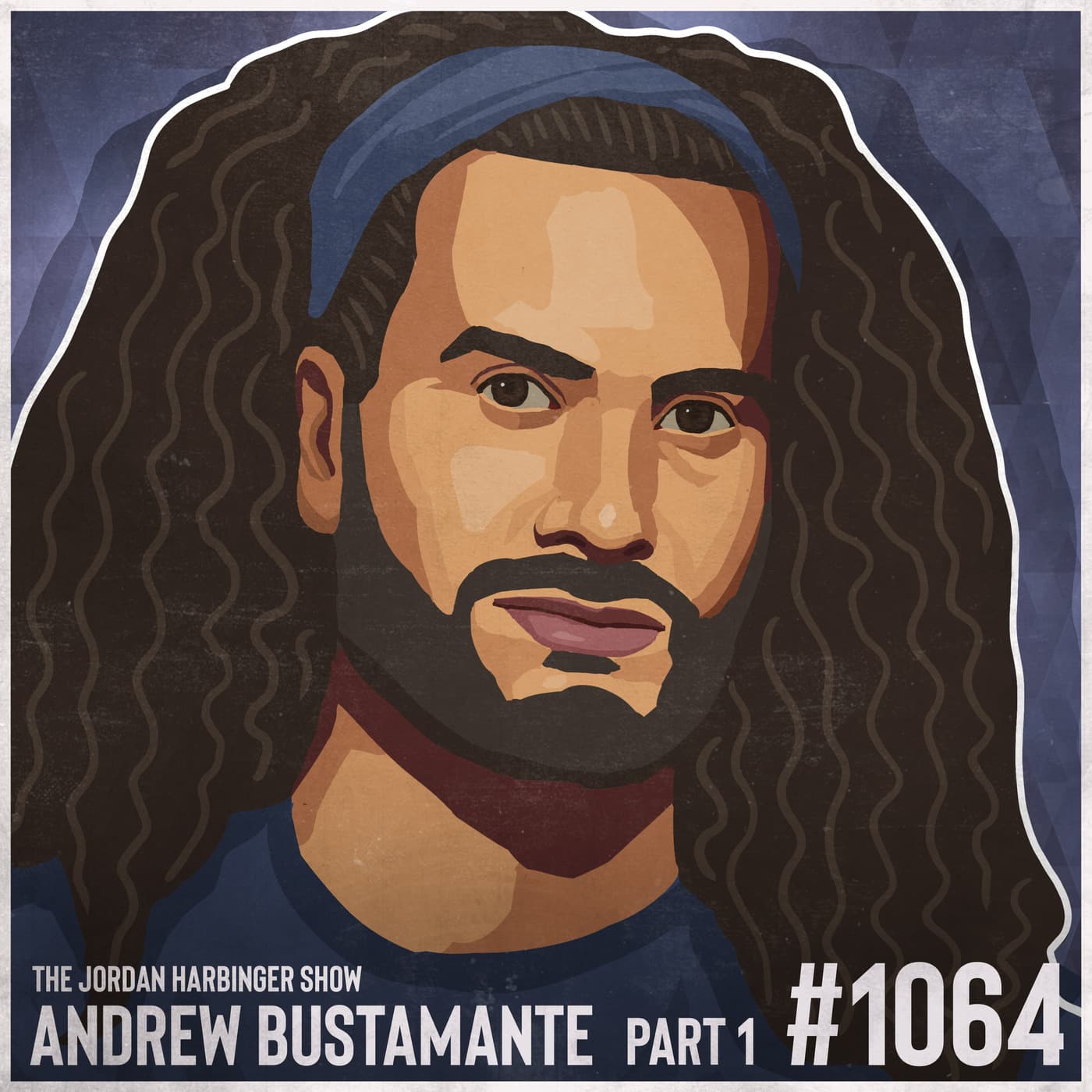
Podcast Notes: The Jordan Harbinger Show - Episode 1064: Andrew Bustamante | The Psychology of Espionage Part One
Episode Overview In this episode, host Jordan Harbinger interviews Andrew Bustamante, a former CIA officer, who provides insights into the role of psychology in espionage. Bustamante discusses various aspects of intelligence gathering, team dynamics, lie detection, and the motivations behind human behavior.
Key Discussion Points
Background of Andrew Bustamante
- Military Service: Bustamante was the youngest U.S. Air Force officer to command 200 nuclear ICBMs and served seven years in the CIA.
- Everyday Spy: He is the founder of the platform "Everyday Spy," which shares insights on espionage and intelligence.
Recruitment and Training at the CIA
- Recruitment Process: Bustamante explains the rigorous recruitment process that involves personality assessments and team dynamics.
- Team Dynamics: The CIA intentionally pairs individuals who may not get along to foster productive conflict and build high-performance teams.
Lie Detection Techniques
- Ineffectiveness of Visual Cues: Bustamante argues that traditional lie detection methods, such as reading micro-expressions, are largely ineffective outside controlled environments.
- Reliable Methods: Establishing a baseline and asking specific questions are more reliable techniques for lie detection.
The Art of Lying
- Preparation: Effective lying requires pre-planning and rehearsal to ensure the rational and emotional parts of the brain align.
- Spontaneous Lies: Bustamante warns that spontaneous lies are riskier and easier to detect.
RICE Framework
- Motivation: Bustamante introduces the RICE framework—Reward, Ideology, Coercion, Ego—as a tool for ethically influencing behavior.
- Reward: Incentives that motivate individuals.
- Ideology: Beliefs and values that drive actions.
- Coercion: Forced compliance through threats.
- Ego: Self-perception and public image influences actions.
Importance of Motivation vs Manipulation
- Manipulation: Although often viewed negatively, manipulation is directing human behavior similar to motivation.
- Similar Goals: Both manipulation and motivation aim to achieve actions that benefit the manipulator or motivator.
Key Takeaways
- Preparation is Crucial for Effective Lying: The more prepared a person is when lying, the less likely they are to get caught.
- Team Dynamics Matter: High-performance teams thrive on productive conflict, which can lead to better outcomes.
- Understanding Human Behavior: Recognizing the motivations behind people's actions can enhance interpersonal effectiveness.
Conclusion This episode sets the stage for a deeper exploration into the psychology of espionage, with a promise for more insights in part two. Bustamante’s experiences provide a unique perspective on the human side of intelligence, shedding light on the intersection of psychology and spycraft.
Additional Resources
- For more information about Andrew Bustamante, visit [Everyday Spy](https://everydayspy.com/).
- For complete show notes and resources, visit [Jordan Harbinger Show Episode 1064](https://jordanharbinger.com/1064).
Related Topics to Explore
- Psychology of persuasion and influence.
- The ethics of manipulation in personal and professional contexts.
- Advanced techniques in interrogation and behavioral analysis.
Sponsor Information This episode is sponsored in part by [LinkedIn](https://linkedin.com), highlighting its effectiveness in finding quality job candidates.
Written by AI. May contain mistakes. Listen to the episode to check what was said.
Transcript
Automatic transcript. May contain errors.0:28This episode is sponsored in part by LinkedIn. These are folks who want to be seen, want opportunities, and are open to making a move. That's why small businesses who use LinkedIn, say, 72 % of the time, they're getting better quality candidates. Plus, you can let your network in on the search. Slap the hashtag hiring frame on your profile pic, and suddenly your whole professional circle knows that you're looking. Double the qualified candidates. Zero extra effort. Post your job for free at linkedin.com slash harbinger. That's linkedin.com slash harbinger to post your job for free. Terms and conditions apply.
0:59We're spending more than ever. I hate my job. The price of everything has gone up. AI is threatening my job. It's crisis after crisis. Nothing is working out. I can't find a job. We're one disaster. Take control of change. I need a change. Disruption is the force of change. Stop the chaos. Stop the madness. Take control. Read James Patterson's Disrupt Everything and Win. Coming up next on The Jordan Harbinger Show. Normal honesty makes you sweat. It changes your heart rate. It makes you uncomfortable. Like real genuine honesty makes them have to work. Actual dishonesty comes much easier than honesty.
1:48Welcome to the show. I'm Jordan Harbinger. On The Jordan Harbinger Show, we decode the stories, secrets, and skills of the world's most fascinating people. and turn their wisdom into practical advice that you can use to impact your own life and those around you. Our mission is to help you become a better informed, more critical thinker through long form conversations with a variety of amazing folks, from spies to CEOs, athletes, authors, thinkers and performers, even the occasional cold case homicide investigator, hacker, astronaut or Russian chess grandmaster. And if you're new to the show or you want to tell your friends about the show, I suggest our episode starter packs.
2:21These are collections of our favorite episodes on persuasion and negotiation, psychology and geopolitics, disinformation, China, North Korea, crime and cults, and more. That'll help new listeners get a taste of everything that we do here on this show. Just visit jordanharbinger.com slash start or search for us in your Spotify app to get started. Today on the show, man, we went for a long time. My friend Andrew Bustamante stopped by. I've known him for a minute. You've seen him all over YouTube, probably. He was in the CIA Directorate of Operations, so in the field for seven years, was seven years in the military before that.
2:53This is, again, a huge two-part episode. We almost had four parts. He's got to come back and finish his whole thing. We covered a lot from CIA recruiting and training to geopolitics, lie detection, sexpionage, how the CIA operates abroad, the Middle East, Ukraine, China, and more. So much to cover. Really great conversation. Really enjoyed it. I think you will as well. All right, here we go with Andrew Bustamante.
3:20so you were in the cia for seven years approximately correct my wife was like where was he i'm like i don't think you can ask that but i don't know here we are the where are you the where where did you operate question actually is a question that we can't answer yeah i figured there's actually not many but that is one of the few that we are hard pressed not to right because otherwise you have to admit like we were spying on saudi arabia or wherever you were Like we were spying on, and the answer is everyone except for the five eyes, right? Yes. Yeah. Yeah. Except in big air quotes, the five eyes.
3:53Yeah. Yeah. That makes sense because otherwise, right, you have to admit you were spying on somebody and we spy everywhere except for the five eyes. And although didn't we get, have we gotten in trouble for spying on the five eyes or has that just been sort of a non-public stuff? I actually don't know if there's ever been any public flap or public faux pas in the Five Eyes. But what's important to understand is that American military and intelligence doctrine assumes that every country in the world is an enemy. There's just some enemies that have aligned interests that are so strong that we share more with them than with others.
4:30So that's a lot of where the five eyes comes from is the idea that there are these four other countries, New Zealand, the UK, the Australians and Canada. There's these four other countries that together make a team of allied democratic free peoples who will share more than anybody else. But that does not mean we will share all. Man, I do wonder, what do they not know, right? What do they not know? Do you have any idea what's off limits? I mean, I'm sure there's nothing public, but surely they know our nuclear program and things like that, or you think that's over that line? We have a saying inside the agency that there are keys to the kingdom.
5:07And nuclear codes are one of those things that we consider keys to a kingdom. Understanding the health of the president, the health of the world, of the chief executive, those are something that we consider keys to the kingdom. So if I had to make an informed guess, I would guess that no, we do not share secrets about our nuclear operational platforms. We do not share secrets about the health of our chief executive as basic, basic things. But I'm guessing there's also probably beyond that too. We're not going to share secrets that we know about how we were cyber hacked or cyber violated. We're not going to share secrets that give us an advantage over a close trading partner of an allied partner.
5:43So, for example, China is a main trading partner for both Australia and the UK. So that means it's going to be in our best interest to really protect what we know about China, even from our UK and Australian peers, because we don't want to run the risk of something we know about China leaking back to China through one of the five-eye peers. Yeah, that's what makes the most sense to me, right? Because let's say that you have a Aldrich Ames situation who is a trader inside the agency, right, who sold nuclear secrets. We don't want the Australian version of that to go, oh, well, I have all these secrets, not only about Australia, but about the United States.
6:20And the leak just becomes even more problematic for everybody involved. Correct. And you're thinking exactly like an intelligence agency thinks. You've got to have backups of backups of backups, layered security is what we call it. Like a lavalier situation. Exactly, right? We have two mics to make sure in case one fails. That's aside from the secret mics I have hidden around my studio kitchen. Yeah, that makes a lot of sense. I always was curious about that. Before that, you're in the military, yeah? Yes, I was in the Air Force. Okay. Flying planes? I learned how to fly, but actually I did. I was kidding, actually.
6:52Oh, yeah. No, the Air Force taught me how to fly, which is pretty cool. What's funny is this, for me at least, and for many people who are pilots, once you learn how to fly, that's when you fall out of love with flying. Really? Because flying is a pain in the ass. Imagine driving in the sky, and that's essentially what flying is. But you don't have LA traffic. That is true. But you do have more damaging effects if you run out of gas. That's true. That's true, right? Like the air conditioner not working is the least of your concerns at that point. Right. Yeah. It's just a pain. I mean, you've got to worry about airspeed.
7:24You got to worry about like, one of the things that it's really hard for me to shake is how much you smell jet fuel. And it's such a pain in the ass. Once you fall out of love with flying, smelling the fuel smell in an airline is a total turnoff. But to answer your question, I learned how to fly, learned I didn't love flying. And then the Air Force cross-trained me into something called space and missiles. And it was in space and missiles that I learned about satellite operations and nuclear missile operations and ultimately ended up being a nuclear missile officer. Okay. So is that when you fell out of love with nuclear missiles?
7:53I mean, I fell out of love with nuclear weapons a long time ago, but it was a pragmatic solution to having to serve my time for the United States. And I mean, I had a fantastic military career, even though I was doing something underground with like a key around my neck that could destroy the world. And it's kind of one of those best of bad situations. I wasn't as bad off as some people. Tell me about that job, Because when you hear about those NORAD guys, were you one of those NORAD guys? It's like looking at the, or is that a different job? It is. I mean, this is what's funny about how people perceive nuclear weapons and how people perceive the federal government really, and all the military and federal government jobs.
8:33Media does it wrong because media has to make it look dramatic. But what the government actually wants of its military and its intelligence services is the exact opposite. They want no drama. So what you see in TV is about as far from the truth as you can get. So the NORAD that you see in TV, this giant underground base in Cheyenne Mountain, where like there's futuristic displays and everybody sits in one room and everybody's having sex with everybody else and the bosses don't get along. None of that's the way it actually works. You're like underground in some gas tank sized. That's exactly right.
9:06Bullshit thing where no cell phone service and like just a book and a crappy light that turns off every 20 minutes. And you're no shit. Your food is basically the same quality of food that you had in high school or middle school, like tater tots and like shrink wrapped egg McMuffins. Like that's, that is literally what life looks like. And you're down there with just one other person. And who I'm sure you get along with no matter what. And they make sure of that. And then you're spread out like two to three driving hours from each other. So you're like super remote, super alone in the most remote, austere places in the United States, babysitting nuclear missiles.
9:42It's super boring, super low drama. Especially with the idea that we're hopefully never going to use those nuclear missiles. Although I've heard, and this is, I guess, a pro for that particular job, if there's a nuclear war, those get launched first because they can't move around. It's interesting. We are a redundancy. And you don't realize that the human beings in the missile silos are a redundancy of a redundancy. We are not critical personnel, even though we are called critical personnel. But yeah, you're exactly right. I mean, If true nuclear war were to break out, true, true nuclear war, which is the nuclear war that most people are afraid of, everything would be launched all at once from all nuclear bases to all programmed targets.
10:23This is something most people don't understand. Every nuclear missile is pointed at a target. The target can change every few hours or it can change every few days. But they're not all pointed at the same target. They're pointed at different targets because the assumption is that if there is an all-out nuclear war, everybody's going to have a blow up everybody else. So we might have, let's say there's 300 missiles pointed at 70 different targets. Once the dials turn, everything goes. Everywhere else in the world, the assumption is when they turn the dials, everything goes. So it really is like the 1980s doomsday situation.
10:56We talked about this on the show with Annie Jacobson, and she said as much, essentially, like the ones that are in the ground, like the ones you were controlling, they're use it or lose it, right? So they launch just as soon as a launch is detected against us, because those are probably going to get destroyed by whatever is coming in in a few minutes, whether it's detected or not. So those get launched. I guess maybe the submarine ones are later in the game, because they can survive pretty much anything. And then you have air launched as well. So those are, how are those launched then? From airplanes?
11:24Correct. Yeah, okay. So you have this, what's called the nuclear triad. And the nuclear triad is air-based nuclear weapons, sea-based nuclear weapons, and then ground-based nuclear weapons. Okay. The underground nuclear warheads, the ICBMs, Intercontinental Ballistic Missiles, those are your ground-based of the nuclear triad. But then you have B-52 bombers and other stealth bombers and large-scale bombers that are waiting at all times on alert. so that if a launch is detected, they can quickly be scrambled, loaded up with nuclear warheads that are alive, a pin gets pulled, and now they're weaponized, and then they take off.
11:57And their whole job is just to loiter, which means kind of fly circles in the sky, until all the fallout is done, and we see what targets were destroyed and what targets weren't destroyed, and then they can be directed at those targets. That makes sense. I was wondering, if everybody's launching at everybody else, and you're like, oh, well, this one's going to Pyongyang. Well, Pyongyang has been gone for 45 minutes. Why would we launch anything else at that? Hit Novosibirsk instead or whatever. I don't know. That's exactly what happens. I mean, hopefully none of this happens. Like, it's nightmare.
12:25I mean, everybody, you want to die early if there's nuclear holocaust. That's what I learned from Anna Jacobson. I mean, that's the exact conclusion that I reached when I was in that field. I mean, in that career field. Just for the men and women who are sitting underground right now, put yourself in their shoes and think about a career in their discipline. They're going to live underground for about two to four years. on assignment. And then they're going to rotate to another assignment for two to four years. And then they're going to come right back to a missile assignment again, where they go underground again.
12:55They rotate out again and they rotate back again. And that is their career for 20 years of military service. Brutal. And they make a whole career out of it, right? When they're away from their family, they're not doing God's work. They're just waiting for the hopeful never end of the planet Earth, right? What do you do to kill time down there? Do you bring a book and read? There's a lot of correspondence, education. There's a lot of reading. There's a lot of learning how to make friends with people you don't get along with. Yeah, man. There's actually a lot of sleeping, but it's not in one long stint because you can't sleep in one long stint.
13:30Because every 15 to 30 minutes, there's an emergency action message that comes through, an EAM. An alarm that blares. So that's the drill. So what ends up happening is you, as either the junior or the senior missile command officer, you'll try to rest being interrupted every four or so hours. This is literal torture. And then you'll work together, and then the other person will rest for about four hours, and then you'll work together. And then that's kind of how the shift goes for 24 to 72 hours. But you're always being interrupted. So that's why you never get quality sleep, so you try to get as much low-quality sleep as you can.
14:04So are these drills to make sure you're not just, like, screwing around? There's two reasons. There's two reasons. One, the drills are there because they need to desensitize you to potentially launching nuclear weapons. So when the order comes in to launch a nuclear weapon... I don't want you going, oh my God, should I do this? I've never had to think about this before. They want you to be like, Jesus Christ, turn the thing. And then just you slam the thing down and go back and you lay in your cot. And then you hear a rumbling sound as the world is destroyed around you. Correct. Because it's all, I mean, essentially it's all ones and zeros.
14:35So you don't actually know if this EAM is an EAM that's really going to launch missiles, or if this EAM is just a drill, because you're doing it every 15 or 20 minutes. So it's like, boop, boop, boop, beep, beep, beep, turn, and you're going back to sleep. You know, boop, boop, boop, beep, beep, beep, turn and go back to sleep. One of those times, you're exactly right. It's going to be boop, boop, boop, beep, beep, beep, turn, rumble, rumble, rumble. Oh shit, I just launched. Right, I just launched a real weapon. So there's a system there that says this is a drill, and there's a system there that says this is not a drill and you just have no idea.
15:06Correct. The system's behind the actual, the software of the system. So that's reason number one. Reason number one is so that the crews can't become conscientious objectors. Reason number two is because we assume that our adversaries are tapped into our EAM system. So the Russians, the Chinese, the North Koreans, the Iranians are listening to every emergency action message. And what they see are ones and zeros. Beep, beep, beep, boop, boop, boop. Well, we also have to send a message every 20 minutes. So they don't know what the hell they're seeing either. Right. So there's some guy whose job it is to monitor you guys doing your boring ass job.
15:37And he's going, emergency action message. Yeah. What else is new? And he goes back to playing whatever Chinese version of Candy Crush is on his phone. And he's just like, whatever. And then one day he hears a rumble and there's a bright flash and everything is over. Yep. That is just crazy. And that's your career. I mean, this is why I have such incredible respect for the men and women who do that job, because that is their reality. Just like you and I get to tune into Netflix every now and then, or we get to veg out to a long fantasy book. We get to take a 25-minute poop if we want to. They don't get that option.
16:08Man, you can't even poop underground? You can, but you can't take that long. Okay. Because if the A.M. comes in, you're just running out. Surely that's happened over seven years. I mean, people get food poisoning down there. People show up with the flu down. Some nasty stuff happens underground. Oh, yeah, and the guy comes in and goes, sorry, man, I'm sick, and you go, well, I'm definitely getting that. Yeah, that's, I mean, and so is the next guy that comes in after we're done because you're gonna be touching all of his buttons. Oh man, y 'all need PRL, probably a regulation against spraying that on the nuclear launch computer, but you know, some rules are meant to be broken.
16:43So let's talk about what a spy actually is because that's one of those terms that spies probably never use. And also people don't know the difference between handlers, analysts, assets, et cetera. So can we just do like a quick overview? For sure. I mean, there's a huge index, a huge glossary we could get into. Yeah. But I'll keep it simple and I'll let you tell me where you want to go from there. So you are exactly right. Spy is a term that professional intelligence officers don't mute. It doesn't exist. Because what's the definition of a spy? In reality, what we have are agents and officers.
17:15Agents are the people who officers recruit to sell secrets about their own country. So you don't have an American agent. What you have is an agent of some foreign country that's giving the U.S. secrets. That's what an agent is. It's very different than FBI. An FBI agent is in fact an officer of the country. But in CIA, in intelligence terms, an agent is a foreign intelligence source. But then you have intelligence officers. Intelligence officers are the people who are charged by the government of the United States to collect secrets from agents. And the reason that they're called officers is because they come with a certain level of information handling, security handling, information management.
17:57They come with real skills that would qualify them as officer cadre. Okay. And so what was it that you did that you can talk about in the CIA? Yeah, I was an intelligence officer. And then inside the intelligence officer cadre, there are many types of officers. There are analysts, there are technical officers, there are field or case officers, there are staff officers, there are paramilitary officers, linguistic officers. I mean, the list is quite significant. Open source analysts. I mean, our disguise people are officers. Our alias doc people who make our documentation are officers. And there's all these different skill sets within.
18:33So I was known as a staff operations officer, which means an officer who is, there's different categories of blue badge and green badge, whether you're a contractor or hired on behalf of the federal government. But I was a federal government staff operations officer, a CIA employee who was not disclosed to the public, whose job was to manage operations. And those operations were intelligence collection operations. Yeah. Okay. That makes sense. Because I have been tricked a few times. So I was like, all right, is this guy real? So I called my friend Daryl Blocker. I don't know if you know him. Yes.
19:04I used to work for Daryl. Okay. So he was like, I can confirm he definitely worked here. He says he did. I was like, oh, okay, cool, cool. Because there's a lot of people. I'm sure you've come across, oh, like, do you know this person? And you're like, that doesn't sound right. Yeah, there's a few of those. Well, there's dozens. What's fascinating is, you know, especially in social media right now, you will hear lots of people come out and say that this was a, I worked for the agency or I was an agency officer. And they're not necessarily lying because the way that the CIA works, it does a lot of different types of blended operations.
19:39So it will reach out to the military, like it'll reach out to the Navy SEALs. And it will second a Navy SEAL into CIA for an operation. So for the course of these three months, they're still a Navy SEAL. but they're granted CIA status. But then when they're done with their operation, they go right back to the Navy SEALs and their CIA status is withdrawn. Same thing is true about contractors. That's what happened with Edward Snowden. People thought Snowden was a CIA officer. He was not. He was a contractor hired by CIA for a short period of time to carry out a task before he was then sent back to his contract company.
20:14Booz Hamilton. Yeah. Is that right? Yeah. Booz Allen. I think that's right. Booz Allen. Yeah. Or is it Booz Allen Hamilton? We'll figure that out after the show when I get 100 emails about it. Yeah. It was something like that. Yeah, that makes sense. There's a lot, there's this trend, I'm sure you've seen, where somebody who was an analyst, respectable job, will say, yeah, I'm a CIA officer. And people go, oh my gosh. And then they do the rounds of media, or they write a book or something like that. But you put two whiskeys in them, and they're like, yeah, I was in charge of looking at a lot of documents at a desk, and I never really left the desk, and I know a lot about Egypt.
20:47And you're just like, oh, have you ever been there? No. yeah okay well that's not what i thought this was you know so there's a whole lot of that my friends who are all do guys like where you were they were all like don't join they don't do it i don't know do you share that opinion a lot of people would just really a lot of people told me not to do it because i was pretty close i mean i went to a career fair and they were like recruiting for probably like not do stuff and i was talking with a recruiter and she found out that i'd lived in all these different countries and spoke these languages.
21:18And she's like, hey, she gave me a pin. And she goes, give me the pin back. And I was like, dang, what did I do? She's like, we don't want guys like you to have the pin. We want guys like you to come in and do further interviews. And I was like, oh, she's like, yeah. And so I got the idea that they were like, you can't give pins out if you're going to go undercover in Dubai or whatever. So I got the idea. But then a couple of my friends were former DO because I was in law school. So a lot of people careers before that. And they were like, do not join. But I'm curious what your opinion. Well, what year was it too?
21:49I'm curious. These guys were in the DO pre slash like through 9-11. So they must've been joined in the nineties because my law school career ended in 2006. So unless their career was only like a year or too long, which I doubt they were there through September 11th and everything. And I remember, one guy was like, I can never go to Egypt and I never even saw the fricking pyramids. And I was there for a long time because he got PNG'd. So persona non grata is basically banned from a country. So he's banned from a country. I don't know if they found out he was there illegally. I guess that's probably why.
22:23Well, that's what's funny about PNG status is it is a punitive measure against the federal government, more than a person. So he could have not even been discovered. He could have been totally an upstanding citizen in Egypt, but Egypt wanted to send a message to the United States. So it would PNG 10 people on a list and he could have been one of those people. I see. Okay. So maybe they didn't know anything about it. I think there's a couple of things that are important here. So one, you were getting, you were being considered potentially for recruitment at a critical time, 2006 to 2007. I was recruited in 2007.
Read the full transcript
22:50That means the post 9-11 or the pre 9-11 cadre were still in charge. But the reason 9-11 happened, frankly, I mean, I'm sorry to say this about your friends, was because the pre 9-11 people didn't keep us safe on 9-11. Sure. The CIA pre 9-11 was focused on Cold War stuff. It was staffed with, for the most part, Caucasian Ivy League educated people. That's what this dude was. He told me, he's like, the agency is so broken, you can't get anything done. You can't even do your own job. I mean, that's why he told me not to join, not because it was boring or something. And that led to the September 11th attacks.
23:24That led to us failing to prevent the September 11th attacks. Well, then September 11th happened. Two years after September 11th, the 9-11 Commission came out. That was when the federal government, especially the Congress and the House all came together, the House and the Senate, came together and said, CIA, you're broken. FBI, you're broken. You guys caused this whole thing. So now we, as the federal legislature, are going to come in and force you to change. That was 2003. That turned into a ton of money coming into the federal government, all focused on counterterrorism operations, which had been overlooked prior to 2003.
23:59And then this massive surge of new hiring. And the new hiring was not Ivy League Caucasian people anymore. It was people of diversity, people who had world travel, people who had foreign languages, people of a certain age group. Yeah, I was like 25. I was 27. Yeah. Right. That's what they were looking for was mixed ethnic people with strong educational histories, but not necessarily from predictable schools. Yeah. A huge variance from what the pre 9-11 days look like. Yeah, that's interesting. When I was in the 90s, I remember asking a guy his former intel officer, had to join. And he was like, join a church and or the Freemasons.
24:37And he's like, what ethnicity are you? Because this is not an in-person conversation. And I was like, a white dude from Michigan. He's like, okay. He told me this very totally antiquated way that they recruit, which was go to an Ivy League school. That was one of the things. Join a church and or the Freemasons and rise up in the ranks of whatever you can because they look for, I don't know, just like really waspy people probably. And then - Because they were looking for people loyal to the body, not loyal to the organization. I see. Right? Loyal to the body means loyal to the other CIA officers.
25:08Because pre-9-11, it was kind of the Wild West. There was not a lot of oversight. There was a big black budget that officers could just do whatever they wanted to do. A term was coined that is unfortunately still present at CIA now, where you were looking for people who will play nicely in the sandbox. Okay. So you're basically looking for other kids that you want to let into your sandbox, so they'll all play nicely with each other. But if you're the kind of kid that comes in and is like, well, why are we playing in a sandbox? Or if you throw sand in somebody else's face or if you take someone else's truck, they don't want you in their sandbox.
25:38Yeah. That was all pre-9-11. There are still cultural vestiges of that that have carried through because the senior officers there right now were the junior officers before 9-11. Sure. Okay. So that cultural carryover is still there. But in about 10 more years, they'll be gone. Right. It'll be interesting. Yeah, I'd never been to CIA headquarters or anything, but I'm guessing in the 90s, it was a bunch, like you said, a bunch of white dudes. And now it's like men, women, different colors, different hairstyles. I assume, did you have that hair at the CIA? No. I tried. I tried having long hair, and it turned into a big deal for the trainers there.
26:14Because the people training us were vestiges of the pre-Cold War. You've never been to CIA headquarters. Do you want to go? Yeah. I will take you. Yeah, that would be awesome. That would be really cool. They'll only let us on the first floor, but it's the coolest floor, to be honest. Okay, yeah. The one with the stars and the flags and everything. And all the busts and all the art and all the museums. Sweet. Yeah. No, the other floors I can only imagine look like it's like an embassy, right? You're like, whoa, this place is amazing. And then the rest of it's an office. And you're just like, well, shit.
26:39So true. It's all cubicles and cream colored walls. Yeah. I ended up, I was working at the embassy in Panama in 2002, but it took forever to get my security clearance because of September 11th. And I remember I had a meeting with one of the security guys and he was like, let me expedite this for you. I know you want to start your career. And I said, here's my stuff. He's like, I don't know why it's taking so long. I mean, September 11th, we're really busy, but like, how hard can it be to clear a gap? And he looked and it was like, lived in Germany, but the former East Germany. And then it was like Israel.
27:08And it is, how long did you spend in Egypt? And he's like, this is going to take years. So I ended up working in a part of the embassy that didn't require any security clearance and I couldn't go on the other floors, but my friends could. And I was like, just tell me what's on the other floors. And he's like, it looks like the second floor, except in the corner, there's a box where you can light shit on fire. And I was like, that's it? That's all? You have like an incinerator? And they're like, that's all. And there's no USB ports to put in your music or whatever. And I'm like, that sucks. Because I was just making travel arrangements for like narco officers in Panama in the military, and basically sending guys to Vegas on the US taxpayers dime.
27:47Sorry, folks. And that was it. And they were like, yeah, I'm looking at a bunch of crap. I actually ended up with one of the better jobs with like minimal responsibility, actual stuff that I was doing. And those guys were just doing intern work, but in a secured area, which is awful. It's the equivalent of being in an underground tank for three days at a time. Not quite. Well, I mean, I think that's the thing. That's again, we were talking about how media gets it all wrong. What you just described, that's clandestine operations. What you see on James Bond and Jason Bourne and what you see in Alias and what you see in most of that, that's not how it works.
28:19It works like it's a plane building with a secure floor. There's a big heavy bolt on the front door. And once you go past that door, there's no iPods, there's no cell phones, there's no music, there's no this, there's no freedom. There's just secure messaging systems. And guess what? Secure messaging systems don't carry GIFs and can't handle PDFs. So it's all tippity-tap. No emojis. Yeah. No. I mean, back then, cell phones, if you even had one, were like, it had snake on it, you know. But yeah, I could bring my phone. Nobody cared. Those guys had to leave theirs in a box. I've heard you talk a bit about your upbringing on other shows and how you started keeping secrets kind of early-ish.
28:58And I wonder, well, one, what happened? And also, did that make compartmentalization in your life easy when you got to CIA? Yeah. And it's, you know, I love, I love these conversations because like with most people, what's my childhood, I tend to think of as normal for everybody's childhood. Yeah, same, of course. Like we all think that if whatever our childhood, it must've been the average for everybody else. And it's surprising me when it's not. So I didn't trust my parents growing up. And it was because I, my father died before I was really born. I think technically he died when I was a few months old, but he was out of my life before I was ever born.
29:30So I always just kind of summarize and say He died before I was born. My mom remarried a Caucasian guy who became my stepdad when I was five. And apparently we had a good relationship until I was five. But once I hit like 12 or 13, and once I had half sisters, which were his biological children with my mother, our relationship kind of got shaky. That's too bad. Well, I mean, I think, again, that's the plight of a step-parent. As an adult and a dad now, I kind of sympathize with my stepdad for what he must have had to go through. Really? But regardless, I'm seven years old and I'm learning I can't trust my dad, that there's favorites.
30:02He clearly shows favoritism towards my sisters. He clearly trusts what they say more than what I say. So I'm learning I can't trust him. And then my biological mother, who's trying to make a marriage work, again, 44 years old looking back, it makes sense. But seven years old, eight years old, nine years old, it didn't make sense. All I picked up was, mom doesn't believe me, she believes him. He doesn't believe me, he believes my sisters who are just making shit up because they're four years old. Right. So I can't trust either of them. So once that started to take hold, I learned through the School of Hard Knocks how to lie more effectively, how to lie to survive.
30:37I also started learning that there's no reason to be honest first. There's a reason to be cagey and kind of distant and aloof first. And then over time, decide if somebody has earned your trust or not earned your trust. So I started understanding that secrets were valuable and I started understanding that I had the ability to control secrets. And then as I got into like my teenage years in public school, you start realizing that other people, they don't keep secrets at all. Other people are very transparent and they're very open. And then I started realizing, like, if you keep good secrets and you're around somebody who can't keep a secret, then you are of like, you have tons of information that you can use for whatever you want to use it for.
31:12Whether you want to use it to get laid or whether you want to use it to get a head on a test or whether you want to use it to get a teacher in your pocket, like whatever you want to do. So you saw the advantage of being able to keep your mouth shut kind of early on and not trusting people. But, man, that is a rough way to grow up. And I'm wondering, surely you're taking steps to make sure you don't wire your own kids the same way. Correct. Yeah. And that's, again, something else that I think all parents do. We all, well, I'll be honest. I don't think all parents are aware of how their childhood impacts them as adults.
31:44So then oftentimes what happens is parents will replicate the same way they were parented with their own children. My wife and I were benefited because my wife grew up in a similar household to mine where she also learned early she couldn't trust what her parents said because what they did was different than what they said. Interesting. The big difference between she and I is that she didn't trust her parents and what they said, but she did trust that they loved her. Whereas for me, I didn't trust what they said and I didn't actually trust that they loved me. I kind of still wonder if my mom could have changed her decision in 1980, would she have changed her decision in 1980?
32:19Have you asked her that? My mom doesn't tell the truth. Oh, right. So what's the point? So I have asked her. I have made the suggestion that maybe she would have chosen not to have me. She's always like, no, baby, I would have had you. I would have had you. But at the same time, there are pictures of her taking me to abortion rallies when I'm three, four and five years old. Oh, that's interesting. So I don't know what, like, I'm glad that she was there, you know, sponsoring women's power and women's rights. But it's got to be a little fucked up to be like, here's my three-year-old. And I think you should be able to take your baby's life if you want to.
32:47That's interesting. That's an interesting perspective. It's her choice. But it is really interesting to me when she tries to tell me that, of course, she would have had me at 19 years old with no husband and all that other stuff. Like, that's tough. That is tough. It seems like what she's saying is, no, I really love you and I'm so glad you're in my life. But if you were able to go back in time and say, you can turn this pregnancy off at the light switch, she would probably go, oh my God, I'm a kid. What am I doing? Right. Like it's a hard call. And that's whenever the topic of abortion comes up, like for me, I'm very sensitive to it, not like in an emotional way, but this is why, whatever your politics are, I believe women should have a choice because my mom had a choice at whatever level she had a choice and she chose to give me a chance.
33:31And I was not an easy child. Like I was a sickly child when I was born. I had some like health issues because I was able to, I was able to recover because my mom had me and there was a hospital that took care of me and there was, you know, modern day medicine and I was in the United States, but it's tough, man. It's a sticky situation. I spy some great deals on the fine products and services that support this show. We'll be right back. If you're wondering how I managed to book all these great authors, thinkers, and creators every week, it is because of my network, the circle of people I know, like, and trust.
34:00I've actually taught this six minute networking course that I'm offering you here. It's free. It is something I have taught to the, well, I think to the CIA. I've definitely taught it to MI6, other intelligence agencies around the world, and law enforcement agencies, foreign and domestic. This stuff might seem really simple. You might think you're already good at it. I love the people who say, all right, you know, this stuff already. And I'm thinking, you know, I got flown out to teach this to MI6. But of course, you know, all about it. 23-year-old who works in a cubicle somewhere. Of course, you know, these skills already.
34:30It's just, you know, sometimes we don't know what we don't know. This stuff is simple, but it's powerful. It takes a few minutes a day. That's all it really takes. And many of the guests on our show subscribe and contribute to the course. So come join us. You'll be in smart company where you belong. Again, the course is free at sixminutenetworking.com. Now, back to Andrew Bustamante. It's interesting you grew up not trusting your parents. Because I can't, many people listening just can't relate to that at all. Really, you trusted your parents? Yeah. Trusted my parents. Even my dad. It's funny because my dad and I, we have a good relationship.
35:03I want everybody to know. I just talked to them. But, you know, he's like a really terrible communicator. It's comical. It is. So I trusted him insofar that we all understood what the hell he was even talking about at any point in time. Or like, yeah, my parents were, you could rely on them as well. Being able to trust somebody and rely on them are two totally different things, I guess, as well. But yeah, I trusted my parents. Yeah. And our relationship is really good as a result. It's awesome, man. That's a beautiful thing. And that's what I'm hoping will happen with my kids. I'm sure it will if you're actively cultivating it.
35:32How old are your kids now? I have an 11-year-old son and I have a six-year-old daughter. You would have screwed this up already, I'm pretty sure. Right? Come on. I mean, mine are younger, so who knows? But you still have time to screw it up if you try. That's true. But I think if you're focused on this and you haven't already messed it up, you're probably doing okay. My poor children, I mean, I have to give them credit. And one day, I'm hoping there'll be adults listening to this interview, right? They're raised by two spies. Their mom and their dad are two professionally trained liars. We're not only trained to tell lies, but we're trained to identify when we're being lied to.
36:04Yeah, yeah. Sucks for them. Well, what's wild is like it sucks for them because it's tough for them to come up with a fabrication. Right. But they're also essentially modeling us. So they're going to be like really fucking good. That's true. You got to be careful they don't misuse that. You know, with great power comes great responsibility and all that. So I'm very fortunate because we have like our son does not even like to try to lie because he's been caught so many times. But our daughter is fearless. And she really is hard to read sometimes. Sometimes you're like, oh, I think you're lying, but I don't know.
36:32Yeah, go hook yourself up to the machine. I'll be in in a few minutes. Sit on the pad. Yeah, sit on the pad. No, I know you have a thumbtack in your shoe. Take the shoe off. That doesn't work anyway, from what I understand. No, I mean, it's a baseline thing, but I'm with you. I did an episode a long time ago on polygraph, and I had to remove it. Because the guy was an expert circa 1975. And a guy from the State Department was like, yeah, the beginning of my career, we didn't even have that anymore. Like, that guy was an expert on the polygraph when they invented it in 1965 or whatever. But now it's like, he's like, I'd love it if somebody puts a thumbtack in their shoe.
37:10We see it immediately on the graph. And then we know that they're trying to beat the test. And then we know that they immediately fail. So he's like, those are the quick, that's an early lunch for me. So meanwhile, it's like this other guy wrote a little book on it. I love, I mean, I'm just, I'm sorry to, I don't want to dwell forever on that, but I think that's so interesting, right? There's so much interest in how to beat a polygraph. And what's fascinating to me is like the polygraph is the exact right time to just lay it all out there. Like if you want something so bad that it requires a polygraph to get there, you want to just go in and comply.
37:41because if you comply, it's hard for the polygrapher to determine whether you're being honest or not because normal honesty makes you sweat. It changes your heart rate. It makes you uncomfortable. Like real genuine honesty makes them have to work. Actual dishonesty comes much easier than honesty. So polygrapers don't have to work as hard. That's interesting. So if somebody's like, Like, have you ever looked at joining an organization that's hostile to the United States? You're like, so in high school. Yes, exactly. This is awkward. Yes. But I was just curious. And they're like, crap, I was hoping you would lie about that because then I can see the thing go like that.
38:21And you're like, wow, you're just like, this is the dumbest. What's the dumbest thing you've ever done? You're like, oh, really? All right, here we go. So a big deal. So I had to take the polygraph. There's the way that they execute the polygraph, or at least the way they did when I was being recruited. It was multi-days. So day one, you would come in, but they would make you reserve a second day just in case you needed to come back for a second day. To me, I was like, oh, if I'm honest on day one, I won't have to come back on day two because they'll see that I'm being honest. Well, then I learned long after I was recruited, long after I was a successful officer, oh, the second day is really there for the people who are honest.
38:52The second day is not there for the people who are dishonest because dishonest people get identified quickly and boom, they're out the door. Huh, okay. But honest people are the ones that have all the variation from baseline because that shit is uncomfortable. For me, the thing that got me hooked, like the thing that was my second day clause, was they asked me if I'd ever taken controlled substances. Now, I've never taken a drug. I've never taken a narcotic. I've never smoked marijuana. I can't wait until I get the chance to do it. But I married a woman. I married a woman who did drugs in high school and college.
39:24And she was like, now that we're married, I'm not letting you do that until we're like 75 years old. I would say you're not missing a whole lot. And that's what a lot of people tell me these days. but I don't know what I'm missing. So I'm kind of jealous. My point is when I was in the military and I was sitting underground at the missile silos, it was considered under UCMJ, a controlled substance, even if it was over the counter, if it had a sleep aid or if it had a painkiller. Oh man. Because they don't want somebody on a sleep aid underground. That makes sense. Can't wake you up for the drill.
39:54Correct. So they drilled that into us in the military. Well, then when I go to do my polygraph for CIA. They're like, have you ever taken a controlled substance? And I'm just like what you just said. I want to be honest. I'm like, well, technically I used to take Tylenol PM with me on alert underground, even though I knew I shouldn't have it because I didn't want to be the guy that called in sick and sent somebody else underground. So just in case I needed it, I would take it with me and I would share it with the person that I was underground with. And once or twice I took it myself, but I don't know if that counts.
40:24Well, the polygrapher was like you just ruined my day right now i don't know if that's controlled or not and then i turned into a whole second day of deeper digging into like have you taken cocaine have you taken heroin have you done this have you done that how many times have you seen marijuana and i remember being like like sweating in my seat being like well there was this one time at band camp yeah right where my friend who plays the baritone was smoking a joint and he was offering it to me and i thought maybe i should take it like it was the most humiliating like i feel like a i feel like a bad guy it was oregano in the first place wasn't even weed he was 13 how do you think he got weed so it's just so funny that's that's what a real polygraph looks like sticking a thumbtack in your shoe is not going to change right no you're just sitting there talking about how much of a loser you were in high school no the biggest your biggest bender was a tylenol pm bender in 1998 God.
41:19That qualifies you for CIA. That's really funny. That's really funny. So you said when you were getting recruited, how did you get recruited? You went to the Air Force. Did they pluck you from the high performing ranks of those that dwell underground? Or was it like a career shift after you got out? It was a career shift for sure. So I was a mediocre officer. Like in my opinion, I was a mediocre Air Force officer. Well, that's why they put you in a bin underground. For real, right? They're not sending their best. And when the time came to leave the Air Force, I started looking for a job. And one of the things that I wanted to do was get as far away from nuclear weapons as possible.
41:54Plus, at 27 years old, I was really into having sex. Oh, that's surprising. I was like, how do I find a career field that's also easy to find women? So I looked at going to the Peace Corps. Oh, you know, I really wanted to join. I regret not having done that. So just knowing that you went to law school and knowing that you were courted by CIA, I'm not surprised at all to hear. Is there like a Venn diagram overlap? A huge overlap. Should I spy and ruin other people's lives or should I be in the Peace Corps and help other people's lives? I mean, think about it. It's a coin flip. Yeah. If you're going to live, if you're willing to put yourself in a car, living in a tent, helping people with microfinance, think about all the things that you're willing to give up.
42:35Yeah, yeah. I would have loved to have lived in Central African Republic, Congo, like just some crazy place. Yep. Well, guess what CIA is looking for? Yeah, right. The same. The same person. People who are willing to give it all up, only instead of helping people with microfinance, you're going to steal secrets about how the Russians are helping people with microfinance. You know what I mean? That's the same. It's the same person. It's just ideologically, there's some nuance there between the two of them. If they're pragmatic enough to be like, oh, you're going to put me in a tuxedo and possibly also send me to like Albania and I'm going to have like a chance to steal.
43:10I'm open to the idea of stealing where a true Peace Corps person would never steal. Ideologically, they would never even take you seriously if you were like, how would you feel about stealing secrets? They're going to be like, that's wrong. Yeah, no, I definitely fall on the other side of this Venn diagram. As long as I won't get in trouble for it. I will steal secrets all day long. Yeah, man. It's worth it. Because America. Because America. Yes. Because of freedom. Freedom said. Freedom for me means I can take freedom from them. Freedom says I'm supposed to blackmail you. I'm sorry. That's just how it is.
43:41That's what makes a good Sierra officer. So I was leaving the Air Force trying to go the exact opposite direction. I tell people all the time, all I wanted was to have tent sex with hippie chicks while helping children that were starving. And instead you got air conditioned sex with God knows. Yeah. Can't talk about it. Yeah, exactly. But at least she had air conditioning. But it's important to highlight, like because of the overlap in the Venn diagram, CIA has a strict policy where it does not recruit or accept applicants who have ever served in the Peace Corps. And the Peace Corps has the same strict rules about never accepting applicants who have served with CIA.
44:17So CIA definitely disqualifies you from the Peace Corps for life. However, CIA will recruit after the Peace Corps if enough time is elapsed under certain circumstances. Oh, that's interesting. I didn't know that. I looked it up before you came over. That's not just something that's in the back of my brain. I looked that up because I thought, oh, I wonder if you can still join the Peace Corps. The answer is no. But if you join the Peace Corps first, then maybe 10 years later, you join the CIA and you end up back there. But you, I would imagine they would, that's a sticky one, man. It's a sticky one.
44:47Because if they put you in as an aid worker, they endanger every aid worker, which is, I think, why they typically don't do that. But it's not a complete, I mean, the CIA will just do whatever the hell they need to do. When it comes down to it. I mean, I love that you have that rationale. When it comes down to it, the CIA is an agency of last resort. If it can be done by anybody else, somebody else should do it. But only when nobody else can do it, the CIA get called in. I would imagine the Peace Corps folks are not fans. No. Because your existence endangers their lives every single day, basically.
45:22Really, outside of CIA, nobody's a fan of CIA. Which is why... That's true. I mean, even the American people don't trust CIA. So for sure, DIA doesn't like us. FBI doesn't like us. State Department doesn't like us. Health and Human Services don't like us. IRS doesn't like us. Nobody likes us. Because anytime we do anything, just like you said, we are causing people to question the purpose of anyone else's role. The diplomats in the embassy in Panama were split on this. Us younger guys were like, whoa, that's the CIA, one of the CIA guys. And then we're like, he's really normal and kind of boring.
45:54But then there were other older guys were like, yeah, not impressed. Because when they go to a meeting and everyone's like, you're a spy. I don't trust you. You're like, God, I've been here for 20 years. I am not a spy. I am the commercial attaché. Can we please just get this done? No, you're a spy. And it's just like, thanks a lot, CIA, for existing. Yeah, there was a little bit of that. And it's a problem. It's a problem, and it's a problem that existed long before there was media, and it's a problem that will exist long into the future. Because the concept here is that once you give someone a reason not to trust you, it's impossible to earn that trust back.
46:34That's the real lesson here. So with CIA, it's a constant thorn reminding people around the world not to trust the United States. So they always come to a meeting with anybody and they're like, that could be a spy. Even when I lived in, especially when I lived in Serbia, everybody, even my closest friends were like, we would be super, super drunk and they'd go, okay, you got to, dude, tell me you're a spy, right? No. Come on, man. Why would you come live here of all places? It doesn't make any sense. They would just get so frustrated. It was very good natured, but they were like, come on, just tell me.
47:09I won't tell anyone. I gotta know. We all, and I'm like, does our whole circle assume that I'm a spy? And they're like, yeah, of course. And I'm like, then why am I not getting more women? Because that's supposed to be a thing. They're like, yeah, hey, look, we're also equally mystified by your lack of success. Maybe you should tell us that you're a spy and it'll work. Yeah, there was a bit of that. So what is the CIA training like for the Directorate of Operations? I mean, I know you can't say much. Let's just, other people that I can't mention here have told me about the existence of the farm, which is maybe the place that you go to learn some of this stuff, but what's the environment like?
47:43I do have to be a little bit careful here. Obviously, yeah. But there's a lot that we can still talk about. So I love that you called it the Director of Operations because its name changes. Essentially, what is currently the Director of Operations, when I was recruited, was called the National Clandestine Service, the NCS. I see. But that name changes depending on who needs a promotion at any given time because it's still a giant bureaucracy. That's weird because I remember the document they gave me said D.O. right? It was D.O. until I think it was like 2004, 2005. Oh, I see. So it was called that.
48:12Under Porter Goss, maybe. It changed to NCS. And then it changed back to D.O. again under Brennan in 2000, maybe 16-ish. That was after my flirtations with the agency. But you see, I mean, it goes back and forth. Either way, National Clandestine Service, Director of Operations, is the operational arm of clandestine operations around the world. Clandestine operations are what we technically call, what the media calls, undercover operations or alias operations or whatever else. For us, they're all clandestine, secret. When you go through training for that operational cadre, you're taken to a location that's physically segregated from the rest of society.
48:50And they do that to control your entire experience during the training agenda. They essentially simulate what it's like to deploy to a foreign country. and then in that controlled environment they teach you everything from the basics basics of social engineering like how to introduce yourself and remember someone's name how to read body language how to identify a baseline or create human assessment how to build a relationship that we call is a fictionalized or a fabricated relationship meaning you know it's artificial but they feel like it's real so all of those like social skills are taught in addition to field triage offensive and defensive and tactical driving, weapons handling, surveillance detection, you name it.
49:30Do you know Jona Mendez? Yeah, Jona Mendez. Yeah. She told me about learning how to ram through barricades with a car. And she mentioned this. And tell me if we have to edit this out, because I'm not 100 % sure if this is something that she... I mean, I guess she was allowed to tell me. But basically, they drop you into a fake town where everybody speaks another language, and they tell them that they will pay you if you can catch our guys. and she told me how they have to like sneak through this whole thing and people are out there looking because they get paid if they find you. So, I mean, she's dated, obviously.
50:02What she went through was a different time period than what I went through. Sure, this is Cold War. Like, this is probably in the 60s or 70s. Right, right, right. But it's not that dissimilar now. The main thing that we do now is since 9-11, they find as many ways. The Congress has made it very important for CIA and FBI and DIA and et cetera, et cetera, to all work together. So even in our training at the farm and even in our initial training months, they force us to work together. So instead of being dropped into a foreign country or dropped into a place where strangers are trying to catch you, they'll drop us into a place where FBI trainees are trying to catch us.
50:35I see. So now you've got trained FBI surveillance teams who are trying to surveil trained, but it's trainee against trainee. Israel does this too. Yeah. The Shin Bet does it with Mossad. Yeah. There's a really good book, I think called The Way of Deception or something like that. And they talk about the police, not the regular police, but some sort of like domestic police in Israel. And then Shin Bet and then Mossad are all out trying to find each other. And there's like this little sort of whiteboard tally going on. And it's like, it seems good-ish natured, but it's serious business because if they get caught anywhere around Israel, they get shot for it, or if they're lucky, right?
51:11Oh, I mean, not with each other. No, no. If they do it in Lebanon and they screw up, they get hung by a lamppost or something. So they're always trying to sharpen each other's axes. And that's exactly what, I mean, everybody refers back to biblical principles, right? Iron sharpening iron. That's exactly what it is at a trainee level. Well, the other thing it does is it makes it so that I meet my surveillance teams at the end of training and they're FBI trainees. Well, then 10 years later, when I'm in charge of an office and they're in charge of an office and we are on a joint task force, it's like, oh, hey, I remember you.
51:40You and I work together in XYZ City where you caught me or where I escaped you or whatever else it might be. Interesting. Yeah, I know one of the things I do to confirm people who say they work for an agency is show them a picture because y 'all don't know each other's names. So I'll ask a friend, I'll say, do you know this guy? And she'll go, once again, I have no idea. And I'm like, this guy. And I have to like pull up a picture on the phone. And she's like, ah, let me send this to somebody else because he probably was deployed in this region. And then it's like, like Daryl Blocker. Oh, yeah, yeah, I know this guy didn't have the same name back then, but now, oh, his name is Andrew.
52:14He doesn't look like an Andrew. Like, there's a few of those that happened over time, which I think is kind of funny. Like, oh, her name is Aaron? Man, I really, I never would have, I had a lot of guesses, but it was never Aaron. Yeah, we all had different names. We have names upon names upon names. And it's difficult. It's I mean, my actual official record of performance at the farm isn't in my name. So like even official government documentation about my performance is not in my name. So when they're looking for people who they're going to recruit, you ever seen Men in Black? Remember when Will Smith goes in and it's all like the Air Force graduate and the Army graduate?
52:51And then Tommy Lee Jones is like, trust me, I've seen him in action. And Will Smith is like writing it uncomfortable and he just takes the table and he goes and moves it closer. And everyone's staring at him because he's like this. The whole point of the scene is to show that he's this outside of the box thinker. Like there are rules in this room, but I'm not going to follow them. I'm going to talk with people, even though everyone's serious and silent, and move the table and change the environment to fit me. Is that remotely what they're looking for? Are they kind of like, no thanks, we don't need independent thinkers?
53:20You know, they do want independent thinkers, only in certain job categories, though. I see. So remember how I told you there's a whole list of job categories? Well, what ends up happening is during your first round of interviews, it's fairly routine. People who are up for the, and there's also a huge pool of people who go to first interviews. I mean, if you really ask your peer network, to be honest, you'd be surprised. most people are probably one or two people away from someone who did go to a first round interview with an intelligence service. It's not super rare. But the whole purpose of that first round interview is really just to see whether or not you'd be a good fit for Intel, and then what category you might fit into.
53:56I see. So during that first round interview, you've got analysts and tech officers and linguists who are all sitting in the same room, and they're all going through the same 25 questions. But then if they fit the behavior model of a CIA officer, then the person interviewing them will basically say, this person might be a good analyst, this person might be a good case officer, this person might be a good linguist. Then the second round of interviews, and this is dated 2007-ish, right? The second round of interviews is when you actually go through the personality battery, which is two full days of personality testing and assessment.
54:27What that does is it identifies, would you actually be good at a case officer or a sue or a targeting officer or a tech officer? Would you actually personality-wise be good at that job? What about an ENTJ asking for a friend? So ENTJs actually make fantastic mission planners and really effective tech officers because the J means that you follow a system. But without a system, Js get lost a lot of the time. Oh, interesting. Where ENTPs, they are very comfortable without a system. So they end up making very good case officers, right? But the J's, I mean, even if you think about, just look at the metrics.
55:06ENTJs, carte blanche, by a long margin, are the most successful people in America because they follow a system. Once they find a system that works, they just repeat that system over and over again, where ENTPs do not. ENTPs find a working system and they still try something different. Yeah. Yeah. Interesting. I'm my son talking about this with my wife in the car. He does this really interesting thing that shows me how his brain works because he's four. He doesn't have a lot of like, he hasn't been beaten down by public education yet. So he'll play a game on the iPad. Right. And it's a game where you build things out of Legos or something like that.
55:42And he's, he's doing this. And I go, why are you dragging all the pieces in different parts of the screen instead of building? He goes, I just want to see what's going to happen. and then whenever we play with things he's like what happens if i do this instead i'm like well that would that would break the thing and he goes well how then what happens and then how do you fix and i'm just like oh like he sees the edges of whatever it is and then he's like i want to pop that bubble and see if there's room around the it's very interesting to watch because my daughter is very much like this is how you do this game and she's two so it's a little early but she's like this is how you play the game you build the thing that's it you don't try to test the outsides of the boundaries.
56:17She's like, you push the right answer. You don't push all the wrong answers to see if the colors change, which is what my son does. And then we go, you know this answer. Why did you push that? I just want to see what would happen. She's like, I don't know the answer when I hit it. So it's interesting to see how different their brains are. And that's more in line with answering your original question, right? So do they put analysts and case officers and tech officers all in the same room and then make their behavior in the room part of the test? No. They'll test to see what you fit into. And then they'll put a bunch of tech officers, a bunch of case officers, a bunch of analysts.
56:48They'll all go into the same room. And then inside that room, everybody just behaves the same way. In the tech officer's room, you're going to have people who studiously do whatever and who show up in like t-shirts and shorts because they're kind of socially awkward for the most part because they're so heavily focused on engineering. I feel seen. But in inside the case officer room, those were all the people who were like super jocks and they're all wearing shirts unbuttoned to the third button and they're like sitting back and whatever else and they're pulling tables and but they're all doing it so it makes them all feel like they're all winning because they're all with each other and they feel like oh i must be elevated into a group of peers they don't realize that what actually matters is not their behavior in the room but the results of the task they're being given that's sort of status jockeying stuff i let those guys play that game i maybe i'm too old for it but i'm like you know what you guys can dick measure over there i can't handle that maybe i wouldn't have fit in after all i've heard that the parking at the CIA headquarters is horrible.
57:43Atrocious. It's so funny because you get these people with insane stories, but since they can't talk about 99 % of it, they just bitch about the parking. They just bitch about the parking lot. Yeah. And I mean, there's a lot of stupid, stupid stuff that we, that America doesn't realize about CIA that shows it is a government institution, just like the DMV, just like the IRS, right? Just like the VA. It's just as broken and flawed. And the parking situation is one of them. I'm sure you've heard a million times in the past, but just to summarize it, parking lot's gigantic. It wraps around both the old and the new headquarters building.
58:14And depending on what time you show up or the level of authority that you carry, you end up parking very far away. And then for people like me, I learned to come in, I hacked the system because when I started dating my wife, who was also a CIA officer, it only takes two people before you're considered a carpool. And there's very specific carpool parking that's right by the front entrance. So now when I started dating my wife, we would carpool in together and park right by the front entrance and save ourselves 15 minutes of walking. Yeah. But when you walk, when you drive in alone and you get there after 8 a.m., you're basically in like the nosebleed seats.
58:48That's funny. Yeah. I can just see you guys dating. You're like, you know what? I'm not crazy about you, but this parking is unbeatable. Sweet. Yes. We should just get married and make a thing out of it. In the basement of the new headquarters building, there's a hot dog machine. I don't know. Have you heard that before? No. I love this because because people don't realize it. My wife adores the story because it's so gross. It is a hot dog machine, which means - What is that? It's a vending machine. That is gross. So you walk in - It's already gross. Yes. You put in like your$1.50 or whatever, and no shit, a cold wiener comes out, goes onto like a little rack that microwaves it basically on a roller, and then out of nowhere comes like a singularly wrapped bun, and the two things are like dropped into each other, and then spit out the bottom on like a little paper tray.
59:31You know, it's probably not worse than any other hot dog you eat, honestly. Except that it's a CIA hot dog machine. And the fact that it's in the basement just makes it that much funnier because now you realize who must be using that machine. It's all the poor bastards who have to work in the basement after the cafeteria area closes, which closes at like five o 'clock in the afternoon. So all those poor assholes that are working at like one o 'clock in the morning and hungry, they only have a hot dog machine. So our national defense, like people analyzing Al Qaeda and ISIS communications are like, guess I'm going to go eat another hot dog until I get a new job.
1:00:01Yep. And then that also means that the operation center must just smell like hot dog fart. Yeah, all the time. Hot, constant hot dog farts, nonstop. And now for a quick word from our sponsors, Better Than Being Poisoned by Vladimir Putin. We'll be right back. If you like this episode of the show, I invite you to do what other smart and considerate listeners do, which is take a moment and support our amazing sponsors who make this show possible. All the deals, discount codes, and ways to support the show are searchable and clickable over at jordanharbinger.com slash deals. If you can't remember the name of a sponsor, you can't find the code, You can always email me, Jordan at Jordan Harbinger dot com.
1:00:34But the AI chatbot on the website almost always, I should say, works as well. Jordan Harbinger dot com slash AI. Let me know how that works out for you. We're always trying to improve that thing. Thank you for supporting those who support the show. Now back to Andrew Bustamante. The lie detection stuff. I've heard, you know, Joe Navarro is he's a former FBI. He's former FBI. He wrote a lot of books on deception. But he told me he was on this show. I can't remember the episode number, but he told me he's like, all these people that think they can detect lies, especially the YouTube crowd, it's just BS.
1:01:07I agree. You agree? I completely agree. I completely agree because the whole life, so micro expressions and the mastery of micro expression, it's real. But the problem is that it takes a very specific environment for that stuff to work. And I am so glad you're bringing this up, right? And I'm so glad to know that Joe is out there telling the truth about this because it is such bullshit. it. When you hear certain experts talk about microexpressions and reading someone's face, they are assuming it's happening in an interrogation setting. And in an interrogation setting, you control the environment and the poor bastard sitting across from you cannot leave.
1:01:42They're a captive audience. They have to have this conversation. And you control what they eat, what they drink, the temperature in the room, the smell. You control everything long before... I won't ask how they control the smell. long before you ever start having an actual interrogation where there's two people usually in the interrogation, swift swapping questions so that both can watch the micro expressions. Because it's very hard to identify someone's blink rate or someone's eyebrow movements. It's hard. It's just hard to do if you're having an engaged conversation. Field operations and the kind of shit that 90%, 99 % of people do, you're not in a captive audience.
1:02:19That person can leave. You don't control the temperature of the room. You don't control what they ate in the morning or when they showed up for them. Like, you don't control it. So they could be looking up to the upper left-hand corner just because they saw a bird flying by. Right. They could be... Oh, the eye thing is always such BS. Every time I'm on a YouTube video, there's a comment like, he looked up and to the right. He must be lying. And I'm like, dude, there's a freaking camera up there or there's an audience with an upper row. I'm looking at the person who sneezed. Like, you're not reading my body language.
1:02:50Exactly. Numb skull. Furrowing an eyebrow could be because they were confused or because they felt a breeze on their head or any number of things that you can't control. So the whole idea of mastering this lie detection through visual identification of behaviors only applies if you're in a controlled environment. The second place where it applies is if you have a standing relationship, what's known as a baseline, with the person. This is why your mom knows. well except for you and your kids because they're spy progeny but like most people you kind of know when your kid's lying because you have a 30 20 10 whatever year long baseline yep on them so you know that there's that being kind of weird they're not looking at me it's why husbands know when their wives are lying even when their wives say vice versa yeah i'm fine well that's also not that coded that's not that they're not trying to hide shit by the way pro tip she's not fine um yeah but Jen will be like, if she's like, hey, do you like that?
1:03:48I'm like, yeah. She's like, no, you don't because you're not talking. And when you don't talk while you're eating, it means you don't like the food. Stuff I don't even notice about myself. She's like, no, I know. I know you don't like that. I can tell. Yeah. I mean, if I could turn all that shit off with like a light switch, it would be awesome because all it's doing is it's dumbing Americans down. It's distracting them from actual skills. Like knowing when you're being lied to is such a useful skill and you can actually master that skill, but you will not master that skill if you're worried about micro expressions in the face or blink rates.
1:04:19It's just not going to happen. What does it take to master that type of skill? Like learning how to essentially interrogate somebody? Well, it's not interrogation because they're not a captive audience. What you have to do is you have to learn how to assess verbal and nonverbal cues. And that's something that we teach. My company teaches that. I teach that to people all the time. It's just a matter of understanding how people work, how the brain works, and how people respond to different types of questions. And then you just kind of set up a system of asking certain types of questions and seeing what the response is and how that response varies from the baseline that was set the last time you asked that kind of question.
1:04:52Ah, it's interesting. I would love to get into more of that in a future episode, for sure. There's one, Dr. Daniel Lieberman. Do you know who he is? I've heard that name too. Man, he's so good at this. And one of the tricks that I remember from his episode, I should re-listen to my own episode. One of the tricks I remember was he said, when you think somebody's lying to you, fill in the reason that they did the thing so if it's like your teenager was late why were you late coming home was it because of the water main break right instead of why were you late coming home and they're like oh um you know reason you said was it because of the water main break and then what a liar will do is hesitate because they're like shit should i agree with that or should i disagree with that and that hesitation shows you they're lying but if they go if they're not lying you go were you late were you late because of the water main break i don't know there was just a shitload to traffic.
1:05:38That's all. Is there a water main break? Is that why there was traffic? They're probably not lying. But the hesitation, which you really cannot turn off manually unless you are extremely skilled, that's the killer. And that's the indicator. I mean, a similar example to that is asking people what we call emotional questions. Ask someone how they feel. Because you know what happens is when you ask someone how they feel, they recall the feeling, right? Like, how did you feel when your son was born? You know exactly how you felt. It's on your face that you can remember exactly how you're trying really hard not to smile within this part of the conversation i was like i'm gonna throw him a curveball and not do anything like dang this guy's a cold bastard doesn't even care when his son was but what ends up happening is when somebody when you ask an emotional question the first response is always the true response like i see you can see it in their face that they're remembering the real feeling but then the hesitation is when they assess should i tell them the real feeling or should i make a different feeling up and then you can see that transition too because you can see from the relaxed face to the thoughtful face to then they make a decision and then they actually say something.
1:06:38You know, it's interesting that it's also hesitation based. I mean, maybe you just, maybe this just happens to be because it's also hesitation, the example I gave you. That's what made me realize. Oh, I see. That's what made me come up with the example. That hesitation is a true tell. It's really hard to break it, right? So it's a true tell. Yeah, that does make sense. That's an interesting point. Even if you are, because I've tried to, I'm like, okay, I'm going to get tricky with this Lieberman thing, this little technique. It is very difficult. You have to rehearse, rehearse, rehearse. that lie and think of all these different things they might ask you, or you have to decide, I'm going to say this no matter what, but if it doesn't make sense, then it's weird as hell.
1:07:16And that's what you're looking for. And you're looking for that too, if you're smart. Yeah. That's fascinating. I watched that video where you were analyzing Mission Impossible. Oh my gosh. There's one part where they show, I can't remember if this is also Mission Impossible, but they show him working on a team and it's like, you'll be working with this woman. She's a cat burglar, a thief. And I expected you to go, yeah, we don't pair them up with random folks, but apparently that's not correct. Apparently that is something that happens. Yeah. Well, they'll pair you up with random people who are vetted by them because they want the team to work together.
1:07:51You got to understand that when CIA builds a team, they're not looking for teamwork. What they're looking for is a mix of skill sets and personality fit because they already know if you're going to work or not based on your personality and your behaviors. and they also know that a high-performance team has conflict baked in. So when they build a team, like, it doesn't matter what you think you want, because they know what will biologically work. So that's why they can pair you up with somebody who's like a complete stranger to you, but vetted by them, because they know under pressure, the two of you are going to jive, or they know that under pressure, the two of you are going to have conflict, but then there's this third person or fourth person on the team that's going to resolve that conflict, and that makes you a high performance team.
1:08:34That's interesting. The big mistake that most people make is they build teams of people who will get along. If you build a team of people who will get along, that's how all the bad ideas get elevated to the top. Oof. Because it's like, I like you and I don't want to disagree with you. So I'm going to say yes to your bad idea. Even though I have a better idea, I'll keep quiet about it. I'm going to butcher this analogy here, but do you ever see that movie about Queen? I forget what it's called. I think it's called Bohemian Rhapsody or something. I haven't seen that one yet. It's pretty good. I'm not a huge music guy or whatever, But there's a part where Remy Malek, he goes off and he does his own thing because they're not getting along.
1:09:07Right. And then he goes back to them. I don't know, however many years later. And he goes, the problem is not that what those guys with the new band didn't do what I want them to do. The problem is they just did whatever I wanted them to do. Whereas the old band, they were like, no, we're going to do this riff. And he would get so mad because he's like, it's my idea. But the music was crap ish, I guess. people are going to email me about how that was the best era. I don't care. You're ruining my metaphor. You're ruining my analogy. The idea was when the bassist or the guitarist or the drummer was like, I want to do this.
1:09:39This is the right thing to do in this situation. That was like where the gold came out. That was the magic. It wasn't just about what he wanted, but when he got whatever he wanted, it just wasn't that good. It's very similar to what you're saying about the team. Absolutely. And the difference is that CIA is pulling from decades of industry secrets in the intelligence world and an unlimited budget that they use to hire the most modern day current psychology and education that's out there. They're pulling from both to make sure that their team always has an edge over their adversaries. That's the way it works.
1:10:13So when CIA builds a team and they build a team for conflict and then you're put on the team, you already know to expect I'm not going to get along with everybody on the team, but I don't have to. My job is not to get along. My job is to make sure that in this AOR or in this technical expertise or in this planning piece, I stand my ground. And then everybody has to work together. And then there's usually somebody who is kind of what we call the lion of the group. There's some lion who ultimately has to make the final decision. It would be so fun to be one of the psychologists or psychiatrists who's like, these two people, they are going to really not get along.
1:10:50And this is going to be a fun read, folks. This is going to be a fun watch, whatever, however they're monitoring you. Because it's like, Andrew and her nails meet chalkboard, right? And they're just like waiting for you. You're going in there like, I got this. And it's just like, nope, this person is going to push every single one of your buttons and then put more buttons in that you didn't know were there and push those even harder. it's like oh that would just be so fun i would you're not wrong except that we are all under a time constraint so right if we actually had space and time to enjoy watching the show we probably would but instead we're all thrown in there and we're like we've got 72 hours to make this thing happen no one's gonna sleep we're all gonna argue but at the end of 72 hours the op will either be successful and we'll all fist bump each other and be happy to meet each other or the op will be a failure and we're all gonna be like we all failed yeah it wasn't it wasn't susan's fault It was all of us.
1:11:40Well, there's a lab certainly where they test these things. That's the fun part, right? Because the stakes are lower. You're just trying to see if you can piss people off enough that they do their best work. Teach me how to be a better liar. I am a freaking terrible liar. I can't, there's probably not a situation. Actually, that's a lie too. There's probably a situation in which I should become a better one. I'm curious. And a lot of people reading or listening and watch, let me retake that. No one's reading this. People watching and listening, they're for sure. everybody wants to know how to be a better liar.
1:12:08Like, oh, it takes a lot of work to detect lies. Okay. How do I just lie better? Yeah. Yeah. Certainly that's easier. Yeah, it is. And that's a great point. Learning how to lie is much easier than learning how to detect liars. And honestly, learning how to lie is really just a matter of aligning your rational and your emotional brain, your left and right hemispheres. The thing that most people do wrong with lying is they don't pre-plan the lie. And then if they do pre-plan the lie, they don't rehearse the lie. So what I mean by that is if you don't know the lie that you're telling, you just lie spontaneously, it's hard to remember that.
1:12:44It's hard to keep the facts straight when you have to recreate or recall the lie that you made in the moment, right? So trained liars do not spontaneously lie. Because when you spontaneously lie, you don't know what your body's doing, you don't know what your face is doing, you don't know what you're going to say next, if it's going to be congruent with the lie that you just made, you don't know that in seven days, you're going to remember the lie that you just had. So it's very dangerous and amateur to lie spontaneously. Instead, you plan your lie in advance. Well, the next mistake people make is they don't practice the lie.
1:13:17So if you plan a lie, like if I'm in my head in the shower and I'm like, I'm going to tell my wife that I didn't spend$500 on furniture, right? I'm going to lie to her. I'm not going to admit that I spent that money. I'm not going to do it. I'm just not going to do it. But you've never practiced saying the words, I didn't buy new furniture. You never practiced saying the words, oh, I did buy that couch, but it only costs 150 bucks. And because you haven't practiced saying it, there's a body-brain disconnect. So then when you actually go to say it, you stumble over your own words. Well, actually the thing that, well, yes, it was$500.
1:13:52Right? And that's, so you have to premeditate your lie. You have to rehearse and actually build the muscle memory to state the lie. Those are the two fastest ways to become a very good liar. That makes sense. You see it with kids, man. They don't think about it ahead of time. Hopefully they don't think about it too much ahead of time. They don't rehearse the lie. That stuff in the moment will get you every time. And parents lie to their kids all the time, right? We lie to our kids all the time. We tell them that gum is going to rot their teeth or that TV screens are going to rot their eyes or whatever.
1:14:22And you know what we do? We say the exact same thing over and over again. I bet you can recall five or seven things that your parents said to you, rote memory. They said this all the time. They said, don't do this or this would happen. Don't do this or this would happen. That's them lying. Don't make funny faces. It'll stay that way. That was one of the OG kind of cliches. But it becomes muscle memory is built. So even though they know it's a lie, and even though you know it's a lie, they can't stop the brain-body connection from the muscle memory of just saying it over and over again. That's perfect when you're trying to actually lie.
1:14:53When you're trying to actually say, I got that couch at a discount, it costs 150 bucks. Like you want to say that exact same phrase every single time anybody ever asks you about that couch. Bold of you to assume she's never going to check the credit card statement or whatever. But that's what you do. Right. Man, manipulation and motivation are two sides of the same coin. I've heard you say this in other interviews. What do you mean by that? So when it comes to CIA and when it comes to human operations, human intelligence operations, people love to throw around the word manipulate. And manipulation has such a negative connotation all over the world.
1:15:27People are like, don't manipulate me. It's wrong to manipulate him. Don't manipulate her. Don't manipulate your kids. So manipulation has this strong negative connotation. But in reality, all manipulation is, is directing human behavior. Well, when you look and you consider motivation, what is motivation? Motivation is just directing human behavior. So they're both going for the same outcome. But motivation has this fantastic connotation. Like, oh, you're a motivator. You're a motivational speaker. Right. You're not a manipulator speaker. Nobody's hiring that guy. You're not a manipulation speaker.
1:16:04Exactly. But they both do the same thing. It's all about getting people to do something, getting people to take some action. The thing that really makes motivation, and even at CIA, what we're taught is that motivation and manipulation are both useful tools to getting information. You just have to decide whether or not you want to use motivation or manipulation in any given moment because the outcome is the same. The skills to apply it are the same. The only thing that's different is the actual way that you leverage those skills. I see. Manipulation is defined as getting people to take an action that's not in their best interest.
1:16:41That's manipulation. Oh, so you just make it in their best interest to do something. And then it's motivation. When I get you to do something that's good for me and bad for you, I manipulate you. When I get you to do something that's good for you and good for me, I just motivated you. Right. Right. I motivated you because you get something out of it. It seems like the carrot is probably more powerful than the stick. In most cases, we start with motivation. In fact, that is one of the core tenets of intelligence doctrine is start with motivation, right try to get people to do what's in their best interest first because once you connect doing this task is in your best interest every time you ask them to do it again it's that much easier right right right but when you yeah if you got to put a gun to someone's head you got to put a gun to someone's head every single time and the gun has to get bigger and the bullets and like it you can't just use the same nine millimeter every time because they're like you've done this to me before right yeah it's like oh i've got a two gunmen now i've got you in a private room with the sack over your head.
1:17:38Now it just gets worse and worse. That makes sense. There's an acronym for people who, I can't remember exactly what it is, but when you're talking about counter intelligence, the motivators are like money, ideology, coercion, and ego. Okay. Yeah. I knew it was mice, rice. So why do I think it's rice? So rice is what I teach. I see. Rice is the most modern version of it. Okay. Mice is the pre nine 11 cold war version of it. Okay. It basically stands for the same thing, right? These are the four core motivations that make any of us do anything, motivation or manipulation. And those four core motivations are reward, ideology, coercion, and ego.
1:18:18Like at any given time, if she offered you a special ice cream dessert, that might be enough to get you to cut the interview off early and go out to ice cream with your wife, right? That's reward. You are trying to do the best possible interview you can. that's why you have backup microphones. That's an example of ideology. Coercion is putting a bullet to someone's head, right? Like you have to stay here or else I'm going to, right, find you whatever it is. That's coercion. Ego, you want to have the public see you a certain way. That's your public persona. That is ego. Not the same as egotistical.
1:18:53Egotistical means you have to be powerful and correct all the time, but you also have an ego. I mean, we just edited a part out of this interview because you accidentally said the word read and you were like, no one's actually going to read this. Right. That's part of your ego where you're like, I'm very particular and I want people to see that I want to deliver a product that is a particular type of product. Leave that in just to screw up. Jace, leave it in. Leave in me telling you to leave it in. So then it's back on me. That's how this works. You're about to hear a preview of the Jordan Harbinger show with Joe Navarro.
1:19:27There is no pill that cures malignant narcissism. There just isn't. You can't take a pill for it. Character flaws are fixed and rigid and they remain with us and it would take heroic efforts on the part of the person to overcome these things. Only they can fix themselves. The point is things will not get better, so document everything. The person with the best set of records of events wins. I have to be honest and say, look, as you said, Jordan, it's not going to get better. Things will get worse. And unfortunately, it usually does. And the person that pays the price are those that are closest to the malignant narcissist.
1:20:14Once I teach you to look for these behaviors, you will never forget them. You will be more aware and you will be able to notice them. And when we begin to accumulate these behaviors and we aggregate them and they go into that checklist, you know, there's 130 something items on the predator checklist. And you say, wow, this person tops 50. This individual will put you at risk. They will victimize you. It doesn't matter where you're at. There is no safe place. There is no safe church. All it takes is one predator to undo all of that. For more on dangerous personality types and how to spot them before they can do damage to you or those you love, check out episode 135 with Joe Navarro here on the Jordan Harbinger Show.
1:21:12That's the end of part one, part two coming up in just a few days. All things Andrew Bustamante will be in the show notes at jordanharbinger.com. Advertisers, deals, discount codes, and ways to support this show, all at jordanharbinger.com slash deals. Please consider supporting those who support this show. Also, our newsletter, We Bit Wiser, is fantastic, even if I do say so myself. The idea behind it is to give you something specific, practical, something that'll have an immediate impact on your decisions, your psychology, your relationships, in under two minutes. We don't write long old diatribes.
1:21:42It's something you can apply right away. If you haven't signed up yet, I invite you to come check it out. It is a great companion to this show. JordanHarbinger.com slash news is where you can find it. Don't forget about 6 Minute Networking as well. It's over at 6MinuteNetworking.com. Having a great network is step one to becoming a spy. I'm at Jordan Harbinger on both Twitter and Instagram. You can also connect with me on LinkedIn. This show is created in association with Podcast One. My team is Jen Harbinger, Jace Sanderson, Robert Fogerty, Ian Baird, and Gabriel Mizrahi. Remember, we rise by lifting others.
1:22:12The fee for the show is you share it with friends when you find something useful or interesting. The greatest compliment you can give us is to share the show with those you care about. So if you know somebody who's interested in maybe joining the agency, interested in espionage, definitely share this episode with them, or maybe even just somebody who's interested in geopolitics, definitely share this episode with them. In the meantime, I hope you apply what you hear on the show so you can live what you learn. And we'll see you next time.
1:22:39This episode is sponsored in part by Everything Everywhere Daily. You've heard the phrase, learn something new every day. Sounds nice, but do you actively do it? That's where Everything Everywhere Daily comes in. This podcast makes it effortless. Just 10 minutes a day, you'll walk away with a fascinating fact, a slice of history, a science gem. It's no wonder the show has climbed up to the top as the number one history podcast. It covers history, science, technology, geography, and stories of remarkable people, always in a way that keeps you hooked. Not sure where to jump in? Start with these favorites.
1:23:06The eruption of Krakatoa, nature's fury in one of the deadliest volcanic events ever recorded, or the spice trade, how a handful of spices changed the course of global history. If you want to make learning effortless and fun, check out Everything Everywhere Daily. It's quick, fascinating, and a perfect way to stay curious. Listen now wherever you get your podcasts.
From the publisher
Spycraft utilizes psychology more than gadgets. Ex-CIA officer Andrew Bustamante reveals the human side of intelligence gathering and deception. [Pt. 1/2]
What We Discuss with Andrew Bustamante:- After becoming the youngest US Air Force Officer in history to command 200 nuclear ICBMs from an underground bunker and spending seven years in the CIA, Everyday Spy founder Andrew Bustamante gives us an inside look into the recruitment and training process for CIA officers.
- The CIA uses personality assessments and carefully constructed team dynamics to build high-performance teams, often pairing people who may not naturally get along to create productive conflict.
- Lie detection through visual cues like micro-expressions is largely ineffective outside of controlled interrogation settings. More reliable methods involve establishing baselines and asking specific types of questions.
- Effective lying requires preplanning and rehearsal to align the rational and emotional parts of the brain. Spontaneous lying is much riskier and easier to detect.
- Understanding the RICE framework (Reward, Ideology, Coercion, Ego) can help you better motivate yourself and others in positive ways. This powerful tool for influencing behavior ethically will be explored further in part two later this week.
- And much more — be sure to check out part two of this conversation later this week!
Full show notes and resources can be found here: jordanharbinger.com/1064
If you love listening to this show as much as we love making it, would you please peruse and reply to our Membership Survey here?
And if you're still game to support us, please leave a review here — even one sentence helps! Consider including your Twitter handle so we can thank you personally!
This Episode Is Brought To You By Our Fine Sponsors: jordanharbinger.com/dealsSign up for Six-Minute Networking — our free networking and relationship development mini course — at jordanharbinger.com/course!
Subscribe to our once-a-week Wee Bit Wiser newsletter today and start filling your Wednesdays with wisdom!
Do you even Reddit, bro? Join us at r/JordanHarbinger!
See Privacy Policy at https://art19.com/privacy and California Privacy Notice at https://art19.com/privacy#do-not-sell-my-info.