
In short
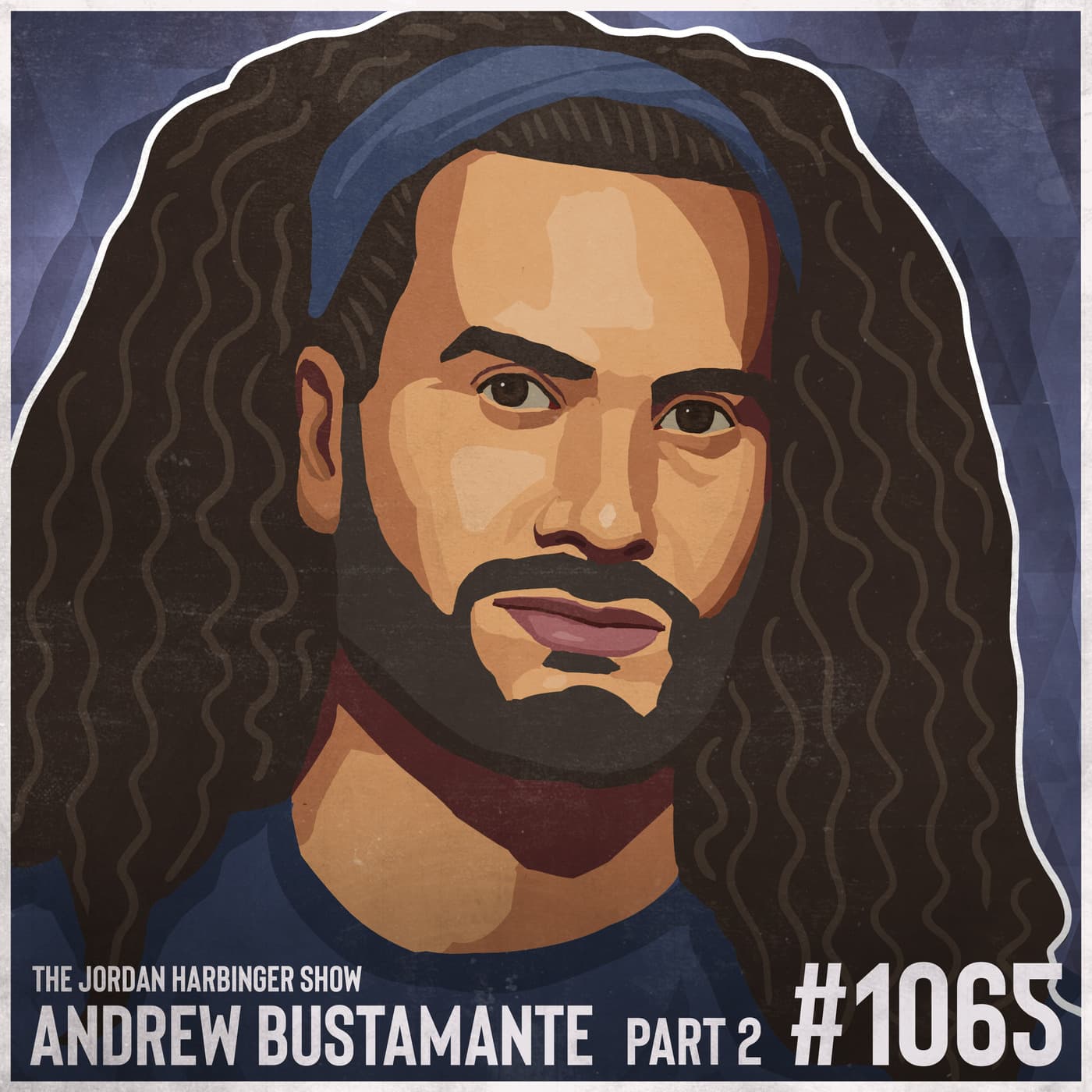
Podcast Episode Summary: The Jordan Harbinger Show - Episode 1065: Andrew Bustamante | The Psychology of Espionage Part Two
Episode Overview In the second part of his conversation with former CIA officer Andrew Bustamante, Jordan Harbinger delves deeper into the psychology of espionage, emphasizing the significance of human interaction over gadgets in intelligence work. The episode explores various concepts related to recruiting assets, the operational styles of different intelligence agencies, and the value of anxiety in high-performance fields.
Key Topics Discussed
The Psychology of Espionage
- Recruitment Process:
- Emphasizes the importance of building relationships and trust when recruiting assets.
- The CIA employs the SADRAT model (Spot, Assess, Develop, Recruit, Handle, Terminate) for developing intelligence sources.
- Drawing parallels between espionage techniques and sales techniques.
Lives of Individuals
- Public, Private, and Secret Lives:
- Public Life: The persona presented to the world.
- Private Life: Known to close friends and family, containing more personal details.
- Secret Life: The hidden aspects, often filled with shame and guilt, that individuals keep from everyone else.
Intelligence Agency Operational Styles
- Comparative Analysis:
- CIA vs. Other Agencies:
- SVR (Russia): More manipulative and relies on traditional espionage tactics.
- Mossad (Israel): Highly proactive with a strong willingness to execute covert operations for national security.
- MSS (China): Growing influence but cautious about public perception, striving for stealth over overt manipulation.
The Role of Anxiety
- Anxiety is depicted as a beneficial trait in espionage and high-stakes environments, allowing individuals to remain alert and ready for unforeseen challenges.
Impacts of International Relations
- The discussion includes the geopolitical landscape, focusing on the implications of intelligence operations on global politics and security.
Espionage Techniques
- Elicitation:
- Techniques such as "macro to micro" observation and asking feeling-based questions to draw out information from targets.
Personal Experiences and Insights
- Andrew Bustamante shares anecdotes from his time at the CIA and reflects on the reality of espionage work, including the ethical dilemmas faced by agents.
Key Takeaways
- Trust and Relationships: Success in espionage relies heavily on the ability to create and maintain trust-based relationships.
- Understanding Lives: Recognizing the different lives individuals lead can provide deeper insights into their motivations and vulnerabilities.
- Strategic Approaches: Different intelligence agencies employ distinct strategies rooted in their cultural and operational contexts.
- Anxiety as a Strength: Rather than viewing anxiety as a weakness, it can be reframed as a powerful asset in both personal and professional contexts.
Conclusion This episode offers an in-depth exploration of the psychological facets of espionage, drawing on Andrew Bustamante's experiences and insights as a former CIA officer. The discussions illuminate the intricate balance of trust, manipulation, and interpersonal dynamics that characterize the world of intelligence work.
For complete details and further resources, listeners are encouraged to visit [jordanharbinger.com/1065](https://jordanharbinger.com/1065).
Written by AI. May contain mistakes. Listen to the episode to check what was said.
Transcript
Automatic transcript. May contain errors.0:00This episode is sponsored in part by LinkedIn. Most platforms are built to distract you. LinkedIn is built to help you get things done. And when you're a small business owner. the one thing you don't have is time to waste. That's why LinkedIn Jobs is a secret weapon. Post your job and LinkedIn doesn't just blast it out to randoms. It uses all that professional data people actually keep up to date on LinkedIn to match you with qualified candidates. You can post it for free or you can promote it to get three times more job applicants to expedite everything. And here's the cool part. Because LinkedIn is where people actually want to be found professionally, the quality is just higher.
0:30You're connecting with people who are serious about their next move. That's why 2.5 million small businesses use LinkedIn to hire. Add the hashtag hiring frame to your profile pic, let your network know that you're looking, and suddenly you've doubled the reach without spending more than 30 seconds. So when the clock's ticking and you need someone great, LinkedIn isn't just social media, it's your best recruiting partner. Post your job for free at linkedin.com slash harbinger. That's linkedin.com slash harbinger to post your job for free. Terms and conditions apply. We're spending more than ever.
1:00I hate my job. The price of everything has gone up. AI is threatening my job. It's crisis after crisis. Nothing is working out. I can't find a dog. We're one disaster. Take control of change. I need a change. Disruption is the force of change. Stop the chaos. Stop the madness. Take control. Read James Patterson's Disrupt Everything and Win. Coming up next on The Jordan Harbinger Show. I used to be one of those people that was like, oh, the American public can handle anything. Like, trust them and just tell them the truth. And then I got to CIA and I was like, do not tell the American public the truth.
1:45Welcome to the show. I'm Jordan Harbinger. On The Jordan Harbinger Show, we decode the stories, secrets, and skills of the world's most fascinating people and turn their wisdom into practical advice that you can use to impact your own life and those around you. Our mission is to help you become a better informed, more critical thinker through long-form conversations with a variety of amazing folks from spies to CEOs athletes, authors, thinkers, performers, even the occasional war correspondent, neuroscientist, Hollywood filmmaker, or extreme athlete. And if you are new to the show or you want to tell your friends about the show, and of course I appreciate it when you do that, I suggest our episode starter packs as a place to begin.
2:19These are collections of our favorite episodes on persuasion and negotiation, psychology and geopolitics, disinformation, China, North Korea, crime and cults, and more. It'll help new listeners get a taste of everything we do here on the show. Just visit jordanharbinger.com slash start or search for us in your Spotify app to get started. Today, part two with Andrew Bustamante. If you haven't heard part one, definitely go back and check that out. We're going to talk more about the CIA and its operations, recruiting, how the organization works, lie detection and more. Of course, a lot of geopolitics in this episode as well.
2:49All right, here we go. Part two with Andrew Bustamante. Robert Hansen, famous trader, FBI. one of the things what he barely got paid this dude threw his life and career away and got tons of people killed for like i can't even remember but it was a freaking pittance it was it was like jack squat it was something you would never you could dude couldn't even buy a house with the money i mean it was that crappy so the idea is he did it for ego but this wasn't a public facing thing he did it for ego from what like his russian handlers telling him how he was a smart boy i don't really understand. He did it because the ego was himself.
3:30He felt like the FBI had rejected his ideas. They had marginalized his career, blah, blah, blah, blah, blah, blah. So he wanted to get back at the FBI. When the Soviets came in, they were like, hey, we know how you can get back at the FBI. You can spy and give us the secrets that help us. And then we know you are one of the best. And you're going to be operating right under their nose. That shows their incompetence. They can't even catch the person. And then as he was promoted to being the head of the CI division, looking for a Russian mole who was him, it just magnified and amplified that ego, right?
4:02That's how it works. And what's really interesting is because he was so effective and understood how to reverse engineer a counterintelligence operation, he knew if they paid him too much, it would look suspicious. And then people would be turned on to that suspicion. So instead, he made sure that he was paid a very small amount, and then he would be able to take the money and get away with it, which just further kind of stroked his ego about how good he was. Yeah, he just died in a supermax, rest in piss. The guy got so many people killed. How do you elicit what will motivate people in the first place?
4:39Like, look, maybe you know, this guy is a simpleton. We can pay him. He's going to look cool. The end. Or if you're like, this guy is immune to money. He doesn't care about that. He just wants to make sure that his particular brand of, I don't know, fundamentalism is validated? Whatever. How do you elicit this kind of thing from the target? So you're using the term elicit, which is a very specific term. For me, the word elicit or elicitation is an actual term. It's a skill. So I'm going to take it down that road because it's a very specific skill. What you're talking about is how are you able to assess a person's motivations by meeting with them?
5:20That's how I would rephrase your question. And then using the skills of elicitation are just one of the ways that you would assess that person. So let's start with something simple, right? So environment is the simplest way. Just by looking around this room and the camera that's on you is probably the best camera to actually show it. I can see that you have the pictures of your children on the back wall. Oh, I thought you were going to say I'm using the best camera. I was like, actually. I can see that your home alarm system has pictures of your children. It's very clear to me that you are motivated, that there's an element of pride and motivation for your children and your family and your status as a father.
5:57Just because in this very modern, beautiful home where nothing is really on most of the walls, there's like 12 paintings by kids right over there. So your environment tells you a lot of what you need to know about the person. So that's before you even ask them a question. And then the next thing you want to do is you want to start eliciting information from them by asking them questions. And you want to try to focus your questions on things that will make them feel. Remember how we said earlier, if you want to tell us someone's lying, you ask feeling questions. You ask feeling-based questions, right?
6:26So you say something like, I say that you have an animal fan in your family. That emotional response right there just validated for me that you do, and you know who it is, and right now in your mind, you're picturing whoever that child is, right? Well, now you're associating me with that child, and you're associating the fact that I noticed enough to care. There's a couple animal fans. The giraffe. Death is my personal favorite. It's all neck. That thing would fall over in real life. But my point is, but that's how you start to elicit. So you start from the environment. We call it macro to micro.
6:58I see the environment as a macro objective. I then pull something from the environment and ask a question that pertains to that specific macro item. And then I get a micro response. I get a smile. I get laughter. I get you volunteering information. I assumed only one child. You just told me that you have a couple. Well, you only have two children. So now you just told me without me asking that you have two children who like animals. That is elicitation. I didn't ask you. You volunteered that. And that was just because of us talking about the environment. Talking for a living and getting people to talk for a living are very, well, I wish most hosts did this, but it's sort of two sides of the same coin.
7:36And people really, they want to tell you things. That's why I was wondering if you really do even need to elicit things from people, or if you can just wind them up and let them go. You can't wind up everybody. That's the thing. You have to assess them to know how to even get them talking. I guarantee you, you've had interviews here where it was like pulling teeth out of them to get them to talk. Oh, for sure. Yeah. That just shows that not everybody will talk. You have to find something that breaks down their barrier to sharing what's in their head. There are plenty of people out there who want to talk, but don't feel comfortable talking.
8:09There's also people out there who live so much in their head. They think they're talking when they're really thinking. Yeah, yeah, yeah. I've met those people are very difficult to deal with. Very much so. You ever dated anybody like that? It's weird, man. That's why I have, like, anybody who dates a true artist, I don't know how they make those relationships work. It's very difficult. I know exactly what you're talking about. And they'll tell you something and they're using a name and you're like, who's Bob? Oh, it's the person who raised me. Your dad? Just say dad. What are you doing? Like, it's just so, I'm like, are you insane?
8:43Yes, there's a whole running world in their head that you can see in their eyes that it's playing, but it's not coming out. And they don't even realize they're not communicating well. You know, as an ENTJ, I cannot deal with that shit. For me, like looking at like an ISIS guy, for example, they will not shut the hell up about their ideology because it's the only thing they have aside from a rusted out AK-47 and a slave and, you know, chained up that they've kidnapped or something in Raqqa, right? So those guys, it seems like there's certain types of people like that that are just really easy to read because their motivation, I mean, maybe it's a little bit more veiled, right?
9:23Like you think it's their ideology, but really they just want power because they were losers back in the UK. That's why they joined ISIS and ran off to Syria. Like it can be a little bit like that, but it seems like a lot of times the label on the jar is more or less accurate. I would disagree, honestly. Yeah. I would say that the label on the jar is the one thing you shouldn't trust. Really? Okay. Because to get to the place where somebody represents a larger cause, like think about your U.S., your typical U.S. soldier, right? If you were to have any private from any military in the United States, if you had a brand new recruit from any of the four services, we'll throw the Coast Guard in.
10:00If you had any of them sit down in this chair and talk to you, they would all pretty much look the same. They would probably all have the first response would be almost the same to all of your questions, right? Right. Hoorah, America. America's the best. Yada, yada. That's not what I mean by label. I just mean the way that you detect it. I guess you're right. That phrasing is garbage. If you were really looking at the label, you would say it's patriotism, but it's really, that's not what I would say. Same thing is true for ISIS. Yeah. You look at the label, you think it's all about ideology? Yeah, I wouldn't think that.
10:28It's not. They've been radicalized and they were radicalized because there was something in their background that where they felt powerless, most likely, but that thing that made them feel powerless could be different. This person's dad was killed by an American soldier. This person's mother was blown up in a bomb by the Israelis. This person's sister may have been raped by, you know, the next door neighbor. Who knows what? Something led to the chain of events that then ultimately radicalized them. But when you first talk to them, all you're going to get is ideology. Yeah. Yeah. No, this makes sense.
10:58I wish I could rephrase this because I've talked with a couple of those guys and it is usually some sort of shame derived crap. Like, I guess I shouldn't feel guilty because they're in ISIS. So I'll talk shit about them. But a lot of it is kind of like in cell adjacent bullshit where it's like, oh, you literally were such a loser in life that you felt your best option was to escape to Syria, to get purpose, to maybe find a wife because the only way you were going to find a woman is at the end of a gun. And then to find some sort of like way to feel it's basically they're like a mass shooter except they traveled abroad to do it that's really what it is it's almost the same thing i'm gonna i'm sure i'm gonna piss people off but good but clicks you have to you have to recognize the humanity of even a terrorist ah yeah like were they a loser were they incel adjacent it's not a stretch to say yes but you also have to understand they were just people they were just angry people and we were all just angry people at some point.
12:01The difference was when you were, there's a literal thing called the radicalization ladder and we're taught the radicalization ladder specifically so that when we meet a radical, we can reverse engineer the ladder. The very first step in a radicalization ladder is identifying people who feel like they have had an injustice. All of us at some point in our life felt like we had an injustice. Mom, dad, teachers, whatever, grandparents, wealth, everybody feels at some point that they had an injustice. What ends up happening, especially in the third world, is that the people who have experienced injustice there, they are surrounded by other people who are suffering from the same injustice.
12:36So for me, when my father died and I didn't have a dad, that felt like an injustice. But I didn't really have anybody else in my media network who could relate to that injustice. And just like I've had friends who were raped when they were young, there's not a lot of people in their circle who had the same injustice. So what ends up happening is you're immediately reminded that your injustice is very personal to you. Yeah, you're ashamed as well. And you might be ashamed of it, but you start to realize that other people don't judge you for it. But when you talk about poor people in Syria, impoverished people in Syria, which again, the UK extremist who's converted to ISIS is rare.
13:12He's an outlier. But the person who comes from Syria who's radicalized ISIS is common. And it's because everyone in their community has the same injustice. Once you identify people who have an injustice, All you have to do is direct their injustice at a cause, and then you have an enemy. Well, this is why Hamas is so successful. I mean, everybody's been oppressed, bombed by the U.S. and Israel, and they all share that. And then there's one organization that is allowed to exist there because they killed the Palestinian Authority guys off. You want revenge? We are waiting with open arms to help you get that opportunity.
13:51You're suffering because of Israel. And then, of course, all those ignorant masses are like, yes, we are suffering because of Israel. That's the second step in the ladder, direct against a common enemy. Well, once you have a common enemy, it's very easy to identify a common cause. Well, we are also against Israel. We are Hamas. Right. And now that radical, that individual who was just lost is like, someone sees my plight. The enemy is Israel. The cause against Israel is Hamas. And now all of a sudden, before they even realize it, they're carrying a Hamas flag and wearing a t-shirt, right? And that's the problem with extremism.
14:26That's how al-Qaeda grew so fast. That's how ISIS grew so fast. Because where it's similar to your incel example is that they feel so outraged and so marginalized that psychologically, they're looking for an explanation. And that psychological explanation comes through the radicalization ladder. And it only takes a few well-trained salespeople to basically create an extremist cause. Yeah, the recruiters are looking for that kind of thing. It's fascinating. There's this documentary that I don't think anybody has seen, but there's a journalist investigating online ISIS recruiters, and she ends up falling in love with the ISIS recruiter.
15:01And the only reason that she didn't run off or end up in deeper, but maybe even run off to Syria and meet this guy, I think she was about to do that, was because he had thought he had hung up a call, and she was recording their calls for her documentary about ISIS recruiting, ironically. And he said something in Arabic. And she was like, that's weird. I wonder what that was. So she was like, I'm going to ask somebody to translate it. The person was like, he said, hey, Abdullah, I got you another one. These girls are so dumb. You're going to owe me so much money after I'm done with all of them.
15:36I'm sending you a wife. She's going to leave soon. And she was like, oh, I'm being played. Super freaking interesting. And so it's easy for us to say, oh, only dumb people fall for this. But when somebody has enough of a baseline on you to figure out where your little holes in your soul are, and they know how to fill them because they've been trained by Iranian intelligence or to do that or whatever, it's a pretty good sell. It's a pretty good pitch. You only need 15 skilled recruiters to create thousands of volunteer recruits. We're right back to the same topic we had earlier, motivation and manipulation.
16:12It's very hard to manipulate people into joining an ideological cause. It's hard to manipulate someone into wearing a bomb vest and killing themselves. It's much easier to motivate them when you connect the fact that their injustice is going to be righted forever and they can have a legacy impact on every Palestinian or every Sunni Islam or Shia Islam person in the future, right? Like, that's how it works. It's as frustrating as it is. And as angry as people get, it is the same way we recruit for the U.S. military. It is the same thing we do here. We fill new recruits' heads with ideology. You know, army of one, Marine strong.
16:52We fill people with this ideology. So then this injustice, this poor child. Is it Army strong? It's the few, the proud, the Marines. I know that much. Thank you. Jeez, man, come on. I know you're in the Air Force. You should have this. but what you're doing is you're just you're reaching into rural america for the most part you're reaching into rural america yeah finding these people who don't know where they're going to go and they feel lost and mom and dad didn't save any money for college manufacturing is gone for the most part again there's a bell curve right and then you're basically telling them they can be part of a larger cause and then that part of the larger cause is you can come fight for your country and fight for freedom at the end of the day what they're saying is if you die in service to america that's a life well spent that's why they always show those funerals, man.
17:34But the salutes and the flag and then the folding of the flag and giving it to the person, it's like they show, I know they show that all the time. In part, it's really impressive. But one of the reasons it's impressive, the whole design is, I think if you sort of, maybe I'm paranoid, but I feel like if you backwards rationalize why they make that impressive, it's because - It's all propaganda. Yeah. And there isn't a veteran out there who won't tell you they fell for it once. And then when they actually saw their buddies die, they were like, what a waste of good life, right? You want to know what's honorable?
18:07Having a long, fulfilling, productive life that serves a family and the American dream. And that's what's a long, productive, successful life. The most honorable thing you can do is live a fulfilling life, serving your family and the people of the country by being productive and being a contributing member of society. That's the most honorable thing. dying in service to your nation is not the most honorable thing. It's just another honorable thing. The challenge is like, and that's part of why you're seeing a recruitment crisis right now, because today's generation who has lived with information at their fingertips, they know there's alternatives.
18:44And they know that no matter how desperate they might feel, there's still alternatives. And once you sign that paperwork, you're locked in for a long time. Plus, you have a whole generation of people like me, veterans of the years past, who now that we have children and we're mentoring teenagers, we're like, you don't have to join the military. When I was a teenager, everybody in my sphere of influence was like, you got to join the military. Really? We're going to end up doing, if we haven't already, some program where it's like, you want to move to the United States? You have to join the military.
19:12You have to. We're in a bad place. Yeah. For recruiting, we are in a bad, bad place. It will not surprise me if in five years, it is every single immigrant who's under the age of, I don't know, whatever, 33, 36, man or woman must at age 18 or something serve for seven years and you get your blue passport after the fact. It's going to be something like that. I mean, we already have to do that for labor. So it's just, it's a natural extension of that. A lot of people say things like, trust your gut, trust your intuition. I don't know what you think, but I hate that because your intuition is made up of a bunch of your feelings that are like based on other things that have happened to you over your life or things, how you feel, like it's just not reality.
19:56Yeah, I completely agree. Trusting your gut does not account for what we call cognitive bias. Like, yes, it's bad enough that you're just trusting your emotions, but there's actual science that shows that the human brain leaps to conclusions. And then after it's leaped to a conclusion enough times, it just wires itself that way. So, I mean, you see this every time you talk to somebody who's like hyper-religious or somebody who's hyper-political, There's no space for any kind of new information because they just leap to a conclusion. That is essentially trusting your gut. I see this with one of the worst examples I've seen recently is a doctor made a video.
20:33I don't do a lot of social media, but I saw that someone sent this to me on Instagram. A doctor made a video about, and I can't remember what it was, but it's not relevant. It was just something like, hey, here's a medical thing that you might not know about your child. And a lot of the top comments were, no way my mama gut says this and I will always do that mama knows best and I'm like you're arguing with a doctor a physician an md and she is saying don't do this this is bad and it's like well my mama knows best why would you know best you gave birth to this person good you have a good baseline in your kid as per our previous conversation that does not indicate whatsoever that you are qualified to give medical advice or even make a really good medical decision.
21:19It's terrifying to see stuff like that. And it happens all the time. And what's worse is because we live in an age that where information is so available, it gets reinforced. Because now in your algorithm, your algorithm looks for how you respond to things, and then it feeds you more of what you already believe. So you end up in this echo chamber that gets smaller and smaller and more hyper niche to you. And then we all end up wondering how that other person ended up so crazy before we think, oh, wait, maybe I'm equally as crazy in my own echo chamber of what social media and media and entertainment is telling me.
21:53I know fear has some wisdom in it. We've talked about the gift of fear with Gavin DeBecker. And you know who he is? Yeah. Most of the time, though, it's just a bad idea to go with subjective emotion, right? It seems like, do you train that out of people at the CIA? Is that something they train out of you? You know, it's funny. The answer is no, because the gift of fear is very real. Oh, not the gift. Sorry. I know what you're saying. I know what you're saying, but here's what I'm saying, right? The gift of fear is very real. So you don't ever want to undermine the value of that gift. Yes. Because that's what keeps us alive.
22:23Right. Not only what keeps us alive, but oftentimes when it comes to a field operation, you're keeping yourself alive and the other people on your team. So you want everybody to have the gift of fear. But what we try to do is we try to reprogram how the brain and body connection reaction reacts to fear. So I'm going to try and do this in like a Reader's Digest version. Fear always comes from an external stimulus. So if you picture like a diagram of like connecting lines, you've got an external stimulus that is picked up by one of your five senses, sight, sound, touch, taste, feel, right? So somewhere in there, one of your five senses picks up on this external stimulus that is then just information, not an emotion, just information is then sent to both your left and right hemisphere simultaneously.
23:10Your left is your logical center. Your right is your emotional center. So when - Is that real? I thought that was sort of like not a thing, the left and right. Left and right is totally real. Left and right hemispheres are, but is it true that our emotions are really located in one hemisphere and the other? That's not. I mean, scientifically they cross pollinate and there's like central, there's central nodes inside the brain. So it's just - Okay. But as an example - Okay. There's essentially two pathways through the brain that are conveniently described as left and right. But the pathway of your brain that is emotional, when it sees the stimulus through the five senses, the emotional part of your brain immediately triggers your survival instinct, right?
23:51Fight or flight, threat or non-threat, really, right? And then it feeds, it can immediately tell your amygdala, which is the physiological response of your body, how to react. Because it's a one-step connection, right? It's literally stimulus goes to brain, brain reacts emotionally, fight or flight, tells body, sweat, panic, increase your heart rate, get ready to run. That's your emotional pathway. Your logical pathway has two extra steps. The information comes in, the information is shared with your brain. but the first thing your brain does is it says, have I seen this before? So it goes against an index of previous experiences.
Read the full transcript
24:32And then after it processes through that index and it says, yes, I have seen this before, or no, I haven't seen it before, it then goes to another part of your rational brain that says, when I saw this before, or when I've seen something like this before, what was the outcome? Well, then it comes up with a response that is measured and rational, and then it goes to the amygdala and then it tells the body how to react. So what I'm saying there is that the left and right brain are the emotional pathway and the logical pathway in response to the same fear stimulus. One happens faster than the other.
25:06So have you ever had a moment where you've been startled by something in the corner? Of course, yeah. You see something. Socks on your floor or whatever. And you think it's a snake or a rat. You startle, but then like a half a second later, you're like, oh, it's just socks. Right. And then you come down. Well, the startle is a physiological response. You actually had an increase in your heart rate and your blood pressure, right? You had a very real physical response, physiological response. And then when you came down, you had a very real physical response. That is exactly what's happening. So that is the gift of fear.
25:36The gift of fear is the startle that could have kept you alive if it was actually a rat. So what CIA trains us to do, this is a lot longer than Reader's digested. I can tell it from your face. No, no. Now I'm all paranoid. Like how many of my kids drawings are on camera?
25:53What CIA trains you to do is slow down the emotional side of your thinking and speed up the rational side of your thinking so that you startle less and you rationalize more, but the impact to your amygdala, it levels out your physiological response. So now when you see something in the corner of your house, you still see it, but you don't panic. Instead, you see it and you're like, what's that in the corner of the house? That's what it's all about. And that's exactly how you train a very successful case officer. It's how you train a very successful field operator. That's how you train a successful shooter.
26:29You train them to not have a spike in their physiological response to a true fear stimulus. You know that next time I see you, I'm going to jump out from behind something and be like, yeah, and I'll be like, I got you. Yeah. Yeah, I'll be like, oh, it works. I saw your hair over in the corner. I didn't know what it was. How do CIA agents develop assets in other countries? You know, if you, let's say you're stationed in Panama or whatever, like where I was, you're going to meet somebody. You know that they're a narco trafficker because you've got background information on people that are going to be at the party at the Australian embassy or whatever it is.
27:07You just know he's a real estate developer, right? that a lot of these guys do, but he's really, he's a narco. How do you start to develop a relationship with this person? It's a great question. There's an actual process that we're taught, and it's a process very similar to the sales cycle, or very similar to like a leadership cycle, very similar to a social cycle about how you make a friend or how you gain someone's trust or how you make someone take action and buy your product. Espionage is really nothing more than the selling of treachery. That's all espionage is, right? You're just pitching somebody on the idea of giving away secrets in exchange for something else.
27:45It's very much a sales pitch, right? So the process to develop the asset, it's an acronym that we call SADRAT, S-A-D-R-A-T. Great acronym. It's a government acronym. Yikes. But the SADRAT acronym stands for spot, assess, develop, recruit, handle, even though handle starts with an H, it's a government acronym. I got you, yeah. And T is terminate. This process, S-A-D-R-A-T, is just the process that's always happening. So you spot a target, you assess the target for whether or not they have access to information and whether or not they're susceptible to potential espionage. Because remember, if they have access, but they can't be turned, you don't want to waste your time.
28:28If they don't have access and they look like they're going to be easy to turn, they're not going to be helpful. So you're looking for that right person who both has access to secrets and is willing to share those secrets. So the A is very important. And then you go into the term develop, which is the term you use. How do you develop the asset? Develop is a very specific term that we use that talks about cultivating and training and exchanging information and testing core behaviors to make sure that that person can truly engage in a secret relationship that nobody else knows about. If you apply sad rat to like getting married, it makes a lot of sense.
29:05You spot a lot of potential partners. You assess potential partners against, could I live with them? Could they live with me? Could they raise children? Could they be financially responsible? And then you kind of whittle it down to the ones who say, who are yes to all of those. But that's not where you stop. Then you actually date them for a while. You test them for a while. You see how do they handle when I'm sick with food poisoning? How do they handle when we travel overseas? that's all part of the D in develop because you're developing a relationship that ends like the development period ends when you actually ask the question, will you marry me?
29:40When they say yes, they are now recruited. And then when they're recruited, everything changes. That's why it's so much fun to like be dating and it's not fun at all to be engaged. The sad part is the happy part. Yeah. And the rat part, not always smooth sailing. Right. So in the recruitment phase, now it's like they said yes, you said yes, you're in a relationship that is intentionally there to exchange secrets. Well, now there has to be like rules and there have to be actions that are consistent and there's responsibility and obligation and all this other stuff. And then through the entirety of that relationship, you are in the handling phase.
30:19handling is really more like what we joke about with marriage, where most husbands joke that happy wife, happy life. It's kind of real, but it's also we joke about it because what we're really saying is we have to meet our wife's expectations to keep her happy. Yeah. I was going to say, I'm pretty sure I'm the one being handled, which is why this doesn't always hold up. The analogy doesn't always hold up. Correct. Well, that's how most husbands are. And we think that we're the developing officer until we actually get married. And then we all realize were being handled. Yeah, being played by a double agent.
30:48That's how it works. But the place where I hope you and I never get to is the T, the terminate. Because in a true clandestine relationship, when the asset is no longer useful, you don't want to continue having meetings with that asset. So you terminate the relationship, not terminate the person, just terminate the relationship. And that means you find a reason to stop talking. In marriage terms, that would be like your typical divorce or your separation. It's like, hey, you no longer serve me, so I'm going to let you go so I can go right back to the spot part of Sad Rat. I heard that when the Soviet Union fell, a lot of people who thought they were in relationships with Russian women were just like completely ghosted.
31:32I'm sure this number is relatively small, right? But people who are being developed by KGB agents suddenly found themselves on the other end of not answering my letters or my calls or whatever it was back in the 80s. like what happened and the the answer is their paychecks stopped coming and they were like screw this i'm going back to uzbekistan or whatever and i'm done with this bullshit and so the diplomat or whatever that had been cheating on his wife is no longer in a relationship with anybody it just brings up sort of an interesting well actually let me ask you this sexpionage i know you get asked about this a lot i know this is a thing there's a podcast about it if you've seen this at all.
32:08It's called To Die For. My friend Neil, you know Neil Strauss? Yeah. Yeah. So Neil did this podcast and I love Neil, but I think this woman's story is BS. Not that because sexpionage isn't a thing, nothing adds up, but sexpionage happens, I'm sure of it. I think I've known some people who I'm like, I'm pretty sure you're being played by this person. I'm curious if you've, certainly they train you guys on how to avoid this. Tell me about it a little bit. I think a lot of people are curious about this. Yeah, absolutely. So sexpionage is a commercial term. We call them sexual exploitation operations because essentially what you're doing is you're exploiting or motivating slash manipulating somebody on the basis of their sex, not their gender, but their sexual preferences.
32:53So that can be homosexual, that can be heterosexual, that can be bisexual, that can be any number of the kinks that are out there. If you exploit their sexuality, it is a sexual exploitation operation. And there's left and right boundaries, so to speak. In the United States, we have no problem with sexual exploitation operations, but we will not sexually exploit using one of our intelligence officers. Because what ends up happening pragmatically is once you cross the boundary into sex with the Western mentality, you also cross a boundary emotionally. In the West, that's something that's very unique to the West.
33:31In Latin America and in Asia and in like India, people have sex all the time and it's not emotional. Here in the United States, we are of a culture where once you cross the sex boundary, you can't help but by the conditioning of our culture also cross an emotional boundary. Interesting. So we do not create operations where our officers engage in sex to withdraw secrets from a target. That does not mean that our officers don't facilitate sex for a target. So if you have somebody who's really into transgender men or transgender females, you might facilitate them getting a transgender prostitute or a transgender boyfriend or girlfriend, and you become the friend that helps them get the sex they want.
34:15Yeah, that's an interesting little hustle right there. The left and right boundaries, right? Whereas you consider SVR or MSS, the Russians or the Chinese, they very much let their own officers, they push their own officers to engage in sexual exploitation operations because they don't have freedom of choice in those countries. They don't have personal rights in those countries. And oftentimes what they find is that in those countries, sex is already like not an emotional thing. So they can leverage that tool much faster. And it's better to put a trained operator in bed with a target than it is to put a trained operator are in the room next to the target.
34:52And then after the target gets their rocks off, then you have a conversation. But in our country, that's essentially what we're left with. And now for a word of our sponsors, better than being locked in an underground bunker for several days at a time with somebody who farts. We'll be right back. By the way, I know I talked about this in part one, but six minute networking. I have taught this to intelligence agencies, law enforcement agencies, foreign and domestic. This is not too advanced if you're a beginner for networking. It's also not too basic, even if you think you know this stuff already.
35:18I always find it kind of comical when people say they know this stuff already. It's like, well, your country thought your tax dollars were good enough to have me come and teach it to the people whose lives literally depend on relationships. So maybe there's something you can learn. Just saying. The course is about improving your relationship building skills. It is not cringy. It is down to earth. It is very practical. Again, in use globally by the best of the best, courtesy of yours truly. Six minutes a day is all it takes. By the way, many of the guests on the show subscribe and contribute to the course.
35:44not just the spies. So come join us and you'll be in smart company where you belong. You can find the course at sixminutenetworking.com. Now back to Andrew Bustamante. By the way, one of the other reasons I brought up Neil Strauss, not to throw shade on his podcast, which I actually quite enjoyed, even though, again, I think our story is full of holes. He was supposed to write a profile of Lukashenko, the president of Belarus, the dictator of Belarus. and he started getting these emails that were like, hey, by the way, in preparation for your visit, we just want to know what kind of girls you like.
36:18It was very clunky. And I thought, this is KGB training? You literally ask the dude what kind of girls he likes? Or you could just read the game. He basically outlines his dream girl. Or like, look at the woman he's dating now. I mean, there's clearly, there's a type here, man. It was really kind of ridiculous. But he started to be like, what are you talking about? The emails are comically clunky, man. It's like, we just want you to have a good time. Maybe you'll meet somebody and maybe there's a future in it. And it's just like, you have read this entirely wrong. The budget cuts over there at the Belarusian KGB must be pretty intense.
36:57But it was just very, it was very clunky. But it was so funny to see this happen because he was supposed to go there and write a profile of the president. obviously what they're looking for is to get him in a compromising situation videotape it or whatever and then make sure that the profile is flattering or they were going to do something you know otherwise what's the point if you want to show somebody a good time and it's spontaneous just wait till they're there and have a party i mean that's all you need to do but they were like no we really want to make damn sure that this person gets it in it's it was just so ridiculous and i'm imagining that most operations involving sex being not sexual exploitation are a little bit smoother?
37:35It's not necessarily that they're smooth. It's that they are very intentional. And oftentimes what happens is when you're dealing with somebody who can be sexually exploited, they don't want to be coy about it. They prefer a bold approach. Really? Yeah, yeah, yeah. So more often than not, when like a true sexual exploitation operation happens, it's kind of like the smoking hot female or the smoking hot gay guy or the smoking hot whatever walks right up to the person and is super bold and it's just like hey i saw that you're sitting here alone and what are you doing in town and do you want to go up to my room and have a good time it's just bold and what ends up happening is that for anybody who's listening and watching and here's here's a moment here's what i call real talk right let's have a real talk moment here if sex motivates you the only thing more motivating than sex is fast sex I suppose you're right so like there are plenty of people out there and the reason Belarus does it is because they learned it from KGB and MSS learned it from KGB, why beat around the bush it's better to just say hey, what kind of women do you like, what kind of wine do you like what kind of this do you like, what kind of that do you like you bury it among four or five options but what they're really saying to the right person who can be exploited, what they're really saying is if you'll tell us what kind of women you like, we'll make sure you get them but to some people they judge it wrong but to most people that are actually exploitable sexually they will answer that question and they'll be like i like red wine i like cabernet i like rare beasts i like blondes that weigh 130 pounds or less i like x whatever and they'll just they'll put their list there for a second andrew let's see what's on the menu yeah it was uh you're right it seems like it must be a filter like hey look basically proposition this dude as much as you can in writing.
39:26And if he runs, not the right target. Not the right target. Because you know what? There are plenty of other journalists that we can have come out and do the profile. Right. And if we can't get this one, there's nine others that we can choose. Yeah. Interesting. He didn't end up doing the profile, obviously. He was afraid to go after that for obvious reasons. Yeah. It's Belarus. It's Belarus. I mean - Even people who are from Belarus don't want to go to Belarus. It's for real. Everyone should be afraid of going to Belarus under any condition. Yeah. My brother is getting married and he's dating a girl from Belarus.
39:57And this will come out after that. So I'm not afraid to talk about this, but one of the reasons he's getting, he's getting married in Georgia. And I don't mean the state, I mean the country of, and the reason is because her passport was expiring. She lives in a third country. I'm not going to say where they live. They live in a third country in Eastern Europe. She wanted to go renew her passport because they wanted to come here and visit for Christmas. Well, as it turns out, you need to go to the embassy and renew your passport. Okay. So she goes to the embassy, the Belarusian embassy, and they said, you can't renew your passport.
40:28You have to go back to Belarus. So she goes, huh? Okay. Calls her family in Belarus. And they were like, do not come back. So-and-so's uncle came home and now he can't go work in Germany where he has his job because they won't let him leave. And they confiscated his passport. So they're like, don't come back. Crap, my passport's not going to get renewed. So my brother's like, screw it. I guess I'm proposing, romantic, right? To get documents. So he goes, all right, let's get married. He's a citizen of another country and they have a couple of citizenships or whatever residences anyways. So in the country where they live, she needs a document that says she's not already married in Belarus.
41:02So she goes back to the embassy and the guy goes, I'm not giving you that. You should marry a Belarusian. And besides, if you want to get married to that guy, go get married in Belarus. It's cheaper anyway. So they are just like, no, no, no, go back to Belarus. And so she knows she's going to get, there's just a non-zero chance she can never leave. So he calls me in a panic, and he's like, where can we get married where you don't need documents? And I'm like, the United States, kind of? And it's like Iceland and Georgia, Georgia. So he's like, great, I've already been to Georgia. We really like it there.
41:33So they're getting married in Georgia quite quickly, and she's going to then have a marriage that's valid to this guy who's got a passport from another country, which gets her da-da-da-da-da. She doesn't need a Belarusian passport anymore. She's basically abandoning that whole idea. And it's quite a saga. I forget what the hell my original point was, but here we are. That's okay. Well, I mean, it's going to be tough. But your original point was about sexual exploitation operations and why nobody should go to Belarus. Right. I think it was just why nobody should go to Belarus. I think that was just an anecdote about that particular thing, which is a shame because I would love to visit a place like that.
42:06The problem is I want to eventually leave. And I think that's the trick. There's really nothing to see that I would want to see in Belarus. Have you been there before? So Belarus is on a short list of places where I'm never really allowed to go. And Russia's on that list too. Sure. But if anything you want to see in Belarus, you'd prefer to see it in Russia anyways, right? Maybe, yeah. Because that's really the whole reason Belarus is a dangerous place is because it's essentially a shadow government run by Russia. Yeah. What is the term people use? like not puppet state, which is also true, but not even fiefdom, but there's a term that they use.
42:40It's an antiquated term, whatever. I'll look it up later. It's like a principality almost of Russia. Yeah. Where else can you not go? Cuba is on my list of places where I can't go. China is on my list of places where I can't go. Hong Kong is now on that list. Taiwan will probably be on that list very soon. You think so? Yeah. I mean, it's not just me. It's really anybody with my credentials or background. I can't go to Ukraine right now. So there's places where we become a risk if someone with our credentials ends up being picked up in a place like that. And these are not free countries. There's not - Taiwan is free, but there's a lot of MSS operating in Taiwan, obviously.
43:15And again, when we talk about free, the Taiwanese police could wrap us up and then come up with any trumped up claim and it would work. Taiwan is a friendly state in so many ways. Why would they wrap you up. The Taiwanese president is friendly. The Taiwanese legislature is not. The Taiwanese police divisions are different by principality. And that's what people don't realize about most of the world. People don't realize that the way that laws work in the United States, where the federal law is similar, if not the same as most state laws. Like in the United States, we have very, very little difference between state and municipality and federal law structures.
43:54superseding federal law and things like that. The rest of the world is not like that. Like, you could literally enter one part of Cambodia, cross through a police district where the laws are completely different, and end up violating a law where they hold you in that precinct, even though you have entered into a different precinct and you were just traveling through on a bus. Who knows what, right? It's not the same as the United States. Yeah. Taiwan, I'm still a little confused by that just because it does seem so friendly. I mean, Hong Kong, obviously, is part of China. Hong Kong was super friendly until it suddenly wasn't friendly.
44:25If you were there four days before it was suddenly unfriendly, it would have still been unfriendly. Since the Taiwanese elections in January, the pro-unity with China government, they control the legislature. The president is pro-separation, but that president is having a hell of a hard time getting anything done in Taiwan right now because the parliament, the legislature, wants to go closer back to ties with China. So even sitting here having a conversation where we're like, Taiwan is free. Taiwan is not free. Taiwan is split. Taiwan is torn, right? The parliament, the legislature has representatives of all the districts of Taiwan.
45:03The majority of those districts are represented by somebody who wants to reunify with China, which means that, I mean, China spreads its hands everywhere anyways. It's definitely deep into those districts that want unity with China. So now more than half of Taiwanese districts, we can assume are influenced by, if not penetrated by China. And their police precincts in those districts will be heavily influenced by, if not penetrated by China. So when we say Taiwan is free... I just mean from a personal liberty democratic standpoint, it seems quite democratic right now, but maybe not. I don't know.
45:40I mean, I'm not going to risk it personally. Yeah. Yeah. I mean, I don't blame you for that. I'm just saying it seems like Like this is something where I have to ask an actual sort of Taiwan, China experts, because I know dissidents that freely travel to Taiwan, but can obviously not go to China. And, you know, they would never go to Hong Kong because they'd be arrested immediately. Are they traveling after January of this year? Yeah, that's a good question. I don't know. I have to ask. I mean, the danger of traveling in and out is increasing every day. Yeah, that's interesting. And it's the same thing with Hong Kong.
46:08I have to ask. Hong Kong, I can't go to China or Hong Kong. but I last went to Taiwan in October and now I'm like, well, crap, should I not go back? I talk a lot about China on the show. I am not in their good graces by any stretch, but I'm no spy as far as they know. You mentioned secret life before sharing your secret life. First of all, I'd like to define that a little more and then talk about how you pry your way into something like that. So we talked about this earlier when we were discussing the idea of judging people by the label, like the label on the can, if you will, or the label on the jar.
46:38There's three types of lives that we all carry. At least we're taught that everybody carries three types of lives, right? There's a public life, a private life, and a secret life. The public life is the life you want other people to see. So going back to our example about the ISIS extremist who's parroting ideology or the brand new U.S. military recruit who's parroting ideology, that is their public life. That's what they put on so everyone around them can see it, right? I'm smiling, not that I'm actually happy. I'm laughing at your joke, even though it's not really funny. I'm pretending that my relationship with my wife is perfect, even though I know that it's flawed.
47:14That's all public life stuff. And we all have a very public life. We carry it with us to work. We carry it with us on dates. We carry it with us at the gym. We want people to believe that we're confident and capable, right? That's all public life stuff. Not real, public. Then behind that, we have what's called a private life. Your private life is what's known to the people who are in your inner circle, the people who are your closest friends. And in that private life, they know things about you that nobody in the public knows. They know that I'm lactose intolerant. They know that your feet maybe stink when you take them out of your shoes.
47:45They know that you don't like to stay up past 10 p.m. Public and private life are crashing into each other right now on this podcast. But that's all part of your private life, right? Your wife knows it. Your mom knows it. Your close friend from college. These people know whatever it is. And it's more compromising than what the public knows, but it's not compromising enough that it makes you feel nervous. Right. Now, my wife tells me I'm exactly like I am on the podcast, which is, who knows what that really, I guess, that means that those things merge together a little bit. But clearly, there are things that I don't broadcast on this show.
48:17Well, I mean, just a few minutes ago, you were talking about how you were immediately distracted by the idea of how much else about your children is posted on the walls. Oh, just the drawings. Yeah. Because I realized how much, I don't really mind if people know that, you know, they know my kids. But that's a private life concern. Yeah, it's a private life concern. Right. That's a private life concern. The third life that we have is called a secret life. Your secret life is the life that you keep secret from even your closest people in the private circle. There are secrets you have that your wife doesn't know.
48:43There are secrets that your wife has that you don't know. Ugh, uncomfortable. Super uncomfortable. But this is what's so powerful about espionage. When you learn that that's the truth and then you validate, you're like, holy shit, there are definitely secrets that I have that I don't tell anybody. Once you learn you have a secret life, it's not that much of a stretch to understand everybody has a secret life. The power happens when you can get other people to share their secret life with you. Secret life is all the things that you're the most ashamed of. You're the most guilty about. The things that you fear, judgment and shame, like it's the places, the things that you don't even like to talk to yourself about, but you know they're true.
49:21All of that constitutes your secret life. What's so powerful about secret life is once somebody shares their secret life with you, they are forever wedded to the fact that you have been led into their secret life. It's like the ultimate form of loyalty because nobody knows this thing about them except them and you. Well, it's like guys you've ever traveled with when you go to Thailand and just come back and it's like, remember when Tom and I went to Thailand with you? It's like, she's in the other room. There's a few of those. There's a bond there. And that bond is super powerful when it comes to the idea of using that bond for leverage and gaining secrets again, because espionage is all about stealing secrets.
50:02Well, once you've been let into someone's secrets, it's very easy to get them to tell you more secrets that don't even compare to that secret from their secret life. I used to teach like share and then be shared with. It seems like if you're CIA, you would share something that was fake and constructed because you don't really want them to have leverage over you. You make a, so what you're talking about is elicitation. And this is what I, I mean, I always loved what you taught in your previous podcast, right? But it's still surface level. Yeah. It's still like introductory level. It's like Neil Strauss.
50:32The stuff that he teaches is all very superficial surface level psychology. psychology when it comes to actually applying that psychology against a wide variety of targets it gets more nuanced yeah so share to be shared with is an elicitation technique that's technically called give to get i went to this university well it's logical for you to tell me where you went to university sure when it comes to getting into someone's secret life you can't give to get because then you're giving your secrets that's my point and if you give a lie you're not showing that you're worthy of their secret life because if they suspect or think that there's a lie there they're not going to let you in.
51:07What you have to do is you have to make assessed guesses, hypotheses that come with validation about what you already suspect is in their secret life. So you look at them and you're kind of like, I understand a lot of people have a hard time around seven years of marriage and they start wondering whether or not their wife is a good fit. And I see the way that you and your wife argue sometimes, and I can't help but wonder if maybe you're feeling that way too. And I don't want you to feel bad if that's the way you feel, because I've had lots of friends feel the same way. This sounds exactly like what we used to teach, not on the podcast, but in the programs that we were selling because I did teach it to MI6 and possibly big question mark to CIA because they don't tell you what you're doing.
51:50There's a lot of like, film this training for our corporation in a room with one person who's just taking notes and quiet, which was kind of how I think the MI6 thing was. There wasn't like a room full of guys looking at me. It was like a video camera thing. And I found out more or less by accident. And definitely when you're teaching, I wonder, in fact, confirm this for me, if you can, do you ever receive training where it's just like a person on video teaching something? Yeah. Because there were times where I'm like, so I'm going to, I don't know, Northern Virginia to teach this thing in just like an empty room.
52:23And there's essentially a secretary or like one other person asking me if I need water or something to drink, turning off a video camera on and off, comes back into the room after lunch with a bunch of random questions that I'm guessing she didn't come up with herself. Clarifications, do it again at the end of the thing. And I'm like, who's watching me give this training that doesn't want to just sit in this room? Yeah. That's how a lot of our training works. It really, okay. And it's because we get, I mean, it's top tier training. Yeah. But it's still one-sided. You have a need to know the content of the training, but the trainer does not have a need to know the people who are in the training.
52:57Well, right. I just suspect, I'm like, these have got to be DIA or DO officers that can't have me see their face. And there's also an element of, I mean, it may just be a panel of HR people who are determining whether or not your training is even applicable because there's no benefit to letting you know that there's even real people there. So if they had five different people coming in to talk about five different ways to apply psychology to relationship building, they have one person at 9 a.m., another person at 12.30, another person at 2, another person at 5, whatever, right? It's all recorded.
53:27Yeah. And it's all assessed by an HR panel. And then that HR panel could split and splice all the best pieces of all five together into one packaged video that then gets sent to the Dio. Yeah, this is multiple days. So either it was a really in-depth assessment or it was a training because I was so confused as to why I'm training this completely disinterested person in a video camera. And I'm like, this can't be used for commercial use. You signed off on the thing. So what are you using this tape for? It was really, and then my friends from agencies were like, maybe it was this thing, but nobody's going to tell me.
54:00So it's funny, you and I got in touch years and years ago. And again, we forgot how that even happened, or at least that's the story we're going with. I was like, oh, call me when you have a book. It's easier for me to prep. What is going on? Because the clearance process for these books, I made a joke about the clearance process, but it was apparently that's really the holdup. Yeah, the clearance process. So as a former CIA officer, I have a lifetime secrecy agreement, an NDA, where I can't disclose operational details about my past. I can talk about lots of other things, but sources and methods about intelligence operations that I participated in is one of those no-go lists.
54:37To get that approved, I have to run it through CIA. So we wrote a manuscript. That manuscript has been with CIA. It has actually technically been approved by CIA. However, there were changes in the geopolitical landscape related to what we wrote about in our book that then CIA exercised their right to deny the book. So then we had to change some of the details to accommodate CIA's requirements, and then it's gone back in for another round of revisions. So we are hoping to have a book approved by CIA so that we can get it published on bookshelves by summer of 2025. But it was originally supposed to be released by summer of 2024 until CIA changed their mind.
55:17And it's really tied to the fact that my wife and I, our operations were so modern that the contents of the book is unlike anything anybody's ever seen before. And it makes CIA nervous. It's a great pitch. Yeah. Just telling, just spitting facts, guys. My book is full of amazing things no one's ever seen before. But are you going to be able to tell where you were deployed in the book? Not in terms of specific countries? What about region? Regionally, yes. Because I mean, I have my suspicions, but I can't talk about that yet. So I'm sure they're in a huge rush to get this cleared for you. Exactly, exactly.
55:50They have nothing else going on. That's why every 30 days, we remind them that they had a 30-day timeline to approve the book. We'll make the rules around here. Thank you very much. Yeah. You've got this cool, I guess, technique, for lack of a better word, which is two questions and one confirmation. And when you talked about this, it was so funny because I go, oh, I'm pretty sure that this is one, how I have most conversations in my life with new people and two, almost how I conduct this exact podcast. Because if I just ask questions, I've seen hosts do that and it's weird. It's a weird vibe.
56:20It doesn't work well. And people go, you know, Jordan, I like your show because it's a conversation. And I'm like, yeah, but I'm definitely controlling the questions. It's a question, question. and then I tell an anecdote or something like that. And I think it works really well. I mean, scoreboard, I suppose. But tell me about this because I never really thought about it as a tactic that would make sense outside of this particular job. Oh, yeah. It does. Absolutely. It makes sense because what the tactic of two questions and a confirmation or a validation, what the tactic does is it builds an artificial relationship.
56:55It manufactures trust between two people because it shows that one person's in control, but it also shows that the one person who's in control is actually interested enough that they're contributing, they're participating in the conversation, which makes the person answering questions feel like they're special, makes them feel like they're being listened to, it makes them feel heard, it makes them feel validated, right? And that is a natural human response to being in a community where you are valued and where you are an equal player. So this idea of ask a question, ask a relevant follow-up question, and then volunteer a congruent fact to validate the person is just a constant snowball that builds more and more momentum that makes the target feel comfortable.
57:41I will sometimes retain journalists and be like, how can I improve my interview technique? And I did that in years past especially. And what's funny is they go, well, it did work when I listened to it. However, at ABC, we were trained to only ask questions. So when you do an interview with them, if they ever interview, we do like mock interviews, I'm just like, this is weird. You're just asking me questions. You're not adding to this at all. And occasionally on YouTube, someone will be like, I'm a journalist and I want to help you get better at this interview thing. And they're like, never talk about yourself.
58:11Never add anything. They just stick to the questions. And it's always kind of funny to me because I'm thinking, this is like how to make your show exactly like anybody else and make yourself totally replaceable and uninteresting 101. Yeah. Never had anything. Well, what's funny is like, journalists don't realize that the medium of a podcast is not anything like journalism, right? You can say that again. Yeah, right? It's completely different. It's a whole different media platform, which is why podcasting is so popular and journalism is going the way of the dodo. Not to mention the fact that when a journalist interviews somebody, it's because they want the attention to be on the subject and they're trying to inform the public about the subject.
58:54With podcasting, what you're trying to do is you're trying to create a relationship between the guest and the audience. And the host is just the conduit to represent the audience to the guest so that the guest always feels like they have a conversation with, or the audience always feels like they're having a conversation with the guest. That's the difference between the two platforms. And for me, it speaks to why podcasting is not going anywhere anytime soon. Before World War III kicks off, you're going to want to take advantage of the amazing deals on the fine products and services that support this show.
59:25We'll be right back. All the deals, discount codes, and ways to support the podcast are searchable and clickable over at jordanharbinger.com slash deals. If you can't remember the name of a sponsor, check out the AI chatbot, jordanharbinger.com slash AI. It should surface the code. If it doesn't, obviously email me. I would love to surface that code for you. It is that important that you support those who support the show. Now for the rest of my conversation with Andrew Bustamante. By the way, I want to stick up for good journalism. I think it's one of the most important things in the world. There's a reason it's called the Fifth Estate or whatever.
59:57I think it's super important. But you're right. The journalistic sort of interview, there's a reason those things are five, ten, two minutes. Because that's as long as people want to hear somebody be grilled about, I don't know, their new music album or whatever. whatever. You have to have a conversation if you want to keep people interested. It's just how it goes. And I also, I will always stand up for good journalism. Unfortunately, good journalism is getting harder and harder to find. It is. It is. I wanted to go back to one of your earlier points about creating relationships. I love the idea that this is, you said, effective at sales.
1:00:29My previous company has sold probably tens of millions of dollars worth of services, essentially. But I had so much trouble hiring someone else to do the same thing. And part of it was because I was not good at all at training them on how to do this thing that we just discussed. I never really thought about it, even until recently, as question, follow-up question, maybe third follow-up question, and then a share or a confirmation, as you called it. So when I, this is a high ticket item I was selling, like a large seminar, six to$8 ,000. and this is a decade and change ago. So that was real money.
1:01:02It is still real money. But I spent months just talking to people and it would be like, oh, I got a check-in call with this person. Hey man, how did that thing go that you were doing? Did you end up switching companies? Oh man. Oh, did you break up with her? Finally, she was driving you nuts. Okay, well, I got to run, man. Are you still thinking about summer of next year when you get your new job and you get your bonus? Cool. All right. Well, I'll talk to you in a few months. No ask, just like moving things along kind of one increment at a time. And then one day I would call and go, ready, man, time to pull the trigger.
1:01:34And they go, here's$10 ,000. And then I remember people seeing those closing calls and going, how did you do that? Well, 18 months ago, I started this train, this freight train moving. Because it looks like magic if you just look at the last phone call. It's like, you just called that person and they gave you$8 ,000,$10 ,000. How did that happen? But it was like making friends, having them tell me big problems they're having in life, and then being like, here's a solution that I will sell you for a reasonable cause relative to the scale of your problem. Right. The end. Correct. I mean, what sales should be that so few salespeople understand is sales is just a relationship.
1:02:14It's a relationship where you're trying to find the right balance of what we call rapport and leverage. Rapport is the back and forth exchange of things that are not sales related that build momentum for what feels like trust, right? And then once you have the rapport in place, you have built leverage. The leverage is what you need in order to get the person to take the action that you want. When you think about manipulation versus motivation, manipulative leverage is something everybody wants to avoid because it feels gross and it feels sticky. Yeah. Motivational leverage people lean into. We all love it when our close friend is like, dude, you need to get into the gym.
1:02:58We should start tomorrow. In fact, I bought you the first month at my gym. Let's go work out in the morning together. We're like, hell yeah, let's go. That's motivational leverage. It's better than, hey, you're so fat, no one's ever going to love you. Right? One of those is going to be more effective. Yeah. Or I bought you your first month and you owe me. Right? It's not the same thing. What ends up happening is salespeople think that it's like this process of calls and getting enough information and yeah. And like understanding the product details, like the features and benefits, features and benefits.
1:03:27They don't realize features and benefits don't equal purpose, right? The features and the benefits are there to compliment the purpose of the sale altogether, right? I need a car. I don't really care if the car has all weather tires and leather interior, right? I don't care that it comes with a warranty. What I care about is the purpose of the car, which is transportation that keeps my family safe and is healthy for the environment and can go a long distance on a small thing of gas, right? Whatever it might be. This realization was so huge. This type of thing was so huge for me early in my sales career because it was just like I remember closing people and getting, you know, processing their payment.
1:04:05And they would go, wait, wait, what did I just buy? I don't even know. And I'm like, oh, yeah, you're going to get this and this and this and this. And they're like, yeah, yeah, but what else? And you list the thing and you go, wait a minute, you just gave me all this money and you didn't even really know what it was? And I remember being kind of confused and then I asked some of my sales mentors and they're like, no, that means that this person trusted you so much that it didn't even really matter. They just knew that you weren't going to screw them over, that you had a solution to their problem.
1:04:30The details were just not even at the front of their mind. They had to call you back or email you to get the brochure that they never looked at. and you just start to realize like, wow, this is kind of a superpower if you get good at it. We call it in the espionage world, we call it selling yourself. They sell themselves. And when you have a really good, well-developed, appropriate intelligence source, and you go to actually pitch them on this idea of espionage, they sell themselves. And you're like, hey, I think we have an opportunity here for your secrets to make a difference in your financial life and in the future of your country.
1:05:07And they're like, yeah, I thought I might have that opportunity. And as long as I work with you, I trust you. And I think I'm ready to do this thing. And then you're like, I didn't even make a pitch. I just said, I think you have an opportunity. And they're like, yeah, I'm ready to do this thing. Does the CIA ever use like celebrities to get something out of folks? Because it seems like someone with massive status would in some cases do really well. The problem is people with massive status are unpredictable. Oh, that's yeah. How do you get them to keep a secret? How do you know who's watching them and who's not watching them how long before they brag about whatever else.
1:05:40The problem with celebrities is to gain celebrity. And you know this too, because you yourself are a celebrity. There's a certain element where you have - I see what you did there. But you have to value yourself. Whereas the best intelligence officers, they are sacrificial. They're like, the best thing I can do is die for my country. You don't think that at all. You don't think the best thing you can do is die for the United States. Me right now? Yeah. No. Exactly. So that's why when you want to train somebody to be a secret operative, a clandestine operative, you want them brainwashed, to use your term, in a way where they believe the best thing they can do is sacrifice.
1:06:12Yeah. No, if they'd caught me, if they'd actually caught me at age 25, totally different story. They would have had you. Yep. Yeah. No, I have a... Honestly, before getting married plus kids, there was a chance. Not that they were trying by any means. But once you're married with kids? Yeah. No. Once you see what it's like to have people who unconditionally love you, there's no way to, like the service to your country never compares to service to the people you love. Yeah. I think it's quite fascinating. I've heard you say anxiety is a superpower. Obviously it keeps you alive. Are there a lot of Jews in the CIA?
1:06:48So, I mean, yes, there are a lot of Jewish people in CIA. Yes. Yes. There are a lot of Mormons at CIA. Okay. And there was something else that we mentioned earlier, but I forget what it was. Oh, there's also a lot of law school grads at CIA. Yeah. So clearly a very anxious group. But my point is CIA recruits knowing that they're looking for people that have the right balance of anxiety and risk tolerance for most of their positions. Because remember, most positions at CIA require heavy analytical thought, heavy learning, heavy repetition or training, attention to detail. All of those skills are built into somebody who has anxiety, right?
1:07:28Anxious people with their natural paranoia, their natural introversion, their natural distrust, their natural research curiosity are a fantastic fit for that kind of work. It's really only the field officers who have to go around the world and travel and try to meet people. Those are the only people where anxiety could potentially be a detriment. And even then, you want them to have some anxiety because you want them to always remember they always need to have the gift of fear. recognizing that they're on the edge of getting caught at all times. Yeah, that's... Weirdly, my anxiety works its way out socially.
1:08:04Like, if I'm home, that could be bad. But if I go to a party, I'm like, God, I feel so much better. Yeah. And it's almost like I'm working my anxiety out by having a conversation with somebody. It's very odd. It's probably a flow state type of thing where I don't even have time to deal with it because I'm, like, really enjoying this, for example. But if I had background stress, like a lot of it, after this episode was over or after we stopped hanging out, I might be like, oh, crap, here's the anxiety monster once again. You know, it depends. But it's something I've learned to tame awkwardly, maybe unusually through the work that people are experiencing right now.
1:08:41I find you to be a fantastic example of this, right? Because look at what you've accomplished. Even before you were accomplished in business, you were being assessed for work in a secret intelligence agency. Then you built a massive business. And then even after the previous podcast changed, you rebuilt another podcast, right? Like how - Keep fluffing me up. I'm here for it. But think about it for a second. Think about it for a second. How does somebody achieve all of that? And then you also know that person has anxiety. Oh, no. It's the anxiety is the superpower, man. Yeah, I'm telling you, I agree with you.
1:09:18I think it's so fascinating. And I think it's such a detriment that socially we make anxiety out to be like a bad thing. Like we publish news articles or medical articles that say that 25 % or 30 % of Americans have anxiety. Like it's a bad thing. Yeah. I guess it depends on the level of anxiety. But I will tell you now that I'm 44, family man, more chilled out, the growth of the business has slowed. And I like it that way. The people that I know that really are like at the top, top, top, busting their ass all They're miserable, but they could be a billionaire one day. Good for them. I wouldn't trade lives with them, though, I'll tell you that.
1:09:52Certainly not. But I just want to make, like, to me, I loved working at CIA with such amazing people. And so many of those people had anxiety. And watching how capable and talented they were at what they did, and then coming into the outside world where somehow people with anxiety felt ashamed, and they felt like they were lesser or inferior, it's just heartbreaking. because how much productivity and talent is being underutilized because we're letting people believe that anxiety is a weakness when in fact, the people without anxiety are the ones who have less capability to really make a massive splash.
1:10:28Is there anything you learned at the CIA that the American public doesn't know that you think was like disturbing or shook your worldview? Obviously, you can't share what it is, but I'm curious because, you know, I feel like I ask a lot of these folks and they're like, eh, you'd be surprised how boring it is back there. But you kind of unique access. Yeah. It is really boring out there, but I will also say that there are absolutely things that I learned that shook me and that I am certain would shake the American public. In fact, before CIA, I used to be one of those people that was like, oh, the American public can handle anything.
1:10:58Trust them and just tell them the truth. And then I got to CIA and I was like, do not tell the American public the truth. If my mom or my sister or my brother-in-law learned about this, they would lose their shit. And then they'd all have an opinion about what we should do about it. And then they would all start to like join communities of people who thought what we should, and then all of a sudden shit would just fall apart. It's so much better to keep people who do not need to know, keep them blind and focused on the things that they can control. And that's really the important part here is there's so much that you and I and the American public cannot control.
1:11:34And we have to learn to be okay with that because we have a democracy that allows us to vote in the people that we trust to do the things that we can't control. The day that you think that you should be given access to all the secrets, that's basically the day that you've stopped believing in democracy. And you've started thinking, I can do my job better than the people who are elected above me. If that's what you believe, then we're a long, we're a lot further away from our goals of successful democracy than we thought. Yeah, I could not agree more. I wonder, are the things that you learned things that we will learn about in our lifetime?
1:12:09Or is it just stuff that's probably going to get swept under the rug forever? I mean, it's probably stuff that's going to be swept away forever, because it's just one of those things that not in our lifetimes, unless something unexpected happens, but it probably won't, right? And some of those are secrets that were there before I was even born. I was like, really? That's how that worked? And it still works that way? And it's probably never going going to stop working that way. Interesting. What about JFK, for example? This is something where I feel like Occam's razor comes into play, and the simplest answer is that we just had a kooky communist dude who shot him.
1:12:41I would have said that, except that in 2000, what was it, 18? The time came to re-up. Yes. Just release all those. That's what I was going to ask you about. I think it might have even been, I don't even, was it Trump or was it Biden that was just like, actually, we're not going to release that CIA file. And that's whoever it was. When that moment happened, what that communicated to me and probably to you, but maybe not to all the other Americans out there, was that there is something still relevant. There's a secret in that file, at least one, that's still so damaging to national security that it can't be released publicly.
1:13:14That doesn't necessarily mean Americans shouldn't know it, but it means it can't be released publicly because publicly released information is also available to our adversaries. So the fact that something 50 plus years old could still be so relevant that it requires reclassification. That's a big deal. That's not the only instance of that. There's a lot of 25x2, 25 years times two. There's a lot of clandestine or confidential information, classified information that's classified for 50 years, 25x2, that gets re-upped again because it needs to be. What do you think of guys like Assange and Snowden leaking secrets?
1:13:51Is a man of secrets yourselves. Assange and Snowden are not even in the same park. They're not even in the same lane. They're not similar people at all. Snowden is a traitor against his country. He swore an oath, signed a paper that said he would not disclose secrets that put national security at risk that could harm American lives. And then he did exactly that. And he released information that could harm American lives. The fact that a different court than the court that originally deemed the collection of metadata legal, the fact that a different court overruled that previous court ruling shouldn't surprise anybody.
1:14:29That is the entire judicial process. That's why there are appeals. That's why people are convicted on one year and two years later, they're released. That's why we're looking at a president who's been convicted of being a felon, but then at his next appeal could be granted, you know, release or whatever else, right? That's the way our court system works. So we shouldn't be surprised that he whistle blew on a program that a different court had a different opinion about. That is not the argument. The argument is, did he damage American security? Did he hurt American lives by whistleblowing to The Guardian, which is a foreign news source, which he then used as leverage to travel from anti-American country to anti-American country until he ended up in Russia?
1:15:11F*** Snowden. He did everything wrong. He is a traitor. He does not ever deserve to come back. Julian Assange is a completely different ball of wax. He's not an American citizen. Did he disclose secrets? Yes. Did he steal those secrets himself? No. Could he have been used as a covert influence parrot because he released certain information and not other information? Yes. But he's not under American jurisdiction. So he didn't sign an agreement. He didn't swear an oath to protect the American people. Completely different person, which I think is why what we are seeing play out. like Julian Assange is making progress and kind of being granted citizenship or recognition for what he did without being a criminal.
1:15:53But Snowden is a Russian citizen now, like as un-American as it gets. That's going to be a great clip. And I don't normally say or think like that, but that got you fired up on that one. I appreciate that. Do you know much about the MSS, Chinese intelligence? I wonder what level of like familiarity slash respect you have, because they seem like they have just gone leaps and bounds in the past few decades. I am willing to say that I have a very healthy respect for MSS. I have more knowledge than most people, but not the most knowledge of anybody at CIA. But when you think about the Ministry of State Security in China, you've got to look at them through a lens of not just their capability and their resources, which has grown along with Chinese resources, but also their foundation and their beginnings, which came from SBR and KGB before that.
1:16:37So just like China has been on the rise economically and they've been on the rise technologically, there's no reason to suspect that they're not on the rise through their espionage practices as well. I would say probably even more so because, and I'm sure, you know, look, tell me what you think, but states like Russia, right? They're never going to beat, especially as we've seen now, they're never going to beat a major world power in an armed conflict. to this issue, that is just not going to happen. Look, nukes aside, whatever. They have to rely on the cyber capabilities, intelligence capabilities.
1:17:10Israel's very similar, right? They're not going to be able to invade seven countries or whatever it is. They got to have amazing intelligence and cyber capabilities, failures aside. China's very similar, right? Them building a navy, it's happening, but it's still kind of a joke. Space program, again, happening, still not really up to snuff. They're making tons of strides, don't get me wrong. But it just makes sense that they would have a disproportionate intelligence program, because if they can invest a few billion dollars in that, it's going to punch a lot harder than another battleship. Well, the other thing to keep in mind is that China's intelligence program, it's not just about having a capable intelligence program, it's about having time.
1:17:48From 2001 to 2022, the United States was not focused on intelligence. We were fighting a war on terror. China was not part of that war on terror. So for 21 years, they got to invest their growth in a different capability. Military modernization, technological innovation, the spreading of the Belt and Road Initiative, the spreading of Chinese influence around the world. They did not get distracted by a war on terror. So all the trillions that we spent in a war on terror, they invested somewhere else. And if we're not getting an ROI on our investment, just think about the ROI they are getting on theirs.
1:18:21Yeah, exactly. I do, of course, think and worry about that quite a bit. my friends who were operating in the Middle East told me there's a Chinese base near us. And all they, I think it was Djibouti, actually, I take it back in Africa. Still the Middle East. Yeah, the Horn of Africa. Yeah. They said that whenever they're out operating, there's just this Chinese base and they can just see they're looking at them. They'll drive around. They'll get close to what they're doing. They're testing weapons. The Chinese are just sitting there looking at them, taking pictures when they were doing operate.
1:18:50They would even get in firefights, not in Djibouti, of course, but in other areas. And they said there was just like this Chinese unit that would de-conflict and call in and go, hey, we're just Chinese guys over here. Don't shoot at us. We're just over here observing what's going on because we have interests in the area. And they're like, what Chinese interests are in the area? And they were just watching how America fights, how ISIS fight, whatever it was, just watching everything happen. Just kind of just sitting over there videotaping the whole thing. It was, well, a wake up call that nobody's apparently waking up to.
1:19:20Because they do a fantastic job of creating a narrative that they're our friend, that they're a trading partner, and that we are economically tied together. And in reality, they are creating lots of economic divergence that gives them the option of not cooperating with us anymore. Yeah, they have to, because otherwise we can unplug them from the markets. Exactly. And the whole world, that's the problem is that the American MO of economic leverage and economic dependency, that thing that keeps us in control of NATO, that thing that keeps us in control of our relationships in South America and Latin America, China woke up to that and then started duplicating and mimicking it.
1:19:55And then during the whole global war on terror, they were just making more and more people dependent and reliant on them. And now we're at a place where Biden and Trump woke up and they were like, oh, shit, COVID happened. Had COVID not happened? I know. Holy shit, dude. Ironically, probably caused by Chinese incompetence and or malice, and also certainly the Xi Jinping overplayed his hand with COVID. All we can do, tell me if you agree, all we can do is hope that Xi Jinping continues to overplay his hand. That's really the only thing that's going to stop China, is if the man at the top and the cult of personality screws up and makes a couple bad moves.
1:20:31Yeah, I mean, that's the soft underbelly of authoritarianism, right? That's the same thing with Putin and the same thing with Kim Jong-un and And the same thing with, even with Netanyahu right now, when strong men, strong men governments, authoritarian governments, when they overplay their hand, when they make a mistake, nobody says no. Yeah, nobody says no. Whereas here in a democracy, lots of people might be like, I don't think that's a good idea. And some people even put their foot down and make it a public offense and whatever else. But bad ideas slow down. Good ideas slow down too. Tell me about, if we could do a quick comparison, tell me about CIA compared to the FSB compared to...
1:21:07Mossad, for example. And also, let's throw out for honorable mention the ISI over in Pakistan. Have you dealt with them? Well, don't tell me that. Yeah. Yeah. So for an apples to apples comparison, we have to compare them against the foreign intelligence collection capability in other countries. Right. So in Russia, the foreign collection is SVR. FSB is their internal collection. So Russia's SVR versus America's CIA. America's CIA is better funded. It's more modern. It's based in democratic principles, right? So it's more motivational than manipulative. SVR is more manipulative than motivational.
1:21:43However, they're ruthlessly pragmatic. They are also very well funded. They are less reliant on modern technology, but way more capable in the proven traditional tactics. Like in CIA, if we think we can do something with cyber that we don't need humans for, we'll just do it with cyber. But in Russia, they're like, we will do both. Yeah. Right. Why not? compare that with something like Mossad. Mossad is the external intelligence collection capability for Israel, the internal police of the Shin Bet, right? Internal FSB equivalent is Shin Bet. When Mossad goes out, a big part of the difference between Mossad and CIA is Mossad knows everything around Israel wants to kill Israel.
1:22:24In the United States, we don't feel an imminent threat from all around us. So our risk tolerance as CIA is much reduced. The risk tolerance for Mossad is almost non-existent. If they need to ride a bicycle next to a car and stick a bomb to it, they will. If they need to kill somebody in a public square to keep Israel safe, they will. So very capable, very well-funded, very skilled, but also very brazen. Yeah. I wondered why you thought that is. I was reading an interview with a nuclear scientist in Iran, and he's like, can you believe they blew up this car and how they're coming after me? And I was like, yeah, you work for an enemy state and you're trying to get nuclear weapons.
1:23:06They will drone strike you with your family in the car. I'm not sure how bad any of us should feel about that. With a second drone to put the whole thing on Instagram. Right. Yes. They will do that. To show everybody we did that. People go, wow. You see this on Instagram. They go, how do we know that Israel did that? They admitted it. Why would they do that? You know how good the branding is when you can be in Tehran at a cafe and someone rides by on a motorcycle and shoots every single person at the meeting and then gets away with it. Or what was the other one that they did where they, the Mossad had like rigged up a truck with a 50 cal machine gun or whatever in the back.
1:23:43The truck drove next to this guy who was in a convoy, shot the car into a million pieces. And then when people were like, who's in that damn truck? It blew itself up and they videotaped the whole thing. It's just nuts. It's branding. It sends them a message. It's covert influence simultaneous with covert action. It's a two for one. It's a two for one, right? But they're not the only brazen service out there, right? Pakistani ISI, also along with the India RAW, the research and analysis wing. ISI for Pakistan and RAW for India, very brazen intelligence services with a foreign collection priority that nobody even knows exists because they're primarily working against each other.
1:24:25But the shit they do with each other is nuts. I mean, they basically carry out covert terrorist operations against each other. They sabotage each other. They steal from each other. They have no problem with assassinating leadership from each other's countries. Like, it's a nutsoid world, especially when you consider the fact that both Pakistan and India are American allies. And somehow these two very talented services, probably trained by us, are taking that training to fight each other and using techniques that we would never sanction in a million years. Yeah, very interesting. And then the last one I'll mention, we've already talked about MSS, but I'll throw out there that the MSS for China, China's Porn Intelligence Service, is all the best parts of SVR.
1:25:06They've learned so much. They've been funded so well. But they are even less risk tolerant than CIA. Because where CIA has no problem being the world's bad guy, MSS doesn't want to be the world's bad guy. No, they want to save face. Yeah. Yeah. They're also, I've seen some clunky crap from them that I was surprised because I thought they tried to honey trap a friend of mine. Very messy. I mean, very amateur, bullshitty kind of, but also kind of KGB-ish, like really like out there. What kind of girl do you like? Yeah. And it was just like, it was a fake interview with a journalist and then she wanted to do it in her hotel room.
1:25:42And I was like, are they just trying to get you to realize what this is, or is it just really, really clunky? And I'm sort of on the fence, but I don't know. It could have been one or the other. Yeah. Because they're also decentralized in a lot of ways. Oh, interesting. They don't report up bad news very well. So it could have just been, it could have been sloppy, or it could have been amateur, or it could have been just a junior officer making a bad call. Yeah. Because how do you get promoted in China? You're the son or the nephew of somebody else. Yeah. That's what's going to end up bringing China down is the bullshit sort of nepo baby crap that we definitely have here, but over there, and Russia has it too, it's called blad.
1:26:22It's like the way you get ahead as your uncle owns the factory, you literally have no chance of doing anything other than assembly line work if you're not really, like all the managers are related, except for the guy who's in the mafia and his uncle pulled the thing with the thing when now he's working, you know, it's just the whole system works like that. And it's why people are leaving China and coming here to work and moving to Canada. And surprise, they're not all Chinese agents. What's that? Surprise, they're not all Chinese agents. Yeah, no, surprise. They actually really are stoked to be in the United States.
1:26:52The joke that a lot of us make about China, who are like China watchers or hanging out with people who've emigrated here is there's a certain group of people that have moved here from China, and they nonstop complain about the United States. But then the next sentence is how they want to bring their parents over here to live when they're retired. And it's like, didn't you just get done telling me how much you hate this place? and you drink it a bit and they go, yeah, but I can't say that stuff about China because my family will get in trouble with the police. And you're just like, oh, it's almost cute at that point.
1:27:22It's like you're just sitting here complaining because you're not allowed to do that over there. It's kind of hilarious. I love China and Chinese culture, but CCP, I have a very different opinion. Do you think the CIA's reputation has been damaged by news and events over the past few years? I think CIA's reputation is and always will be bad only because they have secrets that no one's allowed to know. And they will always have secrets that no one's allowed to know. And when you have secrets that somebody else can't know, the natural thing to do is to distrust and accuse you of all sorts of shit.
1:27:57CIA is never going to be popular. It's never going to be liked. It's never going to be loved by the majority. But there will always be a group who understand that it's a pragmatic service and those secrets are required and they give us an edge. Would you recommend a CIA career? I would recommend a CIA career to people who are willing to accept the reality of what a CIA career means. It means you aren't the most important. The service is the most important. It means you will lie to everybody. It means you will take advantage of people because somebody above you in the chain of command tells you it's what needs to be done.
1:28:31And most importantly, you have to understand CIA's mission is not protecting the American people. It's protecting American interests as defined by policymakers. So if you go in thinking that you're going to do something that keeps your family safe, you need to let that go. Because what you're actually doing is you're doing what the senator of Wisconsin decides is important when they sit on the Senate Intelligence Committee and your job is to do what they say. That is not the same thing as the nationalistic pitch that they use to recruit people into CIA. What's your favorite spy show? The one that I am building based off of my book, not the one that there's really nothing out there that's that great.
1:29:08Okay, then we'll talk about that in a future episode. Man, I have so many more questions, but I think we have to do a separate episode just about current events and rally up on that. Thank you so much for coming out to my kitchen slash studio slash living room. I really appreciate it, man. It's good to finally meet you. Dude, it was awesome to have this peek into your life and to finally get a chance to sit with you and I'm excited for next time. If you're looking for another episode of the Jordan Harbinger Show to check out, here's a trailer of our interview with Jack Barsky, former KGB spy who posed as an American in a truer-than-life version of a Hollywood movie.
1:29:41This is one of our most popular episodes of the show. Jack not only dodged the FBI for decades, but also defected from the Soviet Union, secretly becoming a real American. We'll learn how spies were recruited and trained during the Cold War and what skills Jack used to assimilate seamlessly into American culture. I was untouchable. I was above the law. I was always bypassing customs and passport control. So a young person, it really feels good because I never liked rules. How did you flip to eventually becoming full American? I know they tried to call you home. Can you take us through that? They called me back as an emergency departure.
1:30:19They've done this in the past. They call back an agent. And as soon as they step on Soviet soil, they are jailed or even executed. I was stalling the Soviets. And then one day they send one of their resident agents. And he said to me, you've got to come home or else you're dead. It was a threat. I decided I would defy them and tell them that I'm not returning. I will not betray any secrets. And please give the money on my account to my German family. Wow. Tell us how you got caught, because the story is just not complete until you, like you said, had to face your past. I was stopped on the other side of a toll gate.
1:30:57It was a state trooper. Just like to check your license and registration. and could you step out of the car? I step out of the car still not having a clue what was going on. Out of the corner of my eye, somebody approaching me from the back. The fellow introduced himself. He says, Joe Riley, FBI. And he showed me this badge. We would like to talk with you. The first question I asked, am I under arrest? And the answer was no. Then I said, what took you so long? For more from Jack Barsky, including how Jack was finally caught by the FBI and what happened after that, check out episode 285. of The Jordan Harbinger Show.
1:32:02your psychology and your relationships in under two minutes. It's a quick read, a lot of engagement from you. You can always hit reply and reach me there. I just love creating these and hearing back from you guys on this. If you haven't signed up yet, I invite you to come check it out. It is a great companion to this show. Jordan Harbinger.com slash news is where you can find it. Don't forget about six minute networking as well over at six minute networking.com. I'm at Jordan Harbinger on Twitter and Instagram. You can also connect with me on LinkedIn. And this show is created in association with Podcast One and my team, which is Jen Harbinger, Jace Sanderson, Robert Fogerty, Ian Baird, and Gabriel Mizrahi.
1:32:36Remember, we rise by lifting others. The fee for the show is you share it with friends when you find something useful or interesting. The greatest compliment you can give us is to share the show with those you care about. So if you know somebody who's interested in the CIA, espionage, geopolitics, and the things we discussed in this episode, please do share this episode with them. In the meantime, I hope you apply what you hear on the show so you can live what you learn. And we'll see you next time. Thank you.
From the publisher
Spycraft utilizes psychology more than gadgets. Ex-CIA officer Andrew Bustamante reveals the human side of intelligence gathering and deception. [Pt. 2/2 — find Pt. 1 here!]
What We Discuss with Andrew Bustamante:- The psychology of espionage and the process of recruiting assets, with an emphasis on the importance of building relationships and trust.
- The CIA uses a process called SADRAT (Spot, Assess, Develop, Recruit, Handle, and Terminate) to develop intelligence sources, which is similar to sales techniques and relationship building.
- The concept of public, private, and secret lives, highlighting how understanding and accessing someone's secret life is crucial for intelligence work.
- The strengths and operational styles of the CIA, Russia's SVR, Israel's Mossad, and China's MSS.
- Anxiety, often viewed negatively in society, can be a valuable asset in intelligence work and other high-performance fields. By reframing anxiety as a potential superpower, individuals can harness its benefits to drive success in their personal and professional lives.
- And much more — be sure to check out part one of this conversation here if you haven’t already!
Full show notes and resources can be found here: jordanharbinger.com/1065
If you love listening to this show as much as we love making it, would you please peruse and reply to our Membership Survey here?
And if you're still game to support us, please leave a review here — even one sentence helps! Consider including your Twitter handle so we can thank you personally!
This Episode Is Brought To You By Our Fine Sponsors: jordanharbinger.com/dealsSign up for Six-Minute Networking — our free networking and relationship development mini course — at jordanharbinger.com/course!
Subscribe to our once-a-week Wee Bit Wiser newsletter today and start filling your Wednesdays with wisdom!
Do you even Reddit, bro? Join us at r/JordanHarbinger!
See Privacy Policy at https://art19.com/privacy and California Privacy Notice at https://art19.com/privacy#do-not-sell-my-info.