
In short
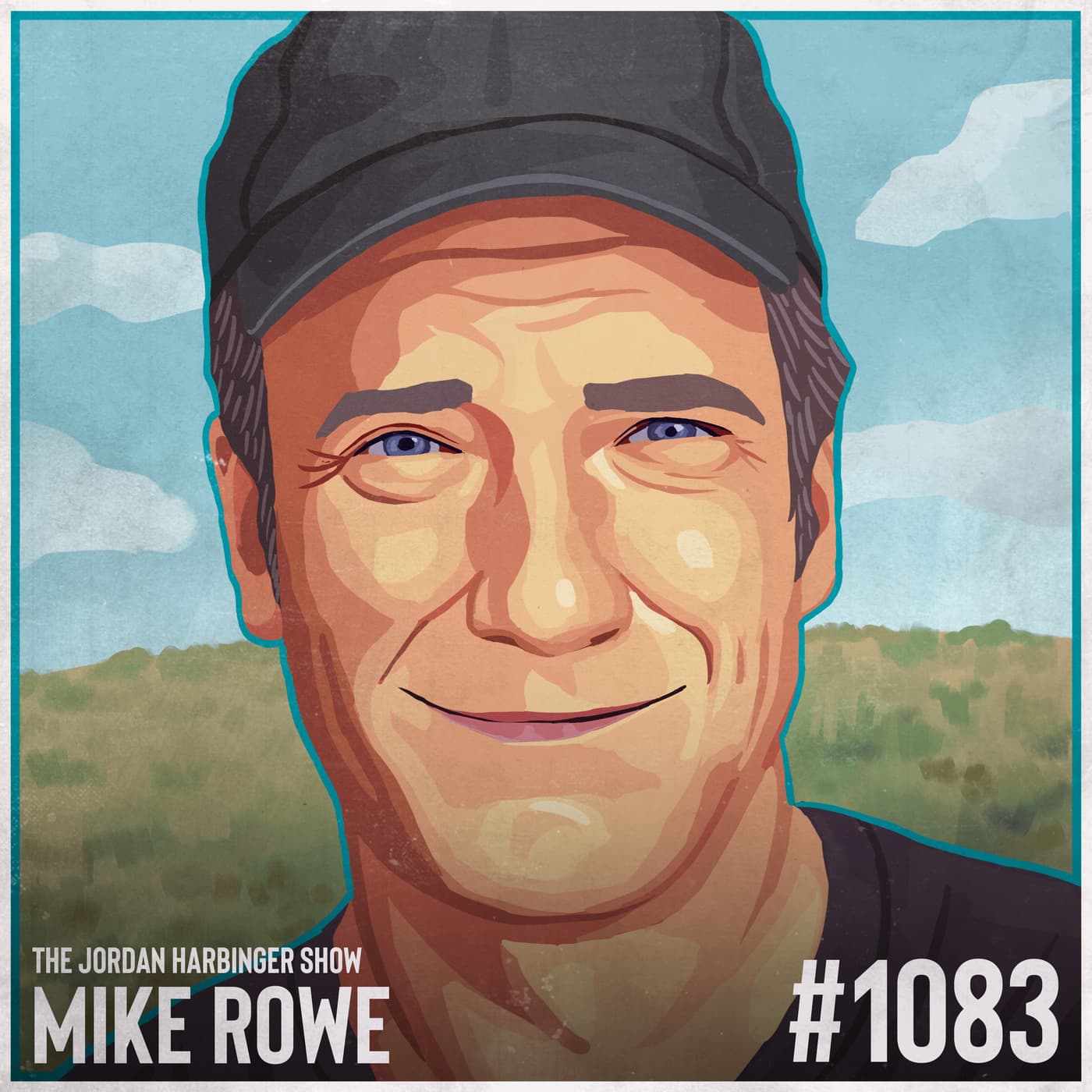
The Jordan Harbinger Show: Episode 1083 - Mike Rowe | Rethinking Success in an Uncertain World
Episode Overview In this episode, host Jordan Harbinger speaks with Mike Rowe, known for his work on Dirty Jobs, who discusses the theme of uncertainty in modern life. The conversation covers various topics, including the nature of certainty, the evolution of media, the student debt crisis, and success in the workplace.
Key Discussions
The Nature of Certainty and Uncertainty
- Craving Certainty:
- Humans have a strong desire for certainty, leading to poor decision-making and the creation of false patterns.
- An example discussed is how people often misinterpret events (like a ship crashing into a bridge) due to their need for certainty.
- Embracing Uncertainty:
- Rowe argues that rather than fearing uncertainty, individuals should embrace it as a source of potential reward and growth.
- Opportunities often arise from uncertain situations, particularly for entrepreneurs.
The Evolution of Media and Success
- Authenticity in Media:
- The landscape of podcasting and media has shifted; success now hinges on authentic relationships rather than technical skills alone.
- Importance of Relationships:
- Building strong relationships is emphasized as a significant factor in achieving success, often more than traditional work skills.
Student Debt Crisis
- Systemic Issues:
- Rowe suggests that the rising costs of education and the level of student debt are symptoms of a larger systemic problem that debt forgiveness alone cannot solve.
- The conversation highlights that education should better prepare students for available jobs.
Technology and Decision-Making
- Impact of Connectivity:
- Constant connectivity can hinder our ability to process difficult decisions and make thoughtful choices.
- Suggestions are made to disconnect and create space for clear thinking.
Success and Work Ethic
- Fundamental Work Habits:
- Rowe asserts that success often derives from simple, consistent habits, such as showing up on time and taking initiative.
- These foundational habits can distinguish individuals in any workplace.
Key Takeaways
- Certainty vs. Uncertainty: Embracing uncertainty can lead to significant personal and professional growth, while the search for certainty may lead to stagnation.
- Networking and Relationships: Building genuine relationships is crucial for success; many high achievers rely on their networks more than just their skills.
- Education Reform Needed: Tackling the student debt crisis requires systemic changes in how education is structured and funded, not just forgiveness of existing debts.
- Work Ethic Matters: Basic work habits like punctuality and initiative can set individuals apart in competitive job markets and contribute to long-term success.
Additional Resources
- Full show notes and episode details can be found at [jordanharbinger.com/1083](https://jordanharbinger.com/1083).
Conclusion This episode with Mike Rowe emphasizes the importance of rethinking our approaches to uncertainty, success, and work ethic in the modern world. Embracing the unpredictability of life while building strong relationships and maintaining fundamental work habits can pave the way for greater personal and professional fulfillment.
Written by AI. May contain mistakes. Listen to the episode to check what was said.
Transcript
Automatic transcript. May contain errors.0:03Welcome to the show. I'm Jordan Harbinger on the Jordan Harbinger show we decode the stories secrets, and skills of the world's most fascinating people and turn their wisdom into practical advice that you can use to impact your own life and those around you. Our mission is to help you become a better informed, more critical thinker through long form conversations with a variety of amazing folks from spies to CEOs, athletes, authors, thinkers, and performers, even the occasional arms dealer, fortune 500 CEO, Hollywood filmmaker, or tech luminary. I know I say tech luminary a lot. There's not that many tech luminaries on the show, you know, a few and counting, but I feel like to get an outsized play here.
0:36I'll have to remedy that. If you're new to the show or you're looking for a handy way to tell your friends about it, I suggest our episode starter packs. These are collections of our favorite episodes on topics like persuasion and negotiation, psychology and geopolitics, disinformation, China, North Korea, crime and cults and more. That'll help new listeners get a taste of everything we do here on the show. Just visit jordanharbinger.com slash start or search for us in your Spotify app to get started. Today, a little something different for you. I'm being interviewed, well, it's a conversation with, I should say, the one and only Mike Rowe of Dirty Jobs fame.
1:08We talk about the economy, decision-making, uncertainty, and a whole lot more. This is actually from his show, The Way I Heard It. It aired several months ago. If you heard it and you gave us nice feedback, thank you very much. If you haven't heard it, now's your chance. We're going to replay it here. Thanks to Mike Rowe for having this conversation and allowing me to post it as well along here in my feed for you all to enjoy. All right, here we go with myself and Mike Rowe.
1:35Say action or begin or off we go. I said, give me a minute. And you were like, let's just go. Is this a good time to announce your new show, Pass the Buck? That is not a new show. Hey, first of all, thank you for returning the favor. We first met 2017, 16, something like that? You know, that's a good question. I should have looked this up. I came unprepared as usual. The first time we met, I had like 102 fever. you came over to one union recording in san francisco where i had to talk like this about crab fishermen for about three hours and then you came in and we did our thing and driving home i said i've absolutely no idea how that went i had already started to forget it you know how you get in that fever state oh yeah and then a couple years later you came back skinnier fitter yeah I was skinnier.
2:27I was fitter. I wasn't sick. And we had a great conversation. Yeah, that's right. And now here you sit at Microworks World Headquarters. I have so many questions for you. We've come full circle. Yeah, I should have come with a fever. I'm sorry, guys. Once again, I'm unprepared. Don't worry. I have typhus. So you'll have one when you leave. Yeah, he's got the whooping cough. Yeah. How's the missus? Doing great. Sheila, of course, always keeps up with your stuff. She's like, his dad's got a whiskey. You got to mention the whiskey. Yeah. I went in the office and saw the whiskey. The signed bottles of whiskey.
2:54Yeah. I don't know how I feel about that. I mean, of course I do. It's an honor to sign a bottle for somebody who wants to share a weed ram with me in memory, my granddad. But yeah, man, it's a strange thing to write your name on glass or paper or anything glossy and then hand it to people. I mean, are you dealing with that now? Are you signing autographs everywhere you go? Rarely. Some people will want to take a selfie. And I love that. It happens just enough where it makes me feel important, but not so much where it's like I can't eat lunch somewhere. I'm not Shaquille O 'Neal or Mike Rowe. Well, no.
3:29And I never will be. You know what's funny? I met Shaquille O 'Neal in One Union, that place where you came to interview me. Have you ever seen him in real life? Oh, yeah, yeah, yeah. He's been on the show. He's been on your show? He was on Podcast One, my network, for a really long time. You'd just see him in the studio, so you'd see him all the time. And yeah, he's taking selfies all day. It's foolish to say, boy, he's big because people understand that. But until you shake his hand, until you have a meal with him or something, you don't understand every single part of his body. His fingernails are like the size of my ears.
4:02His fingers themselves are like forearms. His forearms are like thighs. He loved Dirty Jobs. And he came up to me the first time, so friendly. And he kind of hugged me, which is super awkward because my head goes into like, his navel. And then I laughed and I must've said something funny because he bent down and he put his arm around me and he stood up. I say it that way deliberately because it didn't feel like he picked me up. It just felt like he stooped and then stood again. And suddenly we were at eye level and he was holding me like two feet off the ground. It's like Darth Vader. Right. Oh man.
4:40He had these shoes. I don't know if I can mention the brand, but they're very specific. Go ahead. Tom's shoes. Remember these cloth ones? And he bought a pair and a kid in Guatemala got a pair of shoes. Yeah, yeah. So he's wearing these and I go, how big are your feet? He's like, oh, size 27 or whatever, sort of like ungodly. And I go, I'm surprised they make Tom's shoes in that size. And he goes, yeah, they don't. So I met the guy, Blake McCoskey, the founder at a party. And I said, hey, I want those. And he's like, we can't make those. He's like, can you make me a pair of those shoes? And he goes, the smallest run we can do is a thousand.
5:08They all have to be the same size and color. And he goes, great, I want red. So he has 1 ,000 pairs of Tom's shoes in size 27. So he's like, yeah, I just wear them. And then if they get dirty, I just donate them. And I'm like, well, you're donating them? Yeah, who's going to wear them? What, are they turning them into a planter? No, he's like, yeah, who's going to live in them? Yeah, exactly. You know, the old woman in the shoe? Yeah, that's the shoe. I hear she's got a lot of kids. That's right. It's her summer home. Chuck, send a bill to Blake McCluskey over at Tom's Shoes. Sure. Just call it a, oh, how would we put this?
5:40Branded segment. Branded, spontaneous mention, first 10 minutes that went on for - For times. Yeah. Yeah, done. Okay, good. Are you making a lot of money on your podcast? I do all right. I think that's the polite thing you're supposed to say, right? Is that what you're supposed to say? You're getting by. You're getting by. Yeah. What did I read? 11 million monthly downloads? Yeah. I mean, now - You're kicking my ass. I'll tell you that. Really? Yeah. Well, we'll have to get into that, Chuck. I'm confused on how that works. Yeah. You know how that stuff goes, though. It fluctuates. And then Apple makes a change and you just cry yourself to sleep.
6:15What happened in October? Because Chuck started, it began with, it looked like a twitch just under the eye. And then some stammering. And then the Tourette's came in. It's like, the numbers are down. Yeah. So like, what's going on with the numbers? Apple made a change in their app, which is the majority of podcast downloads, where instead of automatically downloading the next episode of shows you like, you have to tell it, hey, for the way I heard it, for the Jordan Harbinger show, yes, automatically download new episodes. Otherwise, it just says play. And if you push play, it streams. Otherwise, it's not downloading to the phone.
6:50And unfortunately for guys like you and I, and especially for Chuck - There's no one like Chuck, by the way. The downloads, that was like 30 % of most people had that thing on. Some people had 40 and 50 % of their downloads go down the tubes. Younger Gen Z audiences that mostly listen on Spotify, their downloads are fine because that was already sort of pushed on demand, if you will, pushed a stream. And so, yeah, but the number of people that are hearing us didn't go down. The number of people that were getting, let's say, something automatically delivered to their house, for example, that went down.
7:26So it's like if you had a monthly subscription to toothbrushes, it's not like less people are brushing their teeth. It's just that less people are getting, oh, man, here's another one of those toothbrushes I got to cancel. I forgot about these. And then they put it in the pile with 30 others. Yeah. So the audience didn't decrease. The amount we get paid, unfortunately, did. And I'm like, oh, the CPM, the cost for the ads is going to go up because now our audience is – no, the advertisers didn't quite follow that argument all the way there. Yeah. This topic comes up from time to time. And I used to worry that it was a little too inside baseball for the average person.
7:57Like, who cares? But when you think about the number of entrepreneurs and small business people out in the world trying to make a go of it in all these different vocations, the thing that is relevant to me is that there's a list of stuff in your control. and there's a list of stuff that's not in your control. And the stuff that keeps you up at night, right? It shouldn't be the stuff you can't control because let go, let God, right? What are you going to do? The sun also rises, but - That's true. It seems like people spend a lot of time worrying about stuff they can't control. For sure. When the stuff that's right in front of you, like this is a great example too, I have yet to ask you a really prescient question and I have so many, but I'm defaulting to what I prefer to do, which is just have a conversation.
8:41I can control how long this goes on or how good or bad it ultimately is. But why do people do that? Why do we focus on the stuff that we just can't do anything about? Sure. So humans crave certainty, right? That's one thing that any psychology book will sort of tell you is almost the reason that people come up with these ridiculous conclusions. we ruminate on things we focus on what we can't control in part because they're the things that we actually can't control and often also the things you can control are scary so focusing on something you can't control is sometimes easier but really we crave certainty and that's kind of the bottom line it also this thing that happened in baltimore with the ship hitting the bridge right yeah terrible but what was the first thing on twitter this can't be an accident ships Ships have backup systems.
9:34Yeah. Look at how he steered into the bridge. And then the smoke came up at the left. And it's like, no, they reported the engine problem. They tried to get, as far as I understand, stop traffic off. They should have got the workers off the bridge, but they didn't do that, unfortunately. But the ship didn't crash into the bridge on purpose. And also, oh, it's the infrastructure. No bridge in America is going to withstand a 120 ,000 ton direct impact. At eight knots. At eight knots. I mean, that's fast. Yeah. The odds of that ship hitting that support are no different than the odds of it hitting any other space in the open space of the same dimension.
10:11It's like it had to hit somewhere. It had to hit something, yeah. And so our minds do have a way of immediately tell your brain what to look for. It'll find it. Exactly. It's called patternicity. Humans were hardwired to look for this stuff. So there's a psychologist named Michael Shermer, and he came up with this example. He's been on here. Oh, yes. Okay. One of his examples is, right, if you're the caveman and you hear the rustling in the bushes, you think lion or leopard or whatever, danger. But if you're the caveman who hears the rustling and goes, huh, that's probably nothing, you're done.
10:40You're not going to be a caveman for a long time. The gene pool has eradicated you or you've eradicated yourself. So we look for patterns that aren't there. And if you look on Twitter, you'll find the best examples of this because there was one tweet I saw earlier today. And it was something along the lines of, hmm, this ship had a white lion as a flag from the country that it was flagged. And Barack Obama has a documentary where the ship is named White Lion. And also this women's volleyball team has someone on there whose last name is Baltimore. This can't be a coincidence. And it's like, actually, that's the definition of a coincidence.
11:14Sure it can. Yeah. Okay. So we crave certainty. Right. I get that. We look for patterns. And maybe if we focus on the things we can't control, are we giving ourselves a built-in excuse? I think there's some of that too. Although I don't know if it's consciously elevated to that level in most people's heads. Sure, if you're saying, you know, my business didn't work out because of the recession. Okay, maybe that's true. In fact, it is true for a lot of businesses. But it could also be an excuse. I don't know if most people are self-aware enough to go, well, I'm focusing on this thing that I can't control.
11:45And the reason I'm doing that is because if I fail, I don't want to feel bad about myself. That usually comes with hindsight if it ever comes at all. Yeah. Yeah. Well, then what about uncertainty? Don't we crave that equally? Oh, I don't know. I don't know. I don't think so. I think humans are terrified of uncertainty. I think not knowing what is going to happen is super scary for most people, which is why we tend to find conspiracy theories everywhere, patterns that don't exist, connect dots that aren't there, and it's scary for people to face uncertainty. The rewards for facing uncertainty are enormous, however.
12:18Okay. entrepreneurs and people who aren't starting a business should probably look where there is uncertainty because there's a lot of reward there. Financial markets have uncertainty. Those guys I used to work on Wall Street get paid, I would say, a disproportionate amount for the level of effort that goes into what we do a lot of the time. You had a front row seat, right? Financial crisis. Yeah. I was a lawyer on Wall Street in the financial markets real estate in 2008. Mortgage-backed securities. Yeah. I was doing mortgage-backed securities. I was a first, second-year associate. I was part of the problem, but it was like - So it's not your fault entirely.
12:49Right, no. Okay. Just a tiny sliver of it was my fault. It was a cog in the machine. But I talk about a front row seat. I mean, I was the guy at the boxing match who could touch the ring if he really got too drunk and decided to do that. How accurate was the big short? I would imagine that was quite accurate. The movie itself, I don't remember all the details, but I do remember partners in my law firm going, so you guys probably heard about Bear Stearns or the other banks, the investment banks that we're all going under. And he said, yeah, what percentage of our business is that? Well, let's just say it's a double digit percentage of our business.
13:20Okay. Both banks put together or each bank? Each bank. And it's like, oh, so is there work for me? Not right now. And then after a few weeks - Are you certain about that? I'm certain about it. Speaking of uncertainty. Then after that, I remember coming in for a few weeks and one of the guys comes in and goes, knock, knock. And I'm like, oh yeah, got some work. And he goes, no, I'm just coming in to say like, you don't really need to show up anymore if you don't want to. There's no work for you for the next several months. We'll just email you guys. And I'm like, but you're still going to pay me and all that stuff.
13:52Yeah, but you should maybe look at other career choices because we're not sure when this is coming back and it ever came back. Okay. So when I talk about uncertainty, you immediately go there, which makes sense because we're back to the category of things we can't control. But I think also for a lot of people, Like I think of uncertainty also as a kind of variety. And I think of uncertainty as unscripted. And my life is unscripted. This podcast is clearly unscripted. That's just what I wrote you to say. Not a scripted site. Right. And so that can be scary, especially if you're trying to pretend that you know what you're doing when you don't.
14:35I think we talked about this. We may have talked about this a lot. Like the submissive posture and the importance of admitting when you're scared. I agree with that. Yeah. Right? But what if uncertainty is also variety? And what if we need the certainty of knowing the sun is going to rise, or at least the earth is going to spin in a way that creates the illusion of a moving sun? Not to say the sun isn't moving, expanding universe. We're all moving, but you get the idea. I get the idea. So we need the certainty to know that tomorrow is coming vis-a-vis sunrise and or sunset. But if the sunrise and the sunset always look the same, if there was no variety, if there was no variety in the weather, if there was no variety in the night sky, if there was no variety in the clothes we choose to wear, then we would, I think, probably start to really get bored.
15:24I agree. But also look at the perspective we're coming from, right? I think a lot of people, well, we know humans crave certainty, but entrepreneurs, and whether or not you sort of identify as that, I would put you in that category. And creators for that matter, uncertainty is great. It's the spice of life. And we sort of, like you just did, equate uncertainty with variety and that's sort of maybe philosophical in nature. But I think we would feel different about uncertainty if we were like, gosh, I wonder if I'm getting paid next month. I don't know where I'm going to, how I'm going to feed my kid.
15:55If you've got a job and it ends, like you're working in Hollywood and the movie you're shooting ends and you don't have anything and you're thinking, what if it takes me like three or four months? Do I have enough in savings to sort of bridge that gap? And your kids are going to college and you're thinking, uh-oh, I wonder if I can second mortgage my house. That kind of uncertainty is not adding beneficial variety, I think, to people's mental landscape. Probably not, but because we're adaptable creatures, right? I mean, he and I used to have a shorthand years ago. Basically, the question was how many squares?
16:27You're in November. How many squares did you fill or how many squares are filled? Because most months started with 30 blank squares. And that is terrifying if you have no safety net. It's terrifying if there's no other certainty in your life and you're just living in this completely kind of random universe. But it also builds something like resilience and hope. I agree with that. Yeah. Right. I mean, I've listened to a lot of what you've said over the years. And to me, it just seems like the great balancing act that people are constantly trying to navigate is the certainty uncertainty principle.
17:02It's absolutely correct. Yeah. And the headlines today. Talk about our country for a minute. What are you worried about right now vis-a-vis the level of uncertainty? And is that informing some of the headlines and the drama? Yeah, I think it is. I mean, first of all, no surprise, and this is not going to, I don't think, jar anyone, but media, big mainstream media, and I hate that term because it makes me sound like a kook on the internet, but they have to use fear-based headlines to grab attention. and okay that sort of worked in the 80s when you had a limited number of news outlets but now that we're bombarded by this stuff 24 7 it's not good for our brains to be constantly worried about something and then have multiple different takes from people who are just making it up like the conspiracy theory about the boat hitting the bridge for example we don't have any sort of authority anymore or experts that are universally trusted because the media has done a good job of shooting themselves in the foot, reloading and shooting themselves in the other foot as far as credibility.
18:03And that's dangerous because now people choose what to believe and they don't know how they're making that choice. But really the way they are making that choice is what do I kind of already agree with or what do I already understand or think I understand? And that's a terrible way to make decisions. If you're making a decision based on what you think you already know, you're not learning anything else most of the time, which is really bad. And if you are, let's say you're a middling IQ like myself, right? Solid 110, 105. High double digits. That's good, right? What if you're basing that based on what you can just understand?
18:41Well, that's not good either because then I'm going, that's really complicated. That can't be right because I can't process it. This other explanation is really simple and simplistic. That one kind of makes sense to me. I choose to believe that. That's terrible because that means anybody can basically feed you something that you can understand and you decide to believe it. And we see that in our elections now. We see that in our media consumption. And now people are catering to that, like TikTok or whatever, bite-sized stuff that has no nuance, because people go, oh, well, I can understand that.
19:13And also, I just watched 13 of those in four minutes while waiting for the elevator. Must be true. If people crave certainty, and of course they do, the media knows that. So the media is very long in certainty. And that's why you have a lot of certain sounding people who all kind of sound the same when they tell you the news. And they're all doing their thing. They're all in their trope. And they're all feeding that need to feel certain. But when you're certain, there's no need to be skeptical. And if you're not skeptical, right, then you'll buy anything. That's right. If you stand for nothing, you'll fall for everything.
19:44Fall for anything, yeah. And so I think that the country right now is really, really wrestling with this because, well, I'll just name some names. Sure. Because Anthony Fauci sounded really certain. Because every elected official during that time sounded certain. There was a lot of nodding and there was a lot of soothing tones and it was a kind of infantilizing. Yeah, that's a great word for it. That's how I felt. It was like suddenly I'm surrounded by people in charge of our most important institutions who are talking to me like I'm 10. What is happening with that? They understood correctly and unfortunately that humans crave certainty.
20:26So they couldn't come on. I assume the decision was, hey, what we should do is say we think it might be this, but we're not really sure. And we think masks might do this, but then we're also not really sure. But also we really need those masks for people who are like working in hospitals. So we should probably. So what they did is say, don't buy masks. They don't do what we think they do. And then it was, oh, actually, now that we've ramped up production, you should really go buy those and everybody should wear them. In fact, if you don't, you can't come in. Right. And then it was, you know, we know that this is how this transmits.
20:55Okay, but you said a different thing before. So which one is true? And they knew that if they came in with all that nuance early, people would go, oh, my God, they don't know anything. What do we do? They don't know anything about this. We're all going to die. So I understand that tension. but I think they erred on the wrong side because when they had to switch horses midstream or in a different stream, my analogies fall apart all the time. When they had to switch horses, they realized, oh, now we're just telling them a different thing and kind of hoping people forget. So then when, of course, they had to say something really important like, hey, we have a vaccine and don't worry, it's been tested, people go, well, okay, but you said this thing about the mess and you said that, but this is going inside my body, so I don't know if I, and that created all sorts of - It's the boy who cried wolf.
21:37As you may have noticed, conspiracy theory, this is the largest conspiracy theory of the last century, aside from, I don't know, JFK, almost said RFK. JFK, it's not over. We all know one or two people who can't stop talking about the vaccine. And it's like, I know I'm probably that guy for your audience. I swear I'm not. But you go, your whole identity is this now. And that's because of the uncertainty. They just can't let it go. It's like they've broken their brain on this thing. Yeah. It's also attached to every other thing. everything becomes a talisman right it's not just a mask if you're wearing one you believe in these other things it's all tangential right and if you're not well then somehow or another you're a climate denier right in fact you can just put denier after everything what used to be thought of i think as kind of a skeptical take you know michael schirmer well i mean he's a skeptic society, right?
22:30I mean, his whole worldview is rooted in, I doubt that, and I'm going to doubt it until I don't. And maybe you can persuade me, and maybe you can't. Well, that attitude today is, that just makes you a denier. So again, if certainty and uncertainty get too far out of balance, then the inertia of all of it kicks in. And now suddenly nothing can be trusted over here. and maybe that's not so bad for knuckleheads like us who are podcasting and sub-stacking and strong opinions weekly held is where i'm at right like okay i believe this but then when i get other credible conflicting information i change my mind and it doesn't mean that i'm some kind of moron for doing so and i think that's the problem is we have ego attached to the conclusions that we've drawn based on these really arbitrary things so and i hate bringing this back but it's a really sort of current example, early on, it was like, COVID didn't escape from a lab.
23:25That's ridiculous. And it's racist if you say that. And it's like, but there are actually a lot of lab leaks. I did a whole show on lab leaks, had nothing to do with COVID, was just about laboratory leaks. Journalist was like, hey, level four labs, they leak stuff all the time. And I started to see more and more and more of this. And then they did an investigation. It's like, oh, it could have happened. We don't know either way. We'll probably never fully find out unless somebody straight up admits it or whatever, but that's fine. And I'd mentioned, hey, I'm, I kind of changed my mind. I used to be, oh, if you think this, then you're not looking at the evidence, and now there's new evidence.
23:53Instead of people going, hey, that's good that you changed your mind based on new information, what I got was, aha, you're such a moron. I told you three years ago that this, and I said, you also said the moon landing was fake. Okay? So like, eh, broken clock twice a day, something, something. Yeah. And so we don't want to do that to each other, first of all, but you shouldn't also do that to yourself. Changing your mind based on newly available evidence is something that we should all actually be doing and that almost nobody does. Isn't that how science works? Yes. Right. And certainty is the enemy of that.
Read the full transcript
24:25That's right. That's the biggie. It's like the minute you feel the comforting wash of certainty come over you, whether it's the climate, whether it's your elected official of choice, whether it's, it just doesn't matter what it is. Right. But the minute you start to really feel sure, the genuinely interesting and curious person goes, what am I missing. Yes. Thank you. If I'm 100 % positive about something, there has been a problem in my thinking. Yeah. Most of the time. So when's the last time that you really affirmatively changed your mind in a way that like you heard your mind go, oh, I was very sure and now I'm very wrong.
25:08And now that's a good question. I mean, there's some things that the sort of lab leak theory stuff was one of the more obvious ones because I mentioned it on the show and so many people gave me feedback that was like, oh yeah, that's cool that you changed your mind. But so many more people were angry, which I found surprising, but I probably shouldn't have been that surprised. Other times I changed my mind of just smaller sort of things like throughout the day. And it's really hard to say if there's another good example that anybody could possibly relate to. I don't know. I feel like I should have come prepared or found something that's a little more obvious.
25:44Well, actually, like the reason I'm asking you is because I think you're really having a good time doing what you're doing. That's my impression. Yeah, sure. Right. And part of the reason I believe that is because you're still doing it. We were having this conversation the other day, the separating of the wheat from the chaff in Podcastlandia. It's happening now, right? But five, six years ago, like when we met, it was so nascent and it was growing so fast that you could really suck and still somehow find an audience. Yeah. People were just coming to it and it wasn't so noisy and it wasn't so crowded.
26:18And today, it's a very different deal. And I have to figure out, am I going to put my big boy pants on in this space? We get our share. People like the show, but I do it once a week. And I do it because I like it and I enjoy talking to people. But you're at a whole other level. How many shows do you do a week? Three. That's a lot for a long form, right? Yeah. So the reason I'm asking you about this is you've interviewed how many people? Oh, gosh. It's probably close to 1 ,000 over the last 17 years. And not just random Joes. Big thinkers. Yeah, you're up to episode 969. On the current show, and I had another show before that that was 720-something episodes long.
26:56The show that we dare not speak its name. That's right. The show that we dare not speak its name. Exactly. I don't know what you're talking about. Yeah, it didn't exist. Anyway, change the subject. It's existence-free. I believe you brought it up. Sorry. Good point. I'm certain he did. Craving that certainty myself. I don't know how I feel about that. Thinking about it, I do change my mind on a whole lot of things. I mean, the topics of the day are things that I'm always thinking about because I'm being bombarded with media. Immigration was one thing where a lot of people think they have a black and white sort of answer about what it should be.
27:25This is one of those onions where the more you investigate it, the more you're like, well, okay, but we also have like this thriving worker economy. We should make that legal for hard workers. But then also this, and then people throw out these weird red herrings like, but the drugs. And it's like, you know how many backpacks you need to run across the border to bring in all the fentanyl or whatever we got in this country. It's like 62 ,000 per year. That's how many kilos they estimate of fentanyl or something. And it's like, that's a lot of backpacks. It's probably not that. The way they intercept this stuff is proving that it's not coming in in the backpack, right?
27:54But I also understand both of these arguments on different sides. So I won't say flip-flop, but it's so nuanced and people hate that stuff, man. My brain doesn't like it either, but I realize that's kind of reality. People's brains, we don't like nuance. We like to be able to compartmentalize something after having decided it and put zero brain power on it after that. Supporting this podcast is a dirty job, but somebody's got to do it. We'll be right back. If you're wondering how I managed to book all these great authors, thinkers, creators every single week, it is because of my network, the circle of people that I know, like, and trust.
28:26I'm teaching you how to build the same thing for yourself. I know you're not booking for a podcast, but hey, they always say it's all about who you know. It's time to make that your unfair advantage as well. We're teaching you how to do it for free over at sixminutenetworking.com. It's not cringy. It's not going to be awkward. It takes a few minutes a day. You're going to be a better colleague, a better connector, a better friend, and a better peer. And many of the guests on the show already subscribe and contribute to the course. So come on and join us. You'll be in smart company where you belong.
28:51Once again, sixminutenetworking.com. Now back to Mike Rowe. This whole idea that two things can be true at the same time is vexing. It's vexing. It's like, For me, since you mentioned immigration, I talk a lot about the skills gap in this country. There's not a single construction company that I know of, and I know a lot of them, who aren't behind in every single project that they're working on. And they're behind because they can't staff up for every five tradespeople who retire to replace them. Every year, that's been going on for decades. Well, 15, 16 years. Wow. and if you took the immigrants if you took the illegal immigrants out of the equation it would be much worse than it is oh i'm sure yeah and so what we're left with is this really uncomfortable kind of thing right and i'm you'll find no bigger fan of the working man or skill traits that's my jam and i'm sincere about it but there's no getting around it it's not just a skills gap It's a will gap.
29:51Oh, yeah. It's funny you mentioned that. And we're just not willing to take advantage of the opportunities that so clearly exist. That's a real problem. I think I've changed some people's minds. Definitely. When I talk about, listen, this is not an ephemeral topic. This is your house, right? This is supply chain. This is where our food comes from. This is where our energy comes from. So riff on that, if you will, because I think it impacts everybody. Okay, so stop me if this is something that's been said on the show 8 ,000 times before. Stop, stop. Okay. No, go. So everybody I know who owns a company, you know more contractors than I do, one of their chief gripes is they'll hire somebody who graduated from college or just graduated from high school to do, let's say, roofing.
30:37And after half of the first day, if it's raining, they're done. If it's sunny, they're done. Basically, if it's not 65 degrees with a nice breeze and partly cloudy, they're not doing it. And these guys will just say, okay, screw it. And they'll hire an undocumented group of immigrants who are just showing up, just roasting in the sun and getting drenched in the rain and working and then saying, call me on Sunday if you want to finish this faster. And it's like this work ethic gap, I don't even know if it's something we can close. Like, look, I don't think people should work 365 days a year just so they can feed their kids.
31:15That's extreme. But if they're willing to do that and somebody else is not willing to complete half a day of work, we got a gap that we got to figure out what to do with that. That's not sustainable. And we have to figure out how to talk about it, right? I mean, Bernie Sanders put a 32-hour work week bill in front of Congress last week or maybe it's a week before, with no drop in pay. So this is an extraordinary thing, right? And when we started Microworks 16 years ago, the first little umbrella under which we all tried to come around, the first thing we could agree on was work is not the enemy, but it is, man.
31:51Work has become the proximate cause of people's misery. And I'm not saying that all jobs are pleasant. I'm agreeing violently with you, but it just seems like it's back to the infantilizing. It's like, we need people to save us from work so we can retire sooner. Retire from what? What happens when you retire? I mean, not a single study indicates anything good. Talk about changing your mind about something. If you can get the masses to think differently about the benefits of retiring, everything would change. But that's a neat trick. And that's going to be hard to do because we're certain that retirement equals happiness.
32:32And we're certain that hard work leads to misery. Part of this is the lack of purpose that I think a lot of people have. And I understand that if you are roofing and you don't think that this is your calling, I get that. But why does that mean that you shouldn't do it at all for a few years? Or why does that mean that you can't figure out another thing? Like you say, you bring your passion with you. I worked at a movie theater when I was in my teens. I wasn't like, man, I have made it. I'm making$5.25 an hour. Killing it. A couple times a week, I clean up barf. I scrape gummy bears off the screen that kids have thrown and stuck there.
33:10There's other things I won't even mention on this podcast because they're more suitable for an episode of Dirty Jobs, these kinds of things that happen in movie theaters would shock you. So many fluids. And in so many surprising spaces. Surprising places, yeah. It's incredible where you can get your fluids, really. I mean, if you're focused on it. That's true. It's amazing. But Jordan, it won't surprise us because we worked at a movie theater when we were kids. Teenagers. Yeah. We each did our time at United Artists. Oh, nice. It was one of the first multiplexes in the country, Golden Ring Mall.
33:40So yeah, concessions, tickets, ushers. Those are the glam jobs at a movie theater, man. If you only had to touch money, you had it made. Oh, yeah. It was on the days when there was other things that you had to touch. Those are the bad days. You put a bunch of people in the dark and throw some suggestive images up on the screen. You reap what you sow. What was your first job? The movie theater. That was the first one. That was the first job. And what did you learn doing that job that you still use today? Oh, man, so much. First of all, the bar is so low for what passes as good work. And not that anyone should aspire to just barely meet the bar.
34:20But I remember, you know, you show up on time and you clock in and you go downstairs and you get your shirt tucked in and you pick up the broom and the little, I forget what, like a dustpan with the extended handle. I guess it's probably just called a dustpan. You're walking down and you sweep up the popcorn thing that's on the floor. And I remember my manager going, you know what? I like that. And I go, what? And he'd go, you're ready to work. You're clocked in and you're already doing something. You're not waiting for me to tell you. And I'm like, well, but you told me weeks ago, I just have to, you know, I'm going to sweep the floor.
34:45So there's this, and he's like, no, that's what I'm talking about. And my friends started working there and they would clock in and they would dilly dally in the break room and they would wander down. Their shirt would be untucked in the front, maybe completely untucked. And then they would be chatting with each other, kind of hiding in the back hallways. And the manager would go, is your shift started? Yeah, yeah. Well, it's 3.30. When did your shift start? Three? Okay, what have you guys been doing? Well, nobody told us to do anything. And I'm thinking like, come on, guys. This is some kid stuff.
35:13And we were young, but I think everybody who owns a company has dealt with one or two of these people and grown adults are doing this. And I saw that at the movie theater as well. There'd be a guy in there who's 30 and I'd go, wow, he's doing the same job as me. That's maybe not a great sign. And they would get fired after two days because they'd be sleeping in the theater. and trying to get away with it, or they'd leave and come back, and the manager would go, where have you been? Oh, I was here. Where? And it's like, they have cameras, man. And this is in the 90s, they had cameras. Now, of course, they know where you are.
35:44And it was just like, you guys are not doing it. And I thought, huh. So when I get a real, real job, like an adult job, because I'm 16 at this time, if I show up on time, and I sort of pretend that I'm the owner, what would I do if I was the owner or the manager? I'm going to be at the top 1 % of employees. I love you. That was it. You'd write your own ticket. And it was just like, I just remembered that going into every job that I had after that. And when I started my own company, when I was doing the Jordan Harbinger show, it's like, okay, I am the owner. No one's going to pick up the slack.
36:16And also I have to set the example for everyone else. And I also only want to hire people who do the right thing when nobody's looking. And that's really hard to hire for. It's impossible. It's very much impossible to hire for. So I consider myself extremely lucky because my team, doing the Jordan Harbinger show, my team, they do the right thing when no one's looking. I can maybe in a couple of instances over a decade and change have I been like, did you do this? Oh, no, you know what? I spaced on that. And that you can chuck up to a mistake at some point. Tell me what happened when you left the show that they're not speaking.
36:50Right, right. My previous. And you hung out basically a new shingle, which means you're starting from zero. Yeah. Yeah. So what did your team do at that point? Did you have to just rehire? Yeah. So it was interesting, right? Because I don't expect people to work for free. That's not a thing anybody should expect. In fact, you know those jobs where they tell you that you're all one big family, but then they treat you like crap, everything else they treat you like crap? I didn't want to do that. So it's like, we're going to treat you like family, but I'm also going to pay you. And that's how things are.
37:22So when I left my previous company, guys were like, can I go with you? Because I want to work with you on the new thing. I had to have a really kind of somewhat humiliating talk where I said, so yes, but also I can't afford to pay you for some months. And that sum, that number is completely unknown. And if we fail, I can never afford to pay you. So I don't want to ask you to leave. So what they did was since they were all part-time, they basically are full-time doing whatever you want to count the hours. They kept their previous gig and then they worked for me sort of after hours because they're freelancers, most of them at the time.
38:03And then they would eventually leave or if they had savings, they'd go, eh, I'll just work with you. And I want to say like six or seven months in, my wife, Jen, I go, okay, we're doing okay. It looks like we might survive. We got to make everybody whole. we got to just pay everybody what we would have paid them if we could afford to pay them back then and probably give them a nice Christmas bonus because you know they went out on a limb for us and we did that and it was expensive but you know what it was the coolest thing ever because people basically worked for free because they believed in something that I was creating with them yeah and that's the highest compliment I think anybody can probably pay you but then of course there's a part of me that's like I wonder if I could have just gotten away with anything you know there'll be no money.
38:47But being a scumbag is not exactly something. It's a skill that I have yet to build, I suppose. But it felt great to make everybody whole, man. Those were like the coolest checks I ever signed. Here's$36 ,000 for six months of work that you did that you didn't know. And I didn't say you're going to get paid tomorrow. I was like, just pay everyone. Wow. And people were like, whoa, I just got a bunch of money from you. Like, is this a mistake? Or did Jordan pass away? are you guys okay it was really fun it was just a fun thing to do it's kind of like probably like it is when you go to ed mcmahon used to go to the person's house and hold up the giant oversized check with a million dollars on it that's kind of how it felt well i mean that's awesome i can't it rhymes in a weird way with your departure from wall street with your boss being like ah you know maybe you don't have to keep coming in yeah maybe hoping that you still would like the whole notion of the slow no is one of the great tortures in the universe, especially in an airport, right?
39:45When they push your flight 20 and then 20 and then another 20. That's what happened to me on the way here. Oh, man. It's just talk about uncertainty. Yeah. I'm sure the plane's going to take off. I just don't know that's going to happen today. Yeah. And I would really like to know. It's out there. And then they were like, all right, real talk. We're cleaning up the bathroom. I was like, say no more. I understand. And take your time. Get that right. Do you need any more sanitizer? I got some in my backpack. But I wonder too, like your relationship to debt. Like how do you feel when you owe someone not just money, but something?
40:19Because there are lots of people who sleep like a baby. They've been at debt their whole life. They're so used to it and they don't think they're ever going to get out of it. So they just adjust. That makes me feel itchy. Does that make sense? Totally. It's like an itch that you can't scratch. It's like knowing that you borrowed something from someone and they kind of want it back and it's sitting in your closet times a thousand. When I was first year on Wall Street, I was paying my student loans, which is always fun. You get a really nice reminder of how valuable your education was. Where'd you go?
40:48I went to the University of Michigan Law School and it's a good school, but it's very expensive. And you get paid well on Wall Street, as you might imagine. But if you pay the minimum, your debt is gonna last till you're like 50. And I said, all right, I'm just gonna live on the minimum and put like$12 ,000 a month towards these loans. And then my mom was like, well, I could help you pay off the high interest loans if you pay me back. And my thought was, I really don't want to do that because I'll feel gross about it. And then she ended up giving me a chunk. I put it towards the loans and then I paid my mom back three times as fast as I would have paid those.
41:27I was eating ramen. And my mom, this is how low the bar is for kids these days. I'm 44 now, but back then I was 24. She told all her friends, you know, I lent him money and he paid me back. And her friends were like, oh my God, I can't believe it. So courtly, so old school. And I'm like, well, why would you tell your friends that? That's so weird. And she's like, oh, well, Peg lent this money to her kid and she doesn't even come over for Christmas anymore. And it's like, so my relationship to debt is I don't love it. I understand the function of it. I had to borrow money for law school. educational debt it was significant i think i borrowed what you would normally pay for a home in the 80s to pay for that education that was in a very uncomfortable amount that nobody under the age of 30 should ever be allowed well be allowed quote unquote to borrow because you just don't understand how much money that actually is you'd better be certain yeah you'd better be damn certain you're on the right path exactly i mean it's a big deal but so this is an roi calculation right?
42:29I went to, and people don't think of it this way, but law school is a trade. We don't necessarily label it as such, just like medical school because people go, oh, well, if you're not banging a hammer on something in the beating sun or biting the testicles off a lamb, it's not really a trade. But law and medicine, that is, you pretty much know you're going to get paid back. Now, that's changed a little bit with law and possibly also with medicine, but you have a fighting chance in heck of paying that debt. If you're borrowing$170 ,000 for an English literature degree, and this is where you stopped me because you talked about it on the show a thousand times, you might as well buy a lottery ticket because one of those two things, they have an equal chance of paying off college loans.
43:08You might as well borrow$100 ,000 and buy$100 ,000 worth of lottery tickets. That's right. At that point. I mean, it's not just a bad idea. There are plenty of bad ideas and people make mistakes, but that bad idea is packaged as an investment in your future. Right. It's not even discussed as debt. I mean, the pressure we put on kids to borrow more money than they're ever going to be able to pay back when they are so profoundly uncertain. Absolutely. You're a podcaster by way of a law degree with a pit stop in Wall Street. There's no major for that. No. As you know, studying creative stuff... You could just as easily have not done any of the stuff you've done with the educational background that you have.
43:54I got a communications degree. You could still be selling flex ladders on the home shopping network or whatever it was. I could. Yeah, man. The health team, infrared pain reliever. That's right. Hot damn. So how then do you think about debt forgiveness, student loan forgiveness? Oh, with the current sort of? Yeah. Well, look, is it good to figure out a way to make sure that people aren't crippled by debt? great. But the problem is this does not solve the problem that we have. The problem is college has become a country club where they compete based on amenities and the prowess of the football team or the sports events that you have and how many pools they have on campus instead of, hey, this is going to equip you to get a better job.
44:38I made my decision based on, I was going to go to the cheapest law school. There was one that offered me a full ride and they were very generous with it. And I said, great, I'm going to take a free education. That sounds great. And my dad had me call another lawyer and this friend of his was like, ooh, but if you get into Michigan, you can get a much better job. I didn't know that. I just thought they were all kind of created equal. And I said, how much better? And she told me what people on Wall Street make. And I was like, all righty. This is how the investment pays for itself. So I understand the value of not going into your life when you're 24 with owing more money than you're going to make in the next decade, disposable income.
45:14However, the problem is college costs way too darn much. And then you get educated for a job, as you say, that doesn't exist. That's the problem. So if we're going to take a trillion dollars off the table and put it into something, how about making education sustainable in STEM and making it so that those people can get an education in that and incentivizing people to do that? What we've done instead is just gone, oh, go ahead and study whatever useless crap you want. And we're just going to kind of bail you out later, maybe. What about the incentives? That's terrible. For the universities. I mean, how is forgiving a trillion dollars in debt going to encourage universities to lower their tuition?
45:51Exactly. Now all they're going is, man, we had free government money before, but now it's free for us. And we can sort of sell it as, hey, it's going to be free for you too. Wink, wink, nudge, nudge. So you might as well spend as much as possible. And we might as well charge as much as possible. And we can double our tuition. Oh, and by the way, Harvard, 52 billion endowment right now? Yeah. $52 billion. Yeah. But that's on paper, Mike. That's just on paper. Yeah. As a Wall Streeter, I would say paper sounds good to me. Sounds good to me. That works. We take paper around here. Pass the paper. What did you learn on Wall Street, if anything, that was as beneficial or more than those lessons learned scraping up the unmentionable hardened fluids from the floor of darkened theaters?
46:34It was really the power of relationships. And I know that sounds corny, but the truth is the partner that made the most money was never in the office because as it turned out, he brought in all the business to the firm. And so he was more valuable outside the office than inside the office. And that was the gig that I wanted. I was like, how do I, they call them rainmakers. It was like, how do I bring in business? Because that just blew my mind. I was like, do you work from home? He's like, well, sometimes, but really it's like he's playing, what it was, a squash, jujitsu, golf. And I'm thinking, but where's the work taking place?
47:06And he's like, I don't worry about billing 2000 hours a year because if I bring in a client every quarter, I get a fraction of that money. And I was like, this is like, he's like a salesman. And he's like, yeah, I'm kind of like a salesman for the firm. And that just absolutely blew my mind because I'd go in there on Sunday to show my office off to ladies I was dating and be like, yeah, I work in the skyscraper near world trade number two. And there'd be people in there at 10 p.m. on Sunday, 10 p.m. on Saturday. And I'm like, oh, crap, what's he doing here? He's working. Dave wasn't even there on Tuesday at noon.
47:36He was never there. When we tanked, when that firm tanked in 2008, I remember I had a job at SiriusXM doing my show on satellite radio. I'd see him in the elevator and I'd go, oh, hey, you work? He's like, yeah, I'm a partner of it. It's called Sun and Shine. It's a different law firm. And I thought, wow, you brought your book of business. You ended up maybe possibly with a raise or at least an equal level kind of place at this other firm and all these guys that were there on Saturday night trading time for money and billing hours and that was their thing, they retired early because they didn't have anything to fall back on.
48:09And I thought, okay, relationships and connections and having people know, like, and more importantly, trust you to do the right thing and do a good job. Your reputation was like, it's like an insurance policy that you can't buy with any amount of money. And that has lasted with me my whole life. It's like integrity, again, doing the right thing when no one's looking. I almost said when the lights are out. That's a different podcast. Also important. It's very difficult to look when the lights are out. That's right. Unless you're in a darkened theater scraping up fluids. Stop it. Stop it. Just stop it.
48:41You got to get in between the cushions. That really stayed with me forever. Not the fluids, the power of relationship. That really stayed with me forever. And even now, somebody comes to me for help with something, I will introduce them to somebody that can help them with that particular problem, give a little bit of my time. And I know people always have, they take issue with this. They're like, but I can't just help other people all the time. I have to look out for myself. And it's hard to kind of explain this to somebody who's young because I didn't get it at that point either. You are looking out for yourself when you're building strong social capital.
49:14You're investing in your network. You're investing in other people. You are looking out for yourself because if you give help and aid and advice and consult without the expectation, I should say the attachment to anything in return, it doesn't matter if 99 out of those 100 people never help you with anything again because when you're really in it, the one person or the 10 people that come out of the woodwork, those could be life-changing opportunities. Do you worry? You're in the advice business. You're coaching essentially, right? Yeah. I mean that's your real gig, right? Sometimes. Sometimes I give advice on Fridays, Feedback Friday episodes.
49:49Tuesday, Thursday, I'll do an interview with a brilliant personality such as yourself. Too kind. And on Sundays, we do Skeptical Sunday, which is where I say like, hey, bottled water. What's the real deal with this? Or this kind of particular program. Like we'd sort of debunk junk science or get into something like timeshares. And it's like, look at how these work. So you change people's minds. Yes. I'm assuming Shermer was a Sunday guest. Those are kind of like scripted with a collaborator who does a lot of research. Yeah. Schirmer was a regular guest where I read his book and then had him explain, oh God, what was it?
50:21This is a couple of years ago now. Why people believe weird. I think it's why people believe weird things. That's the one that got me in. It's a big one. I mentioned earlier, patternicity and how he was. That was like a Schirmer thing, I believe. So do you worry about, not that you would give cookie cutter advice, but you have a big audience. Yeah. And what's really true and really important for somebody to hear at any given moment might be really antithetical to somebody else who's in the same room. It's true. So like advice is a, you know, it's quite specific. It is very individualistic, but you're not podcasting to individuals.
50:54You're podcasting, you're broadcasting. I look at my relationship with the listeners as in many ways, as a lawyer would look at a relationship to their clients. One fiduciary duty to do the right thing. If you ask me, Hey, do you use this product that you advertise? I have to be able to say yes. So I, unfortunately for my bank account turned down a lot of sponsors where I'm like, this is hot garbage. I'm not going to endorse this. And I'm sure you've done the same thing. And unfortunately, that costs a lot of money because there's a lot of stuff that's willing to pay out the nose for some capsule that says they're going to regrow your hair.
51:30And I'm not putting that in my body. So I won't endorse that. Also though, when somebody writes in and says, I think my sister is going to join this cult or they're stuck in a multi-level marketing scam, I give that person direct, customized advice. And we put it on the show. You'd be surprised. Maybe you wouldn't be. But I was surprised at how many people have a roughly analogous situation in their lives. When you have an audience of a certain size, there's a thousand people that have a sister who's joining a multi-level marketing scam. And maybe the minutiae are not quite the same in terms of the circumstances.
52:03but the general advice that you give, even though it's very specific advice for that person, applies in many ways to those same situations. And so I look at that as my relationship. I know Mike is a big fan of the free market, and to honor that, here are some commercials. We'll be right back. If you like this episode of the show, I invite you to do what other smart and considerate listeners do, which is to take a moment and support the amazing sponsors who make this show possible. All the deals, discount codes, and ways to support this podcast are searchable and clickable over at jordanharbinger.com slash deals.
52:33You can also ask our AI chatbot, which is sort of always new and improved, but it's definitely for real new and improved this time. That's over at jordanharbinger.com slash AI. And hey, if you can't find something or the AI bot's giving you guff or it's just not working for you and you can't find it, email me jordan at jordanharbinger.com. I am happy to surface those codes for you because it is that important that you support those who support the show. Now for the rest of my conversation with Mike Rowe. I wrote about it in my book. But the business of being conned, the whole Madoff thing as a Wall Street guy, that must have really chapped your ass.
53:07And I've been in multi-level organizations. I've made some money. Like multi-level marketing organizations? I have. Really? Yeah. I sold, there's a company called NSA, and it's not the National Security Agency. It's the National Safety Associates. And they make water purifiers. And they make all different sizes. These little thermos size things. They make big ones for your house. But I think they were out of Nashville, somewhere in the south. And they – it's a huge organization and it's all built on a pyramid. But I like the product. There was a lot of chlorine in the water in Baltimore. And you could really smell it.
53:41You could smell it. It's like Michigan. Yep. Simple charcoal filter with a little silver stuff added to purify it and whatnot. Anyway, it made my water taste good. So I just – I got into the organization just to retail the product because the wholesale difference was significant. Sure. And I made money doing that. And then some friends came in and they made some money. But yeah, you peel back the layers and there are a lot of people who really are just moving thousands of water purifiers from one garage to another. That's right. And if you do the math on an MLM, I've done whole episodes about multi-level marketing.
54:12Yeah. If you do the math, after like X number, like a single digit number of layers, you just run out of people on earth that you can sell this thing to. Quickly. Very quickly. The airplane game. Yeah. Yes. Oh, the airplane game. I've heard of this too. Yeah. And it's just you think, who's doing this? What kind of nonsense is this? And they're preying on desperate people in many ways. Well, in many cases, but not dumb people in a classic sense. Greedy people, for sure. Impatient people. That's for sure. For sure. People who can tolerate huge levels of uncertainty. Yeah. For sure. I will say one thing that really disillusioned me for the multi-level marketing thing.
54:47There was the math, right? The math didn't work. What really caused me to investigate it, though, was when guys would write in and go, hey, I love your show. I run this company. And I'd look at it and I'd go, oh, it's multi-level marketing. It's not for me. And they would go, all right, here's what we're going to do. We're actually going to put you at the top of this thing. And all these people are, and I go, but isn't the whole thing, like you have to recruit and they're like, but you don't have to do that. And I go, all right, but all the people that were at the top before, they had to do all that work.
55:14And I'm just like above them because I have this large audience. And they're like, exactly. And I thought to myself, if you can just do it like that, and it's totally unfair to those people, that's not really honest in any way, shape, or form. No, of course not. I'm just getting paid for doing nothing, and they're like, oh, but you're not doing nothing. You're lending us your credibility. And I was like, oh, that's really gross. I definitely don't want to do that. Yeah. That's the problem. Yeah, you said the quiet part out loud. Yeah, you're going to use me to scam other people. That's like the worst thing I could possibly do to my reputation, speaking of the power of relationships.
55:47It's the worst thing you can do for your reputation. Well, look, I mean, last thing I want to do is make, unnecessary problems for us, Chuck. Well, look, I make my living in advertising. Oh, yeah. Well, same here. I mean, I sold out before I had anything to bargain with. QVC was the ultimate. I got my start in TV on a 24-hour commercial. I understand the transactional reality of things. And I personally find it adorable when actors will refuse to associate themselves with uh who was it i think it was bill peterson who's a great what great actor years ago and i met like ncis or one of those shows he's in a shot and the chevy pulls up oh right right right and the camera actually tilts down just a little bit to hit the logo on the grill and bill was like what the hell's going on here and they were like well it's just nothing bill sorry he was you know chevy's a sponsor and and he's like well i'm not gonna have anything to do with this and it was like well that's weird yeah but you know the sponsors are paying the network and we're paying you and and look if that's too much you know i mean we can we'll do the shot again but he's like no i'm not going to be anywhere in this shot if that truck's in the shot right so integrity right but come on man you're in commercial television right i don't understand his argument right because the difference between commercial being in commercial television being in a commercial is no different.
57:13Sorry, it's not. And so it's interesting where you make your stand. And in podcast Landia, I've struggled a little bit because it seems like the entire ecosystem is fueled by a certain kind of call to action. Yeah. There's direct to consumer. That's right. In seconds, you'll hear an ad and I'm going to invite you to go somewhere and there'll be a promo code like Mike. Now, I don't mind it because people need to know how they're doing, but I'm curious for you, how did you navigate that world? And I know you only work with sponsors that you use. Yes. Same here, but how do you find them? Do you approach them?
57:54My network does all that. Podcast One does all the sales. I mean, brands also approach me and say, will you do this? And I would say it's 50-50. I have a nice little carve out where I can do direct deals with certain sponsors at a certain volume. A lot of the ones that don't go through my network are also like, hey, if you do this, we'll pay you a commission on this. And I'm not fully comfortable with that. One, because you lose sales if they don't use the code Jordan or whatever. But two, now they can't tell if I'm telling the truth about the thing because I have to sell the thing hard to get them to use it.
58:22If you pay me a flat fee and somebody doesn't go and buy that level of insurance, okay. I mean, sorry that didn't work for you, but I got another sponsor in the pipeline. Sure. No skin off my nose. But if I only get paid if I tell you that this pill is going to do something to your nether regions. Because it did it for mine. Because it did it for mine even though I didn't take it but you're offering me a lot of money to say that I did. I draw the line on things like that. Good for you. You got kidnapped a couple times. I did, yeah. That's always fun. Yeah. Third time's the charm. It's only been twice so far.
58:50Knock, knock. Chuck's hating that I'm opening this door this late in the show but I'd be remiss if I didn't ask. Did you learn anything from getting kidnapped other than it's probably not great. Yeah. Avoid it. It's funny. The first time, this is kind of right up your alley, I think. The first time it was in Mexico and I was 20 years old, I got into a taxi that turned out to, it was either a real taxi that was kidnapping me or a fake taxi that was kidnapping me. Didn't really sort that out at the end of the day. But the only reason that I ended up not probably getting either taken to a bunch of bank ATMs to withdraw money and or chopped up into little pieces in a basement in Mexico City was because there were no mobile phones at this time.
59:26This is the year 2000. I mean, people had them, but I sure didn't. I was 20 years old. Cabbie didn't have it. So I didn't distract myself looking at social media. I remember looking out the window and going, am I being kidnapped right now? I can't open the door. The guy won't stop the car. I'm pretty sure I'm being kidnapped right now. And my mind goes, well, this has never happened to you before. Why would it be happening now? Well, that's not really a good argument. Pattern is saying. And I thought, I should probably do something about this. Try to open the door. It doesn't work. Convince the guy to stop.
59:54It doesn't work. if I'd had my phone with me, I would have gone, I'm just going to look at Instagram for the next 20 minutes. And then when they stop, I'll figure it out then because this is uncomfortable. And now whenever I don't want to think about something because it's uncomfortable, or I don't want to do this sort of internal math or the soul searching or whatever it is that is required, I find myself reaching for my phone or wanting to call someone or checking my email. And I go, oh, I'm doing that thing where I'm avoiding this uncomfortable feeling because I have to make a real call here, that's my signal to leave my phone at home and go for a walk and go, okay, I need to work this thing out in my brain.
1:00:34I need my brain to have no choice but to do this. And you make some pretty difficult decisions doing that, whether it's letting someone go or signing a big deal or having a third kid or whatever it is. If you just distract yourself constantly, which our brains love to do, right? Then we will never be able to make those decisions. properly. How'd you get out of the car? What happened was, like I said, he wouldn't stop. I couldn't open the door because he had trimmed the lock so that when you locked it, it fell below the window and you can't get your fingers there. I don't know if this car had a child lock or if he'd installed something where just the handle was disconnected.
1:01:10So when he finally stopped and I knew we weren't where I was supposed to go, because I want to go to the center of Mexico City. There's lights, there's a presidential palace and a statue. This was a neighborhood with cinder block houses with no roofs half the time. So when he stopped, I said, don't get out of the car. And I was 20 and all I was doing was eating carne asada and working out at the gym twice a day. And this guy was probably 50 something and all he was doing was sitting in his cabin eating food, junk food. I slid over behind him and I put my arm between him and the door and he didn't notice that.
1:01:36I said, don't get out of the car, just drive somewhere else. Cause I knew this was the place where no one can hear you scream. I'm like, nothing good happens here. He's going to go out and get his friends or I'm going to get dragged out. Then he made a fast one for the door because again, he didn't know my arm was there. And so I just leaned my chest up against the back of the seat and reached this arm around his nose with my forearm and this arm around his mouth with my forearm. And I just squeezed as hard as I could. And he eventually passed out. And then - Choked him out. I choked him out through a car seat, which actually I've tried to sort of reenact this with friends.
1:02:09Like, hey, just for fun, car's not moving. Chuck, can I get a ride back to - Yeah, quick ride. That's how this episode ends. But then I still couldn't get out of the car. So I have to figure out how to do that. So I opened the door and I try to squeeze between these two seats, the passenger seat and the driver's seat, and I have to push this guy out of the car. And then I try to drive the car, but it's a stick shift and it was also an old car. So not only is it a stick shift, which I wasn't used to at the time, but every old car has a trick, right? Like, oh, you got to wiggle the clutch this way.
1:02:40And if you do it up and down instead of left and right, the thing won't shift. And when you're vibrating with adrenaline dump in a conflict situation - And you're in Mexico City. And you don't know where you're going anyways. So I took the keys out of the car and just chucked them so that when he wakes up in 30 seconds, he can't just drive after me and run me over. and I ran and ran and ran at least, I would say, a mile before hitting a major-ish road where, of course, nobody's going to stop because I'm this white dude with short hair in Mexico City. And at the time, I think I had a blonde streak in my hair because it was 1999 or 2000.
1:03:15That was cool. And I'm wearing Banana Republic chinos. Was it cool? Thanks, Chuck. Is that recording? Do we know? We'll find out later. And I'm wearing like Banana Republic chinos and a blue button down shirt. And I'm sweating through this thing because of anxiety and the fact that I just ran a mile. So people are driving by and you can just almost hear him go, hell no, I'm not taking this guy. No, not that guy. Not out here. And then finally this guy stops and is like, what are you doing? And I said, I got kidnapped by a taxi. And I was like, I'll ride in the trunk. Just get me out of here. And he didn't want to.
1:03:48And that's how you got kidnapped the second time.
1:03:53this is not your day gringo this is not your lucky day that's funny i man that's good chuck you're on fire man um oh god i wish this was recording yeah if only we'd hit record on this podcast the guy didn't make me ride in the trunk i got in the car turned out to be a doctor and he's like are you hurt and i said no and i said take me to the police because he's like where do you want to go i was like the police he was like let me explain something you don't want to go there. You just told me that you possibly killed a cab driver and you're foreign and this guy tried to kidnap you, but you're not totally sure.
1:04:27And you don't know if he got up or if he's still laying where you put him. I don't think you want to go to the cops and tell him that story. Additionally, this is Mexico. It's very possible that that guy either was a cop or that the cops know about this and that they're just going to drive you back here. Your best case scenario is getting arrested for whatever happened. Your worst case scenario is, so he goes, if I'm you, just get out of here and i was like all right so he drove me to a metro station i went back to where i was living packed all my stuff and i left i moved i've never been back to mexico city if this is 24 years hence through the podcast and doing the jordan harbinger show i've met like the dea liaison to something and i'm like can you check something for me is my name showing up in any kind of databases of things in me so thankfully not which hopefully means the guy just woke up and was like, wow, that was the wrong guy to nab.
1:05:20And that's the end of the story. Wow. You dodged a bullet, obviously. Yeah. Maybe literally, in fact, in this case. So do you think of it often? Does it inform conscious decisions today? Well, I would say with the phone thing, the distracting myself from difficult decisions, that's the sort of daily takeaway. I would say when I get into an Uber, I'm not like, huh, does this dorm? Can I tuck and roll if I need to? Right. Because we're in a different place. The app knows where I am. There's safety things. And usually the lady driving, Consuela driving the Uber is not in a position to probably fight me off.
1:05:56Don't judge, man. You never know. So I don't live in fear because of that. I don't think anybody should. But I will tell you, I've been to Mexico since after I've made sure I wasn't going to end up getting arrested at the airport. and I do use like a driver that I hire. That's a person who is trusted by somebody else. I don't just like jump in random cars like you do when you're 20 and hope that it's actually a taxi. Yeah, back when you thought you were truly bulletproof and it'll never happen. It'll just never happen to me. That was one of those moments where I was like, oh, I'm not the main character in whatever movie I think this is.
1:06:29I could actually die. I remember this very thought where I go, you know when you think you're going to rise to the level of your expectations. That's not really what's going to happen here. You're going to fall to the level of your training or habit. And if your habit is reaching for the phone and going, I'm probably not getting kidnapped, that would be weird. Who gets kidnapped in a car? That's what's really going to happen. So I had that moment where I was like, no skydiving, probably should be really careful about walking around dangerous areas at night. I grew up in a sort of uncomfortable way, I think, that weekend.
1:07:02Well, this is how we land the plane. We end where we began with the incident that probably did more to inform your thoughts on uncertainty than anything else. Because even in a foreign country, that patternicity that Shermer talks about, it's so rooted in us that even though we're surrounded by new things, it's still never going to happen to us. That's right. It's never going to happen. And when it does, you're right. You're not the star of the show. Well, or maybe you're not the hero. It makes you think, huh, okay, so if that happened to me, maybe I should not smoke things or eat bad things all the time or drink too much.
1:07:42Because if that can happen to me, that means all these other negative outcomes that weren't ever going to happen to me are on the table. Every single thing is always on the table. Yeah. You can be certain of that. listen i mean i feel terrible not asking you about your second kidnapping experience but when you come back on the show that's right what you're gonna do yeah absolutely we'll start up i would love to start there that's what we call a tease my friends by the way how many podcasts have you been a guest on at this point oh i should figure this out i actually have no idea it's got to be in the hundreds obviously this is the best one but i don't know the number be serious how are we doing good i mean my feeling is because again this is not the big rock in my world but i'm right I still struggle with this.
1:08:24You've got such sides. You've got sides on your podcast. You've got a purpose. And I think I kind of do because I kind of tried to have a conversation about work ethic and debt. I tried to slip that in there. Yeah, I like that. But fundamentally, it's either a conversation or it's an interview. This is a conversation which I appreciate. I do conversational interviews and I don't know, I haven't really gotten into the philosophy of like, is this more of a conversation or more of an interview? And people who write in have different opinions, right? Sure. Aside from that whole maybe not hitting the record thing, I think this went pretty well.
1:08:55And the bowel movement you had. I didn't want to be too specific, but you were gone long enough. Someone's going to have to break that thing up with a plunger. That's right. So it's big boy in there right now. Taylor, when you get back, could you, there's a plunger and just, we got a harbinger in aisle two. We got a big harbinger. Look at the size of that harbinger.
1:09:15This episode is sponsored by, I probably shouldn't say what we're going to have for lunch. Fiber. it's chipotle folks it's a short-term rental i would say your side hustle is my main uh stable of income so that must be nice for you i'm still waiting for my tv show on discovery you know what i mean anybody can get one that's what that's what it looks like i'm telling you it ain't that hard it ain't that hard hey you were terrific. Thank you for coming by. Thanks for having me. I really appreciate it. Really good fun. Chuck, we're going to have to let you go. All right. Not this week, maybe next week, folks.
1:09:57Tune in and see what happens. See you. Bye. You're about to hear a preview trailer of our interview with Mike Rowe, host of Discovery's Dirty Jobs and Returning the Favor, on why the advice, follow your passion, is complete BS. Follow your passion as a bromide is precisely what 98 % of the people do who audition for American Idol. And they're lined up. Thousands of people who have been told, if you believe something deeply enough, and if you want something bad enough, and if you truly embrace the essence of persistence, and your passion, if you let your passion lead you, stick with it. Well, following your passion is terrific advice if the passion is taking you to a place where opportunity and your own set of skills will be able to coexist.
1:10:47Passion is something that all of the dirty jobbers that I met possessed in spades. They just weren't doing anything that looked aspirational. So it was confusing. So the guy in a plaid shirt sipping a cappuccino, that doesn't make sense. Well, guess what? Neither does a septic tank cleaner worth a million dollars. That guy had a million dollar business? I actually counted them up once. I could be wrong by a couple, but I put over 40 people that we featured on Dirty Jobs as multimillionaires. Passion isn't the enemy. It's just not the thing you want pulling the train. But look, I don't say don't follow your passion.
1:11:28I say never follow your passion, but always bring it with you. For more with Mike Rowe, including a behind-the-scenes look at some of his shows, and why we shouldn't view a blue-collar career pursuit as a cautionary tale, Check out episode 264 right here on The Jordan Harbinger Show. Once again, thanks to Mike for having this conversation and my friend Chuck over there, his producer. You guys are awesome. And thank you for letting me post this on my own feed. I know. I really appreciate that. I love this conversation. All things Mike Rowe will be in the show notes at jordanharbinger.com. Advertisers, deals, discount codes, and ways to support the show all at jordanharbinger.com slash deals.
1:12:05Please consider supporting those who support the show. Also, our newsletter, Wee Bit Wiser. I'd love it if you check it out. The idea behind the newsletter is to give you something specific and practical that'll have an immediate impact on your decisions, your psychology, your relationships in under two minutes. It's really a quick read. We do that on purpose. And if you haven't signed up yet, I invite you to come check it out. It is a great companion to the show. JordanHarbinger.com slash news is where you can find it. Don't forget about 6 Minute Networking as well over at 6MinuteNetworking.com.
1:12:33I'm at Jordan Harbinger on Twitter and Instagram. You can also connect with me on LinkedIn. in. And this show is created in association with Podcast One. My team is Jen Harbinger, Jace Sanderson, Robert Fogerty, Ian Baird, and Gabriel Mizrahi. Remember, we rise by lifting others. The fee for this show is you share it with friends when you find something useful or interesting. The greatest compliment you can give us is to share the show with those you care about. So if you know a Mike Rowe fan or somebody who would love this conversation, definitely share this episode with them. In the meantime, I hope you apply what you hear on the show so you can live what you learn.
1:13:02And we'll see you next time.
1:13:07Thank you.
From the publisher
Uncertainty rules modern life — from work to technology to education. Mike Rowe of Dirty Jobs fame explores how embracing it might be the key to success!
What We Discuss:- Humans crave certainty, which can lead us to look for patterns that aren't there and make poor decisions. Being completely certain about something often indicates a problem in our thinking.
- Podcasting and media have evolved significantly, with success now requiring authenticity and strong relationships rather than just technical skills. The most valuable people often bring in business through relationships rather than direct work.
- The student debt crisis and college costs are systemic issues that won't be solved by debt forgiveness alone — the underlying problem is that education has become too expensive while not necessarily preparing students for available jobs.
- Modern technology and constant connectivity can prevent us from properly processing difficult decisions and uncomfortable situations. Sometimes we need to disconnect to think clearly.
- Success often comes from doing the basics well: showing up on time, taking initiative, and doing the right thing when no one is looking. These fundamental work habits can put you ahead of 90% of people and are skills anyone can develop with practice.
- And much more...
Full show notes and resources can be found here: jordanharbinger.com/1083
And if you're still game to support us, please leave a review here — even one sentence helps! Consider including your Twitter handle so we can thank you personally!
This Episode Is Brought To You By Our Fine Sponsors: jordanharbinger.com/dealsSign up for Six-Minute Networking — our free networking and relationship development mini course — at jordanharbinger.com/course!
Subscribe to our once-a-week Wee Bit Wiser newsletter today and start filling your Wednesdays with wisdom!
Do you even Reddit, bro? Join us at r/JordanHarbinger!
See Privacy Policy at https://art19.com/privacy and California Privacy Notice at https://art19.com/privacy#do-not-sell-my-info.