
In short
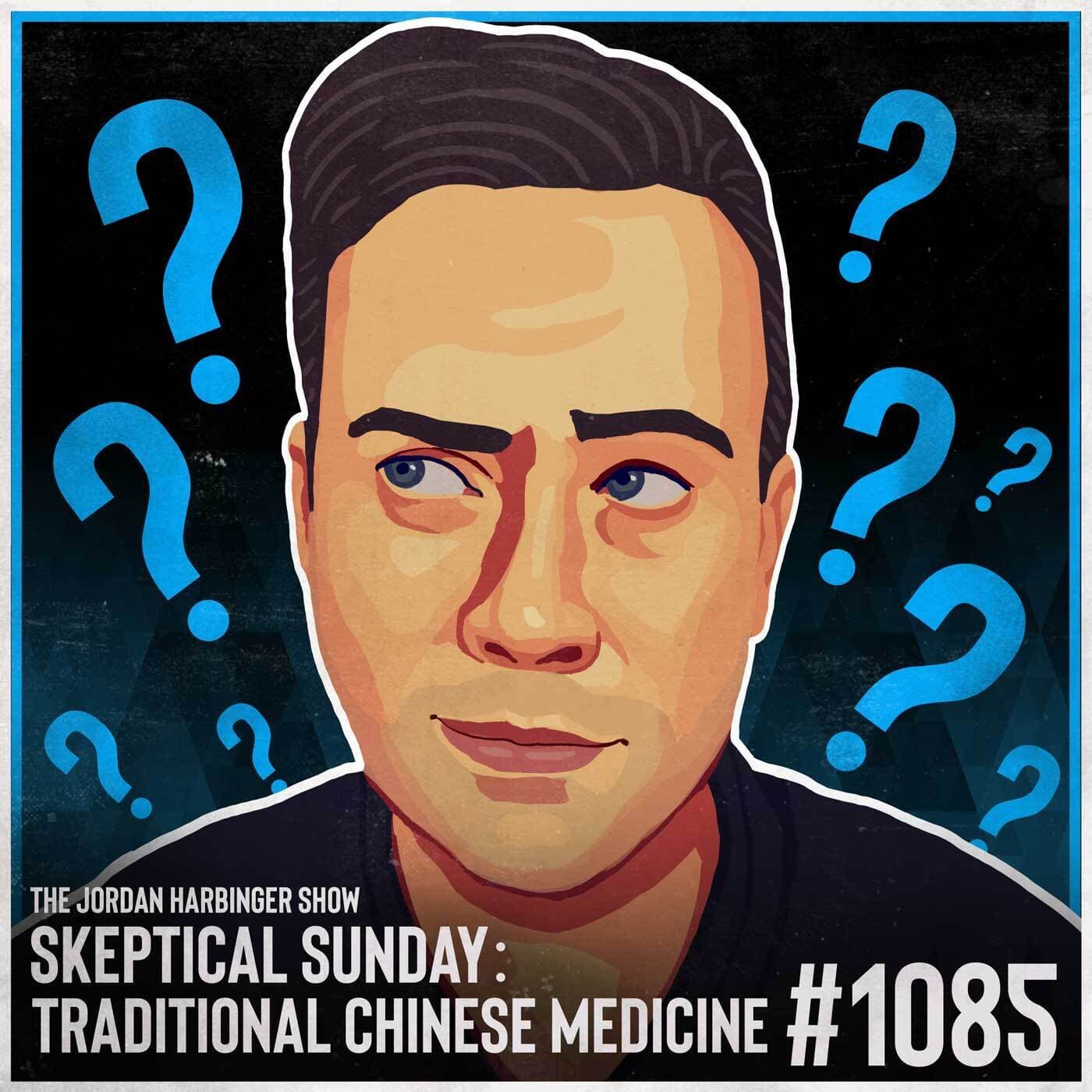
Podcast Episode Notes: The Jordan Harbinger Show - Episode 1085
Episode Title
Traditional Chinese Medicine | Skeptical Sunday
Guest
Michael Regilio Description In this episode, Jordan Harbinger and comedian Michael Regilio dissect the phenomenon of Traditional Chinese Medicine (TCM) and its rise to fame, exploring its origins, practices, and the skepticism surrounding its effectiveness.
---
Key Topics Discussed
- Historical Context of TCM
- TCM was largely abandoned in China by the 1800s.
- Mao Zedong revived TCM in the 1960s due to a healthcare crisis, promoting it despite personal skepticism.
- Core Concepts of TCM
- Key elements include chi (life force), yin/yang balance, and meridians.
- These concepts lack scientific validation, with studies highlighting inconsistencies and data fabrication.
- Acupuncture
- Placebo Effect: Many studies suggest that acupuncture's effectiveness is largely linked to the placebo effect.
- Sham Acupuncture: Studies show similar results between real and sham acupuncture, questioning the traditional meridian-based approach.
- Scientific Scrutiny: Difficulty conducting double-blind trials complicates the validation of acupuncture's efficacy.
- Cupping
- Popularized by athletes, cupping may provide temporary relief by creating controlled tissue damage.
- Risks include skin damage and exacerbation of existing conditions.
- Chinese Herbal Medicine
- Represents a more promising aspect of TCM, as some remedies, like Artemisinin, have led to modern breakthroughs in treatments.
- Ancient practices should be approached with caution but can provide insights when tested with scientific rigor.
---
Key Arguments & Insights
- Skepticism vs. Tradition: While TCM has historical significance, the modern application of its practices often lacks scientific backing.
- Placebo Considerations: The efficacy of treatments like acupuncture and cupping may stem from psychological factors rather than physiological ones.
- Potential in Herbal Medicine: Despite skepticism of TCM, herbal medicine can yield effective results if subjected to scientific scrutiny and validation.
---
Discussion Highlights
- Mao's Contradictions: Mao's promotion of TCM contrasted with his belief in Western medicine, revealing political motivations behind TCM's resurgence.
- Cultural Impact: TCM's integration into Western medicine highlights a complex relationship between tradition and modern healthcare.
- Placebo as Treatment: The role of the placebo effect in various treatments underscores the importance of mental and emotional factors in health.
---
Conclusion
The episode invites listeners to critically evaluate Traditional Chinese Medicine, balancing the respect for historical practices with the demands for scientific validation. The discussion encourages a nuanced perspective that recognizes potential benefits while remaining skeptical of unproven claims.
---
Connect with the Hosts
- Jordan Harbinger: [Twitter](https://twitter.com/JordanHarbinger), [Instagram](https://www.instagram.com/jordanharbinger), [YouTube](https://www.youtube.com/c/THEJORDANHARBINGERSHOW)
- Michael Regilio: [Twitter](https://twitter.com/Michaelregilio1), [Instagram](https://www.instagram.com/michaelregilio/), [YouTube](https://www.youtube.com/channel/UCpXvzUcF00hUwrjKkABEjpQ?view_as=subscriber)
---
Suggestions for Future Topics Listeners are encouraged to suggest topics for future episodes of Skeptical Sunday by reaching out to Jordan at [jordan@jordanharbinger.com](mailto:jordan@jordanharbinger.com).
Support the Show For deals and ways to support the show, visit [jordanharbinger.com/deals](https://jordanharbinger.com/deals).
---
*Note: This summary encapsulates insights from the podcast episode and aims to serve as a standalone overview for those interested in the subject matter.*
Written by AI. May contain mistakes. Listen to the episode to check what was said.
Transcript
Automatic transcript. May contain errors.0:28We're spending more than ever.
0:34Welcome to Skeptical Sunday. I'm your host, Jordan Harbinger. Today, I'm with Skeptical Sunday co-host, comedian Michael Regiglio. On the Jordan Harbinger Show, we decode the stories, secrets, and skills of the world's most fascinating people and turn their wisdom into practical advice that you can use to impact your own life and those around you. Our mission is to help you become a better informed, more critical thinker. And during the week, we have long-form conversations with a variety of amazing folks from spies to CEOs, athletes, authors, thinkers, performers. On Sundays, though, we do Skeptical Sunday, where a rotating guest co-host and I break down a topic that you may have never thought about and debunk common misconceptions about that topic, such as why tipping makes absolutely no sense, diet supplements, the lottery, ear candling, self-help cults, bottled water, energy drinks, diet pills, astrology, recycling, internet porn, and more.
1:24I find myself saying that every time. I have a medley of topics I could mention, But I always use the internet porn one, Michael. I don't know why. I don't know why. Maybe I got a problem. If you're new to the show or you're looking for a handy way to tell your friends about the show, it sounds weird to say the word handy. Well, never mind. I suggest our episode starter packs. These are collections of our favorite episodes on persuasion, negotiation, psychology, disinformation, cyber warfare, crime and cults, and more. It'll help new listeners get a taste of everything we do here on the show. Just visit jordanharbinger.com slash start or search for us in your Spotify app to get started.
1:56Today, traditional Chinese medicine might have started in China, but these days it seems to be everywhere. Acupuncture is practiced worldwide. The ancient practice of cupping is growing in popularity. And herbal medicine is in pretty much every pharmacy. Everybody knows somebody who swears by one or maybe even all of these practices. But is traditional Chinese medicine effective medicine passed on for millennia or ancient superstition here in the modern world? Today, skeptic and comedian Michael Regilio is here to express the Tao, or is it Tao, I would say Tao, of how traditional Chinese medicine works, or doesn't work.
2:33How's it going, Michael? Hey, Jordan. How are you feeling today? I'm feeling peachy, man. Peachy. Interesting. Did you eat peaches to become peachy? Because in traditional Chinese medicine, maybe. I don't know. I didn't come across that. I thought you were just making a really terrible dad joke. But I know that when you eat certain things, like cold or hot foods, something, something, your energy. You know what I was really getting at is, are you feeling balanced? Well, I'm not falling out of my chair. So I'm physically balanced. I have a balanced diet, a balance between work and leisure. So I'm not exactly sure what you're asking.
3:06What do you mean? Am I feeling balanced? I simply meant your yin and your yang. Of course. How could I forget? No, I'm not so sure about that. I don't really know. I don't know what my yang is up to today. Well, that's interesting because that is the crux of traditional Chinese medicine. A traditional Chinese healer is trying to restore balance between these two complementary forces that flow through not just your body, but throughout the entire universe. According to traditional Chinese medicine, a person is healthy when harmony exists between these two forces, and sickness occurs when there's more yin than yang or more yang than yin.
3:44Okay, seems like the obvious next question is, what the heck are yin and yang? We've all seen the graphic representation on posters in teenagers' rooms and on the walls of suburban dojos. For lack of a better example, it looks like a white sperm and a black sperm positioned head to tail in a circle. Sixty-nining? Oh, God. Okay. You couldn't have thought for like one second longer and come up with a less crass description? Tadpole would have worked. You could have added the word whale. A sperm whale looks close enough, like a beluga thing. All right, that's totally different, but whatever. And you could have left out the other bit.
4:23Fine. Okay. But even then, these cliched posters I'm talking about, they're just graphic representations of something actually unseen, an invisible life force. Yin is considered the female of these two forces. For an ancient, highly patriarchal culture, I'm actually kind of impressed they chose to represent females. The female force, Yin, is considered cold, dark, and passive. Just once, I'd like to be surprised by an ancient patriarchal culture, but not this time, apparently. Yin's opposite won't surprise you either, then, because yang represents masculinity. Light and warmth actually sound more female than male.
5:03Yeah, ironically, they got yin and yang mostly backwards. Although the female yin does also represent earth, softness, and rain. So those are nice. As well as blackness, evil, smallness, and even numbers. Okay, even numbers. So ancient Chinese also had an opinion on even numbers? Yeah, as we'll see, much of traditional Chinese medicine isn't that far removed from numerology, astrology, and stuff like that. Yang represents heaven, sunshine, hardness, goodness, the color white, largeness, and of course, odd numbers. According to ancient texts, the interplay between these forces make up qi, which is the life force that flows around and through our bodies.
5:53So yin and yang represent two opposite polarities within the force of qi, like the positive and negative polarities in electricity? Yeah, actually that's really good. You might have a little side hustle in traditional Chinese medicine in your future, Joe. I like poking holes in people. Okay, let's leave that there. But what is chi, like scientifically speaking, this thing that they thought was chi? Okay, look, after a lot of research, I can only say with some generosity that chi is a metaphor, an attempt by ancient peoples to explain complex systems like nature and the human body. If I wanted to be really generous, I'd say it's kind of like the force in Star Wars, which that's pretty cool.
6:37Yeah, that's definitely pretty cool, but it's also definitely made up. But I'm guessing we're going to get to that shortly. Yes. And traditional Chinese healers try to correct the imbalances of qi and yin and yang through the practices of herbal medicine, acupuncture, and cupping. These practices originated as far back as 22 centuries ago. Wow. So people have continually researched qi and yin and yang for 2 ,200 years or so. Well, frankly, that's incredible and impressive. And one would normally think speaks to some effectiveness in some way. No, because right off the bat, there's a misconception there.
7:18Traditional Chinese medicine. So can we just call it TCM? TCM, but people might confuse that with Turner Classic movies. I think it'll be all right. Okay, fine. So back as far as the 1600s, TCM had been written off as superstition in China. And by the 1800s, TCM had pretty much been completely abandoned. The Chinese were adopting Western medicine and leaving TCM to the fringe view. So even 400 years ago, people had walked away from TCM and moved towards Western medicine, which, by the way, at that point, Western medicine was probably something like, oh, she's got the vapors. I'll go get the leeches.
7:58So that's surprising. It's so strange to me they were ditching this stuff way back then because it's so huge these days. So what happened? Was there an event or something along those lines? Let's put it this way. As my weird social studies teacher at high school used to say, communism doesn't work. And that's what happened. Okay. What do you mean by that? Chairman Mao and the Chinese Communist Party found themselves in a bit of a pickle in the early 1960s. They had promised healthcare to everyone, but didn't have the doctors, facilities, or medicines to make good on that promise. TCM offered a solution.
8:36Practitioners didn't require the same extent of training as Western doctors. The doctor shortage of China was particularly pronounced in rural China, and rather cynically, the Communist Party kind of assumed these, for lack of a better term, hicks wouldn't know the difference anyway. So this gave rise to what they called the, quote, barefoot doctors, which were basically just farmers who had taken a crash course in TCM. Chairman Mao was happy as he was able to fulfill his promises. And in general, people were happy as they had medical care. And after a several centuries long break, TCM came roaring back.
9:13I guess everybody was happy with that, right? So Mao, he looks good. The people who are getting and treated look good and feel good. Well, except for the people who actually needed medical treatment, this was a clever solution. Yeah, in fact, Mao himself was an avowed believer in Western medicine. His personal physician quotes him as saying, quote, even though I believe we should promote Chinese medicine, I personally do not believe in it. I do not take Chinese medicine. So he really could not be any clearer on that. That's funny, it's so blunt. But how did so many people in America then come to believe in TCM?
9:53How did it make its way here and then suddenly become like ancient Chinese technology that they don't want you to know? Some of the credit goes to, and I'm sure you've probably already guessed this, Richard Nixon. Yeah, I was absolutely not going to guess Richard Nixon. What does he have to do with any of this? In 1972, Richard Nixon famously visited China. And as always, a press pool followed. In that press pool was James Reston of the New York Times, a political reporter. While there in China, Reston fell ill and needed an emergency appendectomy. Oof, ouch. Getting sick in a foreign country is scary.
10:28Getting surgery in a foreign country would be really scary, especially if it's China in 1972. So I had a root canal in the former East Germany, which was very developed by the time I got there in the 90s. It was no longer East Germany, of course. and the dentist, he had been trained in the Soviet Union and just happened to be out of anesthetic or didn't use it. He only had that banana flavored spray. This spray is what they use when they're like, oh, I'm gonna scrape something under your gum. They don't need to inject you. That's all he had, but then I got a root canal with that and it hurt really bad.
11:02They had to hold me down, not the dentist, obviously he was working. His assistants held me down in the chair. It was hopefully as close to being tortured as I will ever get. And meanwhile, there was an entire room full of anesthetics in the next room over, and it was just this stereotypical evil East German dentist. No, we have no anesthetic. Yeah. All right. He really just didn't like me at all, I think, is what it came to. Okay. American, huh? No anesthetic. Sorry, we're out. All right. Chinese doctors gave James Reston, who we were originally talking about, almost entirely Western medicine when they performed surgery on him.
11:40He had normal anesthesia, antibiotics, et cetera. But as a little showcase for TCM, his post-surgery routine included acupuncture. Reston, who, as I said, was just a political reporter, he had no medical training or expertise to judge this, but he went back to America and he wrote a now-famous op-ed in the New York Times, completely touting this amazing ancient procedure, acupuncture. Even though Reston was clear in the op-ed about the fact that the acupuncture was just a post-procedure addition to his medical care, the rumor mill did what the rumor mill always does. And it churned out these fantastical stories here in the US about how only acupuncture was used and no Western medicine.
12:27And as a result, TCM in America became all the rage, which it remains. With roughly 38 ,000 licensed acupuncturists in the US, it's safe to say they are everywhere. In fact, it's so easy to find one that just out of curiosity, I asked my phone where the nearest one was. Can you do the same? I'd be curious. Where's your nearest acupuncturist? Sure. I don't even necessarily need to use my phone. My wife's parents know plenty of these folks, and I've had it done for pain, and I've done an entire Skeptical Sunday episode on acupuncture alone. It's everywhere. I live in the Bay Area here in California.
13:05There are literally hundreds of places to get it around here, but I last had it next door to my house because this friend of my wife's parents just happened to roll through, and I was like, sure, I'll do it. Wow. Okay, so you're like 15 yards away. Mine says 0.3 miles away is the closest acupuncturist, but then it tells me 0.4 miles away, there are three and a half mile away, there's even more acupuncturists. And when I hit the button for directions, the phone defaults to walking directions. That's how close my nearest acupuncturist is. Okay, but in truth, you're in LA, and I'm guessing that's not the national norm to have acupuncture within walking distance of your house.
13:44Yes, I anticipated that you might to say that. So I had a friend in Iowa do the same. And he said there are four in his zip code. The nearest one is under a mile from his house. Wow. Point taken, I guess there's a lot of acupuncturists in America. Sheesh. Yeah, that was a good one. Compare the 38 ,000 acupuncturists we have here to the measly 18 ,000 podiatrists in the US. It's really wild how many acupuncturists there are in the US. Could you imagine if you went to China and there was a Navajo medicine man on every corner in China? Right. Hey, like nearest Navajo medicine man. I need some burning herbs blown in my face.
14:23Oh, you just walked down the road that way. And if you go up to the third floor, that guy's a little bit better, in my opinion. Wow. So it sounds like it's big business giving people little pokes. Absolutely. Acupuncture brought in$27 billion in 2021. So when looking at the reasons these treatments are perpetuated, you really can't overlook the money. And that's not to say that there aren't other reasons. It seems like a good time to ask, since many people won't have recently heard our episode on acupuncture, which was a zillion years ago in podcast timing. What exactly is acupuncture, besides stabbing your way to the balance of yin and yang and whatnot?
14:59Okay, acupuncture, like all things TCM, has to do with qi, which, for the record, is spelt Q-I if you're looking to Google any of the stuff we're talking about later. And chi, which again is an invisible energy, it flows through invisible meridians in the body. Meridians are like channels through which the chi flows. According to TCM, there are 12 major meridians that connect to organs, tissue, veins, nerves, cell, atoms, and mother-freaking consciousness itself. And so then the needles are inserted into the meridians to readjust the flow of the chi in order to readjust the balance between the yin and the yang.
15:42Okay, so is any of it real? Are the meridians, did they turn out to be nerve pathways that everybody has? Does the human body have 12 of those? Can scientists see those on a cadaver or measure or detect any of this stuff? Short answer, no. Okay, that's a really short answer. Fine. Longer answer. Hell no. Am I being snarky? Hell yes. Is there more to it? Yes. The big question is if the acupuncture is doing anything or is the relief people receive, is it all in the brain? You know what will leave you feeling balanced? The fine products and services that support this show. We'll be right back. If you're wondering how I managed to book all these great authors, thinkers, and creators every week, it is because of my network, the circle of people I know, like, and trust.
16:30And I'm teaching you how to build yours for free over at six minute networking.com. This course is about improving your relationship building skills. It's not cringy. It's not awkward. It's not going to make you look bad or the people you reach out to connect with feel bad. It's going to make you a better connector, a better colleague, a better friend, a better peer. It's not just work stuff. It's great for social, especially even if you're retired, reaching out to people, getting some systems going, keeping in touch with old friends, maybe even making some new ones. Six minutes a day is all it takes.
16:55And many of the guests on the show subscribe and contribute to the course. So come on and join us. you'll be in smart company where you belong. You can find the course at sixminutenetworking.com. Now, back to Skeptical Sunday. First of all, if I'm not mistaken, my health insurance when I lived in L.A. covered acupuncture. And I know that there have been studies showing some merit. And of course, there's all the people I know who swear by it. We did the episode on acupuncture. A lot of people emailed in and were like, okay, okay, but you're wrong about a few things. And I use it for my pets or whatever.
17:28I did it for pain in my shoulder. and I am open to the idea that it's just placebo. But first of all, the placebo effect is certainly real and measurable and well-studied. It certainly sounds like there's a there there because I will say my shoulder pain was remarkably degraded and I assumed it was placebo, but I'll take it. Fine, sign me up. Absolutely, I get that. I understand that. But you mentioned the studies and I wanna talk about them. Let's start with those studies because you're right. There have been studies and studies do show acupuncture to be effective, but there's a problem, and it's a big problem.
18:00Most of the studies that prove a benefit were conducted in China. And these Chinese studies stand in contrast to most studies done outside of China. And scientifically speaking, when you have, that's a big red flag. And I don't just mean the one with little yellow stars on it. So it sounds like you're saying the Chinese cherry-picked or maybe even fabricated the data or the results. I don't have to say it. China's food and drug regulators unearth widespread data fabrication in these studies. Chinese regulators carried out a one-year review of clinical trials and concluded that more than 80 % of clinical data is fabricated.
18:39And this doesn't just go for acupuncture, by the way. These studies included all the Chinese pharmaceuticals. Buyers of Chinese medication online, myself included, 10 years ago. Beware. Yeah, I believe that would be called caveat di emperor. Sometimes I know a joke is clever, which makes it even more annoying somehow. So Chinese studies can't be trusted when it comes to this stuff, I'm guessing. I mean, that's what it sounds like. Here's the thing. Actually, most studies of acupuncture can't really be trusted because of the impossibility of performing a true double blind study. That is to say, a study in which both the researcher and participant don't know which is the placebo and which is the actual treatment.
19:24I see. I would imagine that would be difficult because how could the person administering acupuncture not know that they're administering acupuncture? It's not like they're giving somebody a pill and they don't know if the pill is placebo or real. They have to stick needles in meridians or whatever. Right. Yeah. Yeah, and obviously the flip side of that is how could the person receiving the acupuncture not know they're receiving acupuncture? Right. So what does an acupuncture placebo even look like? I mean, a needle's a needle, and I guess that's where we get stuck. No pun intended again. Sorry.
19:55Placebo, you could, I don't know, try poking people with insults. Look, to do a proper scientific study, you need a control group, and that's just not possible with acupuncture. So in studies, the control group receives the placebo, right? Yes, exactly. So what some studies have done is to test acupuncture against what they call sham acupuncture. Basically, one group, they use the real meridians, by which I mean the imaginary meridians. And in the other group, they just randomly put the needles in non-meridian spots. And I'm guessing the problem with that should seem relatively obvious. right because why would it matter if needles were placed on imaginary meridians or imaginary non-meridians it all it sounds all the same i mean if you just put a needle anywhere and it'll maybe do something you're right because if it's not real and that's what you're testing for then you can't really check where the meridian is because you can't see it and it's not detectable anywhere unless you put the needle in it it does something oh yeah we're sort of caught in this weird loop.
21:03Yeah. And look, that's pretty much what the study showed. And these were large clinical trials conducted in Germany and the US. Yeah, not China then. Right, which is worth noting. And these non-Chinese trials consistently showed traditional acupuncture and sham acupuncture are pretty much the same decreasing pain levels for migraines, lower back pain, and knee pain. I'm steel manning this. It sounds like what you're saying is, hey, there is relief from acupuncture because migraines are tough to treat and lower back pain sucks and so does knee pain. So sign me up for acupuncture. Absolutely. And you'd be right.
21:39But is it the acupuncture or is it the placebo effect? There's actually a widely touted meta-analysis of acupuncture that shows a difference between real acupuncture and sham acupuncture. But in reading about this, there's a lot of critics of this meta-analysis. They point out that the differences are very minute between different people. Plus, there is like these huge criticisms of meta-analysis in general that I'm going to be honest with you, I don't understand. Yeah, a lot of that stuff is tough to understand because at first I was like, let me read this. And there's a lot of Greek symbols that are like, when you use lambda in the wrong way, then, and I'm like, oh, this looks like calculus.
22:19I am out. So I get it. This would be hard to understand anyway because it sounds as silly as doing a meta-analysis of like astrology or something. Where do you start? Yeah. Meridians and qi simply aren't proven, and balancing yin and yang isn't medically sound. And what are the odds that at the end, science ends up going, hey, look, turns out what ancient people believed with no understanding of biology, and they were totally right about all these invisible things they made up. Yeah, it's like saying, what if ancient people were right about sacrificing virgins to volcanoes? First of all, you and I both would have been in deep trouble back in high school.
22:59That was a private story I told you. Not anymore. Okay, look, we need to understand if the act of needles stabbing the skin does something real, like tangible and scientifically provable, or is it just all placebo? So I guess my little gripe with this is, it sounds like by saying placebo, you're almost saying, oh, this is worthless. And yes, I'm baiting you because we've done several episodes on the placebo effect, and I've got even more stuff about it in the pipeline. And it turns out that it's quite a legit way to treat pain. Yeah, it's awesome. In fact, in researching this episode, I came across several full-throated defenses of the placebo effect by some of the most reputable institutions in medicine.
23:41One article from Harvard Medical School was the one that really set me straight on placebos, particularly when it comes to pain management. Pain is in the brain. Ooh, that is dangerously close to a Cypress Hill lyric, I think. That it is. And I may be insane in the membrane, but the fact of the matter is the way our brain perceives the messages from pain receptors is pain. That's just what pain is. So if placebos convince our brains to release endorphins, which relieve pain, the pain relief is as real as if you'd taken a pharmaceutical drug without the risks of taking pharmaceutical drugs. Hey, placebos, like seriously, no disrespect.
24:24I get you. Yeah. I mean, you can't be allergic to your placebo. I don't even know. Maybe I spoke too soon. It seems like that could be one of the things that triggers is allergies, but whatever. So you asked if acupuncture might be doing something more, what would be the more if the idea is to treat the pain? Yeah. So actually, this is where it gets murky because serious professionals who I respect haven't ruled out that causing micro injuries might be triggering an immune response or sending anti-inflammatory proteins and other infection fighting and wound healing chemicals to these micro injured areas.
25:02Okay. I can get behind that, right? You're sticking a needle into something and maybe your body's like, hey, send more blood there. Because I'll tell you, the areas where I got poked by these little needles definitely turned red and some of them got a little sore and yada, yada. But also, on the other hand, the words might be in those sentences that you just previously spoke. It seems like they're doing a little bit of heavy lifting there. Yeah. Some also propose that these micro injuries might, and you said it, increase blood flow to the area or might activate nerve receptors. They're still hypothesizing about it, but there's not a lot of evidence.
25:40Gotcha. Yeah, and you're still using the word might quite a bit. Yeah. Look, in this case, might definitely doesn't make right. So what if they haven't ruled it out? They also haven't ruled it in. Reputable people do wonder if acupuncture is doing something more than the placebo effect. But the fact is, all the evidence suggests that on a neurological level, it's treating pain just like a placebo does. So for pain relief, it sounds like acupuncture gets a solid maybe. Yeah, I don't know. I'd go so far as to say a solid yes for pain treatment, as long as you believe. For skeptics, I couldn't help but wonder if the placebo effect is less or even no.
Read the full transcript
26:26That might be the study we're looking for. That's the control group. I'd be interested to see in believers versus skeptics. So maybe that's the control group they're looking for. And then again, look, I don't believe that much in acupuncture at all. I did the episode on it and I'm extremely skeptical. So when I, like I said earlier in the show, I got a chance to have a university professor from China who teaches acupuncture at like a big respected institution of Eastern medicine or Chinese medicine, he was just hanging out. And he's like, oh, your shoulder hurts? I was like, yeah, I've got something called thoracic outlet syndrome.
27:00It's like impingement in my shoulders. And he's like, oh, let me jab you with some needles. Right. So I was like, what the hey, I'm sitting here in my brother-in-law's house. Why not? I was quite surprised when most of the pain went away almost immediately because I was kind of like, I am only doing this for shits and giggles, really, because you're here and you seem like a nice guy. I don't think this is going to work. But look, it's not a huge surprise because placebo is legit. And maybe it would have worked even better if I wasn't skeptical and decided before I even started that it probably wasn't going to do anything.
27:33I don't know. But it certainly did something, placebo or not. And it lasted for several days. It's not like I woke up and I was like, ow, my shoulder. Oh, wait, I had acupuncture. This isn't supposed to hurt. I spent a good week or two where my arms felt more or less fine. That is amazing. Look, I don't believe in much either, but I am really determined to find out. And a lot of people have been working with acupuncture. In fact, in 2009, the UK's National Institute for Clinical Excellence... That is one of the most British sounding names ever. Yeah. Look, Jordan, they still have a king. Everything over there is the royal this or the excellency that.
28:09So in 2009, the United Kingdom's National Institute for Clinical Excellence did recommend acupuncture for back pain. But I have to keep saying this, back pain is weird. Specialists have long understood there's a very real mental element to overcoming it. Just for comparison, I looked up what our National Institute of Health has to say about acupuncture, and I found what they were saying on the subject on their website to be kind of like how polite atheists talk about religion. They were like, it's good for some people, And sure, you can't prove it, but hey, people aren't dumb for believing it.
28:48That's fine. Yeah, you said for some people acupuncture is effective. Okay, sure. It's effective-ish. But for certain things, it can assertively be said it's not effective. And here's the thing. Acupuncture makes a lot of claims. Let's shut a few of those down. Yeah, let's do that. Claims such as? Okay, the evidence strongly suggests it is not effective for rheumatoid arthritis, stopping smoking, irritable bowel syndrome, losing weight, addiction, asthma, stroke, tinnitus, or thinking you're Napoleon Bonaparte or whatever else they are claiming it works on. But it doesn't hurt to try if you're suffering from those things, because you might end up with almost like a placebo boost thinking, I can quit smoking because I jabbed needles into my forearm, so I don't need a cigarette right now.
29:39I mean, it seems like you could just as easy snap a rubber band around your wrist or something. You don't really need acupuncture for that, I suppose. Yeah. You might say that's like the Dumbo's feather effect. And you asked if it does any harm though. And I guess that all depends on how you feel about, say, death. Because in extremely rare cases, it can be fatal. I found examples of it. Though, in fairness, the only cases of death I came across were not in the US. But really strange one instance that I found was in rural China, in which it said that the needles punctured the person's organs. How the hell?
30:15I know I just said I had acupuncture. I read the story where the needle went into someone's organ. The other one, a person had a punctured lung. These needles are so tiny. They're like hairs and their needles. There's a little, for lack of a better word, handle on it that they can use to tap it in. Obviously, they use the wrong needle if they went and hit an organ or your lungs. There's no way this thing could go across anything that's not just skin and light tissue. Sounds like some barefoot doctor using a hammer and chisel because they didn't have acupuncture needles and accidentally killing someone.
30:45I just don't know how you could screw up that bad. Yeah, it was shocking to me. But the fact of the matter is soreness, bruising, infection, those could happen anywhere. And they do happen very often as a result from acupuncture in whatever country you receive it in. But for the most part, it's pretty darn safe here in the US. Yeah. The guy who did it on me from China, he was using alcohol pads, just like you would on a site you were going to use an injection on. Now, I have had acupuncture at some of those like Chinese foot reflexology places that my mother-in-law will take me to. And they're just, let me jab this needle into your back.
31:17And I'm like, shouldn't you sanitize that? I just worked out. You just injected me with my own sweat and whatever the hell else was on my skin. Thanks, man. And some of those got lightly infected. I was not happy about that. Wow. You know who won't drive a needle through your spleen? the amazing sponsors that support this show. We'll be right back. Thank you for listening to and supporting the show. Your support of our sponsors keeps the lights on around here. All the deals, discount codes, and ways to support the show are all searchable and clickable over at jordanharbinger.com slash deals. And if you can't remember a code or you can't remember the sponsor, go ahead and email me jordan at jordanharbinger.com.
31:51I am happy to surface that code for you. It's that important that you support those who support the show. Now for the rest of Skeptical Sunday. things are safe in the u.s aside from that place cupertino due in large part to regulations and certification i would imagine and how exactly is acupuncture regulated what training do you need what certification goes into becoming an acupuncturist certainly you can't just tell people that you are one and start hammering needles and there's no way that we allow that except for that place in cupertino yeah i would like to see their certification because most states require a master's degree in acupuncture and Eastern medicine.
32:31And then there's the state exams and the actual certification process. So yes, it is a process. Good. Okay. So most states, you said, are there states where just anybody can poke you with needles and call it acupuncture? Absolutely not. A few states, when I say that you have to get the certification, in a few states, there is no certifications. Only doctors and nurse practitioners are allowed to administer acupuncture in Oklahoma. They allow chiropractors. Plus, the needles are highly regulated by the federal government. They are coming out of sterile packages for one use only, unless you go to the place you went.
33:05Except for that place in Gupartina, where who knows. So a person wanting to try acupuncture, it sounds like they're in good hands if they're in the United States. Yes. In fact, I am not trying to belittle acupuncturists. I've been to a few. They were lovely people. I even allowed students to practice on me at an accredited college here in LA. You've also had acupuncture. I feel like you buried the lead a little bit there. So what was it like for you? Did it help with whatever you went in for? It was lovely with lovely people. I laid on a bed with needles sticking out of my face and my arms and my chest and legs.
33:40And I meditated to new age music for like 30 minutes. And when it was all over, I felt chill and good. What ailment were you there for? Arm pain. It's kind of similar to me, actually. So did it help? No, not even a little bit. Unless you account for the fact that over the course of months of acupuncture and not overusing my arms, it got better, which is exactly what happened the second time in my life I had arm pain, but only took a few months off of strenuous work and did no acupuncture. Kind of turns out that we humans heal with or without acupuncture. But you know what? In truth, it was lying in that acupuncturist's office that I first tried meditating.
34:24You said strenuous work, but dude, you're a comedian. What are you talking about? Yeah, Jordan, there's an old saying inside every comedian, there's a great waiter. And I'm not an exception to that rule. I was waiting tables at that time in my life. Yeah. I too don't think I could hold my arm up in that sort of like hand behind the head position. I don't even think I'm flexible enough to hold a tray like that. I don't know if they really do that. Good thing I'm not a server. Yeah, actually, I knew a bunch of servers back in the day when I was doing it who had tendinitis in their wrist and problems like that from carrying those trays around.
34:59Oof, yeah. That's a job I could never do. That's why I always tip. But how do you know the acupuncture did nothing? You said you healed both times, so... I don't know if it didn't do anything, and neither do the acupuncturists, which is pretty strange for a medical procedure. Have you ever met someone after having a broken bone set or LASIK surgery or disc replacement in their back that couldn't tell you if it actually did anything? Medicine is a science. It's based on being able to objectively tell if it's doing anything. Yeah, that's a very fair point. That's really good. With acupuncture, you kind of have to go, my brother-in-law had it same day as me, almost the same problem as a frozen shoulder.
35:45And he's like, hey, do you think it did anything? And I'm like, I think it maybe got rid of some of my pain. What about you? He's like, yeah, I think maybe it did. But you're right. When I separated my shoulder and they put it back into place and put my arm in a sling, it was like, oh yeah, that worked. My arm is back in the socket. Yeah, that's what medicine should be, objective results. And look, while I'm on the subject, and again, nothing but love for acupuncturists since I've known a few and they are truly lovely people, but I looked up what is on the California certification exam, and it's a bunch of stuff about the 12 primary meridians and their acupoints, and then something about the eight extra meridians and divergent energy channels, and this is upsetting to me.
36:30Yeah, it's a state board test on imaginary things, which is not great. Yeah, an acupuncture board test should be about hygiene and the safest ways to poke people with a needle. And that's kind of it. Keep the witchcraft out of the state government, please. If you were trying to stay on the good side of acupuncturists by saying they're lovely people eight times in a row, I'm going to go ahead and guess that the witchcraft comment ended it. But TCM is not all acupuncture. I know people are like, hey, I thought this was traditional Chinese medicine. All you're talking about is acupuncture. What about the cupping and the herbal medicine and all that stuff?
37:05Great question, because those are two totally different treatments. So let's go with cupping first. All right. So the obvious question is, what is cupping? It is a hickey. Okay, I'm waiting for you to expand on that, but you seem to have stopped talking. Fine, I will expand on it, but you're not going to get any further explanation out of me. It's just a hickey. Okay, so it sounds like cupping sucks. Yes. Cupping is a technique in which a practitioner takes a glass container, like a cup, heats the air inside, usually with fire, then places it directly on the skin. When the hot air inside cools and condenses, you get suction.
37:48Yeah, I have seen it done in YouTube videos. I actually tried it myself, not for any particular ailment. I just wanted to do it because where else am I going to do it? It's quite the production. There's a whole sort of showmanship element to this cupping thing. Right. Yeah. And that's actually the whole point. When you combine the fire show with the cooling air beginning to suck on your skin. It's pretty cool. It looks and feels like some ancient wisdom at work. I know it leaves a crazy, kind of scary-looking patchwork of bruises on your back or wherever they do it, but what else? You won't be surprised to learn that it's correcting chi and balancing the yin and the yang, but just like acupuncture, modern people assign different reasons to the benefits than the people who created it.
38:33In this case, they say it improves blood flow, which in a way it definitely does if by improvement you mean it increases blood flow to the capillaries until they break. Oh, that's why it leaves the hickey looking round bruises. Oh, that makes so much sense. Okay. Yeah. And a lot of them. In fact, anyone who's ever seen a person post cupping knows it's like crazy what it looks like on their body. They look like they've been attacked by an octopus. Yeah. Or made out with an octopus if it's on the face. I've seen, I remember when I first saw it, I saw this girl who she was wearing like a tank top and she had all these bruises.
39:11And I remember just being so confused and thinking, what could you have fallen on that would have done that to you? And I remember looking at the guy and being like, did he do that to her? How would he have done that to her? They seem happy. She doesn't seem scared of him. I don't understand what's going on. So I remember Michael Phelps was covered also in the cupping marks during the Olympics. And that was totally bizarre. Yeah. In fact, that's where many people heard of the technique for the first time. In fact, Phelps made quite a splash with his cupping hickeys, huh? You are doing so well with keeping the puns down on this episode, but here we are.
39:45Now, look, you have no idea how hard it was for me to resist the temptation to say I was poking holes in acupuncture. And now you can't say you resisted it. Look, Phelps is an Olympic athlete. He's also maybe a smart guy, or at least he has smart coaches guiding his treatment and training. why would he do the cupping thing if it's total nonsense? Because I don't doubt for a second that it makes him feel good. Again, pain, especially minor pain like sore muscles, is partly just perception in our brains. Plus, like with acupuncture, if you believe it and you're getting an endorphin release from it, then it's real.
40:20You're experiencing pain relief. So what's the harm then with the cupping? If it's done repeatedly in the same spots, it can cause permanent skin damage. And if you already have eczema and psoriasis, it can inflame those conditions. Okay, so that's kind of a no for cupping. What about Chinese herbal medicine? This is a huge category. There's places in Chinatown that have what looks like hundreds of different herbs for different things that you can combine in tens of thousands, maybe more ways. It's like walking into a natural history museum or something when you walk into the Chinese herbalist.
40:54And in a way, we have saved the best for last. and I'm not being altogether snarky because with herbal medicine, there is a there there. Where's there? Everywhere. There's a there there everywhere. Okay, Dr. Seuss, how about you just tell us what you mean? Okay. To understand herbal medicine, you have to go back, like way, way back. 500 million years ago, the first plants appeared. Plants are sessile organisms. That is to say they are permanently restricted to spend their lives on the exact site of their germination. Can you imagine spending your life on the spot where you were born? It's not just born.
41:32You're spending your entire life on the spot your parents conceived you. Gross. It does not sound like a very good deal. Yeah, it's actually really rough. And as a result, plants have to deal with everything life throws at them while totally stationary, like environmental assaults, temperature, drought, co-evolving bacteria and fungi, and animals that want to eat them. And they do it all with one thing and only one thing to defend themselves, chemistry. I'm not sure I've thought of it that way, but obviously that's true. So if you're stuck in one spot for life, you're incredibly limited. And as a result of that, and the fact that they've had 500 million years to tinker with chemistry, plants have developed an absolutely jaw-droppingly massive array of chemicals.
42:21Chemicals that can be helpful to humans. They can be hurtful to humans. And some of these chemicals just make people trip their faces off. And like plants experimented with chemicals, humans have experimented with plants for thousands of years. So just statistically speaking, if enough people tried enough plants enough times, it stands to reason they would have figured out a few that act as medicine. So Chinese herbal medicine is actually effective? Yes and no. Most of it is not proven and almost certainly not effective. But a tiny fraction of it is, yes, effective. As effective as pharmaceutical drugs then?
43:03No, probably not. But pharmaceutical drugs owe a lot to plants and will continue to as chemists and pharmaceutical companies still look at plants and plant chemistry. Some Chinese herbal medicines have proven to be the basis for modern drugs. In fact, the Nobel Prize winning treatment for malaria artemisinin is a giant leap forward in treating this deadly disease. And the treatment was first written about in ancient Chinese texts. Wow. Here in the U.S., we live in something of a malaria-less bubble. I'm sure we have it somewhere, but I know in other parts of the world, it's a real problem. And malaria is no joke.
43:38It kills like a gazillion people every year. Yeah, you got that right. In fact, according to a recent WHO report, 97 countries have a malaria problem. About 3.4 billion people are at risk of getting malaria and 1.2 billion are at high risk. So not a joke. But thanks to Artemisodin, the mortality rate has dropped 42%. And Jordan, key component to the drug was first written about by Ge Hung in his book, A Handbook for Prescriptions for Emergencies in 340 AD. That is pretty amazing. I love that. I wonder though what passed for a handbook 1 ,700 years ago, like giant stacks of papyrus that you needed your hand servants to carry around.
44:23Most people couldn't even read back then, right? So who's like carrying a handbook of prescriptions for emergencies in their backpack, which wasn't invented yet, maybe? Very good questions that unfortunately I don't have answers to, but I like the idea of a handbook was called that because you needed your hand servants to carry it around for you. Just as amazing in that handbook, by the way, was his instructions to use cold water instead of hot water to extract the active ingredient, which helps preserve the chemical. So he was really onto something. This dude was making cold brew almost 2 ,000 years ago.
44:57So take that, Starbucks. For a disease that's still rampant, it's actually crazy to hear that there's been an effective treatment for almost 2 ,000 years. That's incredible. Actually, okay, that's where skeptics of herbal medicine point out that in drinking the Artemisia tea, the chemical is eliminated just too quickly from the body. And therefore, the original treatment, as it was written about, only led to a temporary reduction in symptoms. The old treatment just reduced fever. The new treatment, which exists now, which combines the Artemisia with modern medicine, created a sturdy, stable drug that actually knocks out malaria.
45:36It's still pretty damn impressive. Imagine the amount of trial and error before you figure this one out. It's unbelievable. It's really cool. Right. Which is why I say that there is a there there with herbal medicine. Plants have been running trial and error experiments and tinkering with chemistry for 500 million years. Some people say Aristotle was the first scientist, but I say plants were the first scientists. And people will accuse you of being on certain psychedelic plants for that opinion, for sure. That is probably true. But 25 % of drugs we use today are either directly from plants or modified versions of molecules we find in plants.
46:15So Chinese herbal medicine is kind of real? Kind of. Like with all things, knowledge is built on previous discoveries. So for my money, I'm going with the latest knowledge. I think that's way smarter than putting your health in the hands of ancient knowledge. I'm pro-medicine all the way. I'm just saying when it comes to acupuncture and cupping, those were just flawed ideas of ancient people making stuff up about energy flows and meridians. And again, no hate towards the ancients. They were doing the best they could with the information they had. But modern people turning to unproven ancient remedies aren't really doing their best with the information they have.
46:58They're doing the opposite. Well, I'm not sure that it's totally fair to make that assumption. People who are sick and they're in pain, they're, in my opinion, they're right to try pretty much anything to alleviate their suffering. Not unlike a young Michael Regilio who once had some arm pain. Yeah. Okay. Fair point. And by the way, now an old Michael Regilio has some everything pain. Yeah. You might want to try some TCM for that. I've heard it works if you believe it. Thanks all for listening to and supporting the show. Topic suggestions for future episodes of Skeptical Sunday to Jordan at JordanHarbinger.com.
47:32Show notes at JordanHarbinger.com. Transcripts in the show notes. Advertisers, deals, discounts, ways to support the show, all at jordanharbinger.com slash deals. I'm at jordanharbinger on Twitter and Instagram. You can also connect with me on LinkedIn. Love talking with you there. You can find Michael at Michael Regilio on Instagram. Tour date's up now there as well. We'll link to that in the show notes because nobody can spell Regilio. This show is created in association with Podcast One. My team is Jen Harbinger, Jace Sanderson, Robert Fogerty, Ian Baird, Milio Campo, and Gabriel Mizrahi. Our advice and opinions are our own.
48:05And I'm a lawyer, but I'm not your lawyer, and I'm sure not a acupuncturist or an herbalist. So do your own research before implementing anything you hear on the show. Also, we may get a few things wrong here and there, especially on Skeptical Sunday. So if you think we really dropped the ball on something, let us know. We're usually pretty receptive to that. Y 'all know how to reach me, Jordan at jordanharbinger.com. Remember, we rise by lifting others. So share the show with those you love. And if you found the episode useful, please share it with somebody else who could use a good dose of the skepticism and knowledge that we doled out here today.
48:34In the meantime, I hope you apply what you hear on the show so you can live what you learn. And we'll see you next time. If you're looking for another episode of the Jordan Harbinger show to check out, here's a trailer with Eric Aday. Pakistan was just one of the many bad things that happened to me in my life. I've had so many things happen and I just learned to get over it. You know, you get knocked down six times, you get up seven. And that's the only way I've ever known how to When I got out of the cab with the suitcases to leave Pakistan, the guy who was there was like, next time you come back, we'll show you around, we'll hook you up with some girls, you'll have a great time.
49:07And I'm humoring this guy. I'm like, yeah, sure, next time I come back. I know for a fact I'm never coming back to Pakistan. The country sucks. That f***ing country sucks. And I'm good at finding, like, good things that are everywhere. So it's early in the morning, and I go into international departures and there's this long line curving around the corner. I'm waiting in line, and the line goes all the way up this wall to where there's customs tables. And one of the customs officers sees me and flags me because I'm about six inches taller than everyone, and I get brought to another room. Finally, the guy who asked me if there was narcotics in my suitcase comes in, and he is holding these two sandwich-sealed things, and his exact words to me is, What is this?
49:45And I said, I don't know what it is. Yeah, sure. He says, This is all film. I said, Why are you showing me this? Because it came out of your suitcase. I felt like such a fucking idiot. Yeah, because I thought that the DEA was going to hook me up, you know, because they were going to see that I'm innocent. I truly thought those guys were going to be there to help me now. Because I wasn't guilty. So this shit doesn't happen to innocent people. Three years of my life for a crime I didn't know I was being used to commit. To hear the rest of one of the most harrowing stories I've ever heard in my time doing this podcast, check out episode 147 with Eric Aude.
50:23here on The Jordan Harbinger Show.
From the publisher
From Mao to Main Street: Michael Regilio unravels the surprising story behind Traditional Chinese Medicine's global rise on this week's Skeptical Sunday!
Welcome to Skeptical Sunday, a special edition of The Jordan Harbinger Show where Jordan and a guest break down a topic that you may have never thought about, open things up, and debunk common misconceptions. This time around, we’re joined by skeptic, comedian, and podcaster Michael Regilio!
On This Week's Skeptical Sunday:- The modern global presence of TCM (traditional Chinese medicine) is largely a result of political necessity rather than proven effectiveness. Surprisingly, it had been largely abandoned in China by the 1800s until Chairman Mao revived it in the 1960s as a solution to healthcare shortages — despite not personally believing in it himself.
- The scientific foundation of TCM's core concepts — chi, yin/yang balance, and meridians — remains unproven. Studies attempting to validate these practices face significant challenges, including the impossibility of true double-blind trials and concerns about data reliability, particularly in Chinese research where regulators found over 80% of clinical trial data to be fabricated.
- Acupuncture's effectiveness appears largely tied to the placebo effect, though this shouldn't be dismissed. Studies show "sham" acupuncture (needles placed randomly) produces similar results to "real" acupuncture, suggesting the specific placement of needles according to meridian theory may be less important than the overall experience and belief in the treatment.
- Cupping, while popularized by athletes like Michael Phelps, essentially creates controlled tissue damage through suction. Though it may temporarily increase blood flow, it can cause permanent skin damage if done repeatedly and may aggravate existing skin conditions.
- Chinese herbal medicine represents a bright spot in the TCM landscape, built on 500 million years of plant evolution and chemical development. Some traditional remedies have led to breakthrough modern treatments, like Artemisinin for malaria, showing how ancient wisdom can guide modern medical discoveries when subjected to rigorous scientific testing. This suggests that while we should approach traditional practices with skepticism, we shouldn't dismiss them entirely — instead, we can use modern scientific methods to identify and develop valuable treatments from traditional knowledge.
- Connect with Jordan on Twitter, Instagram, and YouTube. If you have something you'd like us to tackle here on Skeptical Sunday, drop Jordan a line at jordan@jordanharbinger.com and let him know!
- Connect with Michael Regilio at Twitter, Instagram, and YouTube,...
See Privacy Policy at https://art19.com/privacy and California Privacy Notice at https://art19.com/privacy#do-not-sell-my-info.