
In short
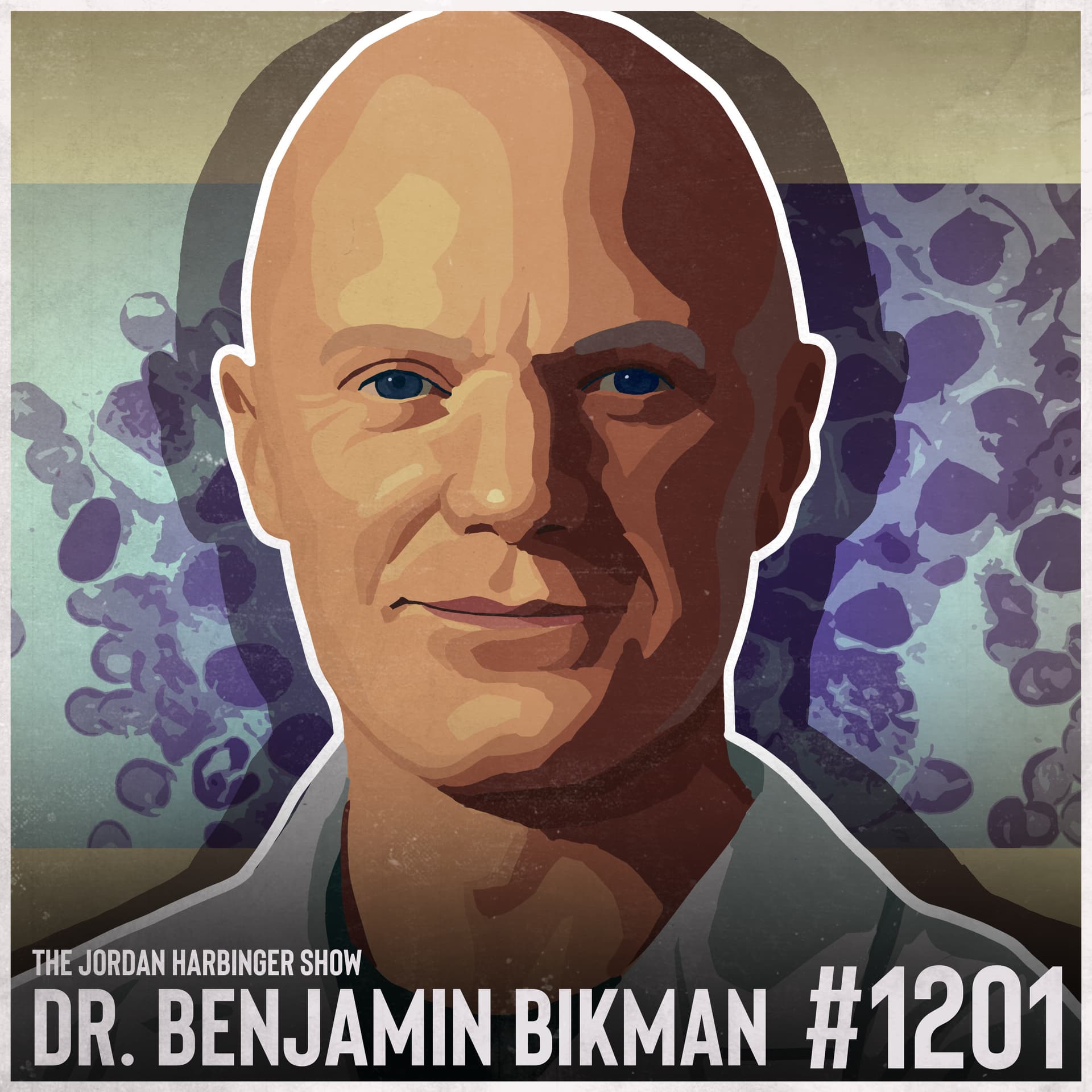
Podcast Summary: The Jordan Harbinger Show - Episode 1201: Benjamin Bikman | Insulin Resistance Is Killing Half of America
Episode Overview In this episode, Dr. Benjamin Bikman discusses the pervasive issue of insulin resistance in America, which affects approximately 50% of adults without their knowledge. He highlights insulin resistance as a precursor to several chronic diseases beyond diabetes, including Alzheimer's, high blood pressure, and erectile dysfunction.
Key Topics Discussed
- Understanding Insulin Resistance
- Definition: A condition where cells become resistant to insulin, resulting in elevated insulin levels (hyperinsulinemia) that lead to various health complications.
- Prevalence: Half of U.S. adults have insulin resistance, often undiagnosed.
- Misplaced Medical Focus
- Traditional medical focus is primarily on blood glucose levels, which overlooks the critical role of insulin in metabolic health.
- Elevated insulin levels can cause health issues long before blood sugar levels become abnormal.
- Effects of Insulin Resistance
- Impacts cognition – referred to as "type 3 diabetes" in medical circles due to its link to Alzheimer's.
- Links to hormonal imbalances, such as low testosterone in men and conditions like polycystic ovary syndrome (PCOS) in women.
- Reversibility of Type 2 Diabetes
- Type 2 diabetes can be reversed through dietary changes, specifically carb restriction.
- A study is cited where 11 newly diagnosed patients achieved reversal of their diabetes within 90 days by limiting carbs while consuming unlimited protein and fat.
Important Insights
- Fat Cell Dynamics
- The size of fat cells matters more than the total fat mass; large fat cells are more likely to contribute to insulin resistance.
- Differences in fat storage among ethnic groups can lead to varying susceptibility to insulin resistance.
- Lifestyle Factors Contributing to Insulin Resistance
- High carbohydrate diets and excessive insulin production from frequent snacking and sugary meals keep insulin levels elevated.
- Stress and inflammation also play a role but are not as easily controlled.
Practical Advice for Listeners
- Monitoring Health
- Encourage listeners to request fasting insulin tests when having blood work done.
- Healthy triglyceride to HDL cholesterol ratio is a good indicator of insulin sensitivity (ideally below 1.5).
- Dietary Recommendations
- Emphasis on reducing refined carbohydrates to help improve insulin sensitivity and overall metabolic health.
- Recommendations for mindful eating and avoiding triggers that lead to unhealthy snacking.
- Potential Benefits of Insulin Sensitivity
- Improving insulin sensitivity can lead to better hormonal balance, cognitive health, and overall well-being.
Conclusion Dr. Bikman’s insights emphasize the importance of understanding insulin resistance not just as a precursor to diabetes but as a fundamental factor in many chronic health conditions. He advocates for a shift in focus from blood sugar to insulin levels in managing health.
Additional Notes
- Resources Mentioned
- The episode suggests further reading through Dr. Bikman’s book and emphasizes the value of lifestyle changes over medication for reversing insulin resistance.
- Community Engagement
- Listeners are encouraged to share their thoughts and experiences related to insulin resistance, enhancing community understanding and support for health improvement.
Call to Action
- Share this episode with anyone who may be struggling with health issues related to insulin resistance or looking to improve their metabolic health.
- Consider signing up for the newsletter and engaging with the community for ongoing support and insights.
Written by AI. May contain mistakes. Listen to the episode to check what was said.
Transcript
Automatic transcript. May contain errors.0:00If you're shopping while working, eating, or even listening to this podcast, then you know and love the thrill of a deal. But are you getting the deal and cash back? Rakuten shoppers do. They get the brands they love, savings, and cash back. And you can get it too. Start getting cash back at your favorite stores like Target, Sephora, and even Expedia. Stack sales on top of cash back and feel what it's like to know you're maximizing the savings. It's easy to use and you get your cash back sent to you through PayPal or check. The idea is simple. Stores pay Rakuten for sending them shoppers. And Rakuten shares the money with you as cash back.
0:37Download the free Rakuten app or go to Rakuten.com to start saving today. It's the most rewarding way to shop. That's R-A-K-U-T-E-N, Rakuten.com. Coming up next on The Jordan Harbinger Show. No one is sitting around craving a plate of bacon and eggs. It doesn't happen. They're not wanting a stick of butter to be chomping on while they're watching a show on a Friday night. They want carbs. Carbs are the one macronutrient that humans crave and, dare I say, have addictive tendencies towards, based on many conventional definitions of addictive behavior. They seek it, they crave it, they regret it when they can't moderate.
1:14It is all these aspects of addiction.
1:19Welcome to the show. I'm Jordan Harbinger. On the Jordan Harbinger Show, we decode the stories, secrets, and skills of the world's most fascinating people and turn their wisdom into practical advice that you can use to impact your own life and those around you. Our mission is to help you become a better informed, more critical thinker through long-form conversations with a variety of amazing folks, from spies to CEOs, athletes, authors, thinkers, and performers, even the occasional Russian chess grandmaster, Emmy-nominated comedian, extreme athlete, or tech luminary. And if you're new to the show or you want to tell your friends about the show, I suggest our episode starter packs.
1:51These are collections of our favorite episodes on topics like persuasion and negotiation, psychology, geopolitics, disinformation, China, North Korea, crime and cults, and more. That'll help new listeners get a taste of everything we do here on the show. Just visit jordanharbinger.com slash start or search for us in your Spotify app to get started. My guest today has published over 150 peer-reviewed papers, runs an NIH-funded lab, and has a PhD in something called bioenergetics, which, let's be real, sounds a lot less like science and more like something you'd pay$3.99 for at a weekend chakra alignment retreat.
2:24But I promise it's the real deal. And here's why you should care. He argues that it's not sugar itself that's driving modern disease. It's insulin. This blood sugar hormone that's actually kind of the boss of your entire metabolism. Half of the adults in the US already have insulin resistance. Most don't even know it. It's quietly wrecking everything from your heart to your hormones to your brain. And today we're digging into what insulin really does, how it can tank your health before you even know what's going on, why my pants don't fit slash I can't see my you know what without a mirror is not the only symptom to watch out for, and most importantly, what you can actually do to fix it before you end up as another scary statistic.
3:02All right, here we go with Dr. Benjamin Bittman. Look, I have to say I was skeptical first about having you on because you got a PhD in something called bioenergetics, which first of all sounds like Scientology or something that involves chakras. So I, there is in fact, that term has been hijacked by kind of guru, spiritual wellness individuals, where it really is like harnessing the energy, like chakra in your body. And it's pretty discouraging. I put my head in my hands when I hear that. But in fact, by all means, let me define it. Yeah, please. Cause I don't think anybody knows what it is. I think most people are going to go, Oh, I've heard of this.
3:40It's, uh, you know, getting energy from the earth while you meditate or something, right? Nobody knows the real version. Yeah. So it's a very niche area within science. In fact, when I earned that PhD in bioenergetics, there were only three universities in the entire country. In fact, I think only two at the time, actually. Now there's three that even offered a degree in bioenergetics. So bioenergetics is a bit of a hybrid degree where it's a combination of a lot of biochemistry and physiology. So So physiology is the study of how the systems in the body work. And then, of course, biochemistry is the reactions within the cell that allow the cell to live.
4:17And then bioenergetics is a bit more of a heavy emphasis on the mitochondria, which is the powerhouse, the energy producing part of the cell. And so it's kind of this, well, it is a hybrid, but an amalgamation of looking at energy in a very biochemical sense, which is things like calories, nutrients, how you burn things, how you build things. and that is all within the context of biology and the cell. So you take the chemistry part of the biochemistry and then integrate it into, well, what does this mean in the context of things like obesity and diabetes? It sounds like from the book, I read Why We Get Sick, it sounds like you frame insulin and not glucose as this sort of upstream driver of almost every, what's the word, cardiometabolic disease from type two diabetes to some cancers.
5:03Is that a fair summary? Yeah, it is, yeah. So that's a view that I believed and still do was sufficiently poorly understood that someone needed to kind of harness that message and encapsulate it. While I love academia, I also get frustrated by the limits we place on ourselves, which is we're content to just know something because we think the knowledge itself has value. And we can't be bothered to wonder whether the idea actually has some legs to it in the real world. But yeah, I attempted to articulate those points in the book. But again, as you stated, the central premise of this is that as much as we have a glucose-centric paradigm of metabolic health, you know, you go in and get a blood test every time they're measuring glucose or your hemoglobin A1C, they will never measure insulin.
5:47So our obsessive focus and zeroing in on glucose actually has us missing the more important marker, because if we can reframe the paradigm to focus or at least include insulin, we not only detect these cardiometabolic chronic diseases much, much sooner, but we also treat them much better. We used to get sick from infectious diseases, right? Cholera and all these. Well, now they're kind of, we're getting a resurgence of some of this, but mostly, more or less, this isn't true anymore. I'm not worried about my kids getting dysentery, like the Oregon Trail. That's not going to happen. Now people are getting sick and dying from what is called metabolic disease.
6:24So tell us what this is, because unfortunately, the word metabolism has also been sort of hijacked by the fitness and wellness people, where it's like, you got to eat this to get your metabolism going. And my trainer's like, dude, your metabolism has not stopped because you are not dead on the floor. That's when your metabolism stops. You don't need to eat broccoli or superfood or drink this kind of thing to get your metabolism going. And metabolic disease doesn't mean you're not digesting food, right? It's totally different. So tell us what this actually means. No, that's a really, really good question, particularly right now, while we are enjoying a moment where a lot of public health professionals at high levels are talking about metabolic health, quote unquote.
7:02And so I think it is in our best interest to make sure we have a common definition of that term, because metabolism does mean, it almost means whatever a person wants it to mean. There are as many different definitions of metabolism as there are people to invoke the term. So as a scientist within the realm of metabolic research, I think the most apt definition is actually one that your trainer is alluding to, which is that metabolism is the sum of all chemical reactions happening in a cell at any moment. And then it is defined, you can then one layer down, break metabolism and all metabolic reactions up into two categories.
7:38Anabolic reactions, those reactions that are building up molecules, and then catabolic reactions, those biochemical reactions that are breaking things down. down. Now, even still with that definition, someone could say, well, what does that have to do with metabolic health? Right. So here's where I think the best definition comes in. In fact, let's think sort of down two steps. I think it'd be easy for someone if we could all agree, we would say, okay, the maybe simplest definition is to look at it through the lens of the metabolic syndrome. After all, they both have the word metabolic in them.
8:07And the metabolic syndrome is this cluster of complications that always clumps together. Things like elevated waist circumference, elevated blood glucose, elevated blood pressure, and then dyslipidemia, your blood lipids, your triglycerides, and your HDL are a little out of whack. Did you say elevated waist circumference? That is the best PC term for being fat that I've ever heard. Yeah. Yeah. Yeah. But I do need to emphasize that it is specific to that middle of the body. You know, it's that truncal fat. And so that's why I have to just point it out a little bit more than just saying you're chubby because where you hold fat matters tremendously.
8:43So that's the metabolic syndrome, but then even still someone could say, but why are all those metabolic? What do they all have to do with each other? That's where I think we take it down to the final foundational layer, which is what we call the metabolic syndrome used to be called the insulin resistance syndrome. And now we've actually come to the cause of it all. If we can say metabolic health, but be thinking, what is your insulin resistance status? Now we are really talking about some productive terms. Okay. So this is maybe not what kills us, but this is what makes us sick. And then somebody comes in and says, oh, cardiac arrest due to high blood pressure.
9:19And you're saying, okay, they put a period at the end of that. But what it sounds like what you're saying is cardiac arrest due to high blood pressure, dot, dot, dot, due to insulin related resistance and the chain reaction of things that happens when that's elevated for, I don't know, like 30 years or something. That's exactly right, Jordan. Yeah, you nailed it. Where I would say, and again, this does have real world ramifications because if the clinician simply says to the patient, you have high blood pressure, then if it stops there, if there is a period, as you said, then the next sentence is, and here's your prescription for a drug.
9:53Right. If however - Address this symptom. Yeah, exactly. If we say you have high blood pressure, comma, which is a consequence of insulin resistance, period. Now the next sentence is in response to maybe the patient's question, what do I do about it? Okay, well, this is a lifestyle problem. So now we start to change your lifestyle. And that's why you see so consistently blood pressure drops so quickly as a person just directly makes lifestyle changes to improve their insulin resistance. So when I was 33, I had 39 % body fat, I think, which is not good for those of you keeping track at home. That's not good.
10:26Right now I have 12 and most people wouldn't say you're so skinny, put some meat on, right? I just look like a normal person. So I had 38, 39 % body fat. And the doctor, I went to one of those like CEO health checks where they have you running out of treadmill and they take blood work, takes like eight hours, you know, they're doing all the scans. And the guy was like, your blood pressure's high, you're insulin resistant, it's called pre-diabetic or whatever. And he's like, but it's not quite pre-diabetic, it's like pre-pre-diabetic, but bear in mind, again, I was 33 at the time. And I said, oh, I have a prescription for blood pressure medication that I just got from my doctor.
10:57And this guy goes, look, I'm not your doctor, I am a doctor, you really should not be taking that for the next 50 years of your life. He's like, what you should do is get in shape. Because if you lose a bunch of weight and you start eating right, your insulin resistance is going to go down. And I bet, and even though it's genetic, you know, partly your blood pressure is also going to go down and you probably don't actually need it. You're just fat. And he's like, I'm not trying to be mean. You know, he basically was just like, look, get a second opinion, please. Again, I'm not your doctor, but I took it to heart.
11:25I got, I went on a diet. I got a trainer. I didn't do it right away, which I should have, but I lost 50 plus pounds of fat. I got in really good shape and I do measure my blood pressure every day. I I went from high blood pressure to completely normal blood pressure. I went from insulin, super high insulin. What was it called? A1C, the thing you mentioned earlier, that was like off the charts bad. And now it's really good. My cholesterol was like 150. Now it's 75. One of them, triglycerides, I think. And all of the bad numbers became good just because I stopped eating as much and I got into shape physically.
11:57It's hard to sort of overstate how much you can fix with lifestyle because you're hitting that downstream effect that you mentioned, right? You're managing the insulin. So the blood pressure, the cardiac arrest, the brain, all this stuff is just like, it doesn't have a chance to develop. It's downstream. Yeah, it's downstream. It's downstream, as you said. Yeah, if we can drill down to the base foundation and say, sometimes we'll use the analogy of a tree where chronic disease nowadays in medicine is like a tree where we are looking at each little branch of this diseased tree and we're saying, Jordan, you have high blood pressure.
12:25So we're going to just trim off these little branches with the blood pressure medication. Or maybe you've got erectile dysfunction. We're going to trim it that little branch and here's a medication. And we're never actually just looking at the whole tree and say, why don't we just chop the whole thing down? And so when we can acknowledge that all of these are simply branches off of one same core or truncal problem, namely insulin resistance, then that allows us to actually address the cause rather than the symptoms. I like this. And fortunately, I also write in your book that insulin resistance is one of the most common conditions worldwide, which is scary.
12:58And I'll say scary, right? Because now you have to tell us what insulin resistance is because I'm not sure I actually know. Yeah. what it means. I know a lot of people listening certainly don't, but if this is one of the most common conditions worldwide and it's bad, tell us what it is and how it causes other diseases. Yeah, of course. That's great. Yeah. So insulin resistance is a pathology with two parts. So there's two aspects to this disease. There's two sides to the coin. There's the one side, which gives us the term itself, which is the fact that in the body, some cells are not responding well to insulin.
13:30So they become resistant to insulin's signal. Okay. So it tells other things what to do in your body. That's a perfect description. That's what hormones do. Hormones are simply messages that are sent from the body telling the cells what to do. And every cell, importantly, this does matter. Every single cell of the body has insulin receptors on it. These little docking stations that are specific for insulin to come and dock and then tell the cell to do something. But again, with insulin resistance, some cells aren't working particularly well. But then that's one half of the problem. When we flip the coin over this one coin that I'm calling insulin resistance, we have to consider the other part of this, which is that within the body, blood insulin levels are much higher than they were before.
14:14So that's a condition called hyperinsulinemia. So insulin resistance is two things. One, insulin isn't quite working well. And then second, insulin levels are much higher. That two-part definition is critical to understand how insulin resistance as a collective term can create so many different pathologies where it is, how can it contribute to Alzheimer's disease and atherosclerosis and hypertension and infertility in both male and female, etc. We have to keep both definitions in mind. But one other part of this, when we look at the global level, let me just really put a fine point on that. I was actually invited to do what's called a postdoctoral fellowship in Singapore, of all places.
15:02So after I finished my PhD in bioenergetics in North Carolina, I knew I wanted to continue to pursue science and have the life of an academic as a good means to an end to provide for my family. It was a job that I wanted. And so to do that, getting a PhD is not enough. You have to do something called a postdoctoral fellowship. I did mine in Singapore with the Duke Medical School. Now, of course, Duke has an elite medical school. They partnered with the government of Singapore to create a very high level elite medical school with a heavy emphasis on metabolism research like diabetes. And type 2 diabetes is the most obvious outcome of insulin resistance.
15:42You think about insulin and its main job controlling blood sugar. Well, when insulin is not working well, blood sugar goes up and now you've got type 2 diabetes. But in Singapore, this beautiful country in Southeast Asia, one of my children was born there. We love it there. We just went there for spring break this year. We love it. Interestingly, you walk on the streets of Singapore and you would look at the average Singaporean of predominantly East Asian descent, so Chinese descent primarily. And you'd be surprised at how few chubby people there are. Maybe they're a little chubby. Someone's a little chubby.
16:16But you walk on the streets of the United States with blacks and whites being the primary ethnicities, and we have a lot of obesity here. And yet, as much as we are as a country fatter than Singapore, we have less insulin resistance and less type 2 diabetes than they do. What? Yeah, as a percent of the population, the United States, when it comes to type 2 diabetes as a formal diagnosis, we're about country number 70 or so, whereas Singapore has been as high as number 9. I think they might be in the low teens right now. So it's not just about being fat. It's not just about being fat. I don't want to force the conversation too early into the origins of insulin resistance, but how we store fat actually matters much more than how much fat we're storing.
17:01Okay, I want to get to that in a little bit because I do find that's super interesting. I wouldn't have expected that. However, if you go to China, you'll see a lot of fat people. I was shocked. I was thinking like, you guys, we gave you Kentucky Fried Chicken, but you got to use it responsibly. What is going on here? It's starting to look like Michigan over here. Come on. And in fact, no surprise, no surprise that they have higher rates of type 2 diabetes than we do. Look, I probably am a little bit biased because I live, I have a skew, right? I live in California. And so people are like, I don't know anybody that buys Frappuccinos, for example.
17:32I'm sure obviously a lot of people do that. But I don't know people that drink Slurpees. But in China and in Asia, like you go and you get a bubble tea, you know, those boba teas and you go, OK. And if you forget to say no sugar, it is like a 100 percent saturation of sugar in milk tea. And you just feel your teeth like dissolving with every sip. It's worse than Coca-Cola. And people will drink and eat treats like that constantly. And my wife, who's East Asian from Taiwan, she goes, yeah, but you don't see any fat people. It's got to be genetic. And it sounds like what you're telling me is it doesn't matter if they're fat.
18:06They're still all sick with the same stuff you get, even if you're fat. Yes. Some ethnicities simply have a potential to get fatter. And again, I don't want to pull us into that too soon. But some ethnicities like blacks and whites, for example, as different as many people would claim we are as ethnicities. One thing we have in common is that we make more fat cells more easily than many other ethnicities do. And that gives us this paradoxical situation where in blacks and whites, and all ethnicities are on the spectrum, where on one end, we have blacks and whites, we make fat cells more readily than most other ethnicities.
18:40But because of that, all of the fat cells we have are smaller. And that's where the rubber meets the road. It's the size of the fat cell that matters, not the mass of fat. But then on the other end of that spectrum, you have people like of East Asian ethnicity where they have a very limited potential to make new fat cells. So any fat that they're gaining is forced to be stored in fat cells that are getting increasingly or ever larger in volume. The technical terms are hypertrophy when it comes to fat cells getting bigger because we aren't making new ones versus hyperplasia where you're making new fat cells, which means again, the paradox being you actually have the potential to store a lot more fat because you can just keep making new fat cells.
19:24But the result of that is that the fat cells are much smaller and small fat cells are not only insulin sensitive, they're also actually anti-inflammatory, which helps with the overall health profile of the person. So here, the United States is a good example, although we are not even the fattest country on the planet. Thank you very much. We're neither the fattest nor the dumbest nor the most diabetic in defense of the United States. I want to see the data. I know it's surprising to see the data, but, but we are, we are fat, but we are healthier than other countries that are much less fat. And again, it's because we have more, but smaller fat cells than East Asians, South Asians, Hispanics.
20:05They're all on that other end of the spectrum of having a limited potential to make new fat cells. And so a little bit of fat, if you take a, an East Asian version of me and you, you put 10 pounds on that version of us and versus 10 pounds on this European version of us. The European version, we just don't look as good in our speedo. The East Asian version, we've got prediabetes and hypertension. Oh, I see. So the bar for them to have the same problems with the same level of fat, it sounds like it's lower. That's a perfect metaphor because what the term that is often used when I actually teach this as a lecture, I use the term personal fat threshold.
20:41And I actually animate in a little bar on a body and say, you know, so a person with a very low fat threshold, that'd be like the East Asian body, where a little bit of fat and you're already, you've already gone too far. But the bar on the Northern European body is much, much higher. So you can have a lot more fat before you reach that critical threshold where it starts to become a problem. That makes sense. Because when I was 40 % body fat, I had problems. But when I was probably like 35 or 32 % body fat, my blood work still looked okay. You know, I looked chubby, but it was like, unfortunately most of it was visceral so between my organs so i carried it really well and people would always say there's no way you lost 50 pounds because i bear i didn't really look that different but my organs were like ah i can move in here again oh my gosh thank you right i mean they were just getting crushed by fat between all of my or which is i guess what raises blood pressure right when something's getting there's a freaking balloon full of fat between each of your organs pushing on everything visceral visceral fat cells are actually more problematic than subcutaneous fat cells.
21:43So the human body will primarily store fat in two depots. Subcutaneous, which is the fat that we can jiggle and pinch, that's right beneath the skin. And that has a potential to grow out. And so if you're having more fat stored subcutaneously, you're making more fat cells because you can just keep pushing it out. Visceral adipose, because of the volume limit, will only grow through hypertrophy. So 10 pounds of visceral fat will have a much greater consequence on health than 10 pounds of subcutaneous fat because those visceral adipocytes will not grow through hyperplasia. They will not multiply because then you begin to physically compress too much.
22:21So they become very hypertrophic, which promotes insulin resistance and inflammation. And the way they contribute to blood pressure is that the more you're increasing insulin, the more you're actually forcing the kidneys to retain salts and water, which just increases blood volume, which in turn increases blood pressure. I see. Yeah, this is interesting. And this is one of the reasons why now that I'm in shape, one of the reasons I want to stay in shape forever is because I look and feel good. But two, I realized that my personal fat threshold, even for, I guess, a white person is a little bit lower because my genetics are, hey, let's store all of this between your organs before we start making your waistline bigger.
22:59Whereas like other folks in even in my own family, they'll get a huge belly, but nothing changes because their fat is all in the front or the sides. They get love handles. That's absolutely true. So that's an important point where even within the same ethnicity, you can have a tremendous variance. But also, it explains the difference between sexes. Hypertrophy also explains within the same ethnicity why females are invariably fatter than males and healthier at the same time. If it was just a matter of fat mass, every woman would be sicker than her male counterpart with cardiometabolic problems because females are naturally fatter due to sex hormone differences.
23:36But they're not because females, again, because of sex hormones like estradiol, will start to not only store fat subcutaneously more than men, but also activate more fat cell growth as needed. And so they'll stimulate the creation of new fat cells. So women will be fatter than men, but because they have more but smaller fat cells, they will invariably be more protected against these cardiometabolic problems that come from insulin resistance. So what are the maybe top three lifestyle factors that spike insulin all day long? Are we talking about like meal timing or ultra processed foods and weird stuff that we're eating and carbs?
Read the full transcript
24:16What's the villain here? Yeah, right. Yeah. So that question touches on what are the kind of cardinal causes of insulin resistance? I believe that there are three actually worth noting. I will mention them in order of increasing importance. Two causes are relevant, but they're also things that you can't control too readily, which is stress and inflammation. Stress, and I define that as a professor who teaches endocrinology, so a class in hormones, stress is really defined by the elevation of the two primary stress hormones, adrenaline. In the US, we call it epinephrine, actually, epinephrine and cortisol.
24:54So those two hormones, when they're up, they will promote insulin resistance. But there's only so much you can do. You know, like if someone says, well, my cortisol is up, what can I do? We'd say, well, calm down. And they'd say, well, now I'm even more stressed because I can't calm down. You know, so as much as it's a variable, it's also one you can't really, it's a lever you can't really control very well. The next one is inflammation. Inflammation causes insulin resistance, but again, that's a slippery lever. You can't really move it very well. It depends on some variables that may be outside of your control.
25:25But thankfully, both of those are more modest than the main one, which is the one you asked the question with, which is insulin itself. A fundamental feature of biology is that too much of something will generally result in a resistance to that something. And then that brings us to insulin. If we are living a lifestyle and eating a diet that is constantly raising our insulin, the body starts to become resistant to that signal. And then what we then can logically just come to the conclusion of asking what spikes insulin the most, and that's, of course, starches and sugars. So refined carbohydrates, I point the finger solidly at that as the primary culprit, that we have a culture of not only eating all the time and drinking, in the case of like the bubble tea, it's a perfect example, where we eat and drink refined starches and sugars almost all day.
26:17Certainly, as far as insulin is concerned, it is all day because it will take insulin anywhere from three to four hours to come down after someone's had a big carb heavy meal. The average individual worldwide at this point, from the Middle East to East Asia to Southeast Asia to North and South America, Europe and everywhere, the average individual spends every waking moment in a state of elevated insulin. Insulin has come down overnight, just to put all this in perspective. Overnight, we've been fasting just because we've been asleep, ideally. We wake up in the morning and the global first thing in the mouth is going to be something sugary and starchy.
26:55Again, it doesn't matter where you are. That's become common. And so we spike our insulin. And then a couple hours later, we do it again with a mid-morning snack. We do it again more dramatically with a big lunch and then an afternoon snack and then a dinner. And then, of course, we need a snack or two in the evening. And so it is several hours into our sleeping moments before insulin finally comes down. And so that's why I say insulin matters more than the other variables, but then it matters even more because it's also one that you can immediately start to change by just cutting out those carbs.
27:26Insulin resistance might shorten your lifespan, but these sponsors will make your remaining years a little bit more comfortable. We'll be right back. If you're wondering how I managed to book all these great authors, thinkers, creators every single week, it is because of my network, the circle of people I know like, and trust. I'm teaching you how to build the same thing for yourself for free over at sixminutenetworking.com. Yeah, you're not booking guests for a podcast, but the course is about improving your relationship building skills, inspiring other people to want to develop a relationship with you.
27:52And the course does all of that in a very easy, non-cringy, down-to-earth way. There's no awkward strategies or cheesy tactics. It's all practical stuff that'll make you a better connector, a better colleague, a better friend, a better peer. And six minutes a day is all it takes many of the guests on the show to subscribe and contribute to the course. Come on and join us. You'll be in smart company where you belong. You can find the course again, all free at six minute networking.com. All right. Now back to Dr. Benjamin Bickman. Let's say that we get blood work done pretty regularly for Americans, which is what annual or something, if that, right.
28:26I do it every probably 10 weeks, but that's because I'm terrified of death. But, uh, uh, and also because I spent my whole life not caring and not paying attention. And now I'm trying to make up for lost time and I'm experimenting with things, but that's neither here nor there. But so from my point is most of us are not paying attention to this stuff or we get blood work and our doctor goes, looks fine. And you go, all right, you don't really know that he meant looks fine for a 60 year old man, even though you're 24, right? You're within the normal range and that's all you care about. Are there other non-obvious signs that listeners should watch out for or viewers, I should say as well.
29:01What if we're tired all the time or I've got a bunch of weird marks appearing on my skin? I mean, is there some kind of obvious thing that we can see with our eyes? So let me just reiterate the first point and revisit it just briefly. I would strongly encourage anyone who can to get their fasting insulin measured. So next time you go in actually for a lab test, try to buck the trend of insulin never being even discussed and say, hey, can you check that box there and actually measure my insulin? And if you can get a clinician to do that for you, you want to see your insulin somewhere below about six micro units per mil.
29:35So if you see that lower number, single digits, that's a really, really good sign that you're insulin sensitive. If you aren't able to convince your clinician to measure insulin, then look at your lipid markers. Take your triglycerides number and divide it by your HDL cholesterol number. And if that ratio, the triglycerides divided by HDL is less than around 1.5, even better, less than one, that's a really good sign that you're insulin sensitive. And so your metabolic health is going to be somewhere good if that number is down by close to one or even lower. Now, if you aren't relying on a blood test, then actually you mentioning the skin is a good one.
30:13Skin is a window to the metabolic soul. And interestingly, you can see the two most common skin features right around the collar line of the neck. One of them is a condition called acanthosis nigricans, which is a term, a complicated term, referring to the skin changing in both texture and color. And with the color, it simply starts to get a little darker, pigmented. And so the melanin expression starts to change a little bit and the skin gets a little darker. Now, depending on the ethnicity, it might be hard to tell if the skin is darker, as the skin may naturally be darker across ethnicities.
30:49But thankfully, that's where the other part of this comes in, which is that the skin also starts to take on the form of like a crinkled tissue paper. So it's a very kind of wrinkled, deep wrinkled, crinkled skin. And you can very much see that and feel it. So that's one skin condition. There's another one commonly called skin tags. It's like a teeny little column of skin just jutting right up. And people probably can, they know what I'm talking about. They've seen it before, but it's these small little, well, little mushroom stalks of skin. And they're small, but you'll see them kind of dangling up like almost like a teeny little finger poking up out of the skin.
31:25And those are both very common manifestations of insulin resistance. Thankfully, they're also ones that can go away quite quickly as the insulin resistance improves. Yeah, that's good to know. What was the, by the way, I'm looking at my blood work now. What was the two things you divide into one another, triglycerides, and what was the other one triglycerides divided by HDL okay so this is old blood work but 40 divided by 60 if that's below one and a half that's great let me try this right now 40 divided by 60 0.66 oh yeah you're laughing that's great oh that makes me feel better I wish I tested insulin that's a very very good sign yeah tell me about and I'm sure you have a whole rant on this but tell me about GLP-1 agonist aka ozempic and stuff because isn't this why people isn't insulin what this was originally four.
32:10Yes. So these semaglutide, which is the main drug that has been now labeled as Ozempic and Magovi, and there are a few other drugs. If anyone is wondering about the drug, if you are looking at a drug and it has the ending of glutide or utide, it's going to fall within this family of drugs, which is mimicking the actions of a hormone that we all make in our intestines called GLP-1. So we all make GLP-1. It's a hormone and it has beneficial effects for metabolic health. One effect is to help improve blood sugar, to help blood sugar control by telling the liver to hold on to glucose and not be releasing it into the blood.
32:47But as GLP-1 levels go up, there are these other effects that help with appetite. One is that it will slow the movement of food through the intestines, so you just feel fuller for longer. And then second, complementing that, is that GLP-1 as a hormone will tell the brain, it will activate satiety centers in the brain. So the brain will be at that top level telling the body, hey, we're not hungry. We don't need to eat. So those complement each other quite well. So all of that was leveraged into these new drugs, like semaglutide being the main one. What's interesting is that while I have very strong reservations about the current use of these drugs, I believe they're used too readily for the wrong purpose and at too high of a dose.
33:29And the purpose matters because when we talk about these drugs, we talk about them as weight loss drugs. And that may give the person this mistaken view that as long as they're injecting, they're good to go and they don't need to worry about anything. And I think that's the wrong way of looking at it, which leads to problems of people having profound nausea and even depression and suicidality. Those are all increased risks with the use of this drug. And I think it's because it's too much of a good thing. Now, if you'll allow me, let me kind of make a different use case for the drug. There was a paper published in 1996, which documented the GLP-1 response in humans to eating a high carbohydrate meal and a high fat meal.
34:11And they noticed differences and they looked at the subjects of the study based on whether they were lean or obese. And when lean and obese people ate a high fat meal, the GLP-1 response was very similar. It had a lot of overlap. So one way of interpreting that would be to say that whether you're lean or obese, if you eat a high-fat meal, you get a roughly equal degree of satiety. And as much as GLP-1 is a satiety hormone, it makes us feel full, makes us want to eat less, then that is going to be equal regardless of your body fat. Can I guess the rest of this? Please. So the fit people versus the obese people eating a high carb meal, the satiety was wildly different.
34:52And the people who were obese were not satisfied after eating even a high carb meal. Yeah, exactly. So in fact, there was literally, Jordan, there was no response. When they looked at the GLP-1 response to the high carb meal, it stayed within the normal range and it did not reach a point of statistical significance at all in the obese people. Whereas in the lean group, it went fantastically high and stayed elevated for about three hours. And so all of this is to say that we should have empathy, that if we are sitting at a table and we're going out for pasta and garlic bread, someone is going to eat a certain amount of that and feel full, in part because of GLP-1.
35:26Someone's going to eat a certain amount of that and not feel full and simply be looking around for the next plate of pasta and garlic bread. So to me, that suggests a better way of using these drugs because if we can then say to the person, you have a carb problem. And let's face it, people who are overweight, obese, and diabetic, no one is sitting around craving a plate of bacon and eggs. It doesn't happen. They're not wanting a stick of butter to be chomping on while they're watching a show on a Friday night. That's interesting. Yeah. They want carbs. Carbs are the one macronutrient that humans crave and, dare I say, have addictive tendencies towards based on many conventional definitions of addictive behavior.
36:11They seek it. They crave it. They regret it when they can't moderate. It is all these aspects of addiction. So we say to them, let's give you this drug to help you learn to eat differently and have a different relationship with food. And we're going to start it at a lower dose, what you could even call a micro dose. and we're going to put you on a 90-day cycle. Remember, this isn't a weight loss drug. So we frame it properly. We say, this is a drug to help you control your carbohydrate cravings or addictions, depending on the person. And then we check on them. We say, how are you doing? How are your carb cravings working?
36:46They're getting a little better. And as they start to learn to change their habits and learn what it feels like, 90 days is enough for many people to actually cure an addiction. And so around at 90 days, let's wean them off. Let's cycle off the drug and let's see whether some of these habits have stuck. And some people they have, and I know this from just anecdotal evidence of people I know. Other people, it sticks for a while, maybe a month or two, and then it starts to fade and their habits are returning and they're starting to gain weight again. Then we say, all right, let's cycle you on again.
37:16Is that in part because they didn't build habits? They were just injecting a weight loss drug and they were like, they didn't go to change their diet. When it comes to addictions, I am admittedly a little out of my wheelhouse where I can't articulate necessarily the variables that might go into one person being able to change habits and one person not. That's true. But even still, I think it's important that we frame the conversation outside the context of just weight loss. And we say, this is a drug to help you change your habits. And then the person is more mindful where in the evening, if they are now starting to crave five bowls of cereal, they will remember, hold on, wait, I'm taking this drug to help me control these carb cravings.
37:55And I think there's something to be said for that little bit of placebo kick, where if they're thinking about the drug in the proper framework, I believe firmly that they're going to get a little more help. I'm glad you brought up the satiety thing, because it's really easy for people to kind of be mean to overweight folks and be like, you just need to try harder. But I know from going on a diet and losing all that weight myself without drugs. I was talking to a bodybuilder who diets for contests. He was describing how hungry he was at certain calorie levels. And I was like, I don't really experience that.
38:27I'm a little hungry, but then I just hit my 1400 or I was at like 1300 calories for a while, which is ridiculous. And he's like, and you didn't get angry and, you know, kick the dog and try to bash the door down and rip the refrigerator off its hinges. And I was like, no, I just went to sleep. And he's like, you have a superpower for controlling your hunger. And it made me realize that like, if I didn't have that, I just would have eaten chocolate covered rice Krispies or whatever the heck we got in the pantry here for the kids until I hit my 2 ,500 calories or something, I would have busted my diet.
38:56And so any sort of drug that can help people change their habits, I think is fair. I want to push back a little, play devil's advocate, maybe a little bit too. Even if you took GLP-1 forever, semaglutide, whatever, forever, isn't that still healthier than being obese? Because obesity, reading your book, it just basically is one of the worst things that can ever happen to your body. So unless these drugs kill you in some other way, and even if they do, maybe it's kind of better to still live with that and then not be obese. Because like maybe you lost some bone and you lost some muscle and you need to work on that.
39:28But you don't have high blood pressure. You don't have joint pain. You don't have cardiac issues or whatever. You don't have social stigma that you're dealing with. You don't have confidence issues. You're doing like It kind of seems like even the worst GLP-1 ozempic addiction is better than being 100 pounds overweight. That's a really, really good counter. As a scientist, just to help everyone appreciate it, I'm one of those old-fashioned scientists where I just pursue truth. To be a good scientist, and I hope I am one in all humility, I hope I am one, you have to be prepared to dump every theory you have the moment the data proves you wrong.
40:05And so you have to be humble and open-minded to counter points. what would be the counter to that? So first of all, I don't know. In the absence of data, I can't say whether it would be better, but the data we do have are pretty clear. If you tell someone you're going to be on this drug for the rest of your life, it's telling that 70 % of users of these drugs in the United States get off the drug of their own volition at two years. They don't want to keep taking it. They basically say, I'd rather be fat. Oh, nevermind. I spoke too soon. I thought you meant it worked. Do they get off the drug? Not, I'd rather be fat.
40:38No, no. Well, I mean, maybe some people would say, well, I lost the weight I wanted. Now I'm off. But they gain it all back within a year. That's very clear. I see. In fact, they end up fatter because of the muscle and bone loss, which will not come back. The fat mass rebounds fantastically quickly. So 70 % of users, they get off the drug at two years of their own choice. Now, coincidentally, at that same two-year period, a study was published just within the past few months, finding a 200 % increased risk of major depression in these people that go on the drug compared to placebo, a 100 % increased risk of suicidal behavior.
41:15So there is something about these drugs where they would rather be fat than feel the way they're feeling. And so maybe one way of articulating this, now this is my own opinion here, as much as we talk about these drugs as, and I don't even mean for this to sound like I'm universally opposed. I hope I've articulated what I think is a use case for these drugs. Yeah, it doesn't sound like you are. So one way of looking at the drug, as much as we put a very favorable light on it by saying, this drug helps you control your cravings and you crave these carbohydrates less. Maybe if we're being a little more honest, we would say, this drug makes you less interested in things you used to be interested in.
41:57And a person was interested in carbohydrates and snacking on salty and crunchy and sweet and gooey foods, which is good to control. But they might have also been interested in going and playing pickleball with their friends. Now they don't really care to do that as much as they used to. They might have been interested in getting together with the girlfriends and going on a walk around the block every evening, and they don't really do that anymore. Maybe the more honest view is that this drug reduces your interest in life and things that you used to be passionate about. Yeah, that's scary. In fact, that totally jibes with something I'd read about these a couple of months ago, which is that they might have a role in treating certain addictions.
42:36I don't know if you've seen this data, but it was something like they were using GLP-1 antagonist for addiction, which totally makes sense if you look at carbs as an addiction, and then you realize it makes people depressed because they're not as interested in other things they were interested in. Well, heroin is one of those things, or alcohol is one of those things, or cocaine. Exactly. In fact, that evidence is part of why I articulate the view the way I do. I see. I'm very familiar with the fact that it can be use to control addictions. And that's why I think it works the way it does. It makes you less interested in the foods you used to crave, but it also makes you less interested in the other things you used to enjoy.
43:07Yeah, that's scary, man. There's a lot more with insulin resistance that I'd love to cover. We're going to blast through some of this stuff super fast, I think. But brain health was something I wasn't really expecting. Memory, learning, insulin resistance in the brain. You even mentioned that Alzheimer's is sometimes called type 3 diabetes. Can you speak to that a little bit? Yeah, it is. Yeah. It's scary. But again, I would say there's some good news because I think there's something empowering about realizing that so many of these scary chronic diseases have a metabolic core. There's a good news there because you can do something about metabolic health rather than just feeling helpless as you descend into cognitive decline.
43:45So the brain is no exception as every tissue in the body suffers in insulin resistance. Most people don't appreciate the fact that the brain, in order to get enough glucose to meet its energetic needs, it requires insulin to be working well. And so as the brain tissue becomes insulin resistant, now insulin comes and knocks on the doors of these neurons, asking the doors to open up so the glucose can come in to fuel the neuron. The doors don't open. There's no answer to insulin. And so as you improve insulin sensitivity, you enhance the brain's ability to get glucose. Now there's another part to it because as you also improve insulin sensitivity, your insulin levels come down.
44:25And as insulin comes down, the body starts burning more fat. And when the body burns more fat, it makes more of something called ketones. And ketones are a very favorable fuel for the brain. The brain loves ketones, to put it in a silly way. In fact, if the brain has a preference for either glucose or ketones, it chooses ketones. If it has equal access to both from the blood, like 70 % of its energy will start coming from ketones if the ketones are available. Even when the ketones are at lower levels than the glucose, just evidence of how much the brain prefers ketones. And when you give a cognitive decline brain ketones, cognition improves.
45:09This has been now shown in multiple studies, human studies, where you take people with Alzheimer's disease, kick them into ketosis by, say some exogenous ketones, some ketone supplements. So rapidly get them into ketosis, have them repeat some cognitive tests and they'll do better. Depression is one of the symptoms of Alzheimer's disease. It's not just memory, but it is all a manifestation of the brain starting to go hungry or the brain starting to starve because it can't get enough glucose because of insulin resistance. And because people are spiking their insulin all the time, they're never making ketones.
45:41So you want to give the brain a shot of ketones. I know that insulin also affects testosterone, own sperm. There's erectile dysfunction ramifications here. I will say when my A1C slash insulin resistance, triglycerides, cholesterol, all that stuff went down and got healthier, my hormones went way up on their own. And I read in your book, this was a slap across the face for sure. Fat tissue in a way acts like an ovary in terms of aromatization and hormones. Can you tell us what that means? Because that was, man, if you told me that, I wouldn't have gotten fat in the first place, I think. Yeah, yeah, yeah.
46:14No, I mean, you definitely start thinking of like a scene from Seinfeld, like the man's ear or the bro, where the guy is starting to store fat in a way that is less manly than it used to be. You actually expressed the perfect term here. Aromatization is the term to refer to the actions of an enzyme called aromatase. And aromatase, its purpose is to take testosterone and convert it into estradiol, which is the main estrogen. Estrogen is actually a little family of hormones. It's not one single hormone. But it's a little known fact that all estrogens were once testosterone in males and females. It's just ovaries do this more than testes do.
46:49One of the many, many unexpected effects of insulin is to inhibit aromatase. So as much as aromatization is attempting to convert testosterone into estradiol in a man that's happening less than it is, of course, in female counterparts, But the bigger a man is getting, the bigger his fat cells are getting, the more the fat cells actually are expressing this enzyme aromatase. This enzyme that you think is just one related to the gonads in sex hormone production in the testes and the ovaries absolutely begins to express itself at higher amounts and at ever greater activities in the fat cells of the person as they're getting fatter and fatter.
47:26This is important, though, because it changes the perspective. We have a perspective, which is that you're fat because you are low T. In fact, in most men, it's actually probably the exact opposite. You are low T because you have too much fat. And as you reduce your fat, you reduce the aromatization. And now your testes and all that hard-earned testosterone they're making can remain as testosterone the way the testes intended it to be without the fat cell taking it in and And hijacking it and sending it out as estradiol, making you less manly, literally, physically. So the more we cut back on fat cell mass, just fat mass, the more the testes are able to do the job they want to do, which is just fill the body with manly testosterone.
48:13Interesting. Yeah, I love the way you put this. I think also erectile dysfunction, I get a lot of letters for our Feedback Friday segment instead of Vice segment. I am quite disturbed by the number of 20, 25-year-old men who have erectile dysfunction. And at first I was like, stop watching so much porn. You know, if you can't get it up for your girlfriend. But that's a gross oversimplification probably. Look, I'm not going to say that's not a problem because it's definitely a problem. Agreed, agreed. No, I'm glad you noted that though. Yeah. Because I do think it's an important part of our culture where the more we indulge in this kind of behavior and assume it doesn't have any consequences, the more ignorant we are.
48:49And the more we're hurting these young men, they need to know that the more you're exposing yourself to pornography, the harder it's going to get for you to have a normal sexual relationship with a real human. A hundred percent. From a science perspective, we're not evolved to have a thousand sexual partners at any point in our life. Even, you know, Genghis Khan probably had his own issues as a result from that. Right. But now like a guy who's in high school and has a phone can access a new virtual sexual partner every single day. Oh, no, Jordan, it is sobering. It makes me ache for these young men.
49:20Yeah. I think about at the risk of really sounding kind of weird, growing up in a little farm town in Alberta, if you wanted to try to look at something inappropriate - You got to drive to town. You literally couldn't find it. In our little town, we had one little gas station, no dirty little magazines were sold there. Oh, I see. You literally couldn't find it. Now the idea of a young man having it in his phone, man, these boys have to have a level of discipline that we didn't need in the early, mid 80s, you know, when I would have been, or even late 80s, when I would have been at my peak of curiosity of these kinds of things, late 80s, I guess, early 90s.
49:55I'm so grateful I didn't have access to it. It's a good point. I got access to internet porn in what, like college? And I was like, well, okay, but I also have a girlfriend. So like, you know, I was going to choose the real one. But pornography aside, I get these letters from these guys that I think is part porn brain, right? They can't get it up without porn or something like that. But I also think that they have other physical issues. And it never occurred to me that it could be the canary in the coal mine of insulin resistance because of the hormone thing. Can you speak to how that might affect our manhood?
50:28Absolutely. So we already touched on the testosterone aspect, and that does matter. Testosterone is a relevant part of normal erectile function and fertility in men. But we don't even need to go that far. We can actually just come right back to insulin resistance. It's a little known effect. One of insulin's additional effects is to act on the endothelium of blood vessels. The endothelium is the innermost lining of the blood vessel. So think about every blood vessel as a hose, a tube, and then the innermost layer is the endothelium. When insulin comes to the endothelium and binds its own receptors on the endothelium, it will stimulate the production of a molecule called nitric oxide.
51:05The nitric oxide will permeate through the blood vessel and tell the blood vessels to expand. And so that's a process called vasodilation. And it is an essential part of normal erectile function that insulin acts in those blood vessels to stimulate this increased blood flow to enable normal erectile function. If insulin isn't working well in insulin resistance, it isn't, then those blood vessels stay constricted. In fact, this is so well known to be connected that there was a paper published by physicians maybe 10 or 15 years ago, and the title of it was really telling, where it said something like, is erectile dysfunction the earliest manifestation of insulin resistance in otherwise healthy men?
51:50I think that might literally be the title of the manuscript, just suggesting that there's this incredibly relevant metabolic component to this hormone that we used to think of as only being relevant to blood sugar. No, it also regulates even something like erectile function. And then in women, we have the balanced other side, which is polycystic ovary syndrome. Is that PCOS? PCOS. I keep hearing about this. That's the most common form of infertility in women. And once again, it's a consequence of insulin resistance affecting the ovaries' ability to produce sex hormones, which prevents her from having a normal ovulation cycle, and she has PCOS as a result.
52:27So both of the most common forms of infertility in men and women within their respective spheres still have the same metabolic core. Studies show that patronizing our sponsors reduces cortisol and improves dopamine. Citations needed, but in the meantime, here are some ads. If you like this episode of the show, I invite you to do what other smart and considerate listeners do, which is take a moment, support our amazing sponsors. They make this show possible. All of the deals, discount codes, and ways to support the show are searchable and clickable over at jordanharbinger.com slash deals. If you can't remember the name of a sponsor, you can't find the code, email me, jordan at jordanharbinger.com.
53:00I'm more than happy to surface codes for you. It is that important that you support those who support the show. Now for the rest of my conversation with Dr. Benjamin Bickman. You cover in the book air pollution and insulin resistance, aging, cancer, even lack of sleep making us insulin resistant or light exposure at night. It's kind of like all the stuff we kind of knew we had to do for some reason for health generally turns out to all kind of be connected to insulin. It's really wild. That's exactly right. And this is why when I attempted, like I mentioned a little while ago, when I wanted to try to step out of academia and say, okay, do any of my ideas actually matter in the real world?
53:42Because if scientists are being honest with ourselves, publishing a peer-reviewed paper in a scientific journal doesn't change the world. It doesn't do anything. No one will ever read it. Spoiler alert. I was going to say, nobody's reading it. Even my own dad isn't going to read those papers. They're so irrelevant to the lay audience. So when I was first imagining what are my best ideas to articulate to help people be healthier, it was to just bring awareness to this one problem because of how common it is and because of how relevant it is with so many diseases coming from it. But just to be clear, I don't want someone to roll their eyes and think, okay, Ben believes that insulin resistance is the singular cause of all ills.
54:18No, there are other noxious stimuli that would play into chronic diseases that would totally be going around insulin resistance entirely. But if we know that so many of these chronic diseases do come from one single thing, that is empowering, like I've said, because then we can just address that one single thing, knowing that all these other things are going to get better. It was really sort of disgusting and eye-opening about the section of the book where you talked about how fat cells essentially belch toxic stuff into your blood. Yeah. It's unfair. There's your body betraying you, right? It's pumping out hormones you don't want.
54:53What was the other thing? Cytokines or something? Cytokines, yeah, exactly. What are those? Yeah, so cytokines are basically hormones that promote inflammation. Okay. And when the fat cell is getting really, really big, that's why I said the smaller fat cells are anti-inflammatory, not only because they're not releasing these pro-inflammatory hormones, but they are actually literally releasing hormones that dampen inflammation. So they're turning it in the opposite favorable direction. But the bigger the fat cell gets, the more it is vomiting out these pro-inflammatory hormones that we call cytokines.
55:24Once you read books like this, you're just like, oh my gosh, I had no idea how important it is to change it. like you just think like you get a little bit fat, it's not good for you, maybe it's a little bit of extra pressure on your heart, your organs. You're like, ah, I'll lose the weight later. You don't realize that having extra fat is just, you have fueled up an entire system of dangerous and unhealthy hormones, chemicals, byproducts that is just 24 seven chugging into your body. It's like you might as well have a drip feed of diesel fuel into your right arm. I mean, it's not quite that bad, obviously, but it's just really scary to think about.
55:58Because again, you kind of think like, oh, I'm a little overweight, you know, whatever. What's the big deal? I'll lose it later. You don't realize it's doing damage every minute that you're alive. It is a drip. In fact, that term, it's so well identified in obesity that they call it subclinical chronic inflammation. It's subclinical because you're not coming in with some overt infection or you can't look at the person and say, boy, you have a lot of inflammation. And yet all of those levels are higher than normal. And so it is chronic. It's subclinical because it's not obviously causing clinical consequences, although it is subtly contributing to a host of them.
56:34Once you're a diabetic, is it possible to get off insulin ever? Or it probably depends on the type of diabetes, right? If your pancreas doesn't work, I mean, that's just... 100 % depends, yeah. So if it's type 1 diabetes where you don't have the beta cells that make insulin, then you're on insulin for life. That doesn't mean there still isn't something to consider in all of this conversation. In fact, the same rule applies that if you are having to inject a lot of insulin to control all the carbs you're eating, the more you're injecting insulin, the more you have all the same consequences we've just been talking about, which is too much insulin driving insulin resistance and chronic disease.
57:08So the same rule applies. You just can never get off insulin entirely. You always need some. Now, in type 2 diabetes, that's absolutely the case that you can fully reverse the disorder. If it's true type 2 diabetes and not some form of type 1, to be clear, then you are always making insulin. It's just a matter of you've demanded too much insulin from your body for too long, and now you just need to recalibrate, if you will. We published a paper a couple years ago with a local clinic where we took 11 individuals with newly diagnosed type 2 diabetes, every definition of type 2 diabetes they had, and within just 90 days of a low-carbohydrate diet.
57:47And mind you, one that did not require them to count their calories. It was simply eat as much protein and fat as you want. Just keep your carbs to this level per day. Count the grams of carbs you eat. So you don't have to be hungry. If you're hungry, eat. Just focus on proteins and fats. Within 90 days, every single one of these 11 people had reversed their type 2 diabetes by every clinical marker. There was no evidence of the disease whatsoever without ever having taken a single medication. That's crazy. I mean, sample size 11 is what people are going to say. So yeah, we need more. Yeah. So we published it as a case study, but you're seeing larger case reports and studies done, more actual clinical studies done by groups like Virta, V-I-R-T-A.
58:29Virta Health has really been on the forefront of expanding this practice of looking at things like type 2 diabetes and saying, this is a disease of you basically eating too much carbs and you just can't control your blood sugar anymore. And if you can't control your blood sugar, then let's just eat less. of it. Wow. This is really interesting, but it's great because what it means is you can take control of this and you might even be quite far gone down this road. You can still turn it back and reap all the benefits, especially to your brain and body. And again, it's part of your brain, right? I think a lot of people might go, I don't care what I look like.
59:03And now it's like, oh, there's a lot more going on than what you look like. You're going to end up with Alzheimer's or Alzheimer's, dementia, other kinds of body issues that, you know, your penis isn't going to work. Guys are like, wait a minute. Yeah, I want that thing to work. Yeah. I thought, okay, I'm overweight. At least I can take care of myself. Not for long there, buddy. Not for long, you can't. It's not going to work. It's not going to work at all. Yeah. So get things going on here. Wow, this is quite powerful. I mean, just restricting your carb intake is just from somebody who went on a major diet a few years ago, like I told you before, if I only had to count my carbs, but I could eat as much protein and fat as I wanted, that's an amazing diet.
59:40That's really not hard to do. It works. Because chiefly, the calorie restriction is the issue, right? That's the part that makes you hungry. But if you can just eat chicken and you're good, that's amazing. Or even hamburger. Make some hamburger patties and eat those hamburger patties. That's a diet that literally I think anybody could follow. The problem being how addicted to carbs are you? Yeah, right. The concept is so simple, but the implementation might not be. There are some people who just with that knowledge are able to say, okay, I'm in, I'm committed. That was me, yeah. You might be one of those people.
1:00:09Yeah. But there are a lot of people we know where those carbs are calling. It's like a little siren call every evening, tempting them to jump off the ship and drown themselves in five bowls of cereal. I mean, that's when you got to get out the atomic habits, James Clear stuff, right? And like not have it in the house and like make it so that your DoorDash requires you to log in every time you want to order something and all that stuff to get rid of the carb temptations. Have a locking cupboard that if your wife wants to eat Cheetos, So she can, but you can't get in there. Yeah, but also recruit help.
1:00:40If you can, mind you, sometimes the people we love end up sabotaging our efforts because they see you making a change that they don't want to make yet or they're not prepared to. But insofar as you can, people listening who have a goal here, recruit help. Ask your friend or family, loved one, express some of these concerns and say, can you follow up with me? I've mentioned now a couple of times having bowls of cereal. That is like crack cocaine to me in the evening. I will go through this pattern of like an addict where I will say, well, I'm just going to have one little bowl. This is so me. Knowing that I'm not going to stop at one bowl.
1:01:13If I could stop at one bowl, that would be fine. But I don't. I will not stop eating those frosted mini wheats until I have them coming out my nose. Yep. And so I've told my wife over the years, if you see me go to the pantry, but again, we don't buy it very often because I know I can't control myself. But I'll tell her, Cheryl, if you see me going to the pantry, you stop me. Yeah. I'm going to be a little tiffy about it. I'm going to be a little angry. That's right. But I'm never mean, but don't care. You never care about how I feel about anything. Don't care now. Don't start now. So you're in charge.
1:01:45Yeah, you just tell me to stop. And it has helped. Man, I'm the same way. I'll be done eating. I'll be at my calorie thing because I still count the calories. I'm not the guy who can eyeball the food, even though it's just the numbers higher now. And I'm like, oh, there's Captain Crunch in the pantry? Oh, man. I want a handful of that. So I take a handful and I'm like, that's kind of a small handful. Let me get a bigger one. Well, and I need a little milk just to help wash it down. And you can't put that in your hand. So you put that in the bowl and you're like, that doesn't look like very much.
1:02:10I could probably put another handful in there and then a little bit more milk. And then suddenly I'm eating a whole bowl of Captain Crunch at 9.30 PM. And you're just like, how did I get here? I know. I know. That's what I mean. That's why I say it's like a true addict where you know you don't want to do it. But this is another reason why I rage against this mantra, moderation in all things. And I think that's the thing that the dietician likes to say because they don't want to say that some foods are worse than others for some reason. I don't know what's in their brains that make them not able to admit that.
1:02:40But moderation in all things is one of the most horrific ideologies when it comes to addictive habits. Would we ever tell an alcoholic friend if we're going out for drinks, hey, just we're going to go out for drinks. Why are you drinking milk? I say that as a Mormon boy who does drink milk when I go out with buddies. And we'll say, hey, why are you drinking? Just come have a beer. Well, I can't. I'm an alcoholic. Well, then just have one. How stupid is that? So St. Augustine, funny for a Mormon boy like me to quote a Catholic saint, St. Augustine said, which is brilliant and beautifully articulated, abstinence is easier than perfect moderation.
1:03:19For some of us, we need to acknowledge I'm an addict to these carbs. And so it's easier for me to never even start eating than it is to stop eating. So just don't even start. I routinely say, why did you buy the big box of this for the kids? And my wife's like, for the kids, huh? And I'm like, I don't need you enabling me. Yeah, no, your dynamic might be the same as mine. My wife and I, I can have a pint of Ben and Jerry's or a pint of Haagen-Dazs, one for me and one for my wife. She has this alien-like ability to pop the lid off and daintily eat five or six bites, put the lid on and put it in the freezer.
1:03:54Can't relate. I can't relate because not only am I going to go to the bottom of my pint, but I'm going to be wondering when she looks away so I can go finish hers too. That's right. I want to just, I want to taste a couple of those too on the other side. Yeah, exactly. Yes. So folks obviously should talk to their doctor before they go on diets of any kind, probably, but yeah, lower slash cut out the carbs and stop buying them and things like that if you can and see if your insulin, your fasting insulin levels change. That's the metric we're looking at in the blood. Absolutely. What about artificial sweeteners?
1:04:22Like if I'm drinking a Diet Coke, is this spiking my insulin and is that bad? Yeah, good question. No, no. So it depends on the sweetener, but with Diet Coke, very explicitly, aspartame does not increase insulin. And so drinking a diet soda, even nowadays, more and more of the sodas have sucralose in them too. So if it's a zero drink, rather than just diet, then it has some aspartame and sucralose. I personally don't like the taste of sucralose. It's a little too sweet for me. So if I want an indulgence and I absolutely sometimes do. I will drink a diet Dr. Pepper and there was no effect on a CGM or on insulin whatsoever.
1:04:59Now that's not to say all sweeteners are benign. Stevia is maybe the best one most consistently. As long as Stevia has been around, there's like never been a single negative paper published about it. Aspartame is fine. Stevia is fine. Monk fruit extract is fine. Erythritol is fine. But then some of the other alls do have a mild insulin effect, which can have consequences where it might make you a little hungrier after. And so my view on sweeteners is if a person eats something that has been sweetened with a sweetener, and if it makes you a little hungry after, then it's one you should probably avoid because it probably is spiking your insulin.
1:05:36And mind you, some people can have a different response based on their microbiome. The microbiome actually can metabolize some of these sweeteners in different ways. So it gets more complicated than most people want to think. But, you know, I should have actually mentioned a sweetener Allulose is one that far from making you feel hungry, increases GLP-1 significantly. RX Sugar, for example, makes a bunch of allulose products. You're going to feel more full. So that's something I've used in the past in the evenings when I have some cravings. I'll eat a little sweetened allulose bar or something, and it'll be pretty effective for appetite control.
1:06:08So not all sweeteners are created equal. You might have to send me a link to your favorite allulose sweetened bar because I've never heard of that. I want to try that. And I'll put it in the show notes because I think people are going, wait, there's a bar I can eat that will make me not want to eat more stuff. after that. That's pretty useful. What's one habit you changed after seeing your own data? That's a great question. In fact, data is the right way to frame it because I did some of these changes I made based on data that I saw from wearables that I had on monitoring my sleep and at the same time monitoring my blood sugar levels with a continuous glucose monitor.
1:06:39Maybe the one habit that I've changed that has helped me the most overall, including and most especially my sleep habits, and I've long been a terrible sleeper, has been not spiking my blood glucose before I go to bed, actually. I would wonder why I would be lying there in bed. My heart would be racing. It'd be beating hard and I'd be hot and like I'd sweat so much. I'd be so hot. And I didn't know that I was going to bed hyperglycemic every night. And hyperglycemia actually stimulates the sympathetic nervous system. That's the aspect of our nervous system that gets us ready to run and engage in something physical.
1:07:16Well, that's a terrible time to activate your sympathetic nervous system when you're trying to sleep. And so the one habit I changed the most based on data, my own, was really avoiding glucose spiking foods in the evening. Easier said than done, but I've shifted to other habits. Yeah, Mr. Cereal Bowl. Exactly. That is easier said than done. Yep. It's funny. What's one thing you changed? No, I stopped eating carbs in the evening. Didn't we just talk about how you eat cereal every night? That's good to know though. But that helped me with my motivation, honestly. That's good. Because when I started thinking about the lingering consequences of my poor sleep, it became a little more stark.
1:07:54Where before it would just be, hey, Ben, you're losing your six pack. You're going to get a little chubby. Well, that's so subtle that I could justify it. But when I really acknowledged, now this is making me really chronically sleep deprived and I feel miserable all the time. Yeah. That gave me a little extra push to actually help me make some differences. I'll wrap with this. If you could allocate, let's say,$100 million of NIH money tomorrow, what study would you run? That's an awesome question. I would do the opposite of all of these weight loss studies. So there's still a very ongoing raging debate about the nature of obesity, where some people will say it's just purely calories.
1:08:31Some people will say, no, it's just purely hormones, namely insulin. And my view is that it's actually a little bit of both, that a fat cell needs to be told to get fat, which is what insulin does, and it cannot without that signal. But at the same time, it has to have those calories to fuel that growth. So you can't have it either way. The problem is all the studies that have been done to try to answer that question, is it a calorie problem? Is it a hormone problem? Have been weight loss studies, which introduces a tremendously relevant confounding variable, which is when you take the average person and say, you're going to go from your standard American diet to this low fat diet, high carb, it's actually still fewer carbs than it was compared to the standard American diet.
1:09:12So in both diets, you actually have both lower calorie and lower insulin, because even though this one over here is low fat but high carb, it's still fewer carbs than it was before because you're making them eat so much less. So you've never been able to answer the question on any of these weight loss studies, is it a calorie problem or is it an insulin problem? So to answer the question better, we actually have to do a weight gain problem, which is try to make people fat and have them on two different diets. Say, hey, you're going on a high carb version of this high calorie diet. You're going on a ketogenic version, a low carb, high fat version, but it's high calorie.
1:09:49And we're going to see which one makes people fatter. That then would answer the question much more definitively. And I would argue much more convincingly of what is it that makes us fat? Because trying to answer what makes us fat by doing weight loss studies is the wrong way to answer it. And it's going to continue to lead to confusion. So we need to actually make people fat and see which one is harder to get fatter on. That's a good point. I hadn't even thought about that. Wow. It seems like somebody would love to fund something like that. I don't know how the grant process works. Oh, man, Jordan, it's so frustrating to get grants.
1:10:20It's maybe the one part about being a professor I hate them. As a scientist, I hate the most. Yeah, I'm sure you're not alone. It is so difficult. It just seems like if we could figure out what don't drug companies want to know what makes people fat? Don't exercise companies want to know what makes people? It seems like a lot of people would be able to use these results. Well, yeah, but you say a drug company. But the problem is there's no money to be made if it is just a matter of control your carbs. I see. I would argue that the fact that there's nothing to patent is why these kinds of studies have not been done.
1:10:47That totally makes sense. You're right. If the answer is, hey, eat less junk, they're going to go, well, wait a minute. I can't put a label on that. I can't sell that to your insurance company. Yeah, you're right. You're kind of stuck. You have to raise that money yourself. The good news is it probably won't cost$100 million. Oh, it'd be less. Yeah. Yeah. But more than I can fund at the moment. Yeah. Someday. Yeah, man. Got to call those Walmart Mormons, see if they can cut you a check. You got to start rallying the big BYU alumni base. That's right. Dr. Bigman, thank you so much. This is fascinating.
1:11:15I, you know, whenever I look at the nutrition stuff, I'm always like, oh, am I going to be interested in this nutrition thing? And then it's always just endlessly fascinating. I really enjoyed this conversation, man. Thank you so much. I did too. This was great. Yeah. Thanks so much for having me on. What happens when the only way to survive is to lie so well, you forget who you really are. FBI veteran Scott Payne went undercover with one of the most dangerous biker gangs in the country and almost didn't make it out. This is the way I was trained. And this is what I think. Anytime you are something that you're not, pretend to be something that's opposite of you for a long period of time, especially in deep cover, generally one or two things is going to happen.
1:11:53You're either going to slip up and they're going to catch you or you're going to become it. Because there's so many horror stories and undercovers, it sucks that the same mistakes are being made today that were being made in the eights. You got a small department, you got somebody just running the undercover, but that person is also the case agent who is going to get promoted if the case succeeds. I'm not saying people are going to do the wrong thing. It's just a bad foundation. I guess people is kind of my business. Even as an investigator, at the end of the day, you need to be able to sit down with somebody and have a conversation with them and gather intelligence, get information.
1:12:30Because if all else fails and computers shut down and phones, that's great. It's all good stuff, but it's all human intelligence. and you just need to be able to talk to people. You got to be believable. And this is where a lot of people think about undercover. And when I'm out training and speaking, I mean, I'll ask, what do you think undercover is? Some people say acting. I go, okay, what else do you think it is? Lying. Pretending to be something you're not. The true definition of undercover work is you're forming relationships that you're most likely going to betray. That sucks if you look at it that way, but you need to be able to figure out a way you're going to do it and rationalize it in your mind so it doesn't have an adverse impact on you.
1:13:08Go inside basement strip searches, a brotherhood built on betrayal, and the psychological damage that still lingers on episode 1120 of The Jordan Harbinger Show. Man, there was a lot we didn't even get to. It's really more than just how fat you are. It's how you store it. How do we know if we have that? Dex a scan, I suppose. You know, is it between my organs? Is it outside? Is it subcutaneous? Pants don't fit. Can't see penis without mirror. I mean, good rules of thumb, but maybe not the best heuristic. I've actually had people ask before if I had diabetes because I am peeing constantly. I know some of you can relate.
1:13:43It turns out I'm just really well hydrated. But if you also are not well hydrated and you pee constantly, check that insulin resistance. The book goes over a lot of other topics related to insulin resistance. Autophagy, which is cell death, evolutionary context, early onset puberty, obesity, cancer, aging, air pollution, even lack of sleep can make us insulin resistant. Basically, a lot of things that make us unwell, at first at least, lead to insulin resistance. It's really quite fascinating and alarming. So if you are insulin resistant, if that's what your blood work shows, I highly recommend getting that under control because, man, the downstream effects from that are just, as you heard on the show, horrible, lethal, insert adjective here, really not something you want to face.
1:14:25All things Benjamin Bickman will be in the show notes on the website. Advertisers, deals, discount codes, ways to support this podcast, all at jordanharbinger dot com slash deals. Please consider supporting those who support the show. Also, our newsletter, very engaged you all are with this. That was a weird way of Yoda way of saying it. Anyway, the idea is to give you something specific and practical that'll have an immediate impact on your decisions, your psychology and your relationships in under two minutes. We make it a good fast read. It's out almost every Wednesday and it's a great companion to the show.
1:14:55Jordan Harbinger dot com slash news is where you can find it. Don't forget about six minute networking as well over at sixminutenetworking.com. I'm at Jordan Harbinger on Twitter and Instagram. You can also connect with me on LinkedIn. And this show, it's created in association with Podcast One. My team is Jen Harbinger, Jace Sanderson, Robert Fogarty, Tata Sidlowskis, Ian Baird, and Gabriel Mizrahi. Remember, we rise by lifting others. The fee for the show is you share it with friends and you find something useful or interesting. The greatest compliment you can give us is to share the show with those you care about.
1:15:23If you know somebody who's interested in health, maybe is worried about their insulin, maybe needs to get in better shape, definitely share this episode with them. In the meantime, I hope you apply what you hear on the show so you can live what you learn, and we'll see you next time.
From the publisher
Insulin resistance triggers everything from Alzheimer's to erectile dysfunction. Dr. Benjamin Bikman examines the metabolic crisis shared by 50% of America.
Full show notes and resources can be found here: jordanharbinger.com/1201
What We Discuss with Dr. Benjamin Bikman:
- Half of US adults have insulin resistance without knowing it. It's the upstream driver of most chronic diseases — from high blood pressure to erectile dysfunction to Alzheimer's — not just diabetes.
- Medical focus on blood glucose misses the real problem. Insulin levels are rarely tested, yet elevated insulin drives disease years before blood sugar becomes abnormal.
- Fat cell size matters more than total fat. East Asians develop insulin resistance with less weight gain because they have fewer, larger fat cells versus more, smaller ones in Europeans.
- Insulin resistance causes brain starvation. When neurons can't access glucose due to insulin resistance, cognition declines — which is why some in the medical community refer to Alzheimer's as "type 3 diabetes."
- Type 2 diabetes is reversible through carb restriction. In one study, 11 newly diagnosed patients reversed their diabetes in 90 days by eating unlimited protein and fat, just limiting carbs.
- And much more...
And if you're still game to support us, please leave a review here — even one sentence helps!
- Sign up for Six-Minute Networking — our free networking and relationship development mini course — at jordanharbinger.com/course!
- Subscribe to our once-a-week Wee Bit Wiser newsletter today and start filling your Wednesdays with wisdom!
- Do you even Reddit, bro? Join us at r/JordanHarbinger!
This Episode Is Brought To You By Our Fine Sponsors:
- Cayman Jack: Explore uncharted flavor: caymanjack.com
- Factor: 50% off first box: factormeals.com/jordan50off, code JORDAN50OFF
- Wayfair: Start renovating: wayfair.com
- Homes.com: Find your home: homes.com
- Progressive Insurance: Free online quote: progressive.com
See Privacy Policy at https://art19.com/privacy and California Privacy Notice at https://art19.com/privacy#do-not-sell-my-info.