
In short
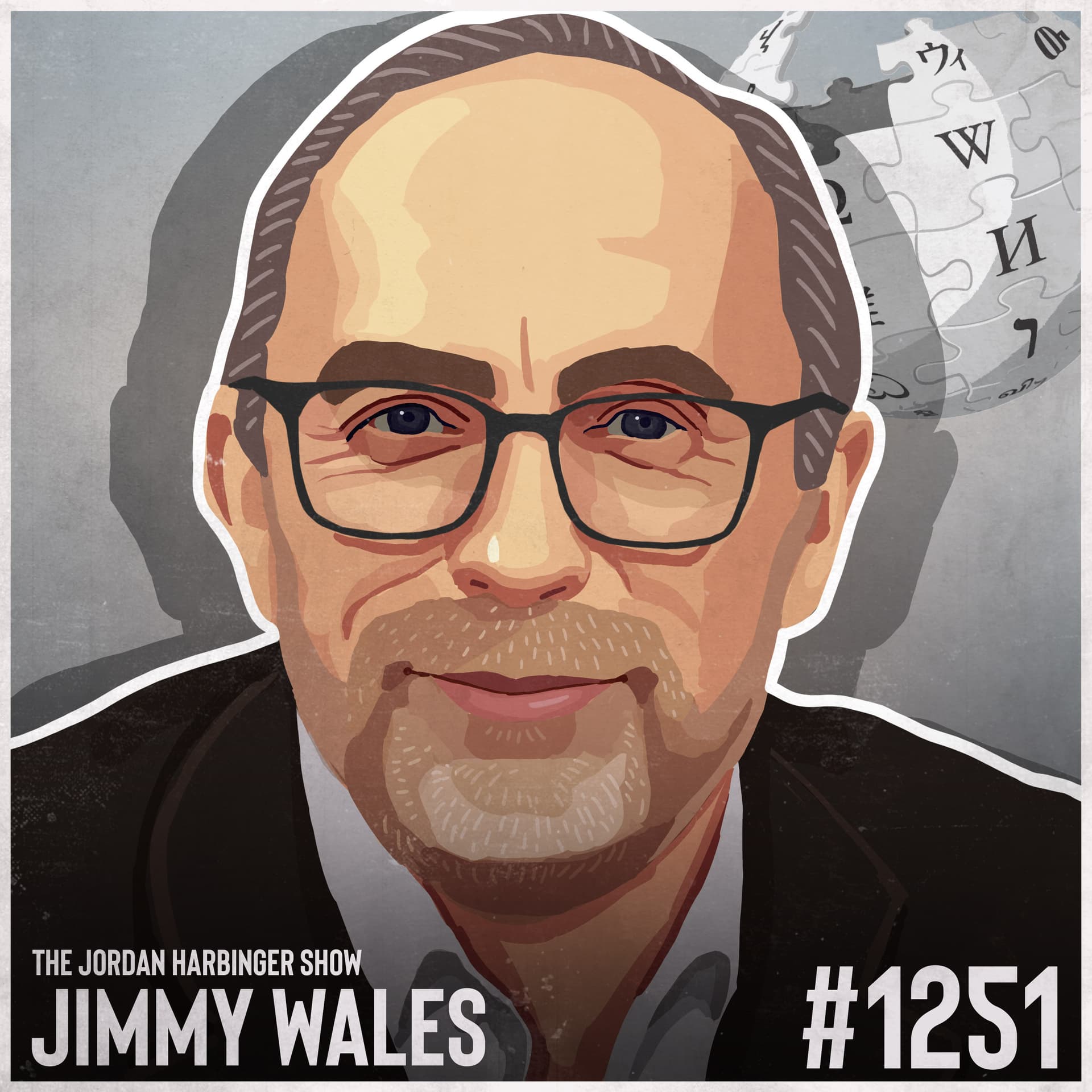
Podcast Notes: The Jordan Harbinger Show - Episode 1251: Jimmy Wales | Building Trust the Wikipedia Way
Episode Overview In this episode, Jordan Harbinger speaks with Jimmy Wales, the co-founder of Wikipedia, about the vital role of trust in the digital information age. They discuss the evolution of Wikipedia, the challenges it faces, and the implications of trust on society.
Key Topics Discussed
- The Evolution of Wikipedia
- Original Concept: Wales was inspired by free software and wanted to create a collaborative space for knowledge sharing.
- Newpedia vs. Wikipedia: Newpedia was the initial attempt but failed due to a lack of user engagement. Transitioning to the wiki model allowed for rapid article development.
- Scale: Wikipedia has grown to tens of millions of articles across multiple languages.
- Crisis of Trust in Society
- Parallel Realities: People live in different "realities" with conflicting facts, hindering productive discourse.
- Importance of Data: Disagreements often arise from differing perceptions of basic data, such as immigration statistics.
- Assuming Good Faith: A principle derived from Wikipedia that can improve personal interactions and community relationships.
- Transparency Over Perfection
- Building Trust: Organizations should focus on transparency, acknowledging mistakes, and explaining processes instead of presenting a flawless image.
- Long-Term Credibility: Organizations that practice transparency build lasting trust, which is crucial in times of crisis.
- Encouragement to Start
- Just Start: The next five years will pass regardless of action. Testing ideas early is crucial.
- Valuing Experience: Embrace potential failures as learning opportunities.
- Impact of AI on Trust
- AI Hallucinations: The rise of AI-generated content may further blur the lines of trustworthiness.
- Need for Verification: Emphasized the importance of double-checking any AI-generated information or content.
- Challenges and Strategies for Wikipedia
- Government Pressure: Wikipedia has faced pressure and potential censorship from various governments.
- Maintaining Neutrality: A commitment to neutrality and accuracy, resisting the influence of both corporate and governmental interests.
- Advice on Building Trust
- Trust Inventory: Organizations should assess their past actions to understand how they have built or eroded trust.
- Engagement: Involve employees and stakeholders in discussions about trust and transparency.
Key Takeaways
- Trust is Essential: Societal and organizational trust is foundational for constructive dialogue and community cohesion.
- Transparency Builds Trust: Acknowledging mistakes and being open about processes can enhance credibility.
- Participation is Key: Engaging a community in discussions about trust can lead to constructive improvements.
- Proactive Approach: Rather than reactively addressing issues, organizations should anticipate problems and work to build trust proactively.
Additional Resources
- Wikipedia's Principles: Explore Wikipedia's core principles and guidelines on their site.
- Jimmy Wales' Book: Check for insights from Wales' publications regarding trust and collaboration.
- Jordan Harbinger's Networking Course: Learn networking strategies at [Six-Minute Networking](https://jordanharbinger.com/course).
Conclusion Jimmy Wales emphasizes that the foundation of an effective and trustworthy platform like Wikipedia relies on collaboration, trust, and transparency. Individuals and organizations are encouraged to adopt these principles to foster a culture of understanding and accountability.
Written by AI. May contain mistakes. Listen to the episode to check what was said.
Transcript
Automatic transcript. May contain errors.0:28This episode is sponsored in part by 1-800-CONTACTS. customer service and perks like free returns, free exchanges, even free torn lens replacement. Jen loves their Express exam, which lets you renew your prescription online in under 10 minutes. It's a vision exam, not a full eye exam, but it gives you a doctor-issued prescription if you're seeing clearly with your current lenses, no waiting rooms, no dilation drops, remember those things? And with their best price guarantee, if you find your contacts cheaper somewhere else, they'll beat it. Getting contacts doesn't have to be a hassle. Let 1-800-CONTACTS get you the lenses you need right now.
0:56Order online at 1-800-CONTACTS.com or download the free 1-800-CONTACTS app today. This episode is sponsored in part by Dell. It's time for Cyber Monday, Dell Technologies' biggest sale of the year. Enjoy the lowest prices of the year on select PCs like the Dell 16 Plus featuring Intel Core Ultra processors, and with built-in advanced features, it's the PC that helps you do more faster. Plus, earn Dell rewards and enjoy many other benefits like free shipping, price match guarantee, and expert support. They also have huge deals on accessories that pair perfectly with your Dell PC and make perfect gifts for everyone on your list.
1:28Shop now at dell.com slash deals.
1:37Welcome to the show. I'm Jordan Harbinger. On the Jordan Harbinger Show, we decode the stories, secrets, and skills of the world's most fascinating people and turn their wisdom into practical advice that you can use to impact your own life and those around you. Our mission is to help you become a better informed, to more critical thinker through long-form conversations with a variety of amazing folks, from spies to CEOs, athletes to authors, thinkers to performers, even the occasional drug trafficker, former jihadi, economic hitman, or national security advisor. If you're new to the show, or you want to tell your friends about the show, and I always appreciate it when you do that, I suggest our episode starter packs.
2:09These are collections of our favorite episodes on topics like persuasion and negotiation, psychology and geopolitics, disinformation, China, North Korea, crime and cults, and more. That'll help new listeners get a taste of everything we do here on this show. Just visit jordanharbinger.com slash start or search for us in your Spotify app to get started. Today, we're talking to the man who helped build the only corner of the internet that somehow still works. Jimmy Wales, co-founder of Wikipedia, patron saint of actually, let me check on that, and proof that trusting strangers on the internet can create something other than a raging dumpster fire.
2:42Wikipedia is one of the last places online where the wisdom of crowds consistently beats the stupidity of mobs. It's a site you can edit in your pajamas at three o 'clock in the morning, yet somehow it's more accurate than newsrooms with multi-million dollar budgets. It's the place where passionate volunteers, many of whom could give Harvard professors a run for their money in bridge engineering or ancient Sumerian pottery, collectively create an encyclopedia bigger than anything the Britannica editors could have pulled off, even with a warehouse of Red Bull and a pile of graduate students. Today, Jimmy and I dive into how this whole thing even works, how it hasn't collapsed under the weight of trolls, vandals, propagandists and corporations with Scrooge McDuck-level budgets, and why trust in institutions, in each other, and in information itself is in freefall.
3:23We discuss the crisis of parallel realities, why collaboration can raise humanity or imprison it, why transparency beats taking sides, and how assume good faith is not just a Wikipedia rule, it's a life skill that we've basically forgotten. All this and a whole lot more here today on the show. Now here we go with Jimmy Wales. I'm going to start with the usual pedestrian question I think everybody wants to know, which is, how did Wikipedia come about? What was the original idea and why? Yeah, so I've been watching the growth of free software, open source software, as most people call it. And I saw programmers coming together to collaborate in new ways, you know, sharing their code and so forth, using free licensing.
4:03And I thought, ah, well, that's interesting. That kind of collaboration could extend beyond just software to all kinds of cultural works. And then I had the idea for an encyclopedia, got very excited and started Newpedia, the predecessor, and plugged away at that for two years. That was not successful for reasons we can get into, but basically it wasn't very fun for the users. Then pivoted. We didn't say pivot back then, that's a big Silicon Valley word, but pivoted to the wiki approach. And, you know, suddenly we had more work done in about two weeks than we had in almost two years. So that was like, okay, wow, yeah, this might work.
4:38This whole farming things out to other people thing, This idea has legs. Yeah, it's funny. How many articles are on Wikipedia now? Tens of millions. I still know the number. I just had it on a slide the other day. I want to say 60, 70, 80 million. That's across 300 plus languages. So not all in English. In fact, less than 10 % of it's in English, which is kind of amazing to people. I mean, you don't notice that because you're probably not clicking on Thai Wikipedia or Swahili. Occasionally German Wikipedia. Oh, yeah. Because it'll be like on Germany, but not in the United States one, especially if it's a Europe-based article.
5:11It's like, oh, this small village in the former Eastern Bloc, there's a German entry, but there's not an English entry. Yeah, yeah, yeah. No, that does happen sometimes. It's actually kind of interesting how, you know, when we think about translating between languages, most people assume, oh, yeah, people like English Wikipedia is huge. They're probably translating it into their own language. But no, actually translating the other way is also a big thing. I think if you are a German guy who is from the Eastern Bloc and you still live in Germany, maybe it's important to you to write about your family's old village in what is now Poland.
5:39But if you moved to the United States 100 years ago and now your great grandkids want to read about that, whose hobby is really going back that far? I mean, certainly some people on Wikipedia, but I was looking at my own family and it was all just kind of in German because it was so niche that only the Germans who had moved back to Germany from what is now Poland and apparently cared enough to maintain that entry. Yeah, you know, there was a big famous edit war in English Wikipedia and a big, huge, enormous discussion because the names of most rivers in Poland are known in English by their German names, which the Poles don't like because there are rivers in Poland and they're like, it's got a Polish name.
6:19And there's a lot of - Historical reasons we might not want to use German words for Polish things as well. Exactly. So it was a huge, huge discussion and sort of figuring out compromise. But yeah. I didn't realize that. Can you do you have an example? Because I'm trying to name a single river in Poland. And obviously I can't do it. I'm pulling a complete blank. Does the Danube go through Poland? I don't know. This is American geography, people. Apologies. But I don't think we're surprising anybody by not being able to do this. One of the reasons I love Wikipedia, actually, is it this is going to sound a little hoity toity, I suppose.
6:49It restores some of my faith in humanity. Does that make sense? Yeah, it does. Because it's kind of like the highest ideals we aspire to. Like, let's cooperate. Let's all build something together that everyone can use. We'll make it free or free-ish, almost free, operated at cost, whatever it is. And it's like, it doesn't matter where you are in the world. Let's all do this. It's like kind of what the internet wants to be everywhere or originally wanted to be, aside from a defense project. But sort of after it was DARPA, right? It was like, let's all share knowledge. And let's just be, let's information wants to be free.
7:21and it's all this sort of free-spirited hacker types from the 90s. And Wikipedia still is that, but like Google's not that. It is interesting because in the early dates of the project, so when I started Newpedia and then Wikipedia a couple of years later, that was the era when it was the dot-com boom and there was a scourge for a little while of pop-up ads. Like every website you went to had a pop-up ad. Mostly those are blocked by browsing. Oh yeah, Punch the Monkey. Punch the Monkey, yeah, that's right. And, I mean, one of my thoughts was, like, you know what? Most people, when you first saw the internet, they're like, oh, this is amazing.
7:55We can share knowledge around the world. I'm like, I bet people would like sharing knowledge around the world. Let's try that, you know? Like, it seems to be what this technology is for. So let's do that first. And people loved it, so. I remember using Gopher as a kid, which is a base. I think it was a way to sort of surf libraries. Yeah, it was just before the World Wide Web. It was a way of, like, digging through menus on different. Yeah, most of it was libraries and stuff. I still, you know, up to a few years ago, probably could have done the whole thing because it's all keyboard navigated.
8:22Right. So I could like sort of it was like, gee, then this and log in, then this, this, this, this, this, this, this, this dot, dot. I'm at IRC chatting with people from other countries, which was hitherto impossible. and was like this feeling that you really don't get from many things nowadays where you're like, I've unlocked a secret portal to the entire world. And you show your friends and they're like, let me get this straight. This person is in another country talking to you using the keyboard. And you're like, yeah, mom. And they're like, wait, how though? And you're like, I don't know. Satellites or something.
8:54And they're like, how much is this costing me? Nothing. And they're like, I don't even believe you. Yeah. Yeah. No, I remember the first, you know, I got an email from someone in Australia and I was like, I wonder what that cost the university. I'm like, does a computer there like dial long distance to here? I mean, I didn't know anything about how it worked. And then I started to learn because I'm like, oh, this is fascinating. Well, remember getting excited. You'd hear, you've got mail. And you're like, oh, who could this be? This is great. This is exciting. Hold on, honey. I'll be right there.
9:21I'll be down in a minute. I got email. I got to check it. Got to check it. Yeah. Those are the days, man. It's a Nigerian prince. He says there's some money for me. You're never going to believe this. We're rich. Our problems are over. It is funny to hear you explain Wikipedia. I watched in preparation for this. I watched a bunch of your interviews and you've been on your book tour. You went to the UK. There was a journalist on, I think it was the Sunday Times maybe. And it was like, but there's no editorial control. And you're like, well, there is, but they're volunteers. And he's like, well, no one's getting paid to write.
9:51And you're like, no, they're volunteers, but nobody checks anything. It could be errors everywhere. And you're like, no, they actually check everything. And they argue about everything. Everything, obsessively. If anything, they're maybe checking a little bit too much sometimes. And he's like, but they're not experts at all. Well, many of them are bridge experts, and they're writing articles about bridges. And he's like, but no one's making any money on this. He's so confused. And you could just see his career sort of flash before his eyes where he's like, how long do I have before retirement?
10:17Because if people are working for free and the quality is decent and they're doing it from all over the world, my days are numbered here. Oh, that's funny. Well, except, I mean, you know, it's interesting because one of the things I always say is nobody really works for free. It's got to be fun. You've got to have some reward from doing it, which is just like meeting other geeks who are into what you're into or just the process is just enjoyable to you and so forth. And it's really something. I mean, you know how you stumble across a page and you're reading it and you're like, who wrote this? This is amazing.
10:52Like, how did somebody know all this? And why did they bother? Like, they're amazing people. And you just want to go like, can I get you a candy bar or something? If anybody wants to sort of see how this works, you can go to the talk page. I do this when I prep guests, especially guests that don't have a lot of information about them. I go to Wikipedia, read the entry. But then you go to the talk page, which is where like, for people who don't know, this is where editors who are helping maintain the page, they go back and forth on. Do we include the fact that his daughter is a famous person? And, well, yes, but like minimally.
11:23Oh, and then you're like, oh, who is that? I better look that person up. And it's like, what about the crime he got accused? No, he was acquitted. This is just going to be a distraction. Let's keep it out of there. And you're like, oh, he was accused of a crime. I better use that. Yeah. No, it's actually interesting because I say this to journalists a lot. I'm like, actually, go to Wikipedia, get yourself oriented, but go to the talk page because there what you often will find is, you know, this source says this, but that source says that. And like, we can't figure it out. It's like, well, there's your question right there.
11:49Like, this is something the world is interested in, but the existing journalism hasn't really fleshed it out. So, you know, that's probably an interesting thing to ask. One thing I've noticed that's kind of funny is I'll look for a question and I'll go, oh, they're going to these editors are going to be so excited that this person clarified this thing that they've been talking about. And then I'll get them on record as the guest, for example, saying, oh, no, actually, it was my brother who was accused of this crime. And then someone will add that and then someone will revert that and go, he's not a source.
12:17and it's like but he's the person and it's like well who's checking that he's not lying about that and you're just like okay i was talking i had you've all know a harari on the show oh yeah we were laughing we're talking about wikipedia and it's like we can listen to you've all know harari be like this is the origin of why we evolve the ability to i don't know speak language and people are like wow that guy's really smart and then he'll try to put in his own wikipedia entry like actually my real last name is this. We're from Lebanon. And people are like, citation needed, pal. And it's like, but it's my life.
12:49And you trust me on so many more important topics. Why can't I clarify this? Oh, that's great. Yeah. Yeah, I know you've all. He wrote a really nice blurb from my book. I was very appreciative. He probably did that praying that you're going to let him edit this thing on his Wikipedia page that he's so impressed about. But it's not up to you. It's actually kind of amazing that Wikipedia took off at all. Well, in my opinion, because and forgive me for putting it this way, it almost seems like a joke, like an encyclopedia that anyone can edit. Come on. It's going to be full of total nonsense. It's going to be vandalized.
13:24It's going to be full of corporations that pay publicists to go in there, write nice things about them. And every celebrity bio is going to have people just crapping all over them. It's going to be a waste of time and energy. Yeah, I mean, that's what a lot of people thought. And in fact, it's one of the, to me, it's one of the more interesting things is to sort of take that initial thought that anybody would have and then really think through like, okay, but how do we do that? Like, what is it? How does it work? You know, and it's a lot of details. It's a lot of it's in the seven rules, you know, things like transparency.
13:52You can see every edit. But, you know, we try to be very open, like anyone can come and participate. And, you know, you see something wrong, you can come in and change it. Or you can come in and leave a note on the talk page and go, hey, you know, did you see this source? And then people hopefully will go, yeah. Or sometimes they go, yeah, but, you know, blah, blah, blah, like you just went through. So, yeah, it's remarkable. But I think it is a testament. As you said, it restores a bit of faith in humanity that there's a lot of just really nice people who just are like, yeah, this sounds cool.
14:21I'm going to help out. Why not just digitize something that already existed like Encyclopedia Britannica? I mean, look, now it's a hundred times, I don't know, a hundred, a thousand times larger than Encyclopedia Britannica. It's a bit bigger. Yeah. Yeah. A million times. I don't know. But in the beginning, it's like because encyclopedias, I remember from being a kid and I'm sure you're similar age. Right. You look in the wall of your school in this whole shelf. This is one encyclopedia. So you're like, yeah, we're just going to recreate that for free over time. And then eventually it'll be bigger.
14:52it's almost like a Herculean task to think it's going to be bigger than World Book or Encyclopedia Britannica. Yeah, yeah. I mean, we actually looked at the 1911 Britannica because it was in public domain, so it was out of copyright because it was so old. And we could just copy it all in and start from there. And so people did. They copied a few articles in. And then we were looking at them, and you think, oh, right, you'll get the article about Thomas Jefferson. Like, what could possibly have changed? What has changed, yeah. That'd be a lot. Like, it's kind of, you know, oh, ancient Eve, surely they had it all figured out by, no, no, there's been a lot of archaeology and things like that.
15:26And so, you know, like, I actually dug around, I mean, I found in my mom's house an old and such, I don't remember which brand it was, but, you know, it's the article on Bicycle. It said, Bicycle, men use it to go to work and women use it to go shopping. Oh, my God. Wow. Like, okay. Yeah. Maybe, maybe that's not really the best definition of bicycle in the, in the modern day. Yeah, because why would a woman wouldn't have a job or anything? That doesn't make any sense. Impossible. Oh, God. Yeah, impossible. Preposterous. One thing that I wanted to ask you probably for years now is, what do you think of every high school teacher ever being like, Wikipedia is not a source.
16:05You can't use it. Yeah. Well, I mean, it's interesting. When people, if they say you shouldn't use an encyclopedia, I wasn't allowed to use Botanica and cite it. You weren't? No, like Botanica, you should use it as a starting point and then go do further research. I mean, if you're 13 years old and you wrote something, you put a footnote, we should just say, great, you're moving forward. That's fine. But, you know, actually citing Wikipedia in an academic context, particularly at the university level or higher, no, it's not really a goal because that's not really what an encyclopedia is for. Now, if you say, don't even read it, yeah, now you're probably wrong.
16:42And especially if you're telling teenagers, don't even read Wikipedia, it's like, yeah, you can tell them, don't listen to rock music as well. Like, it's not a thing they're going to do, you know. They're 100 % going to use it. But yeah, actually, that has shifted. I just was talking to a high school teacher who just has always been an advocate of Wikipedia in the classroom. And there's always been people who are like, no, actually, they should use it. And my thing is like, and this, we can come on to AI, I'm sure at some point, this is what I say about AI today. Like, don't tell kids don't use Wikipedia.
17:12Tell them how to use it. You know, like, what are the strengths? What are the weaknesses? is, you know, how do you understand it? Same thing with AI. Like, don't tell kids don't use AI. Yeah. They're 100 % going to use AI, but now they need to know how to use it, right? It's going to be part of our lives going forward. So how do you think about the hallucination problem and all that? I have questions about that that we'll get to shortly, I think. People are probably wondering, how do you defend against trolls, vandals, the aforementioned corporations that I said, who they've had billions of dollars, they're going to want something, they're going to want to control that brand image.
17:44And even now, if you look up Ukraine or you look up China or you look up the Israel-Palestine conflict, I mean, these are their own small war zones of added wars back and forth. Very difficult. Yeah. Yeah. So trolls and vandals, that's actually pretty easy. So the vandalism, somebody comes and replaces an article with poo-poo head or something. We just revert it. Hopefully you get one morning, at least one morning, this is, hey, you know, like, thanks for your experiment. But don't do that. Knock it off. And then you get blocked. And then for trolls, you just get blocked. You know, again, if somebody comes in and they make a single intemperate remark and they're new, hopefully somebody will go, hey, you know, like this isn't Twitter.
18:26That's not how you do it here. And then you get blocked if you keep it up. Those contentious topics is always like it's really hard. Like there's so many things going on in the world. What we try to do in general, and this does work reasonably well, is to say, go meta, go one level higher. Don't take sides in the conflict, just write about the conflict in a fair way, express what all the relevant sides say. And, you know, in my book, I talked to a Ukrainian Wikipedian who just, he's a real big advocate that Ukrainian Wikipedia should be neutral even about the war. And his view is like, that's all we have to do.
19:04Just tell the facts. Like the facts prove our case enough. And I'm like, yeah, that's actually brilliant. That's fantastic. And there's, you know, things like we talk about Wikivoice, which means, you know, it's said in the voice of Wikipedia, Paris is the capital of France. We just assert that we don't say according to. So when do you use Wikivoice? It should be very sparingly, like ideally in an area with lots of controversy. We should not do that. Like we shouldn't be saying one side or the other. We should be describing the conflict. That works pretty well. But obviously, there's a lot of struggle.
19:36there's weird a weird edge case that i'm sort of dealing with like i'll look at my page on there which by the way was a war zone for years it was not notable not notable enough and then it was like deleted and then it was like notable now and people were like well he was deleted before and it's like well people get more notable as they get more notable and so then it was like mark does not delete it and then people kept moving to delete it then that got banned because it was like obviously just have one out for this guy and then another article got written someone didn't like it rewrote it but it was really poorly done okay but it was more neutral in his defense so people were going back and forth and back and forth and back and forth and then finally someone rewrote the whole thing and i was like it's just going to get reverted again but that user had gotten banned who is reverting everything for calling another editor and threatening them oh so it got like banned forever that sounds dreadful it was crazy and i was just thinking like wow and this is my bio page i mean it was other people's living bio pages so it's complicated but i just thought like holy smokes i'm basically nobody right on wikipedia and like there's a mil there are literally millions of more notable people than some podcaster on there and this is so people take this down seriously one thing that i'm dealing with now i'm not asking you for advice i'm just going to use this to uh illustrate something or ask you to illustrate something one thing that's very strange is people will put a fact in there but it's got a little bit of like subtext that's odd namely they'll go harbinger is jewish and it's like out of nowhere just in there in a paragraph about where I went to school and someone will revert it and be like, I don't feel like that's in there just to illustrate this thing.
21:10That's very interesting. And then they'll put in like, he's Jewish and has acknowledged this when discussing the Israel-Palestine conflict and that'll get reverted as like, oh, come on. You're implying that he's biased because of that. And then they're going back and forth and then that user just sort of disappears. But it'll pop in every few months and then get taken out. Yeah, yeah. No, it's interesting. Interesting. I mean, I would say, you know, very often, like, it's one of the more complicated things of like, well, like, when do you note that someone is Catholic? So we'll switch it from Jewish.
21:37And it's like, sometimes you do, sometimes you don't. Like, actually, it's sometimes it's relevant to the biography, sometimes it isn't. And there's also an issue, in my opinion, I've seen both kinds of cases where you think you just want to put it in there because you've got some sort of a bias against Jews, or you just want to put it in there because you've got some sort of bias in favor of Jews. It's like, yes, we would like to claim the Nobel Prize winner in physics. Great. Yes. What about Bernie Madoff? No, somebody wants to force it in there. And it's kind of like, oh, come on, people, let's be consistent.
22:13And for me, it's really about to what extent is it relevant? So my entry, I don't know what it says at the moment about this, but it's like, at one point, the categories is another issue because unlike most things that can be rewritten and rewritten to sort of smooth out the rough edges to say, you know, so-and-so was born in a Jewish family but isn't practicing or whatever, you know, you can, and if that's relevant to their life because they talk about it or whatever, but categories you're either in or you're out. And so somebody had put me in the category American Atheist and I'm like, that seems weird to me.
Read the full transcript
22:46I mean, technically true in a certain sense, but I'm in there with like Madeline Murray O 'Hare, like people who campaign about it. Sam Harris or something? Yeah, yeah, yeah. It's like, it's not my issue. Like I don't go around, it's not a thing. It's like, it's my private belief and I don't make a big deal out of it. And I sort of regret that it was ever made public because it's like, whatever, it's not a point. It's as relevant as you having a beard. And I think I've taken out, I think in that case or similar cases, we try like with categories, it's like, well, but is it relevant? Like just going around cataloging people who at some point were Christian or Jewish or whatever, either ethnically, belief system, whatever it might be, is like generally don't know.
23:26I mean, it's interesting. Mine just recently, this is my funny thing. I am both American and British. I have a British passport. I didn't grow up there. I'm American by birth. And then I became British and I've lived there for 15 years. And I was really happy. It just made me like in a small, happy way. Sure, it's cool. Jimmy Wells and American-British. American-British. I'm like, great, that's brilliant. And now it's gone. I haven't bothered to check. Like somebody just read it out in an interview. Like, oh, let me just read the first sentence. I'm like, yeah. Oh, what happened to British? Somebody was like, not British enough for me.
23:56Sorry, Phil. I'm not sure. Sorry, Phil. I'm like, hey, what happened there? That's interesting. That's kind of a bummer. It's always amazing to me how there'll be a news event and you'll see it on breaking news on CNN or it'll be on Twitter. And then you go to that Wikipedia page five minutes later. Oh, yeah. And you're too late to make that edit yourself. It's already there. In fact, it's already there, been reverted, been edited by somebody else, had that edited by somebody else. It's already gone through 12 iterations by the time you're on minute number six of whatever notable event. It's really, really fast.
24:28And like one of the things I've done in the past is sort of my little mini, mini, mini hobby is whenever there's been a royal wedding, I try to change the name of the person. So like from Kate Middleton to Catherine and whatever her title, Duchess of Cambridge, you know. And I've been successful doing that a couple of times. And it's just sort of fun. And I wait. I'm like, you know, I'm watching the Royal Wedding at the moment when they said, I pronounce you husband and wife. Click. And it's like other people are trying as well. I did it. I did it. It's amazing. But there was a funny incident once that was very strange.
25:02There was a pro wrestler who was expected to be on stage and just didn't turn up. And it turned out they had died. But then the weird thing was somebody had vandalized the Wikipedia entry to say they had died at about the time that they did die. And so then there was like this, like, what's going on here? Like, was it a suicide? And they did it about themselves on Wikipedia or whatever. It turned out somebody, it was just random. Somebody randomly vandalizes a joke. It was reverted very quickly. And then it emerged that sort of several hours later, this person had in fact died. They were ill and whatever.
25:38Ooh, that was weird. Yeah. Because when this came up, I'm like, oh, wow. So do we call the FBI and give them the IP address of this person who maybe murdered the wrestler? Or do we let it go because they're 13 years old? Yeah. Tell someone who's never heard of Wikipedia but only knows it's an encyclopedia that's editable by anybody. Tell that person, dad, why they should trust it, because news agencies, pundits, right, they'll often say, oh, Wikipedia, left wing slash right wing liberal, but whatever the biases, you know, this page. What do you think of allegations like that? Yeah. So, I mean, I think, you know, the important thing is like our core policy is very, very strong.
26:18And I'm sort of campaigning about it all the time, which is neutral point of view. Like neutrality is so important to our being trusted that we have to maintain that. So when we're accused of bias, what I always say is let's take that seriously. Like, let's have a look. Right. And sometimes you look and it's sort of like we treat the New England Journal of Medicine better than we treat a social media influencer who claims something like crackpot. Thank God. No apologies, right? I don't call that bias. I call that sort of editorial judgment and being thoughtful about it. And other times, you know, I look and I'm like, you know what?
26:54We could be a bit better. Like this is saying something in Wikileaks that probably shouldn't. And like, you know, we need to grapple with that. And so, you know, overall, what I believe is like, what trust comes from is that ongoing willingness to get it right. This applies to all kinds of businesses and things like people will forgive like a business screws something up okay people will forgive that as long as like oh you were really good about the refunds and you sort of examined the your process like how do we put out this crappy product and now we've got to give the refund and yeah whereas you know stonewalling pretending it never happened continuing to put out you know oh we've got the new version and somebody bought it and it's like yeah it's just as much sucks as the old one did yeah then you lose trust and so you know i think we shouldn't think that the only way to get to trust is by being perfect, right?
27:44It's like being like, oh, transparent, honest, and going like, oh, actually, like one of the rules of trust is be transparent, especially when you have something to hide, you know? I like that. To go like, actually, we aren't perfect here. Like we didn't get this one right. You know, like we're going to have a big discussion now and figure out what happened and try and fix it. I would love to talk more about trust because we're facing this global crisis of trust across all news media outlets, obviously, but even among citizens, really. I mean, there's just, we're kind of living in a, I mean, to use the cliche, what the most polarizing time, most polarized time, divided time, whatever.
28:21You've made a pretty good argument for why trust is key in society. I mean, the workplace, you need it in the workplace, you need it in the home. And Americans aren't just really divided on their opinions. We live in these sort of different realities, right? Where we each have our own facts and it's someone who's on the opposite end of a political spectrum will actually have different historical facts than somebody on the other side, which is crazy to me, having grown up in the 80s where that kind of wasn't a thing. It's really troublesome. And we all learned the expression alternative facts when it was Trump's first inauguration.
28:53And there was a dispute about how many people attended. And it's like, well, there is a fact there. And, you know, like you can't just say alternative facts. It's like, there's only one fact. That was a Kellyanne Conway. Yeah, yeah, yeah. You know, I don't really know anything about her and so forth. Me neither. I'm just like, probably she regrets saying that. Oh, I doubt it. I think that's her, like, the top of her tagline. It might be. I don't know. But, you know, like, I do think this is a problem. And when we think of an issue, so I live in the UK, which, like many places like the United States, immigration is a big political hot topic.
29:27And I'm like, OK, like the question of immigration, like, OK, what should our immigration policy be? How many people should we let in every year? What do we do about people who came here like unauthorized? Like, how do we deal with this? Right. A hundred percent all absolutely valid questions, which we can then start to chew on. And people have different views on that and what we should do. But if we don't start that conversation with a real grasp of like, OK, but what is the situation? Like you and I disagree, like you think we should have a lot fewer immigrants. I think we should have a lot more.
30:00Fine. How many do we have today? OK, we better start there because otherwise, who knows? We might actually agree on the actual number. You just think there's 40 million a year and I think there's 4000 a year. And so suddenly it's no, hold on. There's 47000. And you might go, oh, well, that's not as high as I thought. And I'm like, oh, that's a lot more than I thought. And then we suddenly are like, oh, OK, fine. I've seen this happen in real time. I mean, look, this is a complicated issue, so don't at me, folks. But I remember somebody was saying, I can't believe Trump is just deporting all these people.
30:29And then someone else was like, do you know that Obama deported way more people than this? They didn't know. And we got the numbers out. And it was like, oh, that was also bad. And it was like, oh, OK, that's kind of the right. Because if you're just on one team and not the other, then when your guy does something, it's OK. When the other guy does it, it's not OK. Exactly. But it was like, oh, I didn't know that. So it's kind of funny to see that. But you're right. You need to actually have the facts. And we can all fall into that trap, you know, where we've heard one side of the story and we're like, oh, OK, well, now I have a view on that.
30:59And then it's like, oh, oh, I didn't even have the facts right. Right. I came to a judgment about what we should do based on incorrect information. Nobody likes that. No. Like, I don't think anybody likes that. And actually, sometimes I've had journalists who are like, are you sure? Like, people really want to believe. I'm like, no, nobody wants to make a decision based on false information. Like, you end up doing the wrong thing and feeling like an idiot. And so this is one of the problems with the polarization in the media. I live, as I've mentioned, I live in London. I've lived there for a long time now.
31:29And we've got two newspapers that I think are good newspapers. So The Guardian and The Telegraph. The Guardian's center left, Telegraph's center right. They're politically biased. That's okay. But what's funny is because they are a little bit too clickbaity at times. So I have an electric car. I love my electric car. I'm interested in electric cars. I don't have a Tesla. I have a different brand. How dare you? Yeah. And so I like to read about electric cars. And I've just noticed, you can just show me a headline from the last three days. There'll be some story about electric cars in one of these papers.
32:04I'll tell you which paper it's from, just from the headline. Because the Guardian loves electric cars. The Telegraph hates electric cars. And I'm like, now, what about trust? I actually don't trust either of them on this topic. Right. I sort of enjoy in some very thin way the Guardian articles, which are positive about electric cars. Because you already agree with that. Because I like it. But that's not what I really want to hear. So, you know, like one of the questions about electric cars is they're heavier. So the tires wear it on quicker. So the particulate matter of tire pollution is worse for electric cars.
32:34I think a very basic fact. I mean, to the Telegraph, this is just like, oh, my God, it's killing us all. And to the Guardian, like, that's not even interesting. And I'm like, well, hold on. And like the truth is somewhere in the middle. Yeah. So where I end up is like, actually, I would really like to be able to go to my preferred paper and just say like, oh, OK, well, like, here's the balance. And then they're going to be slightly different. All that. But try a little harder. Yeah, that's interesting. I hadn't thought about the tire thing. You give an anecdote in the book about Charles de Gaulle.
33:02Can you go through that? Because I don't think we could be any further away from that kind of relationship with our allies right now. I don't remember what I said about Charles de Gaulle. Oh, that's funny. I'll refresh your memory. And you know what? That's I don't. It's funny. When people write a book, they expect you to remember every single line in it. Yeah. I mean, I— And you probably wrote it two years ago, this particular line. I did, but also, I mean, the funny thing is I just—about a month ago, I did the audiobook, and I read the whole thing. So I'm just spacing out to that. I could also have the name wrong, and then I'll be the a-hole on this one.
33:30But what it was was somebody had gone to, I believe, Charles de Gaulle and said, the Cubans are getting missiles from Russia, and they had all these documents and photographs. And Charles de Gaulle said, you have the word of the American president that's good enough. That throwaway line. Yeah, exactly. Yes. No, I totally remember that. The word of the president's good enough for me. Yeah. I was like, wait, that's it? That's all you did? Yeah, yeah. Now I remember it totally. We say it's true and you believe us? Holy smokes. Yeah. And I mean, I think that is, yeah, it's a shame that we don't have that culture anymore where, you know, where politicians don't feel basically a fundamental obligation to the office to not be completely partisan and politicized in every single thing you say so that you can just like deliver neutral facts to another world leader who will then believe you.
34:17Because you like it's the president. Like, obviously, they're not going to just make some shit up, you know. Yeah. And yeah, no, that's exactly right. And I really. was quite proud of the U.S. from a distance living in London when it was Obama versus McCain, because I got my agreements and disagreements with both of them, you know, some policies here and there and all that. But you know what? They're both proper people. Either of them is going to be presidential. They're not lunatics and so forth. And I can't really say that these days. It's quite a shame. You give some really interesting examples in the book, which I also hope you remember about, I'm kidding, about brands that have used symbols or built trust in certain ways.
34:58I'd love to talk about this. I always find this stuff fascinating. Quaker oats, not apparently made by Quakers. I don't know. Yeah, yeah, yeah. No, that's sort of a funny one because it is, there is a bit of an irony in the story because the story is really about Quakers and they're like the reason the Quaker Oat people chose the brand is because at that time there was a lot of food adulteration. You might buy oats, but maybe there's a lot of sawdust in there to pat it out or whatever. It was a problem. To be fair, could you really tell the difference? Maybe that's what they thought. But the word Quaker, what it said to people was, it says oats on the box.
35:35You know what's going to be in the box? Oats. That's pretty straightforward. And it's because at the time, the Quakers had a really good reputation in business that they would do what they said. In an era when there was a lot more haggling, which broadly speaking, I would say Americans hate haggling. It's just, it's very stressful. Nobody likes buying a car for this reason and so on. And the posturing and the lying that goes on of like, oh, this is absolutely the lowest price I can accept. Are you kidding me? And that's not really your lowest price. For the Quakers, if they said, this is the lowest price I can accept, that was take it or leave it because they told you the true price that they would take or leave.
36:09And it was part of their religion, part of their belief system, which at first people thought, well, I mean, obviously you're going to fail in business because you're not playing the game. They didn't care. Like that's our religious belief. So like, this is how we live our lives. But it actually worked really well because suddenly it's like, oh, like they do what they say. I mean, I say this about, for example, Amazon. Like Amazon, you can have lots of complaints about Amazon. People do, fine. I'm not talking about that. I'm just talking about you order the thing from Amazon. It's going to come in the mail.
36:38It's going to be the thing you bought. And if there's anything wrong, you send it back and they give you your money back. Or even if you complain, sometimes they go, we'll refund you. Don't bother sending it back because it's too much trouble for everybody. I mean, if you do it too often, then maybe they'll start giving you a little grief, but generally they're very good about it. And that is trust. Like nobody thinks, I'm not so sure about putting in my credit card number on this funny Amazon thing because who knows if they're ever going to send my thing. No, they'll send your thing. We all know that.
37:06We accept that. We don't even think about that as being part of trust. But of course, that's business. Like you can't do business otherwise. And so this is why we tell the story of Airbnb, Uber, companies that have had a real crisis of trust? How did they recover from that? I try to do that to some extent. I mean, it's a podcast. I don't sell anything directly, but we have ads on this show. And years ago, there was a company that did something that was not kosher. And a lot of people had bought this because I had advertised it. And so I ended up going to that sponsor and saying, you've got to refund my people who are over the 90-day thing because you kind of lied about this.
37:45It's the right thing. And they did up until they basically realized they were going to lose a lot of money. And then they decided they didn't care. So I ended up refunding some people out of my own pocket, which really stings, right? Because it's like, it's not my fault. They lied to me. But it's kind of like the buck stops here. And I had to make this weird decision where it was like, do I want my listeners to continue to trust me, even if they're not sure about trusting that particular sponsor? So I watch a lot of tech hardware video. I'm a super nerd, right? And I'm building out a home server and all that.
38:14So I watch all this. Wirecutter videos. Not Wirecutter. That's actually, do they have videos? I should look into that. I'm actually not sure. These are just YouTubers, right? Yeah, Linus Tech Tips or something. Yeah, yeah, yeah. Yeah. And a lot of them do, you know, they have sponsorship. And they're generally good about disclosing. I think it's a rule on YouTube. FTC, the Federal Trade Commission, will come down. Yeah, yeah, yeah. But you do wonder sometimes. And, you know, for some of them, you think, well, I know this YouTuber. there's never been a negative review of any product on this channel and whether they're getting paid or not because i'm like they're trying to suck up to get more free stuff i mean that's what i feel like so i like a youtuber who like oh yeah thanks so and so for sponsoring the video but they didn't have any prior approval and i also know sometimes they do like i want to see you do that and then go they provided the product i gave them no promises and a good thing because this thing sucks you know like yeah that'd be great yeah and then other people might be less willing to send them stuff and so forth.
39:13I always talk about that's YouTube, but also like, I like boats. I'm interested in boats and I used to have a little speedboat in Florida. I loved it and so forth. And I like boat magazines, but I've never seen a negative review in a boat magazine. Those are for sure all sponsored. Yeah. Well, are they sponsored or they're just don't want to rock the boat in the industry? Like, whereas it's slightly different with car magazines. Some of them are powerful enough that they can run a negative review. But I think these are little magazines. There's not that many people reading boat magazines, you know, but, um, and I'm just like, oh, that's interesting because it means the reviews, I just don't quite trust them as much.
39:46Right. Even if they're not sponsored, uh, you're just like, well, I never say anything bad or you learn to read between the lines. Oh, we'd like to see a little more horsepower in this one. Like, oh, that means it's weak. You know, like Wikipedia has a million nerds with unlimited internet and no bedtime. You know what else never rests? My shilling of the fine products and services that support this show. We'll be right back. This episode is sponsored in part by Hexclad. I recently upgraded Jen to Hexclad Cookware and we have stopped using any other pots and pans we owned. Hexclad is unique because it has the best parts of stainless steel and nonstick combined in one pan without the usual trade-offs.
40:23How? Hexclad uses a patented laser-etched hexagonal pattern that creates a hybrid surface so you get the performance of a pro stainless steel pan with the convenience of nonstick. No other pan really does this combo well. Hexclad is metal utensil safe, dishwasher safe, oven safe up to 500 degrees induction ready stay cool handles and that great searing power it's also durable toxin free non-stick and they look slick on the stovetop they really do look awesome and if you're wondering what to get the cook in your life or what to casually hint at for your own wish list this is it their six-piece set is the perfect starter bundle and the 12-piece set is the full upgrade pans sauce pans a stock pot all covered with their hybrid technology and backed by a lifetime warranty you buy it once you use it forever this season don't just shop for gifts.
41:03Give the upgrade every kitchen deserves. Visit hexclad.com and cook like a pro all holiday long. Treat yourself or give the gift of cookware that delivers for every meal, every gathering, every season. That's H-E-X-C-L-A-D.com. Support the show and let them know we sent you. This episode is also sponsored by Cachava. So our house has somehow become the official hub for holiday gatherings. In this season, we're expecting around 30 people and the food delicious. But by the time the third cheesy, creamy, deep-fried holiday specialty hits the table, I am basically running on sugar carbs and raw, just pure adrenaline.
41:37So to keep from grazing on every cheese board and cookie tray in sight, I'll start with a cachava shake before the madness begins. Cachava gives you 25 grams of plant-based protein, plus actual real-deal nutrition, vitamins and minerals for steady energy, fiber and probiotics to keep digestion from filing a complaint, protein and electrolytes for strength and recovery, and B vitamins and minerals to keep your metabolism, cognition, and immunity together. I love the vanilla and chocolate flavor, but Cachava has a new chocolate mint flavor that tastes like a holiday dessert without the sugar crash.
42:05There are no artificial flavors, no weird sweeteners, no gluten, no soy, no dairy, just a genuinely delicious all-in-one nutrition shake, and you can try it totally risk-free with their Love It Guarantee. Thousands of rave reviews think you're going to love it. Calm the holiday chaos. Go to cachava.com and use code Jordan for 15 % off your next order. That's Kachava, K-A-C-H-A-V-A dot com, code Jordan for 15 % off.
42:53we're just practical exercises that will make you a better connector slash colleague slash friend slash peer. And six minutes a day is all it takes. By the way, many of the guests on this show subscribe and contribute to this course. Come on and join us. You'll be in smart company where you belong. You can find the course again, all free at six minute networking.com. Now back to Jimmy Wales. People will ask me, well, your ads are all effusive about the products. So obviously we can't trust that. My retort to that is I just don't accept the sponsors for whom the product sucks. I usually get the product in advance.
43:25And if it falls apart in my hands, I just say no. That's right. If it's gambling or crypto related or porn, vaping, it just doesn't appear. You never hear it. The reason I don't have a negative thing to say about it is because I tell them to kick rocks and we never take their money. Yeah, totally. And I think that's right. I think it's right to talk about that because otherwise, what does it mean for the whole of your podcast and the whole of the, and I, you know, I say this about, there was, um, I used to be on the board of the Guardian, uh, newspaper and they had this real struggle because they don't have a paywall.
43:57They're ad supported. They're a nonprofit or owned by a nonprofit. So they, they, and they've got a big trust fund. And so, you know, like it's complicated, like, and they're really trying to, to thread the needle on lots of things. And they really struggled with accepting sponsored content in the paper. And it would be clearly marked on all of that, but like one of the ones was Volkswagen. Volkswagen was promoting their blue, they call it, their green initiative was called Volkswagen Blue. Is that the one they lied about and had to scrap all the cars? And then the scandal broke and it was a little bit awkward.
44:31So even though it said at the top, this is paid content, right? So on and so forth. It didn't feel great for the journalists there who had been assigned to write the stuff as sponsored content and so on for the brand, for the paper, didn't feel great. And I mean, in this case, there was nothing wrong with this content. The content wasn't lies. It was like they had, I don't remember the exact same, or they had faked some tests or something like that. Yeah, what it was. Emissions tests. It was the, there was firmware on a chip that goes on the engine that was designed to, when it was being tested for emissions, run a certain way.
45:02And when it was on the street, run a totally different way that didn't pass the admission. I mean, it was blatantly fraudulent. nonsense. It was absolutely crazy. And I think all the more shocking, again, to bring it back to thinking about trust, because, you know, there are certain companies which over-promise and under-deliver all the time, and you wouldn't be surprised, but, like, Volkswagen? Pretty boring brand, to be honest. Like, it's a perfectly good car and fine, and, like, you wouldn't think Volkswagen's gonna scam you, but... Once a century, they do something pretty terrible so far. Yeah, exactly.
45:33Yeah, I don't know. It's crazy there was so much food adulteration. You mentioned in the book that the food used to just be dangerous and kill people until 1906. Was it 1906? We started to pass laws about, hey, if this says it's milk, sorry, but it's got to actually be milk. That's insane to me that we didn't have any laws before that. I mean, it's funny because that's the even if you take quite a libertarian view. Yeah, that's just not defrauding people. Yeah. Like that's isn't like it's a low onerous regulation like it's sort of like yeah don't do things that are stealing money there are certain laws where they're treated more harshly because literally every even remotely well-adjusted member of society knows not to do that like kill someone right or stab someone yeah and these are certain crimes where you go if you park in a certain place and you weren't supposed to park there because it's thursdays and everybody in that city knows that it's like that's way less of a crime than you stab someone you go i didn't know i wasn't allowed to stab people it's like no matter where you live on planet Earth, this is not allowed.
46:35And so those crimes are treated a little bit differently. It is funny how like social norms around certain things can be. So I have a house in the countryside in the UK where I live. And in the little village, there's one little grocery store. There's like two parking spaces in front and then like a double yellow line up and down the street. And when I first moved there, I was like, oh, well, you can't park there. It's a double yellow line. And after some time, I realized like literally everybody does. And that's it. And nobody has ever gotten a ticket. And like, that's just the rule. The rule is you sort of park anywhere along there.
47:09And I'm like, oh, some like the local council should probably like repaint the street. Because either that or start giving tickets. But believe me, there's going to be some outrage because like people need to go to the grocery store, you know. They need to fix it. And I'm like, that kind of little stuff, actually, this is one of the things about like when the speed limit was 55. and basically people ignored it because it was ridiculous. It's something like if the law doesn't make sense and people are just ignoring it and that's okay because like it doesn't make sense, then you undermine respect for the rule of law and that's like not a great thing.
47:42This reminds me of, you know how every year the dictionary says, hey, this word that doesn't actually mean this, well, it means that now because everyone's been misusing it so much. So literally now means figuratively or literally. So it's lost all meaning because you can either mean it literally or you can just be completely talking out of your ass. I mean, I thought you were going to say something about six, seven. Oh, God. I just saw a story that's being added to the dictionary. Even like three-year-olds are saying that. I don't understand what it means. They're laughing. And I'm like, can you explain this?
48:12Of course, they cannot. They cannot. No one can. No one can. One Wikipedia cultural rule, I guess if I can call it that, that I love is you always assume good faith. And I would love to hear more about that. I feel like we need to do that in life generally. Yeah. And you see it on Reddit, but usually you don't. Yeah, yeah, yeah. So like assume good faith, it's not a suicide pact, right? You don't sort of always assume everybody's of good will, even after they've really proven that they aren't here to build an encyclopedia. But it's like sort of that initial thing. Like, I mean, the simplest kind of example is you see somebody doing something wrong in Wikipedia.
48:48And chances are, and like the evidence proves this, and like long experience is like, they probably just need to be helped out a bit. Like have it explained like, oh, that's not how we do it. Or actually like I just reworded your sentence. It was a little bit punchy and shouldn't be. Or the worst would be is if you got in trouble because your footnote was not formatted correctly. Like that would be so annoying. It's like nobody's required to learn our formatting footnote rules before they add it. It's like they added a link. That's great. And so that assume good faith, it's even more important.
49:20So it's important in those first interactions, somebody first comes to sight. But also when there's a heated argument, right, to try to remember this is a person on the other side and they're different from you and they're like you because they're people and people are all like that. But, you know, like don't interpret every single thing they say as some kind of hostility. It's really easy to do online, as we see in social media all the time, to jump to the wrong conclusion, read something into what they said. Are you really saying this? I actually didn't say that. No. And, you know, it's very helpful.
49:54You know, that civility in the book, we say your mother was right. We teach it to toddlers to like be nice to other people. And it's actually good. Like it actually works. It's actually a very profitable mechanism. I don't mean making money, but it's a positive thing. It's like if you treat people as if they are all up to no good, first of all, you're going to have a miserable life. But also people like they'll maybe live up to that. Right. And that's not great. And instead, you know, I actually I talk about this a lot in the context of teenagers and parents because I have a teenage daughter and one who's now grown out of it.
50:34and one who's about to be a teenager. And, you know, it's like, okay, like with teenagers, what do parents need to do? Well, you need to start trusting them. And I, you know, I sort of advise, particularly if it's a bit of a problem situation, it's like, say, I'm going to trust you. Like they want to go out and do something. I'm going to trust you. I want you to live up to that trust. And then we're going to have a better path forward. You go out a few times. You don't come home drunk. I'm going to trust you more. You come home and you didn't do what you said, you know, whatever. you forgot to pick up your sister from school, whatever, I'm going to lose trust.
51:08And you know what? Kids respond really well to that. Like they really want, like we all do, a rational framework in life where like things make sense. And it's like, oh yeah, actually my parents aren't tyrants. They're a little strict, but like they do trust me a little bit. And if I live up to that trust, they're going to trust me a little more. Great. Like now you've got a positive family situation and that applies everywhere. Like in companies, I'll tell you though, no, I'm on a rant. No, I like it. This is a good one. I'm crossing off things in my notes that you're covering organically. One of the worst things I've seen are like these companies that when people work from home, they're using software to monitor their keystrokes and their mouse movements to make sure they're not away from their desk for more than a few minutes.
51:46And I'm like, what in the hell is that? And you go to Etsy and you find that there's a device that will just move your mouse constantly so that you can go to the grocery store. Like, so you are trusting somebody to do their job, whatever that is, but not enough that they are going to. But and so it's like, you know what? Actually, there's a reason why people want to work from home. It's because of the flexibility. If you said, you know what? We're not going to monitor everything you do. There are some things you got to get done. You get them done. That's fine. And, you know, we're going to trust you and all that.
52:15And like, by the way, everybody understands like you work from home this week because your kid's sick. That means, guess what? You're not going to be moving your mouse every five minutes. The kid's sick. You got to go out of the room. And you know what? We kind of expect you to make up for it. Stay a little late. hop on for an hour at night because you missed an hour during the day and we're just gonna let you do that i mean just the goodwill that you destroy by having that sort of paranoid approach to the people you work with you're not gonna get creativity you're not gonna get insight you're gonna you're gonna get people working to rule and nothing more because they're like these people are not proper people and i don't have to do this and and i'm looking for a job like your job By the way, yeah.
52:56Now, the reason I didn't move my mouse for five minutes is I went to the other non-work computer and looked for a job. Right. Yes, exactly. No, I mean, look, I'm not running Samsung or Microsoft, but I always just trust my team to get things done on their own time. And we got guys like Bob who's going to edit this in the show notes, and he's going to do it at 4 o 'clock in the morning Pacific time. And you know what? Fine. Fine. Yeah. And my engineer, Jace, is in another time zone because he's from the UK as well. and it's like he's going to do this at a weird time on a weird day when he's back from his vacation and that's fine.
53:27The only time it's not fine is if something doesn't work. And that is so rare in our business. It's so rare that something happens that is objectively like, oh, because you did this too late or at a weird time, that it's not worth, the juice ain't worth the squeeze to solve the problem with some sort of tyrannical solution. Yeah, and like the main thing is, did it get done in the podcast out on time? Then the rest is not matter. And that objective, obviously, I'm not saying businesses, and you're not saying businesses shouldn't care about time and all that. Like, I mean, it's sort of like, yeah, the grocery store is open until, you know, these hours to those hours.
54:02So coming in at 4 a.m. ain't going to help, right? Right, yeah. The store is closed, right? On the other hand, it's sort of like at every moment when you can think about, okay, is there a way I could just extend trust and build a better relationship with the people I'm working with or who are working for me if you're, you know, a manager or whatever? that's great because you're going to get so much more out of people and they're going to like it so much more like then it becomes part of their life to do a good job yeah as opposed to you beating them down and they're just like whatever the other thing it does is let's say i say something on this show that sounds like it's iffy it makes me sound i don't know casually accidentally misogynist or racist or something it's clearly not my intent yeah my team will catch that they will edit that and they'll go you probably didn't mean to say like that and i'll go oh god did i say that well you cut off one sentence and then you started another one and it sort of sounded like maybe but we fixed it but if you are on their ass about everything they're gonna go you know what every time we make an edit he doesn't like he crawls down my throat i'm just not gonna deal with this he said it he said it let him deal with the consequences yeah no that's great but it's like if you give them that trust they'll go i'm not gonna get in trouble for changing this oh yeah And then you go, oh, my God, thank God you took that out of the video because that is clearly not what I meant.
55:17And they go, yeah, we got you. Yeah, yeah. Right. Yeah. No, no, no. Exactly. But also with your listeners, if you say something a bit punchy and they know you and they're like, oh, he didn't really mean it that way. Well, they might. Some people go crazy. I mean, it's the Internet, you know, but broadly speaking, you know, like track records matter. In your book, you discuss what happens when companies or organizations take sides politically. I'd love to talk about this because I've only seen this go wrong, and maybe that's a selection bias kind of thing. But I feel like I've never seen a company come out squeaky clean doing this, ever.
55:51They can. So I will give a counter example because I do think it's worth noting up front. So Ben & Jerry's has always been a socially active, socially conscious company. It's part of their brand. So nobody's going crazy at Ben & Jerry for being woke.
56:37because it's been a jury. Yeah, I like it. But yeah, OK, now now that's our relationship. And yeah, as you say, like it generally goes wrong. And, you know, it's sort of you've annoyed half the people. You probably haven't persuaded anybody. You know, I talk about this in the book because it's like one of the mistakes I think people make is like don't fight other people's fights. Like it's just not worth it. It's not the right thing. It's sort of like my I try. I don't always succeed, but broadly speaking, I don't talk about general politics. Like, you know, if you ask me my views on Obamacare, I'd be like, my views are about as important as any other random person.
57:18Like, I'm not an expert in healthcare policy. Like, just because I'm known for one thing, that doesn't make me an expert on other things. And frankly, I don't think people should care, and I don't think I should campaign about it. If you say, oh, but Jimmy, I saw you make quite a pointed statement about internet public policy, and freedom of expression, I'm like, yeah, that's relevant to me. Like, it does matter. That is my fight. Like, I've got Wikipedians who've been arrested in various places for speaking the truth. I've got, you know, like, all these things going on. And it's like, actually, open public discourse is a value that means a lot to keep Wikipedia going.
57:54So I'm going to go to bat for that any way I can. But I do think it's a mistake, right? If sort of I started campaign, I mean, maybe just in my private life when I'm retired. I'm never going to retire. I'm just like, this is my life. But, you know, maybe I'll pick up a cause and start campaigning for that. But broadly, I don't think I should because it doesn't work. And so, you know, another example that I probably am out of step with a lot of my friends, which is to say, like, when Jeff Bezos, you know, instructed the Washington Post to not endorse a presidential candidate, I actually think that's a good idea.
58:29I think he was right. Although the timing was terrible, like doing it just before the election, it was interpreted as him doing a favor for Trump or whatever, or that he secretly supports Trump, which I doubt, you know, whatever. But if they had done it at a proper time, say, after the previous midterm elections or something, you know, sort of just like, okay, like, we're done. And the evidence, there's like research on this that shows that political endorsements by newspapers lowers people's trust in the journalism, even if they agree with the endorsement. I would agree with that. Yeah, just from my personal...
58:59Because you suddenly are like, well, like now is the news headline. Is that part because the paper's going to bat for their guy? Like maybe they are. Maybe they're not. But I don't know. I don't trust it anymore. And also there's evidence. It's like, OK, The Washington Post endorsed the Democrat for like 15 ,000 years in a row. Right. Except for. Except for one. Yeah. Ever since. Whenever. Since. Yeah. Yeah. Basically my entire lifetime. And then some. And it's sort of like. It's always been a Democrat. Yeah. Oh, the Washington Post. Well, and I better reconsider. No, of course not. And all your readers who are, you know, left leaning because it's a left leaning paper, you're not shooting them on.
59:37They're going to vote that way anyway. So the whole thing is pointless. It's like theater for to make I don't know who feel good, but it's not really the right thing. And, you know, so I'd like to see fewer endorsements or maybe a rare endorsement would be probably more effective and might damage trust. But maybe you feel like actually we have to this time. You're right. It has to be core to the brand. I mean, nobody is machine gunning cases of Ben and Jerry's, but Kid Rock, I believe, didn't he machine gun a case of Bud Light? Because they were like, hey, we got to do a trans thing. And it got blown way out of proportion.
1:00:08I mean, it was absolutely right. I mean, it was all ridiculous. But in this sort of era of crazy culture wars, it's sort of like, what's the point? Like Bud Light, it's just like a pretty straightforward beer. Is it Chick-fil-A, the fast food company that they're only open six days a week? Oh, yeah. And there was a large boycott because they were I'm going to get this wrong because I'm going off memory. But basically they were like anti-abortion. There was a large boycott. And what they did instead of saying, look, this is a religious franchise. This is how we feel. Instead of doing that, what they did is they this is the opposite of this is like anti-transparency.
1:00:45they sent a letter to uh millions of people and it was hey i'm just a small franchisee i own the chick-fil-a on the corner of you know van dyke and east jefferson you're hurting my business because of the corporate policy i beg you to reconsider but what they did is they sent that to every franchisee to plug in their location uh-huh so it was like not from that franchisee it was actually from corporate to go against the boycott but they didn't say that they made it look like, hey, I'm just a guy who owns a Chick-fil-A. Don't boycott me. I'm one of the people. But it wasn't. It was straight out of corporate communications.
1:01:20That was like a torpedo to the hull. Yeah. And, you know, it's sort of like that's a good example because Chick-fil-A, they're closed on Sundays because the owners are religious. Right. That's fine. But then, yeah, overstepping the line. And then, yeah, being a little bit, I don't know, like that's kind of weird. Yeah. I don't know what the deal is. One of my favorite YouTubers, I'll even give him a shout out network chuck he does internet like networking but also ai videos he's really fun to watch he's great he's just recently started uh for like 30 seconds at the end he stops and he prays for you the listener and he's really sweet and i'm like okay not my not my thing but he's also really good he's just like yeah you can click off now we're done he's like maybe this isn't for everybody but um it's why i believe jesus saved my life i'm like you know what i like this guy yeah Yeah.
1:02:08Yeah. Like he's done it right at the end. If he sort of infused and started like preaching at me, I'd be like, well, now I'm out. He's doing it for himself on your behalf, not doing it to try and recruit you into his church. Yeah. Cool. Cool, dude. Like, whatever. That's fine. Like, it's free country. I found it interesting that you mentioned that even people who agreed with the agenda that the corporation takes, they lose trust in the organization, which is kind of surprising. The only increase in trust is from extremists who also agree with that perspective. So you're basically, unless you are Ben and Jerry's where it's inside, like part of your ethos is this, you are losing.
1:02:43When you do that, which sort of brings about the question, why do organizations take stances at all? Like whose idea is this if this data is relatively well known? I think the data may not be relatively well known. That might be the case. And I just think there's often the case, you know, there's a lot of different reasons. There can be like internal pressure and so on. Like why aren't we making a statement about X? and then I think you need to have, as a leader, you need to have a good answer to that, which is to say, well, like, you know, we're not the right people. Obviously, you know, if it's something about discrimination or something like that, then it's like, yeah, but I mean, our statement is our company policy and like, we're going to do the right thing.
1:03:24We're not going to campaign about it because frankly, we sell coffee cups. Like nobody cares. Like that's not something we should be weighing in on. Transparency, you mentioned that earlier, not hiding things, call balls and strikes, even if it's against your own side, that's crucial. The Airbnb example is really good. Would you take us through that? Oh, yeah. So Airbnb, like early on in the history of Airbnb, they had this huge trust crisis. So what happened was this woman put her, I think she was here in San Francisco, she put her apartment on Airbnb and then somebody rented it and absolutely trashed the place.
1:03:58and they got bad advice, PR legal advice to basically stonewall, don't admit responsibility, you'll make it worse. And after a few weeks, they were like, it was just getting worse and worse and worse because this woman wrote a very emotional, you know, like I'm sitting in the stairwell of my apartment building in tears. I can't bear to go back in and see what happened. And the company was doing nothing to help and so on. And they, they realized, and people have been saying this to them for a long time like a venture capitalist told them you're gonna get somebody killed yeah like this whole thing is crazy they have been killed in airbnbs or assaulted oh yeah i interviewed brian chesky and he's who's like a really good dude as far as i think that's right and it's very rare right but it's like they rent the place out but then they have a key and they're hiding in the closet when the person comes again it's yeah it makes the news because it's like what in the psychopath just happened yeah yeah yeah but they realized like if people think a normal thing that's going to happen you put your house on airbnb and it gets trashed we're going to have no landlords we're going to nobody's going to participate so they basically like push the brakes on the whole company and put said like everybody has to work we have to think we have to brainstorm like how do we build trust like people aren't trusting us in fact it's gotten really bad because we screwed up this whole situation so badly.
1:05:20And they did a lot of things. They made a lot of changes at that time. Like, I mean, at the time, apparently you could rent a place with just an email address. Crazy. Anonymously. So like some rando who can't even be tracked down after the fact is going to get your keys and go and sleep in your house. Like, oh my God, like, that's clearly a stupid idea. And this isn't about, oh, well, I mean, I actually think anonymity online is a good thing. It's, you know, like, but largely that's not somebody sleeping in your house. So once they're in my bed, I draw the line. I want to know who you are. Yeah.
1:05:51You've got to, and so now you have to upload your ID and sort of prove your existence and all of that. And a lot of the, Oh, like, um, you know, indemnity, like insurance. It's like, yeah, if somebody trashes the place, uh, then everybody's got a policy of like, we're going to make you whole, we're going to fix it for you. I like, Oh, that's actually really good. Like that, that sounds like a good thing. I'm kind of surprised that they didn't start off with that, but I guess they just weren't thinking about that particular. I think that was, and it was kind of, it was one of these examples. This is my opinion on it.
1:06:21It was one of these examples of 20 something tech bros who don't have certain fears because it's not been part of their experience, just not thinking it through. You know, it's like, oh, like that never occurred to me that people would be afraid about that. because I'm not. You know, you think about, like, for my mom, she was very nervous about Uber for a long time, and it was actually reassuring to her to learn it's GPS. Like, your phone is on GPS. Uber knows where you are every second of the journey. The driver knows that Uber knows where you are. Like, they can't just drive off with you and dump you off in the woods somewhere because it's all going to be tracked.
1:07:02Your phone's tracking and so on. Oh, I hadn't thought of that. Oh, and by the way, Uber does vet the drivers. You don't just sort of sign up on the app and start driving. They actually check into you a bit and things like that. Oh, okay, great. Those steps taken to build trust because it's quite a thing to like, you know. But as a guy, you're like, whatever, I'll just choke him if he bugs me. Yeah, yeah, yeah. I never really thought about that. Yeah, I could take him. Yeah, we all think, what, only one bear? Yeah, exactly. I could take one bear. But like that's when I get into a Prius, I'm not thinking, I hope this person's not a psychopath.
1:07:37I hope I get to the airport. Right. But I guess, you know, if you're a 15 year old girl, maybe you're a little rightfully more concerned that this person. No. And there's great stuff. Like I didn't talk about this detail in the book. I just happen to know about it. Like Uber now has like teen Uber, which my daughter uses in London. What's the difference? The difference is when she requests a ride, it's she's a sub account under my account. I get notified. I can track where she is. Parental control Uber. Parental control Uber. And it's like, it's really great. It's sort of like, you know, like, oh, do I let my 15?
1:08:08I mean, she's very trustworthy, but, you know, like for some people. I mean, like when I was 15, 16, and I was driving around, that was actually, frankly, quite a bad idea. I was loose, you know. But I was hitchhiking in Ukraine when I was 20. I don't know if I have any room to be like, this is a terrible idea. Yeah, exactly. Probably. It's like, oh, okay, like how will parents think it's okay for their kid to take an Uber? It's like, well, I get notified when they get the Uber. I can see, oh, almost Tom, you know, it's great. How do we take a trust inventory of our organization? I mean, this is, I could ask this question a million different ways.
1:08:44Sure. How do we stop taking trust for granted? How do we rebuild trust in our organization? How do we rebuild trust across society? Pick whichever very hard question you would like to answer. Yeah, I mean, I think that trust inventory in an organization is really, I just picked the easiest one. But like, you know, I think organizations that have had a trust crisis or you have a trust problem, this is really obvious. I even think companies that don't should actually take a moment. And companies are always doing like away days and things like this to brainstorm. Do one on trust. Say, actually, we need to think about what are the things that we've done in the past that caused our customers, our partners, our employees to trust us?
1:09:25And where did we maybe fail? How can we improve those things? Because trust buys you a lot of space. let's say you've got a customer and you suddenly realize like actually we're going to deliver but we're going to deliver two days late if you have a good trust relationship and you can go to them early and say like we're seeing this problem emerging and you know they aren't going to go mental and like it's all going to be fine and they're going to trust you and they're going to like want a discount and whatever but you can cope with that that's much better because you've built up that trust a relationship where people are like oh yeah well like stuff happens supply line problems, whatever, like, oh, like half your staff quit because of whatever, you know, like, okay, like, we'll work it out.
1:10:07We'll find a way through. And, you know, that's just like good business. The classic trust example I always go to is how the government kind of bungled it with COVID and masks. And even if you talked about this in a couple of your media hits, which was like, don't buy masks. Why? Because they don't work. Oh, okay. Well, then we won't. Wait a minute. You're getting masks for the hospital. Well, I thought those didn't work. Well, actually, we just told you that because we didn't want you to go buy the masks when we needed them for the hospital. Oh, by the way, they're mandatory. And now it's like they're mandatory.
1:10:34So wait a minute. So then we're panic buying it. And then when they go, you don't really need to worry about this. We're like, well, you said this other thing. We can't trust anything that comes out of your mouth because the stakes were too high. In the UK, I frankly think it cost the conservatives the election, although they might have lost it anyway. But it was this very emotional, like this spectacular photography, spectacular sort of poignant. When Prince Philip died, the queen, you know, her husband has died. she's in Westminster Abbey the church for the funeral and she's sitting literally all alone no family no no nobody because they had to protect the queen from covid oh okay fine so that's very moving it's like oh these are really tough times and everybody loved the queen like she's just no trouble at all she was great and then we emerges a little while later that the night before in number 10 Downing Street which is like the equivalent of the White House they were having a party and people were like are you kidding me like at a time when none of us were supposed to be doing anything you are having a party while the queen's gotta like that's just not okay you've seen the gavin newsom thing where he was at like french laundry up in napa having a party with no mask on yeah yeah and it was like the same day he had told us to all stay home and we were just like this guy right yeah yeah yeah no and it's exactly like oh wow like that piece of trust and and you know like the queen like whatever your views are in the abstract on the monarchy like people trusted the queen sure you know and so actually when she came out at the beginning when they they trot the queen out, everybody listens, and she says, this is a serious thing.
1:12:03We've all got to stay home. We will meet again. Brilliant. And everybody's like, all right, yeah, we're British. We're going to do the right thing. We're all in this together. Well, except for those people. They don't have to follow any of the rules. Except those people who are supposed to be in charge of the country. Yeah, not okay. Not okay at all. And so that kind of stuff, it's bad in the moment, but it's also corrosive in a longer term way. Definitely. You know, that you're suddenly like, and you know, if you've got a situation where people are like, well, they're all liars. They're all criminals.
1:12:31Now I'm going to vote. And if you tell me my guy, you know, committed a scam of some sort, I'm going to be like, yeah, they're all like that. And like, oh no, they're not all like that. Or they shouldn't all be like that. Your guy's worse though. And in fact, I think as voters, got to be pretty harsh on these things, you know, to go like, actually, you're in a position of leadership. You're in a position of trust. Like a teenager, We should say to them, I expect you to live up to that trust. I'm going to be really disappointed in you if you don't, you know. Well, we reciprocate the trust we get from our government.
1:13:01And we do. Yeah. And so there's all kinds of things that can undermine that. On Wikipedia, you can ban bad actors and people who don't assume good faith or act in good faith. You can't really do that in society at large, I think. Yeah, that's right. Yeah. If you're talking about the problems of social media, we can get quite in a depressed mood of like, oh, it's so toxic. It's a different podcast. Yeah, exactly. And if we think about this, like you go to McDonald's and you eat your food and you've got your tray and you've got your like bits of paper and so on. What does everybody do? They go over, they put the paper in the garbage can and they put the tray on top and they walk out.
1:13:41And nothing bad would happen to you if you didn't do that. You'd be a jerk. You know, in Europe, they don't do that. You know how weird that you ever go to Europe and go to McDonald's and clean up your stuff. Is that right? Yeah. And you go, I'm just going to leave it here? And my friends are like, yeah, you leave it. And they clean it up. And I'm like, no, no, no. I got to throw it away. And I'm walking around looking for the trash can. And it's not there because they take it. Oh, it's just a different system. Oh, that's interesting. So you're like, I can't just. I remember the first time I was like, you can't just leave your wrappers on the McDonald's table.
1:14:07You caveman. How dare you? This is offensive. And they're just like, no, dude, you can have a beer from the machine. And you can leave your crap on the table. Those are the differences. So it's a different system, different rules. But, you know, it's not that Europeans aren't trustworthy in the same way. It's just, okay, different rules. But, like, you know, whenever you feel a bit of despair, you're like, you know, look at that guy in his MAGA hat. Or look at that lefty hippie. Guess what? They're all just going to put their stuff in the bin. Speaking of bad faith, untrustworthy internet grifters, it's time to pay those bills.
1:14:39We'll be right back. This episode is sponsored in part by Masterclass. I'm one of those people who always wants to be learning something. Do you ever catch yourself mindlessly scrolling social media? What if you swap that time doing something that'll better yourself? Instead of losing 20 minutes to the algorithm, watch a short masterclass lesson and walk away feeling like you actually fed your brain. And the best part is you're learning from the best people in the world at what they do. If you want to handle tough conversations better, you've got Chris Voss, the former FBI hostage negotiator, of course, a guest on the show.
1:15:07If you want to build better habits going into the new year, my friend James Clear right there. He's got you. Want to tell better stories? Michael Lewis, of course, improve relationships, Esther Perel. The structure makes it so easy. Everything's in bite-sized lessons you can squeeze in between holiday chaos. Watch it on your phone, your laptop, your TV. There's even an audio mode for walks or commutes. And if you're traveling, download classes to watch offline. You get over 200 classes, unlimited access, and plans start at 10 bucks a month billed annually. Plus, there's a 30-day money-back guarantee, so no pressure.
1:15:34And it actually works. 88 % of members say Masterclass has made a positive impact on their lives. Masterclass always has great offers during the holidays, sometimes up to as much as 50 % off. Head to masterclass.com slash Jordan for the current offer. That's up to 50 % off at masterclass.com slash Jordan. Masterclass.com slash Jordan. This episode is also sponsored by Progressive. You ever think about switching insurance companies to see if you could save some cash? Progressive makes it easy. Just drop in some details about yourself and see if you're eligible to save money when you bundle your home and auto policies.
1:16:08The process only takes minutes and it could mean hundreds more in your pocket. Visit Progressive.com after this episode to see if you could save. Progressive Casualty Insurance Company and Affiliates. Potential savings will vary. Not available in all states. This episode is also sponsored in part by Quilt Mind. Most people don't post on LinkedIn, not because they don't want to, but because nobody has time. You open the app and you think, I should post something and then boom. Three meetings, two emails, a crying child later, that thought is gone forever. I get it. I was a professional lurker for years.
1:16:36so that people who do post even simple stuff end up looking like industry superheroes. They stand out, they get engagement, and suddenly everyone thinks they're the most active, insightful person in the room. And honestly, if you want to stand out in any marketplace, as a hire, as a consultant, or just somebody who knows what they're talking about, visibility is one of the best investments you can make. Whenever I post, I get DMs from people I haven't talked to since 2014. It keeps you top of mind, which is everything when opportunities pop up. But consistency is the hard part. Nobody has time to sit around polishing the perfect post.
1:17:05That's where Quilt Mind saves you. You send them your messy ideas, your half-baked thoughts, your voice notes recorded in the car. They turn it into clean, scannable posts that sound like you. It's like having a tiny editorial team whose only job is making you look smart. If you want to see what my posts look like, find me on LinkedIn. If you want Quilt Mind to help you show up without sacrificing your sanity, message me or email jordanaudience at quiltmind.com. That's jordanaudience at q-u-i-l-t-m-i-n-d dot com. If you like this episode of the show, I invite you to do what other smart and considerate listeners do, which is take a moment and support the amazing sponsors who make this show possible.
1:17:39All of the deals, discount codes, and ways to support this podcast are searchable and clickable on the website at jordanharbinger.com slash deals. If you can't remember the name of a code or you can't find it, email us, please, jordan at jordanharbinger.com. We're happy to surface codes for you. It is that important that you support those who support the show. Now for the rest of my conversation with Jimmy Wales. Speaking of left and right wing bias, do you think Wikipedia has a left wing liberal bias? Because some people definitely accuse y 'all of having that. I do and I don't. So I think broadly we're in a good place on that.
1:18:13And not always. Like, I just think, you know, what we have to say is like neutrality is our policy and we should vigorously pursue that. Now, some of the complaints we get are just not reasonable. Like there was a think tank or something that put out a thing saying something like, you know, Wikipedia has banned all conservative sources. And it's like, yeah, if you think the Wall Street Journal is a communist rag, then yeah, maybe so. But like we haven't banned all conservatives. That's nonsense. At the same time, you know, it's sort of like, OK, let's grapple with it. This is always my approach is like, OK, if there's a complaint, let's figure it out.
1:18:49Like, let's assume good faith in the complainer to start. Right. And then you dig in a bit and you're like, oh, OK, actually nothing here. And in other cases, you're like, oh, hold on. Let's chew on this a bit more. Yeah. If they're complaining that you can't link to what is it like Der Sturmer or something like that in Wikipedia, maybe we're not the problem. Well, and I do think like one of the issues is we do have a rise in low quality media. I would say that the right, just objectively speaking, has a few more of those that have gotten quite popular. and it's not about the left or right bias of that outlet.
1:19:25We can cope with that. But it's like, oh, what about the quality? Like, are you correcting errors? Are you running inflammatory stories that don't hold up? You know, I've been saying like, if any sort of right-wing billionaires want to start funding some kind of really high quality, thoughtful, intellectual, conservative media, I think that would be a good thing because the right deserves better than some of this crap that they're following. And, you know, like, let's have a real intellectual boom on the right. Like, why not? Like, that would be great. A lot of the sources, I know people are going to get upset about this, but a lot of the sources I see on the right that are crap are kind of like just clickbait farms.
1:20:04It's not even like, oh, you disagree with this opinion. You won't read something well-reasoned on some of these, what is it called? Like, Gray's Gateway Pundit. It's like they're just making things up. It's not news, but with a right slant. It's just fake. So I just want because we have listeners all across the political spectrum. I want people to be clear. We're not talking about the Wall Street Journal. Yeah. We're talking about. And it's like one of the messages that I want to have for people all across the political spectrum is like, be kind and thoughtful and come and help us be network Chuck, you know, and like believe what you want to believe.
1:20:40Do good work. You know, treat other people with respect. That's fantastic. Like you'll make a great Wikipedia. A lot of people think that you personally make millions or even billions from Wikipedia. I would love to talk about that because I was hoping to have our next conversation on your yacht. Yeah. No, no. So Wikipedia is a charity. So nonprofit organization. We are, you know, largely volunteer driven. We've got a few hundred employees, mostly more here than anywhere else, but a few dotted around the world. about 175 million-ish budget, annual budget. So quite low compared to any other top five website.
1:21:23And yeah, and by the way, I am not an employee at all. I'm a volunteer. So I make my money in other ways. And if people think that's great, they should buy my book. That's right. I was going to say, those book dollars, man, keep them rolling in. But broadly, for me, so like one of the common questions I get from journalists is like, oh how does it feel to not be a billionaire and i'm like i don't know how does it feel to you like how does it feel to all of us like that's not a thing how does it feel to not be a billionaire i don't know ask literally everyone on the planet who's not there's a few more options so you know uh yeah no we're we're a funny fish and actually i i think our business model which is donations and not we're not funded by a few wealthy donors uh we're not funded by governments were funded by the small donors.
1:22:09Got my five bucks a month rolling in. Yeah, it's massive. And it's really important because it gives us intellectual independence. The community has intellectual independence. Nobody can lean on us and go, oh, right, well, this article, you know, like I'm your biggest donor and this article, I don't care for it. Then if we were financially under the thumb, that would be bad. You know, sometimes people say, ah, you know, like why don't you get, you know, Google and Facebook and why don't those guys pay for it? What could go wrong? Yeah. And I'm like, yeah, I'm like, they should donate more, sure.
1:22:41But I don't think we, nobody wants that because just think that through. Like that might not be great. And it's not because I'm anti, you know. Sure. Have Vladimir Putin donate while you're at it, see if he wants to change any of the content of the articles. Yeah, yeah, yeah. No, and you know, that's, I'm sure there are multiple authoritarians who'd be happy to open the checkbook for us. And it's like, no, I don't think so. So how does Wikipedia respond to government pressure? Is there, probably not from the United States, I would assume. Mostly not. Mostly not. Tell me more. We got this really weird letter from the DC interim district attorney, but he didn't get the permanent job.
1:23:20That's sort of the end of that, I guess. Yeah, I guess. Like really asking a lot of pointed questions that I thought were deeply inappropriate in a society with the First Amendment. Like that's not a thing that you're the government, you're not allowed to do that. This is where I said, like, it's great that we've got staff who actually run things in a very calm and sensible way. Because back in the day, I would have just written, you know, go fuck yourself. Like, you know, and that's not the best thing to do. On legal letterhead, though. Yeah. On legal letterhead. What we did was we just responded.
1:23:50Like, we're like, okay, let's assume good faith. We'll just answer your questions. It's like, yeah, you know. Yes, as a matter of fact, we do allow foreigners to edit Wikipedia. We're a global website. Like, that's not a thing that you could be upset about. So anyway, we just try to do that. Around the world, basically, yes, we've been blocked in China for quite a long time now. We were blocked in Turkey for about three years. And we fought that in the courts in Turkey until we won at the Supreme Court in Turkey, which I'm quite proud of. That's actually unshocking. And we didn't compromise one spec on Wikipedia.
1:24:24We don't censor content to satisfy governments. And we were very fortunate. So actually, this is one of the areas. So a lot of Internet companies have been, some are better than others in various, you know, you get down to the details, they're better or worse. But, you know, generally, they cave in quite quickly. Even Elon Musk, proponent of free speech, has caved in to censorship in various places. And I think they thought we would, but we're like, actually, we're principled and no, we're not. And in fact, what's interesting about our business model, a lot of money from small donors who really believe in Wikipedia, believe in the ideas that I'm putting forward about the fundamental human right to access knowledge and to participate in dialogue and discourse about the facts of the world.
1:25:09Our donors would probably punish us quite hard. For sure. If you changed stuff to go in China. Yeah. I'm out. know, like great news, we've decided to go into China and we've allowed like a Chinese university to take over Chinese Wikipedia and they will handle making sure the content is legal in China. People would say, oh my God, I'm so disappointed. Like that is so out of character. That's so wrong. This goes back to our thing about when should you take a political position in our case? Like that's one we'll take. Like we don't censor Wikipedia. We're not going to. And, you know, it's actually getting to be more complicated because all around the world, we're seeing the rise of more legislation that is you can tell the people writing it their mental model is facebook or twitter or whatever they don't really understand how wikipedia works and so they want to impose duties on the organization to do the content moderation and things like that i'm like well we don't do that like our community does that and in fact if you forced us to have to do that we would be undermining our volunteer community like it's not going to work.
1:26:15It's a bad idea. And, you know, other things, you know, like restrictions that would require us to identify users and things like that, gather data we don't gather now. Like basically, you know, I do try to be diplomatic a bit. And I'm also like, you know what? We didn't do that in China. We didn't do that in Turkey. We're not going to do it in your country either. So, you know, take us as we are. I've got a friend who's an editor from Iran and this person is anonymous, which is not, and they use a VPN and they think they were blocked for a while and they had to be like, hey, the reason I'm using this is because if I get caught doing this, I'm going to jail.
1:26:51No, it's legit. And I like, that's, you know, user privacy is massively important. I assume Wikipedia is blocked in Iran? No. No. I'm very surprised. Here's a funny thing that that happened. So we used to be not encrypted and now we're encrypted. So just for most people, they may not know what that means. So like if you visit a website and it's HTTP, then that's in the clear. Anybody spying on your connection can see what you're reading and all of that. HTTPS, like when you go to your bank, they can see that you're talking to us, but you can't see which page you're reading or what the content is.
1:27:24So when we moved to HTTPS many years ago now, we thought this is going to be interesting because at the time, a lot of countries were, they were often filtering out political opposition and things like that. So there was a lot of that going on. And I was like, well, OK, when we do this, we should expect we're going to get blocked in a lot of countries around the world. No, we didn't. And I think what it came down to is because they could no longer filter certain pages, they had a decision to make. You can block all of Wikipedia or you can have all of Wikipedia. And a lot of them are like, I guess we'll just have Wikipedia then.
1:27:55Like, because they know we're not radical. We're not whatever. But that's really important because it does mean like if you are in Iran and you have questions about human sexuality and you want to read about it, like you need privacy. Like you need to be able to do that anonymously. It's really important that you can do that. And, you know, I think what they decided was like, actually, Wikipedia is so useful. Whatever. Can't control everything. That's interesting. And that's great news. Where is Wikipedia blocked? China? China. North Korea, probably. What I always joke about North Korea is like the one guy with a computer can look at anything he wants.
1:28:30You know, so they've got a broader like, yeah. So I wouldn't say we're accessible. Eritrea probably is blocked, I would imagine. I don't think so. Really? That would surprise me if they were open there. So just China. Just China. The end. Wow. Yeah. Wow. We've had, you know, we've had various short term blocks and things like that we've dealt with over the years. But, you know, that's the only one that's really right now. Wow. Yeah. Where are the servers? All over the place? Yeah, kind of all over. I mean, fundamentally in the U.S., but we do have caching servers and things because you've got to deliver.
1:29:00Or CDN. Like the speed of light to go all the way around the world is like a half a second, which is surprising, but it's true. For me, it was surprising it's that slow. I didn't realize that, but if you're loading a web page, that's meaningful. And so we need to like stage content near people. But we have to be very thoughtful about where are those servers? Are they in safe places and so on? Yeah, I was curious about that because, I mean, it would be crazy if you just never know. Even if they're in the United States, hey, we're shutting this down until the DOJ investigates that all these are compliant.
1:29:33I've not in the past worried much about that. These days, I think you have to at least do a little bit of contingency planning and think these things through. I don't think there's any imminent threat, but crazy times. Yeah, crazy times. Exactly. What do you think are the incoming challenges for truth, for sourcing news and information from AI generated content? Because before you'd see a photo on Twitter and it would be like, look what Israel did. And then somebody would be like three days later. This is a photo from the Syrian civil war. Of course. Yeah. But now it's like you can put Israeli flags and Israeli soldiers and people that look like real Israelis in there and it's just fake.
1:30:11Yeah. So I think this is a problem. We've been fortunate that people are widely aware these days that like just seeing a photo. Actually, I think it was a really important and positive moment. There was a very famous photo of Pope Francis wearing an expensive puffer jacket. And it went viral and got a lot of news coverage because it's like obviously fake. Like this is Pope Francis was quite famously. He didn't take advantage of any of the luxury. Like he lived in a dorm room and that sort of thing. Like he would be it wouldn't be my first choice of a pope who goes in for the grandiosity of the office.
1:30:47Right. But people knew that. And they're like, oh, wow, like it really looks real. And that's important that people should know, like just because you see something floating across social media, that doesn't mean it's true. And I hope it's actually pushing people in the direction of saying, actually, I do care about old school journalism. Like, I want to know where that photo came from. Is it from a trustworthy news organization? If it's from Reuters, that's one thing. If it just rocked up in my Twitter feed, that's completely different. My little personal story about this was I saw, you remember there was a dam in the Ukraine war, a dam in Ukraine which got blown up and flooded like a huge portion of the country.
1:31:30This was a few years ago. A few years ago. And people have been worried for some time that this, because it's like a major piece of infrastructure there. And then I was actually in the U.S. at my mom's house, and it's late at night, and I just saw on social media, I saw this little short video of, like, drone footage of water gushing through the dam, and they're like, oh, my God, the dam's been blown. And I was like, eh, has it? Because it's not on the BBC. It's not on CNN. It's not on Reuters. It's not in the news. And, you know, I said, like, this could be fake for all we know. And then somebody goes, oh, no, look, look, you can see the water flowing.
1:32:06Like, you can't do that with AI. And I'm like, well, I mean, this is a few years ago. By today, I think everybody will go, well, of course you can fake water flow with AI. Anyway, as it turned out, I didn't believe it until the next morning. And then I got up and it was in all the news everywhere because journalists had checked it and da, da, da, da. And I'm like, yeah, okay. I'm proud of myself in this case. I didn't jump to a conclusion. Turns out it was true, but I was waiting to check. And I think that's what a lot of us should do, particularly when we live in an era of social media pylons that can be just ridiculous and toxic.
1:32:38Like, just don't believe it. Just like, slow down a bit. Do you worry about people relying on things like ChatGPT and its attendant hallucinations? Yeah, I mean, somewhat. Again, I think people are aware, but I think they need to be aware that, you know, AI hallucinates a lot. And there was a lot of hype just before the launch of ChatGPT 5, the most recent version, that, you know, like it was going to be a lot better. It's a little better, you know, but it still gets things wrong. And certainly when we look at it from the Wikipedia point of view. It's like, if you want to write about something obscure and you ask Chajubiti about it, the chances of hallucination are much higher than if you write about something famous.
1:33:19Like ask it, you know, write a Wikipedia entry about the Eiffel Tower. It's probably going to have some mistakes, but it's going to be pretty much passable. Ask it to write about somebody who was a contestant on Philippines' version of American Idol in 2003. it's going to make stuff up uh it's going to get it all wrong it has i mean one of the first things i'd be working on if i were them is to have it's like train it to go like i don't know like yeah beats me like why are you asking me such an obscure question yeah i can make something up for you you know like let's be a little more cautious but we know that we can't really use it to write wikipedia entries or to even help that much although there are areas where we are looking at okay like yeah Are there things it could do that would be useful to us?
1:34:04So this summer I was talking to a French Wikipedian longtime community member and she said, oh, yeah, I don't have time to edit much anymore. But my hobby is I find broken links like a dead link. It's gone 404. The website's moved or something like that in French Wikipedia on old pages. I haven't edited a long time. And I see what was that link supporting. And then I go and I search and I find a new source and I add that. I said, oh, but do you think what if you had a tool? So finding a dead link, you don't need AI for that. The link is dead, right? So you find a dead link, and then it could look at the article, see what the sentence before was, what was being supported by that.
1:34:40Then it could go and read a bunch of sources, find something that looks like it's it, and make a suggestion to you. Like it could find two or three sources from known good quality sources, and then all you got to do is click on it and confirm that it's right. She's like, oh, wow, that would speed up my work quite a bit. And I'm like, yeah, I think that will work. I think an AI could do that because it's just got to do like a very simple task. And because it's only going to make a suggestion, if it gets it wrong, that's fine. Like you're still going to do it. It's just like what you were going to do anyway, which is click on a bunch of sources and read them.
1:35:12It filters through and finds the most likely ones. And then you go and read those. And it's like, great. So like, I don't think we should be afraid of that kind of technology and be like, oh, it all sucks and it's terrible. It's like, no, let's use it appropriately. Like unlike say Grokipedia where they're trying to write the encyclopedia from scratch using, yeah, that's not going to be great. What's your favorite article on Wikipedia? One of the ones that I've always found interesting and amusing is there's an article in Wikipedia called Inherently Funny Words. Oh, yeah. Yeah, I'm familiar with this.
1:35:44Yeah, my great, the great story about it is there was a moment in time when it almost got deleted because it had become kind of a dumping ground in the early days. Like people just like go by and just add some word they thought it sounded funny. No sources and all of that. And so somebody's like, oh, this is nonsense. Like people are just writing random words. And that's not, that's not. And so they nominated for deletion. Then we have a whole process. And somebody was like, wait, wait, wait, hold on a second. This is actually a legitimate concept in the theory of humor. A lot of famous comedians and humorists have talked about it.
1:36:14And they went through and like rigorously sourced it all. And it became quite a good article. So the only real casualty of this, there used to be a picture. It was a cow with horns like strapped to its head with a rope. And it was just like a funny picture. And then the caption was very dry humor. It just said, according to some, cow is an inherently funny word. I don't know why I think that's so funny, but I loved it. And it had to go because there was no source. Do you remember any inherently funny words? I'm trying to think of one right now that's appropriate for this show and I can't. Badger.
1:36:48Badger? Yeah. That is kind of it. I mean, it didn't really work. You smiled a little bit. Yeah, but like I was thinking more along the lines of like vajazzled, you know, that's not a real word. Yeah, yeah, no, I think inherently funny. So the part of the theory is like words with a G, like yogurt, are funnier than other words without a G. The theory for comedians is like you've written this great joke, and if the punchline is an inherently funny word, it just hits harder somehow. We'll have to link to that article in the show notes and people can find me some examples of funny words. I know we're out of time.
1:37:20You've helped create something that impacts humanity to a large, pretty decent degree. I mean, that's, you know, good flex. What advice do you have for people, maybe especially young people, who want to make some sort of similar impact in their lives somehow? Yeah, I mean, I think I have a few bits of advice, and most of them are quite standard. So I'm just repeating cliches, but I actually believe them. So one is just get started. You know, so read up on the lean startup methodology. I'm not necessarily endorsing every aspect of that, but the idea is like get to minimum viable product. And that doesn't necessarily mean you're making a product, whatever it is, but just like test like early, like get out there doing it and find out, is it even remotely going to work?
1:38:03Is it even helpful? Are people interested at all? Because there's a big problem with wantrepreneurs is the term I've heard, like a wannabe entrepreneur who basically spends their life writing and rewriting long business plans. It's like, yeah, great. Maybe you do need a business plan. Maybe you don't. But if that's all you're doing, you're never going to find out if it's going to work or not. So you just kind of have to take a shot and go. And, you know, the next five years, I read this when I was a kid. And I was like, it was the most profound thing I had ever read in my life. And I still come back to it a lot.
1:38:35Like, the next five years will go by no matter what you do. That's kind of interesting, right? To say like, oh, okay. Okay, so you might as well do the thing because you're not going to stop the progress of time and you've only got so long. So just get started. And you know what? If it doesn't work out, you can still be proud. Like I tried something. And actually, this is one of the great strengths of Silicon Valley. In a lot of cultures, it's a lot harder for people because it's like, well, if I try something and it fails, I'm going to have this black mark on me. I'm not going to be able to whatever.
1:39:05I've got the shame. My family's going to. Whereas here, people are like, oh, that was cool. Like you tried that. It didn't work. Whatever. Most things don't work. That's true. At least you tried it. That's better than you kept your job you hated in a bank and you wrote business plans for five years. This is one of the few places I think on earth where you could lose millions of dollars of someone else's money. And they go, well, we gave it a shot. Thanks for coming in. Great. And thank you for coming in. This has been a really fun conversation. We gave it a shot. Hopefully the podcast is entertaining.
1:39:35We'll see how it goes. We'll see how it goes. Yeah. Thank you. What happens when the only way to survive is to lie so well you forget who you really are? FBI veteran Scott Payne went undercover with one of the most dangerous biker gangs in the country and almost didn't make it out. This is the way I was trained and this is what I think. Anytime you are something that you're not, pretend to be something that's opposite of you for a long period of time, especially in deep cover, generally one or two things is going to happen. You're either going to slip up and they're going to catch you or you're going to become it because there's so many horror stories and undercovers.
1:40:13It sucks that the same mistakes are being made today that were being made in the eights. You got a small department, you got somebody just running the undercover, but that person is also the case agent who is going to get promoted if the case succeeds. I'm not saying people are going to do the wrong thing. It's just a bad foundation. I guess people is kind of my business. Even as an investigator, at the end of the day you need to be able to sit down with somebody and have a conversation with them and gather intelligence. Get information because if all else fails and computers shut down and phones, that's great, it's all good stuff, but it's all human intelligence and you just need to be able to talk to people.
1:40:50You got to be believable and this is where a lot of people think about undercover and when I'm out training and speaking, I mean I'll ask, what do you think undercover is? Some people say acting. I go, okay, what else do you think it is? Lying. Pretending to be something you're not. The true definition of undercover work is you're forming relationships that you're most likely going to betray. That sucks if you look at it that way, but you need to be able to figure out a way you're going to do it and rationalize it in your mind so it doesn't have an adverse impact on you. Go inside basement strip searches, a brotherhood built on betrayal, and the psychological damage that still lingers on episode 1120 of the Jordan Harbinger show.
1:41:30Big thanks to Jimmy Wales, a guy who helped build something that has shaped how billions of people learn, argue, collaborate, and sometimes rage edit one another. And look, whether you're a student being told, hey, Wikipedia is not a source or somebody whose bio page was once a war zone. Hi, yes, been there. Wikipedia is one of the last standing examples that trust, openness and transparency can actually work at scale. If you want to rebuild trust in your organization, your community, or even just your household, take a page from Jimmy's playbook, assume good faith, be radically transparent, and call balls and strikes even when they land right on your toes.
1:42:04You'd be amazed how fast this compounds into credibility. And for those of you wondering how to make an impact like Jimmy's, you don't have to found the next world encyclopedia, just start by solving a real problem. Obsess over quality and collaborate like your idea depends on strangers showing up and doing the right thing, because it probably will. Links to all things discussed will always be in the show notes, transcripts in the usual place, and if you enjoyed the episode, share it with somebody who still thinks anyone can edit it means no one checks anything. And remember, advertisers, deals, discount codes, and ways to support the show are, of course, also on the website at jordanharbinger.com slash deals.
1:42:38Please consider supporting those who support the show. Our newsletter, We Bit Wiser, it's specific, it's practical, it'll have an immediate impact on your decisions, your psychology, your relationships, and it's only two minutes of reading per week, we promise. Well, it depends on how slow you read, but if you haven't signed up yet, I invite you to come check it out. Test me. It's a great companion to the show. JordanHarbinger.com slash news is where you can find it. Don't forget about Six Minute Networking as well over at SixMinuteNetworking.com. I'm at Jordan Harbinger on Twitter and Instagram.
1:43:05You can also connect with me on LinkedIn. And this show is created in association with Podcast One. My team is Jen Harbinger, Jace Sanderson, Robert Fogarty, Tata Sidlowskis, Ian Baird, and Gabriel Mizrahi. Remember, we rise by lifting others or by drinking a ton of caffeine, which I have done today, if you can't tell. The fee for this show is you share it with friends when you find something useful or interesting. In fact, the greatest compliment you can give us is to share the show with those you care about. In the meantime, I hope you apply what you hear on the show so you can live what you learn.
1:43:33And we'll see you next time.
1:43:40This episode is sponsored in part by the Something You Should Know podcast. Finding a great new podcast can feel like searching for a needle in a haystack. Let me save you some hassle. Check out Something You Should Know with my friend Mike Carruthers. Every episode is packed with fascinating insights that you can actually use. Mike interviews top experts on topics that shape your life, like how to optimize your brain chemistry, the best and worst ways to apologize, probably could have used that recently, why couples hate to talk about money. No matter the topic, Mike asks the questions you'd want to ask, getting straight to the good stuff, and the conversations are always engaging, always insightful, guaranteed to leave you a little smarter than before.
1:44:11They've got thousands of five-star reviews, but do you even need that? I'm recommending it. You don't need other people's opinion. right at this point i would hope anyway give it a listen just search for something you should know wherever you get your podcasts look for the bright yellow light bulb and start listening to something you should know
From the publisher
We're living in parallel realities with different "facts." Wikipedia founder Jimmy Wales breaks down how trust eroded — and how we might restore it.
Full show notes and resources can be found here: jordanharbinger.com/1251
What We Discuss with Jimmy Wales:
- Wikipedia succeeded where its predecessor failed because it prioritized making contribution enjoyable. Nobody truly works for free — people need intrinsic rewards like connecting with fellow enthusiasts, intellectual satisfaction, and the joy of building something meaningful together.
- The global crisis of trust stems from people living in parallel realities with different "facts." Productive discourse becomes impossible when opposing sides can't agree on basic data — like immigration numbers — before debating policy solutions.
- "Assume good faith" isn't just a Wikipedia policy — it's a life-changing mindset. Most people making mistakes aren't malicious; they need guidance. Approaching others with initial trust creates positive cycles, whether parenting teenagers or managing remote teams.
- Trust isn't built through perfection — it's built through transparency, especially when you have something to hide. Organizations that acknowledge mistakes, explain their processes, and openly work to improve earn more lasting credibility than those claiming flawlessness.
- Want to make a meaningful impact? Just start. The next five years will pass regardless of what you do — so test your ideas early, embrace potential failure as learning, and remember that trying something that doesn't work still beats endlessly planning something you never attempt.
- And much more...
And if you're still game to support us, please leave a review here — even one sentence helps!
- Sign up for Six-Minute Networking — our free networking and relationship development mini course — at jordanharbinger.com/course!
- Subscribe to our once-a-week Wee Bit Wiser newsletter today and start filling your Wednesdays with wisdom!
- Do you even Reddit, bro? Join us at r/JordanHarbinger!
This Episode Is Brought To You By Our Fine Sponsors:
- HexClad: 10% off: hexclad.com/jordan
- Ka'Chava: 15% off: kachava.com, code JORDAN
- MasterClass: Get 15% off a yearly membership
- Progressive Insurance: Free online quote: progressive.com
- Quiltmind: Email jordanaudience@quiltmind.com to get started or visit quiltmind.com for more info
See Privacy Policy at https://art19.com/privacy and California Privacy Notice at https://art19.com/privacy#do-not-sell-my-info.


