
In short
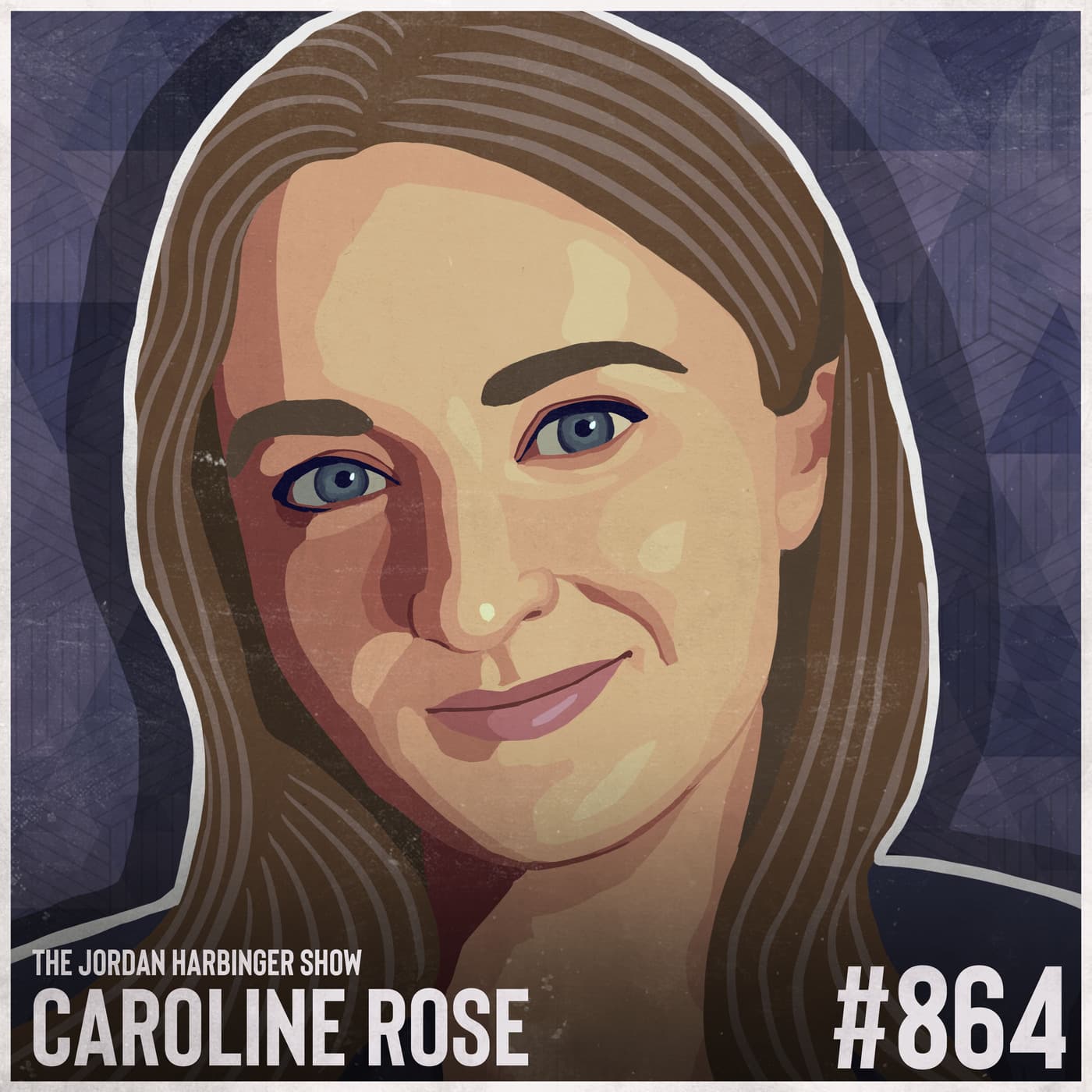
The Jordan Harbinger Show - Episode 864: Caroline Rose | Captagon and the New Age of Narco-Diplomacy
Episode Overview In this episode, Caroline Rose from the New Lines Institute discusses Captagon, a drug that has significant implications for political and social dynamics in the Middle East, particularly in Syria. The conversation addresses the origins, impact, and the involved parties in the Captagon trade, shedding light on the drug's role in supporting oppressive regimes and organized crime.
Key Topics Discussed
What is Captagon?
- Definition: Captagon is an amphetamine-type stimulant originally produced in the 1960s for medical purposes (weight loss and attention deficit disorder).
- Evolution: By the mid-1980s, its safety was questioned, and it was eventually scheduled by the WHO.
- Current Use: Presently, Captagon is multifaceted in its production and composition; it is often mixed with various substances, making its effects unpredictable.
The Impact of Captagon in Syria
- Economic Significance: The Captagon trade is valued at over $5.7 billion annually, making it significantly larger than Syria's legal exports.
- Narco-State: Syria has been described as a Mediterranean narco-state, with the Captagon trade funding the Assad regime amidst ongoing conflict and sanctions.
Users and Demographics
- Prevalence: The drug is consumed widely across socioeconomic classes in the Middle East, often seen as a productivity enhancer rather than a recreational drug.
- Cultural Perception: There is less stigma around using Captagon since it is often associated with work and productivity (e.g., for truck drivers, students).
Manufacturing and Smuggling
- Scale of Production: Production occurs on an industrial scale in regime-controlled areas of Syria, utilizing pharmaceutical manufacturing facilities.
- Smuggling Techniques: Captagon is concealed in various forms, including inside pomegranates, fruit, livestock carcasses, and within food packaging.
- Logistics: Smuggling operations are sophisticated, often using legitimate shipping routes to mask illicit activities.
Political Dynamics and Actors
- Regime Involvement: The Assad regime, including key figures like Mahar al-Assad, is deeply involved in the Captagon trade, using it as a revenue source to maintain power.
- International Relations: Despite Syria's role in the drug trade, there is a push for normalization with the regime, with discussions around counter-narcotics efforts, raising concerns about the effectiveness of such initiatives.
Challenges and Responses
- Lack of Data: The full extent of health impacts from Captagon is hard to track due to limited reporting and stigma surrounding drug dependency.
- International Cooperation: There are growing efforts for transatlantic cooperation regarding Captagon, but the normalization of relations with Syria complicates these efforts.
Key Takeaways
- Captagon is an emerging challenge that intertwines drug trafficking with state politics and organized crime in the Middle East.
- The drug trade serves as a significant economic lifeline for the Assad regime, complicating international efforts to mediate the Syrian conflict.
- Addressing the Captagon epidemic requires nuanced international cooperation, yet the current political landscape poses barriers to effective action.
Conclusion Caroline Rose's insights into Captagon highlight the intricate connections between narcotics, governance, and organized crime in Syria. The challenges posed by Captagon are emblematic of broader issues in narco-diplomacy and international relations, showing how drug trafficking can sustain oppressive regimes while posing significant health and security risks.
For more information, full show notes, and resources, visit [jordanharbinger.com/864](https://jordanharbinger.com/864).
Written by AI. May contain mistakes. Listen to the episode to check what was said.
Transcript
Automatic transcript. May contain errors.0:28This episode is sponsored in part by LinkedIn. compared that to the cost of a bad hire. Training time, salary, lost opportunities, stress on your existing team, and then the emotional fun of letting them go and starting all over again. When you add that up, spending a bit of energy up front to find the right person is a no-brainer. That's exactly where LinkedIn Jobs shines, helping you get it right the first time so you're growing your business instead of constantly cleaning up hiring mistakes. Hire right the first time. Post your job for free at linkedin.com slash harbinger. Then promote it to use LinkedIn Jobs' new AI assistant, making it easier and faster to find top candidates.
1:00That's linkedin.com slash harbinger to post your job for free. Terms and conditions apply. What can 160 years of experience teach you about the future? When it comes to protecting what matters, Pacific Life provides life insurance, retirement income, and employee benefits for people and businesses building a more confident tomorrow. Strategies rooted in strength and backed by experience. Ask a financial professional how Pacific Life can help you today. Pacific Life Insurance Company, Omaha, Nebraska, and in New York. Pacific Life and Annuity, Phoenix, Arizona. Coming up next on the Jordan Harbinger Show.
1:38This is multi-generational and a lot of these same big figures have been around for a long time and their political landscape was already corrupt to begin with. But now this adds huge layer of complicity and corruption and coordination. You've got Assad's very own brother running a lot of these operations.
2:01Welcome to the show. I'm Jordan Harbinger. On the Jordan Harbinger Show, we decode the stories, secrets, and skills of the world's most fascinating people and turn their wisdom into practical advice that you can use to impact your own life and those around you. Our mission is to help you become a better informed, more critical thinker through long form conversations with a variety of amazing folks from spies to CEOs, athletes to authors, thinkers to performers, even the occasional arms dealer, Fortune 500 CEO, neuroscientist, Hollywood filmmaker or legendary actor. And if you're new to the show or you want to tell your friends about the show, and of course I appreciate it when you do that, I suggest our episode starter packs as a place to begin.
2:38These are collections of top episodes organized by topic that'll help new listeners get a taste of everything we do here on this show. Topics like persuasion and influence, China, North Korea, disinformation, cyber warfare, crime and cults, and more. Just visit jordanharbinger.com slash start or search for us in your Spotify app to get started. Remember y 'all we've got a newsletter it's kind of a new thing I love your feedback on it because it's new and I don't know what I am doing to create value I do try jordanharbinger.com slash news what I've been doing is going and grabbing old episodes of the show like all the way back to episode one And dissecting lessons and takeaways from that episode So if you're a fan of the show and you want to recap of important highlights and takeaways or you just want to know what to listen to next The newsletter is a great place to start jordanharbinger.com slash news By the way, if you use the Stitcher app to listen to this show, they are getting rid of that app.
3:32August 29th, it will no longer be useful. So switch to a different app if you use the Stitcher app to listen to this podcast. If you're on Android, I suggest Podcast Addict. It might not be as pretty, but it works really well. If you're on iOS, Apple, you should use Overcast, in my humble opinion, or Apple Podcasts. But definitely, no longer Stitcher. It will not update anymore in the next couple of months. So if you're using the Stitcher app, now's a good time to switch to a new podcast app. And if you have any problems with this, you're kind of boomer in terms of your tech, you don't know what to do, you can always email me, Jordan at jordanharbinger.com.
4:05I will try to point you in the right direction, but the Stitcher app will no longer work for this show. Today, Captagon, the most widespread drug that you have probably never even heard of. I came across this in a report about trafficking and the civil war in Syria, and I just couldn't believe there was a drug this popular that I'd never seen on a single headline anywhere ever before. Captagon is a drug that is taking over huge parts of the world, especially the Middle East, hooking loads of people, stuffing billions of dollars into organized crime and genocidal regimes and funding at least one civil war.
4:42This episode would have been out of the loop episode, but since this loop was so unknown in the first place, it's a regular episode instead. And I'm here with Captagon expert Carolyn Rose. Now let's get a nice, big, dirty, cardiac arresting mouthful of Captagon. Here we go.
5:01Carolyn, thanks for joining me. I never heard of Captagon before, and it's weird because not that I'm all into every kind of drug that's out there, not to imply that, but you think, okay, this is a multi-billion dollar industry. It's a drug that's taken over huge parts of the world. Tons of people are taking it. It's stuffing billions of dollars into organized crime and genocidal regimes. And I just never heard of it at all. What is Captagon? It's a great question, Jordan. And trust me, you're not alone. Captagon is kind of a niche drug globally, but in the Middle East, it's incredibly popular.
5:34So what it is, it's an amphetamine type stimulant that was produced originally in the 1960s by a company called Degusa AG. And they produce Captagon for weight loss, but also attention deficit disorder. It was a very common substance that was prescribed licitly on pharmaceutical markets. Then in the 1980s, things started to change. There were alternatives that popped up on the pharmaceutical market that really did push Captagon out. Lots of doctors and medical experts then began to realize that Captagon was not as safe for public health as they originally thought. It caused a number of pulmonary and cardiovascular issues.
6:16And so in the mid-1980s, the World Health Organization scheduled Captagon. It's important to denote as well that Captagon, its original formula was called phenethylene. But the Captagon we see today is much, much different. It's essentially whatever you make it. As long as you put two interlock Cs, that's what Captagon is. Got it. So basically, it turned out meth was bad for you. Okay. Yes. And this drug used to be one thing and now it's whatever they've pressed, whatever pill they've pressed. Well, it's like meth in the United States. It's made in a, in an outhouse somewhere and you're eating or what a smoking, whatever the hell that guy or gal cooked into it.
6:58That's it. Exactly. And the street name kind of precedes it. And from there you can make whatever you want it to be. Is it in the United States? I haven't heard of it. You'd think it would be, if it's all the rage, why have I never come across it? Again, I don't want to imply that I'm doing a bunch of drugs over here. I have kids and a functional life, but I've heard of cocaine. I know about marijuana. I know about ecstasy and MDMA. So if it's so pervasive, I'm guessing it's not in the United States. No, it's not at all in the United States. We've not seen any sign of consumption. Pretty much the same picture in Europe.
7:29We only see capticon shifts to European imports, but mostly it's rerouted back into the Middle East, into the Arab Gulf. So it's pretty confined regionally. Okay. I mean, it's interesting that it's only in the Arab Gulf because from what I understand from news sources in the Middle East, they not only don't have drugs, but they don't have gay people or any violent crime or any sort of other issues. So it's amazing that this drug seems to be making its way there when they don't apparently have a drug problem of any kind. Well, certainly, especially in extremely conservative countries where there's a stigma of drug consumption.
8:04You have exceptions, of course, like, for example, cot or hashish, you know, those are very popular substances. But Captagon is a very interesting kind of beast, so to speak, in the sense that it's a drug that people take to be productive. So the stigma that you have with taking Captagon, many assume that, well, if I take Captagon and if I take it to study for my exams or if I take it just to stave my hunger or if I need it, I'm a truck driver and I need it to stay up for the second or third shift, then that's fine. It's not like the, quote, harder drugs. So because of that, I would say less of a stigma and it's much more widespread because it could be used to be productive.
8:46That's interesting. So taking drugs for fun, bad. Taking drugs to work yourself to death, no problem. Oh, yeah. Totally, totally fine. It's interesting. I don't know if this is also in your wheelhouse, but I read about methamphetamine in North Korea, and it's kind of just everywhere. One, because you can make it from industrial chemicals, I guess, and probably a bunch of other stuff that's easy enough to obtain, so you can produce it domestically slash literally in your house or your factory. But two, if you don't have food, which they don't in sufficient quantities, and you have a ton of work to do and it's all manual labor, it's kind of the perfect thing to dole out to the population or at least allow the population to consume.
9:27Absolutely. I mean, I think, again, I'm not necessarily an expert on methamphetamine and that illicit economy globally, but when it comes down to, you know, how this compares to Captagon, I think that it's very similar. And that's why you see this dual appeal throughout the Middle East, but among different socioeconomic classes and different socioeconomic levels. In the Levant, for example, in Lebanon and in Syria, where people are dealing with an extremely dire economic crisis and political crisis, where people are waiting in breadlines, where people are not able to get cash from their banks, this is a very useful substance to stave your next meal, to work a second job or a third shift.
10:09It's also very reportedly popular amongst foreign worker populations in the Gulf for that same reason. But at the same time, you also have youth populations that are extremely bored. They have a bit of extra cash to spend. This is particularly the case in Saudi Arabia and UAE and many GCC countries where they're taking it recreationally. Sure, you know, some are taking it for their exams. Some are taking it for academic performance, but many are turning to this as a recreational drug because it gives you that rush that, you know, many people flock to. GCC is what? Gulf Cooperation Council. Sorry.
10:47Yeah. Same thing as Gulf. Okay. Gotcha. So that's like Qatar. Yeah. Is that Saudi Arabia too? I don't know. Yes. Or is it like UAE? Yes. All the Gulf countries, it's the GCC. But is this killing people? Because I know when I did my research, I thought, oh, this must be so deadly. meth is so deadly, but it was hard for me to find statistics on how many people are actually dying from this. Is that because of a lack of reporting or is it not that dangerous? Lack of, I would say, data. That's one of the number one things is that we know a little bit about Captagon's malign health effects, but not really because we don't know exactly what is in the quote current version of Captagon.
11:23And there seems to be many different versions as well. So we don't have a lot of lab testing on the pills themselves, but then also not a lot of people are seeking help to begin with. Many are seeking help for dependency, but we have not seen any recorded Captagon-related death. But again, there is that element of stigma with many of these countries. Maybe someone has taken a lot of Captagon and they are experiencing a health problem, but the family is saying, oh, this was a pre-existing health issue that they had before. So it's very difficult to kind of assess with the limited data we have. But we do know for a fact that given that is an amphetamine type stimulant, long term heavy use does, of course, lead to a series of health concerns.
12:09So, OK, we don't know if it's killing people. It's not in North America. It's not in Europe. This is going to sound callous. But why do we really why worry about this? Why do we care? What's the problem? What's the big deal? That's a great question. It sounds like like junkie Adderall for the Middle East. I mean, we got bigger problems. Absolutely. So I would say that one of the overriding and most significant elements of the Capricorn trade, it's not necessarily what it is and the scope of the problem, but rather who is behind it and the actors that are profiteering and using this as an alternative revenue source.
12:45So with any illicit economy, you've got this nexus with bad guys, with bad actors. And in the Middle East, the actors that are heavily associated with the Capricorn trade, there's a huge spectrum, of course, but the industrial size production that we see, it's concentrated in regime held areas of Syria, particularly with officials either directly aligned or indirectly aligned with the Assad regime. And then on top of that, I would say like the number two on the list of organized actors behind the Capricorn trade would be Hezbollah. Hezbollah also supports small-scale production and trafficking operations throughout the region.
13:22And again, you know, why should we care? Of course, the Syrian regime would be looking to profit and find alternative revenue streams amidst sanctions. The reason why we should care is because if sanctions are already in place, they're using this to undercut the effects of that. They're also coordinating with illicit networks all over the world, particularly in in Southern Europe, in Africa, also potentially in the Indo-Pacific. And they're also emboldening and strengthening those illicit networks. So for those that care about governance and rule of law, this is a huge issue. Okay. So for people who have been under a rock for the past decade, Syria is going through a major civil war right now, is under sanctions.
14:04Their exports have fallen, what, like 93 % or something along those lines. I mean, it's just crazy. They have no way to generate revenue. They've lost a bunch of territory. Well, essentially, they don't control a bunch of the country that they used to control. There's rebel groups. ISIS has moved in there. So you have a war zone, which makes it easier to move things around in many ways. You've got all these illicit economies, but you also have a regime that's desperate for money to keep funding the weapons it uses against its own people. And I think the problem that a lot of people don't really understand, and it took me years to sort of absorb this as well, is that when you have an organized crime network pop up in a war zone or start operating in a war zone, it's kind of like a cancer.
14:46It doesn't just mess with the country that it's in. It reaches out and says, let's talk to the Balkan gangsters. And then let's talk to the this mafia, that mafia. Let's start human trafficking while we're at it. And hey, we're moving people. Let's move some guns. We're moving drugs, guns, and people. Why don't we deal with the terrorists? I mean, they have money too. And we have guns now. We're not really supposed to do that. But who cares? It's money. You're not dealing with the sort of moral actor. And I use that in air quotes. You're not even necessarily dealing with governments right at this point.
15:15You're dealing with criminals who think, I don't care if I get my million dollars from ISIS or if I get it from Syria or if I get it from Jordanian smugglers. So it's sort of metastasizes and spreads all over the place. And even if that war zone, if that conflict dies down, you've got all these ties from one mafia and one region to another, and they don't want to just pack up and go home. They just get into other businesses. So that is, I think, is one of the reasons why we should care about stuff like this. Am I on point here? I think you hit the nail on the head. And then on top of that too, is that, yes, we have Hezbollah.
15:49We have these non-state actors. What's Hezbollah for people also who aren't familiar? Of course. Hezbollah is a designated terrorist organization that operates primarily in Lebanon, but of course has also established some small presence in Southern Syria. They're a designated terrorist organization by the United States. They very much capitalized on the landscape after the Lebanese civil war. They're a militant group and also a considerable political force within Lebanon. They collaborate very closely with the Syrian regime. Also, they have some alliances to Iran as well. To your point about why we should care, not only is this something that, of course, spreads and undermines rule of law all across the international community, But also when you have an actor that is a state actor, they have the resources, they have the networks, they have access to ports, they have access to checkpoints.
16:43They have everything that they could dream of in terms of helping sustain the industrial size growth of an illicit trade like Captagon. It's really difficult to stop it. And then on top of that, then they have this plausible deniability narrative that they've very much carried out in the country. And also it's become a leverage card. and a kind of pressure tactic that they have mounted against some of their regional neighbors. You know, if they say, oh, you don't like the Captegon trade? Well, how about we arm smugglers and we increase the risk of violence and agitation along your border? You know, it's a really great tool and a really great card to play in discussions and negotiations with other countries.
17:26I had not thought about that. That's kind of so you're saying it sounds like you're saying that Jordan, for example, which borders Syria might say, hey, man, we don't really like the fact that you're doing well. You're killing your own people. And they say, cool, we don't care about you. We're going to run armed smuggling gangs over your border and kill border soldiers, which I've heard has happened recently, which, of course, pisses off the regime. But it's almost like a war tactic in a way or like a conflict in and of itself where you're running smugglers over the border and you're just not doing anything about it, even if you could.
17:56your neighbors are weaker for it because now they have to focus on border security when before maybe that wasn't such an issue. Right, I think that it's a card that they can play and then also something where they can also shrug and say, well, this is out of our control. So that's been really useful for them. And as long as they're conducting an occasional seizure here and there, the regime thinks that they are able to then create that narrative of, see, that's someone else's problem. These are other actors that are operating within Syria. It's only amongst terrorists and opposition forces. But I will say it sometimes has shot the regime.
18:33They've shot themselves in the foot by going too hard with putting pressure on their neighbors with Captagon. For example, Jordan was pursuing or at least experimenting with normalization with Syria throughout the summer of 2021. And they opened the border crossing along their border with Syria. And after that, they saw a flood of Captegon smuggling operations come through. A lot of them were violent. They killed one Jordanian captain. It got really, really ugly. And that's when the Jordanian government started to pump the brakes on normalization with Syria. So I will say that with as much agencies that Syrian government has had over this narrative, it sometimes has come back to bite them.
19:17Oh, I see. So instead of saying, we actually want to trade and export things to this border, They just ran a bunch of drugs through it. And until the Jordanian government said, maybe you guys are just kind of being dicks and we don't really want to deal with you at all. And now the border is closed again. Yeah, well, the border crossing itself hasn't necessarily been closed, but the Jordanians have essentially pumped the brakes on a number of other normalization initiatives. Oh, I see. And they were like, you know, instead of talking directly to the Syrian regime, although communication channels are, you know, they do exist.
19:49They tried to talk to the Russians, for example, who were in the area and asked them to try and get these smugglers to cut it out instead of directly through the regime. But now we're starting to see Captagon kind of climb the ladder in terms of how high it's prioritized on normalization discussion lists. And Captagon, in many cases, is taking that number one spot. It almost sounds like the U.S. and Mexico with the drug war, right? You've got border issues. It seems to be at the top of the agenda alongside auto manufacturing and other issues. It's like you can't have a conversation with Mexico, which was one of our largest trading partners and one of our largest sources of back and forth trade.
20:29Of course, it always includes the drug issue now. And it seems like the Assad regime maybe let this go get a little bit too big. I mean, how much money are we talking about going to the regime from Captegon? Do we know? That's a great question. I think that we've seen a number of different estimates put out there. For example, the report that we authored, that was looking at the trade in 2021. We put$5.7 billion, which is pretty sizable and multiple sizes larger than Syria's licit exports. Oh, really? Yeah, yeah. So the drug trade for Syria is multiple times larger than their actual legitimate product exports.
21:08But I would caveat and say that most of it is coming from Syria. And we estimated that the bulk of industrial-sized Captegon shipments are coming from Syria. But we have seen some smaller labs pop up in Lebanon. There is the potential. We saw very small evidence that there was one right outside of Amman and Jordan. So it's starting to grow a little bit more. However, the large majority is concentrated inside Syria. Now, as to how much this is worth, it's a really big guessing game. AFP, which is a agents French, France press, they put out an estimate in this past fall, which I thought was really, really accurate.
21:50And that was estimating the entire size of the trade, not just what is seized, but what really could be out there. And they put it at 10 billion. But we have seen some larger estimates. But so it's really, really difficult to ascertain exactly how much it can be, given the fact that we're seizing a certain amount, but there is likely kind of that's the only the tip of the iceberg. And there might be other pills that are trickling through that are undetected by law enforcement. So we've seen some experts in some different institutions try and gauge how much exactly that could be. It's an even harder intellectual and mathematic exercise trying to figure out how much the regime is getting from that.
22:33Because as the Capricorn trade expands, the more middlemen you tack on, the more networks are becoming involved. And it's hard to guess and to determine exactly how much the producers and the primary traffickers are making from this. But I would say safely, this is a huge alternative revenue source, extremely lucrative, and will therefore be very hard for them to give up. This is the Jordan Harbinger Show with our guest, Carol and Rose. We'll be right back. This episode is sponsored in part by Dell. Introducing your new Dell PC with the Intel Core Ultra Processor. It helps you handle a lot, even when your holiday to-do list gets to be a lot.
23:15Like organizing your holiday shopping, searching for great holiday deals, customer questions, customers requesting custom things. Luckily, you can get a PC with all-day battery life to help you get it all done. That's the power of a Dell PC with Intel inside, backed by Dell's price match guarantee. Get yours before the holidays at Dell.com slash deals. Terms and conditions apply. See Dell.com for details.
23:39This episode is sponsored in part by LinkedIn. If you've ever hired for your small business, you know how important it is to find the right person. That's why LinkedIn Jobs is stepping things up with their new AI assistant, so you can feel confident you're finding top talent that you can't find anywhere else. The best part is that these great candidates are already on LinkedIn. In fact, employees hired through LinkedIn are 30 % more likely to stick around for at least a year compared to those hired through the leading competitor. That's a big deal when every hire counts. Early on, I learned that hiring isn't headcount.
24:07It's do I see my family this week? Do we actually release episodes on time? Can I take a few days off without everything falling apart? When I've hired the right person, my life got easier. They took real work off my plate, caught problems early, and treated the business like it was theirs. That's when we actually grow. With the wrong hire, I've spent months training, fixing mistakes, having the same conversations, and still ended up letting them go and starting over. You don't just lose money, you lose momentum, you lose morale, and you lose time. That's why I'm big on hiring right the first time, even if it takes a little longer.
24:35Hire right the first time. Post your job for free at linkedin.com slash harbinger. Then promote it to use LinkedIn Jobs' new AI assistant, making it easier and faster to find top candidates. That's linkedin.com slash harbinger to post your job for free. Terms and conditions apply. This episode is sponsored in part by The Gist Podcast. If you're looking for a news podcast that is smart, unfiltered, and doesn't just echo whatever side you already agree with, check out The Gist with my friend Mike Peska. Mike's been doing this longer than just about anyone. It's actually the longest-running daily news podcast.
Read the full transcript
25:06It's earning that spot on Apple's top charts for a reason. Each episode's around 30 minutes, so it's perfect for your commute or while you're making breakfast. It's always packed with sharp, thought-provoking takes. What I love about The Gist is that it's not stuck in a partisan box. Mike, he's a really smart dude. He digs into real questions, the kind that most shows avoid because they don't fit neatly into a political lane. He'll challenge the right. He keeps the left honest. He dives into stuff like the New York City mayoral race, that whole cluster and the chaos of sports betting or even whether talking to your plants actually does anything.
25:34He's an award winning journalist. He's not some schmo like me who's totally unqualified. You've probably seen his work in the Atlantic, the Free Press, the Washington Post. He's got that rare mix of wit, skepticism and depth that makes even heavy topics fun to listen to. And he's a great dinner guest. Just saying. So if you want your daily news with more brains and less noise, check out The Gist with Mike Peska every weekday on YouTube or wherever you get your podcasts. If you like this episode of the show, I invite you to do what other smart and considerate listeners do, which is take a moment and support our amazing sponsors.
26:03All the deals, discount codes, and ways to support the show are at jordanharbinger.com slash deals, or ask the AI chatbot on the website at jordanharbinger.com slash AI. Thank you so much for supporting those who support the show. Now, back to Carolyn Rose. what's the cocaine trade by way of comparison do you know yes yes yeah 110 130 billion i would say yeah yeah so this is like roughly let's say 10 of the cocaine trade which we which has armies and submarines and aircraft and huge cartels operating internationally so it might sound small compared to cocaine but we're also talking about a much smaller area with a much smaller market that's saying something that's essentially the chief export, but that begs the question, okay, if this is something that I just assumed was cooked up in small facilities, you're not cooking up$10 billion worth of a cheap drug in a small facility.
26:59The production of this, especially if it's one of Syria's chief exports, has to be literally, no exaggeration, a massive industrial scale operation. I mean, there have to be factories that were making, I don't know, headache medicine that are now just making Captagon, right? That's what we identified in the report. I mean, certainly you have kind of a spectrum of production facilities and capabilities throughout the region. But what we started to pick up in 2020 and 2021 was just exactly that. In the 1970s and 80s, Syria had its heyday of being one of the largest pharmaceutical hubs in the region.
27:36If you look at recent UN data, it shows that Syria right before the war was one of the largest importers of a drug called pseudoephedrine, which is used for cough and cold medicine. So if you think of Mucinex or Robitussin. Pseudafed. Yeah, exactly. That could be used, we suspect, in Captagon production processes and manufacturing processes. And the scale of some of these Captagon production sites through the reports that we were able to glean in the report do show that this is pretty large scale. And not only large scale in terms of production. But can you imagine transporting millions of Captagon pills on, for example, a commercial, you know, a vessel or, you know, trying to dispatch that through overland routes?
28:24It requires a lot of logistical planning and some pretty advanced and impressive shrouding techniques and smuggling techniques. I mean, it's huge. Yeah, I definitely want to talk about that because I'm looking at some of these seizures And there's one in a single day, July 1st, 2020, 84 million pills were found confiscated in the port of Salerno, Italy. The street value of that was a billion euros. My first question is, isn't that like enough Cap to gone for every man, woman and child in the entire country or multiple countries in the area? These are not big places. You could get everybody high for a day in the whole region practically at that.
29:05Well, yes, but also we're curious as well. And this was a question that I haven't really been able to answer yet, but especially, you know, that was to Italy and it was suspected that it would be rerouted back into the Gulf, potentially, because the consumption markets don't quite exist there in Southern Europe so far. So there is the potential that, you know, once these are getting to these destination countries in the Gulf, perhaps they could be also dispatched to a next destination. That's definitely possible. Consumption definitely has been proven in a lot of these destination markets. But I have that exact question sometimes where it's like, wait a second, we're sending more than is needed in some cases in terms of, you know, unless every single individual in some of these countries are consuming Captagon.
29:54And it's very difficult to store it for a very long time because it loses its potency. So there is that question of, wait a second, what are we missing here? Unless people are taking, you know, three or four Captagon pills a day, which would be terrible and is not likely, where is all of this going? Are you just storing it in warehouses? And, you know, that's one of the lingering questions that I have when I look at this trade, especially as we see shipments just get larger and larger and larger. I don't imagine that drug traffickers like storing billions of dollars in product somewhere where it could get seized and then they just keep buying more.
30:30That doesn't make sense to me. You know, when you smuggle cocaine in some place, and I'm no expert here, but if you're bringing cocaine into the United States, the last thing you want to do is go, all right, That's brick number 75, throw it in the garage with the rest of them. I mean, you want to move that stuff as fast as possible. One, so you can get your money. And two, so you can keep the heat off of you and not have this in your possession. So somebody has to be taking it or reselling it or moving it somewhere else. And they just haven't caught where it's going. I mean, could it be moved from the Gulf to Africa?
31:00Is it being taken by people who are fighting civil wars somewhere else that we're just not paying attention to? I don't know. How likely is that? Oh, I think extremely likely. And I think, you know, when we get into the context of some of these other conflict zones that exist, you know, near the Horn or, you know, in the Sahel or northern Africa, it's even harder to track. So, you know, that's been something that I think deserves a lot more research and a lot more attention because we have had some limited evidence of Captagon winding up and being stored in Libya. We've had some evidence of Captagon being seized in Nigeria.
31:36And, you know, again, to your point and what we talked about previously about empowering other illicit networks, that same seizure, the Port of Salerno seizure that you're talking about that was conducted in July 2020. Guess who was supposed to receive that? And guess who was supposed to facilitate that? A mafia group called the Comora. Oh, wow. So like, you know, there's an Italian mafia group that is working and engaging with directly with regime Syrian regime aligned actors to receive a drug shipment. So, you know, it just goes to show that as they're looking to expand this market, especially if they have more pills and they know what to do with, that is going to undermine and empower a lot of these other, quote, bad guys and malign actors out there in the international community.
32:23Why ship it to Europe just to ship it back into the Gulf? Is that because if it's coming from Syria, it's probably drugs at this point? I mean, statistically speaking, it's more likely drugs than not drugs. So you ship it to Italy and then it comes back and it looks like, I don't know, Ikea furniture or something like that. Is that the plan? That's actually a great way to phrase it. Yeah, I mean, essentially, it all comes down to suspicion. There's only so many times that you can send a Captagon shipment out of the port of Beirut or the port of Latakia without things starting to become a little fishy, especially with, you know, GCC states that are now starting to wake up in terms of the challenge of Captagon.
33:00So yeah, as soon as you get that EU stamp, it's the same reason why we've seen Captagon wind up, for example, at the port of Klang in Malaysia. You want to get that stamp that shrouds suspicion and makes these shipments look a lot less suspicious. Okay, so if we're shipping it to the Balkans and we're shipping it to Italy and the mafia which are no joke in the Balkans, I know the Italian mafia is not what it used to be or, you know, whatever the good old days were the 60s, 70s, 80s, I guess, but or maybe even earlier over there. If they're touching the stuff, are we worried at all that they're going to then go, hey, you know, shipping it is profitable, but you know, it's really profitable selling it at retail prices in the area where we live.
33:43Are you worried that they're going to develop a market there because Europeans have a lot of money and they certainly have more money than, let's say, at developing a market in Africa for this. So it would be pretty profitable if they just kept a bunch of it instead of shipping it onward and sold it at retail prices instead of, I don't know, wholesaling it to the next destination. It's possible. I mean, I haven't necessarily seen evidence of that happening just yet, although I will say, and I wrote something recently on this, that when I was looking at my data from 2022, I did see an uptick in Captagon shipments over land, not through commercial vessels or anything like that, but over land through Turkey.
34:23And a lot of the law enforcement systems and law enforcement officials in Turkey that would seize Captagon, they said, hey, this is destined for European countries. They never said which one, which was not helpful. And you never know, maybe it was actually destined for the Gulf or somewhere else. And maybe they were just saying that to say that. But, you know, that was a very notable trend that we saw in 2022. So I think it's entirely possible that Europe could be targeted as a market for this drug. But, you know, there's just no way to know about how successful its appeal will have. I mean, look, you don't have to stretch to make me right if I'm not right.
34:59But it does seem like the kind of thing a country would say, like, oh, our people aren't taking this. This was going to Germany. We don't take Captagon over here. We have God-fearing people over here in Turkey. I mean, maybe they're right. Maybe they're not. Who knows? It's just, it's hard to say. But again, you know, you don't have to stretch just because I made a guess that happens to be wrong. So how do they ship this stuff? I assume you don't just crack open a container and a bunch of pills spill out. What's the smuggling method they're using? Well, actually, you know, we have seen a few shipments where it is, you just do a quick little poke through the packaging material.
35:34That sounds lazy. I know. Well, that was back in 2020. So since then, they've gotten like absolutely wild with the seizure materials that they've used. Porcelaino was cardboard cylinders, like industrial size. They were massive. But yeah, you go through and then it was just all packed throughout there. But now it feels like everything under the sun. I've seen Captagon shrouded inside of fruit, inside of pomegranate skins, which can you imagine like the technique of someone, you know, putting it inside of pomegranates? I've seen it shrouded inside and disguised as like chickpeas, like two or three pills together.
36:12And then they put this like mesh overlay over to make it look like they were chickpeas. Oh my God. We've seen it inside of lemons. We've seen it inside of oranges, inside of fake oranges. Like they got plastic oranges and put it inside that. But who orders like 10 million fake oranges? They're like, oh, your fake oranges have arrived, sir. Thank God. I know. We've been sitting on these fruit bowls with plastic bananas and plastic apples for months now. Thank God these have arrived. I know. And part of me thinks that some of these guys are just doing this to, I don't know, have fun with it. Yeah, exactly.
36:46Because at this point, it's like whatever. And always, especially with these very flashy ones, they're shipped in these huge sizes, which is pretty risky if you think about it. So I feel like sometimes there's like this at the board meeting of Captagon smugglers. they probably are like, all right, guys, let's do oranges this year. Let's do sheep guts. Like they packaged it in the carcasses of livestock. Yeah. Oh, gosh. I know. But then what's gross is then don't people, do people then eat the carcass of the livestock? Is it for consumption? I don't think so. I don't know, actually. I don't know.
37:22There have been two instances of it like being inside of dead sheep. But what do you use dead sheep for if not, I don't know. Maybe I'm out of the loop on that one. Yeah, maybe it is for consumption. But yeah, it's pretty wild. We saw something inside of like olive oil containers, inside of like car parts. Anyways, the list can go on. That's shocking. The pomegranate and fruit stuff is amazing because the amount of manual labor, like you said, can you imagine somebody putting Captagon tab pills into a pomegranate? The amount of manual labor involved in that is enormous. I mean, you would need thousands of people sitting in a row shoving Captagon tablets into tens of thousands or whatever, hundreds of thousands of pomegranates because they rot, right?
38:09So you can't just do them slowly over time and then ship a rotten, shriveled pomegranate. You got to do it in a couple of days. So you take out all those seeds, which anybody who's ever eaten a pomegranate already realizes this is a huge pain in the ass. You do something with the seeds. Hopefully they get consumed and not just wasted, but whatever. and then you shove tablets into that space in the pomegranate? Or is the whole thing hollowed out and just full of pills? For what I saw in the pictures, the whole thing was hollowed out and then filled with pills. However, on that same kind of wavelength, there was a seizure that was conducted inside of Syria where they had them inside of olive pits.
38:45So still trying to keep the olives intact. And can you imagine just putting one to two pills in that space? still like a lot of, a lot of work. Um, and yeah, so it's pretty incredible. I'm going to throw something out there and I don't want to give anybody ideas, but I'm sure they're better at this than me, given the fact that they've made$10 billion a year off this stuff. They're probably got to be using machines, right? You throw the olives into a machine. It's supposed to put the pimento in there or whatever, the little red thing. Maybe it just takes the pit out instead of pimentos, they've rigged it.
39:16So it puts captagon pills in there. Cause I can't imagine the manual labor involved in that. otherwise. It's just ridiculous. Yeah, I know. I'm starting to think about like everything on our seizure database. Like they put stuff like inside of like canned lids. Canned lids? Yeah, like tomato paste lids. So like they would put it under like inside and then they would put like another layer or like a seal over it and they would have it inside of the lids. Oh, wow. They're really, really, really advanced and always very entrepreneurial in terms of what is being found with Captagon inside. It's never usually just a bag.
39:52Although sometimes you see that with smuggling, like Overland smuggling. It's gotta be really hard to find stuff like this. I know some of the seizures that I looked at, they were stuffed into washing machines. So you're not gonna take apart a washing machine. I guess if you have a drug sniffing dog and it realizes something is amiss, you take it apart. But if you're just a human looking at it, there's no freaking way you're finding it in a refrigerator or an air conditioning unit. You're just not gonna look inside. Yeah, unless you have x-ray, unless you're putting everything through there. I mean, it's pretty amazing that, you know, so much has been detected, but I think it just goes to show how it is very difficult for law enforcement systems to, you know, be on top of this.
40:29And then on top of that, you know, you do tip offs and sometimes you do have intelligence passed on, but there's a lot of distrust amongst neighbors in the Middle East. So you don't really have that level of coordination that you would want, you know, that phone call that says, Hey, this is coming from the port of Beirut, we suspect that this could have X amount of Captagon pills inside. Definitely check it when it arrives at the port of Haditha or the port of Jeddah or something. That, I think, is lacking in the region. I looked up Syria's legal exports, and this is a couple years old, but it was 860 million.
41:02So if you're talking about 860 million, so not even a billion, let's say it's a billion now, and you're talking about almost 10 billion for the Captagon trade, this is 10 times their legal exports. So this is this has to be the top revenue generator for the entire country at this point. Is that correct? Or am I overstating that? It's hard to ascertain. I would say absolutely. But in terms of the level of state involvement that is implicated in Captagon production and trafficking, it's a major, major, major revenue source without the receipts of, you know, what's being rerouted back into the pockets of these producers and traffickers, how much is being paid to these traffickers as well, how much it takes for production to take place.
41:48It's really difficult to just know exactly how much, but it definitely, as you mentioned, it's larger than their illicit exports, which just is pretty incredible. So is this a mafia in Syria doing this, or are we talking about the regime itself has its own government officials doing this? Like when we talk about North Korea, you see North Korean diplomats doing stuff like smuggling heroin. Are we seeing that with Syria? Or are we seeing mafia groups that may or may not be kind of tangentially attached to Assad's cousins, friends from college or whatever? I mean, how close are we talking? Well, I would say it's definitely like this very complex landscape that exists in terms of captive gun production.
42:26You have a group, for example, some of the traffickers we see along the Syrian Jordanian border, they'd been doing, you know, A lot of these are, you know, these tribal entities and families that, you know, traded cigarettes over the border or arms. And, you know, today it's Captagon because that is in high demand. However, you also have some of these groups of narco entrepreneurs, I would call them individuals that are, you know, deeply embedded in Syria's business and agricultural sector that have, you know, these connections. They have these shell companies that exist abroad that the regime or, you know, these major Captagon producers can tap into to transport Captagon out of the country.
43:11But then you have the, I would say, top tier level where, you know, it isn't necessarily a directive that the Syrian government or Bashar al-Assad himself has created. But you are pretty close because you have, for example, one of his direct cousins, Wasim Badia Al-Assad, who has been a noted Captagon producer and trafficker. And then most notably, his brother, Mahar al-Assad, is heavily implicated in Captagon production and trafficking. And he also just so happens to head the regime's most, I would say, prestigious and formidable security apparatus and security arm, which is called the Fourth Division.
43:53And the Fourth Division is extremely well equipped and has been very heavily associated with Captagon production and trafficking.
44:04You're listening to The Jordan Harbinger Show with our guest, Carolyn Rose. We'll be right back. If you're wondering how I managed to book all these folks for the show, it is because of my network. And I know networking sounds gross, sounds dirty, sounds schmoozy. The course is at jordanharbinger.com slash course. And the course is not gross. It's not cringy. It's not awkward. It's not cheesy. It's just practical exercises that will make you a better connector, a better colleague, a better friend, a better peer. Takes a few minutes a day. And many of the guests on the show, subscribe and contribute to the course.
44:34So come join us. You'll be in smart company. Again, the course is free. Jordan harbinger.com slash course. Now for the rest of my conversation with Carolyn Rose. So it sounds like the state is really not just complicit, but it is intertwined with this completely. When you have the military's elite units providing security and helping smuggle, and you have the president's brother doing this and the president, especially when it's a dictatorship, that's not like, oh, the guy was in this other business beforehand. I mean, Assad's been in charge of the country for, well, they've been in charge for generations at this point.
45:06So this is not a something he just cooked up, no pun intended, in the last couple of years. This is something that's always been there. Okay. And I would imagine there's also an element of Assad keeping the smugglers and the mafia groups as allies if they control certain areas of the country. I know we did an episode about the dictator's handbook with Alastair Smith, episode 794 and 795. And one of the things he brought up was dictators often have organized crime figures around them because those people have real power in the country and dictators have this, they have their cronies around them and they have to keep those people happy.
45:41They don't have to keep the population happy. Those aren't really the stakeholders. They have to take the people with real power. So organized crime groups, kleptocrats and rich people, essentially, elites happy. So I would imagine if there's that much money in this, everybody who's got any power at all is probably getting their hands into Capcom in Syria. Exactly, exactly. I mean, you look at some of the biggest magnets of Syria's telecommunications sector, their agricultural sector, other industrial production sectors, you know, for example, the cardboard cylinders that were used at the Port of Salerno, that happened to be from a very close regime and Assad family ally who provided the cardboard cylinders for that.
46:22Everyone is playing a part, whether that is providing a truck or providing shrouding materials or providing a facility to make Captagon or even directly overseeing the production process. And I would say that you're absolutely right in the sense that, you know, the Assad regime, this is multi-generational. And a lot of these same big figures have been around for a long time, or, you know, perhaps their families have been very prominent in this particular business sector. And, you know, already the Syrian business landscape and their political landscape was already corrupt to begin with. But now this adds, like, I would say a huge layer of complicity and corruption and coordination.
47:02I would say it is notable, though, to keep that narrative of plausible deniability. So you have the fourth division, you've got Assad's very own brother running a lot of these operations. But then you also have a very active ministry of interior that is conducting seizures wherever they can. And these seizures are much, much smaller. You know, sometimes you'll see some of these seizure reports and they're like sometimes three to five pills. Three to five pills? Yes. Yes. And they're putting that up there, right? Compared to like the millions that we're seeing seized in the Gulf. It's interesting.
47:36Also very interesting when compared to the fact that Syria is the largest hub of production. So when you're only getting five pills, There's a lot underneath the surface there that they know is being produced, but they're not going after it. And then on top of that, you know, some of these seizures that we've seen, they're a bit wonky as well. For example, Syria announced that they found Copticon powder in the form of hummus bowls, like pottery bowls that they found, which is very difficult to assess if that's possible. So you have this kind of balancing act that you can see that the regime is trying to wage to offload that blame, to say, look, we're doing all that we can, and also to kind of create that space between what the government ministry is doing, but then also, of course, some of these other security actors and business actors that are closely aligned, but they're operating independently.
48:27Ah, man. Yeah, I'm looking at some of these stats. In 2020, the United Nations registered that Syria had imported 50 tons of an important basic ingredient for the production of Capricorn. That's a lot, right? The chemicals, pseudoephedrine, which you mentioned before, that they use in cold medicines and crystal meth, 50 tons. And I looked up like, okay, well, is that a lot? Because I know other places that make pharmaceuticals, they've got to be importing it. Are they importing 5 ,000 tons? I don't know. No, it's a little more than half of the amount imported by Switzerland, which has a massive pharmaceuticals industry that's legitimate.
49:02So if you're importing, let's say, 50 % of what Switzerland is importing, but you're exporting no legitimate or very little, very little legitimate pharmaceuticals and Switzerland is putting stuff all over the world, you're importing a shitload of pseudoephedrine, for lack of a better term. It's just a huge amount in scale. Yeah, it's extremely. And they haven't changed those, you know, the levels of what has been requested since the advent of the Civil War. So it's very difficult to gauge just how much is coming in. And likely also, they likely have a lot of stockpiled precursor materials from before the war began as well.
49:39So and they have these facilities, especially in areas that were not as affected by the violence of the Civil War. You know, a lot of those hubs still exist. So yeah, they have a huge production capacity that is notable. And I would say a lot of governments are starting to wake up too. How much does Captagon cost if you try to buy it in Riyadh, Saudi Arabia, because you got a party to go to or whatever, you've got exams? How much are we talking about? You know, it depends on where you're buying it, how close you are to production. Well, yeah, you need a good hookup. Exactly. And it also depends on like what sort of pill you're buying.
50:14What's most common in the Gulf, at least over the last two years, has been the Lexus variant, which is a white variant of Captagon. I say Lexus because they have it in a Lexus logo on the plastic bags. Usually it's like this metallic silver or gold Lexus logo. As a researcher on Captagon, I now cannot drive on the road without seeing a Lexus car and being like, oh, that's a Captagon car. But Lexus is the most popular in Saudi Arabia. Typically, pills cost anywhere between like$10 or sometimes up to$25 per pill that's been recorded on the market, which is pretty crazy. But of course, there are cheaper variants that exist.
50:55There's a yellow, like a mealy yellow pill that has a smaller concentration of amphetamine. And then also we recorded like a pink strawberry tinted Captagon pill. We're starting to see a pill that's a bit more brown and like rusty looking, which is doesn't bode well for public health. That sounds gross. Yeah. Yeah, it sounds really gross. And it's very difficult to kind of ascertain how much those pills are going for. And we've also seen that those pills are a bit more popular closer to production sites. So in Syria and Lebanon and Jordan. I know that it's impossible to get sort of international cooperation, real international cooperation with a place like Syria because it's a dictatorship.
51:35The ruling family controls the drug trade and the judiciary and the law enforcement system, right? So you're not going to get Interpol going in there to supervise operations. It's just not going to happen. Well, no. And then I would also mention Interpol accepted Syria into their red notice alert system in the last year. Tell us what that is. Interpol's red alert system essentially is that if you're part of this notification system, you're allowed to request Interpol. You know, if there's a warrant for arrest, if there's someone that your government wants to arrest that essentially facilitates countries and wherever that individual might be, they will cooperate to arrest them.
52:20We haven't seen that red notice system heavily used by Syrian authorities against opposition forces, luckily. But we are starting to see Interpol normalize and open a door back to Syrian authorities after all this time. They say that this was a decision that was not politically motivated. And they said that the Syrian regime has proven itself to be, you know, a suitable readmission back to the red notice system. However, we've also seen Interpol begin to include the Syrian regime in dialogues on counter narcotics policy. So, for example, Operation Lionfish, which focuses on, Captagon is a part of that operation.
53:01They've invited the Syrian regime to sit down at the table and have a chat about what the regime can do to counter illicit narcotics like Captagon. That's ridiculous. Like, well, look, I understand if we include a place that has a drug or narco trafficking problem. Like, we want to involve Mexico in dialogue with the United States because we both have narco trafficking problems and drug problems. But when it's the state actually doing it and it's the dictator actually doing it and the law enforcement agencies and military actually doing the trafficking, that seems a little bit like a bridge too far.
53:35At what point do you just realize that they're completely full of it, lying to you, everything's performative and they're going to try and derail your efforts. And they've got an inside man on every meeting where you're making plans on how to derail their operations. It makes that to me just seems dangerously naive to the point of stupidity. The same kind of line of thinking has started to really affect a lot of other geopolitical developments as well. For example, a lot of countries in the region, Saudi Arabia, the UAE, even Jordan to an extent, Egypt, they're starting to toy with the idea of real normalization with Syria.
54:11And that means your embassy is reopened back in the capital city, send an ambassador, you've got full-blown, like revived relations. You know, you try and revive commercial relations, political relations, everything. And what is at the top of the agenda on things that they could potentially cooperate with the regime on? Captagon. There have been a number of experts and also, of course, the data shows that, well, if the regime is in a large part an agent in the Capitagon trade, they have agency to stop it. But they also have, I would say, probably more of an incentive to keep that up, given that it's such a formidable revenue stream.
54:50What makes you think that they will just cut it out? There is, of course, the incentive to normalize relations and to restore credibility and legitimacy. But in my opinion, I think that the regime is looking at this whole landscape and thinking that they can accomplish both. Of course. They can have their cake and eat it, too. And so it's hard watching all these countries put that on the top of the agenda list. Yeah, nobody's going to say, fine, I do want diplomatic relations with my neighbors. I'm going to cut my revenue down by 90 % in order to do that. That's ridiculous. Completely ridiculous.
55:27You'd rather just be a pariah, but able to fund your military and stay in power than not be able to do any of those things. Probably end up getting executed or shot in your own house while you're sleeping or something. Right. And, but hey, we got an embassy from Qatar now reopened. That's a victory. I mean, no dictator worth their salt is going to take that deal at all. Right. And on top of that, too, what I would imagine as well, what has been discussed or at least could potentially happen is, you know, let's say some countries think that then if that's the case, if the Assad regime isn't going to back down that easily.
56:06Well, then just sweeten the deal and offer them a financial package that will, quote, make up for captagon revenues. Well, then the regime will then just take both of that. And then they'll say, oh, well, the Captagon trade is continuing. Well, that's not us. Those are the terrorists and opposition forces that are carrying out Captagon production, not us. Yeah. In fact, give us a little bit more money and we'll be able to fight those guys, too. Exactly. Instead of giving us$10 billion, give us$15 billion and we'll make sure that those pesky terrorists that are generating$10 billion a year for us are out of business.
56:39I mean, none of it makes any sense. it just boggles the mind. And it really makes me lose faith in organizations like Interpol or the UN who do so much good work when I just think, are you, what are you smoking where this is possibly going to work out for you at all? It's so dumb. Yeah, it's been very difficult to kind of see that very fine line that needs to be walked in respect to Syria. I think that there is a limit between objectivity, but then also, of course, knowing that the regime as an agent behind the Captagon trade and welcoming them into the fold with serious collaboration. I think it's always important to keep a communication line open, but inviting them to the actual table for negotiation over Captagon interdictions, it's a little, a bridge too far, I would say.
57:28So is there anything positive you can leave us with? You know, we see from the war in Ukraine, Putin invaded Ukraine, and we see the West and NATO being stronger and the European alliances are stronger. Is the Captagon thing going to be similar? where, all right, Captagon, bad news, not gonna make any real headway there, but on the plus side, maybe there's better drug cooperation between European countries, Africa, the Middle East, and the United States. I am encouraged by some of the recent steps that have been made on Captagon. And, you know, having kind of rung this alarm bell for a few years now, I am starting to see greater transatlantic cooperation between the United States, the UK, and even the EU.
58:08They all just within a matter of weeks announced sanctions targeting individual Captagon producers and traffickers affiliated with the Syrian regime in Hezbollah. That's great. And I think we are starting to make way towards a mechanism where the United States, the UK and the EU could help and provide resources and technical expertise and best practices to the states that need to confront the Captagon trade, that need to reduce both supply and demand. And I think that we're getting there. I actually think that there is an appetite to do that. And now there's a recognition of Captagon as a huge challenge.
58:47We didn't have that a few years ago. People now know what Captagon is. However, you know, the Syrian regime is being normalized and the Captagon trade is, you know, at the top of that agenda item list. And because of that, I do think that it may make some things a bit tricky. but I do think that we're moving slowly and incrementally towards greater regional cooperation which all in all is a plus. Caroline Rose thank you so much. Yeah thank you so much Jordan. Stay in touch if you ever want to try Captagon. I'll let you know when I do. Yeah I was I thought about asking but I was like the answer is obviously no because you've researched what's in it and also you're in the United States.
59:26I just feel like I don't know if I was a drug expert I'd be like ah just I'm gonna give it a shot so I have a better idea. totally yeah and people ask me all the time they're like would you try it i'm like absolutely so then i know what i'm talking about you know what i mean yeah like you'd want to make sure it wasn't the brown one that you mentioned yes or whatever exactly that sounds like something scraped off a bathroom floor exactly i want the lexus give me the lexus shit only exactly and we'll give it a shot and we'll stay up all night reading uh seizure reports written in italian Exactly, exactly.
59:58And have you like monitored that that's not the goal, but people ask and I'm they're like, would you? And I'm like, absolutely. At this point, I need to see if I'm right. Yeah. If not, then it's a lie. I take it all back. This is pretty amazing. Exactly, exactly. You're about to hear a preview of the Jordan Harbinger show with an undercover ATF agent that infiltrated the infamous Pagans biker gang. Everyone was saying, hey, motorcycle enthusiasts, bikers are all bad. So they did this whole study and basically out of the study, it came back and said, hey, listen, 99 % of them aren't. You know, 1 % of these bikers might be problematic or gang members or what have you, but the rest aren't.
1:00:37Well, then the bikers, the real bikers, the outlaw bikers, were like, hey, this is great. We are the 1%. We're proud of being the 1%. I mean, you know, people think these are just a bunch of morons running around partying, and they're not. They're very sophisticated in how they move their money. They're very sophisticated in their structure. and they're also very sophisticated in what they do. People are always like, oh, whatever made you decide to do a two-year undercover? And listen, I didn't sign up for a two-year undercover deal. That's just what it turned into. Very few of these run for two years.
1:01:04You're always kind of just seeing how it's going to play out and that's where some of this dumb luck comes into it. They assigned me to this hit squad inside the gang. Most of the gang members don't even know that this group exists, but it's selected by mother club members of what they consider to be their heavy hitters. you know, the ones that can do the real down and dirty work. And so Hellboy, he had approached me. He's like, hey, they want you to be a part of this. We were going to be targeting Hell's Angels and we were going to be killing them. You have to be very quick in thinking. The reason why to go undercover is from the outside, you can deal with, you know, maybe some low-level members.
1:01:43You're never getting anywhere near the leadership. The only way to do that is to go undercover in the club and go up into the ranks. I would have failed if I didn't have some dumb luck on my side. And I had plenty of dumb luck throughout this case. To hear how Ken Croak spent two years risking his life going through initiation in one of the most ruthless biker gangs in America, check out episode 673 of The Jordan Harbinger Show. Like I said, folks, I can't believe I never heard of this. It's crazy to me that Syria is rejoining Interpol and in the meetings about trafficking that they are doing, It seems like Interpol has its own issues.
1:02:19We've heard a little bit about these issues on the show before. For example, letting regimes issue red notices for regime enemies. Basically, these are like an international arrest warrant that could get a political prisoner sent back to the country they've escaped from to face torture and execution. And Russia is, or at least was doing this until they got banned from the red notice system. Bill Browder talks about that. He was in episode three and episode 681. Vladimir Putin has been after him for a while, trying to get him arrested, and in fact, did get him arrested in Spain on his way to meet government officials of Spain.
1:02:53It's a crazy story. Definitely go and listen to that. Episodes three and episodes 681. All things Captagon and Carolyn Rose will be in the show notes at jordanharbinger.com. You can also ask our AI chatbot, transcripts included in the show notes, advertisers, deals, discounts, ways to support this show, all at jordanharbinger.com slash deals. You heard me say it before, but I'll say it again. Consider supporting those who support the show. Our newsletter is at jordanharbinger.com slash news. You can reply to me when you get it. I go through previous episodes of the show, grab highlights, grab takeaways, reanalyze the content thereof.
1:03:29jordanharbinger.com slash news. I'd love to hear what you want out of that newsletter. Don't forget about six-minute networking, also at jordanharbinger.com slash course. Once again, a reminder that the Stitcher app will no longer work for any podcasts as of August 29th, 2023. So if you're using the Stitcher app, time to switch. If you're on Android, Podcast Addict is a good one, CastBox. And if you're on iOS, I suggest Overcast or Apple Podcasts. The Stitcher app is going away, folks. I'm at Jordan Harbinger on Twitter and Instagram, or connect with me right there on LinkedIn. This show is created in association with Podcast One.
1:04:03My team is Jen Harbinger, Jace Sanderson, Robert Fogarty, Millie Ocampo, Ian Baird, and Gabriel Mizrahi. Remember, we rise by lifting others. The fee for this show is you share it with friends when you find something useful or interesting. The greatest compliment you can give us is to share the show with those you care about. If you know somebody who might be interested in or should know more about Captagon, definitely share this episode with them. In the meantime, I hope you apply what you hear on this show so you can live what you learn, and we'll see you next time.
From the publisher
New Lines Institute's Caroline Rose explains how captagon, a drug you may have never heard of, is propping up genocidal regimes in the Middle East.
What We Discuss with Caroline Rose:- What is captagon? Where did it originate, what are its effects, and why don't we hear about it in the United States?
- How captagon — with a potential trade value of over $5.7 billion annually — has transformed Assad's Syria into a Mediterranean narco-state.
- Who uses captagon on such a massive scale, and how is it manufactured and smuggled across borders?
- Why is Syria allowed a seat at INTERPOL, the organization established to reign in international crime — like the captagon trade?
- What can be done to stem the tide of captagon and prevent it from expanding its range and influence even further?
- And much more...
Full show notes and resources can be found here: jordanharbinger.com/864
This Episode Is Brought To You By Our Fine Sponsors: jordanharbinger.com/dealsSign up for Six-Minute Networking — our free networking and relationship development mini course — at jordanharbinger.com/course!
Like this show? Please leave us a review here — even one sentence helps! Consider including your Twitter handle so we can thank you personally!
See Privacy Policy at https://art19.com/privacy and California Privacy Notice at https://art19.com/privacy#do-not-sell-my-info.


