
In short
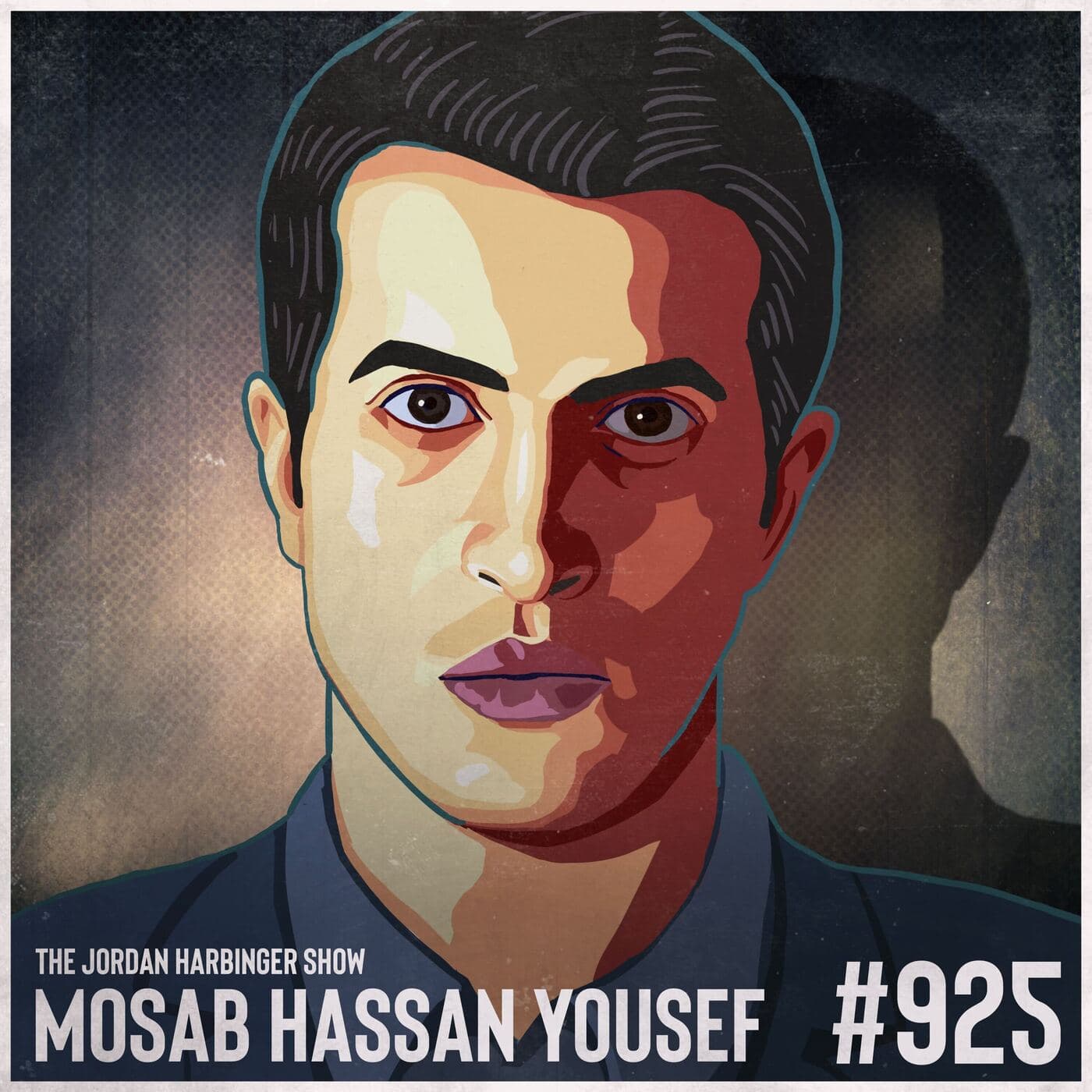
Podcast Episode Notes: The Jordan Harbinger Show - Episode 925: Mosab Hassan Yousef | The Green Prince of Hamas Redux
Summary In this episode, Jordan Harbinger engages in a conversation with Mosab Hassan Yousef, the son of a founding member of Hamas. This discussion revisits Mosab's experiences growing up in a prominent Hamas family and his transformation from a supporter of the organization to an undercover agent for Israeli intelligence. The episode sheds light on the complexities of identity, loyalty, and the socio-political landscape of the Israeli-Palestinian conflict.
Key Themes and Discussions
- Growing Up in Hamas
- Mosab describes his childhood in the Palestinian territories, highlighting the deep-rooted ideological beliefs and conditioning instilled by his family and society regarding Hamas as a freedom fighter.
- His father's prominence within Hamas and the impact of this legacy on his upbringing, including witnessing violence and conflict.
- Turning Point
- Mosab discusses the moment he began to perceive Hamas not as "the good guys," but as a corrupt organization causing harm to both Palestinians and Israelis.
- This realization prompted a crisis of identity and belief, pushing him into undercover work for Israeli intelligence.
- Life as an Undercover Agent
- The challenges of leading a double life while working against his own community and the immense loneliness it brought.
- Mosab's moral compass guided him; he believed his actions were saving lives by preventing terrorist attacks, despite the personal toll it took on him.
- Critique of the "Free Palestine" Movement
- Mosab expresses skepticism regarding the popular movement for Palestinian liberation, seeing it as often misguided and lacking in practical solutions.
- He emphasizes that the leadership in Hamas does not genuinely represent Palestinian interests.
- The Price of Truth
- Mosab recounts the personal sacrifices he made, including familial ties. He ultimately chose to document his experiences despite the risk of retaliation from Hamas.
- His strained relationship with his father, who later disowned him publicly, reflects the deep ideological divides within Palestinian society.
- Hamas's Internal Violence
- The episode touches upon Hamas's internal violence and their blame-shifting narrative, particularly regarding civilian casualties.
- Mosab explains how Hamas often uses civilian suffering to garner sympathy and avoid accountability for their actions.
- Israeli Intelligence Experience
- Mosab reflects on his time with the Shin Bet, the Israeli internal security service, detailing the complexities of intelligence work and the moral ambiguities involved.
- He describes the intelligence operations he participated in, including high-stakes missions that shaped the course of events in the region.
- Moral Philosophy and Liberation
- The conversation delves into Mosab's belief in personal transformation and the need for individuals to free themselves from societal expectations and ideological constraints in order to foster understanding and peace.
Key Takeaways
- Identity Crisis: Mosab's story illustrates the profound impact of family and cultural identity on personal beliefs and actions. His evolution reflects a struggle to reconcile familial loyalty with moral imperatives.
- Complexity of Conflict: The episode provides nuanced insights into the Israeli-Palestinian conflict, emphasizing that groups like Hamas are not monolithic and their actions can have devastating consequences for civilians.
- Truth and Responsibility: Mosab's journey highlights the importance of taking responsibility for one’s beliefs and actions, as well as the need for honest dialogue in addressing conflicts.
- The Role of Intelligence: The narrative reveals the often morally ambiguous nature of intelligence work, where saving lives can come at a significant personal cost.
Contextual Insights
- Current Affairs: The episode’s relevance is amplified given the ongoing complexities of the Israeli-Palestinian conflict, especially in light of recent escalations in violence.
- Cultural Commentary: Mosab’s critique of the "Free Palestine" movement serves as a reminder of the need for critical engagement with social justice movements, advocating for a nuanced understanding of the issues at hand.
Conclusion This episode of The Jordan Harbinger Show features a compelling dialogue with Mosab Hassan Yousef, providing listeners with a profound understanding of the personal and political complexities surrounding the Israeli-Palestinian conflict. It challenges prevailing narratives and calls for a deeper moral reflection on loyalty, identity, and the quest for peace.
For full show notes and resources, visit [jordanharbinger.com/925](https://jordanharbinger.com/925).
Written by AI. May contain mistakes. Listen to the episode to check what was said.
Transcript
Automatic transcript. May contain errors.0:28This episode is sponsored in part by Vital Proteins. pretty unique going for it. High quality protein, 30 grams of it plus collagen. That's pretty good ROI. Usually you're choosing one or the other, but Vital Proteins gives you both a ready to drink shake you can toss in your bag or fridge, zero added sugar, no artificial sweeteners, and no carrageenan. And I don't know what that is or if that's even how you say it, but you're supposed to avoid that. If you're already taking collagen or you're just curious about how it might support your hair, skin, nails, joints, and you don't want any carrageenan, this is a super easy, tasty way to try it.
1:00Get 20 % off by going to vitalproteins.com and entering promo code Jordan at checkout. Coming up on the Jordan Harbinger Show. When you are in the spotlight, you know, as a son of a top leader of the revolution, of all the chaos that's happening, very close to Hamas military wing and understand the culture and hang it out with like basically top wanted, top terrorists in the region. From the bomb makers, the suicide bomber, to the mastermind behind them, you become just a target for everybody.
1:35Welcome to the show. I'm Jordan Harbinger. On the Jordan Harbinger Show, we decode the stories, secrets, and skills of the world's most fascinating people and turn their wisdom into practical advice that you can use to impact your own life and those around you. Our mission is to help you become a better informed, more critical thinker through long form conversations with a variety of amazing folks from spies to CEOs, athletes, authors, thinkers, and performers, even the occasional former cult member, arms dealer, astronaut, or tech luminary. And if you're new to the show or you want to tell your friends about the show, I suggest our episode starter packs as a place to begin.
2:07These are collections of our favorite episodes on persuasion and negotiation, psychology and geopolitics, disinformation and cyber warfare, crime and cults, and more. And it'll help new listeners get a taste of everything that we do here on the show. Just visit jordanharbinger.com slash start or search for us in your Spotify app to get started. Now today, this is a replay-ish of an older episode. It's with my friend Masab Hassan Youssef. We had him on last week to talk about Hamas, given the current climate and conflict. And if you remember, he got quite fired up. This is a very different episode.
2:37We recorded this three years ago, but I wanted to re-air it because obviously it is hyper relevant right now. And it's not just going to be a re-air of that episode. I've got some commentary about the current conflict that we are going to be splicing in into the episode, into the show close. So it's not totally a rebroadcast. If you just listened to that one like a week ago, you could also just listen to this one and you will find new stuff. And if you haven't listened to that one for a long time slash ever, now's a great time to jump in. Masab is much more chill than he was last week in this episode for obvious reasons.
3:09So it's a totally different vibe. If you thought that one was a little bit too much, this one will not be like that, hopefully. All right, here's an updated episode 407. Growing up, Hamas was the family business. If you're not familiar with Hamas, this is a group that is on the U.S. terrorist watch list and operates primarily in Israel, Palestine, elsewhere in the area. Of course, including the United States, Europe, Africa, these things do tend to spread. In that area of the world, collaborating with Israel is the worst thing anyone can do. It's literally seen as worse than raping someone in your own family.
3:41His dad was a very respected Islamic leader with a major following and a lot of respect all over the country. His father was essentially the leader of Hamas in Palestine and spent over 25 years in Israeli prison. Just think about that, 25 years locked up in Israeli prison. So he gets out of prison, takes Mossab as his assistant, essentially the gatekeeper to all these folks. Thus, Mossab becomes the closest son to the leader of Hamas. This made him the single most important asset of the Israeli security service once he was recruited. So today, I want to go over Mossab's story of Hamas getting recruited by Israel and eventually escaping that entire situation.
4:18You'll have to forgive the audio quality on this one. It's a little bit rougher than usual. This was recorded in an undisclosed location for obvious reasons. We didn't have our usual stuff, and there were a little bit of issues there. That's just what happens when you're recording something with somebody who is essentially on the run. Many groups, including Al-Qaeda, still have a death sentence hanging over Masab's head. So I do hope you enjoy this. If you're wondering how I managed to get these amazing guests, it's because of my network and persistence. I'm teaching you how to create your own network, whether it's for business reasons, personal reasons.
4:52Check out our course, six minute networking at jordanharbinger.com slash course. Most of the guests on the show, they subscribe to the course, they contribute to the course. Come join us. You'll be in smart company. Now here's Masab Hassan, the green prince.
5:08By the way, initially, this was like one of the, I've known you for a while now, I feel like we go way back, but this is one of the hardest shows to book. Initially, you didn't even want to do it, right? Your manager like couldn't reach you and, or the book publisher, I should say, couldn't reach you. Can we talk about that a little bit? You know, I said what I had to say. I don't like repetitions, you know, just keep repeating myself again and again through media outlets. My publisher, from their point of view, they want me to promote the book, which is a product. For me, if I said something even to one person, it's already contributing to consciousness, to the world.
5:44I don't need to repeat it a thousand times. I take a break. I take a step back. I evaluate my actions. I evaluate my movement. I learn from my mistakes. I'm not like a blogger or a politician or a religious leader that wants to control a bunch of sheep. I'm individual and I respect my individuality. Sometimes I feel bankrupted. There is nothing else to say, you know, and I just dwell into silence. You know, I'm not afraid to say I have nothing to say. That was the truth. You know, I hope that you did not take it personally. You know, I think your show is great and I think you're a great person.
6:21Then when time comes, you know, and they saw that you were like insisting, you know, that I was like, okay, see, maybe there's something there. Well, I appreciate that. I mean, you do have very strong beliefs and your story is really impressive because of that, because you basically were put in a place where you had to, and correct me if I'm wrong here, you almost had to trade your home to do what you thought was right. You had to trade your home and your family to do what you thought was right in the end. Not only home. In fact, I had to die to the old self. I had to die to everything that I knew, to my friends, to my family, to my culture, my society, my securities, all of them, everything I knew, all the knowledge that I had, all of a sudden I had to choose between that all the things that I knew were useless.
7:13And I walk into the unknown, not knowing what's going to be next, what's going to be tomorrow. And that's all for the sake of my freedom, not to be in slavery to the expectations of a certain society or a certain group of people, including my own parents. I don't want to say that this is the ultimate price, but I had to go through a lot, you know, from torture to like literally death. You know, my heart stopped. The level of pressure that I had to go through, my heart stopped for approximately 30 seconds. Most human beings cannot make it back. You know, this is the level of stress that I was going through, you know, to lose family, to lose home, to lose my sense of security, my sense of being, which practically now I know that it was just a false sense of being.
8:03Let's start from the beginning, because a lot of people don't really know, you know, your story, of course, but they also don't necessarily know what Hamas is. Can you explain what it is for people who've maybe never heard of it or only heard of it on the news? Hamas is an Islamic movement, like Al-Qaeda, like Hezbollah, Salafi jihadists, and the rest of those groups. Of course, it has a cause. It has a national cause. It has a religious cause. Now, the United States of America and the rest of the free world actually consider Hamas as a terrorist organization. My father is one of the founding members of Hamas, you know, the seven original founders.
8:45Hamas at some point was my project also. Hamas for us was everything. You know, for me as a person who was born in the heart of Hamas leadership and witnessed Hamas evolution from the moment of establishment to the point where it became an army and a main player in the stability of the Middle East region. It fascinates me. You know, I cannot even say what Hamas is. Is it the Hamas 1987, the first was born? Or is it Hamas 2003, killing thousands of people, sending dozens of suicide bombers? Is it Hamas the political movement or is it Hamas the religious movement? Is it Hamas? It's a monster. When you say that it's a monster, I mean, I want to get into the evolution of this.
9:33I actually, of course, I read the book. I watched the movie. We'll link to those things in the show notes as well. You grew up with Hamas throwing rocks at convoys, Israeli convoys and things like that. Your dad was in Hamas. Your grandfather was in Hamas. What was your turning point where you realized like, oh, I'm in the middle of this organization? I mean, I know when you were young, the police, the Israeli soldiers, I should say, came to your house to talk to your dad for five minutes. Was that story the beginning of your experience? It almost seems, as you tell it in the book, that that's the beginning of when you realize like, oh, this is a real thing that I'm in here.
10:09This is like a family legacy that's pretty serious. First of all, my father was arrested by the Israeli forces many times. He was just released a few weeks ago. He spent more than 25 years in Israeli prisons. And as a child, you know, I grew up with a bunch of uniformed soldiers considered by the Palestinian society, my society then as the enemy. the occupier. We did not like them. Actually, we hated them and we want them dead. And for that, they would come, they arrest my father and his other Hamas friends and other Palestinian factions. It was a war zone, you know, not only arresting my father.
10:57We're not talking about like, you know, the police coming into some protesters house and arresting them in California. You know, we're talking about army coming into the house with their rifles, pointing at everybody. And sometimes there was shooting and sometimes there was clashes outside. Sometimes children got shot. Sometimes elders got shot. Thousands of people died during the first Palestinian Intifada. And I was living just right next to the cemetery of the town, which as a child at the age of 10, I witnessed the burial of dozens, hundreds of people on daily basis. is the bodies just keep coming and coming and coming.
11:35Of course, talking about it right now sounds exaggerating, but even for me right now, it's very hard actually to believe that I had to go through that to see the human brutality. It's not as simple as just like, no, they took my daddy away, and the child now have some prejudices. We're talking about hardcore human ugly side, as ugly as it can get, where everybody's living in fear, where everybody wants to shoot everybody, where everybody's trapping everybody. So in this chaos, human chaos, where the truth is lost, where a child honestly doesn't know a better truth, my father was the truth. And what to do with those uniformed soldiers coming into the house to just arrest my father?
12:25You know, of course, any child, if he were in my position, you would hate them. But that was not only a personal thing. It was ideological thing. It was a national thing. All the groups, religious groups, if you go to the mosque, the mullahs or the imams are inciting against those occupiers. Graffiti on the wall is inciting against the occupation. The media, the family, the parents, many external forces are pushing you to believe in one thing. This is very, very dangerous conditioning process. When did you change the view or did you change the view of your father? You know, like a lot of us, we look at our dads, we see this hero.
13:11When did you change your view from my dad is a hero to my dad is a complicated man that could rationalize the deaths of a lot of people? Of course, this is an evolution. If I tell you that there was like a moment to just figure out everything, then I would like for everybody in the Madrid It is to go through that moment to realize. But this is an evolution, you know. And I tell you something, you know, my father and his likes, and I don't mean to disrespect my father by any means, you know. I love him, but I don't respect him, you know, that much. At some point, he was an inspiration. He was the freedom fighter.
13:47He was the one who was sacrificing his life in Israeli prisons and all that. But today, I understand. and he's just wearing a mask by the name of the cause, the Palestinian cause, which everybody's cause, and by the name of God, or by the name of Allah, that's their God, or by the name of a certain ideology, or liberating the people, freeing the people. Every individual can have their own version of truth and hide behind it all the desires and the lust and the hatred and the human delusion. And my father is no different, you know. I wish that he was of a higher understanding, you know, to just see that he's just only driven by hate, lust, anger, and delusion.
14:36And when an individual is blinded to that degree, they will cause harm, they will cause damage. And the mind will always find a way to justify its actions. On one hand, he would kill and blow people up. On the other hand, it's like, okay, you know, we are defending our children. We're not killing others. We're defending our children. And the same mind that tells him the truth, the same mind that tells him the lie as well. Tell me about, I don't mean to chuckle at this story, but when I think about it, it's almost a little bit funny because it's like your teenage moment here. You're 18 years old and you decide to buy a load of guns.
15:15First of all, what was that all about? That was like the worst plan ever, right? Well, you know, I grew up in a jungle, you know, full of just hate, not only, by the way, from Palestinian-Israeli hatred, also the rivalry of Palestinian factions within the Palestinian society. You know, the PA versus Hamas versus Fatah versus public front and 10 other factions. If you don't have guns, nobody respects you in that culture. And if you don't have power, they will crush you. There, there was no government. There were a bunch of corrupt politicians, basically criminals committing crime against humanity.
16:04So to grow up in this type of environment, you should not be very surprised, you know, that a child of that environment decided to go buy guns. It's not like, you know, if I grew up in California, let's say in San Diego, then all of a sudden I decided to become a gangster and go buy guns. Yes, this is idiotic. But for that region, it's normal. Today, looking back, of course, it was idiotic because I could have been killed easily. The guns got me in trouble. They got me in prison. And I spent 16 months in Israeli prisons. I was tortured. I was beaten up by soldiers. I was depravated from sleeping for months.
16:39I was tortured mentally and physically, you know, that I still have marks on my face from that torture. When I look back, it's really scary to just remember the minefield that I was walking in. But sometimes it's a blessing to go through a minefield, not knowing it's a minefield. And when you get out, then you realize it was a minefield. Otherwise, probably you would have not survived. In the prison, what's going through your mind in there? Like, do you think you're going to be locked up in there forever? They're not being nice to you. Like you said, they're beating you up. They're torturing you.
17:14They're not letting you sleep. Like, what are you thinking at age 18 when you're locked up like that? I just can't imagine it. You know, it's very hard for any human language, actually, to convey a human feeling and a human experience at this depth, you know, to really express pain and frustration and anger and confusion of why, you know, all is happening. On one hand, you know, I was hurt a lot by my own society. You know, as a child, I was abused. And as a child, I was hurt badly. Then I was beaten up, you know, by the parents and by the teacher and by the other kids in the streets. I was bullied.
17:53It was amazing to know that there's an external enemy, that I could blame everything on that enemy, which happened to be Israel. Then you go on blaming Israel, and now you buy guns and you want to kill Israelis to just express your anger and your hatred on one thing. For me, it's really like, of course I can get emotional about it right now. It's like, oh, it's an unjust world. It's unfair. But today I see it differently. I see it as the greatest school of my life. You know, the brutality of the human society and the human societies, by the way, it just showed me, you know, something about my own nature.
18:35And I had to choose. Do I want to be like this image or do I want to transform into a more refined, higher consciousness, you know, that can handle pressure, that can handle pain? So today, really hard for me to go back and recreate the blaming mentality, what they did to me in prison, what they did to me as a child, what they did to me at school. It's very hard for me to recreate, honestly. Because without those events, I would have not been able to transcend actually man, to transcend the limitation of the human conditioning. In prison, I know you had to choose a faction, right? Hamas, PFLP, Palestinian Authority, or PA, or something else.
19:26And you initially, I guess, agreed. How did it come to be that you agreed to collaborate with the Shin Bet, the Israeli Internal Intelligence Service? Because that seems like a really hard choice to make after growing up in one place. And it's like, okay, I guess I'll be the worst thing that everyone considers, you know, a collaborator. How do you make that choice? So back in the 1990s, a couple of Hamas members succeeded in infiltrating the Israeli intelligence. They were double agents. They were heroes among the Hamas movement, the most sophisticated. Because, you know, Hamas does not have intelligence, like strong intelligence like the Israeli intelligence.
20:08and to be actually able to fool the Israeli intelligence and double play them was like a really badass in the Palestinian street. So everybody wanted somehow to do it. And I was just another idiot. We thought that I could actually fool the Israeli intelligence. So this is why I agreed to work with Israel with a hidden agenda or hidden intention is simply to be a double agent. Sure. Okay. That makes sense. But what happened later, thousands of Hamas members were in prison. And now Hamas didn't know how their members and their cells and their secret operation was exposed by Israel. So they wanted to know who was actually, who were the rats.
20:57So they started torturing their own people, anybody, any suspect. And they were tortured them brutally. And the peak of their torture was during the time when I was in prison. That was back in 1996, 97. Hundreds of prisoners were tortured. Dozens were killed. And the level of brutality of what they did to human beings exceeds anybody's imagination. You know, and I don't exaggerate when I say this. Imagine putting needles under someone's fingernails, you know, and just like let them experience pain, you know, slowly for months to squeeze information from them, you know, as they scream. I remember they would just put a soap bar in a prisoner's mouth, then tie it with a towel on the outside, blindfold it.
21:56As you know, they burn plastic on their bare skin. So basically, this is what Hamas was doing in prison to any suspect who had any relationship with the Israeli intelligence. And here I am, I'm coming to prison, you know, with actually a relationship with the Israeli intelligence, but with no intention to spy on my own people or commit treason or betray them. I would never betray my father, for example. So I told Hamas, hey guys, this is the situation. I had agreed to work for Israel and I have some agendas. He said, okay, write it down. So I write down the story to the Hamas security wing and they came back with more questions.
22:42I said, I don't have answers for those questions. Like, for example, who is your network? Did they give you a special device? What's your mission? And I told them simply, the Israeli intelligence said, go to prison, spend your time. It's like a cover. And after you're released, we will be in touch with you. They did not give me a mission. They did not give me a device. They did not give me a network. They did not connect me to a handler. And that was the truth. So simply, Hamas did not believe my narrative and did not fit their imagination. So they start questioning And this is where I felt Hamas, my own father's organization That we as a family Sacrificed everything So it can live Here I am face to face with this monster I'm even telling them the simple truth That I'm not a traitor I stepped forward They did not discover me I just came forward and I said Hey, I have a relationship I established a relationship in principle.
23:44I never did any mission for Israel. And I have a national agenda. I want to take revenge from those enemies of our society. But Hamas did not believe it. And they start interrogating. Of course, my father was not there to protect me in prison. And I became all of a sudden accused, you know, for nothing I did. And that was the moment where I saw Hamas' true face, that they truly don't see Israel as the enemy. Also, I can be their enemy. Anybody else can be their enemy. Just disagree with them. Tell them a truth that isn't their truth, and they will hate you, they will interrogate you, they will torture you.
24:33And this is what basically they were doing for many other prisoners. This is when I start having actually my doubt about other prisoners being tortured and killed. I know that I was innocent. And what if all these prisoners also were innocent people? So basically, as you see, I don't have like a simple answer to say yes or no. I go to work with Israel to take revenge from them. But somehow like I end up working for them. To the Muslims, I oppose as a Christian. To the Christians, I oppose as a Muslim. To the Israelis as a Palestinian. To the Palestinians as Israeli agents. All the opposite extremes of life exist within my journey.
25:16For me, I learned how to swim against the current. Some people tell me, okay, so you cross the river to the other side. And was it greener on the other side? And I say, the truth is, it wasn't greener. You know, when I swam, I got to the other side. It was not greener. But I say, then what was the point? What was the point of departing? I say, simply, I learned how to swim against the current. And in order for us to see and to know our higher potential, it doesn't matter where we came from. You're listening to The Jordan Harbinger Show with our guest, Masab Hassan Youssef. We'll be right back.
25:59This episode is sponsored in part by 1-800-CONTACTS. You know that last pair of contacts panic? My wife, Jen, knows it way too well. She's had these mornings where she's out of contacts and stuck wearing these old glasses she's got to keep wiping clean with her sleeve. But now, she makes sure to load up ahead of time because her next set is always on the way from 1-800-CONTACTS. They're the only major retailer that lets you renew your prescription online. So Jen gets her same doctor-prescribed contacts fast with free shipping without leaving the house. 1-800-CONTACTS has been doing this for over 30 years.
26:27They've got millions of lenses in stock, award-winning customer service, and perks like free returns, free exchanges, even free torn lens replacement. Jen loves their Express exam, which lets you renew your prescription online in under 10 minutes. It's a vision exam, not a full eye exam, but it gives you a doctor-issued prescription if you're seeing clearly with your current lenses, no waiting rooms, no dilation drops, remember those things? And with their best price guarantee, if you find your contacts cheaper somewhere else, they'll beat it. Getting contacts doesn't have to be a hassle. Let 1-800-CONTACTS get you the lenses you need right now.
26:56Order online at 1-800-CONTACTS.com or download the free 1-800-CONTACTS app today. This episode is sponsored in part by Dell. It's time for Cyber Monday, Dell Technologies' biggest sale of the year. Enjoy the lowest prices of the year on select PCs like the Dell 16 Plus featuring Intel Core Ultra processors, and with built-in advanced features, it's the PC that helps you do more faster. Plus, earn Dell rewards and enjoy many other benefits like free shipping, price match guarantee, and expert support. They also have huge deals on accessories that pair perfectly with your Dell PC and make perfect gifts for everyone on your list.
Read the full transcript
27:27Shop now at dell.com slash deals.
27:33This episode is sponsored in part by the GIST podcast. If you're looking for a news podcast that is smart, unfiltered, and doesn't just echo whatever side you already agree with, check out the GIST with my friend Mike Peska. Mike's been doing this longer than just about anyone. It's actually the longest running daily news podcast. It's earned that spot on Apple's top charts for a reason. Each episode's around 30 minutes, so it's perfect for your commute or while you're making breakfast. It's always packed with sharp, thought-provoking takes. What I love about the gist is that it's not stuck in a partisan box.
27:59Mike, he's a really smart dude. He digs into real questions, the kind that most shows avoid because they don't fit neatly into a political lane. He'll challenge the right. He keeps the left honest. He dives into stuff like the New York City mayoral race, that whole cluster, and the chaos of sports betting, or even whether talking to your plants actually does anything. He's an award-winning journalist. He's not some schmo like me who's totally unqualified. You've probably seen his work in the Atlantic, the Free Press, The Washington Post. He's got that rare mix of wit, skepticism, and depth that makes even heavy topics fun to listen to.
28:27And he's a great dinner guest, just saying. So if you want your daily news with more brains and less noise, check out The Gist with Mike Peska every weekday on YouTube or wherever you get your podcasts. If you're wondering how I managed to book all these amazing folks for the show, it is because of my network. And I know that sounds silly, but honestly, I managed to dig a former Israeli intelligence officer slash Hamas operative out of the jungle to do this interview. So, I mean, I don't want to pat myself on the back too much, but there's some networking skills involved, or at least relationship building skills involved.
28:57That's what I'm teaching you how to do for free over on our six-minute networking course, jordanharbinger.com slash course is where you can find it. It's about digging the well before your Thursday, building relationships with people that are not, it's not going to be cheesy, it's not going to make you feel gross, not going to make them feel gross, and many of the guests on the show subscribe and contribute to that course. So come join us. You'll be in smart company where you belong. You can find the course at jordanharbinger.com slash course. Now, back to Masab Hassan Youssef. You'd said the world I knew was relentlessly eroding, beginning to reveal another world I was just beginning to understand.
29:32What the Israelis were teaching me was more logical and more real than anything I had ever heard from my own people. This is, I guess, how you felt when you were first released or while maybe you were still in prison? with Loai, this Sheen Bet officer, explaining that Hamas destroys itself more from the inside than anything Israel could do from the outside. But it sounds like you see that happening everywhere. It is happening everywhere. Yes, I experienced slavery. Yes, the Israelis wanted to provoke intelligence within me because they wanted me to be effective. So, you know, they invested in me, you know, as a human being.
30:10I'm grateful to that. You know, when talking about intelligence service, This has been actually or had been one of the biggest schools of my life because somehow also we created reality, you know, and I saw the creation of reality, you know, what really creates public opinion and what really manipulates a public's perception of a certain thing. We do something on the ground. Then you see something on the media that is completely opposite of what we did on the ground. Then you start seeing the gap between truth and perception of truth. Of course, they invested me as an individual, and they wanted me to go to school and finish university.
30:53And that was the first thing. And now I understand why, because I was much more effective that way. But also when we talk about Israeli intelligence, it is a prison of its own. This type of organizations, forget about it. You go in and your chances to get out only as a corpse, you know. So they invest in you, counting that you would never find your way out. The truth at that level and the power that you experience within Israeli intelligence or any other intelligence service, we're talking about power, you know. And we're talking about real intelligence and we're talking about real creation, you know, like a huge orchestration, you know, that deceives politicians and media and average people.
31:41And you can create any scenario to anybody and make them believe in it. And they would believe in it. So when I was playing, you know, at a very young age and start having a taste of that powerful game, this is what everybody is fighting for or thirsty for. you know, to experience power. But for me, it was another form of slavery. And I did not like the fact that all that power that I was experiencing was just basically serving the agendas of politicians in a certain state, which I'm not against. I love Israel. I love Israel very much, you know, and it's very, it will continue to be an inspiring model, you know, for me.
32:25You know, such a beautiful nation, such a beautiful people, and they inspire me. But I don't want to be for the rest of my life, or I did not want to be for the rest of my life as part of Israeli intelligence and a secret operation on daily basis. You know, in the morning, something in the afternoon, something in the evening, something else. The game of deception and the reverse psychology and all that the intelligence services do. It's effective and it works, but it's limited. I wanted just to try to convey the truth as is, you know, to my people. You know, what I have learned, what I have learned as a child, what I have learned growing up, what I have learned from all the hardships that I had.
33:09And also, I did not want to cut the part, you know, which was the part that would condemn me to execution, to death penalty, which was my affiliation with the Israeli intelligence. And that was the hardest part. But I needed to be honest with my people. They did not recognize my work with Israel. They did not reveal or expose me. I revealed myself. And I stepped forward. And I told them, this is the honest truth. I know now you're going to see me as a traitor. I know that you're going to crucify me for this. But you do it. But for me, I'm going to tell you the truth. If I fought 10 years to save human lives on a daily basis, why should I be ashamed of it?
33:54Why should I be ashamed of it? But back to the point, I did not want to stay in the intelligence game, in the deception game for eternity. And I wanted to find my freedom. So I got out. I got out to a higher truth. But also that was not fine. Why wouldn't they let you have relationships with women? I thought that was weird. You know, you talk a lot about like they're sort of going through some of the rules. First of all, it doesn't seem like they trained you at all. Like they just kind of like threw you out there and they basically only had a few rules, one of which was no relationships with women.
34:30What's up with that? It's very strange, you know, to hear that the Israeli intelligence did not want an agent to have a relationship with a woman. Yeah. For them, they wanted me to always be and continue to be the Hamas member, the one who goes to the mosque, the one who follows the code of conduct of my society. Respect the God, respect the parents, don't cross the red lines, don't do something that is morally offensive through the eyes of that society. Even the very ones, you know, who are telling me the stories disagree with that. But right now they wanted me to be the perfect fit. They don't want me to hang out with women, which is not acceptable to the Arab and Muslim culture.
35:18It's a very conservative society. So the Israeli intelligence understand the situation and they don't want me to go and do something that is abnormal, something that is not acceptable by my own society. Then if I lose my reputation, nobody would respect me. then I would not have access to all the religious leaders, which basically were the very terrorists that we needed to establish relationships with them and to know what they are up to. I had a relationship, you know, like secret relationship with a woman that I was in love with. But we really like had to like hide and go like to a different town, you know, to just go out for lunch.
35:57You know, it was like a long journey, impossible one. even like jump some fences, you know, at risk my life, you know, to just go and meet with her. This is a Palestinian woman or were you dating an Israeli woman? No, she was actually a Palestinian woman. And this is why actually what made the Israeli intelligence actually go against it. They, in fact, asked me not to hang out with this woman anymore. And I think they were right, you know, because it was dangerous for the woman and it was dangerous for me. She was very important to me, you know, that I would not even in that culture it's very, very hard for women.
36:33You know, if a woman hangs out with a man and let's say it's like, for example, loses her virginity or something like that, you know, she would never be able to marry again. And that's it. It's like in that culture, unfortunately, and please forgive me for the comparison, but it's like a secondhand car and it will always be like a secondhand car. Not like in the United States, you know, it's like a divorced woman or a single, it's just a single woman, you know, single or in a relationship, you know, there are much more definitions of like okay this is version this is not version you know and you know the 72 versions you know it's a big thing in that culture yeah it's ridiculous you know but again this is the human deluge but anyway my personal life was not easy but I managed somehow against the odds you know to enjoy you know moments of my early life you know as a youth as a young man and it was a very nice adventure you know today looking back you know it's like and she's like, okay, there was love there, you know, to go meet a woman, you know, to jump the fence and risk your life and hide somewhere and change your look and, you know, do all the impossible, just like spend with her, you know, it's like half an hour and that's it.
37:48There was something, you know, but here we are and I learned what I learned. You did uncover a lot of suicide bomber cells, terror cells, and I assume you had to be pretty careful because the Palestinian authorities, so the government of the Palestinian territories at the time, they had CIA eavesdropping gear that they could easily have used both against terrorists and against people who are collaborators, right? I mean, you must have really been kind of between a rock and a hard place because Hamas now might be the authority in Gaza and the West Bank, but back then it was not. So you were being hunted by Israel, by the Palestinian police, by Hamas, by everybody.
38:29That must have been a lot of pressure. Look, all you have to do, everybody's looking for you. And simply just look with them. It's everybody's like, who is this motherfucker? You know, who is passing the information, you know? And you just ask the same questions. And if people are looking, just go with them. You know, and look for that person. And they would never figure it out. I had a very good cover. And as I told you before, it was like walking in a minefield, you know, truly a minefield. I was not only a target for the Israeli intelligence, you know, it was also CIA, it was also all type of intelligence services, you know, in the region.
39:09And when you are in a spotlight, you know, as a son of a top leader of the revolution, of all the chaos that's happening, you know, and very close to decision making, and Yasser Arafat meetings and other top Fatah leaders and the very close Hamas military wing and understand the culture and hang it out with like basically top wanted, top terrorists in the region, from the bomb makers, the suicide bomber to the mastermind behind them, you become just a target for everybody. And of course, everybody's looking for you. Only a handful of people know who you are. even within the Israeli intelligence, a handful of people knew about my existence.
39:50Even when I had, let's say, solid intelligence, you know, like about, for example, I had information about Hamas taking over the Gaza Strip one year before Hamas took over. And I told the Israeli intelligence, Hamas is going to take over Gaza. They are planning for this. They are building an army, underground army. It did not make sense to them. They were like, no, this is, they won't be able to pull this together, even if they had the intention to do so. You know, they cannot do it. It's impossible. The Palestinian Authority is 10 times the size of Hamas in Gaza Strip. They've got much more guns.
40:25They've got much more members. And they have the support of the whole world, you know. Hamas wouldn't be able to take over the Gaza Strip and throw Fatah out. And I told them, OK, if you say so. You know, they could have stopped it. They could have stopped it. And look now what happened. And how many wars happened in Gaza Strip today? So sometimes, you know, you just don't take seriously a piece of information. The reason I said this, you know, at this level of intelligence, you know, when you have like solid information, it goes to the prime minister, for example. Now, the prime minister does not see my name on the report.
40:58He would only see symbols. And if there was any piece of information that would lead to me, they would take it out or they would cross it out. So basically even the report that goes to the head of the state I would be totally coded So they don't recognize who I was This is how much the game was very serious And my life was in danger If I get caught, I am done Matter of seconds, that's it I would be with the crowd, with the mob Punch of militia, armed men, waving with rifles With rage, angry who the fuck gave the information? It would be me, just right next to them. And you just need to trust, you know, anything could happen.
41:47Anything. Were you lonely doing this? Like you couldn't share your life with a woman. You couldn't tell any of your friends. You definitely couldn't tell your family, nobody other than your handlers and Shin Bet, so Israeli intelligence. And even then, I mean, they're like, they're not your friends. They're people that you're working with. You can't just call them on Friday because you're feeling bored or alone or isolated, right? Was it lonely? You know, this term lonely, it would be in a case if I now came to recruit you, Jordan, that is like, hey, I want to send you on a mission. Leave your wife, you know, leave everything behind and just go behind the enemy lines.
42:20And it would be a totally strange culture. Then maybe you would experience that. I was alone for sure, but I was still within my own culture, playing the same role that actually the majority of my society wanted me to play. I just needed to be careful so they didn't know the other roles that I had. When you do things like this, you need to understand the drive. If I was doing it for money, if I was doing it for revenge, if I was doing it for like any other human thing, then I would have greater fear. But if you keep your compass that the more I'm doing this, we are stopping suicide bombing attacks.
43:05Suicide bombing attacks lead to death. Then they lead to retaliation from the state. Then they lead to more chaos. And those people, by the way, the victims of suicide bombing attacks, not only Israelis, Arab Israelis, Muslims, Americans, like the Hebrew University, for example. or six Americans were killed, students at the cafeteria, on campus. And I knew the people actually who sent those suicide bombers to carry the attack. One of them is Ibrahim Hamid, and I helped locate him, which was wanted for about eight years. Wow. Now he's spending life terms in Israeli prison. So we're talking about high-profile terrorists that did not only kill Israelis, you know, they killed Americans, they killed all type of people.
43:54So now when you have a new head of your eyes in this very dangerous game Okay, all the money in the world is not going to give you security or give you comfort in that situation Actually, even if you if you were paid let's say millions What are you gonna do with the money? You live in a small town where all the eyes on you? And even if you had all that money you cannot spend it because you would be exposed immediately You know, in fact the Israeli intelligence did not like the fact that they had access to money from other sources like USAID or my father, they were very careful to tell me, careful how you spend the money that you take from your father, because people might think that we are the ones giving you the money, you know, and it was basically Hamas giving me the money.
44:37So practically, it's a very dangerous thing. And what can keep one alive in such a situation is your moral compass. What are you fighting for. And now I'm such a small player in that game. But this small role that I'm having can save a human life. And this meant the world to me. This is why I was alone, but I was not lonely. You know, that bombing at the Hebrew University cafeteria, I ate at that cafeteria every single day. And the bomb was probably about three feet away from where I used to sit every time. So So there's a, I had left Israel already, but I was a few months away from not being able to have this conversation.
45:23That's for sure. Because I was, it was right there in the French Hill, right? Yes, yes, yes. Wow. Brother, I'm so glad that you are here and we are talking. I'm so glad that, you know, that eventually Hamas military wing in the West Bank, the head of the Hamas military wing, which was Ibrahim Hamid, that was a very sophisticated operation, you know, that I brought him. back to justice, you know? And I say it proudly. Of course, it's a team effort. But without the intelligence that somehow existence gave me, we would have not arrested him in time. So now you tell him, it's like, thank God, you know, I'm alive.
46:03Or it's like, thank God, you know, it's like many others are alive because this man was brought to justice and was put in prison. This is The Jordan Harbinger Show with our guest, Mossab Hassan Youssef. We'll be right back.
46:46You knew you were pushing your luck and it would eventually get caught, right? So the Sheenbet, the IDF, they launched this massive, I guess, fake, but also totally real operation to arrest you. And the way you tell it in the book is they set up this operation to pretend to try and catch you. And it was like this massive special forces operation. Can you tell us a little bit about that? This is like the wildest thing that must, I mean, you have a lot of wild stories, but this is up there for sure. Gosh, man, you're opening those files from many years ago. I don't realize sometimes how old I am, you know?
47:19Yeah, well, you and me both, man. You and me both. So basically, there was an operation, and I had access to five suicide bombers, potential suicide bombers. I knew their location and it was a trick that I played on them somehow to just suspend their operation for about 48 hours. And they somehow listened to me. Somehow listened to me. And I put them in a safe house. And the Israeli prime minister decided within 30 minutes to bomb the entire building and just kill everybody in it. I did not want to be part of killing or assassinations because my motive was not revenge. So I told my handler, listen, I don't want them dead.
48:09But he said, if you don't want them dead, they will mention your name during the interrogation. And truly, like, assassinating them is the best way to keep your cover. If they mention your name, you're done. Because you have to go to prison for a long period of time. And we cannot put you in prison for a long period of time. And if you don't go to prison, how can you explain this to your parents and to the other movement? They would know that you are the one who gave the information. So this is why it was very difficult. And they had to orchestrate one of the biggest plays, you know, to get me out of the situation, but also respect my request that I don't want them to be killed.
48:49They were just, by the way, 19 to 21-year-old young teenagers, basically. They didn't know what they were doing. So they decided to arrest them instead of assassinating them. And what they were afraid of happened. One of them, during the interrogation, in the first couple of days in the interrogation, he mentioned my name, that I was the one who helped them and gave them the house and gave them the gun, which was, you know, basically one of the tricks that I used to get into their world. You gave them guns. That was the trick? It's funny. I gave them a handgun and I took a car full of explosives in return.
49:30It's a good trade, I think. I don't know. It was a crazy trade because on one hand, I told them, you cannot move around in a city full of intelligence services, full of army, full of IDF, Palestinian authority, with a car, a stolen car full of explosives. So I made it about their safety and I made it about the plan and what's the right thing to do. So I told them, listen, I keep the car. I put it in a safe place. And here is my gun. So I just hand them my handgun. And I say, you just use this in case you need something. To defend yourself, you need a gun. You don't need a car full of explosives.
50:12And they kind of liked the idea. And now I keep them on a leash. Because if they go with the car, they might find someone else to help them. Or just decide suddenly to just blow it up. and it's over. You just hear about it in the news. But if they're explosive, they have to come back to me. And this is how we got in trouble. I received a phone call from my handler and say, you know, we have a situation and you need to go under the ground like right away. I was like, what's going on? He said, they mentioned your name. And he said, we prevent them from visiting any attorney or any family member or anybody.
50:49So the people don't know that your name has been mentioned. This is what usually prisoners do. If they mention some member of the movement's name during interrogation, they would tell the lawyer that we mentioned the name of this activist. So the lawyer would go to their family and say, hey, your son's name has been mentioned. It's just a matter of time before they are arrested. So now they don't want Hamas or the outside world to know that my name was mentioned. First thing, they deported one of them, which was a Jordanian national, back to Jordan immediately. This type of terrorists, potential suicide bomber with explosives on them, they would spend at least 15 years in Israeli prison.
51:38So now they send one of them immediately back to Jordan, deported. No trial, nothing. So his friends were like immediately, how come he's just free two days later, you know, back with his family? And the kid was just celebrating with his family, you know, not knowing the trap that he's in. So everybody in his own group thought that he was the traitor. So that was the first step. But that's not enough, that we framed someone else. The second one, basically, we totally framed an innocent person. The second step was to make me into a wanted person. So I could not go to prison at that time because I was part of so many operations and relationships that we worked so hard to establish them with other terrorists, with other groups, with other dangerous people.
52:32To put me in prison, this means that we will lose all the leads that we have established over two years or so. So I had to be still in the field. They said the best way is to make you into a wanted person, but they wanted that to be as real as it can get. So again, as I told you, only a handful of people in the Israeli intelligence knew about my existence. So the army, the special forces, you know, something similar to the Navy SEALs in the United States, they don't know about my existence. So now those people have to act like they are going after an enemy. So the Israeli intelligence give their own army and the special forces the most wanted man's whereabouts, which in that case, me.
53:17We want him alive or dead. Shoot him. Don't hesitate. You know, he's a very dangerous man. He's affiliated with suicide bombers. And that's like the truth that they wanted the army to know. So when the army came in, they come with, first of all, undercover agents, 50 of them or more, all dressed like civilian Palestinians in civilian cars, Palestinian plates surrounded the area. Before they got the okay to attack the house where I was supposed to be, you know, my family's house, I got 30 seconds to get out of the house and make it look like an escape. So I got out of the house. The special forces on the ground got the green light from the intelligence that I am inside the house still.
54:01So the special forces come. About five minutes out of that circle, there were like a bunch of Merkava tanks. You know, the Merkava tank is like, I think, 40 or 50 tons of steel. And when this thing turns on, the engine is much higher than the airplane's engine. And when you have 10 of them storming into the city, it's like an earthquake happening. So those were about like five minutes away. And they start driving towards the city center to my family's house. So it's like all this orchestration, it become like a war zone right now. So my family right now is caught up in the fire. My family inside the house.
54:45And of course, my handler said, don't worry, we'll do everything within our ability that, your family won't be hurt, but we want this to be real. Like we want you to look like a real wanted. Otherwise, Hamas will kill you. They came into the house and the speakers, they called for my name. And of course, I'm not at the house, but the special forces have reliable intelligence that I'm inside the house. They don't know that they are also manipulated by their own intelligence. So when I don't surrender, they evacuate my family first. Then they get the green light from my handlers to shoot the house.
55:23You know, they launch a missile into the house and they spray bullets like all over the world. Like in my room, I had about like 150 bullets just in the wall. And the militia groups right now, they start gathering and surrounding the special forces, creating like another ring of fire and shooting at the forces and the forces shooting back at them. This is what brought the choppers. It became a war zone. Everybody in the city knew that I'm a dead man. And my father, the Hamas leadership, even the suicide bombers that I was helping, everybody knew that I was in a deep trouble and Israel is not tolerating.
56:06And that gave me actually a very good cover in the city, but I had to act like a wanted man. I could not just like, you know, become a wanted man and just lead a normal life. So I had to actually become a wanted man. So Hamas was actually, my father was very afraid for my life. And through his connections with the movement, he arranged with the Hamas people to give me some of their safe houses and hang out with other wanted people that we were looking for for a long time. So I ended up hanging out at all the safe houses and knowing the locations of the most wanted people that we wanted. And this is how we crack down the entire Hamas military wing in the West Bank responsible for 90 percent of the suicide bombing attacks during the second president intifada.
56:54So that was the play. Wow. Wow. That's a dangerous play, though, right? Like you're almost getting a missile shot at you or at least almost hit you. It did get shot at you. There's bullets all over the place. But then you get this street cred is like a badass terrorist. And then they're schlepping you around to all of the safe houses. to hobnob with all the most wanted. I mean, it's absolutely wild. I wonder though, you were already disillusioned with Hamas, but there's this one instance in the book or one incident in the book where it really looks like things went south. Hamas blew up a bunch of their own people at a rally and then blamed Israel.
57:32It was just, they were showing off with like a rocket launcher or something like that. What happened there? I mean, this whole thing is just such a cluster. Look, Hamas, other terrorist movements, Palestinian movements, Palestinian leadership throughout this conflict, they never take responsibility for any of their actions. They want Israel to be responsible for all the problem in the Middle East. And this is to have a common external enemy that you export your internal crisis on has been the method. This is the mechanism. And this is how they have survived so far. Hamas people used the Gaza children as human shield.
58:15Then they blamed their blood on Israel when they had even an incident where, you know, their own explosives blow up and kill Palestinian people. Of course, they couldn't be brave and honest enough to say, we did it. They wanted Israel to take responsibility for it. But how can we expect from such a dark organization without morality? And it's beyond just nationalism. It's like, okay, you know, many people in the United States, especially like, you know, my friends in the liberal camp, also it's like, you know, they want like, okay, justice for Palestinians. And we say it's like, define Palestine.
58:54define Palestinian. You know, there is no such a thing. You know, we're talking about dozens of rival parties, you know, layer upon layer of darkness, of confusion, of ignorance. And you know who's crushed in between? The children. And all the Palestinian factions, with no exception, religious or secular, conservative or liberal, all of them put nationalism ahead of the children. And as long as they are thinking this way, they should be held accountable. They should be countered by any means. And this is what Hamas is doing. You know, we cannot say it's like, OK, Palestinians. No, the children of Gaza are helpless.
59:41Hamas store missiles at schools, at hospitals, at mosques and lunch rallies, you know, with their homemade, kitchen-made missiles among thousands, hundreds of thousands of civilians. What's that? And when a mistake happens, they rush to blame Israel. That was like really taking it too far. Just man up for one time in your history, you know, just take responsibility and say it was us. But they cannot. They cannot. I know you ended up leaving the Shin Bet, the Israeli intelligence service. What happened? When was enough enough? You just decided one day, hey, look, I've had it with this crap. I mean, how did that thought process come about?
1:00:26As I told you, this world of intelligence, the world of deception, also is not an easy world. Anybody, whether you work for FBI, for CIA, for KGB, for whatever it is, it's a very dangerous world. They call it intelligence world. And yes, there is intelligence to it, but it's a human intelligence. And I think intelligent people eventually will find the higher intelligence and higher intelligence means leave, get out. But when you try to get out, they have something to lose, you know, because if you still an asset, if you still has juice in you, they want to squeeze to the last drop, you know, excuse me for the expression, but this is what they want to do.
1:01:10I wanted to be the person I wanted to be. And that was not possible by just living a secret life with many secret identities and so many masks and hoods and all that. And this is when I felt the necessity, you know, for me to get out. Because honestly, I cannot stop human madness. I cannot go in the head of every Palestinian or every terrorist and make them see the truth that I see. I cannot. If I see the truth, I needed to work on myself. I needed to transform myself. I needed to actually emancipate myself from all the things that I had witnessed, from all the experiences that I had. And that requires more freedom.
1:01:57That requires honesty. That requires to be truthful to who I am. Many people, of course, you know, they tell me, why don't you just like talk more about your adventure and about the life you saved many human lives? I think it's like, what's the point, you know, if you save so many human lives and you lose yourself in the process, you know? You know, first we need to be able to actually help ourselves, you know, then we can help others. Even if we had an impact only on one person, we already have contributed a great deal towards humanity and towards consciousness. Tell me about the last conversation you had with your father when you told him about working for Israel?
1:02:32I wanted him to hear from me. And again, in my silence in San Diego, California, back in 2007 and 2008, I decided that I wanted to document my journey. At that time, I didn't know that I could write a book. I didn't know that you could actually profit from a book or you could make money from a book, which many people accuse me of creating a controversy and I was like, for the sake of profit. For me, it was like I have to document this story in case an accident happens to me, in case I die, in case I get assassinated. I don't know. Maybe the Israelis come after me. I have lots of government and state secrets.
1:03:15Maybe terrorist groups would come after me. Maybe just simply an accident will happen. And I don't want all this experience to just go in vain. I want it to be documented somehow. you know, for maybe the next generation to read, you know. I didn't think it would be published, but I wanted my father to hear from me, from my mouth, you know, not from my book, not from others. And I wanted him to know the truth. So I told him, I told him, you know, I didn't know how I managed actually to tell him, you know, it's just crazy, you know. And what a shock, you know, I was his right hand, I was his oldest son, I was his friend, a most trusted person that he had in his circle.
1:03:57I basically betrayed him. I betrayed him in order to save him. There was no way around it, you know. There was no way around him to save him from himself. He would have had been assassinated a hundred times now. All his friends at the same level of the organization, all of them are gone. All of them are assassinated. None of them survived there. The Israeli politicians wanted him dead and the army wanted him dead. The only thing that was stopping him from dying was me. Whether if he knows it or not, whether if he will recognize it ever, it really doesn't matter. For me, he was my father and I did not want him to die.
1:04:39I wanted him to know. On one hand, I betrayed you, but on the other hand, I saved you. And this is what makes it very, very hard for him. In fact, this is what makes it very hard for the Palestinian people. First of all, I was not against the Palestinian people and I'm still not against the Palestinian people. I'm against stupid ideas and the national ambitions and the Sikh beliefs. I am against all that and I have no regrets to go against it. And I wanted to tell him personally and that happened. And a few months later, you know, the book came out. It had more details in it, you know, how things happened.
1:05:16It was a great disappointment for him, you know. But the truth is, by the way, I gave him the option to disown me Because I understood, even though he's a great leader of the society, if he keep giving me cover in that culture, he would be participating with me. So I told him, disown me. And he told me, this is not an option. He told me, you will always be my son, no matter what. You're part of me. You're my liver. You're my kidney. You're my heart. You're my soul. You're everything. I cannot disown. the eve of publishing the book, I heard from the news, his statement. He made a statement and he disowned me from his prison.
1:05:56So this gives you just another idea, you know, of like where his heart is and where his mind is and the vast ocean in between. But our greed and our political ambition continues to divide us. If it was able to divide my father and me, and we really loved each other, you know. And I'm sure that we still do, you know, love each other. And the bond between us cannot be broken. But still, for the public image, you know, he has to go and tell the whole public, this is not my son anymore. I don't know him, you know. Kill him if you want. How could you say that? And if you were forced to say this, what does that tell you about the nature of this entire conflict, you know?
1:06:38What about unity? What about love? What about understanding? Will ever there be peace in the Middle East. If this is what happens, you know, for a father-son relationship. Mossad, thank you so much. This has been really an amazing conversation. You're really open, forthright, and I'm, you know, I'm glad we're friends. I have one final question for you, though. They blasted Leonard Cohen all the time, very loud, when you were in prison. Now you tell me your favorite artist was Leonard Cohen. How is that possible? You were 24-7, Leonard Cohen blasting in prison. They're torturing you. Now you listen to it in your car while you're driving around?
1:07:16I don't understand this. Of all the things you've told me, this is the hardest for me to get through my head. Well, you know, so many of my friends criticize me, and I was like, okay, oh, very depressing, you know, to listen to Leonard Cohen. He's actually not my favorite artist, but because, you know, how he was introduced to me, it's like his thick voice and loudspeakers, and I was sitting on a small chair, you know, being tortured in Al-Mascobe. This is like the slaughterhouse in West Jerusalem. And Leonard Cohen's playing again and again and again. First we take Manhattan then we take Berlin.
1:07:50You know, but I had no idea what he was saying, you know, because I did not understand English at that time. And I didn't even know who was the artist. So after I was released from prison, I kept looking, you know, and I could not find. How would I know? You know, who to ask? You know, I'm not gonna go back like to Almas Cubias like, what was the torture song that we were listening to? Yeah, can I borrow that CD? And one day I was listening to the radio and Leonard Cohen's song came up and I start shouting out loud like, anybody knows who the singer is? Is this singer? Who is this singer? A friend of mine mentioned, he said, this is Leonard Cohen and Leonard Cohen.
1:08:31Okay. And I took the name, I wrote it down. I was afraid that I would forget it. And I go and buy. all his work, trying to find that song. And this is how I got introduced to Leonard Cohen. You know, you'd think you would have been staying away from that music, but I guess if you've got an itch, you know, a mental itch, you got to scratch it, right? Yes, absolutely, absolutely. Masad, thank you once again, man. This has been really, really an interesting conversation. Again, thanks for being so open. Thanks for taking the time. I know you're in the middle of nowhere and, you know, it was hard to track you down.
1:09:05But again, I'm glad we're friends now I'm glad I got this story on tape. Thank you, Jordan. I really appreciate it. Thank you very much and best of luck. I've got some thoughts on this episode, but before I get into that, here's a preview of my conversation with one of al-Qaeda's most respected bomb and poison makers who swore allegiance to Osama bin Laden himself. Here's a quick listen. We took so many prisoners, 80 of them were taken to a clearing and it was decided there and then that these people will have to pay for the crimes what they did. Seeing the bloodthirsty nature of people who, just until a year ago, I used to see them as sweet, tender, decent, good people.
1:09:47Suddenly it basically became people who would use chainsaws to dismember these people alive. How could one year in Bosnia, one year of ugly conflict, turn these wonderful souls into ugly, bloodthirsty individuals? When I went to sleep that night, All I could think about was how could I unsee what I've seen? None other than the mastermind of 9-11, Khaled Sheikh Mohammed. He said to us, you should go to Afghanistan where the training camps are reopening to become good at bomb making, to become good at urban warfare, to become good at assassinations, at kidnapping, a new kind of war that will never be fought in the mountains anymore but it will be fought in every urban center from the pole to the pole.
1:10:35Suddenly, you know, I thought that the nature of the war is changing from, you know, fighting in the mountains of Bosnia. I mean, basically, we are talking about gassing people in cinemas and nightclubs and trains. Of course, that was unsettling, but I thought this is just the ranting of one insane individual. Al-Qaeda carried out its first serious attack against American interests. Everyone was jubilant in the camps. They were firing bullets into the air, you know, in celebration and shouting Allahu Akbar. We are no longer just a bunch of freedom fighters. We are now bona fide terrorists. To hear why and how Eamon Dean eventually switched sides from being a jihadi to spending eight years as an MI6 spy trying to take al-Qaeda down from the inside, check out episode 383 on The Jordan Harbinger Show.
1:11:28This has turned into quite a mess, not just the conflict, but the media and information landscape around it. And I see a lot of people who are just out of control and talking out of both ends or the wrong end on a lot of this. You can criticize Israel without supporting Hamas. That shouldn't be controversial, but apparently it is. Hamas is a genocidal terrorist organization bent on eliminating the Jews. I know that they updated their charter recently to tone that stuff down, but actions speak louder than words in their original charter is probably what they really meant. When somebody tells you who they are, believe them, especially when they're terrorists.
1:12:01Also, key to remember here is the immense amount of innocent Palestinian civilians caught up in this reaction to October 7th. This loss of life is staggering and unjustified. Even if some people think this collateral damage is unavoidable or even somehow necessary, it is hard to overstate how horrible this really is for people on the ground. And you really, no matter what side you're on, I think you can be pro-civilian and anti-Hamas. And I'm going to come back to that a few times during my rants here on this episode. I want to suggest to folks that maybe you don't need to have a side in this information and propaganda war.
1:12:41You can be instead on the side of innocent civilians and wanting to prevent further loss of life. But it doesn't mean that you're going to be right about the approach one needs to take to avoid that loss of life. Some people think the best way to avoid loss of life is to completely wipe out Hamas with military force the way that is happening now. Other people think that a ceasefire is the best approach. You can be on the side of innocent civilians. It doesn't mean you're going to be right about the approach. Palestinian civilians, of course, are the ones who are suffering the most right now. Hamas doesn't care about this.
1:13:12This is a feature, not a bug. Stakeholders in Hamas are in essentially a death cult and or living in Qatar and Iran enjoying their billions of dollars that they have pilfered from Palestinian people and the international community. They are not on the ground in Gaza suffering like the people that they claim to support. There have been a lot of events that have been reported very crappily by the media. One comes to mind, this hospital rocket explosion where they said they leveled a hospital and 500 people are dead. This turned out to be largely nonsense. The missile was a misfire from Palestinian Islamic Jihad.
1:13:45It landed in the parking lot. And suddenly when people were able to prove that the death toll went way down. This kind of stuff is a win-win for Hamas because they can blame Israel. And then even if they're the ones who did it or their affiliates did it and everyone knows later on civilians died, people will still blame Israel. The PR victory is there and the damage is done. So even if you're ardently anti-Israel, you should also be as ardently anti-Hamas. Supporting Hamas because you care about Palestine is like supporting the Taliban because you care about Afghanistan. It's not the caring about Afghanistan or the caring about Palestine part that's problematic.
1:14:21It's who you support in the mission of doing so. Hamas is not pro-Palestine. They're just anti-Israel. The distinction here is very important. It should, of course, go without saying that Hamas is not the same as Palestine and militant terrorists are not the same as Palestinians. To add, there should be no rush to be right or correct when it comes to events in this conflict, especially new events that pop up in the media. No one is going to give you a medal for your correct signaling on this stuff. There's nothing wrong with waiting for sources outside the two hostile parties who have a vested interest in lying about their adversary.
1:14:56Also, consider that you might not need to have a strong opinion for or against one side or another. Consider that you can condemn the deaths of innocent people on both sides instead of wanting one side to brutalize the other. Furthermore, I would say, look, if you're professional or you're young, I would implore you to be even more considered in your opinions on these issues and perhaps realize that you don't need to express them publicly at all. I'm not saying you shouldn't take a moral stance on this. What I am saying is perhaps your LinkedIn profile or other social media is perhaps the worst place to have this kind of dialogue, if you can even call it that.
1:15:34You get all the drawbacks of angering those around you who disagree, endangering your business, scaring away or alienating clients, making sure that it's harder to hire you later on down the line and damaging your career, and you get none of the benefits of actually exchanging ideas with people in good faith or in a way that increases one another's understanding of this conflict. Again, this is an information war. Anyone forming immediate opinions and sharing rumors based on the latest clickbait headlines and social media posts is being weaponized in this war. Don't allow yourself to become part of the problem.
1:16:09Of course, many people have asked me what I think about Israel's response to October 7th. Israel, in my opinion, made a huge set of mistakes here. If people had nothing else to report on but the Hamas massacre for the last month and change, we'd be having very different conversations about Palestine and Israel and this conflict. The Israeli victims and their families would be getting vigils worldwide, and those who celebrated Hamas on the streets would be properly vilified. Now, it's an afterthought to the rest of the world. Hamas was never going to get infantry back over the border after that.
1:16:42This was a time for exposing evil, telling each victim's story, improving their ties with the rest of the Arab world, getting some of their hostages back due to pressure on Hamas, if that could even be effective. This would have deprived oxygen to the flame that is Hamas. Yet revenge, which is a lot of what we're seeing now, I know that there's some tactics here. It's debatable whether this is 0 % revenge or 60 % revenge. OK, no matter how justified one might think revenge is, this has squandered the opportunity here that Israel had, in my opinion. Not only is it an injustice to the memory of the victims, it's creating so many more victims and so many more terrorist sympathizers and actual terrorists, I'm sure, as a result of killing so many dang civilians.
1:17:27Now, some people will say, but Israel created Hamas. I want to address this because I was shocked to hear that. And it turns out it's just not true. So I did a bit of a dive on this with historians, actually, and the predecessors to Hamas were an alternative at the time, back in the 70s and 80s, to the PLO, Yasser Arafat's Palestinian Liberation Organization, which was militant and violent then and was killing people and hijacking planes. Hamas, the precursors to Hamas, was far more political. This, of course, changed later into the Hamas that we see today. Early days predecessors to Hamas were a new alternative to the PLO, which was probably more promising than simply trying to work with the PLO, keep getting nowhere, keep getting attacked.
1:18:08At the time, as I mentioned, PLO was militant. Precursors to Hamas were not militant, but they did provide social services. So yes, people who say that Israel created Hamas, they're often misinformed or they're frankly just trying to mislead you into thinking Israel created Hamas in 1984 so they'd have some excuse to bomb Gaza in 2023, and that is just not accurate. In much of the world right now, there seems to be very little room for nuanced debate, and no matter which direction you're coming from, I really have to beg you to remember that there are human beings involved in this. This is what we need to remember if we are going to find any sort of end to this conflict in the next several years, peaceful or otherwise.
1:18:49I'm not sure how hopeful I am for this right now, But I think it is a damn shame that we find ourselves tribalized on this when most of us are frankly quite uninformed. This is a war. It is going to be bloody. None of that excuses civilian deaths or collateral damage. But it is reality. And that reality is extremely unfortunate. And I think and I hope that we can do better. As you can see in this conflict, I'm not really taking one side. I'm anti-Hamas. That's clear. I'm pro-civilian. That's clear. but everything else is quite nuanced. And it seems like that nuance is lost on a lot of people. I'm especially appalled by pro-Hamas, and I don't mean pro-Palestine, I mean pro-Hamas sentiment on college campuses and among the left wing especially.
1:19:33I know that if you're on the left, you're like, I don't support Hamas. I'm not talking about you, obviously. I'm talking about the people you know that have similar political beliefs that are pro-Hamas. It's not that hard to make a distinction. Hamas leaders in 1993 were recorded on a wiretapped conversation stating that their goal was to deceive the American public into supporting Hamas by appealing to the American left's denouncement of oppression. Musa Abu Marzouk, a senior Hamas official, literally formed a far-left academic think tank. It's called the United Association for Studies and Research, UASR, based out of Chicago, and their goal is to start disseminating this deception.
1:20:09The organization has ties to Duke, Johns Hopkins, Fordham, University of Maryland, just to name a few major universities. So in other words, this information war, it's not something that started in October 7th. It's not something that started 10 years ago. This is something that has been taking place over the course of the last 30 years and beyond. So that should scare you a little bit that people are trying to influence. And I'm not saying that only Hamas does this. We see influence and lobbying from all sides here. But I think to be deceptive about it, instead of there's a difference between advertising your product and lying about what your product is.
1:20:44And I think that's a very important distinction here when we're talking about human lives and civilian human lives for that matter. So as you can see, the situation is nuanced, but I hope we can all agree that terrorism, no matter what form that takes, is not the answer, and jihadis are not looking out for anyone but themselves in their religious zilletry. That part is extremely dangerous, extremely concerning, and it's extremely disheartening to see the moral confusion that has overtaken many of us, both online and in person, since the start of this conflict. Anyway, I hope that cleared some things up for people instead of just making this far more confusing.
1:21:21It's very difficult to cover this and not take a side on one issue and then take the opposite side on the other. It's very, very hard to have nuanced conversations about this. It's very hard to cover any of this without getting death threats in my email inbox from one side or another. And so if you like this, definitely reach out and tell me why. And if you hated it, well, you don't have to tell me that you're going to kill me in an email. You can just email me and tell me what you don't like about the episode. Dialogue, who to thunk it. All things Masab will be in the show notes at jordanharbinger.com or ask the AI chatbot on the website.
1:21:54Transcripts always in the show notes as well. Advertisers, deals, discount codes, and ways to support the show all at jordanharbinger.com slash deals. Please consider supporting those who support the show. We've also got our newsletter and every week the team and I dig into an older episode of the show. We dissect lessons and takeaways from it. So if you are a fan of the show and you want a recap of important highlights and takeaways, or you just want to know what to listen to next, the newsletter is a great place to do that. jordanharbinger.com slash news is where you can find it. And six-minute networking, don't forget about that over at jordanharbinger.com slash course.
1:22:23I'm at jordanharbinger on Twitter and Instagram. You can also connect with me on LinkedIn. This show is created in association with Podcast One. My team is Jen Harbinger, Jace, Sanderson, Robert Fogarty, Emilio Campo, Ian Baird, and Gabriel Mizrahi. Remember, we rise by lifting others. The fee for this show is you share it with friends when you find something useful or interesting. The greatest compliment you can give us is to share the show with those you care about. So if you know somebody who's interested in this conflict, interested in learning more about Hamas, interested in conversations like this, definitely share this episode with them.
1:22:54In the meantime, I hope you apply what you hear on the show so you can live what you learn. And we'll see you next time. This episode is sponsored in part by Everything Everywhere Daily. You've heard the phrase, learn something new every day. Sounds nice, but do you actively do it? That's where Everything Everywhere Daily comes in. This podcast makes it effortless. Just 10 minutes a day, you'll walk away with a fascinating fact, a slice of history, a science gem. It's no wonder the show has climbed up to the top as the number one history podcast. It covers history, science, technology, geography, and stories of remarkable people, always in a way that keeps you hooked.
1:23:23Not sure where to jump in? Start with these favorites. The eruption of Krakatoa, nature's fury in one of the deadliest volcanic events ever recorded, or the spice trade, how a handful of spices changed the course of global history. If you want to make learning effortless and fun, check out Everything Everywhere Daily. It's quick, fascinating, and a perfect way to stay curious. Listen now wherever you get your podcasts. Shopify's point of sale system helps you sell at every stage of your business. Need a fast and secure way to take payments in person? We've got you covered. How about card readers you can rely on anywhere you sell?
1:23:56Thanks. Have a good one. Yep, that too. Want one place to manage all your online and in-person sales? That's kind of our thing. Wherever you sell, businesses that grow, grow with Shopify. Sign up for your$1 a month trial at shopify.com slash listen. Shopify.com slash listen. Let's go.
From the publisher
Enjoy this deluxe edition of our initial chat with 'Son of Hamas' author Mosab Hassan Yousef, featuring exclusive new insights into Israel's current events.
What We Discuss with Mosab Hassan Yousef:- What it was like growing up in one of the first families of Palestinian terrorist group Hamas -- and why Mosab considers it "the greatest school of [his] life."
- The turning point when Mosab no longer saw Hamas as the "good" guys.
- How Mosab dealt with the loneliness of working undercover for Israeli intelligence against his former friends and family.
- What Mosab feels about the well-meaning but -- he believes to be misguided -- "free Palestine" movement.
- What prompted Mosab to get out of undercover work and chronicle his story for others to read (and watch on television).
- And much more...
Full show notes and resources can be found here: jordanharbinger.com/925
This Episode Is Brought To You By Our Fine Sponsors: jordanharbinger.com/dealsSign up for Six-Minute Networking — our free networking and relationship development mini course — at jordanharbinger.com/course!
Like this show? Please leave us a review here — even one sentence helps! Consider including your Twitter handle so we can thank you personally!
See Privacy Policy at https://art19.com/privacy and California Privacy Notice at https://art19.com/privacy#do-not-sell-my-info.