
In short
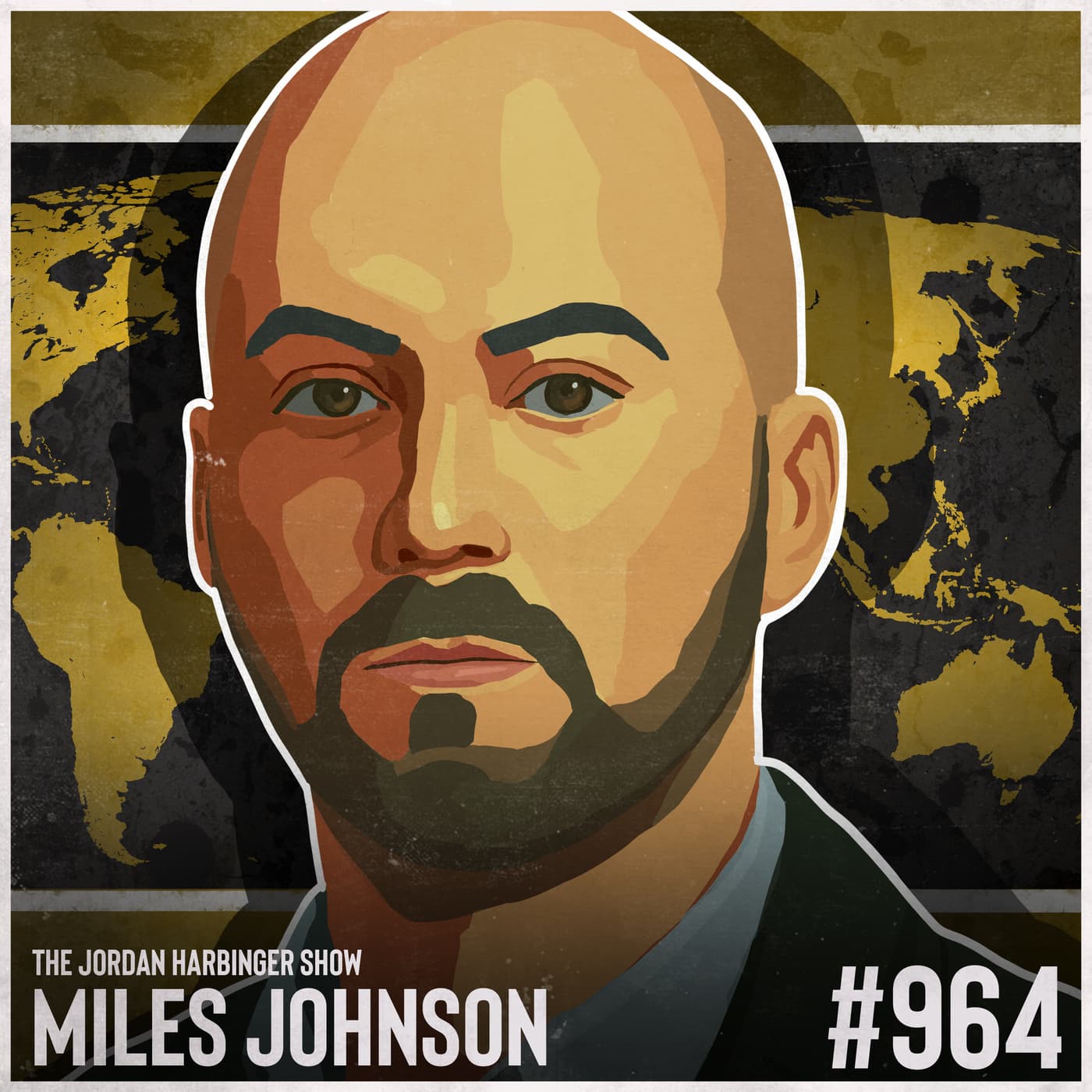
The Jordan Harbinger Show - Episode 964: Miles Johnson | The Secret World of International Crime
Summary In this episode of *The Jordan Harbinger Show*, host Jordan Harbinger speaks with investigative reporter Miles Johnson about the intricate and often hidden operations of international crime. Johnson, author of *Chasing Shadows*, delves into the complexity of drug trafficking, money laundering, and the connections between organized crime and terrorist organizations. The conversation explores various topics, including the evolution of criminal networks, innovative laundering techniques, and the impact of global politics on crime.
Key Themes and Discussions
- The Global Impact of Drug Trafficking
- Drug trafficking has far-reaching consequences, affecting global politics and economies.
- The DEA's role has expanded beyond drug enforcement to include terrorism and international crime.
- DEA Operations and Adaptations
- Post-9/11, the DEA began operating more like an intelligence agency, allowing them to pursue various criminal activities, including arms dealing and terrorism.
- The conversation highlights several high-profile sting operations and their implications.
- Money Laundering Techniques
- Johnson describes innovative, low-tech money laundering schemes, including buying and shipping cars to West Africa to convert cash into assets.
- The evolving methods of laundering money reflect the adaptability of criminal enterprises in response to law enforcement’s strategies.
- Interconnections Between Crime and Terrorism
- The episode discusses how terrorist organizations, such as Hezbollah, leverage drug trafficking to fund their operations.
- Criminal networks often overlap with political movements and state-sponsored activities.
- International Criminal Networks
- Johnson details how criminal networks evolved, particularly in regions like Europe and the Middle East.
- The roles played by various actors, including local law enforcement and international agencies, are crucial in addressing these challenges.
- Criminality in Modern Contexts
- The rise of Dubai as a hub for wealthy criminals and legitimate business interests.
- The blending of crime and business in modern economies, where the lines are often blurred.
- The Psychological Aspect of Criminality
- Johnson discusses the mental toll on criminals living under constant threat and paranoia.
- The lack of an exit strategy for many in organized crime, leading to reckless choices and violent actions.
Key Takeaways
- The convergence of organized crime and legitimate business creates a complex environment for law enforcement.
- Understanding the psychology of criminals can provide insight into their decisions and the escalation of violence in their operations.
- The global nature of crime today requires international cooperation and innovative strategies to effectively combat these issues.
Additional Insights
- The episode provides a detailed examination of specific cases, including the operations of the DEA and the strategies used by criminal networks to evade law enforcement.
- The discussion also touches on the socio-political implications of these criminal activities and their impact on global stability.
Resources and Further Reading
- For a more in-depth understanding of the topics discussed, listeners are encouraged to check out Miles Johnson's book, *Chasing Shadows*.
- Full show notes and additional resources can be found at [Jordan Harbinger's website](https://jordanharbinger.com/964).
---
This episode presents a compelling look into the shadowy world of international crime, blending investigative journalism with critical insights into the nature of modern criminal enterprises. The conversation underscores the importance of adaptive law enforcement strategies in confronting the evolving landscape of global crime.
Written by AI. May contain mistakes. Listen to the episode to check what was said.
Transcript
Automatic transcript. May contain errors.0:28This episode is sponsored in part by Vital Proteins. pretty unique going for it. High quality protein, 30 grams of it plus collagen. That's pretty good ROI. Usually you're choosing one or the other, but Vital Proteins gives you both a ready to drink shake you can toss in your bag or fridge, zero added sugar, no artificial sweeteners, and no carrageenan. And I don't know what that is or if that's even how you say it, but you're supposed to avoid that. If you're already taking collagen or you're just curious about how it might support your hair, skin, nails, joints, and you don't want any carrageenan, this is a super easy, tasty way to try it.
1:00Get 20 % off by going to vitalproteins.com and entering promo code Jordan at checkout. What can 160 years of experience teach you about the future? When it comes to protecting what matters, Pacific Life provides life insurance, retirement income, and employee benefits for people and businesses building a more confident tomorrow. Strategies rooted in strength and backed by experience. Ask a financial professional how Pacific Life can help you today. Pacific Life Insurance Company, Omaha, Nebraska, and in New York. Pacific Life and Annuity, Phoenix, Arizona. Coming up next on the Jordan Harbinger Show.
1:37It's an interesting spin on an old story. This is a guy who was a major criminal figure who very quickly rose to the absolute top of the boxing world, the most famous boxers in the whole world. He was really at the top. However, he did that. Yes, let's say it definitely coincided but at the same time he was running a criminal group. Crime and boxing, which has always had a relationship, and Dirty Money being involved in boxing, but set in a very different place.
2:04Welcome to the show. I'm Jordan Harbinger. On The Jordan Harbinger Show, we decode the stories, secrets, and skills of the world's most fascinating people and turn their wisdom into practical advice that you can use to impact your own life and those around you. Our mission is to help you become a better informed, more critical thinker through long-form conversations with a variety of amazing folks from spies to CEOs, athletes, authors, thinkers, performers, even the occasional economic hitman, gold smuggler, four-star general, or Fortune 500 CEO. And if you're new to the show or you want to tell your friends about it, I suggest our episode starter packs.
2:35These are collections of our favorite episodes on persuasion and negotiation, psychology and geopolitics, disinformation and cyber warfare, crime and cults, and more. That'll help new listeners get a taste of everything we do here on the show. Just visit jordanharbinger.com slash start or search for us in your Spotify app to get started. My guest today is an investigative reporter with the Financial Times in London who has written stories about Russian mercenaries, VIP casino heists, money laundering by the Italian mafia, Vatican financial scandals, and covert sanctions busting. Our conversation today is likewise all over the place.
3:06We talk about undercover DEA busts, Hezbollah, cocaine trafficking, to money laundering, to sanctions busting, to Iranian hit squads, and more. So if you're into this sort of international intrigue type stuff. I think you'll dig this conversation. I'm not sure how much more I really need to sell it. Here we go with Miles Johnson. And no, I know what you're thinking. He's British. Shouldn't he be known as Kilometers Johnson? No. The Brits use Miles just like the U.S. and Liberia. We're all in good company. Enjoy.
3:38You've had such an interesting career, seemingly, from the outside so far, man. Like investigative reporter with the Financial Times in London. Some of the stories you've written about Russian mercenaries, VIP casino heists. I don't even know what Mayfair is. Is that a brand of casino? What is a Mayfair casino heist? Yeah, so that might not travel so well. Mayfair is a sort of ultra fancy sort of luxury area in the center of London. It's always historically been the place where sort of money sort of arrives. And it's just a sort of area where you get all these different characters. Got it. Lots of rich people of all different types, but lots of intrigue.
4:14So it's always an interesting place. Yeah, that checks out. I guess that tracks. And money laundering by the Italian mafia, Vatican financial scandals, covert sanctions busting. So there's a lot we can talk about in the book, which we'll link in the show notes. And by the way, listeners, if you buy the book using our links, it helps support the show, yada, yada. The book focuses initially on how the DEA got its jurisdiction expanded to terrorism and financing, which I know that sounds like super in the weeds, but it was quite interesting. I didn't realize the DEA was sort of a hybrid from the outside looking in hybrid law enforcement agency plus intelligence agency kind of feel to it you know you think of them as just like oh there's a drug fbi but it's like well they're kind of like the drug cia in a way yeah so it was sort of a really interesting period of history to look at because although it's not that long ago it's sort of post 9-11 and um you know the dea has been around you know for obviously a while but um obviously everything changed post 9-11 there was a lot of pressure to sort of join up the different US agencies and, and, you know, questions about why things were missed.
5:19And it basically led to this sort of through historical accident in a way, what is kind of seems now like this kind of completely audacious experiment in law enforcement, where they sort of said to the DEA due to various US statute changes, like pretty much you can almost not entirely, but almost go after anyone you want in the world. And so you suddenly had these guys who had grown up as drug cops on the streets of big American cities, suddenly going after arms dealers and terror suspects and people all around the world doing these crazy sting operations. And so it was a sort of fascinating way into sort of what then later happened, because they got mixed up in all of these quite interesting investigations.
6:02Yeah, they swing pretty hard. I didn't expect drug cops like we're sort of calling them, which is not exactly the story, but I didn't expect drug cops to be chasing, for example, Syrian arms dealers. Can you make that connection for us? Because it's like, well, wait a minute, this is an arms dealer. Why are you chasing an arms dealer? You're supposed to be going after a heroin trafficker in Maryland. What are you doing? Yeah. So there's a sort of technical reason in US law about how links to foreign terror organizations and drugs trafficking, but more sort of generally, it basically was a situation where they had a huge amount of sources you know the difference between the DEA and other sort of agencies is that they have a this huge sort of foreign source network of criminals you know other agencies also will have that but they kind of get into places which other people aren't really paying that much attention to you know it would be some sort of money launderer in West Africa who's working with cocaine traffickers and they have a sort of undercover agent he'll say oh you know by the way I can also sell you some missile launchers if you want or something like now they're like oh how's that and they'll be like oh i know a guy he's in the czech republic and he can hook me up and it sort of leads through these various stages into higher and higher levels of these sort of international criminal conspiracies so they get into um things like that and they just have this sort of different view of the world which did lead to a lot of clashes you know because people were like what are you guys doing you know why are you getting involved in this stuff it has frankly was a question for them that makes sense and i get that another agency might be like hey, what's the deal?
7:29Were the arms trafficking people? But at the same time, what are you supposed to do if you're going after three tons of cocaine and someone's like, by the way, you want some RPGs? Are you supposed to be like, well, now that you've brought that up, I have to switch you over to my partner, who's definitely not an undercover agent at a different agency that has jurisdiction around these things. Nice knowing you. He'll be picking it up from here. I mean, it's like, what are you going to do? Right. You have to act like a criminal and you can't just it would seem foolish not to pick up that thread. Like we could either put them away for 50 years for arms trafficking, or we can just stick with the original idea that we had and get them for drugs only, or we can like get the whole thing and package it together.
8:07So I get where they're coming from. I mean, the point is to get rid of these guys, not to get a trophy for doing it. Yeah, absolutely. I mean, it was also a different philosophy in a way where, you know, an intelligence agency isn't trying to build criminal cases. You know, they're not trying to build a case that can stand up in front of a judge. And so it's a sort of different approach. and you know that means that it was just this particular time and place where post 9-11 there's a lot of money going into um the DEA and they started to do these you know now some of them quite famous sting operations like Victor Booth the Russian arms dealer who recently was swapped for yeah Brittany Greiner if you remember that I do you know he was caught in a big famous DEA sting operation in a hotel in Thailand and that did shock people at the time you know when that happened people were like what just happened how did these guys do that and i think it's sort of definitely built for that so it's this interesting backdrop to where we are now in the world because you know sort of i think people now are more accustomed to the sort of interconnectedness and chaos of the world as it is right now with you know all of these different governments hooking up and you know people doing business with each other and you know the kind of interplay between you know parts of the shadow economy and governments and you know sort of sanctioned governments and stuff.
9:20But back then, I think there was much more of a focus on terror. But by getting into those networks, it's sort of a prelude to kind of the world where we see it now. Why did, how did they get Victor Booth then? Was he also selling drugs along with it? Because that guy's an arms dealer, right? I know they call him the merchant of death, but that's like so unoriginal. This guy sells arms sort of famously, right, to bad guys like Syria or maybe North Korea, whatever. I don't know. He just doesn't care. Sort of like African strongmen. I was looking this guy up earlier and i was like this is a guy with just no moral compass whatsoever he just doesn't care that they're going to slaughter civilians with this stuff like he it's really he knows it and just doesn't care but was he also selling drugs is that how they got him no he was dealing with people who were connected to selling drugs and so under the sort of statutes that came in you know if you are transacting with someone who is basically getting money from trafficking drugs, for example, a Latin American paramilitary group or something like that who might want to buy arms, then that comes under sort of US jurisdiction.
10:26And that sort of opened up a lot of cases. Also, there are these sting operations where they would pose, you know, they're very controversial. They would pose as members of, you know, FARC, for example, the Colombian paramilitary, and, you know, go down a whole sort of business arrangement. And that's how they got other people like Monsalcasar, you know, the Prince of Marbella, he was called. But yeah, these were sort of these very aggressive law enforcement operations, which really kind of surprised people. Yeah, I mean, we'll come to how things are now. But, you know, that was definitely a period of time, which I think at the time people didn't realize was it wasn't going to last forever.
10:59Put it that way. You mentioned that they use, I think in the book you said criminal impersonators or something, but that's just like an undercover agent posing as Fark or Hezbollah. And yeah, this fascinating stuff. I mean, that's a totally crazy position to be in. Imagine being like, well, I'm DEA, but I'm going to pretend I'm in Hezbollah and like go to a meeting in Syria or Lebanon or whatever. I don't even know. And meet with these people. It's just super high stakes. Tell me about you mentioned a name earlier that I didn't quite catch, but there's another guy in the book, Ali Fayyad. How did they get this guy?
11:32This guy is this is pretty interesting. Yes. So he was a pretty fascinating character. He was, because of what, both who he was and who he was working with and also sort of what happened after they got him. But he was a Lebanese-born arms trafficker who was living in Ukraine. So basically he was actually an advisor to Viktor Yanukovych, the Ukrainian president who was deposed. You know, basically if we're flashing back, you know, back to, he was the Russia-aligned president who was sort of deposed and had to flee to Russia during the color revolution there. So he basically, just after that, ended up getting caught in this DEA sting where he was offering to sell Igla missile launchers to Colombian paramilitaries.
12:17And it was in Prague. And so they kind of, in combination with Czech police, they sort of have to set up this whole deal. They get really nervous about, you know, because, you know, people in the DEA were concerned that, you know, Fayed had access to Interpol somehow. He had someone on the inside. Obviously, Interpol information spreads around lots of different countries. And they were always paranoid that maybe it might leak, that they were doing an operation there. And they're worried he's going to be put on a no-fly list. And eventually he gets there. This is sort of a classic thing with a hotel room, which is all wired up with cameras and microphones and stuff.
12:50And they arrest him. He's awaiting extradition. So he's in the Czech Republic awaiting extradition to the United States. And then a group of Czech citizens, one of which was his lawyer, another one was the lawyer's translator. They were on a trip to Lebanon and then they get kidnapped. So suddenly there's a situation where these unknown kidnappers at the time, no one knew who they were, were basically saying, if you don't give us back Fyad, these guys aren't coming home. So it became suddenly a kind of international incident. incident. Frequently, there were a lot of unintended or unknowable consequences from these sorts of dramatic operations.
13:29Gosh, these guys really are sort of fearless if they're going to go ahead and kidnap people in the, I guess, host country and say, yeah, we're just going to kill these journalists or whatever if you don't release this clearly guilty terrorist. I mean, they just don't care. It's sort of shocking, but it also shows you what we're dealing with as a civilization, right? We're just dealing with people who don't care. Also, what's up with arms dealers in the Czech Republic? I feel like either it's a coincidence that none of those guys seem to be there. Is it just because it's sort of between the Eastern Bloc and Western Europe?
14:02Is it just geography? Or is it like, does the Czech Republic have something to do? I know they manufacture some weapons there, but you wouldn't think that'd be a requirement here in 2024 to be next to the factory. I think it's, you know, for historical reasons, as you say, you know sort of an indigenous industry there and you know stockpiles potentially of you know obviously the sort of after the fall of the Soviet Union there were lots of stockpiles of kind of now redundant or unused munitions so there's that sort of stuff too but yeah it's interesting you know there was obviously the famous incident of there was a factory which sort of mysteriously caught fire there wasn't it which was linked to Russian intelligence there seems to be like a lot of arms shenanigans going on there really I didn't hear about that So they just lit the factory?
14:48Why? Were they supplying Ukraine or something like that? I can't remember the exact details. There's been some good work on it by various outlets. I think Bellingcat as well. But I think it might be that they were shipping, it was a man who was shipping weapons to Georgia, I think. But don't hold me to that. But yeah, so it's this sort of weird world where you have these people who are acting effectively. No one knows exactly who they're working for. In the case, we mentioned about Fayyad, that was an interesting case where he was clearly important enough for five people to be kidnapped to get him released.
15:23If I get kidnapped, I don't think that's going to happen. It's like the average person doesn't get that sort of insurance policy. So there is this sort of world, which these sort of DEA operations tapped into, of these, they're effectively sort of procurement agents. They're doing lots of different things at the same time. They're working sometimes with governments. that sometimes they're working under some sort of diplomatic cover. You know, some of them are sort of honorary councils for countries, you know, and so they have sort of diplomatic passports. And, you know, they can facilitate various things.
15:53They can move money around for people. They can procure weapons. You know, they're sort of complex and difficult to pin down because they don't really fit into the classic category of, you know, a sort of gangster. They're weird facilitation agents, sort of shadowy figures. I have to say, and I know that this sounds a little bit horrible, but that's just got to be such an interesting career to have. I know these are bad guys and whatnot, but I just think, man, what a fascinating lifestyle to procure weapons for whoever and have a diplomatic passport and you're like the agricultural attache for Zambia or in Zambia or whatever.
16:31And you're just like, yeah, I'm having meetings all the time and what you're really doing is just doing crazy international intrigue. I mean, it's just, morality aside, it's just got to be such a weird lifestyle. I mean, who are your colleagues? Who do you talk to about a hard day at work? Nobody, right? No one. No one can, you can't lean on anyone for this, it seems like. Yeah, I mean, maybe there's some sort of secret ultra encrypted online support group or something. Yeah, that's a hell of a Discord server they got going. Yeah, no, I mean, look, some of these characters are involved in terrible things, but I've spoken to sources and friends of mine who've dealt with these people who will say, you know, they're bad guys, but, you know, they are very interesting people.
17:15They are very intelligent. They're sort of talented. They turned their talents to a terrible thing, but they're clearly extremely able people, you know, and sort of just organizing pretty complicated things. Arranging for shipments to move around the world and without getting caught, not easy. Yeah. And also one of your parties speaks French. The other speaks Lebanese Arabic. this other guy over here only speaks an African dialect of English and some, you know, local stuff. And you just have to sort of be fluent enough in all of those to make sure that nothing gets lost in the translation and everything runs smoothly.
17:49And you got to do it without using a bank, right, or anything. And it's just like unbelievable. You'd think it would be high tech, and we'll get to this in a minute, but it's actually quite low tech, right? You think like, oh, it's going to be Bitcoin and this and that. No, it's more like, well, we'll get to it in a minute. I don't want to get ahead of myself here. Tell me how foreign governments and terror organizations like Hezbollah, who has been in the news recently, how do they use drug trafficking to buy weapons and launder money and stuff like this? First of all, I thought they got funding from Iran.
18:19So why do they need to do this at all anyway? Yeah, so that's a really good point. I mean, if you step back, you know, when you're a sanctioned government or you're a sanctioned sort of non-state actor, like a sort of Hezbollah is, you obviously just inherently can't just buy stuff. You can't use the banking system. You can't procure the things you need, especially if you're sort of involved in sort of military activity. You know, let's say you want to buy night vision goggles and, you know, the night vision goggles you can get from China are crap. And so you want to get the night vision goggles from the United States.
18:53and you need to figure out a way to get those. So you have to sort of just immediately, you have to start engaging in this sort of global shadow economy where you have to find these people like these facilitation agents, you know, who can do stuff for you. You know, they might not be in any way ideologically motivated. It might just be purely business. You just basically, you just find a guy and you say, look, I'll pay you X to get me Y. In terms of the sort of specific financing, it's like, you know, these are complex organizations where they're often portrayed as being extremely hierarchical and sort of tightly controlled and disciplined.
19:27But of course, there are sort of a multitude of sort of people in them and actions and different reasons for why people would start to engage in things connected with drug trafficking. So, you know, a more recent example would be, which has got more attention recently, is the Syrian government's involvement in captagon trading, you know, which is an amphetamine. And it's like manufactured at absolutely mass, like industrial scale by the Syrian government. And, you know, the whole bunch of people were sanctioned. And it goes up to the very top, you know, like the US and the UK last year sanctioned Bashar al-Assad, you know, his cousin.
20:00So it's really like the inner circle who are involved with this stuff. And it's also connected to Hespala connected figures. It has to be sort of moved. And this stuff ends up, you know, there was a massive seizure in Port Salerno in Naples. It was like a billion pills, you know, in 2020. And in that sanction, so last year, they said that the Syrian Capiton trade, I don't know how they quantify this, but the UK said that it was bigger than all of the Mexican cartels combined. So you have this situation where in that region, you know, you have people financing themselves through drugs because they have to, in a way.
20:32Because, you know, if you don't have access to the international, that's not to excuse it, by the way, but I'm saying like, you don't have access to the banking system, and you can't sort of transfer money around very easily, and you need to raise revenues for expensive things, you know, especially in the context of the book, it was during the Syrian civil war when Hespala got involved in a very, very different type of conflict than it was used to, which was extremely expensive. It was very interesting around the time of the Syrian civil war, a lot of these DEA investigations were picking up these sorts of weird cells of people, you know, who were basically kind of piggybacking off the explosion in the European cocaine trade, because they could basically, there's a huge amount of dirty money washing up in Europe, and they can kind of launder it through Middle Eastern banks and then take a cart and make money that way.
21:19And then they were serving various purposes. So, you know, one of these cells, which was in a really big DEA operation in 2016 in Paris, it was doing the drug money laundering. It was calling in on a daily basis to one of the most top Hespaul financiers, a guy who's currently got a$10 million reward on his head from the US government. So they're like calling in, reporting in, laundering all this cocaine drug money and also procuring loads of weapons from Russia and Belarus. So they're sort of doing all of these things at the same time. So the reason why would be, you know, simply to raise funds like and circumvent sanctions.
21:55That's sort of a prime driver for that. But there's also other issues in any organization. You know, there's corruption, there's people kind of skimming off money or, you know, there are people acting more autonomously. You know, that's always hard to sort of discern from the outside. Yeah, I can imagine. I mean, the whole thing is so opaque, hence the title of your book. I actually did a whole episode on Captagon, episode 864. This woman, Caroline Rose, who you may know, she is the one who I think is in part in charge of quantifying a lot of this stuff because that's like her area of research.
22:25and I remember vaguely, and so don't call me on this, but I think I said, how do you do this? And one of the things she did was look at the capacities of the factories that they kind of know make it, and they just go, well, there's at least that much. And it's just this huge amount, because imagine if every Pfizer manufacturing plant in America was making methamphetamine, that adds up fast, and Syria's smaller than America, but like Syria's got their domestic pharmaceutical trade, which it was, I guess, pretty good at before it all fell apart. And they were just like, instead of making this knockoff Tylenol for babies, let's just make Captagon and sell it to the Gulf region.
23:04And they just did that with every factory that's basically still standing. And then that money goes to Bashar al-Assad's government so that he could murder his own people, basically. And it's funny you mentioned night vision goggles in Hezbollah because back in the 90s, I've told this on this show before, I think, Back in the 90s, my daddy worked at Ford in Detroit, and we have a huge, huge, huge Lebanese population in Detroit, and I think we actually at one point, maybe not still, had the largest population of Arabs outside the Middle East in Dearborn, Michigan. And so we have tons of great Lebanese food, Arabic food, tons of people live in your neighborhood, tons of people work at Ford and GM and all that stuff from Lebanon, but one day, my dad was like, oh, what's going on?
23:50And the FBI was in his office taking out this dude's computer that he worked with, asking everybody questions. And he's like, that guy, like this nice Lebanese dude, he was, you know, just kind of working here one or two years. They're like, yeah, he's been buying night vision goggles, like military surplus or whatever night vision and shipping them to Lebanon. And my dad's like, oh, is that illegal? And they're like, it is when they're being sent to Hezbollah, which is what he was doing. So he was just like working at Ford, but part time, either a procurement guy or a sympathizer at the very least of Hezbollah.
24:23And he was spending like thousands and thousands of dollars and he was using his work computer to do it because he was just not the brightest bulb in the box, I guess, and using the internet to do it. And they're like, okay, well, we don't really need to ask. We don't need to dig too far to find this because all this network traffic is obviously monitored by Ford's IT department. So here he is talking unencrypted with like, you know, night vision suppliers and mailing it to Lebanon. My dad didn't fully understand why. But now that I'm an adult, I get that he was essentially trying to get around sanctions because Hezbollah can't just order those things to Lebanon themselves.
24:56They have to have third parties. And you see this, you know, this is a big thing now, especially post the invasion of Ukraine, you know, with Russia. Russia is obviously now under, you know, has overtaken Iran as the most sanctioned government in the world. And, you know, to get the components, Western-made components it needs, it needs to find people to get them. So it needs to get, you know, American-made microchips, you know, to put into precision-guided missiles. And it has to get all of these types of industrial equipment, which are all sanctioned. And so, you know, there's been all these other cases now of sort of these sorts of procurement sales for Russia, trying to procure that stuff.
25:29And it's just sort of a cycle. And eventually, you know, in the case of Iran, they figure out how to build this stuff themselves. You know, they'll get an example of something and reverse engineer, you know, how an engine works. You know, this thing with Bell helicopters, you know, I think there was some historical reason dating back to the Shah of Iran, where they had a whole bunch of Bell helicopters post-revolution, they just always used these kind of imitations of Bell helicopters. But some of these cases involve people, you know, trying to fly a ton of Coke on a private plane from the Dominican Republic to Belgium, whilst also at the same time trying to procure Bell helicopter parts.
26:07You know, it's a strange world where people are sort of wearing multiple hats. It'd be like cracking open an Amazon van where you're like, oh, batteries, a spare remote for some sort of controller for a video game system, DVDs. Like it's just so, it's like whatever y 'all need. And you must be able to tell when you bus somebody who they're working for. Because it's like you get caught with a bunch of cocaine. It's like, oh, he's a drug dealer. But then when he's caught with a bunch of cocaine in like some weird turbine for a Boeing 747, you're just like, okay, we need to call this up a couple of levels.
Read the full transcript
26:39Because normal people don't buy$30 ,000 fans made out of titanium or whatever. That's just not a thing. Yeah, I mean, look, there was a really interesting thing is in the podcast that I recently did, the Hot Money, the New Narcos. There's this episode, you know, which no spoilers, but I involves a sort of one of these kind of procurement agencies really interesting. She's a Lebanese woman who is caught in a sting operation in New York. And the thing which I found really interesting about looking through that case is that she's doing multiple things. She's saying, okay, you need to launder your cocaine money.
27:11you know the undercover agent is basically he's a da undercover who's posing as a big time latin american trafficker and she's like okay any money you need to launder i can do that but can you do me a favor i need some weapons you know i really need to get hold of some you know all these sniper rifles and all this stuff and you know he's like of course you know whatever you need you know i can get this and stuff like that but the really interesting thing about that is that the near the end of the conversation she's like look the thing we can really really make money from if we want to make billions here is we need to get spare boeing parts that's the thing that we'll make tons of cash from you know more than the drug money more than the weapons you know if we really want to get rich boeing parts and that's just sort of like insight into i think um how the economics of this work you know where you have these choke points you can't if you're a sanctioned government is very difficult to get you can't just buy a kind of imitation boeing part you know you have to have the real deal yeah you probably don't want to buy an imitation part for an airliner that you're going to fly in your own country with your own people exactly exactly so um yeah it's just sort of it definitely it's exactly as you said it's a kind of a little bit like some sort of amazon van where yeah people are doing and you know and criminals meet criminals you know people in weird worlds meet other people you know that's frequently how you know law enforcement the idea were doing these operations that they sort of move up the chain that someone would introduce someone to someone else and eventually before you know it you're in a situation where you know you're talking to, yeah, an arms dealer in Prague or whatever.
28:40You're listening to The Jordan Harbinger Show with our guest, Miles Johnson. We'll be right back. This episode is sponsored in part by 1-800-CONTACTS. You know that last pair of contacts panic? My wife, Jen, knows it way too well. She's had these mornings where she's out of contacts and stuck wearing these old glasses she's got to keep wiping clean with her sleeve. But now she makes sure to load up ahead of time because her next set is always on the way from 1-800-CONTACTS. They're the only major retailer that lets you renew your prescription online. So Jen gets her same doctor-prescribed contacts fast with free shipping without leaving the house.
29:101-800-CONTACTS has been doing this for over 30 years. They've got millions of lenses in stock, award-winning customer service, and perks like free returns, free exchanges, even free torn lens replacement. Jen loves their Express exam, which lets you renew your prescription online in under 10 minutes. It's a vision exam, not a full eye exam, but it gives you a doctor-issued prescription if you're seeing clearly with your current lenses. No waiting rooms, no dilation drops. remember those things? And with their best price guarantee, if you find your contacts cheaper somewhere else, they'll beat it.
29:37Getting contacts doesn't have to be a hassle. Let 1-800-CONTACTS get you the lenses you need right now. Order online at 1-800-CONTACTS.com or download the free 1-800-CONTACTS app today. This episode is sponsored in part by Dell. It's time for Cyber Monday, Dell Technologies' biggest sale of the year. Enjoy the lowest prices of the year on select PCs like the Dell 16 Plus featuring Intel Core Ultra processors, and with built-in advanced features, it's the PC that helps you do more faster. Plus, earn Dell rewards and enjoy many other benefits like free shipping, price match guarantee, and expert support.
30:08They also have huge deals on accessories that pair perfectly with your Dell PC and make perfect gifts for everyone on your list. Shop now at dell.com slash deals.
30:19This episode is sponsored in part by the GIST podcast. If you're looking for a news podcast that is smart, unfiltered, and doesn't just echo whatever side you already agree with, check out The Gist with my friend Mike Peska. Mike's been doing this longer than just about anyone. It's actually the longest-running daily news podcast. It's earned that spot on Apple's top charts for a reason. Each episode's around 30 minutes, so it's perfect for your commute or while you're making breakfast. It's always packed with sharp, thought-provoking takes. What I love about The Gist is that it's not stuck in a partisan box.
30:45Mike, he's a really smart dude. He digs into real questions, the kind that most shows avoid because they don't fit neatly into a political lane. He'll challenge the right. He keeps the left honest. He dives into stuff like the New York City mayoral race, that whole cluster and the chaos of sports betting or even whether talking to your plants actually does anything. He's an award winning journalist. He's not some schmo like me who's totally unqualified. You've probably seen his work in the Atlantic, the Free Press, the Washington Post. He's got that rare mix of wit, skepticism and depth that makes even heavy topics fun to listen to.
31:14And he's a great dinner guest, just saying. So if you want your daily news with more brains and less noise, check out The Gist with Mike Peska every weekday on YouTube or wherever you get your podcasts. If you're wondering how I managed to book all these great authors, thinkers, and creators every single week, it is because of my network. And I'm teaching you how to build your network for free. I know networking is kind of a dirty word. This is the circle of people that I know, like, and trust. It is not cringy. It's not gross. The course is free over at 6minutenetworking.com. The course is designed to improve your relationship building skills while also making you or not making you look like a schmoozy jerkwad.
31:47And it takes just a few minutes a day. Six minutes a day is all it takes. Many of the guests on the show subscribe and contribute to that course. So come on and join us. You'll be in smart company where you belong. You can find it once again for free at sixminutenetworking.com. Now back to Miles Johnson. This gal that you're just talking about, she was quite interesting. And the DEA guy, Angel or whatever his pretend name was, that guy was really interesting. That was such an interesting guy. Yeah, fantastic guy. Just a talented dude. And man, it must be pretty damn exciting when you're having a conversation about sniper rifles and then somebody just drops in.
32:21oh, and by the way, and you're like, oh, this person is essentially working for Iran or Hezbollah. Like that's, you just, first you think you're talking to like a medium arms dealer who's going to just, you're like, oh, this is a crime. She's going to get five years for being an ex, oh, wait a minute. Nope. Now we're into the intelligence world. Now we're into, it must just be hard to hide the grin that's happening inside your brain when somebody brings up something like this, you know, over dessert. and you're just like, oh, this is, this went from five years to 25 years prison sentence for this person.
32:54Yeah. I mean, that's what Angel, you know, Angel says in the podcast. He says, you know, he couldn't help. He knew that there were cameras on him in this restaurant and he couldn't help, but sort of smile to the camera, you know, to sort of give a little signal to himself, which I thought was like, is she not going to see that? But yeah, it seems to work out fine. He can just say, I like the sound of getting rich. You know, that's what I would have done. I love the sound of this. I like getting rich. Yeah. And then she's like, great, you know, cheers. And you're just thinking, oh, you're going to be so mad when you find out who I really am.
33:23Yeah, absolutely. And she pled guilty. She went to prison. And what I don't get, man, and I'm sure you're in the same boat, is she gets released later and then, of course, she vanishes. And I'm like, how do we let these people out? I mean, I know she served time in prison, but it's just it sucks because what happens is when if Iran doesn't like us, they arrest some baker who's on vacation in visiting grandma in Iran who hasn't done anything. and we're arresting arms dealers and letting them out after they've served their sentence. And I know that's like democratic values versus authoritarian, crappy, you know, theocratic regimes.
33:57But I don't know. It just it's unfair. Right. It's unfair. That's all there is to it. Well, I mean, adjacent to that is sort of I speak to a lot of people in law enforcement, you know, in the US and Europe. And, you know, one of the unifying themes of what they say, especially more in Europe, is that money laundering can actually be a really good risk reward sort of setup. Yeah. Because if you traffic, I don't know, call it 20 million euros worth of cocaine, you're going and you get caught. You're going to jail for a very long time. Right. You know, in any jurisdiction. If you launder the proceeds of 20 million euros worth of cocaine, you might do three years, four years.
34:37typically you could be taking anything up to 20 a 20 cut of that to launder the money to transfer the money from one place to another so it means that some of the people involved in these worlds especially if they're called money laundering charges actually get very low sentences in relation to the sort of stuff they're actually involved in and that's just this sort of uh i don't know why exactly that is i think it must relate to a sort of um typically a view of money laundering is not not a victimless crime but very different to sort of um drugs trafficking right it kind of looks like tax evasion as opposed to like, well, this is a violent criminal.
35:10And it's like, well, okay, but the money they're laundering goes to the people who are using it to buy bombs and blow up people at shopping malls in another place. So that's not really the case anymore. Yeah. It's crazy to think about if you laundered$20 million and you get 20 % and you get a short sentence, you could be making a million dollars a year sitting in prison reading. And then you get out and you're just like, it's like you just did four years of a job other people would kill to have that salary, right? And you've spent your time just catching up on books and Netflix or whatever in your Belgian prison.
35:45It's again, back to the unfair thing. Hezbollah in Syria, you mentioned that they were in a very expensive conflict. So Hezbollah is in Syria and this is going on now, I think, protecting Bashar al-Assad, so the dictator of Syria. So Hezbollah is in Lebanon, they're a proxy of Iran, and they're protecting a dictator in Syria. Why? What's happening there? In the simplest sense, I mean, obviously, Bashar al-Assad is an Alawite, you know, he's sort of a Shiite. But most importantly, if Syria were to fall and to be replaced, you know, the Assad regime was to be replaced by some new government, which was potentially allied with the West or was hostile to Iran, you're sort of cutting off the bridge between Iran and Lebanon and has spolat so that's like a really really strategically important that's a sort of existential issue effectively so okay that's really um the driving factor there i mean of course you know that's not the stated aim you know there would be other reasons you know for it was very much stated as you they were fighting sunni um extremists or you know salafis you know people like isis you know and they were basically protecting shiites in um in syria you know at the end of the day uh syria is really strategically important for a number of countries you know that's why that civil war was just so obviously the human cost was horrific and it was just um an extremely complex sort of multi-polar conflict with all of these different countries having a sort of um stake in it it sort of sounds like bosnia in complexity right there's all these different sub-malicious fighting and then everyone around them is like well we kind of want this side to win, so we're going to arm these dudes.
37:22And then external forces come in and arm other people and set up, and then every neighbor's like, well, I don't want this spilling over my border, so I'm going to start striking the side that's getting close to me or has it out for me, like Turkey, Russia. You've got different Iranian militias in there. You've got ISIS in there, the Syrian government's in there. The U.S. has some troops nearby there training other troops and forces. It's just, it's a huge mess. I know that that's not over, over, but is it essentially sort of a win for al-Assad at this point? Yeah, very much so. I mean, he is in place.
37:56He is, you know, they're still pockets of the country which are under his control, but that conflict is effectively over in that sense. You know, that's why, you know, in the current situation we're in now, you know, Iran, it wasn't always a sure thing by any means. You know, I spoke to a lot of experts and academics about the conflict, you know, which is unbelievably complex. And, You know, I think it's interesting to look at the way the historiography has developed in terms of seeing how there was a narrative at some points where it's like almost like he's going to fall and it's inevitable. And now there are some scholars who sort of that said that he wasn't ever really that much in risk.
38:30Depends on your interpretation. But now, yeah, he is very much there. He's sort of, to a certain extent, been rehabilitated in some quarters, you know, sort of been reaccepted into the Arab League. And it's awful. But yeah, people's attention has moved to elsewhere. Yeah. Wow. I want to point out that it is very interesting that Hezbollah loves to argue that they are very principled and they're defending Islam and Arabs against Israel. But they were more than happy to go kill Muslim children in Syria to protect a dictator that is also murdering his own population. They didn't have any qualms throwing all of their resources at that particular cause.
39:06Well, that was a super, that was controversial to say the least. Really? Yeah, well, critics, I mean, you know, there were some people who were very vocal in their criticism who had even, I mean, yeah, it's a much more difficult expedition to justify than, you know, fighting Israel, for example. So, but every organization, wherever it is, you know, these sorts of, you know, paramilitary style organizations, terrorist groups, they sort of, you know, they evolve, they change, they get involved in things which, you know, just like the militants themselves, you know, people, you know, I think there's always, we have a tendency to view people as sort of static in their lives.
39:41and I think people's reasons for doing things change. They might be doing the same thing, but the reason for them doing it changes over their life and both of the lifetime of organization and also the lifetime of someone in that organization. You know, people might do things when they're 20 with sort of ideological fervor. And then for when they're 40, just kind of still be involved, but doing it for a very different reason. It might be for personal enrichment or just self-protection or just raw politics. and yeah I think that evolution of these types of organizations is always difficult to capture and easy to overlook we have a tendency to view them as sort of static entities yeah that is a good point I mean if you look at dictators like Fidel Castro right so like this revolutionary and then you look and you're like no this guy is just an oligarch or a chief oligarch of Cuba at this point but he wasn't always like that I'm sure if you caught him when he was 19 years old he would have talked your ear off about communist revolution and making everybody equal and then it's just like that's not going to work But I can have a Rolls Royce.
40:40Tell me about the super facilitators and this car scheme about how they were kind of laundering money, moving cars around. This is, I think, Hezbollah drug finance in Europe. I know I'm skipping around, but I warned you. Yeah. So, I mean, it's just another example of one of these schemes. As you sort of, you touched on earlier, there is this sort of assumption, I think, amongst a lot of people. And I also had this assumption before I started looking at this in more detail, that money laundering is high tech in some way. And actually, a lot of the money laundering schemes involve sort of fairly kind of complex in their logistics, but effectively simple mechanisms of transferring value from one place to another in the world.
41:20And usually by transforming one technique is transforming cash into something else, shipping it somewhere, and then transfer it back into cash. And so a really good way to do that, and this was a scheme that the DEA got very involved in sort of investigating back around, I think it was sort of around 2008, 2009, eventually actually led to like a pretty big settlement with a Lebanese bank. but it was yeah it was buying up cars in cash in the united states shipping them to west africa and then selling them in west africa so you'd have these car lots you have like satellite images of these car lots which are just empty spaces and then within sort of a couple of years there are just millions i mean maybe not millions but you know really thousands and thousands of cars as far as i could see and that was a way of transferring this value you know just didn't it's a very effective way to move large amounts of money in a way which you just could not do if you were trying to sort of send that through the banking system.
42:19Like the moment you were trying to put that into an account, it would be flagged. So it was a pretty simple but effective scheme. You'd think though, man, it's got to sting a little bit because you lose so much value if you're buying a bunch of new cars and then you're just parking it. I mean, immediately, like the cliche is you drive it off the lot and it loses some double digit percentage of its value. And if you're doing that times tens of thousands and then you don't necessarily have anywhere to put the car to sell the car to turn it back into cash. It's like, oh man. But I guess if you're selling drugs, you just, the markup is fine and you don't care and the margins are huge.
42:54And this leakage, you know, I think you accept when you're trying to launder money, you accept you're going to have to, it's going to cost you 10%, 20%, sometimes even more, depending on the jurisdiction. I found like diving into this stuff, you know, one of the things I found interesting was you look at these money launderers and they have different rates for different countries. You know, so in Europe, they'll say like, oh, in Germany, yeah, sure. I'll charge you whatever. 5 % because it's easy to work in Germany. You know, Germany is a lot of use of cash still. But in France, France is difficult.
43:22France, I'm going to charge you 15 or 20%. You know, there's various different, so it's a market, a criminal market rate sort of, which is set by the market just on sort of basically general perceptions amongst this group of people who are engaged in that, of how risky and how difficult it is. And I found that really interesting. But I mean, one of the things which we learned, for example, during the podcast was that, you know, the price is going, the rate which is being charged is going down. Yeah, in Europe. Why? That's a really, yeah, why? Why would that be? It's a really interesting question.
43:52And, you know, these people who work in law enforcement, they say, because now there's so much drugs money in Europe, that basically there's so much demand, you know, basically people are laundering a lot more. The capacity of these laundering networks has gone up and there's sort of new entrance into the market and they sort of buy market share. It's like any other service, you know, they're sort of like introductory offer. I'll launder your money. to you know dubai for one percent this time instead of the normal five or something like that and so you it sort of shows something else about what's going on in the sort of um criminal economy through just like the rate which is being charged but the cars you know that was a that was an important scheme but the sort of since it has this sort of nature of it where people are extremely innovative you know it's they they come up with new ruses and new schemes to sort of launder the money all the time.
44:43There's always some new things. There's a constantly evolving marketplace. It's just sort of, it's not something which is traditionally viewed through the lens of business school studies or something in terms of the way people running these operations. But again, it's not to celebrate it, but it's just interesting parallel sort of economy where people are trying to innovate just like anywhere else. Yeah. Shadow economy. I did an episode several years ago, episode 677 with this journalist, Sam Cooper, who talks about Chinese buying real estate and Canada and moving money around and stuff like that.
45:14And he mentioned often that the cash doesn't have to move because you'll have somebody in one country who essentially says, okay, let me call my cousin who owns a laundromat over in Vancouver. And the cousin's like, yeah, I've got$3 million laying on the floor of my laundromat right now that somebody brought over in like several duffel bags, you know, or a van or whatever. And then the cousin's like, okay, great. I'll release this$3 million to you, your family here in China, less 5 % for our fee. because I was like, how are they moving vans and truckloads, literally, of$100 bills from China to the US or from Syria to Canada?
45:52I mean, who knows? And the answer is they just don't have to. They have these sort of really low-tech, trust-based systems. And there's one called Hawala. Do you know anything about this? It's like an Arabic sort of thing. Yeah, that's a really, really important Hawala or Hawala kind of like systems, exactly as you describe where the cash doesn't actually have to physically move a really critical part of how this all sort of functions and for me i found that really hard to get my head around at first um just as you're saying you're like how does that work what do you mean you're saying the money doesn't move that's a critical part of um uh drug money laundering um around the world you know because and it's a face with yes like this sort of informal banking system where there are corresponding trades you know in the same way in sort of a clearinghouse like a financial clearinghouse you would net off trades you know it's like someone wants to sort of um do one thing on one side of the network and then that corresponds with a customer on the other side of the network wants to do the opposite thing and so they can kind of deposit money or take out money and it means that you know it doesn't actually have to move and that makes it really really really difficult to trace the money yeah there's no transaction records like you can't you know there'll be a ledger probably somewhere but you know it's um extremely difficult for law enforcement once the money goes into that system it's uh could come out anywhere it's gone yeah it is so it's so interesting because again i know like money laundering all right we're going to use this cryptocurrency we're going to use monero it's untraceable it's encrypted yada yada and then we're going to move it to these no we're going to use something that existed before banks existed before h ach well before electronic transfer before there was any sort of bank that we used by anybody but the king of england or whatever we were transferring money for centuries by scratching it into, I don't know, papyrus with a reed.
47:36And that means that this guy has like three shekels on account here and he can spend them however he wants. But you can do that now with probably tens of millions of dollars relatively safely and reliably, which just, yeah, it's like mind-blowing. I would never trust that. So I send your cousin this money and I'm never going to see it again. And you just promise me that it's all good. Yeah. And you're in another country. I mean, that's it. They have various sort of trust base. even just dropping off the money because really there'll be a network of couriers you know so you know it's like the guy who's really running the network isn't touching the money so much yeah there'll be a sort of um people who go to collect the money so you know that someone will call up and frequently you know in the european cocaine trade for example a cartel will have their money launderer in place in europe and their buyer will then just be say i call this number then they'll be like hi you know they'll give a fake name and say meet me here and you have to drop you know a pretty large amount of cash with them.
48:33And so just to trust in that situation, they frequently have systems of, you know, they'll have a bank note and they'll have the serial number of the bank note and they'll give that in advance. And you have to basically provide that serial number to show you're the actual person. Oh, wow. That's a really frequently used system as some sort of guarantee. But it's this interesting sort of paradox where these networks are sort of facilitated by technology in a way where like now in the modern age, you can do stuff as a crime boss, which you definitely couldn't do 30 years ago. You know, traditionally, criminal organizations are rooted in like a territory, like a home turf.
49:07Yeah, Sicily or whatever. And that's all what gives them their strength. But, you know, you now have these more modern types of networks, which are much more rootless and stateless and can be based in different parts of the world. And you can, because of like encrypted communications and smartphones and stuff, you could run stuff with this technology. But paradoxically, the stuff which enables them to get really big and do stuff which they couldn't do before is a huge weakness. Because obviously, you know, you had in these cases in Europe where they crack into these networks and suddenly see absolutely everything that these guys are doing.
49:37So keeping it simple, just moving cash physically or writing notes on a piece of paper and handing them to someone, the lowest tech option becomes the sort of lowest risk way of running these organizations. So you mentioned the technology, the encrypted phone system. I think it was called EncroChat. Law enforcement ends up breaking this. Honestly, though, it seems like the name gives it away because it let law enforcement encroach on all the criminals business. And I'm thinking like, you should have seen that coming, guys. Come on, encroachat. Am I missing the cleverness here? Or was it just like this was doomed to fail?
50:10These were companies that were advertising to their client base, which obviously were serious organized criminals. And they were very much sort of signaling the only reason why you'd want to use this service if you are a serious organized criminal. you know so sort of they are basically like telegraphing to the world like we are providing a service um for these guys and they're still unpicking these cases there's um you know there were other platforms there was one called sky ecc which was a huge um platform in europe and just last week there was this crazy case in um the united states really relating to this um attempted uh i don't know if you saw this it was this iranian drugs trafficker used one of these encrypted platforms to order hell's angel in canada to go and murder some dissidents iranian living in the united states wow this was all just done on these you know encrypted networks and it was done on behest according to the indictment by the u.s department of justice it was done on the behest of iran's intelligence services so they're sort of using a top drug trafficker in iran to try to kill people abroad through hell's angels using encrypted messaging platforms that's the sort of stuff which wasn't happening 20 years ago if you know what i mean yeah of course that guy just went from murder for hire to terrorists and is probably going to have a tougher time defending that in court i'm guessing i don't think you can say my client didn't know that his clients who'd paid him to murder somebody were foreign agents i don't think that flies too well in court i don't know tbd i don't know yeah it is actually tbd um but it's sort of um very bizarre yeah you get these very bizarre connections um now you know between yeah for example hell's angels and iranian spies like why are they talking to each other it's um yeah surreal it is disturbing that these crime bosses and terrorist organizations can hire an assassin basically like they order a pizza you mentioned in the i think it was the book of the podcast where it's just like a couple of text messages and somebody's like who needs to go to sleep and it's like here's the guy we don't know why we don't care why here's what this address is and here's what you're going to get and the guy's like all right i'll just go kill this person that i know nothing about that's really disturbing it is really disturbing and i mean it's something which you know i think it got a lot of attention you know there were things in the past in recent past where you know there were sort of um online you know forums or like the dark web or something where people could try and yeah silk road for example where people could try and order contract killings or something like that but as far as i'm aware that never nothing ever really happened right you know whereas in these instances i mean this isn't like a public forum where it can be done But yeah, there really were cases where people were just ordering, as you say, murders like you would order a pizza, you know, and from anywhere in the world.
52:47And it's sort of, I always thought, you know, potentially that was somewhat of the explanation between this, behind this kind of jump in these sorts of murders in Europe, drug related murders, because maybe if you're just ordering something on a smartphone, you're not really paying as much attention to it as you normally would, or understanding the severity of what you're, I'm not in any way excusing them again. but yeah maybe they just it's almost gamified or something they're just sort of sending messages to people ordering people to do stuff from thousands of miles away they feel much more invulnerable i think so and also if you're an old school mafia guy and you want to kill somebody you have to send like your cousin to go and do it and they're connected to you and if something happens to them it's bad and then people are going to be sad and upset and angry and question you but now if you're sending some random biker who you've never met who can't be traced back to you very easily unless, you know, the CIA is watching or the FBI.
53:40Who cares? Right. Oh, he got shot trying to kill that guy. Fine. Whatever. We sent him like 50 grand. That's no skin off Arno or whatever it was. That's no skin off Arno's. Just find another idiot who's going to say yes to the same contract and try again. I don't care. What's for lunch? Right. So the calculus of like we might get caught doing this. Tommy might get injured doing this. Mom's going to cry if he gets shot. You know, all that is gone. All that's out the window. Absolutely. I think that's a really important point i think it basically it creates plausible deniability in a way which you wouldn't have traditionally you know you just wouldn't be able to and that's for anyone who's using these services you know the case of that hell's angel thing you know the iranian state allegedly or if it's like just other crime bosses you can you can do stuff where the downside for you is much lower clearly as you're saying you know it's um if it can't be traced back to you very easily and if you don't even know the person who's doing it so you don't care about them then the cost goes down and i think yeah that's played a big big role so it's sort of yeah there's definitely a sort of technological factor in there um which has sort of accelerated some of these things you always hear about the netherlands being one of the richest and most stable countries in western europe or in the world really but now and this isn't i guess just the netherlands but it sort of focused on the rotterdam cocaine trade now it seems like there's more and more drugs and there's more and more violent crime there's more and more murders and assassinations as drug kingpins basically try to tighten their control of Europe's cocaine market, which again, principally flows through the port at Rotterdam.
55:06It seems like European law enforcement, and I'm wondering what your take is, it seems like European law enforcement with like their unarmed cops in many places, are they ill-equipped to handle this level of violence and this threat to stability? Or are they adapting well? Because it's like, they're just not used to this. It's a good question. I mean, I think in an international context the number of murders in europe is super low still yeah even in like holland and so you know it's more that the style of violence has been very shocking and some of the things that have happened you know for example the murders of um journalists and lawyers and it's sort of much more of an attack on like civil society and that's really really shocking in terms of absolute numbers you know it's way lower than um you know like for example a lot just a large american city for obvious reasons, things like availability of firearms and stuff like that.
55:56In terms of the response, you know, I think, yeah, European law enforcement has had to really, really, really catch up because there were things happening sort of four or five years ago, which shocked everyone. You know, I think, you know, stuff your listeners might have heard of, you know, like, for example, the Irish Kinahan cartel, the feud they got engaged in in Dublin after there was an attempt on the son, Daniel Kinahan's life. And, you know, this was a sort of feud which went on for years. There were 18 people, I think, were murdered. There were sort of 40 attempts on people's lives, stuff which had never been seen on the streets of a European city where hit men were being contracted and flown in from abroad to sort of like take our rivals.
56:36That was stuff which meant that, yes, there were elements of the approach that had to change for European law enforcement. And they did make, you know, it has been complex. It's been really difficult because, you know, one of the things which is a big factor on this is that a lot of these European crime bosses were not in Europe. So they were in Dubai, for example, and there was not an extradition agreement with Dubai. So you could be ordering your murders on your phone, and then it would take a very long time to sort of solve what actually happened there, especially before they cracked these networks.
57:06And you're also in a country where you can't be extradited from. There was a huge challenge and hurdle for European law enforcement. But I mean, they have made progress. They have got some big people, but there are still people who are big who are out there. This is the Jordan Harbinger Show with our guest, Miles Johnson. We'll be right back. If you like this episode of the show, I invite you to do what other smart and considerate listeners do, which is take a moment and support our amazing sponsors. All the deals, discount codes, and ways to support the show are all clickable and searchable at jordanharbinger.com slash deals.
57:41And if you can't remember the name of a sponsor or you're wondering if we have a certain sponsor, shoot me an email, jordan at jordanharbinger.com. I am more than happy to surface that for you. Yes, it is that important that you support those who support the show. Now for the rest of my conversation with Miles Johnson. Yeah, I did an episode about this, episode 860, with Mitchell Prothero, who talks about the cocaine trade in Europe. And he mentioned there was one guy, I think he was Albanian or something like that, and he's in a prison. And essentially, they have like missiles mounted on top of the prison because he was like, yeah, I'm going to have I'm going to get a helicopter rescue and they're going to RPG the roof.
58:18And it was normally if a prisoner says that, it's like, hey, shut up and eat your breakfast. But they're like, oh, this guy actually is kind of credible. Like he could pull off having a helicopter come in with a guy with an RPG that blows a hole in the roof and then like gets him out of here. So we need to be ready to shoot down a helicopter. It's just like, where are we? This sounds like an active war zone. Yeah, I mean, I think that might have been Ridu Antagi. Yes, that's who it was. That is really unbelievably shocking stuff. And he is, as Mitch Prother has said, in a high security compound because he's seen as so dangerous.
58:51But that's something which I think leads to this adjustment. You know, people, I think anyone who thought it wasn't a problem before these things started to happen, I think probably realizes that you can't deal with these complex organized criminal networks in the same way you would deal with like a local gag. But yeah, people were definitely completely shocked by the brazenness. It's really the brazenness of it all. You know, it's just in the podcast, you know, we speak to a lot of law enforcement people who, you know, they point out, they're just like, it's not smart if you're a criminal to murder people.
59:20it's extremely bad for business you know the moment you start killing people and you know hiring hitmen and having shootouts and stuff like that law enforcement the state has to focus on you there's no excuse for the government to not go after you then all of these guys in different contexts you know be it in ireland or in the netherlands or you know in other countries they have sort of effectively made a decision where they're like we don't care you know we're not going to get caught we can do this and we can be you know we're kind of far away you know and that was just that was the brazenness of that was pretty shocking anyone before would have who had a sort of business to protect would have not made those same decisions and that's a sort of generational shift yeah you would think and it's it's a scary one right because it's no longer like oh we got to keep things quiet we don't want to get civilians caught up in this now it's just like go blow up the whole thing that that guy's in and then who cares because we're not going to get caught and we don't give a crap right so it's almost like become terrorism in many ways or like adjacent to terrorism.
1:00:18They might not have political goals, but the reckless disregard for everything around them is kind of scary. And it seems like you can't really clamp down on this with local police resources. You really need like an FBI or a DEA to be like, okay, we're dismantling this and we've got, you need like the, what was that task force that took down Al Capone, right? The untouchables. You kind of need like untouchables to take these guys down because the reason they came up with that group back in whatever the Al Capone days is because the cops are like, what do you want us to do? They're threatening our families.
1:00:51They're threatening the judges. We can't. And so they were like, all right, we need cops who just don't care and are just going to go after these guys, even if they're going to get killed doing it. And I think that was kind of the story behind that. And you really need somebody, you need a task force like that, except it's got to be a hell of a lot larger because you're not just going after Al Capone. You're going after like Tagi and 18 of his closest competitors in one area. Yeah. It's crazy. Absolutely. Yeah. It it needs to be international, you know, you need to get, you know, that's what they did.
1:01:18They basically got the Americans involved. They got the DEA involved. You know, there were multiple different law enforcement agencies across Europe sort of working together, increasingly sharing intelligence. And they did manage to get some of these guys. But yeah, that said, some of them are still at large. That's with the combined sort of might of all of these governments, you know, like I'm like loath to criticize, you know, these, yeah, I think the law enforcement effort has been, they've done a very good job in very, very difficult circumstances. It's a very, very, very difficult thing to do.
1:01:49But it is fascinating for me that in this modern age, that you can be a sort of fugitive or you can have, you're sanctioned and you can, you know, and have all of the attention from all of these governments and the US treasury and stuff, and you can still be out there. You know, somehow you have for a year or so you've evaded capture. I find that kind of mind boggling. I feel like you need nation state resources to do that though. Again, I'm no expert, but if you're connected to Iran and you're Jordan Harbinger one day, but then tomorrow I'm Mike Johnson, it's going to be hard to catch me because I've got a totally legit passport with a fake backstory, a mailing address, property, a bunch of money, and other resources at my disposal, right?
1:02:30So it probably gets a lot easier if you're not just some like fugitive who's got a pocket full of cash who's trying to avoid getting caught. I think facial recognition may change some of this because change your identity all you want, man. But if you don't have a brand new chin and cheeks and nose and lips and forehead and whatever else and eyes, you know, that stuff's getting harder to fool. You can walk through an airport and you think you're safe. And they're like, oh, our new firmware update makes it so we know that that guy is that drug trafficker who looks totally different, but it's definitely him, according to the computer.
1:03:03Let's arrest him and take a blood sample. Oh, look, we got this guy who's been on the run for 20 years. Like that's going to happen at some point. Yeah. But then I guess also the other thing is if you've got the backing of a state who's protecting you you need to ensure that you are still useful to that state right you know because there's there'll be a point perhaps where they're just like do we really care about this guy anymore you know especially if you're on the run you can't run your criminal operation anymore you're extremely hot so you can't talk to people you can't move money around you might be extremely rich but you can't get access to any of that money you will eventually run out of money to pay people off or pay your friends in your host country and then what happens yeah i agree i can't imagine living like this you talk about this guy sammy isa and he has all these quirks like he never leaves through the same door he went in and i'm like imagine every day you have to walk in the front door you go out the back door you got to change clothes when you're in there so you got to bring the clothes with it's like you're just light your whole life is just stress you're just worried about getting shot or arrested every second of the day oh unbelievably so yeah i mean no i mean it must i can't even imagine the amount of discipline it must take and how exhausting that must be and eventually how i think anyone would just eventually just get tired and just be like yeah i just can't do this anymore no or they would be um captured or killed yeah i mean that's why i find these stories when there's these cases and you can get really good insight into the lives that these people are living you know frequently you know a lot of the evidence and stuff i was working with was um wiretap and environmental intercept evidence and stuff which was mixed with like surveillance photos and like phone messages you get really like kind of granular insight yeah into the day-to-day of some of these characters and you know you see the paranoia you see the you know the only time you know the case of um the mafia guy in the book um chasing shadows you know he he doesn't have anyone really to towards you apart from his girlfriend the only place he talks to her is in her kitchen so he comes home she lives in his apartment he comes home from work you know his work quote unquote you know which is drugs trafficking you know sort of uh he comes back and says oh this guy's such an idiot he's screwed up this thing with his payment or he hasn't you know booked the right thing for the guy from the cartel in that um room you know there's an environmental intercept it's just capturing all of these conversations and so you kind of get a little bit of an insight into the paranoia and eventual desperation, you know, when things go wrong, how just how claustrophobic that world must be, you know, where you just you can't do anything.
1:05:33It would be hard to live well, even in a place like Dubai, which doesn't extradite, because now anybody who does business with you, if you're sanctioned, also becomes a criminal. So it's not like you can just find, oh, I'm going to just use a cutout for this. It's like, no, anybody, you're just radioactive. You can't use a branch of a bank that is in another country because that branch is a subsidiary of another bank that has a location in New York. And they're like, we're not going to get our shit frozen for this yutz. No way. So you're just untouchable unless you have like two or three really, really good cutouts that are very deniable.
1:06:09That's got to get expensive. I mean, you've got to have people who are like, I'm taking a lot of risk dealing with you. Everything is 50 % more expensive. And that means everything is more expensive because somebody is going to get in real trouble. I mean also I mean I think it's people you used to have a lot of let's say you know you're a crime boss you had a lot of money stashed away at various different things you know it could be in art in Singapore it could be in crypto it could be properties in Turkey or whatever the moment you're on the run and the moment you're no longer there to sort of run the day-to-day operations people will start to steal from you sure they'll be like oh yeah he's not gonna mind if I just take this thing I'm supposed to be looking after for him you know no one's ever gonna know it's by its nature hidden wealth you know it can't be it's meant to be obscured it's not going to be in their name it might be movable property you know so there's a lot of risks at that point when um you become sanctioned you become so hot you can't do anything anymore you can't run your organization anymore perhaps you know people also stop fearing you as much because these people can't retire frequently you know one of the things we're talking about the brazenness and the brutality of some of the things that they were doing it sort of reflects a sort of mentality i think of uh there's no exit plan seemingly for these people because if they were rationally planning an exit they would not be doing horrific things like ordering murders um all across europe or whatever right it kind of reflects the mentality of almost like they just have to ride it through to the end yeah because once they stop you know i think they're multiple you know become vulnerable that's a good point i guess it's all just like i'm gonna die in this game so oh, I got to do whatever I can to survive until then.
1:07:45And it's just like, as a normie, I can't get behind that, right? Like I can't, I would never, nobody in their right mind would ever do that. And I guess that's why the dream for most organized criminals, right, is to get into legitimate business and then maybe have your kids run that because you're always going to be a piece of crap who's going to go to jail or die. But like maybe your son can be a guy who owns a manufacturing plant or an import-export business that isn't just going to end up splattered all over the pavement for no good reason. The dying wish would be to just like maybe have a generational exit, but it's not going to be for you.
1:08:20Absolutely. I mean, yeah, that's in the work I've done on the Calabrian mafia, the Andrangheta, you know, it's relatively well known in Italy and amongst the sort of the police in Italy and experts on that stuff that they're the younger generation who've gone to do MBAs. Their fathers are crime bosses and they've been sent to do MBAs and some of them in pretty prestigious universities but then the question is is that to go legit or is it to um you know bring those skills into the family business or to transform the family business but then you know there's also that interesting sort of like classic tale of you know in the case of um the Kinnahan cartel which I'm sure your listeners um will know about you know um the Irish crime family who were sort of very prominent figures in the European cocaine market.
1:09:04That was a case of a father who built a criminal empire and his son, you know, plausibly could have gone legit. There was something where he had this sort of, you know, clearly he, well, he continued in crime and is now sanctioned, but he then at the same time became a boxing promoter and he was promoting Tyson Fury and became a sort of celebrity almost. And there's this sort of duality, this tension there in a character where you want to be accepted as a public figure and a legitimate person you know this is a guy who hired lawyers to you know threaten journalists to sue them if they had connected him with crime he would have pr consultants and all this stuff but at the same time he's running a criminal empire right so yeah and those two things are not going to be able to be compatible for forever so i think you know there's there's a sort of interesting psychological aspect of that of like why why someone maybe it's just part of their identity but why if someone had the option of going legitimate why they wouldn't take that yeah this is an interesting sort of aside right because boxing has always been it's always got this little underbelly of like dirty fights dirty money underground this unsanctioned stuff and they're always trying to move away from that so when you have an organized criminal who's becoming a big time boxing promoter and getting a lot of attention because essentially he's overpaying for fighters because he's using criminal proceeds allegedly to do that.
1:10:31That makes everybody kind of be like, oh, we worked so hard to get away from this crap. And here's this mafia guy essentially money laundering. What was he doing? He's like paying his fighters more money than they were actually winning from the fights. So he was essentially going to lose money on every fighter. But it doesn't matter because if you're using that to wash dirty money, you don't care if you lose 10 or 20 percent on the fighter right on the fight of the fighter because you can afford to do that it's the cost of doing business and i guess this got uncovered in a lawsuit because the litigator was a former prosecutor so he was like wait a minute just doing the math here this looks like money laundering and that was that was kind of the beginning of the end for this kid this kid yeah i mean that's the allegations i mean at least you know what can be said is that you know this is a guy who was a major criminal figure who very quickly rose to the absolute top of the boxing world, you know, like to the very pinnacle.
1:11:21He was hanging out with people like Bob Arum, you know, who, you know, is a boxing hall of fame member, promoted Muhammad Ali. You know, he was promoting Tyson Fury, one of the most famous boxers in the whole world. He was really at the top, you know, so it kind of shows like, however he did that. Yes, let's say it definitely coincided with the same time he was running a criminal group. is an interesting spin on, as you say, on an old story. As a 21st century kind of version of that story of, you know, sort of crime and boxing, which has always had a relationship and Dirty Money being involved in boxing, but set in a very different place than, you know, Dubai.
1:11:59Yeah. People are probably wondering why we keep mentioning Dubai, but it does seem like a lot of these weird characters congregate in Dubai. And it's like one of the guys on your podcast was saying, oh, it's like a mix of Manhattan, Beverly Hills, and Miami. What does he mean by that? Yeah, so Dubai, he says it's like that because, you know, Dubai is a place, you know, for people who, I'm sure your listeners know, but for people who don't know, you know, it's part of the United Arab Emirates. It doesn't have, unlike its neighbors, natural resources wealth. And so the kind of entire economy has been based on attracting kind of finance and real estate and sort of creating a tourist destination.
1:12:36So it has these huge skyscrapers, which make it a bit like Manhattan in that sense. in terms of its model you know it's become in 1980s it was a very different place but you know sort of grown up into this metropolis i guess where you know there's a lot of luxury everything is a very sort of this bling aspect to it where they have these islands which are shaped you know like you know well in the shape of a palm and they have these sort of you know luxury real estate developments on there they attract a lot of money from around the world it's well known for not having particularly stringent anti-money laundering concerns you know so people bring in money unexplained wealth from all around the world and kind of park it in dubai and because it has this sort of luxury element to it has you know salt bay is a restaurant or whatever and it has you know it's like what's called a seven star hotel which doesn't even exist or something you know it has um right all of these things people will come from around the world to be there and And that creates this weird, you know, the way I describe it in the podcast, sort of the Star Wars cantina of sort of strange characters in the Middle East where you'll have like a soccer player.
1:13:44You'll have a hedge fund manager. You'll have an arms dealer. You'll have a drugs trafficker. You'll have an Instagram influencer. And they're all sort of sitting in the same restaurant taking selfies or whatever. And it's this very bizarre melting pot of the sort of like collision of multiple things, like international and like financial forces. I've got some friends who work in Dubai in various industries. And my own group of friends who work in Dubai are also kind of like the Star Wars cantina. It'll be like a hairdresser who went there because the money's better. A masseuse who went there because the money's better.
1:14:15And another person's like, yeah, I'm former CIA and that's all I'm going to tell you. And you're like, OK. And then there's another person who's like a personal protection specialist. And he's like, yeah, my clients are also members of what you would call the Star Wars Cantina, right? Like a Pakistani scam call center owner or somebody investigating Chinese gangsters running crypto fraud scams or Indian mafia guys or people who can't go back to Afghanistan because of the Taliban. Absolutely. But they're somehow really rich. And I'm like, OK, that doesn't seem legit at all. So you see that. And the expert you had on, man, he had such a good explanation.
1:14:49He said something like, Dubai is the brackish inlet where the salty waters of criminality meet with the freshwater of legitimate business, which sounds like a great recipe for money laundering and pretty much everything else that you normally don't want in your country. Yeah, I mean, that was a fantastic, his name is Matthew Page. He's worked at the Carnegie Endowment and he's a very interesting guy. He used to work with the US government and now sort of writes about kleptocracy and so did this fantastic report on Dubai where, yeah, and his description, as you said, is perfect you know it's a sort of place where dirty money and clean money can kind of come together and just sort of like merge and no one really you know no really ask any questions and um it's very modern it's a very modern phenomenon it's something where he said to me something really interesting i thought which was sort of about like what he called global elite formation you know where historically if you were someone who was sort of wanted to could be a crime boss you know or whatever but someone who had a lot of money and wanted their kids to sort of join the global elite somehow in the past maybe you know 100 years ago you might send them to you know yale or oxford or something and they would have got a degree and you know now there's this sort of weird new style of elite formation where people go to dubai and places like that and take instagram selfies of themselves and restaurants you know but it's a sort of status is conferred by wealth in a different way in that environment it is sort of changing the way um which of like status elites global elite status sort of functions I know a couple of people who track, for example, Iranian Ayatollah's family's Instagrams.
1:16:25I know this is very niche, but it'll be like, which is ironic because some of the photos that they share, it's like two girls dressed in basically something that looks like dental floss and they're at a club. And it's like, who's that? Oh, those are the grand Ayatollah's great granddaughters or granddaughters. And you're like the ones that look literally like showgirls and are just doing kissy face to the camera with a bottle of champagne. Their grandpa is this super conservative, theocratic authoritarian in Iran. It's like, yeah, really shocking. And of course, they're in Dubai. I haven't seen that.
1:16:56Is that, are they in Dubai? Sometimes London when they're partying, but sometimes Dubai. And a lot of the Russian oligarchs kids are in Dubai as well. There was one sort of famous gaffe. I don't remember whose daughter this was, but it was, she posted something that was like, no war. And it was like, hey, do you know how daddy pays for your villa in the French Alps when you go skiing with your friends dumbass yes he starts wars and sells weapons to countries so maybe take that post down she took it down but people you know her photos are all just heard partying all over the world and it's like yeah your daddy's a bad man it sounds like an interesting niche yeah i wrote a piece last year about um ifgeny progozin the wagner guy's family where we kind of did a bunch of digging on it it was interesting because we basically saw that they although he had been sanctioned for quite a long time before the russia's invasion of ukraine his family had basically been living this life of luxury in europe you know his daughters were like show jumping they had this stable of horses show ponies or whatever and they were competing in all these competitions in the mediterranean and stuff like that like you know his youngest daughter competed in an event in spain on the eve of the evasion and then obviously like rushed back out and rushed to russia but yeah it was an interesting insight into how you know that's an important point in terms of um these sorts of people we're talking about you know in terms of like law enforcement action against them or sanctions or whatever you know it it gets quite complicated with families you know there are people who argue that if someone will say okay i might go to jail but my kids will have millions of dollars that's a trade i'm worth making you know you would say um then if you don't seize that wealth somehow you know is that just an incentive to kind of commit crime or do whatever yeah and there are other people who'd say you know the families are distinct.
1:18:40There are these legal battles which are going on. Prigozhin's mom, who I think is, last time I said, 86 or maybe 87, she attempted to overturn the European Union sanctions against her. So she was sanctioned by the European Union. She said, look, he's my son, but I don't have anything to do with him. My son may be the most famous warlord in the whole world. I don't have anything to do with him. And she did succeed, I think. I think it's a tricky legal issue and there's a tricky moral issue about what you do about that. I do feel bad for somebody like that if she's really like, yo, I disowned that guy because he's a terrible person and now I can't go grocery shopping.
1:19:16That sucks. But if she's just lying, then, well, screw her too, I guess. Yeah, I mean, in that same piece, we linked to that. I mean, she did not appear to have disowned him by any means. Oh, okay. Well, then she's just a piece of crap apple doesn't fall far from the tree. Well, I hope she, you know, all those people get theirs at some point. Maybe not all, but many. I mean, he got blown up in a plane crash. I'm sure she had a bad day at that point, and now she can't do anything about it either. So who knows? Matt, this conversation was all over the place. Super interesting discussion of a lot of complex problems, Miles.
1:19:47Thank you for coming on the show. Thank you so much for having me. You're about to hear a preview of the Jordan Harbinger Show with Desmond Shum, a Chinese billionaire who did business in the highest circles of the Chinese Communist Party. A red aristocracy, a red aristocrats. they are by bloodline. So when you're born, you're born in a different session of hospital from the rest of the country. No money can buy you into that session. So they'll go to a different private school, kindergarten, different primary school, different secondary school. They have farms dedicated only grow for them. And then the car they ride in have a separate license plate.
1:20:26We drive in the bike lane, we drive in the bus lane. It's the royalty and the aristocrats of the medieval times. Your wife, she gets an exit ban from China, and then she disappears. And this is the part that is just Twilight Zone bizarre. You've been calling her for four years. Her mom's been calling her every day for four years. You write this book. Suddenly, she calls you on the phone from the number that had been dead for four years. What the hell is going on? About a year and a half after her disappearance, I was in London talking to this friend. we were having coffee together. He looked me in the eyes.
1:21:05He said, you know, they will never let her out. And then he said, like a matter of fact, if they let her out, they're going to give her a shutdown in the spine, she will come out as a zombie. Really? The state can do something like that. And they will do something like that. You were friendly with many people in Xi Jinping's inner circle. How do you assess his character? He sees himself as an emperor to rejuvenate the dynasty. That's what he wants to do. That is the, I think for everybody, including Chinese in China, that's the most dangerous thing because he is re-engineering the entire country in every dimension where he's going to end.
1:21:46That's the most dangerous thing. To hear how it all came crashing down, how his wife vanished and how he escaped abroad, check out episode 684 of The Jordan Harbinger Show. I found it interesting. He said that money laundering is always connected to another crime. I mean, now it sort of seems obvious, right? Because what are you laundering the money from if it's not another crime? But it's always connected to human trafficking, weapons trafficking, drugs trafficking. It never happens in a vacuum. So if you track the money, you start to really find out where the real quote unquote real crime is happening.
1:22:18As far as the DEA and cocaine and the money in Europe and the Middle East, man, Europe now, as you know from my episode 860 with Mitch Prothero, the European cocaine market, more of a market than the United States and not policed as much and not enforced as much and shorter sentences for drug offenders because they're not really on this whole war on drugs tip. So they are really getting hit with it and it'll be interesting to see how Europe deals with this cocaine flood that's coming in. And by the way, I was wondering about the terrorism angle. This stuff is just not ideological. Drug dealers, they don't care about Iran's fundamentalist Islamofascist nonsense.
1:22:54They don't care about the ayatollahs. This is just business. But having nation-state banking and money laundering, money transfer resources, it means you can move billions of dollars instead of merely millions or hundreds of thousands. And it smooths out the bottleneck of a key part of the business. So that's what makes for strange bedfellows, right? You get these like super conservative ISIS level or at least Hezbollah slash Al-Qaeda level terrorist operatives. And they are, right, not even eating certain, They won't eat pork, but they will happily transfer a bunch of weapons and or drugs because they just don't care.
1:23:27It's just business. Has nothing to do with religion. That takes a backseat. We in the West, unfortunately, will catch these killers, some of these hit squads or some of these other people that try and murder dissidents abroad. So we'll grab these guys, throw them in jail. And then some Belgian aid worker gets arrested in Iran on BS charges and we got to trade them out. So I don't really know how this is going to end up being a win for us ever. Can we ever really win against crooked regimes that engage in hostage diplomacy? I don't know if we can. And it sucks because, of course, the other choice is we stop sending aid workers to places under the control of terrible regimes.
1:24:00And it's not the ayatollahs who can't get medical care, right? It's the people in Iran or rural Iran that don't have any power in the situation that can't get food or medical care. So it's really just such a loss for the people under these regimes. But hey, one caveat that I always give, Iran is an amazing place. The people are amazing. they're talented, and they are always, always, always the biggest victims of the regime. There's a reason these hit squads mostly kill Iranians. They're going after their own people because their own people are the biggest threat to their crazy, kooky regime that they got over there in the first place.
1:24:33And once the people of Iran end up freeing themselves, which is what it's going to look like has to happen, I am excited for the potential of that country and that region. It's just, well, don't get me started. I'll be the first one on a plane over to visit Iran when the Ayatollahs are either being hoisted on light posts or being lowered into the ground in a box. All Things Miles Johnson will be in the show notes at jordanharbinger.com. The AI chatbot on the website can help you as well. Transcripts are in the show notes. Advertisers, deals, discount codes, ways to support the show, all at jordanharbinger.com slash deals.
1:25:04Please consider supporting those who support the show. Also, our newsletter, every week we dig into an older episode. If you're a fan of the show, you want some highlights and takeaways from these episodes, or you just want to know what to listen to next, The newsletter is a great place to do just that. JordanHarbinger.com slash news is where you can find it. And don't forget about 6 Minute Networking as well. It's over at 6MinuteNetworking.com. I'm at JordanHarbinger on Twitter and Instagram. You can also connect with me on LinkedIn. And this show is created in association with Podcast One. My team is Jen Harbinger, Jace Sanderson, Robert Fogarty, Millie Ocampo, Ian Baird, and Gabriel Mizrahi.
1:25:37Remember, we rise by lifting others. The fee for this show is you share it with friends when you find something useful or interesting. the greatest compliment you can give us is to share the show with those you care about. So if you know somebody who's interested in a lot of this foreign intrigue stuff, this is definitely a good episode to share with them. In the meantime, I hope you apply what you hear on the show so you can live what you learn. And we'll see you next time. This episode is sponsored in part by Conspirituality Podcast. You know how I'm always talking about critical thinking and spotting manipulation?
1:26:04Well, there's a podcast that's all about dismantling New Age cults, wellness grifters, and conspiracy mad yogis, basically the wild overlap of spirituality and misinformation. It's called the Conspirituality Podcast. The hosts, a journalist, cult researcher, and a philosophical skeptic, dive deep into how this stuff spreads, from Project 2025 and the Heritage Foundation's dystopian vision of the future to how former leftists get pulled into far-right conspiracies. An interesting episode to check out is called Speaking Truth to Goop, where Jen Gunter breaks down the pseudoscience behind the wellness industry in a way that is super entertaining and eye-opening.
1:26:37It's sharp, funny, and makes you a lot harder to fool, which if you listen to this show, you know I'm all about that. From exploring cults to analyzing our cultural and political landscape, the Conspirituality Podcast will help you stay informed against misinformation and resist fear tactics. Find Conspirituality on Apple Podcasts, Spotify, and wherever you get your podcasts. This episode is sponsored in part by Everything Everywhere Daily. You've heard the phrase learn something new every day. Sounds nice, but do you actively do it? That's where Everything Everywhere Daily comes in. This podcast makes it effortless.
1:27:07Just 10 minutes a day, you'll walk away with a fascinating fact, a slice of history, a science gem. It's no wonder the show has climbed up to the top as the number one history podcast. It covers history, science, technology, geography, and stories of remarkable people, always in a way that keeps you hooked. Not sure where to jump in? Start with these favorites. The eruption of Krakatoa, nature's fury in one of the deadliest volcanic events ever recorded, or the spice trade, how a handful of Spices changed the course of global history. If you want to make learning effortless and fun, check out Everything Everywhere Daily.
1:27:35It's quick, fascinating, and a perfect way to stay curious. Listen now wherever you get your podcasts.
From the publisher
How do globally organized criminals stay two steps ahead of the law? Chasing Shadows author Miles Johnson takes us into the underworld for answers!
What We Discuss with Miles Johnson:- The global impact of drug trafficking and sanctions busting.
- How the DEA internationally operates more like the CIA than the FBI.
- The Syrian conflict: a tangled web of alliances and interests.
- Innovative low-tech money laundering schemes and the shadow economy.
- The evolution of criminal networks and the role technology plays in their prosperity.
- And much more...
Full show notes and resources can be found here: jordanharbinger.com/964
This Episode Is Brought To You By Our Fine Sponsors: jordanharbinger.com/dealsSign up for Six-Minute Networking — our free networking and relationship development mini course — at jordanharbinger.com/course!
Like this show? Please leave us a review here — even one sentence helps! Consider including your Twitter handle so we can thank you personally!
See Privacy Policy at https://art19.com/privacy and California Privacy Notice at https://art19.com/privacy#do-not-sell-my-info.