
In short
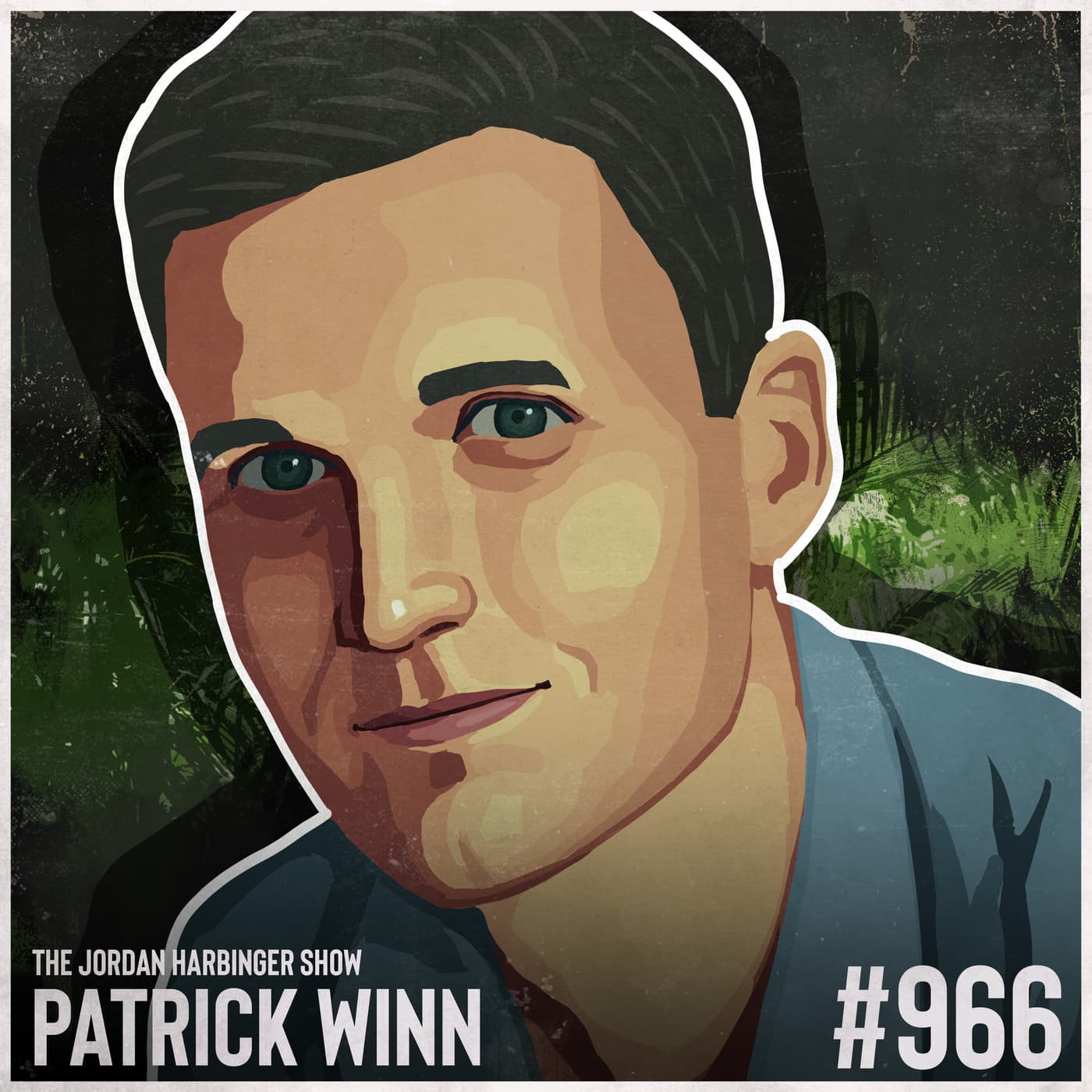
The Jordan Harbinger Show - Episode 966: Patrick Winn | Wa State: When a Drug Cartel Becomes a Country
Episode Overview In this episode, Jordan Harbinger engages journalist Patrick Winn, who explores the unique circumstance of Wa State, a region in Myanmar operating as a self-sufficient narco-state. The discussion unpacks how this drug cartel has evolved into a quasi-nation, evading the influence of both neighboring countries and international agencies like the CIA.
Key Discussion Points
- Burma vs. Myanmar
- Historical Context: The name change from Burma to Myanmar occurred in 1989 during a military regime. The terms are politically charged; many in opposition to the regime prefer "Burma."
- Cultural Implications: The choice of name can indicate one’s political stance.
- Wa State's Formation and Autonomy
- Geopolitical Background: Wa State is located in the borderlands of Myanmar, Thailand, and China.
- Self-Declared Independence: The region operates with its own government, legal system, army, and infrastructure, including power and communication networks.
- CIA's Historical Interest: The CIA had previously supported Wa leaders to oppose communism in China.
- Transition from Opium to Methamphetamine
- Economy of Wa State: The region initially thrived on opium production, transitioning to methamphetamine as regional demand shifted.
- Market Dominance: Wa-produced meth, particularly the branded "Yaba," has become a significant player in the Southeast Asian drug trade, reportedly outselling major fast-food chains.
- Internal Governance and Power Structure
- Leadership Dynamics: The ruling council consists of key figures like Bao Yuxiang (the military leader) and Wei Shikang (the financial mastermind).
- Nation vs. Cartel: Unlike traditional drug cartels, Wa State has a nationalist agenda. The drug trade finances defense and governance.
- International Relations and Future Outlook
- China's Role: China exercises a complex relationship with Wa State, supplying arms while seeking to control drug trafficking that might spill over into its territories.
- Future of Wa State: The potential for stability and growth exists, with aspirations for recognition and further autonomy.
Key Quotes
- "This is a serious nation state. You might want to take it seriously."
- "In the 90s, they switched to methamphetamine, which we can get into—it's a more lucrative and popular drug in Asia."
Additional Insights
- Cultural Perception: The Wa people are often viewed as drug runners and violent, though this perception isn't entirely accurate and oversimplifies the complexities of their society.
- Modernity in Wa State: Surprisingly developed, Wa State features amenities comparable to second-tier Chinese cities. Despite its drug trade, it maintains a degree of stability that is lacking in much of Myanmar.
Conclusion Patrick Winn provides an in-depth look at Wa State, revealing it as a unique and complex socio-political entity that challenges traditional notions of nationhood and criminality. The episode encourages listeners to reconsider their perspectives on drug trafficking, governance, and the intricate interplay between local and global politics.
Listen and Learn More For full show notes, resources, and additional insights from the episode, visit [Jordan Harbinger Show Episode 966](https://jordanharbinger.com/966).
Written by AI. May contain mistakes. Listen to the episode to check what was said.
Transcript
Automatic transcript. May contain errors.0:28This episode is sponsored in part by Vital Proteins. pretty unique going for it. High quality protein, 30 grams of it plus collagen. That's pretty good ROI. Usually you're choosing one or the other, but Vital Proteins gives you both a ready to drink shake you can toss in your bag or fridge, zero added sugar, no artificial sweeteners, and no carrageenan. And I don't know what that is or if that's even how you say it, but you're supposed to avoid that. If you're already taking collagen or you're just curious about how it might support your hair, skin, nails, joints, and you don't want any carrageenan, this is a super easy, tasty way to try it.
1:00Get 20 % off by going to vitalproteins.com and entering promo code Jordan at checkout. Coming up next on the Jordan Harbinger Show. These guys are very sophisticated operators. I mean, it's not easy. In most scenarios, this thing flops. It's not going to work out, but it did work out. This is a serious nation state. You might want to take it seriously.
1:27Welcome to the show. I'm Jordan Harbinger. On The Jordan Harbinger Show, we decode the stories, secrets, and skills of the world's most fascinating people and turn their wisdom into practical advice that you can use to impact your own life and those around you. Our mission is to help you become a better informed, more critical thinker through long form conversations with a variety of amazing folks from spies to CEOs, athletes, authors, thinkers, performers, even the occasional Russian spy, cold case homicide investigator, real life pirate, special operator, Hollywood filmmaker, or legendary actor.
1:58And hey, if you're new to the show or you want to tell your friends about the show, and I appreciate it when you do that, I suggest our episode starter packs. These are collections of our favorite episodes on topics like persuasion and negotiation, psychology, geopolitics, disinformation, cyber warfare, crime and cults, and more. That'll help new listeners get a taste of everything we do here on the show. Just visit jordanharbinger.com slash start or search for us in your Spotify app to get started. My guest today, Patrick Nguyen. He's a journalist who got basically obsessed with the idea of this remote tribe in Burma slash Myanmar, which is essentially one big drug cartel.
2:33They're called the Wah, and they live in the mountains on the borders of Burma, Thailand, China, etc. And they went from growing poppies, heroin production to methamphetamine production. And And it's essentially a country within a country. They're in Burma, but they got their own legal system. They got their own army borders. They got their own power grid, their own cell phone network. The military junta over there in Burma can't really go in there and do anything because it's in the mountains and it's dangerous and nobody's allied with them. And they just run this country selling homegrown meth throughout Asia, generating billions of dollars.
3:06And so far, nobody's been able to come even close to stopping them from doing this. Patrick actually traveled to Burma and to Wa State, which is no easy task, by the way, to get the inside scoop. And that's what we're going to talk about today. It's really a minor miracle that this guy is still alive. And the story is fascinating, as you might imagine. So here we go with Patrick Wynn.
3:30So I read the book, man, and I was thinking, all right, this guy is going to some crazy place in the mountains. What's this all about? And then I realized not only are you going to Burma or Myanmar, you're going to this sub state of Burma, which is essentially a narco state run by a big drug cartel. So even if you get there and something goes wrong, then you escape. You're in Burma with a military junta that maybe doesn't want you there. So I don't know. It just seems like a really daring thing to do. And I thought, OK, either this guy's got to screw loose. He's missing something is fearless, or it's just not that dangerous, and it's just all kind of a big misunderstanding.
4:07But then, of course, after I read the book, I was like, no, there's no misunderstanding here. These people are potentially very dangerous. Well, I'm not a fearless person. I do try to get next to fearless people and get them to tell me their stories. I think very, very carefully before I take risks, is it worth it? And more importantly, am I going to bring trouble to someone else. What propels me forward is usually an obsession with telling the story. And once I get fixated on a story, and this is one hell of a story, that sort of helps me propel myself through any fear that I might have. But not a tough guy, as you can probably tell, just a really, really curious guy.
4:49Yeah, I'll take it. You never know who's tough, man. That's the thing. Some people look tough. They're not that tough. Other people don't look that tough. if you don't wanna mess with those people either. By the way, is it Burma or Myanmar? In fact, in your book, you said, I flew to Burma, but the guide asked you something and you hesitated before saying Myanmar or Burma in a conversation with the guide because it was politically charged either way, kind of. So first of all, which is it? Is it Burma? Is it Myanmar? And why is it politically charged either way? What does that mean? Yeah, it's both.
5:19Burma is the colonial name for the country. It used to be a British colony. It was after a military regime changed the name to Myanmar in 1989. A lot of people thought, well, we don't like this military regime. In fact, we despise this military regime. We're not going to switch over to calling it whatever you want to call it. The rationale from the regime was, let's get rid of the old colonial words and start fresh. But people that hate that regime, which includes the United States, includes the State Department, said, no, no, no, we're going to continue to call it Burma. So why is it politically charged?
5:55If someone is from more the milieu of freedom fighters despising the regime, which is a large part of the population, they might prefer Burma. Myanmar, however, is the official name of the country. And I go back and forth all the time. It's just it's not set in stone. Huh, interesting. Because of course, we've heard of countries switching like, oh, we're not Rhodesia anymore, right? It really is a different country in many ways at that point. And then you have other countries that go through revolutions like South Africa, or big changes, I should say, like South Africa. They keep the name. And you have this place.
6:29Yeah, it's confusing. But I can see, do people get offended if you use the wrong name? Or is it just like, oh, now I know your politics and maybe I like you a little bit less? Yeah, more the latter. I've never said Myanmar to someone and they gave me the stink eye. Look, I've talked to people who are actively trying to destroy the military regime. There's a raging revolution happening there right now. And they'll use Myanmar because they grew up under the regime. They went to regime schools, and that was what was beaten into their head. So it's not a massive faux pas. It's a preference. Gotcha.
7:00Okay. Tell me about Wah State, because I've looked at many lists of countries and never heard of Wah State. So this is not an official country. and yet they seem to have their own government inside of Burma? I don't understand how that's possible, really. Wa State is, for my money, the most fascinating place in the world. You're right. If you go to the UN, you're not gonna see their flag on the wall. It's not formally recognized, but it is a fully functioning nation state inside Myanmar. So the military regime of Myanmar can't just go in. Wa State has borders. You go in and you're not invited, there's gonna be big trouble.
7:38Once you get inside, you're gonna see it's a country. It's a nation state. It has its own highways. It has its own electricity grid. It has its own cell phone towers. It's a government with ministries of health, finance. It runs its own school system. It's got everything that a country has. Now, did the leaders feel the need to go to the UN, to go to the world and say, please recognize us? no, they don't really care that much what the outside world thinks about them. They don't actually want to play that game. They're happy to have their own autonomous state and they know it exists and they don't really care if you think it exists too.
8:21So if I'm online playing Call of Duty, could I be playing with a kid from Wastate or is it not quite as developed? And yes, I said kid because I don't know how many adults are on there. And I'm not talking to people, just to be very clear, I'm not one of those creepy old guys on there. I'm playing. I don't care. I'm not chitchatting. But I know that people play online games and sometimes like kids pop into those things. Or is this just like a very isolated North Korea type place? You might find the sons or perhaps daughters of people who are highly connected in the WA government, which is run by sort of a ruling council, literally called a politburo.
8:56Yes, they might have access to this. By and large, most Wa people are living in villages that are pretty remote. They're farming. They previously made their money from farming the opium poppy. So in Wa state, the soil is really bad. Picture a topography that's like the Rockies, right? Like peak slopes, peak slopes. It's not a wide open place where you could plant a lot of rice. It's tough to grow crops there. But in that soil, it's very bitter and alkaline. It's actually perfect for growing the opium poppy. Opium poppies like chilly weather. They like bitter soil. And they produced massive amounts of this.
9:37This is what really, like geography steered the Wah people towards the drug trade. Wasn't necessarily a conscious choice. So yeah, back in the day, they've since switched to methamphetamine, which we can get into. But back in the day until, say, around the 90s, they were producing a lot of the opium that was synthesized into heroin that was nicknamed China White. It's actually from WA State that was making its way into the US. So for my generation, I was born in 1981. I was in middle school during like the grunge era and people were talking about heroin chic and the models were kind of wafy and people were ODing on heroin.
10:14So a lot of that stuff would have been coming from the WA territory. and that's what really caught the attention of the DEA. So I know that's a lot. It is. Do you know what percentage of American heroin came from Wah State or any guess? I don't have to guess too much. It's somewhere like 50, 60 % at its peak was coming from Myanmar. There was a rival heroin producer there, but the Wah had the most plentiful and potent opium poppy. I mean, just like, maybe it's a crap analogy, but the way that grapes grow in wine country in France. So poppies just grow beautifully in Wastate. And the great thing about the opium poppy is when you collect all the opium, just this big clump of brown molasses opium, and you wrap it up in canvas or even put it in a clay pot, it does dry out and become more potent and refine itself, sort of like wine in a cast.
11:13So you can transport it really, really far if you need to. It's very handy if you're in a really isolated, landlocked, mountainous area, because it's not like you're going to grow tomatoes and onions and ship it to people in the cities. It would be rotten by the time it got there. So that, again, that really pushed them towards the drug trade. Right. We need a crop that grows in this garbage soil and doesn't rot slash gets better over time. And a small amount yields a high amount of money. And it doesn't matter how legal it is because we make the laws. Like you're just asking for drug trade under those circumstances.
11:50Yeah. And I would just add that like 99.9 % of Americans have never heard of the Wa. No. Even though our government has had a profound effect on their civilization. That's about a million of them total. They live in the mountains where Burma and China meet and in Wa state. I know most people have not heard of them, but in Southeast Asia, they're one of the most denigrated and vilified people you can think of. Oh, really? So if you say I'm Wah to someone in a city like Bangkok, where I'm at right now, you might hear a response, oh, what are you? Are you a drug runner? And the other thing you might hear is, oh, did you or your parents cut people's heads off?
12:33That's the other big reputational thing about the Wah. Until about the 60s, they did live in these isolated fortress-like villages that were home to Wa warriors, and they did cut off their enemies' heads and put them on sticks. And as I say in the book, it's easy to start denigrating from there, right? But as I say in the book, French revolutionaries also severed heads, and samurai did, and Scottish clans did, and they all had a reason. I mean, it wasn't just, they'd been called savages. No, no, no, no, no. It's more complicated than that. A human skull on a stick is an excellent way to communicate, no trespassing, stay out of my territory.
13:14And the shock value helped keep them free. So yeah, so that's the rep. Drug running and head hunting. Although they haven't been head severed in Wastate from what I could tell since the 60s, maybe the early 70s. Why did they stop doing that suddenly? It just seems like a weird departure. If you said they stopped a couple hundred years ago, I'd be like, oh, okay, they joined civilization. The 60s, it's a little late to stop cutting off heads and putting them on sticks instead of writing a sign that says no trespassing. It's a little bit late in the game. Yeah, modernity had not come to them. So in the 60s, they were still living as their great-great-grandparents did.
13:49They got organized. So the problem was they weren't just cutting off intruders' heads. They were cutting off rival clans' heads. I see. They were cutting each other's heads off. Some important figures rose up within WA society and said, We've got to get united because the Wa territory is right next to China. And China went fully communist in 1949. There was a very legitimate threat of communists coming in and taking over their territory. So they had to get united to repel that. It was very difficult to do. Right. Also, the CIA became interested in them. Shocker. You have a indigenous people with a warrior reputation right on the backstep of communist China, the largest communist country on earth.
14:37The CIA came in. I found this insane. I found this then secret memo from 1953 that the CIA wrote that said, you know, what the Wah really want is to be ruled by white men. Oh, yeah, that always works out. I'm sure they do. Can't wait. They didn't. As you as you might imagine, they didn't want that at all. They did not record scratch. But they did become of great interest to the CIA and the CIA did use their territory as a launching pad for raids into communist China. So they set up what they call listening stations, listening posts in Wa territory that could soak up Chinese radio chatter from the People's Liberation Army.
15:21They could listen to what the Chinese were saying to each other. They recruited some pretty badass warlords to go in there, steal documents, tap phone lines and things like that. They did this with the help of Taiwan, Taiwan's military intelligence, which was a junior partner of the CIA and also highly opposed to communist China. That's really how the U.S. empire became interested in the war. And just to put a pin on that, like today, WA state, the nation state slash narco state that it is, is very much a target of the CIA and a target of the DEA. But back then, they thought they could use these opium harvesting indigenous warriors for American purposes.
16:05Yeah, that is quite fascinating. I would imagine that's very useful, right? You have these mountain raiders that the communists can't necessarily get to easily. And it's like, hey, what if we just give these guys a bunch of guns? And they go in and mess things up and harass the PLA and keep them from spreading, but also maybe do a little bit of our dirty work. And all they want is a couple hundred bucks or like some modern technology that we can get for next to nothing. It seems like a pretty good deal. M16s. Yeah. Literally, M16s. How big is Wastate? If it's a million people, what sort of population density?
16:36It doesn't sound like a lot if there's a lot of farming and a lot of mountains. Yeah, it's pretty spread out. In Wastate now, there's about 600 ,000 people. a big chunk of their original territory, their sort of ancient homeland did get swallowed up by communist China. So that took a big piece of their population away. Wa State now has about 600 ,000 people. Dude, it's big. I mean, I know it's not on Google Maps, but its territory is big. It's as big as Belgium. If you just look at the actual soil of the Netherlands and not its aquatic holdings, it's as big as the Netherlands. It's a vast, vast place.
17:13I mean, it's not easy to run a nation state that's that large. It's expensive, in fact. So unlike, I know people's idea of drug traffickers comes from Mexican cartels. Mexican cartels principally are financial engines. They're trying to make money. They're trying to make profit. The financial engine of Wastate is narcotics. They do other stuff, but primarily make their money from narcotics. And a lot of that goes into upholding and defending their homeland. I'm not trying to make them sound super noble or anything, but just as a matter of fact, they need a lot of money to not get swallowed up.
17:52So they have a nationalist agenda, not just a profit-seeking motive. That's interesting. So it's hard to say, right? Whereas drug cartels in Mexico are business operations pretty much solely, this is almost more like they kind of have the reverse proportions, right? It almost seems like a nationalist thing. And it's like, well, the only way we're going to be able to fund this thing is through drug trade. And then that became, but it's hard to say who's pulling the strings now, because once you get a taste of that sweet drug money, it's probably really hard to let it go. As much of what my book is about, there was a clash within Wastate that got really hot in the 90s, where you had one leader trying to pull it in the opposite direction, saying, hey, let's actually make friends with America and wind down the drug trade.
18:35That's what's going to be better for our survival. there was their trafficker and chief, the drug lord, wanted to make it into an even more powerful narco state. And so when the DEA says, oh, that's just a criminal syndicate, they're just this like jungle mafia. No, there's this has been this internal clash is what they want to be. And I got most of that story from one of the top three leaders of former leaders of Wastate, who was himself a DEA informant. So it's quite a story. Yeah, the book goes into a lot of detail on that. How armed are these guys? Because it sounds like the CIA armed them, but I assume at some point we kind of wound that down.
19:17And look, small arms are powerful if you're harassing jungle patrols on the border of China in the 1950s and 60s. But if you want to really protect yourself, you need more than that. So how armed are they and where do they get the weapons? And just to be clear, the CIA has not been entangled with propping up any Hua people since the Cold War. Since they founded their nation state, they've more or less been targets of the CIA. But as far as their arms go, good. They get weapons funneled to them from the People's Liberation Army. Beijing will deny this. But when you look at the stockpile of Hua weapons, which they show off in parades, you're going to see anti-aircraft weapons.
19:57You're going to see heavy artillery, armed personnel carriers, high-end automatic rifles, mortars, armed drones even. It's a pretty sophisticated military. So you may ask yourself, why would China support a heavily armed narco state? Right on its board. Yeah, it sounds like a conspiracy theory, right? Yeah, it does. It's not. Everybody can go to Google and you can look up wall leaders who are indicted by the DEA. some of the DEA's most wanted people in Asia doing photo ops with diplomats appointed by Xi Jinping. So it's very much real. China has a different strategy than the U.S. does. So the U.S.
20:40on the American-Mexican border, primary mission is to go in and bust up cartels and lock up drug lords. I mean, that's its ultimate goal. When you do that, you create these power vacuums and smaller cartels rush in to fight it out. And you have all this bloodshed, hundreds of thousands of people killed in Mexico over these feuds. Not blaming all of that on the United States, but we play a role in keeping that going. China has a different strategy. So it looks at the big bad cartel, for lack of a better word, on its border. And it says, wouldn't it be better if we could control them. Wouldn't it be better if we had one big Leviathan, one big whale that we could have a say in what they do, that they were indebted to us because they get their weapons from us?
21:31What's the alternative to have power vacuums and a bunch of smaller piranhas just chewing each other to bits, massive amounts of bloodshed on the Chinese border? They don't want that. So they play a different game. And just to be clear, I'm not suggesting that the US take up that model because I don't see a nationalist nation building project in Mexico. So it's a different circumstance. But the problem is, Jordan, the DEA just applies the same model to the WA. Their trafficking syndicate must destroy them, must wipe out their executive branch, their leadership, and therein lies the problem. By the way, to be clear, I'm sure when you say you don't see a nation state building force in Mexico, you mean from the drug cartels, right?
22:14Because the Mexican government and people who live in Mexico are certainly trying to build a functioning democracy for all its faults, right? You just mean the drug cartels are not nationalists. They don't care about Mexico, which I agree with that, of course. I don't see an indigenous movement in Sinaloa trying to, you know, break free and create a new state of Sinaloa that is, you know, a shining beacon for the Sinaloan people or something like that. Mexico as a nation state, it's built. It's already there. The analogy doesn't work and that's fine. Latin America and Southeast Asia are two very different places, but our policy is informed by Latin America principally, and then it gets applied to Southeast Asia, and it doesn't quite work.
22:56And this is why the DEA has been very unsuccessful in taking down the law. I'm guessing if they get their weapons from the Chinese, they can say, oh, and by the way, we don't want to see any of the meth you guys produce in China. Are they able to do that? Or is it just kind of like, well, it's still drugs and hard to control. Yeah, I never landed like a document that said, we, the WA people will not send any meth into China. The man I mentioned earlier, this principal source of mine was a top WA leader and a DEA asset. He told me, yes, in fact, it's understood. It's an unwritten policy of the WA.
23:34We're not going to let any meth or any drugs seep into China. And that means that this works out to Beijing's benefit as well. Drugs gotta go somewhere. So they pour into Thailand. And from Thailand, there are ports where drugs can be shipped all across the world. And just to be clear, the Hua are not the principal masterminds of the Asian drug trade writ large. Primarily, it's a place to produce drugs. And then you have these, namely ethnic Chinese international trafficking syndicates who move it around the region and around the world. Why don't the WA do that? Well, fourth thing, they're primarily focused on their territory, their nation, and also being an international drug trafficking syndicate is a very complex, sophisticated, logistical operation.
24:30It requires people who speak your same language in multiple cities around the world. The WA are pretty focused on themselves. They just don't have that network. Yeah, it makes perfect sense that Chinese merchants or just an international merchant class, I mean, they could just as easily be Brits, right, doing this kind of thing. They're well suited to it. And if you have crime syndicates like Chinese triads or whatever, those guys are all over the world. Every major city pretty much has them. And they go way, way back. A lot of ties, a lot of real estate, a lot of logistical infrastructure for everything from human trafficking.
25:05So why not drug trafficking, especially in their own backyard, Southeast Asia? So that, yeah, it's quite fascinating that this is kind of how it works. Wastate sounds a little bit like anarchic. I mean, maybe that's not quite right. Cutting off of the head seemed a little anarchic, but they stopped that. Surely they have rules and laws. Do they have police? They must have things like police and judges. Or is it a little less formal than that? Police, pretty sleek highways. Yes, their own laws. It's sort of tempting to say it's a lawless place. and law enforcement will tend to call it that. No, not exactly.
25:41I mean, look, it's not Denmark and I'm not saying it's a nice place to live. I think in a more ideal world, the profits from the drug trade, more that would be shared with the general populace. So just like say Saudi Arabia is a petro state and it uses petroleum to finance things for its people, Wastate could do a better job of being a narco state that spreads the narco wealth into, why couldn't you have a better school system? Why couldn't you have better hospitals? It doesn't have much of a safety net there. So not enough of it is shared, but I mean, shocker. I don't think anyone will be too astonished to hear that.
Read the full transcript
26:24But as a nation state, yes, it is pretty highly functioning. Anarchic is not a way that I would describe it at all. You're listening to The Jordan Harbinger Show with our guest, Patrick Nguyen. We'll be right back. This episode is sponsored in part by 1-800-CONTACTS. You know that last pair of contacts panic? My wife, Jen, knows it way too well. She's had these mornings where she's out of contacts and stuck wearing these old glasses she's got to keep wiping clean with her sleeve. But now, she makes sure to load up ahead of time because her next set is always on the way from 1-800-CONTACTS. They're the only major retailer that lets you renew your prescription online, so Jen gets her same doctor prescribed contacts fast with free shipping without leaving the house.
27:051-800-CONTACTS has been doing this for over 30 years. They've got millions of lenses in stock, award-winning customer service, and perks like free returns, free exchanges, even free torn lens replacement. Jen loves their Express exam, which lets you renew your prescription online in under 10 minutes. It's a vision exam, not a full eye exam, but it gives you a doctor-issued prescription if you're seeing clearly with your current lenses, no waiting rooms, no dilation drops, remember those things? And with their best price guarantee, if you find your contacts cheaper or somewhere else, they'll beat it.
27:32Getting contacts doesn't have to be a hassle. Let 1-800-CONTACTS get you the lenses you need right now. Order online at 1-800-CONTACTS.com or download the free 1-800-CONTACTS app today. This episode is sponsored in part by Dell. It's time for Cyber Monday, Dell Technologies' biggest sale of the year. Enjoy the lowest prices of the year on select PCs like the Dell 16 Plus featuring Intel Core Ultra processors, and with built-in advanced features, it's the PC that helps you do more faster. Plus, earn Dell rewards and enjoy many other benefits like free shipping, price match guarantee, and expert support.
28:03They also have huge deals on accessories that pair perfectly with your Dell PC and make perfect gifts for everyone on your list. Shop now at dell.com slash deals.
28:14The wait is over. Dive into Audible's most anticipated collection, The Best of 2025, featuring top audiobooks, podcasts, and originals across all genres. Our editors have carefully curated this year's must-listens, from brilliant hidden gems to the buzziest new releases. Every title in this collection has earned its spot. This is your go-to for the absolute best in 2025 audio entertainment. Whether you love thrillers, romance, or nonfiction, your next favorite listen awaits. Discover why there's more to imagine when you listen at audible.com slash best of the year. If you're wondering how I managed to book all these great authors, thinkers, and creators every single week, it's because of my network.
29:01And I'm teaching you how to build your network for free over at sixminutenetworking.com. This course is all about improving your relationship building skills, inspiring other people to want to develop a relationship with you, much like Patrick did to track across Burma and get into Wastate. Anyway, this course will help you in all of those ways, but in a super non-cringy down-to-earth way. It's not gonna be awkward. It's not gonna be cheesy. Just practical exercises that'll make you a better connector, a better colleague, a better friend, a better peer. In a few minutes a day, it's all it takes.
29:28And many of the guests on the show subscribe and contribute to the course. So hey, come on in. You'll be in smart company where you belong. You can find the course at sixminutenetworking.com. Now, back to Patrick Nguyen. Earlier, and I'm reading the book, and it's like if you wander outside your village, someone pounces and cuts your head off and then puts it on a spike and fertilizes their garden with it, with your magical spirit that comes out of your brain or whatever. This certainly sounds more like a, what's the right word? Is it more like an oligarchy where just rich drug lords have the power?
30:00And are we talking about a lot of corruption? And it seems like at least the wealth gap is quite large. But what did you feel? I mean, you went there, and we'll talk about that in a second, but you went there. Does it feel safe or does it feel chaotic? This will blow people's minds. It's probably the most stable place inside the country right now. Inside of Burma, yeah. Yeah, inside of Burma and Myanmar. They're undergoing a raging revolution. Some call it a civil war. Waa state, because it's autonomous, stands apart from that. And there are no battles there. There is no war there. We don't have a perfect vision or insight into everything happening there.
30:41So I'm not saying it's free of violence. It's far from utopian. I would never say anything like that. But it's stable. And this has been a people who have been isolated, in part by choice, for quite a long time. That's becoming less and less true. So the Chinese version of TikTok is called Douyin. Yeah, Douyin. Yeah, I don't speak Chinese. Yeah, it's okay. So you see like wah soldiers, I'm talking about men and women, posting like dreamy montages on TikTok and trying to look cute and doing like TikTok style dances. That's funny. Or just like hanging out and drinking beer. It really pierces this idea that they're this dark people locked away.
31:28It's like, no, they're not seeking the outside world's attention, But hey, they're on they're on social media, break dancing and doing all sorts of stuff. I mean, that's got to be kind of interesting to be surfing Dojin. And then you see like a, I don't know, a wah narco thirst trap post. Just like, what's going on here? What's up with the beret? Oh, I see. Oh, what's at the kilo of meth or whatever behind this woman in the photo? Oh, I see. She's flexing. Like, it's just kind of a funny mental image. The United Wa State Army has a lot of female soldiers, a lot. And so you see them on there just as much as the guys.
32:07Really? It really, yeah, when you think of narco, picture like a narco, a narco warrior or whatever, few people are going to imagine - A small Asian woman, yeah. That's not the first thing that pops into your mind. Right. And to be honest, Jordan, like the 30 ,000 troops in the United Wa State Army primarily are not involved in the narco trafficking trade specifically. It's really kind of this division. So you have the army, which is there to uphold the state. And I mean, because everyone's scared of them, they don't have anyone to fight. So a lot of times you see them like gardening or patching up potholes on the road and things like that.
32:48Then you have separately a ministry of finance that orchestrates the drug trafficking. And these days, I mean, they used to produce it all in-house, but these days, they've kind of gotten more sophisticated. Often they'll invite an outside, usually Chinese, criminal syndicate onto their territory and say, so this would be a good place to build a meth lab. It's next to a stream. Meth labs need a lot of water. You guys build it. You go find the chemists. We may play a role in helping source the chemicals because the chemicals to make meth come from the same general Chinese pharmaceutical chemical industry that produces the chemicals that are made into fentanyl and sold to Americans.
33:29It's a whole other story. But we'll play a limited role in this. Why don't you guys do all the hard work and we'll just collect rent. We'll just tax the operation. Wow. This is a smarter, more corporate way to be involved in the drug trade. You don't have to do it all yourself. Right, so they're basically then acting as like the administrators of a special economic zone instead of trying to be state-run industries with little education and resources. Like bring in the pros. Bring in the pros, let them run here. We run security. They pay us taxes slash rent and we're good. You're right, that is pretty, it seems like a better division of labor.
34:06And it's also, it probably keeps things a little bit more calm at home too. Just the political kind of, and it ties them further with China. I mean, it's all kind of good things for them that come from that. How big is the drug trade then with Wastate? Do we have a dollar figure at all? Sort of. So the UN will say that the Asian meth trade, this is the largest meth trade in the world, the overall economy is about$60 billion. So just to put that into perspective, like most countries' GDPs aren't$60 billion. There are countries in Southeast Asia that have smaller economies than that. But that's looking at the Asian meth trade from top to bottom.
34:49That is counting the value of the trucks that carry the meth and the street dealers in Australia who might be selling meth produced in Wastate somewhere in Sydney. So that's a giant number. I've had people ask me like, oh, so Wastate has a GDP of$60 billion? No, I don't know what the GDP of Wastate is. I'm not sure that the leaders know either. That's really hard to put a dollar amount on. I would imagine it's in the billions, but it's not quite that large. A lot of the money is really flushing into the syndicates that move it across borders. So the Wah might have a role moving it into Thailand, but then from there, it goes to one of Thailand's ports and it could go all the way to Japan or Taiwan or Australia.
35:38Every time a kilo of meth or heroin or anything jumps a border, it jumps up in value. And so I think it's actually those international syndicates that are soaking up the really big profits. Yeah, that does make a lot of sense. Do you think that the drug trade in Wastate is bigger than the GDP of Burma, or is that a ridiculous idea? I don't trust the GDP figure for Burma from Myanmar. It's somewhere in the 50 billion range. It says 65, but if they're self-reporting, Okay. Yeah, who knows? I mean, I don't trust that at all. There's so many things that are sold illegally in Burma, from gyms to timber, there's human trafficking, there's an arms trade.
36:22It's just a highly unstable figure. So no, I mean, I wouldn't imagine that it's bigger. The GDP for Wastate is bigger than Myanmar, just because Myanmar is a much bigger country. Obviously, Wastate sort of nests inside of it. But I'll put it this way, Jordan. They're bringing in a lot of money. They're primarily producing crystal meth, which is like the stuff you see on Breaking Bad. But they have a different type of meth that was pioneered by WA State's premier drug lord. His name is Wei Shikang. This is a little pink pill called Yaba. And it's got about 20 % meth in it. The rest is caffeine and other fillers.
37:03It smells like Oreos, like the vanilla cream filling of Oreos. They scent it. Oh, they sent it. It's not just a coincidence. That's probably a good idea because it probably smells disgusting if you don't do that. I've been in the room where large bags of this have been cut open and it smells like you're in like a candy store or something. And this stuff, I tried to compare it to something that Westerners would understand, like Big Macs, right? So the best data I could find on Big Macs was that somewhere in the neighborhood of like half a billion are sold a year. It could be more than that. But according again to the UN, two to six billion of these pink meth pills are being produced every year.
37:45Not entirely in Wastate, but a lot of them are. I mean, they also sell for about$2. I've been away from the US a long time. I don't know how much Big Macs are going for. Yeah, I don't either. We're in similar price point. Just a massive, massive, massive, massively popular product here in Asia. And you take meth, especially a pill that only has 20 % meth, you might perform better at your job if you're doing really repetitive labor. So if I'm cutting up pineapples that are going to be sold in Walmart somewhere, or I'm stitching up sneakers that are going to be sold in the mall somewhere, I'm doing something over and over and over and over.
38:25And if you're on meth, that repetition becomes kind of pleasurable. So it actually has a role to play in the economy. No one's doing fentanyl here in Southeast Asia. Even heroin is not very popular anymore. It's all about meth. It's really shocking that it outsells this Yabba, outsells Starbucks or McDonald's in these places. Do they stamp a logo on the pills like they do with ecstasy in Europe and the United States or so I've heard? Oh yeah, they do. Every meth pill or many meth pills are stamped with the letters W-Y. I have been asked many, many times, and I've tried to find the answer as to why those two letters are the logo.
39:09I mean, it's as recognizable to Asian drug users as the Nike swoosh, as I say in my book. I don't know exactly what the W-Y is all about, but I do know this. Originally, in, say, the middle of the last century, amphetamine tablets were sold here, and they were sold by Burroughs Welcome, a huge pharmaceutical company. Those pills had, I believe, a unicorn stamped on them. And so Thai people called them Yama. Yama means medicine, and Ma means horse. At some point, when the DEA came and created a huge base of operations in Thailand. Those things became illegal. Nobody sold them anymore except on the black market.
39:53So you had all these guys making up what they called horse pills, amphetamine pills, in back alleys and things like that. It was really the Wah who seized the initiative to produce those at scale. And then they became called Yaba. Ba means crazy. So crazy meds or insanity pills. So that's a quick potted history of the Yaba meth pills that are super popular. Yes, they are branded. One other thing, it's interesting about branding, when they produce crystal methamphetamine, you can't stamp a logo on a crystalline shard of meth. So they put them in tea pouches. They're shiny foil pouches that say this certain brand of tea.
40:37Well, that brand of tea doesn't exist. It's just a way to show traffickers down the chain. This was produced in a solid facility. This is going to be upwards of 95 % pure. When you see this tea brand, you know it's good stuff. Wow. That's quite interesting. The idea that they have like brand loyalty, branding, almost like a marketing department kind of thing here with the stamping and the wrapping. It's really, I mean, that's partly a real business. And you can just see how far they've come, so to speak, with this stuff. Back in the day, they were making a third of global opium or something like that, right on brand for Cold War CIA times.
41:17Opium becomes heroin trade. Heroin smuggled through Thailand to Bangkok, sold to Chinese gangsters, makes its way, I think, to Vietnam, right into the veins of the American troops there. And then why the switch to meth? Is it just easier to transport and make or what? Is heroin less popular now? I don't even really know. I'll give credit to the principal trafficker in chief of Wastate is, again, same as Wei Xikang. I give him credit as a visionary here. He went all synthetic before any of the Mexican cartels did. He saw the writing on the wall. When you have to rely on a crop like coca or the opium poppy, it kind of sucks.
41:58I mean, you have to rely on this army of peasant laborers to produce it? Oh, what if there's a big cold snap and the crop turns out to be not so great? And oh my God, you have to control a lot of land that can't be growing food on that land. It's kind of a pain. So he realized and he convinced the WA government to go along with this to wholesale shift to methamphetamine for two reasons. One, it was understood that methamphetamine could be a more popular drug in Southeast Asia as heroin was sort of phasing out. And two, if you're primarily producing methamphetamine, which is what the Southeast Asian market wants, you can sell it within Asia.
42:42At this point, they did this in the late 90s, early 2000s. So at that point, Southeast Asia had a vibrant enough working class, they could afford drugs. Back in the day, Vietnam era, Vietnam War era, you want to sell narcotics at scale, you have to sell to Americans. I mean, we are the most ravenous consumers of narcotics in the world. We still are. And only Americans and Europeans and others, but only more developed countries could afford to just gobble up a lot of drugs. If you're taking your heroin into the fields and valleys of Southeast Asia, you're going to find a lot of people who grow rice, don't have much money, probably don't even handle that much money.
43:25These are not very good consumers of drugs that can't afford it. That's why it was such a godsend when the United States sent so many GIs into Vietnam. You had these young American guys who had a stipend from the military and you had a base, but they were also very traumatized because they were in a war and they could afford heroin. So after you got used to selling it to them, then you think, all right, well, we got to sell it to them when they go back home as well. And it wasn't until the early 2000s when Southeast Asia was rich enough to buy its own drugs. And methamphetamine is what they want.
44:04You focus on them. And by not selling heroin to the United States anymore, it helps the DEA stay off your back. I mean, the DEA is still going to come after you, but they can't justify a massive, expensive paramilitary style war against your territory. You mentioned earlier the division in Wastate. Some people wanted drugs and money. Other people, I guess, thought, hey, we're never going to develop further if we can't get assistance and join the legitimate world. So does that division still exist? I know you mentioned there's Christian groups in Wastate. So I assume missionaries got in there at some point if there are Christians.
44:40or have they kind of squashed that and now they're all rolling in the same direction? Yeah, I should probably back up and explain how I would even know about this because like Jordan, for the past 10 years, I've been trying to like peer into the inner circle of law leadership. Most of these guys are indicted by the DEA. So it is kind of like trying to get an interview with El Chapo or something like that. It's a mission impossible. It was about five years ago when I was becoming friendly with a Wah guy in Myanmar in a city close to Wah State town. And he knew I was trying to interview the leadership.
45:20And he had met them. He was pretty high up in the United Wah State Army. And he said, okay, I'm ready to introduce you to my father-in-law. You wanna interview a leader? Let's go meet my father-in-law. So who the hell is your father-in-law? It's like, all right, we'll see. So we walk up the street to this compound with security cameras on all the awnings, big cement compound, and we're let inside. I go through the gates. We're sitting in this very sort of austere living room. And I look around and I see two things that are really interesting. One is a portrait of Mr. Father-in-law in a WA uniform in his younger days, looking very debonair.
46:04I was like, oh, this guy was really high up. I mean, I'm used to seeing like, you think of law leaders or DEA indicted guys, you think of mugshots, right? But this guy was, you know. The other thing I noticed on the other wall is a portrait of Jesus with like blonde Jesus. Blonde Jesus or blind Jesus? I don't know if he could see, but he was definitely blonde. Okay, that is, I guess, an interesting choice. Okay. So I said, okay, this guy is Christian, which is unusual for a law leader because most of them are not just anti-American, but anti-West in general. So in walks a former top three leader of WA state.
46:45And at this point, he's in his 70s. He flops down. He asks who I am. I tell him, look, I'm American. I also said I was a journalist. I figure this is the part where I get thrown out. Yeah, feel lucky. All right, you know, what do you want to know? and it's like a figure from the Old Testament. He looks you right in the eyes because he's like dark, compelling eyes. He has this kind of sandpapery voice. He's just a very severe person. He had been a top DEA asset. And as I went and continued to visit with him and visit with him, he eventually revealed this to me. He said that he was one of the most important informants for the DEA in Southeast Asia ever.
47:30So I had to check that out. I asked him for the names of his DEA handlers, tracked a few of them down, and they said, oh yeah, that guy's legit. We called him Superstar. That was his code name. So look, being a journalist, I have to check out everyone's story. So I go back to this man, his name is Saul Liu, and I say, Saul Liu, just try to check everything out here. What was your code name? And he goes, oh yeah, Superstar. So this is the guy who is trying to take Wastate in a different direction. This is the guy who, because his family was Christianized by missionaries, he believes in America and he believes America is this great Christian nation that can save his people from the darkness, which is, in his mind, drugs.
48:15So he worked with the DEA to team up, like the DEA teaming up with the drug cartel to have them wind down their operation in exchange for American aid. So he was the principal driver of this movement to unite the law with the Americans, which is pretty extraordinary. Yeah, that must have been, I mean, that was kind of your 10 years to a lucky break situation from the sound of it. It felt like a lucky break, but when you're obsessed with something for 10 years and you keep beating your head against the law, I guess eventually the door opens. Yeah, that's kind of how a lot of this stuff works, eh?
48:46It must have still been so hard to get into WA state. How did you end up getting into the territory? Because when you met this guy, this was in what, Rangoon or something like that? in Burma or was he living in Wa State when you met him? If so, how did you get there? Yeah, he was living in a Burmese town called Lashio, which is about 50 miles from Wa State. Okay. When you're a top level leader and also a DEA informant that has a way of bringing you into conflict with the other Wa leaders. And at that point, he had been driven out. So yeah, I did not meet him in Wa State. So how did you get into Wa State?
49:25I assume you didn't get smuggled in because you're still alive and your head is not rotting on a spike. And I don't care if they don't do that anymore. No, my head is firmly attached, maybe not firmly. But I had been asking to go to their capital and to interview their current leaders, DEA indicted leaders for a long time. Once I forged this relationship with Saul Liu, this former leader who at that point was on the outs with them, I became a known quantity to the WA government. And that certainly hurt my chances of going to the Capitol and sitting in the boardroom with one of the leaders, which, hey, maybe that never would have happened anyway.
50:09Also, COVID happened and the WA state went into lockdown. So I had to get creative. What I did is I went to the perimeter of WA state, which also touches Northern Thailand. If anyone's ever been backpacking in Thailand, And if you were to keep going north and north and north, you would go into Myanmar. It's what it will say on Google Maps. But if you go over at the right part, you're actually going into Wa State. So I went across the border into the fringes of Wa State into a village that was still in the process of being dominated by the United Wa State Army. And so from this village, I mean, you could see Wa Fortresses up on the hill looking down on it.
50:56At that point, the Wau State government was dictating terms to this village, which was not ethnically Wau. Most of the people there were from a different indigenous group, but they were being swallowed up by Wau State, which is still expanding as best it can today. Oh, wow. So is it kind of colonizing other parts of Burma? Yeah, actually, its territory just expanded two weeks ago. It is still actively expanding. It has other revolutionary militias around its territory that do its bidding, or maybe that's putting it too strong, but it funds them, it gives them weapons, it supports them. It's a growing nation state.
51:37I mean, it's a young country. It's only existed for 35 years, and it would like to expand as best it can. So yeah, if anybody has listened to this and thought that I was describing WA state as this great noble enterprise. I think it's a legitimate enterprise to want their own nation state, but they've done ethnic cleansing. I mean, a lot of nations in their founding stages engage in ethnic cleansing and the WA government has done that too. So when I was in this village, you know, with the WA fortress looming, looming above us, I had villagers telling me pretty horrific stories about people being hurt and maimed and driven out of their homes and, you know, trying to farm rice very recently and having law officers come down and be like, nope, you can't do that, kind of starving them out.
52:27So it was the other side of the coin. Yeah. Yeah. Yikes. So who is the leader of WA State now? Or is it sort of a group? Do you have a council of people or do they have a president, a dictator? How does it work? I said they're highly organized. They're not quite organized enough to have a dictator. It ain't North Korea. It's not an Orwellian state or anything like that. Yeah, they do have a leader. His name is Bao, Bao Yuxiang. This was a man who, according to my research, had actually participated in some headhunting when he was a young man, possibly a teenager. But you can hear that and think, oh my God, what a psycho or something like that.
53:05Nah, that's not how it is. I mean, these guys, to maintain a rogue nation state with the CIA bearing down on you and the Chinese Communist Party bearing down on you and others. Well, the Hunten Burma. Gotta be pretty smart. The Hunten Burma. He's kept them out, too. So you can't write this guy off as a simpleton. I think the ruling council, the ruling Politburo of law state are playing a political game that is far more sophisticated than any played by anyone in U.S. Congress. I think if you went into U.S. Congress and grabbed someone from either party and had them play like 40 chess at the level that the war playing, they wouldn't last two weeks.
53:49these guys are very sophisticated operators. I mean, it's not easy. In most scenarios, if we were to look into the multiverse, in most scenarios, this thing flops, right? They're an indigenous people. There's only half a million to a million of them. They are hated by their neighbors. It's not going to work out. But it did work out. And that's kind of what I want to put across in my book. This is a serious nation state. You might want to take it seriously.
54:26This is the Jordan Harbinger Show with our guest, Patrick Wynn. We'll be right back. This episode is sponsored in part by the GIST podcast. If you're looking for a news podcast that is smart, unfiltered, and doesn't just echo whatever side you already agree with, check out the GIST with my friend, Mike Peska. Mike's been doing this longer than just about anyone. It's actually the longest running daily news podcast. It's earned that spot on Apple's top charts for a reason. Each episode's around 30 minutes, so it's perfect for your commute or while you're making breakfast. It's always packed with sharp, thought-provoking takes.
54:54What I love about the gist is that it's not stuck in a partisan box. Mike, he's a really smart dude. He digs into real questions, the kind that most shows avoid because they don't fit neatly into a political lane. He'll challenge the right. He keeps the left honest. He dives into stuff like the New York City mayoral race, that whole cluster, and the chaos of sports betting, or even whether talking to your plants actually does anything. He's an award-winning journalist. He's not some schmo like me who's totally unqualified. You've probably seen his work in the Atlantic, the Free Press, the Washington Post.
55:20He's got that rare mix of wit, skepticism, and depth that makes even heavy topics fun to listen to. And he's a great dinner guest, just saying. So if you want your daily news with more brains and less noise, check out The Gist with Mike Peska every weekday on YouTube or wherever you get your podcasts. If you like this episode of the show, I invite you to do what other smart and considerate listeners do, which is take a moment and support our amazing sponsors. All of the deals, discount codes, and ways to support the show are searchable and clickable over at jordanharbinger.com slash deals. And if you can't remember the name of the sponsor, you can't find the code, go ahead and email me jordan at jordanharbinger.com.
55:54I am more than happy to surface that code for you. It is that important that you support those who support the show. Now for the rest of my conversation with Patrick Wynn. Is the leader that you mentioned, is he also the chief drug trafficker or is he kind of more civilian administrator of the territory? He's the strong man. Okay. Yeah. A lot of Wa people don't like this, but it's sometimes said about them that in Wa state, you have the muscle and the brains. So the muscle is Bao. He's the guy who runs the army. He's the guy who runs really the nation. Then you have Wei. He's the financial mastermind.
56:33He happens to be half Chinese and speaks Chinese fluently. So he's more able to plug into the international narcotics trade. So Wei would be the real figurehead for running the drug operation. Wei Shikang, again, I think he is the most successful drug lord perhaps ever because after all, he's not caught. But this is a guy who, I mean, if you were to look at, he dresses like he's like, the manager of a radio shack or something. He doesn't wear a bunch of gold rings. He doesn't wear a bunch of jade. He doesn't have a big harem. He's a germaphobe. I think he could fairly diagnose him with OCD. He's really smart though.
57:18And he's incredible at his job. He loves to make money. I don't even think he likes to spend it. He just loves to generate profit. So he's not a leader of men. I mean, there's very few photos of him in existence. He doesn't want to be anyone's great leader. He doesn't want everyone's adoration. So he's handling the financial side, but you got to have a face on things, and that's Bao. So muscle and the brains. How do they launder and transfer money, right? Because if they're dealing in essentially a cash business with Chinese gangsters, what good is the money if they hike it up a mountain? How do they handle the logistics here?
57:55Do you know? Yeah, I do know a little bit about that. And the DEA has targeted their shell companies as well. Yeah, WA leaders have quite a number of shell companies. They, at one point, were big stakeholders in an airline in Burma. Everything from banks to casinos. Back in the day, they were producing CDs. I mean, or they had a stake in like just this very promiscuous portfolio of things from cement factories to chemical factories to making CDs to loan sharking. So they spread it all around. There is sort of a law ink out there that controls a lot of money. Again, my argument is that I wish that they would, if you're gonna make money from the drug trade, I wish that you would build more schools and hospitals with that.
58:43But that's just my personal critique. Yeah, I get it. I mean, that's kind of the problem, right? Is once you get a taste of that, you're like, why should I share this with other people when I could buy a villa in France and nobody can do anything about it? I mean, that's the problem with crime and not having rule of law in many ways. By the way, is this area where King's Roman Casino is? We did a show about cyber slavery in that area and also wildlife trafficking, which episode 545, and the guest on that show, Rachel Newer, she went undercover and went to King's Roman Casino. And I want to say it was on the border of Thailand and Burma or something like that, but I'm not sure.
59:19Is this the same kind of lawless area? Kings Roman Casino is also under sanctions from the U.S. government, in part because the U.S. alleges that it's been sort of a way station for methamphetamine flowing out of law state to the international market. So yeah, it's in the constellation of this underworld. I've spent some time there myself. Fascinating place. I mean, if you want to buy methamphetamine or ketamine in King's Roman, very easy, and no one's gonna give you any trouble for it. Look, if you go out here on the streets of Bangkok and smoke meth in public, you'll probably get arrested. At King's Roman, it's just highly available, and yeah, it's kind of plugged into that general underworld, for sure.
1:00:07What is that casino like? The only kind of casinos I've been into are in Vegas, essentially, or like a small, tiny one in some European city, or like Monte Carlo. I'm imagining these are a little bit like a Motel 6 to the Ritz-Carlton in comparing a King's Roman's Casino to, I don't know, Caesar's Palace, maybe. It seems like it's a pretty gnarly place. Wildlife trafficking, underage prostitution, meth trade, human slavery, eh, you know, seedy doesn't quite do it. I like gambling myself, and nothing is more fun than like a hot craps table. No, in this casino, it's all baccarat, which I find an extremely boring game.
1:00:50But the King's Roman complex in general is catering to mainland Chinese visitors primarily. So baccarat is their game of choice. It's what they like. In general, like a Chinese casino is less wild weekend with the boys and a little more like, I'm going to sit here and smoke cigarettes and drink milk tea and focus on my baccarat game. It's a different gambling culture. The casino in general is just a weird place. I mean, you walk up to it and there are these giant statues of, I think they're like Roman gods or something like that, or they're supposed to be. It's hard to tell. These Corinthian pillars.
1:01:30I mean, it looks like a Jersey mob boss is having a psychotic fever dream. And this is what got spat out. It's an odd place. Yeah, stopping the smuggling of this stuff. It's got to be very difficult, right? because the wah seem super loyal to one another. You mentioned in the book, they often hang themselves in the jail cell if they get captured and they almost never talk. That is something like straight out of a movie, like a ninja movie, like who kills themselves when they get caught? It's like something KGB spies did in the Cold War. It's crazy. Yeah, that was a story told to me by a Thai anti-narcotics agent who when this yaba, these meth pills started really flooding into Thailand, they had orders to catch Wah people and flip them.
1:02:14So a team of like, let's say, usually they would travel with 10 guys and eight of them have on big heavy backpacks full of meth. And there's one guy in the front of the column and one guy in the back with automatic rifles. And they would come across the border into Thailand, drop it off and zip it back across the border. So what the Thai military was trying to do is catch one of these Wah guys and flip them and turn them into CIs, confidential informants, and send them back into the drug trafficking operation to snitch. Massive failure, massive failure. They wouldn't talk, according to what this soldier told me, wouldn't talk at all.
1:02:55He was massively frustrated. So he would put them in a cement cell. And at one point, as he told me, they figured out if they left a length of rope in there that a lot of the people they caught would kill themselves rather than facing the judicial system. And this guy was so bitter about it, I think he was perfectly happy with that outcome. But there's all types, just like in any culture, there's all types of people. And I've met some of the most sensitive, loving, caring, Wah people you could ever imagine. So giving, so trusting. But when you do hear stories like that, it makes you think there is another side, this like warrior ethos that also still exists in the culture.
1:03:33What's the capital city of Wah State? And what is that place like? Like in the book, you kind of talk about it briefly. You say it has everything Rangoon has, but what does that mean? That's kind of like saying, oh, this place is everything Pyongyang has in North Korea. It's like, well, okay, so no electricity half the time and nothing works. What is it really like there? Most people would look at it and it would remind them of a second or third tier Chinese city. So it's up in the mountains. It's right on the border with China to facilitate trade coming over very easily. Paved streets. They had got some casinos, a lot of like administrative buildings.
1:04:08You know, all around it is very pastoral, but the city itself, somewhere between a town and a city and streetlights, police. If you're picturing like a hideout with skulls on the walls, it's certainly not that. And from my understanding, the electricity is 24 hours a day. Hey, they got a bowling alley. If you were to go to the capital of Myanmar, Yangon or Rangoon, they call it, It's going to be a much more tense environment, especially because the revolution, the civil war is underway. Power does go out a lot. There's a lot of poverty. I'm not saying that the Wa capital is a paradise by any means, but compared to the reputation, it's surprisingly developed.
1:04:52I know Chinese people call Wa state Shanjai Zhongguo, which means like knockoff China. And it's actually a really clever play on words, right? Because it also means mountain fortress China. because Shanjai means mountain fortress, but it also means, somehow it also means knockoff, like counterfeit goods. And I was pretty damn proud of my Mandarin that I understood that play on words when you wrote about it, but I assume that they don't like being called that. No, they don't. Yeah, it's kind of like the Chinese slur on Waste would be like, picture like a Rolex watch that says like Rolex and it's got like one letter off.
1:05:26Like, oh, ha ha, it's like a bootleg imitation of China. No, Waste people hate that. And right now there's a new crop of leaders coming up who are in their, most of them in their 40s and 50s. And they have a decision to make. So are they gonna continue being more or less a client state of China? Because let's face it, the whole experiment with allying with the US didn't work out thanks to the CIA. So they've got to have a strong relationship with China. There's no way around it. But could they push back more? Are they in a position where they could say, if Beijing makes a request that they don't want to honor, could they say, nah, next?
1:06:10And at the moment, they do their best to kind of ride that wave to make sure Beijing is happy and to maintain their autonomy. I mean, I don't think I have to remind people that if you're an indigenous minority on the borderlands of China, like Tibetan or Uyghur, you will come under heavy suppression from the Chinese state. The Wa have faced that threat as well. This is one reason why, even though they're buddy-buddy with China, because they have to be, it's one reason they need their own nation state. So they're not totally swallowed by China. It's a really difficult equilibrium to maintain. So where are we now then, the West now with the WA?
1:06:50Are we trying to stop them from selling drugs? Have we given up on trying to stop them from selling drugs? Are we helping them somehow do something, develop, et cetera? Or are we just kind of like, well, can't get in there, hands off? More the latter. So, I mean, I talked to many DEA agents, former DEA agents for this book, as well as a lot of WA figures as well, lots of anti-narcotics folks. I got the story from them. But when I went to the DEA headquarters and just asked for some participation in this, they seem happy to talk about Mexican cartels, right? They kind of brushed me off. And all right, look, they have no obligation to talk to me, right?
1:07:29But I'm pretty sure the reason is because they don't have a positive story to tell here. The strategy of the DEA is to build up some figure that you've never heard of, some drug trafficker into a big monster, and then they go slay him or lock him up, right? And there have been some efforts to make sort of a villain character out of WA figures, namely this drug trafficker Wei Shikang. But you have to slay him or lock him up to reap the rewards. And they just can't. I mean, the only way that they could stop him is by invading, and they're just not going to do that. So I think it's a bit of an embarrassment for the DEA.
1:08:13And it's another indictment of the drug war in general. I will just add that, you know, I'm pretty critical of the drug war in the book. However, I did meet some DEA agents along the way who I respected greatly, who I found to be, you know, moral driven people. And so I don't want people to think this is a bash the US government book either. I'm just trying to tell reality as it is. Mm-hmm. Yeah, no, that makes sense. Are they shifting at all the WA to maybe some cybercrime now? Because I heard, again, at King's Roma Casino, extortion, scams, crypto scams, online gambling, or is that mostly the Chinese gangsters running that stuff?
1:08:52Recently, the WA have hosted some of that stuff. As it turns out, this is a red line for Beijing. This is something that China did come in and say, you're not doing this because a lot of it, I mean, we hear about it targeting people all over the world, but originally, these scam compounds, they were scamming Chinese people. It's a lot easier because they speak the same language. Wah people tend to speak Chinese and ruining people's lives left and right. And so Beijing stepped in and said, no, no, no. They actually even put out arrest warrants for some like mid-tier Wah leaders. And as I understand it, so far, the WA government is participating in bringing justice to these guys.
1:09:37So this is one area where I think the WA will lay off. It's not worth it. You don't want Beijing to be pissed off at you. No. Interesting that they're able to enforce their will out there. Well, it seems like the WA are not going anywhere. I wonder, is the junta in Burma trying to take them out at all? Or are they just kind of like, yep, there's another country inside our country. Can't do anything about that. Good luck. They know better. They know better. The Wah government is the most stable government in Myanmar. It's one of the most peaceful places in Myanmar. Why? The junta can't go in there.
1:10:12I mean, I don't think they could defeat the Wah. For one thing, you're talking about heavy mountain biting. That's something that highlanders are better at than lowlanders, which is where most of the Burmese troops are going to come from. Right now, the regime is getting its ass kicked by much smaller players. So to take on the Wah, forget about it. And then they have to wonder about what happens if they wage war on the Wah and China steps in and says, these guys are our little buddies, our protectorate, hands off. China is supplying a lot of the weaponry to Myanmar's regime. Even though the regime is really on the outs with China, China's getting increasingly fed up with them as they crumble.
1:10:57But I don't know. I'm almost willing to predict that WA state will outlast the Myanmar government as it currently exists. I think WA state will be there in 100 years. I'm not so sure about Myanmar's regime. Check in with me next year. I'm not sure they'll still be there. Sure, interesting. What about other groups or other clans? Because whenever there's this much money involved, you make enemies of people who just want to steal your business and steal your market shares. Or is there just nobody in a position to do so with the WA? There's other smaller sort of crime families with their own territories all throughout Myanmar's mountains.
1:11:30They also invite international Chinese criminal syndicates to come and run meth labs on their turf. They just don't have as much turf. The Wah seem to understand that it's all about geography. You want to control territory. If you can control the territory that is adjacent to the international market, which in this case is Thailand, And you're king. Like I said before, you can just invite outsiders to come in, run the meth labs and charge 20%. So yeah, the smaller operators, they don't have the weapons to take on the WA, but they also just don't have the turf. And if you want to maintain that much turf long term, you do need kind of a nationalist ideal.
1:12:14I mean, how many people want to fight and die and serve some crime boss? Well, not many. But how many people are willing to uphold and serve a nation that is protecting their indigenous homeland? I think quite a lot. And so the WA have every advantage in that category. Well, it sounds like you're a pretty adventurous person, man. I'm wondering what the next project is for you now that you've cracked WA state. Are you going deeper into that? Are you going to pick something else? I think I'm going to breathe for a while. This one really took it out of me, man. And like five years of really grinding before that, 10 years of like nipping around at the edges.
1:12:54Honestly, dude, like I think there's a bigger story to tell that maybe I can't access. I think somebody who speaks Chinese, which is the lingua franca of the drug trade in Asia, and who can blend in better, they might have better luck getting another side of the story or getting deeper than I did. but you got to come to this region. You got to stick around. I've been here 16 years and reporting on crime for 10 of those years. Like I'm around. In Spanish, there's this word. I don't speak Spanish, but as I understand this word, narco periodista. Yeah. Which means like narco journalist. Yeah. And I would like some more narco periodistas here.
1:13:36Hey, come blow the roof off this thing. Do a better job than I did even. I mean, I hope this sparks greater interest in this world and a more nuanced take on it, not this good versus evil drug war stuff. Well, thanks for coming on the show, man. It's really an interesting look at something that most of us have never even heard of and won't hear about anywhere else for that matter. So thanks for indulging us here. Great question, Jordan. Thanks so much. If you're looking for another episode of the Jordan Harbinger Show to sink your teeth into, here's a trailer for another episode that I think you might enjoy.
1:14:11There was a meeting where people can come and see how North Korea is, the propaganda way. It was like three hours praising Kim Il-sung by what he did for the country. When people ask me, how is it to go to North Korea? Well, it's quite difficult to describe because it's like your whole body is on overtime. You know you are being followed, and what do I say, and what do I do? How do I react to things? I'm going to the U.S. to meet up with the CIA, and I was like, wow. And I find out how my agent thinks. One of the most important things he taught me was to be a perfect mole or undercover agent is that you have to be 95 % yourself and then 5 % mole.
1:14:55The last 5 % is the one who observe and I was really good to networking with people. Without people actually know I was networking with them. Everything was recorded. So I just literally took the pants down on a whole regime exposing their women's program. It's a never-ending story. For more on how Ulrich the Mole, a Danish chef and family man, wound up working undercover in North Korea to expose its illicit arms trade, check out episode 527 of The Jordan Harbinger Show. All things Patrick Nguyen will be in the show notes at jordanharbinger.com or ask the AI chatbot also on the website. transcripts in the show notes as well.
1:15:36Advertisers, deals, discount codes, ways to support the show all at jordanharbinger.com slash deals. Please consider supporting those who support the show. Also, our newsletter every week, the team and I dig into an older episode of the show, dissect the lessons from it. So if you are a fan of the show, you want a recap of important highlights and takeaways, or you just want to know what to listen to next, the newsletter is a great place to do just that. jordanharbinger.com slash news is where you can find it. 6MinuteNetworking over at 6MinuteNetworking.com. I'm at Jordan Harbinger on Twitter and Instagram, or go ahead and connect with me right there on LinkedIn.
1:16:07This show is created in association with Podcast One. My team is Jen Harbinger, Jace Sanderson, Robert Fogerty, Millie Ocampo, Ian Baird, and Gabriel Mizrahi. Remember, we rise by lifting others. The fee for this show is you share it with friends when you find something useful or interesting. The greatest compliment you can give us is to share the show with those you care about. If you know somebody who's interested in these wild tales, may be interested in crime in Asia. I don't know. That's oddly specific. Share this episode with them. In the meantime, I hope you apply what you hear on the show so you can live what you learn.
1:16:37And we'll see you next time. This episode is sponsored in part by Conspirituality Podcast. You know how I'm always talking about critical thinking and spotting manipulation. Well, there's a podcast that's all about dismantling new age cults, wellness grifters, and conspiracy mad yogis. Basically the wild overlap of spirituality and misinformation. It's called the Conspirituality Podcast. The hosts, a journalist, cult researcher, and a philosophical skeptic, dive deep into how this stuff spreads, from Project 2025 and the Heritage Foundation's dystopian vision of the future to how former leftists get pulled into far-right conspiracies.
1:17:10An interesting episode to check out is called Speaking Truth to Goop, where Jen Gunter breaks down the pseudoscience behind the wellness industry in a way that is super entertaining and eye-opening. It's sharp, funny, and makes you a lot harder to fool, which, if you listen to this show, you know I'm all about that. From exploring cults to analyzing our cultural and political landscape, the Conspirituality Podcast will help you stay informed against misinformation and resist fear tactics. Find Conspirituality on Apple Podcasts, Spotify, and wherever you get your podcasts. This episode is sponsored in part by the Something You Should Know Podcast.
1:17:41Finding a great new podcast can feel like searching for a needle in a haystack. Let me save you some hassle. Check out Something You Should Know with my friend Mike Carruthers. Every episode is packed with fascinating insights that you can actually use. Mike interviews top experts on topics that shape your life, like how to optimize your brain chemistry, the best and worst ways to apologize, probably could have used that recently, why couples hate to talk about money. No matter the topic, Mike asks the questions you'd want to ask, getting straight to the good stuff, and the conversations are always engaging, always insightful, guaranteed to leave you a little smarter than before.
1:18:09They've got thousands of five-star reviews, but do you even need that? I'm recommending it. You don't need other people's opinion, right, at this point, I would hope. Anyway, give it a listen, just search for something you should know wherever you get your podcasts, look for the bright yellow light bulb and start listening to something you should know.
From the publisher
How has a drug cartel operating as its own country thwarted hostile actions by its neighbors and the CIA? Narcotopia author Patrick Winn is here to explain!
What We Discuss with Patrick Winn:- Burma vs. Myanmar.
- The CIA's role in Wa State's formation.
- How Wa State went from a poppy-harvesting cartel to a self-sufficient, defense-capable narco nation.
- The evolution of Wa State's drug branding and distribution that outsells Starbucks and McDonald's.
- The future of Wa State and its potential global impact.
- And much more...
Full show notes and resources can be found here: jordanharbinger.com/966
This Episode Is Brought To You By Our Fine Sponsors: jordanharbinger.com/dealsSign up for Six-Minute Networking — our free networking and relationship development mini course — at jordanharbinger.com/course!
Like this show? Please leave us a review here — even one sentence helps! Consider including your Twitter handle so we can thank you personally!
See Privacy Policy at https://art19.com/privacy and California Privacy Notice at https://art19.com/privacy#do-not-sell-my-info.