
In short
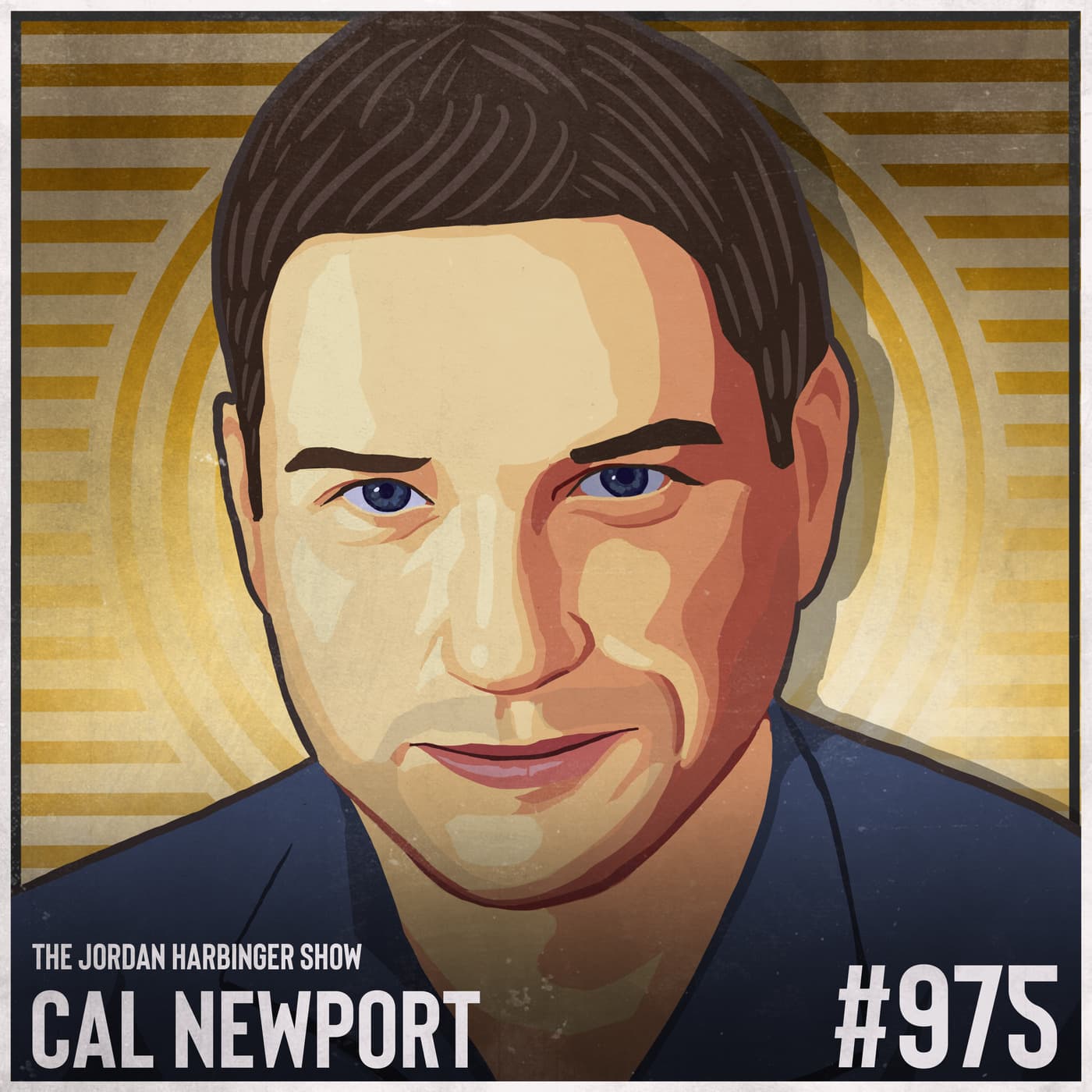
The Jordan Harbinger Show - Episode 975: Cal Newport | Reclaiming Time and Focus with Slow Productivity
Episode Overview In this episode of The Jordan Harbinger Show, host Jordan Harbinger converses with Cal Newport, author of *Slow Productivity*. They discuss the challenges of achieving work/life balance in a hyper-connected world and explore the concept of "slow productivity" as a solution to the overwhelming demands of modern work.
Key Discussion Points
Redefining Productivity
- Nature of Modern Productivity:
- Newport argues that traditional definitions of productivity are outdated in an era of constant connectivity and blurred work-life boundaries.
- The current mindset prioritizes visible activity over meaningful output, leading to a rise in "pseudo productivity."
Impact of the Pandemic
- Workload Issues:
- The shift to remote work during the pandemic intensified existing problems related to workload management, leading to increased stress and burnout.
- Many individuals found themselves overburdened with additional tasks without the necessary resources to manage them effectively.
The Case for Doing Fewer Things
- Sustainability and Quality:
- Focusing on fewer tasks can enhance the quality of work and overall well-being. Newport emphasizes that reducing commitments allows for deeper engagement with fewer responsibilities, resulting in better outputs.
- The concept of "slow productivity" is introduced, which advocates for a more thoughtful and measured approach to work.
Effective Email Management
- Context Switching and Its Costs:
- Newport highlights the detrimental effects of constantly switching contexts, particularly when managing emails and communications.
- He recommends grouping similar emails together to minimize mental fatigue associated with frequent context switching.
The Rise of Quiet Quitting
- Cultural Shift in Work Attitudes:
- The phenomenon of "quiet quitting" reflects a broader discontent with the traditional hustle culture. Employees are beginning to prioritize their well-being over excessive work commitments.
- This shift is accompanied by discussions of setting boundaries and redefining what it means to be productive.
Innovative Work Models
- Future of Work:
- Newport suggests that the future may hold new models of work that prioritize balance and quality over sheer output.
- Examples of innovative work arrangements include flexible schedules and reduced meeting times, allowing individuals to manage their time and tasks better.
Navigating Work Relationships
- Transparency in Workload:
- Newport advises maintaining transparency about one's workload to facilitate better communication with colleagues and supervisors.
- By making workloads visible, employees can better negotiate task assignments and set realistic expectations.
Key Takeaways
- Focus on Quality: Prioritizing the quality of work over quantity leads to more sustainable productivity.
- Set Boundaries: Establishing clear boundaries around work commitments can enhance personal well-being.
- Embrace Slow Productivity: Shifting to a slower pace of work allows for more thoughtful engagement and creativity.
- Manage Workload: Keeping track of current tasks and openly communicating about them can reduce stress and overwhelm.
Conclusion Cal Newport's insights challenge the conventional wisdom of productivity. By advocating for slow productivity, he encourages individuals to rethink their approach to work, prioritize quality, and establish meaningful boundaries to foster a healthier work environment.
For more resources, including full show notes, visit [jordanharbinger.com/975](https://jordanharbinger.com/975).
Written by AI. May contain mistakes. Listen to the episode to check what was said.
Transcript
Automatic transcript. May contain errors.0:28This episode is sponsored in part by 1-800-CONTACTS. customer service and perks like free returns, free exchanges, even free torn lens replacement. Jen loves their Express exam, which lets you renew your prescription online in under 10 minutes. It's a vision exam, not a full eye exam, but it gives you a doctor-issued prescription if you're seeing clearly with your current lenses, no waiting rooms, no dilation drops, remember those things? And with their best price guarantee, if you find your contacts cheaper somewhere else, they'll beat it. Getting contacts doesn't have to be a hassle. Let 1-800-CONTACTS get you the lenses you need right now.
0:56Order online at 1-800-CONTACTS.com or download the free 1-800-CONTACTS app today. This episode is sponsored in part by Dell. It's time for Cyber Monday, Dell Technologies' biggest sale of the year. Enjoy the lowest prices of the year on select PCs like the Dell 16 Plus featuring Intel Core Ultra processors, and with built-in advanced features, it's the PC that helps you do more faster. Plus, earn Dell rewards and enjoy many other benefits like free shipping, price match guarantee, and expert support. They also have huge deals on accessories that pair perfectly with your Dell PC and make perfect gifts for everyone on your list.
1:28Shop now at dell.com slash deals.
1:33This episode of the Jordan Harbinger Show is brought to you by Nissan. Nissan SUVs have the capabilities to take your adventure to the next level. Learn more at nissanusa.com. Coming up next on the Jordan Harbinger Show. It's productivity poison. We just tell ourselves this story that I'm just answering messages, but it is torture. And when you think about it, you realize that. Like, it's the thing that exhausts us most is a diverse inbox of a bunch of different stuff. Which, by the way, this is why if you're doing fewer things, everything gets better. Because you have less things generating email and meetings.
2:08So the emails you have, there's less context represented here. You now have the space to work on one thing for a while. I mean, it makes all of the difference. It's a light switch difference in both what you're producing, but in just the subjective well-being you experience while working. Like getting fewer things on your plate at once is like the biggest positive change you could make in your knowledge work life.
2:35Welcome to the show. I'm Jordan Harbinger. On the Jordan Harbinger Show, we decode the stories, secrets, and skills of the world's most fascinating people and turn their wisdom into practical advice that you can use to impact your own life and those around you. Our mission is to help you become a better informed, more critical thinker through long form conversations with a variety of amazing folks from spies to CEOs, athletes, authors, thinkers, performers, even the occasional astronaut, hacker, real life pirate, special operator, tech luminary. And if you're new to the show, or you want to tell your friends about the show, our episode starter packs are a great place to do that.
3:06These are collections of our favorite episodes on persuasion and negotiation, psychology, geopolitics, disinformation, cyber warfare, AI, crime, cults, and more. That'll help new listeners get a taste of everything we do here on the show, just visit jordanharbinger.com slash start or search for us in your Spotify app to get started. Today's guest, Cal Newport, has been on the show many times before and always brings the fire. Cal is really an original thinker in so many areas such as digital minimalism, productivity, or in the case of today's episode, something called slow productivity, almost kind of anti-productivity in a way.
3:38We're going to explore the growing sentiment against productivity and you thought you were just lazy. We'll learn why we should actually aim to accomplish publish fewer things, and how we ended up in this whirlwind of pseudo-productivity, Zoom calls, and meetings that could have been an email in the first place. All right, here we go with Cal Newport.
3:59Well, thanks for coming back on the show, man. You are one of my favorite people to talk to when it comes to this type of stuff. And actually, frankly, not to torpedo my own compliment here, but I have to say you're actually one of the only people that I will talk to when it comes to this stuff about productivity and the like, because I think largely over the past few years, I have also become increasingly anti-productivity. And some of that culminated with COVID, although it could be 2020 hindsight. I was during COVID, I was like fat, not a shape, stressed, working till 8 p.m. every day. I was always on the red line.
4:33And I remember just playing with my, at the time, two-year-old son, and I couldn't get up off the floor because I was too fat and stiff from sitting in my chair. and I was like, this is not good. And I looked at like, what do I have to show for it? It didn't even have zero inbox. I wish I could say I did, but I didn't, right? I just had like, my Twitter feed was all answered or something. It was just like very ungratifying. And I think you sort of captured that in this latest book is like people are fed up with doing more. Yeah, I mean, I think people aren't anti-productivity really so much as they're anti-overload.
5:05This idea of I have too much to do, which doesn't just mean I'm really busy because I have a lot of things to do, But it also means that the administrative overhead that comes with each of these tasks is now starting to pile up to the point where I'm barely actually making progress on any work. Like the state of overload is uniquely deranging. And I think the pandemic put a lot of knowledge workers into that mode. And they personify that frustration by saying, well, you know, screw your productivity. Right. Because, I mean, you think about loosely, what is productivity? I don't know, like trying to do more, like trying to produce more and more is the absolute less thing I need.
5:38So, I mean, I think the pandemic, a lot of people had your same experience, which is overload got to a place where its side effects became intolerable. Something has to change. The hard part was figuring out what. But I think most people agreed something had to change. Yeah, for me, I started with the physical because a friend of mine ran a personal training company. It was like, you need a trainer. And I was like, oh, I'm not going to say no to that because that's just fact at this point if I can't get up off the floor from playing Legos. So that started things, but then it was like, well, I'm feeling good and playing with my kid more, so maybe I will put some tasks aside.
6:14And I sort of almost accidentally discovered some of this where I was just like, you know, now that I actually feel good, I don't wanna spend any more time. I don't wanna spend time going in the opposite direction by like trying to do more busy work. And I think I'm not, like you said, I'm not the only one. There's this growing anti-productivity sentiment during the pandemic, but aside from other people going through it in the pandemic at the same time, It seems like there's more happening with this because people are actually taking action. They're not just feeling it. They're starting to go to hell with this.
6:44Have you heard of quiet quitting? It's kind of related to this. Oh, I know it. Yes. Yeah. I wrote a New Yorker piece about this a couple of years ago that got some attention. So, yeah, I'm pretty familiar with it. Can you tell us what that is for those of us who probably don't even have never heard of this? Well, the way I see it now is quiet quitting was actually one of several waves of reform disruption within knowledge work that happened because of the pandemic. So the quiet quitting wave, this was largely Gen Z, though it did extend beyond there, sparked by TikTok. So it got sparked by TikTok and then spread through other social media.
7:16The idea was to do the bare minimum at work. So I'm not officially quitting. I'm keeping my job, but I'm not going to do almost anything beyond the bare minimum. It's usually the sentiment was expressed in a sort of antagonistic employer employee relationship. Got it. I am about more than my labor. I'm just going to stop going above and beyond. I'm just going to work the bare minimum. It spread really fast because of social media virality. It also kind of got squashed pretty fast because there were some pretty obvious, I would say, reactions to quiet quitting that were less than positive. I say more generally, this was a piece I wrote a few months ago.
7:52This was one of multiple waves of similar disruptive sentiment that swept through different age groups within knowledge work after the pandemic arrived. I understand the desire to do something like that, but it's actually really good if you're the type of person who can put the work in, because if all your colleagues are quiet quitting and you're like, I'll take the lead on that project, that ends up working out for you. It's almost like there's this funny tweet I saw or whatever it was the other day, and it was like, I'm just saying that if I was a billionaire, I'd tell all my would-be competitors that The Secret is getting up at 4.30 in the morning.
8:25Have you seen this? It's like all these, yeah, I get up at 2.30 in the morning and I do a three-mile swim. And it's like, when does this guy sleep? When does he actually get work done? And I guess this comedian was just like, you know, we all know that that's not true, but it's really great. You're just torturing all the people who are on your coattails far away from ever accomplishing anything. Yeah, I always imagine Jocko Willink sleeping in the 10 a.m. every morning with his auto-scheduled. that would be funny to find out yeah going on benders every night yeah pizza benders like aftermath and it's the the weights with the chalk and the sweat and it's like you check the metadata the photo and it's like 8 p.m the night before it'd be funny though because if most knowledge workers were to do jaco after math it's like what would we have it would be like our keyboard sort of askew our like inbox like smoking a little bit you're like right i just slam through 500 Slack messages in the last seven minutes.
9:24But I mean, look, zooming out on it, like, why did we have these various waves of disruption? It was quiet quitting, but it wasn't just quiet quitting. We also had before that the Great Resignation, which was later 2020 and into 2021, which was across all economic sectors, but had a strong subcomponent about knowledge workers. So basically, older knowledge workers who could left work, right? Like, okay, I'm going to go to part-time, I'm going to go to no time. I'm going to retire early. So we had that big go through, that big sweep go through. And then we had the remote work wars happen as well.
9:54Like a lot of unrest about a lot of energy and what exactly the schedule was going to be working from home or from the office, or we have to go back to the office. My argument is all three of those are symptoms of the same underlying disease, which was people had become increasingly frustrated with overload and knowledge work, a problem that started in the early 2000s. It got worse and worse, and they got pushed over the edge in the pandemic. And in some sense, those were understandable but misplaced reactions to this more fundamental issue, which was knowledge worked the way we were running it, especially the way we're thinking about productivity knowledge.
10:27It just broke. And so then everything went haywire and we start getting all these different reform movements and people spreading virality and complaining and quitting. All these different things all happened in response to the same problem. What I thought was interesting was it wasn't just the United States or West, North America, whatever. I see this in China, and you read about it in China. I think they call it something like laying down, and it was basically, it's a little bit different because it has to do with the, well, actually, it's probably quite similar to what Gen Z is doing, which is, all right, I'm never gonna be able to afford a house.
10:59I'm never gonna be able to get a job that pays anything close to what I need to survive like my parents did based on inflation or whatever because wage growth is completely stagnated, and so I'm just not really gonna do anything, And so there were these people in China that were like, I'm not going to get a job at all. I'm just going to lay flat. It's called lay flat. And it really was a lot of the same sort of causes as we have here. I'm sure there's more to it, but it was like, yeah, I'm never going to be living even the same ways. Because in China, of course, they had this massive mobility from like your grandparents were like turnip farmers.
11:34Your parents worked in a factory or something like that and then bought a flat in Beijing. and now you're like, you grew up in this totally modernized environment. And it's like, where's my mobility? No, no, no, you're going to maybe stay right here, but probably go down a notch. Right. And you're like, I'm already here. Right. I mean, I'm already living in my parents' flat. Right. So why do I need my own? Yeah, yeah. I'm not leaving the tournament. Right. Yeah, yeah. Like, or that, yeah, the flat in Beijing. Like, okay, I'm never really going to be able to afford my own one of these things. So why should I work 90 hours a week just to not be able to marry anyone?
12:04Because there's no girls because of the one child policy. It's like, no, thanks. So your new principles of slow productivity are simple but not simplistic, right? So one, do fewer things, okay? I think a lot of people, don't switch the podcast off just yet, right? Two, work at a natural pace. This is a hard one for me and we'll get into why, probably because nobody really knows what that means. Three, though, was my favorite, of course, which is obsess over quality and I wish more people would say that and I wish more people especially would do that. So backing up the truck a tiny bit, what does productivity mean in the first place?
12:37Can we get to like a core definition of that? So we have a starting block. Well, let's start with the broken definition. Okay. My argument is the implicit definition that arose once the knowledge sector became a major sector, which is in the 20th century. The implicit definition was visible activity is a useful proxy for productive effort. So pseudo productivity, which substituted activity as a, like a heuristic, seeing you doing things is better than seeing you not doing things. That became the dominant mode for thinking about productivity and knowledge work, which is very different than the way we were thinking about these ideas in the industrial sector, the agriculture sector.
13:16I think this is important. It's that in the industrial sector, it was quantitative and clear. Model T is produced per labor hour invested. Agriculture is very clear. Bushels of corn per acre of land that we're cultivating, right? You had these numbers and these ratios. you had clearly defined production systems and you could tweak that system and see what the number did. And like, oh, when we changed it this way, we produce more Model Ts. That's a better way to build Model Ts. A lot of the issues with, I think, people's complaints with productivity and knowledge work is that they implicitly shift that mental model from industrial manufacturing agriculture to knowledge work where we don't actually use it.
13:53We don't actually use ratios and knowledge work because there is no clear thing we produce. Different people work on different things. We work on lots of different things at the same time. There's also no clear production systems to tweak. Productivity is personal. It's up to you how you organize and manage your work. So that doesn't really work in knowledge work, but we pretend like that's what we're still doing. So it's why when you see like a magazine writer, you know, in 2020 writing about productivity and knowledge work, they'll be bringing up Frederick Winslow Taylor, right? The famous scientific management guru with a stopwatch that was trying to make people's motions more efficient.
14:28We actually don't do that in knowledge work because there is no well-defined process to make more efficient. There is no movement to look at and say, how do we do this faster? There is no number we're trying to improve that we can sort of relentlessly drive people to do. So what we're doing instead is pseudo productivity. Like visible activity is better than none. So let's all come to an office, look busy. The boss is here. They can see you there. If we need to get ahead, let's work longer hours, show up early, stay late. And that's what we were using. My argument is that when it mixed with the front office IT revolution starting in the 2000s.
15:01So we have networks and mobile computing. That's when that definition really began to fall apart because email, chat, laptops, smartphones, this made it possible in a very fine grain way to demonstrate activity at all times at a very small level of granularity. And that's when the wheels fell off the bus. So now it's constant messaging back and forth, constant meetings. It's where work took this turn towards the fully, clearly non-productive performative. And that's when things became deranging. So that's where we are. Suda productivity was fine for about 50 years. Doesn't play nice with email.
15:35Does not play nice with smartphones. Does not play nice with Slack. Work became intolerable in the 2000s. So we need a new definition. And so my definition of slow productivity is an approach that focuses instead on the actual long-term production of stuff that has value. The big stuff that matters. Are you producing good stuff at a reasonable rate over a long period of time? Yeah, the busy work over the, so rushing through meaningless tasks instead of sitting down to do deep work, I suppose, as per your, one of your previous works. Is toxic the right word or is that just an overused word? It seems quite toxic, right?
16:08It seems quite like a bad path to be going down because when I worked in Wall Street, this is like 2006. So we had email, of course, we had BlackBerrys, but you know, it was, we had Outlook or whatever. It was, am I in my office? Are you shooting emails back and forth that include a partner so they kind of know that you're there? Am I on the phone, on a conference call in a room with other people? Basically, is that billable hour ticker thing that you fill out at the end of every day or every project, are there blocks dropping in that thing or are you doing something that can't be measured? So with a lawyer, it was a little bit easier because you're measuring billable hours, but you still then would be like, oh, I went to the bathroom and I thought about this and I even talked about this while I was there.
16:51So I'm going to bill that. I mean, there were literal times where we'd come back chuckling because like, I just billed that piss. It was like 60 bucks, you know, it's ridiculous, but it was really what we were doing. And yeah, man, this must be so much worse now. All we had then was email and we had an electronic tracker that we filled out billable hours by the client. Now there's email, but there's also texting and there's also Slack and there's also phone calls and there's meetings, but some of them are virtual and they're on Zoom. Some of them are in person and some of them are, There's just all kinds of infinitely new ways to do nothing, really.
17:24And at least when you're a lawyer, you say we're billing. Right. At least you're getting paid. Yeah. There's a direct connection. I charge while I was in the bathroom. I'm going to make money by it. In most other jobs, the problem is you're taking that lawyer style freneticism without the not only without getting paid, but it's also directly getting in the way of the work you need to do. so you're like in the moment staying on top of my email and slack and meetings is a pseudo productivity purified and it's going to make me seem like i'm being productive but you know i still have to write the report at some point that i prompt like i still actually have to do the work so i'm going to have to wake up early or do it at night and so it's uniquely deranging right because it's not only are you constantly in this activity but the activity is preventing you from doing the actual projects that need to be done as well so you're having to work even longer hours so that's what makes it hard.
18:14If at least you said I'm getting paid for every email I sent, like this is hard, but I'm racking up the dollars. But instead, you're having to send emails all day knowing that this is directly going to make your life worse, not better. Yeah. And that's really difficult, I think. We had FaceTime, which was like, make sure that you're in the office when the boss walks by. But the reason you had that, not only so that everybody knew you were there like punching in late, but it's because there were people there doing real work at late hours. But then reading your book, I was like, oh yeah, why are they there at 8 p.m.
18:46on a Sunday? Well, because during the week, they can't get shit done because they're getting calls and emails. And someone's like, Lorna, can I pull you into this real quick? We're waiting for a fax from Deutsche Bank. Okay. And I have to sit in the room while y 'all wait for the fax because then we can bill the client for my hourly rate in addition to the other 20 associates who are sitting here. And it's like the untold sort of grift was, yeah, if there's 30 of us waiting for the facts, we bill like thousands of dollars per hour. But if you're over here doing something else for another client that could be done later, then you can't bill for that and bill for this.
19:21Right. So it's like they would rather have you sit. And this is probably not unique to lawyers. There's probably a brand of this for every profession. They would rather have you sit in the meeting doing nothing and then come in on the weekend and do the other thing for the other client than just stay in your office and do the thing for the other client and not go to that meeting that you weren't needed at at all, because then you can bill for those two things separately. Does that make sense? There's some version of that for every profession, though, for sure. Yeah, but it's just much worse, right?
19:47Because, I mean, the other thing, you know, I was talking to a friend recently who was telling me about his friend who's in Wall Street. I forget exactly what type of banking. There might be a hedge fund. Not exactly sure. But anyways, she was telling him about how some of her younger employees were like, she's like, why did you answer my email or whatever? And like, oh, I was, you know, going for a walk or I was with a friend or whatever. And her answer was, look, if you want to do those type of things, get a different job. Oof. We're compensating you here. It's hard, but we're compensating you for what's hard.
20:19And I hear the same thing from lawyers, like young lawyers, is they're often given the message. Yeah, this is really long, annoying hours, but you can't say we're not compensating you for that. So if you want less money, go get another job and you'll have more flexibility. The problem is we've taken that Wall Street elite law firm also mentality, and we're taking the worst of that without the, well, at least you're being compensated. That's a good point. Yeah. That's the problem with it is that if you're just working, you're a university professor, you're just in the marketing department, you're a development director at a nonprofit, it, it feels more like Wall Street felt, like law firms felt, I'm jumping around doing all this work, but without the real reason behind it, other than this pseudo productivity mindset, which is not, and this is where I differ from some of the anti-productivity movement, is that it's not that the, at least in my analysis, it's not that the pseudo productivity mindset is easily translatable or reduced to some sort of zero sum relationship, some sort of antagonistic relationship between management and labor, it's more arbitrary and cultural than that, right?
21:23So the pseudo-productivity mindset, let's stay busy all the time and demonstrate activity. It's not a particularly good way of producing valuable output, right? It's not making your company more profitable, right? And so it's not that, okay, it's zero sum. It's good for the company, but bad for the employee. And we're butting heads against it. No, it's more of a cultural idea that emerged without consensus that was explicit. It's just like what we fell into once knowledge work emerged. And then like the water getting hot slowly with the frog in the pot doesn't realize that he's being cooked. That's what happened when the IT revolution came and began to make this increasingly intolerable.
22:05It happened a little bit every year, you know, and I get into this, you can watch it get worse and worse, but a little bit every year. and then we looked up at some point and were like, man, this is really on email a lot. We're really in a lot of meetings. Like I'm not getting a lot of work done. It happened gradually. It's not being imposed by one group on the other for some sort of zero-sum purpose. That makes it sort of uniquely difficult. That it's not helping anybody. And yet we're all stuck in it. Yeah, we are all stuck. It's funny you should mention that we're all stuck in it because look, if you're being pulled into meetings that you don't need to be in, that sounds like a bad office environment if you're doing that.
22:36But I work alone in my underwear half the time. I'm still engaging in pseudo productivity on a regular basis. Sure, no one's like, hey Jordan, can I pull you into this meeting? No, you can't, it's not on my calendar. That doesn't happen anymore. But I'm still making sure that I don't have any DMs on this social media thing that come from, or making sure my inbox is cleared and I'm doing a terrible job because there's so much stuff in there right now because I just got back from Japan. But it's, pseudo productivity is still present even if you're not in a company with a boss. We're just now doing it to ourselves And some of that might be my Wall Street programming.
Read the full transcript
23:12Like, that's what a job is, just doing a bunch of meaningless crap all the time. But I think if everyone is doing this and not everybody worked at a white shoe firm on Wall Street, then this is almost like it's something in the water at this point. It is in the water now. Yeah, because it's all we knew, right? I mean, knowledge work is a thing. This widespread thing is pretty new. This is like the 1950s and 60s. The term knowledge work is coined in 1959 because it wasn't a big enough sector of work, the sector where you use your mind to add value to information. It just wasn't a big enough thing to even label until the mid 20th century.
23:43So all we've known is pseudo productivity. So it is in the proverbial water. So if you're an entrepreneur, if you're a freelancer, if you're a solopreneur, you don't have a lot of other options to even think about. You're like, this is what work is. And in some sense, people who work for themselves can be the worst practitioner, like the most intense practitioners of pseudo productivity, because you also have fear and guilt driving you. Like, I need this to work and I'm willing to do what it takes to be successful. like the mortgage payment depends on it. And if the only lever you know to pull is pseudo-productivity, you're answering those emails, man.
24:14You're jumping on those calls. You're leaving no stone unturned. And it's why I say at the end of the book, slow productivity is a alternative definition to pseudo-productivity. But probably the larger project here is to have alternative definitions writ large. And there could be many of them, but just to get people thinking, what is my definition of productivity? What are its principles, how do I pursue it? Like to have a menu that's not just, you should be jumping off and on calls about funnel marketing or whatever, like have options that are not just pseudo productivity. And I think that's as important of a consequence of what I'm trying to do as even the details of my particular pitch is break people out of this mold, teach the fish what water is.
24:55Hey, pseudo productivity is not destiny. And in fact, it's a pretty terrible way to organize cognitive labor. Like let's start thinking of alternatives. I like your slow productivity concept, which is essentially, and I'm paraphrasing as usual, reorienting your work so that it's a source of fulfillment instead of overwhelm. And the lawyer example might be a little tricky just because you're measured on billable hours. So there is a way to sort of measure your productivity. But I know you mentioned in the book also doctors with crazy patient schedules might have trouble implementing some of this stuff.
25:25There's still plenty that I think they can do. I would imagine if you really sat a group of doctors down, you could say, what's taking up a bunch of your time? And there's going to be all kinds of crap that they could outsource or have somebody else do or that they're doing to themselves because that's how they got through medical school. So they're used to doing all the extraneous crap. I'm curious what the pandemic did to speed things up. We kind of talked a little bit about these Zoom calls, I think, are one of the gross examples of this. I know people that love these things. I don't. You know, I got outside and walk and refused to use my camera.
25:57And I remember doing the pandemic. It was like Zoom coffee chat with friends. And I just remember being like, I love you guys, but this is the last thing I want to do with any free time is be on Zoom even more. It was like I ended up trading Zoom calls with friends and family in Australia or whatever, people that I love in order to do Zoom calls for work or talking with like other entrepreneurs in the podcast space and a hangout. It's the worst. A lot of like drinking by yourself with a camera. Right. Yeah. Like, oh, have a happy hour. Right. Yeah. It's like having a glass of wine in my kitchen.
26:28And then the time zone is all weird. Right. Everyone's in New York and it's like 7 p.m. And they're like, yeah. And you're like, it's it's four. This just feels weird and wrong. And I have so much stuff I got to do after this. And I just want to take a nap. Yeah. All right. So here's what I think happened in the pandemic. There's two things that made it worse. So one has to do with workload. So one of the big ideas is we're bad at managing our workloads and we should care about it. right? Because the issue is everything that's on our plate brings with it administrative overhead, right? So like everything I say yes to, that generates emails, that generates meetings.
26:59I have to support this thing I've agreed to do. So as you say yes to more and more things, more of your time has to be servicing the administrative overload of all the things on your plate. Less time is there to actually make progress on the tasks themselves and everything begins to slow down. So workload really matters. And the way that most people implicitly manage their workload is with stress because there is no, in most knowledge work circumstances, no transparent way of saying, how much are you working on and how much should you be working on? And how do we manage how much you're working on?
27:30We don't do that, right? In knowledge work, we're like, ah, that's up to the individual. That's up to you. It's none of our business. So what people do is stress. They say, I keep saying yes, because there's a social capital cost to saying no. I keep saying yes until I feel sufficiently overloaded by my workload that that psychological distress gives me cover to say no. It's worse now. That feeling of overload is now worse than the feeling of saying no to another person. And therefore I can now start saying no. The problem with that heuristic is it keeps us like right at the red line. Yeah. Like it keeps our workload exactly at the point where I can barely handle this.
28:10Right. So we, we always have like 20 % too much work to do. So what happened with the pandemic for knowledge workers. Overnight, you got like a bonus 20 % worth of tasks, right? Because we have to shift our operations to run remotely. Like it generated a bunch of tasks overnight. We have a lot of knowledge workers at the red line. And then like overnight, hey, let's add 20 % more tasks we can't avoid. It pushed people over. I think that was one. Two is more simple. We do in person a lot of quick ad hoc interaction. I grab you after another meeting, like Jordan, what's going on with client X. So we can just like figure it out in a minute, have a quick back and forth and figure it out.
28:46When we weren't in person anymore and I was like, okay, Jordan, we need to talk about client X. We would say, well, let's just set up a zoom meeting. Yeah. Here's my Calendly. It comes in 30 minute blocks. And I'm like, I have a two 30. That's the problem. It's 30 minute blocks. So we also began expanding a bunch of two minute conversations into 30 minute conversations. Right. And also keep in mind, those two-minute conversations were well-placed. It wasn't just I would just run and burst through your door no matter what you were doing and be like, talk to me about this now. I'd wait until I saw you in between things or you're getting coffee.
29:20It was time you were, yeah. So it was time that was otherwise unspoken for. So then that created the Zoom apocalypses where we had meeting after meeting after meeting because we were expanding a lot of the ad hoc into 30-minute-plus blocks on our calendar. So those two things, we were at the red line and we got pushed over by 20%. And then we had like a big increase in meetings. The best number I saw was from a Microsoft annual work survey. They found a 252 % increase in these type of meetings from 2020 to right now. And by the way, that number is not going back down. Oh, it's not. Oh, shoot. I was going to say, but it reset a little, right?
29:55No. Oh, man. Nope. Because we went to hybrid work. And so it got bad, right? So of course that pushed people over the edge, but it was the underlying reason why we were set up for that to push us over the edge is in a pseudo productivity regime, you're like, Hey, activity is all that matters. So you don't think about things like workload. You don't think about things like when do I work and how much should I work and what's the optimal load of things to work on and how should I spread things out, it's like, I just do activity. And like, it kind of worked and it was stressful and, but it kind of worked.
30:23And then we shook things up with the pandemic and it was like eight hours of zoom. It's you're working at four in the morning on writing stuff so that you can clock in for an entire day of doing virtual meetings. Like it just, it pushed a bad situation towards the absurd. And I think that was just, that was too much for a lot of people.
30:44You're listening to the Jordan Harbinger show with our guest Cal Newport. We'll be right back. If you're wondering how I book all these amazing folks for the show, it's because of my network, the circle of people I know, like, and trust. I'm teaching you how to build the same thing for yourself for free over at 6minutenetworking.com. I realize you're probably not booking for a podcast, but this is all going to make you a better colleague, a better friend, a better peer, and it's not cringy. It's not going to make you do all this awkward stuff that's going to make you look like a doofus or make other people feel bad, and it just takes a few minutes a day, and many of the guests on the show subscribe and contribute to the course.
31:17So come on and join us. You'll be in smart company where you belong. You can find the course, it's all for free, at sixminutenetworking.com. Now, back to Cal Newport. You know, it's funny, this reminds me, there's a company, a very popular company in Silicon Valley that I probably shouldn't name just because of what I'm about to say, but my friend worked there in sales, and this alarm went off when I was in his office, and I was like, oh, and he's like, oh, it's just a meeting, and I was like, oh, okay, well, and I get up to like walk out, because I'm thinking you gotta go to a meeting. He goes, oh, I don't have to go to that.
31:48I was like, are you sure? Like, just because of me? Because I can come back. We could grab lunch later. He's like, no, no, no, I'm in sales. We don't have to do any of the meetings. I was like, you don't have to go to meetings at all? And he's like, no. CEO name, like, you know, household Silicon Valley tech CEO says that anybody in sales, we just don't have to go to the meetings. And it's funny because so-and-so came in here and was like, I want to see you at this meeting and da-da-da. And I was like, nope. And he went to the boss's boss's boss. And the guy was like, he doesn't have to go. He's in sales.
32:15And I thought that was so telling, right? They have all these meetings and you have to go and you got to go to this and you got to go to that. Oh, wait, you're one of the people who actually makes money for this company. Do not come to this meeting. You need to be doing your thing. We need the money for the company. And I thought that was so telling. Like these meetings are so important unless, of course, you get paid by outside parties, in which case this is completely not a thing you need to do. And it's like, so it's really not that important. If you don't need the salespeople there because they're the ones that generate revenue, then you probably don't need the other 80 people that got invited out of the hundred that are just showing up because their calendar outlook thing went off and they don't want to say no to the big guy upstairs.
32:53Yeah. I mean, I think that exactly highlights the issue of so much knowledge work is because, again, we don't, if we're not in sales, we don't have this number we can point to of like, this is what I'm generating. And when we started doing this, that number went down. Most of us don't have this. So that's what allows these really suboptimal, weird, cultural, implicit consensus type of behavioral patterns to emerge. And I think it's exactly what you're saying is incredibly telling. You find a knowledge worker where there's a clear indicator of their output and you begin to see like what actually makes sense.
33:23Oh, these meetings mean you sell less. That's what you do that's important. So you shouldn't have to do those meetings. We'll figure it out. We see the same thing with programmers. Silicon Valley figured this out at some point. Writing computer code is very industrial. I mean, it's a knowledge work thing, but it's industrial. You're building a product. A product, yeah. And they realize like, okay, our main piece of machinery that builds this product is human brains. And it's really hard. It has to think and write computer code. And so they figured that out a long time ago. Also, leave the programmers alone.
33:51We're using a sprint methodology. Like in the morning, we will check in. What are you working on? And only one thing. Only work on one thing. What is it? What do you need from us? Good. We'll check in tomorrow. And you just put your head down in code because it turns out like that's how you produce really good computer code. And if you start making the programmers go to a bunch of meetings and be on unrelated slack all day, the thing doesn't ship. What kind of art do we want in the break room? What? Do you want this to work or not? Most knowledge work, it's not so clear because you're doing seven things.
34:20And it's a different seven things than what you are doing. And some of them are non-promotable activities and some are core activities. And so it's just anything can arise. It's the obfuscation of process and knowledge work. allows for all sorts of weird sort of pathological behavioral patterns to emerge. And so I think that's a great example where the rubber clearly hits the road. Another example, where else do we see this? Literary novelists, people who write novels that are award caliber. They famously disappear. And the entire work culture surrounding the publishing industry says, yes, novelists in between their books, we leave them alone.
34:57They should not be doing podcasts. They don't need to do social media. We don't want them doing anything but thinking and writing. Because you know what? If your book is great, it's going to sell like 5 million copies and everyone's going to talk about it. It's going to be Oprah's going to recommend it. And that's what we need. That's our product. So just don't do anything else except for try to write a great book. And so novelists famously disappear. And then they come back like when they're done with their novels. Like when the rubber hits the road and it's clear, the way we work looks nothing like most knowledge workers work.
35:27But the thing is, is most knowledge workers actually have, if you really pull back the layers, this is the two things you do that creates the most value for our company. And if you did those things better, it would be really useful for our company. We are preventing you from doing those things better. But because there's not, here's where we landed on the bestseller list, or here's how good the code is, or here's how many sale dollars you brought in, because it's not directly observable, we prevent people from still doing like the core things that that's their most valuable contribution. I love this message.
35:54And I love if there's something you said in the book, that was, you kind of touched on it earlier in the show, how we manage our workload is problematic because we're always on the edge of that burnout. And one of the reasons being, the discomfort of saying no to something new has to be greater than the distress we cause the other party by saying no to something new. So basically like, we have to be so tormented by our workload that it's actually, the only answer we could possibly give is no and that washes away all the guilt we feel by saying no to something, even if it's totally unreasonable, not related to our core task.
36:26And I think that sort of speaks to why the idea of doing fewer things sounds a bit scary, because to some people, it sounds like accomplish fewer things. And it's not really that, is it? No, it's not that at all. I mean, it helps people sometimes when I append it to say, do fewer things at once, right? Because really what we're trying to do here with that advice is reduce all that administrative overhead, right? So like we can use hypothetical numbers, but, you know, imagine everything I say yes to brings with it a certain number of emails and meetings that I just have to do to support the thing, to talk to people about it, have meetings about it, right?
37:02So if I have two things versus four things on my plate, that's going to have the number of emails and meetings on it. But those emails and meetings clog the day, they clog the schedule. They make you have to shift your context back and forth. They reduce your ability to think clearly. They fragment your schedule so you have less longer periods of time to work. So the amount of total productive work per day has gone down. So when I have four things on my plate, the average productive effort towards finishing things per day is much smaller than when I had two. So when I have two things on my plate, I actually finish them faster.
37:35And not only do I finish them faster, but I finish them at a higher level of quality. And I'm happier because it's not this whole deranged, you know, I have no time to actually do the work. And hey, what can I do when I finish those two things? I can bring two new things onto my plate. And so now how long did it take me to do those four things? probably not nearly as long in the scenario where you did a two at a time and then the other two versus when you just said yes to all four at the same time. So doing fewer things not only makes work much more sustainable, you become better at working, right?
38:05Like if you can just bootstrap into this, it's not going to be long before your star is on the rise. Like Jordan is shipping, look at this, like good stuff. He did this and this and this and this, and it all looks great. But your secret was like, yeah, because I only did one of these things at a time. Yeah. And it led me to actually do the work. It's funny. A lot of other podcasters or people in the media space will be like, how do you produce three episodes a week? It's so much. They're different. You read the book for every guest that comes on the show. And the answer is, yeah, but I'm not doing other stuff, right?
38:36I don't have like a product thing. I'm not also on the speaking circuit and writing a book. And, you know, I've got two kids. How do you manage all this? I just read the book and I do the interview. I don't have 17 other irons in the fire. The problem is I get FOMO, right? I see other people, I'm like, oh, Cal's got a new book. I should probably write a book. You have to focus on this stuff, because you're right, it gives you that psychological space to innovate and focus on quality, which we'll get to in a minute. And I used to not really be a believer. I was like, I can switch context, no problem, but I really can't.
39:07Maybe I'm just getting old now, Cal, I don't know. But going from, I'm gonna do a bunch of email, to I'm gonna sit down and read and take notes, to then going, I'm going to do a live show or whatever, like a recording. It doesn't work. And I don't know, did it never work and I didn't notice it? Or am I just, am I getting slower jumping between like performance mode podcast than reading, than email? I don't know. I don't know the answer. No human in the history of the human species has been able to do that. When you're younger, you have more of a pain. You have a bigger pain tolerance, right? That's true.
39:38This is just neurochemistry. It takes time for the human brain to change its target of attention from one thing to another because inside your brain, you have to start inhibiting certain neural networks and you have to begin exciting other networks. It takes a while. The clearest way to measure this is just think about when you sit down to do something that's very hard, like write something, right? Or read something difficult. You know, there's that like 10 to 15 minute period where you're like, this is really hard. I really don't like this and I'm not making much progress. And then you feel like you're sort of getting into the flow of it.
40:09Well, it took 10 or 15 minutes for your brain to load up all the right programs. And so when it starts feeling easier is because your brain has now fully switched its attention frame to what you're working on. So if you're switching back and forth between things, you never allow yourself to ever settle on an attention frame. I mean, it's why checking email and answering emails is actually one of the most cognitively distressing things we do as humans right now. It's taxing our brain in a way that it absolutely can't do because every email in that inbox is associated with its own attention frame, its own cognitive frame.
40:45And they're often, by the way, highly salient. It involves other people we know who need things from us. Potentially they're upset or there's like our relationships on the line. And one email after another means we're switching from one frame to another, to another, never giving our brain anywhere near enough time to actually like switch the cognitive context over. So we're trying to wrestle with these things without the right things loaded in our brain. It's mismatched. We get that cognitive grading. It's exhausting, right? There's a hack out there for email that I like that speaks to this. And it seems weird at first until you understand attention frames.
41:19But the hack is you go through your inbox and you take all of the emails related to the same thing. And then you sort of move them into their own folder. And then you deal with all of those. And then you go in and get all the other emails of a different type. And then you move those into a folder and deal with those. If you try this, you'll realize like, oh, this is much easier. It's because you're giving your brain time to shift its cognitive frame and then it's easier to do. So I don't think we realize the cost. And I honestly think like jumping to an email inbox back to work on the Slack, back to work on the social media, back to work for a cognitive worker.
41:52It is the equivalent of an athlete, like someone who depends on their body for a living. That's let's say taking tequila shots in between matches, you know, that same effect that has on our ability to run really fast and like throw balls accurately. We're doing the same thing to our brain, but no one realizes it. You know, like, of course we're miserable. Yeah, it's funny. You're right. I never thought about this, but I do the email triage where I'm like, okay, this is important. And when I have space, I'm going to hit this. Let's like start or whatever. But then there's people who are just like, hey, I just found your show and I really like it.
42:23Or, you know, hey, I've been listening for five years and I have a question about that goes into a separate folder. And I've noticed that when I go through that separate folder, I can do like 100 emails in two hours. But when I'm in my inbox where I'm doing triage or in the starred ones where it's important, I can do like 20 emails per hour. What does that end up being like 40 to 60, 80 emails in the same amount of time I could do 100s in the other folder. And it's because when I'm cruising on one lane, I can really do that stuff fast. But you're right, if I'm switching lanes, and you don't think about it as switching lanes because you're like, it's just email.
42:57Now you're thinking about your schedule. And then this next one, you're thinking about, do I want this person on the show? And then in this next one, you're thinking about, can I join this conference? And this other one's like, we want you to do a keynote. You're like, oh, is my keynote a fit? It's a completely different game. And it takes like five times as long. It's productivity poison. We just tell ourselves this story that I'm just answering messages. But it is torture. And when you think about it, you realize that. Like, it's the thing that exhausts us most is a diverse inbox of a bunch of different stuff.
43:25Which, by the way, this is why if you're doing fewer things, everything gets better because you have less things generating email and meetings. So the emails you have, there's less context represented here. You now have the space to work on one thing for a while. I mean, it makes all of the difference. It's a light switch difference in both what you're producing, but in just the subjective well-being you experience while working. Like getting fewer things on your plate at once is like the biggest positive change you could make in your knowledge work life. Right now, people are thinking, OK, great.
44:00How do I say no to work, though? Go back to what you guys are saying about telling my boss, no, I don't want to do this. That I think is it's like the trick. What do we do? And I love I love this tactic, if I can call it that in the book, where most of us, we just say something like, oh, I'm really busy. I can't. But instead of that, we say, well, OK, I can't start on this project for about six weeks. Then I've got four other projects competing for that slot. So tell me why, you know, this needs to happen during that. And I know if I asked you to do something and you told me that I'd just be like, never mind.
44:32And I think that's kind of the idea, right? Yeah. I mean, so this is like most of that chapter is on how do you get away? Yeah, that's because if you have control of your own schedule and it should be clear, if you're an entrepreneur or a solopreneur or whatever, It's not that this is trivial, right? Even after you get over the psychology of doing fewer things, it's not that it's trivial, but there's like one key trick if you're an entrepreneur, which is you can't reduce what you're working on each day if you don't reduce the number of projects you're working on. And you can't reduce the number of projects you're working on unless you reduce the number of missions you're pursuing in your job.
45:04So start from the top down, like simplify at the highest level of what you're trying to do. Then you'll have less projects you're working on. And then so that's the key trick for there. But if you work for someone else, most of the ideas that I give are based on making workload transparent. The biggest thing that helps support pseudo productivity is that no one talks about their workload. It's all informal. And so everyone sees everyone else as a vessel to make their life easier by executing work that they need done. And when they just see you as a black box work executing vessel, it's like, this would be great if you could do this.
45:37And it's annoying to me if you can't. What you need to do instead is break that mental model by making your workload transparent. And there's a bunch of ways to do this, but like the simple way, here's like the vanilla way of doing this. It's actually really effective is that you keep track of what's on your plate and you divide it between actively working on and queued up for me to work on, right? So you make a distinction of the things you've said yes to actively working on, queued up the work on, and here's the order it's coming. And you let other people into this context. And when someone comes up and says, hey, can you do this for me?
46:11One way or the other, you can word it however you want to word it. But one way or the other, you're basically saying, yeah, sure. Here's my workload tracker. Just throw it on there at the end of the queue of things that I'm waiting to work on. And let me know what I need to do it or that I should call you when the time comes. Now they have to confront two things. One, oh, he's not actively working on this yet. It's at the back of this queue. And until it gets up here, he's not actively working on it. So no emails, no meetings until he's actively working on it. Two, they get a realistic picture of your workflow and they realize, oh, okay, he's saying yes, but all of these things have to get done first.
46:46So it might be a while. So either I'm going to say, you know what? It's not that important. Or my expectation is going to be recalibrated. Or if I'm your boss, I say, no, no, this has to be done now. You're able to bring them into the workload process. Be like, great. I'm with you. Help me choose what to move out. I'll swap this in for something up there. You let me know which one is lowest priority. they're now involved in that as well. I mean, they now have to explicitly, and I'm saying this in a way that sounds somewhat confrontational. The book talks about how to do this, you know, without just being like, hey boss, use my spreadsheet.
47:18But essentially this is the mindset that completely changes people's relationship with work assignments. Man, I love it. Because instead of no, it's no, and here's a bunch of great reasons why, or yes, but here's also why. I can imagine someone being like, hey, get on that such and such report. And you're like, great. All right, it's going to fit in here. May 3rd and it's like March 25th and they're like, whoa, what are you talking about? Okay, if you want me to do it now, that's fine. But then you and I have to tell this other partner that I can't actually work on his thing because I'm doing your TPS reports.
47:49And it's like, oh, let's not let's not stir that can of worms up. Let's not stir that. Yeah. Maybe I'll give it to the other guy who's just sitting there with his thumb in his nose. Well, so like here's another way of doing it that's less concrete, right? Another thing I talk about doing is to implement the same idea, is when someone asks you to do something, you find a time on your calendar for it and schedule it. Great. This is going to take 15 hours. I got to find 15 hours and I'm going to protect it. Right. It gives you a time management advantage, right? Because now you don't have to schedule stuff once you've already scheduled it, but it gives you a realistic confrontation with your schedule.
48:21So now you're looking for 15 hours to schedule something. You got to find 15 hours and it might be a month until you can find those 15 hours. But if you're clear, like, hey, I'm really careful about managing my time and I schedule every project on my plate, I schedule when I'm going to do it, and this is when I could find the next 15 hours clear, you're accomplishing the same sort of idea as the two lists. And it's more unimpeachable than you would imagine, because part of what happens is you get a reputation for being careful about your time. You don't get a reputation for being difficult. You get a reputation for being careful about your time.
48:57That earns you trust. Yeah. So like, well, you know what? But this guy over here, he's always like haphazard in doing stuff or what. I don't trust that he's really busy. I think he's just disorganized. You just get this done. But you're the guy who's like, yeah, no, no, no, no. Look, I manage everything on my calendar and I always deliver when I say I'm going to deliver. I know what's on my plate. And when I say I'll do this on this day, you get it. You've just earned yourself a lot of trust. And then they're like, oh, okay. So I guess you're too busy for this. Because again, it's helpful for people if you say yes.
49:26But they're not thinking that much about you. What they're thinking about is I want to get this thing off my plate. Hey, Jordan, can you do this? Well, blah, blah, blah. Okay, whatever. Hey, can you do it? There's going to move on to someone else. Like they're not sitting there stupid. And as I tell people also, you already say no to things, right? You don't just happen to have the perfect number of things being thrown at you that exactly fills your schedule. You're saying no to things. That's why your schedule is like exactly full. This just means you're probably saying no to more things, but no one keeps track of that ratio.
49:53There is no break room where like the CEO and the CFO are in there and they have your name up on the wall and they have like the number of times you've said yes or no, and they're plotting it and being like, you know what? This ratio has changed in the last couple of months. I don't like this at all. No, you're like a black box. Like sometimes you say yes, sometimes you say no. They're talking to a lot of people. And that's another reality is reducing your commitments by like 25%. No one even notices that. It's still like you say yes, you say no. I don't know the exact ratio. It doesn't feel different enough for them to notice.
50:22But for you, that could be the whole ballgame, a completely different experience of work. You know, it's... I'm not recommending anybody do this, but it reminds me when I, again, when I was on Wall Street, these corporations are so dysfunctional. It's kind of funny. There was a young lady who only wanted to do a very specific type of work and they would give her things that were not that. And she would go, oh no, you know, I really am only doing this. And they would go, oh, okay. And I asked her, so what are you doing if you don't have enough of that kind of work? And she's like, oh, I just read.
50:51And I'm like, read what? She's like, books. And she was always reading. And I'm not talking about like law books. I'm talking about like novels. She just, you know, caught up on whatever Harry Potter or whatever. And I'm like, you're going to get fired. She's like, oh, well. And during her performance review, they were like, you build like 20 hours this quarter. Everyone else build you like 400 or whatever it was. And she's like, yeah, I just wasn't getting enough tax work or something. And instead of being like, you're fired to their credit slash or whatever, this law firm was like, we really need to make sure that you get more of this type of work.
51:22And I was blown away because I thought you were going to get kicked out of there so hard. You better bring a parachute to work. They're going to throw you out the window. And they didn't. They tried to accommodate this. And that blew me away. And of course, at that point, I was like, I got to try some version of that that won't get me fired. And sure enough, you can say no to certain kinds of work. Now, if there's something everyone needs to work on, you don't say no to that, right? You're a team player getting it done. but if people are just dumping crap off on you, it never occurred to me that you could be like, oh, you know what, no, I'm not gonna take part in that.
51:55And there was a lot of sort of like shit rolls downhill at these corporations. And some people were just like, nope, not doing it. And they totally got away with that, which is actually shocking. And to your earlier point, I know that there's a lot of ad hoc that goes around, like the overload that goes around work. I know, I'm pretty sure, I'm not the only person who would get an email and is like, I really don't want to deal with this today. I'm hungry. Let me ask a question about something logistical and ping pong this off a few more people so that I just, I'll look at it tomorrow when those replies come in or I'll like boomerang this for a week after asking a question about something that I could have asked at the meeting.
52:35I think we probably all do that stuff and we just may, it makes everyone's problem worse and we do it because we're overloaded, right? If I, if I had the space to deal with it, I'd be like, yes, I would love to do this. Let me get started on that. Where's the plan? Let me get together. But since I don't, since I'm already on the red line, I just make more busy work for other people because it's like a temporary, it's like I can come up for air by doing that and then dive back into the sea of crap that I've got to deal with. Yeah, I call it obligation hot potato. Yeah. This is on my plate right now.
53:04So that's a source of stress. If I send an email about this to you, no matter how nonsensical or unproductive or ambiguous, it's not on my plate in the moment. And I get a little bit of relief. And so you get the like thoughts, you know, like question mark. I mean, that's just because it gets you off your plate. You know, I saw this, for example, in response to something I suggested in Deep Work, my book from 2016, where I had a very common sense suggestion about email. It was called process oriented email. But I was like, look, if we're being very rational about this, if you sit and think before you write an email about some sort of project or request, if you really think through what really needs to happen here and you spell it out.
53:43all right, here's what we need to do. We need to reach this decision. Here's the steps that are required. Let me spell out how we should do this. Let me lay out the process. Like I'm going to suggest these times and I'm going to put them in this document and you take a look on them and everyone takes a look on them. And by Wednesday, everyone marks which ones that work. I'm going to check in on that document Thursday morning. I'll pick the time that works in the middle. And like you could, if you laid out the process of like how the work was going to unfold in your original email, you can prevent needing to have another 25 back and forth messages, each of which requires a bunch of inbox checks.
54:14It's much better. There's this question, like, so why aren't people doing this? And they're like, I just, I don't have nearly enough breathing room or space. That would take like 10 minutes to write that email message. I can't do that. I have to just thoughts, like, get that off of my, like, are you available that day? You know, it's off my plate, right? And so it's another consequence of overload. But I liked your example about the law firm, because this is actually in Wall Street. Like this is a real thing. I was getting real numbers for this here in DC. My lawyer friends told me about this.
54:42It is a thing in these big elite law firms in DC where you can leave the partner track and say, I'm going to be a specialist, right? Like I just do like this type of compliance with this law. Anyone who's working on a case that has this, I can come work on just that thing. Right. And it's considered inside the firms to be non-prestigious because you leave the partner track. Right. Partners, you have to do all the crap, right? I got the numbers from people. And I was like, well, if you can become a managing partner at one of these firms with bonus, it's like a$1 to$1.2 million a year annual compensation package.
55:16Your life is like hell, but it's like a$1 to$1.2 million. And they're like, yeah, but these specialists, they don't get a profit cut. Honestly, they like top out at like$600 ,000. I knew you were going to say that. And I was like, that's amazing, right? It's amazing. You work one third of the hours. One third of the hour. It's a huge salary. It can be made more reasonable. But it's even better than that. In a lot of knowledge work firms, you can make yourself one of these non-partner track specialists without having to trade off the money. The tradeoff you have to make often to do this, where you say, this is what I'm doing.
55:47The tradeoff you have to make is accountability, right? That's how it wears risk in it. But in a lot of firms, non-law firms, which is like normal type of knowledge work firms, you can say, I'm going to specialize on this. Measure me. Like, this is what I do. And if I'm not like bringing the rain, like hold me accountable for it. But you can trade accountability for accessibility, right? Because most people, the trade-off is I have to be emailing all the time. I'm in suitor productivity, but it's low risk. It's like I can very consistently look productive. All I have to do is be willing to send emails all day and jump on Zoom meetings.
56:19And it's all obfuscated. I have a lot of flexibility. I don't even have to really be doing a lot of work, right? I just have to be really busy and kind of stressed out. If you trade that for accountability, people will leave you alone, but you have to deliver. Like typically it means like, I'm just going to do this. and this stuff I do is going to be great. And if it's not like this is not going to work out, you might have to fire me. But if it does work out, the flip side is I don't do 17 different things. There's nothing to do. Zoom meetings will check in once a week. Leave me alone. Yeah, that's man.
56:47It's incredible. I did not know that that was an option at any law firm. That's a really good career track. That's a really, on Wall Street, it's more like partner track or they pigeon you into this one sort of like council area and you stay there until you jump back in or you leave, right? It's kind of like, you're not going to make partners, so you should go work at Visa and have a lifestyle change. You know who's innovating, and I think it's relevant, who's innovating the law firm space now is there's an increasing number of there tend to be more boutique firms run by women. And the women seem to be much more willing than the men, obviously stereotyping here, but they seem much more willing than men to experiment with different models, revenue models.
57:27And so you have these women-run law firms that are emerging where they say, our model is not our maximization. right it's not like theoretically speaking which is how most big law firms run theoretically speaking what is the maximum number of dollars that this number of people can generate using their brains and they're instead thinking like all right here's our job we want to like get paid well get good compensation and have reasonable hours we're really smart so why don't we find a way to use our smarts to like make a good salary and do like really interesting high level work but not try to maximize the money we make.
58:00And it turns out like law could be a fantastic job if you're doing a third of the hours. It's fascinating, interesting work. And because a lot of people are realizing like a third of the money, well, fine. Okay. So it's not 1.2 million. It's like$350 ,000,$400 ,000. But so what? If we start as like, that's a giant salary, if you're not comparing yourself to other people, if you don't have to belong to the Chevy Chase Golf Club, if you can do this remote, a lot of these companies are remote first. Like I live in Asheville, North Carolina now. Why do I care if, you know, like$400 ,000? I'm a king.
58:31I've got the nicest house on the block. What do I care? You know, this is great. And I'm working 30 hours a week. That innovation is great, but pseudo-productivity doesn't support it. Because pseudo-productivity says activity is what matter. Doing less activity is bad. And that's just it. This is the Jordan Harbinger Show with our guest, Cal Newport. We'll be right back. If you like this episode of the show, I invite you to do what other smart and considerate listeners do, which is take a moment and support our amazing sponsors. All the deals, discount codes, and ways to support the show are all searchable and clickable over at jordanharbinger.com slash deals.
59:03And if you can't remember the name of a sponsor, you can't find the code, you wonder if we have a sponsor for something, feel free to shoot us an email, jordan at jordanharbinger.com. I am more than happy to surface that code for you. Yes, it is that important that you support those who support the show. Now for the rest of my conversation with Cal Newport. and I'll never forget one of my professors who was a managing partner at a Chicago law firm he was also like he commuted to Michigan which is a quite a drive and he would teach this class on law firms and legal careers and he was an interesting guy typical sort of high level law partner he's like yeah I belong to a golf club in Ireland it's 40 grand a year I've been there once in four years and you're like what the heck that's expensive an expensive round of golf somebody had asked him something like, are there part-time options at law firms?
59:49And he goes, no, not really. Unless you're a woman and you're pregnant at that particular moment, not really. And even then, not really. And we were like, why? And he goes, how many of you would work half as much for half the money? And like everyone in the whole class is like, yeah. And he's like, that's why. And we're like, but isn't that kind of okay? And he's like, well, benefits and stuff and, you know, it adds up. And it's like, but can't we sort of account for that? What if I buy my own health care? Can then I work only 45 or 60 or whatever it was hours a week? You know, can we not figure this out?
1:00:23And it was like, he just was like, hell no. But this was 80, 100 hour work territory, these kinds of firms. Well, you know who is experimenting with this better is entrepreneurs. When entrepreneurs fall into the slow productivity mindset. So now it's just you negotiating with your own psychology. They're innovating with a lot of these ideas. And I really push, and I talk about this a bunch in the book, is like, if you're an entrepreneur, you could experiment massively, right? Here's an example. It's an entrepreneur. It's a solo shop. She's like does coaching. And then she has maybe four or five sort of part-time virtual type people, right?
1:00:57So it's like that scale of a shop. And she figured out at some point, she's like, here's what I'm going to do. I take two months off in the summer. She's like, okay, it's not too hard to work out. You have to be a little bit careful with your contracts, but it's not too hard. She lost about, if you do the math, like 20 % income revenue. Okay. Right. She's like, that's a super fair trade. Yeah. This is great. Like 20 % less revenue. And I like July and August, I can take completely off. Yeah. I'll take that trade. Like the numbers are arbitrary. Who cares? 20%. Like I'll do that. You know, I'll do that all day.
1:01:26Right. I have a writer friend who does that. It takes three months off. I do this with, I'm a non-entrepreneur, but kind of am right. I'm a professor. Yeah, you kind of are. Yeah. So I realized at some point, people don't realize that if you're at a research institution as a professor, the school pays your salary for 10 months. And the two months over the summer, they don't pay your salary. And so like what most people do is their research grants, they ask in their research grant budgets for what's called summer salary. And that's where you fill in those last two months is it's coming out of your grants, right?
1:01:54And that's just what people do. And in fact, the push I had was when I first started was you can get three months, technically speaking, if you have three different research grants, you can take a month of summer salary from each and actually get paid three months worth of salary in two months. And that's what you want to try to do. But the thing is, that means you're doing all this work. And I figured out at some point, I said, well, what if I just didn't do that? Like, I just didn't ask for summer salary and grants. And I just didn't work on academic stuff in the summer. and I just sort of disappeared and went to New England and like wrote books or whatever.
1:02:25And it turns out, oh, yeah, you know, it's 20 percent less money. But yeah, you can do that. Except for your books are bestsellers and you're probably massively in demand on whatever speaking circuit and stuff. So I think you've maybe figured out how to make how to plug the gap, Cal. Yeah, but it's it was an awareness of like, oh, that's an option. Like, oh, that's just the trade. It's 20 percent less money, but you get the summer off. And there's a lot of professors who make that same trade who don't also write books and do whatever. What they do is they just adjust their spending. like let's just pretend my salary is 20 % less like this is so worth it I can take the whole summer so a lot of professors who don't do research will teach summer classes to try to fill in their salary and those are really hard because you do like a semester's class in two weeks it's like five hour days yeah and I know a lot of professors are like well what if I just spent 20 % less and took the summer off and like that is so much better like that is that is so much worth it so anyways there's a lot of innovation I know people that do seasons on seasons off too it's Like I work really hard and then I take a season off and work another season.
1:03:22Like they go back and forth. There's a lot more innovation and models once you break out of pseudo productivity. And if you work for yourself, everything is on the table, right? You're just playing with these like income spending ratios. You have so much flexibility on your table. There's some stuff I want to say in the show clothes about working at a natural pace. But in the interest of time, I think we can kind of blow past a little bit because you're touching on some of it right now. You're making that long, longer term kind of vision of what you want your life to look like. And working in seasons, I love this idea.
1:03:50Our mutual friend Jenny Blake does this. She's funny because whenever I look at her phone, she always has like 74 unread text messages and my skin starts to itch. I'm like, oh gosh, I wonder what you think of that as somebody who's like, hey, email's overrated. I'm like, yeah, but do you have 74 unread text messages? That just makes me have some sort of weird anxiety. I'm bad at text messaging. Let's put it that way. Not really. You get back to me like right away. Yeah, but you're, I feel like you got lucky. trust me you're the long straw yeah people know if like if i have my phone around that i'm just doing admit i'll answer a text message but if i'm in like a three-hour record like i don't know what text messages are arriving right now right i declare text message bankruptcy basically after any extended period of doing something away from my phone just seven different things going on here all with long threads i mean people just have learned that about me okay sometimes he's around and he'll answer if he doesn't he's probably like writing a recording and may not see this at all and so I'm not going to expect it.
1:04:46People rewire pretty quickly, I suppose. Yeah. And Jenny, by the way, just took like one of her podcasts off of her plate as well. I saw that. Which is like, she's in my book. I talk about her in the book. That's slow productivity, right? It's like, do I really need to do this? I mean, it's fine, but what about the time I would get back? Okay, let me take this off my plate. Yeah, I love that way of thinking. She's great at taking a few months off or whatever and just being like, this is my sacred time in Hawaii. Sorry. Yeah. Or she'll like call friends. Like we're, you know, she's a friend of mine.
1:05:13I'm not asking her to do any work. So it's like, you know, hey, let's chat and catch up. What are you working on? Nothing. My tan, you know? Great, good for you. But for me, it's like, oh gosh, can you do that? So she's been really good at sort of, I guess, an inspiration in many ways, you might say, because she's really good at not doing that stuff. And I won't say doing nothing because she gets a lot of stuff done. But she's also, I had a problem many years ago where I separated from one business into another and she's like, you need, she didn't call it a cool down period, but it was basically what you talk about, which is like a cool down.
1:05:43She's like, go to Hawaii for two months and just don't do anything. And that was too scary. I didn't take her advice. I kind of probably should have. But let me get your opinion on that. I had an interesting argument about this with Ryan Holiday. So I want to get your opinion, right? What do you think would happen if you're with Amazon, right? In terms of your podcast? No, no, I'm on podcast one. It's funny. I almost went to Amazon. That's what we probably talked about it. Let's say next time you negotiate your contract with podcast one. Like, what if you said, yeah, I podcast 10 months a year.
1:06:12and then like two months I don't. And so I can go to like Hawaii or do whatever. So I brought this up on Ryan's show because I'm really thinking about this is telling my ad agency, I'm independent, but my ad agency books about a year in advance worth of my ads, right? Wow. I was like, yeah, I'm thinking of telling them let's book 45 weeks or whatever, 46 weeks. Sure. I'm just going to take when I'm gone in the summer, like not worrying about like podcast or whatever because I was doing the same sort of math, right? I was like, yeah, it's less money, but like for me, I'm not, you know, it's all kind of funny money to me anyways.
1:06:43It changes each year. I'm like, whatever, why not? That would be great not to have to record. Ryan was very worried about this. And this was in public. So I'm not talking about school. He's like, I don't know about this. I'm worried about this because you're going to lose your audience and people are not going to become used to listening to you anymore. And there's like a whole momentum thing. So, okay, you be the arbiter here because I'm going to try to convince you to do the same if I do it. Is that really scary or is it, we're just telling ourselves the story of, I'm just nervous about not doing the work.
1:07:10With podcasts, though, tons of them go in seasons. It used to not be the case. Tons of podcasts go in seasons now. It'll be like 12 episodes or 24 episodes of this. TV goes in seasons, right? But they have to advertise the next season. What I would do if I were you in this particular situation is certain apps like Apple Podcasts will stop downloading. It'll be like, hey, this show hasn't been updated. Do you still want to listen? And people have to kind of like re-opt in. What you could do is take episodes like this one that I'm doing with you, and you could be like, all right, that was half decent.
1:07:39Why don't I save that? And I'll air that during my summer break. And I'll air the one I did with Ryan during my summer break. And I'll run two of those that are already done. You did like no work other than being the work you're doing right now, sitting here suffering through this conversation with me. But you're doing no work to produce, right, and edit the thing, really. Your team can get it done ahead of time. And then you have something to put in your feed, but it doesn't require you to then sit down and produce it. I mean, you could, of course, and you've already thought of this, you could also record episodes in advance, right?
1:08:11That's the other solution. And then you don't have to do any work during that time. That's sort of the ideal, but that requires you to do all the prep and all the production for those episodes. so it could be a sort of a pseudo hiatus right it's like yeah in the summer season yeah it's like reruns right and then like the new stuff starts again and that's like enough to like keep you active in the podcast freeds and apple doesn't unsubscribe you and right and people like oh this is a good one or but in your downloads go down in fact you could even not sell ads on those or yeah use a programmatic advertising for those yeah 100 man you know for me i record ahead and and I go on vacation and nobody cares slash even notices for you if you don't want to do that, take your Rich Roll and your Ryan and your Jordan interview and throw them in every three weeks and people will be like, wow, those are really cool.
1:08:56I've never heard that side of Cal before. They're not going to be like, this guy's not doing any work. Unsubscribe. You know, they're going to be in hell, Newport. Yeah, right. Exactly. Yeah. No one cares. I've put episodes where somebody interviews me and people are like, wow, I've never heard you interviewed before. That was my favorite episode for the last year. Meanwhile, I put that in and I'm like, oh man, how many emails am I going to get that are like, are you okay? Are you sick? Why are you being lazy? Zero, zero of them came in. I love it. All right, good. Yeah. I wouldn't worry too much about that, but yeah, two months with nothing, nothing.
1:09:27It's like, oh, is he dead? You don't want to do that to your fan base. There's so much in the book. And again, I'm going to cover a lot of this in the show close, but there's a lot in the book about rituals and creativity of well-known people, creatives finding certain places to do their work. Like I'm no Ian Fleming with a beach house in Aruba or whatever it was, but I have certain places where I will sit down and answer certain kinds of like, I call it fan mail, which sounds so self-important now that I say it out loud on your show, on our show here, because we're doing a crossover. But it's like, it's fun to have a coffee and do that.
1:10:00And like when that coffee's done, I'm kind of like, eh, done with this particular project. That I find helps me do certain kinds of work. If I'm reading, I like to go out and walk. It keeps the rest of my body busy. It gets rid of that anxious stuff. There's just so much in your book that is very practical. I don't want people to think that the whole book is like two guys complaining about how there are too many meetings. That's not what you wrote about. Yeah. I mean, there's the reduce part and then there's the amplify part. Yeah. How do you produce better stuff, which is the glue for everything else, right?
1:10:32That's the principle obsess over quality. Yes. It's the glue for the other two. If you don't do that, if you don't care about like, how do I like really begin to care more about what do I do best and like push myself to do it better? If you don't do that, you only just try to reduce workload and you only try to work at a natural pace. That's probably not going to work. Right. Because it keeps you in this mindset of just like, I don't know, I don't like work and I want to do less of it. It's not very sustainable psychologically. But when you obsess over the quality of what you do, those ideas become inevitable and natural.
1:10:59It's like, yeah, I'm trying to do this thing better. Busyness is incompatible with me doing this better. So of course I want to try to simplify things. And then And this is why the flywheel starts getting pretty quick. As you start doing things that are valuable better, you gain more autonomy and control over your workload. It gets even easier to simplify it. And then that flywheel gets going. And that powers, that really is what powers a substantial and sustainable shift to slow productivity, obsessing over quality. And that's where the rituals matter. Isolating what's important matters, working on your taste, caring about what you do.
1:11:32That's what ultimately is going to break you out of pseudo productivity's grip and fuel you as you try to like travel to a brand new configuration of work. Did you think about calling the book pseudo productivity? Yes, but. But they didn't like that, right? Well, the school of thought is you want to name this positive selling proposition. That makes sense. It did very well, but the worst performing, still New York Times bestseller, but the worst performing book of my last three or four was A World Without Email because I was focusing on the negative, right? The title. Yeah. Deep work's the positive thing to do.
1:12:03Digital minimalism is the positive thing you want to do. Be So Good They Can't Ignore You. True story about So Good They Can't Ignore You, by the way. When I pitched that to my publisher, the title was Don't Follow Your Passion. And the publisher said, I will never publish a book with that title. And we left. I was at Random House, but we left and went to Hachette. But after we left, we swapped the name from Don't Follow Your Passion to Be So Good They Can't Ignore You, to the positive. And then the book went to auction. Like a lot of people wanted to buy it. So yeah, I'm focusing on the positive vision of where you want to get better.
1:12:36than pointing to the negative thing that you're trying to escape. That makes a hell of a lot of sense. Yeah, because I noticed you just keep using that phrase and it's a great one. And I'm like, it's so catchy, but you're right. It is kind of like, no one wants to buy a book on pseudo product. I would not buy that book either now that you mentioned it. So they were probably onto something there. I love that you transitioned to obsessing over quality because quality demands that you slow down in the first place. I could do this show seven days a week if I didn't need to read your book to prep. I didn't need to watch other interviews that you've done to find out some of the stuff you're really passionate about talking about.
1:13:08I don't think the show would be nearly as good if I did seven a week, because at that point, you're kind of like, you know, to use the PC term, pooping them out, kind of, right? Like back in the TV days, when people cared about those talk shows that were on TV, RIP Larry King, but one of the things I asked him was like, how do you prepare for interviews? In part because it doesn't seem like he does a whole lot of that. And he said, yeah, I just use my natural curiosity. I often don't even know who's gonna be in studios. that day. Sometimes I read a printout of their bio in the car on the way to studio.
1:13:40And I thought that worked for you for a long time because there was one other show on at the same time as yours. And they watched that or they watched you. And that was kind of like you threw your hands up in the air and it wasn't your problem. And that's a level of production that you can't get away with anymore. There's too much competition. If I'm just talking to you and I'm like, tell me what your book is, I haven't even looked at it. Another podcaster who's like, I don't know, read the back in chapter one is going to crush me. Yeah. And they should. I think that's absolutely right. If you want to actually do something good, you can't be busy.
1:14:14And this goes back to why do literary novelists do the fewest things as compared to every other type of author? Because they're the most obsessed with the quality of what they do, because their whole professional career resides on their book being award caliber. Like if you're Jonathan Franzen, like I can't just write a book. I'd be like, yeah, it's kind of interesting. It's like, this book had better be great because that's my whole selling proposition is that I write great books. And so they're like, of course I can't do other stuff. Dave Eggers very famously goes to a rental house with no internet, works on a laptop with no internet, and he just disappears and writes his novel because the novels have to be good.
1:14:49And they obsess over. You see this Chris Nolan, look at movies, right? Chris Nolan just won an Oscar, best director, best movie, all the seven Oscars. But Chris Nolan doesn't even own a smartphone. own. He's like, I'm trying to win the best picture award. It's funny. I can't do email. I don't want to hear your pitch and I don't want to, because people get this wrong. They get mad at me when I say that to like, well, but he has other people who take calls for him. And it's like, no, that's not the point. The point is there's a lot of stuff that if you're a director, you could have your hands in a lot of calls you could take because you want to take them.
1:15:19Let's strategize. Let's yeah. Hey, let's do dark night to ride at universal studios. And what are we doing over here. And what he's saying by saying, I don't want to have a smartphone is I just want to work on the movie because that's the difference between winning the Academy Award and making a billion dollars. And like, oh, that was okay. The more people move up that hierarchy of like the quality unambiguously matters, the less busy they become. But that same effect happens like with your solo entrepreneurship endeavor, with your podcast, with your job within a company where you say, I'm going to start specializing on this and I want to do this really well.
1:15:51I'm in sales. I can't do my job if I have to be on meetings all day, that becomes so clear and intolerable once you really focus on, I want to do this thing well, that you find the courage and motivation to be like, we got to completely reconfigure this. I'm not doing this. I'm not doing that. Hold me accountable if you need to. Whatever you need to do, it becomes an imperative that if you're not obsessing about quality, it just becomes a, wouldn't it be nice if I had less to do type of thing, which is not nearly as compelling. It's not. And you write this in the book, you say something along the lines of the market doesn't care about your desire to slow down.
1:16:22So you have to give something in return. So if you're not obsessing over quality, it's like, I wanna do less stuff. I'm just too busy to focus. People are going, okay, but like your work is, eh, it's all right. What do you mean you wanna do, cool, you wanna get a different job to earlier example, get a different job. But if you're suddenly, at my law firm, one of the highest paid guys, he was never in the office. And I was like, how did that happen? How come you don't work, do you just work from home? him? And he's like, kind of. I mean, but that's not the point. He was bringing in business. So nobody was like, you know, you didn't hit your 2000 billable hour requirement.
1:16:56They were like, here's a bonus check for$500 ,000 because you brought in Citibank. Yeah. The way he did that was he did basically no crappy little work. He was never in meetings. He didn't even show up to the office. And I was like, what are you doing? And he's like, oh, well, I'm limping because I have a jujitsu injury because I was rolling with, I don't know, some like junior partner over at Deutsche Bank. And then he was like, ah, but I've got this 30 mile cycling thing tomorrow with, I'm guessing, another potential client. And so this guy was like on cruises, at dinners, jujitsu, golf, biking.
1:17:30His biggest concern was resting his knee and hip because he was pushing 40 or whatever years old, not am I going to hit my billable hourly requirement. So he had to basically satiate the market by doing work that was of a different or higher quality than everyone else. People underestimate themselves. They don't realize that employers are desperate for good people. They imagine their employers basically are mustache twirling and are like kind of employ people, but I wish I could just fire them. No, they're desperate for good people that like do stuff well. If you do something well, that's valuable.
1:18:05That's the lottery, right? They struck oil. You have so much leverage. You don't even know, right? They're like, I do not want to lose this person. They're a rainmaker. They're bringing in business. They like bring in the development dollars. No one organizes events better. Whatever it is you do really well, that is like the most valuable thing if you're a manager or an employer is someone who does something well. They're not looking for an excuse to fire you. They're terrified you're going to leave. Once you start doing something well, you have all of this leverage, but it gets lost in the fog of pseudo productivity.
1:18:38You're like, I don't know. Isn't it bad if I say no? So I'm with you on that so much. man I always love the message do less but get better work done and you bring that every time and uh so yeah if you'll excuse me I've got 600 emails in my inbox to ignore while I go out to lunch with my wife but thank you so much for coming on the show man always appreciate it and like I said for people who are like but wait I have a lot more in the show clothes you talk about studying unrelated fields which I really liked uh no meeting Mondays I've actually kind of got the opposite meeting Mondays if you want me on a day that's not Monday better be damn important and unless it's like this show, which is of course a different kind of work.
1:19:14There's a lot in your book as well on setting work boundaries, project timelines, long-term vision, types of workflows. So this is by no means an exhaustive interview of everything that's in the book. And I just, I always like to highlight that so people aren't like, don't need to buy that. Already heard the podcast. Yeah, well, Jordan, you're always one of my favorite conversations when I have something out. So I was excited and looking forward to a chance to chat about this one with you. We've known each other for a while. So I was like, yeah, this is on Jordan's wavelength. But it's been a lot of fun talking to you about it.
1:19:43Thanks, Cal. Now, I've got some thoughts on this episode. But before we get into that, here's a sample of my interview with astrophysicist Neil deGrasse Tyson. We talk about why an interest in science serves every field of expertise from law to art, what our education should ideally train us for. Here's a quick look inside. Walt Whitman. When I heard the learned astronomer, when the proofs, the figures, were ranged in columns before me, when I was shown the charts and diagrams to add, divide, and measure them, when I, sitting, heard the astronomer, where he lectured with much applause in the lecture room, how soon, unaccountable, I became tired and sick, till, rising and gliding out, I wandered off by myself into the mystical, moist night air and from time to time looked up in perfect silence at the stars.
1:20:41It's the same curiosity you have as a kid, but I just have it as an adult. I've had it since childhood. You don't have to maintain it, you just have to make sure nothing interferes with it. So the counterpart to this would be, oh, sir, literate one, why ruin what something looks like by describing it with words? When I can see it fully with my eyes, your words just get in the way. I'd rather my mind float freely as I gaze upon something of interest than have the writer step in between me and it and interpose his or her own interpretation. You don't know the thoughts that you're not having. What keeps me awake is wondering what questions I don't yet know to ask because they would only become available to me after we discover what dark matter and dark energy is.
1:21:27Oh, man. Because think about it, the fact that we even know how to ask that question, that's almost half the way there. But I want to know the question that I can't know yet. What is the profound level of ignorance that will manifest after we answer the profound questions we've been smart enough to pose thus far?
1:21:52For more, including how science denial has gained a global foothold, what it'll take for the U.S. to get to Mars before China, and why it's dangerous for people to claim the Earth is flat, check out episode 327 of The Jordan Harbinger Show with Neil deGrasse Tyson. One big takeaway for me from this book was that saying no is not as hard when you realize it is the only reasonable answer to being asked to do just one more thing. And we really do need to free ourselves from the tyranny of the small so we can focus on the big. It's so easy to get wrapped up in the minutiae, busy work and things like that, working in the business instead of on the business, that kind of thing.
1:22:33but really it comes down to how many little things are chipping away at my focus every day. When it comes to project timelines, another big takeaway from this is do double project timelines. This lets you work at a natural pace and also, I don't know about you, but for me, I am terrible at estimating the time needed for projects. Turns out that's true pretty much across the board, by the way. We plan because we feel like it would be great to, I don't know, write four chapters of a book by spring, but that's based on feelings. It's not based on logic. It's not based on reality. It's not based on our actual available time for that project.
1:23:07And so we end up disappointing ourselves and feeling like we failed when really what we've done is set the bar so high that we could never meet that standard. Now, I know some of you might be thinking, like, how do I do this? How do I set boundaries at work? That's going to cost me in my career. Maybe for some of you it will, but that's OK for a lot of us. We really do have to decide. I was just talking to a friend of mine minutes before recording, and he is a lawyer. he's in-house at a massive bank, and he says his hours aren't bad because he only works 60 hours a week, but not on weekends usually anymore.
1:23:37Imagine what that means. That's 12-hour days, five days a week, for the most part. That's really kind of gross, actually. Not good. Not a good lifestyle for most people. If he were able to set boundaries, he might not be where he is. He might make a couple hundred grand less a year. Would it affect his actual lifestyle? Probably not. Of course, that's an individual decision. But man, the older I get, the more time I spend with my kids, the more I realize choosing sanity over another dollar is almost always a pretty good trait. All things Cal Newport will be in the show notes at jordanharbinger.com or as the AI chat bot also on the website.
1:24:10Transcripts are in the show notes as well. Advertisers, deals, discount codes, ways to support the show, all at jordanharbinger.com slash deals. Please consider supporting those who support the show. Also, our newsletter every week, the team and I, well, Gabriel and I, frankly dig into an older episode of the show we dissect the lessons from it so if you're a fan of the show you want a recap of important highlights takeaways you want to know what to listen to next the newsletter is a great place to do just that jordanharbinger.com slash news is where you can find it six minute networking over there for free at six minute networking.com i'm at jordanharbinger on twitter and instagram i've also started posting stuff on linkedin a lot of you engage with me there as well this show is created in association with podcast one my team is jen harbinger jace Sanderson, Robert Fogerty, Ian Baird, and Gabriel Mizrahi.
1:24:53Remember, we rise by lifting others. The fee for this show is you share it with friends when you find something useful or interesting. The greatest compliment you can give us is to share the show with those you care about. If you know somebody who's interested in productivity, maybe being less productive or needs to be less productive, has boundaries at work that are not being enforced, is overbooked, is tearing their hair out, definitely share this episode with them. In the meantime, I hope you apply what you hear on the show so you can live what you learn, and we'll see you next time. Shopify's point of sale system helps you sell at every stage of your business.
1:25:22Need a fast and secure way to take payments in person? We've got you covered. How about card readers you can rely on anywhere you sell? Thanks. Have a good one. Yep, that too. Want one place to manage all your online and in-person sales? That's kind of our thing. Wherever you sell, businesses that grow, grow with Shopify. Sign up for your$1 a month trial at Shopify.com slash listen. Shopify.com slash listen. This episode is sponsored in part by the Something You Should Know podcast. Finding a great new podcast can feel like searching for a needle in a haystack. Let me save you some hassle. Check out Something You Should Know with my friend Mike Carruthers.
1:25:58Every episode is packed with fascinating insights that you can actually use. Mike interviews top experts on topics that shape your life, like how to optimize your brain chemistry, the best and worst ways to apologize, probably could have used that recently, why couples hate to talk about money. No matter the topic, Mike asks the questions you'd want to ask, getting straight to the good stuff, and the conversations are always engaging, always insightful, guaranteed to leave you a little smarter than before. They've got thousands of five-star reviews, but do you even need that? I'm recommending it.
1:26:23You don't need other people's opinion, right? At this point, I would hope. Anyway, give it a listen. Just search for Something You Should Know wherever you get your podcasts. Look for the bright yellow light bulb and start listening to Something You Should Know.
From the publisher
How can we achieve work/life balance when we're always so dang busy? Slow Productivity author Cal Newport helps us achieve without burning out here!
What We Discuss with Cal Newport:- Why we need to redefine what productivity means in an age of constant connection and unclear boundaries between work life and home life.
- How the pandemic's remote work "solutions" exacerbated — on a societal level — an already simmering host of workload issues.
- How committing to doing fewer things makes work more sustainable and increases its overall quality.
- How to increase the volume of email you can process while minimizing the productivity-killing need to context switch.
- Innovative work models that may be key to better balance and slow productivity in the near and distant future.
- And much more...
Full show notes and resources can be found here: jordanharbinger.com/975
This Episode Is Brought To You By Our Fine Sponsors: jordanharbinger.com/dealsSign up for Six-Minute Networking — our free networking and relationship development mini course — at jordanharbinger.com/course!
Like this show? Please leave us a review here — even one sentence helps! Consider including your Twitter handle so we can thank you personally!
See Privacy Policy at https://art19.com/privacy and California Privacy Notice at https://art19.com/privacy#do-not-sell-my-info.