
In short
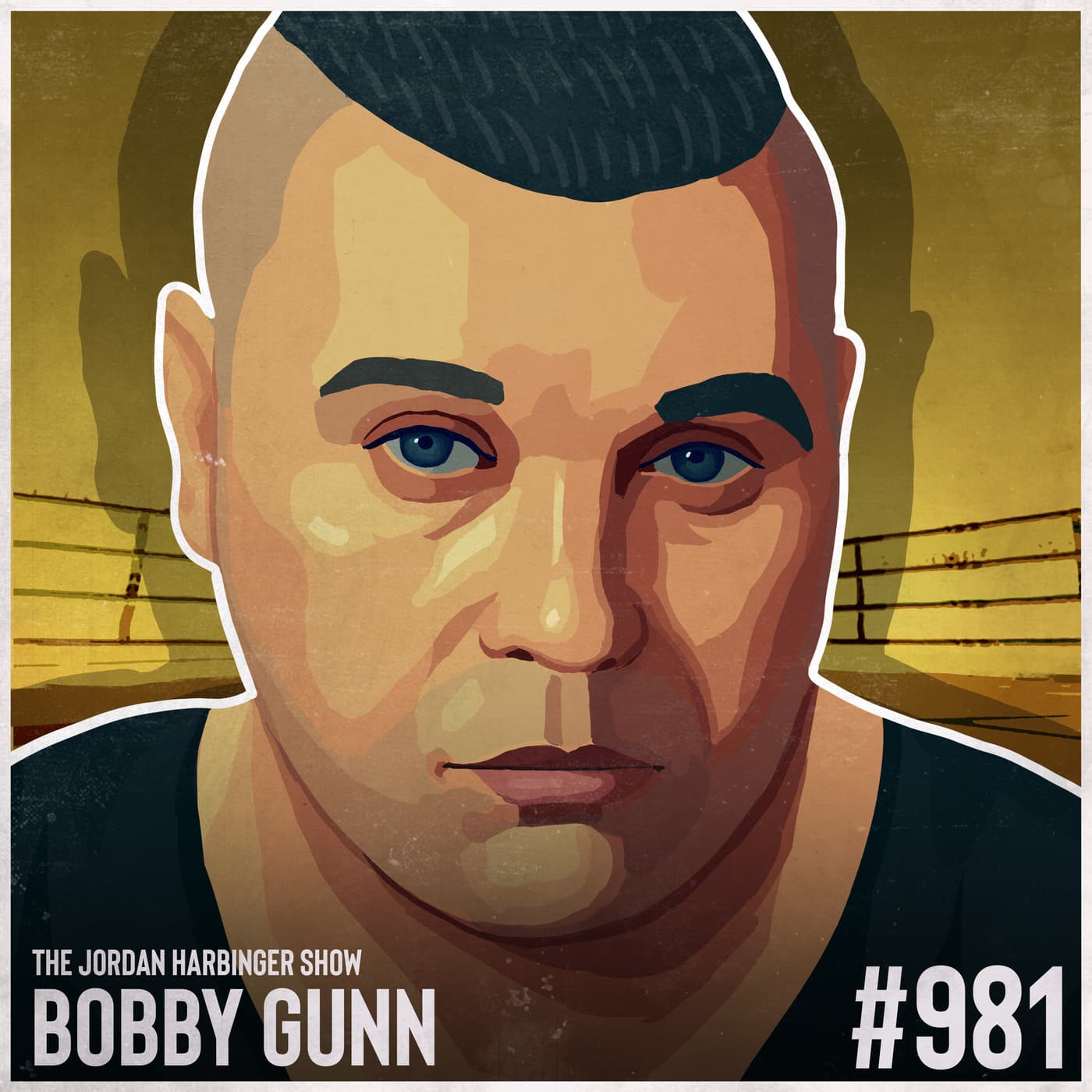
The Jordan Harbinger Show - Episode 981: Bobby Gunn | The 73-0 Undefeated Bare-Knuckle Boxer
Episode Overview In this episode of *The Jordan Harbinger Show*, host Jordan Harbinger interviews Bobby Gunn, a legendary figure in bare-knuckle boxing with an impressive record of 73-0. Alongside him is Stayton Bonner, Bobby’s biographer, who has chronicled his life in the book *Bare Knuckle*. The conversation delves into Bobby's upbringing as an Irish traveler, his journey into bare-knuckle boxing, and the cultural significance of his experiences.
Key Discussion Points
- Bobby's Background
- Traveler Culture: Bobby Gunn shares insights into the culture of the traveler community he grew up in, highlighting the challenges and stereotypes faced by his people.
- Early Fighting Career: He began fighting for money at the tender age of 11, often against intoxicated adults, which he describes as a formative experience that molded his fighting style.
- Bare-Knuckle Boxing
- History and Reality: The episode explores the brutal history of bare-knuckle boxing and its evolution. Bobby discusses how he became a prominent figure in the underground circuit, fighting in matches organized by various gangs and criminal organizations.
- Differences from Professional Boxing: Bobby contrasts the underground fights with professional boxing, arguing that the former often had a more genuine sense of fairness.
- Cultural Reflections
- The Stigma of Travelers: The discussion touches on the prejudice faced by the traveler community and how Bobby strives to change perceptions while being proud of his heritage.
- Life Lessons: Throughout the conversation, Bobby emphasizes the importance of resilience, community, and the values instilled in him from a young age.
- Unique Experiences in Fights
- Dangerous Encounters: Bobby narrates harrowing experiences from his fighting career, including close calls with violence and the reality of fighting in illegal settings.
- Fighting for Family: Bobby explains his motivation in the ring, often stemming from a desire to provide for his family, particularly in his role as a father.
- Bobby's Legacy
- Impact on the Sport: Bobby’s role in reviving bare-knuckle boxing is discussed, including how he helped bring it into a more legitimate space.
- Current Trends: The episode concludes with a discussion on the rise of bare-knuckle boxing as a recognized sport, highlighting its growing popularity and potential future.
Key Takeaways
- Cultural Identity: Understanding one's roots and community is crucial for resilience and pride, as exemplified by Bobby's journey.
- The Complexity of Boxing: Bare-knuckle boxing reveals deeper societal issues, including poverty and the lengths individuals will go to improve their circumstances.
- Life Philosophy: Bobby emphasizes living authentically, pursuing goals relentlessly, and giving back to the community, illustrating the profound lessons learned from his life experiences.
Conclusion Bobby Gunn's story is one of grit and determination, reflecting the struggles and triumphs of his community. The conversation sheds light on the nuances of bare-knuckle boxing and the cultural heritage that shapes identities. The episode serves not only as an exploration of a unique sport but also as an inspiring narrative of personal growth and community pride.
For more details, including full show notes and resources, visit [jordanharbinger.com/981](https://jordanharbinger.com/981).
Written by AI. May contain mistakes. Listen to the episode to check what was said.
Transcript
Automatic transcript. May contain errors.0:28This episode is sponsored in part by LinkedIn. I'm going to take a few days off without everything falling apart. When I've hired the right person, my life got easier. They took real work off my plate, caught problems early, and treated the business like it was theirs. That's when we actually grow. With the wrong hire, I've spent months training, fixing mistakes, having the same conversations, and still ended up letting them go and starting over. You don't just lose money, you lose momentum, you lose morale, and you lose time. That's why I'm big on hiring right the first time, even if it takes a little longer.
0:55Hire right the first time. Post your job for free at linkedin.com slash harbinger. Then promote it to use LinkedIn Jobs' new AI assistant, making it easier and faster to find top candidates. That's linkedin.com slash harbinger to post your job for free. Terms and conditions apply. Before we start this show, I want to let you know it has some adult themes in it, so no kids in the car for this one. And if you leave the kids in the car and you still play the episode, don't blame me when they have nightmares. Coming up next on the Jordan Harbinger Show. I had a buddy called George. He's a good guy.
1:27and we were fighting a fight, so these guys pulled guns out after the fight was over, and George pretended he had two guns in his pocket. Let him loose now! These guys thought he had guns, and they dropped the guy. This is insane, man. You can't make it up. It's like a movie. And we all got away. We're on money, too. But I'm saying, I've had all this stuff. I had a gun put to my head.
1:48Welcome to the show. I'm Jordan Harbinger. On The Jordan Harbinger Show, we decode the stories, secrets, and skills of the world's most fascinating people and turn their wisdom into practical advice that you can use to impact your own life and those around you. Our mission is to help you become a better informed, more critical thinker through long form conversations with a variety of amazing folks from spies to CEOs, athletes, authors, thinkers, performers, even the occasional astronaut, real life pirate, hacker, special operator, music mogul, or extreme athlete. And if you're new to the show or you want to tell your friends about the show, I suggest our episode starter packs.
2:20These are collections of our favorite episodes on persuasion and negotiation, psychology and geopolitics, disinformation and cyber warfare, AI, crime and cults and more that'll help new listeners get a taste of everything we do here on the show. Just visit Jordan Harbinger dot com slash start or search for us in your Spotify app to get started. Today on the show, one of the greatest bare knuckle boxers of all time, Bobby Gunn, really the world champion of bare knuckle. And man, what a story. Bobby grew up as an Irish traveler or some people might say gypsy. We don't really say that anymore, kids.
2:51and he was fighting drunk men in parking lots by age 11. Age 11! We'll discuss Bobby's upbringing, his training, fighting in illegal underground matches run by the mob, actually kind of like all the mobs, and some close calls where he nearly died, as well as a bit of background into traveler culture and wild tales from Bobby's life as a fighter and beyond. Also in studio today is Staten Bonner, author of Bobby's biography, who spent something like a decade and a half shadowing Bobby for the book and almost died alongside with him, and was also in the basement with the leopards chained to the walls.
3:23You're going to hear that story. Staten adds color and teases a few stories out of Bobby that I don't think we would have gotten otherwise and is all in a welcome addition to the conversation. By the way, if you have trouble understanding Bobby, you can go to our YouTube channel. We're going to have some subtitles ready. I can understand him just fine, but I think if English maybe isn't your first language, it might be a little bit harder. He's got a traveler accent. I didn't know that was a thing, but that's a thing. Also, please note graphic depictions of violence in this episode. If you got little kids in the car, maybe skip to another episode for now and listen to this one later.
3:53All right, here we go with Bobby Gunn.
3:59So listeners of this show know I usually don't cover sports, and this is not exactly a sports story, but the press release, which I seldom even bother reading for the pitch for this, caught my attention because I read, Bobby, that your dad had you fighting basically just drunk guys in parking lots at age 11. And I like that's just that's one of the craziest things I've ever heard about someone's childhood. Like people like to write about their childhood. They're like, yeah, I worked in my dad's bakery and I got up at 4 a.m. And I'm like, wow, that really sucks when you're 15. Beating up drunk guys in parking lots when you're 11 is an order of magnitude or 10 above that.
4:34Maybe about nine, 10 years old. I was doing that fight new guys. And you look at that today. It's like a form of child abuse, you would say. But if you understand where I come from, my culture, my upbringing, all dogs are dogs. They got canine breed. And all cats are flan, right? But there's different breeds of dogs. Poodles, Suawas, and they're pit bulls. We're pit bulls. The gypsy traveler people with diapers on. I was throwing one-twos. I immortalized the fight game. And when I say they're drunk, a lot of these guys weren't staggering. They were there to fight. And they were laughing. Are you kidding?
5:06Fight this little boy? Yeah. A wee boy. It's like a buzzsaw. But I wasn't a normal wee boy. You know what I was like? Yeah. But it prepared me. If you're going to go swim with sharks, you better train with sharks and be around sharks. You just can't start jumping up and think you're going to be around. I was raised around it, formed into, molded by it. Unfortunately, in my life, there was a lot of darkness. And growing up, it was a tough world, my brother. You know, talk about ghettos in New York City and like Baltimore here. Brother, these ghettos were a holiday end compared to where I come from.
5:36Just to get out my environment. I climbed the walls. a lot of blackness, evilness, drama, hatred, porn is poverty. Just to get out of that, it's a great achievement in my life. Have you, I never do this, by the way, and I'm not, I swear, I'm not this guy, but have you seen Batman? Because it's like Bane, right? You know Bane, the guy that crawls out of that prison in the desert, and he's like - Oh, Batman, yeah, I see, but I know. I'm like Batman, but the life we had, it molded me to where I am, and go on and become a world champion in boxing and win the bare-knuckle world title and fight these fights.
6:14But see, when I was fighting these other fights, these underground fights, bare-knuckle fights, I was a seasoned fighter. At 13 years old, I was champion national titles. I was seasoned. And I remember one time I went and fought at an event, and I beat this open-class fighter, and it was a shock, right? Nobody can believe it. And I'm walking out of the arena, and the reporter wrote, he says, there he's playing with a Rubik's Cube, talking to his mom, oblivious to what he just accomplished like I was a child. It was normal. The light switch would come on when a fight would come on. He was a whole different person.
6:45But my people would come from fighting is a religion. My grandfather was a champion fighter. My great-grandfather, old black Bob Williamson, was a great athlete. He goes back hundreds and hundreds of years. But if I didn't have that push and drive and the hard upbringing from my old father, I wouldn't be able to do what I've done today. Where did you move from? And I know you're a traveler, and I'm going to get into that because that is super fascinating. But where are you from? Is that even a question you can ask a traveler? Oh, yeah, yeah. All my people come from Scotland, Scottish gypsy travelers.
7:20And my dad's side, my mom's an Irish gypsy traveler. So when my dad married my mom, the Scotch and Irish travelers are like a shocker. Like, whoa, wait a minute, the orange and the green, a big mix-up. And they produced a mutant like me. But I mean, yes, I said, I'm all both sides, and my mom's and my dad's family was all in, you know, that's we're proud Gypsy Traveler people. We're proud of our heritage. There's good and bad in all races of people, all in the world. Unfortunately, my people are stereotyped a different way of painting with a brush that you shouldn't be painted with. If you look for good, you'll find good.
7:50If you look for bad, you'll find bad. But you've got to know this here. In every race, there's good and bad. My people are good people. We're a great talent amongst our people, singing and dancing and fighting. But they don't show it. family members that can sing better than anybody you hear on the radio. And they won't do it. They won't come out and do it. Just keep a little profile. Because we're used to being persecuted real bad. To this day in England, there's places and bars and pubs. No tankers or pikeys allowed. That's what they call the African-American man, the N-word. Now think about that this day and age, 2024, this very day.
8:24When I lived in the UK, I heard the word pikey, and I was like, oh, what's that? It sounds like something from the Middle Ages. I just assumed it was like a word for night or something like that. I was in a bar. And I said to this girl that I worked with, we were lawyers at the time. I said, what's a pikey? Like really loud. Cause I was like, I've heard this word and nobody, and somebody told, and John said it. And they were like, right. Cause we're in a pub just drinking. And I didn't realize that this was like a slur at all. And I said, what pikey is a bad word. And like, you know, probably had a couple of beers and I was just like, it can't be that bad.
8:55It doesn't sound like a bad word. the bartender's like looking at me like is this guy really just like black like saying that at full volume and there were guys at the back table looking at us and my friend was like don't just don't just stop talking now just stop we'll just tell you at the office on monday what this is all about and it turns out as you mentioned that is not a word that most polite people just say at full volume when they're having a beer exactly and i would this is like a nice pub where lawyers hangout, right? It's like in the Canary Wharf of London. It'll bust that out there.
9:30But travelers, it's such an interesting culture, man, because first, you said gypsy traveler, but I read on the internet, which is the arbiter of all truth, that gypsy's not exactly the word that you should use either for this. Now, I mean, you can say whatever you want, but it's not something I should say. Gypsy, we'll take that one better than any other word, but that's what we are. It goes back to the Romany Gypsy people when they venture off to Scotland, Ireland, England. And there's English travel gypsies, and there's Scottish Irish gypsies, and Scottish Irish gypsies. And that's what my people are, Scots and Irish.
10:02We're all the one people. We got different words we use. We speak whole different languages. I can speak them all. You know, we're good people, good, hardworking people, a lot of them. And we're very proud people. So just to give the listeners a little bit of a recap, because I did a little bit of research on this. I guess the reason people say gypsies is because people, I don't know, hundreds of years ago actually thought that your people, your tribes or whatever you call it, had moved from Egypt. Yeah. And that was actually not always the case. They come from India slash Scotland slash Irish.
10:36It's hard to say. Even the Bible says the lost tribe. You know, we don't know what tribe that is. I mean, I do know this here. It's hundreds and hundreds of years of traditions and culture. They're good people. a lot of them, you know, it's like this year. In every race, Latinos, Orientals, you know, the white, there's good and bad in every race. But my people, you only hear about the bad. Well, yeah. But they don't want to talk about the good things they've done. Like Tyson Fury, look at that man's done. He's an honest world champion. He comes back from things that they read him off, addictions, that he overcome it, and he's top of the world.
11:09And do you know this? When he won the world heavyweight title in England, the queen wouldn't even honor him. Because he was a traveler and she thought it was kind of trashy? He was asked to leave a restaurant, Jordan, with his wife five years ago. Oh, my God. Because we don't serve your kind here. Honest to God. I've been told that. I'm shocked. She told me and my wife in Orlando, Florida, walking to Disney World 10 years ago, my little girl, we know your people. No, we have to leave the park, sir. I said, what? Where is this? In Orlando, Disney World. They kicked you out of Disney World? Yes, they did.
11:38We know your people. We do not want you to. That's horrible. I was so embarrassed. She said, come on. Right now, honestly, God, Jordan, you know yourself, as he does too. When you know our people, you know the background. A lot of people are oblivious to, like, what's he even talking about? But yes, they have said that to me. I've been in world championship fights, brother. And you know what? I don't care about a cut nose. I'll fight and my nose is hanging off. A little cut in my nose, referee jump in and grab me and say, go back to America now, you gypsy bastard. My hand to God. Unbelievable.
12:08Brother, names like that, it's hurt me all my life growing up. I was deprived of a lot of things of being a gypsy traveler. You're stamped with his birth. This is quite shocking because, first of all, 90 % of America is probably like, I think I've heard of gypsies. Aren't those the people that read your future in a crystal ball or something? Like, it's very, but like, no one's like, oh, kick them out of Disneyland. Yeah, yeah. It's very rare. And like, I know that traveler culture is somewhat nomadic and there's all these different rules and things like that. There's a specific culture and religion, but I really thought that prejudice against travelers was like something from the 50s and sort of had calmed down with the civil rights movement, but apparently not.
12:51Because Mike Tyson only gets kicked out of restaurants because he doesn't pay the bill. You're getting kicked out of the... Tyson Fury is getting kicked out because he's a traveler. It's a totally different thing. It's unbelievable, man. You know something, Jordan? Unfortunately, in this world, race is hatred or something. You just kind of got to roll the punches and move around it. All we can do is try our best to not get involved with it, but to change it. Here's the problem. Okay, if someone's full of hate and they're rotten, you're not going to change them. Let them fade out because you don't want to get yourself aggravated.
13:21Someone insults you, you're a fool to argue about aggravating. Just move on. One of your languages, I know you speak like five. One of them is called Kant, which is Scottish Kant. I thought they, I'm sure there's a joke in here, but it's like Kant because you can't understand what anyone is saying when they speak it. This is kind of like almost like Celtic, sort of OG, pre-English stuff that y 'all speak. I mean, it goes way back centuries. It's really interesting. I'll give you a laugh about the can, okay? My boy was training in a gym. He's a box, this little guy. He's a little baby. The African, the black guy, the old trainer, was a good guy.
13:56Remember, I was speaking in can to my boy. I just, Fikim Shan. That means get him good. Fikim Shan. He's, come on, Bobby. I'm walking to the gym. Wait a minute, Bobby? I thought his name was Fikim Shan. I'm sorry. Yeah, fake him chant. It's so interesting. Man, I should do a whole show about traveler lifestyle because the history is fascinating. The lifestyle is fascinating. I know y 'all have a lot of rules and different things that are almost kind of secretive, but let's get back to fighting for now. And if we have more time, we can talk more about the traveler. It's so freaking interesting to me.
14:27Tell me how your dad trained you. I know we sort of covered that you were fighting drunks in parking lots at age 11. Were you waking up in the middle of the night to do that? Because I know I'm in bed by like 930 on an ideal night because I got two little kids. Yeah. Unfortunately, those nights my dad would be probably drinking. We'd be in an old motel or an RV trailer and he'd pull back up the lights and be on the high beams. And that's when you knew, you know, something was wrong. Mom, she says, she would let him sleep. Don't do this. Don't do this. Oh, Jackie, get him out, Jackie. Jackie, get him out.
14:57Come on. Jolly here. That means come here. Hagger the Gadgie. That means beat up the man. That was it. Him? Him? I'm not fighting him. Oh, you're sick and shit. And the wee boy, bust this one up. And this one ain't like this. It's about the bumper, like this. Hey, old man. And he said this word. And I know it sounds crazy, but he said to me, what a right-wing gadget. That means, what a right-wing man. I wouldn't even say that. It took away all the craziness. Because my dad, he showed me the love. It sounds weird to tell you that, but it was my life. And I love my old man. And I thank God for his craziness.
15:32His training methods, Jordan, was insane. Yeah. At nighttime, a black and white TV set, an old videotape. I'm talking with everybody else that had colored TVs. We were living rough, you know what I mean? Yeah. Watch a fight film. Maybe the film would be 20 minutes, but he'd make me watch it for three and four hours. And me as a shadow box and copying the fight film. Pour in the sweat of me. And it was set like this behind you. No, dude, that way. When you got the fight move, all done. Oh, come here. Why do we chant? Boy, what are we, champ? Say a towel. Write me off. Now go to your bed. Five in a morning.
16:08Come on, hop, hop. Run. Follow the car behind you and beep the horn on your ass if you wasn't going fast enough. I made the run. Two, three, four-mile runs that we bought. He's following you with a car and honking at you, and you're just running? You better run the over, Jordan. I had to run. I mean, so it was terrifying. He was tough. But you get to understand, he was a killer street fighter. I mean, he was rough and tumble. See, Jordan, I was fair and square. I done rough and tumble too, my more share. That means anything goes. In a real street fight, I'm not talking about MMA's rules and a street fight.
16:43I bite your nose or your ear right off your head because you're going to do it to me. There are no rules. Them fights are evil. Oh, my God. I did more of them. I shared them. I don't like them. I did a fair and square deal. But my father, that was his life, them fights. And he mastered them moves and moves and how to do things. It's like, even though these guys don't do none of the stuff that my dad could do. There's little moves. And he was tough that way. Your upbringing, most people can't relate, right? Your dad would wrap the baseball bat with duct tape and what was it, like a t-shirt or something?
17:14And whack you in the belly with it and make you run in front of the car. It's just like, this is such a, I'll say, unique way to show love for your son, I suppose. But it makes sense in context of him being also raised like that. and just when you look at your community, the best fighter is the guy with the most respect in a lot of ways. And so you're the king of the hill and he wanted that for you because that was what was important. That's what I'm hearing anyway. Is that accurate? He asked me to train about this. You know, we were painting roofs, mental roofs in the summertime, spraying roofs, and the buckets weigh 60 pounds, five-pound buckets.
17:49And he made me pick a bucket with my teeth, a rag, like that, 60 pounds like that, and then take a bucket off my shoulder. I show you tonight. Gosh. And do duck walks. Stuff that ain't normal. But here's why it wasn't normal. Because it goes against all normal things that someone could do. Balance your muscles that never have been used like that before. And truthfully, he's a guru, okay? He's hard-tread. He wouldn't sell it in his day and age. The Marines wouldn't take him on, okay? But to do that business, he molded me. I was bred and born to be this person that he made me. man well let me back up the truck a little bit because i'm not even sure where to begin with the underground fight scene because it is absolutely nuts so this is bare knuckle boxing and that is different from other kinds of underground street fights which obviously i had no idea before reading the book and talking to you can you explain a little bit the difference between regular boxing bare knuckle boxing and you said rough and tumble yeah rough and tumble where you can just like rip someone's nose off rough and tumble fight that's just street fight I mean, I had over 100 of those.
18:55They're not good, but I mean, anything goes. There's no rule book. There's no rule book in a street fight. You know, that's bad business. But fair and square means, Jordan, let's say me and you're going to fight, Jordan. Now, how much money are you putting up, Jordan, to fight this fight? You want to challenge me when you're putting five grand? Okay, I got a massive five grand. Winner take all, Jordan. You can't go home and loss there. You got to win that money or you lose everything. Right. Now, in pro boxing, there's a price already guaranteed for the fighter, win, lose, or draw. and his managers, but these underground fights, that's how they run, but I'm going to blow your mind right now.
19:28The underground fights were better fair play, what I mean by fair, fair, right down the middle, than the professional boxing was. Pro boxing, I was world champion there. That's a racket, man. The fight game it used to be. More corruption and fixed deals than the judges, the doctors and referees. I'd never seen that in bare-knuckle boxing. Believe it or not, that underground horror scene, it didn't fight, Jordan. I seen judges, attorneys, and police officers in with gang members. And one night, everybody's in one harmony betting on a fight. Honest to God. You can't believe this. And everybody leaves.
20:07But these fights happen, Jordan. And they happen all the time, all through North America, all through here. And I remember one time, we talked about it. I was fighting in a building right next to a grocery store. I mean, there's a bloodbath. There's newspapers on the floor trying to blow up. Can you imagine somebody walking the next aisle, maybe an old grandmother or granddaughter? Oh, my God. Oblivion to this world of wall? That's how close it is. We did one fight, Jordan. There was a fight, a medical fight. Across from the police station. They were oblivious to what was going on in Red Cross State.
20:38I mean, maybe they knew and they just didn't care because the chief was over there with the district attorney with a bunch of guys they arrested the week prior who are out on bail. It's insane. I mean, it happens that the underground circuit was here before I was here. I mean, you go back to the movies like Charles Bronson, Hard Times. You ever see that movie, Charles Bronson, Hard Times? He's a bare knuckle fighter in the 30s. Yeah, like when I was nine or something probably on TV. Fighting all that they were doing, but it's just been going on for years. Even though now the sport is sanctioned, there's the professional bare knuckle boxing, but there's still underground world, and it's still thriving.
21:15It'll be here when I'm dead and gone. The book just has tons of stories about you go into a trailer park and then there's a fight in there. There's like a parking lot where they set this up. And really, it's like straight out of a movie. And it's like a dumb thing for me to say right now, but it seems so dangerous that I just can't imagine. Because you also mentioned in some of the bare knuckle matches, if somebody just gets really pissed off or they're losing, they just start breaking the rules. And it's like, well, OK, I mean, now it's a rough and tumble fight. All right. My bet's already out.
21:44It's like you don't have any guarantee that somebody's going to not try to kill you. So I'm sorry, my throat. Anyway, I fight this guy. This black dude, he was up for the Jamaica Bloods, gangs out of New York. I beat him up. Big, big guy. He had long dreadlocks. And he bit me on the shoulder. He already lost the fight legally. I had him knocked out quite. Bang. I killed him right hand. He was out cold. That was it. Anyway, get him up, get him up, get him up. They want to go again. I didn't know this meant to go again. Now it went from fair and square to rough and tumble. You understand how he turned on me?
Read the full transcript
22:15He said, you want to come in? Yeah. I used to do an affair in a square room. He comes in, he bites me right there. So I bit him back. I should have done it. I had to bite him back. Anyway, so it ended up pretty quick. But anyways, fair play to them, though. My guys are all there. All the guys in New York. I thought a big riot was going to happen, but it slowed down. I said, come on, pal. Shake hands. I shook his hand, and that was it. But I had, yes, I've had guns put on my head, and that was the one I really thought I was dead. Jeez. I have heard that bare knuckle strikes penetrate deeper, so you have to hit less hard because you don't want to break your hand, first of all.
22:48So it's almost like with regular boxing, you just basically like torture somebody because you're beating them with this pad at 80 % and you hit them 100 times. You're very telling me what you said there. That's what I've been telling people for years. Honest to God, you take my hand in pro boxing, you wrap it now with gauze and tape. It's like a cast. You put that little 10-ounce glove on like this, and you put it in that glove. And they call cut the glove. They don't tell you this is not illegal. They pull back the glove like this. They squeeze it. They take the laces. They make that leather tighter.
23:15Now, it's as hard as you can. That's more damage to the head and the brain. Now, take that glove all the way. It's a naked hand. I'm not going to hit as hard. I got to pick my shots. 40 % power. Maybe 50. I don't very rare hit somebody hard. Or laces in the stomach. I knock many of them with body shot out. I drop them. But I don't want to hurt my hands if I don't have to. But boxing, I think, is way more dangerous than bare-duckle fighting. And here's a fact for you, my brother. In bare-duckle boxing, I think there's only been two fighters that have been actually killed that they can count for in life.
23:48Even in the underground scene, what boxing, what is it, 25, 30 fighters a year die? MMA fighters, think about that. That's a lot of numbers. From brain damage and stuff like that. Yeah, that's the thing. It's like over time, if you get hit a few, well, it's never good to get knocked out by getting punched in the face or whatever. That's never good. But, I mean, we all saw what happened to Muhammad Ali, right? I mean, that was, we don't need more of that. It was brutal. See, I was raised in the old school, too, how to try to roll the punches. The art of fighting, and I had the best trainers, my dad, but I trained with the greatest trainers that ever lived.
24:22And I took everything that asked me how to slip and roll and punch. And that's what saved me in the game, being able to do that. That makes sense, right? So even if you're like, oh, I'm not going to be able to stop this hit, at least I'm not going to let it connect really well. Believe me, I've been in some good shots. I don't know what I mean. 90 % of the fights, I'm protected. I roll how I roll. See, your body is, and it just is, your whole body, your shoulder, the hand. In bare-knuckle boxing, I can do this. I catch. See, he's a little puncher, right? I'll catch here, Jordan. I'll catch here.
24:55So I, bop, bop, bop. In boxing, I can't do that because my hand is kind of tied up with the glove and the hand wraps. I can't really protect myself. I can't bare-knuckle boxing. it's a different world it's a different world I've seen bum bare knuckle fighters Jordan knock out world contenders and boxing champions at an underground street fight I believe that because they're used to being able to take a few punches or get lined up but if you just take one bare knuckle punch I saw a video of you that you texted me where that really big dude you kind of just like tapped him in the eye it didn't even look like it was that hard you told me later it wasn't that hard because you didn't want to blind the dude and he went down he was like squealing like a pig.
25:32And I was like, oh man, that definitely hurt a lot. And that was the end of the fight. There's his eye socket right there, Jordan. You see my hand here, right? Most boxers, they punch like that. Bare knuckle. I'll take these two knuckles right here. The bottom two knuckles? I'll sit back and I'll just turn it. Boom. Boom. And that real stroke, right in the eye, his eye socket broke right there. Scruciating pain. That's what happened to the poor family. It went down. And I felt bad for him. But, you know, I did what I did. I mean, that's what I did. That's the sport. I had to do it, and I had to win because I had to try to help my family the best I can.
26:08Yeah, of course. I think it was probably one of the most humane things that I'd seen. It certainly looked like after that he was done, you didn't kick him in the head or anything like that. I mean, that was the end of the fight. And he went home, and he patched himself up. But, yeah, he probably doesn't have brain damage. He wasn't knocked out. He was just hurt. I'd rather break my eye socket than get smashed in the head 48 times during a fight that I maybe won. You know, unfortunately, a lot of these fighters, if I see they're hurt and bare knuckle, I could do a lot more damage. A lot more, but I don't.
26:38It's a body. I like to do the body. I don't want to hurt no one. I don't have to. But there were some fights I was in, and I fought people that were bad, evil bastards. They tried to do me in. I mean, a sinister agenda they had from the beginning. Some people are rotten. I never had that. See, George, a proper fighting man, right? A proper fighting man is a good man. It's a heart. A proper fight man ain't a bully. I'm a bully slayer. I don't like bullies. If I have a dollar in my pocket, I'll give it to you. I take my shirt back and put it on your gold. That's how I am, man. Because God gives to those who give.
27:12But a bully, if you look at their life, they're constantly targeting someone, putting someone down because they're not, they're jealous of someone. And they pretend to be a bully and a good person. And I've dealt with a lot in my life. sometimes I fought some bullies and they're the ones that you know really deserve a good beating
27:54skills. It is not cheesy or awkward. It is not cringy. It is down to earth. Just practical exercises that are going to make you a better connector, a better colleague, a better friend, and a better peer. Six minutes a day is all it takes. And many of the guests on the show, subscribe and contribute to the course. So come on and join us. You'll be in smart company where you belong. You can find the course at sixminutenetworking.com. Now back to Bobby Gunn. It must be, I don't know if this is the right way to phrase it. It probably feels pretty good to hit a real bastard in the face as opposed to a guy who's just trying to feed his family.
28:27Like, it's a totally different feeling. I love you. Yeah, it feels good to do it. Listen to me. Here's the deal. Some of them are bad, and I told a story to say before. One time I fought this guy. Some of these guys that fight in the underground, they're good people, Jordan. They're fighting for their families. Yeah. You know, and I fought this guy one time, and he came up to the fight, and he was in a big old room like this, and they're like, We're boxing, fighting. He put five grand to fight. I put five grand. I was going to put five or 10 grand. It was winner take all. And he's giving me a good old go.
29:00He's fighting me. He runs over to the window. Looks at the window. He comes back at me. He's fighting me. And he does it three or four times. And I'm thinking, I said, I hope this basketball guy, like I ganged downstairs, you know, I come in, raid us here, try to rob us. Anyways, though, Jordan, he looks out the window again. He comes to me. I hit him right in. Boom. He knocked out. He gets up. And he was crying, Jordan. I don't mean crying like whimpering. Tears were in his eyes like that. And I walked out. He had three babies in a car. He didn't have the money. I get nobody to watch. He borrowed the money to fight me.
29:31He really thought he was going to win. I'm just kidding. Listen, game enough now. He come like a proper man to fight. He thought he was going to win. So I gave him back his money. Oh, wow. I was heartbroken. I felt bad for him. What I'm trying to say to you is that these guys are in the fight game. They're fighting for the better life to their kids. And there's a lot of heartbreaks in America and in the world. There's things going on behind people's, they're oblivion, man. Like this office goes right now. There might be a bare knuckle flight next door we don't even know about. Yeah. She's a hole in the hole.
29:59But it's there. And everybody in there are trying to benefit for something. It's all about money. That's all it's about. To make a better life for everybody. It's a bit of a sad state of affairs where somebody who has kids and can't afford to have somebody watch them has to borrow money to go fight and put their body up against, you know, somebody like you because if they don't, they're not going to be able to pay for the food or the rent or whatever. Like that is, yeah. I wonder, how do you know if you're going into some basement in the Bronx, how do you know you're not walking into like a trap where they're going to rob you or they're going to say, you throw this next fight or we're going to shoot you right now?
30:37Like, I don't know. I mean, you're dealing with underworld stuff, right? Well, listen, okay, I goes to fight this guy, right? And I swear to God, Jordan, I thought he had a sweater on. He walks home, is that Harry? George Hamilton said he had a sweater on, okay? big bastard he was. He smelled too, oh God. Must have been the hair of the old idol. But anyway, a lawnmower. They should take a lawnmower to clean it down before he fought me. But anyways, we're fighting and he's doing a lot of things you shouldn't do because I think he's a super, some kind of word they use in Russia. Sambo, yeah, yeah.
31:06Anyway, he slammed me down the ground. I get something banging away. Anyway, I hit some, lost my shoulder. Back, his eye came out of his head here when I was hanging just like that, the eye socket bus. He goes out in a excruciating pain. The kid, his handler, long story short, gets to get out of my head of my story. The kid flipping out on him. Now he's down for, brother, he's down. I just count him out. The fight's over. Yeah. They wouldn't even count him out. What? Then finally it's done. The kid puts a gun to my head. Now, just so you know, walking into this place was in New York, like a mansion.
31:38They had pet leopards, Jordan. What? Pet leopards. Chains of wall. It was insane. That's how I say. You can't understand this, pal. They were doing things they shouldn't be doing. It was an insane brother. Clearly. No authorities around it. Millionaire people, too. Yeah. Mafia people. I don't want to mention it. But anyways, a long story short, the old man in the background, I guess he was a hit. He would put that down. He said, pay that boy his money. Wow. Honest to God. And I'm walking to that room, Jordan. My good friend, Mike, I was with you. He says in Irish, our jills is carved. Now, that means we're dead in Irish Canada.
32:15Our jills is carved. And I said, yeah. Yeah. Walking out, Jordan. Any moment, I said, lights out. Bang, I'm shot. I get to the old truck with the money, and I'm driving. That was pretty well the end of it for me. I got out of that world. I was sort of probably my last underground fight, was it? It was my last fight. I asked, you know, I said, listen, I'm a champ. I've been a champion underground for 11 years. I beat everybody. Yeah. Everybody they brought in front of me. The underground association, the underground fights, the toughest guys you want to fight, Oriental, Puerto Ricans, African, all of them.
32:45I beat everybody they brought in front of me for 11 years. And I said, okay, get out on good means you can walk away. Don't bother. I said, I'm going to tell my story. I said, okay, God bless you. You've done more than we can ever imagine. I shook hands. I gave them all a hug. I wanted the way for that world because, Jordan, I'm telling you, my pal, I thought I was going to get killed that day. Yeah. I mean, once people have pets that usually run free in the jungle, you know you're with some cartel mafia guys for sure. Like, normal people don't keep lions. You saw that Netflix. None of those people are sane, right?
33:16Right there should have been a red flag. Right there I walked in. That ain't a bit bulldog. No, like, all right, fine. I might fight dudes in trailer parks and parking lots, but you got a leopard chain to the wall. I'm out of here. This is just crazy. No, some of the moves, man, especially in the street fight stuff, it's just crazy. I mean, you talk about ripping off ears. The book, Staten does a very good job of going into detail about how you put your thumbs in someone's mouth to rip their face open. I mean, it's gross, man. My dad taught me that. Yeah. You go to a fishhook. Yuck. I watched my old man do that to a man one time.
33:50That's got to keep you up at night. Oh, my God. The man's lips were to his ears. Okay, so it goes without saying, though, man, this is not usually legal at all. Maybe there's some places where it is. Maybe you go to Dubai, and they're like, okay, it's fine. But I assume people pay, what, a cover to watch? Or do you have to gamble if you go in? Like, how does that work? Well, underground fights, yeah, you're not supposed to have them. Right. But they pay usually about$100 at a door. or each person to come to the door. Okay. Now, I've had fights where there's 500 people in there. Maybe more. That's a big gate.
34:22Yeah. And then plus the money the fighter's putting on. And whoever's backing the fighter, what group of family is backing the fighter, they usually put the... How it works, Jordan? If I'm being backed by a group of family, I put some 50 grand, and he puts 50 grand out. The truth is it is, I probably get 20 out of that. Okay. You understand? And remember, they're still getting a massive amount of money. they're getting that full in too. Remember, it's winner take all. Right. So you got to win. You got to win to come home right. So a lot of the gangs and gambling is all obviously mafia affiliated.
34:56I mean, you're talking about Chinatown. Is this in the 90s? Tell me what it's like with the different mafias and different cultures, right? Like you kind of mentioned the triads and the Yakuza are just totally quiet, which is really creepy somehow during an underground fight, unless they're clapping. But yeah, Jordan, listen though. Again, I had a couple institutes. a couple of situations that I hang with crazy. But that really ain't a lot for considering how many fights I've had. All them people that are stereotyped, all bad, kill you. They were more better, nicer to you than giving your money.
35:27The professional boxing world, pal, is more corrupted. I believe that. Way more than the underground world. And that's a fact. So I'm trying to say all these bad guys, these killers, the mob, they're good men. Properly, do you a favor. We'll give you something you need. Who asked these guys in the boxing world? Wouldn't give you a quarter. And you put your life out and fight for them. Overall, the underworld was a better world than the legal world for boxing, I think. But the pros and cons and everything. There's some crazy situation I was in. But in general, I'm saying to you, the situation I was in bad, the good situation overshadowed that.
36:04I had so many times I was in places that they could have killed me, Jordan. They could have killed me. And they took it on the chin. But they took it on the chin. One man by myself. Many of the fights, I walked in by myself, Jordan. No one behind me. I walked in by myself. 300 men in that room. And then I did the fight. I walked in proud. And I walked out proud. I'm a man. See, a lot of the women in my people, the gypsy travelers, they love Dalton Dolls, they call them. And they'll play. It's like my mother had a fortune, like$10 ,000 of little figurines. And they're worth a lot of money today.
36:34I wish I had David worth a hundred grand, but I sold them years ago. But mom, she loved this. and mom was dying. She got sick in Canada. She fell, Jordan, a young woman, going to the bingo. And she'd come out of the bingo, and she went to stop eating some donuts and coffee to come home to dad and me. We didn't know. We had no cell phones back then. This is the late 80s, you know, end of my... She fell in black ice. When she fell, she hit her head to the ground, and she laid there. Oh, man. You ever see somebody in a movie, they'll stick their tongue on a cold piece of metal, and it sticks. Well, her wee face stuck to the ice.
37:07Oh, man. She broke her hip and everything. She couldn't get up. We were roaring and screaming. Now we're laying there. Finally, they come in. They put hot water. We got our face all. It was all burnt. And they give my mother bad blood, Jordan. They didn't screen it right. Oh, no. It went like a cancer. It went off her body. She fought hard. But we're in America now. I'm getting her. It's the best bit of a how about you get her in Pittsburgh. All of her stuff was in the van. I went down to the box. I did the trail. I got a fight going on. I had a bare knuckle fight to help my mom. I was scared of my mom.
37:41Was this the story that they broke the van? You tell me. Well, just to finish the Pittsburgh story, Bobby's mother was in the hospital. Bobby needed more money to help pay for her surgery. He pretended to have the money. He was training in a boxing gym. The fighter saw his promise, asked him, hey, are you interested in making some cash in an underground fight tonight? He came back, pretended to have the money in a duffel bag. Like, it wasn't, he didn't have it all. They brought in a big guy and Bobby beat him and took the cash and was able to help give it to his mom. That booker, Johnny Varelli, the answer to Segway, then started booking Gun in more fights and said, hey, you're good at this.
38:23And it was an underground network. Look, in all my years as a journalist, this is the most amazing story I've ever come across. Bobby's a true underdog tale, a real life Rocky. I think what's incredible, though, he's a guy who's fighting for his family. And when I met him initially in 2012, he was fighting to put his seven-year-old daughter through private school. I went with them. I saw him drop her off. And what really struck me, Jordan, was he said, you know, I'm not as scared about these fights. The one thing that scares me the most is when I drop off my daughter, Charlene, her friends and parents will find out what I do and judge her for it.
38:58I thought that was really telling and powerful. But the underground circuit has been around, as I detail, for hundreds of years. It's pretty fascinating. If you look into the history of the United States, going back to the 18th century, Tom Molino, an enslaved person in Virginia, won so much money for his master in plantation bouts that he won his freedom and went to New York, worked as a dock worker, and then traveled across to England and won fame. fighting overseas. You have stories of various underground fighters, most famously John L. Sullivan, who is the classic mustachioed strongman. If you think about this, he was the LeBron of the 1800s.
39:44I mean, he was the son. It's always been a sport for people who are in the most dire circumstances to raise themselves up. He was the son of an Irish immigrant plumber, was walking by a storefront in Boston, saw an ad for anyone to come in and take this guy down. He took him down, then became extremely famous across the world, met Teddy Roosevelt later in life, traveled in the Wild West Circuit under Wild Bill Hillcock. His breakfast was oysters and whiskey. Very Irish. And, you know, it had like these really famous fights that were covered by national news in the 1800s with the rise of religion and social mores and especially the gambling.
40:26The gambling's always been central to bare-knuckle boxing. I see. It really was deemed unsavory. This is not correct with our Victorian values. And that's when you saw with John L. Sullivan, he famously beat Jake Kilrain, whose descendant later actually was a Navy SEAL and ran NATO and would cite his heritage and bare-knuckle boxing is a testament to his toughness. Sullivan beat Kel Rain in a fight in the late 1800s, was covered around the world, but got such backlash, authorities tried to chase him and arrest him. Boxing then came up in its place. Again, it's more savory to watch, but it's 10 times the amount of damage to the brain.
41:08A good analogy is rugby versus NFL. We can all watch NFL with our kids on Sunday afternoon. You don't see blood much. It's pretty sanitary. But those guys can hit each other with extreme amounts of velocity impact and obviously do serious concussion damage. Rugby, by comparison, just like bare knuckle, barely any pads. It's bloody. Skin on skin is bloody. But those guys' studies show don't suffer the same amount of CTE damage. And early studies so far in bare knuckle boxing, especially with the legal rise of it, do show, look, none of this is safe, obviously, right? This is violent. But it does show so far less concussive damage.
41:48And I think what's interesting about the underground, though, and what was fascinating, Bobby was saying he was coming up in this in the 80s, 90s, early aughts. No cell phones. When I first met him, I went to Ike and Randy's gym in Patterson, New Jersey, walked through a chain. This is not Bally's. You know, this is not Equinox. Yeah, I was going to say, that sounds like a place where you better know somebody. Like, I mean, I was walking through a chain link fence, past a couple of pit bulls, down and through metal doors. This low slung, cramped space used to be an auto body shop. And there was an old landline phone in Ike and Randy's gym in Patterson, about the size of a toaster.
42:25And that's where Bobby would get called. So Bobby would come into the gym and, you know, be like, yo, Bob, someone left you a message. It would be tacked on a wall, gun, it'd be a phone number. and that's where the Russian mob would call them, the Latin kings, the Jamaicans, the Irish. Everybody knew sooner or later, Bobby Gunn's going to show up at this gym and that's what happened. You told me you one time met the Russian mobsters that came to Starbucks nearby to work out a deal to fight in their mansion fight. Oh God, yeah, it was insane. That little phone was the main thing. Remember the movie Rocky?
42:56How do I call you? Call me. It was weird. That little phone, that's where all the big fights come from. Word of mouth, secret society. Nobody rats one another out. They all want to see it. No, that makes sense. That's why they're not telling the wrong people about it because they're telling the good people. They all want to come and see it. But let me ask you a question. It's like the forbidden fruit. Everybody's attracted to the bare fist fighting. Mostly, they want to watch that more than a glove. It shouldn't be done. It's forbidden and attracts them. And that's the good selling point to it.
43:24Sure. Now it's sanctioned that. But to me, it was just the truest form of combat. My first fight, I was working as a writer at GQ and met Bobby Gunn, and he was across the river in New Jersey. And I said, I want to go to a fight. I get a text. It just was an address. I left my office in Manhattan, you know, right there in Times Square, went to the address, was then texted again to another address. None of these locales are given in the book. That was a deal. But I show up to basically a parking lot. It's lightly raining. Bobby Gunn walks out in a black-sleeved T-shirt with a baseball bat. All righty.
44:02Slung across his shoulder. And then David Feldman, who is now the founder of Bare Knuckle Fighting Championship and was a longtime partner and promoter with Bobby in Underground Fights, basically came up and said, if I ever put his name in anything connected with this, I'd never write again. Because it was illegal. Sure. I saw a Hells Angel and a Marine fight in a back room of an abandoned gym. Okay. And it was the sound. It was the sound of skin on skin. It's just this wet slap. It's visceral. And the person next to me turned to me and said, you know, this shit's cool because it's illegal. It was the whole aura and essence in going to these fights.
44:41The fights weren't typically long. It was wild. And that was my introduction to the underworld. You have to see it, Jordan, in person to really appreciate. Well, film is good, but that person is that atmosphere, that sound. I would love to see something like this in person. I'm going to text Staten after this and be like, all right, next time I go to New York, I'm going to go to Chinatown with a pack of cigarettes and some aviator shades and watch one of these matches. The visceral thing I totally get, right? Like, you ever see one of those videos online where somebody falls and their head hits the pavement and you just know that's a head hitting pavement?
45:14I also understand the appeal of looking at something and seeing that it's illegal. I will say I went to a cock fight in the Philippines and it was really gross because they died. I didn't know they died. Yeah. I thought it was just like, I don't know what I thought. That was a little gross because it was animal abuse. I wasn't really down for that. But there is a thrill of being doing something like that's just kind of like, hey, this is illegal, but everybody here is doing it for a reason. Nobody's being forced into it, I guess. Although it's arguable, right, if the guy who's got three kids in the backseat of his car is really doing this instead of doing construction willingly.
45:47I don't know. Yeah, you know what is so true, Jordan? Sometimes somebody just can't get a break. Somebody just can't get a job. Right. They have to go through hard times, and what happens is, oh, they'll get a job next week, but next week ain't paying for today's food for the kids. I read in the book that your mom is also no stranger to beating some ass as well. There's an anecdote where she filled socks with pennies and then went and beat some woman. And she was beautiful, too. She looked at a movie star. They call her the Irish princess. You would never know. I mean, honest to God, the picture of my mom, My mother, like, wow.
46:19I never got to look. My mom was beautiful. She was a proper woman, a pure traveler woman. It's such a heartwarming story, which is a weird word to use for somebody who grows up in bare-knuckle underground fights knocking people's eyes out. But Staten did a really, really good job of telling your life story, I mean, in my humble opinion. Jordan, not only that, he put his life in a line. Well, yeah, hanging out with you with the leopards chained to the wall. One time, you were interviewing me. They wanted to rob his cameras, the guys around me. I said, you can't do that. I said, no, that's what we've had.
46:53I said, you can't do that. We'll get the street, and the man will take us. They're not taking nothing. Brother, game enough now. There's a man right here. Honestly, he did a hell of a thing. He put himself in line, Jordan. He did it because you know that there's a good people that understand the truth of what is going on in the world. But to do what you've done, brother, it's quite a journey, wasn't it? Yeah. Well, I mean, I was definitely nervous at times. I bet. It was fascinating. And honestly, seeing Bobby, you know, the other side of the traveler world, as he mentioned earlier, is their devotion to religion.
47:25So Bobby, you know, no drinking, no smoking, no tattoos, would lie prostrate on the ground in prayer before fights, a father putting his daughter through private school with the money. He's just a good guy. And, you know, that was really fascinating to me, Jordan, is, you know, the deeper I went with Bobby into this world who would go into these dangerous places, who would endure these savage fights. But at the end of the day, he was a person with a good heart, you know, a father and doing it for the right intentions and a really gentle guy. I mean, he's got his little dog, Max, you know, here today that he carries around him.
48:02Bobby has a big heart. And for somebody to see someone go through the kind of tribulations he has in his life and to still have that humanity at his core was really compelling. Can I ask how your relationship was with your dad? Because it sounds like a tough upbringing, but it also sounds like he was trying to do right by you or for you in some ways. It's hard to tell. He tried. My old man was a good man. My old man could have been a millionaire. He'd have done things differently in life, but His life was a hard upbringing. He's quite a man. I remember one time we were doing a job at work and paying a big old farm, paying a farm.
48:39And I guess the young farmer, somebody else had a bad job and we got the blame for it. So he pulled over like this. I'll never forget it. The old man was driving. He had a cigar in his Bell Jordan and he had a sailor hat. You know what weird, like a white sailor's hat? Something you see in a Walmart. He's driving. I'll never forget it. Pull over this big guy, big guy. I mean, we're like, you know, crazy farmers, like big muscles, like throw bells of hay up. This big guy. That's all I remember. Like, Hacksaw Jim Duggan. Yeah, yeah. And the suspenders. The Bushwhackers. Oh, now. Just one minute, son.
49:07He gets out. He points his finger at my father. He goes, he throws a punch at my father. And misses it. Now, he's got a cigar in his mouth, Jordan. Okay? He jumps up in the air. Something you've not heard of. In the air. Kicks him a chance. Boom. Knocks him back. Rolls back with a cigar. Gives him to the top of him. And mounts him. Boom, boom, boom. This one is knocked down cold on a bumper like this. I can't believe it. He walks back in the truck. Cigar never left his mouth. He still spoke. He goes, your old man still got it, don't he, kid? He says, that's my dad. That's why he was that stupid girl to me, different ways.
49:36I mean, that's my old man. Bobby, tell him, but your dad is not done fighting. He's still fighting. He's almost 70. Bobby will have to go up to - He's 82 years old. 82, I'm sorry. And you will, but the phone, you'll have to ring it once, hang up. Can you explain that situation? One ring, hang up. Wait, five seconds, call him back, then he might answer. Because people are looking for him. Oh, okay. I was like, why is this all? happening. Now it makes sense. Jordan, I'm sitting, I swear to God, this is eight years ago, I was sitting in Thanksgiving, right? Phone call. Your dad's acting awful silly.
50:05He attacked the manager last day. I went, who did he attack? This should be a reverse rule. He should be, it should be me in trouble. I said, okay, who did he attack? The guy at the bar, he bit the man's neck like a vampire and hit the man with the right hand. I said, dad, what? Oh, I'm just a poor, what you think is the next morning. He said, poor, he's an angel. I was just having a drink, watching a hockey game. The man attacked me, son. The truth was, he attacked the man like a savage animal. The man was being smart with him. But what I'm saying to you, he would throw down. I watched my grandfather, my grandpa Jim.
50:35He was 84 years old. In front of the old hotel, the Ashbury Hotel, the dirty old hotel in Niagara Falls. A lot of the travelers will go there and stay there. Rough old hotel. I mean, pims, prostitution, drug, drugs, right oblivious to that world. We just didn't bother it, but we knew it was there. Our trailer was parked right there. And one night, the old man went, what are you doing, grab me? He went, there's somebody out there trying to get in my trailer. I said, no. He runs out with the old man, and there's a young guy, and he hits him right in. Bang, bang. Let's knock him. Cold. The old man could fight.
51:03Put him out. Go to the police. Come down. He did a citizen arrest. The older guy, because the old man had a bit of money in the trailer, I think. He scared his only cell. But that's it, buddy. Throw it out in my heartbeat. Fighting to us is bred into us. In traveler culture, Jordan, it was interesting. Your ability to fight and defend your family name. It's a sense of honor. In a culture where there's not always a lot of material, home, wealth, that kind of thing, because it's an itinerant lifestyle, your ability to fight is representative of your family, of your clan, of your lineage. I thought it was interesting, Bobby, told me a story, it's in the book, about how you beat up a person in a fight who, I think your father or your grandfather.
51:43No, my grandfather. Your grandfather. Anyone tell that story? It was my dad. And you were a kid. Tampa, Florida, right? My grandfather before that beat a man called John R. Robinson. He come to my grandfather's door. Grandpa was 59, 60 years old. And John R. was about 23 years old. The big up and coming wanted to be a fighter. So two guys run to fight my grandpa. But actually, the guys that come with him, they should have done that. They come looking for the old man. The old man had a name. You understand? That was wrong. You don't challenge a man that over the fight. So he comes over to step out, Jim.
52:10I want to fight you right now. My uncle told me the story. He says, OK. He says, let me finish my cup with you. Not a bit worried at all. This aggravated official might be, oh, no problem. Close that door. He told my granny, get me my trods out. That means your shoes, trods. She yells out these old boxes of shoes. He puts them on. He walks outside. And I mean, he blistered this one. He put them in. Grandpa Jim punched a piss right out of him. Put him in bits. Now, stop there. That happened. Grandpa beat him, an old man. That man Grandpa beat was a lot younger than Grandpa. Now, my dad in 1984 were in Florida.
52:47Billy Robison Billy Robison was this man's son my grandpa beat he had a boy called Billy he groomed him and made him dad was sitting around looking at him a little bit of trouble but my father slaughtered him dad just butchered him bad put a bad beating on him it was pretty degrading beating dad and went back to his trailer in front of the man's wife it was degraded in front of the family at 4 o 'clock when we call us up grandpa in Canada. Oh, yeah. Who'd you stiffen? I'd be the doctor. I'd say, Dad beat Robbers. Right, right. Here's your granny, son. Did you get him good? Oh, good, she says, good.
53:27It's insane. That was it, but that's the God's truth. That's the God's truth. I said things happen by God, man. And, you know, your son told me he watches the movie 300 a lot, and he said, I really identified with the Spartans. He's like, that's just our culture. We are just a lot of people wouldn't understand it, but I wouldn't have it any other way. And that's true. And there's a story in the book. There's a lot of crazy fight stories, but maybe one of the most crushing stories in the book is when Bobby, I think a man was insulting you, another traveler. And so you went into his home at his dinner table in front of his family and called him outside and the man wouldn't get up to stand and fight him.
54:05And that was the ultimate sense of shame that was bestowed upon him in that culture because he wouldn't get up to fight and it was the worst insult you could have done as opposed to knocking him out the reason why i've done that because i'll tell you why because i knew what he was see sometimes you have guys that want to announce a fight for a police officer security or you know shop them all right but a man who wants a fight hey my pal just walk over that pillow there'll have a little talk me and you okay that's a fight if i announce it in front of a movie theater hey i'll kill you stone dead i don't really have no intention to fight i'm a raver a lot of ravers in the world.
54:38So what I'd done, I waited until he got, he had a little raven contest with me. I said, I'll see you later on, my boy. I'll see you later. And went right to his children in front of his kids. I walked in. I just let him know, he said, you have no intention. You're a cowardly bastard. I told him the truth. And he'd cry. And I walked out. He had to live with that the rest of his life. I'd cut my head off and die before I'd take a back step to an old man born of a mother. I would take a back step. I'd walk out the door to ten Mike Tysons. Not one. Because that's the way I am. This is the Jordan Harbinger Show with our guest, Bobby Gunn.
55:10We'll be right back. If you like this episode of the show, I invite you to do what other smart and considerate listeners do, which is take a moment and support our amazing sponsors. All of the deals, discount codes, and ways to support the show are all searchable and clickable over at jordanharbinger.com slash deals. And if you can't remember the name of the sponsor, you can't find the code, shoot me an email, jordan at jordanharbinger.com. I am more than happy to surface that code for you. It is that important that you support those who support the show. Now for the rest of my conversation with Bobby Gunn.
55:40You mentioned your dad is in his 80s. I read that fewer than 3 % of travelers live even to age 65. That's a shocking statistic. Funny you said that. We were talking earlier today. A lot of the young travel men that I see today, 25, 30-year-olds, they look like they're shaking. I can't believe they're shaving. They don't take care of their bodies. They're doing things you shouldn't be doing, I think. You know, to be honest with you, the old man was always calisthenics training. He doesn't think he's drinking. The old man's not normal in Jordan. I used to see the old man drink 54 bottles of beer one night.
56:09Oh, my God. And have a dance like Chuck Berry on the floor. He's not a normal man. You just can't go by the old man. He's not normal. But my grandfather before him was 97 years old before he passed. My granny was 95. Okay. They were the hard people. But the young generation today, they're not like the hardest. We're harder than Cofedales, our people. Yeah. Today, they're getting soft like Teletubbies, you know. They're telling you they're not the same way. I don't know what it is, and I don't want to speculate, but I assume there's some lifestyle changes that maybe have happened. But also your lifestyle, I mean, look, there was, what was this in the book?
56:38It was like summer teeth, and it's like, what do you mean by summer teeth? It had something to do with pliers. Some are in, some are not. That was, one, gross. And I'm no doctor, but that type of health care might have something to do with the lifespan of 65. I had a fight in a street one time, right? I'm fighting a fight with a guy. I hit him, boom, and knocks him cold. My hand's swelling, killing me. I goes home, and I tell his dad. I had a fight. And I said, come here. What's wrong with your hand, boy? He says, it's all hurting. Come here. He says, boy, come here. Just think. I put my hand in hot water, and I'm going to squeeze it.
57:08I'm going to squeeze it, and a tooth popped out of my hand. A tooth? There's a tooth right in there. Obviously not yours. Yeah, a tooth. See, a human bite's worse than a dog's bite. I've seen it all, man, in life. Listen, listen. I've seen times where we were poor, so poor, that I put water in the cereal. It had money for milk. And I've seen people drive by, and they tell you about their money. It'd be little of you. See, at the time, I was half Irish and half Scotch. You understand? I wasn't really half Brie or something like that to you. And when I got older, I mean, I had a lot of good cousins that loved me, always do my family.
57:42But a lot of ones shot me. And they let you know. They tell you real quick. They tell you all your faults. And that was my drive in life. To climb the mountain, to get out of that mountain, the cesspool. And I don't want revenge. I don't want, but I just wanted to know that I would never be like that. So I got a good heart, my pal. I won't insult somebody. I'll do you a favor if I can. Honest to God, if you're inside the road, I'll add a hundred bucks in my pocket. You had wee kids. I would give you the hundred. I'll go get another hundred because I know God will give me back ten of hundreds if I do that.
58:15And I know I've seen that. I promise the Lord has repaid me so many times for good things I've done. But you see a lot of people in the world today, Jordan, wouldn't give you a glass of water if you're dying of thirst. How about the church holy roars? Go in the church. If you're broke down, they'd better turn their head and pretend they didn't see you. You have to put their hands up and tell you they love the Lord. See, actions speak louder than words. You do something, you do it. It's like this here, Jordan. How many times you see at a bar someone rave up and down, I'm going to kill her. Yeah.
58:42His bar is a lot more worse than his bite. The little guy in the corner, don't say nothing. Start with him and you'll have one in your hands. That's the one that you see. I learn things in life. The guy that raves up and down blowing the big old horn brother he's the biggest puffin house jordan just to speak to summer teeth yeah it's interesting the home remedies that bobby was raised to be treated for his cuts it's kind of like a mad max culture there it's an itinerant culture a lot of it was based around automotive techniques i think kerosene was rubbed on your cuts oh my god yeah tell me about that uh you said for sore tooth a dab a starter fluid on a swab for a bad affected tooth i mean i guess technically that might be effective for the wrong reasons.
59:25Brother, I see my old man do self-operations. Look, you can't believe it. And put WD-40 on it. That helps in a bigger sense. Okay, Dad. I mean, some things, brother, I embrace my culture, but I won't do some things they do, okay? I'm more civilized than that, but it's insane. That's, uh, I mean, I read the kerosene thing, like, oh, put kerosene on your cuts and help them heal, and I'm like, I'm gonna Google this, but I think I already know the answer as to whether or not that's effective. Something don't add up right here. Like, maybe it kills the germs, but it also puts gasoline or petroleum into your bloodstream.
59:56Brother, brother, it's insane. Just the work we used to do, like we were spraying that little ash oil with no mask on, fumes for life, big old bars. I was up, I was a wee boy, you know a 40-foot ladder, right? Yeah. Extended, eight years old with a 20-pound paint rod on my back. Go up there and paint that roof now. Eight, nine years old. Oh, my God. Up ladder. And you couldn't see the roof. And you're looking like you're gone. You're gone. It's okay, dead. Trust in him. and spraying the roof down. And honest to God, brother, it made you better. I'm not complaining about it. It wasn't normal, but that was our life.
1:00:30Our life was normal to us because it was our life. This is probably an obvious question, but so if you have an itinerant lifestyle, right? You're traveling all over the place and you're working at age eight or whatever it was. Are you not in school at all? No, I wasn't in school. Well, you know, I was a wee boy. It was actually grade two, wasn't it? I thought it was third grade. It was a great second or second or whatever it was. In Canada, they were very different teachers in America, right? Okay. I was sitting down trying to figure it. He accused me of cheating on somebody. He threw a ruler.
1:01:01He hit my hand. Well, I hit him a punch. I couldn't take the pain. No one hit me through the roof. So I hit him. He got upset about it. And so dad had come to school. This is no good for the boy. He can't do this no more. Wow. I sat into his school. But listen to me. Yes, unfortunately, I had no education. But I could. What I lost to being smart on books, I know the score. I could read it. But you know what I learned to read? How's that? Reading the Bible in a box of magazines. Ah. I can't hardly write, can I, Jordan? I can't write a letter. I can't spell you, but I can read anything. Is that weird?
1:01:31Really? So you can't write, but you can read? Yeah, I can read things. I can read things. I have no schooling, brother. I can't spell. I can't write a letter. Yeah. That's the way it is. I have to, you know, I can't do it, but listen, I get by. But as part of that, Jordan and Tyson Fury has done the same. Traveler culture, kids are usually taken out of school around age 11. Middle school, the onset of puberty, they don't want them to assimilate with broader culture. I see. That's usually when they're taken out and taught their father's trade. Bobby got taken out earlier. It's part of that cloistered culture to pull kids from formal education.
1:02:07If you think about it, Roma culture is actually quite famous. Everybody knows about some of the typecast stuff, like the psychic with the crystal ball, but everybody knows, oh, now, of course, I'm drawing a blank, but the dancing, the The flamenco dancing, like that's also... Elvis Presley was half-traveled. You know that, right? I did not know that. That's incredible. That totally makes sense now that you say that. He was a twin. His mother was a Smith, an English traveler, a Smith. I think Yul Brynner also. Charlie Chaplin. Charlie Chaplin. I thought Charlie Chaplin was Jewish. Are there Jewish travelers?
1:02:36Tom Jones. It's an oral tradition, Jordan, that they carry. And a lot of time I will have been at traveler gatherings and there will just be spontaneous songs break out. I mean, it's not a culture as deeply about academics and books, so to speak, but it is a gathering of community and a sharing of oral tradition, a sharing of song. I mean, it's a huge wealth of talented people in the traveler culture. And as Gunn is pointing out, some of them have broken through to mainstream, even though audiences wouldn't have known it. That's the truth. I mean, it's insane. With our people, at any time, it could be weddings, parties, you have no idea what could break out.
1:03:13I mean, I fought Roy Jones Jr. to come back from the fight. Literally, this comeback fight, this time the fight, I cut my nose. I walked back. Everybody screwed up being nice to me. Here's the hotel, and here's the bar. Within seconds, I had a full fight with three or four people. My boy beat up one. We slaughtered him. And this happened right after the fight? And then after it was over, everyone went back and forth. That is so bizarre. I don't know where. It's the same, man. Yeah. To the Wild West. And Bobby's definitely one of the most famous travelers. Tyson Fury's a world heavyweight champion.
1:03:43He said Bobby Gunn is the king. of bare knuckle boxing. What's amazing about Bobby, you know, he came up under Carl King, who was Don King's son, basically started at age 15 in Las Vegas, lying about his age, fighting in pro boxing matches, was a sparring partner, never really got his due, left the pro boxing role at about age 20, 21 when his mother died. 10 years, he was in the underground and became a legendary, almost a myth, a fighter. But with the birth of his son, Bobby Jr. He wanted to show him he was more than that. Came back to pro boxing at age 30. I have joined him for a lot of these fights.
1:04:23He fought major people, Thomas Ademak, James Toney, Roy Jones Jr. What was fascinating is a lot of these guys are world heavyweight boxers, world famous. They knew about Bobby's underground prestige now. Roy Jones Jr. came up in Gulf Coast, Florida. His father had cockfighting birds. He grew up around blood sports. and you know i interviewed him at a fight and he he found it fascinating bobby's background so bobby is a truly amazing story and he did become an iba yeah a world champion boxer cruiserweight in his own right but it's this underground legend and bare knuckle that is funnily enough made him world famous yeah and now the sport that he helped bring back to the forefront of american culture is on the rise.
1:05:08It's the fastest rising combat sport in the world. Bare Knuckle Fighting Championship has, you know, 48 events across the country and world this year. Valuation, they put it around 400 million. That's up from$500 ,000 they made in 2018 when Bobby fought in their first match in Wyoming. So it really is just an amazing, amazing story. And a lot of groups are coming up now, like the BYB, that they're doing good. All these guys are trying to make vertical boxing become sanctioned. I fought the greatest fighters in the world in boxing, but I'd like to say this here, that I wasn't just fighting them.
1:05:45I had to fight the judges, the referees. There was a lot of controversial stoppages. You know, you're talking right now. You know I don't care what I cut. I had the stop fights that I cut, but the guys I lost in the ring, I tell you what, they wouldn't last me five minutes in the street, and they know that, and I know that in my world. So my world is a different world. And I was the king of my world for a long time. And I run it. And I'm proud. And I pray to God. All my things I went through, I try to pave the road for now to be a sanction. I worked so hard to make a sanction. We pushed so hard through commissions.
1:06:19And now it is going real good. It's doing wonderful. But I want everybody not to be out under the ground, like be above the ground legalized and making money off it and doing good on it. And I hope maybe I can pave the road for these guys today the right way. I mean, it sounds like you most certainly have. I know we're running out of time. I have a couple just quick ones here. So travelers are not supposed to socialize with people who are not travelers, right? Are you kind of an exception because you're a public figure? To be honest with you, I always try to do my own thing. It might be out of the box, but I thank God I got a good pal here.
1:06:52I met this man. This man coming. When I first met him, I thought he's a nice, good-looking little guy, maybe a little nerd. I didn't know first his little shoes on. That's a pretty accurate description, Bobby. What a man to come in. I'll tell you what, listen. Fair play to him, though, Jordan, like yourself. I know you're a proper man. He's a proper man. He's been involved in a situation with me. My God, you're a wee family. I feel so bad of him. He didn't come through it. But what I'm saying to you, yes, a lot of times you don't socialize, other groups, dad, but I'm glad I did. I met a good pal here.
1:07:20Two totally different worlds, but thank God for it, Jordan. And maybe my book could do anything. I would say to you this year, I don't care who you are, what race you are. Whatever religion you serve, serve it your very best. And I promise you, if you want something, go for it. Because if you don't want your regret, the rest of your life, go for it. Don't let nobody tell you you can't do something. Because, see, they can do it. You block them out like a horse race, a little horse. He puts their bridles on his eyes for a reason. Because you don't see the horse to run and the horse to left. The prize, the finish line.
1:07:48You might not get there fast, but you'll get there. I promise you, do it. Please go for it. Don't sit back. I wish I could do that. Do it. Do it. you got one life you got one name you got one story we all got stories everybody's got a book our own selves make your book a good book don't leave the pages blank fill in the gaps go for it in life you can do it you can do it i did it my god brother you can do it i really wish we did this one in person one i would take you guys out for uh there's so many stories that we just don't even have time for her. So I would love to. I got to see you, Jordan.
1:08:26I want to come through and see. Honest to God, I do. I want to see you. Absolutely. Also, I'd have you teach me how to throw a legit punch because I only know like judo shop nonsense. And I'm like, I could learn from this guy. I could use at least one move, you know, just in case. So I appreciate that. I wish you good health. All the best to you and your family, Bobby. Thank you, Jordan. Thank you for joining us as well. I know you booked a flight to get out there and this has been a little bit of a technical cluster. And I just really appreciate you sharing all this today. It's incredible. I love this episode.
1:08:52I think it's so interesting. Jordan, thank you. In closing, there's a poem in Edinburgh, Scotland, a wall. It says, and remember, everybody hears this. It says, life's the time you only borrow. You're here today and gone tomorrow. Like a wee stoder up on a wee river, you're here for a wee moment, you're gone forever. Go for it. Time goes by too quick. Go for it. I've got some thoughts on this episode, but before I get into that, Here's a trailer from my interview with Leila Ali, daughter of legendary boxer Muhammad Ali. She's got a great story about how she ended up the only other boxer in her family and how she carries her father's legacy.
1:09:30You have to have it in you to want to be a fighter. It's not something that you just go, oh, I think I'll just try boxing, you know, because you're going to get your ass beat if you get in there and you don't have it in you. When you get that opportunity, it was a brawl. I mean, it was bloody. It was like crazy. And I was like, I want to do that. You would think anyone punching you would hurt, right? Yeah, sure. But as fighters, it's like, oh, that person can punch. That person can't. Tapping you. Tap, tap, tap. And then every once in a while, that bam, that hard one. Like, ooh, OK, I felt that.
1:09:53If you're listening to your camp saying, she's nothing, and she this, and she that. And then you have to get your ass in there. And then you feel that punch. Like, no, she can punch. And no, she's not just a pretty bad. You see me across that ring looking at you like, yeah, remember all that stuff you talk? Now it's about to happen. Just me and you. Nobody else can get in there with you. And it's like, I'm going to remind you of all the things you said. They didn't know that street side of me. Not everyone has that. You don't have to. Sure. But I do. Now you get to meet someone, you just see how they walk, see how they hold their stuff, and see if there's any fear in their eyes.
1:10:18What was your father's reaction to you wanting to box? He didn't like it. No? No. You guys were sparring before you even put the gloves on. Oh, yeah. He supported me, though. He came to a lot of my fights. Couldn't beat all of them. I could always see that glare in his eyes of him being proud, and just to come into that arena and having everyone chanting, Ali, Ali. And you just see him light up to see me in that ring and him just remembering himself. Our boxing styles were similar, the way I'm shaped, my body shape. So just seeing all that had to be a super crazy experience for him. For more with Layla Ali, check out episode number 309 of The Jordan Harbinger Show.
1:10:55Man, I have to say it was pretty sad that when he fought, when Bobby was fighting, that was really the only time that he got affection from his father. I mean, I know they have their relationship now, but it's a little bit heartbreaking somehow, just as a parent. He also told me something really interesting. He said before fights, he would hear a sound, like a whirring sound. And it didn't really make sense the way that we explained it. So we ended up cutting it out because it didn't quite work out. But it was a quite interesting sort of vibration that he claimed to hear. He was really focused and really in the zone.
1:11:25And it appears to have resulted almost in an auditory hallucination. Really interesting. I would love to have gotten more into that if we had time. I mentioned that he fought with all the different mobs. There's a couple of different notes here about the different kinds of mafiosi. So triads and Yakuza, so the Asian gangs, Chinese and Japanese, they stayed completely silent during the fights. So you got these guys bashing each other's eyes out and stuff, and they were totally quiet. And if somebody went down and the fight was over, they would clap, just like golf. Others, of course, were more drunk and wild.
1:11:55You got the Irish, you got the Russians who handle everything with violence. Like they're just, even Bobby was like, man, these guys just handle everything with violence. Biker gangs, he said, were quite professional, but were obviously yelling and rowdy and drunk. And it's just it's funny to see how the organized crime groups of each culture had their own unique subculture that was different from one another. I just thought that was kind of an interesting note. As far as cheating in the fighting goes, people try and headbutt. They try and duck their head down so you break your hand on their skull.
1:12:23I don't know if that's cheating, but that's sort of considered, you know, not cool. Other people forced others to throw fights, rigged matches. A few times guys tried to bite him in the ring, as you heard. I mean, that is just a Mike Tyson ish right there. Oh, and by the way, the term gypsy, as I mentioned in the top of the show, that term is offensive. It actually came about because people thought that Roma, the people who are originally from India, were Egyptian. But in truth, they were fleeing Islamic armies who were invading and colonizing countries all over the world. At that time, you had Islamic Arabic armies that were going into North Africa, that were going all over Asia.
1:13:00they were colonizing at that point in time and they were pushing people out. And so essentially the Roma and the travelers are permanently displaced people. And I'm not going to say any more about that because this is a political third rail topic right now, isn't it? And that's not what this episode is about, although I kind of want to cover it. Fun side note, I grew up playing lacrosse with John Sullivan, I think the fourth, the great, great grandson of the great grandson of the John Sullivan mentioned in this episode. Bobby's a hard worker, man. He trained hard. He fought hard. Now he does construction to pay the bills.
1:13:30I think it's good. He probably knew when to quit a very dangerous sport. This is not a sport where you can make a great living and save money for later and raise a family. Yes, you get paid, but you got to share it. And you know, it's, I don't think it's a great way to make a living just based on what it is. And it's a lot of time away from home, a lot of time healing. Terrible anecdote earlier about Disneyland. What is with Irish travelers in Disneyland? And they love that place for some reason. I didn't realize they were getting kicked out because of, you know, who they are, but probably they've had trouble there for it.
1:14:00I mean, this episode sponsored by Disneyland. Come from Mickey Mouse, stay to get your teeth knocked out by a sock full of pennies by somebody's mom. I'm just surprised that they were getting removed from the park. I mean, it's the happiest place on earth unless you're getting your teeth knocked out by the aforementioned sock full of pennies. Again, fascinating story, really interesting upbringing. I know that Bobby wants something different for his own children. I didn't mention this on the show because we ran out of time, but typically travelers pull their children out of school at age 12. I think Staten mentioned that.
1:14:29Bobby let his daughter stay in school and finish school and get married later because she loved school. And he just, we didn't really get into this, but you know, it's his little girl. He wants something a little bit better for her. And we didn't get into detail on that, but I thought that was kind of a fascinating little note. You can just tell this is a guy who lives for his family and props to him for that. Thanks to both Bobby and Staten for coming on the show today. All things Bobby Gunn and the book, of course, will be in the show notes at jordanharbinger.com. Transcripts will be in the show notes.
1:14:57Advertisers, deals, discount codes, and ways to support the show, all at jordanharbinger.com slash deals. Please consider supporting those who support the show. And if you buy the book, which will be linked in the show notes, those book links help support the show as well. Also, we've just revamped our newsletter, We Bit Wiser. So instead of doing summaries of past episodes, we've actually reoriented the newsletter around one super brief, very practical takeaway. The idea is to give you something specific, something practical, something that'll have an immediate impact on your decisions, your psychology, your relationships in under two minutes, making we bit wiser, even we're.
1:15:30So if you weren't really feeling the newsletter before, a lot of you loved it, but I know it was longer. If you weren't really feeling it or you didn't think it was for you, stick with us. I think you're really going to like the new direction. And if you haven't signed up yet, I invite you to come check it out. It's a great companion to the show. Jordan Harbinger dot com slash news is where you can find it. Six minute networking. Don't forget about that over at six minute networking.com. I'm at Jordan Harbinger on Twitter and Instagram. You can also connect with me on LinkedIn and this show. Well, it's created in association with podcast one.
1:15:57My team includes Jen Harbinger, Jace Sanderson, Robert Fogarty and Gabriel Mizrahi. Remember, we rise by lifting others. The fee for this show is you share it with friends when you find something useful or interesting. The greatest compliment you can give us is to share the show with those you care about. So if you know somebody who's interested in these kinds of sports, bare knuckle stuff, the traveler life, whatever it is, Definitely share this episode with them. In the meantime, I hope you apply what you hear on the show so you can live what you learn. And we'll see you next time. This episode is sponsored in part by Everything Everywhere Daily.
1:16:26You've heard the phrase, learn something new every day. Sounds nice, but do you actively do it? That's where Everything Everywhere Daily comes in. This podcast makes it effortless. Just 10 minutes a day, you'll walk away with a fascinating fact, a slice of history, a science gem. It's no wonder the show has climbed up to the top as the number one history podcast. It covers history, science, technology, geography, and stories of remarkable people, always in a way that keeps you hooked. Not sure where to jump in? Start with these favorites. The eruption of Krakatoa, nature's fury in one of the deadliest volcanic events ever recorded, or the spice trade, how a handful of spices changed the course of global history.
1:16:58If you want to make learning effortless and fun, check out Everything Everywhere Daily. It's quick, fascinating, and a perfect way to stay curious. Listen now wherever you get your podcasts. This episode is sponsored in part by the Something You Should Know podcast. Finding a great new podcast can feel like searching for a needle in a haystack. Let me save you some hassle. Check out Something You Should Know with my friend Mike Carruthers. Every episode is packed with fascinating insights that you can actually use. Mike interviews top experts on topics that shape your life, like how to optimize your brain chemistry, the best and worst ways to apologize, probably could have used that recently, why couples hate to talk about money.
1:17:31No matter the topic, Mike asks the questions you'd want to ask, getting straight to the good stuff, and the conversations are always engaging, always insightful, guaranteed to leave you a little smarter than before. They've got thousands of five-star reviews. But do you even need that? I'm recommending it. You don't need other people's opinion, right, at this point, I would hope. Anyway, give it a listen. Just search for Something You Should Know wherever you get your podcasts. Look for the bright yellow light bulb and start listening to Something You Should Know.
From the publisher
Grab a front-row seat to the gritty world of bare-knuckle boxing with undefeated champ Bobby Gunn and his 'Bare Knuckle' biographer Stayton Bonner here!
What We Discuss with Bobby Gunn and Stayton Bonner:- The culture and traditions of — as well as the stereotypes, lifestyle choices, and challenges faced by — the traveler community in which Bobby was raised.
- How Bobby started fighting drunks for money at the not-so-tender age of 11.
- The rich history — and brutal realities — of bare-knuckle boxing.
- How Bobby answered the call of the underground bare-knuckle boxing circuit and what the costs have been along the way.
- The evolution of bare-knuckle boxing, and Bobby's indelible mark on the sport.
- And much more...
Full show notes and resources can be found here: jordanharbinger.com/981
This Episode Is Brought To You By Our Fine Sponsors: jordanharbinger.com/dealsSign up for Six-Minute Networking — our free networking and relationship development mini course — at jordanharbinger.com/course!
Like this show? Please leave us a review here — even one sentence helps! Consider including your Twitter handle so we can thank you personally!
See Privacy Policy at https://art19.com/privacy and California Privacy Notice at https://art19.com/privacy#do-not-sell-my-info.