
In short
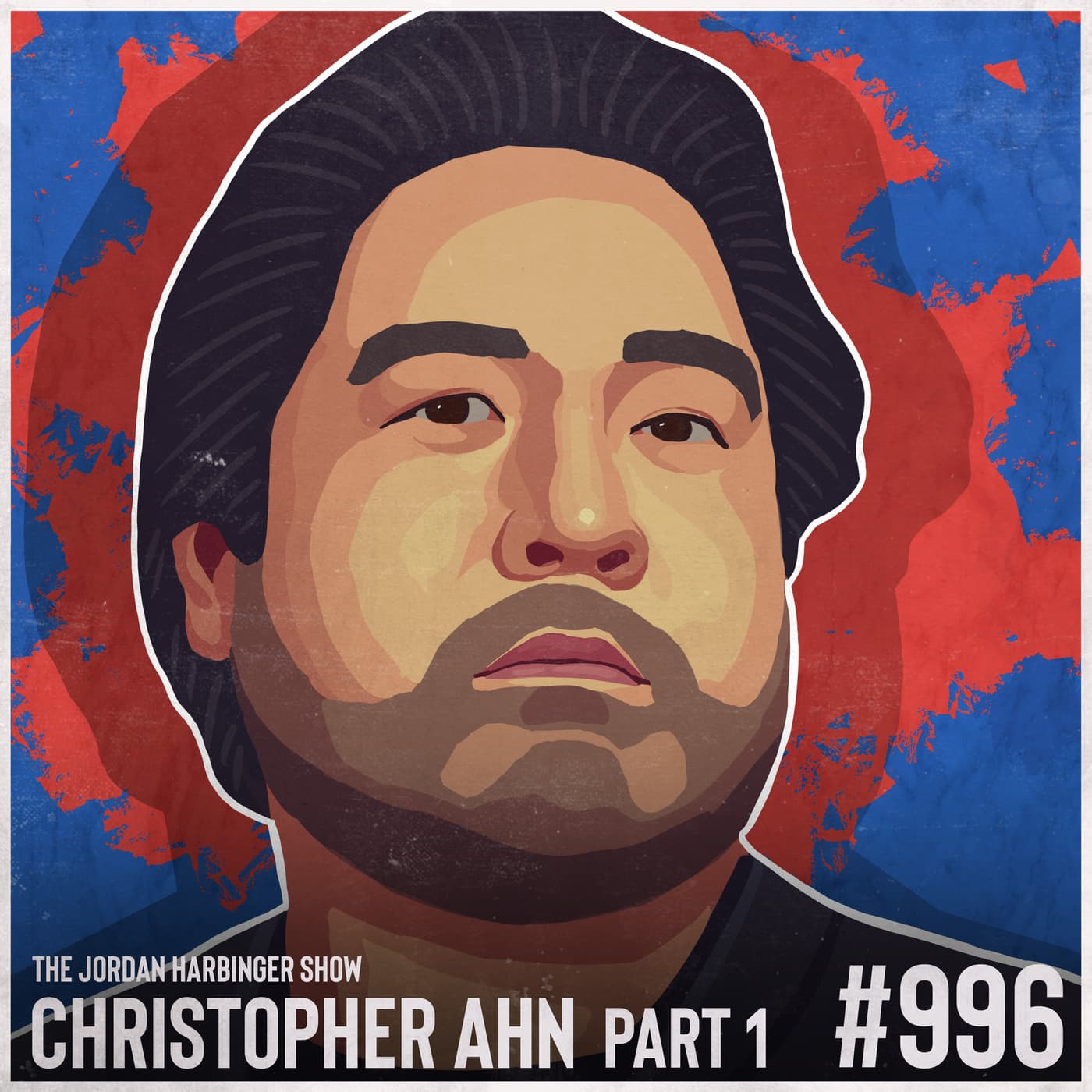
Podcast Summary: The Jordan Harbinger Show - Episode 996: Christopher Ahn | A Marine in Kim Jong-un's Crosshairs Part One
Episode Overview In this episode, host Jordan Harbinger interviews Christopher Ahn, a Korean-American Marine veteran who has become involved in helping North Korean defectors escape to safety. This episode delves into Ahn's motivations for his actions, the risks he's taken, and the challenges he faces as a result of his involvement with the Chosen Institute, an organization dedicated to assisting North Korean defectors.
Key Themes and Discussions
Christopher Ahn's Background
- Early Life: Ahn reflects on his upbringing in Los Angeles as a child of Korean immigrants. His father was an Air Force veteran who started a business after immigrating to the U.S. Ahn's life changed drastically when he lost his father at 17.
- Impact of Family Loss: After his father's death, Ahn felt the pressure to support his family and took on responsibilities at a young age. This led him to enlist in the Marines, seeking discipline and purpose.
Involvement with North Korean Defectors
- Chosen Institute: Ahn became involved with the Chosen Institute, founded by Adrian Hong, which assists North Korean defectors in escaping to the West.
- Emotional Support Role: Ahn’s role includes providing emotional support and guidance to defectors, drawing from his own family's immigrant experience.
The Assassination of Kim Jong-nam
- Context: The episode discusses the assassination of Kim Jong-nam, the half-brother of Kim Jong-un, which heightened concerns for his son, Kim Han-sol.
- Immediate Danger: After the assassination, Ahn was called to provide support to Kim Han-sol and his family, who feared for their safety.
The Risky Operations
- Meeting the Family: Ahn traveled to Taiwan to meet Kim Han-sol and his family, providing them with a sense of safety and comfort as plans for their asylum were made.
- Personal Risks: Ahn openly discusses the risks he faces, including potential extradition and threats from North Korean agents due to his involvement in these operations.
Key Takeaways from Ahn's Experience
- Empathy and Support: Ahn emphasizes the importance of understanding the desperation of defectors and the courage it takes to leave their homeland.
- Courageous Actions: He reflects on the moral duty to help those in peril and the personal drive that motivates him to take action.
Future Discussions
- Part Two Anticipation: The episode ends with a note that the second part will delve deeper into the events surrounding a 2019 incident at the North Korean embassy in Madrid, which has significant legal implications for Ahn.
Conclusion This episode is a compelling narrative about bravery, the human cost of geopolitical struggles, and the personal stories of those affected by North Korea's regime. Ahn’s journey from a Marine veteran to a protector of defectors illustrates the intersection of personal experience and global issues.
Additional Resources
- For full show notes and resources, visit [The Jordan Harbinger Show Episode 996](https://jordanharbinger.com/996).
- To support Christopher Ahn, a GoFundMe link is provided in the show notes.
Sponsors This episode is brought to you by various sponsors, including:
- 1-800-CONTACTS: Offering simple solutions for contact lens needs.
- Dell: Featuring their Cyber Monday sale on select PCs.
Call to Action Listeners are encouraged to leave reviews, engage with the show on social media, and participate in the Six-Minute Networking mini-course to enhance their networking skills.
Written by AI. May contain mistakes. Listen to the episode to check what was said.
Transcript
Automatic transcript. May contain errors.0:28This episode is sponsored in part by 1-800-CONTACTS. customer service and perks like free returns, free exchanges, even free torn lens replacement. Jen loves their Express exam, which lets you renew your prescription online in under 10 minutes. It's a vision exam, not a full eye exam, but it gives you a doctor-issued prescription if you're seeing clearly with your current lenses, no waiting rooms, no dilation drops, remember those things? And with their best price guarantee, if you find your contacts cheaper somewhere else, they'll beat it. Getting contacts doesn't have to be a hassle. Let 1-800-CONTACTS get you the lenses you need right now.
0:56Order online at 1-800-CONTACTS.com or download the free 1-800-CONTACTS app today. This episode is sponsored in part by Dell. It's time for Cyber Monday, Dell Technologies' biggest sale of the year. Enjoy the lowest prices of the year on select PCs like the Dell 16 Plus featuring Intel Core Ultra processors, and with built-in advanced features, it's the PC that helps you do more faster. Plus, earn Dell rewards and enjoy many other benefits like free shipping, price match guarantee, and expert support. They also have huge deals on accessories that pair perfectly with your Dell PC and make perfect gifts for everyone on your list.
1:28Shop now at dell.com slash deals.
1:33Coming up next on the Jordan Harbinger Show. I'm not some Navy SEAL guy, but I've seen some movies, right? So I start walking around the airport, making sure I know where kind of the exits are and where some safe places could be. When we arrived, I looked him in the eye and I said, hey man, I got you.
1:56Welcome to the show. I'm Jordan Harbinger. On the Jordan Harbinger show, we decode the stories, secrets, and skills of the world's most fascinating people and turn their wisdom into practical advice that you can use to impact your own life and those around you. Our mission is to help you become a better informed, more critical thinker through long form conversations with a variety of amazing folks from spies to CEOs, athletes, authors, thinkers, and performers, even the occasional arms dealer, Russian spy, hostage negotiator, or tech luminary. And if you're new to the show or you want to tell your friends about the show, I suggest our episode starter packs.
2:27These are collections of our favorite episodes on persuasion and negotiation, psychology, geopolitics, disinformation, cyber warfare, crime and cults, and more. That'll help new listeners get a taste of everything we do here on the show. Just visit jordanharbinger.com slash start or search for us in your Spotify I have to get started. Today, Christopher Ahn, this is quite a story. So he ended up, and I will keep it short because you'll want to hear from him, ended up breaking into an embassy, a North Korean embassy, no less, in Spain to try and help rescue people who wanted to defect. And everything went wrong, to say the least.
3:03Now he's facing extradition to Spain, potentially to be murdered by North Korean agents who want him dead. This is a hell of a ride. So strap yourselves in here. We're cagey in places because this is an ongoing case. He could be extradited. He could, again, potentially be killed by agents of North Korea, or he could simply go to prison for years and years in Spain. It is really a wild ride. It's an incredible story. I co-hosted this one with Gabriel Mizrahi as well, an incredible story that had us riveted to our seats. All right, here we go with Christopher Ahn. Okay, when did this all start? Your parents were from Korea, but did you grow up there at all or just here in the U.S.?
3:42If I have to look back and pinpoint a moment where this whole thing of where I am started, I think it would have to be when I was 17 years old. So when I was 17, I grew up here in Los Angeles. And my father was in the Air Force after he came to the United States as an immigrant. He graduated from Los Angeles High School and he joined the military. And after the military, he got a job and all this kind of stuff and got married. And after a while, he started his own business in Los Angeles and, you know, had kids and I was the firstborn and whatnot. And things were going pretty hunky-dory. Then the 1992 L.A.
4:19riots occurred and it decimated our business along with hundreds of other Korean immigrant business owners, as well as other people here in Los Angeles as well. But the largest brunt of the L.A. riots was felt, the destruction was felt by Korean Americans. And my dad needed to come up with, what is he going to do? He's got a family to feed. We didn't have the language back then, but he started a startup and he did what all startups do. They cash out what they got and we sold our home and he put all of his money into this new business. And a couple of years into it, it was starting to build a little momentum.
4:51And I was in high school and I would help out on the weekends and during the summer and whatnot, I would go to his office and help out. And this was a pants company, a slacks company. I would answer phones and do the thing, just being a kid. And when I was 17, my father was diagnosed with cancer. Four days later, he passed away. It was more like a car accident than it was like a long drawn out, making sure your affairs are in order and whatnot. So he went from being around the house to gone. And at the time, we had no money because all of the money was invested in the startup that my father started.
5:28And my mother didn't speak English very well. We lived with my grandmother. I have a younger brother. And the last thing my dad told me was, you got to be the man of the house now. And so that's where all of this started. We were in a situation where our family was desperate. We didn't know what to do. My mom and my family were looking at me to provide them guidance. I'm just a 17-year-old kid. I hang out with stoners and skaters and doing my thing in high school. But now I've got to take care of my family. And I remember, even today, I can distinctly remember feeling the desperation and feeling lost and scared, not knowing what to do and knowing that if I made the wrong move, our family would be out on the streets.
6:12Like my grandmother would be out on the streets. And long story short, it worked out, right? Like I was able to pretend that like my dad was gone for a while, pick up the phone and be like, hey, you remember me? Like I helped out my dad on the weekend. And like my dad told me that he really wanted me to make sure that you were taken care of, but I'm just a dumb kid. And I don't remember what I was supposed to help you with. Can you remind me what I was supposed to do for you? And through figuring it out, I was able to get by and bring the merchandise and then give it out and ship it out all over the country and send it to our salesmen and on the warehouses and our customers and all that.
6:49But I got through by the skin of my teeth and I knew that, right? I was mature enough to know that I was totally immature to be dealing with this. I needed to figure out how am I going to continue doing this when I already know that I'm completely ill-equipped to do this. And so a friend of mine, like who was a stoner and skater kind of guy, he was older than me. And after he graduated the year after and I was a senior in high school and he showed up and like this dude, he left as the sloppy guy. And he shows up with the dress uniform looking super sharp. And I was like, how did you become this guy?
7:23What is the transformation that occurred? and he was saying the Marines did this to me. It straightened me up. And I realized, Alex, that that's it. That's what I need to do. That's the quickest route that I can go from where I am today as like this dumb kid to being a man, to be able to have the confidence and the courage to be able to take on the responsibility of taking care of my family. And so I enlisted in the Marine Corps Reserve. And like when I went to boot camp, I'm still leading the business. And so after I graduated, I went to boot camp. And like when guys were getting letters from their parents and their girlfriends and stuff, I would get fabric swatches sent to me and inventory lists.
8:03And my journal instructor, you know, they open up all your mail and they're like, what the hell? Your parents are weird, man. They keep sending you pants samples. Yeah, exactly. So you're in the Marines. Yeah. But you're still running the business? Yeah. So I would write like letters to my mom because she would send me documents that were sent from our suppliers or whatever it is. Right. And I would read it and I would write the response to it and I would mail it back to my mom. And then we had our secretary type it up and then they would fax it to our suppliers and stuff. Back in the day when faxes were the thing.
8:30So like I'm in the Marine Corps, I'm running a business. My mom is saying like, you know, I may have failed you financially, but I'm not going to fail you as a mother. You're going to have to go to college. So I'm going to college. I'm running this business. I'm in the Marine Corps doing my once a month kind of thing, trying to juggle all these things. And then 9-11 happens. and the whole world gets thrown into a loop. But specifically for me, it was, all right, well, now I'm in the Marines. You kind of know what's going to happen coming up. We started getting ready to go to war in Afghanistan and stuff.
8:59And around that time is where I said, look, I just graduated college. I think this is the right moment. I'm potentially going to go to war, right? I can't be running a war and running a business out there. And so we started looking around for a buyer. We were able to sell the business. I bought my mom a house and I started focusing on going to war. And I actually wasn't on the list of those who were going to be deployed. I had moved from here in California to Texas and I had gotten word that my old unit was deploying. And we just spent years and years preparing to go. And I knew the guys there, they were my brothers.
9:34And the idea that they would leave and I'm left behind. And when they come back, that some of the homies never got to come back, that would tear me apart. So I left everything. I came back to the old unit and I said, hey, I don't care if I'm just going to be filling coffee for people. Like, I got to go. Let me go with you guys. And so I went. And that's what I was doing. Like, all the jobs were taken. I'm a forward observer by military training. But when I got to Iraq, my main duty there was to make coffee for the officers there. Somewhat safer, I think. Yeah. I couldn't stomach the fact that I came all this way just to make coffee.
10:14And so I would poke my head into all the various little kind of offices and desks that all the officers had. And I said, hey, sir, I got a college degree. I can be doing more than just making coffee. And one thing led to another, and they put me in the intelligence shop. And by the time I left, I became the deputy chief of intelligence for a battalion out there. And that sounds like a big deal, I think, to the civilian. But I think other Marines will know that that's not that big of a deal. But it is what it is, right? That coffee was so good. Yeah. Yeah, I came back from Iraq and I had this experience where I was helping my family out when they were in a very desperate situation.
10:47When I was in Iraq, my day-to-day job was to understand what had happened over the course of the last 24 hours and the last week, compile it and provide some context to it, and then provide that context to the Marines on the ground as well as the officers. And part of that was interacting with Iraqi Army and others in the area. and you're seeing face-to-face the desperation that they're facing. Whenever I talk about Iraq, I always try to make it clear that, like, I didn't choose to go to war or anything. I'm not trying to defend or go against the positions of what the war was about. But when I was there, I wanted to make sure that I had the most positive impact that I could for my fellow Marines as well as the people that were there to help.
11:29And they were also in a very desperate situation where they're just normal people too. They have kids. They're trying to send their kids to school. They want to have their kids a better life. and it was part of our collective responsibility to make sure that we can try to do our best to make that happen for them. How did you then go from war zone to deciding to get involved with a group like Freeja Singh? Yeah, yeah. So I came back from Iraq, and I'm happy to be home. I got a job. I'm working at the job, and it's slowly starting to eat away at me, and I'm not really understanding why. And now many years looking back at it, I know exactly what it was, which was when you're in the military and especially someone like me, where the reason you wake up in the morning and what it is you do after you wake up in the morning are very intertwined, right?
12:20Like why you do and what you do in the military is very clear. You're there because you're serving your country. Or when I was in Iraq, I'm there to help these Iraqis and help the locals. I'm there to help my fellow Marines. But when you get out, you're just earning a paycheck and it becomes like, why am I doing this? What's the purpose of any of this? And there was this huge hole that I had that I just didn't understand that was there. And there's just this urge and need to be able to do something more than just making a paycheck. And I went and I found a veterans organization that I started working with and I started working with them and went out to Washington and was working with veterans.
12:58and I felt super fulfilled. And then the financial crisis occurred and all the nonprofits lost all their money and I'm back to where I started. Got no job. I need to financially support my family and I want to make sure that I'm doing something that feels like I'm making a difference. You want a sense of purpose of some kind, yeah. I want to make sure that I make it very clear that I am not a North Korea expert, right? I didn't start doing this stuff because I nerd out about North Korea things. You don't have to throw such disdain on nerding out about North Korea. No, that's fine, right? That's just not what motivated me to get involved with this kind of stuff.
13:34Yeah, yeah. So like the things that I say, and it's going to be things that I've read myself and some of the things that I've experienced, but there are so many people, you included, that could be far more knowledgeable about what happens in North Korea. And I was not motivated to help these people because that I had some kind of dream of the regime being overturned. If it happened, would I be happy about it? Absolutely. But I'm not that guy. I'm just a guy. So what did motivate you then? Yeah, I think that what motivates any of us to do anything, it was simply because when someone is desperate and they're reaching out to you, right, it's not like a hypothetical, what would you do in this situation or whatever?
14:16Somebody called me on my phone and said, there are people who will die if you do not help. and you have the unique circumstantial kind of experiences that will help us achieve the fact to help them avoid this fate. I approach this the same way that I do when I volunteer for Habitat for Humanity or when I help out with the Boys and Girls Club or when I go volunteer with helping out kids like in Linwood, which are underprivileged kids and stuff. The point of service in my life is a very central part of who I am. And I had to learn that kind of the hard way as someone who was in the Marine Corps and went overseas and served and then came back.
14:58And at the time, this is still an issue where the veterans are just kind of like, okay, thanks for doing your time. Good luck. And I was out there trying to figure out like what makes me whole? What can I do that makes me a living? And at the same time, makes me feel like I'm happy with what I am doing. And during this time of where I'm trying to figure it out, I reached out to a mentor that I had. and it's a guy that I met in college who was a pretty prominent Korean American guy that was successful and was interested in some of the same things that I was when I was in college. And I reached out to him and I said, Hey man, like I'm in this situation where I'm trying to figure out what it is that I want to do.
15:35And I'm not really sure where I want to go. What do you think? What do you suggest? And we had some conversations, but one of the things that he suggested was meeting this guy and connecting with this guy that started Link Liberty in North Korea, the most famous North Korean kind of underground railroad operation that was out there at the time. And the guy who started that was a guy named Adrian Hong. And they primarily help people facilitate escapes from North Korea or help people who have escaped get to South Korea, etc. Correct. They have a very big awareness campaigns that they do. But especially back then, there was a lot of activity of trying to help those who are in sexual slavery and other North Koreans that were in really bad situations be able to escape that.
16:18And Link was facilitating that. And Adrian was very well known in the Korean American community because of him founding Link and the incredible work that they were doing. But he had recently left that group and he was out also looking for something to do. And he had contacted my mentor. And so he thought it'd be like, hey, you guys are in kind of similar situations. Why don't you guys like hook up and meet each other? I thought, yeah, sure. A couple weeks later, we met up and had a couple burritos, and I asked him a lot of questions about, like, his experiences, and he was asking me about mine.
16:49And we just realized that we're very different, but we were on a similar wavelength of if we want to do something, it's got to be more than just being able to pay the bills. And I'm not uniquely a guy that was focused on North Korea in my life, but as a Korean-American growing up in our household, my grandmother fled Seoul when they invaded. My mother was born five days after the invasion of Seoul. So like the Korean War and North Korea and the American sacrifice of 50 ,000 plus lives that lost their lives defending South Korea. These are topics of conversations that we had growing up, right? Even though I'm not some kind of North Korea guy that like nerds out on this stuff all the time, like it's very present in my history and my life.
17:35And so the fact that there's this dude that's out there putting it out there, trying to make a difference, like I respected that. Like, I didn't think I was going to get involved with that, but I respected that. He told me he wasn't sure what was going to happen in the future, but we agreed to like, hey, let's stay in touch. If there's some way that I can help you in the future because you think that I'm able to help you in some way, then sure, yeah, give me a call and we'll talk it out and I'll see what I can do. And that's where we left it. and after a few years we would check in once or twice a year and we'd just catch up and saying like what you've been up to and for me i went to business school and i'm just doing like the yuppie thing like just moving on with my life and he went to libya and was helping out the government there after the fall of qaddafi and he was doing all this incredible like experiences and so i was like wow that's fascinating we would talk and i would ask him like what's the plan what are you planning to do?
18:30And he would say, I don't know, this is what we're doing. And that's what it was for several years. And then I would say that like in the mid 2010s, he reached out to me asking about my opinion and my thoughts on this idea that he had, right? And the idea was that his experience working in Libya was that when you have a country that is built with a dictator on the top, What fuels that infrastructure is blood and fear, right? Because you have to have this culture of that if you don't follow what the dictator or what his people say, then there are some very deadly consequences that will occur after.
19:12And you need to fuel that to make sure, remind people that's what happens and those are the real threats. And that's what motivates people to stay in line. When you take away that leader and you drain that infrastructure of what's holding it together, it's very fragile. And what we saw in Libya, Iraq, and other places that had their despot eliminated or taken out, that very fragile infrastructure crumbles. And what Adrian told me that he personally witnessed when he was in Libya is that you had these amazing people from overseas that were Libyan that wanted to create a better future for Libya.
19:52And they would come in and they're educated, they have the best intentions, but they don't know what's going on. They need time to be able to figure out and acclimate to understand what are the biggest issues? What do we need to focus on? And there's millions of people outside waiting for someone to tell them what to do, right? And meanwhile, the government is basically stopped because there's no one telling them what to do. So there's all this pressure on the top guys that came from out of the country to fix everything and bring to them all of these things that they were hoping for when the authoritarian was taken out of power.
20:27But that takes time and the country doesn't have time and the infrastructure crumbles. And when it crumbles, it creates that vacuum and then nefarious characters come in. And we've seen that happen time and time again. So Adrian came to me with this theory. He said, if we create basically this like encyclopedia, I can go to someone who runs a water treatment plan and I can say, hey, look, man, what's happening in North Korea is bad. Do you want to help them? Yeah. What am I going to do? I'm just some random water treatment engineer guy. What if I told you that if you can write like a white paper, it doesn't have to be super sophisticated or anything, but what are the top 10 things you need to make sure that it's there for this treatment plant to run properly or to find, to maintain, or if you want to improve it or to make sure that it can be a proper working, functioning water treatment plant?
21:22If I asked you to write that, could you write that? And more than likely, they would be like, yeah, that's just some basic stuff. Because one day, what I'd like to do is gather all these white papers from all these random people. And if you're a kindergartner teacher, write a little white paper on what kids need to have in order to have a solid development. You're listening to The Jordan Harbinger Show with our guest, Christopher Ahn. We'll be right back. If you're wondering how I managed to book all these great authors, thinkers, and creators every single week, it is because of my network. And now, I'm teaching you how to build your network for free over at jordanharbinger.com slash course.
22:00This course is about improving your relationship-building skills and inspiring other people to want to develop a relationship with you. And it does that, this course does that, in a non-cringe, very down-to-earth way, no awkward strategies, nothing too cheesy, just practical exercises that'll make you a better connector, a better colleague, a better friend, and a better peer. Six minutes a day is all it takes, and many of the guests on our show subscribe and contribute to the course. So come join us. You'll be in smart company where you belong. You can find the course at jordanharbinger.com slash course.
22:29Now, back to Christopher Ahn. Are you setting up a parallel infrastructure or barrel of expertise so that if the North Korean regime falls, it's not like, oh, crap, what do we do now? Here's everything we need to unplug a country and plug it back in again. It isn't even that formal. We're not advocating how that occurs or when it's going to occur. But if it does, and we hope that it does, let's try to give whoever takes charge 90 days, six months, like a year of just some time so you can give them shovel-ready jobs that are put together by all these kind of regular, average, everyday folk. Because we're not trying to make North Korea and their infrastructure the best in the world.
23:14We're not trying to make them modern and all this kind of stuff. We're just trying to make sure that the system keeps running while the people who come in to take over have the time and the room to learn, to acclimate, to understand what needs to happen. In the meantime, the people need to be doing something. So if you drain the infrastructure of blood and fear, how about we fill it up with jobs and cash and money and give them things? Go work on the roads, go work on water treatment, chemicals, concrete factories, education, in order to give these people the time so that the country can get on their feet.
23:51And it was also, you talk to the average Korean American who knows the way that I do, the way that you know about what's happening there. And you say, do you want to help? More than likely, they're going to say, yes, I would like to help. But trying to help something like North Korea, which is this huge issue, what is random people, like everyday individuals going to be able to do to help that situation? And the opportunity and the kind of think tank that Adrian had created called the Jozon Institute was to collect regular average everyday people and say that you have a very specific, special understanding and skill.
24:30Can you write something that we can compile and collect together and we can give this encyclopedia to whoever may need it in the future? How do you go from knowledge base to direct action? Yes, good question. When Adrian asked me that and told me about that, I thought, man, that's a fantastic idea. What a way to activate people to make them feel like they can make a difference with what it is that they can do and what it is that they know. So I was like, yeah, man, go do that. I approve. and he said what can you write and i'm like i don't know how many pants do you need exactly right like at the time i was running like an e-commerce consulting kind of a thing so i'm like i don't think the north koreans really need to figure out how the best way to market online shopping is what we need is shopify yeah exactly what we need here i'll give you a discount code right like it's not something that i felt that i could easily compel myself to get in there and do something and he was like why don't you write something military oriented i said i am not the military guy, man.
Read the full transcript
25:29There are a lot of people that know this stuff a lot better than I do. I just did my time, did what I can, serve my country, and that was kind of it. But I said, like, I cheer you on, man. And if there's anything that I can do maybe to help in the future, let me know. And after a while, he would call to these meetings where he gathered all these people from all around the world. I would see people from Europe, from South America. They weren't all Korean descent either. They were all there because they thought that this was a fantastic idea of utilizing everyday people to come together and create something that could one day make a difference.
26:02Now, when Adrian was going around Europe, like trying to recruit some of these people, if Adrian's walking around talking about North Korea to all these random people, the North Koreans are going to find out, right? And they started to approach him and have conversations with him. You mean like intelligence services? Yeah, yeah. What are you doing? What are you trying to do? And the conversation with Adrian told me was that he would have these conversations with these diplomats and these important people and they were very skeptical of what he was trying to do. Are you trying to overturn the regime and all this kinds of stuff?
26:33And he was honestly telling them like, yeah, it would be great if that occurred, but that's not going to happen tomorrow. And I'm not going to be the guy that's going to create this. What I'm trying to do is that when and if that occurs, that you and your family have a chance to have a better life in North Korea. That's what it is that we're trying to do here. And after multiple conversations over years, I think it was, the North Koreans start to create a rapport with Adrian realizing he was genuine in what he was trying to do. Sorry, I just have to clarify, on what level do North Korean officials develop rapport with somebody who's saying, yeah, I'm pretty pro the idea of taking down this regime and you could have it better?
27:14Well, it wasn't necessarily taking down. Cheering the downfall of the regime typically doesn't go over well with those folks. No, no. And so the answer is that is what a great question. I have no idea, right? I wasn't there to have these conversations. These are just things that when I would meet up with Adrian and have conversations, he would tell me. And it sounds like you responded to this. Yeah, I was like, wow, that's crazy. That's what I would say. And so that's the situation of where it was in 2017. He's going around recruiting these people. These North Koreans are skeptical, but he's starting to make connections and he's starting to build rapport where he can.
27:49But people are at arm's distance kind of a thing. I think he's probably on their radar and all this kind of stuff. And that's the situation it was in 2017. And then the Kim Jong-nam assassination occurred. Right. And that was an inflection point. For people who don't know what we're talking about, this is the brother of Kim Jong-un, his leader of North Korea. He's murdered in an airport. I think we've talked about this on the show before. Bradley Hope, episode 820. He gets murdered in an airport by two women who rub chemicals on his face. Turns out to be, was it Sarin or VX? VX. VX. And he dies this horrible death that is worthy of a Bond villain, essentially.
28:26It's really crazy. And it once again puts North Korea on the world stage in a typical North Korean way, which is negative, but turned up to 11. Yeah. And one of the things that we have to remember is that they chose to assassinate him in this way, in a very public way. Right. Right. They could have done it in like some alley and stabbed him a few times, let him bleed out or whatever. Like they didn't decide to do that. They didn't want to do it quietly. They wanted the world to know that it's on video. Yeah. Yeah. Right. This is what happens. Right. So that's the kind of country that we're talking about here.
28:58Right. Whatever it is that they do when they do this stuff, they wanted to make sure that they're not only doing this for the world stage, but they're doing it for everyone inside North Korea and the diplomats around the world as well. It's branding and domestic consumption propaganda for the whole country. Absolutely. OK, so this catapults everything from knowledge base to wait a minute. Does it turn the urgency up? Yeah, so what happens is in Adrian's kind of travels around Europe, he meets with Kim Han-seol. And Han-seol is the son of King Jeonnam, right? And so one of the things that people have to realize is that kind of saying the obvious here, but North Korea is not a normal country.
29:36And the way that they operate is far closer to Game of Thrones than it is modern day government. And so it's all down through lineage, right? So there's the god leader, Kim Jong-un, and then his son who takes power after that. And then what's supposed to happen after that is his eldest son is supposed to take over. But the current guy in power right now, Kim Jong-un, is the son of a concubine. So he's the bastard son, right? And because the North Koreans deem Kim Jong-nam too Western, not reliable, they decide that the better choice is to go with Kim Jong-un. And for Kim Jong-un, that means anyone that's tied to Kim Jong-nam is a threat, right?
30:19And so you see him assassinate his brother. You see him assassinate his uncle, who was partial to his brother. And reports are that there are like infighting in North Korea where divisions of military guys were killed because of people trying to vie for power, right? I don't know. I'm not a North Korea guy, so these are just things that I've read as well. But that's the situation, right, where this guy is trying to make sure that he has his iron grip on power and he's going to eliminate any threat that he has. And so in February, after probably months and months of planning and years of waiting for the right moment, they go out and execute him in a very public way.
31:00While that was happening, his son Kim An-Sol immediately after gets a phone call from someone in North Korea saying, hey, I don't know if you know this, but your father's been assassinated. And you need to get the hell out of Dodge because they're coming for you as well. Because he's next in line. Exactly. Right, he's the eldest son of the other guy in line for the throne. It really is like Game of Thrones. Yeah. Like, you got this sort of Jon Snow character. Yeah. Kind of a bad guy. But the complete opposite in every other way. And then this kid, right? Isn't he just in public school, private school in Bosnia or something like that?
31:37Yeah, like he went to school in like Europe somewhere, and he gave some interviews to an international media company talking about how he hopes North Korea becomes a better place and all this. Those are direct contradictions from what North Korea is saying. North Korean saying, we're amazing, right? And he's going around saying, no, not actually, right? And so he's a threat. And he gets a phone call saying, like, they're coming for you. And he looks out the window and he has security with him 24-7 and they're all gone. Wait a minute. This kid has security with him 24-7 and they just vanished? Well, his family does.
32:10And they vanished. What? Yeah. Try to put yourself in this kid's situation here. I cannot relate with the prince of North Korea or whatever it is that you want to call him. But I can relate with a guy who recently lost his father. His family is looking at him to basically lead them to safety. And he doesn't have anyone to turn to. Because this kid looks out the window, his whole security detail is gone. The country where he comes from wants to murder him. What do you do? Is he supposed to go to the Americans and just be like, hey, can you help me? I don't even think that would even ever cross his mind.
32:49Right? Because you are North Korea. That is your mortal enemy. So he picks up the phone and he calls Adrian. And he says, hey, Adrian, they murdered my dad and they're coming for me. I don't know what to do. What should I do? And so Adrian starts going like, okay, well, we need to get you out of where you are, Macau, into somewhere safe. And let me call around to figure out who we can help to facilitate that. And then I'll let you know. And by then, he had already made all these connections with all these people for the think tank that he created. There were lawyers there. There are government officials there from in Europe.
33:29There are random guys that are like kindergartner teachers and water treatment plants. But he has this network. But none of them are military guys. They're just random, normal people or kind of government-ish kind of people or lawyer-ish people. Yeah. Right? We get it, man. We're a bunch of nerds. Like, we're the Navy SEALs, we're the spies. And he calls me trying to see, like, if we can talk and we can brainstorm together about what might be able to do. So he calls me and he says, hey, man, you know what happened with King Jum Nam? I'm like, yeah, of course. And he says, where are you right now?
34:06And I was in Manila at the time, just a hop, skip away, because I had recently sold my company and I had a little bit of time. and what better time than then just to do a little traveling. And I had like one of my best friends was Filipino. He was going to go back and visit his family. He's like, come on with. I was like, yeah, that sounds awesome. You're munching on Lechon and he's, do you want to hide an internationally possibly endangered, hunted man with North Koreans chasing him? And you're like, let me finish my lunch. When that call happened, it was like 9.30, 10 o 'clock-ish at night. and I was on a rooftop bar at a hostel.
34:45It's like a nice hostel. It's one of my friends kind of place. And I'm like five beers deep in, you know what I mean? And I'm hanging out with all these people. They're traveling from all around the world. Having a good ass time. And I get this call and he's like, where are you? And I'm like, I'm in Manila. And so he's like, oh crap. Okay, you think that you can go to Taiwan and meet the family there and keep them safe while I start reaching out to other people in the network to try to figure out where he can go, who he can talk to, and where we can arrange something so that he can find asylum somewhere.
35:18And I said, what is it that exactly that I'm supposed to do? What is it that you want me to do? And he said, what the plan is that we want him to fly into Taiwan's international airport. You meet him at the airport and just keep him calm and keep him safe. And I thought about it and I thought to myself, yeah, this is a weird situation. His dad just got murdered in an airport. Take him to this other airport. Right, right, exactly. But then at At the same time, if you just think about it, anyone who's ever gone to an airport, right? When the murder happened, didn't happen inside the secured area, right?
35:50That happened near the front door of when you walk into the airport. And what they were asking me to do is go past several security checkpoints, right? And go into a secure location. And he is also going to go through several checkpoints and fly into that airport so that anyone in that airport would have to go through several security checks. They've been identified. They don't have a weapon on them that's obvious. Right. Trying to get away after attacking somebody is nearly impossible. Exactly. So you just figure it's a safer location. Well, again, I'm not going to say that it's safe. Yeah, you're talking about nation states, so nothing is really safe.
36:24Yeah, but we're talking about where this kid's life is on the line. I'm being asked to help this kid out, and the risk that's involved, you have to understand it and see it from a sliding scale. And I asked Adrian, well, like, who else might be able to do this? And he's like, well, we have no idea when they're going to come after him. You are theoretically three hours away from him. You're the closest guy. Do you think that you might be able to go to that airport and just hang out with the family while we're able to try to figure out what to do? And I said, yeah, sure. I mean, if I'm the last guy and this guy has nowhere else to turn and you're asking me to go into a secure location to put my hand on a shoulder and saying like, hey, man, I got you.
37:04I can do that. In my job at the consulting company that I had recently sold, my job there was to, the scenario in which I would get these jobs was that a company would get some services from a big firm or whatever and pay hundreds of thousands of dollars or whatever. And six months down the line, they're behind schedule. They're not meeting their numbers. The executives are freaking out. They're going to meet with their board members. Everyone's super stressed. And that's when they call my company. And my job at the company was to simply sit with the executive and say like, hey, what are your fears right now?
37:42This is the Jordan Harbinger Show with our guest, Christopher Ahn. We'll be right back. If you like this episode of the show, I invite you to do what other smart and considerate listeners do, which is take a moment and support our amazing sponsors. All of the deals, discount codes, and ways to support the show are at jordanharbinger.com slash deals. You can always search for a sponsor using the AI chatbot on the website as well. jordanharbinger.com slash AI. Thank you for supporting those who support the show. Now for the rest of part one with Christopher Ahn. You're a professional calmer downer.
38:14Yeah, that's what it is that I did as a job where I would go through like his fears, his risks, and we would sit down and create plans to make sure that we mitigate all of those risks. And most of the time, I'm not the expert who's creating those solutions either. All I am is I'm the conduit to make that guy on the other side of the table feel like someone understands him, someone understands his urgency and his fear and what's on the line, and someone that will equally effort, try to prevent those bad things from happening and make the good things happen. That was my job. So when Adrian asked me, can you go and sit with this family and make them feel comfortable, safe while we try to work this out?
38:55I was like, yeah, I guess I could do that. And that's what I do. Yeah. I'm the delight whisperer. I got this. Look, at the end of the day, when Adrian created this Chosen Institute and was asking everyday individuals, what is it that you do on a daily basis? You can provide material help in the future that might be able to help these people's lives. And he was basically asking me the same thing at that moment. Like every day, what you do is you sit down and you make people feel calm and you make people feel recognized and seen. And that's what I do. And so that's what he was asking me to do. And so I said, OK, I got on a plane.
39:36I got to the Taiwan airport. And I'm not some Navy SEAL guy, but I've seen some movies, right? So I start walking around the airport, making sure I know where kind of the exits are and where some safe places could be. When he arrived, I looked him in the eye and I said, hey, man, I got you. He knew you were coming, right? Because if he sees a Korean guy, he could go either way. I was supposed to go by the name Steve and I saw him coming off the plane and I told him that I'd be wearing a Dodgers hat. And he saw me and he looks at me and he goes, Steve? I go, yeah, that's me. And I said, I looked at him and I said, hey man, I got you.
40:13I went up to his mother and I said in Korean, I understand how scary this is. I'm here to help you. And I took him to his place and we're eventually ended up in executive lounge area where they have little hotel rooms. And Han Solo and I and his family stayed there for a couple days trying to figure out. In the airport. In the airport. Trying to figure out how and where to go. And that's the inflection point of when things started to change. And look, I heard you talk about the situation and you said like, why would these guys, the Han Solo and his family go with these knuckleheads to Amsterdam?
40:49And the goal of the group wasn't to necessarily end up in Amsterdam. dam, it was to get to a place where he's safe so that they can figure out what the future was going to be. You're not going to get that from a headline and you're not going to get that from some random kind of going across story. So I totally understand why someone would think that this was a kind of knucklehead kind of thing. And I'm more than willing to stand up to public judgment on whether people approve of doing something like that. I think most people approve. I think the knucklehead part is there was no better plan in place.
41:21no offense but like they were grasping at straws calling in some dude who was five beers deep in a manila youth hostel exactly to go and handle this exactly and i think we talked about this on bradley's show as well but he never made it to amsterdam yeah he never made it to amsterdam what happened i have no idea so when when we were there in taiwan the cia guys showed up and when they did You know, I was relieved. Like the real guys are here. Right. But at the same time, my job there was to make sure that the family was safe. I always told them the family. I said, look, the CIA is here. They want to talk to you.
41:59You don't have to talk to them if you don't want to talk to them. I'm here for you. I am not here to help them. I'm here to help you. And so I helped make them feel comfortable talking to the CIA guys. And when they got on the plane together, they probably continued to have more conversations. And then they decided to go where they wanted to go. Because the flight was booked to Amsterdam and then they just never got off the plane. Is that kind of how it ended? Yeah. This is like straight out of a movie. Like, oh, we're all on the plane. Okay. And then they're gone. And has anyone heard from him since then?
42:29No. I remember speaking to Adrian one time and he told me that he got word that they're safe. And that's pretty much, that's all I got. But again, like Amsterdam wasn't the final location, right? It was a place where they know that there was a group of people willing to keep him safe there while they continue to work out where he would go next. And are these diplomats that are reaching out to the group? So it's diplomats, scientists, people who are in positions of privilege that they're able to travel out, have recognized the situation that they're in and want to create a better life for their family, you know.
43:05And the way that it would normally work would be that they would reach out to the group and the group would work out how that would occur. and if they felt that they needed some extra help like on the emotional coaching then they would send me a message and i would say okay what's going on and if they can they would tell me but most of the time they didn't they would just say we're doing something similar to what we did last time and we would need your help okay i would show up to a designated place and i would meet the people who were there and i didn't know their name we were all going by pseudonyms right i think Like my name was Steve at one point and there was a couple other names.
43:46Could come up with any code name you wanted and you chose Steve. That's the thing, right? Like I didn't want to walk around being called Snake Eyes or something like that. I don't know, man. It's not as bad as Steve, but it's, yeah. I think that's the idea though. It's rather nondescript. That's right. I know. I'm just kidding. I'm just kidding. Someone's like, hey, Snake Eyes. Like I wouldn't like be, what? Oh, that's me? Like I wouldn't turn. Just to be clear, when you talk about emotional coaching, so you're in a way the defector whisperer a little bit. But help us understand, like, your job there was to help people get comfortable with the idea.
44:14The thing is this, is if they've shown the immense courage to reach out to this email address. Which is a big deal. It's a big deal. Knowing that the moment that they push send, it could mean the death of them, their family, and their family at home. Right. Right? We understand that. I understand that. So my job was that, like, if they're willing to do that, we're willing to go the extra mile to make sure that happens. That the risk that they took and the trust that they gave us, that we are there to help them go the rest of the way. Because the hardest part is pushing that message to send. But the second hardest part is actually crossing that line.
44:58And when I would go and meet with these people, I would tell them in Korean, I say, look, what you did and what we're going to do is going to be the hardest thing and the most scariest thing in your life. But I am me. Physically, I am the result of people who've made those similar decisions. When my family came to the United States, and it's a totally different circumstance, I'm not trying to equate my situation with your situation. but you have to understand when my parents came they didn't know what the future was going to be they just knew that their life circumstance at the current time was not something that they wanted to continue when they wanted to make a family and they were willing to take the risk to go to an unknown land where they've been told that there are opportunities and that there may be a better chance for them they've decided to leave everything that they know behind to start this new life That's something that people who are born in the United States, I don't think that they understand and recognize enough that these immigrants, whether it be from Korea or from wherever else, these decisions that they're making are extremely scary and difficult to make.
46:13They're leaving behind their home, their family, their friends, everything that they know because they're trying to make it better for their children. That's what I understand. And so when I sit with them and I say, look, you are making the most scariest decision, much more than would be for an average person. But I am a result of those types of decisions. I have a nice job. I have a nice car. I have a nice place where I live. I have a family. And I live in relative comfort because my parents made these types of decisions. And so when you get scared, remember why you are making this decision, right?
46:53And I am here. We are all here. We flew thousands of miles because we recognize how scary this is. And we want to make sure that whatever you do moving forward, we are here to support you. And we are there to make sure that you do not feel that you made this wrong choice or that you are alone because you are not alone. We are here with you. And that's what we came to do. I can see why you're good at this, by the way. I'm pretty amped up for this podcast. I'm not even defecting. And I can see why you're extremely confidence-inspiring in somebody who is making the scariest decision. Well, again, I'm not the star here.
47:28The people who made these decisions, they're the heroes. I'm just simply trying to support them in their heroic actions. A lot of times, it would literally be me just sitting next to them. And if it was the wife or a child, it's me holding their hand or me putting my hand on the guy's back and saying, we are all physically here for you and to support you and you won't be alone. And that was the standard. So when the organization would get these requests, they would work out with the person who's requesting the defection as well as what they had capabilities of. But at the end of the day, these are just a bunch of guys, the khaki wearing guys with normal day jobs.
48:10who like were given the same situation where this person would like to escape. You have certain skills where, you know, people or you this or that or whatever. Can you help? And you are in a unique position to help because you speak Korean. You have relevant experience in doing what it is that we need to do. And you're not going to ask for quid pro quo in any kind of way, right? Like I'm not representing some type of interest where if I help you, you now have to help us or something like that. It was nothing like that. It's just the fact that as a Korean American, understanding the situation that they're in, experiencing and seeing other people experience desperation where they have nowhere else to turn.
48:55For me and for others who are working with me, you put that in front of them. And the common thing that we share, we come from all different places in the world. and the majority of us were Korean descent, but not all of us, but the one thing that we all did share is that when you are given this option and this choice of whether to help this person or whether not to, I'm not the type of person that can say no to that and then look at myself in the mirror. And that's ultimately what it comes down to. You're about to hear a preview of the Jordan Harbinger Show with North Korean defector Yeonmi Park.
49:32In North Korea, birds and mice can hear you whisper. It's the only place that modernity hasn't touched. 90-70 % of North Korean roads are not paved. In the hospital, they use one needle to inject everybody. It's very common to have a surgery without painkiller. The worst torture is being starved. And before you die from starvation, you hallucinate. You lose your mind. So some mothers eat their children because they thought their children were dogs. because they go crazy when you don't eat. And then they wake up and they're like, what happened to my child? If somebody's challenging the party ideology, they don't just go after killing you or your son or your grandma.
50:12They really go after age generation, like get rid of entire clan. That's how they prevent the revolution. And that's how they became like almighty gods. Every front newspaper in North Korea is a Kim's photo. So sometimes you do not see the front page and you rip it. That's how you get executed. How do they prepare you to escape? Pray and fasting. You need a miracle to do it, because you are going to go across the Gobi Desert into Mongolia from China in the minus four degrees. That's why they make you pray. They just give you a compass. Why don't you walk, follow the north and the west, and then cross the eight-wire fences, and hopefully that's going to be Mongolia.
50:53Very unique thing with North Koreans. Whenever you ask them, in their dream, it's always North Korea. You never escape in your subconscious. You're there forever. Every night, every night I'm there. Like nobody escapes in your dream. To hear more about the bizarre mind games that generations of North Koreans have had to endure under the current regime, check out episode 578 and 579 of The Jordan Harbinger Show. All right, that's the end of part one. Part two in a couple days. Stay tuned for that if it's not already out yet. By the way, for people who want to help Christopher on, There is a GoFundMe.
51:28We will link to that in the show notes. He's obviously cannot work. He's lost a bunch of work time. He's really in a world of hurt. His lawyer is pro bono, but, you know, he's got to take care of his family. I mean, he's really hurt. So there's a GoFundMe if you feel compelled to help somebody in this situation. Again, linked in the show notes. Also, there's a website that we will link to in the show notes with the latest news on his case. and hopefully, man, just hopefully he ends up getting some sort of special exception. All things Christopher On will be in the show notes at jordanharbinger.com.
52:00Transcripts in the show notes, advertisers, deals, discounts, ways to support the show, all at jordanharbinger.com slash deals. Please consider supporting those who support this show. Also our newsletter, every week the team and I dig into an older episode of the show and dissect the lessons from it. So if you are a fan of the show, and it seems like you are, and you want a recap of important highlights and takeaways, or you just want to know what to listen to next, the newsletter is a great place to do just that. JordanHarbinger.com slash news is where you can find it. And we're going to be doing giveaways on there.
52:28TBD on that stuff. Always kind of a pain. It's harder to give away free stuff than you think. I really had no idea. Don't forget about six-minute networking as well. That's over at JordanHarbinger.com slash course. I'm at JordanHarbinger on Twitter and Instagram. You can also connect with me on LinkedIn. This show is created in association with Podcast One. My team is Jen Harbinger, Jace Sanderson, Robert Fogarty, Milio Campo, Ian Baird, and Gabriel Mizrahi. Remember, we rise by lifting others. The fee for the show is you share it with friends when you find something useful or interesting. The greatest compliment you can give us is to share the show with those you care about.
53:01If you know somebody who would be interested in this topic, who's interested in North Korea, who's just interested in a wild story, definitely share this episode with them. In the meantime, I hope you apply what you hear on the show so you can live what you learn, and we'll see you next time.
53:19This episode is sponsored in part by The Gist Podcast. If you're looking for a news podcast that is smart, unfiltered, and doesn't just echo whatever side you already agree with, check out The Gist with my friend Mike Peska. Mike's been doing this longer than just about anyone. It's actually the longest-running daily news podcast. It's earned that spot on Apple's top charts for a reason. Each episode's around 30 minutes, so it's perfect for your commute or while you're making breakfast. It's always packed with sharp, thought-provoking takes. What I love about The Gist is that it's not stuck in a partisan box.
53:45Mike, he's a really smart dude. He digs into real questions, the kind that most shows avoid because they don't fit neatly into a political lane. He'll challenge the right. He keeps the left honest. He dives into stuff like the New York City mayoral race, that whole cluster, and the chaos of sports betting, or even whether talking to your plants actually does anything. He's an award-winning journalist. He's not some schmo like me who's totally unqualified. You've probably seen his work in the Atlantic, the Free Press, the Washington Post. He's got that rare mix of wit, skepticism, and depth that makes even heavy topics fun to listen to.
54:14And he's a great dinner guest, just saying. So if you want your daily news with more brains and less noise, check out The Gist with Mike Peska every weekday on YouTube or wherever you get your podcasts. This episode is sponsored in part by Everything Everywhere Daily. You've heard the phrase, learn something new every day. Sounds nice, but do you actively do it? That's where Everything Everywhere Daily comes in. This podcast makes it effortless. Just 10 minutes a day, you'll walk away with a fascinating fact, a slice of history, a science gem. It's no wonder the show has climbed up to the top as the number one history podcast.
54:41It covers history, science, technology, geography, and stories of remarkable people, always in a way that keeps you hooked. Not sure where to jump in? Start with these favorites. The eruption of Krakatoa, nature's fury in one of the deadliest volcanic events ever recorded. Or the spice trade, how a handful of spices changed the course of global history. If you want to make learning effortless and fun, check out Everything Everywhere Daily. It's quick, fascinating, and a perfect way to stay curious. Listen now, wherever you get your podcasts.
From the publisher
Marine veteran Christopher Ahn explains why he got involved with helping North Koreans defect to the West, and how this has put him in danger. [Part 1/2]
What We Discuss with Christopher Ahn:- Christopher Ahn, a Korean-American Marine veteran, became involved in helping North Korean defectors escape through an organization called the Chosen Institute, founded by Adrian Hong.
- In 2017, after the assassination of Kim Jong-un's half-brother Kim Jong-nam, Christopher was called upon to provide emotional support and protection for Kim Han-sol, Kim Jong-nam's son, who feared for his life.
- Christopher met with Kim Han-sol and his family in Taiwan, providing them with a sense of safety and comfort while the Chosen Institute worked on a plan to find asylum for them.
- Christopher's role in these operations was to offer emotional support and guidance to the defectors, drawing from his own family's experience as immigrants and his understanding of the immense courage it takes to leave everything behind for a chance at a better life.
- In the second half of this two-part episode, we'll learn more about the part Christopher played in the 2019 incident at the North Korean embassy in Madrid for which he is facing life-threatening extradition.
- And much more...
Full show notes and resources can be found here: jordanharbinger.com/996
This Episode Is Brought To You By Our Fine Sponsors: jordanharbinger.com/dealsSign up for Six-Minute Networking — our free networking and relationship development mini course — at jordanharbinger.com/course!
Like this show? Please leave us a review here — even one sentence helps! Consider including your Twitter handle so we can thank you personally!
See Privacy Policy at https://art19.com/privacy and California Privacy Notice at https://art19.com/privacy#do-not-sell-my-info.