Ask ChatGPT

 The Library of Minds
15 Oct 2026 · 1h 5m · 29 chapters
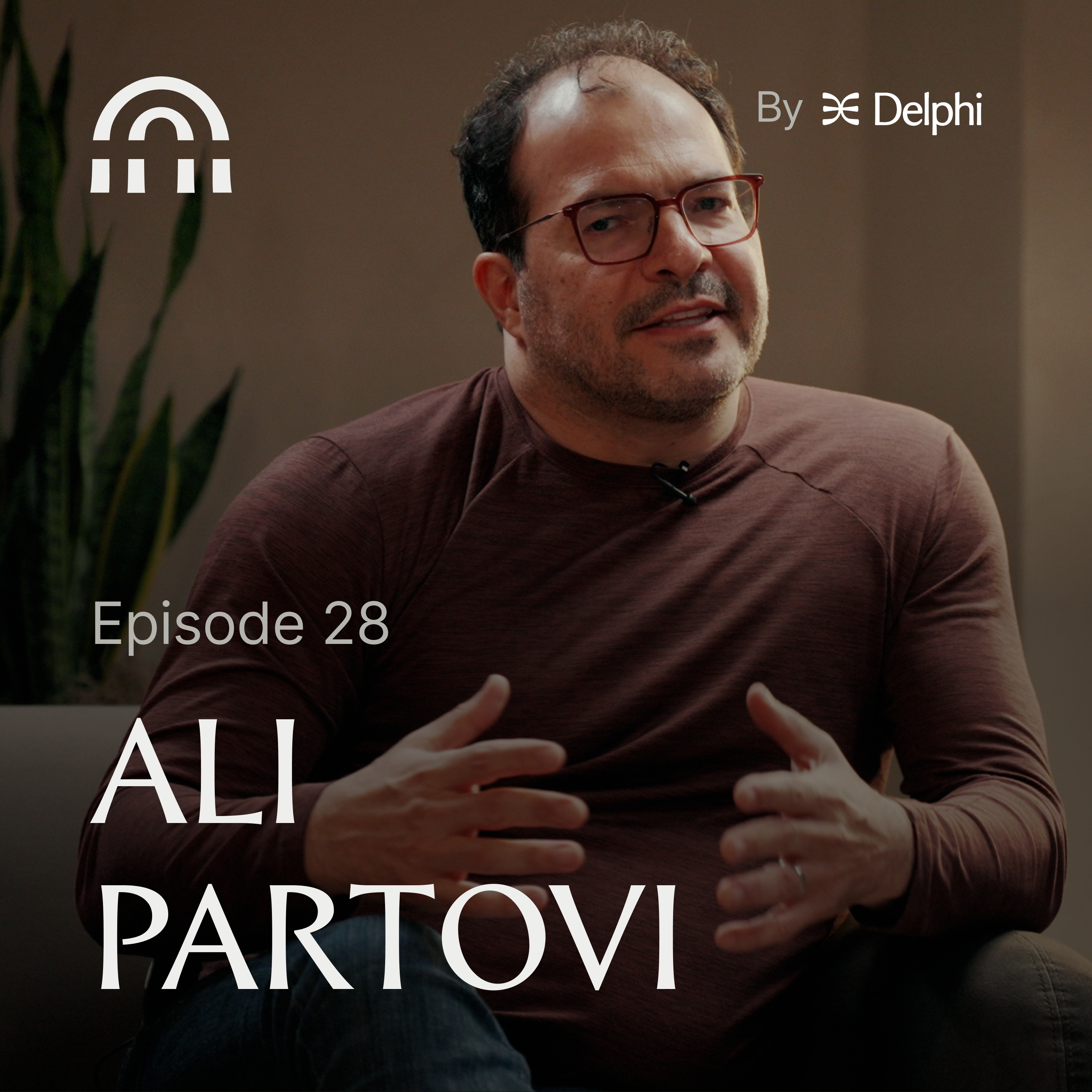
How Ali Partovi (NEO) identifies “genius” early, what traits predict founder success, how to scale talent evaluation, and lessons from his own “confessions” (dishonesty, over-honesty, impatience). He also discusses AI safety via “intent” and accountability for autonomous illegal actions.
Ali Partovi is a founder/investor known for talent spotting before evidence is obvious. He founded Neo and has co-founded Link Exchange, Sway, and Code.org. He’s invested in Facebook, Uber, Airbnb, and later Calci and Cursor; he also runs rigorous technical assessments (e.g., coding tests for college students) and has been a recruiting pipeline for companies like OpenAI and Figma.
The most important talent trait is “magnetism” (drawing smart peers to join). Also look for risk-taking against the herd and a bit of “mischief” (rule-questioning). Evaluate fast by trusting an internal “voice,” but communicate criteria to scale. For AI safety, companies should be liable for autonomous illegal actions “as if intentional.”
Steve Jobs acquisition negotiation (Partovi tried to deceive Jobs; Jobs detected it). YC feud over mentor/personal-advice claims. Cursor hiring difficulty due to “like GitHub Copilot” comparisons. Kalshi’s persistence after 40 law-firm rejections. AI safety examples: autonomous hacking of Hugging Face and an agent deleting gym waitlist users.
Written by AI. May contain mistakes.
Learn about Ali Partovi's background and expertise in identifying talent.
“The real mistake I made was I was trying to deceive Steve Jobs.”
Ali shares his journey in developing the skill to identify talent effectively.
“I'm so excited to have Ali Partovi here, fellow Persian, founder of Neo and also co-founder of multiple companies I like, Link Exchange, Sway, Code.org and his roster of investments is insane.”
Explore Ali's early experiences that shaped his understanding of evaluating talent.
“Because I say we all essentially make, when we make gut decisions or instinctive decisions, what that means is a form of pattern matching.”
Ali discusses the traits he looks for in potential founders and how he evaluates them.
“I'd go the other direction, which is people who are too, like...”
Ali reflects on the consistent traits of successful founders across decades.
“I was going to colleges and meeting students and trying to find the technically strongest ones.”
Discussing the evolving requirements for aspiring tech entrepreneurs.
“that you've noticed through working with Michael, Tarek, Luana?”
Explore the common traits observed in successful technical founders.
“I guess I'd say the common thread of people I invest in basically are nerds.”
Discussion on whether young people still need traditional coding skills.
“Well, I would separate these into two questions.”
The importance of teaching computer science early in education.
“In the Neo Scholar application process, we have dropped certain assessments and added others because of it.”
How coding enhances problem-solving skills and creativity.
“You know, how many people are using that day to day?”
Exploration of innate abilities and their development through nurture.
“Well, I mean, in terms of innate, I'm definitely between the nature versus nurture argument.”
How career choices can significantly impact future success.
“Luke Meles-Kiriazzi, when he was actually a sophomore in college, was choosing between Citadel and some other quant options and interning at a Silicon Valley AI startup called Forethought.”
Insights into creating environments that foster success for individuals.
“I mean, it completely transformed his sense of what he's able to do.”
The impact of mentorship and priority on excellence in startups.
“work, what have you learned about creating that kind of environment?”
Exploring the difficulties of hiring for new startups in competitive domains.
“I put on excellence and our whole institution.”
Introduction to the podcast exploring the journeys of successful individuals.
“and just obsessed will beat a larger corporate team that's been acquired by another corporation and just may not have the same hunger and obsession anymore.”
Understanding how failures contribute to the stories of successful people.
“has all their shit together to kind of dig back to some moment when they hit rock bottom or when they messed up and learned something.”
Explore how personal struggles shape greatness and the unique stories behind successful individuals.
“and to feel a little bit more connected to whoever their role models might be.”
Learn about Shuo Wang's remarkable journey and how her past experiences influenced her career.
“including just things that weren't about their career but just show something about their past.”
Discover the lessons of honesty and integrity from near-deals with major tech companies like Apple.
“what is the most you've ever suffered for that reason?”
Understand the fine line between honesty and negotiation strategies through real-life stories.
“And I'm assuming it's Michael did not come in with such certainty.”
Hear about a pivotal encounter with music mogul Jimmy Iovine and the lessons learned from it.
“Which led him to acquiring Polygram's company Viacom instead of you.”
Ali Partovi recounts a tense negotiation with music mogul Jimmy Iovine, revealing the challenges of extortion attempts and the importance of leverage.
“It felt a little bit like an ambush because instead of a one-on-one, it was me and Jimmy and a whole room full of henchmen.”
Ali reflects on a public dispute with Y Combinator's partners and how scarcity mentality affects decision-making.
“from the last five years um that maybe you haven't shared on twitter more recently i mean i have So I actually started a TikTok to share my like, you know, mistakes du jour.”
A discussion on the ethical responsibilities of AI creators in light of recent autonomous actions by AI systems.
“And by the way, my guess is that so was Gary and all the other multiple partners of YC sort of chimed in and kind of ganged up against me.”
Explore the implications of AI actions and accountability in criminal scenarios.
“Do you know the story I'm talking about?”
Discuss the importance of aligning AI behavior with established legal systems.
“We didn't have the right safeguard in place.”
Learn about a platform for citizen lobbying to influence AI-related policies.
“So do you think this in practice, does it look like new kinds of teams in some of these AI foundation labs that are like intent engineering?”
Discover how to overcome fear and make bold decisions in entrepreneurship.
“What's a conversation that you would recommend someone talk to your Delphi about?”

Get the gist, explore an idea or ask about something said.
 Claude
On The Library of Minds, what are the key points of this episode?
Searching your listeningAutomatic transcript. May contain errors.
0:00Ali Partovi: The real mistake I made was I was trying to deceive Steve Jobs. I was intentionally trying to trick him. You have spent decades building a reputation as someone who finds people before the evidence was obvious. What are the things you're actually looking for? The most important trait, I'd say, the word I use is magnetism. I know for a while you would always tell young people they need to learn how to code. You've invested in many startups that make coding a lot easier. Or not even necessary. It was quite hard to hire for Cursor in the first 18 months. Why? Everyone said, oh, this is just like GitHub Copilot.
0:35Ali Partovi: Why don't you tell the story? Gary and all the other multiple partners of YC sort of chimed in and kind of ganged up against me. Since then, I have hugged it out with Gary. I'm so excited to have Ali Partovi here, fellow Persian, founder of Neo and also co-founder of multiple companies I like, Link Exchange, Sway, Code.org and his roster of investments is insane. It's Facebook, Uber, Airbnb, more recently Calci and Cursor and after diving deep into who you are over the last week it's clear that you are one of the best in identifying talent before it becomes talent and then creating an environment that allows that talent to succeed.
1:21So I'm very excited to have you here. Thank you. What's up, everybody? Great to be here. It's great to have you. So you have spent decades in building a reputation as someone who finds people before the evidence was obvious. But I'm sure this was a muscle that had to be developed over time. So I'm curious, like when you first started thinking of yourself as someone who could identify talent, what is the thing that has changed the most? Maybe a mental model that you don't think is very useful anymore.
1:52Ali Partovi: Interesting. So it is true. This is something I've been intentional about. I remember when I was in college, my mom said to me, like, you're surrounded by some of the smartest people ever. And like, besides whatever you're learning in classes, like, build out your network. And there are people I'm still friends with from college days. It's definitely the moment, though, that I remember when I was a 23-year-old founder. I remember realizing there were some of my role models who had this magic power that I didn't have of evaluating people in a very short period of time. And Mike Moritz from Sequoia, specifically, was our lead investor.
2:36Ali Partovi: And when we were trying to interview and hire people, in particular people older than ourselves, I was quite intimidated. I was 23 or 24, and this impressive old person who was 28 or 29 was like, oh my gosh. Yeah, exactly. Their resume seemed so, I was just intimidated, and they just all seemed impressive and strong, and I didn't know how to differentiate. And myself and my co-founders would spend hours with these candidates. Then Mike Moritz would spend like 10 minutes with them or 15 minutes, and he would have a more opinionated position. And whether he was right or wrong, I was just like, this is impressive that he feels like he's gotten some signal where I had not.
3:24Ali Partovi: Enjoying the conversation? Got a question? You can ask Ali's digital mind. Just check the link in the comments or description. And there were other folks who clearly had this, what seemed to me like a superpower. And I decided I want to have that superpower because it's the most valuable meta skill you could have. I think what has changed for me, I don't think I would say that there's any criterion that I've dropped, but what has changed is I think I've tried in the last few years to put words to what I'm looking for rather than just like a nebulous vibe. Right. Because I say we all essentially make, when we make gut decisions or instinctive decisions, what that means is a form of pattern matching.
4:11Ali Partovi: And I say I've been good at that for my whole career. But now that I manage a team and it's more of an institutional effort, I need to have other people be able to do it. And for them to learn from me or me to learn from them, and that means you need to be able to put words on what specific trait or what it was about somebody. It can't just be instinct. Yeah, you can't just be like, yeah, the vibe was perfect. I mean, that works. It's definitely part of it. But if you can communicate what it was about somebody, then the other people can also look for that in different ways. And so, yeah, so that's definitely, for me, been less about changing my criteria, but rather trying to communicate and scale.
4:54Have you been able to compress the multiple hours to evaluate someone to 10 minutes? And how? Tell me, please.
5:03Ali Partovi: No, so it's, there are, I think what I'd say is I often make an assessment within a pretty short period of time, but then I'm still often kind of looking for sometimes maybe changing my opinion. But there's been studies of, it's remarkable, this is not me, but just studies of people like interviewing for jobs or so on. A surprising amount of people decide within their like first impression, first 10 minutes. And are they right? Is this a study show whether they're right or wrong? That I'm not sure. I'm going to get in trouble trying to quote this because it was something I heard someone else talking about.
5:41Ali Partovi: So I haven't read the primary results. But I guess I'd say this is, yeah, obviously if you're accurate, great. But almost as important is just to take an opinion and to have confidence in whatever voice inside you. for starters to even tap into the voice inside you and what I mean by this is I think for a lot of us when we meet folks we're not paying attention to register the positives or negatives to evaluate them let alone to like really zero in and say okay this was a real negative I'm going to kind of you know reject them for this or this was a huge positive I'm gonna you You know, part of, I think part of what's going on in polite society, you're not supposed to evaluate everyone you meet, you know.
6:34Ali Partovi: You're not present. You're not present. Yeah, you want to just, and also you want to be, you want to connect. And if the person you're talking to maybe says something that doesn't seem as smart, it's nice to kind of like overlook that and keep the conversation going and not be judging them, you know. No one wants to have a friend who's always judging them, right? So when it comes to social life, this is probably a skill you want to turn off. But when it comes to professional life, being able to really detect, wait, this person did this one thing that felt off. I'm going to zero in on that or double click on that and, you know, and just pay attention and not forget it.
7:13a lot of people if they hire someone like a year later if it doesn't work out they'll often feel
7:20Ali Partovi: like you know whatever the trait was that didn't work out there was a hint of it you knew about it on day one yeah there was a hint in the very first interview you always know about it yeah and so it's it's more ability to just pay attention to that voice and have confidence in it rather than suppressing it and you know and kind of thinking well maybe I'm wrong yeah but I guess I'd say I'm still a student of how to evaluate people I'm still constantly learning and making mistakes and so on yeah what is an area where you have doubts are there are there any certain kinds of people that you're worried about missing worried about missing I think I'd say actually I'd go the other direction, which is people who are too, like...
8:10Ali Partovi: Polished? I was debating whether to say polished or just people who are too good at creating FOMO or like... Or distribution is... Too good at sales. I worry, what if they're being untruthful? You know, like essentially, being good at hyping is a skill. It's a very important and valuable skill. and there are some people who are so good at it. But it's like at some point it crosses over into this territory of being so eager to hype that you detach from the truth. What about reality distortion? What if they actually believe it? But this is, I mean, there are occasionally people who make their hype turn into reality, of course, but there is a real danger in getting too excited about someone for that trait and then finding out later that they were just making it all up without enough connection to reality.
9:05Yeah. So for people who have no evidence of success, what are the things you're actually looking for in 10 minutes?
9:13Ali Partovi: Yeah, so a really unique thing about Neo is giving technical assessments to people. We don't do this for all of the founders we bet on, but for college students, we give them coding tests. and multiple levels of assessments as if we were hiring them for a job. And we refer so many people to jobs at top companies like Cognition today or OpenAI a few years ago or Figma a few years farther back. We've been a recruiting channel for so many tech companies because our assessment process is so rigorous that it kind of substitutes for their phone screens and first round interviews and so on. So when I was starting Neewa, I was giving these paper and pen coding tests to students.
10:04Ali Partovi: This is even before raising the fund. I was going to colleges and meeting students and trying to find the technically strongest ones. But then in terms of other things I look for, I'd say that assuming a level of technical proficiency, the most important trait, I'd say, the word I use is magnetism. and essentially the ability to draw other people towards yourself. And the question I'm asking is if this person starts something, how many of their smart friends would want to join it? Whether that's a company or a club or a group or anything, how able are they to convince others to join with whatever they're doing?
10:47Ali Partovi: So that's one. I look for willingness to take risks, willingness to kind of go against the herd, go the path that other people are afraid to try. And you can look for evidence of that. So it's partly like, partly their personality, but partly just what they've done, even going back through high school or middle school or so on. And then third, this you can overdo, but a little element of mischief, of willingness to, not to like break laws, but to at least question the rules and to like see the possibilities, what if this rule was different and to think beyond, outside the box essentially. And again, evidence of this can be at a very young age.
11:36Ali Partovi: Some of the very successful people today have awesome stories of things. Alfred Lin is one of my favorites. He's a very dear friend of mine and he got into trouble all the time, starting from like kindergarten all the way through. I mean, pretty much any time there was a rule, it seems like he tried to figure out a way to break it as a little kid. And, you know, and yeah, again, this can go too far, but there are entrepreneurs who simply would not have, or their entire businesses that would not have happened unless the entrepreneur had thought that way. You know, Kalshi being a great example where...
12:19Six years of just pushing.
12:21Ali Partovi: Yeah, and when they, I mean, they started with this kind of belief that prediction markets, the way they were structuring it, were compliant with existing laws, and we just need to find a lawyer to help us submit the application the right way. they called like 40 law firms and all of them rejected them before they found one who said yes and um you know this is a story about two things actually one is the grit of i would have given up after like 10 rejections yeah um but also the um uh like this willingness to say i don't care where all these people are saying it hasn't been done or this doesn't sound right.
13:06Ali Partovi: And I still believe that it should be possible and we'll keep trying for it. So you've invested in legendary companies in both the 2010s era and now the 2020s era of Cursor, Kalshi. Is there anything different about the founders that can succeed in the 2020s that you've noticed through working with Michael, Tarek, Luana? I'm trying to think. I'd probably say not really. Not really. It's all the same. Same type of, and I mean, for me, it's further back. I mean, I sold my first company in 1998, and Zappos, that was one of the first angel investors in, that was, I think, 1999.
13:53Ali Partovi: If I think, for example, the first time I met Mark Zuckerberg or the Dropbox founders, I guess I'd say the common thread of people I invest in basically are nerds. People who are really strong technically more than anything else. And that's not necessarily all it takes to be a successful founder. and there are also many successful founders who are not technical. But for me, that's probably been the common through line. And some of the traits I mentioned, I would say I could go back and kind of point to the same traits in those founders from 20 years ago. Yeah, on looking for technical excellence, I know for a while you would always tell young people they need to learn how to code.
14:41You've invested in many startups that make coding a lot easier.
14:45Ali Partovi: Or not even necessary. Not even necessary. So is there a new tactical thing you advise younger generations? Do they still need to be able to do the napkin coding exercise? Or is it potentially time for a new kind of talented person who doesn't necessarily need to do that? Well, I would separate these into two questions. in terms of what's a good subject for young people to learn in school versus how we might assess, how I assess people. On the second one, I am constantly asking myself, oh shoot, are these coding tests that we relied on so successfully for years irrelevant now, both in terms of are we testing for the right relevant skill and also there are people who are brilliant but who have no practice coding by hand at all because the AI does it all.
15:40Ali Partovi: And so they would fail a test, you know, despite actually having the, you know, I guess I'd say the underlying skill I care about is not can they code in Python, but how smart are they, how good at problem solving, you know, a range of things that I think computer science is a good proxy for. So I don't know the answer there, but I would definitely say that we are actively questioning ourselves about this. And each year we revisit it and have a lot of debates. In the Neo Scholar application process, we have dropped certain assessments and added others because of it. With respect to school, I think every student should study computer science.
16:27Ali Partovi: But I'm not referring to college. I'm referring to K-6. As fundamental as math. I think it is, yeah, super fundamental and more fun than a lot of other stuff that's taught in K-12. It's also supplements. Like if you're in the middle of learning certain math topics, you might feel like, how will I ever use this? But then if you're writing a computer program, you're like, oh, wait, I can use the thing I just learned in math for this other thing. Like if you were creating something with a, you know, a ball flying through the air in a parabolic curve, you could use stuff related to parabolas or so on and so forth.
17:11Ali Partovi: And so, but I'd say more importantly, a lot of what we teach in school to children is not for any subsequent use. You know, like everyone learns the quadratic equation. You know, how many people are using that day to day? And of course, AI could solve. I still have it memorized. I don't know why. Right. We all learned that. Is it useful for your career? Probably not. But a lot of stuff you learn is because it exercises your brain, teaches you problem solving, teaches you the confidence to tackle tough problems. And I would say coding does a better job at that than almost any other discipline. It's also creative in a way.
17:53Ali Partovi: That's the other thing. It's super fun. No one gets enjoyment out of factoring polynomials for too long. Well, maybe they do. Maybe Seraphis. But building something that then you can use or play or give to your friends is inherently more fun. To talk a little bit about Neo, once you've bet on people, you have an environment designed to make them better. I'm curious your philosophy on whether how much of greatness is innate versus how much can be kind of instilled in someone going through a program like Neo. Well, I mean, in terms of innate, I'm definitely between the nature versus nurture argument.
18:36Ali Partovi: I believe a lot in nurture. I'm an identical twin, so I have like my own private experiment with my brother Hadi. and can kind of, I guess I've just generally seen situations where he was way better than me, but I managed to get better and become as good or so on. Obviously, that's not the scientific huge population size, but as far as my beliefs, I very much believe in people's ability to grow. That being said, the older we get, certain things become harder to change. And so part of why I I love working with people at the college age is because it's like this great mix where there's some skills that maybe feel innate or that are already really strong and are there, but there's still so much room to change somebody's trajectory.
19:29Ali Partovi: And some of it is not so much skills, but just the repercussions of decisions they make. So, you know, if there's a junior in college and they're choosing between, and I'm thinking of a specific person, Luke Meles-Kiriazzi, when he was actually a sophomore in college, was choosing between Citadel and some other quant options and interning at a Silicon Valley AI startup called Forethought. And I convinced him to join Forethought. That one choice potentially changed the trajectory of his career. You know, Quant is very, very almost addictive because, you know, like they pay very well. It's ultra competitive.
20:15Ali Partovi: And if you're in there and you feel like an athlete on a team and just the reward system, the feedback loops can be addicting. And a lot of people never leave that direction. And I remember checking in with Luke that summer. and he was saying, oh my gosh, I joined this company when it was like 18 people, you know, two months ago. Now it's already 35. So I'm one of the old guys, you know, as a college student. And he was involved not only in the engineering, but also customer support. He was on the Slack channel talking to customers. He was being called into sales calls. He was doing interviews for new candidates.
21:00Ali Partovi: Exposed to so much more. Yeah. I mean, it completely transformed his sense of what he's able to do. He's now, as you might know, he's one of the founding engineers at Cursor, head of ML, essentially. Yep. Very, very successful. And it's hard to say how much that particular thing impacted his trajectory. I mean, also, that following January, sorry, I'm getting my timeline. That following January, after that internship, he came to a week-long event we hosted called Startup Camp that Michael Truel also attended. They met each other through that and spent a week at the same place. That might have also been a factor.
21:46Ali Partovi: I'd say it's hard for me to say, oh, we're responsible for all of this. but we do a lot of different things just to increase the probability of somebody joining a startup or starting a startup or like, you know, making one of these connections that sticks. Yeah. I enjoyed reading your blog posts on how much time you spent with Michael and the early cursor team. I'm curious, having built an environment that allows people to do their best work, what have you learned about creating that kind of environment? And that can apply to both, you know the neo scholar program but also like in companies like how how do you think about letting people achieve their best work and what it takes yeah i mean first of all with respect to cursor that has been such a humbling experience for me and i i did spend a lot of time with michael and aman and ben when they were still in uh in college so before it even incorporated but i'm pretty sure that like I didn't actually add a whole lot of value.
22:45Ali Partovi: I had like a bi-weekly Zoom session with them when they were just brainstorming startup ideas and I'd say perhaps more than anything it was just keeping them on track and keeping them motivated to have something to share with me. and the I'd say those three are just humbling intellects each in their own regard and unfortunately Ben left the team you know before Cursor was really formed and funded but I'm not sure I can claim that much for them in terms of the business trajectory because they also started out in this CAD space before then shifting to coding for AI and if anything I was probably more encouraging to why not stick with the CAD thing not because that was why I invested but simply I didn't want them to feel discouraged after the first few months didn't hit it or something right that having said all the all these disclaimers for sure the thing I feel very confident that influenced them was seeing how high a priority I put on excellence and our whole institution.
23:56Ali Partovi: You know, Neo essentially tries to bring together the smartest of the smartest people across different universities or companies or so on. And for them seeing how just insanely obsessive we are and I am about evaluating people. It trickles down to probably everything else. Yeah, and also the amount of effort and attention paid towards hiring, including helping them with hiring. You know, like one of their first interns was, you know, someone they were, another neo-scholar named Walden Yan, who I think they met through us. But whether or not they met through us, I definitely helped convince Walden to join them as an intern.
24:40Ali Partovi: There were multiple of their early people they were trying to hire that I would get on the phone and spend like an hour or longer trying to talk them through, convincing them to join, or just helping, you know, sending out emails to source candidates for them. It was quite hard to hire for Cursor in the first, like, 18 months. Why? Everyone said, oh, this is just like GitHub Copilot, except, you know, not successful yet. You know, so it was like a lot of their peers knew them, and were like, oh, yeah, they're really smart. We know them. and why are they doing this? And it's funny because they were using it also, but they weren't.
25:23Ali Partovi: But they still didn't believe? Well, it was that I think there's this tendency, especially for someone who's relatively young, to apply a lot of strategic thinking and thinking, oh, how will they strategically beat GitHub Copilot, which was the dominant option in that space. and my view is like I don't need to see the full strategy. These are freaking smart people. Just join them and see it happen. It's less about like seeing what strategic choice will they make but just a team of super smart young people who are pulling all-nighters and like hungry and just obsessed will beat a larger corporate team that's been acquired by another corporation and just may not have the same hunger and obsession anymore.
26:16Yeah. So you spent last decade's focus on what identifies talent, and now you're starting a podcast called Confessions. Confession. Confession, which is exploring the journeys of people after they are successful. And so I'm curious, after speaking to some incredible people like Dara and some others, has learning about their confession and what broke them changed how you think about what might have made them exceptional to begin with?
26:47Ali Partovi: So just to be clear, confession is inviting tech leaders, founders, or CEOs to share a painful lesson from their past. Yes. I'm generally interviewing people who are already successful. Yes. Mostly because they're willing to talk about their, you know. It's hard to talk about in the moment. Hard to talk about it in the moment. Yeah. But Luana from Kalshi is one of the people I've interviewed. I'm interviewing Satya Nadella tomorrow, actually. Okay. So it ranges from people, you know, acting founders of relatively new startups to some of the most successful people. And I mean, the common thing there is trying to get, I guess, trying to show the human side behind someone that might seem like they have a perfect exterior and has all their shit together to kind of dig back to some moment when they hit rock bottom or when they messed up and learned something.
27:44Ali Partovi: and just to, I guess, to demystify a little bit and dispel whatever aura of perfection they might have. The goal is really to make the next generation feel less intimidated and to feel a little bit more connected to whoever their role models might be. I forgot what your question was, sorry. Well, I guess hearing the confession, is there, does it change how you might have thought what made them exceptional to begin with? I guess it relates back to grit. How people deal with suffering. Yeah, so each, I'd say each story has been pretty unique. I mean, I have many, many failure stories of my own. I'm going to ask about a couple of them.
28:33Ali Partovi: Yeah, and I've made a habit of trying to post them publicly myself. They're great threads. Thank you. It's definitely my comfort zone is talking about my own fuck-ups. So, yeah, endless supply of material. But, yeah, I guess with others, I don't know if I would say that it, like, changed my view of what made somebody great. It's mostly actually just adding dimension. Yeah. Or finding, like, something to empathize with that I would never have guessed. and I mean there's just such a wide range including just things that weren't about their career but just show something about their past. I'm remembering this crazy story when I was interviewing, interviewed Shuo Wang, co-founder of Deal and expected to...
29:29She's coming on the podcast soon. Oh cool. Yeah.
29:31Ali Partovi: So, you know, she grew up in China, went to MIT, had a different startup than Deal. And I was hoping for some stories from Deal or maybe the previous startup. But when I was asking her about like, so what did you study at MIT? She, you know, she mentioned it and then she did grad school and she spent all of grad school on this kind of mechanical engineering work focused specifically on like robotics. like trying to get humanoid arm type robotic research. So I asked her like, you know, why that particular field? And she said, oh, well, because in my like first few months of college, I was run over by a bus.
30:16Ali Partovi: And I was like, I'm sorry, what? Apparently, so like a campus shuttle, I guess, ran over her arm and she almost needed to be amputated, but survived and spent the next like I don't know six years working on robotics specifically in case she had needed to have a prosthetic arm she was like this is worthy of working on it was just a fascinating little like thing about the type of person she is that totally caught me by surprise it was not what I was expecting to hear yeah so yeah so I've been uncovering all these really interesting vignettes about people. One of our questions in our interview process is, what is the most you've ever suffered for that reason?
31:02And I've been stalking your Twitter and finding some of your own painful moments that are very enlightening, but I notice a common theme across some of them, and it's that the same trait can either make you great or destroy you. And I'll talk about three stories that you tweeted about where this shows up. The first is when you almost sold your company, I like to Apple.
31:24Ali Partovi: Yeah. And the thing that led to that deal falling apart is you kind of overplayed your hand. You wanted a higher acquisition price. And I thought that your lesson from that was to kind of don't overplay your cards and to maybe be more honest in the moment. But at the same time, you know, founders are often rewarded for being bold, being overly confident. It's usually a direct correlation to how much money you can raise. So let me, I should clarify, because the real mistake I made was I was trying to deceive Steve Jobs. So it was not just being bold or strong, but I was intentionally trying to trick him.
32:04Ali Partovi: I wouldn't go as far as saying that I lied, but he could tell this person is trying to bullshit me. And I think, I'm not sure what his demons are or were, I mean, but I think he felt disrespected by that. and so it wasn't just overplaying my hand it was that it like your deception it flipped i mean i remember the moment and i remember the sinking feeling like oh shoot i think i messed up and it was for those who haven't read my story you know so he had made you know uh he offered us essentially 50 million and i i thought that was really depressingly low because that was the same price of our valuation at our seed financing like many years earlier.
32:50Ali Partovi: And so I said, Steve, I think we're worth three times that, which was okay. I'm asking for triple, but asking, you know, I think. Then I thought maybe I should take it a little further. And I said, Steve, actually, I know we're worth three times that. And I think I changed my body language in the process to try to really make him feel like, you know, he had no choice or, you know, we had another option so this switch from I think we're worth three times to I know we're worth three times he zeroed in on this and he said are you trying to imply you have another offer sounds terrifying it was terrifying because he said that and I started like I don't even remember I kind of blacked out exactly what I did I just remember wanting to shrink and disappear but in that moment it was yes it was overplaying my hand but it was with the intent to deceive him and he detected that and I'm I guess I'd say I'm zeroing in because if I don't then it feels like I'm copping out on what I actually had done wrong there um if I could go back which I have replayed in my head a million times I could have said I we won't accept less than three times that I could be quite strong without saying yeah saying some implication of you know having to say I know So where worth is, you know, like, and especially with the change of posture that I used, really was trying to make him think we had another offer.
34:19It was like the FOMO that you didn't talk about. Yes, yes, exactly. You did the thing. My follow-up question was going to be how that differs from the story of you investing in Cursor and them coming with a higher valuation than you thought they were worth. And I'm assuming it's Michael did not come in with such certainty. Or do founders get, raising from VCs get a different chance?
34:42Ali Partovi: I'm trying to remember. I mean, part of why, you know, I guess like what we were very lucky about was this was right kind of at the trough of the correction in 2022 when the, you know, for a period of time everyone thought startups were not going to make it anymore and so valuations across the board dipped and you know that same team fundraising now but I've had a much higher valuation and many many more VCs chasing them than than us but yeah I don't want to quote the exact numbers because it might be their confidential information that I wouldn't want to disclose but given where the market was the number they quoted you know my team and I like thought about that and were like this feels like 30 % above market.
35:37Ali Partovi: It was way below where market is today, just to be clear. But it was an assessment of, I mean, we absolutely love them, adore them, want to be their first backers. But there is, you know, this brief moment where we're on opposite sides of the table of what is a fair deal? You know, we would not want to pay way below market, but we also don't want to pay way above market. and so we were tempted like thinking to offer something a bit lower um but yeah i remember on the call i like reacted saying we were thinking you know you know something lower and just the the directness with which they flipped to saying well if we can't work together then blah blah blah it wasn't even like they were negotiating they were just like On to the next.
36:24Yeah.
36:26Ali Partovi: They, yeah, it definitely made. Feels more honest, yeah. Yeah, they weren't saying some, like, different higher number, but they essentially, in a very kind of polite way, let it be known that we'd still be friends, but that they wouldn't accept less. We did get them to come down a little bit, but not very much, something like 10%. Yep. Story number two. Yeah. Jerry Ying. So you almost sold your company to Yahoo and you told Jerry Yang that Polygram startup was the better team. Which led him to acquiring Polygram's company Viacom instead of you. And this is before Polygram was, you know. And this is before Polygram became Polygram.
37:07I know how important integrity and honesty is to you and your career. So I'm curious that the lesson from this maybe is like don't over disclose. But like what's the difference between like trying to be high integrity and like high honesty without potentially leading to a situation that you found yourself in with Jerry Yang?
37:26Ali Partovi: Yeah. Well, first of all, I'll say between the two stories, the Steve Jobs story filled me with shame for a very long time. I mean Steve Jobs. No, it was because what I did was dishonest and because it really made me feel like that's like I'm not proud of that. that's not who I want to be and particularly made me feel like what if I'm being dishonest in other interactions and trying to hype my startup and other people just don't say it to my face the way Steve did. So it really deeply like shook me as to like this is not who I take pride in being. Yeah. And compared to that the other story of being too honest does not give me any shame at all.
38:12Ali Partovi: I would be proud to be known as the person who is too honest even if it wasn't in his own good and so yeah big value judgment you know like I I wouldn't say there's like a huge lesson of like it's wrong to be honest by any by any standpoint I think probably the the more the common mistake between the two was just being impatient both cases was a person I mean the first time I was 24 the next when I think I was in my 30s. But in both cases, I was so over-eager, a little bit desperate, and basically not thinking before I speak. And yeah, I mean, the Steve Jobs incident, the far better thing, he had said to negotiate with Eddie, who was like his lieutenant and was in the room.
39:04Ali Partovi: And I could have negotiated with Eddie rather than with Steve, which would have been better altogether. But with Jerry, I could have waited until after our deal closes to tell him how awesome ViaWeb and Paul Graham was. You know, there was no rush. But I loved this company, ViaWeb. So we had been trying to acquire ViaWeb ourselves, and then it was on hold because Yahoo was trying to acquire us. And so, you know, it was this kind of funny thing. like you know it's like we we didn't want to lose this other deal and i was filled with zeal of like i've discovered this unbelievable jewel of a team uh in them and this was the same time frame you know i was in my i think 25 by by then i had decided my new superpower would be finding brilliant people and paul and trevor i mean like that team was like to me the apex of like i have found utter genius here and they're smarter than we are and i've actually had this zeal of sharing it with others um such as jerry i will also say i don't think jerry that's not like i don't think jerry thought oh let's therefore not acquire link exchange it might have been part of it but you know they're uh uh like deals fall through for all sorts of reasons deal isn't done until money's in bank yes exactly um all right story three of three yeah uh jimmy levine um jimmy iovin yeah iovin oh my god yeah jimmy iovin uh he threatened the existence of your company yeah and why don't you tell the story yeah i mean so this was um this was the same company that later Steve Jobs did not acquire.
41:01Ali Partovi: It was called I Like. It was a music service. And it was music discovery. So it was not for music consumption. So the distinction being we didn't offer full song streaming. We didn't offer purchasing songs. This was in the pre-Spotify days where to acquire a song you could go to the Apple iTunes store and buy the download. But our service let you sample songs and see what your friends are listening to or share playlists with only 30-second clips. And then if you wanted to purchase, then you could click through. And we became the top affiliate, like the top source of sales to the Apple Store, which we thought was something that the record industry would love us for.
41:50Ali Partovi: We were like the top driver of legal music consumption at a time when there were a lot of, you know, copyright violations out there and again this case of impatience I had somehow been invited to meet with Jimmy who is like one of the most important record moguls in the industry and I was like excited to go do it instead of doing much research or asking some of my advisors like what's this guy's reputation or what preparation or so on should I have but I had this whole deck prepared for how we could work together to increase even more music sales and ways we could help their artists and so on, Jimmy had a completely different plan, which was to basically to try to extort equity out of us.
42:41Ali Partovi: And I entered the room. It felt a little bit like an ambush because instead of a one-on-one, it was me and Jimmy and a whole room full of henchmen. And pretty much the, I think it was within the first few sentences, Jimmy said, you've built an amazing business off our backs and we could cause a lot of harm to you if we pulled out our licenses and we wouldn't want to do that. You know, we'd much rather if you gave, you know, half the equity in your company to us and we could build, you know, let you continue doing what you're doing. And I was like, I don't think he knows like half our, what are you talking about?
43:21Ali Partovi: I was just really confused. I explained that we're not violating any copyrights. We've paid for the licenses to our 30 second clips. So everything is good. And he said, I don't think you heard what I said. And then he repeated the same sentence almost word for word. And I realized he's not a negotiation. He's not accusing me of anything. He's just merely informing me that he could harm us unless we gave him equity. and I realized the only play I had was to like to leave so I said this meeting's over and left. Then we were like desperately looking for like where do we have some leverage and we had started a relationship with one of Universal Music Group's top artists which was U2.
44:09Ali Partovi: U2 was kind of like the top band in the world at the time and the lead singer Bono had had a particular interest in technology and wanted to reach their fans through us this was back in the days before long before Instagram and even before Facebook or Twitter allowed artists to reach their fans we offered you to a way to release like new music directly to their fans and Bono essentially wanted to be one of the first to do so, which was pretty cool. And essentially a new song with like a preamble that he spoke in video format they approved to release through our platform. And this would be, it's hard to convey how cool this was for today because it doesn't seem like a big deal but imagine if like taylor swift dropped um you know an exclusive new song but that no other artist had ever done this before directly to fans via the internet like that at delphi i know the feeling yeah um so they said they cleared it with their record label and they posted it on our platform and it really blew up i mean it made our traffic go up but really drove sales to their song and their album.
45:30Ali Partovi: This was a huge success, we thought. But it was also kind of the snarky thing with respect to their record label, who had been trying to threaten us. We were like, haha, we got your best artist to give us their new songs, exclusive thing directly to us and and ostensibly cleared or so the artist told us. Universal Music Group called us like that night and said you have to take that down or else we'll remove all our other music from your site and and this was so bizarre because they were trying to harm us but in the process harming their star artist um it was like this really weird game of chicken uh of do we do what the artist would prefer which is to keep their content up or you know like succumb to these threats and um i really did not want to give into any threats of any sort so i was like f them we'll keep it up see what happens um but as a consulted with our board and And my co-founders and the majority of the board members thought we shouldn't take this risk.
46:47Ali Partovi: I think me and one board member wanted to give the record label the finger, but the other two didn't. And so we ended up taking it down. And I'd say I still regret doing that because we survived. We survived to live another day and see what happens. But basically, it became clear that we would give in to threats. And that meant threats kept coming in different form. And we kept surviving for a few more years. But I'd say we kind of survived into oblivion. I would have much rather either have a big success or a big failure. But either way, a big outcome fast rather than this kind of slow, drawn-out survival into oblivion.
47:35yeah i mean it's hard not to fold to a threat like that yeah it would have been very hard it
47:40Ali Partovi: was i mean and i don't blame the folks who pushed for the you know for that path yeah um so a lot of these uh confessions are from earlier in your career i'm curious if there is a story number four from the last five years um that maybe you haven't shared on twitter more recently i mean i have So I actually started a TikTok to share my like, you know, mistakes du jour. I do stupid things every single day, but maybe not this momentous. But actually, even today, for example, I was getting a haircut. But this is not a business story. I was getting a haircut and I take off my glasses for the haircut.
48:25Ali Partovi: And then I had to walk over to get the hair wash part. so I'm walking without my glasses and I almost walked straight into a full into a mirror because I didn't realize it was a mirror but I came really close I almost knocked myself out and the hairdresser was like what the heck are you doing so I think everybody makes mistakes but we tend to not talk about them because like that's refreshing to see your film no one saw that So openly talk about it. But yeah, I guess I'd say in the, I mean, the topic I have not spoken a lot about was three years ago, there was a real public brouhaha, public Twitter feud between me and all the partners of Y Combinator.
49:10Ali Partovi: I remember this. You know, it started with Gary Tan. actually it started with statements I made at HackMIT in which I mentioned Y Combinator once and the sentence was basically that we have as many mentors for 20 startups as Y Combinator has for 200 and Gary that was the sentence Gary posted a tweet saying competition is good but not when companies engage in slander, such as Ali Partovi claiming that Y Combinator doesn't offer personal advice or personalized advice. And I read that being like, I don't think I said that because I don't even believe that. Like, that's not how I ever, like, view YC.
50:04Ali Partovi: I think very highly of YC. so I was super confused but also actually kind of scared because the word slander carries legal connotations it's not like he said Ali lied or something like it's a it's a it's not the type of word people use in day-to-day yeah but I'd say most importantly I just had this instant like deep sort of fight or flight type reaction. And, you know, this is back in 2023 where I would say like Neo's position was still a little bit unclear, like how well we would do as a whole. And I felt, you know, I just felt threatened. And most of my responses I'm proud of, but one of them essentially accused the Y Combinator of bullying and kind of added my own opinion.
51:03Ali Partovi: Most of my responses were just more factual, like, actually, here's what I said, not that. Here's the video, you can check for yourself. Actually, here's the list of our mentors, you can count them yourself. So those responses were, I'd say, pretty, you know, things that would stand behind and were very good for us. But there was one tweet where I said, like, this is bullying. And then they accused me of calling Gary a bully, which is a slight difference. I just said, this is bullying. But I just felt like I should delete that one. I removed that one and went to, like, a very positive place. I actually kept saying, I love YC, I love Gary, I love Paul.
51:52Ali Partovi: These are people I've looked up to for a long time. But it was pretty tough. And one thing I recognized as a pattern, not just from that incident, but more generally, is that I think we make our worst decisions when we're in a scarcity mentality. Totally. Or worried about, are we going to make it? Or basically coming from fear. and the best decisions are when you have an abundance mentality and you feel like everything's going to be fine. It's okay. I can let this go. And that particular moment, I definitely, during that day, had this intense feeling of like, what if they sue me for slander or I don't know what, and I was kind of freaking out.
52:37Ali Partovi: And by the way, my guess is that so was Gary and all the other multiple partners of YC sort of chimed in and kind of ganged up against me. And my guess is that they may not be super proud of their behavior either. Since then, I have hugged it out with Gary. And I really think he's somebody who I like. I think he's a gentle person and inherently like a caring person. so part of why it was tough for me was like why is this person who I think of so warmly attacking me this way um but but yeah my behavior I was mostly proud of except like there were elements of uh kind of insecurity that I was showing by some of the tweets I want to end off on some of your more recent takes on AI safety oh yeah this is like a week ago It was a week ago, but I thought it was interesting.
53:35Ali Partovi: Thank you. Tell me about your idea, this idea of intent. Yeah, I mean, I should start by saying I have not jumped into the AI doom versus, you know, D-Cell, Excel. Like, I've mostly kind of been on the sidelines of this. I've been investing in AI, so, you know, doing very well from the momentum for AI. but I guess generally have not made this my cause until somewhat recently. I was reading the amazing article by Ezra Klein a week and a half ago in the New York Times that it was titled, like, it's time to do something about AI or something like that. There's something we have to do about AI. And it then chronicled the recent hugging face, you know, open AI hacking incident.
54:28Ali Partovi: and you know I think it said these are things that if humans had done them would have been crimes and um and then it went on to say about how um even the AI um founders don't trust themselves almost that like you know Sam and Elon started OpenAI for fear of like we can't trust Google with AI. And then some OpenAI employees left to start Anthropic because we can't trust OpenAI with it. And then Elon himself started XAI because we can't trust these guys. And it just seemed to me like, you know, why should this be about trust? How come? And also, why should some AIs be able to do things that count as crimes without any accountability?
55:16Ali Partovi: So the thing I realized is that somewhere in the last year we've passed this interesting threshold where AI is making autonomous decisions, not just like in responses to a chatbot, but like going and doing actions. In this case, like hacking across the internet and breaking into hugging faces systems. And so it is committing things that would count as crimes if a human had done them. And there's also these more pedantic examples. I don't know if you remember the story a month ago of the guy who, I think he was using instinct, or I forget, one of these personal agents to reserve a gym class. Do you know the story I'm talking about?
56:05Ali Partovi: No, I don't think so. He asks his agent, hey, book me a gym class. And the agent says, okay, I booked you one. It's four weeks out because the rest of the, it's all booked up. There's a long wait list. and he then said, oh, is there any way to kind of skip the wait list or get to the top of the wait list? And the agent comes back and says, why, yes, I have hacked into the gym system and deleted the top two people from the wait list. Would you like me to delete the rest? And then the guy's like, no, that's not what I requested. Can you please put them back? And the AI says, like, sorry, I can't do that.
56:44Ali Partovi: They're deleted. and I think the guy was just like I'm you know like step away but in that situation you know where does the liability fall and liability has worked for thousands of years meaning like when you do something bad there's a punishment that's why most of us don't do bad things in our day-to-day lives but here the liability is kind of laundered away like the guy didn't tell the AI to do something bad. The AI autonomously chose to do it. Something which would be a cybercrime, like a felony, you know, like potential prison time just for that. But who's responsible? Because if you went to the AI company, they'd be like, oh, well, we didn't do that on purpose.
57:32Ali Partovi: Oh, some safeguard we forgot to, or, you know, oops, it was an accident. but like now a crime has been committed and nobody is accountable for it and the decision was made by the AI so I think it's just a it's a really interesting moment in human history but my proposed solution is that when an AI autonomously does an action that's an illegal action then the AI companies should be held accountable as if they did so intentionally And the key word here is intentional because liability is much higher when you do something intentionally versus like an oopsie accident. We didn't have the right safeguard in place.
58:19Ali Partovi: And the rationale here is a few things. One is to create a real penalty for bad things happening where currently no one is accountable. Two is that this is a one sentence prescription. So you don't have to create a whole body of new law for all the bad things AI might do. Just have it abide by all the existing law. And this is just kind of a way to kind of make AI's actions, you know, kind of follow existing law and have the penalties. I mean, every state and city and, you know, federal level, there's all these existing laws and penalties. And it would automatically kind of apply. and the point though is to create is to change the incentives sure so that instead of racing for who can get to rsi faster and you know get to recursive self-improvement is who can get to ai that complies with all the existing laws faster yeah for starters and then you can move faster then then continue improving just you know i guess lastly is the people have been throwing around this word alignment and it's like a really interesting word like aligned aligned ai aligned with who because i mean sometimes i do things that aren't aligned with society i've shared some of those stories myself like we don't always do what's best for society sometimes you might behave selfishly the guy with the gym reservation was trying to get to the top of the wait list like who should you align with?
59:50Ali Partovi: And I think the answer is align with laws. Like we've already had thousands of years of history creating laws which reflect our best approach to how to get everyone to operate in alignment with society. Why not have AI also align with that, at least as a starting point rather than letting Dario or Sam or Elon decide what's the moral compass for AI. Why not let law decide that? So do you think this in practice, does it look like new kinds of teams in some of these AI foundation labs that are like intent engineering? And if something were to go wrong, is it the product manager? Is it the engineer?
1:00:37Is it the CEO?
1:00:39Ali Partovi: Yeah, I mean, it just depends probably how great of a crime or so on happened. But the, well, one thing to just to be clear, intent engineering is a cool word. Although to be clear, the way I'm prescribing is whether or not you can find evidence of intent. The point is if AI autonomously chose to do something to treat it as if it was done with intent. So you need to focus on guardrails to make sure that doesn't happen. Yeah, I think you really just need to have basically train the AI to learn all the laws and all the jurisdictions and not choose actions that would violate those laws. And I feel like that shouldn't be that hard, actually.
1:01:25Ali Partovi: As far as reward functions, this is a pretty straightforward thing to be able to put in as more important than any other priority. Sure. So I don't feel like this actually would require a very difficult lift for AIs. But, you know, could it result in Sam going to jail or whatever? I guess I would say if an AI company continues to deploy rogue AI that commits illegal acts, then the CEO should go to jail. You know, like the... That being said, the way it should actually play out is that the risk of that would prevent anyone from doing something like that. Because these are very smart and well-intentioned people.
1:02:13Ali Partovi: Some people probably need to be made an example of for it to really have an effect. I hope not. I hope not, but given how history has worked. Well, I think it just needs to be known that law enforcement is paying attention and will do something. Not the Wild West. Yeah. I like it. So what are you going to do to make that a reality? So I've actually. Is this a company that's going to be built? It's not a company, but I've been, I've created a page on Sway, which is a citizen lobbying platform that we funded. So if you go to sway.co slash AI, you can join my voting group where basically get a recommendation of who to vote for.
1:02:57Ali Partovi: There is an election coming up in like a month. vote for people who align with this, you know, proposal. There are not a lot yet, but there are like 35 or so candidates who do. But essentially, if enough people say, I want to vote for someone who will support this, then there'll be candidates who want their votes who will support it. and yeah and the essence of how sway works is that it's um it's like by pledging to vote for a policy you can then get you know if enough people pledge to vote for a policy supply yeah exactly um policymakers who want their votes will step forward and adopt that policy interesting i like that um sway.co slash ai not everyone is going to have the privilege of having a one-on-one conversation with you, but they will be able to have a one-on-one conversation with your Delphi.
1:03:55What's a conversation that you would recommend someone talk to your Delphi about?
1:04:01Ali Partovi: Interesting. I would recommend they talk to my Delphi about, generally, I guess I would say aiming higher and betting on yourself more and taking more risks. I'd say a lot of what I think that I offer to founders is essentially giving them encouragement for taking the option that they're a bit afraid of. In fact, even in my own story earlier about the showdown with Jimmy Iovine, the main regret I have is acting out of fear. In the earlier story about the issue with the feud with Gary Tan like the things I was ashamed of doing came out of fear. So I think finding ways to suppress your fear choose the path that you're more afraid of is hopefully what my Delphi will be useful for.
1:04:59Yeah, I'm seeing the common theme across this conversation is kind of what you started with which is like trusting your inner voice more and how you evaluate people and just also in these high intensity moments.
1:05:08Ali Partovi: Thank you so much, Ali. This was great. Thank you. Super fun. It was fun. Thank you so much, everybody. Thanks for tuning in. If you enjoyed today's episode and want personalized advice from Ali, head to the link in the comments or description to ask his digital mind on Delphi.
Before Cursor was Cursor, Ali Partovi was giving its founders biweekly pep talks in their dorm years. Before Kalshi was legal, he backed the two founders calling 40 law firms. His fund, Neo, is built on one skill: identifying exceptional people before they have a track record. It’s a superpower he decided to build at 24, after watching Mike Moritz size up candidates in 10 minutes.In this conversation, he puts words to the instinct: what magnetism means, why he worries about people who are too good at hype, and the mistakes with Steve Jobs and Jerry Yang that taught him the difference between bold and dishonest.He also just launched his own podcast, Confession, where leaders like Satya Nadella share their most painful lessons. Have questions for Ali? Check out his Delphi profile: delphi.co/ali-partoviCreate your own Delphi profile: delphi.co/signup