Ask ChatGPT

 The Library of Minds
12 Nov 2026 · 1h 12m · 46 chapters
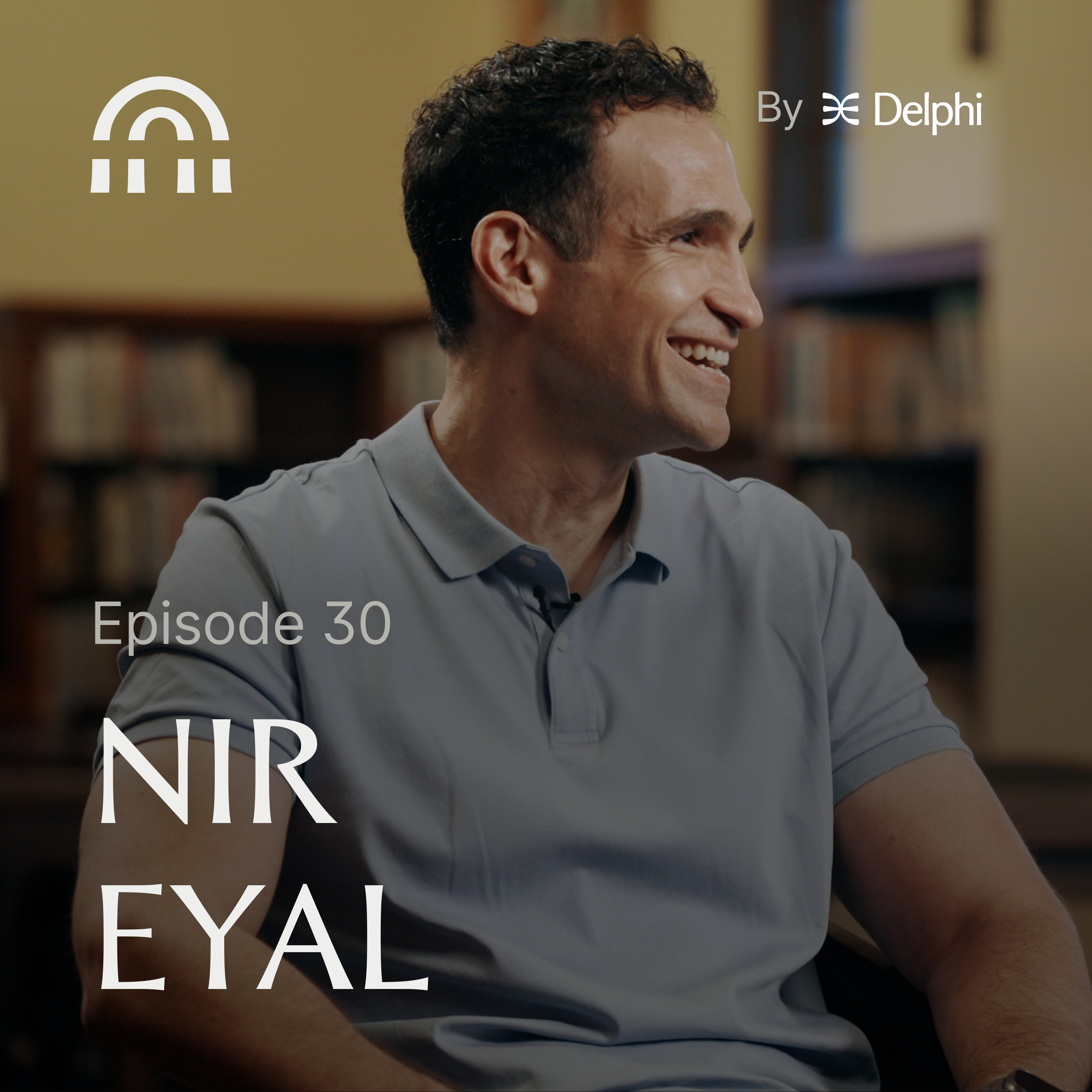
How habit-forming products work (Nir Eyal’s Hooked model) and how users can reclaim agency (Indistractable). The episode argues products “change a feeling,” not just behavior, and that engagement can’t be bought—only designed. It also discusses ethical behavioral design and distinguishes addiction from distraction.
Nir Eyal, author of Hooked, Indistractable, and Beyond Beliefs. Background includes writing about habit-forming product design and attention-saving systems; he also founded/ran companies and advises startups on responsible behavioral design.
Written by AI. May contain mistakes.
Explore why some products succeed and others fade away, like Clubhouse.
“It's so amazing to talk to you here in my home city of Houston, Texas.”
Discover the Hooked model and its role in creating habit-forming products.
“So the hooked model, we can talk about what the hooked model is, but essentially where it's helpful is in the very early stages of a business.”
Learn how to effectively prioritize product features amidst numerous requests.
“And so you can answer that inquiry with just five questions, which we can talk about.”
Understand the GEM framework: Growth, Engagement, Monetization in business.
“And what kind of businesses need a habit?”
Learn what types of businesses need to form customer habits for success.
“There's lots of business models that don't require habits, right?”
Explore the significance of frequent use in establishing product habits.
“So it used to be my focus, and a lot of what I write about is more consumer web products because that's what people know and understand so I can talk about them.”
Delve into the concept of internal triggers and their role in consumer behavior.
“We have an idea, we think it's great, and so we start putting in place all the systems to make that experience more efficient.”
Learn the four steps of the Hook Model: Trigger, Action, Reward, Investment.
“I mean, that's the seat of all human motivation.”
Discuss the evolution of products and the increasing importance of the investment phase.
“And to answer your question, there are three kinds of variable rewards.”
Learn how AI algorithms enhance user engagement through personalized experiences.
“but because of the algorithm learns from you and it will serve you content based on your interests.”
Discover the key indicators that signify the establishment of customer habits.
“So that just to finish the hook, through successive cycles, trigger, action, reward, investment, the way you know you actually have a customer habit is that you don't need the external triggers.”
Explore the evolution of product customization and its impact on user expectations.
“Just check the link in the comments or description.”
Understand the obstacles in creating habit-forming products amid high user expectations.
“like a friend, that feels more like a conversation tailored to what the customer actually wants when they want it.”
Learn about the important ethical tests for using behavioral design effectively.
“I'm curious if you think, is there another way?”
Examine the economic consequences of gambling and the perceptions of social media.
“You know how hard it is to get people to use your freaking product.”
Understand the distinction between addiction and habitual behavior in media usage.
“Where's the outrage about all the money that is being thrown down the drain because of legalized gambling?”
Discuss the ethical implications of using behavioral design in product development.
“And maybe we should legalize it, but the way we've legalized it is completely stupid.”
Explore the shift towards consumer-centric business models and their implications.
“No, that's probably a good thing The first rule of drug dealing is never get high on your own supply.”
Discover how FitBot effectively applies the hook model to promote fitness habits.
“And like they know how Mark achieved success where you were saying Mark did not think he was trying to get people addicted.”
Learn the importance of identifying and targeting the right audience for product usage.
“And I went to the settings, and they had a little email there, you know, for customer support, and I emailed them.”
Understand how individuals can reclaim agency over technology and their habits.
“If you try and please everyone, then you satisfy no one.”
Exploring how people blame technology for distractions instead of taking personal responsibility.
“But let's think about this for a second.”
Discussing how technology creates new problems rather than solving existing ones.
“Like literally every new technology we freak out about.”
Differentiating between genuine addiction and simple distraction in media consumption.
“Today there is hunger, but it's caused because of political reasons.”
Examining the ability to control technology usage rather than being controlled by it.
“Which is defined by actual getting harmed.”
Analyzing how media outlets profit from fear and sensationalism rather than delivering the full picture.
“versus what I'm saying is there's nothing wrong with this stuff.”
Understanding the difference between short-term discipline and long-term systems to manage distractions.
“They're going to tell you the sensational stuff, the stuff that's going to get you angry, the stuff that's going to keep you reading.”
Strategies for understanding and managing internal triggers that drive us to distraction.
“Let's say I know that any time I scroll Twitter, use TikTok, I end up more exhausted, more anxious.”
The importance of scheduling time for activities to maintain focus and avoid distractions.
“I actually went and I bought myself a word processor from the 1990s, and I got myself a flip phone with no internet connection.”
Defining distraction and traction, and how to align actions with intentions.
“The opposite of distraction is traction.”
Techniques for reducing external distractions caused by notifications and alerts.
“There's a few steps for figuring out your values and turning your values into time.”
Discussing the importance of being comfortable with discomfort to improve focus and presence.
“I went to the hardware store, and I put this outlet timer into my wall.”
Debunking the myth of dopamine's role in addiction and distraction.
“And boy, do I wish that we'd stop using the word dopamine.”
Explore how limiting beliefs can hinder motivation and well-being.
“You know, it's so far removed from what is actually happening and what is actually useful that it's so meaningless.”
Discussion on the placebo effect and its surprising implications.
“From your research, what has been the most maybe like mind-boggling story of how a belief has substantially changed someone's life, despite maybe the evidence of that belief?”
Learn about the nocebo effect and its psychological ramifications.
“he ran a study for irritable bowel syndrome, which he's found is highly responsive to the placebo effect.”
A compelling story illustrating the power of belief on physical health.
“Mimicking those sensations until they become true.”
Exploration of ADHD's influence on self-identity and perception of limits.
“Well, if it could be 1%, could it be 20 %?”
Learn how beliefs shape leadership and decision-making in organizations.
“of why a company was built in the first place.”
Discover how a strategic lie transformed Serena Williams' performance.
“Well, do you ever notice, by the way, the word belief?”
Explore criteria for determining when to persist or quit in endeavors.
“When you quit and it was a good decision to quit, you say, oh, I'm so glad I got out.”
Understand the importance of self-reflection in identifying limiting beliefs.
“So not everyone is going to have the privilege of having a one-on-one conversation with you.”
Learn how to manage emotions and beliefs to improve public speaking.
“like if you talk to my Delphi and ask it, here's a situation I'm dealing with.”
Learn how changing beliefs about physiological symptoms can improve performance.
“Right now, I'm getting these sweaty armpits.”
Discover how interpreting emotions can change your experience of stress.
“I choose to believe that because I do better.”
Explore how altering beliefs about feelings can influence energy and motivation.
“Well, I'm going to change my feelings about coffee and hopefully be more energetic.”

Get the gist, explore an idea or ask about something said.
 Claude
On The Library of Minds, what are the key points of this episode?
Searching your listeningAutomatic transcript. May contain errors.
0:00Dara, do you know the first rule of drug dealing? I do not. And I'm curious why certain products stick while others, even ones that people love, like Clubhouse, don't stick.
0:09Nir Eyal: All products, whether it's this water, whether it's AI, whether it's the cotton gin, what they're fundamentally doing is changing a feeling. How would you advise maybe someone who is addicted to gambling or addicted to smoking pot or addicted to technology? We love thinking it's Zuckerberg. It's not my fault, it's them. But let's think about this for a second. Let's back up. There's a big push around staying away from your phones, like being in the real world. Why is social media so much worse than watching golf on TV? All right, everyone's super excited to have Nir Eyal here. He's the author of Hooked, Indistractable, Beyond Beliefs where he's written about how to make habit-forming products, how to save your attention from such habit-forming products and how beliefs can drive the behaviors that you have every single day.
0:55It's so amazing to talk to you here in my home city of Houston, Texas. My pleasure.
0:59Nir Eyal: Honored to be here. Thank you. So your book, Hooked, actually has had a big role in how I think about product. It's about how products can become habits. And I'm curious why, in your own words, why certain products stick while others, even ones that people love, like Clubhouse, don't stick. Yeah, yeah. So I used the tool for two reasons. So the hooked model, we can talk about what the hooked model is, but essentially where it's helpful is in the very early stages of a business. So in the napkin sketch idea, which I think I have an idea for a product. It needs to be habit forming. Not that every product needs to be habit forming.
1:39Nir Eyal: It's that every product that needs a habit needs a hook. So the idea is that you take it out in the beginning stage before you put a lot of the money into engineering and design and all the company infrastructure. If the business model needs a habit, does it have a hook? And so you can answer that inquiry with just five questions, which we can talk about. Or as a diagnostic device, if you have a product that's up and running and it isn't bringing people back, then you can use it as a tool to figure out why. So one of the things that I started two companies, and one of the things that was always super challenging was we had a wall of different requests, right?
2:20Nir Eyal: a wall of different things we'd like to do, but prioritizing was always the hard part. That's always the challenging part. There's so much you could do. And who do you listen to? Do you listen to your customers? Do you listen to the VCs? That's always a bad idea. Do you listen to the team? Do you listen to your loudest customer? Which customer? It's so difficult to understand what to prioritize. So I wanted to create a tool that we could look at together and say, ah, okay, I see what's going on. The investment phase is weak, or the variable reward isn't good, or we haven't picked the right internal trigger.
2:51Nir Eyal: By asking these questions, you can figure out why isn't the product engaging enough. And what kind of businesses need a habit? You said if the business needs a habit. Right. So this is not magic pixie dust that, poof, every business becomes super successful. And by the way, a great product doesn't necessarily mean a great business. Yeah. So the first order question is what makes for a great product? And I like to use this framework called the GEM framework, which I think Reid Hoffman developed, which is every business needs to be a gem. So growth, engagement, and monetization. So growth is how do you profitably acquire customers.
3:25Nir Eyal: Engagement is how do you keep them coming back. And then monetization is how do you sustain that by having a cost of acquisition that is less than the customer lifetime value. So what I specialize in is just engagement, which I actually think is the most important piece because you can always buy growth. The score can take care of itself once you get engagement. Right, exactly, exactly. Exactly. And that's what you should raise money for. The reason you should go get venture capital is you say, look, we've got engagement. We have a plan for monetization. We need growth. Well, you can always go to Zuckerberg and give him a bunch of money and he's going to drive Facebook ads or you can buy billboards or you can throw parties or whatever.
4:00Nir Eyal: You can always buy growth. You cannot buy engagement. You cannot buy engagement. Engagement must be designed into the product or you can't keep people coming back. And so what I've seen in my career now for over 20 years, is companies that raise a bunch of money over investment excitement. And they end up being what's called a leaky bucket, where they have some initial traction. A few people are using their product. And oh, my God, this could be so huge. So they pour a bunch of money into growth before they've really nailed that customer habit. And we have what's called a leaky bucket. Lots of customers come in and a lot of them leak out.
4:37Nir Eyal: And so I think the first step of those three, growth, engagement, monetization, should be can you keep your customers? Now, you asked what type of businesses need habits. There's lots of business models that don't require habits, right? So if you, for example, if you sell car insurance, okay, you don't use car insurance unless something awful happened, right? If you got in an accident, God forbid, then you need to go call your insurance company. But it's not a habit. You buy it and you kind of forgive it. It's a sales-driven process versus a product-led initiative. So the products that need people to come back, and the cutoff from what I've seen in my career is a week's time or less.
5:19Nir Eyal: Larry Page calls it the toothbrush test. He said he doesn't want to work on any product that isn't used with the frequency of a toothbrush twice a day. That's kind of the minimum bar. I've seen it's not quite that frequent that you can still build a habit where it's at least once a week. So if the behavior you want the user to do doesn't occur within a week's time or less, very difficult to change a consumer habit. There are some exceptions, but they don't make the rule. It needs to be a product whose business model needs the customer to come back at least once a week, or they forget you exist.
5:51Nir Eyal: So it used to be my focus, and a lot of what I write about is more consumer web products because that's what people know and understand so I can talk about them. But the same rules apply for the enterprise. Right? You need people in the company using it. Exactly. If you don't use the product, you're eventually going to churn out and stop paying for it. Yeah. So it's not necessarily that the line of demarcation is enterprise or consumer web. The line is frequent or infrequent. If the product is not used frequently, I actually wouldn't suggest building a habit at all. You've probably seen enough people implement the Hooked framework that I'm curious if you've seen a difference in success between the people who plan out the Hooked model before building and plan out wall building as like the leaky bucket, filling in the holes.
6:34Nir Eyal: Yeah. Well, I've seen both work. It does give you, I think, a better filter. Because what tends to happen is we prematurely optimize. We have an idea, we think it's great, and so we start putting in place all the systems to make that experience more efficient. And that leads us to a local maximum, even when there might be a much bigger opportunity somewhere else. So I think it's much better as early as possible to look at the idea through the hook model so that you have a good sense of all the possible ways you can solve the customer's problem. Because look, at the end of the day, what do products do?
7:15Nir Eyal: What are products for? All products, whether it's this water, whether it's AI, whether it's the cotton gin, it doesn't matter, all products. What they're fundamentally doing is changing a feeling. That's not something we think about. We think about all the functional needs and, oh, the product needs to do this and that and the other. And we think about the technical requirements. As an emotion. At the end of the day, exactly. It's changing an emotional state. It's manipulating a feeling that the user seeks to get out of. I mean, that's the seat of all human motivation. So if you want to change consumer behavior, enterprise, consumer web, doesn't matter, you have to focus on what's called that internal trigger.
7:50Nir Eyal: The internal trigger is an uncomfortable emotional state that we seek to escape. I'm thirsty, then I need water. Whether it's I need to do some kind of task, what am I going to turn to? So figuring out the emotional need, first and foremost, when you start with that internal trigger, that's the first step of the HOOP model, then you open your aperture. You don't bind yourself into, oh, I have this solution, now let me go find a problem. That's what most entrepreneurs do. There's some cool technology. We're searching for the nail. A lot of that in the AI era. Yeah, today it's AI. Last week it was crypto.
8:22Nir Eyal: The week before that it was social media. It's constantly changing, but people look for, okay, here's the new tech. How do I find the problem that that tech could address? And sometimes you get lucky. I think a much better place to start is, what's that need I'm looking for? And then out of the universe of different technology, how can I pick and choose what will solve the consumer's problem better? Yep. Does the hooked model in your mind change at all when you compare single player consumer tools to destinations like Product Hunt, Twitter, where it's really about the network. So I'm curious how the hook model evolves when you're trying to build a new destination versus just a tool.
9:02Nir Eyal: Yeah. So maybe it's a good point to kind of walk through what the hook model is. So the hook model has four steps. We have a trigger, an action, a reward, and an investment. And it's through successive cycles through these hooks that customer preferences are shaped, that our tastes are formed, and that our habits take hold. So the first step is the trigger, and there are two kinds of triggers. The most recognizable is what's called an external trigger. An external trigger is anything in our outside environment that tells us what to do next. A ping, a ding, a ring, anything with some kind of information that says here's what you should do next.
9:37Nir Eyal: That's an external trigger. We'll talk about the internal triggers in a second. The next step is the action phase, the simplest behavior done in anticipation of a reward. And I mean simple, simple, simple, simple, right? So scrolling a feed, opening a dashboard, hitting a play button, getting to a chat interface, the simplest thing done in anticipation of a reward. And that is a huge, we can talk about where technological advancement comes from, but that's really where you have the most leverage is figuring out how do you shorten that distance between the recognition of the need and the payoff and the satisfaction of that need.
10:12Nir Eyal: Then comes the variable reward. The variable reward is kind of the engine of the hook model. And for a habit-forming product, it's not good enough just to give people what they want. You have to have an element of variability. Why? This comes from the work of B.F. Skinner. Skinner was a psychologist back in the 1950s and 40s, and he did these famous experiments where he took pigeons and he put them in a little box. Today we call it a Skinner box. And he gave these pigeons a little disc to peck at. And every time they pecked at the disc, They would receive a reward a little food pellet. So very quickly Skinner could train his print pigeons This is called operant conditioning if the pigeon was hungry.
10:50Nir Eyal: Okay peck at the disc get a reward great This is how we train our pets our children our husbands, right? This is how we train behavior operant conditioning Then one day Skinner walks into his lab and he checks his pockets and he doesn't have enough of these food pellets He's run out of these food pellets. So what does he do? He doesn't give the pigeon a reward every time. He only can afford to give the pellet once in a while. So sometimes the pigeons peck at the disc, nothing happens, nothing comes out. The next time the pigeon does receive the reward, and what Skinner observes is that the rate of response, the number of times a pigeon pecked at the disc increases when the reward is given on a variable schedule of reinforcement.
11:29Nir Eyal: So that is why we see all sorts of products that are habit forming from social media to AI chat responses to video games to sports right to the news the first three letters of news N-E-W it's what's new nobody wants yesterday's news they want to know what they don't know today It's variability. Yeah, why do we obsess about sports? Right we are crazy about sports because there's uncertainty about where this stupid ball is gonna go on a pitch or a net. Who cares? It's just a ball. There's uncertainty about it. It engages us because we don't know what's going to happen. The stock market, right? Day trading is a wonderful way to lose money.
12:07Nir Eyal: Crypto trading, right? We don't know where it's going to go. And we love trying to bring control to something that is uncontrollable. So that element of variability and surprise is at the core of the hook model. And to answer your question, there are three kinds of variable rewards. Rewards of the tribe. So for example, a platform like Product Hunt or X or any kind of social media platform, tribe. We have hunt, which is about the search for information or material rewards. And then rewards of the self, which is about mastery, completion, and competency. So there's three kinds of variable rewards.
12:37Nir Eyal: We can get into more depth if you like. But just to finish the four steps, the last step is the investment phase. The investment phase is the most important phase of the Hooked model in the age of AI. So when I wrote Hooked back in 2014, I predicted that this would happen. That I didn't call it chat, I called it conversational UI. Sure. So I could see that in the future, as computational power would increase, the most logical interface that would encapsulate the Hoke model would be some kind of chat interface. I couldn't do it back then. I was investing in companies that failed because they didn't have the background.
13:13Nir Eyal: The chatbot era, yeah. That was quite the time. If you're early, you're still wrong. Yeah, I've learned that. But this is the most important phase. Today, I think, it's most neglected because most people think when I build a product, you know, build a better mousetrap and the world will beat a path to your door. So just give people what they want. It's not good enough. Habit-forming products do something very special. Unlike this chair, my clothing, your car, these things depreciate. They lose value with wear and tear. Habit-forming products, because of this investment phase, need to appreciate.
13:48Nir Eyal: They need to get better and better the more you use them. So some of the best examples that we saw when I first wrote Hooked was social media. Because of the social media legendary algorithm, this was a new concept when I wrote about it in 2014, now everybody knows about it, is that it gets better and better, not just because of the network effects, but because of the algorithm learns from you and it will serve you content based on your interests. Well, now the AI companies are all doing this in spades and it's wonderful, it's amazing. It makes the product, the more you use it, the more there's lock-in to use that product because it knows all about you because the data you've given it.
14:21Nir Eyal: So the investment phase is the most important. And I think this is where there's the most opportunity for startups today is to look at how you can revolutionize industries by using that investment phase. So that just to finish the hook, through successive cycles, trigger, action, reward, investment, the way you know you actually have a customer habit is that you don't need the external triggers. You don't need the spammy messages. You don't need the notifications because the customer is triggering themselves from an internal trigger. So if the customer constantly needs to be reminded to use the product, you do not have a habit.
14:54Nir Eyal: It's only when the product is associated with boredom, loneliness, fatigue, uncertainty, anxiety, and emotion that you become the first solution for, the first two-mind solution. Now you've built a habit. Sure. Enjoying the conversation? Got a question? You can ask Nir's Digital Mind. Just check the link in the comments or description. Yeah, I mean, I feel like now, because everyone has access to AI agents, very few people are even checking their emails anymore. So are there any other parts of the Hooked model that are evolving with AI? Like I imagine external triggers becomes a lot harder because I don't know about you, but I get 50 emails a day from people using AI tools.
15:32It's like, Dara, founder of Delphi, you're from Houston, Texas, we should hang.
15:36Nir Eyal: I'm like, no, not doing that. Yeah, yeah. So I think the investment phase is where I see the most opportunity. Now it's kind of in this infantile stage where we're just taking publicly available information about people and making it look like something is personalized. I think what we're going to see in a few years is that every product is going to personalize the experience for every customer. So it's almost like what we saw during the Industrial Revolution when Henry Ford famously said, you can have any color of Model T as long as it's black. It was kind of a joke that you could have any color Model T as long as it's black because that's all he made.
16:10Nir Eyal: He only made black cars because it was really hard back then to make cars of different color. Well, today we've got cars in all kinds of shapes and sizes and colors because we've been able to mass customize. There's a next level that's coming because I think what will happen in the future is that if you don't customize your product experience when it comes to digital products for your customer, right? The rudimentary version is going to be customizing your website, but that's on the way out. It's going to be, there needs to be some kind of customized experience that feels more like a friend, that feels more like a conversation tailored to what the customer actually wants when they want it.
16:47Nir Eyal: And so every customer will expect to have almost private service. And if you don't do that, right, for a while we were kind of concerned, oh, consumers are, you know, they don't want to share private information. It's just so compelling that I can't see a future where people will not provide that information. And in fact, if you don't use that information, they'll think your company sucks. They'll think your service is terrible because it's not customized. The expectation of what people expect has just gotten so high. How so? Have you seen it? I mean, immediately, if someone signs up for your product and you can't immediately find everything about them online, like deep research them, they're like, but this is like a 2020 company.
17:25Right. So they expect to land and for things to just work. Right. No effort needed. Right, exactly.
17:32Nir Eyal: That's what they're going to expect. And now we can do it. We can actually deliver it. And if you don't do it, your competition is going to do it. Definitely. So habit-forming products make sense because if you want to build a business, a lot of, I guess, pre-AI businesses were built on attention farming. You know, you get more users. You can run ads. You can run all these things. I'm curious if you think, is there another way? And, you know, is there a new kind of business model where maybe habit forming is no longer the North Star? There's a big push around staying away from your phones, like being in the real world.
18:08I'm curious how you think about what the next evolution of software products might look like, given that there's definitely a push against addiction and, you know, staying on your phones and maybe building software that maybe promotes your goals and your well-being. Yeah.
18:23Nir Eyal: Well, I think in Hooked back in 2014 when that was published, I had what was called the manipulation matrix because I saw where this was going. And I advised startup entrepreneurs to use the book and to use these methodologies responsibly. And the guide I gave people, which I still give people today, it hasn't changed, is this two-part test that just because you can use behavioral design doesn't mean you always should. Sure. First of all, you know, let's just set the stage properly. The problem that most companies have is not that people are getting addicted to their products. Right. Should you be so lucky?
19:03Nir Eyal: You know how hard it is to get people to use your freaking product. Yeah. Yeah. You know, let's talk if your product is addicting people. OK. Like that's almost nobody's problem. You know the big the video game companies the gambling companies I I think actually that you should focus much more attention not so much on how we waste time But how we waste money I mean what really gets my goat is that we we freak out about social media as being such a time waster. I Don't understand why is social media so much worse than watching golf on TV? Like wouldn't you rather interact with people in some way or at least let's call them neutral than staring at the boob tube watching some game on TV.
19:45Nir Eyal: What's the difference? But we love to pass these moral judgments. We're talking about for adults. There's a whole other conversation about kids. But we kind of see video games and social media. That's wrong. But staring at the boob tube, that's old. And so it's not. I like it. Whereas I think what's much more scary and why I've never worked with these companies, there's certain industries I will not touch. I think what we've done in this country with legalized gambling is a disaster. and nobody talks about it, right? Where are the films? Where's the outrage about all the money that is being thrown down the drain because of legalized gambling?
20:21Nir Eyal: Sure. I mean, and it has real consequences, right? If you wasted your time on watching too many, you know, TikTok videos, okay, you probably would have wasted your time, you know, watching sports on TV or something or soap operas in the day, right? Like if you just took away social media, people wouldn't start reading Chaucer and Shakespeare in their spare time. They probably would have wasted time some other way sure but money you can't get back cannot get back right you are not You are being put into debt and that is going to have a severe impact on your entire life because you can't get that money back And we just legalized gambling without anybody looking I think also pot, you know, we legalized Cannabis and I was for it and I was wrong.
20:59Nir Eyal: I did not understand You know the amount of people who are actually addicted to social media it's single digit percentages. When you look at the actual definition of addiction, a compulsive dependency that harms the user, that's single digit percentages when it comes to media. Cannabis, did you know 15 % of people who smoke cannabis have a cannabis use disorder? No. 15%. That's huge. People's lives are being ruined. And maybe we should legalize it, but the way we've legalized it is completely stupid. All the news is lawsuits against Meta on making people, specifically kids, which I guess is a bit different.
21:37Yeah, kids, I think, is a separate category. We can talk about that.
21:39Nir Eyal: But talk about where we should turn our public attention. And the reason we don't do that is because the governments are making tons of money on cannabis and gambling. They're not making any money on social media. Yeah. So they want their pound of flesh. That's a much more pertinent, I think, public health issue. But to answer your question, sorry, I got a little derailed there. No, it was great. I love that. I think first, do you really addict people? So very few companies, at least startups, are actually addicting people versus if you're lucky you've built a habit. And I think starting from that business model is the place to go.
22:11Nir Eyal: And then if you want the ethical test, the ethical test I've always given people is two parts. So one is, does this materially improve people's lives? Can you look in the mirror and say to yourself, yes, what I'm working on materially improves people's lives? That's the first question. Most people stop there. I think there's another question that's even more important Which is I want you to ask a question that gets you to break the first rule of drug dealing Dara, do you know the first rule of dirt? Do not you don't have the first rule? No, that's probably a good thing The first rule of drug dealing is never get high on your own supply.
22:46Nir Eyal: Okay, okay never get high on your own supply so the second question is am I the user? Okay, so there's a two-part test if you want to use this stuff ethically Does it materially improve people's lives? And am I the user? If you can answer in the affirmative to those two questions, you're what I call a facilitator. You can use this stuff. Go for it. Now, might there be negative consequences to your products? Of course. But I don't think that when Mark Zuckerberg started Facebook in his dorm room, he was thinking about all the implications decades later. And that's what I think is the right now there's a new wave of consumer founders.
23:21Everyone wants to be a consumer founder. and the kind of north star is, oh, let's just get as much engagement as possible because then we can run ads. So we need to make this as engaging as possible. And we've had to face the same question. I don't want to build an addicting product. I use Delphi. I think it's like net positive. But like ultimately, consumer, the business model, you get more money the more people use your product. So there's definitely people trying to recreate what Mark did, but doing it in a way that he definitely did not do it. Does that make sense? In a negative way? And like they know how Mark achieved success where you were saying Mark did not think he was trying to get people addicted.
24:01Where people are now trying to get people addicted because they know that's the cleanest path to a consumer business model. I don't necessarily think it's the only path.
24:09Nir Eyal: I think what we're seeing is that if you provide real value, that's fantastic. I mean, I'm thinking about, you know, in a second edition of the book, in the first edition, I didn't have companies that were built with the hook model in mind. With the second edition, I had lots of examples. And one of them, I wrote an article years and years ago that was titled, Your Fitness App is Making You Fat. Because I was so frustrated back in the day with all these workout and exercise apps that were all awful. They were terrible. I think they were actively harmful. And so somebody, one of my buddies, sent me an app and said, Hey, I read your article, but have you seen FitBot?
24:47Nir Eyal: I said, No, I haven't seen it. I installed it. and I looked at it, I was like, holy crap, they've done it. This is the hook model in an app. And I went to the settings, and they had a little email there, you know, for customer support, and I emailed them. And I said, hey, just curious, have you by chance read my book? And within 30 seconds, the CEO writes me back and says, yes, we designed the product with the hook model in mind. Oh, that's amazing. And they're killing it. Like today, I can't go to the gym. I credit them with getting me back in shape because I can't go to the gym today without using Fitbot.
25:16So this is all Fitbot? This is all Fitbot. Thank you, Fitbot.
25:19Nir Eyal: I wish I was an investor. I couldn't invest because of ethical reasons. But they're doing great, right? They've managed to hook people onto... Now, it's not... There's a lot of interesting things they did. One of the things they did that was so smart, and I think this is a very wise insight, they didn't try and get unfit people to be fit, okay? Because that's not going to be a habit, right? That's not going to be a habit. No. It's very, very... What's the definition of a habit? A habit is a behavior that is done with little or no conscious thought, okay? So getting people who don't exercise to go to the gym consistently.
25:53Nir Eyal: A lot of energy. A lot of energy. A lot of energy, yeah. What they focused on is on the person who's already going to the gym, who doesn't want to pay for an expensive personal trainer, but when they get to the gym, they don't know what to do. That's the habit. So what was the internal trigger? The energy's already there. Exactly. They're already in the gym. The internal trigger was uncertainty. It wasn't, I need to get fit. It was uncertainty. What am I supposed to do right now? That's the internal trigger. The action is to open the app. The variable reward is what is the app going to tell me to do?
26:21Nir Eyal: And the investment is every time I do a set, I'm logging my weight, reps, etc. in the app so that the next time I use the product, it already preloads a workout based on my last workout. So if today I did arms, the next day it's going to say, okay, now do back or whatever. Yeah, very similar. The kind of users we're going after are people who already read books. They already listen to podcasts. They're already looking for advice. in some way. We're not going after people who are playing video games and they don't care about learning or advice or any of that. Probably the most common mistake I see.
26:54If you try and please everyone, then you satisfy no one. For sure. I think your point on gambling and weed is a good segue to your next book, Indistractable. You talk a lot about agency. I actually really like your kind of contrarian take that it's not the algorithm. Like you have agency over the algorithm. And how would you advise maybe someone who is addicted to gambling or addicted to smoking pot or addicted to technology, which isn't as a problem as others, to reclaim agency so that their power is in their hands. Yeah.
27:33Nir Eyal: So it's important to separate an addiction. So an addiction is a persistent compulsive dependency on a behavior or substance that harms the user. Sure. And that's 1 to 5 % of the population. So not every product that is addictive addicts everyone. Sure. a lot of us have a glass of wine with dinner. We're not all alcoholics. We enjoy sex. We're not sex addicts. So it's ridiculous to think that, oh my God, everyone is getting addicted to social media. It's kind of a cop out, frankly. Because even the word addiction comes from the Latin addictio, which means slave. We love thinking it's Zuckerberg.
28:04Nir Eyal: We love thinking it's TikTok. It's a classic victim mindset. Oh my God, it's so convenient. It's the best. It's not my fault. It's them. But let's think about this for a second. Let's back up. do we seriously think that our biggest complaint right now is that the products and services that we use are too good what exactly do you want netflix and facebook and apple and what are hey netflix your shows they're too good stop making them interesting yeah youtube you know stop stop serving me good content that i enjoy it's stupid it's ridiculous yeah when you don't go to the gym you feel bad you blame netflix exactly exactly it's the easiest thing in the world and people have always been doing this right we know that all the way back to socrates and Plato, people were talking about how distracted people are these days.
28:43Nir Eyal: This is nothing new. And I remember saying, like when the Social Dilemma movie came out, terrible film, when it came out, I remember telling people, just wait, just wait, this is going to fade over. And now the exact same people who were chicken little calling the skies falling about social media, same exact people are saying it about AI. This always happens. Like literally every new technology we freak out about. Not that it doesn't have harms, right? For sure. Paul Virilio, the philosopher, said, when you invent the ship, you invent the shipwreck. Of course technology is going to have new problems.
29:13Nir Eyal: People fundamentally misunderstand what technology does. Technology does not solve problems. Technology does not solve problems. That is too big of an ask. Technology gives us better problems. That's the role of technology. I mean, he's just fire. Yeah, it gives us better problems for us to solve. So, you know, a few generations ago, I remember when I grew up, my parents would tell me, you have to eat all your food because there are children starving in China. That sounds ridiculous today. Like children in China are doing great. Same, same. Right? Why? Because this technology has gone from what we used to have for 200 ,000 years of human history.
29:51Nir Eyal: There was never a time without mass starvation somewhere on the planet. This is the first generation in history where there isn't starvation that is caused by true scarcity. Today there is hunger, but it's caused because of political reasons. Human conflicts, yeah. Yeah, conflicts. It's not caused because of scarcity. First time in human history. But now the cost of all that abundance is we have obesity, we have heart disease, we have smoking, we have all these problems of excess, of affluence. So technology doesn't solve problems, it gives us better problems. So the price of progress, the price of living in an age where you have all the information at your fingertips, is that, yeah, it's pretty entertaining, right?
30:30Nir Eyal: Can you imagine if our great-grandparents were listening to us? Like, really? This is your big problem? Yeah, slap in the face. Right, exactly. So I think that's a good perspective to back up and understand how fortunate we are to even have this problem in our set. Now, I think kids is a whole other debate. We can talk about regulations for kids. But I think for the average person, if you're not actually pathologically addicted, which 1 % to 5 % of the population is, so 95 % chance that's not you. Which is defined by actual getting harmed. Right. It's persistent. It's compulsive. And it has to harm you.
31:07Nir Eyal: So if you like to watch YouTube videos a lot, but you can take a break and have dinner with your family and have a conversation, you're probably not actually addicted. You're just distracted. If using TikTok before bed hurts my sleep quality, does that make me an addict? Okay, well, let's do a test. Let's do a test. If I asked you, if I said, hey, for the next week, for every night that you don't check TikTok before bed, for every night that you put your phone outside the room and charge it outside the bedroom, I'm going to give you$500. What do you do? Take the$500. Right? 100%. Okay. So we've settled on the fact you can.
31:48Yeah.
31:49Nir Eyal: You're not addicted. Not addicted. Okay. We've settled on the fact you can. Now we're negotiating the price. Would you take$400? Would you take$200? Would you take$300? So now we're just negotiating on the price. And now it's a matter of how much you want it. So this is the thing we need to get our heads out of our ass and realize we can do this. The problem is we don't want to do it. That's the thing. So I'm not talking to those people. If you want to blame the tech companies all day long and that makes you feel good, go for it. Waste your life away. Because as you're complaining about the tech companies, this is what you're doing.
32:21Nir Eyal: versus what I'm saying is there's nothing wrong with this stuff. Again, asterisks, kids are a different question. We can talk about that. But for consenting adults, none of this stuff is bad for you if you use it on your schedule and according to your values, not someone else. It's certainly not the tech company. Sure. Because all media, what kills me is you'll see these stories on CNN or the New York Times or Fox News or Netflix complaining about big bad social media Meanwhile, what the frick do you think the business model of all media is? All media monetizes your eyeballs. It's the same business.
32:59Nir Eyal: I mean, the irony of irony, right? That Netflix is telling me to stop my social media habit. I mean, come on. It's the same psychological manipulation. And it's fine. Fear cells. There's nothing wrong with it. I'm not saying that there's anything wrong with that. Yeah. It's up to us as consumers to realize, like, does anybody not know that the New York Times doesn't have your best interest at heart? Like, is anybody still questioning that they're going to give you what really happened today? Right? Is that really? You think they're going to tell you about all the flight that landed safely, about all the people who were pulled out of poverty today?
33:29Nir Eyal: No. They're going to tell you the sensational stuff, the stuff that's going to get you angry, the stuff that's going to keep you reading. And they're never going to tell you to stop. The New York Times, right? I'm not talking about Facebook. Same thing. And people say, oh, but Facebook has algorithms. Do you think the New York Times doesn't have algorithms? They got algorithms. Of course they do. They're watching every day how much you're reading, and they're going to feed you more and more and more to keep you coming back. Yeah.
33:55So it seems like the solution to kind of reclaiming your agency over this is, based on what you said, recognizing that it's not bad, discipline, and intentionality behind how you use it.
34:10Nir Eyal: I would asterisk the word discipline in that discipline works over the short term. It doesn't work over the long term. So rather than discipline, you need a system. Yeah, let's put it in practice. Let's say I know that any time I scroll Twitter, use TikTok, I end up more exhausted, more anxious. I want to stop. Right. So what's the plan? Okay, so step one is master internal triggers. Remember how we said how all products are about manipulating your emotions. You want to go from a state of uncertainty, fear, boredom, loneliness, into some state that doesn't feel that. So recognizing that fact that all products do that, we have to recognize what am I trying to escape?
35:02Nir Eyal: What's that feeling that I'm not really good at dealing with other than using my device? And this is not easy sometimes because, frankly, if you sit down with your kid and you can't take out your phone, you can't help but take out your phone every 30 seconds, it's not the phone. This is autobiographical. This is why I wrote the book because I was doing that. I was with my daughter one day and I found myself constantly checking my phone as opposed to being fully present with her and I hated that. I hated it. And I have to tell you, at first I thought it was the device, right? That's what the conventional advice tells you, that just get rid of your phone, get rid of internet connection.
35:39Nir Eyal: So that's what I did. I actually went and I bought myself a word processor from the 1990s, and I got myself a flip phone with no internet connection. And I still got distracted, right? I would still sit down at my desk and say, oh, you know what? I've been meaning to do some research in that book, or let me take out the trash, let me clean up my desk. So avoidance is a Band-Aid problem, it seems. That's right. That if you don't deal with the deeper reason, you're always going to find something. Whether it's too much booze, too much news, too much football, too much Facebook, you're always going to find a way around it.
36:09Nir Eyal: So you have to have strategies in place to deal with that discomfort, okay? So which means you have to do a little introspection. What is going on? Like, why can't I sit with that feeling? And how can I find better tools? And so there's about a dozen different techniques you can use. I can tell you some to deal with that most important first step, master internal triggers. The second step is to make time for traction. If you find that you're overdoing it on something, one of the best things you can do is to schedule time for it. Because what is a distraction? The best way to understand what distraction is is to understand what distraction is not.
36:45Nir Eyal: The opposite of distraction is not focus. The opposite of distraction is traction. Traction and distraction, they're opposites. They both end in the same word, action, which reminds us that these things are not happening to us. They are actions we take. So a distraction is any action that pulls you away from what you plan to do. Traction is any action that pulls you towards what you did plan to do. So when I talk to people and I say, you know, tell me what you got distracted from. They say, oh, you know, I wanted to do this. I wanted to go to bed. I wanted to do my work. I wanted to be with my spouse.
37:22Nir Eyal: I wanted to do this, that, that. I say, that's your aspirations. show me on your schedule what it was you got distracted from. And they show me their calendar, nine times out of ten, it's blank. It's not there. There's nothing on there, right? There's a dentist appointment or meeting. If you don't plan your day, somebody else is going to plan it for you. So I should schedule reading 30 minutes every night before bed instead of social media? And the social media time in a different part of your day. So in my day, 7 o 'clock every night, that's my social media time. Nice. I go online for an hour and there's nothing wrong with it.
37:54Nir Eyal: I enjoy it. But it's in my schedule. It's done with intent. So I turn the distraction into traction. And in fact, if I do anything else, that would be distraction. So it's in my schedule. So you cannot say you got distracted unless you know what you got distracted from. Okay, super important lesson. You can't say you got distracted unless you know what you got distracted from. Because if you didn't say what you wanted to do, everything's a distraction. So you need to do it with intent. So put in your schedule, social media time. I'm going to do it for an hour and and then I'm gonna do something else.
38:25Nir Eyal: So that's step two. And there's a step to do that. There's a few steps for figuring out your values and turning your values into time. The third step is to hack back the external triggers. So external triggers, those are all those pings, dings, and rings. It's kindergarten stuff, right? Anybody can do it. If you just sit down for maybe 30 minutes, I can show you how to make your phone indistractable. I can show you how to make your computer indistractable. I just got brick. It's great. Okay, those are some techniques. So good. but it's still avoidance. That's actually step four, which is about preventing distraction with packs.
38:57Nir Eyal: We can talk about that. But this is actually on your device, how do you make sure that when you're using it, you're not constantly getting all these pings and dings? That's the easy stuff. The harder stuff is the stuff that feels like productivity, but isn't, okay? That notification of email. Well, I'm supposed to be checking email, right? I'm a professional. People need me to respond. But if that's not what you plan to do, it's just as much of a distraction as checking TikTok. Yeah, creating strategy docs. Yeah, exactly. The most wasteful thing you can do is do things that didn't need to be done.
39:32Nir Eyal: So going to stupid meetings that you didn't need to go to. Our kids, our kids are wonderful. We love our kids, but they can be also a source of distraction. So we can go through each one of these. We can hack back all these external triggers. I show you how to do that step by step. And then finally, the last step is to prevent distraction with pacts. So pacts are when we decide in advance this firewall against distraction, right? So the brick device, right? In my house, we have kind of a simple version. We have an outlet timer, okay? $5. I went to the hardware store, and I put this outlet timer into my wall.
40:10Nir Eyal: And whatever's plugged into it will turn off, right? Automatically. So what's plugged into it? My internet router and my screens. Okay? So I could find a way around it, right? But now I have to unplug, replug, right? I have to do all this mess. Yeah, put in a little work. So it gives me that bit of friction to think about, wait a minute, what is it that I really want to do right now? Okay? But that's the last step. And there's all kinds of packs you can use. We can talk about that. That's the last line of defense. If you start with the brick phone or if you start with the packs, it won't work.
40:40Yeah, there's shortcuts, but you need to do the internal work first. You have to do the first three steps. Part of doing the internal work, I feel, is teaching people to be okay feeling a little uncomfortable, which is very hard. And maybe this is my pushback on short-form content provides so much dopamine that we stray farther and farther away from being able to maybe feel the, I don't know what the opposite of dopamine is, but a
41:09Nir Eyal: little uncomfortable. So this is why I wrote Beyond Belief. Yeah. And boy, do I wish that we'd stop using the word dopamine. Tell me more. Say more. Because, you know, there's a joke in neuroscience that what's the role of dopamine in the brain? To confuse neuroscientists. Because, and it's even more confusing. We say it all the time, the dopamine squirts as if like dopamine is cocaine in the brain. It is not cocaine in the brain. You get dopamine when we shook hands. You get dopamine when you play the piano, when you play tennis, when you give someone a hug. you get dopamine all day long. Dopamine just reinforces something that the brain wants you to pay attention to.
41:47Nir Eyal: The problem with that kind of language is that it reinforces a belief that we are helpless. Well, it's not my fault. The dopamine squirts. You know, the TikTok with the dopamine. Oh, what am I going to do? It's a dopamine. Yeah, exactly. You know, it's so far removed from what is actually happening and what is actually useful that it's so meaningless. It's a term that we use because it feels right, it feels true, and it's not. And why is it not true? Why is it harmful? Because, and this is why I wrote Beyond Belief, is that when we have what's called a limiting belief, a limiting belief is a belief that decreases motivation and increases our suffering.
42:33Nir Eyal: So what I propose in Beyond Belief is that beliefs are tools, not truths. Beliefs are tools, not truths. Because even if, yes, it's true, TikTok releases dopamine, as does everything. But okay, fine, it's true. How am I likely to behave when I believe there's nothing to be done? Right? Until those geniuses in Washington figure out how to regulate this, well, what can I do? What is that likely to make me do? Act like a slave. Exactly. Right? So even if it's not true, it's good to believe that you have more agency. By the way, it is true. But let's just say for the sake of argument, let's just say you're not sure.
43:14Nir Eyal: Oh, but I heard that this other author and this other scientist said that it's impossible to stop using social media. Okay. I will give you an entire book. I spent six years writing Beyond Belief about all the amazing ways that changing our beliefs literally changes our biology. And the documented cases go on and on and on and on about how important it is to pick and choose our beliefs. Because most of us, we adopt the beliefs that we have from the media, from our parents, from our upbringing. We adopt these beliefs. And we never stop to ask ourselves, wait, is that belief, is that something I truly believe?
43:52Nir Eyal: Is that a fact? Or is it something that somebody put in my head that I've said to myself so many times that it feels true? So this is like the internal work for Indistractable, where in order to change your belief, the first step is to ask yourself. Is it serving you or is it hurting you? From your research, what has been the most maybe like mind-boggling story of how a belief has substantially changed someone's life, despite maybe the evidence of that belief? Where do we start? Okay, so just for the sake of this latest discussion. So a lot of people know about the placebo effect. Yes, I love the placebo effect.
44:28Nir Eyal: Placebo effect is fascinating. Fascinating, fascinating. Unbelievable. And there's some nuance around what placebos can and can't do. For example, placebos don't cure sickness. They cure illness. Sickness and illness are not the same thing. Sickness is in your body. Placebos do nothing for a broken bone. Placebos will not cure cancer. But they will help you with illness. Illness is in the mind. Sickness is in the body. Illness is in the mind. The symptoms of that sickness, placebos are amazing at. Did you know that 80 % of our health care spending in America, 80%, goes to treating illness, not sickness?
45:04Nir Eyal: And does that 80 % go into placebos? I wish it did. We should be using a lot more placebos, in fact. And so there's all this amazing new research that actually shows. We used to think that placebos, you had to deceive someone. We had what's called a double-blind controlled study where both the patient and the person administering the placebo would both... Where they don't know it's a placebo. Neither would have to know that it's a placebo. Then Ted Kapchick, this psychologist at Harvard, he ran a study for irritable bowel syndrome, which he's found is highly responsive to the placebo effect. But this time he calls in his patients and he says, okay, this is a placebo.
45:42Nir Eyal: It says right here on the label, okay, this is a placebo. It has been shown to help some people ease the symptoms of IBS. I want you to try it, okay? So he does this study. these people take the placebo and it turns out the placebo, it's called an open-label placebo, where everyone knows it's a placebo, turned out to be as effective as the leading pain medication for IBS. Furthermore, after the study, people called up Dr. Kapchak and said, Dr. Kapchak, I know the study's over, but can I get some more of those amazing placebo pills? They were amazing. They were fantastic. And they know they're placebos.
46:17Nir Eyal: They know they're placebos. Wait, It goes further. You can go on Amazon right now, type in placebo pills, and you will see for sale jars of pills that say placebo on the label. And underneath those, you'll see five-star reviews for fast-acting relief. But if I buy it and I'm like, this is not going to work, it's kind of a... Well, we don't know. We don't know. If you have a negative perception, we don't know. It turns out that there are things that are happening. Like when a doctor calls you in with a white lab coat and it says MD here and the pill bottle appears to be what medicine looks like, we're not exactly sure where it's happening.
46:57Nir Eyal: Because it's all about your perception of the symptoms. So I've actually been much more receptive to using more placebos in my life. So for example, I just flew in from Lisbon and I'm supposed to have terrible jet lag right now. Right now if it's like 2 in the morning for me. But what do I do? I read somewhere that creatine can have positive effects for cognition. I've read that too. Pretty minor, right? Like the actual facts, eh, shaky. But you know what? When I travel and I'm trying to get over jet lag, I take some extra creatine, right? There's that ritual, and I know that it might have some positive effects.
47:32Nir Eyal: Lo and behold, something's happening. It feels different because, again, it's about perception. So we know that placebos are highly effective for depression, anxiety, insomnia, ADHD. there's some incredible research about what they can do. The flip side, I think, is even more interesting. The flip side of the placebo effect is what's called a nocebo effect. Placebo in the Greek means, I will help. Nocebo is the opposite, I will harm. And this actually, I think we should really be worried about. Like I have nocebo for social media and for coffee. I wish I could drink coffee, but I have this thing that's going to make me anxious and I don't want it.
48:07Really? Yeah.
48:08Nir Eyal: Interesting you say that. There was an amazing study conducted where they gave people who had that exact belief that coffee makes me jittery They gave them decaf and They still got jittery So that's exactly an amazing demonstration of the nocebo effect because if you it's called rumination If you ruminate on I'm expecting to feel jittery You're going to create that psychosomatic response and become hyper vigilant and observant to oh see there's starting I'm starting to feel just my breath my heart you start mocking or you start them Mimicking those sensations until they become true. I'll give you an even better story in the psychology literature There's a study about a guy who's identified as mr A he's anonymized mr.
48:52Nir Eyal: A now mr. A Has a terrible breakup with his girlfriend and he decides he can't do it anymore He's gonna end his life So he goes to his medicine cabinet and he pulls out an entire jar of antidepressants Takes off the pill jar takes every single pill and as he swallows the last one he changes his mind He decides he wants to live after all He rushes over to his neighbor's house. He demands they take him to the emergency room. He gets to the hospital He collapses on the floor. He has the bottle of Antidepressants in his hand and he tells the nurse I took all my pills help me. I took all my pills They rush him into the operating room.
49:32Nir Eyal: They're about to pump his stomach, and they're trying to figure out what did he take. They look at this bottle of the antidepressants, and it doesn't say the name of the medicine. It has a phone number. They call this mysterious phone number, and the person on the other line tells them that Mr. A did not take any antidepressants because he was in a clinical trial, and he was in the placebo group. He had swallowed an entire bottle of placebos. But meanwhile, his blood pressure was plummeting. His heart rate was dangerously low. Wow. And he was slipping in and out of consciousness. So he was displaying physiological symptoms, okay?
50:12Nir Eyal: Like you can't, how do you fake low blood pressure and low heart rate? You can't fake that. And that's what was happening to his body. They tell Mr. A this, okay? They tell him, hey, you know, that was from that control study, that medical study you were in. You didn't take any antidepressants. You took an entire bottle of placebos. Within 15 minutes, his heart rate stabilizes, his blood pressure returns to normal, and he walks out of the hospital totally fine, maybe a little embarrassed. So here's what we should think about. If someone can get such an extreme physiological response, or a response that mimics overdosing on medication, how sure can we be that what we are experiencing is 100 % accurate for the reasons we think?
51:00Nir Eyal: For example, I have ADHD. I've been diagnosed with ADHD. And at first, it was amazing. It explained so much about my struggles. And then what started happening, this was several years ago, then what started happening, every time I would get distracted, I would start down this rumination loop of, okay, there's my ADHD again. Yeah, you're blaming. What's that? You're blaming. Yeah, there's my ADHD. You know, it's a chronic brain disease. I'm never going to get over this. And what if I don't meet my deadline? And why do I have to suffer from this? And other people don't. And I would start ruminating to the point where the diagnosis became the distraction.
51:34Nir Eyal: It became true. Now, I believe ADHD is real. I believe it's also way overdiagnosed. For sure. Anybody can get a diagnosis, virtually anyone, because it's a Likert scale. There's no blood test. There's no x-ray. And so what I started to notice is that I couldn't quite be sure how much of my physiological reaction, it felt true, it felt like I was crazy distracted, how much of that was really my ADHD? Could I be 100 % sure it's 100 % my ADHD? Or could it be 99 % ADHD, 1 % psychosomatic, like Mr. A with the placebos? Well, if it could be 1%, could it be 20 %? Could it be 50 %? I can't really be sure.
52:17Nir Eyal: So if I can't be sure, why would I tell myself something stupid like it's a chronic brain disease? You know, 30 % of people who have ADHD, with practice, overcome their symptoms. Overcome their symptoms. What percentage are you at now? What do you mean? What percentage is ADHD and what percentage is... Okay, so now I don't tell myself it's a chronic brain disease. I tell myself I'm learning a new skill. I'm learning a new skill. because, again, it's a Likert scale. So when they ask you, do you have ADHD, right? They do this assessment and they say, how often do you get distracted, right? Sometimes, never, always, frequent, whatever.
52:55Nir Eyal: If I learn skills that make me get distracted less, I functionally don't have it anymore, right? Now, again, there are extreme, extreme cases, okay? The vast majority of people, I don't think, are struggling with those kind of cases. People like me, where there's no check and balance in the psychiatry industry, right? If you go to get an ADHD diagnosis, you can do it now through an app. You can get it. You're going to get one. Just like you can get weed. Like, oh, I'm struggling with anxiety. Okay, here, you get it too. You can get the doctor's note. And I think that's potentially very dangerous.
53:28Nir Eyal: Why? Because just like how we saw with Mr. A, your labels become your limits. Your labels become your limits. I'm not a morning person. I don't tolerate coffee. I'm a Sagittarius. I am someone who struggles with ADHD. I am overdosing. We can create these symptoms where it's not just what actually happens. It's our beliefs that are creating those symptoms. If you have an organization and you want to educate a group of people to overcome a limiting belief, and I see this a lot in startups, a lot of people are driven by fear, and fear is very effective. but fear at a certain point becomes self-sabotage.
54:15How would you advise a leader to not just change his own beliefs but the beliefs of an organization? Yeah, I'll give you a few examples.
54:24Nir Eyal: So one, remember the big message of my book is that beliefs are tools, not truths. So one example of how you can use it in a corporate context is an example from Amazon. At Amazon, they have these 16 leadership principles. And they're really serious about these principles. Everybody knows these 16 leadership principles. They will say it in email. In meeting discussions, they'll pull out, oh, well, that disobeys this one or that one. One of those leadership principles is at Amazon, it's always day one. It's one of the originals that Jeff Bezos authored. It's always day one. doesn't it strike you as odd that that is a bold-faced lie?
55:08Nir Eyal: Like that is clearly not true. No, it's a two and a half trillion dollar company. It has not been day one for a very long time. But beliefs are tools, not truth. It doesn't have to be true. If we act as if it is day one, we will find savings and pass along those savings to our customers. So at Amazon, it's day one. We are going to act as if it's day one. We're going to believe it is. And so I think having some of those fundamental leadership principles of this is what we believe here. And by the way, it's a mistake to just copy wholesale what someone else does. Every industry needs to think of what are those beliefs that we are going to do no matter what.
55:47Nir Eyal: This is why we see oftentimes that founders are so much better, that first generation founders are so much better at running companies than the private equity firms or their kids that run it later. because those people tend to dissolve those principles of why a company was built in the first place. So having those beliefs, the things that we just believe are true, whether or not they are, right? Customer first, that's a belief. In some industries, it's not good to be customer first. Some industries, you want to be regulation first, right? So having those leadership principles that you are going to run the company by, whether or not it's true, this is what we're going to do because we believe that's going to benefit us at the end of the day.
56:28Nir Eyal: That's one. And then two, from a leadership perspective, I think a wonderful example of this is what happened to Serena Williams a few years ago. I don't know if you're a tennis fan, but Serena Williams was competing in Wimbledon and she was not doing well. And the reason she wasn't doing well is that she wasn't rushing the net. And at that level of the game, if you hesitate, you're going to lose. So her coach, Patrick Monteglue, saw what she was doing. He called her over. He says, Serena, come here, come here. I want to show you something. You know, I've been looking at the stats and it turns out that 80 % of the time that you rush the net you score a point She said what I thought I was terrible than that he said well look statistics don't lie Hmm, and it's true statistics don't lie, but he did She was not scoring anywhere near 80 % the points at the net not even close, but when he told her this lie It became reality She started making 80 % of the points at the net.
57:24Nir Eyal: She ends up winning the match and takes Wimbledon that year Now am I telling you to a lot of people am I telling you to be delusional to people? Well, remember what's the definition of a belief? It's a conviction that is open to revision based on evidence He knew what she was capable of it was true that in a bigger context He had seen her before be great at the net But she wasn't at great at the net right then she was limiting herself She was telling herself, I'm no good at the net. And that false belief became reality. So the job of a leader is to unlock what's already there. That is the job of a leader, is to unlock the potential of what your people can do, but currently aren't doing.
58:05Nir Eyal: That's the big idea. Now, you say, but didn't he lie to her? Wasn't he delusional? Well, do you ever notice, by the way, the word belief? What's in the middle of the word belief? Lie. There's a lie in the middle of every belief. You can't spell belief without a lie. Now, is that anything metaphysical? No. It's just a reminder that we're already lying to ourselves. Might as well choose the narrative that supports. Exactly. Well, what's your optimization function for getting conviction in a belief? Because, you know, there's a million of beliefs that you could adopt at any point in time. In the startup sphere, there's like 10 schools of thought on how to approach startups.
58:45I believe that we're always going to care what other humans have to say. That's kind of a core belief of Delphi. Many people in Silicon Valley think, oh, humans aren't going to matter. AI is everything. I believe I got to work hard now so that in the future I can have a more happy life. Other people in New York or Miami are like, you got to enjoy life right now. So I'm curious, what gives you conviction on the beliefs that you decide to choose? Yeah.
59:09Nir Eyal: So one, I think it's important to have those, you're talking about in terms of those company beliefs, like those leadership principles. or individual. Eventually, you've got to pick a belief and you've got to commit. You can't change your belief every week. You've got to commit to one. So when it comes to the company level, you want to make them broad enough to be adaptable. So if you said, we are going to build an AI that is based on humans only, you're going to be restricted to that. You're not going to be able to have much variance. But if you stuck to something like what Amazon does, where it's always day one at Amazon, or one of the companies that I helped found, one of our leadership principles was give crazy a chance.
59:45Nir Eyal: In discussions, we just believe it's a good thing. In the military, you don't want to give crazy a chance, right? So it needs to be adapted based on your specific situation. So you want them broad enough to be adaptable, but not too adaptable that the company breaks, right? And then I think then what we do, so that's at the company level. At the individual level, when it comes to these convictions that we have, we need to be able to provide evidence. That's the key. How do you gain greater conviction in a belief? You look for evidence. And so that's the key. So we run some, and this is what we should do on an individual level, is we look at our current beliefs.
1:00:22Nir Eyal: We say, okay, when I believe this, what does that do to my motivation? What does that do to my suffering? And if it makes me less likely to persist, well, then I can question that belief. And one of my favorite ways to do that is to ask myself, could the opposite be true? Right? Is that belief, I think it can only be done this way. Could the opposite be true? Rory Sutherland says, the opposite of a good idea can be another good idea. That sometimes flipping things around and you come up with what I call a portfolio of perspectives. How could the opposite also be true? And say, okay, let me adopt that belief as an experiment.
1:00:58Nir Eyal: I'm going to adopt that belief for a week. I'm no good at public speaking. Actually, I am good at public speaking when I'm properly prepared. Or I'm not good at public speaking yet. I don't have time. versus I have time for what's really important. This is hard and that's bad versus this is what it feels like to get better. This sucks, that person is annoying me versus this is an opportunity to practice patience or this isn't happening to me, it's happening for me. So adopting this constant script of liberating beliefs and experimenting with them, right? Seeing what do I see, what do I feel, and what do I do when I choose to believe this opposite belief and then collecting that evidence.
1:01:39Nir Eyal: And then if it works, keep it. If it doesn't work, you can always adopt a different belief. Yeah, at what point do you quit? At what point is quitting versus sometimes winning is just surviving? Yeah, great question. I really wanted to play. I played football in Texas. But at a certain point, I'm like, I am not the left guard that they want me to be. I should quit. Okay. Yeah, so this is a terrific question. So I'm not against quitting. I'm against quitting too soon. That's when quitting hurts. When you quit and it was a good decision to quit, you say, oh, I'm so glad I got out. When you quit and somebody else who didn't quit succeeds, it sucks.
1:02:14Nir Eyal: It's so painful. It's the worst. I'm seeing this right now with instinct. You know instinct? Yeah, yeah, yeah. My first startup was this like five years ago. And I sold it to really, I'm like, oh my God. Now it's blowing up. Okay, so by the way, this happened to me as well. I can tell you a story about what at Ad Nectar, our second idea was a company that also, HoneyBook, that blew up and then. So painful. So painful. So painful. So it's not that quitting is bad. It's quitting too soon. That's when you destroy human potential and capital. So there's a three-part test that I give for when is it time to quit.
1:02:45Nir Eyal: And this can be about a personal goal. It can be about a business endeavor. The first criteria is have I met my mile marker? So what you want to do is to set some kind of mile marker. I'm going to try this experiment, whatever it might be, with this new belief, this product idea. for X number of days. It could be a week, a month, five years. It doesn't matter. You set some kind of stake. It says, I am not going to evaluate or even consider quitting until that mile marker. Why? Because if you say, well, I'm going to just keep doing it until it no longer feels right, well, you're going to quit. And you're going to quit for the wrong reasons.
1:03:24Nir Eyal: You're going to quit because it's hard, which it invariably will. Always going to be hard. Behavior change is hard. So number one is, have you met your mile marker? Don't even consider quitting until then. Number two criteria is, am I still learning? Am I still learning? So if you are gaining some kind of knowledge, even if you're failing, that's not necessarily a bad thing. So, for example, if I told you that I know for a fact, I have a time machine and I've traveled into the future, and I know for sure that if you do five more product iterations, five more product failures, you're going to iterate five times, but then the sixth one, you're going to hit it big.
1:04:01Nir Eyal: You're going to reach amazing product market fit. It's going to be incredible. You have to fail five more times so that you can get to the sixth. Yeah. What does that do to your relationship with failure? Now you're going to say, okay, great, let's go. I want to fail, right? Like if it's five more dates until you meet the love of your life, you know, five more workouts until you find your thing, whatever the case might be. If you know that failure is part of the process because you're still learning what works and what doesn't, fantastic. Keep going, yeah. Sometimes, however, you're not learning anymore.
1:04:27Nir Eyal: Okay, you're out of experiments, you're out of ideas. You're not learning anymore. Okay, that's the second criteria. The third criteria is does persistence make a difference? Sometimes persistence makes a huge difference. It's a compounding. Yeah, so I used to be clinically obese, okay? Not just overweight, but actually clinically obese. Until FitBot came along? Until a little bit before then. First, I had to manage my diet. But when it came to my diet, then I started exercising much later. With my diet, I would lose weight, and then I would kind of plateau. even though I was still on this diet, I would plateau for a while and nothing would happen.
1:05:02Nir Eyal: But if I just kept going, eventually I would start losing weight again. And that was very critical. So if I had quit saying, oh, it's not work, diets don't work, that's stupid, then I would have never gotten past that plateau. Because persistence does make a difference for certain kinds of things. Writing a book, right? You just got to put in the time and effort. So that's an occasion where persistence makes a difference. On the other hand, I used to work at a company with terrible company culture. Every Sunday night, I was dreading Monday morning having to go to work. The company culture just sucked.
1:05:35Nir Eyal: Nobody was motivated. It was just soul crushing. Sticking around there wouldn't have made a difference. I'm not going to change the entire company culture. That's not something that's going to change just because I persisted. So that would be an occasion where I'd say, look, persistence is not going to pay off here. So those are the three criteria. Have you met your mile marker? Are you still learning? And does persistence make a difference? Then, if you met those three criteria, cool, now it's time to quit. So I'm glad I quit football. Makes sense. So not everyone is going to have the privilege of having a one-on-one conversation with you.
1:06:06I have definitely learned a lot and I have a lot to think about after this, but they will be able to talk to your Delphi. What is one conversation that you wish people would have with your Delphi? Oh, that's great. I wish that people would use
1:06:20Nir Eyal: my Delphi to test their limiting beliefs because limiting beliefs are kind of like your face. We all have a face, but we can't see our own face. Like if I said, Dara, please look at your own face. Go ahead. Do it. You can look at your hands. You can look at your feet. Get my phone out. Yeah. In order to see your own face, you have to reflect. You have to take out your phone, take out a mirror. You need something outside of yourself to see your own face. Interestingly, we can see everybody else's face, right? We can see everybody else's limiting beliefs. Can't see your own limiting beliefs. Yeah.
1:06:53Nir Eyal: So I think one of the promises of a tool like Delphi is that you can see the things that you can't see yourself. You need something outside of yourself to reflect, to see who you really are. And once you are able to see those limiting beliefs, like if you talk to my Delphi and ask it, here's a situation I'm dealing with. Help me do a turnaround on this. help me spot what limiting beliefs might be decreasing my motivation and increasing my suffering and what other beliefs could increase my motivation and decrease my suffering give me new liberating beliefs i think that will change your life i will definitely be having that conversation i have one follow-up actually yeah so i was thinking about um the times where i've tried to change a belief and the times i've been successful versus unsuccessful the unsuccessful times deal with emotion where you feel where you say I want to believe this new thing but your emotions are stuck in this older version of you and so I'm curious how you not just change the idea and the mental framework but the emotion associated with the belief.
1:07:57That's so good such a great question so remember how we
1:07:59Nir Eyal: said earlier how illness and sickness are two separate things pain and suffering are also two separate things. And emotions and feelings are two separate things. Pain is information. Emotions are involuntary. When you feel an emotional sensation, it is a physiological response. Feelings are a psychological response. Feelings are the interpretation of emotions. It is the judgment of emotion. You feel a certain way, and then you will create a story on whether that feeling that it sorry that emotion is good or bad that becomes the feeling okay just like pain is information suffering is the interpretation of that information that's what turns it into suffering so the best thing we can do is to recognize that okay this sensation that I'm feeling right now it's involuntary now it's my job to figure out what is the belief what is the story that I will tell myself that will help me rather than hurt me.
1:09:04Nir Eyal: For example, I'll give you a great example. I used to hate public speaking. Terrible stage fright. Terrible. Okay. Yeah. This is a very, very common fear. Hated being on stage. But I really was passionate about what I was writing and working on and I wanted to share with others. And the reason I would get such terrible stage fright is that right before I would go on stage, I would get the cotton mouth and the shortness of breath and the sweaty armpits and my heart would start racing and I would start telling myself this story of, you see, I have stage fright and I probably have some kind of anxiety disorder and I really probably should take some medicine for this and how can I be a public speaker and nobody's going to listen to me and I'm probably going to mess up on stage.
1:09:44Nir Eyal: There we go. Now this rumination loop based on my interpretation of information. I was interpreting the fast heartbeat as something wrong with me. Bad, bad, bad, bad. I don't have that anymore. Why? I still get the same exact physiological feelings. Right now, I'm getting these sweaty armpits. I have the cock mouth. That's why I keep drinking. I have the heart palpitations. Nothing has changed physiologically. It's not a bad thing. Exactly. I changed the belief. Now, my belief is, okay, when my heart beats quickly, it's because my brain needs more oxygen so I can deliver my best possible presentation.
1:10:25Do I know that's a fact? No.
1:10:26Nir Eyal: but beliefs are tools not truths. I choose to believe that because I do better. So why can't I believe that? Exactly. So I think that's how we manage emotions. We stop thinking that emotions are bad. Who said feeling bad is bad? Like for example, let's say right now, your heart starts racing, you start sweating, and you're short of breath. Those are physiological sensations. If that happened right now, we'd have to rush you to the hospital. Something terrible would happen. But if those exact same sensations happened in the gym, well, bravo, you're getting a good workout. It's just the story. The problem with saying, well, what do I do with my emotions, is that you think emotions are bad.
1:11:10Nir Eyal: It's how you interpret them. Exactly. It's the feelings that you're choosing. Feelings are based on your beliefs. Well, I'm going to change my feelings about coffee and hopefully be more energetic. I can't wait to try. Can we go out for a flat white? I really want to try this. Thank you so much, Nir. All right. My pleasure. Thanks for tuning in. If you enjoyed today's episode and want personalized advice from Nir, head to the link in the comments or description to ask his digital mind on Delphi.
In 2014, Nir Eyal wrote Hooked, the book that taught a generation of consumer apps how to build habits. Then he wrote Indistractable, about how to take your attention back from them. His newest book, Beyond Belief, took him six years and argues that beliefs are tools, not truths.
He thinks most of us aren't actually addicted to our phones, and that blaming tech companies leaves us more helpless than we really are. In this conversation, he explains what makes products stick, the two-question test he gives founders before they use behavioral design, why he worries more about legal gambling than social media, and how a lie made Serena Williams better at the net.Have questions for Nir?
Check out his Delphi profile: dlph.co/nireyal-notes
Create your own Delphi profile: delphi.co/signup