Ask ChatGPT

 The Library of Minds
1 Oct 2026 · 1h 19m · 40 chapters
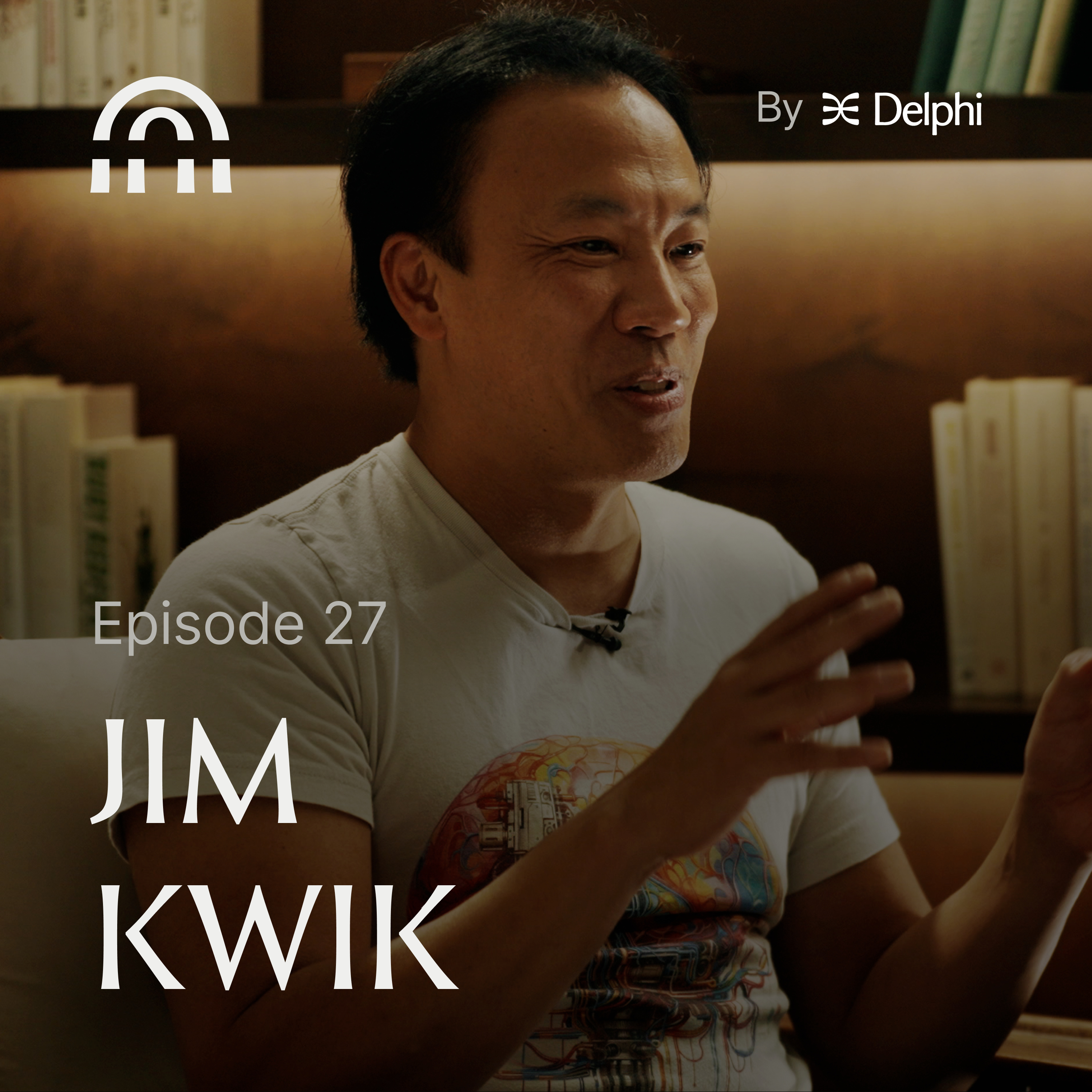
Jim Kwik explains “mental fitness” in the age of AI—how to protect attention, avoid cognitive offloading (“digital dementia”), and build human judgment, creativity, and memory through deliberate learning and lifestyle habits.
Jim Kwik is a best-selling author (Limitless, Limitless Daily) and a long-time coach (30 years) for high performers focused on memory, focus, and accelerated learning. No other guest is named in the transcript.
Written by AI. May contain mistakes.
Explore how cognitive offloading may lead to cognitive surrendering and a meaning crisis.
“Cognitive offloading leads potentially to cognitive surrendering.”
Discuss how exceptional individuals prioritize their minds and attention.
“What is something that has surprised you about how the most exceptional people treat their mind, like their relationship with their mind that is different than maybe your average person?”
Analyze the impact of technology on cognitive abilities and memory.
“your ability to make good decisions, having solid judgment, be able to attack and solve problems, you know, and puzzles, be able to be creative, be able to innovate.”
Learn the importance of balance between leveraging technology and maintaining mental fitness.
“memorize 500 phone numbers, but it should be concerning if we've lost the ability to remember one phone number or a PIN number or a seed phrase or someone's name.”
Understanding the significance of continued learning and cognitive flexibility.
“For example, I'm trying to improve my Farsi, but eventually I can just speak to my grandmother in English and it's going to translate immediately.”
Conceptualize the idea of a mental gym for enhancing cognitive abilities.
“your focus is your number one currency, right?”
Discover the benefits of reading and how it impacts mental fitness.
“All that wisdom, all the research, all the mistakes.”
Learn how embracing boredom can enhance creativity and mental restoration.
“low states, you have to take care of the brain itself.”
Discover the essential practices of meditation and exercise for brain health.
“And I think one of the most important choices is, you know, is this good for my brain or is this bad for my brain?”
Understand how nutrition affects cognitive abilities and mental clarity.
“Going to a website or, you know, binge watching something.”
Explore the significance of sleep and social connections for cognitive performance.
“And it takes time and it's doing uncomfortable things.”
Learn strategies to cultivate resilience and critical problem-solving skills in children.
“At all our events, we have like ping pong tables and stuff like that.”
Get insights on controlling screen time and establishing healthy digital habits for kids.
“i would personally in front of kids do hard things so the life you live the lessons you teach so i I want to be a good role model.”
Discover how to create an environment that supports positive habits and minimizes distractions.
Learn how controlling your environment can improve sleep quality.
“Right, because you're controlling your environment.”
Discover strategies for discerning valuable information in the age of AI.
“The other thing you said about high performers is that they're very good at filtering out things that try to hijack their attention.”
Understand the importance of human judgment and discernment in a data-rich world.
“And I think that's fine for cognitive outsourcing, that kind of stuff, right?”
Explore how to effectively use AI while prioritizing human intelligence.
“I really feel like my optimistic view is that AI is going to, because it only can magnify, right?”
Learn how educational content can be optimized for deeper learning.
“But I think we have to choose and choose wisely.”
Get practical tips for memorizing a speech effectively within a short time.
“studied this for years in medical school and they practice for years and now ai could do it a thousand times better than the human eye with 100 % accuracy.”
Discover the ancient Memory Palace technique for enhancing memory retention.
“The process of encoding, storing, retrieving information for memory.”
Learn the relationship between understanding material and the ability to memorize it.
“The story goes, the anecdote goes, that he was giving a reading.”
Explore how understanding and context enhance memorization and retention of information.
“and the more understanding you have, it allows you to, because when you know more, you can do more, right?”
Discuss strategies for finding personal meaning in one's profession amidst AI advancements.
“But they're not only leaving an identity that's evolving, they're leaving a community, like the military.”
Learn about essential human qualities that can thrive alongside AI, such as empathy and adaptability.
“So like if learning is my passion, teaching people how to learn better lights them up, that's my purpose.”
Understand the importance of developing human intelligence before leveraging AI tools.
“serving you, your ability to learn, unlearn, and relearn things also as well.”
Discover the 'BUILD' framework for effectively using AI while enhancing your own cognitive skills.
“using before I go to AI to do the lifting for me is I want to come up with my own ideas.”
Explore how cognitive offloading affects creativity and the importance of critical thinking.
Understanding neuroplasticity and how it enables personal transformation.
“How have you seen the most successful people change their mind, change their ways of doing something?”
Learn how identity shapes behavior and the impact of self-image on success.
“There's a good book out there called Alter Ego Effect talking about how all Beyonce and other individuals, they step into an alter ego.”
Discover the significance of mental inputs upon waking and their effect on the day.
“If you're not good at something, you're not going to do it consistently, right?”
Discuss the necessity of self-awareness and courage in living authentically.
“Maybe it's setting your three big goals for the day, and you're going to frame things and focus around those things.”
Reflect on the wisdom and lessons learned from life's experiences and regrets.
“Because I spent a lot of time at senior centers still to this day, 35 years, because I lost my grandparents at a very early age.”
Delve into the complexities of the mind and the importance of intuitive wisdom.
“And that's approaching it with kindness, with raw honesty, but also moving forward.”
Discover how intuition and wisdom are shaped by experiences and reflection.
“And going back to your question about, is this something that was imprinted on me or is this something that's more truth?”
Learn how to cultivate focus and energy through action and discipline.
“And so a big part of my work is taking nouns and turn them into verbs.”
Understand how overcoming challenges can lead to personal growth and resilience.
Explore the importance of self-awareness in shaping our realities and identities.
“meaning a thermometer in this room just reacts to whatever the environment's giving it.”
Examine the role of memory in shaping our identity and understanding of self.
“Because after I caught myself, I was just like, yeah.”
Discuss how to remain human and explore potential in an age dominated by AI.

Get the gist, explore an idea or ask about something said.
 Claude
On The Library of Minds, what are the key points of this episode?
Searching your listeningAutomatic transcript. May contain errors.
0:00Jim Kwik: Cognitive offloading leads potentially to cognitive surrendering. Should I still learn the language? Should I still learn math? There are all these things that I can now offload. You wouldn't go to the gym and ask your friends to lift weights for you. If you had to conceptualize what the modern mental gym looks like. It would be like a crossfit, kind of like a crossfit for the mind. I feel there is a bit of a meaning crisis right now with a lot of people who maybe got meaning from their profession. I think leading an intentional life is very rare. super excited to have jim quick here best-selling author of limitless and now limitless daily yeah one of the top experts in memory focus accelerated learning which i feel like is so prescient in a world where my attention span is being destroyed by the algorithm and ai might be leading to cognitive decline so we got a lot to talk about yeah let's let's jump into it thanks everyone is tuning in it's gonna be fun uh let's start with you know you've been coaching some high performers on how to make the best use of their mind for the past 30 years.
0:57What is something that has surprised you about how the most exceptional people treat their mind, like their relationship with their mind that is different than maybe your average person?
1:06Jim Kwik: They definitely prioritize their mind. Sometimes we use mind and brain kind of interchangeably, but they prioritize their, they use their brain. For me, intelligence is about using your brain, directing your mind to create the life you want, right? It's very more practical. You know, Some people look at it as intelligence, as pattern recognition. Some people see it as cognitive flexibility, ability to change your opinions based on new data, being flexible that way. But high performers, they treat that as their most valuable asset, their mind. And they invest in it, and they protect their mind, especially their attention.
1:43Jim Kwik: Because your attention is, for founders, it's everything. your ability to make good decisions, having solid judgment, be able to attack and solve problems, you know, and puzzles, be able to be creative, be able to innovate. So it's the highest leverage point. You know, it's not like an agricultural agent does, right? Where it's based on muscle power. You know, our worth in society is more, it's not brute strength, it's brain strength. Yeah. It's not muscle power, it's mind power today. And they protect their attention, like rigorously. You know, I always think, you know, the only one thing that's equal, everyone watching you have different incomes right you have different access and networks and education but everybody has 24 hours in a day and uh you know so they're very interested in in leverage and they protect their assets like they would you know a capital asset you know like so they protect their focus they keep the most important thing the most important thing right which i think is the most important thing um and especially first thing in the morning you know where it's easy to be distracted or be reactive.
2:45Jim Kwik: Yeah. The first thing, if you're picking up your device, our mutual friend Brendan Burchard says, your inbox is nothing but a convenient organizational system for other people's agenda for your life. So I have brick now. I can't touch any of my apps in the morning. And that's what elite performers do, right? They're militant. It's a non-negotiable. Amongst these people, are there any cognitive weaknesses that you see become more common the more successful you become? Well, throughout time, technology has changed the way our minds think, right? Like from the written word to printing presses where we don't have to remember as much to all the way to calculators and GPS, right?
3:22Jim Kwik: You know, we have a device telling us when and where to turn. We don't have to develop our visual spatial intelligence, you know, with a calculator. The other day I was with a client event and it was 10 of us at dinner. The bill came and four people took out their phones to go on their calculator divide by 10 you know which so uh i think one of the challenges cognitive offloading where we rely on technology to not just remember things it's called digital dementia the high reliance technology remember your phone keeps your to-dos your grocery list your calendar uh all your phone numbers i mean how many phone numbers do people remember growing up never except my mom and dad know right but now it's just like one or two right phone numbers and not that i want to memorize 500 phone numbers, but it should be concerning if we've lost the ability to remember one phone number or a PIN number or a seed phrase or someone's name.
4:15Jim Kwik: But cognitive offloading leads potentially to cognitive surrendering. And what happens to a society or a civilization where if your brain is an organ but acts like a muscle, it's use it or lose it. So what happens if you put your arm in a cast for a year? It wouldn't grow stronger. It wouldn't stay the same. it would atrophy so what happens if it were offloading judgment right uh creativity uh problem solving uh critical thinking what happens to a society that no longer has those muscles be easier to manipulate right other people authority agendas and you're not pushing as much right because it's like um like learning should be require effort yeah right it's like if your your brain grows through neuroplasticity it remodels itself based on novelty and nutrition right and and sleep that's when your muscles build when you sleep um but you know what happens if we remove the effort the friction that ai provides and i use ai i'm very big on technology but i see it as more augmented intelligence like a creative partner or maybe a potential coach yeah which you know a lot about yes um you know which is great which is why you know i love your platform because it allows being a learning architect myself uh it allows personalization it allows uh you know 24-hour access it's one-on-one right yeah um and so yeah i'm constantly like you wouldn't send you wouldn't go to the gym and ask your friends to lift weights for you no right but that's kind of like what we're doing if hey i's doing all the work offload so yeah so i say just build your intelligence before you borrow from from artificial intelligence so where's the line between deciding whether to offload and whether to learn yourself.
6:00For example, I'm trying to improve my Farsi, but eventually I can just speak to my grandmother in English and it's going to translate immediately. Should I go, as someone who wants to be a high performer, who's very cautious about his time, should I still learn the language? Should I still learn math? There are all these things that I can now offload.
6:21Jim Kwik: So I feel like it's, I mean, the metaphor I would use is relating to physical fitness, like mental fitness. If your office is on the seventh floor, your apartment's on the seventh floor, an elevator is a form of technology. It's very convenient. But then we don't take the stairs. You have to go 10 blocks after this to run an errand. You could go into an Uber or Lyft, take a car. It's a form of technology. But then we don't get our steps in. So my thing is there's got to be some kind of balance. On the flight here, I was somebody next to me was watching WALL-E I don't know if you saw this it's just uh and I and they had here you know scary movie when you look at it at a certain angle it is and I was literally was just watching the person respond but the earphones on so I haven't seen it since it came out but I was watching uh you know through the side of my my perforation just these morbidly obese you know individuals and these pods that was taking them from here to there had big screens in front of him and a big soda gulp thing and uh he ended up like one of the guys ended up falling on the ground needed five robots to pick him up i i just feel like we have to maintain our mental fitness so and and learning a language is an amazing brain exercise right learning how to dance learning uh new business vocabulary be able to practice that like you just want to get the reps in so i'm not saying uh i think technology is amazing way but to leverage which is what technology is it's a tool and it's not good or bad fire is an early form of technology right it could cook your food it could burn down your home it's just how it how it's applied so i'm just i'm just concerned with people getting cognitively weak um you know i think it's important to have cognitive flexibility it's important to be agile it's important to have cognitive anti-fragility yeah where we don't just bounce back under stress or pressure but we actually bounce forward like a muscle what was once hard to something hard to lift now it becomes easier because you adapt.
8:17Jim Kwik: But I think we're living in the age of adaption. But I think absolutely, your focus is your number one currency, right? Even the words we use, we say, we pay attention, right? I think if everybody tomorrow had to pull out their credit card or Apple Pay or whatever, every single time they put their attention towards something, like they go into Facebook, they would have to enter their credit card information. Then they go to Instagram, they have to enter it again. I think they would treat it differently. They don't need to do that anymore now that they can pay for you. Right, absolutely. But our attention is everything.
8:47Jim Kwik: So I would say it's a muscle also. Yeah. But it's use it or lose it. But a lot of us are flexing our distraction muscles. But I'm all for learning another language or anything else that, you know, a lot of great founders, right? They're known for like a lot of their hobbies because it gives them references. It gives them discernment. It gives them a lot of creativity came from, you know, Steve Jobs. It was like, you know, obviously technology, but it was calligraphy, right? And visual design. It was borrowed from other things. It's less about the outcome of learning language with the process of what it does for you.
9:19Jim Kwik: And who you have to become to be able to, the discipline, the effort, the focus. Besides some, we have an annual brain performance conference and we had Quincy Jones come for many years. And one time I pull him on stage, have a fireside chat with him. And he could speak almost 23 languages. That's insane. And we were talking about the correlate between that and music. And it's interesting. I asked him. I didn't want to know about his successes. Everybody knows We Are the World and all the Grammys and everything, you know, Thriller. I want to know about the problems that he had. And he's like, I don't have any problems.
9:53Jim Kwik: And I'm like, well, you're 80-something years old. Everybody has problems. He's like, no, I have puzzles. I was like, wow. Even the shift in the word. It's a good mindset. And he also traveled so much because he said, you have to go to know and when you travel you know being exposed to novelty right new music new cuisine new forms of art you know and languages it's it's how it's how we enrich things right like i can appreciate what you're building in terms of a new library you know of alexandria because it's like storing human knowledge experiencing other people's yeah perspective absolutely and it's like it's like it's like an incredible like who wouldn't want to be able to talk to like i'd love to have a conversation with my grandfather they've passed but you know so i think it's great in terms of preserving human memory you know what i'm interested in the human mind like the wisdom of how to how to apply that that knowledge the industrial revolution uh maybe maybe made us physically weak because we weren't stressing our bodies as much because machines would do it and we figured out physical fitness uh if you had to you know conceptualize what the modern mental gym looks like yeah yeah i go to the gym every day because i want to be in shape i'm not carrying things in a warehouse right and so let's say five years from now i'm not using my mind as much as i want to work because ai is doing a lot of the work what is the mental gym routine yeah i i like this this is a great question i i would imagine it would be amazing to have like mental fitness gyms because ultimately as a brain coach that's what i am a mental fitness trainer yeah like your body what does a trainer do makes you stronger makes more flexible you know helps with your energy uh helps you become more uh more more pliable more coordinated i want people to be i want their memory to be sharper yeah right i want their learning to be stronger you know i want them to be they're thinking to be faster you know and more agile also as well it would be be like a crossfit kind of like a crossfit for the mind I'm a big advocate for reading there's an article in the Atlantic that went viral talking about how only 16 % of individuals across age, gender and ethnicity read every day, which I find sad I think reading is to your mind what exercises to your body if people have seen me with various founders, the Oprahs, the Elons and so on, people want to know how we bonded that we bonded over books.
12:26Jim Kwik: You know, I love reading. You know, if somebody has decades of experience they put into a book, which many of your clients and collaborators have, you know, or then, and so we could sit down and read that book in a few days, they could download decades into days, right? All that wisdom, all the research, all the mistakes. Yeah. All the best practices and frameworks. So reading would definitely be part of it. Only 51 % of people read, 51 % of the, in the articles said they don't, won't even read one book a year. you know which is which is sad for four and a half years like I had a traumatic brain injury so it took me three years longer to learn how to read when I was a child yeah so I had learning disabilities you know I was just I'd work three times harder I was called the boy with the broken brain and that's what kids you know referred to me as and a handful of teachers but you know label became my limit but because of it I just want to remind everybody that adversity can be an advantage that with challenge comes change that that with struggles you get strength it's hard in a world that's optimized for convenience right we have temperature control in this room we could we have door dash right we don't have to exert a lot of effort but i think there there is a huge benefit of uh you know of of of carrying water right doing doing some some of the basics keeping yourself mentally active and it's one of the best ways to stay above brain aging challenges you know i lost my grandmother to alzheimer's when i was seven you know so we donated proceeds from limitless to Alzheimer's research for women.
13:50Jim Kwik: Women are twice the less experienced Alzheimer's than men. But I would say reading would be a component. I would say also care for your brain, the organ itself. While I teach people how to read faster, remember things, and focus in low states, you have to take care of the brain itself. So like I have protein shakes at the gym? Yeah. I mean, the common acronym is meds. You want to take your meds. M is meditation. You have to disconnect to reconnect. I think white space is very important. I think that's underrated, like boredom. Like people can't be bored nowadays. I don't see it as, I think boredom has like the worst press campaign ever, you know, because people, you know, will jump on their phones.
14:26What am I losing by replacing boredom with scrolling?
14:29Jim Kwik: Yeah, I feel like boredom is having that white space, especially if you schedule it. I mean, that's when I'm most creative. Like, it's interesting, like, when you pause a machine, you pause a camera, you pause a computer, you pause a television, it stops working. Human beings are different. When we pause i feel like we start working in different ways we start recalibrating we start rethinking things we start restoring you know rejuvenating um being more creative all these great things that come online you know my my my go-to is like a walking meditation like just outside in nature because i also feel like when you're in nature like we're on screens all the time and that there's a foveal vision right your eyes are only part of your brain that's outside your skull but that phobia vision leads to very kind of convergent thinking as opposed to when you're outside and you're taking a horizon in nature i feel like our peripheral vision opens and so does our thinking yeah you know like you maybe it's what maybe it's taking a shower you know we come up with great ideas you know but some people have to listen to a podcast and and i'm i have a podcast right i have audiobooks and you know i have you know we have youtube and all that but i just feel like not so much consuming but creating is what a lot of the high achievers elite mental uh performers uh spend more time there's a quote in limitless the original one that says life is letter c between b and d where b is birth and d is death life c everything between is choice all right we make a choice these difficult times can define you these difficult times in your industry can distract you these difficult times can diminish you or these difficult times they can develop you right but we decide with the choices that we make.
16:06Jim Kwik: And I think one of the most important choices is, you know, is this good for my brain or is this bad for my brain? So meditation is good. And some people say, I don't have 20 minutes to meditate. If you're so busy and stressed, you don't have 20 minutes, you probably should do it like an hour, right? And then the E in meds is exercise. Part of the protocol for mental fitness, I feel, is physical fitness, right? There's this mind-body connection, but there's also a body-mind connection. The saying I say is, as your body moves, your brain grooves. Literally, the physiological benefits It's the neurochemistry.
16:35Jim Kwik: You create, when you exercise, you create dopamine, serotonin, endorphins that you earn, as opposed to when you're scrolling, right? You get this dopamine, which is the molecule of motivation, but you don't have to earn it. There's no effort. Yeah. Going to a website or, you know, binge watching something. It's like junk food, right? And I feel like we live in a society that's overfed and undernourished, not just physically with empty calories, but what we're consuming, right? We're overfed, lots and lots of content. but but it's a lot of empty calories right sure so exercise very important and I don't mean just going to gym three times a week I mean just moving throughout the day they say sitting is a new smoking and so moving your body sitting is the new smoking yeah it is being acting stand up have a very sedentary lifestyle um you know because the number one reason you have a brain is control your movement you know even if you see children when they're first learning to crawl that's how the brain develops this through emotion and movement so the E is exercise and then the D is diet a whole area of science I write about and research called neuro nutrition that what you eat matters especially very gray matter you know the avocados the blueberries the wild salmon for the omega-3s and then everything but also what you don't eat right it's like the highly processed foods that leads to inflammation mess up your microbiome the high sugar foods that could do insulin resistance or glucose spikes, which could peg your focus, you know, a founder's mood also.
18:04Jim Kwik: And then the S is sleep. I mean, how's your brain perform? How's your mind performing when you pull an all-nighter or, you know, you're up with a kid all night or whatever? How is your ability to focus or remember to learn, to study, to perform? And, you know, so we write whole chapters on how to optimize your sleep. So I would say reading and then proper, and all this stuff is free, right? Sleep and meditation, exercise, all that. And it takes time and it's doing uncomfortable things. But life is difficult for one of two reasons. Either you stay in your comfort zone, right? Or you leave your comfort zone.
18:38Jim Kwik: You know, either way, you have to just kind of choose your heart. And so mental fitness would be doing those four things. I think Brendan adds the R and the X. The R is relationships because it's not just your neurological networks, but it's your social networks. Right. Who you spend time with is who you become, right? because we borrow also your nervous system could regulate have you been around like a really calm friend or family member and then you start feeling calm because you regulate with them we also borrow you know courage based on someone's belief in us right you know it makes us feel safe so it gets us in that parasympathetic because if you're in your survival brain chronic stress will shrink your brain over time it fight flight you know or freeze that's that's a challenge because holds you hostage from your creativity your ability to solve problems when you're distressed or worry or rumination your ability your executive functioning and everything and then the x are all the extras that's the red light the the cold plunges the nootropics right all that other modern day right all the all this science but i still go back to ancient wisdom you know and so yeah i would subscribe to this gym you'd have a you'd have a subscriber here yeah and it's all about it's all about cognitive reserve because they think you take two seniors that have you know fairly similar brains right um but one is completely independent and the other one is needs assistance right they have cognitive decline memory loss and everything but they they attribute scientists are attributing it to cognitive reserve and cognitive reserve it's like a retirement account every day you're making deposits into it based on three things.
20:16Jim Kwik: Your physical activity, which you talked about, your mental activity, and also your social activity. Some of the best exercises is like rocket sports. Yeah. On average, adds nine years to your life. Great for your memory. At all our events, we have like ping pong tables and stuff like that. We bring in these, you know, table tennis champions and, you know, Dr. Daniel Amen and all these neuroscientists play. And dance, you know, it's amazing. You know, ballroom dance, Latin dance, because you're putting your mind into your muscle, right? And notice it's not just mental and physical, it's also social.
20:49Jim Kwik: Tennis and, you know, pickleball or dance, you usually have a partner also as well. Then that can, those are deposits into your mental retirement account. Right. You know, and so you want to keep, you want to keep active. You mentioned a lot about how a lot of this is accepting that in order to improve your mind, you have to be okay with struggle. and adversity and like seeking for more. What has to change about the way we educate children to kind of make people realize like struggle is good. You want to actually go after what's hard. Yeah, this is a magic question. We have a three and a half year old and a one and a half year old.
21:31Jim Kwik: So even now I'm thinking about, because they're growing up a lot different than my parents immigrated to the United States. My dad was 13, lost both his parents. we live in the back of a laundromat that my mom worked at um we shared six of us shared one bathroom you know and everybody has different stories right my my challenge is is like i i want my children to be able to figure things out right i want them to be able to be bored not have a screen you know ideally i want them to be able to go through frustration just like when they were learning how to walk right they would fall down you know 100 times but they would still get up right and i feel like it's been my experience in terms of pattern recognition seeing elite performers that i don't know one strong person that had an easy life right and we we evolved through through challenge you know out of necessity and so i feel um how can we model that um i would personally in front of kids do hard things so the life you live the lessons you teach so i I want to be a good role model.
22:35Jim Kwik: And that includes for digital devices. One of the challenges is the excessive use of screens for kids. And so I say my general recommendations. It's doing the opposite. It's saying, hey, like comfort. Yeah. And I totally understand, like if a kid's flipping out on the airplane or at a restaurant, why people would open up their phone and put it on YouTube or something. But the content they're consuming is a lot different than what I grew up on. Right? Like it's highly stimulating. you know they figured out like in terms of these videos um to make them very engaging and you know increase the the retention on it it's all just sounds and lights and colors you know different than watching mr rogers or something that's more more more level right but i would say like you know you don't have to deny but delay you know because kids especially young kids when their brains are still forming you know you've seen some of these videos where kids are like addicted to it where they're throwing absolute fits and tantrums because of like it's a sugar addiction i would say also important is to kids don't necessarily follow rules but they they like the routines and rituals are important so like basic things and i say even this to adults like you know how about a rule uh like a routine or ritual that no no phones and meals something simple like that ritual or something like no phones and you know overnight in the bedroom right because part of it is and we've had on our podcast you know charles duhigg wrote power of habit and james clear at atomic habits and dr bj fogg out of stanford that wrote tiny habits part of is controlling your environment right and just not having that temptation i saw a video on you know facebook memories like nine years ago somebody spliced up me on stage and simon cynic on stage and it has 38 million views and it's just me saying don't touch your phone the first 30 minutes a day and last 30 minutes a day.
24:24Jim Kwik: Something simple like that. And that was simple things. Yeah. And that was like new information back then. But Simon was talking about just having your phone at your dinner table, even if it's off airplane mode, face down, you still have the impulse to grab it. Right. It's kind of like if you're gluten free and somebody at a restaurant brings you bread, it's easier to say no once, no bread. You have to practice willpower. You don't even have to introduce willpower right exactly and so but if the bread stays there then you have to use willpower 50 times and you have to negotiate with yourself 50 times it's energy draining and the brain is a it's only two percent of your body mass but it is an energy hog you use 20 of the energy on average like i work with some elite athletes but also you know f1 drivers uh chess champions they could sit like you and i you know just for a day not moving their body at all and burn six 7 ,000 calories spread thinking just yeah that's that's how that's what's an energy hog it is but that's why people struggle with decision fatigues right I feel like under pressure you know and stress because and under perfect conditions we don't even perform perfect right or well but under stress which is everything it's it's not like we we rise to level our aspirations as much as we fall to level of our systems right we fall to level our standards what we're willing to accept in a relationship and business income whatever to our stories that we tell ourselves like that brain injury that i had was a limitation for sure structural limitation in terms of blood flow going to certain parts of my brain and coordination issues i would migraines every day as a kid but i think a bigger limitation was a story i was telling myself about having a broken brain right this teacher that called me out that was trying to protect me when i was being bullied by other kids said leave that kid alone that's the boy with the broken brain it only took her five seconds to say those words but that conversation about that broken brain lasted like 12 years for me right and that probably had had a fact because i would look for evidence right the brain is very efficient right when you activate that part of your brain called a reticular activating system because the brain primarily is a deletion device we're trying to keep information out if we let all the world's stimuli in we would go insane right so you know what we ask questions about what we focus on we tend to let in but we tend to let in the information that is providing evidence that we are this person yeah right so i was looking for evidence that i was broken just like if i put a prompt in there you know in ai and said oh why can't i ever find love or why can't i ever lose this weight or why am i so stupid it'll come up with all the evidence right kind of odler yeah yeah and so your mind is like it's like if your brain's like a supercomputer yourself talks the program ever runs you tell yourself i'm not good at remembering people's names you won't remember the name of the next person you eat because you program your computer not to so with kids i would be thinking routines like you know like no no no device in the bedroom at night um i'd be thinking uh you know no no device at meals i would also be thinking delaying it as opposed and denying it just as long as you go without introducing those screens.
27:29And I would also say
27:30Jim Kwik: be a role model because if you tell your kids like don't be on your device or screens and you as a parent are on that, right? They're going to, it's not saying it, it's showing it. It sounds like creating an environment where it's effortless. And that's the goal with habit design. The goal for habit design is you want to make what's good for you easier and you want to make what's not good for you more friction, more difficult, right? If you didn't have the junk, if you didn't have the cookies in your kitchen, you're not going to go and get that midnight snack. Yeah. Right, because you're controlling your environment.
28:01Jim Kwik: If you don't have the phone at your nightstand, you're not going to pick it up first thing in the morning or keep it on late at night. Like I had a client recently and we're looking at her sleep scores and it was really off. And I was like, well, it's time to go to bed. She's like nine o 'clock. I'm like, okay, but what are you doing in bed? She's like, oh, I'm on my phone. And I'm like, okay, like social media. She was like, yeah. And then we looked and she spent on average two and a half two hours and 15 minutes on average every night just doom scrolling right and and and i was like no judgment i was just like but what you know why do you do this she didn't she came up with something i think everyone could relate to it's like i you know i have a this person's pretty preeminent a lot of responsibility a lot of employees this is my way of de-stressing i'm like that's fine and then i asked like and clearly it's disrupting her sleep right the blue lights fooling her mind thinking it's still daylight and sleep and then all the stimulus also you're in executive mind and you're ruminating but then i was like okay you go to bed at nine what time do you wake up six okay would you wake up two hours earlier at four to do this activity that you're doing at night and it just like a light bulb hit her and she obviously said no right but you know the net result is the same right getting up two hours earlier to doom scroll that's a horrible way rather than doing it and it's just it yeah it's effect everything but that little change change everything for her.
29:18The other thing you said about high performers is that they're very good at filtering out things that try to hijack their attention. And this is something I've personally been struggling with, especially working in AI. Every week there's a new AI technique. There's a new AI company. There's a new agent. There's a new thing you got to learn or else you're going to fall behind and you're going to be in the permanent underclass. You got to read a new book. And I'm just curious from your own information diet, as someone who's really into learning how do you filter what's worth hey this is actually worth paying attention to versus this is just infinite internet slop i mean the amount of information is doubling at disney speeds
29:55Jim Kwik: right but how we learn it hasn't changed a whole lot how we read it remember it study it so that growing gap creates information anxiety higher blood pressure compression of leisure time more sleeplessness what i would say and so that's why we teach people to learn faster be able to close gap i feel like so ai is no longer a competitive advantage because we all have access to it yeah knowledge information is no longer an advantage because everybody has infinite access to it also so i feel like discernment and judgment right like filtering the information is very important because we can't possibly learn it all right and so what i'm what i'm when i'm learning something i'm looking for frameworks first principles something that would enhance my thinking like I don't remember, nowadays you don't have to remember facts and figures as much because you have meta, you have this meta memory where you know where to find this information, right?
30:44Jim Kwik: So we compensate that way. And I think that's fine for cognitive outsourcing, that kind of stuff, right? So generally, I don't want to remember facts, but I want to remember frameworks. I want to remember things that give me leverage that enhance my thinking. Mental models. So when I'm looking at things, I'm looking for to remember and study the things that would enhance my thinking. And judgment. Judgment, our discernment, all the human qualities. Because AI can compute and process and give you a lot of data. But ultimately, human beings, we have to decide what this data means. We have to decide what's important out of all this information.
31:25Jim Kwik: And we also have to decide, probably most importantly, what to do with it. right and remember ai doesn't have stake in it right it could give you its advice and its suggestions but ultimately human beings have to own that decision game right yeah exactly and so it could it could give you any kind of advice but has no consequence right and so but that that falls in the realm of human intelligence right curiosity creativity you know compassion empathy emotional quotient you know a judgment critical thinking all the things that i feel like are going to be more valuable in the age of AI. I really feel like my optimistic view is that AI is going to, because it only can magnify, right?
32:07Jim Kwik: It amplifies and magnifies, but it only can amplify and magnify what you already have, right? What you bring to it. Like somebody could use it to make a nice social media post. Somebody could use it to cure cancer or make the next billion dollar venture. It's the human intelligence, right? Like a race car driver. You have a multi-million dollar a piece of technology, this race car, but it's the human that's driving it that determines the performance. And if somebody's confused or incapable, that's going to crash and burn. So that's what magnifies. Somebody's going to AI with confusion or uncertainty, whatever it is, it could not magnify that.
32:38Jim Kwik: But if somebody has clarity, if somebody has competence, you know, and a certain amount of acumen and schema and topic, then it would magnify that, which is great because that's what technology is. It's there as a tool to amplify, you know. But I think we have to choose and choose wisely. So I always say human intelligence before artificial intelligence. Build before you borrow. 100%. You know. Join the conversation. Got a question? You can ask Jim's digital mind. Just check the link in the comments or description. And on potentially where technology is going wrong, I know a lot of people who will claim that they've learned something, but they really just saw a TikTok or they saw a tweet.
33:18and I'm curious if you had to, maybe you would say you wouldn't even put it online at all, but if you had to like redesign educational content the way it is right now, a lot of people are consuming educational content on TikTok, on Twitter, but it's for engagement and it's not for learning. How might it look different if it were optimized for learning?
33:37Jim Kwik: Well, I think, okay, so knowledge by self is not power. Only because power when we apply it, right? So many people do mental masturbation where they think they have points for buying a book or even reading a book, But a book that's either unread or it's not used, there's no power in that. You're no better off than someone who's illiterate who couldn't read the book to begin with. And so I just want to remind people application is the name of the game. And through it, you create evidence because you become something bigger that could build something bigger. And so a lot of people, when they're going through content, they're not learning it as much as they are recognizing it.
34:14Jim Kwik: right they recognize the face or they recognize this thought and they can maybe repeat it but they don't know it i feel like unless they could do it and they can live it right so my my process is i could read something right but then so i learn it and then i need to live it and then i earn the right to be able to teach it to somebody else because through experience right knowledge is one thing but wisdom is completely different game like wisdom is reflecting on that knowledge through personal experience right which ai doesn't have like ai could feign um you know empathy or compassion but it doesn't know what it's like to console a grieving child it doesn't know what heartache feels like or ask for forgiveness or anything it's a useful tool though without a doubt you know i'm really concerned about the identity crisis like what happens like a radiologist who studied this for years in medical school and they practice for years and now ai could do it a thousand times better than the human eye with 100 % accuracy.
35:11Jim Kwik: What happens to that person at an identity level? Because so many people identify themselves with their job. But going back to TikTok, besides the recognition and how it's based on engagement, right? It's based on clicks and the amount of time you watch. So it's optimized for that. For me, this is an interesting thought experiment. Like I would make, okay, the content would change for educational purposes, right? But I would also make it like, what if they had to watch a video on something and then had to write a one-sentence summary about what they just learned in order to get to the next video.
35:39Jim Kwik: Right. What if after 30 minutes - No AI content allowed. Right. And what after 30 minutes of scrolling or whatever, or learning this stuff, it forced you to take a brain break. So literally you can't get to the next piece of content. What if it was gamified around application, if there was some way of showing proof - Recording yourself, proof of work. Yes, exactly. So if I was to do it that way, then I think it'd be an amazing educational tool. you know and those are just some principles of adult learning theory but um but i would feel like that would make it for for deeper deeper wisdom and deeper learning as opposed to just entertainment yeah right quick exercise yeah i want to do right now tomorrow i'm giving a speech in front of 300 people at my sister's wedding oh nice uh what would you coach someone on how to memorize yeah a 10 minute speech yeah 24 hours what are your tactics yeah yeah yeah and by the way like i mean 10 minutes is is a lot harder to do than in my opinion than an hour yeah you know i i get to work with a lot of ted speakers main stage ted speakers to memorize because they you know it's almost verbatim i get to work with a lot of hollywood actors to speed read scripts and memorize lines right and be focused on set so this is definitely my wheelhouse simplest thing you could learn in a very short period of time um like so i i pull in limitless daily and limitless i I pull on latest neuroscience and adult learning theory, multiple intelligence theory, right?
37:01Jim Kwik: The process of encoding, storing, retrieving information for memory. But it's also I pull from ancient wisdom. Like I wanted to know like before technology, what did people, how did people remember things? Yeah, their orders, this oral tradition, oral history. Yeah, like the Odyssey, the Iliad was passed through verbal. Like that's amazing, right? Insane. They must have known things. Absolutely. And their memory was very strong because it had to be, because they didn't have, let's say, this written word or printing presses or anything else like that, much less what we have access to today. So something called the Memory Palace, which people are learning a lot more about, it's 2 ,500 years old.
37:40Jim Kwik: It's accredited to ancient Greece. Simonides was in order. The story goes, the anecdote goes, that he was giving a reading. And when he left the building, something really tragic happened. The building collapsed and there were no survivors. And he had the, because he was a lone survivor, he had the responsibility of helping family members identify their loved ones. And he was able to do so because he remembered where they were all sitting. And I think most people listening remember where things are. Because as, think about how human memory evolved out of necessity and survival. We need to remember facts and fears and stuff.
38:12Jim Kwik: We need to remember where things were. Like, where's the fertile soil? Where's the crop? Where's the clean water. That was our survival. So we store information based on place. And so this is the method of loci, memory palace, where you take a familiar place, like your kitchen, your bedroom, your body, anything, your classroom, and you're so familiar with this, the mall, whatever you go through, right? And you take the ideas that you want to remember and you place them in sequential order of where these places are. So like, let's say if you name five places going clockwise in your kitchen. And I said clockwise the other day to a bunch of teenagers.
38:51Jim Kwik: They had no idea what clockwise because everything is digital. But let's say going clockwise, you have, as an example, the microwave is number one, stovetop is number two, refrigerator is number three, dishwasher is number four, sink is number five, right? And everybody knows their kitchen, right? So the idea here is you need to give a seven minute toast at a wedding. You would take the main ideas because you know what you want to say. You just need a reminder of the main topics, right just like as a and they say public speaking is the number one fear you know that it is and i think a big fear comes from lack of competence around their memory they feel like they're going to forget or someone's gonna ask a question they're gonna answer a question and then they forget where they were yeah you know if they're not relying on a confidence monitor or you know like powerpoint presentation like another narrative you tell yourself like you're right teacher exactly exactly and so what you would do here is take the the main ideas or anecdotes or quotes you know and you turn it into an image because we tend to remember things that we could see like a lot of people are better faces than they are with names yeah right you go to someone say i remember your face but i forgot your name you never go to someone say i remember your name before i got your face right never say the opposite so we tend to remember what you see try seeing what you remember so you have the place that you can remember easily and then you take the main idea or the topic of the the point you want to get across to your audience and you come up with an image and you put that first image near the microwave or inside the microwave and you make it fun and funny the more emotion you add to it the more sticky it is yeah because we remember things that touch us emotionally right like most people could hear a few notes of a song that could take them back to when they're a teenager or food or fragrance could take you back when you're a child because that emotion so you have this middle brain where you have this seahorse looking part of your brain which is your hippocampus which is memory attached to it is an almond shaped part of your brain called your amygdala, which is like a switching station for emotion.
40:42Jim Kwik: But isn't it interesting that memory and emotion are tied together? The challenge, though, in school, what's the primary emotion people felt sitting in class all day? Like boredom, right? Boredom. Right. And so on a scale of zero to 10, boredom is zero. So if it's information times emotion becomes a long-term memory and the emotion is zero, anything times zero is zero, right? And so you wonder why you forgot. So we got to make school more emotional? Yeah. I think the things that we remember back in school are the teachers that we're able to convey things at emotional level using stories using imagery but that's why we forgot the periodic table because we're in just that board state because all learning is state dependent right and so what i would say you know is take the main ideas turn into a picture and then attach that image into the different places and uh yeah text me let me know how i'm gonna try that tonight it absolutely does that change so this is a exercise kind of optimized for memorization does it evolve at all if you're optimizing for understanding?
41:39Let's say by tomorrow I needed to know the entire history of the Persian Empire because we're in Iranian wedding. I need to understand the dynamics. Anything different about the exercise when you're optimizing for understanding?
41:50Jim Kwik: So I always learn to understand. I don't want to be able to memorize just a lot of facts that have no context or no meaning to it. And so I think the goal is deeper understanding. and the more understanding you have, it allows you to, because when you know more, you can do more, right? When you know better, you can do better. Understanding is kind of a precursor of memorization. It makes it easier. Absolutely. And that's why things that we're deeply interested in, we tend to remember better because we're more vested and we want to know context because human beings are very context dependent, right?
42:23Jim Kwik: It's not just the content. If content is king, that we hear a lot on social media or whatever, then context is the kingdom, right? and it's the frame around something. So yeah, I would find that having understanding will improve obviously your comprehension, but definitely your retention. And that would be the goal. It's not just to know a lot of random facts with no context. Yeah, I understand my relationship with my sister. So hopefully that'll help with the memorization. Yeah, and that's the other thing. Like I would do it in a way, when I want to give a presentation, especially because I want to affect change, the three questions I ask myself is what do I want people to think?
43:00Jim Kwik: What do I want them to feel? What do I want them to do? And I work backwards from that. So everything that I'm saying has purpose around that. Like, what's a new idea I want them to think? What do I want them to feel around this? Because without the feeling, they're not going to act on it. And then what's one small thing that they could do with this? And it can be an inspiring speech also as well. It doesn't have to be just an educational thing. I want to go back to the radiologists that you spoke about. I feel there is a bit of a meaning crisis right now with a lot of people who maybe got meaning from their profession.
43:35Maybe they no longer feel like they are uniquely the one for that profession. I'm curious how you would advise someone to find meaning in an era where you're kind of getting meaning from algorithms, from other people. You don't know whether something you believe is because someone else told you or because you actually feel it yourself.
43:56Jim Kwik: yeah i feel i feel like that discernment is so very important right so we live we're living this almost like a barbell economy where maybe ai is affecting not the ends of the barbells the weights hvac massage therapists hairstylists or leadership or but definitely like what we talked about before like the coders right the maybe writers also as well radiologists people or technology is really And I feel like AI won't, whether it replaces, what technology has always done some of that, it definitely will reveal, right? In terms of what we're amplifying. I would say that I get to work with a lot of people in transition that are reinventing themselves.
44:39Jim Kwik: Think about the athletes that have spent their whole life training since they were a kid versus their specific sport that are unable to compete at that level anymore. And they go into some other things where they have to take the discipline, the effort, the attention, the training, those qualities that apply towards a fund or a startup or something else, right? But their identity was that. But they're not only leaving an identity that's evolving, they're leaving a community, like the military. You get to work with a lot of vets, right? So they're in this community also. So they're not only figuring out who they are now, but they're also losing their support group of people.
45:18Jim Kwik: And we know that's huge in terms of who we spend time with. So reinvention is interesting because I think like Limitless is, my Limitless Daily, I made purple. It stands out on your shelf, but it wasn't for branding, it was for becoming. And purple is very, it means in color psychology, sovereignty and wisdom, right? And I want people to remind people of their agency and also give them a little bit of wisdom to start their day first thing in the morning. And that's a very specific window of what's called sleep inertia, which we could talk about, a big leverage point for founders. and then the other thing about it is purple also is that was the rarest color and I'll bring this back to your question for thousands of years it was the most expensive because it was the hardest to create they would have to let's say the Mediterranean Sea they would have to extract it from the snail shells that's why royalty is like diversity yeah and that and that's the value right because it's scarce and that's why royalty would have the purple robes and everything else like that purple also is a crown chakra it's also a symbol for higher learning and so many other things.
46:20Jim Kwik: That's why purple. But it's about becoming, right? Because I feel like while the color purple back then was very rare, I think leading an intentional life is very rare, right? And that's what I wanted with Limitless Daily is not another book that sits on their shelf and becomes shelf help, not self help. But I think people needed a daily practice, right? Because the things that we're most probably grateful in life or doesn't come from these random sporadic bursts of energy. It comes from what we do every single day, right? And consistency compounds, like capital, right? But so does curiosity compound.
46:54Jim Kwik: So does discipline. So does all these other assets. I call it cognitive capital, right? So what I would say for somebody going through a reinvention, like that radiologist, is what makes us human? My vision is that this AI evolution, and I love these questions because I haven't been asked these before, so I'll have to think about it. this ai evolution could lead a revolution could lead to a human evolution like a new human renaissance i really feel like that's the optimistic view meaning if ai can we're not going to out process and compute computers right but in order to be valuable in the workplace we're going to have to lean into what ai can't do and make it so i think like my acronym is for is human h is heart which is emotional quotient so i think people right now should be investing in empathy compassion everything that develops your emotional intelligence you is understanding meaning things like curiosity things like judgment like really focusing on those things um because again human beings ultimately have to judge and decide and ethics right like what what's important like i'm always my timeline is like at least 10 years ahead like i'm thinking what's still gonna be relevant 10 years from now right right learning curiosity compassion agency connection connection social like self-esteem all all of that right so i would lean into that understanding m is addresses your question meaning purpose and some people use just like with brain which is the hardware mind is kind of expression of it people use passion and and purpose interchangeably but for me functionally passion is what lights you up and you have a lot of passions right like learning is one of my passions it wasn't always because i was really challenged with it but purpose is how you use your passion to light somebody else up.
48:44Jim Kwik: So like if learning is my passion, teaching people how to learn better lights them up, that's my purpose. So I feel like a human quality innate is finding more deeper meaning and purpose. And especially now, because we don't know where the world's going to be five, 10 years from now, right? But we know it's going to be different. Even a year from now. Right. It's going to change. And with that change comes a lot of challenge. Purpose is what gets you through adversity, gets you through hard time. So I feel like that radiologist has to go deeper and saying, who am I outside of my career, right?
49:15Jim Kwik: And find what lights them up passion-wise and how they could use that passion to light somebody else up, which is purpose, which is what gets you through difficult times. And so that makes us more human. And then the A in human, so you have heart, which is emotional quotient, understanding, curiosity, judgment. You have meaning, purpose. A in human is adaptability. And we live in the age of adaptation. That's our superpower as human beings like uh every creature has a superpower some could you know breathe underwater some could fly some are super strong some could climb like we can't do any of those things as humans but with the power of our mind our ability to adapt we can go underwater we can fly right we can exactly do the power of our mind taking the invisible and make it visible right and i think human beings are need to be able to adapt more than ever what does it adaptation means.
50:07Jim Kwik: It means your ability to learn, your ability to unlearn, right? Things that aren't serving you, your ability to learn, unlearn, and relearn things also as well. So adaptability, and I would also include in adaptability, you know, what we teach is cognitive flexibility, which is a big part of Limitless Daily. Cognitive flexibility is just like physical flexibility. You're more pliable. You bend, you don't break, right? Your ability to be nimble, kind of like parkour for your mind meaning what's the opposite of that is cognitive rigidity and cognitive rigidity is and that's how you have a blockbuster video like where are they now because that's cognitive rigidity right Kodak right one of their engineers in 1975 created the technology for digital digital photographs right but they shelved it right because cognitive rigidity and obviously they had a stake because their their model was like Dollar Shave Club they write they they're selling the blades right just like they're selling film back then and so i would say but they were rigid because they knew where things were going they still are stuck and they're extinct right so you adapt or you die and so i think we as human beings we have to be willing to adapt to new technologies new new trends new shifts in the market everything else um and also human culture right and as a big context the end stands for nexus meaning i use that as a symbol for social connection, leadership, parenting, sales, influence, coaching, right?
51:33Jim Kwik: I feel like that's a wonderful way to lean into. And so like imagine a society that's being, since AI takes care of the computation, the pattern recognitions, the processing, then it forces us to lean into those five different areas. And maybe we'll have a human renaissance because we become more human. You go deeper into each of those, which maybe we haven't spent enough time on. Completely. Yeah. Yeah. I think that is a big conversation, right? One of the biggest conversations of our time is, how do we remain deeply human in an age of AI? And so, you know, this is a very thoughtful conversation.
52:05If you had two 20-year-olds and they both use AI every day for the next like 10 years, and one of them ends up unable to think without AI, and one of them ends up way more capable, what is the prime difference? and this is something that i i'm noticing a lot in the workplace is people aren't it's like a shiny object it's like your competitors are using ai they're moving faster than you but in order to not use ai you have to have a longer term mindset because it means you may not move as
52:40Jim Kwik: fast as your competitors yeah i would say the difference that makes a difference is building your human intelligence for always borrowing from i would say build before borrowing which means going slower and go faster in a way yeah and i mean in the military they say that that slow is smooth and smooth is fast yeah right and so i would say that the prime difference between those two 20 year olds is one is is building their intelligence before they borrow artificial intelligence right from others and so i would say i'll make an acronym because i know some people are listening they're working out they're driving and it's a simple mnemonic if they're not taking notes but i'm sure their ai could do that for them so the b stands for brainstorm and what i'm using before I go to AI to do the lifting for me is I want to come up with my own ideas.
53:24Jim Kwik: I want to be creative, right? I want to see my own patterns and see what I already know. The you in build is understand. This is where I really understand the problem. Because I think a lot of people are optimizing for the wrong prompt or they're optimizing for the wrong problem in life. Because before we went to an AI with a question, we've had prompts to our own human intelligence all the time, right? We're asking our questions. We have about 60 ,000 thoughts a day. A lot of of those come in the form of questions. That's all thinking is, is asking questions of ourselves and answering them ourselves.
53:54Jim Kwik: But I would understand the problem, like the real problem, meaning, what was it, Einstein, everything is attributed to Einstein, but if he had an hour to solve a problem, he'd spend most of that time clarifying the problem. Like what's the real problem here? And so I would brainstorm the situation myself, I would clarify the problem and really understand what the real problem is. And then the I in build is I would imagine my own three answers to that problem before I go to AI. And imagine, come up with solutions. And I would also imagine perceptual positions. Like I often, when I'm attacking a problem, and I call them puzzles now because of Quincy Jones.
54:32Jim Kwik: I love that. I'm thinking about it. Because it just feels like it's fun. There's definitely a solution to it, right? It just feels, it lands different. It's a game. Yeah, it's just the words make a difference. And so I would say that I would imagine three solutions. And if you need help with that, I would ask, like, how would a five-year-old look at this problem? Because, like, sometimes they'll see the elusive, obvious kids, right? They're much more creative, you know, until they go through, you know, some kind of education process. Meaning they give a paperclip and say, oh, there are ways you could use the paperclip as opposed to adults, right?
55:03Jim Kwik: The delta, its difference is huge. I would say, like, hey, what would someone 10 times smarter than me, how would they look at this problem, right? Or I could go and just take any expert in any field, like, how would Charlie Munger look at this problem? How did they build this? Yeah, exactly. Perfect example. So then you could go and you could come up with three. And then the L in build is leverage AI. Now, my challenge a lot of times with how people use AI is they just go there directly with the problem, which is not usually the best prompt anyway. And AI has this propensity to make, it can make the dumbest person feel like they're the smartest person in the world.
55:39Jim Kwik: Right, it placates, it's a sycophant. um it just it just rah-rahs around this idea and so i would say leverage ai for me if like especially with this clarified problem i would i would be saying like okay you are the world's expert at that arguing against like my idea here you know like debate me on this right point out my blind spot shine a spotlight on my cognitive biases pressure test this idea for this new business model right so i'd ask for pushback and that's where i feel like you could become a coach because the idea here is like with cognitive offloading if we're not like if our at if our critical thinking our judgment our creativity or innovation all the problems something becomes atrophied then then anything we're creating with ai is going to be derivative it's going to because we're bringing to it so it's going to be generic it's going to be generic right and so i would really push back on it and then that's how i would leverage ai more and then the d and build right after after you brainstormed after you have a deeper understanding of the problem after you imagine your own solutions after you leverage ai then the d is you decide you know what to do with this information did you just make this acronym up right now or you had that this is what i don't i don't teach this in courses it's not in the book but it's something that i personally use for myself i like it because build before you borrow you know and the idea is you're getting some mental fitness in and not letting those those muscles go go lax i think uh you're right in that ai is making people feel like they're a lot smarter than they are and so the shift to fixing things is to change people's minds and help them realize what's going on and yeah i like your story of you know you once thought that you were the guy with the broken brain yeah you had to change your mind.
57:24You have to rewire your brain. How have you seen the most successful people change their mind, change their ways of doing something? Rewiring is the popular word these days.
57:35Jim Kwik: Yeah. And that's the exciting thing. We know through neuroscience, neuroplasticity, that our brain can remodel itself through novelty at any age or stage. So that means we can remodel our thoughts and our beliefs our habits you know our actions you know our our moral compass everything is malleable but it requires consistency and it requires like novelty right it requires effort in every single time and so it's not like positive thinking where it could be toxic where you just don't even see the realism of what's going on yeah right your mind is incredible like people truly understood how powerful their mind is they probably wouldn't say or think something they didn't want to be true and that's not to say you have a negative thought it ruins your life any more than eating a donut would ruin your life.
58:20Jim Kwik: But if you eat that donut 50 times a day, every single day, there's going to be a consequence, right? Same thing with negativity, right? It's hard to create a positive life with a negative mind. And so if somebody has ruminating thoughts or belief that they're limited, I think everybody feels like at some level they're not enough or they can't be loved or whatever happens to be. Again, we don't rise to the level of our aspirations of pressure. We fall to the level of our systems. We fall to the level of our standards, words like what we're willing to accept we fall to love our stories my story was I am broken so I saw evidence all the time right and probably the biggest one you fall to love your self-image it's hard to outperform how you see yourself consistently right right and so like if you're persistent you can lose the weight if you're persistent you can make the money but if you're consistent you get to you get to keep it right because the consistency compounds and so I would say is the starting point yes your words count you know even if you say I don't have a great memory and you caught yourself and had a little word like yet it just there's more possibility built in it lands differently right but they say the two most powerful words in the english language are the shortest i am because whatever you put after that is like your life your destiny it's how you see yourself if somebody is i am a smoker or i am a procrastinator it's hard to outperform that behavior because that's that's your personality right and so you're gonna look for evidence the reason why is you're always looking for evidence that you are this person and so I think the highest achievers not only are curious, not only protect their attention, but they're very intentional about who they are.
59:52Jim Kwik: There's a good book out there called Alter Ego Effect talking about how all Beyonce and other individuals, they step into an alter ego. It's not even faking it until you make it. It's kind of like you're facing it until you make it. Yeah. That challenge. Becoming who you want to be. Exactly. Here's the key. The key is creating evidence that you are this person. like when we're talking about um reading and how that you know not many people are reading or i mean small population is reading more and they're offsetting some of those numbers and some people are just reading less right especially because tick tock and everything else short form and their attention span um you know the read a page in a book gets in just forgot what they just read right and they go back and reread and still not know what they just read and part of it is skill set because they're just not good readers because if your mind wanders and you fall asleep and everything else.
1:00:41Jim Kwik: If you're not good at something, you're not going to do it consistently, right? That's why we up-level these skills. But going back to identity, like with Limitless Daily, my secondary agenda is get people to read five minutes a day in the morning. That's all that's required. There's a date, right? You go on the date, you read a page, it has information, it has science based behind that idea, it has a story to help it stick, and it has an implementation that you can do in two minutes and then a new identity statement based on who you are so it's five minutes there during a time of attentional priming it's it's a sleep inertia so if people walk away with anything out of this this is what you want to walk away with when i was doing research for this book and i'll go back to identity how it shapes identity when you wake up there's something called sleep inertia and that's where you're shifting from a sleep state to a waking state and it's kind of like your computer's rebooting right it's fresh nobody else has opened up tabs and sent you messages and anything is possible it's like waking up to a whole bed of snow you know no tire tracks no dogs doing their business no footprints it's like anything is possible right before everybody hijacks all that and so sleep inertia class 15 to 45 minutes depending on what stage of sleep you wake up in your circadian rhythm and all other things but the mental inputs you put into that time will have a disproportionate effect on the rest of your day all right so i'm talking to all the founders and listeners like how this affects your day specifically in the areas of focus your feelings and how you frame the day all right so what you're doing there in that window the mental inputs has a disproportionate effect because you're doing something called attentional priming you are training your mind first thing in the morning about what's most important what to look out for right exactly you're setting your ras your reticular activating system.
1:02:25Jim Kwik: It's a spotlight that's going to focus and you'll see more of that later on. Just like you buy a new car and you start seeing that model of car everywhere. Like I see this color purple everywhere now. Like even at the urinal here, it's like the splash pad. I don't want to get too graphic, but it's that color purple, right? But I started seeing it where I wouldn't have normally seen it and it was always there. Guess what? What you could be grateful for is always there. You know, what opportunities are always there. What evidence you want to find. Exactly. And what people are looking for is mostly is evidence that they are this person, right so in that window if people pick up their phone what are they amplifying in terms of focus feeling and framing comparison right conflict whatever happens to be reacting you get you get a message like a whatsapp message or youtube comment it can affect your mood for hours right because that's a lag effect of what you're amplifying yeah and so top performers they protect that window right because what's useful time maybe it's that they could amplify maybe it's prayer maybe it's bonding with their spouse maybe it's a gratitude exercise because then you'll see more blessings throughout the day.
1:03:24Jim Kwik: Maybe it's setting your three big goals for the day, and you're going to frame things and focus around those things. And so that's what I want people to read Limitless Daily, because my idea here is mind before media. It's intention before interruption. It's setting the direction of your day before distraction. And so you want to be able to... Nobody in that window would eat a bunch of cupcakes and donuts and everything else, because there'd be a lag effect affecting your feelings, your focus. I've done that before and it ruins the day. But same thing with your mental diet also. You want to protect that time.
1:03:58Yeah.
1:03:59Jim Kwik: But doing this though every single day, then you're creating evidence. It's not like, oh, I have to try to read every single day. It's you're creating evidence that you are this person. And then all of a sudden your identity shifts to I am. You have more fun doing it now. It no longer feels like a pill. Because there's no friction. Right. And then habit design is you take your phone, put it in your bathroom and you replace it. Because you can't just stop something. you have to replace it with something else right and so you do that and then also you start seeing yourself as a reader because you're creating evidence that you are the person that you say you are yeah and then you're more likely to read throughout the day because this is this is your identity yeah right and so i feel like in an identity crisis we have to be doing things that repeatedly create evidence to validate that we are this person first you first you gotta figure out who you want to be and that's the thing like there's a like the only movie i've seen multiple multiple times in the theater was in 1999 when the matrix came out right and i was just like mind-blowing and then there's a scene because i'm sure everyone saw this movie where neo the one goes to see the oracle the all-knowing wise oracle in her kitchen right she's baking those cookies and everything when neo walks in most people miss this on top of the kitchen door that he walks through is a sign and it says know thyself right you did you know uh delphi the oracle of delphi in the temple of apollo is the delphic epsilon and below it it says know thyself i love that i just got goosebumps that's crazy i call i call them truth bumps you know you have to know yourself in order to know your future yeah i got goosebumps i call them truth bumps but it's it's um like i think the two parts of life or fulfilling life you need the curiosity to know yourself right and people go through whatever they go through life wisdom reflection journaling therapy planned medicine whatever you know to get to know who they are but the other half of life once you have the curiosity know yourself you need the courage to be yourself right in a world of like i wear this hat all the time like it says arena on it but you know rent free in my mind is this theodore roosevelt quote that talks about it's not the critics in the in the cheap seats that matter right right that counts it's it's the person in the arena that stumbles and falls and falters and that has dust and and sweat and blood on their face but they're going they're doing they're they're in the game right and so the idea here is i have huge admiration for people like i would say don't take i wouldn't take criticism for someone you wouldn't take advice from yeah right um but i would i would recommend you know having the curiosity to know yourself you know who you are what you stand for, your mission, your purpose, all that, and then having the courage to be yourself.
1:06:37Jim Kwik: Because I spent a lot of time at senior centers still to this day, 35 years, because I lost my grandparents at a very early age. But I go there to help polish off memories. But I also hear a lot of wisdom. Because I feel like there's something to be said about having cognitive humility, knowing that you can learn something from anybody that have different experiences than you. And so I learn a lot of wisdom, but I also hear a lot of regret. meaning when you know like somehow they mitigated they limited their life they didn't pursue this relationship because what other people thought about that relationship or they pursued a career path because that's what their parents expected them to do right and I just want to remind people who are listening you know that when we're taking our final breaths if we're gonna work backwards and reverse engineer life when we're taking our final breaths none of the other people's opinions and expectation are gonna matter right What's going to matter?
1:07:31Jim Kwik: You know, how we lived, how we laughed, how we learned, how we loved, right? And that, I would build life around those, the most important things to get the most important things, the most important things. Is there any part of the mind that is still elusive to you? And like what, there's probably a lot, but maybe, is there one thing that maybe you think will be less elusive in like the next 10 years? wow i mean going back to intellectual cognitive humility like i feel like what most people feel like the more you learn the more you realize you don't know yes right so i always come from that curiosity i also find that if you want to improve your self-esteem overnight you can study your brain because it is incredible because like it's just what has to happen i mean there's 86 billion neurons with all these thousands of synaptic connections more connections potentially than there are stars in known universe i mean it is absolutely fascinating to me you know most people don't go to outer space i'm thinking about this inner space between their ears i'm always like on social media posts pointing to my brain i'm always wearing brains on my shirt because i think what you see you take care of it's your awareness right it's fascinating because i like to take the the latest neuroscience and make it practical for everyday people um and it comes from my inspiration is my desperation right i think we're i think we're best suited to serve the person we once were in general as a coach.
1:08:57Jim Kwik: And that's approaching it with kindness, with raw honesty, but also moving forward. That's what a coach does, moves you forward. When it comes to the mind, I mean, I'm very interested besides the supernatural stuff, right? Which I'm exploring, which I have unique access to. All right, let's talk about that. Which are blindfolded, which I've tested to blindfold and could pick out these shapes in real time, like those kind of things. It's not true that we use 10 % of our brains. we use 100 this way we use 100 our bodies it's just some people use it more efficiently but i am i am very interested in where it can evolve into um but in a practical sense when it comes to the mind and the brain like for me the brain is kind of like the the the riverbed and the mind is the water flowing through it so one affects the other right it's a feedback loop the the riverbed the brain is going to affect how our mind works and that's why you do the meditation the exercise the diet, sleep, everything, but also the river flowing through it will affect the terrain.
1:09:56Jim Kwik: Also, it will shape, reshape neuroplasticity, right? I'm very interested in intuition. I'm very interested in wisdom. Intuition. Like real wisdom. And going back to your question about, is this something that was imprinted on me or is this something that's more truth? Right. For me. Yeah. But that comes from, it's just like if you've had a really clean diet and you go in and get some fast food you're going to feel it more because you're sensitive to it and you know what your equilibrium is and what a healthy healthy ecosystem is and so you know when something is not good as opposed to somebody who eats that all the time they won't feel difference right because they're habituated to it and with all the chemicals and I'm sure you know fast food companies don't be sponsoring this podcast or mine anytime soon but I'm saying it can be distorted and deleted and generalized right and so I feel like I'm very curious about intuition and I think it my hypothesis is it comes from reflected experience meaning knowledge is information is one thing that's everywhere right but going through it like you can't learn how to swim by reading a book or ride a bike by reading a book you have to experience it right and there's certain things that you have to go through that no matter what wisdom sometimes you hear and i'm all for coaches i've had coaches my whole life that i paid for and mentors and learning from others i think it's a wonderful way to role model and advance your career your health your business whatever separating what was imprinted on me like i'm broken right which adults have to be very careful their external words because i often become a child's internal words right because i became my internal conversation yeah so but i think when you're still and that's why there's a power in that pause because in that white space i feel like that's where we know more of a truth what is truth versus what what's true for you as opposed to what was the noise right the signal versus all the noise that's out there and so i think high performers early performers they come back to some kind of white space maybe they even schedule because many people don't schedule that downtime for themselves but like we don't that's where we create like i don't see that as like not working i think that's where i'm working the best is when i have some space to be free with my thoughts to kind of think about a problem to be able to let my mind go in different places you know showers some people you know come up with ideas when they're in the shower because then we talk about brainwave states delta theta alpha delta gamma um i took six hours for you this morning just so i could be really creative and i feel like all these answers let's go but it's like one of those things where like you don't have focus you do it you don't have motivation you do it right you know like uh brendan talks about you don't have energy you generate energy right there's the process for doing it.
1:12:36Jim Kwik: And so a big part of my work is taking nouns and turn them into verbs. Like you don't even have a memory. There's a three-stage process for memorizing something. You don't have focus. And isn't it interesting that it's a natural law that whatever we want more of, we use. If you want more energy, you have to use the energy you have. You can't just lie on the couch and binge watch it. You're not going to have more energy. If you want greater focus, you have to use your focus. If you want a greater memory, you have to utilize your memory. You want greater strength, you have to use the strength that you have to be able to get those kind of gains and those are things that you can't buy or you can't buy a six-pack you have to earn it right just like a business like all these different things you have to go through the motion and yes it's what you built but it's who you had to become in order to be able to do that because even if it was taken away you could do it again which i'm sure a lot of your community has done repeatedly you ask god for something and he gives you the obstacles so you can become the person worthy of it yeah and is and that's where adversity can be an advantage like we hear a lot about post-traumatic stress we don't hear a lot about the correlate which is post-traumatic growth i bet you there are people listening that have been through adversity they hardship they won't wish upon anybody ptg i love pt yeah but they but they wouldn't change it for themselves because going through that they found a mission they found a trait they found clarity they found purpose they found a strength that they didn't realize that they had like there's some things we can only learn through a storm yep right and some storms come because they they clear our path right and And so what we do is we control what we can control.
1:14:02Jim Kwik: We control the controllables. But it's the idea here is you want to identify with a thermostat, not a thermometer, meaning a thermometer in this room just reacts to whatever the environment's giving it. And sometimes as human beings, we react to the weather. We react to how people treat us, politics, the market, right? But a thermostat doesn't react. It gauges and knows what's going on, a situational awareness. Right, pauses. But it sets a standard. It sets a temperature. and then it it imposes its will and the environment changes to it and you have to be it's very subtle even thinking about intuition like even the other day my kid my my son and i three and a half years old we go on these walks and we play outside and do all this stuff but one time it was raining and i didn't even realize it i said to him and knowing everything i know i was like oh we can't go out today because it's it's it's rainy you know it's not it's not a good day and what am i what am i we're actually teaching him that your your happiness is based on the weather right it's sun it's subtle but those are all the little things but what are we doing to ourselves like i think a big part of this conversation about transcending you're ending the trance like there's this massive gnosis to market or media that you're not enough or whatever or there's this internal hypnosis you know that we're saying to ourselves like i'm not too old i'm not smart enough or whatever that initial talk happens to be yeah but i think agency starts with awareness Did you tell them to go play in the rain?
1:15:20Jim Kwik: Oh, yeah, we ended up doing that. Because after I caught myself, I was just like, yeah. I think I'm going to listen to this podcast multiple times because there's so many things I want to apply. You've been on many podcasts. You've been on stages. I've been lucky enough to see you speak. You have your own podcast. You have two incredible books. Not everyone is lucky enough to have your one-on-one time, but they will be able to talk to your Delphi. And what is one conversation that you hope they ask your Delphi or have with your Delphi? so certainly people could go there and ask like how would jim read this faster how would they learn this language how would they memorize a speech or these names at this event you know and that that could be very useful all useful skills right if you're into skill acquisition and leveling up and everything's forgettable i i think the conversation i would love to have with somebody is like my questions to them would be like who are you becoming you know like first we create our habits that our habits create us i'd be interested in who that identity level right so there's environment there's there's also behavior there's capacity like skill sets there's beliefs and values but that identity level is where everything is kind of like everything comes from right so i'd be interested with delphi having conversation about internal wisdom you know when you know what's true um things around anti cognitive anti-fragility cognitive flexibility being more creative because i feel like like one of my i poured myself in the comic books growing up because i couldn't read and taught me like the stories or the images the illustrations brought the words to life but i also poured myself into bruce lee movies so i've been in martial arts my whole life and bruce lee has saying that the key to immortality is first living a life worth remembering right and it's taking those moments and turning them into memories right and memory for me is not just remembering facts and figures and foreign languages and speeches and all useful things it's about remembering who you are right at an identity level like our confidence comes from remembered successes or you know our fears sometimes come from remembered failures our wisdom comes from remembered lessons our expertise comes from remembered experience right everything is memory right if anyone's ever had like i have you know a family member a loved one who experienced dementia or alzheimer's you know memory is everything right when they lose when you lose half of that tapestry like who are you and that's why i appreciate the work that you do because you're preserving those mem those memories that wisdom you know and so um so i would say with with delph with my delphi like let's not just have the the typical conversations even when i go on media i was on media this morning it's just like oh how do you memorize the these brain foods and you know and how do you how do you just you know remember these audiences names and pull them up and that's that's very useful to be able to do but i would love to have uh where i'm at this stage of life like deeper conversations about uh about who we're becoming in an age of ai also right you know how you know about purpose about identity about adaptation about creativity innovation like it's In Star Trek, we had, in our audience at the same event, we had Rod Roddenberry, who's the son of Gene Roddenberry, who started Star Trek.
1:18:31Jim Kwik: And I brought him on just to talk about his father's vision. In a world in Star Trek, I don't know if there's a Trek he's watching, but just illness and cancers have been cured by technology. We have replicators, everyone's nourished and has food, and there's no scarcity. So what are they doing? They're in exploration mode, right? So they're going out there in outer space. And I feel like the sky's not the limit. our minds at a limit. And so I like to have conversations about redrawing the borders and boundaries of what's cognitively possible and what could drive human intelligence and how do we remain deeply human in an age of AI.
1:19:07I love that. I will definitely be having that conversation.
1:19:10Jim Kwik: That's a fun one. Thank you so much, Jim. I appreciate it. That's great. Thank you, everybody. Thanks for tuning in. If you enjoyed today's episode and want personalized advice from Jim, head to the link in the comments or description to ask his digital mind on Delphi.
As a child, Jim Kwik was known as the boy with the broken brain. A traumatic injury meant it took him three years longer than everyone else to learn how to read. He rebuilt his mind from scratch, and spent the next 30 years teaching the world's top performers to do the same, from main-stage TED speakers to Hollywood actors memorizing scripts.Now he's warning that AI is doing to our minds what elevators did to our legs. This conversation is his training program for the age of cognitive decline.Chat with Jim's Delphi: https://www.delphi.ai/jimkwikCreate your own Delphi: delphi.ai/signup