
 Ask ChatGPT

- Podcasts
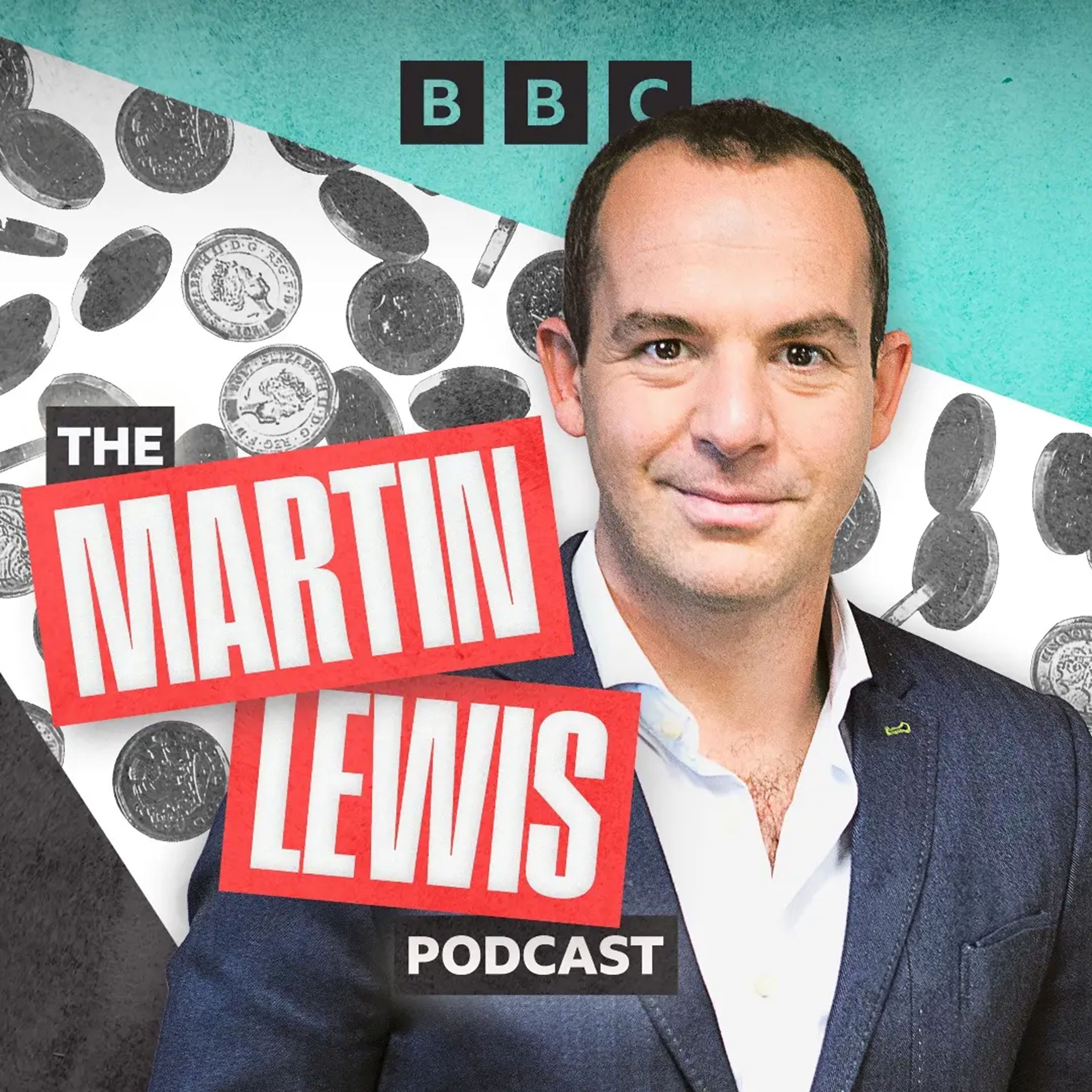
- The Martin Lewis Podcast
- Question Time: Will payrise mean I lose child benefit? I’m on tracker mortgage should I fix? How do I become you?
The Martin Lewis Podcast12 Oct 2026 · 50m · 17 chapters
Question Time: Will payrise mean I lose child benefit? I’m on tracker mortgage should I fix? How do I become you?
In short
UK personal finance “Question Time” covering (1) whether salary sacrifice for an EV affects the child benefit high-income threshold, (2) whether to lock into a fixed-rate mortgage while on a tracker, (3) rights for auto-renewing subscriptions, plus listener wins and career advice.
Guests/backgrounds
Main host Martin Lewis (MoneySavingExpert) with co-host Matt Burnham; live fact-checker Isabel. Mortgage caller Simon (Peterborough). Subscription caller Jamie. Success caller Anne (Taunton). Career questioner Gabriella (university-aged). PPS segment features Steve Batley and Greg Rutherford (athletics).
Key claims
- EV salary sacrifice can reduce “adjusted net income,” potentially lowering the child benefit high-income tax charge; pension contributions also reduce adjusted net income.
- Child benefit tapers from £60,000 and ends at £80,000 (highest earner).
- It’s worth exploring fixed deals as “insurance,” even if currently on a tracker, using broker/BEST BUY tables and considering LTV and fees.
- Auto-renewal reminders aren’t always legally required yet, but new rules will require written reminders; cooling-off after digital subscription start may not apply.
Notable examples
Nationwide bank switch incentive (£174); Octopus energy refer-a-friend (£50 each); inheritance tax planning via gifts from income.
Written by AI. May contain mistakes.
Chapters
0:30
Overview of Questions for the Episode
Overview of the listener questions that will be addressed, covering various financial topics.
“Part of why I blew the whistle was I didn't want to lay in bed in 20 years.”
2:12
Salary Sacrifice and Child Benefit Concerns
Discussion about how salary sacrifice affects child benefit eligibility and income thresholds.
“I've got to feed, so I'm going to make sure everybody's...”
4:00
Navigating Child Benefit and Salary Sacrifice
Detailed explanation of adjusting income through salary sacrifice to manage child benefit implications.
“But I think now is time that we actually do what we're here for in the Question Time podcast and answer some questions.”
9:10
Assessing Tracker Mortgage Options
Advice on whether to fix a tracker mortgage and considerations regarding future interest rate changes.
“Now, Simon, unlike the curator of questions, I know you will stick to format, so it's an even number.”
11:20
Understanding LTV and Mortgage Decisions
Explanation of loan-to-value ratio and its impact on mortgage rates and options.
“Even if you got to four, you wouldn't be doing that bad compared to most people.”
14:00
Understanding Loan to Value (LTV)
Learn what LTV means and how it affects mortgage rates.
“that I use, but also my, just to throw it in there, my LTV is 63 % as well.”
16:08
Exploring Fixed Mortgages
Consider the benefits of fixing your mortgage against potential rate rises.
“So you'll probably rudely just carry on.”
18:15
Insurance Policies in Mortgages
Discuss the potential of using fixed mortgages as a financial safety net.
“And to my knowledge, in terms of, like, your appeal in nightclubs, I think the key thing on that is if you – I think it's proven that if you have an ESQ badge, you shoot up, don't you?”
19:12
Navigating Auto-Renewing Subscriptions
Understand the implications of auto-renewal for subscriptions and consumer rights.
“Are you sitting there thinking, oh, I know what I wanted to ask him?”
23:54
Success Stories: Financial Wins
Hear about listeners' successes in saving money and financial literacy.
“Just to give me 46 quid off 229 is not enough.”
Show all 17 chapters
28:01
Understanding Inheritance Tax Strategies
Learn effective strategies to minimize inheritance tax through gifting and spending.
“and put in a standing order and give them some money on a monthly basis so they can enjoy it now.”
31:32
Caller Insights on Financial Challenges
Hear a listener's perspective on managing budgets and supporting children financially.
“Well, you're going to leave with net zero.”
31:46
Advice for Aspiring Financial Professionals
Discover how to carve your niche in the financial industry and maximize your potential.
“OK, Simon, so we're into number five now.”
36:19
Navigating Career Development in Media
Explore pathways and skills needed for success in media and financial broadcasting.
“I will not be doing this in 20 years time, I can tell you.”
42:06
Advice for Aspiring Professionals
Learn essential advice for excelling in the workplace and staying informed.
“People when they're working in an environment, especially in the creative industry, they want to see people who love it.”
44:34
Discussion with Olympic Athletes
Hear a fun conversation with former Olympic champions about their experiences and insights.
“Martin, we'd love to ask you which event of the athletics events do you think you would be best at?”
47:58
Favorite Athletes and Records
Discover Martin's favorite athletes and the significance of world records in sports.
“So I'm going to say the greatest performance by a British athlete that came straight into my head when I talked about that is still the untouchable Jonathan Edwards.”

Ask about this episode
Get the gist, explore an idea or ask about something said.
 Claude
On The Martin Lewis Podcast, what are the key points of this episode?
Searching your listeningTranscript
Automatic transcript. May contain errors.
0:00This BBC podcast is supported by ads outside the UK.
0:29Syrup. Spice up fall at Whole Foods Market. Part of why I blew the whistle was I didn't want to lay in bed in 20 years. Having seen another million people die, I know that I could have done something when I had a chance. This week on The Interface, we're talking to Frances Haugen. The Facebook whistleblower who leaked the documents that changed how the world saw social media. And now she is the subject of Aaron Sorkin's latest movie, The Social Reckoning. So join me, Thomas Germain. And me, Jess Maddox, for The Interface. Listen on BBC.com or wherever you get your podcasts.
1:27The Martin Lewis Podcast. I do wonder what that's going to be about. And this is our Question Time episode where you, our Esquire's extremely savvy questioners, get to ask me your questions on absolutely anything
1:38Martin Lewis: and everything within reason. And this week, you ask me, I'm worried a pay rise means I'll lose child benefit. Will salary sacrifice help? If I'm on a cheap tracker mortgage, is it still worth looking for a fix right now? A DNA firm just auto-renewed my subscription at twice the cost. Do I have a right to cancel? Then we've got a lovely success from Anne and multiple success from a new convert to the ways of money saving. And finally, a student asked me what she needs to do to have my job. Play the theme tune.
2:26I've got to feed, so I'm going to make sure everybody's...
2:56Cast producer Simon, a man with more fans than a Calcutta office building in July that does not have aircon. Simon, how are you? Well, I'm excellent. I feel a million dollars after that. Did you like that builder? Yeah, really pumped up my tyres.
3:12Martin Lewis: Matt gets all his titles, but I can't give you titles. You give me sincerity, don't you? You meant every word of that, didn't you? Every single drip and drop and syllable and vowel was completely sincere. Oh, wonderful. And because you know I'm always a faithful, I've got a PPS to play to you at the end that I think you're going to really enjoy. OK, well, obviously getting Traitor vibes coming in on that one. For those who don't know, who've not heard PPS do it before, podcast producer Simon, because he's called PPS, he has to do, my challenge to him, he's always got to do a postscript. He has to come up with something different, novel and original at the end of the podcast.
3:47So that's what his PPS is. Yeah, so it's definitely worth staying tuned for. Definitely. If you're here just for the information, you might want to turn off earlier after we've done the questions. But anyway, yeah. All right, you've set the bar. We know where we need to go. But I think now is time that we actually do what we're here for in the Question Time podcast and answer some questions.
4:08Martin Lewis: So what's your first one? I'm hoping it's a read and we're all in normal format. Yes. I thought we would start with one about salary sacrifice. OK. Hi, Eminem. I recently gained a significant promotion in April, taking my annual salary up by£16 ,000. Congratulations. Lovely. Prior to me gaining that promotion, I had started the process of getting an EV car through work on a salary sacrifice scheme that subsequently arrived in June. OK, so let me just explain to anybody listening in case you don't know. A salary sacrifice scheme is where effectively you pay for something through work and they reduce your salary to do it.
4:44but then give you, so you get the calf but you have a lower salary and effectively as you've got a lower salary you're not paying tax and national insurance on your income and you're just getting the benefit that you would get. Let's carry on, that's a very rough explainer. I'm the primary earner and my wife works part-time in a minimum wage job. She claims child benefit for our two children but I'm now concerned about hitting the higher earner child benefit threshold. Two parts to my question. Does my salary sacrifice EV payment reduce my income for child benefit threshold, as I believe. And secondly, as my car payments started later in the year, if they do count, I may still tip over.
5:21Therefore, am I able to increase my pension contributions to ensure my taxable pay remains under£60 ,000? Many thanks, Andrew.
5:28Martin Lewis: Yeah, really, really interesting question. And we need to do it in two parts. First of all, what is the effect of the salary sacrifice of your electric vehicle? And then if you're still over and above, can you increase your pension payment? So let's just look at child benefit to start with. Child benefit reduces once the highest earner in a couple earns£60 ,000, or just if you're a single parent, you earn£60 ,000, and it's totally gone by the time the highest earner earns£80 ,000 a year. The way the money is generally taken off is through a thing called the high income child benefit tax charge.
6:02Effectively, you're taxed more to make up for the child benefit you've got until once you're earning over£80 ,000 the tax charge is equal to the total amount of child benefit so the net is nothing. You're not getting anything from child benefit. If you do salary sacrifice on an electric vehicle that does reduce what is called your adjusted net income. That's the figure we're looking at when we're talking£60 ,000 to£80 ,000. The simple way we normally talk about it is adjusted net income is the income you get minus your pension contributions and minus any gift aid. But a salary sacrifice for an electric vehicle would do the same job.
6:36Now, worth noting, you can only do salary sacrifice if your employer offers it. Salary sacrifice isn't something you can do unilaterally yourself, like making a pension contribution is. It's an employment scheme that you would need to be taking advantage of. So if you're employed, you might look at what salary sacrifice schemes that your employer offers that you might want to take advantage of to do this. But if you're not an employee, you're not going to be able to do it.
6:58Martin Lewis: So when you do salary sacrifice on an electric vehicle. The salary sacrifice reduces your income, but because it's an electric vehicle that you're getting, there is a benefit in kind calculation. In other words, it's seen as you're getting a little bit of extra income back because you're being given the benefit of an electric vehicle. Now, the benefit in kind that you get is less generally. Obviously, I don't know the specifics, will generally be less than the salary sacrifice. So what you're doing will reduce your adjusted net income by exactly how much is quite difficult for me to tell you, but it will reduce it.
7:31So the next questions, the answer is yes.
7:35Martin Lewis: You want to increase your pension contribution, whether via salary sacrifice, whether via just, you know, you're doing increased employment contributions, or whether you did it in relief at source, which is where you put money into a separate pension yourself, all of those would reduce your adjusted net income for salary sacrifice purposes. So you should bring you down below the threshold. What I would say is make the right decisions for yourself. Remember, it isn't a cliff edge on child benefit. It starts at£60 ,000 and reduces over£20 ,000 of earnings. So if you were to be£60 ,500, you would see a very small reduction.
8:13It wouldn't be that big an impact. So as you're quite close to the edge, do what's right for you whilst trying to keep hold of the child benefit. But don't go too extreme to keep hold of the child benefit would be my overall guidance. Did that make sense, Simon? Yes, it did. Did that check out Isabel. For those who don't know, Isabel is my live fact checker sitting here. We are waiting until next week. The vote's on Isayay and Isayay because her predecessor, Rosie, GDPR, the conceit in the podcast was Rosie never spoke, but a simple raise of her eyebrow was enough to leave me and Matt trembling.
8:47We don't know whether doing that with Isabel yet. You can get in touch at martinlewispodcast at bbc.co.uk. You can Isayay if you want Isabel to be talking in the podcast or is a nay, if you would like her to be that silent force, the power in the background, the choice is yours. When Matt is here next week, we will go through that and we will do the vote there. But Isabel just nodding, everything right? Phew, because it was quite a complicated one. I wasn't even sure what I said. Good.
9:15Martin Lewis: Now, Simon, unlike the curator of questions, I know you will stick to format, so it's an even number. You must have a caller for me. Well, I've always seen it more as guidelines than rules, But on this occasion, I am following the usual format. And we are joined by someone with an excellent name. It is Simon in Peterborough. Hello, Simon. Yeah, hi there, PPS. Hi there, Martin. Hello, hello. Lovely to have you, Simon. What can I do for you? So what it is, great to speak to you, Martin. Currently, I'm on a variable tracker mortgage with CBS. And it's one of these that sits 0.75 % above base rate.
9:47Martin Lewis: OK. So I heard you say something a couple of weeks back about there's like a six-month rule where you could lock in on a fix and then see how things go. Would that apply to being on a variable rate as well? Could I still do that and then in five months' time just have a look at the market and sort of see, you know, because I'm thinking at the moment, even if rates were to rise as possibly suspected, even if they went up to 1 % higher than they are now, I would still be lower than the current fix, if you know what I mean. Well, I don't know what fixes are available to you. So let's just break this down a little.
10:23Martin Lewis: What you're saying is, is it worth me going to check whether I can get a fix and getting the option of a fixed deal that I could access in six months time while I'm on a variable right now? So what I'm hearing is you've got a long-term tracker at 0.75 % above base rates and that puts you at 4.5 % right now. Now, if I just, as I was talking to you i went on to a best buy mortgage comparison the cheapest two-year fixes are 4.8 percent the cheapest five-year fixes are 4.9 percent clearly as their top of a best buy whether you could actually get them depends a lot on your personal circumstances because they are the riding high very top lowest rates available out there and there's often fees to get them as well so your rate right now at four and a half percent is cheaper than the cheapest fix so i presume your question is is there any point in me getting rid of this what it was it was to see whether I could get that fixed now so that then the next couple of meetings where they decide whether it's going up by 0.25 % or whatever, if in five months' time it turns out that they put it up every single month by 0.25 % and it's now over a percentage more, then it would be worth me keeping the fix, wouldn't it?
11:35But if they didn't and it just, you know, maybe once or twice it went up and that was it then you know i'd still be sitting pretty on my my sort of tracker rate if you know
11:47Martin Lewis: what i mean absolutely and yes i think when you heard me talking about it was with monty andrew montlake who's a mortgage broker that we had on the show to talk about this yeah i mean the logic there was very simple you can afford one base rate rise and on current rates you would still be cheaper than the cheapest two-year fix two base rate rises and you would be not that much more expensive than the very cheapest now, but likely by then, fixed would be a little bit more expensive. Even if you got to four, you wouldn't be doing that bad compared to most people. Even if your rate went from four and a half percent to five and a half percent, it wouldn't be that prohibitive.
12:20The question really is, is it worth me getting the insurance policy of locking in a fix now if I can get a cheap fix in case rates continue to rise and possibly, you know, in six months time rates have gone up three times and the mood music then is the middle east conflict still going on things are getting even worse and it could go up another three or four base rate rises that's where we are that's exactly what my thoughts are yeah i think the answer depends really on what rate you can get a fix at the problem with best buy tables and i've listed best buy tables is they are a very very blunt instrument they are showing you the whole level
13:00Martin Lewis: of availability i've just thought of an analogy i'm not sure i should choose it i'm going to do it anyway because it's coming to my head. It's a bit like when you were young and you went into a nightclub and you could look at all the different people in there that you fancied. That does not mean they are all available and it does not mean even the ones that are available, they want you as a customer. They want, you know, it is actually, it's about what is available for you. I've really probably not a good analogy but we'll go with it anyway. I like it. Okay, yeah, it's about smiling that makes me feel slightly better there.
13:31Martin Lewis: So when you've got to do that, the two things that mortgage lenders judge on which thankfully is very different certainly in my old experiences for when you used to be out and you were single they judge or maybe it isn't um they judge on affordability and how much you can afford to repay and to a lesser extent but still important your credit score and so if yours are good then hopefully you'll be getting near the top level i would do this through a mortgage broker it's a lot easier to do this through a mortgage broker yeah of course yeah no that's fine i've got the mortgage well an independent financial advisor that I use, but also my, just to throw it in there, my LTV is 63 % as well.
14:07Well, if you could sneak, you might find as well, I don't know if you've got the ability to sneak that down to 60. That's one of those thresholds where you can get slightly. If you hit 60, that's likely, once you're 60 and below, mortgages don't get any cheaper once you reduce your LTV. But there are some that are cheaper at 60 than are cheaper at 65. Again, one to go through with your mortgage broker, it would be worth asking, what is my rate now and if I manage to find the extra 3 % what would my rate be? Just in case it is cheaper it may be it may not.
14:37Martin Lewis: Hello this is Martin interrupting Martin. I'm now at home listening to the podcast as I do on double speed and I heard the discussion about LTV with me and Simon and I thought you naughty boy Martin slap my own wrist because I haven't explained what LTV stands for. So let me do it briefly now. LTV stands for loan to value. It is the proportion of your house's current value that you are borrowing. So the lower the LTV, the better, the less of the house's value that you're borrowing. Now, the easy way to think of it is when you first get a property, let's say you've got a 10 % deposit, now your mortgage is 90%.
15:10Martin Lewis: Well, that means it's a 90 % loan to value. But of course, as house prices change, it can change too. It's more difficult when you're remortgaging because what we're then talking about is how much equity do you have in the home? So if you've got a 63 % LTV, it effectively means 37 % of the home is yours, 63 % is still a loan with the mortgage. Now, why does it get better? As I'm about to explain, the lower the LTV that you have. Well, it's pretty simple, really, if you think about it, it's all about risk to the mortgage lender. If you've got a 95 % LTV, so most of what you've got is a loan, if you couldn't repay, they can take your house.
15:45Martin Lewis: But house prices could mean, you know, they've got a 95 % loan and they could only recoup 90 % of it if they could only sell it for 90 % of the house's value. Once you're down at 60%, they are almost certain to get all of their money back. So the risk to them by giving you a loan is less and, you know, rate reward type thing, the lower risk means they can give you a cheaper mortgage. Anyway, that was just a quick LTV explainer. It's back to you now, Martin, but you won't know I'm handing back to you. So you'll probably rudely just carry on. But absolutely, it's worth looking at. Again, it depends on whether there's any cost if you then chose not to get the fixed mortgage.
16:21But if I go to your very raw question, is it worth you spending your time doing this to see if there is a fix that you could get as an insurance policy against rate rises that you would not have to stay in and would not cost you a lot if you didn't want to use it in the end? Straight yes. Straight yes. It's worth the time. It's not necessarily worth doing, but it's definitely worth the time to explore it. Yeah, absolutely. And then I can sort of see in five months' time, you know, oh, things aren't as bad as we thought they could have been or they're better than, you know. So, yeah, it just gets me locked in.
16:56Martin Lewis: 0.75 % over tracker isn't bad. There are cheaper trackers available right now. But, again, it just depends on what would be what you can get in your circumstances. It sounds like a very sensible precaution to be looking at. And the six-month rule, it's funny. I put something out on the six-month rule and lots of people said, no you're wrong it's four months at this bank and four months and the point was you start six months ahead the fact that some lenders don't let you do it doesn't mean you don't start the process of finding out what's going on six months from the date of your mortgage ending or in your case it's slightly different scenario that's the time you need to get into exploratory mode about what's going to be happening next in case there is a lender who would give you one earlier that is appropriate for you and it's so the six month rule really does fit for me that's a really interesting You don't have to be on a fix currently, though, was I think my only concern.
17:47Martin Lewis: No, I mean, it's literally, well, I'm presuming that your deal doesn't have any early redemption penalties. No, no, nothing like that. Yeah. So then as long as it's not, I wouldn't think it would in that scenario. But as long as it doesn't have early redemption penalties, then the concept is you are free to move mortgage. And if you want to go and go and see whether there's one available that you could lock in in six months time, effectively as an insurance policy in case UK rate rises are even more than they're saying right now, then that seems a perfectly sensible move to me. Cool. Now, sounds good.
18:16Thank you very much. And to my knowledge, in terms of, like, your appeal in nightclubs, I think the key thing on that is if you – I think it's proven that if you have an ESQ badge, you shoot up, don't you?
18:28Martin Lewis: You do, you do. I mean, it is actually – it is the hottest thing in town. Well, I'm banking on that. Yeah, yeah. That's right. I don't know it works with mortgage lenders, but seriously, I think if you were to go into some nightclub where you probably want to have like an ultraviolet torch that you can shine on it. So the whiteness of the rim of the badge just shines out. And I just think I don't know what your preference of choice is. I'm not going to ask you whether it's men or it's women, you know, whichever one it is. I think if they see that, they will flock. That's all they could do. Yeah, yeah.
18:59Martin Lewis: It's a universal benefit. I'm at that age where you can't be too fussy. Cheers. Simon, we really appreciate your calling. Thank you so much, mate. Thank you so much. Cheers. Cheers. Bye-bye. Bye-bye. Bye-bye. Are you sitting there thinking, oh, I know what I wanted to ask him? Well, this is your opportunity. If you've got a question, then just send them in to martinlewispodcast at bbc.co.uk. And please do start them, dear Martin. No, dear Matt. Dear Martin. Or Simon. Maybe Simon.
19:35OK, Simon, it's time for a read. What have you got for me? Yeah, we've got a really good question actually about auto-renewing subscriptions. Yes. Hi, Martin and Matt. Around a year ago, my wife took out a subscription to a DNA family tracing website. She took it at an introductory sale offer price of around£80. Last week, the company took another annual payment of the much higher price of£229. I see where this is going. This is why I always tell people on subscriptions, you need to diarise a strong date, you know, three or four weeks before your subscription is due to renew so you can make an active decision yourself as to whether it should renew or not.
20:14This is exactly the sort of thing I fall for all the time. Yeah, many people do. That's why subscription products are so popular. You know, here's a free crate of wine. People forget to cancel it, cost them so much more in the long run. Those people who can ride the system out themselves, they benefit from it. Those who aren't so good with their personal admin, they suffer from it. So Jamie, who sent this in, says, When we contacted them, they said we had not switched off the auto-renew option and therefore the best they can do is offer a staff discount of£46, which they will refund to our bank.
20:45They said they had sent an email shortly after the initial transaction outlining the use of auto-renewal and that this is why we're not entitled to a refund. My question is, should they not have sent us a reminder about the auto-renewal and do we have a cooling off period after having taken the money in which we would be entitled to a refund? Many thanks in advance for any advice you can give on this matter. Kind regards, Jamie.
21:08Martin Lewis: So let's do it in two parts. Should they not have sent us a reminder about the auto-renewal? Morally, yes. Ethically, yes. Good practice, yes. Legally, no. That's my answer. And this is all changing. So currently there is no legal requirement to send consumers a reminder before an auto-renewal or before a free trial converts into a paid subscription. It isn't there. From, I think it's January it's coming in. Yeah, January it's coming in. Isabel, check that for me, would you? Yeah, Isabel's just going to double check. I think it's January. I know it's definitely coming in. Traders will be required.
21:39Martin Lewis: I'm getting a nod from Isabel. Traders will be required to send written reminder notices to consumers before the first payment, after a free or discounted trial end, at least every six months during a subscription, and on two occasions before a renewal payment that is not due for 12 months or more. So if this was in a year's time, the answer would strongly be yes, they need to remind you. And this is why right now people still need to be very careful. As for the cooling off period, this gets more complicated because it's a digital subscription, to be honest with you. I mean, there is generally a 14-day cooling off period, but for digital contents, you can lose the right to cancel once suppliers started, provided they told you that you would lose that right.
22:23Martin Lewis: And so effectively, the problem with digital content is, of course, if you've got digital content, you could go and set up a subscription, then take everything that you wanted and download it or store the information, depending how it is, and then cancel when you were meant to sign up for a year. And that's why the rules currently say there isn't really a calling off period if they told you not. Now, obviously, I haven't seen your contract. I don't know whether they will have told you or not that. But I'm assuming that the way they sound like they operate, they probably have done that. I'm not sure that that's going to change in January.
22:53Martin Lewis: so I think you will still need to be very careful about the way that it operates. Look there aren't any cooling off periods after auto renewal so the explanation I've just given them cooling off periods was for people when they're signing up but when you're on auto renewal there isn't a cooling off period generally in the regulations currently so you don't have a right. I would still go to Citizens Advice Consumer Helpline just to check if there's anything they can ask you when you've got the contract in front of you that may be able to get you through this but it is not looking very helpful and it's not a good situation so just mulling it what i would do if i was in your situation very very annoying so that saying that you would just get 46 quid off 229 look i'll be going back and it's important to know when you're going back jamie it's important to know you're struggling to have legs to stand on i mean i certainly think it's the type of thing i'd speak to systems advice consumer direct once you've got the details in front of you and just talk to them about it, but I think you're struggling to have a leg to stand on.
23:51But I'd still push back harder and say, look, this is really unacceptable. I was never expecting to pay this much. You did not remind me. Just to give me 46 quid off 229 is not enough. And when you write that, my big suggestion would be tell them what you want. What would be an acceptable amount? I mean, you could even go back and say, I'm willing to pay the same price as I did last year. I don't want this subscription anymore. I'd happily cancel it, but I'm willing to give another year at£80. This is assuming Citizens Advice have told you you haven't got any rights after looking at the specific contract.
24:23I'm happy to give you£80, but I'm not happy to give you any more. I would push back because this is not a good way to do business.
24:32Okay, Simon, it's an even number.
24:35Martin Lewis: It's four. So do you have a caller with a question? We do. Well, we have a caller. Now, I like it when you, I know you like it when we get a success on. Always. So I thought, what would be good if we've got someone with one success? What's better than one success? Two successes. What's better than two successes? Well, basically, Anne in Taunton is smashing things, and we have her on the phone. Hold on, Tom, before we get Anne on, hold your fire, Anne, for a second. If it's four successes, obviously we've got the new success sting. I presume we still only play that once. Well, I was going to come back to you on that.
25:06I mean, I don't know if there is a bigger success sting are as repeated success things.
25:11Martin Lewis: OK, play the normal success thing, but then can you add a bit of reverb or something on the end? Yeah, of course we can. Play the success.
25:27Martin Lewis: Hello, Anne. Hello, Martin. Do tell me what we have helped you do. I'm always intrigued to hear it. Well, the first thing was that my budget that I had for 30 days only lost the 21 so i thought i had to find something to earn some extra cash yeah so having banked with the same bank for 34 years and listened to how easy it seemed to change i decided to change to the nationwide and use their service and they paid me 174 pounds after two weeks oh well that's very nice great yeah and is it easy and how's the service been at nationwide since you moved? Oh, it's been fantastic. I would say they're very efficient and they listen to people.
26:17Martin Lewis: Well, I think it's interesting. I mean, lots of the banks that offer switchers offers on their switchers account, they tend to offer good service because they're really trying hard. You know, right now you've got nationwide, you've got First Direct, they're paying, Barclays is paying 300 quid, HSBC is paying 220 pounds. there's a whole host of them offering and people are scared i mean 34 times is a long time to be loyal i'm glad you're not with me and i might have to smack your wrist for that one it's a it's a long time to be loyal and actually i think the assumption people have that it isn't going to be different often when they're paying you it's because they want your custom and if they want your custom then their whole systems are set up to retain you as a customer which can mean them they're trying to treat you quite well i'm delighted to hear that worked delighted what's next thank you well what's next was that you were talking about fixing the energy yeah and i fixed the energy and i wanted to go to octopus because i had a carer who was with octopus so i asked her for her code okay and as a result we both got 50 pounds off our bills so that's a good win yes it's The refer a friend trick, the octopus, you get 50 quid, she gets 50 quid.
27:30Martin Lewis: Sounds very good. Sounds good for you both. That works very well. Yeah. And hopefully, I don't know which tariff you went to. I'm hoping you went to a good tariff that works well for you. You've got a decent fix and it should work. Next one, what have we got? The next one was to do with inheritance tax. Okay. Listening to you, I wasn't actually aware that you could give out of income and out of capital that they were different, I thought you could only give out of capital. So I decided to be kind to my children and put in a standing order and give them some money on a monthly basis so they can enjoy it now.
28:10Because it's better to see it with a warm hand than with a cold one.
28:15Martin Lewis: Yeah, oh, that's very nice. I like that phrase. Better to give with warm hands than cold hands. Well, absolutely. Look, the obvious and honest truth about inheritance tax is the two best ways not to pay it are either to spend it or to give it away. And you're giving it away. And when you give away out of income, it has to be obviously affordable out of sustained income. So they would check that. The fact that you're doing it regularly out of income is good evidential towards that. And that works well. There are other allowances on top, too. But yes, I think people forget. So if you've got decent income and you've got spare income each month and you want to give that away, that's never inheritance tax.
28:50Martin Lewis: even if, heaven forbid, you were to go tomorrow, there wouldn't be inheritance tax on it because it was a gift of income. So, yeah, many, many people miss that. And if you're thinking and listening about inheritance tax and exactly how it works, in the previous podcast that we put out last week, I gave you a quick 101 guide at the start to all the differences in inheritance tax rules, and that's worth a listen to. Have we got more or are we done? Well, no. I mean, not with you, but I did do a survey and I got 50 quid for it. So that was another one. OK, all of it's good. But you know what? The attitude of suddenly saying, I need to make this work for me.
29:32Martin Lewis: And you came about it because you were struggling on your budget. Did you know why, when you say your 21 days, it was meant to last 30, it was only last 21. Was that because you didn't realise you were spending as much as you were or just there wasn't enough money coming in? No, I was living exactly as I do normally and food prices have gone up and everything's gone up. So, yeah, 30%. My only check is that the money you're giving your children is definitely affordable out of income because they will check that. It is. Okay. Ultimately, people hate re-budgeting. You've got your budget costs, but we live in an inflationary world and we certainly have over the last three years.
30:11So what you could afford to live off the same way three years ago. You need more money to do it now. And so those budgets do have to go up. But the best way to fill it is by letting somebody else fill it, by giving you money for switching or you paying them less on your energy bills. All of that type of stuff is exactly a lovely philosophy. Am I allowed to ask you, and if it's rude, tell me not, how old you are? Oh, I am 64. I'm going to be 65 this year. OK, it was just the way you were talking about the inheritance tax planning. OK, so you've got a good long time to go, I hope. So these type of habits and things to come in and to be into play are absolutely well worth having for the next 60, 70 years that you're going to be with us.
30:50Well, it's just kids are having it hard, that generation, and I just wanted to share.
30:56Martin Lewis: Yeah, and that's, you know, it is a good thing to do. And giving it them now, the ultimate truth is as well, is even if we forget the income rule, as long as you live seven years after the gift and the gift doesn't have a reservation, and what I mean by a gift having a reservation is if you say, I'm giving you my house, but I'm going to live in it and I have to be allowed to live in it. That's a reservation. But as long as you, anything you give them, as long as you live seven years, is inheritance tax free anyway. And it's always better. The easiest way to avoid inheritance tax is to give it away a long time before you go.
31:27Martin Lewis: And I love your phrase, better to give with warm hands and with colds. Thank you very much. Thank you. Thank you. Thank you. I'm going for net zero. Okay. Well, you're going to leave with net zero. Sounds not a bad way to go. Yeah. Yeah, perfect. Thank you so much for your call. Well, it's really lovely to have you on board. Thank you, Martin. Cheers.
31:49Martin Lewis: OK, Simon, so we're into number five now. This is normally the one where we do a funny or an askance or a slightly different question. Do you have a funny or an askance or a slightly different question for me? I've got one prepared and ready. OK. Hi, Martin and Matt Burnham, Esquire. Nice. And I'm going to add it in. I'm PPS. Yes. What would be your advice to university-aged you? It is no secret I want... Get that haircut. I had a bit of a, well, a Jufro is what they call it, if I'm honest. We'll have to check whether that's something you can say. I think it's fine. You know, as a young Jewish guy with frizzy hair, I had really big hair at some points that just went...
32:29And my hair doesn't grow down, my hair grows out. I see the pictures now. Get your haircut. I just had hair, which was a lovely time. Exactly. the person says it is no secret i want your job one day martin's not matt's though that would work too okay and or your sign well yeah i mean exactly yeah i mean mine probably the most available to be honest with you they'll happily bump me off for uh for someone good so do you have any tips on how to get there like how did you get your first break on tv and radio how do you keep yourself up to date and on top of your game with the financial stats at all times to be so on point on air thanks for all you do and also giving me my passion for personal finance, so much so that at one meeting of our university committee I'm on, I got called Martin Lewis the whole way through.
33:14Thanks, Gabriella. I hope it was a compliment. Gabriella's thoughts, P.S. This is my third attempt at being an Esquire. If I don't make it this time, I'm giving up. Well, Gabriella Esquire, you've made it. Well done. It's a very interesting question. And this isn't a flippant answer, but I think the answer is find your own path. The world is very different to when I started. TV was the dominant visual media then. And I went in, I took a postgraduate in broadcast journalism, and that's how I went through. TV as an industry is dying, certainly linear terrestrial TV is, ratings are going down 10 % year on year, there are job losses.
33:54And so actually now, and me at the age I went into television, now you would have to go into and see it as being into visual content creation. So whether that means television as we know it or streaming television or social media and YouTube.
34:09Martin Lewis: I think you have to look at that in the broader set of skills rather than the more narrow world of television. If you're young and starting out, what the landscape will be in a decade's time, I mean, television as we know it now might be far, far smaller or even not exist in the way that we talk about it right now. I think that is a plausible reliability. So you have to do those broad steps. But when I say find your own path, when I set up MSC and when I started being the money-saving expert, which was at a small TV channel called Simply Money, where they offered me this one-minute programme every three hours just as a filler, and then it got bigger and bigger and bigger, and then I left and I set up the website for myself.
34:44I've done that story before, I won't. I was the right person in the right place at the right time with the right amount of luck. and so I set up an effectively a subject based on how I operated and professionalised the way that I did things. Before I started the discipline of money saving didn't exist. There was obviously there was budgeting, most personal finance was about restricted to protection products and
35:11Martin Lewis: investments. It was seen as a bit oh wow he's talking about mortgages or gas and electricity never mind when I'd write about how to buy a DVD player and that was all about consumer finance. so what you have now is there are jobs in this sector that simply didn't exist when I started you know I have the wonderful Isabel sitting next to me who's fact-checking me live and she works on my website team with me as do quite a lot of other people because there is now money saving is an industry and not just with us and other sites too and there are many you know I've got lots of people who used to work with me who now run some of the other big sites that are out there in that type of level and they've grown up and it's broadened and it's wonderful to see that we're pushing we're getting the information across so in one way if you're interested in the money saving side of stuff I actually think there are far more professions available than there were when I started because basically I was starting it in the way that it exists now but of course that means there's a lot more competition and there's a lot more other people out there I was definitely the best when I started it because I was the only one that was doing it which was a very big advantage and it would be much more difficult to be starting now to be the best.
36:19Martin Lewis: But if you've got it, have ambition. I will not be doing this in 20 years time, I can tell you. Maybe you will. And it would be wonderful. I'd love to see people out there continuing to spread the message and to go forward. I would also say, don't be afraid of professional skills. You may do that through education, as I did with the postgrad in broadcast journalism. You may do it through experience. television and broadcasting as Simon will know it has a language it has a lexicon it has a way of speaking you know yeah I'll do a two-way now you're doing an illustrated two-way yeah that would be great you know is it an over-the-shoulder two-shot I hate over-the-shoulder two-shots Simon you probably hate them as well you know what they are don't you because you've done so an over-the-shoulder two-shot is sometimes when you're editing television you need to do what's called a cutaway that's a gap so that in case you're editing the words you need a picture you can use that sort of implies that you're still there but can shorten the sentence now you know sometimes it can be dodgy when it's done wrong but if you're doing it yourself and it's your own sentence just to and it's all done within context it can be fine and over the shoulder two shot is where the cameraman stands behind the presenter so you see the back of their head and you see the person that you're interviewing in front of you and so and but you can't see either of their mouths so you don't know what they're saying only hate it because it really isn't good if you have a reduced hairline So it's not a shot that I particularly like to happen.
37:35But learn the industry. And what I would say is I look at my timetable. I left university having done a sabbatical at age 22. I worked in a different industry. I did a postgrad in Broadcast Journalism at 26. I was in financial PR. I then spent three or four years at the BBC as primarily a producer doing something similar to what Simon does now to an extent on BBC business programmes and then I got in the position where I could set up by myself and I did it by accident because I lost my job and I had to set up but actually I spent my time learning the industry while being paid by other people and it was only once I got to a level where I felt I understood it I knew what was going on and I could see what was going on that I went and did it by myself to go and start without the experience by yourself would be really difficult.
38:20And also say, being on university committees is great. I was on at my university because I was the student union president or general secretary, if they called it, at LSE. Just that experience of a different professional environment when you're a student is really good for going forward. I presume you're on student committees and you might be on some with the university staff. It's all good. It's all good. But the answer, I don't know whether it's helpful or not, is find your own path. Find what you are good at, what your specialty is. And the truth is, if you're good at it and it's your specialty, then you will enjoy it.
38:50And if you enjoy it, you'll be able to work harder at it. And if you can work harder at it, you will work more at it. And the more you work hard at it, the more successful you will be. So there is a virtuous circle to be had there. For what it's worth, I know Gabriella mentioned not wanting mine and Matt's job, but the two things I often say when I speak to students are, first of all, you're often younger than you think you are. And don't panic if it doesn't happen for you immediately once you've left university. You know, keep things going on in the back burner. Well, I always actually say once you leave university, you are being reborn in a world of work.
39:21And when you're in your first couple of years, you are one or two. It is a whole new world that you have to get experience of. You know, I changed career at 26. I've been in a different career and I changed. And there's nothing wrong if you don't know what you want to do. Spend a couple of years doing something. Acquire skills rather than acquiring jobs, transferable skills. And then once you start to learn that world of work, then you can decide what you want to do. There's nothing wrong with changing path. Go on, Si. I'm interested. Go on. Well, and the other thing I always tell people is just do stuff.
39:51Like you can edit sort of video and audio on your phone in a way that you need an entire studio to do 20 years ago. You know, there are opportunities for you to just do stuff and post it on various social media sites. And the more you do it, the better you get at it, the more confident you are in front of a camera or broadcasting. And then when you get an opportunity at some point, if you keep banging down various doors, then you are actually in a position to be quite good and hit the ground running in a way that you probably
40:17Martin Lewis: couldn't when you were starting out martin no well when i was starting out when we did my post crowd in broadcast journalism we had to learn how to use a camera and a camera then was a you know a big piece of kit on your shoulder you know is nothing like something on your phone and we had to go into edit suites and there were private individuals didn't have access to edit suites this is something you know when we were doing on tech that would seem very slow and old now to try and edit it was the you know i actually have a cut on my finger simon this is how old i am because we were learning radio and television at the time i don't know if isabel can see it i'm not sure i can show it it's just by it's just by the now i don't think you can see it there it's like working with bear grills somewhere yeah so but this is what the cut on my finger is from just to show you we were just at the cusp of digital editing both radio and television but they wanted us to learn old school at least on radio now the way it worked then is radio was recorded on a tape like like a magnetic strip tape isabel's just gone oh my i'm that old yes i am and I did this when I my course when I was 25 26 and you had a block you had a thick metal block which has a line through it that you'd put the tape on and it had three different lines it had a straight line a vertical line a line at about 20 degrees and a line that's about 45 degrees and they were your cuts so if you cut the tape straight and then had to stick another piece of tape on and there was special sellotape for doing it and you put them together that would give you a hard cut so you'd move from one thing to another if you did it at the first angle it'd give you a quick fade and if you did it the second angle it would slowly fade and merge the two different sounds that were going on at the time and the cut on my finger is because you'd use a really sharp scalpel on the block to cut the tape and I once missed and I got my finger and it has a little cut on it but that's when I started which is why actually I think for Gabriella's question in a way you're far closer to what you would do now than I did back then but in terms of the general advice be ambitious, work hard, grasp every opportunity, ask questions when you're on work experience, don't be shy, engage and be enthusiastic.
42:20People when they're working in an environment, especially in the creative industry, they want to see people who love it. I want to see that you love it and then I want to help you and I want to encourage you. Sit there in the back of the office, just do what you're told, never volunteer anything, you'll be forgotten within the minute that you leave after your work experience or anything like that. And after your work as well. The same goes in work. So put yourself out there. I wish you the best. Just an addendum to that. I thought we'd finished, but I remembered she said, how do you keep yourself up to date and on top of your game with the financial stats all the time to be so on point on air?
42:51Okay. This is probably my biggest advantage over anybody else out there in the industry. I have an editorial team of 60 people on the website and on the website, you know, while I do write quite a lot myself and I'm engaged it in myself, the team know that there are effectively two things they need to feed. They need to feed the content on the website and they need to feed me. And it's one of the things that Isabel does in her work. Anytime something changes or moved, the team need to make sure I'm notified and it goes into my mental arsenal so I know what's going on. Now, the way I do it in the first place is I always tend to do, when there's a new subject or something new, I do the first analysis, the research, the logic behind it so that that's all in my head.
43:33And then when the products are changing, that's just a sort of, changing the spreadsheet, the mental spreadsheet, if you like, but the logic is all fitted in. Because my way of keeping on top of everything is I always think, I try and build a model of how something works in my head, whatever the subject, whether it's student finance or lending to family and friends, how does the model work? And once I've got the model, I can almost see if you pull it that way, then this would happen. And if you pull it that way, that would happen. So that when I get the information of this has changed, those models and those firm foundations are there that I can then easily adjust what would happen quite quickly by just feeding the new information in.
44:07And that's what's taken the, well, now I've been doing this 26, 27 years. I mean, that's the really hardcore stuff to do it on a huge breadth of stuff. Most of the team, they work on specialist stuff, but I have to be across everything. And so you do that and you have wonderful support like Isabel and my team. And then I'm afraid I work a lot of hours is the other answer just to do it so that i thought that was really interesting quite a long last question there but hopefully listeners will find it interesting but now i mean surely the highlight everybody is waiting for the show's been building to this hasn't it it has this is what maybe when you get in the edit you just reverse it and do this first but then we wouldn't have we won't have the longevity of listenerships that puts you up the charts so so what is pps is pps yes so there was a couple of lads who walked past me in the office the other day i've always thought it's a good podcast this, there aren't enough former javelin world record holders or Olympic long jump champions on.
45:03Hold on, Steve
45:04Martin Lewis: Batley, Steve Batley. Great first guess. And Greg Rutherford. Play the tape. Hi, I'm Steve Batley. And I'm Greg Rutherford. Martin, we'd love to ask you which event of the athletics events do you think you would be best at? And possibly more importantly, considering we are both sitting here, who is your favourite athlete of all time? I was a javelin thrower. surely it's a jumper surely well Steve still British record holder at the Javelin I believe and Greg still British record holder at the Long Jump 2012 was amazing Steve I remember I'm both brilliant commentators Simon nice call you know I love my athletics yes I was really excited about that and just to tell everyone he hadn't told me I did know who they were even before he told me that because I'm a big athletics nut so I mean I was awful at everything and my target is always to be half the world record if I can do these things at half the world record I think I've done right.
45:57Martin Lewis: Now, because I run long distance, I'd probably go for a 10K. But I mean, I'd still, even my best ever 10K is about 47 minutes, whereas the world record is, you know, is in the 20 minutes. So I'm nowhere near close to it. But I will say that I do my TV show with Jeanette Kwachi, who came sixth in the Beijing Olympics in the 100 metres. And as I always say to Jeanette. We have a discussion over, now obviously she's still very fast and incredibly fit now, but the discussion we have is over what distance would I win? She says it's about 500 metres. I think it's about a kilometre because she's a power sprinter, so she's incredibly fast and powerful, but she can't keep going.
46:39So actually I could beat an Olympic athlete. I think I could beat Jeanette, I'm going to say over a kilometre. As for my favourite athlete of all time, well, those two chaps were very good. Seb Coe used to float around the track in an incredible way and it was the Coe and Ovette era that got me into athletics. But you know, Greg is a jumper and therefore, and I do like watching the jumps and the throws, so what I'm actually going to go for is a jumper, but not Greg. When you watch back, Jonathan Edwards was an 1826 triple jump, still untouched as a British athlete. So, I mean, it was in the 1990s, I believe.
47:21Ismael, check. Just a formal correction. I would like to say that the great Jonathan Edwards did not jump 1826. He jumped 18 metres and 29 centimetres. It was in the 1990s. It was just absolute poetry in motion. Every step of his hop, his skip and his jump were absolute perfection and no one has got close to him since. And he did some wind-assisted jumps that were better and he did other jumps, I believe, in the same session where he broke the world record that are still better than anybody else has jumped today. So I'm going to say the greatest performance by a British athlete that came straight into my head when I talked about that is still the untouchable Jonathan Edwards.
48:07Because I thought, I was certain you were going to say sort of co-ovet characters. These sort of questions normally are kind of an indication of kind of when people first got into a sport, some sort of 15 years in, then caught your imagination.
48:19Martin Lewis: I love great racers and I love great races and they're very exciting to watch. But there is something about the permanency of a world record because a world record means even the incredible Mo Farah, our most medalled athlete, certainly at a senior stage anyway, in terms of, you know, Olympic and World Championship gold, never broke a world record. So there is something about that permanency. and I think that Edwards both did it in competition but to have a world record that Isabel's just put in front of me was 1995 that's lasted 31 years, a world record and is untouched I mean, that is awe-inspiring so I'm going to put him I mean, Roger Bannister as well broke the four-minute mile but I'm going to go with Jonathan Edwards just especially because I suspect he works with Steve and Greg so that might really annoy them Thank you so much for listening if you've got a question you want to ask me on anything and everything, usually mostly money topics, but as you see, we do a couple on the end.
49:15Martin Lewis: It's martinlewispodcast at bbc.co.uk.
49:21That's it for this week's Question Time. Don't forget to subscribe so you know when we release a new episode. We put out a new Question Time episode each Monday alongside the Big Topic podcast with Adrian on Thursdays. Aren't you lucky? Two doses of money-saving tips and tricks a week. Make sure you send in your questions. just email martinlewispodcast at bbc.co.uk. And do not forget, if you come on the show,
49:43Martin Lewis: we'll send you an exclusive Money Can't Buy Martin Lewis Podcast Question Time ESQ badge. Woo! Give me a woo, Simon. Woo!
50:07I've got to feed, so I'm going to make sure everybody eats. Martin Lewis is the founder of MoneySavingExpert.com. But of course, other consumer and price comparison websites are available. You can get in touch with Martin's podcast production team by emailing martinlewispodcast at bbc.co.uk. The offers and rates mentioned in the podcast are correct at the time of recording. However, if you are listening on demand, it's worth double-checking as details can date. Remember to subscribe on BBC Sounds and leave us a review however you listen.
51:04she is the subject of Aaron Sorkin's latest movie, The Social Reckoning. So join me, Thomas Germain. And me, Jess Maddox, for The Interface. Listen on bbc.com or wherever you get your podcasts.
From the publisher
Martin Lewis is back with another bumper listener Q&A, tackling everything from Child Benefit and consumer rights to career advice and mortgage strategy.
He explains whether a pay rise could affect your Child Benefit entitlement and whether salary sacrifice could help. Plus, Martin answers a question from a homeowner on a tracker mortgage, revealing why it can be worth securing a mortgage deal up to six months in advance. He explains how having an offer in your back pocket can provide valuable protection if rates rise, while still leaving you free to walk away and choose a better deal if rates improve.
He also helps a listener caught out by an auto-renewing subscription that doubled in price, explaining what rights consumers have and whether there's a way to challenge the renewal or cancel.
A student asks Martin what it takes to do his job. The question sparks a candid conversation about journalism, broadcasting, consumer campaigning and building expertise. Martin shares lessons from his own career journey, offers practical advice for anyone hoping to work in the industry, and reflects on what really matters when building a career.
Plus, two of Britain's greatest athletics stars, Steve Backley and Greg Rutherford, put their own questions to Martin for the PPS segment.
And caller Anne, is a recent convert to the ways of Martin Lewis, she joins Martin to share the successes she's enjoyed since putting his tips into practice. As always, expect practical guidance, straight-talking answers and plenty of Martin Lewis wisdom you can use in your own life.
If you want to ask Martin a question, you now can! His Question Time podcast lets you ask Martin absolutely anything and everything (within reason!). So, if you’ve always wanted to know what he likes in his full English breakfast, what his thermostat’s set to, or you have a very complicated question about your finances, email it to [email protected].
More from The Martin Lewis Podcast
All episodesWe use cookies.They keep VO running smoothly and help us improve it. Privacy policy