Ask ChatGPT
 The Mishal Husain Show
6 Nov 2026 · 43m · 20 chapters
Conversation with composer Max Richter about his album While the Flood Rages, how music can offer refuge and empathy, his history of politically engaged work (Memory House; The Blue Notebooks), and his critique of AI music—especially data theft and unfair royalty deals—plus the future of music and artist pay.
Max Richter is a German-born, UK-raised composer (born in Germany; moved to the UK at age three). He studied piano and composition at London’s Academy/Conservatoire, built electronic music interests, and is known for film/TV use of his work.
Music is “a refuge” and a way to shift consciousness; artists should receive royalties when AI outputs are derived from existing works; AI music systems scrape “stolen” data and dilute the royalty pool, making music harder for newcomers; AI will degrade taste by producing “slop” that mimics existing styles.
While the Flood Rages stems from a ballet inspired by Margaret Atwood’s MaddAddam trilogy (pandemic-related delays). On the Nature of Daylight is used in the final scene of Chloe Zhao’s Hamnet; Zhao’s ending was shaped by Jessie Buckley playing the piece on set.
Written by AI. May contain mistakes.
Discussion on Max Richter's background, achievements, and impact on music.
“For me, music often comes out of questions.”
Hosts share their show music with Max Richter for his feedback.
“And I have to tell you that preparing for this was an unusually enjoyable experience for me.”
Exploration of how Richter's music influences listeners and creative work.
“I mean, I'm interested always in the life that a piece of music has, that it sort of takes on when it leaves your desk.”
Max Richter discusses the origins and themes of his new album.
“But the material itself, how does it speak to you?”
Richter shares his thoughts on the relationship between current events and his music.
“You're willing to switch on the radio and kind of take whatever is there rather than making a choice about what you want to listen to yourself.”
Max Richter discusses the disconnect between public sentiment and government actions.
“And there was this sort of feeling of decoupling of what ordinary people felt, which was this was ridiculous, and what certain governments were doing.”
Exploring the lack of recognition for Memory House and the unexpected success of Blue Notebooks.
“So in a way, thematically related, you know, also about the world in a way.”
Richter shares insights into his composing process, from experimentation to completion.
“I mean, is there an actual drawer where you'll put the scribble?”
Discussing the collaborative nature of film scoring and the unique role of music in storytelling.
“Something will turn into an object which feels like it has a kind of gravitational field of its own, which has a sort of a character.”
Max Richter explains the surprising use of his piece in the film Hamnet and its impact on storytelling.
“So this has an interesting kind of origin story, really, on A Nature Daylight in Hamnet.”
Richter emphasizes the importance of trust in collaborative artistic processes.
“So we talked about it and I said, look, On Nature Daylight, it's very well known, it's been in lots of films, are you sure about this?”
Richter reflects on the importance of integrity in business relationships amidst a transactional world.
“having had that use, do you think you might want to stop it being used anymore in TV or film?”
Richter discusses his early life, influences, and how personal experiences shape his music.
Explore how early experiences of violence and bullying shaped Max Richter's creative process.
“And perhaps that is a link to why you are so exercised by violence in war and elsewhere.”
Discuss how growing up as a German in the UK influenced Richter's musical journey.
“Being German was probably not great where you were growing up in the 70s.”
Delve into Max Richter's musical training and the evolution of his distinctive sound.
“would have been the same had your parents stayed in Germany, which is obviously a culture with incredible music and Bach and Schubert have been among your influences.”
Examine the implications of AI-generated music and its impact on artists and creativity.
“And given that part of what you're doing with While the Flood Rages is about technological change.”
Max Richter discusses his quiet weekends and creative practices away from the studio.
“They'll think it's okay, which I think is a problem in itself.”
The host wraps up the episode and acknowledges the production team.
“Earnings has been good and continues to be good.”
The host wraps up the episode and acknowledges the production team.
“as I mentioned, I did listen to a lot of Max Richter's music to prepare for this conversation.”

Get the gist, explore an idea or ask about something said.
 Claude
On The Mishal Husain Show, what are the key points of this episode?
Searching your listeningAutomatic transcript. May contain errors.
0:00Capital is evolving. I've seen brilliant people fail because they forget that they need to motivate people, that they need to gain their trust. Find out more later in this podcast with Thinking Capital from HSBC and Bloomberg Media Studios. When you're a business owner interested in expanding to new markets, there's a lot to consider and countless questions to answer before making the call. The most important one being, are you ready? That's where ChatGPT comes in. Give it a goal, add your files, and ask Chat to help you map out different scenarios for the future of your business. So when growth is on the table, you've got an expansion plan ready to implement.
0:38Get started at chatgpt.com. Wise is the smart way to manage the currencies you need around the globe. When you send money abroad using your bank, you could get hit with hidden fees and exchange rate markups. There's a better way. Try Wise. Wise uses the exchange rate you'd usually find on Google with no unwelcome surprises. Plus, most transfers happen in under 20 seconds, which means your money arrives in less time than you've been listening to me. It's simple and free to sign up when you download the WISE app. Be smart. Get wise. T's and C's apply.
1:13Bloomberg Audio Studios. Podcasts. Radio. News.
1:21For me, music often comes out of questions. questions about the world. It feels like we're at a sort of multiple turning points, culturally, societally, technologically, on a human level. And I wanted to investigate those things further and to kind of focus on the unknowns and the questions. Max Richter, one of the world's most successful living composers. On The Nature of Daylight, 190 million streams. Yeah. Those numbers are not something I can really imagine. It sort of feels a bit fictional. What I'm interested in is I'm trying to put the notes in the right places on a piece of paper. I don't really think about what, you know, it might sell.
2:07And I never really have. Because actually, just getting the notes in the right places on the paper is quite hard. From Bloomberg Weekend, this is The Michelle Hussain Show. I'm Michelle Hussain. Something unusual happens within about the first minute of the conversation you're about to hear. It involves all of us as a team taking pretty shameless advantage of having a cult composer with us in the studio and getting him to listen to our own show music. It's a moment of fun and it happened essentially because all of us were happy to welcome Max Richter. He's an extraordinarily prolific person with a worldwide following.
2:56His catalogue as a whole has been streamed more than four billion times and his music extensively used in film and television. In fact, one of the things we talk about is the deeply moving final scene of Hamnet where his work is used to really powerful effect. He came into the studio because he has a new album out called While the Flood Rages, but we also took the opportunity to go back in time to his earlier work, which often reveals just how alive he is to the world. Now, you may come to this as a Max Richter fan, or you may be someone who doesn't know his name, thinks they haven't heard his music.
3:41Whichever category you fall into, I suspect that you will be listening to his music after this. At least, I hope so. As ever, there's more in my written notes, more on Max's life, his background, some of the work we didn't get a chance to talk about, and much more context around the developments we discuss on AI in music. There's a link in the show notes. So let's dive in right at the beginning when Max walked into the studio. So Max, thank you so much for coming in. And I have to tell you that preparing for this was an unusually enjoyable experience for me. In that, of course, I got to listen to music, the new music.
4:28previous music. And that, I think, took my preparation into a different dimension. So thank you. Gave me a lot to think about. I want to also tell you that when we were thinking about the music for this show, which is a year old, your name came up. We were trying to think what we wanted the music to sound like. You were a reference point for a number of us working on the team. And if you can bear to put on your headphones just for a moment, I would love to play you our music and given that we were thinking of you I'd love to know what the real Max Richter thinks of it so this is our show music composed by Bart Warshaw
5:06It's quite perky isn't it?
5:12Is there anything Richter-esque about it do you think? Yeah it's got a sort of pattern based texture hasn't it? it's nice because it moves time quite nicely. So I guess I wanted to share that with you because it's testament to the fact that your music is not only for people's listening pleasure, but also people have used it in their work or they've used it as a reference point for their own work and film is an obvious example. And I wondered what that means for you, that you are not only a companion in people's lives, but adding to others' creativity. Yes. I mean, I'm interested always in the life that a piece of music has, that it sort of takes on when it leaves your desk.
6:01Obviously, I can control what I write on the page, what I put down on paper. But after that, it sort of becomes part of a conversation that I'm only part of. And yeah, people find ways to accommodate the music in their own lives, whether it's doing your yoga or coding or whatever it might be, or trying to get a nap, and also in creative work. And is that the ultimate compliment when you feel that people aren't just listening because something new has come out, but it is going to accompany them in some form? Yeah, I mean, I think creative work is in some way making some kind of contribution to the life of the world in a tiny way.
6:40And it's always really satisfying to discover how it becomes part of their lives. I think it's wonderful. Of course, we should talk about that in the context of the new album, While the Flood Rages. I'd love you to talk a bit about the origin of this work, because it comes out of a ballet that you scored, which in turn was inspired by novels by Margaret Atwood. Yeah. So this started, I mean, five or six years ago, actually, this idea of making a piece based on the Mad Adam trilogy of Margaret's, which is a typical sort of outward dystopia centering on a pandemic. And then, of course, ironically, the pandemic happened.
7:19So then a project about a pandemic was canceled. So it kind of sat there for a couple of years and we all twiddled our thumbs. And then COVID was done and then we could come back to it. So it's had a long sort of gestation for lots of reasons. The ballet was produced. And of course, you know, in the ballet, you've got movement, you've got lights, scenery, people, you're in a room all together. So it's a very different experience from a record. So when you reimagined it, you had to add these other elements. You weren't going to just release the score, essentially. It couldn't be one-to-one, yeah.
7:53It had to be a new journey through that landscape, through that material. But the material itself, how does it speak to you? Because it is this post-apocalyptic world where there are a small group of human survivors who remain. And I saw that you've also commissioned an essay about the future of humanity in the age of the machine. So therefore, I have to ask you why this works for you right now. What does it reveal that you're thinking about? You know, for me, creative work, music often comes out of questions, questions about the world. And I think it feels like we're at sort of multiple turning points, really, culturally, societally, technologically, on a human level.
8:39Margaret's work often speaks to these sorts of questions and they are really embedded in the writing of Matt Adam. And I wanted to investigate those things further in this release and to kind of focus on the unknowns and the questions that Margaret's text raises. Aspects of it are really bleak. Yeah. And I think one can see, if you look at the album, one can see those elements in it. But the title track, While the Flood Rages, is that an effort to bring hope into the mix? Because I felt as I listened that the rhythm of it, the beats within, somehow suggested to me life has to go on amid all of this tumult.
9:24Yes. I mean, I'm, I guess, fundamentally quite hopeful. You sound not sure about that somehow. What does Rothko say? You know, sort of 51 % sort of hope or something. But the world of the ballet and, you know, the world we live in now, we're beset by all sorts of problems, all sorts of crises. And they're obviously largely of our own making. You know, we've made the problems, we can make the solutions. Is music part of your own release from all of that? Because you're channeling the world around you in your previous work and in this one into it. So is it the way that you take yourself to a different place, even though you are responding to and reflecting the difficulties of this world?
10:06I mean, I think music can be a kind of wish-fulfillment exercise for a different world. You know, I think probably many of us who work in creativity think of the work as a kind of a refuge in a way, an alternate reality, maybe a place where everything makes sense in the way that in the world, you know, it doesn't a lot of the time. So that's one of the things music can do, and there is certainly music of that sort in the record, in the album.
10:40I mean, the title track is a little like that, I think. It's a sort of point of repose amongst this sort of rather, a lot of challenging material, in a way.
10:55There's another track, Now We Can Sing, and as the title suggests, I did feel, as I listened to it, that it was touching me right here in my heart, like deep inside. which presumably is your intention. As you set out to write a piece like that, you are trying to lift people up. Oh, totally. Yeah. I mean, I think that's one of the magical things that music can do. You know, it can just elevate us, elevate our experience. And, you know, that's something I really treasure about it. This opportunity to kind of shift consciousness a tiny bit, you know. If I get up in the morning and I stick on the radio and there's some bit of Schubert or something that I love, my day is just a tiny bit better from that moment, even like 1 % better.
11:38And I do think that's a valuable thing. You know, I sort of cherish that idea. That's interesting enough in itself. You're willing to switch on the radio and kind of take whatever is there rather than making a choice about what you want to listen to yourself. In a way, I think one of the nicest things about doing creative work is working with what you don't know. It's the surprises. I think Cage says, doesn't he, that everything known rests on unknown things. It's that feeling of what's out there. I enjoy that. Can we go back a bit, Max, to your previous work? And of course, I'm thinking about other moments when you've responded to The Times.
12:18You had a whole album, The Blue Notebooks, which was a protest at the Iraq war. And even before that, you were thinking about children in conflict with your first album, Memory House. So how consumed are you by current events? To me, it's natural to be talking about the world I'm living in. I mean, I think we all do that every day. You know, you meet a friend, you talk about what's going on. It's just my language happens to be music. So different artists have different ideas about how that should be expressed or if it should be expressed. You know, there are plenty of composers who aren't really interested in that or interested in purely sort of musical questions in a way.
12:58But for me, it's always just seemed instinctively right that if I have something on my mind, if I have something to talk about, then I will put that in the work. So tell me about that period in the run-up to the Iraq war because I remember it very clearly as well. I mean, you were upset, angry. Well, the sort of biggest thing really, well, two big things. The first is that I felt that there was a sort of shift from politics based on a kind of consensual reality into something else, into a kind of a narrative, a sort of, some sort of metafictional fantasy to do with the justification of the war aims and all of this stuff.
13:41The weapons of mass destruction. Yeah, all of that. The story that was being told around the weapons of mass destruction. And I felt like, of course, this has been happening before, but I thought this was an extreme example of something. And I thought it was sort of verging on a kind of surrealist situation. We all went to that big march, you know, a couple of weeks before the recording session. And there was this sort of feeling of decoupling of what ordinary people felt, which was this was ridiculous, and what certain governments were doing. So those were the two things that I sort of felt. One, a sense of kind of alienated absurdity.
14:16And secondly, a sense of being, in a way, in a majority, but a majority being completely disempowered. So you were on the march yourself, looking around at people who felt the same way as you did, and then realizing that leadership was… It made no difference at all. I mean, what I find really interesting about that album is that at the time, it didn't get that much attention. But within it is On the Nature of Daylight, the piece which has had this extraordinary and immense life ever since. Yeah. Well, yes. In a way, it's interesting because, you know, the previous record, Memory House, which was also in a way about the world we're living in.
14:57I should explain. It wasn't that inspired by the poetry you had read, written by children in Kosovo. Yes, that's right. Exactly. So in a way, thematically related, you know, also about the world in a way. But that record had had absolutely zero exposure. shape. I spent years working on it, and then it was like nothing happened. So in a way, I wasn't expecting the Blue Notebooks to either. And actually, there was a freedom in that. Memory House had commercially failed. So I felt like, well, no one's listening, so I can just keep writing exactly what I want because no one cares. So that's what I did with the Blue Notebooks.
15:34And in a sense, the fact that it didn't really cut through didn't surprise me, and I didn't mind either. I felt that was okay. You've certainly been proved right on The Weapons of mass destruction. Well, yes. But on The Nature of Daylight, 190 million streams. Yeah. It's an extraordinary achievement. Well, I mean, those numbers are not something I can really imagine. It sort of feels a bit fictional, really. I mean, I think for me, what I'm interested in is I'm trying to put the notes in the right places on a piece of paper. and that's really the alpha and omega of what I do. I don't really think about what it might sell, X or Y, and I never really have because actually just getting the notes in the right places on the paper is quite hard, but at least I can control them.
16:28I can sort of control that. That's my sort of sphere of influence. After that, there's nothing I can do to affect anything, so I sort of don't really think about that. How long does it usually take you to compose a piece of music? Does it start with the piano? Often. I mean, the piano is my instrument. So as well as sort of performing, it's also my sketch pad. So I work at the piano. I work on a piece of paper on a table or with a computer or whatever. Yeah, you'll sit there, keep experimenting, keep honing, and you only write the notes on the page once you're sure of them, or are you even experimenting on the page?
17:09There's quite a lot of scribbling. There's a scribbling phase. And it's a lot of composting, honestly. You know, things which are sort of, you know, you'll write, I'll write something and it'll be like, I don't really know what that is. And then months later, you sort of pick it up. And there's a kind of iterative, yeah, composting process that goes on. So things will come back then from the Richter composting. Definitely. Months, even years later? I mean, is there an actual drawer where you'll put the scribble? There are piles of paper all over the studio. And I quite like that sort of forgetting process, actually.
17:45I think it's really healthy. Because then you can come back to the material with a kind of objectivity. But then you know it works when it works at the first moment of a scribble? Or do you sometimes remember the piece from ages ago and pull it up? There's sort of no rule about that, really. sometimes a thing will just land almost like an email landing in your inbox just fully formed you know and you think oh well you know and you just sort of write it out basically other times it can take a while and it can be difficult and can be quite a sort of a wrestling process and you have to be like a sort of little dog with a bone you know just sort of not let go and sort of just keep keep sort of working away at it honestly i see the whole thing as a kind of set of experiments and eventually things just kind of, something will catch fire.
18:36Something will turn into an object which feels like it has a kind of gravitational field of its own, which has a sort of a character. It's a bit like novelists talk about this, don't they? They'll be writing something and then suddenly the characters start to do things which they're not expecting. And it's that sort of feeling of intentionality that the material can have. Does anyone else get involved? Do you play the music to anyone before you've decided it's finished? Because novelists, of course, have editors and the manuscripts might go through many drafts. Is yours a solitary process? It is, basically, yes.
19:12It depends what it is. If it's a piece of concert music or a solo project or solo record, then I will get it basically finished before anyone hears it. In the case of a film, obviously, it's completely different because really it's a fundamentally collaborative process and you're constantly shuffling materials back and forth with the director and other people. Well, which leads me to On the Nature of Daylight being used in Hamlet. I'd love to know more about this because as most people, because the film has been so successful, and you were Oscar-nominated as well, it's in that final scene when Agnes is watching her husband William Shakespeare's production, his new play of Hamlet.
19:55But you didn't intend that piece to be there in the film, not least because that piece is 20 years old. Right. Yeah. So this has an interesting kind of origin story, really, on A Nature Daylight in Hamnet. So, you know, when I got the cut of the film and started working on the score, I read some music, which worked for me. but chloe had had this sort of rather kind of intense experience with this piece chloe jiao the director yes so what happened is that she doesn't ever write the end of her films so on the page in the script that i read hamlet says the rest is silence and that's the end of the film so you don't get that whole sequence in the globe with them all reaching out and That's not on the page and it wasn't written.
20:52The actor reaches out, the audience are reaching back. Yes, it's all of that. It's an amazing sequence, but it didn't exist. And as they got towards the end of the shoot, Chloe was getting more and more sort of anxious that she hadn't got the end of the film. So Jessie sent her on The Nature of Daylight, which was a piece. Jessie Buckley. Jessie Buckley, yeah. Playing Agnes. Yeah. Sent her this piece, which Chloe didn't know. and Chloe listened to it on the way to the set and kind of had this epiphany, this kind of vision of the end of the film and then got to the set and said, right, we're changing everything and we're going to shoot this whole ending.
21:45so in other words the piece was really sort of architectural to the way the film developed so for her it wasn't really a matter of oh let's just sink this piece it was this piece gave her the ending of the film. So does that mean that then when she went back to the set that day, did the actors know how and why it was changing and was the music part of the set experience? Yeah, they played the music on the set for 10 hours every day, for like three days while they filmed that last sequence. So it was really sort of deep in the performances of the actors and there was no way Chloe was going to have a different music at the end.
22:30That's just an extraordinary artistic thing to do because in my understanding the music is always added on afterwards. The actors, it's never part of their experience in that way. Yeah, exactly. So we talked about it and I said, look, On Nature Daylight, it's very well known, it's been in lots of films, are you sure about this? And we had sort of quite a lot of exchange about it. but ultimately it had been so fundamental for her and it made so much sense to her in the film. When did you see it for the first time, the film and in that cut? I guess during the scoring process, you know, I got bits and pieces and then, you know, I got the full cut and started working on it.
23:10I mean, I think it's a wonderful piece of cinema. And your original music for the close is there over the credits? It's on the end credit, yeah. And actually it flows seamlessly from one to another. What does collaboration mean to you? I mean, I feel like you were probably slightly resistant to her for the reasons you've explained. It's just super interesting. A lot of my work obviously is just me sitting in a room on my own. So I really enjoy the filmmaking experience, which is really a collective puzzle solving activity. There's quite a lot of trust involved, isn't there? Yeah, you have to be working with people who you fundamentally trust, not only to make sort of good creative and artistic decisions, but also who you feel will allow you to do your best.
23:59And I think that's really important. You know, sometimes you can be in a situation where you're sort of hamstrung or controlled in not a useful way, you know, which wasn't the case at all with Chloe. I mean, I think she's a brilliant collaborator, actually. So she's a visionary, I have to say. I mean, an extraordinary filmmaker. But do you think after On the Nature of Daylight, having had that use, do you think you might want to stop it being used anymore in TV or film? You probably can't better that one. It was an arrival and I thought, well, that's the end of that. You know, we're done now. I mean, even that, I thought, really?
24:36But people keep asking. I mean, nothing I can do about it.
24:46As we're in a world that's becoming more and more transactional, I think that integrity with which people hold themselves when they conduct business is paramount. It's not always the best price that wins. It's that trusted partner with integrity where you have a deep relationship. This is Thinking Capital from HSBC and Bloomberg Media Studios, a series decoding the modern pursuit of capital in all its forms, from social to financial capital and cultural to intellectual depth. We'll hear from global experts attuned to every dimension of capital. Sometimes you will not know when that trust has been lost if you're not looking out for the signs.
25:28The meetings are still happening. You have the person's number on WhatsApp. They're still picking up the phone. And yet something has changed. To hear more from our lineup of global leaders, search for HSBC Thinking Capital.
25:46With ChatGPT, you can do more than get answers. You can get things done. When you're running a business and looking to expand, you need a clear view of the landscape before making any decisions. ChatGPT can help you prepare. Connect your Google Drive, point to relevant files and reports, and ask Chat to research competitors, industry forecasts, and market signals. It can turn the findings into a strategic deck in your team's template that you can review before presenting to your leadership team. Growing a business is ambitious, and ChachiPT can help you do it with confidence. Get started at ChachiPT.com.
26:23If you listen to financial news, you know a lot of time is spent thinking about what's next. The next opportunity. The next investment. The next move. But sometimes what matters most is being ready for what you never saw coming. A storm damages a second home. A pipe bursts above a collection you spent decades building. An unexpected loss puts a growing business on pause. Those are the days no one sees coming. But for more than 75 years, Cincinnati Insurance has been ready when they do. With deep expertise, coverage for businesses, homes, valuables, and more, Cincinnati Insurance works with independent agents who take the time to understand what matters to you.
27:02Together, they help protect more than what you own. They help protect what you're building toward. And when a bad day does come, Cincinnati Insurance has real people there to help make things right. Because planning for the future isn't only about knowing what's next, it's about making sure you're ready for what you can't predict. Let Cincinnati Insurance make your bad day better. Find an independent agent at CINFIN.com.
27:31can we go back further in time max because i i do want to know where your sensibility and your sensitivity to the world really comes from i know of course you were born in germany and you your family moved to the uk when you were three years old but i read you talking about the Blue Notebooks, the Iraq album, and saying that you did grow up seeing violence around you and that that being some kind of an undercurrent to your life. And perhaps that is a link to why you are so exercised by violence in war and elsewhere. Yeah. I mean, I suppose I grew up in, I'd say, an unhealthy family, one way or another.
28:17And there was a lot of violence in the family. And I think for children, that can be obviously traumatizing and it can make you sensitive to the suffering of others. That in a way is a good outcome of that situation, you know? So I suppose I've always felt that creativity and especially music, you know, music for me in a way was, you might say, a kind of a refuge, an alternate reality and it was a place where you know i wanted to be and i think creativity can offer in a way solace i think we all probably have pieces of music like that in our lives you know which either will remind us of something or you know just brighten our day i think the other thing about creative work is it does allow us to experience how another mind sees the world So in other words, empathy, which obviously is a super important human quality and probably in slightly short supply these days.
29:26Violence in the home, but I think also you were bullied at school. Yeah. Being German was probably not great where you were growing up in the 70s. Right, exactly. There was a lot of, you know, kids are cruel, right? And, yeah, I mean, in many ways, obviously, I had a very privileged start in life, you know, white man, two parents, you know, all of these kinds of things. So, in other words, very privileged. But in some ways, yeah, you know, it was kind of a rough ride as well. And actually probably rough, you know, socially, again, the 70s are not an easy time in the UK. Yeah, I mean, it's funny now to think back on just how much society has evolved, actually.
30:20It was a very kind of bleak, honestly. If you think of the amount of prejudice there used to be, I mean, it was very commonplace, racism, all kinds of misogyny and just attitudes which nowadays we would find really unacceptable were just the norm. So yeah, it was, like I said, I obviously experienced those things, but at the same time from a perspective of, you know, in a way also privilege, I would say. Although no one knows what any child or adolescent is going through inside and the impact on them. I'm curious about whether you think your musical trajectory would have been the same had your parents stayed in Germany, which is obviously a culture with incredible music and Bach and Schubert have been among your influences.
31:11But this experience of being an outsider in the UK, is it part of what has made you what you are? Possibly. I mean, I think the experience of dislocation does, even though it's challenging, of course, for kids to, you know, sort of shift cultures because there's that sort of feeling of unfamiliarity and being an alien creature, you know. Is that how it really felt being German in the UK in the 70s? Yeah, it really did. I mean, what happens in the playground? Kids keep mentioning the wall? Sure. And also the thing is I also had ginger hair, which is like, so it's a double whammy at the time. I mean, this just sounds pathetic, doesn't it, really?
31:49But it was, you know, kids are like that, right? Like you said, kids are cruel. It's hilarious, really. Do you remember the first piece of music that moved you? Well, yeah, I mean, it kind of always has, really. But certainly my first musical memory was, yeah, of being really transported by this piece of Bach, Bach double violin concerto. We were still living in Germany, so I would have been three, probably less than three. And just hearing this music and being sort of amazed by, obviously it's very beautiful but also having a sense that you know there was some grammar organizing these sounds and I felt like I really wanted to know what that grammar was.
32:35You think you thought that at the age of three? I just felt like there was something that it was really beautiful but there was a reason why it was beautiful and I wanted to understand that. Yeah so and you are classically trained as a musician and melody is important to you. But what's the moment that really leads to the Max Richter sound, which is not a uniform sound, but which generally people do recognize? It's a thing. Yeah. Well, so this starts really with, yeah, I mean, I was, you know, as a kid, as a teenager, I was going through the sort of straightforward classical training and piano lessons and then university and conservatoire and all these things.
33:16Thinking that you would be a professional pianist? No, well, not really, No. At the Academy in London, I was studying composition and piano. And whenever the piano wasn't going well, I'd say, that's fine, I'm really a composer. And vice versa. The composer's going, that's fine, I'm a pianist. Useful. So yeah, I had to sort of get out of jail card. But no, I never really thought seriously about that. It was always going to be composing one way or another. But I'd always been interested from teen years in electronic music. and also I was roughly the right age for punk and that came along at a perfect moment for me in my sort of adolescent chaos.
33:59So lots of different kinds of musics. I came out of university writing super complicated, very difficult music because that's what you were supposed to write. Difficult to listen to? Difficult to listen. Difficult to very cerebral, very kind of high modernist, serious classical music in the proper, you know, proper way that you're supposed to. And I found that I sort of had lost a reason for doing it in a way. I went to study with Berrio in Italy, who was a, you know, very eminent, brilliant man. And he basically sort of picked apart my sort of edifice of academic justifications for writing this material.
34:46and just talked about why I was even doing music, what was it for, you know, really fundamental questions, which I hadn't really asked myself for a long time. And so I came to the realization that really what I wanted to be doing is talking to people, you know, music as a communicative narrative form, a way to talk about things. So I wanted to build an intelligible language, which something which had a directness and in a way a plain spokenness and something which dealt on an emotional level with the subject matter. So that meant taking away sort of 90 % of what I was doing and just leaving the sort of absolute essentials.
35:33And so that's, that's what I did. And given that part of what you're doing with While the Flood Rages is about technological change. What worries you the most about that today? Because we can all see AI generated music not only emerging, but gathering in pace in many ways. And when you see that and how it is progressing, often leaving artists behind, how do you cope with it? Yeah. I mean, I think AI in music is, it is problematic. It's an interesting one because Because I think musicians and artists have always embraced technology and in a sense sort of furthered it. You did at an early age with building your own synthesizer.
36:19Completely. And, you know, the orchestra starts out a certain size in the sort of 18th century and it just grows all the time. More and more sophistication, more and bigger instruments, different brass instruments, more bigger wind section, the strings change. And that's all driven by the wants and needs of composers to have a bigger palette, a more diverse palette of colors. so in a way it's natural i see ai in creative works as kind of a solution looking for a problem within medical research or scientific research or mathematics all kinds of large systems then obviously ai systems are extraordinary you know you only have to look at the alpha fold project that deep minded i mean that's you know really transformative on a global level but i don't really think that anyone has ever said oh the human race has run out of musical ideas you know we need to outsource our creativity to an automated system i just don't see the utility um there are also uh issues to do with how the ai system was built ai systems were built on data which is stolen.
37:33That's not an exaggeration, it just was. Work like yours and many others? Yeah. You know, the sum total of musical output of humanity has been hoovered up. And it's an extraordinary sort of large scale transfer of commonly owned material. It's an act of enclosure, essentially, something like that. Do you think there is a way to stop it? Would you like, even at this stage, to put some kind of guardrails around music and say, this is not material that AI should scrape? I mean, I think it's too late for that. Because all of this happened three, four, five years ago. And okay, in the last couple of years, people have started to talk about it.
38:14But it's too late. What I would say, I think, should happen at this point is that, okay, so these systems exist, people are using them. I think there should be a royalty mechanism. So if somebody uses an AI system and they make a track which is derived from a source work, an existing work, that composer of the existing work should get a royalty. It's completely possible to do it. And I think that should just be baked in to the AI system. But instead, what's really happening right now is that record labels are making deals with AI music companies, but the artists are not part of that. Well, the artists aren't part of this conversation.
39:01There have been some attempts to include artists in the conversation, but not on equitable terms. So at the moment, there's a sort of holding pattern going on where no one quite knows what to do. and yeah a lot of the large sort of stakeholders dsps record labels these kinds of things are trying to figure out how to make deals which work but artists aren't part of the conversation fundamentally how does that make you feel well in a way it feels eerily similar to what happened when uh the legitimate streaming platforms were set up you know first of all you had the wild west of Pirate Bay and the early Napster and all of that.
39:46Yeah, I remember. And then you got the advent of Spotify and Apple Music and all of these things. And again, you know, the majors, the labels made deals with the DSPs, essentially without any input from the artists. And a similar thing is happening right now. And what's at stake if that mechanism isn't found and implemented right now before it's too late? what happens to, not to you because you're successful enough, but what happens to the next Max Richter? That is really the big thing. And that because you've got a diluting of the royalty pool with, and without exaggeration, millions of AI generated tracks are being uploaded to the DSPs.
40:28You know, the overall royalty pool is being diluted so that human artists aren't able to participate as much as they formerly could. So for somebody trying to find their way and to make their way from start now is extraordinarily difficult. And really what it means is that in the future, it's very likely that the only people who can afford to make music, be artists are people with other incomes, people who have got like family backing or, you know, it's going to be very difficult for somebody without like resources to do this stuff. So composing, making music will be a hobby. Well, it'll be a hobby or it'll be something which rich people can do.
41:20Which is very bleak. I mean, the other thing is, what kind of music do we get from those millions of AI generated tracks? Yeah, that is in a way one issue is that we're getting a sort of, Because AI music generally, these systems are predictive, aren't they? And they're based only on existing data. So you're sort of putting existing works into a blender and then taking them out in the combination requested. I mean, people call it slop. It tends to be very undistinguished, and it sort of meanders around and mimics existing things. In other words, it's going to have a sort of degrading effect on taste.
41:58People will get used to it. People won't, in a way, they won't mind it. They'll think it's okay, which I think is a problem in itself. You know, we'll get used to this kind of level of non-innovation, non-imagination. And it does kind of sound like music, kind of, but it isn't really in a meaningful sense. We'll be surrounded by the kind of hotel lobby type music. In a way, yeah. Max, you know, this podcast comes from Bloomberg Weekend. So I would love to ask you about that particular kind of space in the week. I know you live and work in Oxfordshire in the countryside. You built what looks like an amazing production facility that others use as well as you and your partner.
42:45So when all those others are not there at the weekend, what is the space like? What do you immerse yourself in? It's very quiet times at the weekend because we do, I mean, both Yulia and I, we have lively sort of studio practices. You know, obviously I've got musicians coming and going a lot and collaborators. Yulia, she's a visual artist. So we're very busy during the week. You know, it's a very lively sort of atmosphere. And the weekends are sort of absolute pause. You know, it's very quiet. We're out in the woods. You know, we have dogs and the kids are around and we just take it very easy.
43:25Do you work? Do you go into the studio and compose? At the weekend? Yeah. No. No, absolutely not. It's interesting because when I was, you know, I don't know, 10, 15, 20 years ago, I basically worked all the time. I was probably doing 80 or 100 hour weeks for about 15 years, just because that's what it takes. But nowadays, I'm very much sort of nine to five. You've earned your weekend. I do nine to five and I have weekends. Are you listening to music at the weekend? Oh, sure. Yeah. There's often records playing. Yeah. I mean, I'm playing music all the time, honestly. Although I know you start the day with meditation.
44:05And I found myself wondering if you could actually clear your head of music, given that it's your, you know, it's your life's work. Yeah. It's been everything. Most of the time I've got some little tune going around in my head. So, I mean, it's not really something I can really switch off and nor do I want to. I mean, I really like music. And meanwhile, this pace of change in our world carries on. It does. Do you watch the news, listen to the news? Honestly, I've put myself on a news diet. I now listen to the news in the morning, first thing, and then that's it. Because otherwise I find it a bit much, honestly.
44:46Sort of 24-hour news is hard on the soul. No podcasts? Sometimes. Will you listen to this? I will listen to this, of course I will.
44:58Max Richter, thank you so much. Thank you. You really have given me a lot to think about before and during this conversation. Brilliant. Thank you.
45:52If you listen to financial news, you know a lot of time is spent thinking about what's next, the next opportunity, the next investment, the next move. But sometimes what matters most is being ready for what you never saw coming. A storm damages a second home. A pipe bursts above a collection you spent decades building. An unexpected loss puts a growing business on pause. Those are the days no one sees coming. But for more than 75 years, Cincinnati Insurance has been ready when they do. With deep expertise, coverage for businesses, homes, valuables, and more, Cincinnati Insurance works with independent agents who take the time to understand what matters to you.
46:32Together, they help protect more than what you own. They help protect what you're building toward. And when a bad day does come, Cincinnati Insurance has real people there to help make things right. Because planning for the future isn't only about knowing what's next, it's about making sure you're ready for what you can't predict. Let Cincinnati insurance make your bad day better. Find an independent agent at CINFIN.com.
47:20Earnings has been good and continues to be good. And while, you know, we might be past the peak in earnings growth, we're not past the peak in earnings level. But others like Miller-Tabak strategist Matt Maley say those challenges could eventually lead to a downturn. Whenever we see a significant rise in bond yields like we have and a significant rise in oil prices like we have, the stock market always or pretty much always ignores it for a while. And Wall Street may be starting to take notice. A recent Citigroup index shows more analysts cut rather than raise their earnings forecasts for corporate America for the first time in more than five months.
47:55That was the Bloomberg Market Minute brought to you by Comcast Business, one partner powering 90 percent of the Fortune 500 and millions of small businesses. When you add it all up, no one does business like Comcast Business.
48:13And that's where we left it. as I mentioned, I did listen to a lot of Max Richter's music to prepare for this conversation. And if you want to see a playlist of my favorite tracks, head to my Instagram at Michelle Hussain. Jessica Beck and Chris Martlu are the show's producers. The video, because you can watch all these conversations in full, is produced and edited by Andy Haywood. Guest booking is by Ilan Bird. Social media by John Horsville. Production assistance from Indira Ray. Our perky music, as Max called it, is by Bart Warshaw, and the executive producer is Louisa Lewis. For this episode, John Canfield was running the studio, and at Bloomberg Weekend, our thanks to Brendan Francis Newnham and our executive editor, Catherine Bell.
49:03Until the next time, goodbye.
49:19A business gift should do more than check a box. It should reflect your brand and show someone they're appreciated, recognized, and truly seen. 4imprint offers thousands of high-quality, customizable products, like premium apparel, drinkware, tech, and more, making it easy to create a gift that feels meaningful and on-brand. And with 4imprint's expert support and their 360-degree guarantee, you can be 4imprint certain your order will arrive exactly as intended. Explore gifting with confidence at 4imprint.com. 4imprint. 4certain. If you listen to financial news, you know a lot of time to spend thinking about what's next.
49:57The next opportunity. The next investment. The next move. But sometimes what matters most is being ready for what you never saw coming. For more than 75 years, Cincinnati Insurance has worked with independent agents to help protect businesses, homes, valuables, and more. Because planning for the future isn't only about knowing what's next. It's about making sure you're ready for what you can't predict. Let Cincinnati Insurance make your bad day better. Find an independent agent at CINFIN.com. For big business, AI opened up a world of promise, but that world of promise turned into a world of pain.
50:35Cost spiraling, data trapped, security and governance risks multiplying, and ROI out of reach. That's why enterprises turned to Boomi to connect data, apps, and AI, helping them operate securely, efficiently, and at scale. Boomi turns a world of AI pain into a world of AI gain. As Boomi says, we got you. Head to boomi.com. That's B-O-O-M-I dot com. The world of business is constantly evolving, and Comcast Business keeps you totally in step with secure AI-backed networking in more than 100 countries. They're powering over 90 % of the Fortune 500 and millions of small businesses. That's a lot of muscle.
51:17And behind it all, thousands of experts answering your call at 2 a.m. like it's 2 p.m. One partner powering how business gets done for companies around the globe. When you add it all up, no one does business like Comcast Business.
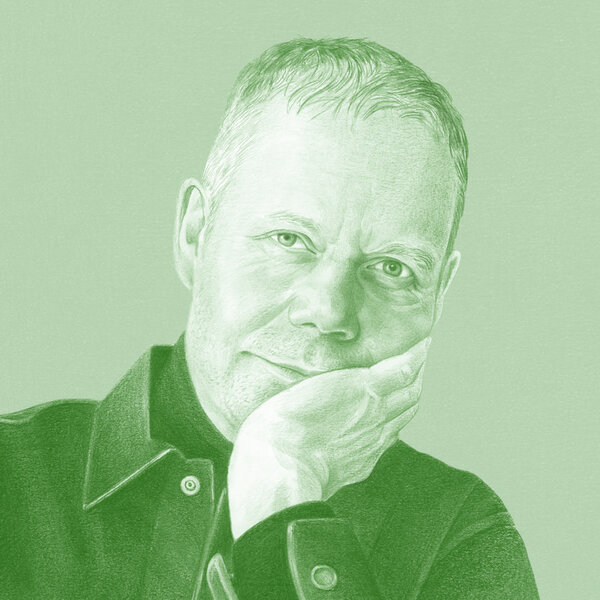
Max Richter is one of the most successful classical composers alive. His catalog has had more than 4 billion streams and his works range from an eight-hour album based on the science of sleep to the Oscar-nominated score for the film Hamnet.
Richter’s work often responds to political upheavals and current events. His new album, ‘While The Flood Rages’, derives from his score for a ballet inspired by Margaret Atwood‘s MaddAddam trilogy of books.
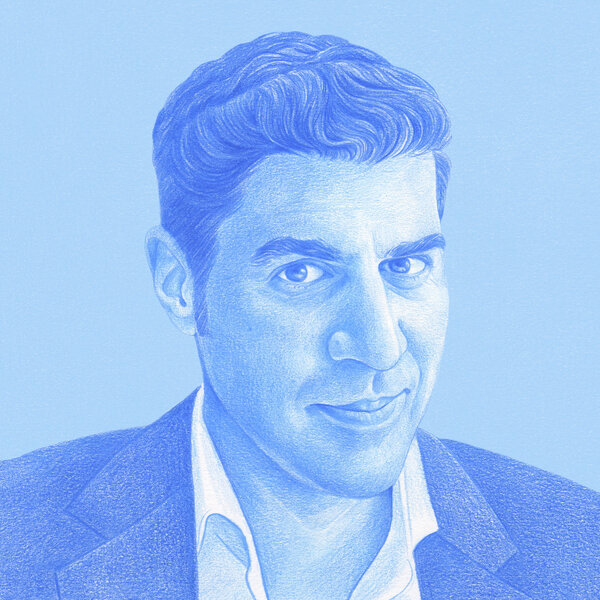
In this conversation with Mishal Husain, he discusses his influences, his creative process and how music is his refuge from the world.
This episode features the tracks:
‘On The Nature of Daylight’, by Max Richter, from the album ‘The Blue Notebooks’. Courtesy of Deutsche Grammophon.
‘While The Flood Rages’, by Max Richter, from the album While The Flood Rages. Courtesy of Decca Records, part of Universal Music Group.
Contact The Mishal Husain Show [email protected]
Visit https://www.bloomberg.com/mishal to read Mishal’s notes and reflections on this conversation.
Subscribe today on Apple Podcasts and Spotify.
See omnystudio.com/listener for privacy information.