 The Mishal Husain Show
20 Nov 2026 · 35m

 Add vo to ChatGPT or Claude to ask about everything you hear
vo listened to this episode to put together the overview and transcript, so there may be the odd mistake.
Parag Khanna discusses whether globalization and international trade are “dead,” arguing globalization persists beyond goods trade—especially through capital, people, resources, ideas, and data. He also analyzes Trump-era tariffs, global protectionism, and how governments should sequence policies for reindustrialization. He connects these themes to youth-led “underclass revolt” (e.g., India’s “cockroach” protests) and to migration cycles and housing affordability, including Germany’s far-right AfD momentum.
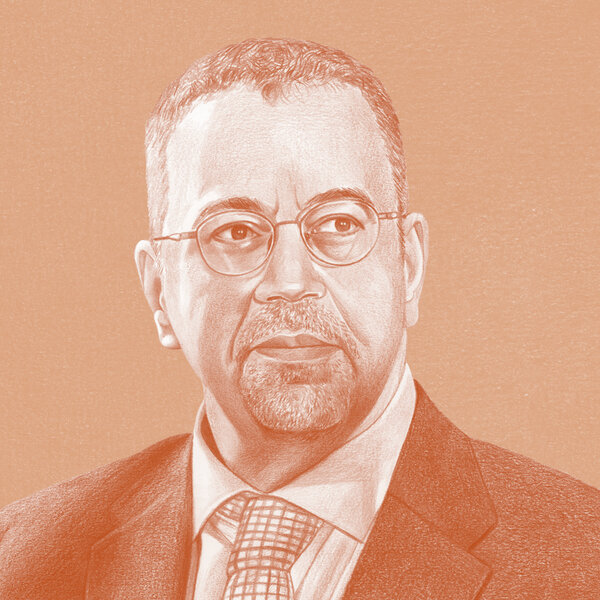
Parag Khanna is a geostrategist and author of seven books, born in India, raised in Germany and the US, and based in Singapore; his work covers climate, migration, urbanization, and trading relationships.
Capital flows matter more than goods; tariffs haven’t derailed global trade because exporters redirect within years; governments should prioritize housing/jobs and learn from democratic self-correction; migration politics follows economic stagnation and cycles, not just migration volumes.
Berlin Wall (1989) as his “geopolitical awakening”; “globalization dead” claims after 9/11, 2008, Brexit/Trump, COVID; India student protests; Germany AfD gains in Saxony/Halt; “regional fortresses” scenario; Afghanistan/Pakistan refugee “zig-zag.”
0:00Capital is evolving. I've seen brilliant people fail because they forget that they need to motivate people, that they need to gain their trust. Find out more later in this podcast with Thinking Capital from HSBC and Bloomberg Media Studios. When you own your own business, you need to keep things moving. Need to book a last-minute flight? Earn a$300 travel credit to cover that. Need to take a meeting before takeoff? Do it from the comfort of the Chase Sapphire Lounge by the club. Need to catch your breath before you board? Done. Chase Sapphire Reserve for Business. The business card that gives back all you put in.
0:37Visit chase.com slash reserve business to learn more. Cards issued by JPMorgan Chase Bank. Any member of DIC. Subject to credit approval. Terms apply.
0:48Bloomberg Audio Studios. Podcasts. Radio. News. This is actually about what we can learn from empires of the past, East and West, for how to govern an empire today. And yes, of course, I'm referring to the United States, but of course China is an empire, the European Union is an empire in various ways. None of them seem to know exactly what the optimal design of governance is to be legitimate, accountable and effective at the same time. Parakana, strategist and author who has spent decades thinking about the forces that govern our world. In the last 25 years, five times, people have declared globalization dead.
1:29Globalization then in the broadest form of international trade. Countries are always going to trade with each other. Globalization cannot be reduced to trade. Globalization of people, globalization of resources, globalization of capital, globalization of data. Quantitatively, the movement of capital matters a lot more than the movement of goods. And that globalization is not at all dead. From Bloomberg Weekend, this is The Michelle Hussain Show. I'm Michelle Hussain. Ever since Donald Trump came back to the White House, tariffs or the threat of them have been a prominent part of his administration's international dealings.
2:09Now, we started the show this year talking to President Trump's trade advisor. And with the US and China meeting this week at the APEC gathering, we thought it was the right time for a deep dive into what's really happening in international trade and in the global economy. And the person we've turned to is Parag Khanna. He's a strategist, the author of seven books, which have often been about trading relationships, climate, migration, urbanisation. We thought he'd be able to take that stand-back view, to look broadly as we head towards the end of a year when a number of economies have also been rocked by the war in Iran.
2:57Parag was born in India, grew up in Germany and in the US and now lives in Singapore. So he is in many ways a citizen of the world. And Singapore is indeed where we recorded this. I know that this conversation is going to range far and wide because you, your work is all about understanding and interpreting the world. So can you trace all the way back to the moment where that impulse was really unleashed? Absolutely. Well, I have to credit my parents themselves, right? They were the original travelers, this outbound generation of the South Asian diaspora that wound up in the Gulf countries in Africa, in Europe, and eventually the US, where they brought me.
3:41But a backstory, they lived in Sudan. My brother was born in Khartoum. I grew up in Abu Dhabi because my father was working for Tata God, we've got a lot in common. More than I realized because I also spent some time there. Looking at photos, these reels, those projector reels with hydraulic pumps, looking at those slides of my parents in Cairo, in Beirut, in Tripoli, in Libya, that's the way they spent their formative years with children. So my story then is we eventually made it to America, but the Berlin Wall then fell. And my father had actually even lived in Germany doing a kind of economic internship.
4:19My father had been to Germany before he had been to the Gulf countries, for example, which is strange for an Indian. So he had this particular attachment. When the Berlin Wall fell, November 9th, 1989, for those who don't remember that auspicious date, my father came home from work. He said, guys, we have to go see this. And so we look back and we say, that's the year Christmas came early. So we petitioned our school teachers to let us go. And my parents, brother and me, we packed up. And by early December, there we were. We flew to Frankfurt and we drove to Berlin overnight. To witness the wall having come down.
4:54So it was a few weeks later, but I sat on top of the wall. We got hammers and chisels. We paid Deutsche Marks to rent this equipment and to hack away at the wall. And I put it in little Ziploc bags and I handed it out when we returned home. But that was a moment for me. Again, did I understand the full geopolitics and the circumstances of that when I was 12? No, but it shaped my entire life since. And when you brought those pieces of the wall back to your classmates in the US, were they impressed or did you realize that you were maybe engaging with the world at a deeper or different level than they were?
5:26You know, it was great because it was actually my history class. And so everyone was attuned. And our teacher was, I would say, a very worldly man himself. And so I just remember the conversations being very in-depth and us thinking, we're living through the world changing. And, you know, there have been times in the last couple of decades where things feel steady and sleepy, but I became a traveler. So I was never at any point in time in a place that was just calm. You know, I've been kind of backpacking around and seeing the turbulent parts of the world and the places in the world that have been, you know, trying to catch up and modernize.
6:01I think one thing that is somewhat tragic in all of this, particularly for people of exactly our age, is that we are now old enough and we've traveled enough and seen enough that some of the very places that we were optimistic about in the 1990s and 2000s during that heyday of globalization and modernization and westernization have actually collapsed. And we have to be honest about that and say what went wrong because that was on our watch. Places like Lebanon, places like Libya, a fair number of Middle Eastern countries, right, to be clear. And this all became a theme in some of my books where I talk about post-colonial decay.
6:35And it does go back to my parents being in Sudan before I was even born in the early 1970s. And I interviewed my parents, not formally, but I remember at Christmas time saying, Mom, Dad, of all the places you've lived, what was your favorite? And I thought they would talk about Abu Dhabi or talk about, you know, Europe, of course, America, New York. And they said Khartoum, Sudan. And I think almost no one alive today would hear Khartoum, Sudan and say, oh, yes, a lovely, leafy, bucolic, expat hub. It's the site of the worst civil war in the world right now. But that photographic evidence reminds us that there was community.
7:12It was multicultural. It was a thriving economic entrepau, a hub. So for me, the almost legacy or homage to my parents is traveling back to all the countries that they had lived in. And sadly, not all of them have made it. I've written and reported about oil pipelines that are older than the countries that they traverse that will probably outlast the countries that they traverse today. That's post-colonial decay. But I don't want to be overly pessimistic, but some countries have suffered that fate. Yeah. And does that not challenge your thesis that globalization always wins? Well, globalization does actually always win because the capacity to exchange these resources, the volume of connectivity that we're investing in, everything from port construction, shipping capacity, fiber optic internet cables, stock exchanges that are being linked, airports that are getting connected, flights around the world, the volume of digital trade is growing much faster than the rate of goods trade.
8:09the capacity to be global and to connect globally has never been more instantaneous. Whether or not we use it to its fullest extent may be a function of certain political cycles. And I don't claim that globalization always wins in an ideological way. I don't necessarily even believe that all dimensions of globalization are good. The globalization of human trafficking and weapons trafficking is not something I view as good. Putting oil and gas on tankers and sending it around the world when those could be substituted by local resources like solar and wind power. I would prefer the latter. If we did the latter, you would have de-globalization in the movement of commodities.
8:50I would celebrate that because it would be good for the environment. So I'm not really ideological about globalization. I'm just an analyst. But if you look at the 100 ,000-year picture, it's pretty clear that whenever people have said globalization is dead, by the way, in the last 25 years, it's five times people have declared globalization dead. Five? Yeah. I mean, think about after the 9-11 terrorist attacks a quarter century ago, people said globalization is dead. No more trust across borders. How will we ensure transit of goods and all of these things? The Middle East is a choke point. Then you had the global financial crisis of 2008.
9:25That was only seven years later. People said globalization is dead. Then you had Trump in 2016 and Brexit. People said globalization is dead. Then you had COVID. People said globalization is dead. And now you have the US, China and global protectionism and trade wars. Five times in 25 years, experts, I don't want to point fingers, would have said globalization is dead. So I guess you're saying... They've been quite wrong. Globalization then in the broadest form of, I think you're saying international trade, right? Countries are always going to trade with each other. Globalization in its broadest form cannot be reduced to trade.
9:57Trade is literally just one measurement of globalization. The flows of global capital and investment, quite frankly, matter a lot more than trade. We have an incredibly reductionist discourse about globalization, which I say globalization, you say trade. That's a very narrow understanding. Globalization, first and foremost, again, if you take a historical view, begins with us and each step we take or took out of Africa, right? Globalization of people, globalization of resources through trade, globalization of capital, globalization of ideas, globalization of data. All of those are dimensions of globalization.
10:31They are co-equal with each other intellectually. Quantitatively, by the way, the movement of capital matters a lot more than the movement of goods. And that globalization is not at all dead. Yeah, that's interesting. So I guess what President Trump is doing most visibly is really about imports of goods in the most. That's actually what tariffs are targeting. And you would say that is a tiny part of the overall global economy or certainly of globalization as a whole? I think there's two things. U.S.-China trade, it is not the axis or hinge on which all global trade depends. Of course, he hasn't only targeted China.
11:07He's targeted. However, all of the countries he's targeted, a study of many of them, shows that they are able to redirect the exports that are no longer destined for the United States to other trade partners within a couple of years and still maintain their trade growth. There is a global trading system and there is a global resilience to the movement of those goods. There is an overcapacity issue resulting from China's incredible output that is part of the narrative and that is having an impact on who is able to competitively produce what. But that's different from saying that protectionism is succeeding in derailing trade.
11:44That is not happening. Furthermore, I would say you can sympathize with the notion that a country has seen labor displacement due to wage arbitrage and, you know, imbalanced approaches to competitive approaches to how trade has been manipulated through currency regimes and so forth. That may be valid. And then you can say, wouldn't it be better, given that we've been exposed by phenomena like COVID and being dependent on supply chains that were so brittle, to make more things at home? And then there's the critical national security element. So you can sympathize with any country that says, wouldn't it be better if we did all of these things at home?
12:21But if you do agree with that, and there's no reason not to agree with that, you would sequence your policies correctly. And this is very important because if you depend on copper imports and on machine tools and all of these other things to build the factories that you need to re-industrialize, why would you impose tariffs first and then pay more for those things to achieve your objective? You would sequence things the exact opposite way. As in you would change what you are – you'd have to make sure that what you're manufacturing doesn't require those goods from somewhere else in the world. You would import all of those things while they're cheap, build up your capacity, and then maybe tariff them to support your own industry.
13:03Again, I'm not advocating this policy. I'm saying that if you're going to do something, do it right. I think a lot of what you're saying is advocating that we look at what is actually happening on the ground rather than the rhetoric. For sure. But then elections come around fast and politicians want something to trumpet. it. I want to ask you what you thought when you saw the cockroach protests this past summer in India, the protests that did result in the resignation of a cabinet minister. What's so important there, it's so consistent with our theme of having your feet on the ground and your ear to the ground, is that those are the people.
13:41They have very, very legitimate complaints, the students. First, let's look at it in the broader context, because they were also So inspired probably by the wave of what were Gen Y protests after the financial crisis. Think about Occupy Wall Street, the Gilets Jean in France, and now this Gen Z protests, Nepal, Philippines, Indonesia, and the cockroach movement of students in India. Nepal did bring down a government. Exactly. And the Arab Spring. Let's not forget. So we have about 15 plus years, going back to 2010, of what I've been calling the global underclass revolt. Youth are a component of it.
14:17Workers are a component of it. Environmental activism, it all can snowball together. And in the most recent movements of the last couple of years, they're well within their rights in every one of these countries, not just India, to say, what's in it for us? What is it that you mean by governing if it is not for our benefit, if our cost of living is rising? If I can say one thing universal across the whole world, every country I've ever been to. And I'm having my proverbial, you know, man on the street conversations. And I ask, what's the biggest problem in your society? There is an answer to that question, Michelle, in every country, rich or poor.
14:51And you know the answer. I'm going to guess. Jobs? Affordable housing. Really? More than jobs? Everywhere in the world. Because remember, here we are in Singapore, unemployment is very, very low. Affordability of private housing in this case is a big concern. Everywhere, where it's affordable housing. And so there are these sort of threads that connect a lot of these movements. And so I ask myself, governments, what should they be focused on if it's not that problem? And if you look at America right now that is building data center after data center or attempting to, we have data that shows that it is directly at the expense almost of building housing.
15:27And yet Americans have been saying there's a housing crisis for a very long time. How is it that the wherewithal, the capital, the regulatory, the zoning, permitting, is the road has been clear to build data centers everywhere and yet not enough affordable housing? Where are the priorities of the government? And the same pattern replicates itself in many places. I read that you've called these three generations, Gen Y, some people might think of as millennials, Gen Z, those who are today in their teens and early 20s, and then gen alpha, so essentially the children of today. You've called these the last three large generations before the global population declines.
16:11Is that what you mean? That's exactly right. There's some very interesting data about this. So the way you measure these generational slices, actually generation alpha's terminal birth year is 2025, so we actually have the data. The Gen Alpha, you would have expected every generation from the baby boomers onwards to grow larger and larger and larger. This is a thousand year old pattern. But because of everything from declining fertility and COVID actually had a role to play in that, Gen Alpha is now officially smaller than Gen Z, right? So yes, Gen Y, Gen Z, and Gen Alpha are the three largest generational cohorts that the human species has ever produced, each individually.
16:55And together, they represent more than 5 billion people. So the majority of the human population is still young, not old. We rightly obsess about longevity and how are we going to care for the elderly. But let's remember, there is a future that we need to care for, the 5 billion young people. But it has begun to decline. And nothing that any country has attempted to do, such as Singapore trying to, you know, give a$70 ,000 subsidy to each family has a children. I laud the effort, absolutely. But having studied many of these countries, it doesn't work. Because of affordable housing, because of jobs, because of economic insecurity, because of inflation, because of changing cultural norms, because of climate concerns, for many reasons there has become this sort of global narrative around one child or no children.
17:39And what that statistically leads to, as you know, is that we start to, you know, fall off a cliff. in the next 20 years.
17:49As we're in a world that's becoming more and more transactional, I think that integrity with which people hold themselves when they conduct business is paramount. It's not always the best price that wins. It's that trusted partner with integrity where you have a deep relationship. This is Thinking Capital from HSBC and Bloomberg Media Studios, a series decoding the modern pursuit of capital in all its forms, from social to financial capital and cultural to intellectual depth. We'll hear from global experts attuned to every dimension of capital. Sometimes you will not know when that trust has been lost if you're not looking out for the signs.
18:31The meetings are still happening. You have the person's number on WhatsApp. They're still picking up the phone. And yet something has changed. To hear more from our lineup of global leaders, search for HSBC Thinking Capital.
19:10the U.S. in the first three quarters of 2026, more than double their year-earlier tally. The company's new EVs are affordable SUVs, priced from$35 ,000 to$45 ,000, and are selling well, with Toyota now selling two EVs in the U.S. to every one of Fords and Subaru capitalizing on a renaissance in EV interest. Though the brands still represent only 9 % of the U.S. EV market and trailed GM in the space, their sales are growing, while rivals have gone in reverse. Rivian, which also added a new truck, is the only other carmaker to post a gain in battery-powered business year-to-date. That's the Bloomberg Tech Minute, brought to you by ChachiBT.
19:47Get started at ChachiBT.com. For big business, AI opened up a world of promise, but that world of promise turned into a world of pain. Cost spiraling, data scattered across disconnected systems, security and governance increasingly complex, AI initiatives struggling to scale, an ROI that remains frustratingly out of reach. The challenge isn't AI itself, it's having the infrastructure AI needs to succeed, which is right where Boomi says we got you. Tens of thousands of enterprises trust Boomi to connect data, applications, processes, and AI. With Boomi, businesses can eliminate silos, automate workflows, strengthen governance, and create the foundation AI needs to perform at scale.
20:31The result? Faster innovation, more efficiency, better business outcomes. Boomi turns a world of AI pain into a world of AI gain. As Boomi says, we got you. Head to boomi.com to learn more. That's B-O-O-M-I dot com. If you listen to financial news, you know a lot of time is spent thinking about what's next. The next opportunity. The next investment. The next move. But sometimes what matters most is being ready for what you never saw coming. A storm damages a second home. A pipe bursts above a collection you spent decades building. An unexpected loss puts a growing business on pause. Those are the days no one sees coming.
21:12But for more than 75 years, Cincinnati Insurance has been ready when they do. With deep expertise, coverage for businesses, homes, valuables, and more, Cincinnati Insurance works with independent agents who take the time to understand what matters to you. Together, they help protect more than what you own. They help protect what you're building toward. And when a bad day does come, Cincinnati Insurance has real people there to help make things right. Because planning for the future isn't only about knowing what's next. It's about making sure you're ready for what you can't predict. Let Cincinnati Insurance make your bad day better.
21:49Find an independent agent at CINFIN.com.
21:56I'm conscious of course that a lot of your work in recent years has been about people on the move and when one thinks of that phrase usually people think across borders but actually a lot of your work has been about migration within countries and that's about urbanization and the search for work and often positive that jobs are being created and people are gravitating from the rural areas to the urban areas in search of social mobility. Both, right? Domestic migration quantitatively has been a larger phenomenon just again by the numbers, simply taking people from rural China and moving them to coastal cities to work.
22:32The process that is rapidly accelerating in India today as well. So urbanization within countries alone is the majority of human migration. But at the same time, the number of people crossing borders has never been higher either. And it brings me actually to the COVID inflection point. In March of 2020, I'd actually already finished that book, Move, and the editor called and said, we have a problem here. You've written a book about global migration and the world is standing still. And people said globalization is dead, migration is dead. And I said, hold on, I'm going to stick to my guns here.
23:07What is the fundamental argument? The drivers of migration over the past tens of thousands of years include political stability, climate stability, jobs, connecting with family, all of those motivations. And I thought to myself, every one of them is in overdrive right now, right? Climate migration hasn't even yet fully kicked in, but most definitely labor displacement, political conflicts, forcing mass migrations and refugee flows, all of those things. I said, migration will not only continue and restore, but probably surge again. And it only took till 2022, by two years after COVID, human cross-border migration had exceeded 2019.
23:47Yeah. And I would still put it to you that in the years since this book has come out, so we're now five years on, the world has changed, hasn't it? Because yes, the US and the UK saw the big increases in migration in that period under President Biden, although he tried to then bring it to a halt and mostly under Boris Johnson in the UK. But those countries and even countries like Canada, which had long prided itself on being the Great Mosaic. Sentiment has really changed. It has. Sentiment has changed. And what I do is actually posit scenarios. Nothing is linear in a complex system. Everything can zig and zag.
24:23And I've noticed this actually with refugee movements. I mean, places that you and I know very well, Afghanistan and Pakistan. If you made a linear forecast, you would say that, wow, every year, one million Afghans are moving to Pakistan. As you very well know, in the last one year, Pakistan has changed course and been sending back millions of Afghans. So the zig and the zag, I always look back and I say, this book should have been called moving, not move. It gives the impression of a one-way ticket. It's not. So I posited scenarios and the scenario you're describing is what I call regional fortresses, which is to say that North America, Europe, and other regions start to say, they put up the walls.
24:59They say enough is enough. The language that you can associate with J.D. Vance or with Nigel Farage or with the AFD party in Germany, saying we need to take stock of people who are here. Those who are here either need to be sent back if they're here illegally or if they're not assimilated or if they're not contributing to society. We need to know who's who. We have to take care of our own. All of that language is in that scenario. It's happening today. But that, too, is not linear. It doesn't mean it's forever going to be that way. If you look at Europe, think about the shortages of labor. So these are all cycles.
25:30They're cycles. They're absolutely cycles. So tell me your interpretation of what's happened in Germany where the far-right AFD has had its best state election result ever. Around the time that MOVE came out, again when the AFD had been in the news for some time, you sort of suggested that you thought that they had run out of steam or that they were a moment in time. And yet here they are doing better than they ever have before in Germany. There are right-wing populist cycles in and of themselves with migration playing a greater or lesser role in their rise and fall. So the cycle is embedded in a broader economic stagnation of the country that is the primary concern for most people most of the time, whichever side of the former East-West German divide they are on, to be clear.
26:13In other words, it's not all about migration. Ironically, in East Germany, you have the lowest proportion of foreigners in East Germany because that's not a dynamic economy either. They want to be in the thriving economic commercial hubs. So a place that didn't have many migrants voted far right, not actually because of migration per se. And this is their own words. This is their own polls and statistics and surveys. They simply want economic security, sovereignty control. And all of that has to be wrapped up in the political narrative cycle, which is simply leaning populist whether or not it's justified.
26:46Rule number one, I think you and I would agree, you must be sympathetic, right? Whether or not people have been brainwashed or whether they're perfectly rational, be sympathetic. It's a tenet of human decency. Sympathetic to what? Sympathetic to local people expressing their views in a democratic society as they did, right? Take them seriously. Whether they are conditioned, don't presume that they're brainwashed. If you are a German citizen anywhere in Germany, you are not only absolutely within your right, but you must call out the government for being ineffective in its economic management, for not creating enough jobs, for being massively overregulated, for having a bloated public government and not doing enough locally.
27:23All of those things are true no matter who wins the election. And so that was a huge part of the agenda of the AFD party. And that is not wrong, to be absolutely clear. So I would not argue, neither for America, nor for Germany, nor for Britain, nor for Canada, that they simply keep their borders open and accept an unlimited number of migrants without having the mechanisms in place to harness them for economic growth. Germany is a particular irony because for years since 2016, since the first Syrian migration wave, they've been the magnet in Europe for migrants and still their economy is stagnated.
27:58Yeah, but there are much bigger forces at play, aren't there, in that German industry, that manufacturing heart of Europe, incredibly successful industry and companies, they are under pressure from China, from AI changing jobs. So there are forces way beyond what a single government can do that are at play here. I think you're right to even bring in not just a political narrative cycle, not just a migration cycle, not just a populist cycle. You're rightly bringing the geopolitical cycle on top of everything. How long do they last? When you have to govern a country, not just make an immigration policy or to, you know, win a campaign and go on social media, but govern an entire nation, it cannot just be a single issue platform that you run on anymore.
28:42So we've seen time and time again is that populist parties ultimately fizzle out and liquidate and they gravitate towards the center. Is that what you think is going to happen to the AFD? I'm not sure whether you're saying they're going to fizzle out and the moment will pass or that they will change in government if they do end up actually running one of the German states. Or indeed Germany is a country. But there are so many steps between, you know, not yet even gaining a majority in a very small eastern state to suddenly being integrated into national politics, to suddenly sweeping those national politics and suddenly becoming, you know, holding the chancellery.
29:18We're a long way away from that. And one of the other very important things is self-correction. So clearly the centrist parties that are in a coalition right now are watching what's happening and saying we really do have to get our act together. And when we make these linear forecasts, AFD goes from here to here, we neglect that self-correction mechanism, that dynamism, that learning, which is what democracy, by the way, is supposed to be about. But would the federal government not learn the lesson from this result in Saxony and Halt, that that kind of recruiting of people from across the world, that has to stop or that has to reduce?
29:54Or can they not afford to do that? So migration has become this catch-all term, but I think even the most, I don't want to be too extreme here, but even racist Europeans or from any country say, hold on, we don't mean everyone. And to be clear, the AFD does not mince words. They're extremely transparent and they're rather articulate, to be very clear. They say very clearly, if you're Syrian or from any country, they happen to specifically mention Syria for obvious reasons. But if you have skills, if you're in the economy, if you learn the language, if you fit in, you're absolutely welcome. So let me repeat, as a non-AFD voter or supporter, I'm not a German citizen, I'm just objectively conveying, they say this extremely transparently.
30:36They have certain illiberal tendencies to be very, very clear. But the most senior people will say, hold on a minute, if you assimilate, that is fine. And it is well within the bounds of any democratic society or culture to say, we want to make sure that we have some kind of a cohesive national identity. They also say they want to reduce the influence of Islam on the state, even though I think Muslims are about 2 % of the population in Saxony and Hald. And they say they want a re-migration offensive. What do you think that means when there are foreign-born doctors and paramedics and others doing critical jobs in the state?
31:16The remigration narrative meme, let's say, because it really is on the posters, that one word is very loaded. It's a policy. It is. It is their policy platform. It is not federal policy. Well, to be clear, already the German government today is conducting a lot of remigration, right? It is sending plane loads every single day. Every day, planes are departing Germany and taking Afghans back to Afghanistan, Syrians back to Syria. This becomes a legal issue because either in individual cases, not everyone should be sent back if they are someone who is politically exposed. And as a class, if it's determined legally that there's still a security risk in the country, if a country is still at civil war, according to European law, you cannot send people back.
32:00But the re-migration narrative as used by the right-wing parties, even that is not talking about Indian doctors and software engineers. It is talking about unassimilated migrants who are political asylum seekers. Some may have abused the system. Some are illegal. Some have overstayed visas. They simply want them to go back to their home country. But the climate can change for everyone. It can. And plenty of documented examples of people being racially abused in the street. And it really, I think the key moment was after a Christmas market in Magdeburg had this ramming tragedy towards the end of 2024.
32:37It was a case where actually the man seems to have been an anti-Islam activist or minded in some way, even though he was born in Saudi Arabia. So there are many things that we don't fully understand about that. But there were certainly Indians who were in the aftermath of that who said that they were racially abused in the street. It's happened in America since 9-11. It happens in a lot of countries. I don't condone any of that. So they might go home of their own accord, I mean. They may very well do that. They may do so merely based on the logic of economic growth, to be clear. I mean, why are Chinese scientists leaving America and going back?
33:07They feel it's a combination, a feeling that they are being ethnically held suspect, but also because they're having brand new Chinese laboratories tangled in front of them as an incentive. We cannot simply isolate these drivers. They all coexist. Germany is a constitutional democracy, right? Germany and other countries are not simply going to say, just because this political party now has a presence in our federal politics, it is going to hijack the law. It's going to hijack the state, hijack the capabilities of the state to simply pick up anyone who is not holding a password right now and send them back.
33:42That's not going to happen in modern day Germany. Part of it also, not only the cycles, there is the big psychological cycle. It's called learning. It's called all of the times that we look back and reference what happened in the 1920s and 30s is why we try not to repeat what happened in the 1920s and 30s. It's the reason why Germany has made it to where it has, because it's a country that has been wrestling with its own past so seriously. So let's give them the benefit of the doubt for a whole host of reasons. Finally, Parag, if you were born again, where would you want to be born today? day, where do you think is the best place in the world?
34:20Wait, I have to twist that because in a world of migration, it finally matters somewhat less where you were born. And I'm not going to discount the fact that, as I know very well, the vast majority of the human population will still never leave the country in which they were born. Let's be clear about that. But if you're in a middle class background, I want to say this, first of all, there has never been a better time in world history to be young, to be skilled and to be mobile. There are no iron curtains anymore, right? If you are talented, if you are young, and if you can get up and go, there is a country that wants you right now for your skill.
34:56And I've seen this everywhere around the world. Yeah, but right now it doesn't feel like that's the US or Canada particularly or the UK. Are you saying like where are these big flows that you're talking about? There is supply and there is demand, right? So if you look at Canada's points-based system, and yes, they've come down a little bit in their annual quota. Again, they haven't built sufficient affordable housing to harness the hundreds of thousands of people coming in. It's a pragmatic corrective that they should have foreseen. putting that to the side, as you and I agree, these are cycles.
35:28You'll eventually have greater flow again. Even if you didn't, we still have 250 years of history that shows that supply and demand ultimately prevail. And that today, if you are young, skilled, and mobile, depending on what your skill is, where you're willing to go, there is around the receiving end, a country that's saying, oh, we're looking for someone like you. You could be a hairdresser. You could be a fruit There is a place that wants you right now. And what I hope for from a technological standpoint is that we start to transcend the current system we have of very rigid restrictions on nationality and focus more on skills-based migration.
36:09and that you have an online blockchain passport that documents your skills. I have a name for this, actually. I call it the Passportal. So portal, passport, Passportal. And that you simply say, I am a person X. You may or may not have to reveal your nationality, but I can do this. And I want to go to one of these 10 countries. And those 10 countries are looking and saying, we need X, let's go, buy a plane ticket and come. I think you're suggesting it doesn't matter where you're born, but still, where would you like to be born if you were being born today? Well, you know, we talked about my geopolitical awakening happening when I was 12 years old in Berlin.
36:43And ever since that moment, I've been a Berliner, as they call themselves. And a deep part of me still is. I probably, you know, I think I'm going to retire there. So if I were reborn, I would want to, I could go through life a Berliner. It's sort of my home away from home. When is the next book coming out? So probably. What is the next book, I should say? It was going to be citizens of everywhere, actually, which is sort of my worldview, which is different from global citizens, which is kind of a term that is an object of scorn today. Citizens of everywhere. Of course, it's the Theresa May. If you are a citizen of everywhere, you're a citizen of nowhere.
37:18So citizens of everywhere is a defense of the concept. But I had to push that back for a book that I'm finishing now called Philosopher Kings. and this is actually about what we can learn from world empires of the past, East and West, for how to govern an empire today. And yes, of course, I'm referring to the United States, but of course, China is an empire. The European Union is an empire in various ways. None of them seem to know exactly what the optimal design of governance is to be legitimate, accountable, and effective at the same time. So I'm writing this book to kind of take the lessons of history and political theory and to apply it to...
37:53Interesting, because so much of it works about the future, but now you're delving further into the past. But this is governance for the future. Okay. Yeah, governance for the future. In a way, the subtitle actually is Imperial Governance in the Age of AI. So there's a lot around how to redesign government for this world, because as you know, we have so much accumulated plaque in the arteries of government, and we need to really make government more lean, more efficient to cope with modern day realities. not just exist for the sake of itself. As we know, people don't have a lot of patience for that anymore.
38:26Yeah. I look forward to the next book. Thank you. Harag Khanna, thanks for being with us. Thank you. Thank you so much.
38:40That is where we left it. Do take a look at my written notes, which accompany this episode and every episode. You'll find them at bloomberg.com forward slash Michelle, and they'll give you a sense of what I read before and after we spoke. And so to the team, the show's producers are Jessica Beck and Chris Martlou. The video, because you can also watch these episodes, is produced and edited by Andy Haywood. Guest booking was by Elan Bird and Andy Clark. Social media by John Horsville. Production assistance from Indira Ray. And our music is by Bart Warshall. The show's executive producer is Louisa Lewis.
39:20This episode was recorded in Bloomberg's Singapore office with the help of Timothy Lye and Michaela Sabnani. And at Bloomberg Weekend, thanks to Brendan Francis Newnham and our executive editor, Catherine Bell. Finally, do subscribe to the show wherever you get your podcasts. And if you leave a review, it will help others find us. Until the next time, goodbye.
39:46A business gift should do more than check a box. It should reflect your brand and show someone they're appreciated, recognized, and truly seen. 4imprint offers thousands of high-quality, customizable products, like premium apparel, drinkware, tech, and more, making it easy to create a gift that feels meaningful and on-brand. And with 4imprint's expert support and their 360-degree guarantee, you can be 4imprint certain your order will arrive exactly as intended. Explore gifting with confidence at 4imprint.com. 4imprint. 4certain. If you listen to financial news, you know a lot of time is spent thinking about what's next.
40:24The next opportunity. The next investment. The next move. But sometimes what matters most is being ready for what you never saw coming. For more than 75 years, Cincinnati Insurance has worked with independent agents to help protect businesses, homes, valuables, and more. Because planning for the future isn't only about knowing what's next. It's about making sure you're ready for what you can't predict. Let Cincinnati Insurance make your bad day better. Find an independent agent at CINFIN.com. Most meeting note takers get the easy words right and the important ones wrong. The client's name, the acronym.
41:03Whisper Flow Note Taker is built to get the hard words right. It takes notes on any meeting platform. Zoom, Google Meet, Teams, even WhatsApp calls, keeps every meeting searchable and connects to Claude or Chat GPT. So you can ask, what did we agree to last Tuesday? Free to try on Mac and Windows at whisperflow.ai. That's W-I-S-P-R flow dot A-I. For big business, AI opened up a world of promise, but that world of promise turned into a world of pain. Cost spiraling, data trapped, security and governance risks multiplying, and ROI out of reach. That's why enterprises turn to Boomi to connect data, apps, and AI, helping them operate securely, efficiently, and at scale.
41:46Boomi turns a world of AI pain into a world of AI gain. As Boomi says, we got you. Head to boomi.com. That's B-O-O-M-I dot com.
With US President Donald Trump and Chinese President Xi Jinping having met this week at the APEC summit, one question that comes to mind is whether years of global conflict, trade strife and immigration blowback have fully ended the era of globalization.
Geostrategist and author Parag Khanna is arguably a product of globalization. He was born in India, grew up in Abu Dhabi, the US and Germany and now lives in Singapore. And he has emerged as one of its biggest evangelists even as the political narrative appears to have moved on.
In this conversation recorded in Singapore, Khanna tells Mishal Husain why he believes globalization will always win. He also reflects on a life-changing trip as a child to see the Berlin Wall.
Visit https://www.bloomberg.com/mishal to read Mishal’s notes and reflections on this conversation.
Contact The Mishal Husain Show mishalshow@bloomberg.net
Subscribe today on Apple Podcasts and Spotify.
See omnystudio.com/listener for privacy information.
Scan the code with your iPhone camera
Listen in the app.