Ask ChatGPT
 The Modern Retail Podcast
21 Nov 2026 · 35m · 11 chapters
The episode explains why major brands are again phasing out artificial food dyes and flavors after a prior backlash, focusing on U.S. policy changes, “encouraged” (not banned) timelines, and how labeling rules like “no artificial colors” may be reshaped.
Paris Martineau, investigative reporter at Consumer Reports covering food safety policy and consumer harms.
A grassroots “Maha movement” and growing safety concerns helped make artificial dyes a mainstream “kitchen table” issue; the Trump administration in 2025 accelerated FDA/HHS actions (revoking Red 3 authorization; planning transitions away from petrochemical dyes; voluntary removal of six dyes by end-2026 later extended to end-2027). Companies avoid aligning with RFK Jr.-linked politics.
Trix’s 2015–2017 dye removal and subsequent reintroduction of dyed versions; California AB418; FDA “no artificial colors” label redefinition; Cheetos “Simply Naked”/“Naked” line; Doritos/PepsiCo taste-test and secondary-line strategy; titanium dioxide workarounds for Europe.
Written by AI. May contain mistakes.
Discussion on the growing consumer demand for clean label products and the industry's shift towards removing artificial dyes.
“We both began as tech reporters and have both pivoted away from that.”
Exploration of the history of artificial food dyes and the backlash faced by Trix a decade ago.
“But do you think there's also been, I guess, a major shift overall that's really just crystallized, I guess, maybe in the last 18 months to help push it over the line.”
Analysis of how recent political changes and advocacy movements have influenced food dye policies.
“And so, you know, it's kind of convenient that this new administration comes in and all of a sudden everyone gets their ducks in a row to start the process.”
Discussion on how cultural changes and generational shifts impact consumer preferences regarding food additives.
“actually concerned about food related issues and consider them a policy priority.”
Insights into the current regulatory landscape regarding food dyes and the voluntary compliance of food manufacturers.
“I think I have a similarly cynical view, which is that I think that companies are reading the room.”
Learn about the FDA's voluntary program for removing synthetic dyes from foods and the industry's response.
“But the one that both Gaby and I have talked about just recreationally in our lives, because it's kind of funny to me, is this voluntary program working with industry.”
Explore the implications of the new FDA labeling policies on artificial colors and consumer understanding.
“But I do think that any effort to actually do this does have to take into account the complicated nature of the system we have.”
Discuss the potential consumer backlash against changes in product appearance due to natural color usage.
“And I think this is, again, sort of in the weeds policies or I guess applications of some of them that we're going to probably see.”
Analyze how companies are repositioning products to meet health trends while maintaining consumer appeal.
“And I guess I wonder whether that this is the moment that this is going to happen and it's going to work this time.”
Learn how consumer perceptions impact companies' product strategies.
“I mean, yeah, so they haven't broken out, funnily enough, you know, any of the revenue or the numbers on these products or these lines.”
Explore the balance between consumer safety and market demands.
“Maybe, you know, not the intended goal, but yeah.”

Get the gist, explore an idea or ask about something said.
 Claude
On The Modern Retail Podcast, what are the key points of this episode?
Searching your listeningAutomatic transcript. May contain errors.
0:09Hello and welcome to the Modern Retail Podcast. I am senior reporter Gabby Barco, and here with me this week is Paris Martineau, investigative reporter at Consumer Reports, who covers food safety policy and consumer harms. Paris, welcome to the show, and thank you so much for joining us this week. Thanks for having me. Big fan of the show and big fan of you, so I'm excited to dig in. I'm a big fan of yours also, and this is a good time to maybe tell the listener that we have known each other for a long time. So this is very exciting for me that our beats finally overlapped enough to do this. It's funny.
0:48We both began as tech reporters and have both pivoted away from that. And yet here we are again. Yeah. Like ships in the night. Many moons ago. But, you know, who amongst us hasn't been a tech reporter in the past decade here or there? But this week we're actually talking about artificial food dyes because they've just been such a big topic of conversation. this year. Yeah. So as consumer demand for like clean label products has grown in the last few years, a lot of major food producers are increasingly like phasing out artificial food dyes and other flavors and whatnot to use more natural or plant-based alternatives.
1:27So a lot of these are driven by these standards of, you know, a mixture of like social dietary changes across consumers. And then, of course, in turn, the retailers are responding. You know, we've had Target and Walmart announce these pledges to remove synthetic colors in the last year or so. And the changes also came at a time while state-level regulations were already sort of ramping up and taking place. I think most notably California's AB418 banning specific additives. They are kind of at the forefront of a lot of this. And so, yeah, as we're seeing the removal of artificial dyes across like everything from cereals to candy at this point and reformulations.
2:11We're kind of wondering why 2026 was just such a major turning point for this. Of course, there is some of the timelines for companies to do this. But do you think there's also been, I guess, a major shift overall that's really just crystallized, I guess, maybe in the last 18 months to help push it over the line. And Paris, I know you followed the story pretty closely and covered the policy side. So we would really love to hear maybe starting with, you know, what do you think has shifted maybe in the last decade? Because famously, Trix tried this about 10 years ago and actually went back on their removal of dyes because they had a pretty big backlash that impacted sales.
2:57Yeah, it's really fascinating. I mean, many of these issues have been kind of quietly compounding over the course of decades, especially when it comes to certified color additives, which is also a category that has like a million names. Like some people like to call them petroleum dyes or artificial dyes or whatever. Specifically, these additives, both color additives and food additives generally have obviously been in our food and in the food system for decades. For a long time, this was just considered routine. But over the last couple of years, this issue has been taken up by a new group of people, and that is the Maha movement.
3:43There's been, obviously, over the last five, ten years, increasing kind of outrage and concern around the safety of some of these additives from consumer safety advocates and researchers. But those arguments had kind of fallen on deaf ears. I guess people hadn't really thought of this as a sexy or politically salient issue until the Maha movement kind of scooped it up and made it a bonafide kitchen table issue. A lot of the researchers and public policy people that I've spoken with about this have been really kind of surprised at how RFK Jr. has become an actual figurehead for a lot of the issues that people who work in this field have been talking about for many years.
4:38So to answer your question of what changed, what changed is the Trump administration came into power in 2025 and that set off a chain of events that has resulted in kind of a number of small policy changes and this voluntary shift towards phasing out synthetic dyes among the food industry generally. Yeah, I want to kind of zoom in on that for a second because the policy side and I guess like the politicized side of this is so interesting because, as you said, there's been advocacy groups who have been pushing for this for decades at this point. And so, you know, it's kind of convenient that this new administration comes in and all of a sudden everyone gets their ducks in a row to start the process.
5:24At least that's what they're promoting on the, you know, press front. But, you know, it's interesting when I talk to brands or retailers, like they're very careful to not necessarily align themselves with Maha. I know it's a contentious topic because it's like, if you say that you agree with the additives or the dyes stances and also, you know, get lumped in, I guess, with all the other stances, the controversial ones that RFK Jr. and, you know, now I guess technically the administration is spouting, it could be kind of a nightmare, which is why a retailer like Walmart was very adamant to tell us like, no, we're not taking out dyes or cereals because of the so-called deadline, which we'll talk a little bit more about these sort of phantom deadlines a little at this point.
6:14But it has been interesting, right? Like, I think it's a fine line to walk as a company or a brand. Yeah, I mean, it's a very interesting moment. You mentioned earlier the whole Trix affair of 2015 to 2017, where General Mills was like, oh, people are really concerned about artificial flavors and dyes, so we're going to take them out of Trix. And it resulted in Trix having honestly kind of like a beautiful assortment of fall colors in the cereal instead of the really vibrant stuff you associate with that product. But consumers revolted basically when that happened. And within a year of the company removing those dyes, it was announcing that it was actually introducing a second product that had all of the same artificial dyes and flavors.
7:03And I thought that that was just an interesting parallel because that happened basically a decade ago. And now here you have all of these companies kind of doing their own version of that move, albeit in a very different political climate. And I think it's not a surprise that these large multinational corporations are not particularly interested in commenting on whether their business decisions align with a particular administration. However, it is really not like I can't emphasize enough how unusual it is for all of the public policy people and researchers in this field to suddenly have people at the FDA and HHS that are actually concerned about food related issues and consider them a policy priority.
7:54Like the long running joke in Washington had always been that the F and FDA was silent. So I think that what a lot of these companies are reacting to and part of the reason why this time seems to be different is you both have this genuine seeming like grassroots movement around wanting to get artificial flavors or dyes or additives out of food products. as well as you have a regulatory environment where multiple leaders at both the HHS and FDA have identified this as a pressing issue for them and have issued both like some policy decisions as well as voluntary programs to get these dyes and additives out of food.
8:40Well, I think the biggest question I always have for like, you know, sort of food experts, dietary experts is I'm like, okay, but like, what has changed, I guess, on the cultural side? Like, I think some of them argue that maybe 10 years ago, Trix was too early, you know, like maybe they, you know, the consumer wasn't ready for faded out pastel Froot Loops at the time. And And maybe now a lot has changed in the last 10 years. Millennials and Gen Zs have come into parenthood. I mean, obviously parents are a big chunk of the consumer demo that is purchasing these products. I think, you know, for the sake of this conversation, we're talking about snacks, cereals, et cetera.
9:23And just because they happen to use a lot of these dyes and additives, you know, they are making those decisions. And there's a lot of data on, like, they do read labels more closely. they do care more about these claims. And we'll talk about sort of the claims controversy in a little bit, because now you can kind of put a lot of things on your box to claim natural dyes. But yeah, I mean, I guess maybe my question is like, do you agree with that? To me, it makes sense, but it just feels like, I'm sorry, but I just feel like this is the U.S. and companies don't really tend to do things out of the goodness of their heart, right?
9:59If they wanted to, they could Yeah, I'm in no way implying that. I think I have a similarly cynical view, which is that I think that companies are reading the room. These terms have now become buzzwords. They're like table stakes, right? Like if you want to get into whole foods, you need to do this day one. People are looking at packaging and being like, oh, what granola bar do I want to buy? Do I want to buy one that is healthy, all natural with added protein? Or do I want to buy one that has crazy colors and artificial flavors and multi-syllabic words on its ingredient list? And I'm not saying that any of those things are, you know, true hazards to health, but I think that there has been a shift towards vilifying anything that could be seen as artificial or chemical.
10:56And of course, artificial colors are going to get swept up in that. Yeah, maybe this is a good time to talk about, you know, the so-called regulatory deadlines, which, you know, as of this recording, the FDA's language is that the, let's say, red number three, for example, should be, is encouraged to be removed by January 15, 2027. I believe that date has shifted a little bit here and there. But Paris, given that you're kind of more in the weeds on, you know, the actual, I don't know, what do they even call them? I guess like specific colors or combos. They're called certified color aditives or FD &C colors or petroleum-based dyes, depending on who you're asking.
11:44Yeah. So we've got the others, like I think, yeah, FD &C green number three. That should be like phased out by the end of 2027. But this word encouraged is very interesting to me because a lot of times, and I know I have a bad habit of calling it like a ban, right? Because that's just, we write headlines and a ban just sounds, you know, more to the point. Yeah, let me walk you through a little bit of what has happened on this. What is encouraging versus banning? So this, we're talking about one announcement that's been made in a flurry of other announcements over the last two years. So the first one involves red dye number three, which actually five days before the Trump administration took office, the outgoing administration announced it was revoking the authorization for that.
12:32So I guess context is that the reason why these are all called like certified color additives is they all have to be certified and authorized and go through a specific process for these specific color additives. So one of those was red dye number three, which the authorization was revoked. in early January 2025. That was kind of the first foray into this. And it was before, technically, this new regime took over at HHS and FDA. Then a couple months later, HHS and FDA announced kind of RFK's big plan for food dyes and certified color additives. They announced that They plan on establishing a national standard and timeline for the food industry to transition away from petrochemical-based food dyes to natural alternatives.
13:23They're going to start the process to revoke authorization for two more dyes, a red 2 and orange B. They announced the third, which is this voluntary process we're talking about. They're going to work with industry to eliminate six remaining synthetic dyes from the food supply by the end of 2026. and that they're authorizing for new natural color additives. And they're requesting that food companies remove red dye number three sooner than the 2027 to 2028 deadline that was previously required. And so the FDA has followed through on a lot of these things over the last year or so since this announcement in April 2025.
14:02But the one that both Gaby and I have talked about just recreationally in our lives, because it's kind of funny to me, is this voluntary program working with industry. Like, this was announced in April 2025. And at the time, it said they're going to work with industry to get them to remove six synthetic dyes from the food supply by the end of 2026. However, that deadline, which, again, it's voluntary. It depends on manufacturers kind of following through on voluntary pledges rather than any regulatory reinforcement. That deadline was then extended to the end of 2027. And now it exists in kind of a nebulous space, by which I mean it's not necessarily a regulatory deadline.
14:50But the FDA does have a tracker on its website now where it's showing the changes that various companies have made in regards to these sort of artificial colors in their product. But not all of these changes are removing those synthetic dyes from all their products. Some of them are like, we're getting them out of, we're not selling them to products at schools. Or we've announced that there is a new type of Cheetos we're going to sell that doesn't have artificial dyes. So it's a little. It's a workaround. It's a bit of a workaround, but it's a bit of, I guess if you want to give the most generous read, it's a way for industry to have time to undertake this very long and complicated process.
15:38But also, it has been a lot of time, and it's a lot of time for companies to comply with something that is not a requirement. Right. Yeah. I mean, speaking of the timeline shift, you know, I have heard from like supply chain experts, consultants that like they want to give them enough time to kind of, you know, there's a lot of like packaging overhaul. There are supply chain delays in some cases where it does take a while to, especially if you're like a giant CPG brand, you know, you have to remove. There's also a lot of formulation concerns. Right. I mean. Products off the shelf. Yeah. I mean, of course, there's concerns.
16:17And then I've heard also the argument that like, well, aren't a lot of these formulations technically out in the market? Like there's this sort of famous example that I believe RFK Jr. points to, which is like there are already naturally dyed Froot Loops being sold across the border in Canada and in Europe. So why can't we just put those in boxes and slap, you know, send them over to Walmart? And I guess it's not that simple, it sounds like. I mean, I guess part of the industry argument is that the U.S. market is very large and unique and you have set manufacturing processes in place to provide the goods to that.
16:56But I think that it is an argument that warrants a little scrutiny, especially given what you just said. One example I often point to is titanium dioxide, which isn't technically a certified color additive, but it's color pigment. But same difference. It is basically a white pigment that is used to either like it's synthetically produced and it is used either to whiten or brighten foods or sometimes as kind of like a primary paint coat sort of thing where you can then layer colors on top of it. However, it has been banned in the European Union over genotoxicity concerns. And there's a large number of brands that, instead of using titanium dioxide in their products, have found workarounds to be able to produce the same sort of product for the European market, but then still use this ingredient in their U.S.
17:57products. And don't, I mean, and titanium dioxide isn't part of this voluntary initiative to phase out pigments. So, I don't know, it's a very obviously complicated situation. But I do think that any effort to actually do this does have to take into account the complicated nature of the system we have. Yeah, and, you know, like, people are trying to take it in good faith, because there's also a lot of excitement about, you know, the fact that there is movement on this front. So, you know, trying to be balanced in our views, of course. But I actually, Paris, I want to ask you, because speaking of labels, which I actually find the most fascinating, because, you know, label policies or rules or whatnot in the US are also pretty unique.
18:50And I believe you covered this earlier this year, but now there is this label, you know, quote unquote, no artificial colors that brands get to use and put on their packaging in order to kind of signal their either removals or the fact that they've gone through this process. But that also is on its face, maybe sounds simpler than in reality. What is that all about? Yeah. So in February of 2026, this year, the FDA announced that it was basically redefining the label claim, no artificial colors on food packaging. And part of the reasoning for this is they wanted to incentivize food companies, obviously, to move away from using these artificial dyes or certified colored additives and move towards using colors from natural sources.
19:40And so under longstanding FDA policy, any color additive that is added to a product is considered an artificial color additive for labeling purposes, regardless of the source. That means only a product that has no added colors could be said to be free of artificial dyes on the label. But in February of this year, the FDA basically kind of sent a letter to manufacturers changing how it was going to be interpreting and enforcing that rule. It said that companies can now use the term no artificial colors on labels of products that contain coloring agents so long as those coloring agents aren't the FD &C certified colors.
20:29And this is, I mean, kind of a complicated one because like on the surface, it does sound like a good plan. But many of the policy experts and consumer advocates I spoke with said that it's going to make it more challenging for people to understand what's actually in their food. Because you could have a box that says like no artificial colors on it. But then on the back, it could say, yeah, it's got titanium dioxide in it because that's technically not an FD &C certified color, but it is an artificial color additive. Yeah, no, I get that. And I think this is, again, sort of in the weeds policies or I guess applications of some of them that we're going to probably see.
21:18So I guess on that note, I'm kind of curious what you predict or like what do you think is maybe going to be coming in the coming year or in the new year, given that we now have – we are at the end of 2026. Obviously, they did not hit that deadline. That's probably why they've extended it. Yeah, what do you think is really coming up next or what are you predicting? One of the good consequences of this voluntary program has been that you've had all these large multinational companies announce programs and policies to remove a lot of artificial colors from their product. A lot of them do say that they're going to be hitting some version of that goal within the next year or so.
22:01And so I think what is going to be really interesting to see next year is whether we have the whole tricks thing happen again. If these companies are actually releasing updated versions of their core products that look different, that are not as visually as appealing or flashy, because oftentimes there's no way using natural colors that you can get the same kind of bombastic colors in a product. So if you have all these companies suddenly releasing suddenly duller-hued versions of their product, is that going to change consumer spending? Is that going to change consumer spending? And is it going to change buying habits?
22:43And will that result in these companies rolling the policies back? Or is it going to stick? And I could honestly see it going either way. I can too. I mean, I think that a lot of people just like – a lot of people just hate change. I saw a very small version of this recently in like Bay Area local news. There is a this product that is called an It's It. It's a popular like mint ice cream sandwich in the Bay Area that it's like a mint ice cream sandwich. And it used to be like really bright, obnoxious seafoam green. And the, I think SF Chronicle had to do like a whole post-opening like people are outraged that the it's it's is different now.
23:30It's kind of a pale, sickly green color. What happened? And it turns out the company stopped using blue dye, like blue number one in its formulation to make the bright seafoam green color and instead are using, what is it, spirulina, which is the same sort of thing in that viral Erewhon smoothie, which produces a much less exciting color. And people were quite upset by it. Yeah, it's interesting. I mean, again, this feels very uniquely American. I do wonder whether, I mean, okay, so once the Chronicles did the story, like, are people like, oh, okay, this is for my own health? And like, were they convinced?
24:09I guess this is what I think a lot of companies are counting on. Like, probably hence why they're overhauling the packaging and really trying to like hammer home like, hey, this is going to maybe be a little dull or faded, but we're doing it, you know, for good reason. And I guess I wonder whether that this is the moment that this is going to happen and it's going to work this time. I think it'll be really interesting to see because, I mean, anecdotally, I feel like people, I feel like these labels matter a lot to consumers when they're trying to decide what new product to purchase. But I think that there is some there's some like latent revulsion inside the average person when you see something that you've eaten a million times and it's always looked one way and suddenly it looks different.
24:58People are like, what? What happened? My product is different. I'm upset about that. Even if it is the sort of thing that if they were buying that same exact product for the first time, they would probably naturally gravitate towards the healthier option or an option with fewer artificial colors, flavors or additives. Something that technically their values are reflected in more in that product. But then there is something to be said about nostalgia and comfort food. Like I think maybe, you know, to wrap up, we can talk about Doritos, which I think you invoked earlier as a perfect example. We're seeing all these sort of taste tests like across media and social media about like, oh, is the naked version, I don't know, does it taste the same or is it worse or better or whatnot?
25:48And I don't really have, honestly, a strong opinion. I mean, it's fine. But like, I do think they took an interesting stance or a strategy of introducing the secondary line because to me, it feels a little bit like a cop out in that like, it really does matter how you package literally and figuratively this new product because people saw that. And I think there's a lot of like knee jerk reaction of like, oh my God, this is like baked Lay's. They're going to try to give us big lays and tell us that it's the same thing and it's not. And so I do think the consumer is very, I guess, conscious of that.
26:25And so I wonder whether that's going to be a hindrance or a barrier of entry. But what do you think? Yeah, I mean, it is going to be very interesting to see how people respond. Because, I mean, this was a thing that PepsiCo did with a number of its products. I've noticed this in my local bodega. You have the whole line of stuff over there with a bunch of brightly colored Cheetos. And then sitting on a different shelf, kind of near some health food, there is a weird white package of Cheetos naked, which is technically the same exact product as the brightly colored Cheetos bag. But it has a different name.
27:08It is probably not supposed to be in a totally different place in the store, but that is kind of how people are interpreting it. And it's one of the consequences of instead of just changing your product formulation, which I think was part of the original goal for this whole voluntary initiative that the FDA announced last year. Instead of, I guess, following through on the spirit of that and making the changes generally, you're just introducing a second option that people can go to if they want, which, I mean, I guess satisfies the bill, but not exactly. Yeah, but like, you know, what's more American than that?
27:49It's just more choice, you know? I guess it's more choice. I just, I think naked is a weird word to have near my food product, personally. I know it's NKD, but that doesn't help. I'd say, if anything, that's kind of worse. I mean, yeah, so they haven't broken out, funnily enough, you know, any of the revenue or the numbers on these products or these lines. But, you know, like we said earlier, it is going to be interesting once we see, you know, the hard numbers on paper and whether this bet is going to pay off and, yeah, whether they will pull back or, I don't know, figure out a new strategy, I guess.
28:26But I think we won't really know until the numbers come in or at least they disclose them. Yeah, I mean, it's also just an interesting experiment in how do you convey that change to a consumer if you are breaking it out into a separate product and you actually want that product to be successful? How do you get them to know, like, yeah, this is the one that doesn't have any of those things you've been complaining about and saying you don't want? If you look at the bag of Cheetos Simply Naked, which I just pulled up, like, the biggest words on it are Cheetos and NKD. And then in a bunch of weird, smaller fonts on the corner of the bag, it says Naked of Dyes and Dyes Artificial Flavor.
29:10But if you're just glancing at it and trying to find the product you've always purchased, you probably might miss that. So it'll be very interesting to see how this shakes out from a sales perspective, because I think that is what is going to determine what a lot of these companies end up doing going forward if we continue to not have actual like regulatory enforcement action around these. Yeah, interesting enough, I believe PepsiCo, while they haven't broken it out, just to clarify from earlier, they did say that these products are, I guess they're doing their job in that they're attracting newer customers or customers who maybe would not have ever considered, you know, a classic Cheetos or Doritos.
29:54So that's an interesting sort of, I guess, consumer reaction or habit. Maybe, you know, not the intended goal, but yeah. I'm sure they're not mad about it. Yeah. I mean, that is, I guess, a reason to launch a new product line is to expand the market. Yes. More people, more snacks, especially because, you know, the sort of, you know, quote unquote, junk food. I know they would not like to call it that, but like the classic snack portfolios have been declining because of some of the sentiments we mentioned earlier. Or sodas, I think famously, sodas declining, which I never thought I would see the day.
30:33But well, on that note, Paris, thank you so much for joining me this week. This has been really interesting and fun to hear about from your perspective, because you, you know, at Consumer Reports, you're covering sort of like the consumer safety, you know, the actual health safety aspect of these products, whereas here at Modern Retail, we cover the business angle. And so, you know, we're kind of meeting in the middle to see what's working here. So it's been, yeah, it's been a fun conversation with that. It's been fantastic. Thanks so much for having me.
31:11Thank you for listening to this episode of the Modern Retail Podcast, a show by Digiday Media. If you haven't already, please subscribe and head to Apple Podcasts to leave us a review and a rating. Find more of our coverage at modernretail.co and follow us on socials like LinkedIn and Instagram at Modern Retail. You can also follow me at Gabriella Barco, that's B-A-R-K-H-O, on all socials. See you next week.
As consumer demand for clean-label products grows, major food producers are increasingly phasing out artificial food dyes for natural and plant-based alternatives.
Driven by these shifting standards, retailers such as Target and Walmart have announced pledges to remove synthetic colors. These changes also come as state-level regulations take effect, such as California's AB 418 banning specific additives. As such, food brands across categories like cereals, snacks and confections are actively reformulating their core lineups. The movement has led legacy companies to navigate the complicated supply chain and visual challenges of revamping iconic products.
To break down the latest policy changes on this week’s Modern Retail Podcast, senior reporter Gabi Barkho is joined by Paris Martineau, investigative reporter at Consumer Reports, who covers food safety policy and consumer harms.
In this episode:
The latest with the FDA’s industry pledge tracker
The decades-long history of U.S. food manufacturers attempting to remove food dye
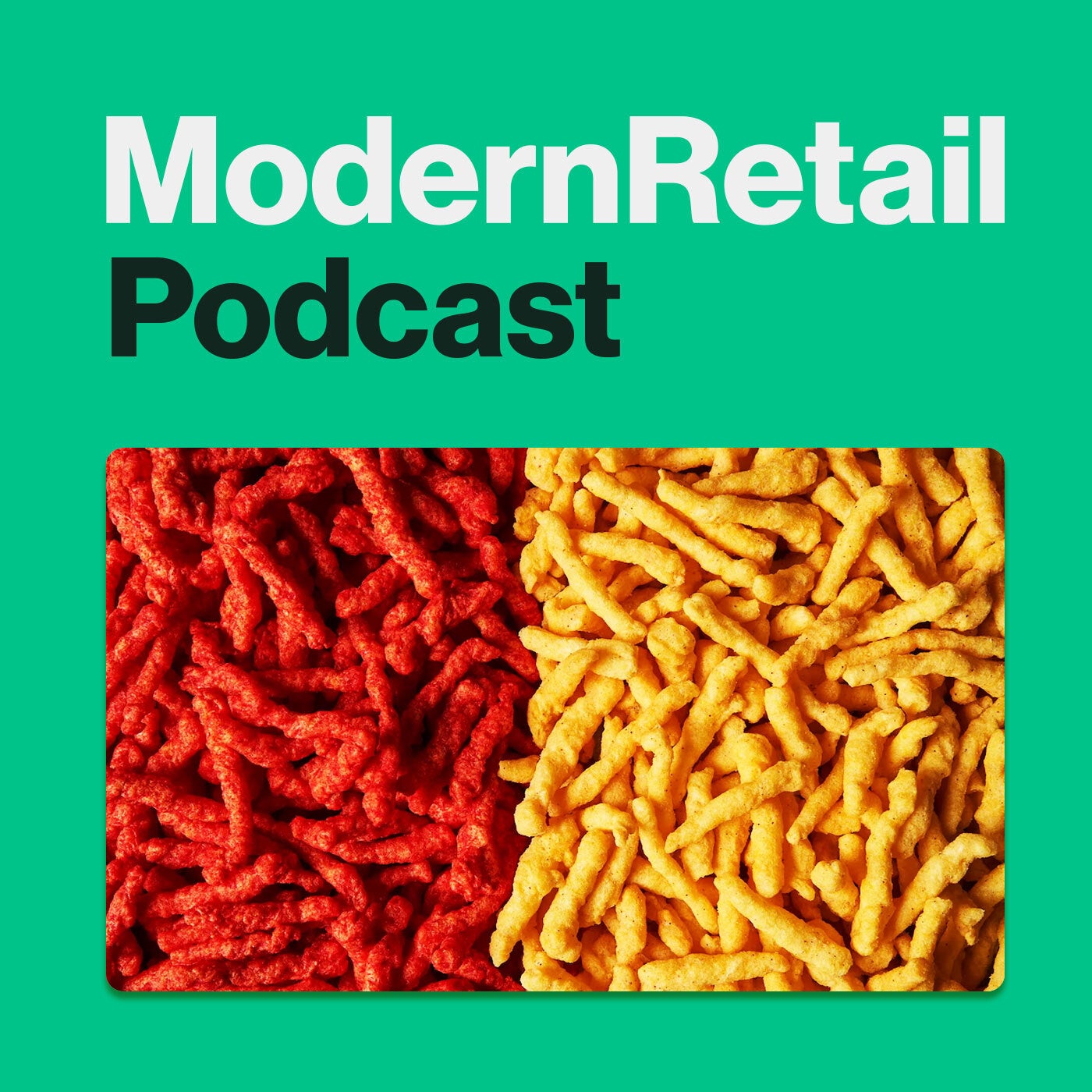
The solutions by brands like Doritos and Cheetos, including secondary product lines without artificial colors