 The New Yorker Radio Hour
24 Nov 2026 · 17m

 Add vo to ChatGPT or Claude to ask about everything you hear
vo listened to this episode to put together the overview and transcript, so there may be the odd mistake.
Journalist Jon Lee Anderson describes his rare interview with Venezuela’s acting president Delcy Rodríguez, focusing on how she replaced Nicolas Maduro after a U.S. operation, her quick alignment with U.S. officials, and the behind-the-scenes planners allegedly shaping the intervention.
Rodríguez is portrayed as a longtime Chavista loyalist who became the U.S. point person; she communicates directly with Marco Rubio (shown via a WhatsApp exchange). Venezuelans are depicted as cautious and exhausted rather than openly outraged. Two U.S.-linked figures are described as driving the plan: Mauricio Claver Caron (Florida-born Cuban-American, Treasury/IMF background, Capitol Hill lobbyist) and CIA/NSA-linked Jessica Bodoya (Ecuadorian/Colombian background), who allegedly produced an options memo for removing Maduro.
Maria Corina Machado’s 2024 election win (70%) despite being barred from running; Maduro’s refusal to release tallies; Maduro’s reported “pawn” status and possible Noriega-style deal.
Jon Lee Anderson (New Yorker staff writer; long Venezuela correspondent).
0:01The New Yorker Radio Hour is a co-production of WNYC and The New Yorker. This is The New Yorker Radio Hour. I'm David Remnick. The New Yorker's Jon Lee Anderson has reported from Venezuela for decades, from all over Latin America, in fact. And he recently returned from a rare interview with Venezuela's acting president, Delcy Rodriguez. There's been a kind of mystery surrounding Rodriguez. She was a vice president and top deputy of Nicolas Maduro, and she worked in Hugo Chavez's government before that. Rodriguez seemed to be, above all, a loyalist. But after U.S. forces invaded Venezuela and seized Maduro and his wife, Rodriguez made her peace with the U.S.
0:45in record time. There's no timeline for new elections, and meanwhile, Rodriguez remains in power. John Lee Anderson's new piece in The New Yorker is called Venezuela's Collaborator-in-Chief.
1:01So, John Lee, tell me how it was that you came to sit down with Delcy Rodriguez. I made two trips to Venezuela. In fact, I tried to go first, immediately after the snatch of Maduro in January. But her administration, if we can call it that, wasn't handing out any visas. At some point, the U.S. government clearly made a calculation that a certain number of journalists should be allowed to go in. I was one of them. We were a mere handful. The abduction of Maduro, following a period of months in which they put out a kind of all-points bulletin on him as a narco-terrorist, began putting warships off his coast and began this ongoing deployment, well, ongoing attacks on so-called knuckleboats in the region, was all part of a buildup aimed at removing him from power.
1:54But lo and behold, I think to all of our surprise, indeed, rather than, say, bring back Maria Corina Machado, the Nobel Prize laureate from last year who gave her medal to Trump and who was in exile. The Nobel Peace Prize, right. Her Nobel Peace Prize. They promoted Delcy, a longtime Chavista apparatchik, You know, on the surface, anti-American, a socialist, a revolutionary, who happily and quickly moved into Maduro's seat. And what was your conversation like? Did she give up much about who she talks with in the United States? You have the feeling that Marco Rubio seems to be in charge of this part of the world for the United States.
2:35Indeed. Marco Rubio, a few days before I met her, actually, there was a story that leaked out claiming that Delcy and he had become so close that they practically played footsies, that they exchanged selfies. And so I brought it up with her and she gave me a look. If looks could kill. But did she deny it, John? She just gave me a look. And then later, later she showed me her phone. I realized she was showing me her phone and not saying anything, but giving me a pointed look. I looked at it and I realized that it was an exchange, a WhatsApp exchange between her and none other than Marco Rubio. And she said, you can see I don't call him Markito.
3:11I call him Secretario. And we just talk about, you know, formal things. So, but that was as close as she came to addressing the specifics of this extraordinary and very controversial role she's adopted for herself, where she has effectively become the American person, their cat's paw in her land, in this, you know, once proud sovereign land of Venezuela. How did the Venezuelans feel about the fact that their president, no matter what his qualities were, was snatched up by the United States one fine night and replaced by his vice president? Nobody's saying very much. That's the truth. Maduro was—if he was brought up once by a Venezuelan in conversation I had, whether in the barrios or in more refined environs, that would be a lot.
4:06Nobody talked about him. He was over. That was it. But the Venezuelans you speak to are not outraged by American intervention? People have learned to be wary and cautious. And I think Venezuelans are basically survivors. I felt that they were in a post-ideological phase almost. They're just exhausted from the years of political determinism. And they just want to get on with their lives. You know, when the Maduro operation came down, Venezuela was the country with the highest inflation in the world. People are struggling to make ends meet. You know, insecurity has come down, but it was a huge problem in recent years.
4:43So many people have gone abroad. It's just a shambles. John Lee, you looked very closely at two really odd but really critical players who influenced the U.S. action in Venezuela and the behind-the-scenes power moves. It all read like something out of Ian Fleming. Who are these two characters, and what role did they play in the action against Venezuela? Well, Mauricio Claver Caron is a Florida-born Cuban-American who, in the first Trump term, was brought in from Treasury and IMF, where he was handling Latin America loans, that kind of thing, by Bolton, John Bolton, who was our then national security advisor, and brought in as a kind of smart young thing.
5:32So he would have been about early 40s then. He's 51 now. And he was well known as a lobbyist on Capitol Hill to pretty much anybody concerned with Latin America, and particularly Cuba policy. You know, he was a conservative Cuban-American. He had a newsletter, and he worked the halls. And he's amiable. He's a likable, personable kind of character. In the course of time, in the first term, he gets to know Jessica Bodoya, who's Chicago-born, but of Ecuadorian and Colombian peritans. She's in the CIA and on loan to the NSA, as often happens. And the two of them just hit it off like a house on fire, evidently.
6:14And she came up with an options memo calling for Maduro's removal then. And it included everything we saw this time around. You know, warships off the coast and so on. And they were edged out by what we used to call the adults in the room that felt that this was way too militaristic. There were still people who were trying to dissuade Trump from his more rambunctious impulses. I've heard this from various Latin American presidents who met him in the early days and so on. Mr. President, maybe we could find another way, that kind of thing. Well, Mauricio and Jessica, realizing that he was gung-ho, came up with an options memo, but they lost out.
6:57And when Trump came back in last year, he brought them back in. And at some point, the summer of 2025, they were called into the White House and told in the Oval Office, we want to do your thing. And it began. Well, we should remember that in 2024, Maria Carina Machado was legitimately elected president, was she not? Yeah. She wasn't allowed to stand. Typically, the electoral council had found some ruse to make her, to neutralize her candidacy. So she put up a straw man candidate, an older fellow who had been a diplomat, kind of, not many people knew him, but everybody understood that he was standing in for her.
7:40And she evidently won by 70%. I mean, it was a sweep. And her operation, the opposition had, they had people at every urn in the country. So they were able to collect the tallies and prove that she had won. Whereas the government, Maduro, who immediately announced he had won re-election, refused to show the tallies. And so it was, you could question him before for a lot of things, but this was the first time that Maduro openly stole the election. I'm speaking with staff writer John Lee Anderson. We'll continue in a moment.
8:27I'm Emily Flake, cartoonist at The New Yorker. The New Yorker Radio Hour is supported by Bombas. The days are getting shorter and the weather's getting colder, but this year, I'm staying nice and warm thanks to Bombas. They make the coziest socks and soft, supportive slippers that are perfect for doing my weekend deep clean or just lounging around the house. And if I truly must go outside, Bombas even makes footwear so I can keep that cozy indoor feeling wherever I go. And everything they make is great for gifting, so there's no need to be stressed about the holidays. You'll find something for everyone on your list.
8:59And the best part about Bombas? For every item you purchase, they donate an essential clothing item to someone facing housing insecurity. One purchase equals one donated, with over 200 million donations and counting. Head over to Bombas.com slash New Yorker and use code NEWYORKER for 20 % off your first purchase. That's B-O-M-B-A-S dot com slash NEWYORKER. Code NEWYORKER at checkout. I'm Emily Flake, cartoonist at the New Yorker. The New Yorker Radio Hour is supported by AT &T. So, AT &T has this holiday offer. A Samsung Galaxy Z Fold 8 watch and tab, all for$0. Which brings me to a question. Is that one gift or three?
9:42I mean, sounds like three gifts, obviously. But then again, it's one offer. Practically the price of one gift. Then again, you're getting three amazing devices for one incredibly good price. But three incredibly good gifts. Okay, by that logic, if I give someone a pair of socks, that's two gifts? Wait, why am I bringing socks into this? You know what? I'm clearly not going to settle this on my own. So let's hear from you. One AT &T offer, three Samsung devices. How many gifts are we talking? Tis the season for more savings. Get the Samsung Galaxy Z Fold 8, Watch 9, and Tab A11 plus 5G all for$0.
10:19Requires trade-in of$290 or more and eligible plan. Terms and restrictions apply. Subject to change. Visit an AT &T store for details.
10:31Some see the climate crisis as a risk. Others see opportunity. I'm Amy Scott, and this season on How We Survive, we uncover the truth about this emerging economy of disaster. From prediction markets where gamblers wager on catastrophes to private equity firms profiting on both sides of the crisis, we find out who's winning and who gets stuck with the bill. How We Survive is available wherever you get your podcasts.
11:06Our colleague, Stefania Teladrid, interviewed Maria Corina Machado, who, after cooling her heels abroad for quite a while, is now back in Venezuela. Why did they let her back in, and what's going to be the political dynamic with her there, John Lee? It's a good question, David. it, they had evidently stopped her from returning seven different times. In some cases, while she was mid-flight or mid-voyage, because she tried to go by plane, by boat, they kept stopping her. This time, they let her go back. I can't say what calculation they made, because they're not on record as having said, we stopped her from going.
11:41I think there was an inevitability. Everybody was saying it. She will, of course, come back. And I think they put her off as long as they could. And so then finally they just said, okay, let her come back. But the day she returned, I talked to, let's put it this way, I talked to one of the Americans involved in this whole operation, and they derided her as a destabilizing influence, as a messianic person, and that she had seen her day. Messianic? She won an election by 70 for 30. I mean, what are we supporting here? She's got, she has quite a kind of, you know, how should we put this? She's got quite a personality.
12:21And, you know, she is a polarizing figure, but she does have a great deal of charisma. She's a polarizing figure, maybe, but she won an election by 70 % to 30%. And we're on the side of the dictator so that we can snatch oil out of Venezuela. Am I getting this wrong? No, you're not getting it wrong. You're not getting it wrong. Here's the thing. They say she's destabilizing. Their most important priority is that the country be stabilized, that God forbid the army should pull a coup because they don't like Maria Corina Machado, and it all goes back to square one. So I think what they wanted to do, the Americans, that is to say, is allow Delcy and Co.
13:01to build up a kind of head of steam with a kind of rump opposition at home to be able to say, yes, we're on the track here for a transition and somehow elbow Maria Corina Machado out. What about Maduro sitting in a jail in New York and his wife? Will they come to trial or are we just going to hold them indefinitely? you know we have a way of doing that um you know i think he's kind of a pawn really um i would imagine that there could be some kind of deal struck with maduro at some point uh some of his associates who've been grabbed and given up have have are turning state's evidence against him it might go the way that it went for noriega where you know effectively he becomes the fall guy for a whole period of corruption in which he was, in the case of Noriega, sometimes our friend, sometimes not our friend.
13:54In the case of Maduro, responsible for a lot of stuff. Finally, John Lee, I have to ask you, it seems to me that this is not the end of the story. No. That just as Marco Rubio is involved in Venezuela, he has an even deeper interest in Cuba, where you have also been quite a lot of times. What's next in this agenda? The same people that have seen off Maduro and taken over Venezuela for Trump have been trying to do the same in Cuba. It hasn't worked out. It's quite a story and it's ongoing. Just three days ago, Trump, you know, yet again said to some group of people, was quoted as saying, I want to have that.
14:36That's the buzzword around Washington and Miami that Trump and his people want to take it by hook or by crook in 2027. The country is very ground down. And so we'll see. There are various factions, David. There are those who want to see, they don't want to see a kind of military operation because Cuba is a different kettle of fish than Venezuela. They think it could go south because Cuba is an island, first of all. It's an almost 70-year-old revolution. These are people who exported guerrilla warfare to the world. They know how to fight a defensive guerrilla war. There are those who scoff at that, and they say, ah, they're so ground down, there's no way they could do anything.
15:18Well, I'm not so sure. Cuba, for all of its penuries, it remains a place that has a proud nationalistic fervor, you know, in its population. There's a large military force. There's a large state security operation. And so, you know, I don't—look, nobody can call that one. There are ways you could affect a military takeover of the island. But if we try to do that at this point, we would be reprising what, you know, Kennedy inherited from Eisenhower in 1961 with the Bay of Pigs invasion. You know, be careful what you wish for. The longer this goes on, of course, the more Cubans become apathetic and just desirous of a change, any change.
16:05And I think there's a lot of Cubans that feel that way. But within the crowd that would like to bring about change in Cuba, I'm in touch with several people on various factions. There are those who would like to go ahead and just do it. and that could mean a military operation of some sort. I think we're talking there about the Miller-Hegseth crowd. And Rubio seems to be on the fence. But there's another crowd that have been trying to do it like they did in Venezuela, without snatching, say, President Diaz-Canel, because it would really change nothing. I think he's just an apparatchik, with Raul Castro still alive.
16:44They would like to try to find Adelci. And for a while, they were talking to Raul Castro's grandson, a kind of gold chain wearing, I love my dad and I love my uncle, but I want to be a capitalist too, kind of Rolex wearing. He has the benefit of being tapped into the, how should we call this, the ruling family, but he is seen as a bit of a loose cannon by the older bureaucrats of the Communist Party, who saw that for what it was, a Rubio-sponsored Delcy option in Cuba, and they're hunkering down. So I have to think, though, with the United States enmeshed in the Middle East yet again, that the idea of an invasion of Cuba, which is far less of a sure thing than Venezuela turned out to be in raw colonial terms, that's a dicey operation.
17:40Exactly. And I think there are people who are desperately trying to convince Trump that just give us a bit more time. We'll grind them down. They have opened up economically, at least on paper. They've said, yeah, foreign investment, fine. But there haven't been any major deals. And Rubio, pressured by the hardline Cuban-Americans in Miami who have been such a constituency for this administration, have continued to lobby successfully for ever harsher measures. Also, what has Cuba got? What has Cuba got that U.S. capitalists would want? You know, I remember, of course, in Godfather Part II, the slicing up of Havana as a cake, and that was for hotels and casinos and all the rest, but that's pretty small beer.
18:24There's no gold. There's no oil. There's a little oil. Okay. And there's some nickel down island. And fish. But you know what? There's some fish. It's a 700-mile-long, undeveloped Caribbean island. If I was a realtor, like, say, a certain person is who happens to be waddling around the White House right now, I'm thinking, hey, the Trump Doral Golf Resorts and Marina, you know, 10 times over. You make a good point, John Lee. It's a great piece this week with extraordinary reporting as always. Thanks so much. Thanks a lot, David. You can read John Lee Anderson's new piece from Venezuela at newyorker.com.
19:09You can subscribe to The New Yorker there as well. Newyorker.com. I'm David Remnick. That's our program for today. Thanks for joining us. See you next time.
19:25and The New Yorker. Our theme music was composed and performed by Meryl Garbus of Tune Yards, with additional music by Louis Mitchell and Jared Paul. This episode was produced by Max Balton, Adam Howard, Erica Huang, David Krasnow, Jeffrey Masters, Louis Mitchell, Jared Paul, and Ursula Sommer, with guidance from Emily Botin. And we had assistance this week from Pran Bandy. The New Yorker Radio Hour is supported in part by the Cherena Endowment Fund.
20:00I'm Conor Tomlinson from Love on the Spectrum. History is my thing, and I've been waiting my whole life for a show like this one. And I'm Carter Roy, and this is What the Fact. Three facts a week, each with the whole story behind it. The history class you actually wished you had in school. New episodes every Wednesday. Follow What the Fact wherever you listen, or subscribe on YouTube at What the Fact Pod.
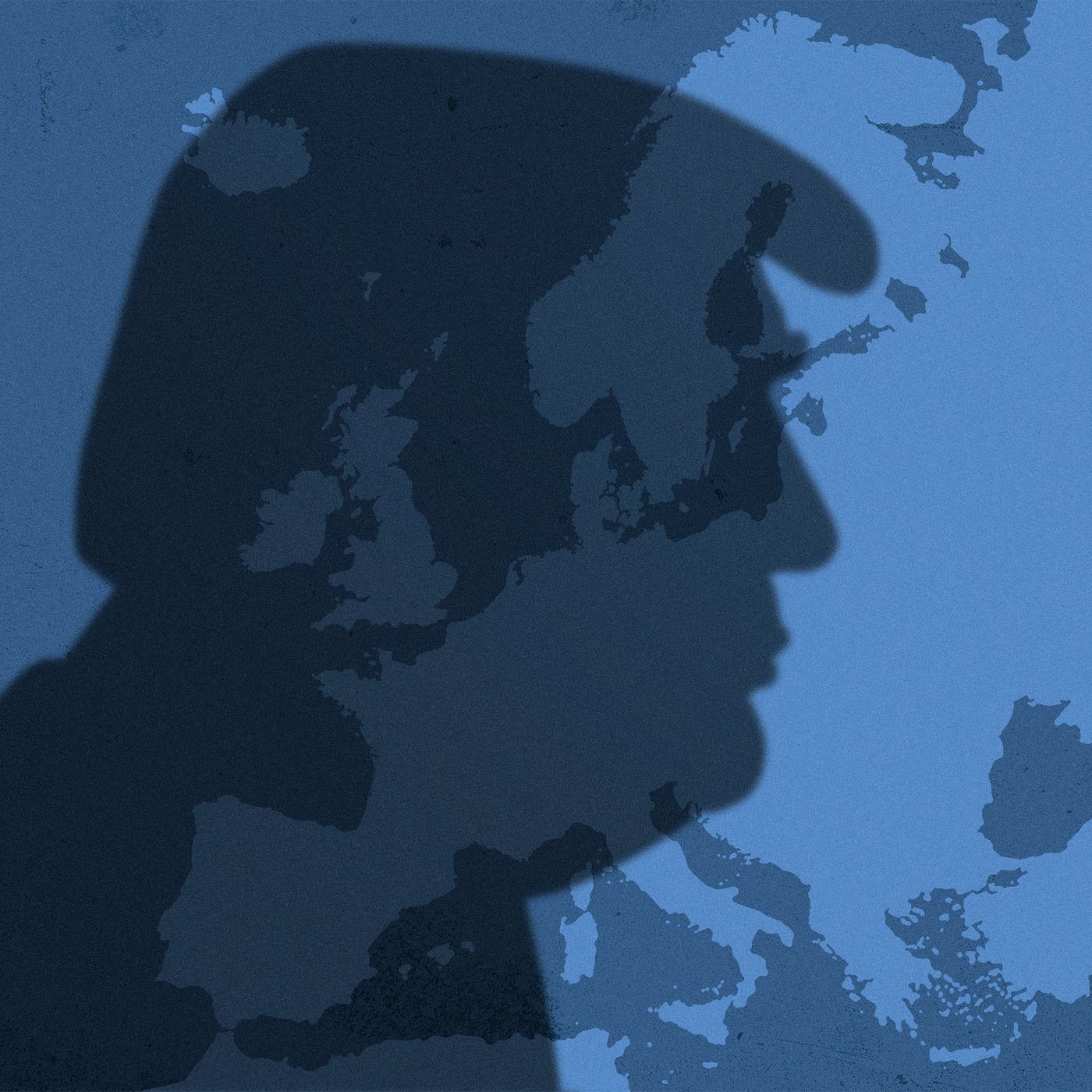
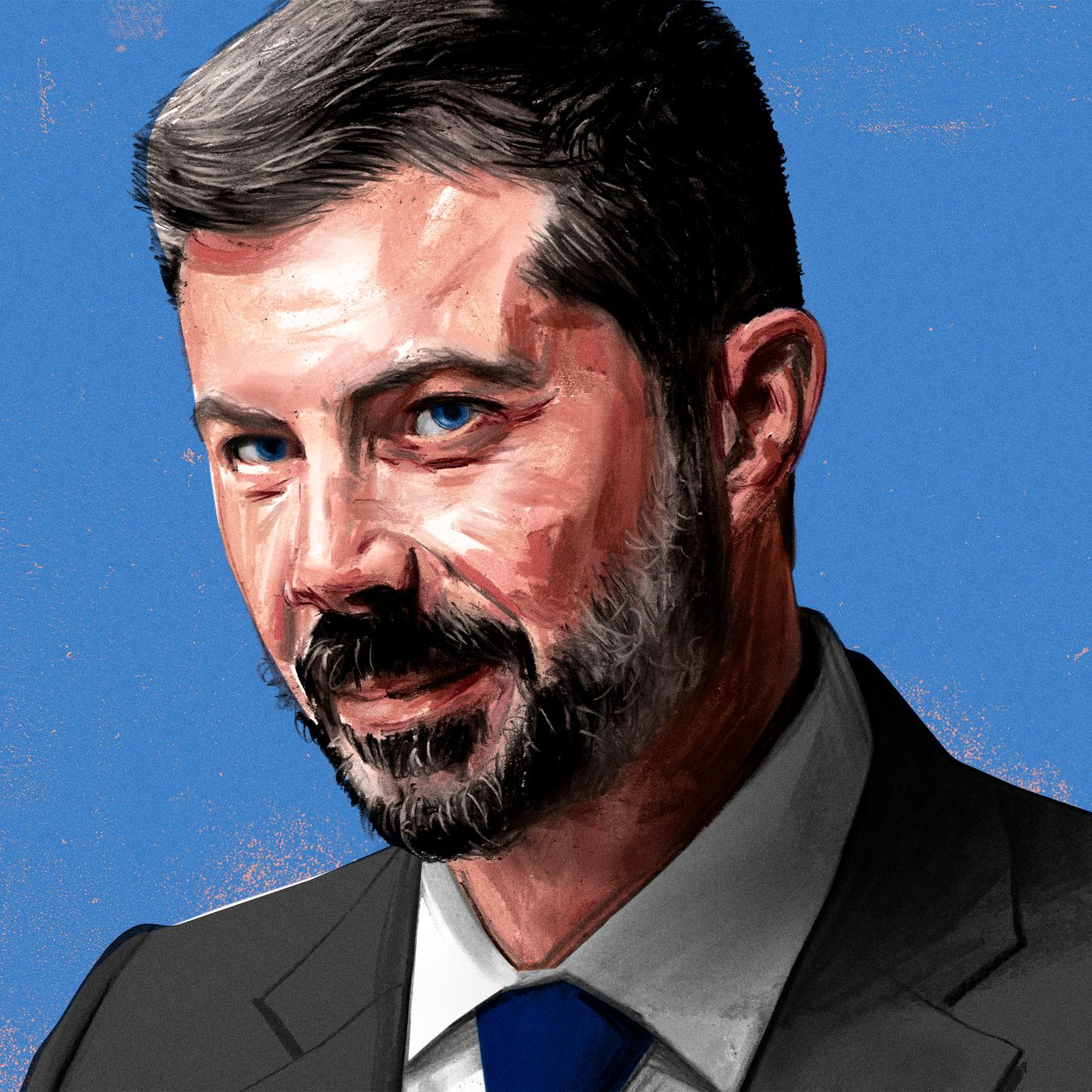
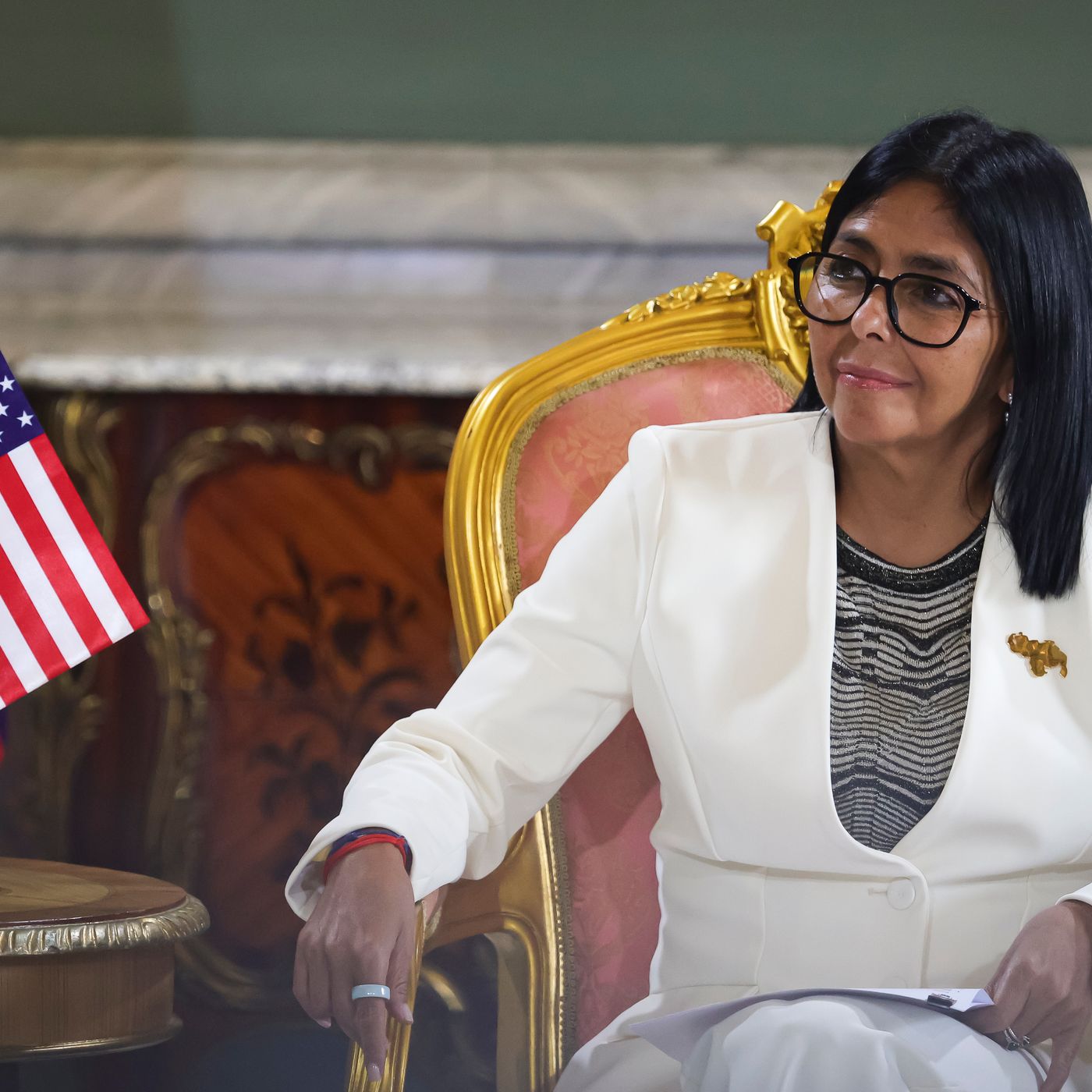
Since the United States seized and imprisoned President Nicolás Maduro, in January, and asserted control over Venezuela’s oil production, Marco Rubio has effectively called the shots. But, rather than inviting the Trump-friendly opposition leader María Corina Machado back from exile, the U.S. elevated a loyal Maduro deputy, Delcy Rodríguez, to run a puppet regime. Who is Rodríguez, and what motivated her to make her peace with an imperial takeover? The staff writer Jon Lee Anderson recently returned from a rare interview with Rodríguez and her brother and political consort, Jorge Rodríguez; he also spoke at length with two U.S. operatives who conceived the attack that culminated in Maduro’s abduction. He talks with David Remnick about the state of play in Venezuela, and what the Trump Administration’s designs on Cuba may be.
Further reading:
New episodes of The New Yorker Radio Hour drop every Tuesday and Friday. Join host David Remnick as he discusses the latest in politics, news, and current events in conversation with political leaders, newsmakers, innovators, New Yorker staff writers, authors, actors, and musicians.
Hosted by Simplecast, an AdsWizz company. See pcm.adswizz.com for information about our collection and use of personal data for advertising.
Scan the code with your iPhone camera
Listen in the app.