 The New Yorker Radio Hour
17 Nov 2026 · 17m

 Add vo to ChatGPT or Claude to ask about everything you hear
vo listened to this episode to put together the overview and transcript, so there may be the odd mistake.
The episode discusses the U.S.-Iran conflict and why Trump has “no good options.” It argues the war backfired politically, especially via higher gas prices and broader cost-of-living impacts. It reviews Qatari-mediated talks and a floated deal where the U.S. would pay about $8 billion to reopen the Strait of Hormuz without limiting Iran’s nuclear program—seen as leverage-rich for Iran and “outrageous” to Rubio. It challenges Trump’s claim that Iran’s nuclear program is destroyed, saying Iran still survives via asymmetric warfare and proxies (including Yemen) and threatens further retaliation, even against NATO assets in Europe. It also covers Iran’s regime structure (Revolutionary Guards driving nuclear/military decisions) and the Iranian opposition’s demoralization.
Ishan Tharoor, foreign-affairs writer for The New Yorker (formerly The Washington Post; appears on CNN/CBS/BBC).
0:00The New Yorker Radio Hour is supported by Decagon. As your company grows, customer support gets harder to keep up with. More customers means more questions, more complicated requests, and more pressure to respond quickly around the clock. Decagon works to make all of that easier. Decagon plugs directly into your existing systems so agents can get live quickly. And because workflows can be updated using natural language, teams can make changes themselves without long engineering cycles. Ready to transform your customer support? Go to decagon.ai slash newyorker to see what Decagon can do for your team.
0:33That's decagon.ai slash newyorker. Support for the New Yorker Radio Hour comes from USA for UNHCR, the UN Refugee Agency. Vera is 77. Before the war, she spent her days growing flowers in southeastern Ukraine, ordering seeds by mail. After attacks destroyed her hometown, she was displaced four times. Today, she lives in a collective shelter, where she has started planting again. I'll have flowers here, too, she says. As winter begins, your gift helps deliver insulation, blankets, and repairs to damaged homes. Until December 31st, it's matched. Donate at unrefugees.org slash radio hour. The New Yorker Radio Hour is a co-production of WNYC and The New Yorker.
1:27This is the New Yorker Radio Hour. I'm David Remnick. J.D. Vance said it loud and clear. The war in Iran backfired on Republicans in the most spectacular way. Now, however self-serving his announcement was, he never liked the war just following the boss's orders, Vance certainly was not wrong in his analysis. Trump this week seemed to be backing away from the war himself, calling the military phase effectively over. But we've heard that before. The bind here is familiar. If the president pulls out of a war without some credible claim to winning it, he is almost by definition a loser. Iran surely sees that bind, and as they say in the military, the enemy gets a vote too.
2:11Ishan Thoror has been writing on foreign affairs for The New Yorker. He wrote for years at The Washington Post, and he appears regularly on television on CNN, CBS, and BBC. Ishan, in the wake of the midterm elections, the Vice President of the United States went on Twitter, on X, and he said the singular reason that Donald Trump lost in the midterm elections, and so convincingly, is basically the war in Iran. Was he right? Or is this an excuse and a way for the Vice President to find a way to have a viable candidacy and say he was against the war all along? I think both those things are true, David.
2:53He definitely is trying to salvage his political future, but he also recognizes that this war had a huge impact. Even if American voters maybe don't have very strong feelings about the Iranian regime or its preservation or its survival, they definitely have felt the toll of this war at the pump. its impacted cost of living across the board. And now, as he's reading the tea leaves and seeing how the winds are blowing, is desperately trying to reposition himself. Can he do it? He's the vice president of the United States. He did not speak up before the war or during the war. He was a chief negotiator at one point in Pakistan on behalf of the United States, obviously.
3:37How is it possible that he can then run a presidential election with a straight face and say, I was against it all along? And frankly, I think it may not be possible. I think he's... He may be cooked. Yes, to use that phrase. Yeah, I think the stink of this is not going to leave him for a very long time. It also completely kneecaps his entire political pitch coming to the office that he took. Last week, a deal was floated that involved the U.S. paying Iran$8 billion to reopen the Strait of Hormuz. but it didn't limit Iran's nuclear program. And Marco Rubio used the words outrageous and ridiculous to describe that possibility.
4:23What's the current state of the negotiations now? Well, we've had these Qatari-mediated talks between the two parties. You have the Qatari prime minister in Washington this week. The deal, which is what the Iranians have put forward, is this idea that the U.S. would essentially pay to unlock the Strait of Hormuz and guarantee no future hostilities in return for the Iranians playing ball and then eventually, at some unspecified moment, expanding discussions over the kind of thorny issues around the nuclear program and Iran's activities. And why would Iran do that, Isham? Well, actually, you know, the deal on the table is great for Iran.
5:05It gives a bunch of goodies to a regime that is chafing right now under economic pressure. Ordinary Iranians are in grim times right now with hyperinflation and a lot of other difficulties brought on by the current state of affairs. Before this war happened, there was no issue about the Strait of Hormuz even being open. So it's a leverage piece that they have gained that they are now going to bargain away in return for not particularly clear commitments on their end. And that's why it's outrageous to Marco Rubio, because he and the Trump administration, for any semblance of saving face, they need to kind of show that they have done something definitive to Iran's nuclear program.
5:46And all of this, of course, gets us back to the original sort of tragedy of this, in that we had a nuclear deal in Trump's first term that existed, that was doing the job, and Trump, you know, actually decided to scrap it and set us on the course for this series of events now. But so, Ishan, what would be a plausible resolution from the perspective of the United States to the question of who controls the straight? I mean, it depends on who you are. If you're the Trump administration, which already has so much egg on its face, you need to have some kind of scenario where both the straight gets unlocked.
6:25unlocked. You're not committing billions of dollars every week, every month to securing the strait as they are right now with the current flow of oil that is able to get out. And you have some sense of assurance in the Iranian regime that they're not going to use this lever again. And that there's also significant developments on Iran's nuclear program. So all of that is a pretty tall order diplomatically right now. But if you're an American with your other officials. The simplest solution may just be to walk away from this and say, okay, fine, we're going to not re-engage this conflict. Iran should loosen up its controls over the strait, but we're going to cut our losses here because there's no point in continuing this any longer.
7:12Donald Trump gave an interview to 60 Minutes on Sunday night, last Sunday night, and he said that Iran's nuclear materials and nuclear program was under thousands of pounds of rubble. He essentially described it as destroyed. Is he giving us an accurate picture? Look, if they were that sure of the elimination of the program and the destruction of it, they wouldn't yet at the same time be so convinced of the need to perpetuate hostilities in order to further curtail it. You have the Iranians, their capabilities have been significantly eroded over the course of the year and under the relentless bombardments of both the Americans and the Israelis.
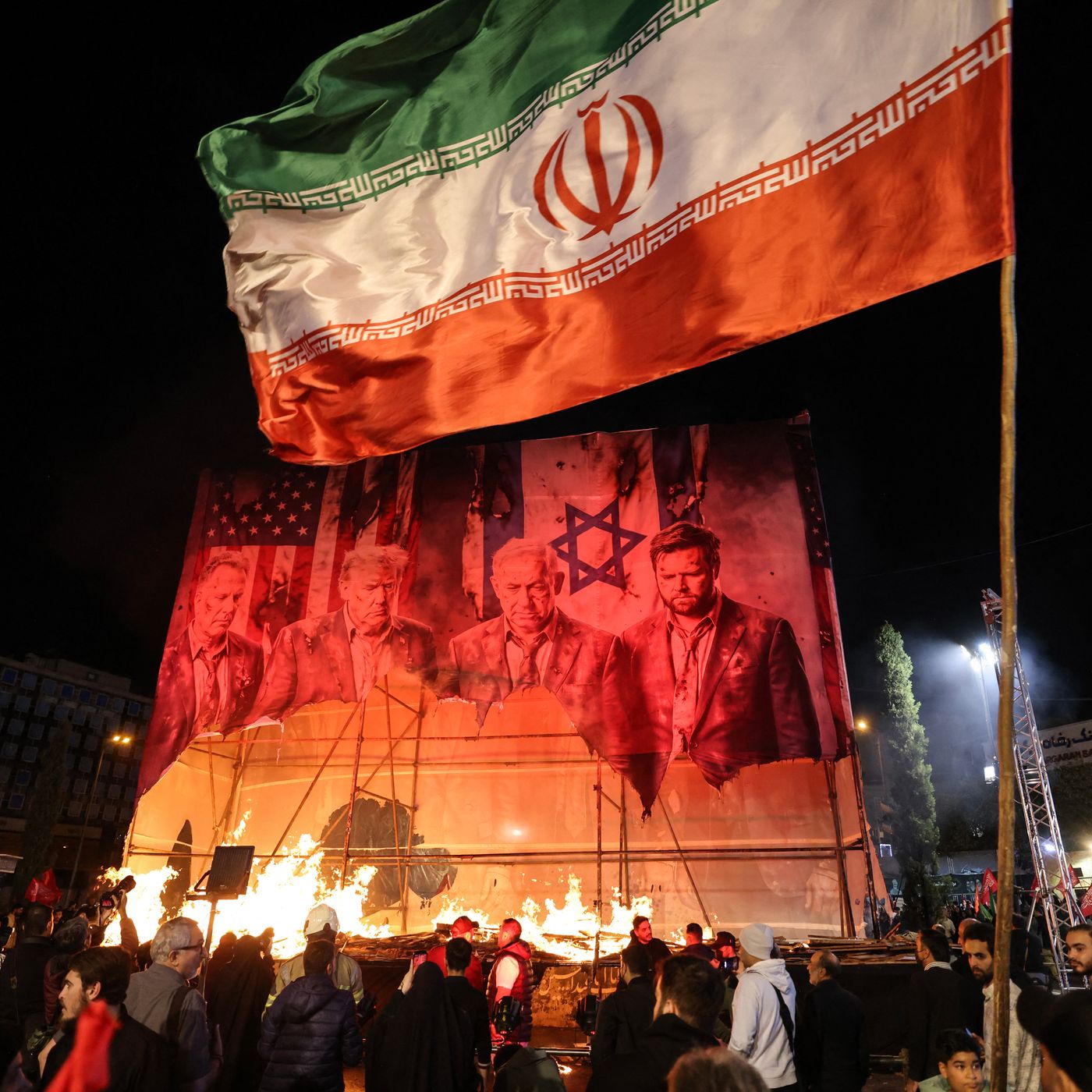
7:53But this regime knows nothing better than how to survive. It's consolidated its position. It's building up other tools of asymmetric warfare. Its proxy in Yemen has expanded an arc of retaliation that doesn't seem to have been checked. And now the Iranians themselves have said, okay, if you start this again, we're going to hit you in further. We're going to even hit NATO assets in Europe. And that is something that Had you told us in February when Trump began this, that toward the end of the year, we have the Iranians talking about hitting Bulgaria, that's not something you'd have had on your bingo card.
8:26The strategy here has gone out the window. It's a question for Trump, a question of optics and saving face. And it's unclear to me that he'll actually be able to find a way to do that. You've seen reports here and there about the damage that's been inflicted by Iran on basis throughout the Persian Gulf and elsewhere. How successful has the Iranian counterattack been? It's still difficult to gauge because on one hand, the Iranians have embittered a lot of their neighbors for years to come. They're furious at the extent to which Iranian attacks hit civilian infrastructure, endanger their societies, challenge the entire model of some of these Gulf states as these beacons of stability and industry in a region otherwise known for instability and chaos.
9:16And now, after what Iran has done, its ability to hit U.S. bases the way it has, its ability to really test the security capabilities of all these countries, and in some cases find them wanting, and also yet to survive through all that, is really reshaping how we think of security in the Middle East. then it may accelerate an American withdrawal of some sort in the years to come and lead to the Gulf finding new ways of settling the equation about security there. I'm speaking with Ishan Tharoor, who writes the Global Notes column for The New Yorker. More in a moment.
10:02I'm Emily Flake, cartoonist at The New Yorker. The New Yorker Radio Hour is supported by HomeServe. If there's one thing I know about emergency home repairs, it's that they love to wait for the worst possible time to happen. I'm not saying there's ever a good time for your hot water heater to tap out, but I do know it will wait until you're just about to rinse the shampoo out of your hair. And the cost to fix it? Don't even get me started. That's why having a home protection plan from HomeServe is key. HomeServe can help you get ahead of the inconvenience and avoid getting underwater on that water heater replacement or whatever other problems show up to ruin your day.
10:33HomeServe is like a subscription for your home. For as little as$4.99 a month, they've got your back. It's so simple. You choose a plan for your needs and budget, and when problems arise, you just call that hotline and get going. My house is over a century old, and there's always something ready to break. Faulty wiring, a cranky furnace, you name it. HomeServe makes it all easy to handle without having to know a guy who knows a guy who knows a guy with a hammer. Join the millions of customers who trust HomeServe. For 50 % less your first year, go to homeserve.com slash radio hour. That's homeserved.com slash radio hour for 50 % less.
11:05Savings compared to renewal price. Void in California and Florida. The New Yorker Radio Hour is supported by Gusto. So you're finally running the small business of your dreams. But it turns out that dream comes with some admin nightmares that weren't on your vision board. You're the boss, but you're also the hiring manager, the payroll department, the benefits team. You're doing one million operational tasks that aren't just tedious, but pulling you away from the business you love. So why not let Gusto handle some of that? Gusto is online payroll and benefits software built for small businesses.
11:36It's all-in-one, remote-friendly, and incredibly easy to use. So you can pay, hire, onboard, and support your team from anywhere. Automatic payroll tax filing, simple direct deposits, health benefits, commuter benefits, workers' comp, 401k. You name it, Gusto makes it simple and has options for nearly every budget. Get direct access to certified HR experts to help support you through any tough HR situation. Try Gusto today at gusto.com slash newyorker and get three months free when you run your first payroll. That's three months of free payroll at gusto.com slash newyorker. One more time, gusto.com slash newyorker.
12:13The New Yorker Radio Hour is supported by Babbel, the language learning app. Is there somewhere you've been dying to visit but feels out of reach because of the language barrier? For me, travel is about making friends, not just seeing sites. That language barrier is exactly what Babbel was built to close. Babbel is built around real-life conversation, not random vocabulary lists or endless grammar drills. It's designed by more than 200 language experts, so what you're learning is what people actually say, not what they wrote in a textbook 30 years ago. And it fits into real life. A coffee break, a commute, 10 minutes before bed.
12:48Babbel's bite-sized lessons work around your schedule. Babbel gets you there faster than you'd think. People who use it just 10 minutes a day can start having real conversations in a new language in as little as three weeks. That's why it sold more than 25 million subscriptions and carries a 14-day money-back guarantee. Start learning a new language today with Babbel. Right now, listeners can save up to 60 % off at babbel.com slash radio hour. That's Babbel, B-A-B-B-E-L dot com slash radio hour for up to 60 % off. Rules and restrictions may apply. I'm Emily Flake, cartoonist at The New Yorker.
13:23The New Yorker Radio Hour is supported by Bombas. The days are getting shorter and the weather's getting colder, but this year, I'm staying nice and warm thanks to Bombas. They make the coziest socks and soft, supportive slippers that are perfect for doing my weekend deep clean or just lounging around the house. And if I truly must go outside, Bombas even makes footwear so I can keep that cozy indoor feeling wherever I go. And everything they make is great for gifting, so there's no need to be stressed about the holidays. You'll find something for everyone on your list. And the best part about Bombas?
13:55For every item you purchase, they donate an essential clothing item to someone facing housing insecurity. One purchased equals one donated, with over 200 million donations and counting. Head over to bombas.com slash newyorker and use code newyorker for 20 % off your first purchase. That's b-o-m-b-a-s dot com slash newyorker. Code newyorker at checkout. out.
14:23Both in their own ways, Benjamin Netanyahu and Donald Trump keep talking about the inevitability of regime change in Iran. What do we know and what do we not know about the persistence of the regime, its strength, its weaknesses, and above all, who's running the show in Tehran? I mean, to speak in broad brush terms, we know that, of course, the Revolutionary Guards, the kind of hardcore of the regime, they're really driving it. They're the ones who control the military planning. They're the ones who would make the final decisions around the nuclear program. And the clerical leadership, yes, the U.S.
15:04took out an octogenarian supreme leader. His son is now his successor, But whether he has the same clout or control as his father, it's not particularly important at this stage. It's really about a regime that has circled the wagons. It knows that it has minimal legitimacy at home, but that it has the capacity to survive unilateral US and Israeli attacks. And then at the same time, I've spent a lot of time talking to Iranian opposition figures, especially activists in exile. Some of them, of course, were excited about the U.S. coming in at the beginning of this conflict. The U.S. intervention followed just weeks after a brutal crackdown in Iran itself.
15:50But if you talk to most of them now, they're so depressed by the current status quo. Because, of course, in the fog of war, the Iranian regime has done even more to crack down on dissent. It's carried out summary political executions. It's disappeared a bunch of people. But there's also this profound sense that if there's another uprising in the future, if there's another rebellion, if there's people power again, or signs of people power again, that the international community will be even more skittish about trying to support it. about trying to get involved. And that it's been an utterly demoralizing development for an already challenged and embattled opposition movement in the country that is, as it is, faces such brutal repression.
16:35Now there's a broader sense that the rest of the world will not come to our rescue if we rise up again. And so Trump's war has put the Iranian opposition in a very difficult place. That seems to be a fear well-founded, don't you think? Absolutely. I mean, I think there's no appetite in this country, let alone anywhere else, in any military way, support regime change at this point. From time to time, it may not be consistent, but Donald Trump is never consistent. The president will talk about using a bomb on Iran known as the mother of all bombs, possibly on the nuclear development site known as Pickaxe Mountain.
17:09What, if anything, would that accomplish? Yeah, I think he dropped one of those bombs on Afghanistan in his first term, right? This is, again, for Trump, for whom displays of strength of America primacy aren't into itself. It's that kind of understanding of the uses of American power. Or maybe he believes it would send a real message to the Iranians that this is it. You'll never have a nuclear program. Don't think about it. We have enough evidence to believe that there are reasons to be skeptical about all of this. And also, I think, frankly, now that we see, especially in his own base, significant disapproval of his methods and of the war itself, it's hard to imagine him really being that invested in pursuing this.
17:52In Israel, the Israeli president, Isaac Herzog, has given Gadi Eisenkot the opportunity to try to form some sort of coalition government, which would mean if Eisenkot were successful, then Netanyahu's long political career would be, at least seemingly, at an end. What difference would this mean when it comes to Iran, if Eisenkot were to become prime minister? Obviously, with Netanyahu here, somebody who has staked the last generation of our politics on confronting Iran, on beating the drum for regime change, on challenging any kinds of diplomacy with the Iranians. From what we understand, Eisenkot is somebody who would not maintain a similar kind of posture towards the Iranians.
18:37Although he is, of course, a security establishment fellow, he's not exactly a dove, but he would not be somebody who would presumably want to risk the U.S. or pull the U.S. into a kind of conflagration that we see right now that Netanyahu seems to have brought Trump into. I don't mean to drag family into this situation, but your father, Shashi Tharoor, was a prominent UN diplomat for many, many years, and he was nominated for the post of secretary general some years ago. He just posted a video on Instagram. I don't know if he consulted you. I don't know if he consulted you before predicting that.
19:19Definitely not. Okay, but he just posted a video on Instagram predicting that after the midterms, Trump will be even more unconstrained. Your dad said that Trump has, quote, nothing to lose. You're making that face that sons do and fathers do things, but is he wrong? I mean, he's not fundamentally wrong. Foreign policy is one purview of Trump's that he has a bit more authority and control over even once he loses Congress. And so you'd assume that someone who has two years left sitting there would feel more unconstrained in this front when he's so constrained by other things. The question is, you know, what is Trump's attention span?
19:59What is Trump's commitment to certain lost causes? And how much does he want to have the last couple of years of his tenure wrapped up in more explosions and disasters? You get the sense of someone like Trump that he really just wants to sit and design his ballroom and kind of attend Board of Peace meetings and not do very much more than that. Maybe I'm being completely naive here. Maybe my dad is right. Hishan, I think as a father of sons as well, you're having a difficult time to reconciling yourself to the fact that your dad may be right. Look, yeah, yes, I think he's right. And especially, you know, my father is an MP in India.
20:38He's the head of the Foreign Affairs Committee there. If you are an official somewhere else in the world, you have to approach the next two years with an extreme amount of caution about what the U.S. can and cannot do. Everyone in various contexts are still kind of planning for worst case scenarios, for more instability, for more unpredictable actions by the United States. And, you know, when Trump will feel like such a loser at home, yes, he very much will be perhaps a loose cannon on the world stage. Ishan Tharur, thank you so much. Pleasure to be with you, David.
21:38The New Yorker Radio Hour is a co-production of WNYC and The New Yorker. Our theme music was composed and performed by Meryl Garbus of Tune Yards, with additional music by Louis Mitchell and Jared Paul. This episode was produced by Max Balton, Adam Howard, Erica Huang, David Krasnow, Jeffrey Masters, Louis Mitchell, Jared Paul, and Ursula Sommer, with guidance from Emily Botin. And we had assistance this week from Pran Bandy. The New Yorker Radio Hour is supported in part by the Charina Endowment Fund.
22:35from Eddington to Moby Dick, from Ted Lasso to the rise in therapy speak, from The Pit to Luigi Mangione. It's Critics at Large from The New Yorker, wherever you get your podcasts.
The Republican Party is distancing itself from Donald Trump’s war in Iran—including Trump himself, who keeps attempting to declare it finished. The New Yorker staff writer Ishaan Tharoor, who writes the weekly Global Notes column, talks with David Remnick about the state of negotiations around control of the Strait of Hormuz, and the quagmire of Trump’s war of choice.
Further reading:
“Why Any Plausible Iran Deal Is a Humiliation for Trump,” by Isaac Chotiner
New episodes of The New Yorker Radio Hour drop every Tuesday and Friday. Join host David Remnick as he discusses the latest in politics, news, and current events in conversation with political leaders, newsmakers, innovators, New Yorker staff writers, authors, actors, and musicians.
Hosted by Simplecast, an AdsWizz company. See pcm.adswizz.com for information about our collection and use of personal data for advertising.
Scan the code with your iPhone camera
Listen in the app.