 Ask ChatGPT


The New Yorker Radio Hour episode argues that “reading is dying” narratives are overstated, citing survey and sales data, and highlighting how book culture is shifting rather than collapsing. It also features a profile of bookseller James Daunt and his turnaround of major bookstore chains.
Nathan Heller is a New Yorker staff writer who reported “The New Age of Reading.” James Daunt is a leading bookseller; he led Waterstones as CEO and later became CEO of Barnes & Noble, turning both around.
Audiobooks/listening keep “book reading” numbers steadier than some headlines suggest; print sales and independent bookstores are rising. “Book talk” (BookTok) boosts reading by recommending books and encouraging screen-fatigue.
The Atlantic’s “The End of Reading is Here” alarm; Pew data (38% of adults read 1–5 books/year); Eden Jonas on BookTok; Daunt’s Barnes & Noble opening 60 new stores and returning to positive revenue in 2021.
Written by AI. May contain mistakes.
Discussion on the perception that reading is declining and its historical context.
“For decades, there's always been a crisis of reading.”
Nathan Heller presents statistics showing that reading is healthier than perceived.
“So it's a concern which has been there a long while.”
Exploration of BookTok and its role in promoting reading among younger audiences.
“And the number of independent bookstores is wildly increasing.”
Discussion on how younger generations are engaging with books and moving away from screens.
“I think all of that kind of came together in this perfect storm where now people are just ravenous for content that isn't on their laptop or their phone.”
Exploration of the claims regarding the decline of reading and its current state.
“On This American Life, one thing we like is a good mystery.”
Discusses James Daunt's transformative role in turning around major booksellers.
“He turned it around in the course of a few years by a number of metrics of success.”
Insights into the surprising growth of bookstores despite digital trends.
“And as a result of that, he has been able to, it seems, bring a larger audience back into the bookstore.”
A discussion challenging the narrative that reading is in decline amidst digital distractions.
“And the pandemic was surprisingly enough for a brick-and-mortar retailer.”
Wrap-up on the health of reading culture and where it might head next.
“And then my dad liked watching the sports, so he was happy.”

Get the gist, explore an idea or ask about something said.
 Claude
On The New Yorker Radio Hour, what are the key points of this episode?
Searching your listeningAutomatic transcript. May contain errors.
0:00WNYC Studios is supported by Live Right, publishers of Max Boot's New York Times bestseller, Reagan, His Life and Legend. Now available in paperback. Boot's masterful chronicle of President Ronald Reagan's life and times has been called a landmark work by the New York Times. The Washington Post deems it magisterial and important, while the New Yorker calls it the definitive biography of our 40th president. Find Max Boot's Reagan wherever books are sold. The New Yorker Radio Hour is supported by AT &T. We all love to connect via video call, a text, or a group chat that never stops. And right now, AT &T has a deal that will keep the connection going.
0:36You can get the new iPhone 18 Pro for$0 with eligible trade-in. It has the ultimate pro camera system and big leap in battery life. So you can turn this deal into a long-lasting connection. Learn how you can trade-in your phone for the new iPhone 18 Pro at AT &T. Connecting changes everything. Required trade-in of$230 or more, an eligible plan. Terms and restrictions apply. Subject to change. Visit an AT &T store for details. The New Yorker Radio Hour is a co-production of WNYC and The New Yorker. This is The New Yorker Radio Hour. I'm David Remnick. For decades, there's always been a crisis of reading.
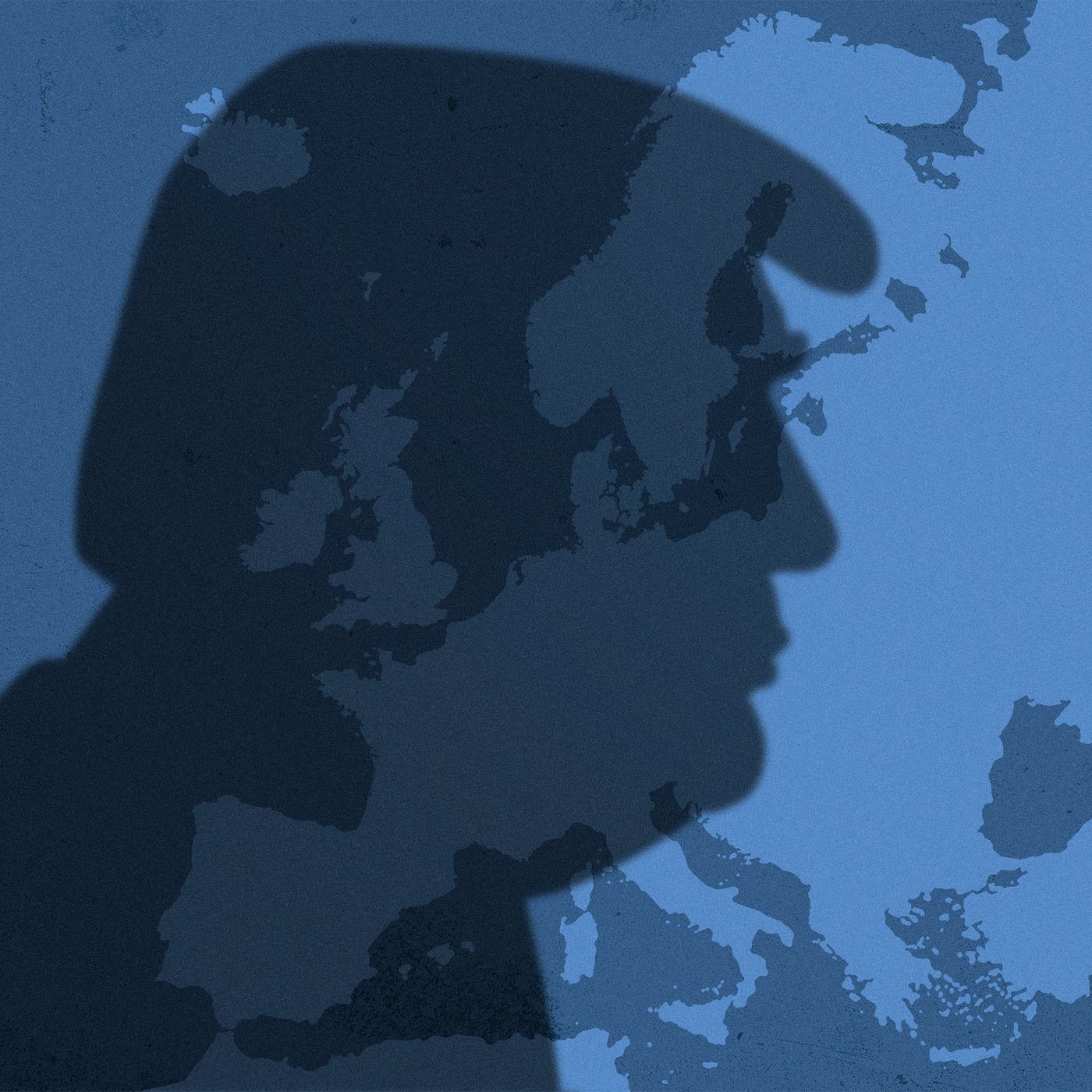
1:17Most recently this summer, an article came out in The Atlantic called The End of Reading is Here, And it put forward some decidedly depressing statistics. If you're someone who cares about reading, much less books, seeing a crowd of people swiping videos on their phones, well, it's true. It can feel like the end of civilization as we know it. And yet it turns out that the picture is much more complicated and it may not be doom at all. This week, one of the big stories in The New Yorker is by staff writer Nathan Heller. And he tackles the state of reading in a very realistic and clear-eyed way.
1:53Books, he discovered, are in fact much healthier than you might have thought. So I asked Nathan Heller, what's the fuss all about? Nathan, let's talk first about the notion that reading is dying or reading is dead. Where does that come from? Why does it take and hold? Well, it's a very old idea. It's been around almost as long as reading has, it turns out. I was initially interested in it because it's an idea that one hears a lot about. It seems as if every few years there is a kind of a renewed interest in the question, a renewed panic. Well, let's talk about the panic first and then the countervailing statistics and realities as you put them out.
2:41I think, you know, there have been any number of sources or places where you see this, as you're calling it, a panic plays out. There's a piece in The Atlantic. It was a cover story not so long ago that was filled with that idea, that notion that reading was on the decline. And if you – and anecdotally, you know, maybe it's me getting older. And, you know, you talk to your friends who might be teachers or college professors or parents and bemoaning how infrequently they see younger people reading or that you can't assign long books anymore in a college course or kids these days are staring at their iPhones all the time.
3:21There seems to be a lot of that. And there's no question that you also heard that to some degree 20 years ago. but people who've been teaching for a long time think it's true this time. Yeah. You heard it 20 years ago and you heard it even, I mean, about 100 years ago, of Walter Benjamin. Sure. Go invoke Walter Benjamin. In 1928. Yeah. He declared that the end of reading and books was incipient. And meanwhile, a lot of books have been published in the years ever since and a number of them are pretty good and have actually moved the craft along. So it's a concern which has been there a long while.
4:05You hear it in particular in the academic context from professors who say they've had to curtail what they assign because their students are having trouble with those sort of triple-decker Victorian novels in a way that they weren't 20 years ago. I think that's quite real. I did a piece a few years ago about the struggles of the humanities within higher education. And that is a real phenomenon in that case. All of the numbers were quite clear and it sort of came out whichever way you shook them. What my reporting in that piece ended up indicating was that it was less, I mean, a case of the students and more a case of what the universities on the institutional level were valuing.
5:14There is perhaps a little less of an emphasis and less of a value structure at this particular moment behind what would traditionally be called a liberal arts education, of which the humanities has always been a big piece. So that, I think, is part of what is going on in the universities. It's not going on at all in the bookstores. I, in the course of reporting this piece, I talked with a lot of booksellers at a lot of bookstores in a lot of cities. And what they all said universally was that they see young people coming in even more than they've ever been. and they're reading what was surprising to me and indeed surprising to a lot of the booksellers was that they're reading and they're buying a lot of the classics.
6:15What are the statistics or facts that you would say fly in the face of arguments like the one you saw in The Atlantic and many other places too? I don't want to pick on any one article. Yeah, there have been a lot of alarmist headlines over the course of the year. Many of them rely on a pretty narrow range of data. The Atlantic, in its article, it pointed to data from the National Educational Association, which indicated that fewer than half of all adults claim to have read a book of any kind in 2022. I looked at that survey, and one of the interesting features of it, which the NAA itself noted, was that if you factor in audiobooks and the listening of audiobooks, the numbers come out basically flat.
7:15In other words, it isn't actually that people are encountering fewer books. It's that they seem to be taking them in a little more via audio. If you look at the data broadly and as a whole, the trend is exactly in the opposite direction. There has been, over the course of the decade, a 25 % increase in the number of print books sold. And the number of independent bookstores is wildly increasing. It's increased 70 % over the course of the past five years alone. In other words, it isn't only that people are reading more, it's that they're going to bookstores a lot more. It turns out that the numbers overall are pretty good.
8:14But, you know, according to Pew, which is in the business of measuring these things, 38%, which is well more than a third of all American adults, had read between one and five books over the course of the year. When you think of the scale of the country, that's actually a very huge number, who are doing a good amount of reading. Nathan, you attribute this shift among young people in part to book talk. For the uninitiated, what exactly is book talk? Book talk is an ecosystem on social media in which people, and usually younger people, essentially summarize and review and recommend what they're reading.
9:08And it has developed a really enormous audience over the past few years. The pandemic was a sort of a signal moment. So the pandemic was good for reading. It was great for reading in all kinds of ways. Let's not do it again, but I'm glad it was good for reading. That was one of the few upsides, yeah, of the pandemic. You interviewed several book talk influencers for the piece, including Eden Jonas, who's a leading book talker. Yes, indeed. All right. Let's listen to her. One of the parts of the now that's interesting to me is I think that people are really fatigued with their screens. And I think that, you know, the book social media landscape has really flourished like in tandem with that because people want to have a space where they can, you know, they want to have a space where they can communicate with people about something that they enjoy, but that isn't reliant on being on their devices.
10:20right so um there are so many other there's so many good things about social media um obviously I love social media I spend a lot of my time on social media but I think that the book space in particular has been a unique environment to be in recently because I just see so many people being like not only what books should I read but how do I step away from my phone long enough to gain the attention span to read consistently. I think all of that kind of came together in this perfect storm where now people are just ravenous for content that isn't on their laptop or their phone. Here's what I'd say about that, Nathan.
11:04I dearly hope she's right. We all do, David. I think - But is she? Within, you know, how much of the population are you talking about is the question. Kind of the largest of the book talkers have each followings of a few million people. And inevitably that is at least going to lead somebody to read those books. Not all of them. But a great number. What she's telling us is people not only want to break away from their screens, but they also want to break away from the algorithmic rhythm of life. Exactly that. So it's helping you shut this off. BookTok is, ironically, a social media means to help you move away from social media.
11:51Well, that's what they say, yeah. And indeed, if you walk into a bookstore, one of the kind of the miracles of being in there is that nobody can tell you where to go and what to take off the shelf. And you're able to do it of your own volition. And for a lot of younger people who have grown up in an environment in which everything has been algorithmically fed to them, it seems as if this, it feels as if it's a liberation. The idea that you can actually, that you can discover things on your own and you can endorse them and you can pass them around.
12:49I'm speaking with The New Yorker's Nathan Heller. More in a moment.
12:59WNYC Studios is supported by Wayfair. I'm New Yorker cartoonist Jason Adam Katzenstein, and I'm here to tell you that it is not a chic Brooklyn one-bedroom artist's apartment without a stylish rug. My Perthenia Red Area Rug is from Wayfair. It's stylish, it's cozy, it's perfect for early autumn evenings when I want to have a few friends over and accept all the compliments about my decor. I can personally attest that Wayfair helps you turn your apartment into a home. At Wayfair, you can shop thousands of products across every style and budget. There are more than 20 million verified five-star reviews to help you buy with confidence.
13:39Plus, Wayfair Rewards members get 5 % back on every purchase. Transform your space with pieces that hold up to real life. Join Wayfair Rewards today and get 5 % back on every purchase. Head to Wayfair.com or shop the Wayfair app for all things home. That's W-A-Y-F-A-I-R dot com. I'm Emily Flake, cartoonist at The New Yorker. The New Yorker Radio Hour is supported by Ramp. Think about the last expense report you filed. The receipt you couldn't find, the category you guessed at, the email from finance asking about a coffee three weeks ago. What if I told you none of that needs to exist anymore? With Ramp, expenses submit themselves.
14:19Just text or email your receipt and Ramp categorizes codes and submits it for you. When you book business travel with Ramp, they find the best flights and hotels you're actually allowed to book. No more finding out a month later that your hotel is only partially covered, whatever that means. Ramp is the only finance platform that employees and finance teams both rave about. More than 70 ,000 organizations, from family farms to the largest Fortune 100s, have saved over$12 billion with Ramp. And as a freelancer, I can tell you that I love it when my clients use Ramp. It makes invoicing a snap, and it means I get paid in a timely manner without the headaches.
14:55Time is money. Save both with Ramp. New customers get$250 off at ramp.com slash radio hour. Go to ramp.com slash radio hour. ramp.com slash radio hour. I'm Emily Flake, cartoonist at The New Yorker. The New Yorker Radio Hour is supported by Bombas. It's finally cozy season, my favorite time of year. That means crisp mornings, fresh cool air, and dressing in layers. Bombas makes your comfiest fall staples, so you can make the most out of this glorious time. I love the feeling of opening my sock drawer and seeing all my Bombas and knowing there's a perfect pair for wherever I'm going that day. And it's not just socks.
15:35Bombas makes t-shirts, camis, and even underwear, so your first layer can be your most comfortable. They've even got slippers if you just want to stay cozy at home. And the best part about Bombas? For every item you purchase, they donate an essential clothing item to someone facing housing insecurity. One purchased equals one donated, with over 200 million donations and counting. Head over to Bombas.com slash Radio Hour and use code Radio Hour for 20 % off your first purchase. That's B-O-M-B-A-S dot com slash Radio Hour. Code Radio Hour at checkout. This is our class. On This American Life, one thing we like is a good mystery.
16:12Sometimes about really big things, things you hear in the news. But most times, the little mysteries are the best. Our lost and found is currently filled with pants. I don't know. I've never seen this happen. I've got skirts. I've got shorts. Wait, this is true? This is true. Mysteries of every size, each week, This American Life, wherever you get your podcasts.
16:40I think it's fair to say that this piece that you've done, it came from a conversation about whether it's really true, as so many people are saying, that reading is declining or reading is dead. And then the piece expanded into a profile embedded within it, or one thing is embedded within the other, so that it's also a profile of a man named James Daunt. Who is that? James Daunt is one of our leading booksellers. He began when he was 26 with what was then a small shop in London. And over the years, it became tremendously popular. They opened a few more branches. And then after more than 20 years there, he became the CEO of Waterstones, which is this enormous bookselling chain in the UK.
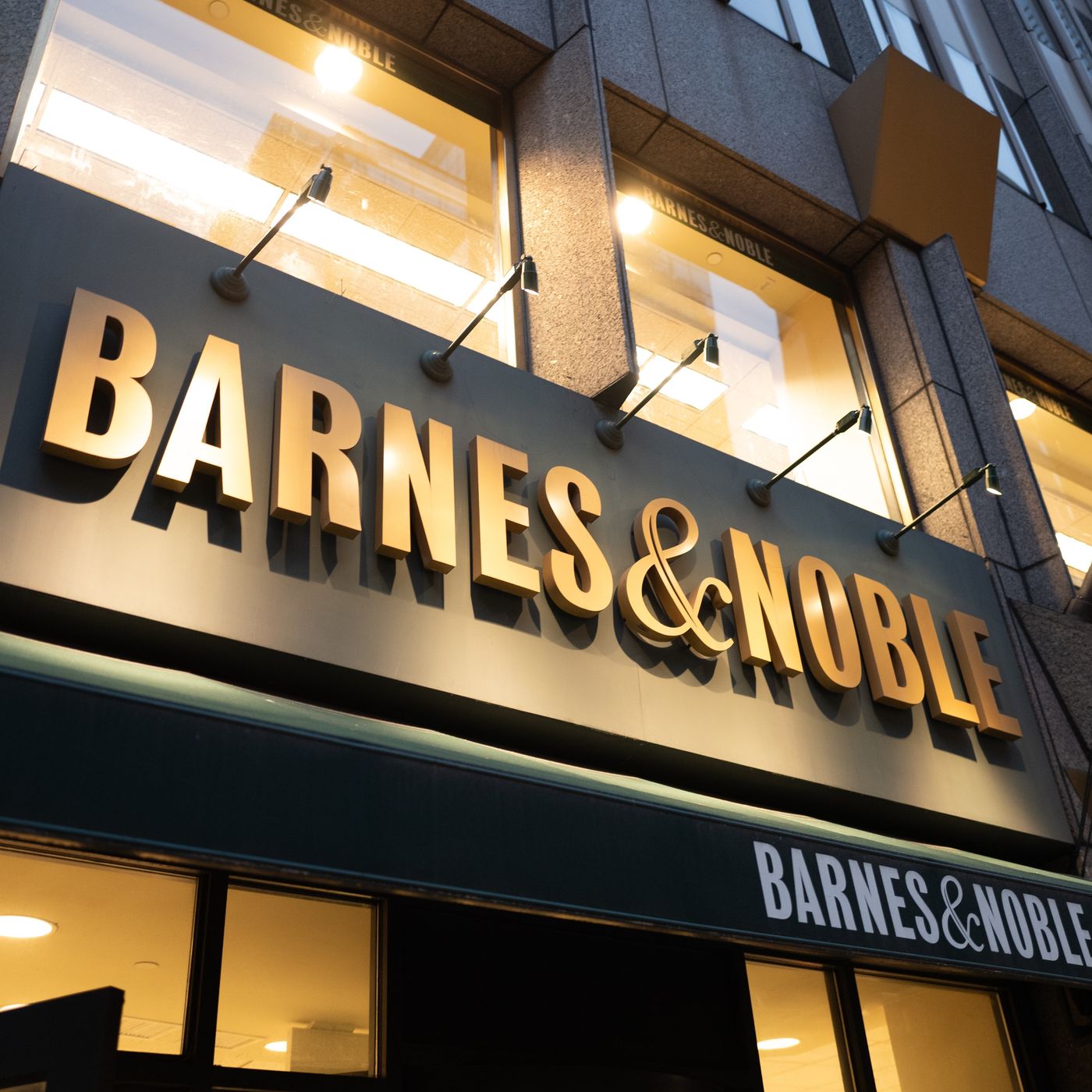
17:39It's the biggest, but they were essentially crashing into bankruptcy. So he was installed. He turned it around in the course of a few years by a number of metrics of success. When he went in, it was having a loss of tens of millions of pounds, and he turned it around into a profit by the middle of the end of the decade. And then he, in 2019, he was made, in addition to Waterston's, the CEO of Barnes & Noble, which, as we all know, is at this point, it's the largest book-selling chain in the U.S. It was also on the verge of going under, as many of its earlier peers, Borders, and the rest of it had.
18:35And he turned Barnes & Noble around on the same model that he had, Waterston's. And the results have been quite surprising. Part of what was interesting about as a subject was that he was really working on premises about business, which were completely different from the ones that have been predominant in the U.S. over the past 20 years, which is really the Amazon model. One of the attributes of Daunt is that he's very, very attentive to all of the details of the way that a bookstore looks. And as a result of that, he has been able to, it seems, bring a larger audience back into the bookstore.
19:30What Daunt has shown in Barnes & Noble is a really surprising thing, which is that if you make a good retail space, people will come. And they do, in fact, want to be there in person. And they do want to buy their books right off the shelf and the table. I remember when Barnes & Noble was the bad guy. You know, we go to the movies and we see a Meg Ryan in a movie and she owned a little shop and it was going to be eaten up by Tom Hanks and this kind of Barnes & Noble down the street. Now that so many of those bookstores have disappeared from our life, thank God there's still many independent bookstores around the country, but fewer than there were.
20:16Barnes & Noble is now kind of the salvation in some ways. And James Daunt has revolutionized the way Barnes & Noble operates. Exactly that. It's become a kind of a massive underdog, essentially, in this new world that we live in. Yay, Tom Hex. 20 years ago, kind of the line was that bookstores were on their way out because everything was going to be digital. And Amazon. And Amazon. Everybody's going to order. Everybody's going to read everything on the Kindle. What has been interesting is that 20 years after that, people are going into bookstores, and they're going into bookstores in growing numbers.
21:04And the pandemic was surprisingly enough for a brick-and-mortar retailer. It was a real turnaround moment for Barnes & Noble underdaunt. It hit at that point the company that had eight years of negative revenue slopes, which in 2021 turned around and went positive. A very surprising thing. over the course of last year, Barnes & Noble, it was able to open 60 new stores across the country. They've seen a kind of a resurgence of their customer base. And Barnes & Noble is at this moment, it's a private company. So it should be noted that our visibility into it as a whole is limited. but on the basis of data I was able to get it seems as if it's at this point a stable and a growing company which is a thing that would have been almost unfathomable a decade ago You quizzed James Daunt of Barnes & Noble on this very question that we started out talking about this kind of doom-mongering about reading Let's listen to him My parents bought a television very reluctantly and I remember we'd asked him like a thousand times and eventually we got this TV.
22:26And then my parents say, now, it's the end of the world, you're never going to read again and you're just destined for a life of ignorance and stupidity. Right, right, right. Half an hour a day. And then my dad liked watching the sports, so he was happy. It's ridiculous. And at the same time these bestsellers and just the sheer volume of books. Have you seen what Sarah J Maas' books are this big? These kids are reading like... And they go through, of course they read crap from time to time, and of course they... But we just went through a whole phase where classics were back in fashion. I mean, kids were reading Middlemarch.
23:14Do you know how long Middlemarch is? Okay, I want to take issue with James Daunt on one thing. The general public and most of us do not watch television a half an hour a day. I think it's true. One watches television a million hours a day or somewhere in between is the truth. Is it possible that James Daunt and even you, Nathan Heller, are putting a slightly rosy cast on this vexed question? People have always watched a lot on their screens, at least over the past half a century. But people have also read. And there has been a very dynamic book selling market over those years. There's also been a lot of really, really interesting, very good books have been written in those years, even with the TV.
24:10I've heard this. And luckily, thanks to AI, none of us are going to have to work more than a day or two a week, and we'll have plenty of time to do both. Well, that'll be the day. Nathan Hiller, thanks so much. Thank you, David. A pleasure. You can find Nathan Heller's excellent essay, The New Age of Reading, at newyorker.com. And you can subscribe to The New Yorker there as well, newyorker.com. And that's The New Yorker Radio Hour for this week. I'm David Remnick. Thanks for joining us, and I hope you'll join us next time.
24:46The New Yorker Radio Hour is a co-production of WNYC and The New Yorker. Our theme music was composed and performed by Meryl Garbus of Tune Yards, with additional music by Louis Mitchell. This episode was produced by Max Balton, Adam Howard, Erica Huang, David Krasnow, Jeffrey Masters, Louis Mitchell, Jared Paul, and Ursula Sommer, with guidance from Emily Botin. The New Yorker Radio Hour is supported in part by the Charina Endowment Fund.
25:26This podcast is supported by the New York Community Trust. As a savvy New Yorker, you've probably heard of donor-advised funds, or DAFs, a tax-smart and streamlined way to give. But did you know there's a way to use your DAF to make a powerful difference today and an enduring local impact? That way is the New York Community Trust, your community foundation. Your DAF at The Trust comes with personal service, unique giving ideas, and the satisfaction of knowing you're helping your community today and tomorrow. Visit give2.nyc today. WNYC is supported by AT &T. We all love to connect via video call, a text, or a group chat that never stops.
26:05And right now, AT &T has a deal that will keep the connection going. You can get the new iPhone 18 Pro for$0 with eligible trade-in. It has the ultimate pro camera system and big leap in battery life, so you can turn this deal into a long-lasting connection. Learn how you can trade in your phone for the new iPhone 18 Pro at AT &T. Connecting changes everything. Required trade-in of$230 or more and eligible plan. Terms and restrictions apply. Subject to change. Visit an AT &T store for details.
This summer, an article came out in The Atlantic called “The End of Reading Is Here,” and it put forward statistics that seem to prove the persistent feeling that new technologies are the death knell of reading books. But, looking into the question, the staff writer Nathan Heller finds a more complicated picture, and he draws a different conclusion in “The New Age of Reading.” Heller talks with David Remnick about the surprising statistics on book sales and bookstores; the influence of BookTok on younger readers; and how the C.E.O. James Daunt turned around Barnes & Noble, a company that once looked bound for extinction.
Further reading:
New episodes of The New Yorker Radio Hour drop every Tuesday and Friday. Join host David Remnick as he discusses the latest in politics, news, and current events in conversation with political leaders, newsmakers, innovators, New Yorker staff writers, authors, actors, and musicians.
Hosted by Simplecast, an AdsWizz company. See pcm.adswizz.com for information about our collection and use of personal data for advertising.