 Ask ChatGPT



The episode argues Israel struck Iran first (and why the U.S. may join) as a response to Iran’s long-standing drive to destroy Israel and develop nuclear weapons, especially after Oct. 7 shifted regional power. It also debates whether preemptive war is morally and strategically justified, and critiques Netanyahu’s handling of Gaza.
Yossi Klein-Halevi, Israeli journalist and author; senior fellow at the Shalom Hartman Institute in Jerusalem. Born in Brooklyn; emigrated to Israel; previously involved as a teen in the Jewish Defense League; later moved left and criticized Netanyahu and the settler movement.
Iran’s regime’s obsession with Israel (including Khamenei’s 2040 destruction prediction and a “doomsday clock” in Tehran) makes nuclear capability unacceptable. Klein-Halevi says he doesn’t know if a nuclear Iran is an existential threat, but that uncertainty still demands preventing nuclear capability. He argues diplomacy (JCPOA “sunset clauses” and centrifuge limits) was flawed, and that Trump was right to exit; he also says Netanyahu’s Gaza war should have ended first to secure hostages.
October 7 Hamas attack as “pre-enactment” of Israel’s destruction; Israel dismantling Hezbollah; bombing Iran’s air defenses; JCPOA enrichment limits (3–4%) vs advanced centrifuges; Trump’s “60 days” claim; comparisons to Iraq/Saddam and WWII; Abraham Accords expansion as a hoped-for outcome.
Written by AI. May contain mistakes.
An analysis of Netanyahu's longstanding obsession with Iran.
“In much of the world, Israel's longtime Prime Minister Benjamin Netanyahu has been known, above all, for his opposition to a Palestinian state.”
A conversation with journalist Yossi Klein-Halevi about Iran's threat.
“But in Israel, even critics of Benjamin Netanyahu are supportive of the war.”
Discussion on Iran's obsession with Israel and its theocratic regime.
“The big question about Iran was always how significant is its apocalyptic theology?”
How historical events shape current Israeli perspectives on threats.
“is that when the Jewish people is turned into an obsession, then you need to take that seriously.”
Exploring the moral implications of a preemptive strike on Iran.
“so as never to be vulnerable to that kind of destruction.”
Examining the potential consequences of Israeli military action against Iran.
“not get the means to fulfill its fantasies, its theological fantasies.”
Explore the implications and criticisms of the Iran nuclear deal and its clauses.
“I think the well-intentioned critics is a good phrase here because there's a lot of criticism.”
Discuss the complexities behind Netanyahu's motives regarding Iran and military action.
“Now, in 2012, Netanyahu and his then defense minister, Ehud Barak, decided to launch a preemptive strike against Iran.”
Explore the potential consequences of Israel's military strategies against Iran.
“You have the commander-in-chief of the army.”
Discuss the skepticism surrounding Obama's policies regarding a nuclear Iran.
“But you know, David, the question before the international community, from the beginning of this crisis, going back 20 years, was always, what is the worst scenario for you?”
Examine the historical precedents and risks of regime change in Iran compared to Iraq.
“That's how you negotiate with that regime.”
Analyze the internal political climate in Israel during ongoing conflicts with Iran.
“And so, we're really, you know, history, precedent is important up to a point.”
Discuss the impact of the Gaza conflict on Israel's broader strategy against Iran.
“And still, this war has virtually wall-to-wall support from Jewish Israel.”
Consider the hopes for Israel's future and the resolution of the Palestinian issue.
“So that's really just in terms of what he should have done differently.”
Discussion on the potential fall of the Iranian regime and its implications for Israel and the Middle East.
“And so that's also a precedent, by the way, David.”
Introduction of Yossi Klein-Halevi and the closing of the episode.
“You'll see, even in the darkest times, it's a pleasure to speak with you.”

Get the gist, explore an idea or ask about something said.
 Claude
On The New Yorker Radio Hour, what are the key points of this episode?
Searching your listeningAutomatic transcript. May contain errors.
0:00This show is supported by Odoo. When you buy business software from lots of vendors, the costs add up and it gets complicated and confusing. Odoo solves this. It's a single company that sells a suite of enterprise apps that handles everything from accounting to inventory to sales. Odoo is all connected on a single platform in a simple and affordable way. You can save money without missing out on the features you need. Check out Odoo at O-D-O-O dot com. That's O-D-O-O dot com. The New Yorker Radio Hour is supported by AT &T. We all love to connect via video calls or texts. Right now at AT &T, you can get the new iPhone 18 Pro for$0 with iPhone trade-in.
0:41Any condition. It has the ultimate pro camera system and big leap in battery life, so you can turn this deal into a long-lasting connection. Learn how you can trade-in your iPhone for the new iPhone Pro 18. Requires trade-in of iPhone 14 or higher, excluding iPhone 16e, an eligible plan. Terms and restrictions apply. Subject to change. Visit an AT &T store for details.
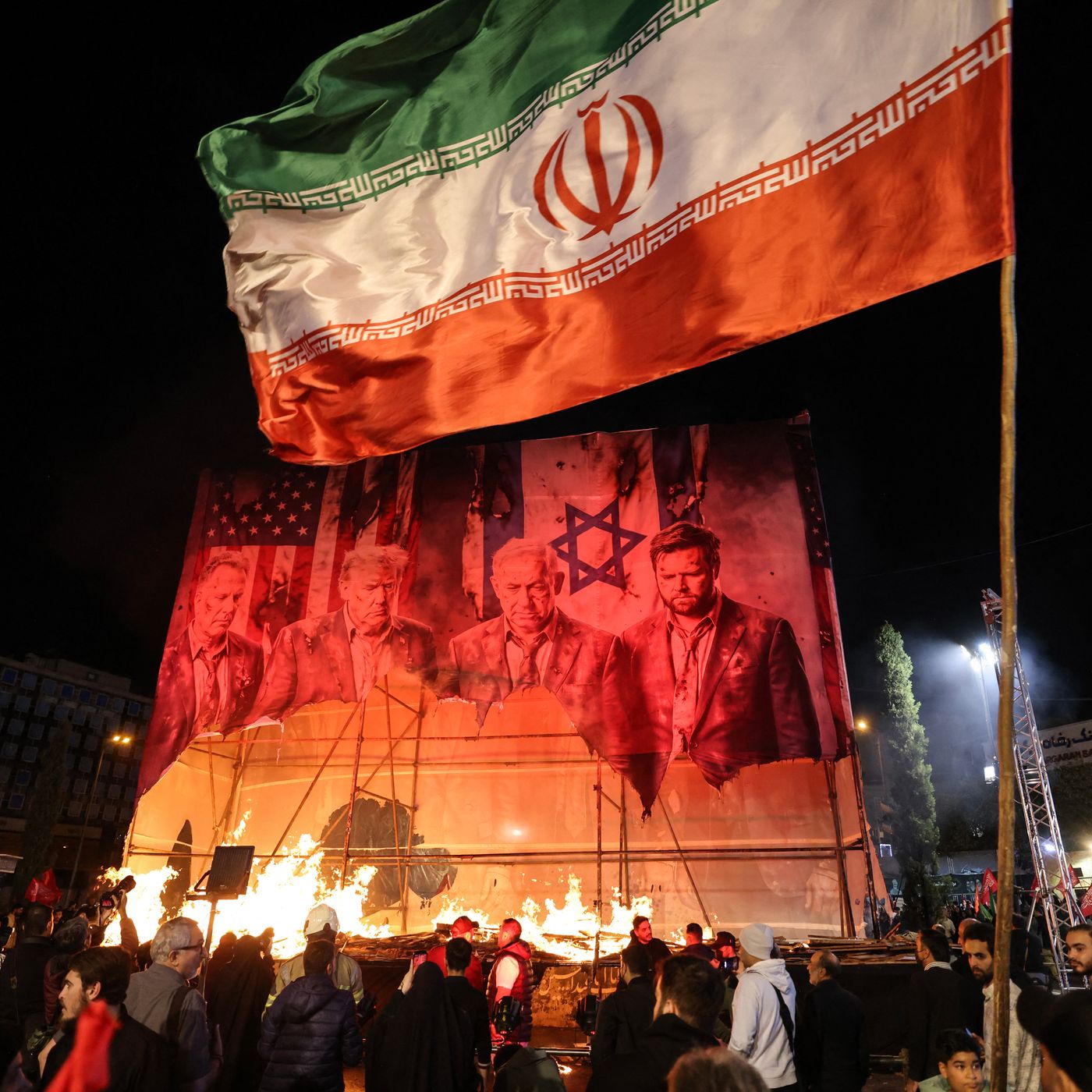
1:07This is the New Yorker Radio Hour, a co-production of WNYC Studios and The New Yorker. Welcome to the New Yorker Radio Hour. I'm David Remnick. In much of the world, Israel's longtime Prime Minister Benjamin Netanyahu has been known, above all, for his opposition to a Palestinian state. And that's an opposition, of course, that's deepened since October 7th. And yet, if you really drill down Netanyahu's true obsession, it's not so much Palestine. His true obsession for years has been the Islamic Republic of Iran. The Ayatollahs who have ruled Iran since 1979 have promised to destroy the Jewish state.
1:48The country's supreme leader, Ayatollah Ali Khamenei, and his theocratic regime and his security chiefs all insist that Israel is an alien presence, that the Holocaust is a hoax, that Israel is the junior Satan and America the senior Satan. Iran has armed and funded proxies to fight Israel, Hezbollah, Hamas, the Houthis in Yemen, and militia groups in Iraq and elsewhere. And in the meantime, Iran, we believe, has sought to develop atomic weapons. For years, Netanyahu has called on the world to take seriously Iran's threat to destroy Israel. And Iran seemed to maintain a position of strength, even as its economy struggled and internal protests grew.
2:32But after October 7th and the killing rampage by Hamas, the power balance in the region seemed to shift. In Gaza, Israel has devastated Hamas, as well as tens of thousands of civilians. In Lebanon, Israel has dismantled Iran's proxy Hezbollah as a fighting force. In Syria, the Assad regime collapsed, leaving Iran without a powerful ally. Suddenly, Iran was weak. And sensing that weakness, Israel bombed much of Iran's air defenses, leaving it vulnerable as never before. So now the war has begun in earnest. Where it will go and how the Middle East will change is an open question. Here in the U.S., involvement in another Middle East conflict has been hotly debated, not least among Donald Trump's own supporters, as we saw last week.
3:22But in Israel, even critics of Benjamin Netanyahu are supportive of the war. So to understand the case better, I called up Yossi Klein-Halevi. Halevi is a journalist and the author of a number of books about Israel and its neighbors. He's also a senior fellow at the Shalom Hartman Institute in Jerusalem, and I listen regularly to his podcast, For Heaven's Sake. I spoke with Yossi Klein-Halevi last week from his home in Jerusalem. At the same time, Donald Trump was still threatening to join the Israeli military effort, and what might come next remained an open question.
3:59For many years, Yossi, you've been, to the best of my knowledge, an Israeli centrist. You've voted on the left, you've voted in the center, you've voted more to the right, depending on the candidate. You certainly seem to loathe Benjamin Netanyahu, his lack of trustworthiness, your words. But if you've been consistent about one thing, if there's one big thing that you share with Netanyahu, it's your insistence that Iran is not only a theocratic regime that's been clear about its violent intentions toward Israel, it's that Iran cannot possess a nuclear weapon. Tell us why. The big question about Iran was always how significant is its apocalyptic theology?
4:53For me, the tipping point is the obsession of the Iranian regime with Israel. Now, this is a country that doesn't share a border with Israel. And so, why the obsession with Israel? And that obsession is relentless. It's constantly invoking the destruction of Israel as not just a political goal, but a religious imperative. and in 2015, the Ayatollah Khamenei predicted, prophesied, that Israel would be destroyed in 2040. And there is a clock, a doomsday clock, that's mounted in a central square in Tehran that's marking time to the destruction of Israel. But is that, in the darkest sense, prophecy and theocratic mists, or is it a matter of state policy?
5:49Okay, so that's really the relevant question, and I don't know the answer to that. But what my Jewish intuition tells me, my deepest reading of Jewish history, is that when the Jewish people is turned into an obsession, then you need to take that seriously. Now, all these years, I relied on the Holocaust and the experience of the 1930s, even more than the 40s, when the warning signs were all there, and even most Jews didn't read those signs clearly. But since October 7th, since the Hamas massacre of October 7th, my frame of reference has really shifted from the Holocaust to where it really belongs, which is the Middle East.
6:48And I've noticed that same psychological shift within Israeli discourse. You don't hear about the Holocaust so much anymore in relation to Iran as much as October 7th. And what we learned on October 7th is that we were living in a collective delusion, which was that Israel could somehow maintain relatively normal life and coexist with entities on most of our borders that were committed to our destruction and that repeatedly promised us that one day they would actually try to destroy us. And what happened on October 7th was a kind of pre-enactment in miniature of the destruction of Israel. But let me interrupt here.
7:40And by no means, by no means am I minimizing what happened on October 7th by no question. But in the circumstances in the 30s are radically different from the circumstances in 2023, 24, 25, in that Jews were powerless in Europe, which is one could say the same throughout Jewish history until 1948, until the establishment of the state of Israel. My understanding of what at the core of Zionism is, is a homeland for the Jewish people, so as never to be vulnerable to that kind of destruction. Again, it has to do with autonomy. It has to do with power. And the Israeli state is extraordinarily powerful despite the horrific events of October 7th, which was a lapse doesn't even begin to describe it, but Israel is very powerful in the region and beyond.
8:42You're making really a crucial argument. When I invoked the 30s before, I wasn't speaking so much about the threat as the sense that you could be confronted with a threat, even an existential threat, and not see the threat clearly. And that was the deep takeaway that my generation growing up after the Holocaust read from the experience. And I agree with you that the comparison of Israel's situation with Jews in the 30s is simply ludicrous, actually. And it demeans the extraordinary achievement of the Jewish people after the Holocaust in reclaiming power. And we need to own that power. But part of owning that power means that you have a responsibility to use it when you do perceive an existential threat.
9:45And so again, coming back to the question, is a nuclear Iran an existential threat to Israel? And my answer is, I don't know. But precisely because I don't know means that I have a responsibility to the Jewish people, to Jewish history, to my family. But declaring preemptive war in a state of, I don't know, is, especially when it's led by somebody as distrusted as Benjamin Netanyahu to say, we can discuss his American partner in this in a moment, is deeply, deeply problematic. So let's leave aside Netanyahu just for a moment, and I will happily come back to what has been one of my own personal obsessions in the last few years.
10:33But the very fact that you don't know for certain that a nuclear Iran would not be an existential threat for Israel, just as I don't know for certain that it would be, that is for me a moral imperative to protect the Jewish people and to ensure that this regime does not get the means to fulfill its fantasies, its theological fantasies. See, as we talk, and it's Wednesday morning, New York time, Wednesday afternoon, your time in Jerusalem, it appears the U.S. will, in effect, join Israel in war against Iran. Now, knowing what we know about the history of foreign invasions in Vietnam, in Iraq, in Afghanistan, in so many countries and over so many years, don't you fear being dragged into a morass of terrible, unintended consequences like we saw in Iraq?
11:30This situation looks very different from Jerusalem than it does from New York. And I say that not to dismiss the perspective from New York, but to put it in the context of where I'm sitting. I well understand the perspective that you've just laid out. You have a series of failed wars, failed foreign interventions, disastrous interventions. The Israeli perspective is not Vietnam, and it's not the American war in Iraq and Afghanistan. It's our own experience. And so I remember, for example, in the second Intifada of the early 2000s, the years of Palestinian suicide bondings. we were told repeatedly that there's no military solution to terrorism.
12:32There's only a diplomatic solution. Now, the diplomatic solution had just failed. The Oslo peace process had collapsed. And we were faced with suicide bombing, sometimes on a daily basis. And what we proved, first of all, to ourselves, is that there actually is, sometimes there really is a military solution to terrorism and to other problems. And on October 8th, we were warned by many of our friends, don't go to war. There's no exit strategy. Now, we can unpack Gaza, but certainly the extraordinary achievements of Israel against Hezbollah. We've neutralized a threat that was hovering over this country for 30 years.
13:27And we've neutralized Iran's air capabilities. They're sending missiles. Last night, they sent two missiles at Israel. Now, I'm not dismissing the Iranian capability for continued devastation, but we have drastically minimized it. If Israel had listened to our well-intentioned critics on October 8th, we would still be surrounded by the Iranian vies. I think the well-intentioned critics is a good phrase here because there's a lot of criticism. Joe Biden, who would certainly have counted himself as a friend, was basically incredibly supportive. but at the same time was counseling Israel from the start not to act out of rage because he was recalling the American experience that we just described.
14:26Obama went to great lengths to put together a nuclear agreement with Iran that Netanyahu found too weak, too limited and all the rest, but it held. It held. Diplomacy worked. With all its limitations, it seemed to work. And Donald Trump got rid of that treaty, walked away from it. Okay, so that's the conventional wisdom on the left. What you're leaving out is what was called the sunset clauses. And according to the sunset clauses of the JCPOA, the Iran agreement, which, by the way, would be kicking in just about now when the agreement was going to lapse, there would be no prohibition, no limit on Iran's advanced centrifuges.
15:30The limitation was placed on enrichment. Enrichment was going to be confined to 3 % to 4%. But the problem was never only or even primarily enrichment. It was always the centrifuges. And if you have no limits on your ability to produce advanced centrifuges, then you could move enrichment, the 3 % to 4 % enrichment that Iran was allowed to maintain, you could within a few weeks move that to weapons-grade uranium. And I know that's the conventional argument on the, call it whatever you want. And Obama himself conceded the point in an interview with Jeff Goldberg in 2015. He did. But in other words, this wouldn't you prefer the problematics of continued diplomacy and attempt to then work on a yet another treaty and keep the peace and keep the peace rather than to do what Donald Trump did, which was to walk away from it, allowing Iran to act as it as willy nilly and bring us to the state of even greater.
16:47danger and peril. So here's what the JCPOA, the Iran agreement, would have done. It not only would have positioned Iran to within a few weeks of a nuclear bomb, but it at the same time would have led to a massive infusion of resources, of funding that would have solidified Iran's regional hegemony. It's hegemony in the Arab world. Which you presume would have been poured into the nuclear program rather than into the economy. Yes, into the nuclear program and into its terror proxies around the region. And so I would have gotten the worst of both worlds. And if you're saying, could I live with an agreement that allows Iran to be within a few weeks of a nuclear bomb?
17:40My answer is unequivocally no. Now, what Trump did, and this is a very uncomfortable position for me to be in, David, because I regard what Trump is doing to American democracy, its ethos and institutions, with the same dread with which I've related to Netanyahu's assault on Israeli democracy. We agree on that. But on this issue, Trump was right. He was right to walk away.
18:19Iran's violations of its nuclear treaty with the international community actually began in earnest when Biden came into office. Iran was afraid of Trump. They were afraid of Trump being no less unpredictable, erratic, perhaps mad as they were. And for that reason, even after Trump canceled the JCPOA, the Iranians were very cautious. And when Trump assassinated Soleimani, the Iranian commander of the armed forces, that only reinforced their sense of hesitation. When Biden came in, they understood that violations would actually play into their hands by reinforcing the argument that you're making, which is, you see, we need a deal because without a deal, they're going to simply cross the nuclear threshold.
19:24But that's not at all the way I read what happened. Remember, this all comes in the midst of negotiations. The United States has been talking with Iran, and Trump seemed rather pleased that the United States and Iran were, in effect, in the same room. And in the midst of those negotiations, in the midst of those negotiations, Netanyahu bursts onto the scene, basically telling, not looking for permission, telling the United States that it's going to begin attacking Iran. on. And at first, Trump is, from all we know from the journalism that we've gotten from inside, was very angry about this. But when it went well, as these things tend to do in their first days, because the Israeli military and intelligence is quite remarkable, when things started going very well, Trump, well, he liked that and he wanted to be on the side of the winner.
20:24He likes being on the side of winners. You see, I think you've noticed. Yeah, of course. But my sense of the progression of events here is a little bit different. Go ahead. By the time we attacked Iran, Trump had given us the go-ahead. I don't believe we would have done it without his agreement. And as you know, there are persistent reports that Trump was involved in the deception in lulling the Iranians into thinking that an attack wasn't imminent. Now, we don't know that for a fact, though. Trump did point out— write to you knowing what you know about Trump's discipline or indiscipline? Well, look, yeah, Trump himself said that he had given the Iranians 60 days and Israel attacked on the 61st day.
21:20I'm speaking with journalist Yossi Klein-Halevi from Jerusalem. This is the New Yorker Radio Hour. We'll be back in a moment.
21:40WNYC Studios is supported by Quince. We've all got pieces in our closets that do more work than the others. Pieces you know you can rely on to make you look great and feel so good to wear. And if you're me, those pieces are from Quince. Quince excels at high-quality wardrobe staples made with premium materials like 100 % Mongolian cashmere, organic cotton, and merino wool, stylish, dependable staples you can wear on repeat. Best of all, everything at Quince is priced 50 % to 80 % less than similar brands. They work directly with ethical factories and cut out the middlemen, so you're paying for high quality, not brand markup.
22:13Quince offers home goods as well, like hotel-quality bedding, thoughtfully designed furniture, and even kitchen essentials. And fall weather means fall cooking. and my German steel chef's knife from Quince is the hero of my kitchen. I can make all my favorite seasonal dishes with ease. Find your next fall favorites at Quince. Download the Quince app for app-exclusive offers or go to quince.com. Get free shipping on your order and 365-day returns. Now available in Canada and the UK, too. And when Quince asks where you heard about them, let them know it was Radio Hour. It's the best way to support the show.
22:46WNYC Studios is supported by Hero Bread. Summer's finally winding down, and as I gear up for the busy fall season, I want to make sure my health goals don't fall by the wayside. And that's why I love Hero Bread. Hero Bread helps me stick to my schedule and my macros target without sacrificing flavor. I can toast up a bagel for breakfast, a grab-and-go wrap for lunch, and keep the whole family satisfied with Hero Noodles for dinner while keeping my net carbs low and my fiber and protein numbers up. And when I need a little treat, Hero's got me there too, with decadent pastries like their 5-gram net-carb shortbread biscuits, perfect for a mid-afternoon pick-me-up, but without the sugar crash.
23:23And unlike some products that make big promises but taste like packing material, Hero Bread actually has the flavor and texture you're looking for in a comfort food. Bread that tastes like bread, not cardboard. So you can indulge with confidence, knowing you're getting 11 to 32 grams of fiber, which has 0 to 5 net carbs and 0 grams of sugar. Wrap your summer up right. Get it? Wrap? See what I did there? Hero Bread is offering 10 % off your order. Go to hero.co and use code NEWYORKER at checkout. That's code NEWYORKER at H-E-R-O dot C-O. I'm Emily Flake, cartoonist at The New Yorker. The New Yorker Radio Hour is supported by HomeServe.
24:00So, you're finally a homeowner, and it feels so good. Right up until the first time your pipes burst, and you realize that there's no landlord, there's no super, there's just you. When I bought my house, that's when I learned regular homeowner's insurance usually doesn't cover a lot of the day-to-day wear and tear. And in my case, with a house that's over 120 years old, that's a lot of surprises waiting to happen. That's where HomeServe comes in. It's like a subscription for your home. For as little as$4.99 a month, they've got your back. They've got you covered for all the fiddly little things.
24:32Damaged electrical outlets, broken light switches, septic line or water heater repair. HomeServe has helped homeowners for over 20 years with a trusted national network of 2 ,600 local contractors. And now, it's your turn. Join the millions of customers who trust HomeServe. For 50 % less your first year, go to homeserve.com. I'm Emily Flake, cartoonist at The New Yorker. The New Yorker Radio Hour is supported by Bombas. It's finally cozy season, my favorite time of year. That means crisp mornings, fresh cool air, and dressing in layers. Bombas makes your comfiest fall staples, so you can make the most out of this glorious time.
25:08I love the feeling of opening my sock drawer and seeing all my Bombas and knowing there's a perfect pair for wherever I'm going that day. And it's not just socks. Bombas makes t-shirts, camis, and even underwear, so your first layer can be your most comfortable. They've even got slippers if you just want to stay cozy at home. And the best part about Bombas? For every item you purchase, they donate an essential clothing item to someone facing housing insecurity. One purchased equals one donated, with over 200 million donations and counting. Head over to Bombas.com slash Radio Hour and use code Radio Hour for 20 % off your first purchase.
25:42That's B-O-M-B-A-S dot com slash Radio Hour. Code Radio Hour at checkout.
25:50This is the New Yorker Radio Hour. I'm David Bremnik. We're discussing the war between Israel and Iran with the author Yossi Klein Halevi. Halevi was born in Brooklyn, and he emigrated to Israel as a young man. He's written a memoir about his involvement as a teenager in extremism in the group known as the Jewish Defense League. But Halevi had a kind of conversion experience, and he moved to the left. He embraced a two-state solution, and he came to criticize the Netanyahu government, as well as the settler movement, which now dominates so much of Israeli politics these days. Yossi Klein Halevi is a senior fellow at the Shalom Hartman Institute in Jerusalem.
26:30We'll continue our conversation now.
26:35You distrust Netanyahu, Yossi, in so many contexts. Distrust isn't the word. I get that. I get that. But why, when he tells you this, that Iran is inches away from becoming a nuclear power, you believe that? Isn't that dangerously selective, I guess, I'd put it that way? Just to emphasize the level of distrust that I feel for this man, I have no doubt that But he is capable of starting a war for his own political needs. Well, let's just pause on that. And yes. Let's pause on that. Yes. That's extraordinary. I would argue that that's been part of the reason for the length of the operation, much less the brutality of the operation, in Gaza.
27:19That it is linked to his politics. Now, it's not the only reason by any stretch. Well, the problem with attributing both the longevity of the Gaza war and the Iran strike to Netanyahu's political needs is that it fails to understand in a very basic way how Israel works. Now, in 2012, Netanyahu and his then defense minister, Ehud Barak, decided to launch a preemptive strike against Iran. The entire security establishment opposed it, and the strike was canceled. Now, if the security establishment, which has been highly skeptical of a strike against Iran in the past, If the security establishment or significant elements in the security establishment believed that Netanyahu was initiating a war that would not be in Israel's national interest, but for his own political needs, we would know that, and it would have been stopped.
28:29You have the Mossad. You have the commander-in-chief of the army. These are very significant players. Now, they don't generally, they don't come out against the political echelon publicly, but they don't need to. Are you comfortable with the calls for not only destroying nuclear facilities and ballistic missile facilities? Are you comfortable with the rhetoric of both assassinating the political leadership of Iran and regime change? Yeah, I think that we need less rhetoric and just simply allow events to take their course. I think that this could play out in one of two ways. It could strengthen support for the regime, it could rally people around the embattled regime, which will present itself as the protector of the nation.
29:28And possibly accelerate, unimpeded, a race for a nuclear weapon. Yes, yes, it could. Or it could have the opposite effect. And again, it's also one of those variables that we don't know. But we're rolling the dice here, no? We're rolling the dice. But you know, David, the question before the international community, from the beginning of this crisis, going back 20 years, was always, what is the worst scenario for you? For you, meaning the international community. Is it war with Iran to prevent a nuclear bomb? Or is it living with a nuclear regime? and what we in Israel have long feared, and this was certainly our reading of Obama, is that when it would come down to it, the decision would be made to live with a nuclear Iran.
30:26And so Obama used to - I don't agree with that. You think that Obama would have just lived with a nuclear Iran? Oh, absolutely. When Obama said that all options were on the table - You didn't believe that? No one in the Middle East believed it. not the Iranians, not the Israelis, not the Saudis. No one believed it because there was no credible military option. There was no gun on the table. Ehud Barak once said— The former prime minister. That the way to negotiate with the Iranians is you walk into the room— and this is Ehud Barak, right? Not Netanyahu. You walk into the room, you close the door behind you, and you tell the Iranians, here's the deal you're going to sign.
31:08And if you don't sign it, we're not going to destroy your nuclear facilities. We're going to destroy your regime. Now, what Israel did by launching its strike against Iran is give Trump a gun on the table. My own feeling was that the way Trump should have played this from the beginning was tell Israel, take out one nuclear facility. Just one. Just one. And then I'll sit and negotiate with the Iranians. That's how you negotiate with that regime. And you can imagine, and we discussed this earlier in our conversation, you can imagine how that lands on American ears. We didn't pay sufficient attention to understate things radically to what the consequences of a fallen Saddam Hussein.
32:01You didn't have to have any illusions about Saddam Hussein. You didn't have to have any illusions about the danger he presented to his own people. In fact, he had enacted it. I mean, he had gassed his own people to ask the Kurds. but what we didn't sufficiently understand or recognize that once that regime came down the army was banned and the americans were there that that would be the greatest gift to iran imaginable and that the death and destruction to come would be incalculable to say nothing about the status of the united states and the international scene for for decades to come what about the consequences of regime change in iran are you so confident that things will go smoothly whether in the interest of the iranian people or no of course not of course not and and the precedent that you cite is is a cautionary tale and it's it's a crucial part of this conversation and i don't dismiss it one point here which is the the crucial difference between between Iran and Iraq, or Afghanistan, maybe even more so, is that we know that the Iranian people, the majority of the Iranian people, do want regime change.
33:18Now, they don't necessarily want regime change this way. That's where I agree with the hesitation here. But these are not necessarily identical or even comparable situations. And the other difference is that it was always questionable about how much of a threat Iraq was to the region. There's very little debate about the threat that Iran poses to the region. And again, it's primarily to the Arab world, to the Arab world. Ask the Saudis. Look what it did, right? And look what it did to Lebanon, to Syria, to Yemen. What Iran touched, it destroyed. And so, we're really, you know, history, precedent is important up to a point.
34:20And history doesn't exactly repeat. Now, you can't ignore precedent, but you also can't be imprisoned by it. And so when we're facing this kind of threat, this kind of regime, how useful is it to invoke those precedents? And I'm saying that as a question. David, it's a question. I get that, Yossi, and I've given you some examples of precedents. What would be the precedent in history that you would compare a good outcome to with what you want to see happen in Iran? World War II. So we're back to the Nazis. Well, you can use the Japanese if you prefer. Use Mussolini's Italy. I mean, whatever. It doesn't have to be Hitler.
35:09There are precedents that point in a different direction. I can't help thinking that the people who are in charge of all this matters. This is not Franklin Roosevelt. This is not Winston Churchill. This is not the dream team. No. The dream team. No. And so when I look at this, at my government, I'll leave your government aside. You deal with your government. Thank you. You know. Thank you. When I look at my government, this is my nightmare government. This is a government that has elements within it that are not that different from the Iranian regime. And this is a government that, if it wins the next election, I will be in existential despair.
35:59Because this government is the greatest threat to the Israeli success story, internal threat to the Israeli success story since the founding of the state. This government could lead to massive emigration of the liberal elite, which is the backbone of what we call startup nation, Israel's high-tech success story. So I look at this government as a different kind of existential threat. And so do a majority of Israelis. And still, this war has virtually wall-to-wall support from Jewish Israel. I fear the euphoria. I fear euphoria always. I do, too. I'm very wary of it. I do, too. And if you look at Netanyahu in the last few days, he's got his stride back.
36:51And that worries me. That's the last thing you want. And that worries me. Well, yes. And euphoria also papers over some really serious political and moral questions that Israel is going to have to face to itself and in the world. And you don't have to be an enemy of Israel to say that. You don't certainly— You're right. You're right. In fact, it's part of being a friend of Israel to say that. But I have to make a distinction between Netanyahu strutting and the Israeli public and the security establishment. I don't hear euphoria among Israelis who are under nightly bombardment. We are not in a euphoric mood.
37:39There's this tremendous feeling of existential relief, but relief is not euphoria. And within the security establishment, there are constant cautionary voices. We have a long struggle ahead of us. This is not necessarily going to go the way that it did the first few days. Yes, Netanyahu, he's the prime minister, but he's not the only factor in the decision-making process. And again, I can't emphasize that more strongly. Let me ask maybe a very un-Jewish question. Let's say everything goes optimally, right? I don't even know what that would mean. That really is an un-Jewish question. Exactly. Let's say that that does happen.
38:28Again, I don't know what picture that would take, but it would be far less death and destruction than one can easily imagine and a far less prolonged episode. Where does that leave the future of Israel? The future of Israel in which politically is so exhausted internally, so divided politically, is the scene of so much moral questioning and criticism and isolation from the rest of the world. um this it's very hard to imagine being a palestinian uh and viewing all this because this high drama this high geostrategic drama will meanwhile every day i pick up the paper and another 50 palestinians have have died or there's shooting at aid stations this is just this keeps going on and on and on with no end in sight where does this leave the country that you moved to from deepest Brooklyn many, many years ago and made your life there and cause there, and you have enormous passion and love for it.
39:52Where does this leave your country? Well, so before I get to the meta question, and my most severe critique of how Netanyahu has conducted the war with Iran, is that he didn't end the war in Gaza first. And he should have made the deal to bring the hostages home, stop the fighting. The war in Gaza has long since become an enormous strategic and moral liability for Israel. And especially given the fact that Gaza is, in the end, a sideshow to the Israeli-Iranian war, which is the real war that began on October 7th. It was not the Gaza-Israeli war, and Netanyahu allowed it, or allowed the perception abroad to be that this is primarily the Israeli-Hamas war.
40:57So that's really just in terms of what he should have done differently. And it's a measure of his profound flaws as a strategist, never mind a moral leader. In terms of my own hopes, my own vision for Israel, I believe that our long-term survival, our moral credibility, certainly, our place in the international community depends on resolving the Palestinian tragedy. I by no means place all or even most of the onus for that tragedy on Israel. Certainly, the Palestinian leadership has had a major share in bringing us to this moment, but we have a major share in that tragedy as well, and it's very hard for Israelis to own up to that.
42:00my hope strategically of what can come out of this war is that when the iranian regime falls and i believe that it will fall in the same way that the soviet union fell and you you were there you saw it happen and i was there too i i i reported from eastern europe in 1989 I was following the falling dominoes from Poland through East Germany and what was then Czechoslovakia. And so that's also a precedent, by the way, David. You know, that we've seen dictatorships fall, totalitarian regimes.
42:50What I hope will happen is that this regime will fall, and there will then be an expansion of the Abraham Accords, the 2020 peace agreement between Israel and the Gulf states and Morocco. And that would include the Saudis, and that would contain as a crucial component some resolution of the Palestinian tragedy. If I can interrupt, Jesse, I'm sorry, but if that happens, Netanyahu's reputation will soar, his dominance of Israeli politics will soar, and those same components around him, and I don't want to limit it just to Ben Gavir and Smotrich, which often happens, but a lot of people want to now see annexation of the West Bank.
43:50The removal of Palestinians from Gaza, the reassertion of settlements even in Gaza. And I fear that those people will feel incredibly emboldened. Yes. Well, if Netanyahu destroys the Iranian regime and brings peace with the Arab world, he's not going to need Smutrich and Ben -Greer. And if he makes peace with the Arab world, it will be only on the basis of some resolution of the Palestinian conflict. Now, Netanyahu at this point is no longer capable of making that move. I think he's been too corrupted. Netanyahu may be able to partially mitigate his disastrous legacy by defeating Iran, but he will not be the guy to bring peace between Israel and the region.
44:54That will have to wait for another Israeli government. Look, my concern right now is that Netanyahu will call elections and win a decisive majority. But on the other hand, if he wins a decisive majority, he won't need the far right anymore. It's an open question. Maybe he's grown accustomed to their face. I mean, maybe... Well, that's the question that I have as well. A lot of people want to draw a distinction between Netanyahu circa 2025 and Smocic and Ben-Givir. And I'm not sure that divide exists as much as people would like to imagine. I'm hoping that Netanyahu is still cynical enough that he'd be prepared to ditch his loyal partners.
45:48And I think he is. Now, if he's presented by Trump with the possibility of being the Israeli leader who defeats the Iranian regime, destroys its nuclear capability, and then makes peace with the Arab world, he will rightly have a shot at what he has claimed all along as being one of Israel's greatest leaders. Now, even saying that theoretically pains me. It's almost a physical pain for me to say those words, but after everything that he's done to this country. But if he really does that, then, you know, as we say in the Middle East, God is great. You know, strange are the ways of the Lord. And if he becomes an instrument for regional peace, then I don't think I could ever bring myself to actually vote for him.
46:50But I could live with history. You'll see, even in the darkest times, it's a pleasure to speak with you. Thank you so much. It's great to speak with you, David. Thank you.
47:04I spoke last week with Yossi Klein-Halevi His podcast is called For Heaven's Sake and it's co-hosted with Daniil Hartman Halevi's books include memoirs of a Jewish extremist and letters to my Palestinian neighbor That's the New Yorker Radio Hour for today Thanks so much for listening See you next time
47:30Our theme music was composed and performed by Meryl Garbus of Tune Yards. The New Yorker Radio Hour is supported in part by the Cherena Endowment Fund.
47:52Have you ever had the urge to sneak behind the cordoned-off areas of a museum? Or roam the halls after closing time? The Smithsonian's flagship podcast, Side Door, will sneak you behind the scenes of the world's largest museum and research complex. Come learn about the ghosts that supposedly walk the museum halls after dark. How a train robbery gave rise to criminal forensics. Why leeches are actually the coolest thing ever. And how to get away with murder in the Arctic. Maybe. You'll discover stories of history, science, art, and culture you won't find in a display case. You can listen to Side Door wherever you get your podcasts or find us online at si.edu slash side door.
The Ayatollahs who have ruled Iran since 1979 have long promised to destroy the Jewish state, and even set a deadline for it. While arming proxies to fight Israel—Hezbollah in Lebanon, Hamas in Gaza, the Houthis in Yemen, and more—Iran is believed to have sought to develop nuclear weapons for itself. “The big question about Iran was always how significant is its apocalyptic theology,” Yossi Klein Halevi explains to David Remnick. “How central is that end-times vision to the Iranian regime? And is there a possibility that the regime would see a nuclear weapon as the way of furthering their messianic vision?” Halevi is a journalist and senior fellow at the Shalom Hartman Institute, and he co-hosts the podcast “For Heaven’s Sake.” He is a fierce critic of Benjamin Netanyahu, saying “I have no doubt that he is capable of starting a war for his own political needs.” And yet Netanyahu was right to strike Iran, Halevi asserts, no matter the consequences. “The Israeli perspective is not … the American war in Iraq and Afghanistan. It’s our own experience.”