
In short
Andrea Bajani reads his New Yorker fiction story “Constellation,” adapted from his novel The Anniversary. The story centers on a son’s recollection of his parents’ relationship in a small town outside Turin, focusing on how control, class aspiration, and domestic violence shape family life and memory.
Guest backgrounds
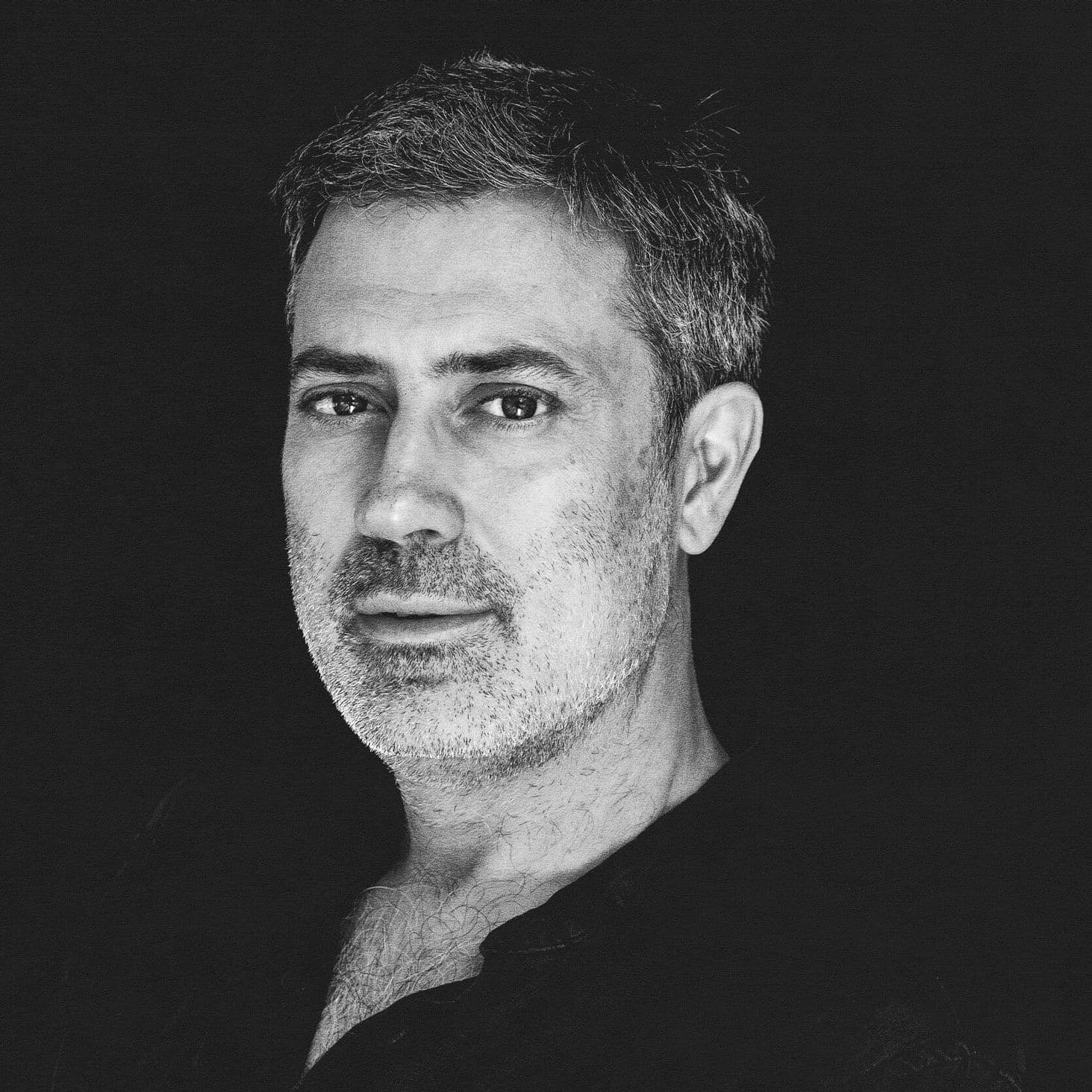
Andrea Bajani is an Italian fiction writer and winner of the Bagutta Prize and the Strega Prize. He has published ten fiction books, including If You Kept a Record of Sins and Every Promise. His novel The Anniversary is being translated into more than two dozen languages and will publish in English in August.
Key claims
The father uses books and “for your mother” narratives to control his wife; the mother erases herself to keep peace; forgiveness becomes a recurring mechanism that allows life to resume while the incident is never discussed.
Notable examples
weekly crossword puzzle magazines; a police visit after the mother is injured; the father asking the son to promise he’ll graduate; the father later planning suicide; the family’s ritual of post-violence servility and silence.
Written by AI. May contain mistakes. Listen to the episode to check what was said.
Chapters
Tap a time to open that second in VOReading of 'Constellation'
0:30 to 1:17
Andrea Bajani reads his story 'Constellation', exploring complex familial relationships.
“If you're like me, your to-do list has the magical ability to grow even when you're in the middle of crossing things off of it.”
Reading of 'Constellation'
1:29 to 2:33
Andrea Bajani reads his story 'Constellation', exploring complex familial relationships.
“Getting dressed for summer can feel like a math problem.”
Reading of 'Constellation'
3:54 to 14:00
Andrea Bajani reads his story 'Constellation', exploring complex familial relationships.
“Constellation When I think of the free time my mother spent with my father in our small town outside Turin, this is the scene I usually picture.”
The Impact of Choices on Family Dynamics
14:00 to 18:06
Explore how family decisions shape personal paths and identities.
“was that her academic performance plummeted.”
A Moment of Crisis at Home
18:06 to 24:19
Witness a tense domestic scene that reveals deeper family issues.
“Cooking and minding the children with little interest in anything else, least of all in books or in literature, which from that point on he claimed for himself.”
Aftermath and Reflection
24:19 to 28:00
Reflect on the aftermath of a crisis and the complexities of family bonds.
“She cried because things had gone as they had gone, and there was nothing more to be done.”
Reading of 'Constellation' by Andrea Bajani
28:00 to 39:52
Experience a poignant narrative exploring themes of family and trauma.
“I slid into the passenger seat, shut the door.”
Transcript
Automatic transcript. May contain errors.0:00Geoffrey Brock:Hi, it's David Remnick, and I've got some news for you. We're headed to the Tribeca Festival for a special live taping of the New Yorker Radio Hour. We'll be doing a one-night-only show at the festival's 25th anniversary. So come out and join us on Wednesday, June 10th at 8.15. Tickets are available now at tribecafilm.com slash audio. That's tribecafilm.com slash audio.
0:30Geoffrey Brock:If you're like me, your to-do list has the magical ability to grow even when you're in the middle of crossing things off of it. At least twice a day, I wish for an extra set of hands. But I've only got the two, and that's why I love TaskRabbit. When your to-do list keeps growing, TaskRabbit is ready to help. Just pick a trusted tasker and they'll show up and get it done. And taskers are often available to help the same day. TaskRabbit connects you with skilled taskers in your area for moving, furniture assembly, home repairs, yard work, mounting, and more. We run a small business out of our not-huge apartment, and sometimes the box situation is a little much.
1:04Geoffrey Brock:When we need to offload to the storage space, we call TaskRabbit so we can actually relax at the end of the day. When life happens, your to-do list grows. Get ahead of it now and get$15 off your first task at TaskRabbit.com or on the TaskRabbit app using promo code NEWYORKER. Taskers book up fast, especially for same-day tasks, so book trusted home help today. That's$15 off your first task using promo code NEWYORKER. with the TaskRabbit app or at TaskRabbit.com. Getting dressed for summer can feel like a math problem. If I have a 7-minute walk to the subway, a 20-minute walk, an 8-hour day in the office, and then happy hour, what do I wear all day?
1:41Geoffrey Brock:Quince makes it easy to do the math. They focus on high-quality, super-wearable essentials in perfect summer fabrics. Think breathable linen, soft organic cotton, washable silk, all without the luxury markup. Quince lets you get through the day without overthinking it. You can look effortlessly put together wherever the day takes you. They've got office-ready essentials like 100 % European linen pants, dresses, and tops, with styles starting at$32. And when you need a little extra for that freezing office AC, their organic cotton sweaters are a perfect solution. Quince works directly with ethical factories and cuts out the middlemen, so you're paying for quality, not brand markup.
2:17Geoffrey Brock:And it's so much more than clothing. Quince has options for gorgeous essentials across home, kitchen, bedding, and beyond. Their 100 % European linen sheets have been a summer game-changer for me. My bed feels so luxurious, and the sheets keep me cool even in those sweltering nights. Elevate your summer wardrobe. Go to quince.com slash writer's voice for free shipping on your order and 365-day returns. Now available in Canada, too. That's quince.com slash writer's voice for free shipping and 365-day returns. Quince.com slash writer's voice.
3:01Geoffrey Brock:This is The Writer's Voice, new fiction from The New Yorker. I'm Deborah Treisman, fiction editor at The New Yorker. On this episode of The Writer's Voice, we'll hear Andrea Bayani read his story Constellation, which was translated from the Italian by Geoffrey Brock and appears in the June 15, 2026 issue of the magazine. Bayani, a winner of the Bagutta Prize and the Strega Prize, among others, is the author of ten books of fiction, including If You Kept a Record of Sins and Every Promise. His most recent novel, The Anniversary, from which this story was adapted, is being translated into more than two dozen languages and will be published in English in August.
3:43Geoffrey Brock:Now here's Andrea Bayani.
3:54Andrea Bajani:Constellation When I think of the free time my mother spent with my father in our small town outside Turin, this is the scene I usually picture. She's on the couch working through La Sittimana Enigmistica, a weekly work puzzle magazine, while he reads a book. She looks bored. Her glasses have slipped down the bridge of her nose, where they remain out of carelessness, rather than to help her eyes focus. She's waiting for him to finish reading and decide what to do with whatever time remains before dinner. Did she find crossword puzzles interesting? Fun? I suspect they were mostly a way to kill time.
4:48Andrea Bajani:In my memory, she's often distracted, looking out the window. Or, more often still, she's dozing off, pencil dropping from her hand, head lolling onto the back of the couch, or to one side, mouth half open. I don't know if she had a passion for feeding words into boxes as much as a desire to conform to the version of herself that my father had laid out. This is a book for your mother, was my father's way of declaring that a novel wasn't any good. The phrase did contain a kind of affection, the perverse, frank, aggressive kind, that follows or underlines an assertion of control. To admit such a book to our home library, which he and Igor Autodidact had gradually built over the years, was a concession he made to her.
5:50Andrea Bajani:But labeling a book as For Your Mother meant, above all, that its proper place was in the bin. I don't remember where all these supposedly second-rate novels came from, the ones that ended up on my mother's nightstand. I know somewhere gifts from my father himself, birthday or Christmas presents wrapped in bookstore paper. She'd unwrap them and say thank you. Eventually, even she began to say, these are books for me As if seeing herself through his eyes, holding on through self-deprecation Only to the part of the phrase that passed for affection I don't know if it was my father who bought those weekly copies of La Cittimane enigmistica In any case, he never objected to the expense Because he needed to keep her busy give her something to do, as he put it, so that he could read these books or do other things he liked, ski across the French border, go climbing.
7:03Andrea Bajani:For her, the important thing wasn't so much that he be able to read or do his sports, but that he see her as the person he had decided she was. This amounted, perhaps, in my mother's view of life, to a wretched demonstration of love. That may have been one of the fundamental misunderstandings between them. He wanted her to be nothing so that he could be something. She wanted to be nothing because being nothing was at least something. Or maybe it wasn't so much a misunderstanding as a sort of unspoken secret pact. The result was that she actually did erase herself and his bitterness, scorn and despair at having that nothing on his couch piled up the way those crossword magazines piled up on the table week after week before ending up in the trash.
8:12Andrea Bajani:And yet, of the two, only my mother had gone to college. a detail rarely mentioned in our household and when it was my father used it against her as evidence that she could have been more than a woman who did crosswords. Her own father probably went no further than elementary school but her mother, raised in an orphanage, graduated from a vocational high school and went on to become a secretary at a law firm where, over time, she proved herself indispensable. My mother then grew up among Rome's petty bourgeoisie, and she became the first in her family to aspire to college, attending a prestigious high school to prepare.
9:06Andrea Bajani:What did she have in mind when she enrolled in that school? What future life did she picture? High school teacher, doctor, lawyer, did she believe she'd leave her parents' rental life behind and one day own her own home? It's hard to say, because we never discussed it. And besides, that girl was so profoundly different from the woman I came to know over the course of my childhood and adulthood that no matter how hard I tried to imagine it, I struggled to see her face in my mother's. It's not that she hid any of this from me, and it's true that I could have asked her questions, investigated, but I, too, had adopted my father's official version, the crossword puzzle woman.
10:07Andrea Bajani:He, on the other hand, chose high school out of inertia. His mother was born into Rome's commercial bourgeoisie, but she had essentially been disinherited, nose-diving into the working class with a pair of children to raise. My father's mother, then, lived two distinct lives, of which I only ever heard glancing mentions. The first was lived, you could say, in first class, and has been mythologized three times over, by her, through the lens of her regret, by my father, to fit a narrative in which he was the tragic hero and his mother the traditional scapegoat, and by me, with my innate urge to rewrite my relatives' lives based on whatever facts I learned.
11:05Andrea Bajani:Whether or not my grandmother's fall was brought on by an infidelity, as the three-headed family mythology posited, what's clear is that we were descendants of that second life, the fallen one. For my father to go to high school made a kind of sense, given his mother's former life. At 14, he was already, in effect, an ex-bourgeois, and perhaps because he belonged to no class, he had no real class consciousness. He was also fatherless, or rather, his father left few traces in the family story. just his name and this exit scene the climax of which was in some ways comical my grandmother during an argument whacked him on the head with the ladle and there was one later scene my father, a kid telling his father to stay away from his sister four years older but still female so subject to his manly code if he didn't want his face smashed in.
12:20Andrea Bajani:My parents met in class in the final years of high school. How he ended up at her school isn't clear. The point is they were the same age, and so they started out, as it were, on equal footing. But my father had no ambition, no desire for redemption, only an interest it seemed in getting out from under his mother's curse which did nothing but fend the flames of my grandmother's guilt as she surely wanted him to reclaim the life she had lost when he announced at 18 that he was dropping out she bought him an old Simca to balance the scales or so the official story goes and it was with that car that he beat my mother up from school for the first date.
13:16Andrea Bajani:Unlike her, my father had no qualms about breaking rules. His family had a history of failure, so he didn't fear it. That must have felt dizzying to my mother, who came from a family that had never had much and so carefully managed what little they did have. In contrast with her parents' caution and her own gentle, disciplined nature, he offered adventure with a sort of slap in the face of the future, all of it improvised with the windows down as they drove along the coast. The first consequence of their relationship was that her academic performance plummeted. And she graduated with the lowest grades possible, while he didn't graduate at all.
14:13Andrea Bajani:Still, finishing high school by the skin of her teeth didn't discourage her, or at least it didn't stop her from enrolling in college to study literature. I wouldn't be surprised if my father played a role in that choice, nudging her in that direction. Having her pursue literature may have felt to him like a shortcut As well as a way to exert control in the relationship He loved books, but he lacked discipline And couldn't abide being judged by others My mother's course of study probably furnished them both With lists of novels and critical texts to spend their days with I can easily picture them reading those books together In a collaborative way With him assuming, ironically given his own academic history The role of expert And her acquiescing It was a good exercise of power To push her toward literature But in the long run that direction Would inevitably pose a threat to him The time would come when things would no longer be in his control And so perhaps, more by instinct than design He did the only thing he could to stop the train That having just left the station was picking up speed He pulled the emergency brake My mother got pregnant for the first time in the fall of 1971 just after turning 22 and again in the summer of 1973.
16:04Andrea Bajani:By early 1974 she was the mother of two children and could set her books and exams aside and return to her class of origin. It was up to my father, as he saw it, to find work and without a high school diploma he had to take what he could get, which turned out to be a sales job in a luggage shop. Their new life is captured in a photo taken in the Piazza del Campidoglio in January of 1972, on the day they signed their marriage papers at City Hall. My mother stands with her parents, my father with his mother. Maybe their brothers and sisters are there too, rounding out the ceremony. I'm not sure, but I'll put them in.
16:59Andrea Bajani:You can't tell from the angle that my mother is pregnant, but my sister, born five months later, is there in the frame. It's hard to read the emotions of the scene. Perhaps my mother's parents are trying to bend their apprehension into hope. Perhaps the exuberance on my father's side is stinged by their acquaintance with disaster. I imagine on both sides a reflexive cultural satisfaction at seeing their children settled. That photo, in any case, documents the celebration of a new beginning. For my mother, though, it also marks an end Or at least the closing of a life path That a college diploma might have cleared the way for Had she become a teacher That ceremony might have been unbearable for my father But it was perfectly bearable now That she would merrily be a mother, a wife at home Cooking and minding the children with little interest in anything else, least of all in books or in literature, which from that point on he claimed for himself.
18:22Andrea Bajani:Her role also provided him with an identity that had been culturally and socially sanctioned for centuries. He would be the husband-father who sacrificed everything out of duty to his family. That was the identity to which he now dedicated himself, and my mother accepted it, because being a mother was still after all something, and we, kids, accepted it too. Our mother cooked, did crossword puzzles, and drowsed on the couch while our father read. It's still not clear to me whether my father ever actually hit my mother Though there must surely be some record in the police archives Of a call that our neighbor made Sometime in the mid-1990s To report shouts and thuds coming from our apartment I know that my mother never pressed charges that my father never stood trial or received any kind of sentence.
19:34Andrea Bajani:Even the wound on her head, she had blood in her hair when I walked in and found her sitting in the kitchen with an officer, seemed all better the next morning. There had been no need for bandages or stitches, something that now, as I write, seems hard to believe. In fact, she told the officer in a faint voice, everything's fine, thank you, and he made his way toward the door, carefully avoiding the scattered debris in the living room, and waited there for his partner to emerge from my parents' bedroom, where he was talking with my father. We never spoke of it afterward, and so I have no real sense of how things unfolded.
20:27Andrea Bajani:There were no other witnesses, since my sister wasn't home that evening. According to my father's account, it had been an accident. He pushed her, and she happened to fall. He hadn't hit her. He didn't comment on the push. He mentioned it as if it were beside the point. He said my mother had fallen and hit the back of her head on the edge of some wall, unclear exactly where, and that had caused the cut. She confirmed that version, apparently, which brought the officer's visit to a close. I can't remember their faces or their ages. On their way out they said that they were sorry And not to hesitate to call if it happened again Then they pulled the door closed behind them Their departure was followed by a kind of thick building-wide silence When just moments before there had been voices in the stairwell Where at least three families had gathered to talk They had made way for me when I had shown up With no idea what was going on And warned me that they'd had to call for help The scene before me when I entered the apartment Was one of devastation The living room mostly dark The ceiling lights shattered on the floor Glass all around it A cabinet door torn from its hinges leaning against the couch, the sharp smell of sweat mixed with whatever my parents had eaten for dinner.
22:19Andrea Bajani:There was also a smashed bottle, a cracked floor tile, and other things besides. But what I remember most is the silence in my temples, a kind of stillness I can name only now some twenty-seven or twenty-eight years later. despair. My mother remained in the kitchen, receding into the background even in that moment. But for once she didn't seem timid or scared. I don't think I said anything to her, not because I didn't know what to say, but because it was all real enough without words. Nor did she say anything to me, I think for the same reason She wasn't embarrassed She was tied in the kitchen, as she always did, out of habit Whatever just happened had already happened many times before Without the violence taking physical visible form Without shutter glass or police At least, now she had a mess she could clean up.
23:37Andrea Bajani:She moved around the kitchen in her usual way, wearing her glasses even though one of the lenses had cracked. But it wasn't to be dramatic. Nothing that had happened could be magnified by her behavior. She wore them for practical reasons. She was so near-sighted that without them she couldn't see anything and wouldn't have been able to clean up. I watched from the doorway as she cried silently, not for me and not even really for herself, but for all of us, for everything. It was a soft, gentle weeping that hadn't begun in that moment and wouldn't end once the tears stopped rolling down her cheeks.
24:31Andrea Bajani:She cried because things had gone as they had gone, and there was nothing more to be done. That evening I'd come by train from college in Turin, and had walked home from the station, a twenty-minute walk through a fog that swallowed buildings and street lamps. Shortly before I reached my parents' building, the two police officers had run up to me out of breath to ask for directions to an address, our own. I lifted my arm, heart pounding, to point at the red six-story building a few hundred meters ahead. Did I know they were heading to my parents' unit? Why were they running instead of driving up in a squad car with sirens on?
25:26Andrea Bajani:There was something absurd and distressing In that prelude to the domestic drama It could have happened on any day And now it had Finding the police at our place then Wasn't really a surprise And my pulse returned to its usual rhythm Oddly calmed by the fact that the dread Had finally left my heart I could see it now measure it the shutter glass the broken cabinet doors I sat my backpack down on a chair and began to help my mother clean up feeling a kind of crazed tenderness a peaceful defeat I can't say what emotions reigned and of course what I felt was not what my mother was feeling but I don't think either of us believed that it was over that we had reached the final act.
26:28Andrea Bajani:Perhaps we even found some perverse consolation in the thought that since it had happened now, it wouldn't happen again for a while, and that our tidying up, sweeping the glass into the dustpan, dumping it into the bean, was something that simply needed doing before the next day. I remember, though, that opening the kitchen window was a relief Because seeing ourselves, my mother and me Even just reflected in the window was too much I opened it in truth to let us out When we had almost finished cleaning up We heard the bedroom door and then the front door open and close My father had left, which spared us from having to say things in front of him That neither of us could have said, or that we would have said badly Minutes later the intercom buzzed And my father's voice filled the room asking me to come down to the street I found him waiting outside the front gate, in the car, engine running.
27:50Andrea Bajani:My mind was blank, everything felt mechanical, precise, but I was no longer afraid, because the worst had already come to pass. I slid into the passenger seat, shut the door. We both looked out through the windshield At a section of the gate illuminated by the headlights It lasted not more than a few seconds A minute at most He asked me to promise that I would graduate I said I would I don't remember him driving away Or me going back inside I don't know whether I took the elevator To avoid running into anyone or climb the stairs. Back in the apartment, my mother asked what he had said. I couldn't tell if she was worried or not.
28:46Andrea Bajani:Then we finished cleaning up, but I left the cabinet door on the couch. Looking back, I wonder how we decided that we would have to go to sleep while my father was who knows where. To do that requires some measure of trust in the future, or at least in the idea that there would be more life after this, and that it would include us. And so we got ready for bed. Later my father would tell me that when he asked me, hands on the steering wheel, to promised to graduate, he had been planning to take his own life, that he saw no way out but suicide. He had taken with him all the pills he could find in the house, but then gave up, afraid of failing, since all we had were over-the-counter medications.
29:46Andrea Bajani:At some point in the night, the front door opened and closed. I remember the four turns of the deadbolt key in the reinforced door. My father's wildly disproportionate security measure meant to guard our home from outside threats. I believe, but I know it's just a retrospective wish and other invention, that he then entered the bedroom where earlier he'd been shut in with the officer and lay down in bed next to my mother's body. I don't know how we managed to pick the thread of our lives back up so naturally after it had snapped so violently, but that's what we did. Then again it was a common progression, one that had followed every blow-up.
30:44Andrea Bajani:For a few meals my father would condemn the supper table to silence We, children, would hope everyone would eat quickly And my mother would ramp up her particular brand of post-temper servility In which everything she did in his presence was inflected by repentance That meant carrying his dishes to the sink without so much as a thank you Keeping straight track, with an eye on her watch, of the exact number of minutes his tea bag has steeped before removing it and placing his cup in front of him, washing the dishes the moment that the meal was over, then waiting on the couch with a book in her hands, open to the same page for hours.
31:37Waiting for what?
31:40Andrea Bajani:For my father to string three words together The unmistakable signal that life could resume as before I realize now It was only in the aftermath of violent episodes That my mother assumed a theatrical attitude Her face, usually settled into a general look of detachment would take on deeply significant expressions, all revolving around a plea for forgiveness. Everything she did was performative. Her glasses, slipping halfway down her nose and left like that all day, her slightly rumpled clothes, the hunching of her back as she put groceries into the fridge. Everything had an intentional air you couldn't miss Even choosing a book over her usual crosswords Was part of the script As she waited for my father to break his punishing silence It all conveyed the same message I'll be a different wife I'll be what you want Yet, in my mother's bearing that day after the world had fallen apart, I saw a kind of quiet contentment or satisfaction, or at least a fullness of self, which is hard to explain now and was even harder to understand then.
33:18Andrea Bajani:It contained a strength, a proud deliberateness, arising from something I can describe only as an exercise of power over my father. As counterintuitive as it may sound, in those moments my mother had the upper hand. She was no longer relegated to her usual invisibility, to watching the lives of others unfold outside our window. Now she was there. She was fully present in her own life and in ours. and for however long the transition back to serenity lasted, she towered over my father. It was, in the end, the only revenge she permitted herself, and I'm sure she was aware of it, forcing my father to forgive her.
34:16Andrea Bajani:What I didn't see then was that for my father forgiving was the only way of asking for forgiveness. or at least of being absolved. And without absolution, he felt condemned to the abyss, to his self-imposed post-violence isolation. He had cornered himself and only my mother could free him. This, then, was understood to be my mother's task, to make herself forgivable through self-abasement. and that was her power, to protect him from the harm he did to her, or, rather, to protect him from the harm he did to all of us, then she would vanish again. To all appearances, so many years later, this was a mechanism that had been thoroughly tested and that worked perfectly well.
35:21Andrea Bajani:It required only that once forgiveness was granted Life gone as before That absolution erased all traces of what had occurred Indeed, that ritual of forgiveness Was the only thing that allowed life to go on But it came with the unspoken warning Directly, especially at my mother Never to mention the incident not to him and certainly not to anyone else on pain of yet another explosion and so it went that time too my mother's cracked lens was replaced the cabinet door was reattached and my father, after some span of time I can no longer recall began to speak as before only once afterward did he refer to that night He told me that a neighbor had pounded on our door, yelling at him to calm down and let my mother out.
36:28Andrea Bajani:My father opened the door and just stood silently in the doorway. He then closed the door in the man's face while the man yelled down the stairs for his daughter to call the police. Life returned to normal, as it always did, with a walk. I remember my father standing at the door and my mother, dressed and coiffed for absolution, hurrying to join him, almost cheerful, as she called out, coming. I wonder how it must have felt for both of them to walk down those stairs, past the neighbor's doors, across the courtyard of that building where everyone knew what there was to know, where some may have even glimpsed the scene from their windows.
37:23Andrea Bajani:But it doesn't matter that I wonder, because it simply happened, and my sitting in the kitchen after they left, crying about it and not about everything else, was, I think, my way of understanding. Like so many episodes of household violence, that night came to seem like a hallucination, a lurid memory of something that wasn't connected to our life together, and so would eventually, lacking any handhold, fade away. Those hallucinations punctuate our family history like fires in the night. rare enough that one could choose not to mention them and speak only of the surrounding darkness telling a story like so many others full of more or less memorable moments of ordinary life which for many years made up the bulk of hours together with the beautiful which of course I also remember the pizza outings in the summer The evenings after swim meets The hikes in the mountains with my father The delicacy of his hands Which I could only sometimes perceive The sight of him dancing alone In front of a stereo Sure that no one was watching His devotion The times he carried me on his shoulders The way my mother said my name The easy ordinariness of sitting with her in the kitchen talking aimlessly about nothing in particular the warmth of death or instead one might bring together those points of blinding light that like fires consume the memories around them maybe even the facts themselves one might bring them together as I'm doing here and draw lines connecting them to see the shape that emerges, the outline, that of an ill-fated family.
39:52Geoffrey Brock:That was Andrea Bayani reading his story Constellation. This is his first fiction in The New Yorker. For more New Yorker fiction audio, try the New Yorker Fiction Podcast, where we invite writers to choose stories from the magazine's archives to read and discuss. This month, Han Ong reads The Fugitive by Ludmila Ulitskaya. You can find that and other New Yorker podcasts in your podcast app. If you're a New Yorker subscriber, you get access to all episodes of The Writer's Voice ad-free and to everything else we publish. Award-winning journalism, criticism, fiction and poetry, plus games and cartoons.
Read the full transcript
40:29Geoffrey Brock:For an early look at new fiction, poems, and exclusive author interviews, Sign up for our weekly newsletter, This Week in Fiction, at newyorker.com slash fiction. This episode of The Writer's Voice was produced by John LeMay. I'm Deborah Treisman. Thanks for listening.
40:55Geoffrey Brock:This week on the New Yorker Radio Hour, Jack Schlossberg, the Kennedy heir and political influencer who's running for a seat in Congress. I understand that content creation is a new profession and that it's not synonymous for many people with a quote-unquote real job. You have to make an argument in 90 seconds with a lot of complicated information. I'll talk with Jack Schlossberg on the New Yorker Radio Hour from WNYC. Listen wherever you get your podcasts. Most people don't realize how much of their personal information is being bought and sold every day. Data brokers are making billions pulling details about you from public records and the internet, then packaging and selling it, usually without your consent.
41:40Geoffrey Brock:That's how your information lands in the hands of scammers, spammers, even stalkers. It's why you get endless robocalls, and why ads seem to follow you everywhere. That's where Aura comes in. Aura actively removes your data from broker sites and keeps it off. They also instantly alert you if your information shows up in a breach or on the dark web. But Aura goes beyond data protection. With one app, you get a VPN, antivirus, password manager, spam call protection, dark web monitoring, and even up to$5 million in identity theft insurance, all backed by 24-7 U.S.-based fraud support. Other companies might sell just credit monitoring or just a VPN.
42:21Geoffrey Brock:Aura gives you all of it together at the same price competitors charge for just one service. Start your free trial today at aura.com slash safer. Protect yourself now at aura.com slash safer.
From the publisher
Andrea Bajani reads his story “Constellation,” which was translated, from the Italian, by Geoffrey Brock, and appeared in the June 15, 2026, issue of the magazine. Bajani is a winner of the Bagutta Prize and the Strega Prize, among other awards, and the author of ten books of fiction, including “If You Kept a Record of Sins” and “Every Promise.” His most recent novel, “The Anniversary,” from which this story was adapted, is being translated into more than two dozen languages, and will be published in English in August.
Learn about your ad choices: dovetail.prx.org/ad-choices


