
In short
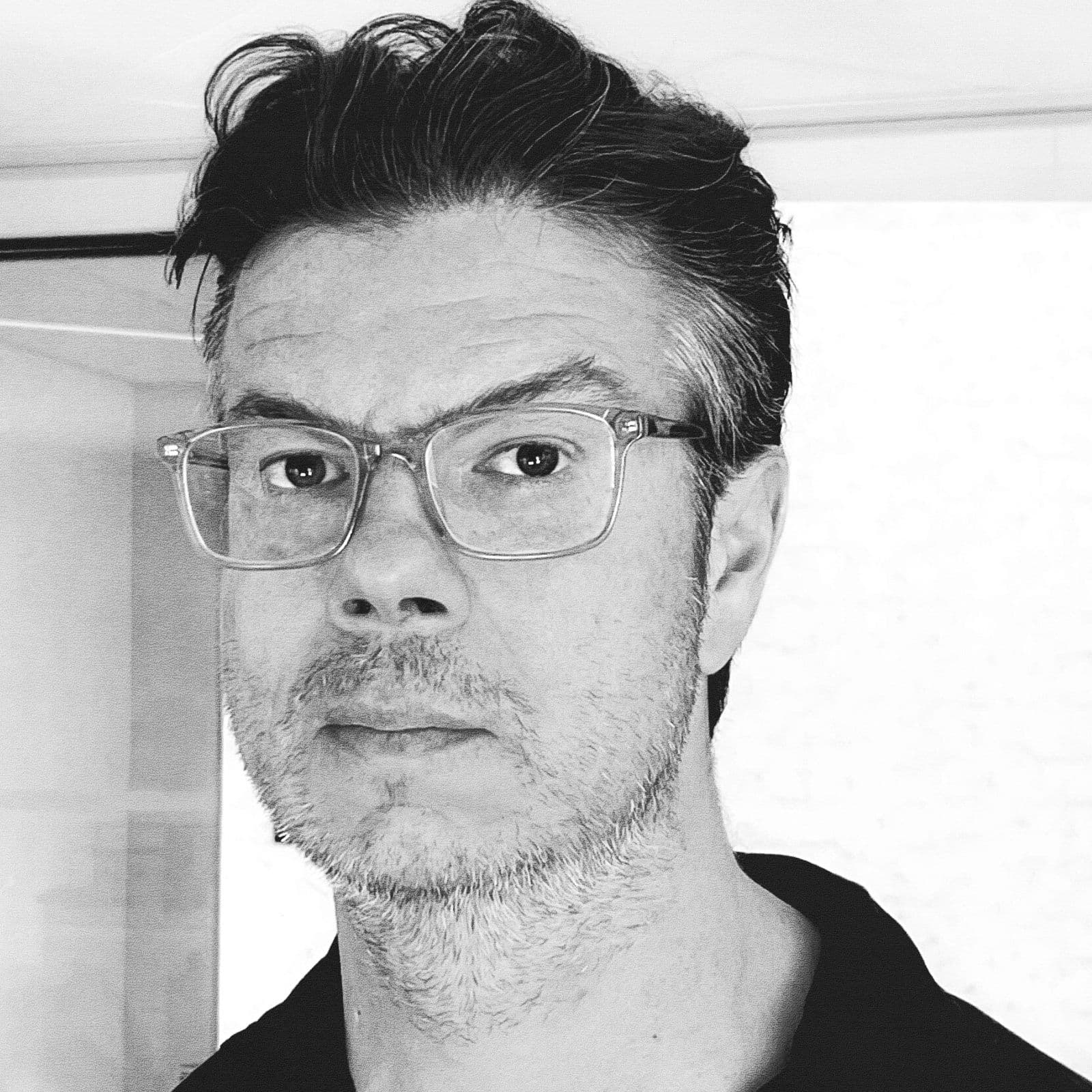
Ben Lerner reads and discusses his essay “The Readers,” centered on therapy boundaries, the fear that reading/writing affects intimacy, and how his open-heart surgery reframed his relationship to his therapist and his own work.
Guest backgrounds
The episode is a solo reading by Ben Lerner (author; MacArthur Fellow, 2015). The “guest”/therapist is a fictionalized stand-in for his therapist; no real therapist bio is provided. Lerner’s cited professional background includes training at Tavistock (as described by the character).
Key claims
Lerner argues that reactions to a writer’s work can feel “too much or too little,” especially when the writing is autobiographical. After surgery, therapy shifts from literary-boundary anxiety to survival and recovery. He also claims his therapist’s refusal to accept his heart-related nonfiction essay initially felt like rejection, then became something to unpack as “acceptance” and frame-holding.
Notable examples
the “look away” agreement about reading; the aortic aneurysm diagnosis and swab-test results; the surgery details (aortic root removed, Dacron graft, valve preserved); Lerner’s attempt to hand over the magazine essay; the therapist stopping him with raised palms (“Please hold on to that for now”); goldfinch imagery and lockdown pregnancy references.
Written by AI. May contain mistakes. Listen to the episode to check what was said.
Chapters
Tap a time to open that second in VOThe Readers - A Narrative Exploration
0:00 to 0:47
Experience Lerner's exploration of relationships and self-identity through his writing.
“If you're like me, your to-do list has the magical ability to grow even when you're in the middle of crossing things off of it.”
The Readers - A Narrative Exploration
0:59 to 2:03
Experience Lerner's exploration of relationships and self-identity through his writing.
“Getting dressed for summer can feel like a math problem.”
The Readers - A Narrative Exploration
3:09 to 14:10
Experience Lerner's exploration of relationships and self-identity through his writing.
“The Readers Early in my treatment, we decided that you wouldn't read my work.”
The Medical Revelation
14:10 to 16:41
A reflection on the author's misunderstood medical history and the impact of new test results.
“This is the first I'm hearing about this, I recall you saying.”
Coping with Diagnosis
16:41 to 19:10
Discussion of the author's emotional response and coping mechanisms following the diagnosis.
“In light of this information, the cardiologist ordered new imaging, CTs, and MRAs with contrast, not low-res 2D echocardiograms.”
The Surgery Experience
19:10 to 21:54
A detailed account of the surgery process and its immediate aftermath.
“Although sometimes your color altered and your face would flush red when I was an extremist, Your expression remained otherwise unchanged.”
Writing as Healing
21:54 to 24:05
How writing about the experience contributed to the author's healing process.
“Then the graft was joined to my ascending aorta, and they restarted my heart, closed me up, something like that.”
Presenting the Heart Piece
24:05 to 28:02
The author's struggle to share a significant piece of writing with their therapist.
“I remember this character vividly, so I might be making him up.”
Confronting Vulnerability in Therapy
28:02 to 29:18
Exploration of a therapeutic encounter filled with emotional tension and reflections on vulnerability.
“You raised both of your hands, palms toward me.”
The Complexities of Communication
29:18 to 31:26
A deep dive into the complexities of communication and the challenge of expressing oneself in therapy.
“staggering toward you as our session expired, confused about what I was doing, and I assume your silence was intended to spur such reflections.”
Show all 13 chapters
The Importance of Acceptance
31:26 to 33:48
Discussion on the significance of acceptance in therapeutic relationships and writing.
“A while passed before you said anything, and then you asked, why do you want me to read the essay?”
Reflections on Personal Experience
33:48 to 36:56
Reflections on personal experiences, trauma, and the writer's journey through heart surgery.
“I just wanted you to take it, to have the option.”
Understanding Gestures and Connections
36:56 to 38:59
Exploration of gestures and their meanings in the context of personal connections.
“I don't know if all that time ago I had stopped reading or if I repressed what I'd read, that you gave birth during lockdown and that your baby needed surgery.”
Transcript
Automatic transcript. May contain errors.0:00If you're like me, your to-do list has the magical ability to grow even when you're in the middle of crossing things off of it. At least twice a day, I wish for an extra set of hands. But I've only got the two, and that's why I love TaskRabbit. When your to-do list keeps growing, TaskRabbit is ready to help. Just pick a trusted tasker and they'll show up and get it done. And taskers are often available to help the same day. TaskRabbit connects you with skilled taskers in your area for moving, furniture assembly, home repairs, yard work, mounting, and more. We run a small business out of our not-huge apartment, and sometimes the box situation is a little much.
0:34When we need to offload to the storage space, we call TaskRabbit so we can actually relax at the end of the day. When life happens, your to-do list grows. Get ahead of it now and get$15 off your first task at TaskRabbit.com or on the TaskRabbit app using promo code NEWYORKER. Taskers book up fast, especially for same-day tasks, so book trusted home help today. That's$15 off your first task using promo code NEWYORKER with the TaskRabbit app or at TaskRabbit.com. Getting dressed for summer can feel like a math problem. If I have a 7-minute walk to the subway, a 20-minute walk, an 8-hour day in the office, and then happy hour, what do I wear all day?
1:11Quince makes it easy to do the math. They focus on high-quality, super-wearable essentials in perfect summer fabrics. Think breathable linen, soft organic cotton, washable silk, all without the luxury markup. Quince lets you get through the day without overthinking it. You can look effortlessly put together wherever the day takes you. They've got office-ready essentials like 100 % European linen pants, dresses, and tops with styles starting at$32. And when you need a little extra for that freezing office AC, their organic cotton sweaters are a perfect solution. Quince works directly with ethical factories and cuts out the middlemen, so you're paying for quality, not brand markup.
1:47And it's so much more than clothing. Quince has options for gorgeous essentials across home, kitchen, bedding, and beyond. Their 100 % European linen sheets have been a summer game-changer for me. My bed feels so luxurious, and the sheets keep me cool even in those sweltering nights. Elevate your summer wardrobe. Go to quince.com slash writer's voice for free shipping on your order and 365-day returns. Now available in Canada, too. That's quince.com slash writer's voice for free shipping and 365-day returns. Quince.com slash Writer's Voice.
2:47Lerner is the author of nine books of poetry and fiction, including the novels 1004, The Topeka School, which was a finalist for the Pulitzer Prize in 2020, and Transcription, which came out earlier this year. He was awarded a MacArthur Fellowship in 2015. Now here's Ben Lerner.
3:09Ben Lerner:The Readers Early in my treatment, we decided that you wouldn't read my work. If you had an intense reaction to my writing of whatever sort, I'd worry it might influence how you related to me. But if you were more or less indifferent to it, I would feel devalued, misunderstood, rejected. Your response, from my perspective, could only be too much or too little, and I'd always suspect your feelings about my writing, no matter how effectively you concealed them, had bled into your questions, your silences, your advice. And all these problems are heightened by the fact that my books involve biographical material, altered versions of my formative experiences, traumas, fears, contradictory desires.
3:53Ben Lerner:I always want too much and too little. It would be one thing if I wrote fiction about Cromwell or aliens, but given that my protagonists resemble me, how could I know you weren't mixing us up? You've always maintained that you don't believe that reading my work would actually influence how you relate to me, but that I'd always wonder if it did, which would have its own effects. And besides, you've said more than once, what's important is that I bring the raw material, the complex of emotions and desires and inhibitions behind my writing into our sessions. That's better than your reading my edited attempts at mastery.
4:31Ben Lerner:Is that what this is? It didn't take long for us to agree that this structure of feeling, the sense that everything is too much or too little, that the only options are overwhelming intimacy or abandonment, that you can only merge with a person or be rejected by them, characterized many of my relationships, especially with women. We've traced this to childhood experiences, particularly, of course, with my mother. Have you read My Mother? I remember blurting out as I scanned your shelves during our initial consultation, one of three we'd scheduled to determine if we were a good fit? Hearing myself ask this question, I thought of that classic children's book my kids loved where the baby bird goes around asking other animals and various inanimate objects, are you my mother?
5:20Ben Lerner:I hate that book. What would it mean for you, you responded, if I have or haven't read her work. When you were recommended to me by a friend of a friend, both of whom are novelists, I googled you and learned that you're British, that you trained at the Tavistock, and that you're a writer too. Your webpage lists a few short stories and works of creative nonfiction. I resolved never to read them. But then I thought, I'll give in eventually. I'll be too curious at some point. I have no self-control. And so I decided I should look in advance of starting treatment just to make sure there was nothing obviously disqualifying about your writing.
6:02Ben Lerner:I know all sorts of brilliant people who are bad writers. It must be possible for a brilliant therapist to be such a person, and yet I felt that if your prose were horrendous, it would make it impossible for me to trust you. One night, as Charlotte slept beside me, I furtively opened an essay of yours on my phone. Neither reading nor skimming is the word for what I did. I was both looking at the language and trying to protect myself from it. I was attempting to engage these things you'd made and made available to everyone from a great distance with the hope of confirming only that they did not cross whatever threshold would make our relationship impossible.
6:43Ben Lerner:The essay was published in a magazine called 13 Ways. It was about your complicated pregnancy and lockdown. There was a long passage about goldfinches. I wasn't attracted to your sentences or repelled by them. It was good enough prose, the way Winnicott speaks of the good enough mother. I decided to make an appointment, although I was slightly uneasy about a therapist publishing such personal writing online where her patients might find it. During that first consultation, after I explained the problems, insofar as I understood them then, that had brought me to therapy. And after I inquired if you'd read my mother, I asked you if you knew my work, making the barely perceptible pauses around the word which indicates scare quotes.
7:31Ben Lerner:You responded, of course, by asking how I would feel if you did or didn't know it, how I thought that might affect my treatment should we decide to continue. I said I'd feel fine about your reading or having read my poems, but that I was conflicted about the novels. And yet, I said, because I don't have any sense of myself apart from my writing, banning it from therapy feels weird, withholding, dishonest. I wouldn't be showing up with my full self to deploy a cliché, reading me or not reading me, a catastrophe either way. You were quiet for a long moment, probably while you decided whether you would answer my question with another question, and then you said, I've read some of your poetry, but I've never read your fiction.
8:17Ben Lerner:I thought that might be the answer I wanted, but I'm ashamed to tell you, which is why I'm only telling you here, that I felt rejected or at least deflated. I thought a psychologist around my age interested in literature living in New York would have read at least one of my novels. I must have had an exaggerated sense of the reach of my literary reputation. But you had books by my friends and rivals among the psychoanalytic texts on your shelves. It seemed improbable to me that you hadn't at least tried to read some of my prose. I've never read your fiction, must mean I find your fiction unreadable.
8:53Ben Lerner:Surely you had started one of my stories in this magazine, which is among the magazines in your waiting room, and then abandoned it. If we do agree to work together, I asked, would you then read more of my writing, past and future? Would it become a topic of discussion? Might it in some way inform my treatment? You said that was something we'd talk about over time, something we could play with. We could explore what you're reading or not reading my work. No implied scare quotes when you said it meant for me or would come to mean. Certainly, you weren't going to read further in advance of those conversations.
9:30Ben Lerner:And should you encounter writing of mine in a magazine in the interim, you would simply look away. I doubt you actually use the phrase look away, but I vividly remember you're using it. I've come to realize that what I remember most vividly is often false, the way the hyper-reality of a deepfake might be the tell. You explain that you didn't have a general theory of whether a therapist should or shouldn't read her patient's writing. It's something that needs to be decided on a case-by-case basis. This case-by-case talk troubled me, not in the moment, but on the F train home. It was usually on the F that something you said began to trouble me.
10:12Ben Lerner:because I took it to imply you had many other writers as patients, each a special case. Maybe your patients were mainly writers. Maybe you were steeped in the literary demimonde, which would damage our treatment, make it impossible, because so much of what I needed to address was my confusion about boundaries, a confusion in part traceable to the milieu in which I grew up. My parents are both shrinks, and all their friends were shrinks, and everybody was in therapy with their friends or enemies or supervisors. answers my earliest sense of therapy was that it was troublingly porous that nobody was holding the frame keeping the wrong things from touching i was a kid who wouldn't let distinct foods touch on his plate a weak attempt at mastery which was why i was only now in my late 40s truly entering therapy i badly needed you to hold the frame in other words and to teach me how to hold the frame But you probably had, I decided on the F, various poets and novelists as patients, and we'd know one another or at least of one another and talk about one another and pollute one another's treatment.
11:20Ben Lerner:Because I believe a therapist's relationship with one patient must invariably bleed into her relationship with the next. When I brought this up to you in our second consultation, how the case-by-case talk had made me concerned that your practice involved too many riders, too much overlap and possible contamination, you assured me that none of your patients knew me personally. But how could you be sure? It would have been a boundary violation to ask them, and that, if we ended up working together, you would not take on anyone with whom I had an arguably significant relationship. You understood how that would compromise my treatment, especially since, as was already quite clear, the question of boundaries is intense and over-determined for me in ways we would explore.
12:08Ben Lerner:I was reassured. On the F, I was troubled. It was too much, too much that you would decline to work with anyone I might know who might know me, too much that you would adjust your practice to protect me from this worry. I took it as an implicit admission that, if I did have some relation to another of your patients, their speech would seep into my treatment. Worse, I feared, insanely, that your willingness to make such a promise might reveal that you were overinvested in me. Maybe you'd read my mom's books and they mattered so much to you that you desired, consciously or unconsciously, to have me as a patient.
12:46Ben Lerner:Or maybe you hated her books and wanted to punish her through me. Or maybe you had read much more of my work than you'd admitted, and you loved it or hated it, and so you were willing to alter your practice in order to entrap me because I was the object of your cathexis. Your cathexis would smother me. It was a kind of inappropriate touch, just as you're seeing lots of writers would be. Either way, it was a catastrophe. Third consultation. I brought up my concern that your making decisions about whom to see based on protecting me felt like too much. You explained, almost successfully suppressing a smile, that you were describing a general policy of not taking on clients who know one another.
13:31Ben Lerner:You suggested that these worries I had about reading and not reading, too much and too little, contamination, bad touch, holding the frame, and so on, were things that you could help me with, help me investigate, and get a handle on. You also suggested that these strong reactions and forms of resistance I was experiencing in response to the prospect of embarking on therapy might, in fact, bode well for our work together. Indeed, perhaps we'd already embarked. It was then I decided to confess that I'd looked at and away from some of your own writing, but could not. Do you remember? Of course you remember.
14:13Ben Lerner:How I believed that I'd told you all about my aortic root, about the potentially aneurysmal dilation of my aorta where it attaches to my heart, something that had been incidentally discovered 15 years before I became your patient, and how I was startled and upset when you revealed your ignorance of my medical situation? This is the first I'm hearing about this, I recall you saying. Can we slow down and start again at the beginning? By this point, I'd been coming to you for nearly a year, and I was convinced that I'd given you this medical history early on and you'd failed to retain it. In reality, I'd never mentioned it, which was in part a sign of how much I'd accepted my cardiologist's reassurance as that, given my aorta's stability across the years, it was less and less likely I'd ever need an intervention, let alone drop dead from aortic dissection.
15:07Ben Lerner:Now I believe my confusion also arose because I wrote a novel in which this aortic pathology and the prospect of death or open heart surgery is central. And though you'd of course told me that you'd never read my novels, I must have still felt on some level that you had read them, and from those fictions had extracted central facts about me. And so, according to some magical and distorted logic, by failing to remember my ambiguous cardiac condition, you were forgetting my life and my literature simultaneously, which was annihilating. I probably unconsciously withheld all this medical information so I could stage this particular version of abandonment, withheld it until my cardiologist told me that there were some new tests that could help distinguish aggressive aortic pathologies from idiopathic and often benign conditions, and that I might as well go ahead and do the tests for peace of mind.
16:02Ben Lerner:Given so many years of stable measurements, he felt the results would be reassuring, but I was anxious and mentioned the testing to you, which turned out to be the first time I brought any of this up. Anyway, all they needed to do was swab my cheek, and in a couple of weeks, my mind would be at rest. And in a couple of weeks, my mind was shattered. You know the specifics. I shouldn't put them here. Suffice it to say, the results meant, among other things, that my aorta was almost sure to dilate further, and, regardless, I was at a heightened risk of it rupturing, even at a relatively small and stable measurement.
16:40Ben Lerner:Stable until it suddenly, catastrophically wasn't. In light of this information, the cardiologist ordered new imaging, CTs, and MRAs with contrast, not low-res 2D echocardiograms. Thus, they discovered that all my previous measurements had been radical underestimations, that I had been walking around for 15 years with a massive aortic aneurysm well past the surgical threshold, that what I'd feared might happen in the future had long been my present. In response to all these tests, these horrendous re-descriptions of my vascular tissues, I collapsed. You would stop me here and say, you continued to parent well, even in the worst moments.
17:24Ben Lerner:You managed endless appointments with radiologists and cardiologists and surgeons. You convened a wonderful community of support, and so on. You would want me to say, even in this fiction you can't read, at least without compromising my treatment, breaking our contract, that I did not utterly collapse. Despite my suffering and episodes of mental disorganization, I did not throw myself in front of the F, even though I fantasized constantly about stepping in front of it as it entered the station at West Forth, if only it could look like an accident, or like I'd been pushed. The instant I'd clicked on the results from the swab, our work together changed.
18:06Ben Lerner:No more exploring my conflicting desires and their origins, my versions of Eros and Thanatos, my ambitions and tendencies towards self-sabotage, my complaints about my marriage, Charlotte doesn't respect my work, my tendency to ask both humans and objects, are you my mother, my ambivalence about therapy itself, etc. No, now therapy was about how I might get through the next few hours, survive the night. In the session before I clicked on the test results, we talked about how hard it was for me to cry, how I'd certainly never been able to cry in therapy and probably never would. In the session after, and in so many sessions after, I wept convulsively.
18:48Ben Lerner:I remember much of this in the third person. Can see myself begging you between sobs to reassure me that I'd be here to watch my boys grow up, which you did. I longed for my old problems, but they belonged to another world. Certainly I was now utterly unable to recall caring about something as trivial as whether you had or hadn't read my books. I think you supported me by simply, but why do I say it's simple, being able to take it, by witnessing and receiving all my upset and terror, and by accompanying me, by making me feel accompanied without losing your composure as I unraveled. Although sometimes your color altered and your face would flush red when I was an extremist, Your expression remained otherwise unchanged.
19:34Ben Lerner:During that time, we not only saw each other several times a week, but you also had me write to you every morning, something I never imagined I'd be doing. I would extract myself from bed and take my beta blockers and write you a message of despair, and you would write back within an hour, write something simple and steadying. I hear how hopeless you're feeling, but there is every reason to be hopeful, and I can help carry hope for you right now, even if you can't access it. I will see you in the office on Tuesday, but call me if you need to speak to me before that. I don't know why these messages helped me, but they did, at least a little, and a little help in such moments is a lot.
20:16Ben Lerner:Once the surgery was scheduled, I began to stabilize. It was grounding to have a concrete plan in place. It helped that Charlotte and I had talked calmly to the kids and they weren't as terrified as I'd feared, that we'd managed to hold the terror for and from them. It of course helped that I felt the full force of my skilled and loving team of doctors, friends, and family. I began to have some moments when I watched the wind move in the leaves and felt for minutes at a time, no agony. I dealt with the bureaucracies of insurers and universities. I managed to look through proofs of a couple of essays I'd written when I was still capable of writing.
20:54Ben Lerner:I rescheduled events far into the future as if there were one. I put my will and financial documents in order. I made sure that I was laughing around the kids at dinner. I made sure that I was eating dinner. I deleted manuscripts and most of my email correspondence, which only now strikes me as parasuicidal. I told everyone I loved how much I loved them. I was afraid of dying or never fully recovering and I was horrified by the intense and well-documented depression that often follows significant heart surgery, a postpartum-like condition known as the cardiac blues. But in the final session before the surgery, when you said that even if I experienced such a depression, you and my team would help pull me out of it, I think that I believed you.
21:42Ben Lerner:You said that soon I would be on the other side of this and that I would write about it. I recall you said that I would write about it beautifully, but you have no way of knowing if I'm capable of writing beautiful prose. At the appointed hour, they opened my chest, placed me on bypass, arrested my heart, cut away my diseased aortic root, but preserved my native valve, which they sewed into a Dacron graft from which my coronary arteries now branch. Then the graft was joined to my ascending aorta, and they restarted my heart, closed me up, something like that. Two and a half weeks after the surgery, I wrote an essay about my experience.
22:29Ben Lerner:It was published almost immediately in this magazine. The issue in which it appeared featured an illustration of a human heart on its cover, which I thought of, which I still think of, as an image of my heart. I was proud of this work, no scare quotes. It felt real, whatever that means, and it felt like getting it all down quickly was quickening on the side of life, part of my survival and early recovery, proving I didn't have permanent cognitive deficits from the bypass machine, now I'm much less sure, proving that I was still, or for the first time, able to take the full measure of life with language.
23:05Ben Lerner:In my imagination, writing and publishing the piece was a defense against the cardiac blues. You and I resumed our sessions in the second week of my recovery, processing the controlled trauma of the surgery by phone since I was in pain and exhausted and far from capable of taking the F. But after seven weeks, my profoundly changed body returned to your office near West Forth, and I found myself carrying a copy of the magazine with me, a little security blanket made out of words. As I tentatively re-entered the world, I would often re-read the piece as if to prove to myself the reality of what I'd gone through, the fact that I'd survived.
23:49Ben Lerner:I was part Frank O 'Hara, my heart is in my pocket, it is poems by Pierre Reverdy, and part that guy in the Magic Mountain who carries his chest x-ray with him at all times, showing it to everybody, saying, I can't believe they touched me there. I remember this character vividly, so I might be making him up. At some point I realized that I was also coming to your office with my heart piece in my tote bag because I wanted to give it to you. This felt different from what we discussed long before my diagnosis and crash, different from my poems or novels. This was a work of nonfiction. Even if I made up some composite figures, this was describing the care I received and the resilience I hoped I was evincing, and was documenting a still unfolding experience in which you played a role.
24:39Ben Lerner:I found it easy to bring this all up in a session. More evidence, I reasoned, that my desire to give it to you was unproblematic. I didn't feel that your reading it might be too little or too much. I wasn't interested in tracking your response. I just wanted to share this work that I felt captured insofar as it was capturable what I'd gone through. And perhaps, I suggested, this calm, clear feeling constituted progress, maybe, in this small way I'd defeated the structure of too much or too little. you didn't say no i'll never read it but you did say that we should slow things down we should take our time talking about the experience and not its representation a distinction i wasn't sure i could really make let's keep talking about what it all means the fact that i didn't treat your hesitation as rejection not even on the f after that session reaffirmed my sense that you should read the piece eventually as clearly i'd overcome at least in this instance, my neurotic relation to your relation to my writing.
25:47Ben Lerner:Several sessions passed without my mentioning the heart piece again, though it was always rolled up in my bag. Needless to say, there were plenty of other things to talk about given what I'd been through, was going through. I was seeing you fewer times a week now and was no longer wanting to die on the tracks. I was capable of more various thoughts and feelings. but as sessions passed I began to feel precisely because I was exhibiting such maturity around the heart piece that it was a little unfair or ungracious of you to refuse it and by refusing to accept the essay even if we never talked about it again weren't you refusing to recognize my progress one night while Charlotte slept beside me I realized in a flash with the force of insight I shouldn't be asking for permission as if I were a child.
26:37Ben Lerner:I must just give you the magazine. You could read it or not, we could talk about it or not, but I wanted to present it to you, full stop. Surely you would approve of my owning the decision, exercising my agency, something we often discussed. In fact, it was possible this was precisely what your hesitancy was intended to produce, the conditions in which I would be forced to act decisively, to present it to you and then let it go. I needed to rise to the occasion you'd helped prepare for me. I intended to do this immediately upon entering your office at our next appointment, for it to be the first thing I did upon sitting down, but you had a scheduling question for me, and then we found ourselves talking about other things, and the clinical hour evaporated, and so it was only when our time was ending that I found myself reaching into my bag.
27:32Ben Lerner:I opened my mouth to eloquently inform you of my decision, but instead I heard myself mumble something about my progress as I rose from the chair. I had never walked toward you before The exit was to the right of where I was seated But now I was suddenly, suddenly but slowly Lurching toward you like some kind of Frankenstein Like Frankenstein O 'Hara with his heart in his hand and not his pocket This monster whose heart had so recently been arrested and restarted I involuntarily recalled all the tubes and wires I'd been attached to in the hospital imagine they were trailing from me as I blundered toward you like an axe murderer wielding an axe that bore the image of my heart violating your personal space violating so many kinds of space saying weird shit about agency about ownership something had been set into motion that I was powerless to stop I wanted to flee the office but couldn't alter my path there was nothing to do but close the distance between us and give you my heart peace or bludgeon you with it But as I finally drew near, only seconds had passed, but it felt like I'd been approaching you for minutes, like I'd been approaching you for 47 years.
28:46Ben Lerner:You raised both of your hands, palms toward me. I froze. I stopped, as they say, dead in my tracks. The blood pounded in my ears. While your expression remained calm, your face flushed red. You said, let's wait and talk about it on Friday. Please hold on to that for now. Right, I said, of course, and fled. We didn't talk about it Friday, or the following session, or for several weeks, but I found myself reflecting on the fact that I had made a scene, staggering toward you as our session expired, confused about what I was doing, and I assume your silence was intended to spur such reflections. I could see how my behavior was expressive, undercutting the notion that I had an uncomplicated relation to your reading or not reading my heart piece but I wondered if you hadn't produced some of the complexity by refusing to accept it graciously when you'd first had the chance which was refusing among other things to mark my arrival at the other side of the surgery to see how I'd converted suffering into writing if it was too much to have walked toward you with the magazine I was driven by your failure to take it in the first place, which was too little.
30:04Ben Lerner:By this time, I was trying to write a new story, a story unrelated to my heart, although what doesn't involve the heart, but whenever I tried to get down to work, I'd find myself looking up from the page or the screen, distracted by the image of your raised palms. You were stopping me, stopping me from making life and work despite the diagnosis. Yes, okay, we needed to revisit the conversation about reading or not reading, and I perhaps needed to account for why I came toward you in that disorganized manner, but surely you also had some reflecting to do. Might you, via your inability to receive the heart piece, be expressing your unconscious resistance to my treatment, our exchanges, expressing ambivalence about the very question of exchange, what I'm allowed to give, what you can take.
Read the full transcript
30:54Ben Lerner:Maybe you were unconsciously sending me the message, I can't take it. And that's why, when I did finally return to the topic of my fumbled attempt at delivery, I framed it in a perhaps not entirely neutral way, by saying in one session, as if I were the therapist and you were a recalcitrant patient, I was thinking we should revisit your refusal to accept my essay, which made you laugh. Laugh is too strong a word. You made a sound, a very British sound, which I took to be a clipped laugh, and almost successfully stifled laugh, although I guess it could have been more a noise of acknowledgement, of mild surprise plus interest, but it was at least laugh adjacent.
31:38Ben Lerner:A while passed before you said anything, and then you asked, why do you want me to read the essay? I found this question, its willful naivete and simplicity, exasperating. Do you have amnesia? How could this require further explanation, let alone starting over from the beginning? I'd collapsed. You'd seen it. You'd helped me. I'd had open heart surgery, remember? Did you need to see my sternectomy scar, the exit wounds from the chest tubes? Do you need me to unbutton my shirt right here and show you? I walked into the operating room on my own two feet, and I survived the surgery, and I wrote it all down.
32:18Ben Lerner:I got it down and writing in the midst of pain and arrhythmia. The heart piece was part of me. Writing was the better part of me. Writing it was part of getting better. Everybody on my team had read it, etc. But all I said was, what do you mean, why do I want you to read it? I mean just that. Why is it important to you that I read this particular piece, that we revise our agreement? This is different. I suppose my speech and therapy tends to be abbreviated, the opposite of my writing. Can you tell me again why it's different? Why it's different from, say, giving me a copy of your new novel? You want me to repeat all the reasons?
33:01Ben Lerner:For one thing, it's short. It's nonfiction. Say more about why it matters that it's nonfiction. But we've already talked about all this. It's happened more than once that you think you've told me something or explained something to me when in fact you haven't. And then you feel dropped when I don't have it in mind. and I don't want to make assumptions here, so I think it's worth, it's documentary. I want you to know what it was like, but you can tell me what it was like, and the feelings that come up as you tell me might be more important than my reading your essay where you already gave it shape.
33:36Ben Lerner:Why can't it be both? Why can't you both accept this piece of writing and we talk? I'm interested in this word acceptance, what I can accept from you, but also perhaps your own process of accepting the reality of all. You don't even have to read it. I just wanted you to take it, to have the option. What would it do for you if I took it, accepted it, but didn't read it, didn't exercise the option of reading? It's a gesture. And I'm suggesting we unpack the meaning of the gesture. I feel like the presumption is all wrong here. Why is the burden on me to explain why I would want to share something so obviously important?
34:18Ben Lerner:Isn't it on you to explain? Why isn't the burden on you to say, my face felt hot? Do you think of yourself as burdening me? That there's a limit to what I can take? No. Yes. There is nothing you can say in our sessions that's too much for me. That sentence was too much for me. What I'm putting pressure on is the notion that your writing should get between, okay, let's forget it. What's the it we're forgetting? That I wanted to, you had confused me. I started scanning your bookshelves as if something there might help. I don't know why I'm getting emotional. I guess I just wanted, here you made a silence that was the sound of the frame itself.
35:05Ben Lerner:I vaguely remembered the opening passage about how they turn brown and gray in winter, how you thought they must migrate. Well, in fact, they're here all the time. They molt and change color in spring. Their seasonal color shift is extreme, so you were waiting for the goldfinches to return when they were already here. The essay says you have a small backyard, so I assume you live in Brooklyn, probably near Greenwood or Prospect Park given the bird traffic you describe, although maybe this was when you lived in London, I'd never encountered the phrase warbler fallout before. The first time I was only sampling your sentences to see if they were good enough, but now it's hard not to project myself into your building, to float over one of those curved metal balcony railings on 23rd, for instance, and look at the toys strewn on the white carpet and the books on your shelves and the frames on your walls.
36:02Ben Lerner:See the Frankenthaler print. It is hard not to open the fridge, closets, and medicine cabinets to see how you live, what circulates inside your house and body to know too much. Weird that you have the same slowly rotating mobile above the crib, those bird silhouettes and worm colors that we used to have in our kids' room. We put it on the street one spring. Maybe you picked it up. Then your husband walks right through me. He has earbuds in. I think he's speaking Korean. He sounds anxious. He's putting on a black KN95 and leaving the apartment in a rush. I wonder what's in his bag, what small comforts you asked him to bring.
36:45Ben Lerner:Do you know the feeling when someone passes through your watery presence and the little waking dream of reading, over-reading? I wasn't sure it could still happen now that my aorta involves plastic, but it does. I don't know if all that time ago I had stopped reading or if I repressed what I'd read, that you gave birth during lockdown and that your baby needed surgery. The implication is that the problem involved the heart, maybe a hole. Charlotte's colleague has a child who had that repaired a few months after birth, but if they operated immediately, things must have been critical, especially given that the hospitals were overrun.
37:27Ben Lerner:You write that they told you that her lungs were the size of plums, that her heart was the size of a walnut. The heart of a goldfinch is the size of a lentil. You don't specify what they had to do, maybe to protect her future privacy or yours. Maybe it didn't involve the heart at all. Maybe they were just draining fluid with a needle which is routine but in my fiction the procedure is open and even if i'm briefly in the or they're playing soft cello music i'm not going to look i'm not going to breathe on anything there's no risk of contamination i can tell us apart she's not my daughter i'm not your son at the end of your essay things seem okay a babbling toddler helping you put the niger seeds into the feeder but i'm thinking about your color the few times it changed when i described all that i was sure would go wrong with my surgery all the permanent damage i feared when i enumerated every possible catastrophe in my panic i'm remembering how that day before i approached you with the magazine, you'd had to talk to me about scheduling.
38:37Ben Lerner:Maybe you had to take your daughter for her scans. Sometimes the effort to keep things from touching causes vasodilation of the small blood vessels in the face, but I don't know and don't need to know. I've come to understand your gesture differently, how you stopped me with your palms. Please hold on to that for now. What a beautiful thing to say. You stopped me so that I'd go on. I left it on the train.
39:27to read and discuss. This month, Han Ong reads The Fugitive by Lyudmila Ulitskaya. You can find that and other New Yorker podcasts in your podcast app. If you're a New Yorker subscriber, you get access to all episodes of The Writer's Voice ad-free and to everything else we publish. Award-winning journalism, criticism, fiction and poetry, plus games and cartoons. For an early look at new fiction, poems, and author interviews, sign up for our This Week in Fiction newsletter at newyorker.com slash fiction. This episode of The Writer's Voice was produced by John LeMay, with editing by Grace Rubin.
40:02I'm Deborah Treisman. Thanks for listening.
40:10Hey, listeners. This is Liz Mainz-Amanzadi, the New Yorker's Puzzles and Games editor. If you're someone who likes making lists and organizing your bookshelf, we think you'll love Catalogs, our new daily game that challenges you to put things in order based on a hidden rule. You might be asked to sort peppers by spiciness, world capitals by population, or Martin Scorsese movies by release date. You can play catalogs every day at newyorker.com slash games and in the New Yorker app for iOS or Android. Here's a helpful hint. The app gives you free access to our entire archive of catalogs, along with our word scramble game Shuffalo and the mini crossword.
40:50So download the New Yorker app for new games to play every day.
From the publisher
Ben Lerner reads his story “The Readers,” from the June 29, 2026, issue of the magazine. Lerner is the author of nine books of poetry and fiction, including the novels “10:04,” “The Topeka School,” which was a finalist for the Pulitzer Prize in 2020, and “Transcription,” which came out earlier this year. He was awarded a MacArthur Fellowship in 2015.
Learn about your ad choices: dovetail.prx.org/ad-choices


