
In short
Douglas Stuart reads “A Private View,” a story about a gay art-world insider (David’s husband) escorting his alcoholic, estranged mother (Jean) through a museum’s private viewing of an Italian sculptor’s Stations-of-the-Cross installation—where pop-culture and explicit, provocative substitutions (e.g., Transformers’ Starscream, Smurfs, Melania Trump, gold-leaf penises) blur sacred art and shock value. The narrator’s coping mechanism is talking to his dead mother in his head, while his real mother’s behavior triggers memories of family trauma, including Jean’s disappearance on Christmas and Louise’s permanent cutoff.
Guest backgrounds
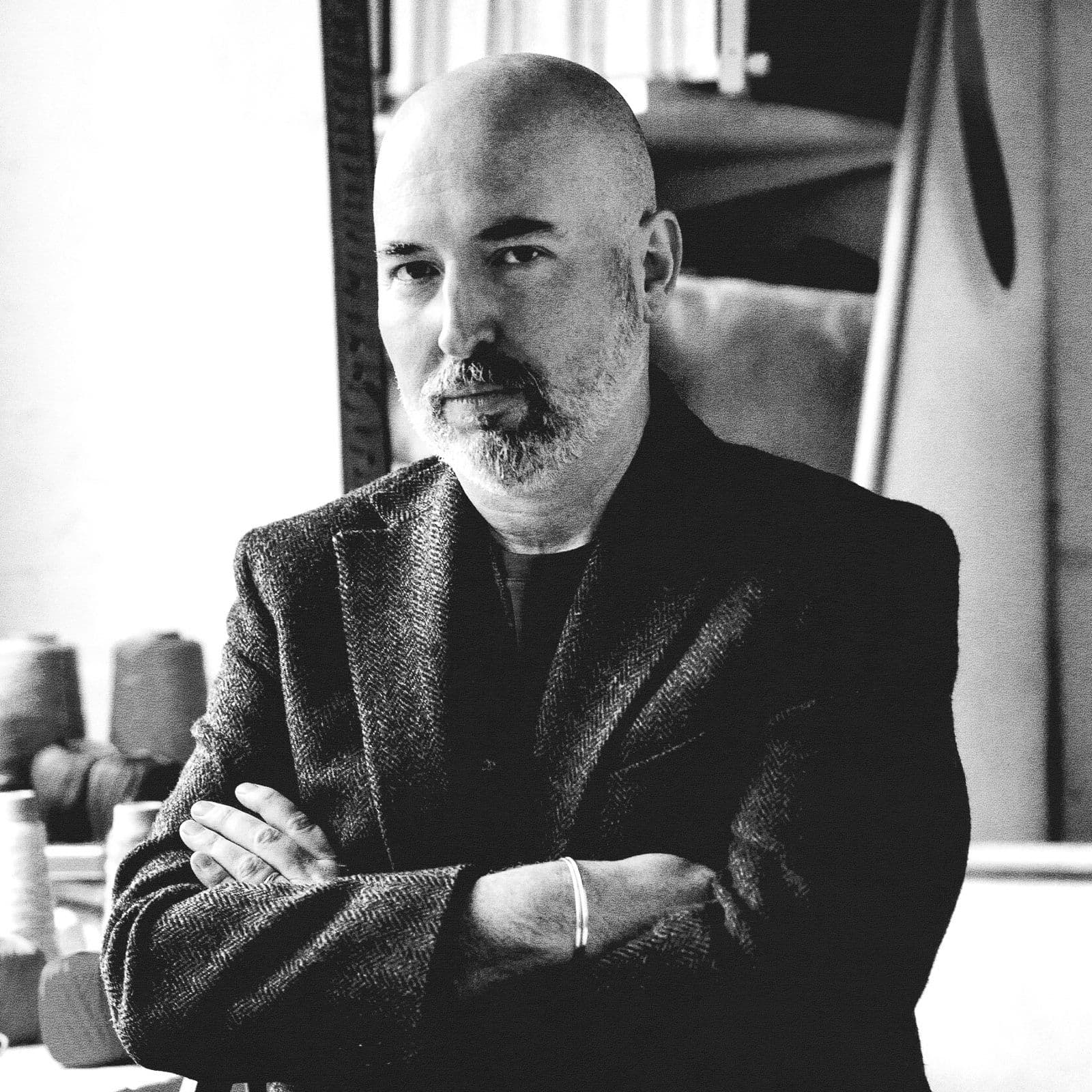
Douglas Stuart is a Booker Prize-winning novelist (Shuggie Bain, 2020) and author of Young Mungo (2022), with John of John due May 2026. Deborah Treisman is fiction editor at The New Yorker.
Key claims
the museum crowd’s wealth and judgment feel alien; the narrator’s “private view” is as much about grief and guilt as art.
Notable examples
Melania Trump Mary Magdalene; beeswax repairs mixed with blood and semen; Jean’s dyed hair and vodka-in-pocket; Louise’s 46-page goodbye letter from Jean.
Written by AI. May contain mistakes. Listen to the episode to check what was said.
Chapters
Tap a time to open that second in VODouglas Stewart's A Private View Introduction
2:27 to 3:05
Douglas Stewart is introduced as the reader of 'A Private View'.
“This is The Writer's Voice, new fiction from The New Yorker.”
Reading of A Private View
3:05 to 14:05
Experience Douglas Stewart's compelling story, A Private View.
“A Private View None of the men looked up as my mother came down the museum stairs.”
Museum Encounter with David and Mother
14:05 to 18:14
Experience a tense and humorous interaction in a museum setting.
“A chorus of museum staff was gathered around them and my mother stopped to watch them.”
David's Career and Personal Struggles
18:14 to 22:24
Delve into David's aspirations and the complexities of his family situation.
“His mother was caught between the opinions of her church and the newfound liberalism of the Austin elites.”
Family Tensions and Christmas Memories
22:24 to 28:00
Explore the emotional fallout from a troubled family Christmas and ongoing conflicts.
“How dare you look down on someone else's family?”
Exploring Art and Family Dynamics
28:00 to 29:10
The narrator reflects on their relationship with their mother while exploring sculptures that evoke mixed feelings.
“I was disgusted to hear myself speak of it with naive optimism, as though our family had nearly won the lottery, and, if we played again, then next time, maybe next time, we would win.”
Childhood Memories and Masculinity
29:10 to 31:20
The narrator recalls unsettling memories from childhood regarding their mother's relationships and the impact on their perception of masculinity.
“We moved along to the fifth station, where Simon of Cyrene was carrying Jesus's cross for him.”
Conflict and Communication in Relationships
31:20 to 32:50
Tension rises between the narrator and David as they navigate emotional complexities and misunderstandings.
“I saw David standing in a corner talking to a German gallerist he knew.”
Reflecting on Identity and Self-Perception
32:50 to 34:30
The narrator contemplates their identity and how memories of their mother shape their current self-image and relationships.
“It was a bad habit, but when I was writing, I mumbled to myself.”
Conversations on Weight and Masculinity
34:30 to 36:30
A dialogue between the narrator and their mother highlights societal pressures regarding weight and gender expectations.
“This was the problem with conjuring my mother.”
Show all 13 chapters
Longing for Connection and Shared Experiences
36:30 to 39:20
The narrator expresses a desire to share their life with their mother and make up for lost time through shared experiences.
“I disliked that as an answer, and so I screwed my eyes shut.”
Final Reflections on Love and Loss
39:20 to 42:01
As the narrator reflects on a sculpture, they and their mother share insights about their past, revealing deep emotional bonds and longing.
“I looked around for David, but he was nowhere to be seen.”
Douglas Stewart Reads 'A Private View'
42:01 to 45:26
Listen to Douglas Stewart's poignant narrative about memory and loss.
“not seem wide with their usual wonder, but swollen with grief and disbelief.”
Transcript
Automatic transcript. May contain errors.0:00I'm Jason Adam Katzenstein, New Yorker cartoonist and spring enthusiast. This spring, I'm looking at my closet. I want quality over quantity. I want versatile looks I can reach for every day. And that is why I keep coming back to Quince. Quince makes beautiful everyday pieces using premium materials like 100 % European linen, organic cotton, super soft denim. This next thing I'm about to say is insanity, which is that the Quince styles start around$50. To look at these clothes, to wear these clothes, they do not feel like style starting at$50. Quince works directly with ethical factories and cuts out the middlemen, so you're paying for quality, not brand markup.
0:40Is there anything better than sweater weather? The answer is no. No, there is not. And the Mongolian cashmere crewneck sweater from Quince will be my official uniform for the foreseeable future. So I'll see you in that sweater weather. Refresh your spring wardrobe with Quince. Go to quince.com slash writer's voice for free shipping and 365-day returns. Now available in Canada, too. Go to quince.com slash writer's voice for free shipping and 365-day returns. quince.com slash writer's voice. As a small business owner, do you ever find yourself drowning in admin? If you're spending more time figuring out payroll or navigating human resources than actually doing the business you love, you need more than help.
1:22You need Gusto. Gusto is online payroll and benefits software built for small businesses. It's all-in-one, remote-friendly, and incredibly easy to use. So you can pay, hire, onboard, and support your team from anywhere. It's so quick and easy to switch to Gusto. Just transfer your existing data to get up and running fast. You'll get automatic payroll tax filing, simple direct deposits, health benefits, workers' comp, 401k. You name it, Gusto has options for nearly every budget. And you won't pay a cent until you run your first payroll. Let's face it, you didn't start your business because you love paperwork, and neither did I.
1:58Gusto gave me back the time I was wasting on admin, and let me get back to what I'm passionate about. Try Gusto today at gusto.com slash newyorker, and get three months free when you run your first payroll. That's three months of free payroll at gusto.com slash newyorker. One more time, gusto.com slash newyorker.
2:27This is The Writer's Voice, new fiction from The New Yorker. I'm Deborah Treisman, fiction editor at The New Yorker. On this episode of The Writer's Voice, we'll hear Douglas Stewart read his story, A Private View, from the April 20, 2026 issue of the magazine. Stewart has published two novels, Shuggy Bain, which won the Booker Prize in 2020, and Young Mungo, which came out in 2022. A new novel, John of John, will be published in May. Now here's Douglas Stewart.
3:05A Private View None of the men looked up as my mother came down the museum stairs. I felt sorry for her. I wished I could make them notice. When she reached the middle landing, she paused, and I could tell she was resisting the urge to go back up and give them a second chance to get a good look. I smiled as she began to descend the final set. She gave a little kick with each step, so that her long coat parted and revealed a shapely leg. Jean wasn't wearing her glasses, which helped to spare her from disappointment. She couldn't see that the men had ignored her, but I was certain she had felt it.
3:46She couldn't see me from this distance either, but she didn't squint or search about. She simply arrived in the space, knowing I would be there for her. I was always there for her. As she neared the bottom of the stairs, she unbuttoned her coat. She was wearing her favorite dress, the knitted one with herons embroidered on the front, their necks intertwined, and the moonlit sky behind them set with payettes and sequins.
4:13Douglas Stuart:It had the cheap glint of lurex, and although it was loose, it clung to her body in the places she was softest. At the weekend I had taken her to Anne Taylor and then to Eileen Fisher and offered to buy her anything she liked. She came out of the changing room in one outfit after the other and stood before me as though I had talked her into trying on a hessian sack. I wondered aloud if she wouldn't like to look a little more refined for the opening. We persevered for ages, before she said, in a voice so low that I almost missed it, In all these years I have never once tried to change you. My mother crossed the foyer toward me.
4:55Do we have to stay long? she asked. Hello to you too, I said. And no, just long enough to be supportive. Earlier that afternoon, my husband David had phoned in a panic because he had forgotten a folder full of checklists. I promised to bring the folder to him. I told my mother that I would stay uptown and would arrange a car to bring her to the museum later that evening. I walked her through all the details for recognizing the Uber Eid order and assured her that everything would be all right. The art crowd made me uncomfortable. I always needed a bracer before one of David's openings. When I came out of the subway, I went into the first hotel I saw, where I sat at the bar and drank an Isla malt.
5:43I would have liked nothing better than to waste the afternoon in a bar with my mother, but Jean was only fun to drink with until she drank too much. As she stood before me now, I realized how she had spent the afternoon in my absence. She had dyed her hair cough syrup red She had teased it into its usual brittle coif and lacquered it with hairspray that made it sparkle like loft insulation For goodness sake, I was only gone a few hours She patted the back of her head Don't you like it? Jean had recently come to the opinion that her hair colour which had been bottle black since I was a boy had been prematurely ageing her Now, in her sixties, she had stopped dying it and for a while had seemed to embrace its natural pigeon tones.
6:37When she arrived in New York, I hardly recognised her because she looked surprisingly appropriate for her age. I told her that the silver brightened her grey-green eyes, but every morning while she had been staying with us, she had worried that her smoking was staining the front. She didn't trust her bathroom mirror, so I took her to the window. I held her chin and turned her in the daylight to see if there was a trace of nicotine in her curls. I liked to be this close to her, so I took longer than I needed to reassure her that, no, her hair was fine, and that, yes, she was, despite the years, still beautiful.
7:17Douglas Stuart:I held her hands. The tips of her fingers were stained with red dye. She grinned as if she were my child, and I had caught her playing with ink markers. I would have paid for a proper salon. I was feeling drab. I couldn't wait. Pulling her hands from mine, she looked toward the exhibition. Please, Mum, just try and behave yourself. She scratched her top lip with her bottom teeth. With a little nod of her head, she indicated that I should look down. I saw that inside her coat pocket lay a quarter bottle of Smirnoff. Just in case, she said, and then, with two fingers held aloft, she grinned and gave me the scout's salute.
8:01Douglas Stuart:Best to be prepared. Dib, dib, dib. We walked toward the first gallery, and I could tell by the scrape of her left shoe that she was still favouring her right hip. And how did the taxi know where to bring me? I told you, I'd do it all from my phone. I loved introducing my mother to new technologies. I could spend hours explaining how dating sites and chat GPT worked. When I was a girl, we listened to records, she would say. And when I was done having my own children, we still listened to records. The unveiling of the new wing had been timed to coincide with a mid-career retrospective of an Italian sculptor.
8:43Douglas Stuart:The artist created devotional scenes representing the 14 stations of the cross. For each station, he arranged different figures around the room. Viewers could walk through the scenes and feel as if they were witness to the passion of the Christ. It was a sprawling work that had taken the sculptor the better part of two decades to complete. As David and I had lain in bed that morning, I had read the reviews to him. The critics said the show was well worth seeing, and David was relieved. They saw a little Coons and a little Hanson, and they said that the artist had clearly borrowed from Rubens with his mass of twisted bodies and the faithful who were crying out to the heavens.
9:24Douglas Stuart:They saw the influence of Tintoretto in the way the minor characters were caught up in their own petty dramas, in the way the baker haggled over bread as Jesus collapsed for the third and final time. From a distance, the scenes seemed like classical interpretations of the stations, but on closer inspection things became a little stranger. Throughout, the artist had substituted some of the biblical figures for characters from popular culture. He swapped Pontius Pilate for a sneering starscream from the Transformers. The weeping women of Jerusalem were interspersed with a half-dozen inconsolable smurfs.
10:04There were other jarring, anachronistic details in the vignettes. Swiss guards showed up in the crowd scenes with their feathered helmets and their square, muscular buttocks. Italian Nonna stirred pots full of sauce with a look of utter boredom and, here and there, Neapolitan Ragazzi sat atop their motorini and gawped at the torture. They held ceramic phones aloft, as if recording the crucifixion for their social media feeds.
10:33Douglas Stuart:The critic for the Times had debated whether it was a triumph of artistic genius or the work of an obsessive shut-in, a grandmother who was mad for porcelain ornaments. If I were being honest, which I could rarely be with David, it felt like a little bit of both. The sculptures showed the strain and the delicacy of their materials. They wore their flaws without apology. The figures had cracked in many places, and some of the statues revealed their complicated armature. All the reviews had featured one particular scene in which Mary Magdalene was replaced by a tight-faced Melania Trump. She was wearing her military jacket with I really don't care, do you?
11:14Douglas Stuart:emblazoned on the back. She had her arms folded and her hands were broken off in what was assumed to be a statement of an indifference towards suffering. To fill the cracks in all the sculptures, the artist had melted vats of beeswax. To the beeswax he'd added his own blood and cups of semen that he had milked from anonymous Italian men he'd met on dating apps. In a type of kintsugi, he had lovingly mended the fault lines with this rose-coloured paste so that all the figures seemed shot through with pale veins. The galleries were suffused with the tang of iron and old cum. Tonight's private viewing was for the curatorial staff and the museum's board of directors, but, more important, it was a chance to dazzle the wealthy donors who had bequeathed the permanent collection that filled the other halls.
12:03Douglas Stuart:I was here purely because my husband was the assistant to the chief curator. I loved the museum, but I disliked the people who attended these events and how quickly they decided that I had nothing to offer them. I felt fat and uncomfortable in my only suit. My trouser button was undone, concealed and secured by my belt. Earlier, as I waited for my mother to arrive, I had wandered through the exhibition alone. I knew a few of David's colleagues, and they seemed similarly shoehorned into their best outfits. The benefactors, on the other hand, wore their wealth with ease. The men were in custom suits, and the women in sleeveless dresses, all the better to show off the tans they had acquired over Christmas.
12:46Douglas Stuart:My mother walked around the first station. I was relieved to see that it held her attention. The rendering was so lifelike that even if the meaning and the metaphor were lost on her, she could appreciate the dedication that had created it. She stopped and frowned at the intergalactic robot standing in for Pontius' pilot. I wondered if she understood the reference to childhood cartoons. My sister Louise had spent hours perfecting the screechy, imperious cry of Starscream, only to use it when phoning the takeaway and ordering curry sauce and chips. I must have been smirking, because my mother turned suddenly with the suspicion that I was laughing at her.
13:24Douglas Stuart:What's so funny? I caught myself, but it was too late. My mother was looking at me expectantly, and I scrambled to erase my sister from the story. You remember the cartoons I liked when I was little, with the robots that turned into cars and jets and things? Well, this guy's the baddie, the second in command. My mother nodded loosely, as if a fly were buzzing around her head. It let me know that she heard me, but that she barely cared. I followed her into the next gallery where a photographer was shooting a large group of people. The man at the centre looked so traumatised that I could only imagine that he was the sculptor.
14:05Douglas Stuart:A chorus of museum staff was gathered around them and my mother stopped to watch them. There were two young women, arty types and thick framed glasses. They were wearing variations on the same rumpled plissé frock and, just before my mother said it, I knew she would ask me if the women owned an iron. The crinkles are deliberate, Mum. They bought them like that. Would it kill them to buy a belt? As the tallest man in most rooms, David was usually easy to spot. I searched the crowd for him. It was strange that he was not with this group. I turned back to my mother, but she had wandered away. I meandered among the statues a while.
14:48Douglas Stuart:A magnificent Raffaella Cara appeared in a celestial vision to a crowd of Roman soldiers while off to the side a gathering of ceramic youths did the dougie for our fallen Christ. Is there much more to see? my mother asked, startling me slightly. Where did you slink off to? She shrugged. See that taxi you sent for me? I thought I could smell vodka on her breath. It wasn't yellow. The man pulled up and rolled down the window and started calling out your name. But I couldn't understand him because he had an accent. Jeannie, you have an accent. And so I had to walk right up to the window like a common prostitute.
15:31Douglas Stuart:My mother could look so small sometimes. I was aware that she did it deliberately. She relaxed her shoulders and let her arms go limp. It was an old trick, but I was powerless to resist. Another half hour and then we'll go for a drink, yeah? I said Yeah, she said with a sudden smile You have yourself a deal As soon as I looked up again, I glimpsed David in the next room He was watching me and frowning We locked eyes and I smiled and gave him two enthusiastic thumbs up I'm so proud of you, I mouthed silently But David only puffed out his cheeks in exasperation I wondered how much he had seen of my mother and me.
16:14Douglas Stuart:He was in a group of employees who were following in slow procession behind an older man who was being pushed through the galleries in a wheelchair. Frederick Bollen had been the chief curator of painting and sculpture for almost three decades. This was to be the Norwegian's last show for the museum before he was forced into retirement at the end of the year. David was the first assistant to the soon-to-be former chief curator while the women he trailed were assistant curators. It was a slight rearrangement of words that annoyed David because it defined roles that were, in fact, very different.
16:50Douglas Stuart:It was the women's job to worry about the art and the artists, to curate shows and concern themselves with provenance. We had discussed the wheelchair many times before. It was David's belief that, as soon as he put his hands on the back of the chair, his career would be over and he would be reduced to some kind of human-powered locomotive. He asked me if that was fair. Didn't he already order the man's lunch and pick up his dry cleaning? Didn't he manage his calendar and decipher every crumpled receipt that Frederick tossed on his desk? It was too much to be expected to move the man from room to room, from desk to bathroom.
17:28Douglas Stuart:He had perfected the art of looking the other way whenever Frederick needed assistance. He simply moved towards the back and waited for a woman to feel the pressure to step forward and push the curator. It rarely failed. When I had asked him why Frederick didn't just buy a motorized wheelchair, David huffed and said it was because Frederick was in denial, and even after fifteen years in the chair, he still believed that he would soon be back on his feet. David looked handsome in his suit. I jabbed my tongue into my cheek, letting him know I would suck him off later. He crossed his eyes quickly.
18:03Douglas Stuart:Then he scanned the room to see if anyone had seen him act the fool. I was smiling as he turned back to the curatorial cortege. He was the tallest of five tall brothers. His father was the fourth generation in a long line of gentleman ranchers, weekend cowboys who'd made their fortune in Austin as attorneys for large oil companies, but whose identity was still tied to the thousands of acres that the family owned near Marfa. His mother was caught between the opinions of her church and the newfound liberalism of the Austin elites. One weekend at the ranch, she said that David had broken her heart, but if you boys, and she used the phrase you boys with a flap of her hands to mean all the little queers in the country, if you boys can get married now, then perhaps you boys should.
18:50Douglas Stuart:To her mind, if David insisted on being gay, then perhaps matrimony would keep her church friends from obsessing about his sex life. Until we were married, whenever I visited the ranch, David slept in the main house while I bunked in a well-appointed cabin that sat at the end of a dirt road. At first David complained that none of his brother's girlfriends had been asked to do the same, but it soon became clear that the casita was preferable to the main house where his mother hovered over everything and darkened the mood if she was not the constant centre of her son's attention. As we sprawled in his grandmother's old oak bed, he made me promise never to write about his family.
19:30Douglas Stuart:I agreed on condition that I could become the lady of the house when his mother died. He rolled on top of me and said that my mind was too precious to spoil in the dusty Texan heat. I had been in Marfa the Thanksgiving that David announced he'd be assisting the chief curator. I had witnessed his father puncture his joy by telling him that no loudened man would ever put his hands to another man's wheelchair. Later that night, we drove to a distant gas station simply to escape the compound. I complained about what his father had said, and David yelled at me. He said that I didn't understand how complicated class issues were in Texas, but that I should, seeing as I was a Scotsman who never ever shut the fuck up about oppression.
20:13Douglas Stuart:He mocked me, and did a hideous impression of a Dickensian urchin. As cruel as his words were, to hear a Texan attempt a Cockney cretin who seemed somehow related to Mrs. Doubtfire, was infuriatingly funny. I laughed bitterly. Then I agreed that class was indeed a tricky subject, but in fact it was quite easy to not be a cunt. He often treated me like a yokel, like a cousin from the old country who didn't understand the workings of a nation as great as America. His family wore blue jeans and sun-beaten hats, and when they were among their labourers, they almost seemed of the people. But I could feel the way they maintained a subtle distance, a faint superiority as defined as any English lords.
20:58Douglas Stuart:They were Scottish Presbyterians from generations back, and so they overlooked it when I used phrases like council house and school dinners, because although I had been poor, at least I was Scottish, pale and pure from the source. David's favourite insult was to tell me I didn't know what I was talking about. He did it so often that I once made a list of all the things that he granted me expertise over. Those were rain, house cleaning, and alcoholism. I'm tired of you looking at my family like that. Like what? Like they're villains. Yeah, I said snidely. I apologize, I do. I was wrong. I see that now.
21:42Douglas Stuart:How dare I think badly of a family that stole everything from Mexicans. He pulled the car over and told me to get out. When I refused, he lifted his boot and kicked me out. He left me there, sitting on an embankment, shivering in the darkness, for an hour or more. There was no phone signal, no passing cars, no house lights for at least thirty miles. Eventually, guilt or shame got the better of him, and he came back to collect me. You can't look down on another person's family, he said. I know that, I said. I'd been humbled by the cold, more afraid of the dark plains than I would admit. No, I mean you.
22:25Douglas Stuart:You, specifically. How dare you look down on someone else's family? A penny for them? Jean asked. I made sure that David was out of my line of sight before I replied. I was thinking about a story I want to write. Oh, not another story about me, she cried. Another book about how I was the world's worst mother. I wish you could find something else to write about. Yeah? Me too, I said. I'm trying, but every time I think I'm writing about something else, I always end up writing about you. Obsessed, she said. That's what you are. It was my childhood. Well, it's not healthy. It's high time you got over it.
23:11Douglas Stuart:What? I scoffed. Just like my sister did. At the mention of our Louise, my mother reared back. She turned and said to the room behind her, Do you hear how he talks to me? How he talks to his only mother? But no one was listening. My sister Louise taught art at a secondary school within one of the city's most deprived housing schemes. She joked that, really, she was a bouncer in a nightclub where the patrons didn't need to be drunk to start a fight. She lived with her husband and their three daughters in an airy flat on the leafy south side of Glasgow. It would have taken Jean two short bus rides to visit her.
23:53Douglas Stuart:But Louise had cut her mother out of her life many years ago. Louise's breaking point had come one Christmas. It was to be the last Christmas before I left Glasgow to live in New York. For several years, her mother had been asking to host us at her small flat, saying that she wanted to make it up to us for spoiling so many of her Christmases when we were growing up. Louise had been able to duck this in the past, but this particular year, Jean had started her pleading early, and I had bullied my sister until she agreed to give her mother one more chance. On Christmas Day I showed up on time and knew instantly that something was wrong.
24:31Douglas Stuart:My sister was scowling and pacing the path outside my mother's flat. Her car was parked nearby, and the engine was running. I peered into the car. My eldest niece looked to be on the verge of tears. She was wearing a velvet dress, and her hair was in ribbons. Her presents were arranged all around her, as if she were the centrepiece in a gift basket. I rapped on the glass and waved hello to my brother-in-law. It had begun to snow. The tip of Louise's nose was bright red, which made her eyes seem ferociously blue. Without asking, I tried to guess what she already knew, that Jean was lying dead or, more likely, dead drunk somewhere, and that Christmas was cancelled again.
25:12Douglas Stuart:We waited half an hour or more, debating whether to call the police out on Christmas Day. Then, while Louise was peering through the letterbox, her mother alighted from the back of a black cab. A young man I'd never seen before got out and paid the driver with a handful of loose change. Jean was all smiles. She had a single rotisserie chicken in one hand and was swinging a plastic bag in the other. The bag was full of winnings from an all-nighter at the Corinthian. The coins were rattling, and the pale pallor of a sleepless night made her seem more like Jacob Marley than like anyone's idea of Santa Claus.
25:50Louise never spoke to her mother again.
25:53Douglas Stuart:When she fell pregnant with her third daughter, she bought herself a journal with a photograph of a baby wrapped in cabbage leaves on the cover. She wrote a manifesto, a promise to her unborn child about the type of mother she would be. When you are feeling sad, I won't tell you that men don't like that in a girl. When you wake up in the middle of the night, I will be at home. After the baby was born, she wrote her mother a 46-page goodbye. I'd moved to New York by then, and Louise's letter, which my mother read down the phone, made it clear I would be the only one of her children to stay in contact with her.
Read the full transcript
26:30Douglas Stuart:For the first few years, I hoped that my mother and my sister could make amends, and so I acted as a courier of sorts. I kept my mother updated on my niece's progress. If one day there was a reconciliation, I didn't want the girls to be strangers to Big Jean. But if I made it sound as if my sister and her daughters were enjoying their lives, it only sank my mother into the drink. I couldn't tell her how much joy the girls brought to everyone who knew them. how one was born for the stage, or how the other had inexplicably inherited Jean's love for animal prints. So instead, when she asked how they were doing, I stuck to the driest narration.
27:12Douglas Stuart:Yes, they were getting big. Yes, they were enjoying school. When I was alone with my nieces, and out of earshot of my sister, I regaled them with the legends of Granny Jean. If one of my nieces mentioned that she had heard that Granny Jean was a bad woman, I would admit that sometimes she drank so much she fell in the street, but sometimes when she fell, she could catch herself in a forward roll and spring up to her feet again like an acrobat. The girls liked that. It made them laugh. When I was alone with my sister, I spoke of her mother as if I were a social worker, as if Jean were a foster kid who had made mistakes but needed another chance.
27:53When her mother achieved fleeting periods of sobriety, a month, four months,
27:59Douglas Stuart:A hundred and fifty-three days. I was disgusted to hear myself speak of it with naive optimism, as though our family had nearly won the lottery, and, if we played again, then next time, maybe next time, we would win. I looked around for Jean and saw her near a grouping where Jesus meets his mother on the road to Calvary. The sculptor had managed to carve Mary's robes with such realistic folds it was difficult to imagine that they were not actually cloth. I watched my mother look left and right before she reached out her hand to touch. They're a bit like massive nativity scenes, I said. I don't get the hype.
28:41She ignored me and walked on. I followed her, but I caught my foot on one of the pediments and tripped slightly. I locked eyes with a docent and bent to wipe the scuff from the plinth. My mother wandered ahead and I took the opportunity to regard her instead of the art I didn't care for the sculptures, not really I found them repetitive and being forced to find the incongruous characters was like playing Where's Wally over and over My mother paused by a wall plaque and for a moment I tried to imagine her as an independent New Yorker as a person who belonged in these circles Perhaps she was a faded star an eccentric burnout, someone for whom the eighties had been dazzling but dimming at the same time.
29:29She could have been a painter of geometric abstracts who lived in a former squat on the Lower East Side, a woman with many lovers, whose work had never quite broken through but would find an appreciative audience after she died. We moved along to the fifth station, where Simon of Cyrene was carrying Jesus's cross for him. An inquisition of pot-bellied priests stood at the side of the road. They wore satisfied expressions and appeared oblivious to the suffering of our Saviour. Two priests had raised their cassocks and were peeing into his path. The artists had coated their stubby penises in gold leaf.
30:08I heard my mother tut. She was looking around for someone to protest to. That's a fucking disgrace, she said. Children could see that. Oh, they have, Jean, they have. I considered telling her about the three different penises I'd seen by the time I was twelve. It seemed that all my mother's boyfriends had liked to wear her short, quilted housecoat. Some mornings they would emerge from her bedroom and join me while I knelt before the television and watched cartoons. As the men spooned sugar puffs into their mouths, they would spread their legs, perhaps to avoid spilling milk on themselves. and the gown would splay open.
30:50One man had sat so close I could smell him. Years later, I asked my sister if she remembered these men and if they had ever flashed her. I was relieved when she looked at me with genuine horror. As my sister poured more wine, I wondered aloud if it had been carelessness or if these men had in fact enjoyed exposing themselves to a little boy. Louise said that it probably was sexual considering the idlers and wastrels our mother was attracted to but perhaps they were also expressing their dominance stating their claim to the territory by showing themselves to the only other male in the house I could not forget the long sallow penis of one particular boyfriend that had been so much darker than his pale melancholy face my mother said that she had seen enough so we made our way back through.
31:46The reception was in full swing now. I saw David standing in a corner talking to a German gallerist he knew. I could tell by the flush in his cheeks that he had finally had a drink and had managed to relax a little. You want to be careful with that one, she said. He's too used to getting his own way. I know. And you've let yourself go. It's the writing, I said. The better it goes, the less I move So, it's my fault you're getting fat What the fuck are you doing? His anger took me by surprise He had raised his voice and several people turned to look While I had been distracted by my mother David had crossed the galleries toward us He grabbed my arm and pulled me round the far side of one of the sculptures Babe, the show looks so good I've been watching you all night, he spat.
32:43You've been doing that mumbling again. He raised his hands to his face, his fingers splayed and writhed like a terrible mandible. That fucking chattering. I was working up a story, I said. I'm sorry. It was a bad habit, but when I was writing, I mumbled to myself. I was unaware that I was doing it. When it was going well, I imagined whole conversations and spoke them out loud. I couldn't write without talking to myself. Don't lie to me, he said. You were talking to your mother again. I wasn't. You were. You were talking to your mother. Everyone can see you. Flecks of spume were gathering in the corners of his mouth.
33:29I wanted to wipe them away. The crowd had gathered in the foyer to hear the sculptor give his speech. The men's bathroom was empty. I sat on the toilet lid with the stall door open and watched as my mother fixed her make-up at the mirror. The elegant clutch she had arrived with had somehow morphed into the massive, bottomless handbag of my youth. She took a brace of Carlsberg lager from its depths, separated one from the pack, cracked it open, and sucked the foam from the top. You shouldn't let him talk to you like that, she said between slurps. Once they start, they never stop. I wanted to say, look at him, and then look at me.
34:14He was the best I would ever get, and anybody who saw us together thought the exact same thing. But before I could tell her this, I noticed that she had changed her shoes. When had she done that? She was wearing the scuffed black heels that she used to color in with a bingo marker. This was the problem with conjuring my mother. All the memories I had of her were out of date. All those memories made me sad. I didn't want to be sad. I wanted to be happy. I wanted her to see how well I was doing here in New York. So you fought. She took a large hairbrush from her bag and brushed the volume back into her hair.
34:55Big whoop. You're wrong to use the past tense. You need the present continuous. What? I wish you would let me talk in my own voice. I do, I said, sounding more hurt than I would care to admit. Jean gave a hollow laugh. You twist my words, and you do it in your stupid books too. I don't sound anything like myself. Don't say that. Please. She laid her meager makeup on the counter. the dried-out mascara she needed to spit on, the tube of worn-down lipstick. I registered that her hair was no longer cough syrup red, but the bottled blue-black that she liked. When had she dyed it again? She caught my eye in the mirror and held it a moment.
35:39You're not going to cry, are you? You're not allowed to ask men that. Who says? And you can't ask us about our weight either. We feel bad about our bodies. She frowned at me. And you should know that we're not allowed to flirt with you anymore. She spun around. Why not? You complained. Not me. No, Jean, I laughed. Not you. She dabbed a little lipstick on the blades of her cheeks, then smoothed it in. Maybe I left at the right time. There was a round of applause out in the gallery, and I knew the speeches were finished. I came out of the stall and crossed to the sink. I washed my hands. I hate to say it, but what if David was right, she said.
36:25What if you need to stop all this? But I like talking to you. Don't you like talking to me? But I'm not talking to you. I disliked that as an answer, and so I screwed my eyes shut. When I opened them again, I forced her to say, Of course I do, darling. I like talking to you very much. Two banker types came in to use the facilities. I cupped my phone to my ear and chatted to myself as though I were on a call. Outside, the galleries were mostly empty. Anyone who was left was gathering at the bar. David had been watching my muttering for some months before he asked what I was doing. Later, the fact that he had waited those months would be used as evidence in one of our fights to show how painfully self-absorbed he was.
37:15When he first asked who I was talking to, I had lied and said I was working on a screenplay and obsessing over dialogue. He was American, so he liked that. The next time he caught me was in public. We were heading in different directions on the sixth train when he spied me across the tracks. I had been unaware that he was watching as I talked to my mother. I was laughing out loud, pulling faces in response to some funny little thing she'd said. He rushed up the stairs and along the platform toward me. People were staring. I thought I should be honest. I told him what I was doing. I told him that I was talking to her.
37:54I told him that it comforted me sometimes. He looked at me like I was mad. I felt a sadness. I was homesick, but I was not out of my mind. I didn't feel unwell. I knew what was real and what was not. If I felt anything, then it was a shameful guilt that my own life should be so good when my mother's had been so tough. I tried to explain all this to David, but I could see he didn't understand. How could he understand when his own mother was still alive? It was difficult to calibrate Jean in my imagination. It was horrible, but for all her happy memories, I remembered her most vividly in 2014, in the months before she died.
38:40She had gone missing for a few days, and one of her neighbours alerted the police, who then phoned me in New York. I had flown back to Glasgow and landed mere hours before the police brought her home. Jean had been on a bad bender, and a good Samaritan had found her wandering by the river, shoeless in the January sleet. It did me no good to think of her this way That was a bad memory An old film that should never be rewound What I wanted was to share the now with her I wanted to bring her into my life and spoil her To do all the things I never got to do with her when she was alive I wanted to take her to Las Vegas Because she would have loved the ceilings painted to resemble skies I wanted to bring her to brunch with my friends and then waste a Sunday walking to Tompkins Square Park and feeling a little tipsy as we laughed at the puppies in the dog run.
39:38I looked around for David, but he was nowhere to be seen. I figured the team had moved on to dinner, so I went to the bar and got myself a glass of Prosecco. I returned to my mother, and in my mind I handed a glass to her. She tasted it. Then she grimaced. You'll have to develop a taste for the finer things. No more of the cheap commotion lotion, you old lush. She liked to be insulted. She squeezed my arm and pulled into my side. She was chuckling to herself, and I closed my eyes. I loved the smell of her hairspray. We moved in the direction of the 12th station. Without discussing it, we had skipped several rooms, coming to the tacit agreement that we didn't really care for the art.
40:26I sipped my Prosecco while my mother downed hers in three gulps. The bar staff were beginning to clear up for the night. When I turned back to my mother, she was wearing a demure shift dress and I smiled to see it. You look nice. I had gone to Ann Taylor recently. I liked to spend time picking out hypothetical outfits, choosing dresses for a gallery opening or maybe something pretty for a summer wedding. I wanted to update her, to imagine her here and in this moment. I had a hidden folder on my laptop, and I clipped images of clothing and hairstyles that she might like. I was often drawn to women on the subway, older, elegant women who took good care of themselves.
41:12I sat opposite them and studied their appearance and imagined my mother had lived to her fifties and become one of them. I liked to dream that I had been able to improve her life, and that, as my own circumstances improved, I had spoiled her the way a son should. We arrived at the final station. Jesus was being taken down from the cross. The rendering of his lifeless body was so realistic, the grief etched on the faces of the crowd so plaintive that despite feeling lightheaded from the wine, we both fell silent. We walked in opposite directions around the sculpture. As though in reverence to Mary's pain, the sculptor had limited the substitutions, but there, at the edge of the scene, sat Bambi and Thumper.
42:00Here, in this new context, their large eyes did not seem wide with their usual wonder, but swollen with grief and disbelief. We stood for a while, considering the gouges in our lord's hands. Nicodemus, looking on as the body was unhooked, had a face that seemed familiar. A strong nose, a soft curling beard, an expression that said he could bear this weight with dignity. Don't you think that looks like your dad? she said quietly. I swallowed the last of my prosecco and winced. All the grit and sugar had settled at the bottom. Jean took a step toward the sculpture. Your father could have done better than me.
42:43I always thought that. We could all have done better than you, Jeannie. My mother laughed. I like to look at your wedding photo, I said. You were so young. We thought we knew it all. She took my hand and squeezed it. I wish you hadn't changed your name. I liked Jack, but you were always my wee Jimmy. She seemed lost to her own thoughts for a moment. Then she said, Mary Magdalene is a hard act to follow. I forgave her the cliché because it felt very much like a thing she would actually say. Besides, it wasn't the whole thing a cliché. I dared not look at my life from the outside. I mortified myself when I did.
43:29I texted David. Where are you? Can I come? I watched the dots as he started typing. then I watched the dots disappear. I went to the coat check and collected my puffer. I imagined that they'd given me my mother's coat too and that it was a thick, floor-length fur. I returned to her. She was standing alone in the empty gallery. When she saw me, she smiled. For all my mother's faults, she rarely dwelled on sadness. Her stomach made an audible gurgle. She placed her hand on it. I was so nervous that I couldn't eat. Did they not feed you at these things? I helped her into her coat. Listen, Mum, I can't see you for a while.
44:18I know. She turned and put her arm into the sleeve. Her hand was so small. Look, you go on now. Sure, I'll be all right. I always wanted to see you in a museum. She looked up at me a long moment. Then she placed her hand on my cheek. I could almost feel it. She didn't dissolve or blow away in a gust of rose petals. There was never any cinematic ending. I simply turned away. I stopped thinking of her, and she was gone. I zipped up my jacket and headed up the stairs with the last of the patrons. Out on the street, the snow had turned to slush again. I took out my phone and texted David that I was sorry, that I would try harder.
45:11This time, he didn't bother to open the text, and I knew that he was punishing me with silence.
45:27That was Douglas Stewart reading his story, A Private View. This is his third story in the magazine. For more New Yorker fiction audio, try the New Yorker Fiction Podcast, where we invite writers to choose stories from the magazine's archives to read and discuss. This month, Valeria Luiselli reads The Night Face-Up by Julio Portazor. You can find that and other New Yorker podcasts in your podcast app. If you're a New Yorker subscriber, you get access to all episodes of The Writer's Voice, ad-free, and everything else we publish, award-winning journalism, criticism, fiction, and poetry, plus games and cartoons.
46:02For an early look at new fiction, poems, and exclusive author interviews, sign up for the weekly books and fiction newsletter at newyorker.com slash fiction. This episode of The Writer's Voice was produced by John LeMay. I'm Deborah Treisman. Thanks for listening.
46:25I'm Shilpa Oskokovic. And I'm Jazzy Sefcek. And we're the hosts of the Bon Appetit Bake Club podcast. Bake Club is Bon Appetit's community of confident, curious bakers. Jazzy and I love to bake. Some might even call us obsessive. And we love to talk about all the hows and whys and what didn't work that come with it. Every month, we publish a recipe on BonAppetit.com that introduces a baking concept we think you should know. Then you'll bake, send us any questions you have. And we'll get together here on the podcast to talk about the recipe. So consider this your official invitation. Come join the BA Bake Club.
46:59New episodes on the first Tuesday of every month, wherever you get your podcasts. Happy baking. On the tranquil shores of Amelia Island, Florida, salt air, sunshine, and gentle sea breezes invite you to enjoy the luxury of letting go. Wander pristine beaches, breathe deeper on quiet nature trails, or simply get lost in the charm of a downtown stroll. Discover the Northeast Florida getaway where every day feels a little different and completely your own. Find your unwind at ameliaisland.com. This spring, the Chicago Independent Venue League presents Civil Fest 2026, a celebration of live music and community events across Chicago's independent stages.
47:50From April 16th through 25th, experience concerts and special events at venues like Metro, Salt Shed, Talia Hall, Old Town School of Folk Music, the Auditorium, Ramova Theater, Beat Kitchen, Chop Shop, and dozens more. From intimate clubs to legendary rooms, all spotlighting the artists and spaces that define our city. Learn more at civlchicago.com. Civil Fest 2026. Your city, your venues, your festival. From PRX.
From the publisher
Douglas Stuart reads his story “A Private View,” from the April 20, 2026, issue of the magazine. Stuart has published two novels, “Shuggie Bain,” which won the Booker Prize in 2020, and “Young Mungo,” released in 2022. His new novel, “John of John,” will be published in May.
Learn about your ad choices: dovetail.prx.org/ad-choices


