Ask ChatGPT


 The NPR Politics Podcast
11 Nov 2026 · 19m · 9 chapters
A post-election focus group of North Carolina swing voters (Biden 2020, Trump 2024) discusses why Democrats gained control of Congress and what they expect next—especially affordability, low optimism, gridlock, and whether Democrats should prioritize investigations of Trump.
Hosts are Miles Parks (covers voting), Ashley Lopez (covers voting), and Mara Liason (senior national political correspondent). Focus groups were moderated by Rich Tao (Engages) with 14 voters recruited via Nelson Recruiting; conducted by messaging firm Engages for the Swing Voter Project.
Voters want “change” but have low expectations for Democrats; they see Trump as the main obstacle; they expect gridlock and fear investigations will distract from the economy.
Voters cite linking Iran war and tariffs to high prices; concerns about corruption; skepticism about investigations given Trump’s “immunity”; and a clip discussion of Trump saying he “cannot” forgive enemies.
Written by AI. May contain mistakes.
Details about the focus group of voters in North Carolina and their political affiliations.
“And I'm Mara Liason, senior national political correspondent.”
Discussion about swing voters' feelings regarding the blue wave and expectations from Democrats.
“They're statistically insignificant because they're a small group of people.”
Exploration of swing voters' frustrations with both the Democratic and Republican parties.
“And, you know, Rich Tao, the moderator of these focus groups, asked them, you know, what do you make of the fact that Democrats are now going to be taking over Congress?”
Voters express low expectations for what the new Democratic Congress will achieve.
“doesn't amount to this means like everything's going to get better overnight.”
Discussion on the potential for gridlock and the challenges ahead for Democrats.
“But what I think is so interesting now is how little optimism there is about what Democrats are going to deliver for them.”
Voters express a desire for Democrats to focus on economic issues rather than investigations.
“What did these voters say about the appetite they have or whether they want to just move on?”
Exploration of swing voters' views on Trump's leadership and style.
“I mean, especially when it comes to Trump, we heard a lot of that.”
Discussion on Trump's reluctance to forgive and its implications.
“They've been given an audition and we're going to see if that if that sticks or if they decide to just do whatever they can and investigate everybody in the universe.”
Analysis of swing voters' expectations for Democrats and blame dynamics.
“They think he's stubborn and he's not going to change.”

Get the gist, explore an idea or ask about something said.
 Claude
On The NPR Politics Podcast, what are the key points of this episode?
Searching your listeningAutomatic transcript. May contain errors.
0:00I'm Kevin Roos. And I'm Casey Newton. And together, we've been tech journalists for decades. Now, we're your hosts of Machine Gods, a new podcast from NPR that makes sense of what AI means for your work, your life, and all of our futures. Twice a week, we'll be exploring the biggest moves in tech and give you unmatched access to the real titans of industry. Listen to Machine Gods from NPR on the NPR app or wherever you get your podcasts. This year's blue wave wasn't just powered by hardcore Democrats. independents swung towards Democratic candidates in huge numbers, according to exit polls. Today, our first post-election focus group with swing voters.
0:36What do they want to see from a Democratic-controlled Congress? And who will they blame if there are problems?
0:45It's the NPR Politics Podcast. I'm Miles Parks. I cover voting. I'm Ashley Lopez. I also cover voting. And I'm Mara Liason, senior national political correspondent. And Ashley, this is a series we've been doing all year, hearing from focus groups of voters who voted for President Biden in 2020, President Trump in 2024. Tell us a little bit more about who these people are. Right. So we heard from 14 voters in North Carolina who are in that group of voters, people who voted for Joe Biden in 2020 and then Trump in 2024. In this group, there were 10 people who identified as independents, three as Republicans and one Democrat.
1:17And these were online focus groups held last night by messaging firm Engages and market research recruiter Nelson Recruiting. We partner with them each month as part of the Swing Voter Project, which is conducted in different battleground states every month. And the moderator of these focus groups is Rich Tao from Engages, who we will be hearing throughout this. And we will only be referring to the folks in these focus groups by their first names because it was one of the conditions of their participation. And what we say every time is you have to understand focus groups are not a poll. They're statistically insignificant because they're a small group of people.
1:50But why we love them so much is because polls tell us what voters are thinking. But focus groups allow us to really look into why they're feeling that way. And they can describe how they came to certain conclusions. It really is like a window inside a voter's brain. Yeah. And I was so excited to see this month's focus group was in North Carolina, which really feels like ground zero for this year's blue wave. You look at the Senate race. Senator-elect Roy Cooper won the state by 20 points. He's a Democrat. And yet this is a state that Donald Trump won all three times he's been on the ballot. Democrats also flipped a number of House seats.
2:27What do these voters say, Ashley? Give us a sense of why this happened. I mean, the biggest thing we heard is what we've been hearing all year, which is that folks are really frustrated with President Trump. They think the Republican Congress hasn't done much to help them as well as President Trump. And, you know, Rich Tao, the moderator of these focus groups, asked them, you know, what do you make of the fact that Democrats are now going to be taking over Congress? We're going to hear from Erica, Deborah and Charity. I think it's time for some change. See what happens. What about the rest of you?
3:00What do you make of this result? I think everybody wants to change. Charity, go ahead. So I agree we need change, but this whole blue wave, I'm a little apprehensive. because the Democrats make a lot of promises and a lot of their interests do not line up with my interests. And so I'm kind of afraid in a way. I'm just, I'm at that point, what happens next with this blue wave? Yeah, I'm not optimistic about it at all. Yeah, this is very typical swing voter stuff, which is a lot of these voters, especially the independents, aren't happy with either party. So a blue wave for some of these voters doesn't amount to this means like everything's going to get better overnight.
3:43Although a lot of these voters did vote for Roy Cooper. I mean, this is not a poll, but it was like a significant chunk of them, I think like six out of the 14. And a lot of them said they just wanted to see some change in Washington. I wonder from you, Mara, big picture before we dig into it, there's a lot to unpack even just in that first answer. But I'm curious, your thoughts, big picture. I felt like I was less surprised by the blue wave because of the focus groups we heard, where we heard this frustration building all year. And it sounds like we heard more of that last night. Is that how you perceived on election night?
4:15I mean, were you kind of going back and thinking through what we've been hearing from swing voters all year? Well, I certainly was surprised by the magnitude. But one thing we did see over time in these focus groups that was so interesting is that the way voters' thoughts evolved. First, they were kind of unhappy with Trump. Then they started connecting the war in Iran and tariffs with high prices. Then they started connecting corruption with those things. So as time went on, they got more and more cynical, more and more sour about the economy, and more willing to describe their vote as a vote to be a check on Trump, not necessarily because they love the Democratic Party.
4:51But what I think is so interesting now is how little optimism there is about what Democrats are going to deliver for them. Here's Rick, one of our focus groups, Swing Voters, who was asked about what he expects from Democrats. I'm really concerned they're going to pursue those investigations and such. And whether they're true or not, it doesn't really matter because there are people in the middle that are being forgotten and can't afford gas and health care. And we need a real serious meeting in the middle. And I don't think anybody's got stomach for it because there are a bunch of politicians.
5:28So these voters sent a loud and clear message. They want affordability to be the number one priority of the new Congress. Accountability is second. That is what you hear from Democratic leaders. Whether they will actually do that is another question. But the other thing that was interesting to me is how low the expectations are for Democrats. And that can be a good thing or a bad thing. A low bar is easier to hurdle. But here's Stephen, and this is what he says is likely to happen for the next two years. I think realistically it just means nothing's going to happen for the next two years. President Trump would veto anything that comes to his desk.
6:03And the House and Senate majorities are not veto proof either. So literally nothing will happen for the next two years. Yeah. And low expectations can cut both ways, right? Like you can hear that and hear like, oh man, oh man, like people do not think very highly of Democrats, which is true. And you see that in the polling, the Democratic brand has been struggling for a while now. But you can also hear that as very little could probably impress a lot of voters if Democrats even make the show of really trying to solve some of their problems, despite the fact that they don't have, you know, the White House.
6:33So getting stuff materially passed and signed into law will be will be tough. And it's hard to argue with any of these voters that they shouldn't have low expectations. After all, they've been waiting for Congress to do something about the things they care about for many, many years. I guess different parties in charge. I guess I'm wondering, though, how much of what we're hearing, because we're hearing from swing voters here, these are these voters in the middle. But as we've talked about a lot this year, there are fewer and fewer of these people deciding who is actually sent to Congress because of our gerrymandered system in Congress.
7:02And I guess I wonder how much does that play into, you know, as congressional leaders are deciding what to pursue, are they going to be listening to these sort of voters or are they going to be forced to sort of cater to the extremes? No, these are the exact voters they're going to listen to because these are the voters they persuaded enough of them to cross the aisle. That's what was so significant about this election. It wasn't a turnout election, as elections have been in the recent past. There weren't enough Democrats to turn out in Kansas and Iowa and Texas. They had to convince people like these swing voters to cross the aisle and vote for them.
7:34And, you know, the amount of attention that the Democratic Socialist-backed candidates are getting, let's be realistic. Despite what you hear on right-wing media, which makes it seem like every single Democrat is a socialist or worse, there are actually two current DSA members in the House of representatives and they're going to be eight, which is impressive. But they were not the majority makers. These are districts that would have sent a Democrat to Congress no matter what. And the true majority makers were all those centrist candidates that flipped 31 seats. I mean, I think this is why you're hearing a lot of Democrats say that they're going to have to walk and chew gum at the same time.
8:08Like, I don't see a situation in which there's no accountability. Like, this is a democracy. If there are crimes, like, people should be held accountable. Like, That is just how democracies function. And on the other side, like President Biden got a lot of guff. He got a lot of pushback for not doing a good job of talking about the things he actually did. Rich Tao, who's been moderating these focus groups for years, he told us like, you know, this was something he heard from these same swing voters, which is that they had no idea that stuff like a big infrastructure package passed, stuff like that.
8:41And so Democrats are going to have to do a good job of letting voters know that they are working on these economic issues, because if the only thing they hear is Democrats grilling Republicans, you know, in committee hearings, that's not going to go over well. Is it fair to say, and we heard from that one voter who said, what did he say? Realistically, I don't think anything is going to happen in the next two years. Was that what we generally heard from everybody that they expect gridlock? Well, a lot of voters do now. Voters have voted for divided government in the past. Sometimes divided government produces gridlock, which gives a certain amount of certainty to the business community and to markets.
9:17I mean, gridlock has its purposes. You're pro-gridlock, Mara. No, I'm not pro-gridlock, but I am saying I've seen divided government that produces nothing but gridlock, but I've also seen divided governments that manage to produce bipartisan legislation. And a lot of that will depend on what President Trump decides to do. Okay, let's take a quick break and more on exactly that point in just a moment. Stay tuned for the following announcements and messages from our sponsors. This message comes from Zatva. Big days require deep, restorative sleep the night before. The kind of sleep Sattva mattresses are designed for.
9:54And now save 15 % off purchases of$100 or more at sattva.com slash NPR. Support for NPR and the following message come from Washington Wise. Decisions made in Washington can affect your portfolio every day. Washington Wise from Charles Schwab is an original podcast that unpacks the stories making news in Washington. Listen at schwab.com slash Washington Wise. Making Up First takes overnight shifts from dedicated journalists across the country, and it's only possible with listener support. When you give a few bucks a month through NPR +, you power our newsroom. And as a thank you for your support, you can save over seven hours a year with sponsor-free episodes.
10:36Give a little and get more NPR all in less time. Sign up right now at plus.npr.org. And we're back. So, Ashley, I want to get to this idea that I feel like is going to be one of the defining things we're going to be watching over the next two years in terms of how far Democrats want to go when it comes to investigating Donald Trump. What did these voters say about the appetite they have or whether they want to just move on? I mean, a lot of them want to move on. What they mostly don't want to see is these investigations to eclipse their work on the economy. They don't want to see, you know, these hearings become more important to Democrats than solving some of the financial and like material problems that people have.
11:20And in fact, they're worried that focusing too much on these investigations will, you know, mean that they're wasting resources that could be spent on focusing on, you know, economic problems. So here is Nancy, who's a Republican, and Stephen, an independent voter. I think it will use a lot of resources. It's a waste of time and money when they could be focusing on other things, the economy, war, immigration. I mean, I pretty much agree 100 percent with what Nancy says. I think it's a waste of time when they could be focusing on the economy, affordability, the American people. To expand a little bit on what Nancy said, you know, now that President Trump and any future president has pretty much absolute immunity for things that he does in office.
12:07Why are we investigating someone that has absolute immunity? And then it's just going to be a tick for tack where it seems like every new president that comes in, they're going to be investigated for something. So let's just try and come together at this point. You know, that really lays out the challenge for Democrats. When I talk to Democrats, what they say they want to do with these investigations, in addition to uncovering crimes, if there were some, is to tell a story about how corruption is connected to high prices and that every time they do that, they also hope to have a piece of legislation that will explain how Democrats would fix the situation.
12:40Maybe it's barring federal contractors from making political contributions. That could be called the Elon Musk bill. But it just shows you how difficult it's going to be for Democrats to do all of these different things. Investigate wrongdoing. Oversight is a function of the Article I branch. Also pass legislation, or at least explain to the voters what kind of legislation they would pass if they had a Democratic president who would sign it. The Democrats have a big, big to-do list. It's going to be tough because there is a big part of the electorate. Clearly, we saw this in exit polls that want Democrats to do something.
13:13But this is an influential, small but influential part of the electorate that sees this as a continuation of like the sort of back and forth between parties. It's just political brinksmanship. They don't see this as actually solving any problems. So it's a tough thing to sort of figure out from here. Well, and I would argue, I know we're two years away from 2028, but I can guarantee you it's an election. Donald Trump's not going to be on the ballot, but many Democrats are going to want it to still feel like a referendum on Donald Trump in some way because he is the greatest turnout machine American politics maybe has ever seen, right?
13:46For both parties. For both parties, but especially for Democrats, it seems. I mean, the two highest midterm elections in history were Donald Trump midterms, right? I also want to get to this idea that we've touched on a lot in these focus groups this year, which is the cynicism that Americans feel about the political system. Did we hear more of that in this conversation? I mean, especially when it comes to Trump, we heard a lot of that. I do think that even if a lot doesn't happen, let's say if Democrats fall short of a lot of their goals here, especially when it comes to the economy, I don't think they'll be squarely blamed by these voters.
14:17We heard time and time again that they still see Trump as the biggest obstacle to our politics working correctly. Unprompted, we heard in both groups voters say that they feel like Trump's style of politics isn't going to be helpful here. This is Kristen, Tia and Erica. It just seems recently it's his way or the highway. And I know if you look at the broader picture, yeah, maybe it's always been that way. It seems as though he's trying to bully his way through every situation he's gotten us in as the U.S. A lot of the times it's his way or no way. And I don't like that versus looking at a larger majority.
14:55He promised a lot of things that he would put into place when he became president again. And he has I haven't seen any of those policies come into play. It's like he just brushed it under like the bush or under the carpet, if you will, and just, you know, his way or the highway. And I just don't like that. I don't like that mentality. Can't be said enough. These are people who voted for President Trump in 2024. I feel like every time we do one of these podcasts, I have to say it 40 times because it is striking to hear these voters now reflecting on the president. Yeah, well, you know, these voters have been rented to the Democrats.
15:30They are not owned by the Democrats. And that's what a swing voter is. They're capable of changing their minds. And, you know, Donald Trump made a mistake that so many presidents make, which is to think that a very, very narrow win equaled a giant mandate. And Biden made the same mistake. And that is the cautionary tale, another cautionary tale for Democrats. They have an opportunity, not a mandate. And when you hear them talk, they seem to understand that. They've been given an audition and we're going to see if that if that sticks or if they decide to just do whatever they can and investigate everybody in the universe.
16:07Yeah. Yeah. But like the I think that what's important to take away from this is, you know, you could see Democrats biggest obstacle, of course, being like if they focus on, you know, the investigation side too much and they get punished for that like they did during the Biden administration. But I think voters are saying like we can see very clearly what the situation is here, which is that Trump is a big obstacle. You know, it's not just Democrats focusing on wrong things. It's not just the economy being an intractable problem that no party seems to figure out. It is Trump's personality. And this was a big part of the discussion last night.
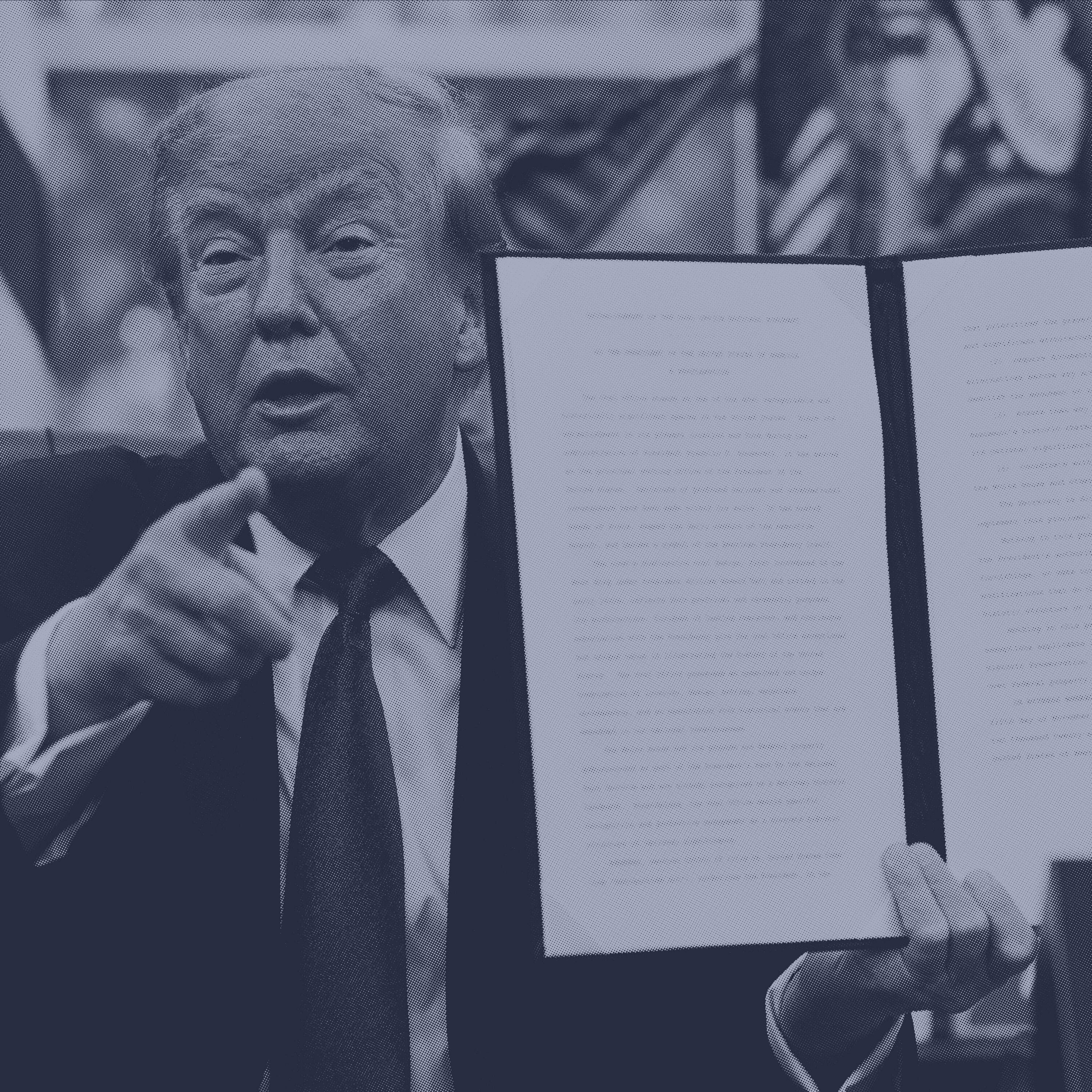
16:42Tell me more about that in terms of how his personality actually came up. Rich Tao, the president of Engages, played this clip for them that he found really revealing about who Trump is. We're actually going to play a little bit of that exchange between President Trump and Ross Douthat. They were on the CBS News show 60 Minutes this past Sunday. And, you know, among the many topics that came up was Douthat asking Trump if he thought he would go to heaven when he died. Trump said he hoped he would because he said he was a religious person. And then Douthat asked if Trump would forgive his enemies in order to get into heaven.
17:16And Trump said no. Here's a bit of that exchange that you'll hear between him and Douthat. You have had the most charmed and remarkable life of any American in my entire lifetime. And you are telling me that before the judgment throne of God, you couldn't find it in your heart to forgive some of your enemies? After all that's been given to you? Come on, help me out here. I mean, it's such an easy answer. all I have to do is say, yes, I can. Again, I don't think it's an easy answer. Can I be honest? I probably cannot do that now because I do hate some of my enemies and I always will. And then Rich Tao asked them, okay, like, what do you make of this?
17:55We're going to hear from Charity, Shally, Stephen, and Nancy. It's terrible. And it's terrible to have the leader of the world saying he can't forgive his enemies. What kind of message does that send to everyone else. What I do respect is that he's honest, right? Like I think a lot of the times is we see a person, but they might lie about their emotion or experience. Whereas like, he's very frank. He's basically saying even if something is a mistake, he won't change his ways. That he's so full of hate that he cannot forgive someone, you know, or it's more important to be right than to forget. Yeah, it's more important to be right.
18:36I think that's a lot of the takeaway from these swing voters is like, they don't think this 80 year old man is going to change or that he's going to bow or bend in any sort of way, despite this massive rebuke that he got in the election. They think he's stubborn and he's not going to change. Even before God, he will not change. So am I right? I guess one of my takeaways from this is that if we assume that there's a a whole lot of gridlock and a whole lot of fighting over the next two years. Is it fair to assume that these sort of swing voters at this point would be more likely to blame President Trump for that than to blame the newly elected Democrats?
19:14Well, probably. He's also just a bigger, more overwhelming figure, and Congress is just 535 individual people. I think they will be, but that depends if Democrats can tell a really powerful story. They have to tell a story about why they passed certain pieces of legislation, why it would have been great for their constituents, except Trump vetoed it. Also, if Trump is a lamer and lamer duck as time goes on, and his approval rating continues to be where it is, it doesn't even have to go any lower because I don't believe it can. As I've said before, he's at the bare metal base of the Republican Party, 38%.
19:47Will Republicans start to peel off and vote with Democrats? And that will create a whole new situation in Washington. All right. Well, we can leave it there for today. Thanks again, as always, to you guys for bringing us this focus group. I'm Miles Parks. I cover voting. I'm Ashley Lopez. I also cover voting. And I'm Mara Liason, senior national political correspondent. And thank you for listening to the NPR Politics Podcast.
20:17Stay tuned for the following announcements and messages from our sponsors. Oh, Kevin, it feels good to be back. It sure does, Casey. And what a time the world is talking about AI and what's going on in Silicon Valley. And we are here with a new show to tell you all about it. That's right, Kevin. On our new show, Machine Gods, twice a week, we'll be bringing you the biggest news in tech and bring you unmatched access to the real titans of this industry. You can find Machine Gods from NPR on the NPR app or wherever you get your podcasts. On NPR's Wildcard podcast, Busy Phillips, on the moment her doctor told her she had a brain tumor.
20:51and I was like, okay, can this wait till November? Like, I have to shoot this TV show, so I don't know if this is going to work for me. Watch or listen to that wildcard conversation on the NPR app, YouTube, or wherever you get your podcasts.