In short
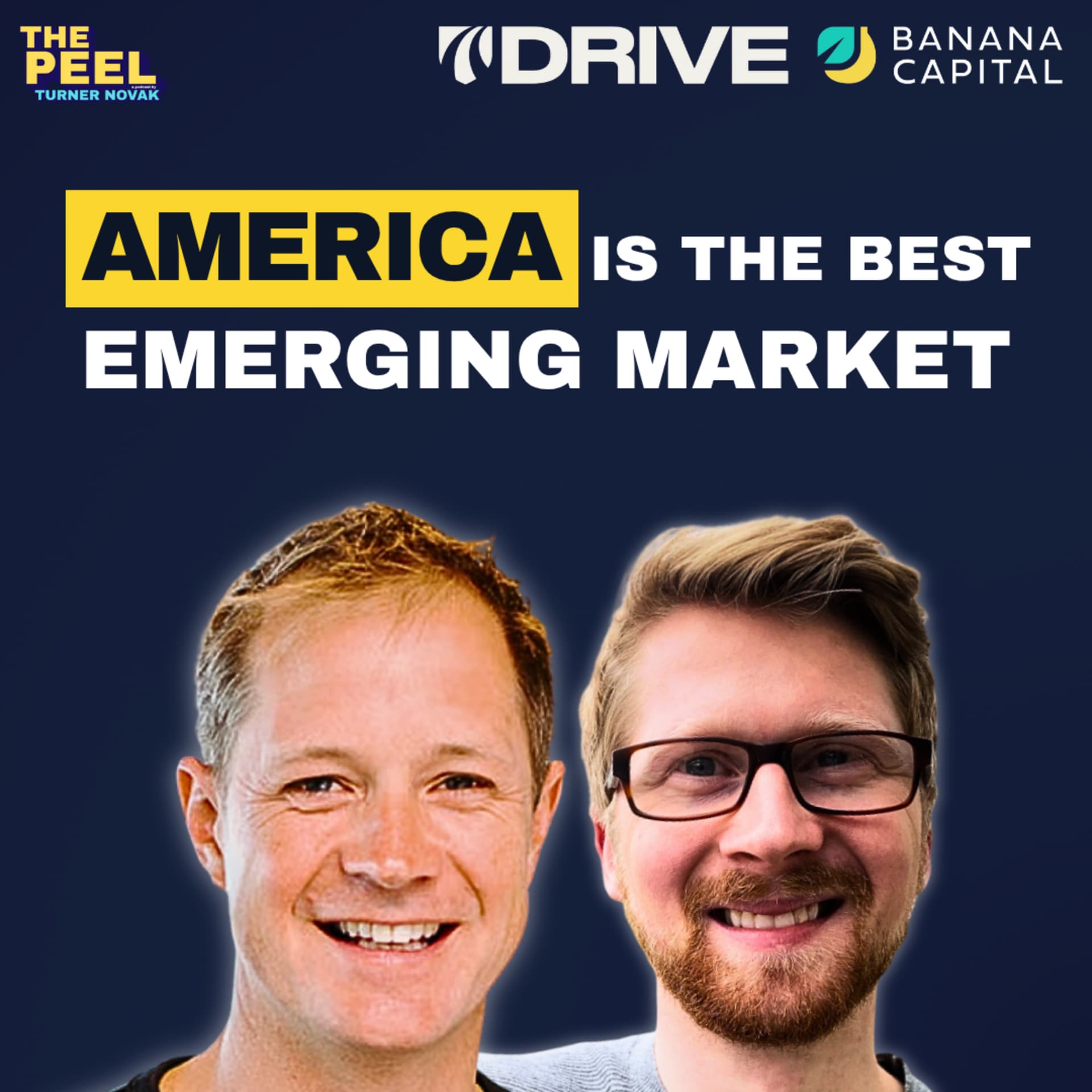
Chris Olsen (Drive Capital) argues that the U.S. is the best emerging market and that venture should “go long America” by funding founders outside Silicon Valley. He says the shift is enabled by cloud computing (democratized access to world-class infrastructure) and by venture’s ability to subsidize new tech platforms like AI/LLMs, making them cheaper to build. He also explains Drive’s investing approach: be thematic (90-day focus), use first principles, and search for “vacuum” opportunities where conventional wisdom is wrong.
Guest background
Chris Olsen is a venture investor. He previously worked at Sequoia (joined in 2006; growth fund investing) and later helped found Drive Capital (started in 2012; investing across the broader U.S. innovation cycle). He describes Sequoia’s training as emphasizing work ethic, discipline, and active post-investment support.
Key claims
Silicon Valley’s advantage was access to scarce technical know-how, but cloud removed that constraint. AI and other platform shifts will spread beyond the Bay Area if venture resources follow. Conventional beliefs (e.g., “all invention comes from Stanford/MIT” and “only the Bay produces outcomes”) lack data and create vacuums.
Notable examples
He cites companies like Duolingo (Pittsburgh), Root Insurance (Columbus), Tempest (Chicago), and mentions Brex and Character AI in sponsor context. He also references the “Petaluma” example where Sequoia passed on a company because it was “too far” from Silicon Valley.
Written by AI. May contain mistakes. Listen to the episode to check what was said.
Chapters
Tap a time to open that second in VOAmerica: The Best Emerging Market
0:07 to 1:28
Chris explains why he believes America is the best emerging market, focusing on opportunities, social mobility, and innovation.
“I mean, look, the reality is that if you travel abroad, it's pretty obvious that the best opportunity on the planet, like the best economy in the world, it is America.”
Investing in American Technology
1:28 to 2:45
Discussion on how to invest in American technology and the historical context of venture capital.
“And, you know, in this current generation, technology is, is undoubtedly the answer, right?”
Emerging Tech & Accessibility
2:45 to 3:56
Chris talks about the evolution of technology investments and the lowering barriers to entry for new innovations.
“And whether it's things like cryptocurrency or it's additive manufacturing or 3D or VR or AR, like there are lots of fits and starts.”
Opportunity Beyond Silicon Valley
3:56 to 5:03
Exploring how innovation is spreading across America and the potential for founders outside Silicon Valley.
“And I think what we get excited about is that there is, across America, like ambition is everywhere.”
Historical Context of Innovation
5:03 to 6:07
Chris discusses the historical development of innovation in America and the timing of its current resurgence.
“And I think it's been super exciting to see it all unfold since we started the firm back in 2012.”
Historical Context of Innovation
7:08 to 8:09
Chris discusses the historical development of innovation in America and the timing of its current resurgence.
“I use Flex personally and I love it because I use AI to underwrite the cash flow of your business, giving you a real credit line.”
Lessons from Sequoia
8:09 to 14:00
Chris shares insights and lessons learned during his time at Sequoia Capital, highlighting the challenges and work ethic in venture capital.
“And it went from internet companies like Google all the way back to the semiconductor companies of the 1970s and national semiconductor and that kind of stuff.”
Thematic Investment Strategies
14:00 to 16:42
Learn about the importance of thematic focus in venture capital investment.
“And to be successful at this challenge, you need to show up with an appropriate level of standards and discipline and work ethic.”
Navigating Deal Flow Challenges
16:42 to 19:43
Discover how to effectively manage and discern quality deal flow in venture capital.
“So it's, you know, it's going to have a lot of the qualities of a well-run business typically.”
First Principles and Identifying Vacuums
19:43 to 24:11
Understand the concept of first principles thinking and how to identify market vacuums.
“But I think in my experience, founders are long on vision.”
Show all 45 chapters
The Pitfalls of Conventional Thinking
24:11 to 25:42
Examine the risks associated with conventional wisdom in venture capital.
“vacuum identification machine and the best companies in the world, whether they're venture firms or operating companies?”
The Pitfalls of Conventional Thinking
25:48 to 26:24
Examine the risks associated with conventional wisdom in venture capital.
“The hardest part about building an agent is everything around it.”
Lessons from Sequoia: The Importance of Location
26:45 to 28:00
Hear a personal story about investment decisions influenced by location biases.
“Um, you know, and I'm going to listen, um, because this is, this is just the fact that got into this room somehow.”
The Ruthlessness of Sequoia's Focus
28:00 to 29:04
Learn how Sequoia's focused strategy shaped its long-term success.
“And so the partnership was like, let's pass.”
Reframing Perceptions of Ohio
29:04 to 30:29
Discover how viewing Ohio through a GDP lens reveals hidden potential.
“And as the market shifts, it created a vacuum.”
Conventional Wisdom vs. Data
30:29 to 33:28
Examine the mismatch between popular beliefs and actual research in tech.
“Um, they didn't end up doing it, but it was like the fact that the Turkey could be on the menu And you start asking these questions around like the GDP, what's the GDP of Turkey?”
Challenging Silicon Valley Myths
33:28 to 36:35
Explore the cognitive dissonance surrounding Silicon Valley's dominance.
“And that's replicated down the street at Ohio State, which is like$1.5 billion a year, and Wisconsin, and Northwestern, and Illinois, and, and, and, and, and, and, and, and, and.”
The Importance of Domain Knowledge
36:35 to 37:45
Learn why industry-specific knowledge can drive tech success outside Silicon Valley.
“now that they've been so heavily subsidized is global in nature.”
Rising Trends in American Venture Capital
37:45 to 39:09
Understand the shift of venture capital resources from traditional hubs to diverse locations.
“And that's where you start running into companies like, you know, Duolingo in Pittsburgh or Root Insurance in Columbus or Tempest in Chicago or like, and you kind of start to go down the list.”
The Fundraising Landscape for New Ventures
39:09 to 41:26
Analyze the challenges new venture capital firms face in fundraising efforts.
“I think it was like an A16Z blog post or something.”
Challenges in Building a Venture Firm
42:00 to 44:27
Learn about the difficulties faced in establishing a venture firm in America.
“or the fund is closed or something like that.”
Adapting Products to Market Needs
44:27 to 47:26
Discover how offering a variety of financial products can enhance success rates.
“For someone who's never started a venture firm before, how does that resourcing change?”
Overcoming Adversity in Fundraising
47:26 to 51:46
Understand the importance of perseverance through fundraising challenges.
“So you have to start looking at a couple of things.”
Finding and Converting Limited Partners
51:46 to 56:00
Learn strategies for identifying and converting potential LPs in venture capital.
“And I think that for me was very defining.”
The Importance of Persistence in Venture Capital
56:00 to 58:44
Learn about the significance of consistency and in-person meetings in attracting investors.
“If I don't go for that meeting, they're not going to invest.”
The Importance of Persistence in Venture Capital
58:49 to 59:29
Learn about the significance of consistency and in-person meetings in attracting investors.
“Monaco's AI-need platform replaces your legacy CRM and sales point solutions.”
Innovative Portfolio Construction Strategies
59:31 to 1:05:04
Explore unique strategies for constructing a venture capital portfolio and achieving liquidity.
“From what I know, it's not the down the fairway Silicon Valley strategy.”
Shifting Mindsets in Venture Capital
1:05:04 to 1:10:01
Understand how venture capitalists outside Silicon Valley are redefining expectations for company growth.
“strategy to compete with in the sense of, if I was going to go to LPs and there's two pitches, one pitches is like, I'm going to invest really early, get good returns.”
Venture Capital Mindset Outside Silicon Valley
1:10:01 to 1:12:47
Explore the mindset of venture capitalists operating outside traditional hubs like Silicon Valley and their approach to investments.
“the rest of the US outside the coast, outside San Francisco, what is the general mindset of a venture capitalist that is located in the outside of Silicon Valley?”
The Cycle of Competition in Venture Capital
1:12:48 to 1:14:30
Discuss the potential for increased competition in venture capital and how it might drive better outcomes.
“And people will start to appreciate this.”
Timing and Catalysts in Venture Investments
1:14:31 to 1:19:11
Understand how timing and market catalysts influence investment decisions in venture capital.
“But like in each of those, each of those busts, there have still been winners, right?”
Investment Strategy and Benchmarking Returns
1:19:12 to 1:23:30
Learn how venture firms set their investment strategies and benchmarks for returns, emphasizing thematic approaches.
“So do you, how do you think about what you're investing in?”
Challenges in Valuation and Pricing
1:23:31 to 1:24:00
Examine the ongoing challenges in setting valuations and prices in the venture capital market.
“to justify our cost of capital to our LPs, where we're still going to outperform treasuries and hedge funds and the S &P and private equity and, and, and, and, and then yes, we'll make that investment.”
Investment Return Benchmarks
1:24:00 to 1:25:00
Learn about the internal benchmarks for investment returns in venture capital.
“4X or better is, is kind of our internal benchmark that we're, we're shooting for.”
Market Valuations and Pricing Decisions
1:25:00 to 1:26:30
Discover how venture firms navigate market valuations and pricing for investments.
“And you know, our advice is is always the same, which is if we were on the board, we always would advise the founder to take the market price.”
Impact of Rising Interest Rates on Venture Capital
1:26:30 to 1:28:10
Understand how increasing interest rates have affected venture capital allocations.
“I'm managing this for retirees or for kids' education funds.”
Venture Firm Survival and Market Changes
1:28:10 to 1:29:30
Examine the drastic changes in the number of venture firms and fundraising success.
“There were only 100 who had a close of any size, shape, or form of the 3 ,500, which means there are 3 ,400 venture firms of the 3 ,500 that are going out of business.”
The Shift in Investor Dynamics
1:29:30 to 1:32:00
Explore how the landscape for venture investments and investor dynamics has changed.
“you know, of those, those hundred venture firms that had a close vast majority of them were like $20 million or less.”
Niche Opportunities in Technology
1:32:00 to 1:35:00
Learn about the potential of niche markets and technologies in venture investments.
“think that anthropic and open ai and what google is doing and what x is doing like i think they are these are world-changing technologies.”
Automation and the Future of Manufacturing
1:35:00 to 1:37:40
Discuss the role of automation in transforming manufacturing and job creation.
“Like it's, it's not a great idea to spend a good chunk of your time doing this stuff.”
Competing with Yourself in Business
1:37:40 to 1:38:00
Understand the ethos of self-improvement and competition in the entrepreneurial space.
“Now we no longer need to do that because we can manufacture them here.”
Competing with Imperfection
1:38:00 to 1:39:48
Learn the importance of competing against your own past self instead of idealized standards.
“And, you know, most people are not showing the most vulnerable, uh, you know, imperfect versions of themselves that are, they're giving you the, you know, the highly polished marketing version of themselves.”
Lessons from Everyday Inspiration
1:39:48 to 1:41:06
Discover how small changes in routine can lead to significant personal improvements.
“has been something that steered us very well through the dark times as well as the good.”
Recognizing Growth Patterns
1:41:06 to 1:43:48
Understand the significance of recognizing and maintaining successful patterns in business.
“a, uh, a guy I go to the gym with, um, you know, he comes into the gym and he parks in the exact same spot in the exact same time every single day.”
Identifying Obvious Success
1:43:48 to 1:45:44
Learn how to recognize undeniable success and the signs that accompany product-market fit.
“And I think it's like having the experience of been through this idea.”
Transcript
Automatic transcript. May contain errors.0:02Turner Novak:Chris, welcome to the show. Thanks for having me, Turner. Thrilled to be here today. So you think that America is the best emerging market in the world. So what's the thesis behind that? I do. I mean, look, the reality is that if you travel abroad, it's pretty obvious that the best opportunity on the planet, like the best economy in the world, it is America. like unequivocally, like I, even when I visit places like China or, you know, look at other emerging economies in Europe, like there is no other place in the world that has this much opportunity. We have the absolute best universities. We have the largest economy.
0:47And we have like this incredible amount of social mobility that it's not perfect, but it is, it is, you know, hands down better than any other place in the world. So I think that, you know, we, we look at it and say, if I'm an investor, you know, what do I want to invest in? Like, I want to invest in that. Like I want to go long America. And then I think the question is, so how do you do that? Like, how do you invest in America? And the history of America has, has been a country of, innovation. And you can go all the way back to things like, you know, railroads or chemicals or, you know, everything back to the industrial revolution.
1:26Like it's, it's really been a country of innovation. And, you know, in this current generation, technology is, is undoubtedly the answer, right? And I think, you know, tech stocks globally have grown from like$0 in the 1980s to globally today, about$25 trillion in notional value. And I only think that goes up from here. And so then, you know, if you start looking at this amazing place that is America and you ask yourself, like, how do I invest in technology? There's for sure a overwhelming cry to go to the Bay and look at like the amount of just money that is available to founders through the venture ecosystem that's there.
2:12And it's awesome. And it truly is like, you know, I think it's one of the greatest inventions that America has ever come up with is Silicon Valley because look, it subsidizes the research and development of new technologies and it can afford a lot of failures, right? And if I look historically over the last 15 years in venture, I could pretty much distill the companies into two inventions. that have been successful. It's been mobile and it's been cloud. And since then, we've been looking for like the next platform shift. And whether it's things like cryptocurrency or it's additive manufacturing or 3D or VR or AR, like there are lots of fits and starts.
2:58And I think one of the challenges is that unless you've got access to large amounts of money, the initial application of these technologies is it's cost prohibitive, right? We're in this generation now of LLMs. Two years ago to build an LLM, it would have cost a billion dollars and you would have needed the greatest computer science minds in the world to solve this problem. Today, I can stand up an LLM and run it on a laptop because it's been so heavily subsidized by the venture community in Silicon Valley, which is fantastic because now what you find is that once these technologies do get developed and they do turn into what could be the next platform, and certainly that's what we're seeing now with AI, it's not just going to stay in the Bay Area.
3:51If it stays there, then it will, by definition, be a failure. And I think what we get excited about is that there is, across America, like ambition is everywhere. Like every city in America you go to, You find these hyper, hyper aggressive founders that are world changing. And if they get access to the same level of venture resources that they would anywhere else, then you unlock an enormous potential. And I think that whether it's Chicago or Dallas or Columbus or even New York, you're seeing this growth in the overall American innovation cycle that we've never seen before. And I think that to us is the opportunity.
4:36I think there are tons of venture firms who are focused on investing in that Bay Area ecosystem, which is great. And there are very, very few of us who are investing in this broader American innovation cycle. And it is truly the opportunity of a lifetime. And if it works, then it solves this massive problem for America that really sustains our independence and our world domination, right? Because if the economy of tomorrow is only available to the 1 % of the people who live in the Bay Area, like America as a country is upside down. It won't work. And I think by contrast, if we can unlock the potential for founders who are building anywhere in America to build world-class companies that have the ability to go public and do all these things, it really starts to perpetuate a momentum that propels America into this next generation of progress and prowess.
5:33And I think it's been super exciting to see it all unfold since we started the firm back in 2012.
5:41Turner Novak:So when you say that, I think, okay, Silicon Valley has been around since like the 50s kind of, I mean, it's been around since longer than that, but like we've had this innovation in the Bay Area, specifically like commercialized venture funding for at least 50 years. Like it's like at this point, we're like very developed. Like why is it that now that's happening, like shouldn't it have happened 40 years ago, 30 years ago, 20 years ago? Like why didn't it happen? And then why is now the time that it's actually happening?
6:39Turner Novak:customers, including companies like Brex and Character AI, and they pride themselves on white glove, high-touch customer service. Plus, they guarantee their work, and they'll cover the difference if they mess anything up. If you want to get compliant, check out Numeral at their new domain, numeral.com. That's N-U-M-E-R-A-L dot com for the end-to-end platform for sales tax and VAT compliance. This episode is brought to you by Flex. It's the AI native private bank for business owners. I use Flex personally and I love it because I use AI to underwrite the cash flow of your business, giving you a real credit line.
7:17Turner Novak:The best part is 60 days afloat, double the industry standard. Flex has all the features you'd expect from a modern financial platform, like unlimited cards, expense management, bill pay that syncs with your credit line, and their new consumer card, Flex Elite. Flex Elite is a brand new, ramp-like experience for your personal life. A credit card with points, premium perks, concierge services, personal banking, cars and expense management for your family, net worth tracking across public and private assets, and a whole lot more fully integrated with your business spend. One card for your businesses, one card for your personal life, one card for everything.
7:53Turner Novak:To skip the waitlist, head to flex.one and use my code Turner to get an additional 100 ,000 points worth$1 ,000 after spending your first$10 ,000 with Flex Elite. that's flex.one and code turn for a thousand dollars on your first ten thousand dollars of spend thank you flex and now let's jump in i would argue that it wasn't possible to happen until really very recently and and and that's because of a very simple um you know a problem of access to technology so um you know when i when i worked at sequoia we had this like almost this like ancestry.com map of the humans, the people that were building these companies.
8:38And it went from internet companies like Google all the way back to the semiconductor companies of the 1970s and national semiconductor and that kind of stuff. And what was happening was there was a talent pool that understood these technologies. And as technology kept evolving, And it went from, you know, semiconductors into the compute layer and then compute layer into the network layer, network layer into the cloud layer, all these things. The know-how as to, like, how do you actually build these technologies? It was a scarce commodity set. Like, you know, and really, you know, what we would do in the, you know, not that long ago, I think, like, in 2000, think, like, right before the iPhone.
9:21you had to build your own cloud infrastructure and you had to buy servers and rack them and stack them. And then you had to write the software code at that like bare metal layer. There just are not a lot of humans in the world who know how to do that at scale. And the reality is like the ones who knew how to do it, they were all based in the Bay Area. But in 2006, what ended up happening was you had this moment and it was truly a watershed moment for, I mean, really for the world where suddenly cloud computing took what was previously this very scarce knowledge set and democratized access to it, where suddenly now with an internet connection and a credit card, you could access a world-class supercomputer infrastructure from any corner of planet Earth.
10:13and it really unlocked a global potential, right? And I think that like, I mean, that's really what created the rise of the Chinese startup system. That's what created the rise of the European startup system. And I think that is what has also catalyzed what we're seeing right now, which is the US startup system, but broadly US, not just in Silicon Valley. And I think it's been, you know it's been this it's a major watershed moment that we're able to take advantage of
10:46Turner Novak:so you were at an interesting spot to kind of start to think about and identify this you had joined sequoia in 2006 in 2006 you were investing their growth fund i'm interested in kind of what you learned while you were there and then i know there's the first day you were at square like the first investment committee it was like the very first seeds of like kind of where drive might be possible or where the opportunity was um so i mean you said in like what have you what'd you learn while you're at square like what were the biggest lessons that you learned i mean look the reality is that i think sequoia is a is a truly special firm like i mean there is there they have an unparalleled track record of success and it's over 50 years right um and they've been through ups and cycles and downs and cycles they've been through generational transitions inside of the firm.
11:39They've been through a global expansion, a global contraction, like, and, and in, you know, amidst all of that, somehow they always emerge with like the very best names in their portfolio. So, you know, having the opportunity to, to be there and to learn and be trained there, I mean, is, is truly probably one of the greatest gifts I've ever gotten in my life. It is, you know, and I think that, you know, there's, there's a, you know, while it would take me an enormous time to describe everything, I could probably distill it into a, into a couple, like really important things that, that kind of came out of it.
12:17I think the first thing that you learn is that to be successful in venture is extraordinarily hard. The odds are dramatically against you. It's not like, you know, half of the companies fail and half of them work. It's like, no, like, like 90 % of the companies fail. And that on an annual basis, there's maybe 10 companies that get started that are going to get to over$100 million in revenue. And the ability to not just identify those companies and to then grow them, It requires a level of work ethic, of discipline, consistency, and knowledge that is very, very hard to come by. And I think that their answer to that is, first and foremost, it's work ethic, which is great.
13:20It's a firm where a lot of the founders there are not a lot of the founders, a lot of the GPs there are immigrants, and that's by design. This is a stereotypically very hard working group of people. And that continues to this day. I remember when the week after Pat Grady had Zoom go public amidst COVID, this meteoric successful investment, he did something like 75 meetings the next week. It's that kind of mentality that the firm has where it's a you're only as great as your next investment. And it's driven by this understanding that this is an extraordinarily hard thing to do. And to be successful at this challenge, you need to show up with an appropriate level of standards and discipline and work ethic.
14:08So that'd be the first thing.
14:09Turner Novak:How do you know what to focus on? Because you can say, I work really hard, but you are working on the wrong things. Is there a skill set of knowing what are the most important things? There is, yeah, for sure. And I think that, you know, we used to describe it in broad terms. And we do this at Drive, you know, is basically to say that, like, look, what we believe is that, you know, the only way to be successful at this is to be thematic. And what I mean by that is the opposite of that would be reactive or like a network based VC. And, you know, you can do that as a VC, like the inbound deal flow is definitely we get over eight thousand.
14:52inbound opportunities a year. And we could build a meeting factory and we could meet with everybody and we could go through. Meeting factory.
15:01Turner Novak:That's an incredible word. I hate the idea of working inside of a meeting factory. That just sounds like a rough existence. It'd be awful. And the problem is, it's not that it's bad deal flow or low quality. The problem is that it's random. You can't control who emails you next, right? So you'd fill your calendar, you'd be super busy, and you'd meet with us, you'd go from meeting with a cybersecurity company, then you'd go meet with an AI infrastructure company, then go meet with an inference company, then you go meet with a social networking company. And it's venture. So I promise you every founder is charming.
15:35I promise you every pitch deck has an up into the right chart. And you're left with how do you discern the difference between good, great, and exceptional? It's impossible. It's just, it's not feasible. So by contrast, I think, what we believe is that to be successful at this, you have to develop some kind of insight and subject matter expertise by being thematic. And it's a very hard thing to do because it means you have to be focused and you have to be disciplined. And if you're successful, it's a get-rich-slow thing. And meanwhile, you're going to open your inbox and you're going to have 15 emails from people that are trying to get you to invest in their company.
16:21And these are like, you know, and in my inbox, I get lots from other GPs. So it's like, these are highly credible investment opportunities. And you just have to say no to all of them because they're a distraction. Yeah.
16:32Turner Novak:That's the thing. Any deal flow you get from another VC, the email always looks really good. Only the great things are being mentioned. So it all looks, oh, this is worth taking a meeting. Well, and it's already been venture backed. So it's, you know, it's going to have a lot of the qualities of a well-run business typically. So you're, you're, but to, to ignore all of that is, is, is hard because the temptation to take a meeting with a company that's already tripling on revenue or whatever is very, very high. And I think that like, that's, you know, but that is one of the secrets ingredients in the secret sauce, which is like by being focused and going deep for like 90 days in a theme and you know, what you will, what you will start to be able to do is if you're just meeting with robotics companies, for example, you're doing robotics, robotics, robotics, robotics, robotics.
17:19The first thing it does is it forces you to zoom out and consider this, this theme amidst a globally relevant set of companies. Like I'm not just going to talk to seed stage companies, right? Like I need to, I need to consider public companies and I need to consider companies that are based in China. And I need to consider, companies that are at the research phase. And I think you're forced to, by doing that work, what you're going to find is that you're forced into discovering that sometimes the answer isn't venture. Sometimes the answer is, if you want to invest in humanoid robots, your best answer might be going to buy in Tesla stock because they're probably the leading manufacturer of humanoid robots.
18:04Now that's hard when you're, but I'm a venture capitalist and I don't buy public stocks. And it's like, yeah. So what do you do? Well, you have to just kind of pass on that theme and have the confidence and the faith that like the next one is coming. And so go focus on the next one. And I think it's, it's that willingness to do that. That also, it makes you able to help the founders after you've invested, because when it does work out and I do invest in a robotics company, I tell the founder, like, this is why we've invested in your company, because always it has to be, you are the world best at this thing, whatever it is that you're doing.
18:44And I can tell you that because I've, I've talked to the customers and they've said, these are their pain points. And I, and I know you're not there yet, but your product is closest to filling these pain points. You know, I've also talked to all these other companies in the space and I, I know who the top engineers are. I also know like, what are the segments that are already starting to develop revenue traction. I also know who are the VCs who are gonna do follow-on funding into this type of company. I also know you're unlocking a speed factor where you've been able to come in and immediately offer this kind of map of where their world is.
19:23And it's not just a competitive landscape scan, right? It's everything from knowing, like you need to go to this conference, you need to meet with this consultant, you need to get to this customer, You need to go talk to this person. We need to recruit this person to the board. There's all these things that go in there. And if you're able to do that, you can change the speed with which a company will be successful. And I think it's a less popular sentiment today. But I think in my experience, founders are long on vision. And almost by definition, they're first-time CEOs. and that just needs to be understood because a lot of them will end up trying to reinvent everything and a lot of times that you know that tuition of them learning how to do these things it slows them down it does and i think that like our ability to help a company that's gone from zero to one to go from one to a billion comes from our experience of knowing how to plug all these different elements in along the way.
20:26And if we get it right, then you tilt the scales in favor of this company's success. And it's not stock picking. It's very much the opposite of that. I think 90 % of the value that accrues in our portfolio comes from the work that we do with the companies after we've invested. It's a very active role. And the founders that we work with that kind of, they bring all this stuff together. You know, they bring in drive because we unlock a universe of resources they don't have. And we unlock the ability to bring those resources in in a way that's constructive and, you know, complimentary to everything that they're doing.
21:08And it's hard to do all those things. Like it's, you know, when it's a Tuesday and, you know, you've got to figure out, like, how do I recruit a machine learning engineer to Columbus, Ohio? Like, these are the real things that determine your rate of success. But if I can help you do that, I can unlock your potential.
21:28Turner Novak:So it sounds like work really hard knowing if a startup or different type of company will win a market, capture, and make the most sense to invest in, and then actually try to help be able to move the needle. Yeah, I think we define it as like, I'd say, look, work really hard. I'd say be thematic. And then I think the third thing is like that, you know, we believe a lot is like this idea of first principles and, and searching for vacuums. And what I mean by that is, you know, when you start looking at a decision, it's so easy for a group of people to start reasoning with anecdotes. You know, Facebook does it this way.
22:13Google does it that way. Anthropic does it this way. Like this reminds me of when I was involved in this prior situation and we did it this other way. Right. And the problem isn't that those anecdotes aren't real. The problem is that those ingredients for that scenario are entirely different than what we have here. And so what we believe is like, you need to make, when you make decisions, you have to limit yourself to the knowledge that is within the confines of this decision itself. So it doesn't matter how other people have solved it other than like they might inspire a strategy. But, you know, the reality is if you're, you know, just to stick on this example, if you're recruiting machine learning talent, you have to compete with Google.
23:00And like the way Google is going to compete for that machine learning talent is going to be, you know, they're going to out Google you, like they're going to outspend you. Like you can't even do that. So like bringing those tools to recruit that talent to your company, it's not going to work. You've got to find the other points of leverage that you have. So we define that as first principles, like using only the information that is within this room to make this decision as the thing that's there. And the second thing, when I say we look for vacuums, is there is oftentimes this disconnect between what is usually described as conventional thinking or best practices.
23:42And anytime you run into a scenario where you find the data suggests one thing, and it is the opposite of conventional thinking, we get excited. And we define that as a vacuum. You found a space in the world that is not occupied. And it's a matter of time until somebody fills that vacuum. And if it's us, then we win. And the idea is like, how do you identify, how do you, you know, how do you become a vacuum identification machine and the best companies in the world, whether they're venture firms or operating companies? Like, I think that's, that's what they are, what they are doing and constantly iterating through that again and again and again.
24:29Turner Novak:So investing in vacuums, if somebody, if somebody uses AI to scrape this conversation and just here's investing in vacuums, they'll go buy Dyson stock or something, or like Hoover or or, but no, the actual is the vacuum. It's almost like the narrative has not adapted to what reality is saying or something like that. Yeah, I mean, that was, and frankly, that was what happened when we started Drive. Well, so tell me, so like the, I think, I know there's like a story. It was like your first investment committee at Sequoia, there's a company you guys were looking at and you like didn't invest for a certain reason.
25:02Turner Novak:So it was like, what happened? When you can build anything, Amplitude lets you know how to build the right thing. Use human language to get complex answers about your products, no more manually selecting events or building charts or dashboards, just to ask. Use agents to sense changes in customer behavior, decide what's causing them, and ask you if it's okay to fix it continuously in the background while you work. Get the answers you need while building directly in the tools you are already in, like Claude, Cursor, Lovable, and more. And for the first time, understand if your agents actually work, measure quality, debug failures, experiment, and measure their ROI with agent analytics.
25:38Turner Novak:Amplitude. With AI analytics, all you have to do is ask. This episode is brought to you by Merge, the connective infrastructure for production AI. The hardest part about building an agent is everything around it. Connecting to the tools your team and customers rely on, letting agents take action with the right permissions, and keeping everything reliable and cost efficient once you're in production. Merge handles that all for you. It connects agents to thousands of tools, handles permissions and LLM routing, and lets teams move faster without building it all themselves. OpenAI, Dropbox, and Ramp all use Merge to move faster and build AI right.
26:15Turner Novak:Visit merge.dev slash Turner to start building for free. That's merge.dev slash Turner to try Merge for free. Yes, at the time, this was in 2006. At the time, I had just been hired at Sequoia. um you know it was it was very clear to me that i was like the thing that didn't fit in the room right it's like you looked around the room it's like okay that's mark stevens he's on the board of nvidia that's michael moritz he's on the board of google that's ruloff former cfo of paypal that's jim getz the founder of vital signs and then there was like as don valentine the founder of the firm is doug leone like you know one of the greatest venture capitalists and you know sits in more billion dollar companies than abc ever and then there was me and so i was like whatever i'm going to do.
Read the full transcript
26:59I'm going to keep my mouth shut. Um, you know, and I'm going to listen, um, because this is, this is just the fact that got into this room somehow. Um, you know, I'm, I'm self-aware enough to know that like, I'm, I'm fortunate and I needed to take advantage of that. And I think the thing that struck me though, was, you know, kind of wrestling through all the things that I'm describing, which was, was what I'm being trained in. And then discovering that even a partnership like Sequoia is susceptible to the same thinking that I'm describing, where the thinking at the time was that you could only invest in companies in Silicon Valley.
27:40Silicon Valley was a special place, one-of-a-kind place, and that even a company based 10 miles north of San Francisco, and the example you're describing, it was a company based in Petaluma, which I'll never forget. It was about 10 miles north of San Francisco. The partnership loved the company and everything about it, the founder, the market, the product, everything else. But it was based in Petaluma. And so the partnership was like, let's pass. This is too far from Silicon Valley. And that was the thinking. 10 miles?
28:10Turner Novak:It's like a 20-minute drive, maybe? I don't know. Well, I just think it epitomizes the ruthlessness of what Sequoia's success had been was being laser focused on winning that stretch between 280 and 101 and making sure that they won in that corner of the world. And that's one of the reasons why they have been able to do that for the last 50 years. There's a focus, there's a benefit to that focus. But there's also what becomes conventional thinking. And when the same people I'm saying around the table, when they all subscribe to the same belief system, then that becomes the conventional wisdom.
28:57And in that conventional wisdom, it creates their focus. And as the market shifts, it created a vacuum. And that really happened around cloud computing, where we started to see more and more companies that were getting started and going public even in these other American cities. And they just, they weren't getting the level of attention that a founder would get in Silicon Valley.
29:27Turner Novak:So what was kind of the early data? Like, what were you seeing in the data? Because you talked about like this fact, like, okay, like, what are the numbers kind of show versus what everyone was kind of thinking at the time? Like, did people not put together like, oh, there's this Duolingo company in Pittsburgh, like maybe there's an opportunity or like, like what was going on? i don't think number one i don't think people had looked at the data i think you know which which is kind of an interesting thing it was like we were looking at we're looking at countries around the world right we're looking at china we're looking at india we're looking at you know and if i if i tell you ohio we don't think of ohio as a country right we think ohio is a state it's part of america yeah i think like rust felt like i just like don't think there's like any technology there at all like i just should not spend any time it's everything it's yeah it's the death of manufacturing, the automotive, like all the things, right?
30:13Like the conventional knowledge, right? About these things. And I think, you know, we started to reframe the question because, you know, I was looking at, you know, we were at the time we were looking at, uh, Turkey as a place to go and build a franchise.
30:27Turner Novak:Interesting. This was at the Koya was, was considering. Yeah. Um, they didn't end up doing it, but it was like the fact that the Turkey could be on the menu And you start asking these questions around like the GDP, what's the GDP of Turkey? And, you know, suddenly it just kind of dawns on me. I was like, what's the GDP of Ohio? Like I never thought about it that way. And it started to unlock these discoveries one after the next. It started this like macro level around like GDP. And it was like, this was very recent to the, you know, Greece as an economy almost failed. The entire EU almost got taken down by the Greece economy.
31:09And then I looked up the GDP of Greece. Do you know the GDP of Greece is the same as the city of Detroit? It's like you start to just unpack that. And you start to, you know, I think if you start to just reframe the conversation around, you know, let's not think of it being just one America. Like, let's think of each of these states as if they were countries. You run across like a large number of U.S. states that on a standalone basis would be top 10 countries in the world. And yet the only ones that have access to world-class venture services, it's not even the state of California. Even in L.A., you're running into challenging access to venture.
31:53It's really one city or maybe two, if you count San Jose, out of this entire country. So it was just, I think it started at this macro level and then starting to push down on asking why, like, why is that? And, you know, I would ask people and they would always, they would give me all the conventional
32:12Turner Novak:wisdom, right? Yeah. So what's the conventional wisdom? Just if somebody, I don't know, somebody might be listening for the first time. Like, what's this guy talking about? Yeah. I mean, it's, it's things you've all heard before. They're, they're somewhat insulting things. It's like all the smart people will leave and come to the Bay Area. If anybody has ambition, they will come to the Bay Area. There's more money in the Bay Area, so that's the only place you'd be crazy to build your company anywhere else. This mentality of all the invention comes out of Stanford. That's kind of the popularly held belief around.
32:52Turner Novak:Is there data that supports this that people would say that? No, of course not. It's logos. It's news articles. Nobody's doing the hard research. Nobody's actually going in and being like, what is the research budget of Stanford? And how does that compare to, say, the University of Michigan? Nobody's doing that. I did it. And it identifies this cognitive dissonance where you have this very popularly held belief that all the invention in America has done it, you know, Stanford and MIT. And then you look at, say, the University of Michigan, and you realize that the research budget at the University of Michigan is$2 billion a year.
33:30And that's replicated down the street at Ohio State, which is like$1.5 billion a year, and Wisconsin, and Northwestern, and Illinois, and, and, and, and, and, and, and, and, and. And you start to ask yourself, like, wait a minute. Okay, hang on a second. Like, imagine, you know, you were looking not just at the, you know, Turkey as a country. What if you were like, let's look at America as
33:52Turner Novak:a country. Wouldn't I rather go invest there? Like, why would I want to go to Stockholm or to some remote province in China instead of Dallas or Chicago or Columbus? And, you know, it was, it was just kind of this simple idea that, you know, if we, well, how come no one else is doing this. And so at first I was like, I must be missing something. Like this is too obvious for people to have not done this before. Cause I feel like a lot of the next common, like the thing that I want to say right now is, Oh, the outcomes in San Francisco are just so much bigger. That's what venture is all about. You get a hundred billion dollar companies.
34:33Turner Novak:And like, I can't name a single tech company in Wisconsin. So why would you waste time to just move to San Francisco? Like, I feel like that's where the argument just kind of ends. People just is usually like, this is a solution because San Francisco has the big outcomes. Were people just saying that to you? Yeah. And I think it's just, you start pushing down and we were looking at it and saying, okay, so where's the most valuable cloud computing company in the world? What part of San Francisco is it in? And it's like, oh, they're not based in San Francisco? Oh, yeah. They're in Seattle. Yeah, exactly.
35:05Or you're like, okay, so well, it's Silicon Valley, the largest manufacturer of silicon. in? What part of San Francisco are they based in? It's like, oh, actually, they're based in Taiwan. Wait, hang on a second. Oh, the next generation social network that the whole world is clamoring for. What part of San Francisco are they based in? Actually, they're based in Singapore. The next great music company. Actually, they're based in Stockholm. You just start to find these like, that's what I mean by the cognitive dissonance around these things. When you're in San Francisco and when I was there for 10 years, it's an echo chamber.
35:44It just is.
35:45Turner Novak:It's like the narrative. They're good at making you think Spotify is a tech company, so you think San Francisco. Or like AWS, you think it's associated with Silicon Valley. You think Amazon, you think of it as San Francisco. Totally. And I think the thing about it is there's an insecurity in the Bay Area that makes it great because I think it drives a lot of people to work extraordinarily hard. And I think that like, you know, I, I feel like that was kind of what we were discovering is like, it's a very defensive posture around like, well, Silicon Valley is the best forever and ever. And it's like, these can both be true at the same time.
36:31Yes. The Bay area is amazing. and access to these technologies now that they've been so heavily subsidized is global in nature. And now the application of these technologies to these other industries is better served to be built in other places because there are more people in Columbus that know about manufacturing than in San Francisco. Like people in the Bay Area don't understand manufacturing because there's no manufacturing that's done there. It doesn't work. The economy is not there. It's just not what they do. Or you look at where healthcare is built, and it's like there's more knowledge in a city like Minneapolis, where you've got UnitedHealth, and there's a huge deep-seated...
37:15Or logistics and logistics centers around Atlanta. It would be foolish to ignore the domain knowledge that people have accumulated in these other industries outside of technology, and then understand that what we're saying is technology is going to transform these industries. And therefore, the company that will be best suited to do this will be able to combine both a next generation technology with a domain and have the ability to unlock enormous potential. And that's where you start running into companies like, you know, Duolingo in Pittsburgh or Root Insurance in Columbus or Tempest in Chicago or like, and you kind of start to go down the list.
38:00And I think what's exciting today is like, now you're seeing, like when we started this, people said, I was, you know, we were stupid. This is crazy. Like they assumed all kinds of, you know, something has gone wrong, like all kinds of stuff. You know, no one says that now. Everyone, now everyone's like, yes, I understand what you're saying. Like, it's, it's not controversial. I was talking to a friend this morning and they were saying, she was talking about Columbus and how when we started here, there were other venture firms. There was one other venture firm. And that's absolutely true. But we've gone from starting with millions of dollars to now billions of dollars.
38:45And this is new resources that we've never had at this scale before. And I think it's only accelerating as other folks are catching on. And we're seeing ABC moves to Austin. We're seeing Sapphire Avengers moves to Austin. We're seeing everything Elon Musk is doing in Texas. The world is coming more and more this way. And it's not to take away. It's not coming from San Francisco. it's coming from the research labs it's coming from people internationally who are coming to America and immigrating it's basically all of America is rising up right now and it's got more resources than it's ever had before
39:30Turner Novak:I think the phrase is a good catchphrase for this is Silicon Valley move to the cloud where you can be in Austin and you still have the Silicon Valley ethos, mindset embracing trying hard things, working hard, failure, understanding the technology, but you don't have to actually be there. I think it was like an A16Z blog post or something. That's when you know it's like, okay, this is a thing now. A16Z has blogged about this. Like Silicon Valley's in the cloud. I feel like that's a way I think about it. Well, look, I think that it is more acceptable today than it's ever been to build a venture-backed company in every city in the world.
40:12And that doesn't mean it's more popular, more popular, I mean, more written about than building a company in Silicon Valley. But it does mean that, you know, this momentum is continuing.
40:26Turner Novak:So when you were raising the first drive fund, 2012, I think was when you started raising it or did the first fund. What were the conversations like with Elpis? Because you had to convince people to invest in this data-backed thesis that was kind of crazy. It was against the narrative at the time. Yeah, it was unpopular for sure. And I think our conversion rate in our first set of LP outreach was something like 223 meetings. And to get 223 meetings, we had reached out to like, I don't know, a couple thousand different LP prospects to get the 223. And the 223 converted into 19 LPs. So like a pretty small, you know, conversion rate, 10%, 7%, something like that.
41:16And I think that it was, trust me, it was a very rude awakening to come outside of a place like Sequoia where, look, fundraising for them is a very different thing. And, you know, we were doing the age old like, oh, I'm going to be in CityX anyway, just to try and get meetings. And it put us in a position where you really started to appreciate, man, there is an infrastructure that has been built for the last 50 years for all these earlier venture firms. And it's a huge advantage because they don't have to spend time fundraising and failing in front of LPs again and again and again.
41:50Turner Novak:I actually saw a really interesting, it was a screenshot of an article and it said, when Benchmark goes out to raise a fund, they send an email on Tuesday night, like before they go to bed. And then they wake up on Wednesday and the fund is raised or something like that, or the fund is closed or something like that. I'm like, that'd be nice. Like if someone has to do this. They've earned it. They've earned it over a really long period of time where they have demonstrated success. And the reality is, the early days of Sequoia, Don's stories of early fundraising in the 70s and 80s at Sequoia were not the Sequoia of today.
42:27Trust me, they were very much the same story of grinding with this very much unpopular idea of building venture in California when at the time, the conventional wisdom was that you could only do this in Boston and that there were firms like Venrock and Mayfield. And, you know, maybe it was happening a little bit with like Seven Rosen in Texas. These are all firms you've probably never heard of anymore, right?
42:54Turner Novak:I've heard of all those, but not Seven Rosen. I've never heard of Seven Rosen before. I think that the reality is, you know, Silicon Valley had this moment when it emerged. And when it emerged, the Stahl wards got picked. Sequoia, Kleiner Perkins, Benchmark, Excel, and very recently, Andreessen. And breaking into that established ecosystem is very, very challenging. These firms have weaponized decades of reputational build towards unfair advantages for themselves, and they are excellent at doing it. And I think it's very challenging to try and think you could tap into that and start to compete with that.
43:41We think history is repeating. We think history is repeating right now, where the American venture firm is yet to be defined. And our first 10 years of doing this were extraordinarily, I would describe this as very, very challenging. I've worked harder on this than I've worked on anything in my entire life. And no illusions that the next 10 years are going to be equally challenging, but we're doing it with way more resources now than we used to. And so we should be able to keep growing faster and faster. And I think that's our mentality is we need to fill our opportunity in this market and establish ourselves in the same way that those firms in Silicon Valley got established back in the 70s, 80s, 90s.
44:25We're doing that in America today.
44:27Turner Novak:For someone who's never started a venture firm before, how does that resourcing change? Like You're raising your first fund versus, I actually don't know what fund you guys are on, but I think the last one was a billion dollars or something that you announced. It's like magnitudes difference in size. What's the difference for somebody who's never done this before? There's a couple of different things. I think that the real difference is that when we started, we had one product, and it was a venture product. And so that was a$250 million fund. As we've been successful, we've been able to launch other products.
45:06So now we have a seed product. We have a venture product. We have a growth product. We have a co-investment product. So we're able now to offer more than one product to the market, which is very valuable to a sales force, which is our IR team, because they're in a position where when they meet with a potential customer, maybe they just want to do one of those things and we can offer them that. And if you'd spent all the time to get that meeting and you didn't have that one product, you wouldn't be able to do that. So I think having a bigger product catalog is the real benefit that you have now.
45:46And now those products have to perform and they have to do all the things. but it's a huge advantage because you just, you increase your success rate, your conversion rate goes up. And I think that's, that's proven out over time.
45:58Turner Novak:I mean, that's like, that's like any business, the more products you have, in some cases, like it's easier to get more customers, maybe not, but. I mean, if they're, if they're good ones, right? And. Yeah, that's true. We've had failed products too. And I think that we will learn from those and iterate and evolve them to make sure that they're successful. What have been some of the failed products? Let's see. I mean, I think our first iteration of our, of our seat product and our growth product, those weren't, those weren't great. We had to like, you know, really revamp those and look at like, wait a minute, like, why isn't this, why aren't these products working?
46:34Turner Novak:So what'd you do? And then what'd you change? Well, a couple of things. I think that, you know, a lot, like we're a financial services firm. And so the first thing you have to look at when the first thing you have to do is you have to measure everything. And I believe that since the beginning, we've measured absolutely every single thing that we can capture and use that as a way to start to develop an understanding as to like, okay, on seed, Y Combinator has like a 40 or 50 % conversion rate from seed to series A. That should be our benchmark for success. If our benchmark is less than that, then now we've got the intelligence to go and fix that.
47:14And I think our initial conversion rate on our seed program was in the 10 % bucket, which was really bad.
47:21Turner Novak:Oh, yeah. Compared to that benchmark, that's not good. Yeah. So we looked at that and said, look, that's not sustainable. We need to fix that. So what'd you change? Yeah. So you have to start looking at a couple of things. So a lot of this comes down to, we're clearly not picking the right companies. And when we're picking them, we're clearly not helping them. And when we're helping them, maybe we're actually hurting them. And I think kind of working through that process of just understanding a way, like what's the right way to support seed stage companies is very different than the right way to support venture stage companies.
47:55Because you're not going on the boards of seed stage companies, you're going on the board of venture companies. um so figuring out you know the way to like create content and scale content um figuring out a way to um you know get them access at scale figuring out a way to you know establish what is the standard for success helping them you know unpack that we've been able to increase our conversion rate from you know 10 to 25 i think in this next batch we'll get you know closer to 30 or 50 so i think Like it's, you know, it's finding those measures that prove how well you're doing and then use that as a way to iterate up to improving.
48:35Turner Novak:Interesting. That's good validation. You said content is the best at early stage. That's basically all I do. So that's good validation. I'm just going to take that and just ignore everything else. And so I think an interesting aspect of the drive story is like the day you were moving from San Francisco to Columbus, what happened? like it was probably not what you would have wanted to happen yeah i look it was uh yeah so so the this is 2013 so we had been what i told myself well what i initially said was i wanted to live continue to live in san francisco and what became very clear early on was that like for me to do this like i couldn't do it from san francisco like i had to do it from this region like it had There was no other choice to do it.
49:22And so I had to move. But I wasn't going to move until it was real, right? Like, I'm not going to uproot everything and move. And so what ended up happening was we were about to have our first close. It was on$175 million. And I was there. And so we got$175 million. It had been through committees. It was in, like, legal. And I was like, sweet. You know, we're a real boy. Like, let's go. And so we called the moving company. They show up in the apartment. We've got all the boxes packed up and ready to go. And the guy, the mover comes in and he's like, all right, we're going to Columbus. And right then my phone rings.
50:03And the phone rings and I get the news that our single largest LP commit in that 175, which was a$50 million check, had changed their mind and they were out. and that meant we weren't going to have a first close because we had to get to a minimum in our docs. We said 175. So suddenly, you know, I I'll never forget it because I had this moment of, you know, real life where you have, you have to choose. Like, so what do I do? Like these guys are in the apartment. This is like a shutdown moment to me. Um, and like admit defeat or just find a way to just have faith and move forward. And hung up the phone.
50:44And at that very moment, for whatever reason, my daughter, who was one year old at the time was, you know, she was throwing a fit and she's like crying and she's on the floor having a tantrum. And we got a picture of her, like sitting right in front of the moving boxes. And I love that picture because like that, that is how I felt inside. Like I, you know, all of this effort and everything else was, it just wasn't enough. And it was a very frustrating moment. And it had this kind of introspection to look at it and say, well, what are you going to do? How do I convince a founder to work with me in the future if I don't take this moment and use it as an opportunity to persevere through some adversity?
51:28And decided, let's pack up the truck and let's go and discover that setbacks are part of building any business. And if you can't get good at them, then don't do this. Don't start a business. You're signing up for an unsustainable emotional level in your life. And I think that for me was very defining. And obviously, from there, we found the next LP and the next LP. And eventually, we got to$250 for that first fund.
51:59Turner Novak:Did the strategy change all after that? or because I guess you were in Columbus at that point. No, this strategy was really the same. I think, you know, one of the things you discover in fundraising is it's sales. And, you know, sales is to do it right. You've got to build a funnel. You've got to work the funnel. And, you know, you have your conversion rate and your conversion rate is going to be what it's going to be. You can move that stuff on the margin. But, you know, the reality is like, if you've got an acceptable conversion rate, then you can use that conversion rate to now define how much work you need to do and the time you need to do it.
52:36And that's really how we solved it.
52:39Turner Novak:Was there like a thread of like this specific LP persona or like behavior is the most likely to convert? And you kind of like leaned into that? Well, yes. And I think, and this is still true to this day, is that what we've discovered at Drive is that there is a mature LP base that's been investing in venture. for like 30 years, 50 years, 20 years, 10 years, whatever their number is. Those are really, really, really hard accounts to go and get into because they've got their allocation, they've got their managers, and to get in, they have to kick one out. That doesn't happen very often. By contrast, if you find an LP who is relatively new to venture and they haven't picked all of their managers, we have a really good shot at getting into those accounts.
53:32In the beginning, that's what we did. Now, as we've gotten more established, we've been able to crack open some of those more mature LPs. But it's really hard to do that in the beginning because you're up against a portfolio strategy that you don't define. You're not pitching the person in the room who's nodding their head and saying yes. You're pitching against an established portfolio that's already at you know, X 20%, let's say in venture. And their, if their allocation target is 18, meeting is over. Like you, you know, I've learned like this is we've now we're wasting time because there's no version of the world that somebody who's over allocated to venture is going to write a memo that says, I know we're allocated over allocated to venture, but we should still invest more into venture.
54:18Oh, and it's in this new firm, new strategy, and it's in Ohio. Like it's not going to happen. So you're better off just cutting your losses and getting your, getting your time back.
54:28Turner Novak:Yeah. Always one of the most daunting is like, you know, it's first time you're meeting an LP and like, I do like 2000, we do 2000 meetings a year and like one new relationship a year. And you're like, I mean, I'm going to make the most of this conversation, but you just kind of know, and in your head, you're like, this might take a while. This might be a long, a long process of talking about this. So. Yeah. And, and yet, you know what? You have to convince yourself. Every time I go into that meeting, I convince myself it's me. And I have to believe that even though it doesn't work, I have to believe that because if I'm going to be that one in 2000, I've got to stand out.
55:01And I know that my best shot at doing that is being convinced and acting like I am the one. And certainly if I don't do that, then if I'm not doing it, then there's no way I'm going to get in there. Yeah.
55:14Turner Novak:The thing I always kind of hold on to is like, I just like only do meetings I'm actually interested in. So even though like I'll have some friends like working in endowment, I know that there's like, there's just not investing in me right now. And it's like, that's totally fine. Like I, sometimes those are almost like lower stakes and you're also like, so what are you guys thinking about right now? What are interesting things that you're kind of seeing? You're almost learning less. So you're like trying to like, Hey, I'm doing a close tomorrow. Like you should come in. Like, so it's just like, I usually try to approach those conversation is just like, all right, what can I, what can I like learn from this?
55:49Turner Novak:Like I'm interested in these things, like make it productive. Uh, yeah, I don't do that. Um, I think, I think, you know, my, my mentality has been much more of the discovering that things change and 100 % is true. If I don't go for that meeting, they're not going to invest. I, that is, that is a certainty. And so, you know, I know that I have to go to that meeting and I know that, that what, if I do enough of them, even though it was no on the front end, something will change. And, you know, we've gotten a number of LPs out of that. And so it's like, it's that persistence, being able to show up consistently where you're on, you're there at that moment of change.
56:36That's your advantage. But, and, and I know I'm, and I like, I know I'm willing to go to far off places that other GPs are not willing to go to. And that is my advantage. And I'm willing to do that. And being able to do that, where other people are like, Oh, let's just do a zoom. I get it. Like, it's a lot easier to do the zoom. But you're not going to differentiate yours, you'll be in one of those 2000 meetings, because I, you know, if you were to immediately like try and convert that very quickly. Okay, so if I'm going to be that one in 2000, well, how many of those meetings do you have in person?
57:09I'll bet you it's like less than 50 would be my guess because they're in some remote corner of the state. Sweet. So now I need to be, I don't want to be one in 2000, it'd be one in 50. Okay, great. Well, how many of those meetings in this weird place are with the founder and general partner? Oh, like only half of those. So now I've got to be one in 25. Okay, great. And you can start to use these things as a way to really improve your conversion.
57:34Turner Novak:And you guys also, I think there was a point where you returned 500 million bucks in a week. It was probably, I'm assuming you returned significant part of your funds. Is that? Yeah, we've returned, we've returned over a billion dollars. And I think, you know, the thing that we like about our model is that from an investment product, it produces liquidity in great years, but also in, in really skinny lean years too. And I think that's, you know, that comes down to like portfolio construction and analyzing the exit mark and understanding all that stuff. But that was a big year for us. I can trust me, like my probably my favorite LP call I've ever gotten was in 2025.
58:15And we had some big exits and we sent a bunch of money and an LP calls us and they were like, I just want to say thank you. They're their only venture firm, the sentencing liquidity this year. And there was a there was a tornado in our town. And we were able to use that money to donate to these causes around this, you know, this horrible thing that happened. And if you guys hadn't done that, we wouldn't have had the money to do it. Like, that to me is like, those are those impact moments where you feel like there's real purpose in what you're doing.
58:46Turner Novak:This episode is brought to you by Monaco. Monaco is the first revenue engine built specifically for startups. Monaco's AI-need platform replaces your legacy CRM and sales point solutions. It has everything startups need all in one place. Monaco helps build your TAM, generate demand, run outbound, capture every interaction, manage pipeline, and automate follow-ups all in one tool. They pride themselves on an effortless onboarding, white glove activation, and get you to value in days, not months. And the product practically runs itself with built-in agents that are always working for you. Startups to switch to Monaco book three times more meetings.
59:23Turner Novak:Start growing your revenue faster with Monaco. Try it now at Monaco.com. How do you guys do your portfolio construction then? That might be interesting to people. From what I know, it's not the down the fairway Silicon Valley strategy. How do you guys approach? Yeah. No, look, the Silicon Valley strategy is that it's not$100 billion companies. It's trillion dollar companies. Who's going to be the first$10 trillion company? It's always a competition to get bigger and bigger and bigger. This is an example of a vacuum. So ask the simple question. In the last 20 years, how many outcomes, let's take a trillion dollars off the table.
1:00:01How many companies have exited in America in the last 20 years at north of 50 billion, which is still a lot, but north of 50 billion. 20 years, 50 billion or more.
1:00:15Turner Novak:This is like venture-backed companies? Yeah, venture-backed companies in America. For like M &A and IPOs? Everything. maybe 20? It's 12, actually. It's not even one a year. So it's barely one every other year, which to me, if you construct a portfolio where you can't generate fund returning investments unless you have a large number of those outcomes, you've set the tables against yourself. At this point, you're saying, I am planning on something to happen that has never happened before. I'm not saying it won't. I'm just saying that that's what you're doing by definition. You're swimming upstream.
1:01:01Turner Novak:You're going against the current, really. You're counting on something to happen that has never happened before. It just hasn't. Now, by contrast, if you take that hurdle and you drop it from$50 billion down to, to, we did 2 billion. We said, how many$2 billion outcomes have there been in the last 20 years? It's over 300 between IPOs and M &A events. That's like a couple a week, I guess, or one a week. It happens all the time. And so the result of that is that there is, so now if I can sell companies into that exit market, then there's more liquidity in that value proposition. the challenge is to to do that i needed to develop a fund returning investment at a two billion dollar outcome well if i only own one percent of it it doesn't the math doesn't work even if i own five percent of the math doesn't work if i have a and if i have a if i have a five billion dollar fund um you know for sure it's not working so you know what it says is look there is an upper bound on what fund size, the market, if you want that liquidity, then there's a fund size that you need to subscribe to, to be able to do that.
1:02:17And then there's an ownership target that you need to get to. Now, the ownership target is a really hard one because I can't set the price. Like the market is going to set the price and the great founders are going to get the same, like we have to pay the same valuations that, you know, companies get in Silicon Valley. There's no discount for great companies in any corner of the world. But I have an advantage because there are fewer venture firms here. Our deals, our investments end up not being syndicated very often. So the result is that a founder might part with 25%, 30 % to the VCs, but instead of 10 % going to Sequoia, 10 % going to Andreessen, 10 % going to Lightspeed, we get to consolidate all that and say, we'll just buy 30%, which means we have a larger concentration in our funds, but we have way larger ownership sizes.
1:03:09And that's put us in a position where what we've discovered in doing this actually, it actually makes the companies more successful because they don't have to manage a syndicate. They have to manage one board member and they have to manage one VC. And instead of you know, them feeling like they need to make three phone calls every time they want to do anything, like they can do it with one. So it simplifies and streamlines a lot of their investment overhead that they have to carry. And we back it up by being able to continue investing in round after round, after round, after round. And I think, you know, over time, we might accrue a larger position in the portfolio that is, you know, in some cases we've, we've owned as much as 40 % of an individual business by participating in multiple rounds.
1:04:01And now if you own 40 % of a business and they sell for a billion dollars and your fund size is 400 million bucks, you just had a fund returning investment on a mere billion dollar outcome. And I think that strategy, that investment product, it's not sexy. And you write the article, try and get the newspaper, write the article on the billion dollar outcome, they won't write it, right? It's because it's not remarkable, right? They want to write the article about trillion dollars here and hundred billion dollar there. Like that's, that's what sells newspapers, but what generates returns and what generates liquidity is very different from what sells newspapers.
1:04:43And this is, you know, I think this is one of the reasons our investment strategy has been successful is that we've, we focus on this relatively unremarkable, but repeatable corner of the market that enables us to generate returns for our LPs, even in the hard markets.
1:05:03Turner Novak:It's almost like a hard, it's a hard strategy to compete with in the sense of, if I was going to go to LPs and there's two pitches, one pitches is like, I'm going to invest really early, get good returns. Like I'm really disciplined, blah, blah, blah. And on the other side of a new firm, and I'm like, I'm going to help you put anthropic and open AI logos on your website. And that's like an immediate benefit versus like, hey, in 10 years, I might give you some money back. Somebody's just starting it. That's pretty hard to just go out there and say, I'm going to do versus the, I'm going to invest in the hottest companies today.
1:05:34Turner Novak:And you're going to just keep immediate benefit from it. Totally. And you know what I tell LPs all the time, if you want posters on your walls, like don't don't invest in us like that's not what we're not out buying posters for you that you can tell everybody that you invested in you know big company x that everyone's heard of already we're just saying that like when those happen they need to be real drivers you know we have companies in our portfolio that are raising at 30 billion dollar valuations like we've got companies that are in here that are as world-changing as anything um you know that are out there.
1:06:11But when it happens, our strategy is we should be rewarded for that because they don't happen very often. Yeah.
1:06:18Turner Novak:I have a portfolio company. I invested at 12 million post and they did their last round was at 175 million. And it's like a real company. They've grown like 4X since that round late last year. And I mean, if they exit for 400 million, it'll return my fund. And I think you have to get lucky, but it could be a$10 billion company. And right there, I'm just saying like, yeah, I mean, that's pretty, pretty good versus if I need a$10 million outcome to return the fund, like you kind of start to get nervous if that's not going to happen versus you like, it's like, okay, I just, you don't need an insane, like a, like a parlay in gambling, like you don't need to hit like four parlays to like make money.
1:07:00Turner Novak:It's like, if you hit that crazy parlay, it's, it's like, you're like a 50 X fund, which like, that is why people do venture capital. It's like, I'll give you a little bit. And there's the chance of this thing returns the whole portfolio. Like my, that fund returns your portfolio, like the entire portfolio. Obviously it doesn't happen that often, but you want, like, you want to be able to think that that might have things go right. Well, I think it's just, there's a different strategy for building that venture return to building that venture firm to the one that I just described to you. Right.
1:07:34And you're going to get a lot more revenue from fee income than you are from carried interest. And I think that's another way to go about it. I think there's a talent retention question in that that people need to work through, which is that if their carry isn't going to be worth anything because they've got to return some giant amount of money before they get it, like, you know, they're going to start leaving and starting their own firms because they're going to get eventually get to the math on this stuff. So you have to have something else in there. Maybe it's they're getting equity in the management company or something, some other way to compensate people.
1:08:15Otherwise, I think you develop a talent retention problem over time.
1:08:18Turner Novak:But look, like there's a lot of different ways to do it. So you do need like fees and you need like a valuable management company in a sense as well. I think if you're down that strategy, yeah, for sure. I mean, like how else are you going to pay people? If, you know, for example, you know, we were looking at like, you know, some of the best outcomes last year. And, you know, there were outcomes last year that were like$30 billion. And you do the math on how much some of the firms were able to get from it. And you start to ask yourself, okay, so let's say you're, you know, junior person X who sponsored this round into the company.
1:08:58it was a, let's say you had a seven X on your investment, say a 10 X on your investment. And then you ask the next, so how much carried interest did you get on that? And I didn't get any carried interest. Why not? Because, well, it was a great return, but you know, the fund was so big. We're not into carry yet. Like we haven't paid out any carry yet and the next investment, you know, and so it's like, it's, it's very, very challenging.
1:09:19Turner Novak:So how do you approach it then and drive? Like what's the strategy to kind of work around that? Keep the fund size small, like keep your fund size small. And then we have a co-investment strategy that works really, really well, where we're able to simultaneously speak for larger checks. We don't get economics on it, which our LPs are fine with because they get a better, they get a cheaper investment product. So we get, we can retain ball control. It's better economics for our LPs. And it keeps our fund sizes at an appropriate level where we'll get into the carried interest in every single fund.
1:09:54Turner Novak:Okay. So then I think an interesting then contrast here is when you mentioned, I think there's one venture firm when you moved to Columbus, what is, and maybe broadly across the rest of the US outside the coast, outside San Francisco, what is the general mindset of a venture capitalist that is located in the outside of Silicon Valley? And maybe this was back when you first started it, maybe it's still the case, but what was the general of like approach of doing venture in these markets? Well, it's hard to, it's hard to, to stereotype it. I think that, you know, what we've, what I think we've brought that wasn't here before is an understanding that you can build multi-billion dollar companies in all of these U.S.
1:10:45cities. And if, if you believe that, then you only want to spend time on those. And so I think what we've done is, is brought a level of, of expectation for what's possible that might not previously been widely shared or might've been dismissed as crazy. I think that what, where I, by contrast, you know, I think that, you know, the reality is once you've done it, once you've it once, like once you've had a company in your portfolio that turns into one of these multi-billion dollar outcomes, you realize it is an infectious thing. You're like, wait a minute. That's all I want to spend my time on is working on those kinds of opportunities.
1:11:26And if it brings a focus to your investment strategy that I think is that, you know, that we bring that that's different. It's very akin to Silicon Valley, where it's like, look, there are certain things. It doesn't mean all these businesses that we invest in are going to be successful. And it certainly doesn't mean that the businesses we don't invest in aren't successful either. There's a lot of different ways to build companies in the world. But if you're building these billion or multi-billion dollar outcomes, we have the right products, we have the right services to go after, the right funding to go after them.
1:11:59And I think that's really what we've tried to focus on in our strategy. And I think we've been able to prove it now. We've got 12 companies in our portfolio now that have over$200 million in revenue. We've been able to send back$500 million two years ago, over$500 million last year. We're at over a billion dollars of DPI back to our LPs. We've put ourselves in a position where I think we've proven that the model is working. Now, we've been able to repeat it with larger funds. And while these 12 companies are maybe not as well known yet, but they're about to be known, I truly believe we are on the precipice of what will be a breakout understanding for everybody around how much potential there is in this market.
1:12:48And people will start to appreciate this. And what I hope is continue to more heavily invest in it, both by starting new firms and starting new companies and more LP dollars coming in and the whole thing.
1:12:58Turner Novak:So in theory, though, tons of competition. everyone's like, oh, this is good. Like everyone else kind of comes in. Like, do you think that's going to happen and you're going to have to adjust a little bit or? I mean, I hope so. Like, I think that, you know, like I said, we look at eight, we see 8 ,000 companies a year. That doesn't mean that the other 7 ,980 companies that we didn't invest in were uninvestable. They just, they weren't our flavor. And, you know, what would be amazing is if some chunk of those found VCs that were also doing this strategy here. And then we had the opportunity to do their B round.
1:13:34And suddenly you start to create this cycle of trading between the venture firms that makes all of us more successful. And I think that that's kind of our hope as to what comes in. Certainly what hasn't happened is like more venture firms have come to Silicon Valley. The Silicon Valley has become unsuccessful. That is not what's happened. But what has happened is that the size of outcomes have gone up over time. And while what I was saying is true, that the frequency of those outcomes maybe isn't what we would like to see, the trend is very clearly in that direction. I'm unaware of any corner in the world where people invested more money and saw less success.
1:14:18Turner Novak:I mean, doesn't it happen in most market cycles, like bubbles? Like, I don't know, didn't we put like, is a venture invested like 10 billion into crypto in the first quarter of 2022 or something? For sure, there have been like cycles that have been booms and busts, right? But like in each of those, each of those busts, there have still been winners, right? Like, you know, the failure of the internet produced companies like Google and Amazon. You know, the failure of smartphones created all this app ecosystem and everything that's there. Like these things that have come along, there have been winners in each of these things.
1:14:53And I think that, you know, that's why more money, you know, has gone into venture up until, you know, fairly until like 2021. You saw an annual increase into venture. And even last year, you saw a giant number go into venture. Now, LPs to GPs, not quite there because not every venture firm wins.
1:15:14Turner Novak:I mean, it's just like natural market cycles. I think the other interesting thing that I always think through is like, I feel like investors are usually right about the thing that's happening. It's just the timing is usually off. Right. Like in 1999, we're just like, oh, you're gonna be able to order groceries to your door within half an hour. And we're probably off by like 20 years. And like, it still happened. We just, we kind of got the timing wrong. We kind of got a little too excited about it. But that's still the same. Like we say this all the time, like being early is the same as being wrong.
1:15:43And the reality of these things is that your timing has to be correct. Yeah.
1:15:49Turner Novak:So then thinking about timing today, what is the current drive set up? What's the current thesis? This is what we're investing in today as a firm. We've got a seed program, a venture program, a growth program, and a co-investment program where we've been able to flex down to half a million dollars seed stage financings and flex up into, you know, speaking for as much as a billion dollars in an individual round of financing. So we've been able to build this, what I describe as like feature parity to any venture firm on planet Earth. And, you know, but it's feature superior in that, you know, we frequent in these markets more than anybody.
1:16:28Like we have somebody who is in Atlanta every single day, like he's there on Sunday. And, you know, so the ability to be on top of an ecosystem like Georgia Tech or a university of Michigan or wherever, I think we have a very, very strong advantage in doing that. And I think thematically right now, like you couldn't have dreamed up a better scenario where you've seen the costs to access AI, it's just fallen so precipitously. And what you're seeing again and again, every day, what we're finding is there are founders who are living in the center of the US economy and experiencing the pain point of commercial brokerage and saying, man, this AI thing unlocks my potential to do commercial real estate loans.
1:17:17And we just invested in this company out of Chattanooga where they're using AI to go from doing one loan a month. Now they're able to do one loan an hour and using these new technologies. Or we have another company that's using this for helping individuals get access to durable medical equipment, getting access to medical supplies after they've left the hospital and they're able to use AI to do these kinds of things. I think it's fine. These are boring markets, right? But they're also enormous, right? The durable healthcare market, durable equipment healthcare market is a multi tens of billions of dollar market.
1:17:55The commercial real estate market is a trillion dollar market. And, you know, I think what's exciting is that the domain knowledge that we find our founders have in these cities because they're living in these industries is now getting unlocked in terms of company potential by these next generation technologies that are suddenly affordable.
1:18:16Turner Novak:And when I kind of think about the traditional Silicon Valley business, like these aren't that necessarily. So you think it's like this new technology that's kind of coming online with LLMs that's kind of enabled more companies to fit the profile of, hey, let's raise some venture capital and we'll scale really quickly? I don't know that it's that different from what's in Silicon Valley. Like is Uber, you know, is a transportation company, right? Like, you know, you think through the list of, you know, examples of things that are there. I think it's very much akin to what you would see in Silicon Valley, you know, with the exception of, I think that when we've looked at like the frontier research labs that were started here for AI, you know, those are relatively unattractive investments to us because their access to capital, it just isn't there.
1:19:02Like if you need to raise a trillion, if you need a trillion dollars, like I wouldn't recommend doing it here like that. I would recommend doing it in Silicon Valley. And I think that, but I think the application of, you know, LLMs and, you know, to these end markets, you're better suited to do it here.
1:19:21Turner Novak:So do you, how do you think about what you're investing in? Like, do you say this company is based in San Francisco? We're not interested. Like, we're only interested if you're, this company is based in Boulder. Therefore, like, it's interesting to us. Like, how do you think through, like, what's the lens of this? Yeah, it's not that. We take the opposite approach. Our attitude is let's be thematic and let's identify when a catalyst has occurred. What do I mean by a catalyst? A catalyst means that we're not covering sectors. We're not covering financial services and healthcare or industrials. We're not doing that.
1:19:56We're looking for catalysts like the Durbin Amendment to the Dodd-Frank Act makes it economically unviable for large banks to continue doing card processing. it's going to unlock access to banking rails. There's going to be a successful fintech revolution. Let's go find the best companies to take advantage of this new change in legislation.
1:20:20Turner Novak:Did you invest in anything? We have, yeah. So we invested in a leading fintech called Coho out of Toronto. We invested in a payroll company out of Minneapolis called Branch. We invested in the leading family finance company out of Atlanta called Greenlight. So that's an example of like a theme that really played out through multiple investments and across the portfolio. And I think that's really what we're looking for. But never in that did we ever say, well, like I'm not gonna meet with company X because they're based in San Francisco or because they're not based in America, like quite the opposite.
1:20:57Like for that FinTech thesis, like we looked at companies all around the world because what we needed to be able to do is to tell ourselves that these companies that I mentioned to you, they are the market-defining companies in their sectors. And I think that's really what was important for us.
1:21:11Turner Novak:If something is a market-defining company in their sector, do you ever run into Sequoia, A6, and Z poking around? And there's this company we really like. It's based in Atlanta. But man, we've got Kleiner showing up here. How does that usually go? Yeah, it does happen. Now, you know, it's, it's usually not like, you know, it's not Pat Grady showing up in Atlanta. Uh, it's usually like the junior person, um, or it's usually let's meet on zoom or, you know, it's a, it's a remote approach to it. And I think that, you know, we're able to differentiate by, by showing up, like we frequently get told by the entrepreneurs, you know, you guys are, what's weird.
1:21:52You're the only venture from actually comes and sees me. And so by just showing up, you, you, you're able to differentiate yourselves. Um, now later stage companies, it's a different story. I think, you know, companies that are doing 20 million or more in revenue, that is a global market. And we find that those businesses have a, you know, access to capital markets at scale, um, that, that changes the, the, the investment dynamics.
1:22:17Turner Novak:So you really are fine. You're finding the early between one and 20 million that doesn't make economic sense yet for a massive pool of capital to send a lot of resources at yet? You kind of just have to find them early, essentially. Early is part of it. I think we find, like, we try to find the market-defining company and have the funds infrastructure to invest in it at any stage, where there's a venture return to be had. If we look at it and feel like, you know, from here, there's only a 3x return, then, you know, that's outside of our investment mandate. That's too low of a return for us to accept if we're happy to hold for over a decade.
1:22:59But if we look at it and feel like the valuation is just way ahead of where we could eventually get it, we can't do that. But we're definitely, we're not looking at it and saying we're only going to look at companies in this financial profile or in this stage. We look at it more thematically because our attitude is like, if we get it right in these industries, there is the potential for these companies to be worth tens of billions, maybe a hundred billion, maybe a trillion. And if the investment opportunity and the multiple at that entry point is sufficient to justify our cost of capital to our LPs, where we're still going to outperform treasuries and hedge funds and the S &P and private equity and, and, and, and, and then yes, we'll make that investment.
1:23:47Turner Novak:What do you think is the benchmark? Like what should you be putting up in venture? Like, do you need to do 20, 30, like a percent IRR or like, is it like a multiple basis you think of on the fund or? We, so we think about it because our whole periods are so long. We think about it more on a multiple basis and, you know, it puts us in the realm of, you know, 4X or better is, is kind of our internal benchmark that we're, we're shooting for. And does that beat something? Is there like a, you must outperform a certain thing? Is that why Forex is usually it? We think you have to outperform the public markets by 10 points.
1:24:17If somebody can earn 10 % return in the S &P, then you got to put up a 20 % return. So our attitude is it needs to be about 10 points better to justify the illiquidity premium for holding onto these investments for a longer period of time. Yeah.
1:24:35Turner Novak:And one thing you mentioned is that there might be a time where the multiple, the valuation seems like a little stretched and you're, you just, it's harder to get excited about it. Is that, is that like something that's happening a lot for you guys right now? It's always happened. You know, I think we've been, that's been a consistent challenge in the business. And I think like, look, we can't set the price. We can say no, but we can't set the price. The market's going to set the price. And you know, our advice is is always the same, which is if we were on the board, we always would advise the founder to take the market price.
1:25:10Don't take something crazy. But if the market's at a big number and you can get access to capital at that valuation, how do you argue against that? And I think we're willing to admit that we're not necessarily trying to be the most valuable, the highest valuation. We're trying to be fair. We're trying to be market. But sometimes the market gets ahead of what we perceive as the potential return.
1:25:34Turner Novak:What do you think about the market today? When you just step back and think, what's going on? How do you think through it and make decisions? And what's your perception of what's going on? Well, it's a really interesting time. There has been a shakedown in venture, the worst that I've seen in my entire career. And I think it's helpful. So what happened? Well, interest rates went from 0 % to 5%. And what happens, you're like, well, how does that affect venture capital? Well, what ends up happening is if I'm an LP and I'm managing a$100 billion pool of assets or a$50 billion pool of assets, and my benchmark for success is 6 % or 7%, my job is not to maximize return.
1:26:23My job is to hit that 6 % return with as little risk as humanly possible. That's my job. Because it's not my money. I'm managing this for retirees or for kids' education funds. It's not a gambling. It's like they want quite the opposite. They're trying to risk mitigate to that 6%. So when treasuries are at 0%, there's no yield. They can't hold ranges of asset classes because they're underwater, especially when inflation is at 3 % or 4%. Suddenly, it's like they have to be in a position where they're generating return. And so what you saw as interest rates remained at zero was increasing allocations to alternatives writ large.
1:27:10And you'd see people get venture allocations up to as much as 40 % or 50%, which were kind of unprecedented. And what ended up happening when interest rates went from 0 % to 5%, and they did so in an 18-month period of time, which is like, that's like, you know, warp speed for, you know, for that kind of move. What ended up happening is suddenly the allocations to venture went down across the institutional asset class. And, you know, the numbers were pretty daunting. You saw LP commits to venture fall from over$300 billion at their peak to$30 billion. That's a massive change.
1:27:54Turner Novak:This was like 22 to 23 or something, like that one-year drop? I think it was over three years, but it was, whatever it was, it was a relatively short period of time. So what that meant was last year, there were 3 ,500 venture firms that went back to market to try and fundraise. There were only 100 who had a close of any size, shape, or form of the 3 ,500, which means there are 3 ,400 venture firms of the 3 ,500 that are going out of business. That's insane, yeah. This is being hidden by what have been a small number of companies that are continuing to raise large amounts of dollars. So the dollars committed to venture, by venture for companies raised, has remained, looked fairly steady.
1:28:38But a lot of that is LPs going direct into these late state rounds of Anthropic or SpaceX or whatever. And so it's quietly been hiding this purging of venture firms.
1:28:53Turner Novak:You said 3 ,500 to 100. That is like a 97%. It's a mass extinction level event, right? And the venture firms that survived this, I think, are going to be like, this is going to be the next generation of venture firms in America. But there are going to be 3 ,500 of them. And I think that what we're seeing is that on the back sides of this, especially you're seeing it at the, really right now, you won't see it at the seed stage because there's always lots of individuals who are writing those seed stage checks. you're going to see it in these like series B rounds, right? Where it's like, there's only, you know, of those, those hundred venture firms that had a close vast majority of them were like $20 million or less.
1:29:36Like they're not doing series B rounds. It's like, there were only five firms that raised over, I think it was$300 million funds last year, something, something like some really small number that was there. And so what you're finding is that the number of potential investors in these series B rounds is like dramatically reduced. And so what we're seeing is actually like not what you read about in the newspapers where there's an unlimited amount of capital available to venture-backed companies. It's actually quite the opposite that like, okay, you've got this handful of names who have access to unlimited money, and then there's everybody else.
1:30:12And everybody else is fighting to get access to follow-on rounds in a way that's been harder than it's ever been. And so the bar for success has just gone up massively. And, you know, what we're seeing on the backside of this is I think, you know, arguably one of the best times to invest in venture because, you know, there are fewer buyers that are going around for these companies and it puts you in a, like the dynamic has shifted. I had an entrepreneur go out for a follow-on round and he was like, you know, he's like, man, it's really different fundraising now than it was back in 2020. I was like, what do you mean?
1:30:49And he was like, dude, I can't even, he's like, I can't even get people to do zooms on video. He's like, they show up on zooms and they're off camera and like, they're not giving me the time of day. And he's like, in 21, he's like, I have people flying in my front door, like, you know, showing up with the candy and the flowers, please invest in my company. He's like, I am dying to get attention on VC's calendars now. And, you know, the result of that, I think is going to be this higher bar for what's investable. But I do think what will come out of this will be stronger businesses that are, you know, have great foundations that are going to scale into a next generation of companies backed by this replatforming and AI where you'll see, you'll, you'll see a phenomenal set of returns.
1:31:31Turner Novak:Well, cause there's sort of this like general consensus on average is like, you just, you need to, there's like the one sense of like anthropic and open ai are like the last companies that matter and like you can't build more software because they're going to eat it all and then you need to get in them so like why am i wasting time on a series b when i should just be raising i should like try to i should try to raise an spv because i can't raise a fund i should like try to get get a check in the anthropic and do whatever i can so you just like don't spend time on the other stuff yeah i i don't subscribe to that i think that anthropic and open ai and what google is doing and what x is doing like i think they are these are world-changing technologies.
1:32:11They're not the end-all. Like it doesn't mean, and now every other business is no longer relevant. I don't believe that. And in fact, I think what we're finding is it's more that there are, you know, the founders who are living in a niche problem that is, you know, maybe more niche than first appears, like the durable medical equipment example where it's like i need to you know get access to prescription drugs i need a wheelchair and i need like i need medical supplies and i need to go through the insurance world and it's like like that's a that's a niche it's massive and the kinds of founders who are doing that or the kinds of founders doing it in you know a whole range of other things like you know look at like what path robotics is doing it doesn't mean like i don't think like the answer is like figure or the tesla humanoid like i think the answer is like look if you want to do welding or heavy manufacturing like this is a specialized thing like we're talking about manipulating 100 ton objects like none of these humanoid robots are about to pick up a 100 ton object like they'll
1:33:17Turner Novak:get smushed like superman strength yeah insane mechanical engineering yeah we're like we're producing you know we're producing battleships or we're producing submarines or we're producing you know, mining equipment. You can't vibe code a miner like an excavator. Exactly. And so I think that like what the founders who are able to discover these niche opportunities and then go and build, use these technologies to build solutions that have never previously been possible, what you're seeing that do is unlock potential that turns into their customers being more successful, that is on-shoring manufacturing, that is creating increases in jobs, that is doing all of these things.
1:34:00And I think it's interesting. In our companies that are doing this stuff, like we look at the headcount, every one of our, if you look at like Path Robotics, every one of their customers, after they buy a Path Robot, they hire more people. Headcount actually goes up after they put these robots in. And I think that those are the kinds of opportunities that are more niche in nature, but are more likely to be what will be the economy of the future as a whole, hundreds or thousands of companies that are going after this stuff.
1:34:30Turner Novak:I'm just saying at the Path Robotics website, it looks like it's kind of an arm, magnetic arm, or sorry, robotic arm that essentially welds things together. It looks like it's probably put in a factory. It's maybe some kind of like line set up and instead of having four people standing there bending over welding it you maybe have a bunch of robotic arms there's still probably the welders i'm assuming there's still people that are working with the machines right it's yeah i mean it's really it's really an intelligence platform that enables heavy manufacturers to automate jobs that are you know frankly really dangerous and like harmful to humans like inhaling fumes around welding is not a good idea like looks like there's a reason you have to wear that mask to go welding, right?
1:35:15Because it's burning your eyes out. Like it's, it's not a great idea to spend a good chunk of your time doing this stuff. And no, but it's necessary. Like there's no other way to put two pieces of metal together. Path robots, I think what Path Robotics has been able to do is build the intelligence such that, you know, whether it is a, you know, it's a very Nick, a very like tight space that like you need to put on top of like a quadrupedal robotic dog to go in and get that, like they can do that. Or you need to put this on top of like this six axis heavy industrial arm to go and do a, you know, a utility poles welding, you know, a hundred tons.
1:35:54Like they can do that. Like they've been able to work through this, this welding catalog of things that enable one human to do the work of, you know, multiple welders. And, you know, that this welding shortage is, is a common problem. Like these trade skills in America are in short supply because you're in any of those crazy stories where it's like shipbuilders sign contracts with the Department of Defense. And in that contract is a very, very clearly defined, like this is the amount of wage that a worker can get on this project. Well, when they cut that contract, they didn't anticipate inflation was going to be where it's going to be.
1:36:34And they didn't anticipate competition. So they're losing welding talent who are leaving to go and deliver for DoorDash because they can make more money doing DoorDash delivers in the can welding submarine. It's a problem. And I think, again, it's an example of like it's a niche, but if it can be solved with a technology and a product like Path Robotics, I mean, this is the kind of potential that unlocks massive, massive companies like$50,$100 billion type opportunities.
1:37:02Turner Novak:And I think to the jobs that are fun, like people want to do. So if you, if you make the, I mean, you could, you could argue, I mean, I'm sure there's some kids that think about this, like, oh, it's like playing a video game. Like I'm like controlling this robot. That's that's like fun for me to do. And it's like safer. You think like how humanity's evolved. Like we used to just send children into coal mines to like mine, like insane that we used to do that. We might look back on this too. It's like, we used to actually have people staying in front of the fumes that come up and like breathing that in.
1:37:31Well, totally. And or, you know, those jobs would go overseas and we would manufacture or finished poles overseas and ship them back to America. Now we no longer need to do that because we can manufacture them here.
1:37:43Turner Novak:Yeah. And I think you have a concept of like competing with yesterday's version of yourself. Is that still like a pretty big sort of ethos of drive? It is, absolutely. So it's, you know, this idea that it's so easy to look around and, you know, see other people in the, in the image that they let you observe. And, you know, most people are not showing the most vulnerable, uh, you know, imperfect versions of themselves that are, they're giving you the, you know, the highly polished marketing version of themselves. And, you know, it's so easy to look at those things and feel like I could, man, I could never do that.
1:38:24Um, it's intimidating. It's, it's almost by design, right? It's, saying like, please don't come compete with me. I got too much years on you here. Instead, we, you know, I think what we really much believe in here is that, you know, if you, by contrast, like, you know, where you were yesterday and you know what you're trying to accomplish today. And whether it's, I'm, I'm trying to land an LP or I'm trying to make a new investment or I'm trying to make an investment successful or whatever it is, you know, how you did that yesterday and you know that it wasn't perfect. And you also, you probably know the way to do that a little bit better.
1:39:00And so our mentality has always been like, let's not compete with the perfect image of what other people show us. Let's compete with our very much well understood imperfect version of ourselves. Like, do you want to compete with yourself? Like I'd be happy to compete with me. Like, because I know me and I know what I can and can't do. I know what my weaknesses are. And if I compete with myself, I just need to show up 1 % better today than I showed up yesterday. And if I do that every day, then it starts to look like an exponential curve. And it's all of a sudden you do that for a year and you look back and the amount of progress you've been able to make, it's invigorating.
1:39:41It's the most exciting way to think about your own progress. And I think that that mentality has been something that steered us very well through the dark times as well as the good.
1:39:53Turner Novak:I like that competing against yourself because you know your own weaknesses. So you can always get better. You can attack your own weaknesses. For me, I have an avoidant personality. It's embedded. So every day, I'm like, don't avoid things. Attack what you're avoiding. And it's helped just having that mindset of competing against the thing I'm the worst at. I feel like that framing has actually helped me be a lot better at it. So do you have a, like a favorite founder or CEO or like business that you've gotten like the most inspiration from just, you know, whether it's recent or like historical, like some people, like I learned a lot from like John D.
1:40:30Turner Novak:Rockefeller, vertical integration. Like, is there anything you've like learned or taken inspiration from? I mean, I, I feel like the, the things that I have gotten the most inspiration from are you're like, they're, they're the tiniest examples of things that, you know, that, that really define a, you know, a new continuum. And it's usually not from the people you would expect. So, um, yeah, I mean, look like the, the super successful founders, like, have I learned from them? Yes, absolutely. Um, but you know, I think that like, you know, as an, as an example, there's a, uh, a guy I go to the gym with, um, you know, he comes into the gym and he parks in the exact same spot in the exact same time every single day.
1:41:15And he's been doing it for like 25 years or something like that. And one day he decided that he wasn't getting the results that he wanted. And so in an unobvious way, he came in and he parked his car in a new spot. And what ended up happening was he walked into the gym differently and he showed up differently and it started a new new pattern in his life and having, and then he did that again and again and again, and he got a little bit better, a little bit better, a little bit better. And suddenly like you could just see he was, he was getting stronger. He was doing more stuff than he, than he ever did before.
1:41:55Well, suddenly other people start parking in new spots and suddenly other people start doing things a little differently. And I think it's like those, those tiny examples that, you know, around, like, if you really want to change, like everyone goes and be like, I want to get stronger. Sure. like but but how how do you get stronger well you do one more rep it's not really the answer it's like to get stronger you have to change your behavior on the way in to expect a different outcome and those little things whether it's parking in a new spot or it's setting up in a new desk or it's you know changing into a new job or making a new investment strategy i think it's it's this realization around these, like that trivial example that like, whether it's results in the gym or results in your portfolio, like there are these patterns that we all fall into and finding a way to change.
1:42:43Like, I think, so those are like more of the lessons that, that I spend time ruminating on and feeling like that's where my inspiration comes from.
1:42:50Turner Novak:Do you have any others in that one? Or is that like the most that you've, the changing where you park? The classic example is like, you see, portfolio company X. They're iterating, iterating, iterating, can't find it, can't find it, can't find it, can't find it, can't find it. And suddenly they find it and they've got products market fit. And what's the very first thing that happens? It's like they stay in this pattern of iteration and suddenly they start going after the whale customer and now suddenly a$10 ,000 order isn't sufficient. Now they need a$10 million order. And you're like, okay, hang on a second.
1:43:26Like this, you've been iterating through all these different phases to find the$10 ,000 order. Let's go, can we build a$10 ,000 order machine first? Let's go and do that. And if we can do that, then we'll find a way to iterate, have another team or another set of people that continue to iterate from the$10 ,000 order into a$20 ,000 order. And I think it's like having the experience of been through this idea. My grandfather used to define it as like, you know, when you're hunting deer, don't shoot at the rabbits. Like don't shoot at these distractions that come along all the time because otherwise you'll just end up pivoting your way into a circle and never making any progress.
1:44:08Turner Novak:So it's kind of like the knowing when to change what you're doing, but also knowing when to actually focus on the things that are working. Yeah. And I think the idea, you know, I'm a big subscriber to the belief that like, just because it hasn't happened yet doesn't mean it isn't working, right? Like there are certain things in life where you need to be patient. Like it is working, but it's not going to show up in an overnight success and like give yourself the patience to be able to pursue that. How do you know if it's worked? Like what are the early signs then of something like with a portfolio company like that?
1:44:45Turner Novak:Like, how do you know? Like, how do you suss out like the external validation? Maybe it has or hasn't shown up in the data, but. If you're asking that question, then it hasn't happened. Like when it happens, it's obvious. It is undeniable. Like it is a, it shows up in every metric in the business. Like literally every single one. If you're kind of looking, it's kind of like the difference between looking for like a needle in a haystack of like, is it working? Versus like, no, no, no. it's a needle stack. Like there's no hay in this thing. Like every single thing is working. And so unless you've got that, like if you even ask, if somebody's asking questions, is this product market fit?
1:45:22That's not it. Like when it happens, it's so obvious, it's undeniable.
1:45:26Turner Novak:So it's really just like kind of finding the obvious things, like keep hunting. Like once you find the obvious things, like you just know. So look for the obvious stuff. Yeah. And pay attention to it also. You know, recognize that like when it comes along, It's, it's, it's, you need, you need to recognize it. Yeah. Hopefully there's some good stuff in here for people. This is, this has been a lot of fun. Awesome. Well, I hope, I hope it's been entertaining. It's, it's certainly been fun for me to talk about it. And you ask great questions and it's been fun being on the show. So thanks for having me.
1:45:57Turner Novak:And thank you for listening. Thanks again to this episode sponsors, Flex, Numeral, Amplitude, Merge, and Monaco. If you enjoyed this, please like, comment, subscribe, and share it with a friend who should move to Ohio and bet on America. Make sure to check with the back catalog of over 100 episodes with investors like Gary Tan, Alad Gil, Chatham Eric at Benchmark, and the founders of companies like Robinhood, Sweetgreen, and Mercury. Tune in over the next few weeks for conversations with Ryan Meese at NextLegacy, Ron Gabrisco, who joined Databricks as CRO with less than a million in ARR, takes us inside how they scaled it to a$188 billion company, and Jeff Morris Jr.
1:46:36Turner Novak:at chapter one. If you don't want to miss any of these, subscribe to my newsletter, The Split, linked in the description to get each episode plus a transcript emailed directly to your inbox every week. Thanks again for listening. See you next time.
From the publisher
Chris is the Co-Founder and CEO of Drive Capital. Prior to Drive, Chris was a Partner at Sequoia Capital where he helped launch the firm’s first growth fund.
Chris left Sequoia in 2012 to start Drive in Ohio on a single bet: the best companies in America are getting built outside Silicon Valley (and almost nobody's funding them). Thirteen years later, Drive has handed back over $1 billion to its investors in a market where most funds can't return a dollar.
We talk chasing $2B outcomes instead of $50B, when his lead investor pulled out the day he moved from SF to Columbus, why only 100 of 3,500 firms can raise right now, the welders quitting to drive DoorDash, and why America is the best emerging market on earth.
Thanks to this episodes sponsors!
Numeral: Sales tax on autopilot https://www.numeral.com
Flex: Premium banking, 60-day credit, 0% APR https://home.flex.one/referral/bananacapital
Amplitude: AI analytics https://www.amplitude.com
Merge: Every model, one API https://www.merge.dev/turner
Monaco: The revenue engine for startups https://www.monaco.com/
Timestamps:
(0:00) America is the best emerging market
(8:13) Why this couldn't have happened pre-2006
(10:48) Top lessons from 10 years at Sequoia
(14:17) Why the "meeting factory" model fails
(21:42) Searching for vacuums
(24:51) Sequoia passed on a company 10 miles too far
(29:37) Greece's GDP equals Detroit's
(34:34) The biggest tech companies aren't in SF
(40:28) 223 meetings to raise Fund 1
(44:27) Turning one fund into a product catalog
(48:47) The day his biggest LP pulled out
(52:08) Fundraising is a persistence game
(57:36) Returning $500M in a single week
(59:56) Only 12 companies hit $50B in 20 years
(1:01:29) Why Drive owns 30%, not 10%
(1:05:03) Returns over logos, the carry math
(1:10:00) Mindset of VC's outside SF
(1:15:54) How AI unlocks boring, giant markets
(1:19:22) Investing in catalysts, not sectors or geo
(1:25:35) 3,500 firms raised, 100 survived
(1:31:33) OpenAI won't eat every other company
(1:37:46) Compete with yesterday's version of yourself
(1:40:19) Small changes, compounding results
Referenced
Drive Capital: http://drivecapital.com/
Follow Chris
Twitter: https://x.com/ChrisOlsenCMH
LinkedIn: https://www.linkedin.com/in/cholsen
Follow Turner
Twitter: https://twitter.com/TurnerNovak
LinkedIn: https://www.linkedin.com/in/turnernovak
Subscribe to my newsletter to get every episode + the transcript in your inbox every week: https://www.thespl.it/