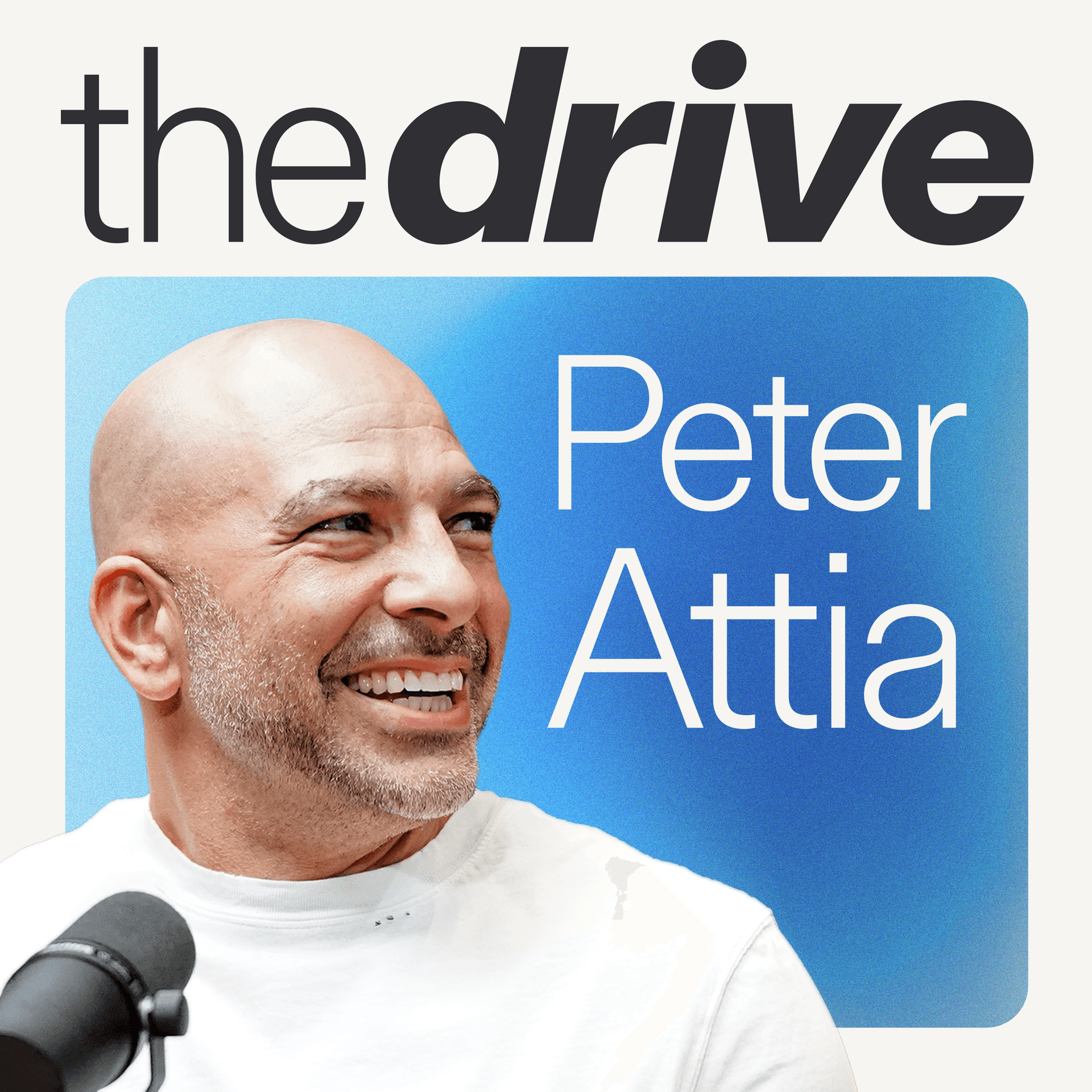
In short
Podcast Episode Notes
Title
The world’s most important doctor to millions in the war-torn and remote villages of Sudan | Tom Catena, M.D. (#40 rebroadcast)
Host
Dr. Peter Attia
Guest
Dr. Tom Catena
Episode Summary
In this episode of The Peter Attia Drive, Dr. Attia speaks with Dr. Tom Catena, a missionary physician who runs the Mother of Mercy Hospital in the Nuba Mountains of Sudan. Dr. Catena discusses his extraordinary work in a remote, war-torn region where he is often the only doctor available. The conversation explores the stark differences in healthcare between Sudan and the West, the resilience of the local Nuba people, and the profound lessons to be learned from their way of life.
Key Themes and Discussions
Introduction to Dr. Tom Catena
- Background:
- Dr. Catena has been working in Africa since 2000, initially in Kenya before moving to South Sudan in 2008.
- He is the only physician in the Nuba Mountains, serving a population of approximately 750,000 to 1 million people.
The Hospital and Its Challenges
- Mother of Mercy Hospital:
- The hospital operates with extremely limited resources.
- It has grown from a small facility with 15 staff members to 270 staff, including trained local health workers.
- Current Challenges:
- The region is seeing renewed conflict and violence, impacting the healthcare system.
- Dr. Catena describes the logistical challenges of running the hospital and providing care.
Healthcare Disparities
- Comparison with the West:
- The Nuba people face a different set of health challenges, primarily infectious diseases and trauma, as opposed to chronic diseases common in the West.
- Death and Disease:
- Discusses how the Nuba people tend to die from infectious diseases and trauma rather than lifestyle-related diseases.
Dr. Catena's Experiences
- Learning Surgery:
- Dr. Catena learned surgical skills on the job, earning the trust of the local community.
- Trauma Cases:
- Shares harrowing stories of trauma cases, including those affected by bombings and injuries from the civil war.
Emotional and Psychological Impact
- Coping Mechanisms:
- Dr. Catena discusses how he copes with the emotional trauma of his daily experiences, including witnessing suffering and death.
- Resilience of the Nuba People:
- Despite their hardships, the Nuba people exhibit a sense of community and resilience that inspires him.
The Role of Faith
- Dr. Catena emphasizes the importance of his faith in maintaining perspective and finding meaning in his work.
Call to Action for Listeners
- Support for Dr. Catena's Work:
- Listeners are encouraged to consider how they can support initiatives in Nuba, whether through donations or advocacy.
- Awareness:
- Encourages understanding and awareness of the challenges faced by communities like the Nuba people.
Conclusion
- Dr. Catena articulates the profound impact that one individual can have on the lives of others, emphasizing the importance of compassion and community in healthcare.
Key Takeaways
- Human Resilience: The capacity of the Nuba people to maintain happiness and community spirit despite suffering is a central theme.
- Healthcare Disparities: The stark differences in health outcomes between war-torn regions and the West highlight the need for targeted humanitarian aid.
- Personal Impact: Dr. Catena’s personal anecdotes underscore the emotional toll of working in a conflict zone and the importance of individual connections in medicine.
- Call for Action: There is a continual need for support and advocacy for those in underserved regions.
Resources
- To Support Dr. Catena's Work:
- [African Mission Healthcare](https://africanmissionhealthcare.org/donation/catena/)
- Watch the Documentary: "The Heart of Nuba" for insights into Dr. Catena's work.
- Learn More: For further information on similar humanitarian efforts, visit the websites of organizations mentioned during the podcast:
- [Catholic Medical Mission Board](https://www.cmmb.org)
- [Aurora Prize Foundation](https://www.auroraprize.com)
Closing Remark
This episode serves not only as a testament to the resilience of the human spirit but also as a clarion call for collective action in support of healthcare in crisis-affected regions.
Written by AI. May contain mistakes. Listen to the episode to check what was said.
Transcript
Automatic transcript. May contain errors.0:10Hey everyone, welcome to the Drive Podcast. I'm your host Peter Atia. This podcast, my website and my weekly newsletter, all focus on the goal of translating the science of longevity into something accessible for everyone. Our goal is to provide the best content and health and wellness, and we've established a great team of analysts to make this happen. It is extremely important to me to provide all of this content without relying on paid ads. To do this, our work is made entirely possible by our members, and in return, we offer exclusive member -only content and benefits above and beyond what is available for free.
0:46If you want to take your knowledge of this space to the next level, it's our goal to ensure members get back much more than the price of the subscription. If you want to learn more about the benefits of our premium membership, head over to PeterAtiaMD .com forward slash subscribe. Welcome to a special episode of the drive. For this week's episode, we're going to be rebroadcasting my conversation with Dr. Tom Ketena, which was originally released in February of 2019. Prior to interviewing Tom, I had known about him for three years, but this interview was the first time I met Tom in person. And it's actually the first time in my life that I was ever nervous prior to meeting another human being.
1:27Of course, this is incredibly ironic because when you meet Tom and this of course will come across in the episode, he is quite simply the most humble person you can imagine. But I see in Tom what I consider to be the greatest of any qualities or characteristics in a person. And it really humbled me to meet him that day and to continue to get to know him better and better over the years since that time. Since about the year 2000, Tom has been a missionary physician in Africa, initially working in Kenya, and then in about 2008, he moved to a region of South Sudan called the Nuba Hills, or the Nuba Mountains, where he continues to take care of about three -quarters of a million to a million people.
2:08At the time, he was the only physician in the area, and there's a single hospital there. It's hard to describe how few resources he has to run at. This is something he'll explain in the podcast. It's really nothing short of a miracle. As an update to Tom's work, after several years of relative calm, Sudan is again besieged with conflict. This time there is fighting between factions of the government. This civil war has inflicted widespread damage across the Sudanese health system. However, even with all of this, Tom's hospital is still functioning and caring for the wounded. Not only that, but the hospital now has its own clinical training school, which has 19 physician, assistant students, and 30 midwife students.
2:49In 2008, when the hospital was founded, there were 15 staff members, including Tom and a few expatriate Catholic nuns, and the local Nuba were not formally trained at the time. As of today, there were 270 staff and over 50 formally trained Nuba health workers, including nurses, pharmacists, laboratory technicians, and anesthetists. And the first woman doctor from the besieged area of the Nuba mountains is now also working with Tom. In my conversation with Tom, we talk about a lot of things. We cover some of the unimaginable suffering that he sees and how he himself copes with death and copes with being in a situation that I certainly don't think I could be in and I suspect many of you listening would relate to that.
3:29We talk about a crisis of purpose. I think it's easy to look at what Tom does and feel sorry for him or feel sorry for the people that he serves, but I must admit I came away from this interview actually feeling more sorry for us in a way. And Tom so eloquently, without judgment, explains some of the differences between people with all the privilege in the world, like most of us listening to this, and the people that he serves. We also talk about the sense of community that exists in Nuba. And what you start to realize is that the way we die in this country and the way that we live in this country is so different from the way that people live and die in other parts of the world.
4:02It's not surprising that people there don't die from complications of type two diabetes, but instead they die from infectious diseases and trauma. There's also a more subtle point here, which is that we are in many ways prisoners of our own world and our own mind and our own possessions. Tom's work is so important to me that I want to be sure anybody listening to this can get access to all the notes that we're going to put together on this topic. And as such, for this episode, the show notes will be free and available to everyone, including those who are not subscribers. Lastly, and perhaps most importantly, if anyone is curious about how to support Tom and his amazing work, we will have a link at the top of the page of the show notes where you can give directly to the work Tom does.
4:43My wife and I have been giving to Tom for about six years now and I can say that it is unquestionably the highest ROI money that we contribute to any cause. In other words, for every dollar we give, we really have a sense of how it's being used and how it is changing lives. So without further delay, please enjoy or potentially re -enjoy my conversation with Dr. Tom Ketana.
5:13Hey Tom, thank you so much for making the time to come over here today. It's your pleasure. Yeah, there are a few people that would be giving up more that they deem important work than you. So I know your time is tight. How often do you come to the US? Well, this is my first time out in more than three years. So, last time I was in the US was November 2015. I was here for about five days. I was in my hometown of Amsterdam, New York. And it wasn't much of a trip. I was, you asked about malaria. I was sick as a dog malaria. So I was like in bed with malaria the whole time. The last day I felt a bit better just in time to go back to Africa.
5:47So it's been, it's been a long time, setting back. You grew up in upstate New York. Yep. Your pedigree is like this star, right? you went to Brown, you played football, you went to Duke Medical School. At what point did you realize you wanted to do something a little different to vis -a -vis working outside of the US, for example? This desire to do this kind of work really was planted when I was in college, when I was at Brown. And I always wanted to do some kind of mission work. And that term has several connotations, but I wanted to be a missionary. Whatever that meant, I wasn't quite sure what meant at the time, but I just had this idea.
6:21I went to work in the cultures and the society, do mission work, but I was as you, a mechanical engineering major, and that didn't really fit with doing mission work. This was in the 1980s, and most of the jobs then were in the defense industry. They were, you know, they were good jobs, but I didn't really wanna do that kind of work. So I graduated college and kind of floating around for while I was offered a job by GE. Working with they were kind of nuclear submarine program. It would've been a really good job, but I just wasn't interested in that kind of work. And number one day it was kind of odd.
6:51It was coming back from my great aunts funeral. I was with my brother Felix and I did just kind of popped in my head. I should go into medicine because I could, if I do that, then I could do mission work. And you know, I'd like the sciences, I could stay in the sciences, do mission work, help people. Just kind of that general idea. And it ended up going to medical school and kind of kept that desire to mission work. And that kind of evolved into wanting to work in Africa. work with people that don't have a lot of options for healthcare, you know, 15 years later ended up in Sudan. So you started out in Kenya, is that right?
7:23Right. So we don't want to finish medical school then I did five years in the US Navy, I didn't even scholarship for medical school so I'd have paid that time back. Then went to my residency, I did family practice in Terro, Indiana. Now it was time to kind of be free and do what I want. So I thought, well let me just go and let me do this thing that's been kind of an itch for so many years. So I teamed up with Catholic Medical Mission Board and they said, okay, we have an opening in Kenya at this mission hospital. Maybe go there. It's okay, I'll go for one year. I'll see what goes. If I like it, maybe I'll stay longer.
7:56Otherwise, me and I'll just come back and start a practice and went down to Kenya and fell in love with the place and decided to stay. What was the first thing that you remember when you got there as far as how different this was from the way you had trained? Because you did your residence in the United States, right? Right? Did my residency in the US and I did family practice And the program I went to was kind of geared towards rural health. So I thought, okay, if I want to do admission medicine, I've got to be doing more than just kind of outpatient office stuff. I need to do something with a little more me to it.
8:24So, you know, a little bit of obstetrics. We did a bit of surgery. Mostly just these sections. So when I first got there, I think what struck me was just the volume of patients. I mean, it was a resident. And, you know, in clinic days, we'd see like five or six patients, you know, and get all every little detail down in each one. And now, I mean, in this rural hospital in Kenya, and I mean, just seeing 50, 60 patients, huge numbers. The clinic, the wards are full. You go do a ward round. I was in charge of the adult ward. And there were, at the time I thought I was a huge, I mean, like 30, 40 patients there.
8:59And I was responsible for all of them. It's just this year volume of patients you had to go through every day in the variety of diseases. So not only the tropical stuff, which I didn't know much about, I mean, here's malaria, TB, Lychmoniasis, all this kind of stuff I had no idea about. I had to learn about when I was there. Learned to thank God some, a couple more senior doctors there that I could learn from. But just a volume of patients and the variety of diseases you had a face. So what year did you get to Kenya? I arrived in Kenya January 17th, 2000. That's so interesting. I arrived at NIH, when I was in medical school on January 17th, 2000.
9:36No way. Yeah, that was, which was NIH, being at NIH while I was in medical school was one of the sort of more formative parts of my experience. So how long before you went to Sudan and what led to that transition, I'm trying to think of my geography, right? Kenya is south of Sudan, correct? Sort of southeast of Sudan? South, right, south of the bit east, exactly. Okay. And much more stable, right? I mean, Kenya is a relatively safe place to be. Right. Sudan is not, right? It's divided into these provinces and my the one that got all the attention was Darfur Which is the furthest west correct exactly and that basically was a war zone Right, I mean a killing field right so Bashar was basically killing his own people there Right, so to go from Kenya to Sudan.
10:23What were you thinking? I think maybe the modus operandi at my life is always looking for was the opposite of greener pastors I'm looking for browner pastors When I was there in Kenya, this was, as I said, I got there in January 2000. The Civil War in Sudan was really raging at that time. And I was in Kenya learning a ton of stuff, really enjoyed the work. And I kept hearing about Sudan, the Civil War in Sudan, and how it's so terrible. And the conditions there were terrible. And there was such a lack of any kind of health services. I thought, man, I'd really like to get involved in that struggle just to go and work with the help of people there.
10:59just because it was so, health facilities were so limited. I thought that's kind of the place I want to go to. So I had this general thought. This is 2000, that's in 2002. Now, it's been June of 2002. I left my first posting, which was in a real place called Motomo, it was there for two and a half years. I went up to Northern Kenya, place called Turkana. That was at the Kakama Mission Hospital, which is up in the Turkana Desert near the refugee camp. A woman named Diedra Burns. So Diedi was there, I think her first time up in Turkana. And I was talking to her. She's an American. She was in a kind of short term mission there.
11:30She's a surgeon and a family practice daughter. She did both, but she was doing primarily surgery. And she said, look, there's a bishop I know is Bishop McCromgacese who was building a hospital in Sudan. I think he might be interested in going there. And that's, I say, whoa, that's exactly what I've been thinking about doing, you know, for the past couple of years. It's back to 2002. So she said, look, he's got an office in Nairobi. He's living there in exile. Maybe you can make contact with his office because I was due to go to Nairobi and start working there. Anyway, to make a long story short, I ended up working in Nairobi, linked up with his office and we started kind of making plans for the hospital and how it runs, staff who would need all that kind of stuff and then took six years, but six years later, who funded the hospital?
12:07Is all funded through the Catholic diocese? I see. So as a Catholic diocese of Elabade, Bishop Gassiz was the Bishop of the Elabade dioces and he and his office were able to get funding through the church mechanism to fund the hospital. So now it's oh, 809 and that's when you go. Right, so I went to New mountains arrive there March 10th 2008 was there landed there in the months. Tell the listener a little bit about where Nuba is. I mean I know it's in the southern part of Sudan. It's to the east of Darfur. But it's pretty rugged country isn't it? Right so the new mountains is probably one of the most remote places in the world.
12:44It's a region which for many years in Sudan was kind of kept off limits before when Sudan was a kind of a colony was under the called the Anglo -Egyptian condominium, partly kind of administered by UK and by Britain and by Egypt. They decided to kind of keep the new besiefer. These people have a unique culture, and our new people, they didn't really allow a lot of open tourism or people to go in there, it was kind of a closed area. So they really kind of have maintained this separateness and this isolation over centuries. It's difficult to reach. It's semi -arid, It's got this thing in rainy season, it's got a dry season.
13:21But more hills, they aren't real high mountains, but sort of, you know, 3 ,000 -foot hills, that kind of range. My history is not great, but I sort of remember that basically Sudan was granted sort of, I forget the term, but when you're given your independence for a lack of a better word, that would have been in the 50s, right? Right. Okay. And then, what was the religious sort of map of Sudan? And did that figure into how it was divided? And was that partly why Nuba was, was it religiously diverse? Was it mostly Muslim, mostly Christian? Yeah, you know Sudan is a very interesting place. So you've got, it was one country up until 2011 when they divided the North and South.
13:59Now, they will just make it in the North. So North of Nuba Mountains, it's primarily Muslim, almost all Muslim in the North. The South is primarily Christian. Nuba is right in the middle. And interestingly enough, Nuba is a mix. It's about let's say half Christian half Muslim and everybody's an animus but half our Christian half our Muslim and The Nuba are unique. I think a unique tribe in the world where you have Families which are mixed of Nuba you have Nuba Muslims and Nuba Christians and they there's no conflict amongst them For instance my wife is is a Nuba Her father both her parents when they were born.
14:36They were just followed the traditional legends the the Christianity and Islam had not been introduced to the area. Now as they got older, our father became Muslim, mother became Christian, they married her father's a pligumist. So two eyes, both eyes are Christian. Their oldest son is a Muslim. The rest of the children are Christian and nobody's really bothered by this. That's in Nuba. Now the country itself, this difference between Muslim and Christian was really a big issue in the previous civil war. You know, we had sort of the southern African people that were mostly Christian against the northern Arab people They were all Muslim fighting each other and there was very much a religious context to that previous civil war and also in the mountains the new people Join the southerners.
15:19They're all African and new but they join the southerners fighting the northern sort of Arab Muslim people in the north And in the 1990s there was a jihad against the new but people so there was a real genocide in the 1990s against the new but who issued this jihad. The ideologue behind this is a guy who just died last year. His name is Hassan Al -Tarabi. And Trabi was a member of the Muslim Brotherhood, very bright guy with a Sorbonne in Paris and was Kevin intellectual, but really kind of an evil genius. If I can use that word, he was a real ideologue in the Muslim Brotherhood. And he managed to convince some of the imams in the north to sign off a Fantua to allow jihad against the Nuba.
16:01And many e -moms rejected it. They say, well, you can't do that. It's you know, even though he'd be killing Muslims within Newbu. Right. Exactly his response this was Okay, you can have a jihad because the Christians are our fair game in the jihad and then the Muslims are apostates from the religion because they associate with Christians some of them He poured some of them drink local beer. They're not real Muslims like this thing with The new bar very much communal and to have Muslims and Christians together at functions It was an nothing but the him the fact we could have Christians and Muslims in the same family Was a huge scandal to him He just couldn't tolerate that kind of stuff.
16:35So he said now these guys are also fair game because of that real Muslims So what year was that Fatwa issued that was in the I Think in the early 90s So Bashir was already in power right his coup was like late 80s, right? He took power in 89 Okay, and this guy Trabi Helped him in this coup. He was kind of the brains behind the coup And Trabi, I mean, he was kind of a power -hungry guy. He said, okay, he figured if he helped Bashihr, getting the power, but she was a military guy. And he thought, okay, if I help Bashihr, getting the power, I'm much more intelligent than Bashihr. I'll just kind of find a way to get rid of him, and I'll take over.
17:12And Bashihr said, look, I'm the one in power. You're not taking over. So he kind of always kept Trabi at a distance. And there always, he was always throwing Trabi in prison afterwards because Trabi started speaking out against him. He put him in a quote -unquote prison, than maybe, you know, living in some luxury apartment in Cartoum. But they kind of were at odds with each other, but probably was the ideologue behind a lot of this moment. He's doing that invited Osama bin Laden to Sudan in the early 90s. So bin Laden lived in the right. When bin Laden was exiled from Saudi Arabia, which is, yeah, in the early 2000s.
17:40Right. Well, that was before then he invited, what's his name? He invited bin Laden to Cartoum. So he lived in Sudan for a while, and a lot of, you know, a kind of a lot of training camps in the desert in the north of Sudan. I had totally forgotten that fact That's the chapter of Volkhaida that I'd refer on. So you basically have a bunch of incredibly evil people who are deciding to kill their own citizens effectively. You got there in, oh, eight, you said it on nine. Oh, eight. So he arrived March, 2008. So historically that was the interim peace period. So since they got independence in 1956, Sudan's been a civil war.
18:18Various parts have been a civil war for almost the entire history. That's, it has 60, that's how many years, 62, 63 years. Most of the history they've been at Civil War. So this was one of the brief periods. Actually, it wasn't even priesthood because the Arphora started in 2003. The Arphory Rebels started their fighting as the government doesn't freeze. So this wasn't, the whole country was not a piece of the time, but the big war between the South and North, the peace agreement was signed in 2005. So when we arrived in 2008, the peace agreement was still an effect, and there was no active fighting.
18:48And then we were kind of waiting for this referendum the take place referendum the way the peace agreement was signed up was submitters so South Sudan would have the choice for a self -determination and that will be done by referendum so that people actually have a vote straight up vote the majority vote to secede they secede the majority vote to stay and stay as one country they stay now 2011 they have the vote in like 99 .99 % vote to secede from the north so South Sudan separates in the peace agreement I'm sorry is Nuba considered south or north in this cessation. Right, this is part of the problem because in the peace agreement, Nuba was separate.
19:24Okay, and what they said was, okay, south Sudan will have it for our friend. The Nuba Mountains was not included as part of south Sudan. Nuba and Blue Nile were separate regions. And they said, these two regions, they're called the two areas, they'll have what's called a popular consultation, which was a very vague system where there'd be committee set up, they would go and they would talk to people in the villages and kind of get their opinions on things and see what they want to do. If they want to separate, stay. It was very vague. And I think it was purposely vague, because the government knew it was kind of a bargaining chip for the North to allow South Sudan to have this referendum.
20:00It's OK. Because they knew in the end they would keep the mommons. Because this thing was too vague. They would be able to manipulate it enough. They would keep the mommas on their side. So South Sudan separates. There are elections in mommas in 2011 and May. The candidate for Bushir's party, of course, So when's the governorship in the parliament? This is a side note. Before that election, the guy's name is Ahmed Haroon, who was running against the guy named Abdulaziz. Anyway, Ahmed Haroon was the candidate for Bixir's party, that's from Congress party. And before the election, Bixir said, Ahmed Haroon is our candidate, and he will win this election, whether by the ballot or by the bullet.
20:37So going into it, it doesn't look like it's gonna be a free and fair election. Right, and Bixir, at this point, does he already have basically a warrant out for his arrest? Right. So he's got the warrant for his arrest. That was I think 2009. I think I'm at Haroon also is Indicted by the ICC for crimes. He was one of the the architects of the genocide Genocide, you know, tar four. So I'm at Haroon who's our governor As under is indicted by the ICC by she isn't that it by the ICC It also was the defense minister wasn't that it by the ICC. So I'm gonna her wins They go and say okay now our party is there in South Kordafan State in the mountains There were still SPLA soldiers, like Southern soldiers living in this region.
21:16The Northern Army came and said, you know, did a forced disarmament of these SPLA soldiers. And that's when violence broke out. So June 2011, June 6th, 2011, Civil War breaks out in New Beamountains against the government. Now I've heard you speak about this in the past. It was overnight that most of the staff in your hospital left. So prior to that, leading up to that, the referendum and that the breakout of war, you've got this three -year period where you're in the hospital, you're working there. As far as Nuba can be tranquil, this is the greatest tranquility you've seen. The staff is what?
21:52It's you, it's what else. Right, so at this time, we started the hospital. March 2008, we went there with about eight expatriates, including myself. So I was the only doctor we had a few nurses and esotist, the lab person. We had those eight ex -pagerates. They were mostly from, they're often Kenya or Uganda. Those eight ex -pagerates myself and we had 15 local staff, Nuba. And the Nuba, I think the most educated person, had finished primary school. They were not nurses. They were just kind of local people that could read and write a bit of English and could speak English. So they had to be taught everything.
22:26We first started, they couldn't weigh a patient, they couldn't take a temperature, let alone give an injection or start an IB. Anyway, with time we got these guys trained up a bit so they had some pretty good skills. A lot of most of that was done by these ex -patriate nurses. Now we still kept ex -patriates, but over time we added more and more on the job trained people. We kept adding more primary school graduates or eventually got a few secondary school people starting training them on the job. We didn't have any trained numer nurses, Nuba nurses by the time the war started in 2011. So now, War Star is June 6th to 11th.
23:00By June 16th is 10 days into the fighting. Things are getting pretty hairy. There's a lot of fighting within Nuba, Arab bombardments all the time, and the diocese. And this is all from the North. The North is right. Fighting within Nuba mountains. The resistance is posed by whom. Is it former Southern who have not seceded or are trying to basically, are the North and the South now fighting for Nuba? Right, so what happens is the South Sudan is totally separate. Got it. So within Nuba Mountains, you've got a lot of soldiers that were southern soldiers, S .P .A. soldiers, a lot of whom were Nuba.
23:33Most of them were Nuba, but you also had other southern tribes in their mountains, kind of left over from the previous conflict. And they were there in the barracks. So all those kind of trapped S .P .A. soldiers are fighting the Sudan army. Now they call themselves instead of S .P .A. called SPLA North. So from that point forward, these guys are called SPLA North. They have kind of a new identity as a separate military force from the SPLA, which is in South Sudan. So fighting is going on, air bombardments. June 16th, it dies. It says, look, we're having we're setting a plane in and this plane is in a command to evacuate anybody who wants to get out of there.
Read the full transcript
24:11Okay, because the plane was going to go to Uganda or to Sudan. The plane was flying into Newman Mountains. Oh, okay. To pick up whoever wanted to get out and they would get out and leave. Now, this was a bit dicey because at this time there were a few flights coming into the mountains, mostly getting people out, but they had to change the airstrip. There were a few airstrips around, but they would give the location of the airstrip the last moment and they would have a code name for it because if there were a lot of spies around and if the North found out they would come with their bombers and come and bomb the airstrip.
24:40They would try to bomb the plane on the ground or bomb the people that were trying to get in the plane comes in and this is like we come in, we land, we have, we have, we, and we're taking off in 10 minutes, you better be at the air strip waiting, get your, get your butts on the airplane, we have to be out by 10 minutes, we'll see you guys will come in the bottom. And they do this at night, I'm assuming. Now they did it early, early in the morning, because you can't, you know, there's no lights or anything for the planes to land. So it's, it's all just by, by sight, they would come in the morning, land, and they would get out.
25:09So, you know, all of our expats that were there with us, they had all the knowledge. I mean, our anesthetist, our lab person, pharmacist, the nurses that were warden charges. Those were doing most of the work and doing the leadership. They all decided to leave. Now, did you all sit down together and have this sort of heart to heart, which is each of you had to make a very difficult decision, which is you feel committed to this work you're doing, but now your life is at exponentially greater danger. Right. So, yeah, we met with everybody. We had a group talk and we met individually and said, look, this plane is coming in.
25:41This is the last that the diocese can send in. This is it. Once this plane comes and once it leaves, you might never get out of here. Because you have no idea what's gonna happen the next day. You don't know if the sitting arm is gonna overrun us. And this is the last chance. How did you think about that? I mean, was there a moment when you thought, maybe I should leave and go back to Kenya or go to Uganda or go somewhere else? I mean, what was that thought process like? Right, so you know, it's encouraged to leave by some different people to look. Why don't you come out? You stay in Kenya for a while then with things blow over and you can go back when it's safer.
26:19I Thought and I thought geez, you know, first I mean, you have no idea. This is just total chaos You have no idea what's gonna happen. What I did know is that we were getting people wounded or All the instructions I ever coming in all the time, you know, so I knew if I leave It's not like they can go somewhere else. There were no other hospital surgical capability. There wasn't a single one. There was a small hospital nearby, run by a German group, like I do some inpatient stuff and outpatient and some minor stuff. But really if somebody needs a C -section or something more serious, they would just die.
26:50And that says nothing of the casualties that are going to start coming in as a result of this attack. So all these people that came in that were wounded would just die a miserable death. And I knew that. So for me it was a very easy decision. I thought, you There's no way I can, in good conscience, leave this place and go out. It was a very, very stark reality. And to be honest, there was not a difficult decision. I think the sisters, that were there, the two Cumboni sisters, that stayed, the priestess, they were all, we're of the same mind, we all thought the same thing. Let's just stick it out, we're here as missionaries.
27:22Let's do what we're supposed to do and take care of the people the best we can and come what may. We have faith in God, we'll see what happens. And it wasn't, we didn't feel like it was some big thing. It was just like, well, no, we can't go. We got stuff to do here. And the other expats said, look, I've got a family, I've got this, I've got that. And we said, look, we're not going to hold anything against anybody. This has to be a very individual decision. If you guys want to go, we'll find a way to keep going. Don't worry about it. So we want to give them full latitude to leave in peace and not feel they are abandoning people there.
27:55So I think everybody is pretty much at peace with the decision. The expats left. And I mean sure enough, they left June 16th and morning, June 16th. They left around six in the morning. They had to get out there early because they had to get the you know Get this plan and just get out of the place and we had to keep everything secret. So all of our staff didn't know these guys Were leaving we had to keep it a secret from everybody and they up and left and then the staff came to work in 730 And so you you had an anesthesiologist that was one of the people that left right? So talk to me about 10 o 'clock on that morning the first time or whatever the first surgical case comes in, who's running anesthesia?
28:32That was the biggest problem. So these guys leave around six. At a clock, casualty start rolling in. People that were, there was a bombing from one of the Sudan Air Force planes called an Antonov. That has barrel bombs. They bombed in a location near us. Maybe an hour, a couple hours away. We hear these in the film, The Heart of Nuba, which we'll talk about in a few minutes. Right, so like two hours later, all these mangal bodies start coming in. Yeah, describe what this, I mean, so I did my training in Baltimore. In many ways, trauma was a feature of the training program because if you're training in surgery, you know, one of my mentors said, you know, to be able to train in a place like Hopkins is a great honor because you really get to understand surgical anatomy in trauma.
29:13And it's penetrating trauma in the United States is mostly gunshot wound and stab wounds. But I have no idea what you were seeing. So explain to me what things you actually saw. What types of injuries are you seeing? Right, so this was very start because when I turn off bombs, they're a huge shards of metal. I mean, weighing, you know, 10 pounds. I've got a bunch of the scraps. I have them as a souvenir, Megan Nuba. So imagine a scrap of metal weighs 10 pounds, red hot, just going through your body. So it slices off legs, slices of arms, cuts through people with just massive tissue loss and massive trauma.
29:52So I'm Air One Young lady, she was 16. Her name was Urshaleem, which means Jerusalem in the Arabic and her arm was just totally mangled. I mean just shattered. She came in, her cousin came in, his hand was blown off by the Antonov Shrapnel. So these guys both in abutations. The girl, we did a dysarticulation of the shoulder. So So we had a couple of our, on the drug train nurses there and they had done something, they've been taught how to do spinal anesthetic by the anesthetist. So they've been told that they couldn't do GA. For the listener GA general anesthetic, they couldn't intubate and put the patient fully to sleep.
30:27And I had never intubated a patient before. I remember when I was in the military, we intubated and intubate goats, for as part of our ATLS training. I think I remember. But I never done it either. It's like, what the heck? So I was so afraid, I'm like, what am I doing with these people? You know, so I remember reading the book. We have a book there that kind of basic anesthesia book so I bring you through the protocols Okay, first give some ketamine you knock them out with that they go to sleep give it a batch of pain You give a succinyl co -ing to paralyze them Intubate and you give pancoronium.
30:54You have a hella thing anesthesia put the tubing's blah blah this high intubate Like okay, okay, let's let's do it So we took some guys back and you know I would go and Give the drug I had a nurse there at kind of charge. It's okay. Give the ketamine you would push it in push the succinyl of the sexual co -ing out in debate. And I guess I should explain for the person listening to this because we use these terms so commonly. So intubation is a very important step where if you screw this up, you're gonna kill a person. Literally, you will kill them, but you have to put a breathing tube into the endotracheal space.
31:27So this is now to allow a machine to breathe for someone while they're under anesthesia. And we do these things in medical school. We did them in residency. A lot of our critical care training required that. But I have to tell you, and I was not trained as an anesthesiologist, I never intubated somebody without being incredibly nervous because it's so easy to put that tube accidentally into the esophagus. And you think you're doing it right. And all of a sudden, you know, you get the tube in, you hook it up to the ventilator, you think everything's going well. And by the time you realize you're providing oxygen to their stomach instead of their lungs, it can be too late.
32:06And then of course the panic that ensues is often what kills the patient. Right? Because you're getting nervous and then you can't do it, you're starting to shake. The problem is, as I said before, my training was family practice. I did an internal medicine internship. You know, they've family practice. I never intimidated somebody. I never did anesthesia rotation in medical school that was not part of our training at all. So I was very green with this. Anyway, by the grace of God, managed to get the patient
32:35and it's got a set of bellows. It's like turn of the century kind of stuff, turn of the 20th century. So, you know, intubating, so we have to, you have to manual ventilation for the patient. We're throughout the whole surgery. Yeah, throughout the whole surgery. As long as our paralyzed, you've got to ventilate manually. Usually with the halithing, after you manually ventilate for about 20 minutes, they can breathe on their own. And it's a bit of an arc to try to keep them under enough, where they can breathe on their own. than their own, but they're not in pain. So it's a big arc to this kind of work, but it's all manual.
33:04I just have to go off on a tangent for a moment, which perhaps only the people listening to this who have medical training will appreciate what you're saying. I'm guessing you don't have blood gases. No. Okay. So you can't measure a patient's PAO2 or PACO2, and yet your anesthetist has to figure out how to ventilate, which again, means how much oxygen the person needs and how much CO2 you take off and if you screw either of those two up, you will kill someone. Right. And if you told me to walk into mass general or NYU or pick your favorite hospital and said, Peter, we're going to do everything for you.
33:43We're going to intubate the patient. We're going to do this. All you have to do is be the guy that manually ventilates them. I wouldn't be able to do that. Like I would I would overdo it or underdo it. There's no way you'd hit that sweet spot. Yeah. You'd cause an alkylosis acid. You would just you'd and then to be able to not have the laboratory tools to know when you're off the rails. In those days, we didn't have a pulse ox. Now we have a pulse ox, similar to which can measure the percyan oxygen saturation. That's a saturation blood. That's how we had the pulse ox. Some of this stuff, maybe ignorance is bliss because you can't measure it.
34:15So you just hope and pray that things are going okay, but managers got the guy into the... I mean, you couldn't do veterinary medicine like this in the United States. Right. Yeah. It was pretty hairy. We managed to get through. And this one, eventually we got in a nested hist to come. This was after about a month or two. Well, and in that month or two, what types of casualties did you see? Oh, I mean, everything. abdominal trauma, lots of lecturing. We did a number of general anesthetics during that time. We had a baby that came in with interception. This was the worst case. This was a nine month old baby who came in and had an interception, which is kind of an intestinal obstruction.
34:49Yeah, I explained what that looks like, the telescope being part of. Right. So interception is when the intestine telescopes on itself. And basically it causes a blockage of the intestine and then when the longer you delay, that intestine can die and the person will die of the baby will die from infection. And we made the diagnosis and I'm just like, oh God, you know, we supposed to do with this kid. And we take the baby to the upper room and say, we got to try something. So I'm intubating an adult is hard, a baby is really, really hard. We managed to get the kid intubated. So I didn't pay the baby, started on the ventilated belly thing.
35:24When I scrubbed for the case, came back, we opened the baby up, did a ball resection, put it back together, closed the baby up, and he did great. He's, well, how does the baby now? He's, why baby? He's eight years old now, eight than years old. So he's cruising. But that's kind of one of the many miracles. And when these bits of shrapnel are going through people, I mean, you're seeing liver lacerations, you're seeing bolognjuries, hemonymathoroses, head trauma. I mean, give me a sense of the mortality. There are some cases that obviously just can't be saved. Right. Well, you know, tell you Peter, I think what happens, some of these people say, why do you have so many extremity traumas?
36:00Because there's the ones that make it into the ones that survive. So you know, the ones that get a really terrible trauma of the chest, they bleed out in the field. Because we're, you know, we're six hours. Sometimes these patients come a day. We've had people with penetrating abdominal trauma, with multiple holes in their intestines, come three, four days afterwards and survive. So imagine that. You're leaking feces into the abdomen for three or four days. So imagine how strong these people are. And they come and it's just a mess and you open them up and some of them pull through. You know, anemic dehydrated.
36:33They have an eaten in several days and these guys can survive. So some of the people are just tough as nails. But we get a lot of penetrating. I mean, kidneys get torn to shreds, liverlacks, massive kidney trauma, liver trauma. I remember one guy had a count of, he had 23 holes in his intestines that we had a, you know, a resect here, a resect there, stitched this one, and he just took forever. How did you learn surgery? Right, so, you know, I trained in family practice, and when I went to Kenya, we're doing a lot of, you know, tons of tropical medicine, a lot of obstetrical care, a lot of sea sections.
37:09But I realized a lot of the disease burden in Africa was surgically related, a lot of I mean a lot of it courses, tropical medicine, like you do all those things and say well a good similar half of what we were seeing was surgically related either just wound care, miscarriages, laparotomy's, imputations, kind of the one -of -the -mill kind of surgical stuff. There's a lot of it. So I thought I really need to learn how to do this stuff. If I'm going to stay here long term. So luckily where I've been, both rural Kenya and Nairobi, I met up with people that were willing to teach me things. So really it was like doing another residency.
37:41I mean I would, And there was nobody had a whole day in the operating room. And we would do tons of cases. And there was an American missionary doctor there, and they might Johnson. And so I'm like, we just sit there and teach me stuff. You know, I would do it just like you did in residency. I would do the case. He would assist me and just kind of walk me through it. There was a Kenyan surgeon there, Dr. Rucho. It was a fantastic. It was like a magician. He was not so hands on. But if he was always there in the operating room, so he would say, go ahead and start the case. I think I had a little bit of experience.
38:08He started the case. He had problems calling me. So I'd start open up, look around a bit. So, Cam, stuck with me and he would come in and look around. I'd do this to that, I'd do this in that and things would go ahead. Before you know it, you're doing thyroid and laparotomy and reciting bowel and stitching liver and taking kidneys out and doing imputations. And, you know, nowadays you just kind of want you to learn a few. You have a few skills you can add the next case, the next one, the next one. And I mean, it took, I was there for seven, half years in Kenya. It was like doing another residency.
38:36I mean, at some point though, you have to be making mistakes that are harming patients because even in our, and I say that not being critical, right? But just saying like, that's the nature of medicine. I mean, I think of every time I hurt somebody, even, you know, I remember once causing a hemonymothorax in a patient when I put a central line in them. It was my 500th central line. So at this point, you'd think I could do it blindfolded. And yet to cause that complication, which in my case, I'm lucky enough to have an x -ray to see that I've caused this complication, you don't even, I mean, you're missing so many of the basic tools that could act as sort of a safety net.
39:12So what was that process like? I think what I wanted to make sure of when I was in Kenya, I think those whole 7 .5 years I was in Kenya. I always had either somebody assisting me in the case or somebody in the room or in the next room over. So I think I was pretty well covered during that time. And by the time I was finished 7 .5 years, I felt pretty confident. I go, well, I'm my own and do surgery. I think it's this concept, you know, better than I do about 10 ,000 hours, you know, and I think in residency You have to look a thousand cases supposed like a thousand cases at least. That's like a minimum Yeah, maybe 1200 or something.
39:45Yeah, so I did you know, but time I finished my time in Kenya I've done but for you it's harder because you're doing a breadth of cases that like even if you took something as broad as general Surgery, I mean you're still doing basically orthopedic surgery as well and obstetrics right? Yes, a lot of urology there's a mix and I think maybe the trade -off is the surgery in Africa is much broader but less depth. Like we don't have any laparoscopic stuff. Of course we have many of these divinchey, you know, all that and all this high -tech stuff. You trade -off kind of depth of surgery for breadth.
40:21I felt after doing around 2000 c -sections and over a thousand other major cases, I felt okay. I think I can do whatever we're doing in Nairobi. I can do that, I think, safely in Sudan. I mean obviously, you know, we have complications and other problems. And there are a lot of limitations in terms of going into the case. So you tend to do more laparotomy because you don't have a diagnosis. You don't have a CT scanner. Right. No CT scanner. You don't exactly what's going on. To get a tissue diagnosis, it might take you six months. So you say, go, hey, let's do laparotomy and see what that thing is.
40:52That's your CT scan in the end. But that's about the best you can do. So I think what I always, what I try to do when I approach a case is, you know, the premium known known cherry first, you know, harm. So if you think you'll make the patient worse by doing this, like, okay, I'm not an expert doing this case. And sometimes I say, I'm not going to do it. You know, I won't, I won't do it. But if I think I really cannot improve this patient's health, I think, okay, this is too much of a risk. Sometimes they look, I just, I'm not really comfortable doing this. But usually I'll feel, it's okay. I think it's better if we try to do this operation.
41:24and I think we can be Beijing and improve and we'll go ahead and it works. I mean, it only works out pretty well. I was talking with my wife and my daughter a couple of days ago and about how we were going to be speaking today and they had so many questions. You know, we all watched the heart of New Butt together and one of the questions my wife had was how do you deal with exactly that type of situation you described, which is what we would consider, quote unquote, end of life here in the United States or palliative care. What do you do in a situation where somebody comes in and your judgment says this person is not an operative candidate, but also by not operating.
41:57They need to be palliated. I mean, they're not going to, they're not like, you know, they're going to walk home. How do you deal with that? And more importantly, I guess, than medically, how you deal with that, it's emotionally and how is that communicated to the community because you're still a foreigner, right? Right. Right. I was still a foreigner and it will always be one. So I would say we first started 10 years ago. people did not trust us. And it was incredibly nerve -wracking, something we just got here. People kind of have this, because these people have been traumatized and oppressed for so many years.
42:31They're not going to trust some foreigners showing up saying, is there to help them? So you got to prove yourself. Something, you know, it got into these operations. What if we have bad outcomes? You know, what happens? It was really nerve -wracking for all of us. And, you know, thank God, things went pretty well. We went ahead. So the issue with palliative care, you know, we try to just talk to the family, talk to the patients. They look, I think we can't do much for you. And as we have to go home, we'll take care of the pain and what the things we can do. One good thing there is the people, their expectations are extremely low.
43:05And I must say that negative, I'm saying a positive way. They don't expect, they don't really expect miracles. They want to be treated as a human. They want that human touch. They want to talk to us and talk to you and say, okay, what can we do? If you tell them, look, we can't do much. They're not saying they're not like demanding. They're not very demanding. Saying, no, you got to get something in Nairobi for a second opinion. They're very accepting. I think that's just because of their lives are very hard. They're not used to good outcomes. So I think first off, they're very accepting. So when you tell them, look, I think there's not much we can do.
43:37We often will talk to the relatives. Culturally, usually the relatives will say, well, just, you know, They don't like telling the patient, which is very different from here in the US. So we just talk with relatives and they're usually very accepting. They say, okay, we see you've done what you can. We'll take them home and we come comfortable there. They have some of their local traditional things they might try with the person at home. But they're usually very accepting of negative outcomes or bad news. When you're kind of at the edge of survival all the time, when you get this kind of bad news, it's not so shocking.
44:09It's like, well, yeah, that's what happens. People die, you know, and people have been outcomes, bad things happen to you. So it's not so unusual for them. You know, in the US, we're kind of anesthetized that everything has to be perfect. And we're not supposed to die. We're supposed to, you know, have this kind of outlook on life. It's a very different way of doing things. So they're fairly easy in that respect. They understand this stuff. You know, most people have some level of faith, whether a Christian or Muslim, they can accept this stuff in a theological sense also. It's not so difficult.
44:36When you showed up, how primitive was the extent to which people were receiving, I don't know how to describe the type of care, but there must have been local traditions and shaman and stuff like that. And at some point, you're showing up and you're coming from a place of science as sort of simple as you describe your work in medicine. It is still grounded in the fundamental principles of Western medicine. You use antibiotics, for example. you wash your hands before you operate. What was the landscape like as far as the other types of medicine being practiced? And are they still being practiced now?
45:13Yeah, they're still being practiced. So they're scope of medicine. You have kind of the local level in the home. And what they'll do is almost any febrile illness. So some kids got a fever, someone's got a fever. They burn the person. So everybody there, my wife included, they have burn marks. They look like cigarette burns. They're not cigarettes, but they take a round thing. putting the fire and they burn on the back of the wrist, the back of the neck and the elbows. There are certain points where they burn the person, to try to release the, whatever it is. The spirit or the spirit of evil humors that are causing the problem.
45:46And when they see that kind of smoke and they see the fat under the skin burning, they feel relieved, okay, the thing is gone, now and better. So they burn, they cut, a lot of people have cut marks in their arms or in the abdomen's where they think that'll also release things, they cut down to have cause some blood loss that'll relieve some of the, relieve some of the problem. And that's what you've done in the home. Usually by the father or the mother or the grandparents will do that kind of thing. That's kind of the local treatment. That is still, still practice less so than when we came, I would say.
46:15I mean, everybody, all of our staff have burn marks when they were kids. Now, we still see patients come with the burn marks. When it comes with a, with a simple malaria, they've been at home four days, they've been roasting the kids. It's like, why, you know, just give us a chance. Anyway, so burning, cutting, that's one level. They do have some herbal remedies that don't seem that prevalent. They were there, I think traditionally, some people still use those. And I don't know, you know, some they still swear by it. If you use the neem tree or this Kayla, this plant that they use for malaria, they still swear that thing works for that.
46:47A lot of kind of local fruits and vegetables they use for GI problems or other things. And those seem to work okay. And the third level is the what's called the Kujur, Kujur is like a Kankakashaman. And the Kujur is like the priest for the village. The traditional legend there is ancestor, kind of ancestor worship. It's communion with the ancestors. So if you're sick, if you have a problem, whether it's physical, psychological, whatever, you go to the Kujur, you have a little ceremony with the family, I'll get together. Kujur will talk with your ancestors and then kind of give you a report back saying, well, Well, your kid is sick because your goats wandered on this guy's land and ate his crops.
47:27So you need to make up with this guy, you're gonna go and give him something and then you pay the cajur or something and then this thing is kind of lifted. Childish get better. Those three things are kind of traditional treatment. The cajur is still very prevalent in the society and they still often go to the cajur and they still will often delay treatment when they go to the cajur. So how many people does your hospital serve? Catchment area is roughly a million. And we're from 70 ,000 to a million people. It's in our catchment area. And the physical region is around the size of Austria somewhere in that range.
48:02The people there, for example, how many of the people that you serve would understand what you meant if you were going to New York? Like, how big is their world? Well, it's interesting you've asked that. I mean, even the ones that have finished secondary school wouldn't have an idea. Look, if they ended up here, or I mean, it would blow their mind. Maybe I'll give an example. My mother -in -law is probably in her 70s. So we went to talk to my wife who was talking about writing a book. She started writing her book. And we went to my mother -in -law and we said, let's go and interview your mother as part of your book.
48:38You know, I can write about her life. My wife didn't actually know a lot of facts about her mother. They don't have that, you know, mothers and daughters there are not like buddy buddy, you know, the girls are you know once they Once they get wean from the breast they start working carrying water and firewood or anything else and cooking for the family so it's a talk to her mom and My wife asked her mother her mother only speaks the tribal language. She doesn't speak Arabic or English or anything else So he talks and she's talking on the tribal language saying do you know where Tom is from and she said she thought from it She says he's from Kenya And she said that for this place she can imagine right because she's heard of Kenya So in her mind anybody was not from new mountains must be from Kenya.
49:18It doesn't matter who you are You know, so that's the outside world and we say well, no, it's from America. Have you ever heard of America? No, she never heard of it had no concept of America Have you ever you know what an ocean is no concept of an ocean no concept of a lake No concept of Africa. She didn't know she was in Africa So what she knew was her local area, just a few of the villages there. She's been to Cartoum once. My wife's mother has leprosy. We've treated her for leprosy and they've been potatoed. I think all of her fingers at one point or other. She's really quite disabled. She got on the cartoon some years previously to get treatment there and not getting treated.
49:54But besides that brief trip to Cartoum, she'd never been out of that local area. A lot of my wife's siblings have never been out of this 15 square mile radius. You can't imagine the worldview. Presumably your wife also hadn't experienced things outside of that until she met you and What was the first time she left or traveled with you or the first time? Given especially that you don't travel much. Right. So the first time we traveled was after we married was just this past June We went to Armenia. So that was really her first time out of rural Africa. She been to you on nursing school But that was in South Sudan and a while which is I for For South Sudanese that they call it a city, but it's it's a village You know, it's a big village.
50:35So imagine we went from either of G camped out to Juba, which is the capital. I mean, Juba is more or less a city, but it's really not very nice. Then we fly from Juba to Dubai. And we were in the Dubai airport. Which I was just there a month ago, even for someone who's from the United States, the Dubai airport is an overwhelming... Yeah. I mean, it's terrifyingly huge. It's a city. It's a major city. So we get there and her eyes are the size of saucers. Has she seen that much electricity in one place? No, I mean not even close not even close. Has she seen fresh water to that extent? No, I mean I've tried to give she'd ever seen a tap.
51:16No, we had taps in the hospital We have a pump that pumps water up and we have some some taps in the hospital But you know flush toilets were you never seen before before all this stuff elevators elevators So that was one of the things we get in there We're at the airport. We get in this, you know, pressure button, this door opens, we get this thing in the press of the button, then the thing goes up. And we get off. She's like, what was that? So no concept of elevator. We got in the escalator. And she's like, falling over the place. We go to get off the escalator. She's like, what is the, how's this thing moving?
51:46I think when she was in nursing school and wow, I think they had one set of stairs. There might have been a second floor. But just the concept of walking upstairs is something strange, little moving staircase. So all these things were very new to her. Now we get to Armenia and I mean just being in a city. I mean the Air of Anna is a capital of Armenia not like New York but very different experience for her. Now she came to the US for the first time just this past October and I mean she was in Times Square. I mean I saw the ocean for the first time. She went to my brother lives in near Boston and North Shore Boston.
52:17So that was the first place she went to. First place she went to Boston and our hospital was getting an award by a group called Medicines for humanity which supports us and they were given some work for the work that our outreach team is doing. So nobody could make it. I couldn't go. My other staff couldn't go. So my wife went to accept the award on behalf of the staff. So she lands in Boston and the first thing she does is goes to the Harvard Club to get this award. It's a very opulent place. Goes to my brother's place. He's up in Rockport, Massachusetts. He's the ocean for the first time. He's a train for the first time.
52:51and goes to malls, to Walmart. She loved the dollar store. And my family just went crazy with her. They had so much fun being with her, seeing all these things for the first time through her eyes. And I mean, she's very, has a very common, infectious joy to her and they really kind of tapped into that. And it was really hard. And the flip side of that is we can sit here and have this discussion. And of course, most of us would be thinking, how amazing are all the things that they don't have. but I'll share with you a story that I suspect will resonate and you will understand it. This past Christmas, my daughter's school, each grade picks something they're going to do.
53:33And that grade decided that they were going to buy Christmas presents for all of the kids at the Sudanese Community Center in San Diego. And so they're basically all refugees. And this was very interesting because we had already watched the heart of Nuba, which was her first time even. I shouldn't know what Sudan was and she certainly didn't understand why there would be refugees leaving this place. So on the day that we take all the presents there and the kids have done an amazing job, right? They've bought like four or five presents for each and every kid there and we spend the whole day there.
54:09So we go, it's my whole family. So it's me and my wife, three kids. And our youngest is like a year and a half old. So there's another little kid there, a Sudanese girl, who's also about the same age. So the two of them are playing together, but you know, you feel like you got to sort of keep an eye on them because they can fall off the stairs or hurt themselves. So there's a woman that's holding the Sudanese girl and she's sort of keeping an eye on our son as well. And so that gives us time to go and do these other things and see the other kids and do all the other stuff. About four or five hours later when we're leaving, my wife goes over to the woman who's has been holding this little Sudanese girl the whole time and says, um, what's your daughter's name?
54:49And she says, Oh, I don't know. This is not my daughter. I don't, I don't even know whose kid this is basically. And, and we couldn't stop talking about that, right? Which was talk about a different sense of community. Yeah. Right. There was nothing odd to this woman who was probably 20 to just say, Hey, there's like this little 18 month old running around. I'm going to take care of her. And by the way, like she's taken care of our kid, too. Right. And so for as many things as they lack, they have something we don't have. Right. That types of the Peter something you always hear about the negative side of place like Sudan.
55:26People think of Sudan, what are the images? War, poverty, disease, starving kids. The positive side is not shown. And something that always stick in my mind. One is we'll have patients that come to us that it's a separate day walk to reach us. And on the way, like they'll start their journey and start walking. Now, nighttime comes. And the society there, you can stop in somebody's hut and it's not, you know, just kind of knock on them, whatever, or just show up and say, look, I'm going, you know, I've got a long journey. Would you mind if I kind of spend the night with you at a rest day? So that family would take this person in total stranger, give him place to sleep, give him food, get some water for them to wash.
56:07Take care of that night. The next day, I'll continue on his journey. Next day, stop another total stranger's place. That stranger will take this person in, give him some food, hang out. This next day, same thing until they reach the hospital. And this is the normal way of doing things there. The concept of community and what stuff belongs to you, what is a stranger, totally different than our outlook here. So when you're there, like, well, geez, who's really, really has it all? And who's doing the right thing? Which society's on the right track? It's really mind blowing. Well, especially for you, because I guess it's one thing to know nothing that, but you've seen both worlds.
56:48And I've read enough about you to know, I've seen enough interviews to know. I mean, correct me if I'm wrong, but you've described being more at home there than anywhere else. Right. Which I have to admit, Tom, when I watch the videos of that, the first thought that comes to my mind is not, I wish I was there. I realize that probably just speaks to me being sort of a vapid, shallow person, but if I'm gonna be brutally honest, right, I don't look at that and think I want to be there. I think I would never wanna give up my family. I would never want to give up my comfort, my safety, my whatever.
57:26You couldn't fake it. I mean, so it's obviously so genuine for you and any, you know, the other people like John who are serving as missionaries there. I know that on some level, you'll say the answer is faith, but there must be more to it than simply your faith. Well, you know, some of it Peter, I think, is just, I think everybody is kind of geared a bit differently. So, you know, we grew up in a big family and, you know, my brothers could never be there, but at the same time, I could not do what they're doing. So I think all of us are really, we're kind of wired a bit differently, even people in the same family.
57:58So I think I'm very comfortable there, but I couldn't maybe fit working in the York, you know. But I think the good thing is I don't attach a value to all this because everybody has something to contribute. I really, I really believe that it's not just kind of blowing smoke. My thing is being in the other mountains, you know, it's a part of the puzzle. Somebody else might be in the York, but you're doing a podcast. You're helping us in New York tremendously by like helping get the message out. If you're in Sudan doing the same work I'm doing, we don't have this. So I think everybody has something to offer.
58:34And if we try to get in this thinking like, gosh, I'm not doing what he's doing, I should be doing what he's doing. I think we must have point. We miss out on our shared abilities. You've got unbelievable talents and a brain twice the size of mine and you're using it in an area that you are comfortable with that is probably maximizing your abilities. I think it's good to be aware of what's going on in the world and everybody should think about their brothers and sisters elsewhere and contribute and do something to help other people. At the same time, don't spend too much time stressing that you're not doing enough, you're not doing anything, do something, but it shouldn't be something which is agonizingly painful.
59:14I think just the way I'm geared, that kind of life is a pretty comfortable fit for me. So I don't see it, yeah, it's a sacrifice. It is and I miss the family like crazy and I'm missing a lot and not being with my man I've spent more than three years and I've come here Missed my parents my nieces and nephews my brothers my sister. I do I miss all that stuff But I'm pretty comfortable in that and that weird remote setting any of the mountains So I learned about you through my really dear friend Rickerson his brother Markerson and ultimately I really met John and I think they learned about you through a piece that Nick Christoff wrote in the New York Times in 2015.
59:55How did Nick come to find you? Because that story, we're gonna link to that story. The story is amazing, right? It leads off with about a 10 minute video that I watched over and over and over again. And I came home and I made my family watch it and I sent it to my family back home. And there's a part in it that just says everything about it. I mean, first of all, I think Christophe did an amazing job framing the story. And he was there, which is in and of itself, I want to actually understand how someone actually gets there because that strikes me as quite a challenge logistically. But he ends the article with a story of a Muslim man who proclaims that you are Jesus Christ.
1:00:39And I always, at the title of the article, if I'm not mistaken, he's Jesus Christ, which Coming from a Muslim man also speaks to the religious harmony that you've described. For people like me who aren't especially religious, it makes you think, well, I guess that's what religion should be about. It shouldn't be about most of what we think of religion as. Religion has its taboos here, but I think the point Christoph makes and makes it beautifully is, if you want to be critical of all of the religious hypocrisy, by all means do so, But you can't then fail to acknowledge the times when in the name of religion people are doing these incredible things And the name of all religions by the way, it's not just your religion.
1:01:19I mean as you know It's people of all faiths that are doing things But in many ways I think that story brought amazing attention to your work that it breaks my heart to think are there other Thoms out there whose stories are not being told so how did Christa find you or how did you guys find each other? He has an interest in Sudan. I think he's had it for a number of years and And I think for him, he saw this, what Bashir was doing as such an egregious affront to humanity that he felt obligated to go and see firsthand what was happening. So he made a couple of trips into the mountains. You can fly into Juba, then you got to fly up to the refugee camp in Ida, and then manage to come into the mountains.
1:01:56You know, you don't come in with official permission of the Sudan government. So you're sneaking into the country? Right. Because he's sneaking in. You get a permit from the rebel government, and they allow you to come in. And I think he just has an interest in that part of the world and really wanted to do something that shed light in the situation there against Boshair. And he had been to Newbuy, I think, one previous time and I heard about the hospital when they come and see us there and see what kind of work we were doing to see for himself and was there for a few days. He's a really intrepid traveler and incredible journalist.
1:02:26I mean, he's unbelievable. And what I respect about him the most is he can disagree with you, like, you know, whatever, religiously, politically, not agree with your beliefs, but it can realize what you're doing has benefit. It can look at it objectively and say, okay, I don't believe in this religion, but I see what these guys are doing and highlight that. Not many people are willing to do that. I thought it was very elegant how he framed that in that piece in the New York Times. And that video, though, it's only about 10 minutes. That was really my first introduction to you. God, it's about three and a half years ago now.
1:02:59Right. So the world's a better place. Certainly the new but mountains are a better place because of Nicholas's work. Right. And he he tends to highlight people that are kind of not not well known. And there are others that are out there. And it's actually part of what we're trying to now with Aurora. Aurora's focus is on highlighting what they say is unsung heroes, but people that are kind of operating in the weeds that nobody knows about. So shine a bit of spotlight on them. Not so much for publicity, but they help them both in their in their work and to raise my reason their profile. you raise the issues that they're involved with.
1:03:31So tell people a little bit about what the Aurora prize is and what it means for you to now be, you're the 2018 recipient, is that right? 2017. 2017 recipient. So what is the Aurora prize? I know it's based on, I know a few things about it. So I'll fill in the little bits that I know. It's a prize that has a finite life, correct it, which began in 2015 or 16, and it will run till about 2022 -23. And that duration, if I recall, is meant to commemorate the length of the Armenian genocide in 1911 -ish, 1915? Well, it's 100 years onward. The genocide went on for about eight years. Okay. 1915 and 1923.
1:04:06So this is 100 years henceforth, those eight years, those eight years that were or prize will be given out. Yes. And it's a substantial prize. You were selected and my understanding is, first of all, it takes an active Congress to get you out of Nuba to be doing this other work, but it speaks to I think your understanding of how valuable this will be to the broader mission that you're serving. Right. What I saw was I'm very comfortable being a newbie and doing the everyday medical work. And I definitely want to go back to that environment longer term and get involved more with teaching the local people and once these guys come back from medical school that we have out there really working with them to get their skills up.
1:04:49But I thought maybe using Aura as a vehicle, it was time to come out to kind of see what was out there with Aura to try to expand the model that we have in the mountains. So find a way to bridge the gap between, say, big donors or people that have resources and small organizations, small people on the ground that are kind of doing a lot of the grassroots work and doing it very efficiently. Because I think there are a lot of other people that are doing the work nobody knows about and there should be a way to try to connect them Two resources so through Aurora That's one of my main goals. I wanted to come out and try to expand or doing I felt that was We're in Dubai doing our thing, but maybe a little bit pigeonhole.
1:05:32How do we expand that and get outside of Nuba get into South Sudan to Central from public to Chad to knee share other places which are really neglected parts of the world hopefully into some conflict zones. That was my main thinking coming out and my time now I've got three months out of the mountains I'm traveling all over the place speaking on behalf of Aurora kind of doing some basically some promotion for them but also meeting a lot of people trying to formulate which direction we need to go in Aurora. So we physically out for these three months there'll be three months later in the year from September through November.
1:06:06Besides those two three months periods I'll be back into the mountains do my usual work at the hospital. What does more money solve in this problem? I remember recently Mark sent us an update about sort of where the dollars were going and it was sort of hard to believe that so much could be done with so little and I I don't think the stats are I think they're so overwhelming that it's almost hard to put it in context but it's worth trying. For about a million dollars is an annual budget. What would have you been able to do in the past year? A million dollars is pretty generous. That's probably more than we'd need for the basic work, but let's say it was a million dollars we can We can see about 130 ,000 outpatients 130 ,000 outpatients do close to 2 ,000 operations See maybe 5 6 ,000 in patients.
1:06:56I mean vaccinate tens of thousands of children See that a guy I'm not sure what numbers of maternity Antenoclinic patients, but a lot several thousand eternity patients for that. A lot of that million dollars. I mean, most of that would, gosh, I think it's, I mean, the number that comes that I use is about seven and fifty thousand, but somewhere between seventy thousand and a million, if I'm being conservative, if someone gave us two million bucks, we could easily run the hospital for a year and probably expand, expand quite a bit of what we're already doing. That would be very, very generous amount of money for us for one year, which is very interesting.
1:07:30Anyone listening to this who has some understanding of the economics of the US healthcare system would find everything you just said to be sort of comical because just the costs here are so artificial and so inflated and so ridiculous. Now, when you think about where those dollars go, I mean, how do you get these supplies? How, I mean, where did these things come from? I remember once asking, I knew somebody who was, I think, on the board of doctors without borders and I said, hey, how come you guys aren't in Sudan, you know, because I remember once reading, you guys couldn't even get certain vaccines in antibiotics.
1:08:05You just physically couldn't get the supplies. Right. So you're really doing the work that nobody else can do here. Yeah. It's tricky. I mean, our number one problem, when people say, what's your biggest problem there? I always say logistics is the hardest thing because you don't have infrastructure. Infrastructure is not there. And if we want anything, you want chemotherapy drugs, you want antibiotics, you want the role of gauze, you've got to buy that in aerobics. The aerobics, two countries away, it's sourced and then Kenya. So it's got to come from Nairobi, like this past ship and a drugs came from Nairobi by truck up to actually through Uganda, up to the border with South Sudan, where they just harassed the heck out of the drivers and all kinds of paperwork.
1:08:46You have to drive the guards. You've got to drive the guards and they give you a hard time and they won't want you going through and they say, no, they're always changing the rules. You know, see, I know there's a duty, you've got to have all this paperwork. I mean, just reams a paperwork to get this stuff through. So we've got some people that are in Juba, don't actually work for us but work for the church that help us through all this process to get this truck through. Now from there, there are, I don't know, 30 or 40 checkpoints from the border of Uganda and South Sudan up to the refugee camp in Ida.
1:09:17And it takes a few weeks. It takes about three weeks to get up there just because of the checkpoints and the delays and everything else. You can take three weeks to get up to this refugee camp in Ida. Then from there, it's offloaded. We've got to go and pick it up. We've got to find a way to get it from Eda up to our place. Wait, not you personally. No, not me personally. But we've got to get some trucks or something to go down there and pick it up or find someone that can carry it up and carry it for us. And that's about six hours. It's not really a road. It's a dirt track. I mean, there are roads there.
1:09:49These terrible dirt tracks you get from Eda up to where we are. That's about six hours in the best day, just during the dry season. So, rainy season, which runs from about June through October, you can't go with the trucks, you can't really even go with a, like a land cruiser. Usually we don't move it all. If you really had to get in or out at that time, you've got to go with a quad bike. And that can usually get you in or out, but sometimes even then if it's a flash, it was a heavy rainfall, I have a flash flooding, these dry river beds, if that fills up with water, you got to wait. Maybe it's the way to day a few hours.
1:10:21So in the hospital on any given day, how much do you have in terms of IV fluids, gauze, antibiotics, soap? I mean, things that we just, we can't even imagine not taking for granted in an American hospital. Right. I mean, if we have, if this truck makes it through, because it make our order, it would make a fairly generous order, just because we know it's so difficult to get stuff out there. If that's stuff makes it all through, we're in pretty good shape for how long for a year. So we try to make it one full year on that supply that gets sent in and The problem comes because sometimes you order stuff in Nairobi and it's not in stock and you know You just can't you can't order one off things.
1:10:59There's no there's no system. He got stuff up to us That's really hard if you can't load everything on that truck for this one go or a bit stuck You've got to really be creative trying to get these other small things up. Is there like a chief logistics officer that is in charge of the ordering and the procurement and the management of this product because that sounds like a, I mean, that's a bottleneck. Yeah. It's a terrible job. So John Fielder through F commission health care has a woman who's in his, he's gotten off the small office in Nairobi. He got a few staff. So she did all of our procurement.
1:11:31So we sent her the list of things we needed. I mean, it's, it's a lot of items, a lot. So she has to go out and source all this stuff and get it in Nairobi from a few different vendors, get the trucks or all that stuff, get it through. We've got a couple people in Cuba that help us with logistics and not employees of ours, but they're just kind of helping us out, just kind of renting people and they can help shepherd that stuff through, but it's really, really difficult. It's a lot of work for those people. What does the pattern of mortality look like in New? My guess is infant mortality must still be quite high.
1:12:07How much of that is due to challenges with prenatal care versus the actual will deliveries and postnatal care. I think a lot of the neonatal deaths are just from difficult deliveries. They're maybe as fixated, maybe born and dies. There is a stillborn or dies soon after birth. There are very few deliveries done. 99 % of women there still live at home. Deliver in a clinic with maybe a triathlon birth attendant is rare, let alone in a hospital. So I think a lot of it is just due to most of those people probably would end up in a seaside with a seasuction if they were a hospital in the US or even in Kenya.
1:12:47If it had access to care or they would end up with a seasuction, we have one place to in seaside sections that are actually two now. How many babies do you deliver in a typical year? I think there are maybe three or four hundred in our hospital. Some are on there. I became the exact number. So it's really, it's not, it's a very small number compared to a number of deliveries. So the vast majority of women still deliver at home. But you're doing presumably more of the high risk ones. I mean, if a child is breached, can you deliver a breach baby at home? That's... I mean, the risk would be enormous.
1:13:22Right. Some make it out, but a lot of those babies are going to die. Because they get stuck, they get fixated, and maybe dies. So, I mean, when we do our antenatal clinic, these women will come. And the midwife there fills the cart out for them. So, okay, they've had 10 deliveries and four living children. You know, this one died. At birth, this one died at birth, this one died from diarrhea, this one died from fever. You know, this kind of thing. So, it was a lot of... And what about the mothers? What is the maternal mortality like? I don't know. That's something I really wish I could have a grip on.
1:13:51Because you hear occasionally, you know, we don't... It's not that often we hear about it, but what's on your eye? You have this woman died from... She bled a death, you know, after you've been birthed to the baby as some remote village. There's not really... It's so remote and people are so spread out. But does that really a system to collect that kind of information? So I don't really know. It's got to be, it's got to happen because, you know, we have a lot of women that we end up doing C -sections on that would have died without that. You know, you know, how many times a baby is stuck? Well, it's already septic and, you know, we have to do C -section or something.
1:14:21And this is nothing if preeclampsia and all of the other things that would just show up even under the most normal, you know, circumstance. Right. And getting women with the eclampsia is not uncommon. So if you get a clampy at home, especially young, you know, most of them are primates that are very young They're not gonna survive when they start convulsing and they get to us is a chore. It's really hard to reach us What are the patterns of diseases like there? I mean when we're watching and again I keep mentioning this because it's just such an important film the heart of Nuba You see these things that you're doing Tom that just I mean they blow my mind and maybe because I know enough about medicine that I can watch what you're doing and appreciate, you know, the partial nephrectemies you're doing on kids with, you know, tumors in their kidneys and like, how did you even learn to do that operation?
1:15:10Even within the realm of surgery, that's not a trivial operation to do on a child that size. Yeah. I'd done some nephrectemies before, totally nephrectemies on for tumors or for trauma for whatever. So I mean, remove the whole kidney. I mean, the whole kidney. So I wasn't so worried about that, but I was worried about was the other kidney. It's harder to take part of the kidney out because you have to be able to preserve the blood flow to the part that remains. And you know, the kidney can bleed to that. So if it was just say a tumor was partially involved in the kidney and say you're doing the operation and you can't stop bleeding, your backup is just to take the whole thing out.
1:15:39But you couldn't do that in this case. Because this child had one kidney that had to fully come out and then there was a partial. So you basically, this kid would die if you couldn't save half of the remaining kidney. Right, exactly. So the tumor was in the lower pool of the kidney. So I had to take out half the kidney. So there was a visiting, actually a visiting, as a friend of mine was who was visiting. He's a family practice doctor, a Corey Chapman was there and we were talking about this case and going back and forth. And he said, let's look on YouTube if there's something. Because I read, I read, I read reading about it, and everything else reading was talking about all these fancy things.
1:16:11There was some kind of a slush, like an ice slush that you have to bathe the kidney in to get the, the metabolism weighed down so you could do the operation. Just different things we didn't have. So we looked on YouTube and I'm just, when I think about it now, I wonder how we did it because normally we can't watch YouTube there because we have internet We have a satellite dish near net, but the speed is very very slow So normally we can't watch any videos because it's just too it's just too slow But for some reason we were able to see this video and It was this group of Polish surgeons that were doing the partial infrector me and with a fairly low tech approach So we watched that so okay, I think I think I can do it following what these guys are advising We kind of followed their system managed to put these, sort of buttresses on the lower pole, the kidney to kind of start to bleeding, and it worked, and the child did very well.
1:16:59That was held by YouTube, I think they really helped us out in that case. Like the Khan Academy of Surgery, right? How long do you just spend rounding? I mean, how many inpatient beds do you have in this hospital? Yes, 435 beds. And what's your typical capacity? I mean, your typical utilization, how many patients are in there? I mean, it's it's about a hundred percent occupancy. It's it's a bit less now than it was saying the peak of the fighting I mean the peak of the fighting it was crazy be five five hundred people there five hundred fifty so over you know several Children's war several to a bed We have wounded all over the place.
1:17:31I mean not even in bed. Just wherever we could we could fit them It looks like When you see movies in war zones Yeah, and you see the tents that are serving as you know hospitals and you just see amputation, nose completely missing, you know, sort of the most gruesome things. That's what it looks like you're in. I mean, you are literally in a war zone. Right. I'm thinking back to residency. If we had to round on 20 patients in the morning, we were moaning and groaning like it was going to be the end of the oh my god. I'm not going to have time for breakfast today before the OR.
1:18:11I've rounding on 300 patients? I mean, how, how, how do you know how you do that? Now, probably through, and to those days, it was more. I mean, I remember one time we had this measles epidemic, and just on children's ward, we had 225 patients. So 100 normal cases, malaria is both instructions. You don't have vaccines, I'm guessing, is that the reason they can't all get their measles? We, with the first three years of the fighting, we didn't have them. So the usual provider, stop providing them, the usual big organization that provides them, stop providing the vaccines. Why? Just logistically couldn't get them in.
1:18:41Logistically, and we were in rebel health territory, and a lot of these people, like these big organizations, don't want to violate the sovereignty of the host government by providing something as simple as vaccines. This is just how it is, which really shocked me. The sovereignty of a government that kills its own people needs to be respected. It's the theater of the absurd. It's crazy. So, yummy runs would just, they would take hours. We started 7 -30 in the morning and two o 'clock I'd be finishing up and just try to get through through all those people. But then you're not being interrupted every hour by some trauma that comes in because...
1:19:16Right, there's stuff coming in, there's stuff, there's other emergencies. I mean, the other stuff was still coming. I mean, somebody comes into, a woman comes in who's having a miscarriage or just bleeding, we have to break into a C -section on somebody who can't deliver. So all this stuff was still going on. It was pretty crazy. I mean, it really had to just go as fast as you could. And it was a lot of just putting out fire. And we weren't able to spend a lot of time with these patients, obviously. it was really, I had to go pretty rapid -fire through all those cases. It was exhausting. Psychologically, it was rough.
1:19:46One of the other questions my daughter wanted me to ask you is, what's the most afraid you've ever been there? She was sort of taken aback, and we told her before the movie, I said, look, Olivia, this isn't a Disney movie. You're going to see people getting killed. You're going to see bombs dropping on innocent people, and it's not a movie. It's real. Right. So are there times when you are just afraid for your own safety? Yeah, I think every time they bombed the hospital twice and they bombed our local region kind of within a half Kilometer several times. So the first time the area was bombed or We were at church and the church was just outdoors.
1:20:24It's not really a church. It's kind of outdoors thing and We were finishing up and the the couticus was up there talking to people and we heard they are playing overhead We were used to it because every day their plane came overhead but we never been, or immediately sent to never been, and never been bombed. So we just got all the air pressure, head is going to bomb somewhere. And is that because you had this belief that said even these people as wicked as they are, wouldn't actually bomb a hospital? Or is there some sort of view of we'll respect at least one sanctity of life? So that was the bit in the back of our minds, and we had them in Bombing.
1:20:54This was a couple years into it. All right, we had them in Bomb directly. There weren't commercial flights, so any time we heard an airplane, it was going to bomb somewhere. And then we hear the we hear the airplane Then invariably a few hours later wound do would show up a bomb somewhere and people were wounded when they show up This day was a bit different here the upper head and the mass was over and kind of stand in there Also and somebody says everybody get down So we just dive in the ground there was lying flat and I heard the airplane drawing over head in this Antonov sound Then I heard the pitch change is so as high pitched like a warring sound almost like a jet engine noise and then boom, this incredibly loud explosion, it felt like it was two feet away.
1:21:35I mean, it was like half a kilometer away. It wasn't right in it, but it was so loud. And it circled again, then I realized that what that worrying sound was, was a sound of the bomb falling through the air. So then I now, so now I know what that sounds like. Then it's happened six and bomb six times. You kept hearing this thing, comes around again, bombs. And you're lying there, terrified thinking, you just feel like you want to burrow yourself into the ground and disappear. You know, we just lie in flat, exposed, thinking what happens. And the thinking is not even so much being killed, but what if my, you know, what's my leg is blown off or my arm gets blown off?
1:22:14You have no control over this. You're totally at the mercy of these people. And you feel like you're, you feel like you're just in like a hunted animal. That's the, that's what I felt like. I feel like I'm a hunted animal. And at that time, since we hadn't been bombed, we didn't have the foxholes dug around. So immediately after that, we went and we dug foxholes all over the hospital grounds. That's what you see in the film. There's actually one point when you're being interviewed and the bomb start coming in, you guys have to jump into these foxholes. Right, right. At another time, we were bombed, those in the hospital and just down on the floor of the hospital, you know, you're thinking, well, you know, you're just thinking, this might be it.
1:22:54This thing might, because you can't tell where it's going to fall. You hear that worrying sound. And we hear that worrying sound. You don't know if that's going to fall on top of you. If it's going to fall right next to you and just then shatter your body. You have no idea. So it's really, it's really terrifying. I mean, there's no other way to describe it. And I mean, you know, when you see this stuff that's happening in Syria, people living in these cities, I mean, you can imagine what that is like in the kids that are in that situation. That's something I'll never, I'll grow that fear and that feeling of being bombed.
1:23:26You really, you feel like you're a hunted animal. I think it's the closest thing I can, not that I've ever been hunting or I'm an animal, but you just feel like, I remember thinking to myself, we were down, this is after, this is a few bombings later, we're down in the foxhole. And there was a Sukhoi 24 jet going overhead. Sukhoi 24 is a supersonic jet bomber, you know, bombing villages, you know, huts. And I think one of these people is doing. I'm very thinking to these guys, I say, how can they bomb us? Don't they know there are people down here? That's what I felt. You know, like it was some exercise where they made a mistake.
1:24:02And of course they know exactly there are people down there. That's what they're bombing, you know? But I really hope someday I will meet these pilots. Not that I don't even feel any animosity towards them. They feel like it's never strange. You don't feel anger. You don't feel animosity towards these people. Just kind of wonderment, like what are they doing? Like why are they doing this? So I would love to meet these guys someday and say, what were you thinking? You know, what they tell you before you did your mission? You know, I was a flight surgeon in the Navy. So I know you have a briefing before the pilots fly out.
1:24:33They discuss the mission. Today everyone that fly here, we're gonna bomb this target. This is our objective. What were you told in the briefing room? They say, okay, today guys are going to bomb a hospital. There are a bunch of civilians there. I mean, presumably if you're trying to put what your psychology had on you have to believe that they are being told, that the people that they are bombing are somehow a threat to them or their sovereignty or supporting rebel. I mean, you'd have to concoct a story that's so orthogonal to the truth. Right. Maybe that might be it because I mean, after one of the times that hospital's bombed, one of our staff heard a radio broadcast from elevators, which is a city in the north, and the way they portrayed it on this radio was they admitted they bombed the hospital.
1:25:20They said we bombed an American church hospital in Kouta, which is the kind of capital of the rebel held territory, hospital taking care of the rebel soldiers. That's how it's portrayed. So your American hospital and America, of course, is a great enemy, is a Christian hospital, therefore they're no good. And it's taking care of rebels. Take care of rebels. So you're justified in this act. And my guess would be that's what these guys were fed. Who knows if the pilots were true believers? I know work with a lot of pilots in the US military and they would They would not go along with the mission that they said you're going to the hospital with civilians They wouldn't do it.
1:25:58It was they look man. We're not doing this. I know these guys. They were not these guys They love to fly and they love the country, but they were not interested in killing civilians and I still hope someday I can meet these guys and just have a talk with them and And just to know what they were thinking and what went on in their brains, like whether they know this, how do they feel about it? I'm just interested what they would say. How do you cope with what I could only imagine is stress and anxiety aren't the right words, but just sort of the gravity of it. Like when you describe a day in your life, you know, getting up at 5 .30 in the morning, making rounds at 7.
1:26:37Operating. If you said Peter, you got to go do this for a month. I mean, first of all, I could provide no assistance to you. That's the unfortunate reality of it, right? Despite my medical training, I would, I mean, I could, you know, put IVs in patients and that's a, I mean, I don't think I could provide any benefit. But let's assume I could even magically provide benefit. I can't imagine how physically, but more so emotionally exhausted I would be at the end of 30 days. right. Even thinking back to my training where you know you'd have every other night call, but on one of the nights in between you didn't get to go home and so you've been in the hospital for three and a half days and it's been one trauma after another.
1:27:21Like even that feeling is just is physically tired as you are there's something different going on which is just an emotional depletion. Right. So to imagine that you're now eight no more you're coming up to 11 years into this and this is just in Sudan. Right. I don't understand how you can do that. I think you hit the nail in the head. I think probably the emotional trauma and upset is probably worse in the physical degradation your body takes by just always being on call and just even when you're not called at night it's hard to sleep. You know there's a lot of kind of fear and worry about things but there's always that less so now because they're not bombing but there's always that sense of worry about being physical danger but even when you're out of that When the physical, the risk of physical danger is not there, it's just the psychological thought of always being responsible for the patients and not having a psychological rest.
1:28:15Like, I can't refer these people somewhere. There are other colleagues we can talk to or get an advice on or have somebody else see these patients. It is very draining. And I don't know. I just, you know, a couple of things is one, of course, is I do draw on my faith all the time. And I think that does help me keep centered a lot. You know, I go to church every day and that's, I think helps put things in a bit of perspective. That's just how it is. And besides that, I think you see the people there, they see the strength and resilience of the human people. You say, well, okay, if they can put up with this environment and keep functioning, keep going ahead, let me just try to keep taking care of them as best I can.
1:28:57So I definitely get a lot of strength from the people there and their attitudes. They've been in this for their whole lives and they're not given up. They're pushing ahead with things. So let me see if I can also just keep going. It's not easy by any stretch, both physically and mentally and emotionally. It's very, very draining. But I don't know. It's weird. I mean, you get up in the morning and you, you know, I had this huge number of patients to get through and you kind of say, man, I'm sure I can. So I'm tired already. I get feeling it's kind of see the first view. And then before you know what, you're finished with the Children's Ward, thinking the breast.
1:29:30Okay, I got through all the children. Now, we go to the female ward. You get through there, you pick up pace a bit, you get to the male ward, you go through them, see the maternity patients. That was one o 'clock. Okay, I finished the rounds. We go to clinic, go to clinic, and there's a big lot of people. How many patients would you see in clinic typically? Maybe 40, 50? Again, I don't even know what that means. I mean, I think most US physicians would have a hard time seeing that many patients in a week in clinic. Do Do you have any blood tests you can do? Can you do CBCs or UAs even? What's the extent to your diagnostic toolkit?
1:30:05Until recently, you had nothing. Now you have an ultrasound. We've had the ultrasound from the beginning. We've had it the whole time. That's been hugely helpful. You don't have an X -ray machine. X -ray we do now. We just got that about a year ago. You can do a chest X -ray at least if you want some assistance with this person, I have pneumonia or a pneumothorax or something like that. Prior to your go, we didn't have the X -ray now we do. It's been a help. Lab has been difficult. We can do a urine, they can check our stool, we can do a hemoglobin. Sometimes we can do a CBC, but the machine always seems to be broken.
1:30:38We'll get into the machine, work it for a while, then it just stops working. We can't do a CBC. Chemistry tests, we can sometimes do a creatinine, but then the machine breaks. And you know, we can't do a creatinine. Sometimes you can do ALTST, machine breaks, can't do anything. But with those things matter, in other words, if someone's listening to this and says, well, gosh, if it's $50 ,000 to buy a new lab piece of laboratory equipment, can we have one of those brought in with next year's supplies? Would that make life easier for the care you guys provide? It would help. There's a, just saw this chemistry analyzer, it's called a piccolo, which is supposed to be kind of built for these remote locations.
1:31:19It's pretty doctor -proof. You kind of have this thing that's pretty hard to slip in a disc. You put a drop of blood on it and it gives you a result. So our guys in the lab can do that. Or guys in the lab can do the other tests, but the machines are just very sorry. It's less about the human. It's more about the, you need a robust machine, a very robust machine. So this is kind of a thing, and that's about 14 grand. If we have one of those in some of the discs which have the reagents kind of embedded in them. So if you had a year's supply of test strips or reagent discs and then the machine, you could do a CBC and a Chem 7 or a metabolic panel of some sort.
1:31:55That would definitely help. We're pretty limited. We can do a peripheral blood film, so take a blood, you know, guys can do the film. We can look at that. So you're a pathologist now too. Yeah, and a very hematologist. Very hematologist. I'm terrible at it, but I can pick up like a chronic leukemia, chronic myologous chronic like myocidic or an acute leukemia. Those are, if it's pretty obvious, we can pick those up, but a lot of blood films I'm baffled in. And when you have a child that has leukemia, I assume you send them to Kenya. It's impossible. Why? It's too far, it's too expensive, it's too difficult, like just the administrative stuff to get them there, and the chance in Kenya of them being, I mean, maybe at a higher end hospital they could get decent care, but they just can't do it.
1:32:34So what do you, can you treat with chemotherapy a child? Not with leukemia, if a child is leukemia, we often will give steroids to try to, you know, to get them a bit. Caluative care. Yeah, for leukemias. For chronic leukemias, these are, again, our usually adults. If it's a chronic liver citric leukemia, it will treat them with cyclophosphamide. We don't have tablets, we'll get periodic injections, and that can kind of waddle them a bit. C -M -L chronic myelocinital leukemia, we don't have treatment for, I would like to have at least some hydroxyurea, which is kind of an older drug for it. You know this drug, Gleevac.
1:33:06Yeah, it's about to say Gleevac would cure most cases of C -M -L. Right. I mean, it's a very expensive drug in the United States, of course. That's the problem. So we go back, I was so excited like a month or two ago. I'm reading that Glee back is now in generic. Oh my God, maybe we can buy Glee back because we get a few a year. We get a huge number of CML patients. We get a few. I think, man, we wouldn't need a huge amount. So to look it up and it is, okay, Glee back is going on generic. So the price went from 8 ,000 a month to 7 ,000 a month. Yeah. This is another one of these ridiculous systems.
1:33:37problems, which is a lot of times when drugs go from being branded to generic, there's virtually no change in price. We just can't do that. There are a lot of things that are just beyond our scope of being on the pay for it. That's something that, to me, is really difficult to consider. We can be as critical as we want of the US health care system for all of its buffoonery, but in large part it's because we can be buffoons. Right. It's because we have infinite resources, though we don't. Right, but in the short term, we have infinite resources. And so we never have to ask the question of what are we optimizing for and how do we triage expenses.
1:34:16On the other hand, you were faced with that decision every single day. So you would look at a patient with CML and say, we're not going to spend $80 ,000 a year to save this person's life because as much as we believe every life is equal, we sort of know that $80 ,000 can save 100 lives in another way. And are you the one that has to make that decision by yourself? Yeah, it's agonizing. It's absolutely agonizing. That's just one example of many. I've got a woman that comes all the time with CML and she's got a huge spleen that hurts. She's anemic and she's got a bunch of kids. I got to talk to her in clinic and try to figure something out with her.
1:34:58She walks, I don't know how long she'll help her. She walks to reach us. I mean, it's absolutely agonizing. I cannot send her anywhere. There's just as totally impossible. Just can't do it. So if we had, we wouldn't need mountains of Gleevec. I mean, a small amount would be enough to at least get her through a year. There are a few people that have CML. It's a few. It's not a huge number. If someone's listening to this and they say, I'm going to tell you a story in a moment called the Starfish story, but I want to save one starfish. That's, I'll tell you this story. Logistically, would it even be possible for someone to provide one year's worth of Gleeve Act to a patient in your hospital.
1:35:33Is that something that they could do through the American, the African mission? How would someone even logistically go about providing specific or project -based funding to your mission? If they could get the drug, so they had access to the physical drug here in the US. Maybe if they sent it to say, a Catholic Medical Mission Board, which is my sponsoring lay sending agency, and they also help us a lot with logistics and with the overall managing the hospital. They might be able to find a way to get it down to us, at least get it to Juba and then we could figure out a way to get it up to us. They could get the physical drug.
1:36:07There was a program when I was on Armenia at the time of four last, we met some guys and there was supposedly some Gleeback program that you can register. Like the patient can register and they can get drugs at either low cost or no cost. So I went through all this thing and counted the person and she said, okay, all you have to do is have thought these forms, have the patient go to Cartoum, get the drugs. that's absolutely impossible. We can't get the cards to them. That's on the other side of the enemy lines and you just can't reach there. So it gets back to your point of providing the money is half the battle but the logistics of actually getting it in there.
1:36:40And I mean just spitballing, you can't have these things air dropped or airlifted in because the enemy fighters will obliterate anything that's trying to, you can fly the Cessna in there to get this stuff in there. There's been no non -bombing aircraft in our airspace for, since November 2011. So even foundations like the Gates foundations, which do a ton of great stuff in Africa, I mean Sudan's basically off limits. You know, Sudan where they provide money for a bunch of Gleevec, one of the problems, and one of the problems I've decided to go with Aurora is a lot of these funds are kind of unassailable.
1:37:15If you're like I'm an individual or even a small organization that's trying to apply to one of these big organizations, to just get through that application process to get funds and into account for it and do monitoring evaluation and follow up. It's a very daunting task. You need people who are training in this area of writing proposals and monitoring evaluation, all this sort of stuff, to really follow through with all this. It's very difficult to access some of these big funds and big organizations. You know, a lot of these bigger groups are set up to do that kind of work. And their administrative size has grown exponentially because in order to get this funding, you need a big administrative staff to apply for the funds and follow up an accountability and accounting and all that kind of stuff.
1:38:00Right. And you've got tons of extra time, I'm sure, to do that, right? Right. I just can't do it. I just can't do it unless it can be made fairly simple. Or someone's okay, I got the drug. I'll send it to Catholic Medical Mission Board and then the Catholic Medical Mission Board will send it down and we get the drug. At least as far as juba, we can try to figure out a way to get it up. There's a problem with access and just getting through the administrative things you have to do to get some of this stuff. There are several different levels of difficulty. Going back to the state of disease as you see, if a person makes it out of the young life, if a person's your age or my age, what are they going to die from?
1:38:46middle -aged people, we have a lot of cirrhosis liver cancers and that's there's a huge hepatitis phase. Hepatitis B, huge. Like we do, we screen all of our pregnant women for hep B. Do you guys have a hep B vaccination program? We do. The reason we start screening the the pregnant women is just to get an idea about the basic rate and it's about close to 20%. The hepatitis B positive, just in general populations, are people who are not sick. They're pregnant with children. So what we're doing is we encourage the mother when the baby is born, we give the baby hip -dirt as B vaccine immediately after birth.
1:39:19And we hope with that, that we'll stop preventing this baby from giving him an hip -dirt as a kid older than prevent all the complications from that. We haven't really scaled up to the point where we have so many heavy positive people. And can you only vaccinate the women who are coming in for deliveries or are you able to get the vaccine into the community for the women who are still delivering at home? No, we haven't reached that point yet. So you're only scratching the surface, right? And because the majority of these birds are outside of your hospital. Right. Exactly. I mean, eventually we like to have kind of been wise to these places and have the testing capability to test all these people for hepatitis B.
1:39:54Or if people delivered in these clinics, you look, we can't do the testing, but we just give the vaccine. We'll soon be the kid has hepatitis B, you get the vaccine because they have to get have B anyway as part of the PentaVellan series. So after that first shot we continue with Penta Vellan, which is D .P .T., D .P .T. Arbitosis, Tetanus, Hepatitis B, and M .O .V .L .S. Influenza B. I've heard that kids actually can get diptheria in Africa. Has there been a case of diptheria in the United States since the 40s? No, I think that... I don't even know what diptheria is. I mean, like, it sounds stupid to say that, but I remember learning about it in medical school, and I know we all get the vaccine for it.
1:40:29What is the disease? What is, how does it manifest? We only had, from what I remember, one case, and I think she had the Pythias, it was in an adult, but it's cornea -backed here in the therii, and it's a bacterial infection. It affects the throat, and it looks almost like a thick scab that forms in the throat. They kind of die from airway problems. You know, they just think it's thick and they can't lay swallow, they can't really breathe well, and they can die from airway problems. It's a horrible, really a terrible disease. And you mentioned your mother -in -law has leprosy. Right. Again, I've never seen that in my life.
1:41:03It's a bacteria as well. Is it in the tuberculosis family or something like that? It's a leprey. It's a leprey bacterium. And it's transmitted by respiratory droplets. Oh, it's not by touch. I thought leprecy was sort of contagious through touch. Yeah. Is that a wives tale? Yeah. It's really transmitted by respiratory droplets. And it should be prolonged close contact. So some of it's similar to TB. It's not a real, it's a very slow growing organism. but prolonged close contact respiratory droplets, you can affect it and it affects the nerves and the skin. And with that nerve infection, people lose sensation.
1:41:39They get cuts or wounds, they don't take care of things, they burn themselves, they don't pay attention to it, it gets infected, bone gets infected, you have to amputate the digit. Are these people prior to your arrival that were kind of outcast and they would be not touched or anything like that? Yeah, there was definitely discrimination against them. and they didn't have like separate places where they would make them outcast, but people would kind of avoid them. Like my mother -in -law still, and I think a lot of it was that people themselves would kind of withdraw due to shame and due to the fear of just giving it to somebody else.
1:42:12Like my mother -in -law kind of withdrew. She stays by herself. She doesn't eat with the other family. They keep telling her, look, come and eat with us, it's okay. But she will not come and eat with other people. She always insists to kind of eat by herself. She does it herself. She's kind of self -isolation from society. She's pulled herself out. So she'll talk to you and chat and interact with you But then with eating it with more social interactions She'll kind of pull back and eat by herself and how prevalent is tuberculosis? Very very prevalent and for our place our HIV rate is quite low Which is what it's less than much less than 1 % maybe point something Maybe point 1 % and is that an artifact of of where you are geographically or is that as part of the benefit of some of the aid relief that made its way in the early part of 2000s?
1:42:59Yeah, I think the main reason is our isolation. Is there drug use there? Prostitution, I mean, which I assume would be the two most dominant modes of transmission? Now, prostitution is not really part of that society. I be drug use is unheard of. It's all through, like with most of Africa, it's through heterosexual transmission. And I think just the, it's starting to get a little bit of a toehold in Nuba, but still our rate is very low. I'm worried that if peace comes and the place opens up and we've got more movement of people in and out, the rate's gonna skyrocket. That's what happened in South Sudan.
1:43:31The night is is there because we have a lot of STDs. Gallery is a very common syphilis some we do. Do you see tertiary syphilis and really advanced cases or I don't think so, but maybe some of us not for saying is just undiagnosed tertiary stuff, I don't know. I don't think we see it. What I see as syphilis is we have, we do video -all tests and we have a lot of video positives, which are not, you know, it's not a very accurate test. We have a lot of false positives. We have a lot of VDRL or RPR positive people. We do that screening. We're just screening now with the pregnant mothers for VDRL and we have a lot of positivity.
1:44:04We don't see the shankers or the secondary civil. That's really, really rare. But the video positives are very common. So we talked about liver cancer. Do you see heart disease? No. Heart failure. So in the other population we'll see a you know a fair bit of heart failure somebody maybe in their 60s 70s That's an heart failure and it's like bacterial or I remember there was some bacteria like shagas Something or other that when we get a heart muscle is it that type of a heart failure? Yeah, no, we don't have shogas disease in our area. It's just old age. Do you think it's atherosclerotic in origin?
1:44:36I don't think so I've heard seen anybody that could say I think this person had an MI I just not a single one in 10 -1 years Some is hypertension, just kind of untreated hypertension, and let people come in with blood pressure of 250 over 180. Really? How prevalent is obesity overweight type 2 diabetes? Obesity about 0 .001 percent, almost not existent. An occasional person is a bit overweight, but really, really rare. And how often do you see type 2 diabetes? We'll see it, not so prevalent, but it's definitely there. Let me see, older people come in and just do diagnosis of diabetes. Maybe someone is 40s or 50s.
1:45:18Do you ever see fatty liver? Like when you're operating on a patient, do you ever see that the liver is fatty? No. No, I think, no, never. I can't remember a single case when I've seen fatty liver. What kind of cancers? I mean, you do so much cancer surgery, especially in children, but there are cancers we don't see that much here. Right. What types of cancers do the people in Nuba get versus basically not get? I mean in the United States of course you'd have lung breast colon prostate or the lion's share of cancers followed by pancreas So those are the big five How prevalent are those cancers in Nuba?
1:45:55Not so I mean like if we go to kids first or a burkas lymphoma is fairly common That's an EBV related if I recall right Epstein bar virus is Epstein borrower of the virus and you only you really just see that in Laryaholo endemic regions. So we're in that it's called a Birkett zone. And that's a great cancer because it's curable with just like a phosphamide. Six courses like a phosphamide and you cure a cancer is great for it's satisfying. But it's rare to have a cancer in cure obviously. For adults, liver cancer is probably probably most common and that's I'll think a lot. A patellar cellular carcinoma, carcinoma, and probably all related to hepatitis B positivity, they drink a fair bit, there's a local beer that makes them sorghum, but the alcohol content is not very, very high, it's fully weak.
1:46:41So it would have to be related, cancer will deliver, we have a fair bit of cancer with the cervix. So for females, probably cancer with cervix is the most common. And can you screen for HPV? Are you the local gynecologist as well, right? Can you do a pap smear? No. Pap smear would be a little bit impractical because we have to do this swab and get that sent off and do it high level, you know, get it off to a pathologist. Is there any, I mean, again, if someone were listening to this and said, oh my God, like, if I could have an impact on eradicating cervical cancer for these women, right? Is that even feasible to have the equipment there to after you do the swab assess for HPV?
1:47:19No. For cancer cervix, two approaches. One would be this Gardasil, the HPV vaccine, or made available either very low cost or just giving us part of I think it's, I actually just heard today as part of the WHO package. So they can be integrated into the system where HPV is given to young girls, even young boys. But then we're back to the logistics problem, right? Is how, even if the WHO or any of the foundations came along and said we want to provide HPV vaccination on mass to Africa, you're still somewhat excluded, right? We give other vaccines. If they can be lumped into your annual supplies, right, and just do it to get stuff out there, but if you do it in one big push, get it out there, it's gotta be all coaching, it's really hard, but it's doable.
1:48:05Get this stuff out there in one big push. That would make a huge difference. So start with that. The treat cancer of the cervix treat earlier versions, they call it a C in treat technique. I've not done it, but it's not, I prefer probably a YouTube video on it. The probably is, I think, I think there is actually, you paint the cervix with something. I can't even find some substance and you look for irregularities in the cervix. And then you freeze it. You have the little nicotine nitrogen cylinder with some probes, put that in the cervix and you freeze it, make a nice ball of the cervix, then you kill those pre -cancerous cells.
1:48:38And hopefully those people will not go on to develop invasive cancer of the cervix. You would need some personnel for that because that would be pretty labor intensive because that's more of a preventive medicine thing. We would come in and examine them because you're not treating people with the cancers. You're going to get the pre -cancerous lesions. So the screen, I'm doing a lot of these screening things. We paint the cervix with some substance. Look and see, you don't even need a culposcope. It's something even more simple than that. And I know they're doing it in Uganda, and they have this equipment.
1:49:07So that might be cavity in between thing before Garda still becomes available. At least we do a screening of young women, check the cervix, see what it looks like when you paint this stuff and then treat with liquid nitrogen. We don't have the equipment. I think that stuff is there. or north of knowledge to do it. What about breast cancer? How prevalent is that? It's definitely there. The problem with breast cancer is by the time we diagnose it, we only diagnose so we can feel a lump. No one's getting a mammogram. Right, no mammograms or we don't do other stuff to diagnose the MRIs where we have.
1:49:38So we may present with a palpable mass that they're feeling and they show up. Right, so usually they come with a palpable mass and they already have nose and things. So, in that situation, you still do modified radical mastectomies? We do. We usually modify radical mastectomy and then follow with Adrian Myeson, Psychophosphamide chemo, and do that sort of every month for about six cycles. And I mean, it's still the results are pretty dismal. I mean, usually they get a couple years, but two years on, two and a half years on, they come back and they've got another lump, they get lump in the axilla, isn't the tumor in the chest.
1:50:13So the chemotherapy almost assuredly isn't helping, isn't it? No, I really don't think it's doing much. So it's really frustrating. Would getting a mammogram machine add value? I mean, of course, there's all the futility and the controversy around mammography per se. But I'm just sort of thinking of like, what are some finite resources that could be added to, I mean, you're serving a million people, basically, that live in a world we can't even imagine as far as even the simplest acts of prevention. right? The problem with that to do the screening, the scale up to that level. Yeah, you need a whole new staff to get people through.
1:50:50Right. And the same thing with cancer is very screening. It's maybe possible. So it's not just a matter of supplying the machine. You need the radio, you need someone who's dedicated to reading mammograms all day long. Or I mean, I guess the other option is, I mean, AI should actually make mammography. This is probably one of the most important applications of machine learning is actually reading x -rays. And you wouldn't even need a radiologist. at some point. There will be a day when you could run a million women through a mammogram in a year, and there's a machine that's reading it and basically giving you the answer.
1:51:22And then you still need the logistics of a person taking the patients through the machine and operating the machine. But anyway, we've got to think big, Tom. We've got to think of these other ideas. I think these are areas where technology and medicine and developing, there's not always a good marriage, but there are some areas where you have technological like for instance our X -ray machine, part of the reason we waited eight years to get one, first of all they were expensive as heck. How much did it, I don't even know how much an X -ray machine would cost. This one cost 33 ,000. Which of course in the United States, that's the cost of like getting your gallbladder removed.
1:51:58I mean literally that's the cost of a colonist's tech to me. Yeah, so it was, I mean for us was a big expense, but we do it quite a few X -rays now, are operating, the guys actually taking the X -ray texts are the operating room guys. I think I was in the operating room, but my assistant's in the operating room are the ones we taught how to take X -rays and they do a pretty good job. We waited that long because we wanted a model that we could use. It was very small, lightweight, simple, or you didn't have to use the chemicals and developers and all that sort of stuff. And we just waited and now we have a model where, is it digital?
1:52:29It's digital, so it's a tiny little device, mounted on this little thing, and I actually like the size of a small, like a tiny box that has the X -ray tube in it and it's a laptop and the screen is an operates by Bluetooth between X -ray machine and the computer take the X -ray that shows up on the computer screen and it's all there and you can take that X -ray and adjust it you can darken it lighten it you can focus in in certain areas I mean it takes a beautiful X -ray and you can just play around with it so you really get a nice picture and there's very little variable cost at this point it's now it gets it's all a fixed cost that you've covered and now it you The more you use it, the better.
1:53:07You're getting more read, absolutely. And the power is also the other thing was the power needed because we're 100 % on solar. We've got a backup generator. It's 12 1 ,5 kilowatts. How long does 12 1 ,5 kilowatts last the hospital if the panels were to go out? We could run things on it. The problem with the rate limit factor there is the fuel. Right now, I think we left with maybe a few. Oh, so if you have enough fuel for the generator, you could run indefinitely off it if you needed to. Yeah, but I mean we have to give probably big breaks of time. You know, it's a pretty, it's a fairly good -sized thing.
1:53:41And the hospital is the only thing that has electricity, but you don't have electricity in your home. No, there's no grid. So it's just the hospital has power. That's, you know, we run on the solar, I mean, pretty much 24 -7. We really don't need the, as long as the batteries are there, everything's functioning, we don't need the generator at all. And we try to, we try to find the time when these batteries are going to order new set and new panels wherever you need to re -up that. So we're I think three years into this set of batteries. What about colon cancer? Do you see that? Pretty rare. We've had what would be two or three cases in ten years.
1:54:14I mean, it's really, really rare. The folks who are the most elderly within the community live to what age. I mean, what is considered old? Nobody there knows the rage. They don't have any birth records. Even my wife doesn't know her age. She's somewhere in her 30s probably. So they don't really know their exact age, but I would guess they're probably, and all the person they're probably in the 70s, his or her 70s, I don't think they live much beyond that. And do you see cognitive impairment in that population? Really rare. You rarely, as somebody say, I think this person has Alzheimer's. Really, really rare to see that.
1:54:49I mean, I think they should die of something else before they reach that stage. You just don't see it. The point you just made that reminds me there's a mute movie, which you may have seen. I think it's called a good lie. Yes. It stars Reese Witherspoon. It's a beautiful story. Yes. After we saw the heart of Nubo, we watched that because I wanted my daughter to sort of understand the history of the Sudanese refugees. And that's one of the points from the movie that I remember being very sort of moved by. They were all assigned the same birthday because nobody knew their birthday. Like even something like that that we would take for granted.
1:55:24Do they celebrate birthdays? No, nobody does. I mean, you know, my wife, we kind of invented a birthday or she met in November 21st, so when that day comes around, well, you should do something. She's always surprised. I'm like, what, what are you doing? Oh, okay. So she doesn't give me a hard time for not buying flour, if we could buy flowers. So it's pretty, it's pretty easy to be married to a newbie ladies. She doesn't, the expectations are very low. How has your life changed since you've been married. I mean, do you have a greater sense of obligation to not die to put it plentiful? Yeah, yeah, I would say, yeah, definitely.
1:56:02So I'm like, you know, you can't be so heavily with things because I've got a wife and I wanted to kind of look after her and make sure she's okay. There's been a little bit of a change in perspective with that. And I think if and when we get children, I think that'll change another degree up for sure. Do you think you could do what you do if you had children. I think we could stay there and if things that really hairy, we'd have to see how to proceed. But just in terms of, I mean, your wife is a nurse. So you have the luxury of working together. So as focused as you are on your work, she is there with you.
1:56:35Right. When you have children, they will not work with you for quite some time. I just wonder, would it be challenging to sort of now be torn between two obligations that for many years will not overlap at all. It'll be difficult. I think one thing, and one thing I remind my wife of is that I finish work late and I'm always often preoccupied with things and things with the hospital and all this sort of stuff. But at least I'm there every evening. The weekend's a little bit of time on a Sunday, but together. Even though the work is very much all encompassing, there's no commute and there's no distractions.
1:57:12You know, we don't have, there's no TV, there's no radio, we don't have other things that kind of occupy our minds. So when we're together at home, we really can be present to each other. And I would hope that if we have children, I'll be able to use that to really spend time with the kids and not be always in work. You know, if life continues like that in Newbu, there's not any travel involved. I'm just there. You know, I must don't steal. know it's funny when you say it that way it's actually you may actually spend more time with your kids than Many of us do right here because of our Distractions and our travel and our this and our life here is is much more hectic I mean it's it seems almost like right you feel out of place here even though you grew up here I mean when you walk down Park Avenue or Madison Avenue or you sort of like what in the hell is this place?
1:58:02I do I do feel a bit out of place In a sense, I do enjoy it. Like, I've never, even when I grew up in upstate New York, I never spent time in New York City. So this is really kind of, it's exciting. I like it, but I don't think I could stay long term. I mean, a lot of people I'm sure say about New York, but I do feel much more at home in the mountains where it's very quiet and kind of sedate and your time is your own when you're off. What possessions do you value? I mean, I know you have some textbooks and things, but I mean, your home is very modest, obviously, by the standards of someone living in the United States, it would not really, you wouldn't even really call it a home in the same way.
1:58:39But you don't give the impression that you're wanting. No, I really don't. I think that was my character since I was a kid. I'm very much, I think I'm very much a minimalist since I was born. All these clothes you see me wearing from the socks, the trousers, both these shirts, I bought when I came out of New Bill last month. So I have scrubs. I had scrubs, I had one pair of trousers, I had a suit, a few t -shirts, and that was it. And they're like, hey, look, you've got to go and meet people. You can't be wearing those scrubs around. So I had to buy all this crap when I came out. It was painful for me to buy clothes.
1:59:15I just don't like it. When I go back, I said, look, when I go back to the mountains, all this is winter coats and this stuff. I'm not taking this stuff back with me. I'll keep it in Armenia. I'll keep someone there used to it. I don't know what I want. it. My suit, I do have one suit that I worked with the ceremony in Armenia, the World Prize ceremony, but I bought that suit in 1985. So I haven't... Probably when you were interviewing for medical school or something. Well, I was interviewing for jobs, like for engineering jobs. That's the reason I bought it. So it was one I had, same one I used for it, and I'm being for medical school.
1:59:47And then I've used it when I came out for this World Prize ceremony. I'll take it out or that is the blue shirt in a tie, but a ball of crap in 1985. And I know that it's absolutely against your nature to sort of be critical of anyone. But do you spend any time thinking about the way the world works here and how most of us are somewhat attached to our possessions? Yeah. And the more possessions we have, the more complicated our lives get. I mean, you certainly hear people talk about minimalism. A few people can apply it to the extent that you can, of course. But I mean, what have you learned about this and how could you speak to somebody like me who, you know, loves his possessions as much as the next person and can't imagine giving up these comforts?
2:00:36I mean, help me understand because you don't look like you're miserable. No. And you look even happier in these videos in Nuba. but I'm sure that this is about the hardest thing you've had to do all year. Yeah, it is. It's just like around New York and talk to idiots like me. No, I'll tell you Peter, I really do believe that the more detached you become, not like in this Buddhist kind of Narva Nasa, but the more detached you are from things, the easier life is, it just simplifies your life. I mean, for me, I look at all, at a lot of possessions and things and attachments, I'm just adding more complications.
2:01:11Let become so complicated. It's much harder here in the US. I see my sister and how she's interacting with the kids. It's a reason why advertisers are good at what they do. You know, what they want to do is convince you to buy something you really don't need. And they're very good at it. What does medicine have in you exist? And why is there a huge building in medicine have in you? These guys are very good with what they do. They're convincing, they've managed to convince all of us to get things that really don't need. And convinces that will be only happy and fulfilled and satisfied if we have those things.
2:01:40So you got all this tsunami pushing against you. For me, I think just because I'm in a place where you can't have anything that kind of realize, well, geez, I don't have any of this stuff and I kind of like it. It just makes things much easier for me. I've always been a bit of a minimalist even when I was younger, but I've come to kind of feel that that's really I do feel better with less. And I think everybody is looking for some kind of meaning in life. You know, this book, this man's search for meaning, this Victor Frank, that was one of my, is one of my favorite books, and this might be of a local therapy.
2:02:17But we all really do need a sense of meaning in our lives. That's extremely important for our psychiatric makeup. Whatever that is, it's different for each person, whether it's kids, whether it's your pets, whether it's your job, but to try to get something in your life that's meaningful. And if you're looking for it, This is me, philosophy, and certainly I think if you're looking for material possessions, I don't think you'll find it there. So if I can make a bit of an aside, something I talked about earlier with the Catholic Medical Mission Board volunteers. My favorite Bible passage, I can remember the book and the verses, but the basic story is there's a guy, the guy is a very wealthy young man, and he goes to Jesus, he says, they try to justify himself and says, look, what do I have to do to get eternal life?
2:03:02And Jesus says, well, follow the prophets. You've got all this stuff there. Follow the Ten Commandments, follow the laws of the prophets. And you'll be okay. And the guy says, well, I do all those things. What do I need to do to really become perfect? And Christ said, you know, sell everything you have. Pick up your cross and follow me. And it says something very, which I think is very beautiful. It says the man went away, very sad because he had many possessions. He couldn't do it. He couldn't, he wanted, I think he wanted to justify himself. See, I'm doing, I'm good. I'm doing all the things I need to do.
2:03:34I should be okay. And Christ kind of turned that on his head and said, okay, if you want to be perfect, sell everything you have and come and follow me. And I think what he's saying is, look, if you really want to be perfect, really want to be happy, you know, get rid of, I mean, it's a bit of pie in the sky stuff in a way and not proud to go for people. But in some way, get rid of your baggage and come and follow you. Yeah, because it could be metaphorically get rid of your stuff. Exactly. I don't think it's necessarily literal, right? Right. It does me throw your couches out, but it's going to be, you know, it means don't be wed to these things the way that I think we are.
2:04:08Exactly. And the theological meaning is exactly that. It's not that you can't have things, but what's your attachment to those things, you know? Is this thing where you put your values, you know, is your value in the car you drive and the, what kind of beer you drink or whatever, or is your value more in people and what you're doing and you're helping people. There is a bit of values in that. And I think I'm sure some people can do it very well. They're very wealthy. They have a lot of stuff, but they do have a sense of the attachment from that. I just think it's more difficult. You know, it talks about this passage about it's more difficult for rich men to enter the community of heaven than it is for a camel to go through the eye of the needle.
2:04:44That's kind of something I'd say. Well, the needle is supposedly where the camels were and the keep them out of the city. And I think it looked like an eye of an needle and the camel couldn't go through there. It's not saying being rich is bad. Rich people are bad people. That's totally, that's nothing that's missing the point. It's just very difficult because it's very difficult to be detached from things when you have a lot of possessions. I'm trying to say that without coming across as being judgment. I don't mean that, but certainly for me, it's much better having less. I really, really think that.
2:05:13Well, it's funny at the outset you talked about this idea that even in college you were sort of struck by this idea of you wanted to be a missionary and you even said something with the effect of whatever that meant. And it's sort of funny. Like if you say to me, Peter, picture a missionary, I don't actually picture you. I picture someone going into a remote part of the world and hitting people with Bibles. That's sort of the image we have of a missionary. But in the reality of it, I think what you're doing is far more aligned in as much as one believes in sort of religious values, I guess I think what people like you do that is, regardless of one's religious views, they can't help but respect it is, you're not preaching it to anybody.
2:05:58You're not hitting anybody over the head of the Bible, you're just sort of saying, look, I'm here to serve you. And your example is what's actually doing the talking as opposed to your words, whereas I think most of us, myself, included are far too quick to use our words to speak I suppose to our actions. Well, you're tapping into my favorite quote, which has been attributed to St. Francis. I don't know if he, St. Francis is like many people. He's my favorite saint. A friend of a CC who lived in the 12, early 1200s, he said, preach always and sometimes use words. And I think that's exactly what I think we try to do, a mission, show the love of Christ by who you are in what you're doing, Coloss.
2:06:38And don't get too retro and axle about how it's going to play out. Remember if you're there as a missionary, you know, God is the one that changes hearts. Not me. I'm not smart enough to do that. I don't have the, I'm not a guy that's going to have just the right thing to say and to, you know, a school somebody on something. I can't do that, you know. But I can do my best to show the love of Christ to these people. And that's what I feel comfortable with. If you ask me why I'm a Christian, I can talk to you about it. My words might be a bit jumbled and goofy, but preach always sometimes use words.
2:07:15Are there any cases of suicide in Nuba? We have one guy who's the husband of one of our staff and he shot himself and that really shocked everybody. He seemed to have some kind of psychiatric problem. He was kind of acting a bit strange a few days. because they didn't tell us, but he'd been one of the, and one of the refugee camps was acting a bit odd there, came back to Nuba, was acting a bit odd at home, and then the night he was acting a bit odd, he went and he shot himself. As the only case I know of, it's extremely rare. Extremely rare. I mean, to me, there are so many amazing contrasts between Nuba and America, right?
2:07:54I mean, they're so obvious they're not worth stating. It's these subtle ones that, to me, interesting, right? There must be a different sense of fulfillment, contentment, happiness, sense of purpose. There versus here. I mean, as you know, I'm sure you're not paying close attention to statistics in the United States, but suicide is among the top 10 causes of death in every, I may be incorrect on this, but I'm not far off in every age demographic except for zero to 10. So once you get above, you know, 10 to 20 to 30, suicide is always in the top 10 as a cause of a disease. And that doesn't include, that's what we call fast suicide.
2:08:30Right. When you kill yourself immediately with a clear, but then you have all the slow suicide. So the alcohol related, you know, basically people that kill themselves with alcohol and drugs. Yeah. So when you include all of those, I've heard analyses that would suggest that self harm would be sort of top five causes of death across the board. What does that say to you, given that you live in a world that has one -one thousandth of the privilege and for all intents and purposes, like shouldn't everybody be killing themselves in new births, so to avoid being ripped apart by shrapnel? Yeah, it's very interesting.
2:09:08The initial thought that comes to me is that people are when you're really gripped in this struggle to survive. So your life is based on, every day you're just trying to survive. When you have that sort of primal instinct of survival, your mind doesn't drift off to the things. You don't think about so much about your life as hard, your life as this, your life as miserable. I think you become less inward looking. Suicide is so inward looking, so focused on your own misery that you can't come out of it. It's such a miserable thing. I mean, it breaks my heart when I hear about these things. It really does because I think, man, to get to that point when you just life is so miserable for you when you are so miserable, you kill yourself.
2:09:54It for me is heartbreaking. Does that break your heart more than the tragedy that you see every day? I mean, not to compare miseries, but like what you see breaks my heart. Maybe I'm numb. I mean, and it's not to say that I'm not heartbroken by anybody who hurts themselves, but what you see is so staggering. Do you see this as an even greater source of tragedy? For me, I would equate that with the five -year -old girl who's got the shrapnel ripping her out of my... I would see, I would feel the same sense of pain and heartbreak with that. Suicide is a similar effect where, you know, if a child dies from this kind of thing, the effect you have on the whole family is that estating the grief.
2:10:34Suicide, the grief you leave behind, I think that's really tough. And that really really breaks my heart. Not only for the person who was so miserable that they decided to take their own life, but for the people of the life. Oh gosh, and that's terrible. Man, I would just never wish that on anybody. And yet it's almost impossible in the United States to not have your life touched by suicide. I think it would be very rare that someone listening to this in America wouldn't know somebody first or second hand who hasn't taken their life either clearly and deliberately or sort of slowly and maybe less deliberate.
2:11:08Yeah, I think it's wrapped up in that struggle for survival. There is a will, you know, a natural will to survive. And when you're in this kind of daily grip, even when there's not fighting, just to survive there, the amount of work it takes to get up in the morning to, you know, make food, to cultivate crops, to keep the animals out of your garden. I mean, it's a tremendous struggle. There's a book, I think the book is called Tribe, Sebastian Younger. Have you heard of this? Yes, I have heard of it. I can give you a copy, actually. I have a copy here, so I'll give it to you. as one more possession to have.
2:11:37Right. But he writes about how post 9 -11 suicide rates went down in New York and he talks much more eloquently about this than I ever could. But I guess it speaks to what you're saying, which is when there's a real struggle, when there's something, something that can bring people together in a common goal or there's something that unites people, it can presumably distract from some of that pain that can otherwise hurt us. Right. It's interesting I mean, I was hearing about this PTSD and how many veterans have killed themselves. That's another heartbreaking thing. Somebody's fighting in the erogative.
2:12:16Again, it's them. They survive all that. They come back home. They get disbanded. They kill themselves. What kept them alive during the fighting was a sense of camaraderie. Togetherness, fighting for a common goal, no matter what you think about warfare and the horrible things that happen in warfare, at least they have some kind of a common bond. They come back home to the US and people are indifferent to them. Nobody pays attention to them. They've lost their The common bond with their with their comrades and friends and what ensues is the Sponency and for a note with this huge brain of suicide amongst veterans they come back not so much from the trauma they had During the fighting, you know, it wasn't like flashbacks to horrible things that happened there But the sense of loss of any bonds that human contact with other people as sense of purpose has gone So I found that quite interesting that thought.
2:13:04It just makes you wonder if there is a way to, you know, we have these dating apps here in the United States, right? You probably don't have a lot of them in your mouth. Well, dating is totally illegal there. Your word dating doesn't even exist. But how did you meet your wife? Well, we have what she calls secret love. That's not like in a scandalous sense for anybody, but, you know, there you can't openly date somebody. You know, if somebody, like I can never be alone with her somewhere. like just chatting out in the public. People would tell her brothers, hey, this guy is talking to your sister, what are you gonna do about him?
2:13:34They'd come and they'd beat me up, they'd beat her up and then, this big scandal and they'd say, oh, you know, you guys are gonna get married, or what's going on here? You can't be doing this. So you have to do it, we did it very quietly. You know, it's difficult. We got to know each other kind of on the side. And our marriage is normally arranged. Is that why this dating process is unnecessary? Yeah, traditionally they were arranged. Now they're not so much arranged, but the families will meet together. like somebody, you know, someone might show interest in somebody else and they have to approach the family.
2:14:02But there's not really a dating, they can't go through a public dating thing. If you, if you're interested in marrying a girl, you've got to go and approach the family right away. And say, look, I want to marry this woman. Then they have to start negotiations with Dory and all that sort of stuff. You can't be seen together in public sphere. It's just, and they just totally not allowed. So not so much in range. There's, there's some attraction between the two, but they, they have to really make them move fairly early. So they don't, you know, or the problems you don't really get to know the other person very well.
2:14:29It's really difficult You know, they're good at their bad points because you You're not really allowed to go through that that that process of dating if they know somebody unless they're to think into the family Okay, so there's definitely no nuba version of Tinder So I think where I was going with that was in the same way that we have these dating apps It's on which are basically trying to pair people right similar interests at a meta level. It's it would be interesting if if there would be a way to pair avoid that exists here in this country and for much of the civilized world right, the avoid of purpose, with a part of the world where purpose is not lacking but resources are lacking.
2:15:08And in many ways I think that's what philanthropy sort of tries to do, but of course the question is it's more than just that, right? I mean I don't think it's just giving. I think there's more to it, right? I mean I was sort of thinking about this knowing we were going to speak today that But because my daughter asked me another question, she said, well, can you ask Dr. Tom, like, what could a 10 -year -old girl in San Diego do to help a 10 -year -old girl in Nuba? And I thought, and I thought, and I thought, and I was like, I don't know. Because it's not like you going there is going to be a practical solution and or even provide value.
2:15:46I mean, even meek, even if I decided, Tom, please, I'm going to come for a year and work at your side. I would slow you down. I mean, I would be a waste if you'd spend a year just teaching me how to get out of my own way. So, how can people help? I mean, giving is of course the most obvious. You've outlined so many clear tangible examples of where even modest resources by the standards of our health care system would have profound step function changes there. Is there something else people can do to help? Yeah, first of all, never underestimate the value of a donation to someone you trust or a group you trust or an organization you trust the The impact that has is tremendous.
2:16:27We can't do anything and I work without financial resources Beyond that, I think one is just becoming aware of the situations somehow in this environment Trying to understand how these people how they live what their lives are like that these really are individuals that have their own thoughts and aspirations and everything else, trying to get them into their skulls a bit and understand what their life is like and who they are. If you have kind of a knack for advocacy or through government and this kind of thing, be aware of the political situations there, advocate on behalf of some of these people that are oppressed or having difficult lives, whether it's working in issues of poverty or poor health, poor education, I think people have a voice to offer and people do have an influence over governments.
2:17:18So government policies, government funding is a reflection of the constituents and I just came to realize this full well in this trip because some of these people say, well, the government funding, a lot of these administrative requirements, these beneficiary organizations have become more stringent and more difficult because governments require these things because they're accountable to their constituents. Their constituents are saying, are you saying so much money to Africa, they're wasting it or it's waste of money. So to give the money out, the constituents are holding the politicians' feet to the fire.
2:17:51If the constituents were a little more open and said, look, let's help out. Let's be aware what's going on and try to help some of these people get out of their misery. So they can eventually help themselves through education, better health, all these sort of things. That would free the politicians up a bit to allow more resources to go out into more aid and other things, more benefit to get them. I mean, the goal in all this stuff is eventually let these people who are beneficiaries now stay in their own two feet. Maybe in the next generation, the next go around. This cycle of aid, I mean, everybody knows a cycle of aid and the dependency is a bad thing.
2:18:24Great, but how do you get out of that? So what are some creative ways we can do that? But you can't do anything without some help at this point, but geared towards getting these people to stay in their own two feet. Talk to me about food. I heard a funny story once that is there a word for food and who but like that it's like Gumo so you know newbie has a like 99 different languages Amongst the newbie people so everybody speak Arabic pretty much most was you speak Arabic? Yeah, I speak it I'm sure yeah, yeah, sure yeah, sure yeah the thought of my wife's languages Tira and this came from her look word for food is Gumo and And I would say, what did you have for supper last night?
2:19:07And she said, I had food. I said, what kind of food? You know, food. What are you talking about? I had food. I said, what kind? I said, well, I had an acita. You know? Acita is the kind of, it's like a cake, me, out of a sorghum, kind of ground sorghum boiled. I mean, it's just totally tasteless. She loves it. You know, so I have to have my acita. So for them, the word food and the acita is synonymous. The so little variety of foods. So what do you eat? First of all, what did you weigh? Because you were a nose guard in college. Right. I've seen pictures of you. You were huge. What did you weigh in college?
2:19:43In college I was 230. And this was 1985. By the way, 230. And what did you weigh when you arrived in Kenya in 2000? Probably around 190, I guess. And what did you weigh by the time you got to Nuba in 2008? then maybe 170 and I got down, I was down about 150 up until recently now I would have come out for the past month. I think I've gained about 20 pounds. I was down about 120 pounds in the United States in a month. Yeah, so you were down to 150 pounds a month ago. Yeah. Talk to me about what you eat. Well, that's the thing I eat, but my wife makes the food there. So is this food? This is the, what did you eat before you got married?
2:20:25Then I was living on the hospital compound. So we'd have a lot of, they would send them food in from Kenya normally, like once a year they would send food in. So usually rice, kidney beans, some kind of lentils. So we'd have that every day, once I would have chicken, but usually it was just kind of rice and beans kind of stuff. So now when I got married and moved off the compound, my wife makes a sasida. I'll show some sauce on top of it. So the main sauce is this okra. Okra grows pretty well. They drink, they dig, they dig, they dry, and they pulverize it in the powder. They mix that in with water and some other stuff.
2:20:57And it makes like a really slimy sauce that you pour over the sorghum paste and it tastes about as good as it sounds. I mean, it's really pretty bland. Where is the protein? You know, I think the sorghum actually has a high protein level. I think it's a grain. And I'm saying that because the people are pretty muscular. Like that's what they eat. They eat that and they'll have maybe some sarcomporage in the morning. That's pretty much it for the day. I mean, a few peanuts, they have peanuts too, but not huge numbers of peanuts. What about fruits or other vegetables? For fruits, there are seasonals.
2:21:33So you can get mangoes for maybe two or three months out of the year. You know, a mango season is there. There are tons of mangoes. Then they, when they're gone, they're gone. You don't see a mango for several more months. Then there's two seasons for mangoes usually. But there is quite a bit here to here. So, lingers are there periodically. Lemons, you get for fruits. That's about it. Oranges are not there, you know, pineapples. Are there tomatoes and tomatoes are there for a couple months? Sort of towards the end of the rainy season. You can get tomatoes and you can get some greens. They grow a few kind of greens there.
2:22:08And I'll put that on top of that. Like even the tomatoes will kind of cook up a bit and make the ochre slime to it and put that over the... see that that's not bad actually. We'll have that quite a bit or the other thing we'll have during the rainy season is milk also. Milk is only there for a couple months. The cows will only give birth during the rainy season and therefore they're only lactating during the rainy season. So the get milk sort of tours in the rainy season those last couple months and since there's no refrigeration most times we'll have it sour sour milk. So get milk out but it's said for a while and become sour, that'll also decontaminate it a bit.
2:22:45There's a lot of brusolosis there. And it takes the sour milk, which is kind of curdled and, you know, I think people have had sour milk before and you pour that over the aceto, over the sorghum paste. That just doesn't sound tasty. It's not very good. It's really, it's kind of eating like, oh man, you know, probably you eat it, you're kind of hungry a bit, but there's no way you're going back for seconds. I'm like, that was enough. It's kind of going to bed, you know, or go back the work. It's like, okay, I guess I've finished. My wife really, she does a great job cooking with what limit resources we have, but it's pretty stark.
2:23:19Is there food that you particularly looked forward to having when you knew you were coming to the United States? Yeah, like you're Italian, right? Yeah. So pizza, eggplant, Parmesan is my favorite food in the world. So my system made that when I was down there. Hamburger's, I just crave cheeseburgers, like just a good sandwich, you know, some chicken sandwich or something. Is this really nice with a good bread, you know, this kind of stuff. You've been sick when you're there. I mean, how many times have you had malaria? Well, I've been to 10 and a half years. I've gotten malaria every year except for 2018.
2:23:51How bad is malaria? Sounds awful. It's pretty bad. I mean, you sometimes you're wishing somebody comes in and just shoots you and puts on your misery. You're pretty sick with it. It's worse than influenza, right? Yeah. An influenza, anybody who's actually had the flu will test. That's 10 days of really bad living. Yeah, Larry's pretty miserable. I mean real bad headache, nausea, vomiting, you can't sleep just to high fever, body aches, terrible body aches. And sometimes you get a bit luck, you take medicine, you're over it in a few days, but in a lot of times it'll drag on for a month. But you don't take prophylaxis throughout the year, just during the rainy season, which I'm assuming is when it's endemic.
2:24:29Right, I don't, I don't take prophylaxis just because of the cost and yeah, I just don't want I just want to say, okay, let me just not take it once you get it. Right, once I get it. Sometimes I was a little drag on a bit longer. I mean, sometimes you get it just for a month. You take the medicine, you feel a bit better for a couple of days. Then next evening, you start feeling the chills and shaking and the headache comes again and you're like, oh gosh, it's still with me. It can really drag on for a long time. So every year you've got it, every year. That was in a coma a few years ago. Just, that was a strange night.
2:25:00or started feeling sick the night before is on a Tuesday night. And started taking, I took some oral drugs, I think I co -opted them, which is a scene in derivative. Took that at night, I went to bed, just kind of had a kind of fitful sleep. And then I woke up the next morning and all these staff were in my room. I have an IV in my arm, and I'm an IV queen. Like what's going on here? The doctor needed treatment. That's right. But I was really out of it. That was like 11 o 'clock when I woke up, and I was really, you know, they tried to get me up in the morning some of this stuff because I was in the operating room day on Wednesday and our guy that's our assistant there.
2:25:36I didn't show up for the, I was down there by 730 and I didn't show up so he came up to the room. He tried to wake me up and I couldn't get up like I didn't respond to him. He thought I was dead. He was like, hey, Dr. Dan, you know, it'll be okay when I didn't. Anyway, I had to die so I just, that was out of it for quite a while, but then I recovered pretty quickly. I can't even imagine. I just, I can't. When you think back, Tom, about all of the people you've taken care of in the last 10 or 11 years. So just even just limiting it to the time in Nuba. Is there any one particular patient that just stays with you that haunts you, one case, one story, one child, one adult?
2:26:14I mean, I have those stories. I've got one or two, probably three stories that have stayed with me from my training. If I even think about these patients, I'll tear up. I mean, just, unfortunately they're all bad outcomes as the ones that, But they're also, they're not like the only bad outcomes I've seen, but there's just some, there was some emotional connection that happened and then it's, maybe it's sometimes you're projecting what's happening there onto your own life or something. But do you have those cases? Yeah, probably like you. The ones you really remember are the ones that have been outcomes or ones that didn't go well.
2:26:47Gosh, we had one kid. I remember he came in in a Sunday morning and he had been the Antonov bomb in the Shrapnel and went in his face and just tore his face to shreds. And he went to some clinic somewhere and they put a few stitches in it, like chromic stitches. And he came a couple days after that. And his face was just mangled, so we took the stitches out and his all just pus, they were coming out. I mean, just they didn't clean the wound out. So we took all these stitches out, cleaned the wound out well, put them on some antibiotics. A couple days later, we go on, he's got high fever and he can't swallow.
2:27:20I'm like, no, crap, he's got, he's got tetanus. So it kick his tetanus. I remember, the day before then, remember the Antonov came overhead. The Antonov is the air -punette bombs. We saw the kid, he was like a 10 years old. He was standing in the wall, just shivering when he heard the airplane. Just shaking. He was so traumatized. He was so traumatized. He was shaking like this. The next day, he gets a real high fever. He can't swallow, put him in isolation, put NG2 down to feed him, and he just died from tetanus, like overnight. He died from tetanus. I remember this kid's face and I said, what the heck?
2:27:51like, you know, it's a 10 year old kid with this thing. We had another kid, there's a child with us a few years ago. He was bombed, he and his aunt, and it was an incendiary bomb from the Antonov. And I don't know what they had, they pung whatever, but it bombed him. And he had, I don't know. He had 30 reburons on probably 60, 70 % of his body. And he lives. Is that even survivable? No, he lived like two months with this. And both he and his aunt were the same. And I mean, we tried everything with these kids. The amount of work that nurses did every day just to try to address him. The agony he went through before he died.
2:28:25I remember, you know, his aunt had these scabs and I remember there were, her eye was burned with this thing and I remember there were maggots coming out of her eye, you know. I think, what the heck are we doing? You know, it's just crazy. What are these are civilians? Burn a death, you know? There were other six other kids that were in an area that was being shell. So they sit in and I would shell their village all night and then they would bomb during the day. So at night time they would sleep in the foxholes for protection. So right next to them was a straw, a rakuha, kind of a straw that was structures.
2:29:03So they were totally shell, fire and hit the rakuha. Thing burst, rakuha was just like a lean to with a bit of grass and wood. But it said this thing on fire and it fell into the foxhole. And there were I think nine people in the foxhole all sleeping. Three were burned to death immediately. Six of them came to the hospital with very degrees of burns. My couple were just like 80 % full thickness burns. I mean, just they lived for quite a while before they died. Two of them. One girl started improving. They developed tetanus and dived in a tetanus. So these are ones that really kind of stick out.
2:29:40Maybe one of the soldiers I remember best is a guy that, he was a guy that I told you before, he had 23 or four holes in his intestines and we opened them up and we just, I mean, we hours we operated in this guy. Posted up, he was doing great. I mean, it was cruising and starting feeding him except bed, the next time I'm called down to see him, he's changed condition as they say. Anyone down to, he's already dead. He was a Darfur, who was fighting with the new rebels. and I just remember thinking, you know, what would this life for his, like this guy's got a family, you know? He's fighting in this place.
2:30:12He's found me somewhere in Darfur. What's happening? That they've been had deal with happening here. So many terrible things, you know, there was a young, one young kid, he was about 16 and he, this, he was approaching on our area. So the rebels ran out there to, to kind of repulse them and then people just kind of jumped on vehicles to go out and fight, you know. So this kid just jumped on the vehicle. He didn't have a gun. They were up and then everything. It was a civilian. He goes out there He gets shot in the head with with you know machine gun or something. He comes in with with You know part of his skull missing and his brain tissue kind of pulsating out I mean he survived for two or three weeks like that You know, he had been steroids and different things and antibiotics try to calm things down and it up just kind of going south and dying So these are all All people will never forget and there are many many many beyond that If people want to get involved in any way, shape or form, where would you recommend they look to as a resource?
2:31:09I think in like an African Mission Healthcare Foundation, there was something on their website about the hospital. That's one source to go to. And their website is... It's AMHF .US. Yeah. www .amhf .us. That's a pretty good source to start. There's a group called Take Heart Foundation, which was set up to kind of to harness the whatever support to be through the heart of Nuba movie, which was made by my friend Ken Carlson, which I recommend everybody watch it. I think it's a, I'm sure it was done on a shoestring budget, but it's so well done. You know, it just sort of speaks for itself. So anything raised through them goes to African Mission Healthcare, which comes to us without anything taken out.
2:31:51Catholic Medical Mission Board is another good source. That's my, they're my sponsoring organization. They're here in New York. They've been here for, I think, over 100 years and there's CMMB .org I think is their website. These are probably the main sources for our work in NUBA. I'll close with a story, Tom, that I think in many ways kind of defines you. I remember when I decided I wanted to go to medical school, I was applying for this scholarship and in the end I didn't get the scholarship. But I remember during the interview, this guy asked me a question, he said, you know, what do you want to be?
2:32:23And at the time when I went to medical school, I wanted to be a pediatric oncologist. And I know what the guy was doing in retrospect. I mean, I think he was just trying to push me. And he basically said, like, why would you want to do that? You can't possibly make a difference, without dedicating your life to research, you're not going to have a difference saving one kid's life at a time, et cetera, et cetera. And I remember thinking of a story after, which in many ways exemplifies you to an extent that probably no one else, which is, in medicine you can do two things. You can do something very scalable through research.
2:33:00You can devote yourself to working on treatments for cancer, or developing a new drug to treat this disease or that disease. Or you can be on the front lines trying to save one life at a time. So the story is there's these two guys walking down the beach. And it's after a really high tide, and the beach is covered in starfish. And the starfish are going to die pretty soon if they don't get back in the water, which means they're pretty much all going to die. The two guys are walking and every few steps, one of the guys bends down and he picks up a starfish and he throws it back in the water. Five steps later, he does it again and again and again.
2:33:34After like the tenth one, the one guy says to me, he goes, what are you doing? And he says, well, you know, if these starfish don't get back in the water, you know, they're going to die and he goes, have you looked and seen how many of them there are? You can't possibly make a difference. and he throws another one in the water and he says, well, it made a difference to that one. And I think for doctors that don't have the privilege of being able to affect the larger three research or policy changes, whatever, for people in the front lines, I don't think there's a human being on this planet who throws more starfish back in the water than you.
2:34:09In the end, medicine is individual. It's the beauty of our profession. and it's a huge privilege to have the opportunity to affect one person. In the end, you close the door and it's you and the patient, whether you're in New Amounts, whether you're here in New York, and that's an incredible privilege. I think if we keep that focus just one person at a time, I think people can kind of relax a bit. You can see that what you're doing for that one person. I think people look at Africa and say, you know, what you're doing is a drop in the ocean. I really like that story because when you're there, you don't see a drop in the ocean, you see a person.
2:34:46You see a life, one of the times. You see somebody that can laugh and can cry and can play and can, you know, has aspirations and is a living, breathing human being. I think, man, we have this one person. That's a huge thing, you know? And I think that helps to stave off some of the burnout and the cynicism. The fact that you are, this is a very individual thing. So one person is really a big deal. It's everything to that one person. That one person's family. And I think we really have to keep that in mind, especially with this growing realm of cynicism and sort of negativity that we see now. Tom, I have been wanting to meet you for three years.
2:35:28I didn't know that I ever get a chance to. So it's sort of beyond a privilege. And I know that for you being outside of Nuba is the toughest thing imaginable, which is of course the irony sitting here in the Plus New York City and yet all you're doing is pining to go back to a place where your own life is in danger But you know, I remember thinking God I really just I'd love to be able to interview Tom and I remember thinking there's no way he could justify if I'm making the time to do this when his time in the US is so short. So when I asked Rick and Mark and John and they said that Tom would be happy to sit down, I just I couldn't believe it.
2:36:06And I might make the case that of all the interviews I've ever done or will do. This is the one I feel most privileged to. So thank you. Thank you so much. Yeah. Thanks Peter. This has been a real privilege for me to be here with you. And thanks for giving us the platform to spread the word a bit. Thank you so much. Thank you for listening to this week's episode of The Drive. It's extremely important to me to provide all of this content without relying on paid ads. To do this, our work is made entirely possible by our members, and in return, we offer exclusive member -only content and benefits above and beyond what is available for free.
2:36:40So if you want to take your knowledge of this space to the next level, it's our goal to ensure members get back much more than the price of the subscription. Premium membership includes several benefits. First, comprehensive podcast show notes that detail every topic, paper, person, and thing that we discuss in each episode. And the word on the street is, nobody's show notes rival ours. Second, monthly ask me anything or AMA episodes. These episodes are comprised of detailed responses to subscribe questions, typically focused on a single topic and are designed to offer a great deal of clarity and detail on topics of special interest to our members.
2:37:18You'll also get access to the show notes for these episodes, of course. Third, delivery of our Premium newsletter, which is put together by our dedicated team of research analysts. This newsletter covers a wide range of topics related to longevity and provides much more detail than our free weekly newsletter. Fourth, access to our private podcast feed that provides you with access to every episode including AMAs, Sons, the Speel you're listening to now, and in your regular podcast feed. Fifth, the Qualies. An additional member -only podcast we put together that serves as a highlight reel featuring the best excerpts from previous episodes of the drive.
2:37:58This is a great way to catch up on previous episodes without having to go back and listen to each one of them. And finally, other benefits that are added along the way. If you want to learn more and access these member -only benefits you can head over to peteratia MD dot com forward slash subscribe. You can also find me on youtube, instagram and twitter all with the handle peteratia MD. You can also leave us review on apple podcasts or whatever podcast player you use. This podcast is for general informational purposes only and does not constitute the practice of medicine, nursing or other professional health care services including the giving of medical advice.
2:38:37No doctor patient relationship is formed. The use of this information and the materials linked to this podcast is at the user's own risk. The content on this podcast is not intended to be a substitute for professional medical advice, diagnosis, or treatment. Users should not disregard or delay an obtaining medical advice from any medical condition they have, and they should seek assistance of their healthcare professionals for any such conditions. Finally, I take all conflicts of interest very seriously For all of my disclosures in the companies I invest in or advise, please visit peteratiamd .com forward slash about where I keep an up to date and active list of all disclosures.
From the publisher
View the Show Notes Page for This Episode
Become a Member to Receive Exclusive Content
Sign Up to Receive Peter’s Weekly Newsletter
To support Tom’s mission and work, please visit: https://africanmissionhealthcare.org/donation/catena/.
In this episode, Tom Catena, a missionary physician who runs Mother of Mercy Hospital in the Nuba Mountains in Sudan, describes some of his extraordinary work as the only doctor in a remote, war-torn region of Africa. In terms of individual lives saved, you could argue that there is no other person on the front lines doing more than Tom. Additionally, we explore the manner in which the Nuba people die, which is in striking contrast to the ubiquity of chronic disease and self-harm in the West, despite the extreme poverty and unimaginable suffering experienced by the Nuba people. Lastly, we discuss the lessons to be gleaned from the Nuba people, who, despite their suffering, live so harmoniously, happily, and resiliently.
We discuss:
- Background, medical training, and early days of missionary work in Africa [5:15];
- Tom arrives at Mother of Mercy Hospital in the Nuba Mountains of Sudan, civil war breaks out, and his staff evacuates [12:30];
- Learning surgery on the job and earning the trust of the community [37:00];
- The amazing people of Nuba, and why Nuba feels like home to Tom [47:45];
- NY Times article about Tom’s work, and Tom’s new venture on the board of the Aurora Prize Foundation, raising awareness and funds for other missionaries [59:45];
- Tom’s mind-blowing ability to deal with chaos while seeing hundreds of patients per day [1:12:00];
- The most afraid Tom has ever been, and how he copes with the emotional trauma of his daily experiences [1:19:45];
- The basic tools, technologies, and medicines that Tom is lacking that could save many lives [1:30:00];
- The logistical challenge of helping Tom’s hospital, and what Tom really needs [1:35:15];
- Diseases in the adult population [1:38:30];
- Living without possessions, finding meaning, and being a missionary [1:55:45];
- Happiness, sense of purpose, and suicide: contrasting the US with Nuba [2:07:15];
- Other than donations, is there a way people can help Tom and other similar causes? [2:15:15];
- The food in Nuba [2:18:30];
- Tom’s annual bout of malaria [2:23:45];
- Patients Tom will never forget [2:26:00];
- Resources for people wanting to get involved in helping Tom’s work [2:31:00];
- Peter tells a story that defines Tom [2:32:00]; and
- More.
Connect With Peter on Twitter, Instagram, Facebook and YouTube