

- Podcasts
- The Playbook Podcast
- The South’s blue moment (with Rep. Jim Clyburn)
The Playbook Podcast8 Nov 2026 · 54m

The South’s blue moment (with Rep. Jim Clyburn) | The Conversation

 Add vo to ChatGPT or Claude to ask about everything you hear
vo listened to this episode to put together the overview and transcript, so there may be the odd mistake.
In short
Post-election interview with Rep. Jim Clyburn on Democrats’ “blue” wins, affordability as the central campaign issue, and what the party must do to sustain Black voter gains and win the 2028 Democratic primary (with South Carolina as the first primary state).
Guest backgrounds
Jim Clyburn is a long-serving South Carolina congressman and history scholar; he leads/mentors within Democratic and Black political networks and is closely tied to South Carolina politics (including his annual fish fry as a presidential stop).
Key claims
Democrats won because affordability “converged” with rising real-world costs; voters were primarily voting against Trump and Republican control, not embracing Democrats wholesale; Democrats must connect election outcomes to delivered programs; Black voter turnout surges are sustainable only with ongoing investment and messaging; Democrats should prioritize “managing” over soundbites; Democrats should criticize Netanyahu’s policies, not Israel’s people.
Notable examples
Texas and Kansas Democratic wins; South Carolina flipping a Senate seat for Annie Andrews; five Black governors and a potential first Black Speaker (Hakeem Jeffries); Michigan’s Abdul El-Sayed win; redistricting lessons from Tennessee; turnout differences in Harris’s election vs. this cycle.
Transcript
0:00Dasha Burns: Presented by AHIP. Health plans work every day to shield Americans from high and rising costs by negotiating lower prices from providers and drug makers and protecting consumers against unexpected medical bills. Learn more at AHIP.org.
0:15Jim Clyburn: We've got to do a better job of letting people know that elections do have consequences and your participation will determine how those elections come out.
0:33Dasha Burns: Hello, hello, and welcome to The Conversation. I'm Dasha Burns, and every week on this show, I talk to some of the most compelling and sometimes unexpected power players in Washington and beyond. And this week, I sat down with Congressman James Clyburn for an exclusive post-election interview. Democrats got their blue wave on Tuesday night, taking back both the House and the Senate. At the time that we reported our interview, not every race had been called, but Democrats had historic wins in some surprising places like Texas, like Kansas. Part of those historic wins take us to Clyburn's home state, South Carolina, which flipped a Senate seat for Democrat Annie Andrews.
1:14Dasha Burns: The last time South Carolina elected a Democrat to the Senate was 1998, and we saw wins all across the country for Black candidates. For the first time, the United States will have five Black governors serving at once, including the first Black woman governor in history. And Hakeem Jeffries is poised to become the first Black Speaker of the House. All of this to say we caught Clyburn at a very exciting time for him and for his party. And the excitement doesn't stop because we are now in 2028 territory and Clyburn's endorsement matters. South Carolina is the first primary state for Democrats, and Clyburn's annual fish fry has become a crucial stop for presidential hopefuls.
1:54Jim Clyburn: This country does have to be made great again. It is already great and has been great for a long time. And the candidates here today are those people who vying to make the greatness of this country accessible and affordable for all Americans.
2:15Dasha Burns: And yeah, guys, I can't believe we are already talking about 2028, but the next election cycle is around the corner. To stay a part of the conversation, make sure you are subscribed to our show. And now here's my conversation with Jim Clyburn. Congressman James Clyburn, thank you so much for joining the conversation.
2:35Jim Clyburn: Well, thank you very much for having me.
2:36Dasha Burns: There is so much to talk about, but I do want to start with your big picture takeaways from what happened for your party this week.
2:46Jim Clyburn: The issue of affordability that has hung over our country for a long, long time finally came to a head as we carried out our message during this campaign. It was always interesting to me to hear people accusing Democrats of not having a message. Well, we've been talking about affordability for as long as I can remember. How do we make education, housing, energy, how do we make it affordable, childcare, healthcare? How do we make it affordable? These are the things we've been talking about for a long, long time. These things all started to converge all at the same time. while people were trying to pay their monthly assessments, all of a sudden now you get a wall in Iran, and this wall starts to drive up the cost of living.
3:58Jim Clyburn: And so people started going into their grocery stores and seeing what it was costing them just to eat. They stopped at their gasoline pumps and what it cost them to get to work. And then all of a sudden, they began to see that this affordability that the administration was referring to as a hoax was exactly what their problems were. How do we educate our children? How do we feed our families? How do we get to and fro to work? And how do we make plans for the future when we cannot seem to get any responses of a positive nature from this government? And every time the issue comes up, affordability is a hoax.
4:58Jim Clyburn: Our economy better than it's ever been. And here am I having to choose between my medicine and my groceries. All that came together. And people began to see that the Democratic message that's been out there for a long time was finally getting through.
5:17Dasha Burns: Do you think a third impeachment attempt of President Trump would be a mistake? I don't think that impeaching Trump with two years left should pick up our time and our energy and the American people's attentions.
5:32Jim Clyburn: What I do think, though, is that something needs to be done about HECSF. Something needs to be done about RFK Jr. Because what they're doing are things that will have immediate impact on everyday lives of our people. Are we going to continue to allow RFK to deny our children the health care that they need? And that's what vaccinations are all about. Are we going to continue to allow HEXF to terminate the top end of our government, putting people out of work? these kinds of things must be addressed, but they cannot be the priorities. The priorities are going to be putting food on the table, getting to and from work, and also to make sure that our families have the health care that they need.
6:35Dasha Burns: You know, Democrats over the course of their campaigns, especially in places like Texas and Kansas, have focused a lot on kitchen table issues on cost of living over sort of the culture war issues. Are there certain subjects that you think Democrats should avoid focusing too much on as they take over Congress?
6:57Jim Clyburn: Well, you know, I think that we have to keep the American people in mind. If you're out among the people as I have been over these past several weeks, I did the weekend before or the week in the run up to the election, I went into five states doing an average of three events per day over five days. And I can tell you, the American people are concerned about the corruption in government, but they're even more concerned about the cost of living. And so we can't avoid anything that's on the American people's minds, but we can prioritize that, which we do. And if we are going to lay out priorities, the priority must be on the people and their everyday lives.
7:53Jim Clyburn: We're hearing from them to that effect. We got to respond to them in that way.
7:58Dasha Burns: When I've been out there talking to people across the country, it does seem like voters are angry and they're frustrated with both parties, frankly. And in a lot of ways, I think what we've seen, and exit polling shows this, and a lot of my conversations with voters showed this, that this was largely a vote against President Trump and against what the ruling party in Washington has done over the last two years, rather than a wholehearted embrace of the Democratic Party. Do you think Democrats still have work to do before 2028, given the favorability ratings for the national party?
8:44Jim Clyburn: We all have work to do. People are frustrated with politics. I don't think this is a partisan issue when it comes to that. I do believe that people demonstrated the level of their frustration last Tuesday. And when it came down to that, how many people projected that the House of Representatives would move in favor of the Democrats to the tune of at least 250 people? Nobody predicted that. So the level of frustration that the people are expressing is there. But we cannot deny that the Republican Party has become so corrupt. And I want to emphasize that word, corrupt. What they're doing is corrupted about a politic that we have in this country.
9:41Jim Clyburn: Now, as you know, I'm a history guy. I've studied history all my life. I used to teach history. And I know that when you have a government that's using the laws and regulations to frustrate and to weaponize against the American people, that's not a two-parter thing. That's the one part that's in charge. There's no Democrat that has anything to do with masked men riding roughshod throughout our communities is envisioning hurt, harm, and danger upon the American people. There's not a single Democrat responsible for that. There's not a single Democrat responsible for the tariffs that are driving up the cost of living.
10:35Jim Clyburn: Not a single Democrat is responsible for the things that's coming out of this White House. So when you keep saying that it's both parties, it's not both parties. It's just one party that's running the House, the Senate and the presidency. And so no Democrat can be held responsible for that.
10:57Dasha Burns: But from the perspective of voters, I think what what happened between 2024 and 2026 for Republicans from giving President Trump this massive mandate with a huge coalition winning all of the swing states to an absolute blowout by Democrats this week. I mean, I think how quickly the pendulum swings maybe should be a warning for both parties that once you're in power, you need to deliver for people or they're going to take action. I mean, should should Democrats see this as necessarily an embrace of Democrats by voters or that voters are frustrated and Dems also need to do something to make sure that the voters understand what your party is actually going to do for them and take real action here?
11:41Jim Clyburn: Well, for the first time in these two years, Democrats are now going to be given the responsibility to respond to the people. We won't take over until January. And then we'll have a short window within which to demonstrate to the American people exactly what we're going to do. I have always adhered to the notion that you tell people what you're going to do for them. And we did that in this campaign. And come January, by God, we better do it. And in the spring of the year, we need to go back to him and tell him what we've done. Because we did that before when we passed the Affordable Care Act. Barack Obama ran on providing universal access to health care.
12:23Jim Clyburn: And we got elected on that. And we delivered on that. But we never went back to the American people to explain to them exactly what the Affordable Care Act was all about. And so the other side began to characterize the program as being death panels and all other kinds of foolishness. And then lo and behold, as the benefits flowed from that, like there's an 80-20 rule that we got that allowed money to go back to families. And here is President Trump touting these checks that had to go back to the American people, saying it was something that he was doing. That came from the Affordable Care Act.
13:01Jim Clyburn: But no Democrat ever explained to the people exactly what was happening, and they never gave us credit for that. And so these are the kinds of things that we are faced with going forward. Are we going to do what we said we're going to do? I think we will. But then we got to share with American people exactly what it is that we have done. That's not what we have done in the past. But we can't do that until we do what we say.
13:33Dasha Burns: I want to talk about something that happened really loudly on Tuesday night, which is a real surge in Black voter turnout for Democrats. Is that sustainable through 2028? And what does the party need to do to make it sustainable?
13:53Jim Clyburn: Well, we've got to show people what the connection between that surge in their voters, their votes, and their programs that we put forth. That is what I'm talking about here. We've got to do a better job of letting people know that elections do have consequences, and your participation will determine how those elections come out. And so if we are going to deliver on these promises and we deliver on them, the people have got to see the connection between the votes they cast and the programs and priorities that we delivered. And so it's only sustainable if you go out and do it. Some of us have been hopping on this for a long time.
14:44Jim Clyburn: You know, when you study history, as I have, you use it. to inform and instruct. The growth in this country, the five fastest growing states in the union, are all in the South. South Carolina is number one. And everybody seems surprised that the vote of the electorate is changing. Mississippi, who would have thought that we would be sitting here talking about will Mississippi have a black, it will be its first elected black United States senator. Now, I know he'd be the third senator, but by the time he had those other two, way back during the Reconstruction era, senators were not elected. This will be the first time that Mississippi has ever elected an African-American United States senator.
15:45Jim Clyburn: Now, how did that come about? Because of that big surge. One of those five states I went to was Mississippi. I spent a whole day and did four events with Cologne. And I'm going to tell you, they were on fire. Now, what we've got to do is deliver for them and then make sure that they know that this program to be done, And when we do what is necessary to have child care tax credits, when we reinstate these Affordable Care Act substances, when we stop this cliff that we're about to run into with the elimination of Medicaid funded and the elimination of SNAP funded, we got to do those things in real time and connect them to the people within that time frame.
16:38Dasha Burns: I mean, have Democrats made a mistake by not investing in the South more? I mean, this this election cycle has just blown the doors open and really lifted the curtain on on how much promise there has been, I think, for Democrats in the South, especially because of a large concentration of black voters. But, you know, I interviewed Angie Nixon, who lost her race in Florida, but not by a whole heck of a lot. And she made the point that Democrats divested from Florida and underinvested in the South and that things could could have looked very different sort of across the map in other races as well.
17:16Dasha Burns: Had Democrats thought a little bit differently about the South? Curious your take on on what Democrats should should do differently, perhaps in the region. Look, I took a lot of the flack over the last four or five years, maybe longer than that.
17:33Jim Clyburn: But I made some statements back when Joe Biden was president. We had many of these people giving me a lot of what we call down south, down-the-earth stuff. because I said we were listening too much to the consultant class rather than listening to the people who've got their boots on the ground. By the way, that song came right out of South Carolina. We needed to really invest in what people tell them, people who live in the South, who practice politics in the South. I've been involved in politics since the age of 12. I started wearing a button at the age of 12. I became connected, in fact, president of my NAACP Youth Council when I was 12 years old.
18:26Jim Clyburn: And so when somebody comes in and tells me they know more about how to get African Americans in the South and rule Americans to the polls than they do and they've never been in the South, then that's a problem. So we've had that problem. and we're now getting beyond that problem. We developed this time something we call SoVote. Are you upset with the corruption up there in D.C.? SoVote. Are you tired of having your SNAP benefits cut and eliminate? SoVote. We developed this SoVote thing and we finally got some people to invest in it. This is the first time in my memory that we have gotten some of the funders to invest in this program.
19:17Dasha Burns: So what is your message then to the consultant class, to the sort of system that builds out the infrastructure for the Democratic Party about what they should do differently going forward and to sustain what we just saw so that it's not a one-time thing for you guys?
19:36Jim Clyburn: listen to us who live here in the South, listen to us who are out there traveling around. You know, I said I'm running to five states in five days. And why would you listen to somebody sitting in some air-conditioned office who never been in one of these states on how to spend your money, rather than those of us who are here every day with people? We know more about what is effective out here than somebody that studied the theory of it. As I said to one of my daughters, majoring in political science, I told her now, if you're interested in politics, you got to remember the practice of politics happens to be an art, not a science.
20:17Jim Clyburn: If you want to teach about politics, then go ahead and get a major in political science. But if you want to do politics, you got to get out here and practice the art. And that's what we have not known. We've got all these people who've done all those scientific studies, algorithms and all that kind of stuff, and don't pay any attention to the people who do the practical application on the streets. That's where the Democratic Party has made mistakes in the past. And I'm proud to say that this year, it was the first year that we finally got some of the funders to listen to us.
20:57Dasha Burns: You know, one other thing Angie Nixon told me that I'm curious to get your take on is she said that Democrats take black voters for granted and that they need to confront racism within the party or risk hemorrhaging voters. Do you agree with that assessment? it?
21:13Jim Clyburn: Look, I've been hearing that all of my life. I mean, John Lewis was a Democrat. Nobody took John Lewis for granted. Nobody has ever taken me for granted. And I'm a Democrat. And both of us are Black.
21:27Dasha Burns: So that, to me— Yeah, but you did just say that they have not been listening to you enough about what they need to do in the South, in states like yours.
21:36Jim Clyburn: No, that's not a case of taking us for granted. That's the case of running a 17-state rather than a 50-state program.
21:44Dasha Burns: And by
21:45Jim Clyburn: that I mean our partner has been emphasizing what it takes to deal with the Electoral College vote rather than dealing with people en masse. That's a short-sighted thing because my mother, for instance, was one of eight girls. But now she has some brothers too. She was the only one of the eight that stayed in the South. Four of them went to Pennsylvania, one to New York, two to Maryland. So what I'm saying here is these people that they've been paying attention to, all their relatives are in the South. 52 % of African Americans still live in the South. So if you are ignoring these Southern states.
22:30Jim Clyburn: You are actually ignoring the states where 52 % of African-Americans live. And that's the kind of stuff we've been trying to get people to understand. They don't seem to understand that.
22:40Dasha Burns: But you think Angie Nixon's take that Democrats need to root out racism in the party, you think that's wrong?
22:46Jim Clyburn: We need to rule out racism in the country. In the country. And the most racism we got seem to be embedded in the Republican Party. Why are they taking reference to Jackie Robinson out of the Department of Defense? Why are we firing women and African-American generals and admirals? Why? That's racism. The most decorated fighter pilot ever was Tappy James, someone I knew personally. So I take it personal. when they take Chappie James' references out of the popular defense. What's that all about? No Democrat has ever done that. I want to get your take on what has happened in Michigan specifically.
23:37Dasha Burns: You know, you mentored Haley Stevens in the House last weekend. She canceled a unity event with you and Abdul El-Sayed and endorsed Mike Rogers. We all know the story. Now some House Democrats are considering expelling Stevens from the caucus. Would you support that?
23:54Jim Clyburn: Well, if that were to come forward with some kind of a resolution to be voted on, I think I would vote for that. Wow.
24:03Dasha Burns: Why is that?
24:05Jim Clyburn: Because I think that it's the kind of thing that puts the people of our party above the politics that were practiced up in Michigan. That's a classic example of putting people over politics. the politics of it that took place up there in Michigan cannot be ignored. And if it's having a negative impact on the people in our party, then I'm all for putting the people in our party over the politics of Michigan.
24:40Dasha Burns: This was one of the cycle's most bitter primaries. I'm curious if you think there's some lessons that Democrats should take from that into 2028.
24:50Jim Clyburn: Well, you know, I subscribe to the notion first put forth in my studies by Alexis de Tocqueville, that America's greatness is not that she's more enlightened than any other nation, but rather because she's always been able to repay her faults. the Tokyo Laws Association if America loses its goodness one to the other it will lose its greatness and so I do believe that a lack of goodness one to the other a lack of navelly conduct with each other have permeated the body of politics to such an extent that it's causing real discomfort among the electorate and causing people to drop out of the process.
25:44Jim Clyburn: And I kind of think that's one of the reasons that we have all this acrimony being brought into the process. But people decided. I was talking to them. And one lady told me I was down in Kissimmee, Florida, for an NAACP. I was down there with Darren Soto, one of the people they tried to eliminate. Looked like he survived. And I'm standing there, and this lady walked up to me with tears in her eyes. He said to me, I cannot wait for these polls to open. And this was less than two weeks before the election. That's the way people felt. They were getting all of this stuff thrown at them, all of these nasty things being done to them and said about them.
26:28but they knew that the best way to respond through that
26:32Jim Clyburn: was a turnout in big enough numbers to make the turnout too big for them to rig. And I think that's what paid off here. We heard all of that stuff that was coming out of the White House, how many people that were sent out to the polling places, what they're going to do to impede the counting of the votes. That can only work if you don't get a big turnout. Same thing happened with Victor Auburn. All the stuff everybody said was going to happen. You ain't heard from Orborn after the election. Why? Because the turnout was too big for him to rig. This turnout too big for MAGA to rig. Presented by AHIP.
27:12Jim Clyburn: In the face of rising medical and drug costs, your health plan is working to make health care more affordable. Negotiating lower prices from hospitals and drug makers. Protecting patients from health care fraud. helping people get the preventive care they need with no out-of-pocket costs. Health plans are the only part of health care working to make care more affordable for you. Let's work together to address the root causes of higher health care costs.
27:43Dasha Burns: Why did you spend so much time in Michigan this cycle? Why was that raised so important to you?
27:48Jim Clyburn: Because I think, Abdul El-Sayed, I think he is going through a whole lot that people like John Lewis went through. People forget that march across the Edmund Pettus Bridge, the beating John Lewis took at the time, only 3 % of African Americans in Alabama were registered to vote. He did that. so that people like Terry Sewell and Shamari figures could sit in the United States Congress. And I saw that same kind of thing with this young man who had the opportunity to be the first Muslim elected to the United States Senate. And I said up there in one group I was in, they're going after a brown Muslim today.
28:45Jim Clyburn: they're going to be coming out for a Black Muslim tomorrow. So I thought it was incumbent upon me to go up and lend my presence to that effort.
28:56Dasha Burns: I mean, given the nature of that victory, do you think that his win gives progressives like AOC or Bernie Sanders more influence in the 2028 primary?
29:10Jim Clyburn: They went there and I went there. And nobody's ever called me a Democratic Socialist because I never called myself that. But, you know, I grew up in an era when Martin Luther King Jr. was called a communist. Mayor McLeod Bethune, a communist and a socialist. For what? Because they were trying to get people educated. They were trying to get people off the back of the bus. They were trying to get people some dignity and respect and had these labels placed on them. These labels, they were placing on people. I think we all ignore that. I do. And so I went up there because he was a Democrat. He's a human being.
29:52Jim Clyburn: And he practiced a religion different from mine. But that's what our Constitution accords us.
29:58Dasha Burns: I mean, the reason that so many people were so focused on Michigan is because they believe that there's a lot to extrapolate from what happened there, which is largely what progressives are arguing is that because a super progressive candidate like Abdul El-Sayed won in a place like Michigan, that gives more power, more influence to the farther left part of the party. Do you think that's the right or wrong assessment?
30:27Jim Clyburn: I think it's the party. I really don't categorize this as being right or left side of the party. We have a big tent. My goodness, we don't have total agreements in households. So why do we think we're going to have total agreement in the political party? I learned a lot from people who practice the Muslim religion. And I learned a lot. We've got a Buddhist in our Democratic caucus right there, in the Congressional Black Caucus. And he's a fraternity brother of mine. I learned a lot from him. I just can't see why we figured because somebody practices a different religion, they've got no right to participate in the body politic.
31:17That is the ultimate objection that our Constitution was written to address.
31:25Dasha Burns: What I'm trying to understand is if you think that not the religion part, because that's not what Democrats necessarily have been focused on, but rather the ideology, progressive ideology versus, you know, more moderate candidates and whether Abdul's victory gives the progressive wing of the party a boost.
31:45Jim Clyburn: It gives all of us a boost. I mean, I don't isolate just the progressive rank. It was important to me for him to get elected, not because of which wing of the party he was in, it was because he was in the party. He's a part of the party. People ask me, wouldn't they call me moderate as opposed to progressive? I ask them, show me where my votes are different from the person over here that you just called more progressive than I am. How is it? They may use different words than I use, but there's not a single person that's ever been able to show me how my voting record was any different from the person I consider to be so progressive.
32:28Well, speaking of James Clyburn,
32:31Dasha Burns: let's talk about your state. Let's talk about South Carolina, because it is now the first state on the primary calendar for 2028. What did Tuesday night tell you about the type of candidate in 2028 who would perform well in South Carolina?
32:47Jim Clyburn: Well, I think that if people look at the results of the election here in South Carolina, you're going to see something very, very interesting that none of Biden thought was the case just 10 days ago. Look at the first congressional district, which we have now been declared the winner in, the second congressional district, which is so close. that young man who had never run for anything in his life, African-American young man, within two or three percent of sports of Joe Wilson in the second district that's supposed to be a 15, a Trump plus 15 district. Look at the fifth district where they were late to call that and look at the Senate.
33:33We have elected a United States Senator.
33:37Jim Clyburn: The first time any woman has ever been elected to serve South Carolina in the state Senate. And in doing so, we carried Greenville County, York County. These counties are supposed to be non-progressive. Why? Because we dealt with things that affect people's lives. And I've always said that South Carolina is the perfect state to lead with. Now, if you remember in the past, we all said, always advocating, please make South Carolina first in the South. Because we thought that any candidate running for president that could be successful in South Carolina would have a great opportunity to be successful all across the nation.
34:27Jim Clyburn: That turned out to be true. So Joe Biden decided to make us first on the calendar. And that, I think, will demonstrate that we will select somebody who will have success all across the country.
34:42Dasha Burns: Okay, let's talk about some somebodies real quick, because you got John Ossoff right next door, who won re-election by 18 points. A lot of South Carolinians are already familiar with him. You have Raphael Warnock also. Have you had conversations with any of them?
34:55Jim Clyburn: I've never had a conversation on the subject with NNM. I've had conversations with Ossoff, not during this election, but I did campaign with Warnock all over this country. I campaigned with Westmore. I campaigned with Bashir from down in Kentucky. I was on the phone with the governor of Illinois. J.B. Pritzker? Yes. with Senator Mark Kelly. I was on the phone with the governor of Pennsylvania two days ago, Shapiro. So yes, I talk to these people all the time.
35:36Dasha Burns: Okay, so you're getting some phone calls, Mr. Clyburn.
35:39Jim Clyburn: Well, I got four today after the election now. Because I think what happened here with Annie Andrews was a surprise to a lot of them. They didn't think, look at this, the African-American running for government here in South Carolina against an entrenched family, Joe Wilson's son. He came with a four-point race, as far as I could tell. He didn't get any real financial help from the National Governors Association, whatever, because nobody thought he had a chance.
36:10Dasha Burns: The names that you just mentioned, do you think they would all do well? Anyone you think would do especially well in South Carolina from that list?
36:18Jim Clyburn: I think all of them would do well. I mean, I didn't mention Roe Conner. I didn't mention Gavin Newsom, we're going to have a whole lot of people running.
36:25Dasha Burns: What about Pete Buttigieg? Do you think he would do better in South Carolina this time around?
36:30Jim Clyburn: Yes. How much better remains to be seen.
36:36Dasha Burns: Do you think, given Annie Andrews' win, that Democrats should be treating South Carolina not just as a primary state, but as a general election target going forward?
36:46Jim Clyburn: Absolutely. Absolutely. because I think the entire South, if my party pays close attention to the issues in rural America, like we did with our legislation, when we passed that big infrastructure bill, that bipartisan infrastructure bill that Joe Biden passed, we included in that accessible, affordable broadband for all. We pay particular attention to making things accessible and affordable in rural communities. And if our party passes an ag bill, when last will we pass an ag bill? If we pass an agriculture bill that's fair and beneficial to these communities, we will compete in the South. and you are going to see Democrat presidents carrying the South in 2028.
37:47Dasha Burns: Is the South now the Democrats' best path to winning the presidency as opposed to the Rust Belt?
37:52Jim Clyburn: Well, that's where the growth is going. I mean, the Rust Belt's losing electoral college votes. The South gained electoral college votes. We will be foolish not to pay attention to that. that's the big issue that I've been trying to say to people this growth didn't just start this growth has been going on a long time and those of us who studied this couldn't get them to listen to us now we see it look what happened what two years ago in Georgia Georgia is south of South Carolina at least most of it is Atlanta is north of South Carolina but most of Georgia is south of South Carolina but they elected a Jewish American and an African American to the United States Senate on the same day.
38:42Jim Clyburn: Now they have elected an African American woman to be governor of the state. That's Georgia.
38:48Dasha Burns: Times are changing. Times are changing. I want to go back to Pete Buttigieg for one second, because I'm curious why you think he struggled last time around in South Carolina and what you think maybe he needs to do differently, because he's been spending some time there.
39:00Jim Clyburn: I don't know. Maybe you need to give one of his big campaign workers was my grandson, who's my campaign manager. My grandson, for the last several years, has been managing my reelect every year. He was a big supporter of Buttigieg. Of course, I told him when he first told me that's what he was going to do. I told him, good, good luck with that. But just remember, I never spanked you when you were a kid, but I'm sure I'm going to spank you on election day.
39:29Dasha Burns: why so so things explain that like what do you think is pete's problem yeah right right right why do you think you spanked your grandson and pete
39:41Jim Clyburn: because i'm a big joe biden yeah i think i i wrote about this i said my late wife told me before she passed away she passed away before the nominating process before we had the primary in South Carolina. But she told me if we wanted to win that Joe Biden needed to be our nominee. And so though she had passed away, I carried out her wishes and she proved to be right again.
40:05Dasha Burns: Yeah, I mean, look, I think you arguably did more than anyone to make Joe Biden president in 2020. Now, though, Democrats are starting to position themselves for 28. They're taking really different approaches to Biden's legacy. You have somebody like Gavin Newsom, who is reaching out to the Biden family and embracing Biden publicly. Others, though, have been a lot more critical of his presidency and his decision to seek reelection. How should Democrats running for president talk about Biden's presidency as they make the case for their own? I would say to them, just remember,
40:40Jim Clyburn: Joe Biden lost nothing on substance. He lost it all on style. There should be no substitute for substance. But I know because we live in a soundbite world, people are tending to put more weight on style than they do on substance. But substance is what sustains people, not style. And so I would just tell my Democratic friends who are running for president, be very, very careful that you don't allow your campaign to focus on headlines rather than headway.
41:21Dasha Burns: So you think Democrats shouldn't run away from President Biden and his legacy?
41:27Jim Clyburn: Absolutely not. Because his legacy, like Harry Truman's, will not be appreciated until some fair-minded people start writing in history.
41:38Dasha Burns: What position do you think a Democrat needs to take on Israel to win the presidency? in 2028. Who worked very hard to separate the Israeli people from its leadership.
41:55Jim Clyburn: Just that simple. Netanyahu is a pariah among most people that I know. And has been that way for a long time. And so I don't want anybody to confuse the people of Israel with its leadership. An election makes that determination. They themselves are split. He didn't give them a charge of the vote. Now he's trying to cobble together a government to stay in power. We here are running against the policies of Trump and MAGA. That's not all the American people. Because a lot of the American people has just demonstrated that they're not in tune with that.
42:45Dasha Burns: President Biden did embrace Netanyahu in a lot of ways. Do you think that was a mistake for him?
42:50Jim Clyburn: I wish that was the only thing that I disagreed with Biden on, but it's not.
42:54Dasha Burns: Say more. There's no more to be said.
42:57Jim Clyburn: Biden has a certain relationship with Netanyahu I did not have. And you may recall when Netanyahu came here to speak before that joint session of the Congress, I organized. I organized a separate meeting for members of Congress to participate in. And more people came to my meeting than went to his, more Congress people.
43:22Dasha Burns: So you think that Israel is one area where Democrats maybe should break from Biden?
43:28Jim Clyburn: I'm not saying you're saying Israel. I'm saying Netanyahu.
43:32Dasha Burns: Netanyahu.
43:33Jim Clyburn: Yeah, yeah. The Netanyahu policies are the problem, not the Israeli people.
43:39Dasha Burns: Going back to 28, I mean, and Israel obviously is going to play a role in that too, that the issue of how Democrats talk about this. But I do wonder, Kamala Harris, do you think that she deserves another shot at the nomination?
43:53Jim Clyburn: I've had a practice since in my early 30s to never opine about whether another person should or should not run for office. You miss trying to do that and then run and lose, they're going to blame you. If they run and win, it's because they're so brilliant. You can't win with that. And so I'm not going to tell her what to do. I'm not going to tell anybody what to do. I'm going to talk to anybody who wants to talk to me about their plans and not tell them what I think. But I would let that be a conversation between me and them.
44:23Dasha Burns: Have you spoken about it?
44:25Jim Clyburn: Not about that subject, but I've talked to her all the time. We've talked two or three times over the last two or three weeks.
44:33Dasha Burns: Is there anyone else that you've had your eye on that's maybe a dark horse we should be paying attention to?
44:38Jim Clyburn: I don't know how dark a horse it is. Yes, I've had my eye on others.
44:44Dasha Burns: Want to name a couple more names?
44:46Jim Clyburn: No.
44:49Dasha Burns: I mean, bottom line, what do you think is going to be the single most important quality for the 2028 primary?
45:00Jim Clyburn: You've got to demonstrate the ability to manage. You've got to manage this country. This country is in dire need of someone to manage its resources and manage its people. You know, South Carolina has two mottos. A lot of people always attribute it to just one. While I breathe, I hope is our popular motto. But we have a second motto that said, prepared in mind and resources. And I spent a lot of time dealing with our second motto that most people don't know is even there. And I think that what we have to do is get to the point and get people in place that can manage our minds, the people's minds and our resources.
45:51Jim Clyburn: So is that a governor?
45:53Dasha Burns: Do you think that governors might have an advantage?
45:54Jim Clyburn: It's fair to say that people who are governors tend to demonstrate, you know, you don't have to be a current governor to do that. Bill Clinton had been governor. He certainly demonstrated the ability to manage very well. And that's just on both sides of the aisle. Ronald Reagan was a governor. George H.W. Smith, they were all governors. And they're demonstrated, though they're going on to be senators and other things, this doesn't say a senator can't do it, but the senators got to demonstrate the ability to manage things. That, to me, is what's sorely missing. Don't get carried away with sound bites and how many followers you got on the internet.
46:48Jim Clyburn: The question is, are these people following you? Are these people trolling you? There's a big difference in having followers and trollers. And so I think we've got to have people who can manage and demonstrate the ability to manage.
47:01Dasha Burns: I want to just ask about redistricting quickly, because Republicans' redistricting effort largely failed in this election. I mean, you know, I think Tuesday's results, do you think that'll make Republicans think twice before trying to redraw a district like yours again?
47:16Jim Clyburn: Well, it failed everywhere, I think, except Tennessee. I think we look at what they did in Tennessee. It worked the way they intended for it to work. And I went to Tennessee, one of those five states I went to. And, you know, when you draw a distance to be almost 19, Trump plus 19, then we have a young African-American. They come within 2 ,000 votes of winning that seat. Chaz Mulder, that was Justin Pearson. but Chaz Mulder in the next district, he lost. What they did in Tennessee succeeded. But I think that what this whole process, and let me say something else about that because I think people keep saying this and it's wrong.
48:08Jim Clyburn: This is unprecedented. These mid-decade redistricting. Tom DeLay did that. Tom DeLay had a mid-decade redistricting down in Texas, and he picked up five seats when he did it. And in fact, I'm sure it was that history that started MAGA, Trump knows, doing this. So this was not unprecedented. The Republicans did this before when they were trying to take over the House of Representatives. So this was not new.
48:40Dasha Burns: So when Democrats are thinking about doing this in states like Pennsylvania, Wisconsin, with full Democratic control, should they reconsider?
48:49Jim Clyburn: You have to fight fire with fire. I think that we ought to have the independent process to do redistricting. The Supreme Court has gotten very disingenuous with a lot of its rulings. And that's not new either. We can go all the way back to the history of the Supreme Court. The Supreme Court is very disingenuous when they say you can't use race, but you can use politics. That's what we've done here. And we know that our politics in this country have always been motivated by racial considerations. So the Supreme Court made that statement. And I think that the chief justice of the court was being very, very, very disingenuous when he said that.
49:38Jim Clyburn: And all you got to do is go back and look at the history of what he said when they passed the Shelby Behold. When they handed that decision down, the Shelby Behold. He said at the time, well, yes, we're doing away with the effectiveness of Section 5, but you still got Section 2. They came right back with the Kille decision a few years later and got rid of it. You can't be more disingenuous than that. And so this whole notion of redistricting for the purpose of, again, power and influence is just bad.
50:11Dasha Burns: It's remarkable, given the gutting of the Voting Rights Act by the Calais decision, the redistricting that happened. It is remarkable how much impact the Black vote did have in this election. Given what we saw, do you think that the Black vote has the potential to be determinative in 2028, both in the Democratic primary and potentially in the general?
50:35Jim Clyburn: Absolutely. It always has been. When the Black vote turned out in what I would call appropriate numbers, you know, I would think everybody should go vote. I made the same about this early on, too. And the people in the social media world went crazy saying I was focusing on the wrong thing. And what I said at the time was when I looked at the results of Kamala Harris's election, what I found that the white voters turned out at 71 percent and black voters turned out at 59 percent. That's just a fact. Now, the question is, why was that? a lot of it had to do with the fact that we were not investing resources in get out the vote in the kind of get out the vote methods that i thought needed to be invested and i've been saying that even before i ever made that statement as i said here again today i mean there's a 11 to 12 point difference between the black turnout and the white turnout uh and that's gonna be a problem And that's not the case this past Tuesday.
51:54Jim Clyburn: That was not the case. Right here in South Carolina, there's a big uptick in the turnout. Quite frankly, I lost, what, three or four counties in my district the last time. But not this time. Because that turnout was up. And I said to people at times, I didn't do enough to energize that African-American vote. I think I did this time.
52:31Dasha Burns: All right, Congressman Clyburn, know we're going to be seeing a lot more of you and hearing a lot more from you in the coming weeks and months and in the next two years as we embark on a whole other journey here. Thank you so, so much for your time.
52:44Jim Clyburn: Well, thank you very much for having me.
52:46Dasha Burns: This has been the conversation with Dasha Burns. And now that the midterms are over, you're going to want to stick with us for the early days of the 2028 presidential cycle. They are kicking off. So make sure that you're subscribed to our show or watching in the Politico app. We'll be back next week. Thanks for tuning in.
53:13Dasha Burns: Presented by AHIP.
53:14Jim Clyburn: In the face of rising medical and drug costs, your health plan is working to make health care more affordable. Negotiating lower prices from hospitals and drug makers. Protecting patients from health care fraud. Helping people get the preventive care they need with no out-of-pocket costs. Health plans are the only part of health care working to make care more affordable for you. Let's work together to address the root causes of higher health care costs. Learn more at AHIP.org. you
From the publisher
In an exclusive interview with Dasha Burns, Rep. Jim Clyburn (D-S.C.) gives his first reaction to Democrats’ historic midterm wins, reveals which potential 2028 candidates have already called him up, and explains why he thinks the path to the White House in 2028 runs through the South.
Have thoughts for The Conversation? Text or leave us a voicemail at 202-643-1536.
More from The Playbook Podcast
All episodes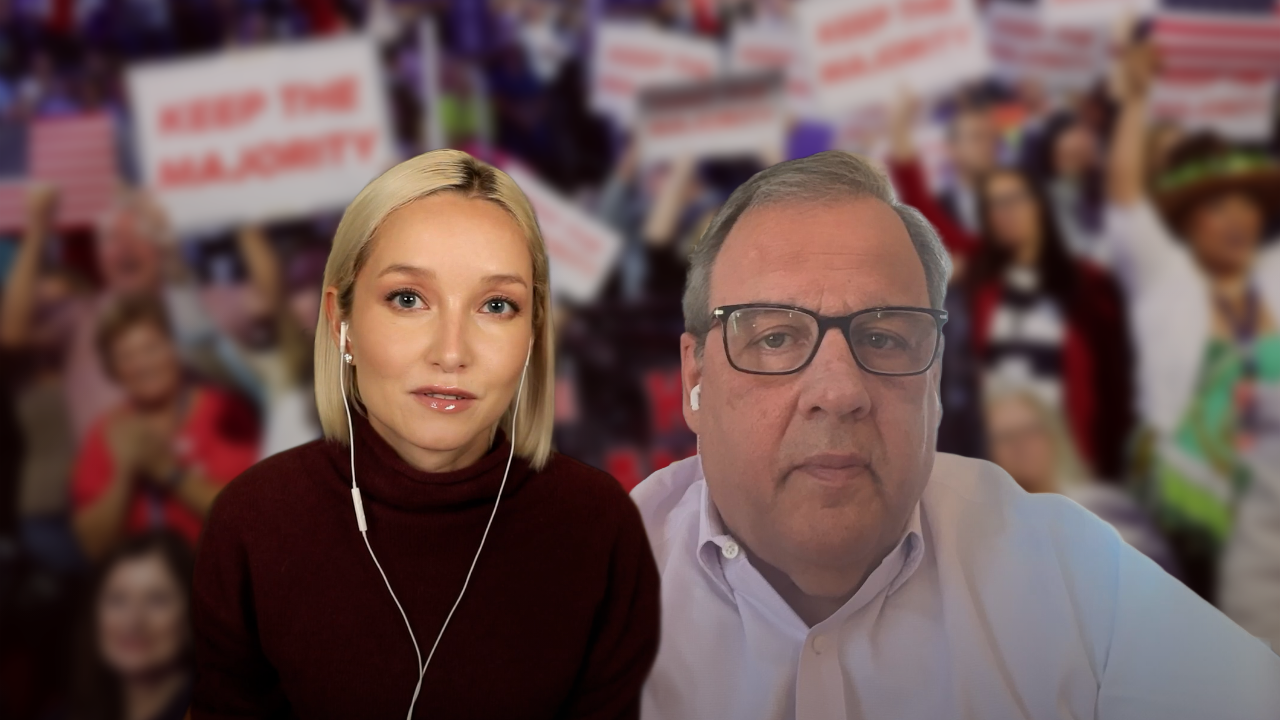
We use cookies.They keep vo running smoothly and help us improve it. Privacy policy
Scan the code with your iPhone camera
Listen in the app.
- Play everything vo finds for you
- vo remembers everything you hear
Go to the App StoreFree on iPhone